
August 4, 2026
You Are Your Own Guru: Dr. Srini Pillay on Vitality, Stress, and Living Like You're Alive
Sound bites
I am my greatest guru is what I would want people to take away from this.
Your commitments determine your reality because what we're committed to is what we're doing and what we do over time shapes that future.
In this episode
Dr. Srini Pillay joins the Mental Fitness Podcast to connect mindset, stress, and biology, and to reframe mental fitness as something that shapes both body and health span.
- Mental states can affect the rest of the body, including inflammation, heart health, adrenal function, and even workout performance.
- Optimism can support health span, but cynical hostility and pessimism appear more damaging than the absence of positivity.
- Fake optimism creates psychological strain when it is not authentic, so accepting difficult feelings can be healthier than forcing a smile.
- Intrinsic capacity offers a better scorecard for aging well than simply counting diagnoses.
- Mental fitness starts with listening to your own wants and commitments, then acting on them to shape the future.
Chapters
Pick a chapter to play the video from that point.
Transcript
Automatic captions of the conversation. They can contain errors and do not name who is speaking.
Welcome to the Mental Fitness Podcast in partnership with Nu, that's N-U-E, where we explore real tools and stories for building mental strength in the modern world. Our guest today is Dr. Srini Pillai. He's a Harvard-trained psychiatrist and brain researcher who spent 17 years doing funded brain imaging work and directed the Outpatient Anxiety Disorders Program at McLean Hospital. He's the author of several books, including Tinker, Dabble, Doodle, Try. And he's the co-founder of several businesses. These days, his work centers on something he calls psychogenic longevity, which is basically how your mindset shapes your biology, your health span, and how you age.
He spent his career studying how belief, attention, and emotion change the body. And he's here to talk about what mental fitness actually is, what gets in the way, and how to live in your greatest possibilities. Dr. Pillay, welcome to the Mental Fitness Podcast. Thanks so much for having me. It's lovely to be with both of you. Yeah, absolutely. So to jump right in, Dr. Pillay, you've said, you know, before you don't really believe in mental anything and you know, at face value, that's a strange thing perhaps for a psychiatrist to say.
What do you mean by that? Well, when people talk about mental phenomena, they often separate them out from the rest of the body. And I think the more we understand what's going on both clinically and from a basic research perspective, the more we understand that what is going on in the brain is connected to the rest of the body. So to call something purely mental is problematic because it stops people from understanding that what is going on mentally can impact the rest of your body. An example would be something I just wrote on Psychology Today a couple of days ago, pointing out that optimists have 11% to 15% longer lifespans.
And this happens through a number of different mechanisms. You know, one of the mechanisms is that optimists tend to exercise more. They tend to eat better food. But in addition to that, they have lower levels of pro-inflammatory markers. So it appears that your mindset, the way you view the world, can actually change your fundamental health, inflammatory status, and the state of the rest of your body. The other thing I would say is that we tend to think of our organs as separate because medicine has determined that the commercial and operational model should work that way.
You have a generalist who looks at your whole body, and then you have a psychiatrist who looks at your brain, and then you have a cardiologist who looks at your heart. But if you think about how we came together, when the sperm and the ovum came together to form a fertilized egg— It was just one cell, and then it multiplied into multiple cells, and then these cells migrated to different parts of the body, but they were always connected at their origin. So to think of mental as being different from anything else, it can be helpful in that we can target certain things.
to certain areas. You know, for example, if you have a brain tumor, it basically indicates that it would be helpful if it did not metastasize to essentially approach the brain. But when you're depressed, it can affect your heart. When you are anxious, it can affect your heart. or your feeling states can affect your adrenal gland, which is just above the kidney. So I like to encourage people to think about mental fitness as something that is important for your state of mind, but also for your body. I love that. And, you know, I think we all have felt at least some of the physical impacts of stress and anxiety and things.
But I love that framing to think of it holistically. The brain is not separate or the mental is not separate from the rest of your life. Yeah. In fact, even when it comes to everyday activities, I just posted something the other day on Instagram on how people don't recognize that mental fatigue can affect the quality of your workout. So if you show up at the gym and you're tired, you're exhausted, the extent to which you're going to exert yourself is actually going to be less. And it can make your muscles not feel as strong.
because you're already mentally fatigued and that connection is disrupted. So even outside of the paradigm of illness, just when it comes to everyday activities, your mind and body, I think, operate best when they're in sync. Can you walk us through intrinsic capacity and how that's a better scorecard than just a list of diagnoses that you don't have? Yeah. You know, so my interest in intrinsic capacity comes from the fact that in the research, A lot of times we assume that growing healthily into old age means that you should have fewer diseases and you should be healthy.
Now, of course, that's ideal. But what studies have shown and the World Health Organization has pointed out is that a better determinant of health span is not the number of diseases you have, but whether you have what they call intrinsic capacity. And intrinsic capacity involves thinking clearly, being able to regulate your emotions, being able to see and hear properly, and to have a sense of vitality. And I have a great interest in vitality because I think vitality is really getting lost by the wayside. There's a group of researchers at the Paris Psychosomatic Institute, led by Pierre Marte, who found that there was an epidemic of a condition they called essential depression.
And now essential in medicine basically doesn't mean necessary. It means we don't really know why it happened. It was just there, and we don't know why it happened. Yeah. But it's not characterized by depressed mood or feeling down or problems with sleep or problems with appetite. Essential depression is essentially the absence of vitality. If you look around you, you look at the workforce these days. Every time I talk to people, they're burnt out, they're exhausted, they're fatigued, Maybe on the weekend sometimes they have a little bit of energy, but you talk to parents, you talk to workers and corporations, everyone's exhausted.
There's no vitality. And my issue with medicine in general, but really with coaching as well, is that the target has been for most people to lead a slightly less lame life. And that's no way to live. Like, I don't want to have a kick-ass life. Who wants a slightly less lame life? You're like, you know what, I'm going to give you this thing. You'll feel like a little bit better. What are you going to do with the next 40 years of your life? You'll be like, oh, you know, not too bad. How are things going? Oh, I'm okay.
Well, that's fine if that's what you want. But I think, you know, I think Ms. Joseph Campbell has said, what people are looking for is not so much just a sense of purpose. But it's actually a sense of vitality, a sense of aliveness so that you actually feel like you can – I mean, why not have aliveness if you're alive? Many people have noted that most people actually die in their 30s and then their bodies leave this earth in their 70s or 80s because in between, they're not living a lot. In between, they're living some semblance of a life that they're trying to call a life.
You're like, oh, we had a great vacation. I don't even like the idea of vacation. The idea of vacation means that certain periods of time in my life, I get to be a little freer, and the rest of the time, I'm a slave. Like, who wants that? Like, why do we not talk about freedom, vitality, how to make time and space in our lives? And so intrinsic capacity to me is very important because, you know, this idea of vitality is also interesting to me because, you know, like with AI right now. People are getting a lot of tasks done.
So there's a high velocity of work because productivity is so high. But velocity is serving as a proxy for vitality. And velocity is really just skimming. You're skimming a lot. And there's nothing wrong with skimming. Sometimes you need to skim. But, you know, we are born with incredible minds. We are born with incredible capacities for deeper consciousness. The other day, I literally got up at like 4 a.m. and I was like, I just need to write something deeper about something. Because, you know, I like to have as much fun as anyone.
But I think you have a lot of fun with people with whom you know you have a deep connection. And then you can have fun. And the depth actually matters. But a lot of people, I think, are focused on skimming, more superficial things. How much money do you have? Where are you going on vacation? What did you have for dinner? What restaurant should you go to? I like fancy things as much as anyone else. But I think the fancy things without the capacity to be as fully human as you can be is a tragedy. And I would love to encourage people to ask themselves, okay, firstly, do I want to feel more vital?
And secondly, if I want to feel more vital, do I have to chain? And then third, if I have to change, how do I change? That's awesome. And I love that definition of intrinsic capacity. Just to make sure I get it right, where it's more than just the absence of disease. I was thinking, and tell me if this is right, that there may be someone who is without any disease but has low intrinsic capacity. Yeah. And then there's someone else who might be living with a lifelong disease that has some limitations of what they can do, but in all other areas of their life have a lot of vitality and optimism and their intrinsic capacity would be greater, even though they have some disease.
Is that a fair statement? Yeah, I don't know why. Actually, my mind wandered when you asked that question. I was thinking about a friend of mine who invited me to meet a group of friends of his in Chicago. And he was like, dude, you're going to love this guy. And I was like, why? He's like the opposite of a victim. And so I met a friend of his who had lost a leg, was rolling around in a wheelchair, and was preparing to go hunting the next day with a bunch of other friends. And he was like, you know, just in a really great mood.
He was sort of feeling like he was on top of the world. And you were like, wow, it's kind of incredible. Like some people have all arms and legs. They have enough money to be able to have food on the table. But I mean, it's kind of amazing that we take it for granted that we have hands and feet. But the fact that he didn't have his foot, but, you know, he decided that his vitality was more important. He was going to live despite his adversity. And that is, I think, what it's a reframe that's super important for all of us to prioritize vitality and living like we're alive.
Yeah, I love that. I mean, that's a bit connected to age. And what I mean by that is, you know, the research on subjective age versus your age on paper is pretty wild. Like, what does that tell us about how much say we actually have? Yeah. Yeah, so the age that you feel is a better predictor of how healthily you live into older age than your actual chronological age. So there's a decently accumulating body of data that shows that. And I would say a good illustration of this is Ellen Langer's work. She did a counterclockwise study.
And in her counterclockwise study, she had men over 70 years old. be in a room, and then act as if they were in their lives 20 years earlier. So they watched TV shows they watched 20 years ago. They ate food they ate 20 years ago. So they actually just completely immersed themselves in a different age. And what she found was that a couple weeks later, they had better motor strength, they had better hearing, So the fact that we just move along and people are like, oh, well, you know how it is now. I mean, I hear people in their 30s say, I'm old now.
I hear people in their 40s say, I'm old now. And actually, they behave like that. You know, they behave like that. And some people will say, well, you know, you've got to have grace while you age. Sure. But do you want power? Do you want vitality? And there have been a lot of earlier studies, actually, that showed that if you take two groups of elderly people and you prime one group with the thought that they are older, they find that that group, you ask them to walk from point A to point B. The group that's been primed as being older actually walks more slowly.
So I think when I was something, this research is pretty old. It's been around for a long time. I think when I was around 18 years old, I stopped saying my age out loud. I was like, you can figure it out. This is not a defining characteristic for me anymore. I have no interest in monitoring. Like, what the Earth does around the sun is the Earth's own business. There's nothing to do with my body. Like, my body is my body. And if you think about this, you know, beyond intrinsic capacity, There's now been this concept of semperverditas, just written about in the last couple of months in the scientific literature.
And what this refers to is the fact that vitality is important. And if you look at any age group, people who are between the ages of 40 and 50, 50 and 60, 60 and 70, not everyone is at the same level of disability or energy. You know, you get CROs who are super, super energetic. They feel alive. They feel well. They, you know, they have good muscle strength. You have people in their 40s who are like, oh, my God, I don't know. I can't sleep. You know, my kids get me up at night. I'm just exhausted. Now, those are all realistic.
You know, of course, that's true. But if we don't do anything to modify our lives and our energy, then we're not really giving ourselves a chance to live. And whatever milestone you have in life, whether it's a career milestone, a partnering milestone, a child, moving to another place, ask yourself all the time. If I had to compare myself to other people in the stage group, am I in the middle? Am I at the bottom percentile or in the top percentile? Because we can all get stronger within any decade of life that we're in.
I love that. So let's talk a little bit about stress as a dose. What is hormesis? And where's the line between the amount that builds you and the amount that breaks you? So, homiesis is essentially a characteristic in human physiology that points out that not everything that appears to be bad is actually bad, that certain things like stress or intermittent fasting, for example, exercise in certain doses can be helpful to you. But if you have way too much stress and you're not eating at all and you're basically exercising until you're, you know, ruining your kidneys...
That's not good for you. So in many instances in human physiology, too much or too little is not helpful. And the line is different for different people. It's highly individualized. So what's important about that is touching base with who we are to try to ask ourselves, what's happening in my own physiology right now? A good example, I think for me, I love AI and I love using AI. And I noticed recently, and I'm pretty, you know, I do a lot of different things. I'm a musician. I'm a technology entrepreneur. I'm a doctor.
I'm an executive coach. I don't, again, just like I don't like to define myself by age, I don't really like to define myself by career. I understand what my training is, but I think we're in an age where we can really afford to be creative and leverage AI. But the other day I had Claude running, Perplexity was running while I was using ChatGPT, and I was using open evidence in medicine. And I was like – and then I was like, okay, I've switched from this to this meeting. So one meeting is going to be about music. One meeting is going to be about making movies.
One meeting is going to be about health and biomarkers. Then I'm going to see a patient. And I was like, okay, okay. This back-to-back thing, I think it's actually – I could literally feel a mental strain. And I was like, the problem about shifting cognitive set, things are moving so fast that we have to pay attention to so many different things. If you're in touch with that in yourself, you can say – Okay, let me just build deliberate breaks into my life. You know, in my last book, Tinker, Dabble, Doodle, Try, I talked about strategic unfocus.
The fact that if we just do focus, focus, focus, fatigue, we're out for the count. The brain doesn't operate that way. You really have to have focus, unfocus, focus, unfocus. And there are ways you can unfocus to refuel your brain. And I think today, especially people who are involved in using AI, if you don't unfocus, you have a chance of developing what they're now calling AI chatbot-induced cognitive atrophy, where it literally begins to lose cells because you're not using it, you're offloading everything to AI.
But in addition to that, you're constantly changing your attention. Just because technology is changing doesn't mean that the human body catches up in sync with it at the same rate. Yeah. Yeah, that's interesting. So I think a lot of times people just think stress is stress is a negative thing that any amount of stress is bad. But like you're saying, small amount of stress or managed and not overwhelming is a good thing. Yeah, you know, so if you think about it, you know, a lot of people, I was just saying this to a friend the other day, because I do public speaking.
One of the things I do for a living. And he was like, what are you doing? And I said, no, I'm going to give this talk at Mensa or something. And he was like, oh, that's cool. I was like, yeah, it's cool, but I always, like, I'm always anxious before I go on. He's like, like, why? And I was like, I don't know. It's like because you care. And I find if I had no anxiety before any high performance moment, I probably wouldn't have the pump I need to perform the way I want to perform. That's right. So you need to have some kind of pump.
You need to have some kind of aliveness to be like, yeah, I don't like the stress, but I'm also excited. And so I think it's the same thing with immunity. You know, a lot of times, you know, like if you had no infection exposure at all, let's say somebody put you in a bubble for many years and then they were like, okay, now we're going to put you in the world. Your immune system would have no training. You know, it needs a workout of some kind. Stress needs to challenge the self to be able to grow and to learn how to be stronger.
It's like a physical workout. You know, if you're like, I don't want to lift any weights because if I lift any weights, I'm going to feel totally stressed out. It's like, no, if you want to build muscle, you probably have to have more protein and you probably have to lift weights. So it's stressful, but if you lift weights every day and you're not stretching properly and you're not thinking, then that's not helpful. So a long time ago, they used to talk about type 1 and type 2 worry. And type one worry was where you just worry.
And it wasn't associated with any negative outcomes, with any problems with blood pressure. Type two is where you worry, and then you worry about worry. And so you're like, oh, my God, I'm so stressed out. I can't believe this is happening. This is so stressful. And that was associated with, like, large problems in blood pressure, you know, large problems in emotional states. So it matters also how you perceive your state. And a lot of times I think it's helpful if you need to reset to reframe. But, you know, if I'm stressed, I just, you know, like I had a deadline yesterday.
Somebody just sort of dumped a thing on me and was like, can you get this done? They realized it was unrealistic, but I was like, well, I should figure this out. Like in between appointments, I'll figure out how to do this. Like, you don't have to be thinking about your stress while you're stressed all the time. It's good to just reflect on that in your life in some way. Yeah, that's a good point. We've talked about this on other episodes where, you know, and this goes into what you're saying, in weightlifting, it's called progressive overload, right?
Where you're slightly increasing the weight here and there and you're increasing your capacity to lift the weight. It's just same as stress. Stress is going to be a part of your life, whether you like it or not. And you can increase your capacity to respond to stress in life, right? And that's... That seems like a key reframe as well is stress is going to be here. Increase your capacity to handle it, and that's going to do a lot for your life. Yeah, absolutely. I think a lot of what exists in the medical literature, you know, medicine is marketed.
Like it is literally like when something is FDA approved, it is approved for marketing, which means that it's safe and effective. But marketing is a big piece of what everybody hears. And so I always feel a bit dismayed because the problem with marketing is that it also impacts the primary recommendations that people make. Because if something's well marketed, it's much more compelling as a source of evidence. But over the years, if you work as a doctor, you get to see people have such variable responses to things.
And placebo itself, just sugar pills, are so powerful in creating outcomes that we can't actually ignore the impact. A good example of this is psoriasis. So skin condition, immune problems. One study took a group of people with psoriasis. They gave them the full dose of medicine. They gave the second group half the dose, but the other half had nothing. They're sugar pills, but it looked like the full dose. and the third group had half the dose. And they found that the relapse rate was identical in the first group and the second group.
whether you took the full dose or the half dose with placebo, the body still thought that the placebo was indicating that a response had to be made. So you can train the immune system with expectation and belief as well. And that's something that I think a lot of people would benefit. Three, two, you don't need to buy it from a pharmacy. You don't need to pay for it with insurance. You can change your mindset to impact your physiology. And that doesn't mean, you know, that if you have a major medical problem, you shouldn't see a doctor.
I think you should see a doctor, but you should also ask yourself, what can I do to improve my outcome relative to others? Yeah, that makes a lot of sense. What about the... optimism trap. And what I mean by that is, you know, you've suggested the gains come from dropping cynicism rather than forcing positivity. And that fake optimism can backfire. We know this, there's a lot of research on that when, you know, for instance, there's research where people set a scripted affirmation in the mirror and it doesn't work because your brain doesn't believe you.
There's no evidence of it. Can you unpack that for us, the optimism trap? Yeah, when you look at the data on optimism, there's certainly a decently increasing, compelling idea that optimism impacts biomarkers positively and healthspan and longevity. But a lot of the studies show that optimism has a kind of mild effect. What really has a negative effect is pessimism and cynical hostility. And so... A lot of people will be like, well, how can you be optimistic in a world like this? Do you see everyone's at war? The weather is like this.
They're so polarized. And I'm like, this is not about, if you want to tell me that you want reasons to be miserable, I will not challenge them. There are enough reasons in the world to be miserable. But you have to decide what you feed the attentional matrix in your body. If you have 10 units of attention, then if you want to put miserable things in all 10 units, the world will be miserable. And I can't deny it because all the events are real. But if you realize that your brain is not a trash can, that your brain, you can actually decide what goes in it and what doesn't go in it to a certain extent.
You can be like, well, yeah, it's kind of amazing. Yesterday I hung out with a friend who was pretty awesome. Today I looked at the sun and it looked beautiful. I just drove past a tree and I don't know why I felt so good. You can feed your brain different real things. Now, the point you made about fake optimism, one of my least favorite things, is when people are like, oh, they're like, oh my God, I actually know someone. How are you doing? It's like, I'm great. How are you? And I'm like, I don't know what you're talking about really.
Great about what? And I know someone I actually like very much, but she likes to always have a smile on her face. So every time she comes online, she's like, hi. And I'm like, whoa, that's like... What are you doing? Like now you're asking me to meet you and mirror you in fake land. And I can love you without having to mirror that. So how about we just accept you can say hi like that if that's you. But I don't want to do that. Now, the problem with the fake optimism is that it's actually an emotional – it's a non-congruence.
But you're not being authentic. So you're placing a kind of psychological strain on yourself. And that itself is a psychological stress. I understand it as a defense. But I always recommend to people that you can still be optimistic if you're down. If you're down, let's say you're like, I don't have enough money. My life kind of sucks. I don't really care that much about the future. Well, how can you feel optimistic? Optimism is simply a program for your brain that will help you believe that the future can get better.
Some people talk about that as a growth mindset, that you can get better. But if you can – the brain is a prediction machine. If you tell the brain, life sucks and people suck and I hate it, your brain will let all those things show up for real for you. I just recently released a course called Implementing the Science Behind the Law of Attraction. And one of the principles behind it is that people don't realize that if you don't learn to feed your prediction brain different inputs – It's going to keep on creating the same world for you.
So you have to ask the prediction. You have to basically say, the first thing I say is, has anyone in this situation ever felt better? Let's say you had a breakup. If you said, has anyone ever felt better? You'd be feeling completely miserable. And you're like, my life is downhill. I have a friend who's going through this right now. My life is down. I can't believe I broke up with him, but it was kind of impossible and I don't feel great. fully understand the way he feels. But at the same time, if you don't believe life can be better, your brain's going to be like, okay, thanks for letting me know.
I guess life sucks, so why don't I just show you that life sucks? Yeah, and I like that distinction there that optimism is a genuine belief that life will get better in the future. It's not an unrealistic assessment of the current state. And so, to pretend that everything is going well when it's not, that's just disingenuous. And we know it even when we fake it. So, we can admit hey, my current circumstances aren't very good, but I have a genuine belief that things will get better. So I'm optimistic, even though my current circumstances are poor.
And the reverse could also be true. If I'm a pessimist, I can have everything going for myself. I can be successful in my career and have physical health and have family in my life. But if I'm just a pessimist, that's a belief that like, it's not gonna last. It's going away. And I'd rather be the optimist in bad circumstances than the pessimists in good circumstances because it's where they're headed. Yeah, I often will joke with people. In general, I'm a pretty upbeat person. So people will be like, how's it going?
And I'm like, great. And then I'm like, how can it be great? I was like, because I'm delusional. Like, I live in my happy delusional world by myself. I don't interfere with anyone. I just like, I like to feed my attentional units eight positive things a day. I know other things are happening in the world, but like, why should I pay attention to them if I don't want them to be in my brain? I can think about many awesome things. We all can. on any given day. So the point is, it's not like to critique someone who's pessimistic or to praise someone who's optimistic.
It's to say, hope is a state of, it's a way of being. And optimism is not just hope. Optimism is the willingness to predict that things could get better. Like in the breakup situation, has there been anyone in the world who's broken up with someone who's ended up being happy? It's like, yeah, a lot of people. So you're like, oh, so it's possible? It's like, yeah. So now you're beginning to feed your brain positive predictions. You're like, I don't feel good now, but it could be positive. And you're like, and this is true for anything, where we can reprogram what's going on in the brain.
Everything we talk about on this show, the science, the frameworks, the habits, new is where you actually put it into practice. Nu is the mental fitness app built to help you reflect, notice patterns, and build real mental strength and capacity over time. It remembers what you're working on and meets you where you are. Not therapy, not toxic positivity, just a daily practice for your mental fitness. If you're watching, scan the QR code on the screen. If you're listening, head to talkwithnu.com. That's talkwithnue.com.
You've talked and written about possibility thinking, which is what you're talking about there. And be interested to know, like, what's actually happening in the brain when someone genuinely believes that something is possible. And then you also draw a line between hope and possibility. And so kind of what is possibility thinking? What happens in the brain? And then what's the difference between hope and possibility? Yeah. So first of all, I always ask people, do you want to live an exceptional life? And everyone's like, yeah, definitely want to live an exceptional life.
You're like, okay. So for something to be an exception, it's a very low probability. That's what the definition of an exception is. So if you want to live an exceptional life, you cannot live in probability. You cannot be, this is reality. This is how reality is. You kind of have to say, well, I guess I want to be in a low probability state, which introduces you to the idea of possibility. Now, you might say, well, why even think that something wonderful is possible? And there's a good experiment that actually illustrates why you might consider that.
So they gave people three kinds of creams. They were actually the same cream. They were all neutral. They did nothing for you. But they labeled one tube lidocaine for pain relief. They labeled the other one capsaicin, the active ingredient in chili. And then the third one, they just said neutral. So when people expected something, you know, to relieve them, like lidocaine, they saw the lidocaine, they were like, oh, wow, this is really calming this down. And you looked in their brains, and the reward center was activated.
It was expecting something good. But when you gave them capsaicin, the active ingredient in chili, they were like, oh, this stings a little. You look in the brain and the pain center is activated. And nothing goes on with the neutral. So when you're expecting something negative, your brain's not in a rewarded, motivated state. Unless you're someone who could say, I don't like the way my life is right now. Like somebody asked me this the other day. They were like, you know, you had all these accolades. What would your future self say to your current self?
I said, I don't know, probably you suck is what he would say. They were like, what? And I was like, I don't know, I'm not pleased with like my progress. I think I got derailed. I think there were like bad emotional investments. I think, what are you talking about? I'm like, well, I'm not like being hard. You're going to be harder than yourself. I'm like, I'm not being hard on myself. If I don't recognize that my life needs to change, I'm not going to change it. So, yeah, you know, can I feel happy? Sure. Do I have a lot of amazing things in my life?
Yes. But do I feel like I am expressing what I think my full capacity could be? I don't even think I'm close. And I think I need to be responsible for that. And this is the thing that disturbs me most. You know, as a psychiatrist and as an executive coach, the thing that troubles me most about people is everyone's looking for... the guru or the person who's going to change their lives. The best guru in your life is you. You are your best teacher. And what I find people do is they listen to everybody else but themselves.
They don't listen to themselves. They know, like, I know that my past self will tell my current self, you suck. So why shouldn't I listen to it? She'll be like, well, why is that like? It's like, well... There's a lot of stuff that doesn't add up. And it's not like I could have done something or I should have done something. Sometimes we don't have the strength or the intelligence or the courage to act according to how, in retrospect, we think we should have been acting. But at no stage of life is it too late to say, okay, I'm not going to do it.
My past self thinks my current self sucks. So let me figure out how to do what Dabrowski, a Polish psychiatrist and psychologist, called positive disintegration. And what Dabrowski said was when he studied gifted students, he found that they were constantly reinventing themselves. And reinvention is going to be – you look at what's going on in AI right now. If you're not prepared for reinvention, you're not prepared to work. It's impossible. So you have to be open to reinvention. And there's a particular way in which I work with corporations or I work with humans.
I actually walk them through the stages of what Dabrowski talks about. But the short story is that most people live at the bottom of the pyramid. which is like they eat, they reproduce, they socialize, and that's life. At the next level of the pyramid, and they're kind of okay. Like when you see their lives, when I see their lives, I'm just like, how can you be okay? But they're okay. And it's not for me to convince them that they're not okay. But you look at the second level, and people are like, they're mildly not happy with what's going on.
But they don't like the anxiety that comes with that. So they avoid it. They're like, my life is just fine. I have my small house, my family, and I don't have to go on fancy vacations. And who needs to go to a nice restaurant? Again, it's not for me to convince them. But you should ask yourself, are you lying to yourself or is that true? At the third level, Dabrowski says, you have this thing that I'm just telling you I have right now, where there is a huge gap between your current self and your ideal self. And I actually have an ideal self-guide that's free on nas.com forward slash Dr.
Srini. And we'll have a link to that in the show notes. That people can access just to figure out for themselves like what's ideal for them. And Richard Boyatzis has done a lot of research to show that when you want to make a change in your life, putting out fires is not the way to do it. You really need to have a compass. You need to have some kind of guideline. And what that compass is, is your ideal self. Like I would ask myself, well, if my current self thinks, if my past self thinks my current self sucks, then how do I want to look in five years?
What do I want health-wise? What do I want wealth-wise? What do I want happiness-wise? And it's not about what I think is achievable. Where you're just being honest about what you want. And, you know, I was listening to Julie Sweet, the CEO of Accenture earlier this morning, where she said something quite profound. She said, if your dreams don't scare you, they're not big enough. And I like to use that as a reminder that if we set our standards up much higher, the problem with most people is that if you set your standards low, you're probably going to achieve them.
And the idea of raising the bar is giving yourself some kind of impetus to say, A lot of people say, well, I didn't come from money. Well, is everyone who's wealthy, is every person, every person came from money? It's like, no, some people came from nothing and built themselves up. Oh, well, I'm too old. Well, has any old person ever made more money? Well, I don't care about money. Okay, that's fine. What do you care about? Relationships. Well, if you care about relationships and you want a relationship, then say the kind of relationship you want.
Because once you have this ideal self, what Dabrowski recommends is that the best guide to when you are disintegrating is reexamining your value system. And your value system doesn't have to be highfalutin. It doesn't have to be, you know, like I really value very fancy hotels that I cannot afford. So what? So I have to do something to afford that. You know, I also value the depth of friendships. But like somebody said to me the other day, they're like, oh, my God, this hotel is crazy. Like for a basic room, it's $8,000 a night.
And I was like, yeah, that's pretty expensive. But I looked at the hotel. I was like, wow, it's a pretty amazing hotel. Should I say, no, I don't want to live there. I don't ever want to stay there. Or should I say, I can't afford to stay there, but... I'm not even going to say that. I'm going to say five years from now, my past self is going to look at my current self at five years from now. He's going to say, you know what? I like you a little more. I like you a little more because you listened to yourself. If there's one thing I would want anybody to leave this podcast with, it is please listen to your real self.
Listen to your true self. You are your best teacher. My work has evolved over the years. I used to feel like I was so well-trained and I went to Harvard and I just think I know these different techniques. I can help people. But now I feel like my job is only done when I introduce people to the teacher in themselves. to the person that they need to listen to. That to me is what my job is. And so most people are just, they just ignore what's going on in them and in their brains. And I've done that, as I said, my past self would say, why have you been ignoring me all these years?
And I'm like, well, I had a lot of things to do. I got a ton of excuses. The brain is a great excuse-making machine. Yes, it is. It's not about critiquing yourself. You can critique yourself if you're going to do that constructively. If you're like not doing that nonsense anymore. Lady Gaga, I think, is a great example. She talked to people at Yale about a time in her life when she just felt totally burnt out. And she didn't want to sing. And people were like, what do you mean you don't want to sing? I mean, she's so talented.
She was like, I don't know. I was like, I was making money for other people. And I felt like I had to advertise perfumes. I didn't really like perfumes. And she said, I started to say no. And once I started to say no, I could go back home and look at myself in the mirror and say, you, I can sleep with any day. Because she was choice language, but she basically said, you have the integrity to stand up for yourself and be who you are. And I think it would be great if we can just create even 10 to 15 minutes a week where we sit by ourselves and we say, Am I pleased with my integrity?
And I think every day I can see myself sort of failing in some way in my integrity, like where I'm like, I said something yesterday. I was just like, oh my God, what is this person going on about? But what I said outwardly was like, thank you so much. That was very helpful. And I was like, I did not think this was helpful at all. But I was like, well, what am I going to say? You know, what you said sucks. I don't know what you're talking about. So I feel like we have to make compromises sometimes because in that instance, the priority was to make peace and to move on.
And I was like, God, I don't know. This is like a moral dilemma. So I didn't overhype it. I just was sort of like, I think I can live with that degree of dishonesty. Because being honest or authentic, like Seth Godin points this out, I was surprised with this little segment I found once where he was like, yeah, authenticity is not all its... you know, called out to be. And people, people were like, what do you mean? He was like, well, what if your surgeon is angry, authentically angry? And you're going to surgery and the surgeon's like, I am just so freaking angry right now.
You don't want your surgeon to be authentic. You want your surgeon to be like consistent. You want your surgeon to be like, I'll leave my authentic self. So, you know, there is a time and place for authenticity. And it's not a carte blanche thing. Yeah. So our signature with every episode, the whole idea of mental fitness is practical, applicable things. And you've spent the last few minutes talking about that. And we always turn it into something that a listener can do this week, pull two or three concrete moves from the things that we've discussed.
And you talked about something, we'll come back to that. But going back to stuff we talked about earlier in the episode around stress, if someone's stress needle What's one thing they can do today to bring it down? So go through a paradigm that I've created a mnemonic called CIRCA, C-I-R-C-A. And each of these steps has been shown to move the needle down in the amygdala, one of the parts of the brain that processes anxiety. The first C is chunking. If you open your email on a Monday morning, you're like, oh, my God, this is like too much.
Okay, what do I need to do? How am I going to parse this out in the course of the day? Just doing that deliberately can be super helpful. Chunking is also about ruthlessly prioritizing. Most of us can't get everything we want to get done in a day. So ask yourself, what do I have to do? What would be nice to get to? And what, if I didn't get to, wouldn't be such a calamity? Or delegating. So that's what the chunking part is. I is ignore mental chatter. Because our minds are just like noise machines. They're constantly making up all kinds of things.
So mindfulness, sitting back in your chair, closing your eyes for five minutes, placing your attention on your breath. And if your attention wanders, bringing it back to your breath can not only decrease the amygdala activation, it can also potentially protect your genes if you practice it regularly. And if you're not like a meditating kind, try something called cyclic sighing, which is basically it's been shown at Stanford to be even more effective than mindfulness, where you breathe in to half or three quarters through your nostrils, and then you breathe through the top, and then you breathe out through your mouth.
And trying that for five minutes is a cool thing to do for ignore mental chatter. R is reality check. And reality check is self-talk. Like something horrible happened. You can't talk yourself out of it. You say this too shall pass. Because your brain catastrophizes, right? It's like, oh, my God, this thing's going to be horrible forever. So just saying to yourself this too shall pass is helpful. Control check is like the serenity prayer. It's the second C in circa. Right? which is what can I control, what can I not control, and if I can't control it, can I just offload it?
You know, if you're not going to do anything about a war in the country where it's disturbing you, why think about it? You can know it, but you have to obsess about it. It's not going to be helpful to you. And the last A is attention shift, which is how can I shift from the problem to the solution? That would be the first thing I would say to people's practice, all or one of those steps. And I think it could be super helpful for the stress that you're feeling. That's a great framework. One more idea I want you to unpack for us, existential confidence and the idea that your commitments determine your reality.
If a listener wanted to start acting like the creator of their life instead of the reactor, what's that move? Well, existential confidence is a commitment to a possibility that is not yet a reality, even if you have not delivered on it in the past. A lot of times you say to somebody, oh, do you want to make a million dollars? So that's not realistic. I can't. that's reality. But what are you committed to? Are you committed to a million dollars? Because if you are, you could actually change your reality. You could realize that this is not working for you.
So one of the principles of existential confidence is rather than reality determining your commitments – Your commitments determine your reality. What you are committed to helps you shape the reality you want. Now, it's not a linear path. Not everybody goes from like, oh, I'm making $30,000 to I'm making several million dollars. But if that's your commitment, you'll stick with it. And you will realize what you should say no to. If anything is not in your million-dollar path and someone's like, can you spend 40 hours doing this thing which will get paid $10 for?
You're like, no. No, like that's not part of my millennia plan. So to be able to construct a vision of your future and to navigate without control, but to believe in that compass is what will get you there. And so I like to use the metaphor of tennis, you know, sort of a tennis enthusiast. And I remember the first time I was, well, the first time I was playing with somebody, a coach in San Diego once. And I was like, He was like, focus on the ball. And I'm like, I'm focusing on the ball. He's like, no, you're not. I said, what do you mean?
He said, hold the ball, look at it. And I look at it and he goes, I'll focus more. And I'm staring at it intensely. He's like, that's not even 50%. He goes, focus on it even more. And I'm like, how much more can you focus? He said, focus on the seam, on every thread. And then I realized that what he was trying to get me to do was to internalize where I wanted the ball to go. And then to only focus on the ball so my body would send it there. So with many of our goals, it's not about keeping an eye on the goal. It's about visualizing, knowing where you want to go.
And once you know where you want to go, then you start executing in the moment. And the clearer the future can be, the more likely it is that your brain and heart and body will take you there. And I love that idea. Your commitments determine your reality because what we're committed to is what we're doing and what we do over time shapes that future. That's a great way to think about it. So last one, just give us the single reframe you'd want someone to carry out from this episode. Just the one thing. I am my greatest guru is what I would want people to take away from this.
And that reframe is just about listening more carefully to yourself, to your wants and your desires, and then committing to them so that you can make the reality that you want to create. Because you are an artist of your own life if you dare to be. That's perfect. And that's a great way to end this episode. Dr. Pillay, we appreciate your time. I think we could have gone longer. We have a lot of more topics we'd love to discuss with you, but thank you. And we'll post links to your books and resources, the other things mentioned here in the show notes for any listeners that are interested in this.
What's the best way for people to get in touch with you? Thank you. Yeah, you can find me at drsreenipalay.com or at nbgcorporate.com. You can find me on Instagram. My handle is drsreenipalay. On LinkedIn, drsreenipalay. You can find me on X, which is also drsreenipalay. On TikTok, dr.sreenipalay. And on Meta, I have a whole lot of accounts, but sreenipalaymd. is the way you can find me. And I post regularly on LinkedIn and on Instagram and like to help people things I'd love to, interact with people who are interested in the subject matter.
Perfect. Well, and all those links, we will also post in the show notes. There's a lot going to be there. So thank you again. Thanks for being on the mental fitness podcast. Thank you. Yes. Thanks for having me. It's lovely to be with you. One last thing. If this was useful, please leave us a rating or review. We read every single one. And more importantly, it helps the algorithm surface the show to people who are actively looking for this kind of content. Mental fitness doesn't get talked about enough. Help us change that.
About Dr. Srini Pillay
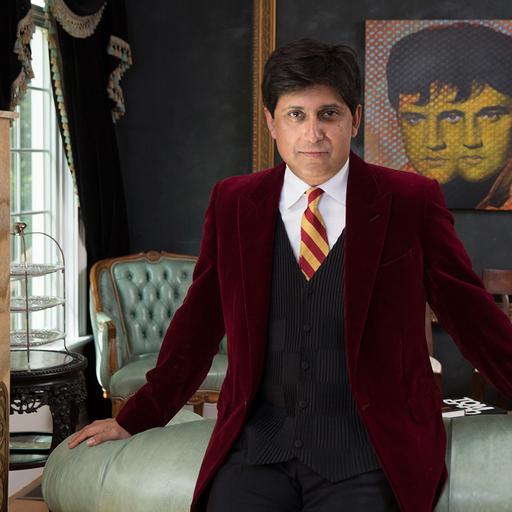
Harvard-Trained Psychiatrist, Author, Brain Researcher & Co-Founder of Reulay Digital Therapeutics.
17 years Federally funded brain researchTop 20 Leadership development mover & shaker6 Books authoredHarvard Medical School Assistant Professor of Psychiatry
Dr. Srini Pillay is a Harvard-trained psychiatrist, neuroscientist, entrepreneur, and author exploring one of the defining questions of our time: What makes us uniquely human—and how can we develop those capacities in an age increasingly shaped by AI?
Trained as a physician in South Africa, where he graduated at the top of his medical school class, Srini earned a Medical Research Council fellowship in neurochemistry before completing his psychiatry residency at McLean Hospital through Harvard Medical School. He became the institution's most awarded resident and went on to direct its Outpatient Anxiety Disorders Program and Panic Disorders Research Program in Brain Imaging. For 17 years, he conducted federally funded brain research while serving as an Assistant Professor of Psychiatry at Harvard Medical School.
Today, Srini brings that scientific foundation to questions extending far beyond traditional medicine. His work explores how belief, attention, emotion, creativity, and human connection influence the way we think, perform, adapt, and potentially age. Through his work on psychogenic longevity, he examines the relationship between psychological experience and physical health, expanding the conversation about longevity beyond biology alone.
As AI transforms the workplace, Srini is developing a powerful new perspective on human potential. He argues that our greatest advantage may not be faster thinking or tighter control, but our capacity for insight, imagination, unexpected connections, and reinvention.
More from Dr. Srini Pillay
All episodes → Ageless FutureYour Mindset Is Medicine: The Psychology of Longevity with Dr. Srini PillayNov 2026Play episode →
 Sustaining Creativity PodcastLiving a Creative Life with Dr. Srini PillayOct 2026Play episode →
 The Communicative LeaderReclaiming Cognitive Capacity: Neuroscience, Uncertainty, and Intentional UnfocusOct 2026Play episode →
 Confidence Through HealthThe Importance of Integrating Thought, Emotion, and Body w/ Dr. Srini PillayOct 2026Play episode →
 The Conscious Man 7 PodcastEpisode #154 - He's Building VR to Replace Psychedelics | Dr Srini PillayOct 2026Play episode →
 Mindset BoosterRewire Your Brain for Confidence, Creativity and BreakthroughSep 2026Play episode →
 The Deep Wealth Podcast - Unlock Your Deep Wealth In Business and LifeHarvard-Trained Psychiatrist Dr. Srini Pillay: Relentless Focus Is Robbing Your Profits, Success & Health (#579)Sep 2026Play episode →
 Peak Performance Life PodcastEPI 269: Harvard Trained Psychiatrist On How Your Mindset And Other Mental Factors Impact Inflammation, Immunity, Healthspan, & Longevity. With Dr. Srini PillaySep 2026Play episode →
 Mirror Talk: Soulful ConversationsReinvent Yourself: Neuroscience, Spirituality & the Power of Possibility (with Dr. Srini Pillay)Sep 2026Play episode →