
October 6, 2026
The Importance of Integrating Thought, Emotion, and Body w/ Dr. Srini Pillay
Sound bites
Your brain is not a trash can. So don't treat it like that.
In this episode
Dr. Srini Pillay and Jerry Snyder explore how thought, emotion, and body work together, and what AI and expectation mean for health, autonomy, and performance.
- AI can drive cognitive offloading, burnout, and weaker critical thinking when people rely on it without questioning its answers.
- Losing autonomy can affect health, relationships, and work, so people need ways to make their own calls and stay directed.
- Thinking and emotion are not separate, and bodily embodiment matters for meaningful action, not just conscious effort.
- Too much effort can crowd out intrinsic motivation, spontaneity, and vitality, including in sport and major life transitions.
- Expectation can shape treatment outcomes, raising questions about how belief and medicine interact in real life.
Chapters
Written from the transcript. Pick a chapter to play the video from that point.
Transcript
Automatic captions of the conversation. They can contain errors and do not name who is speaking.
Welcome to the Confidence through Health podcast. My name is Jerry Snyder. As a health, wellness, and sports performance coach, my goal each week is to bring you experts to help you take control of your health and build your self-confidence. Thanks for including me today on your journey to better health. I want to say thank you to Social Media Cowboys for sponsoring this week's episode of the Confidence through Health podcast. If you need help with a website, if you need social media needs for your business, if you need help with Adwords, SEO, all those things that you know you should be doing, but you are too busy to do or you're too confused about, they are the experts that you need in your corner.
If you're interested in launching a podcast such as mine, they help me edit my podcast and do a fantastic job making sure that all of the technical side of it is handled. and we launch a nice, neat edited podcast episode each week. So, I want to thank Social Media Cowboys for their continued sponsorship of the Confidence through Health podcast. You can find them at social media cowboys.com or you can find them as well with other sponsors at confidence throughhealth.com. Dr. Pai, I want to thank you for being a guest on the confidence through health podcast.
Thanks so much for having me, Jerry. It's a pleasure to be here. Looking forward to our conversation. Yeah. So, you know, in researching a little bit of what what you do and and we talked a little bit before we recorded, I I I didn't tell you I was going to tell you that um my grandfather was a psychology professor for 30 something years. Um and he was a huge influence on my life. And so I learned even though that wasn't my field of study, you know, I learned just from being around him and hearing things and the way he talked and the way he interacted with people and saw psychology sort of in practice, right?
Um, what is it that's that's changed along the way that like as technologies come involved and now AI that's affecting how our brain's working, how our mind's working, and how like because I think everybody would agree that mental health is is a struggle right now. Yeah. You know, I think there's been a lot of changes with AI. I think one of the changes is um it's referenced in the medical literature as AI chatbot induced cognitive atrophy. And it relates to the fact that we've offloaded a lot of the tasks that we usually figure out to AI.
And so one of the questions is well if we're not using that part of the brain are we prone to the use it or lose it phenomenon. And what's happening to that part of the brain? I I think so so I think to a certain extent the the implications to that is that if you just offload everything you may lose your own creativity and when you lose creativity you actually lose a certain kind of zest for life. So I think that's one of the things. The other thing is that with the onset of AI um there's there's been even though AI takes a lot of the workload off this humans still have to monitor it they still have to have critical thinking they have they still have to use a lot of energy so a lot of people are experiencing AI induced burnout where they feel like you know the AI is so fast I mean can you imagine if somebody talked to you at the rate at which AI writes you wouldn't be able to comprehend that so so you have to go back in and it usually spits out large amounts of information.
So you ask a simple question where you're hoping you're just going to get a paragraph or two and all of a sudden you're burnt out from the work overload of having to absorb that. And so I think that that does impact people quite a lot. I think the third thing is that because of that and related to the first fact AI can potentially impact critical thinking and critical thinking is important because a lot of times when you interact with AI it'll give you an okay answer but the answer is not necessarily correct and so you have to ask yourself well would I have done that if if I did not use AI you know what would I what what's the cost of losing something uh you know if if I you know if I just follow what AI is going to Okay.
And and then there's the whole idea that that there's a kind of autonomy, right? Um that that is important and we're living in an age that I'm a little bit suspicious of. I feel there's an erosion of autonomy and and I'm not against these things. I love AI. And one other thing I was going to reference which may sound unrelated, but GLP1 agonists are another sort of form of they're they're basically they're implying I can't do this so you take the weight away from me. I can't think this so you think for me. So part of what I'm thinking about is what happens when you take away autonomy.
Right? When you take away autonomy, I think you have to actually find other ways to build autonomy in your life where you where you make the call because autonomy is one of the critical factors in intrinsic motivation. So there's a theory called self-determination theory that basically says that in order for you to have intrinsic motivation to be fully jazzed, you actually need to have autonomy and competence and social connection. And right now people have less autonomy in many ways. They they don't feel competent because you have to catch up with so much.
And social connections are difficult because a lot of people are sitting on Zoom or working with AI and developing relationships with AI and not with people. And I think that the erosion of social relationships is a is a real problem not just from a psychological point of view but because there's a field that I study which is psychoggenic longevity looking at the psychological factors that impact health span and longevity and relationships. Certainly social isolation has a huge impact you know about but 50% impact on health span and longevity you know if you think about like hypertension which is in the 30s and you know some of that is debatable at the very least you could say social relationships matter so I think that that potential cognitive atrophy the loss of creativity burnout eroding people's resilience not feeling creative not having autonomy and not actually feeling like you you have intrinsic motivation uh or social connection puts us in a very different state of mind where I think it's really important to be conscious of what how you're using AI but also to realize that this is going to require a change not just in how we operate but in our identities as well.
Right. Well, and you know, one of the things you touched on there, which you know, one of my friends that's helping me with some of the some of my social media stuff and and all of that, you know, when we sat down a couple weeks ago and he was like, "Hey, I'm using AI to do this and this and this and we're going to tweak this and this and this." And I was like, "Okay." And he goes, "You mind if I start researching these topics that you talk about and seeing and just, you know, pulling from that?" And I was like, "Well, be careful because he said,"Yeah, I know AI is only pulling what's out there and it's going to give you the the majority rules type of answer." And and yeah, so if if you're getting a bunch of garbage because there's a bunch of people talking nonsense about whatever and that's the algorithm's feeding that as oh this is the most watched or most talked about, you know, subject line.
It may not be the correct subject line. Absolutely. Yeah, in my own experience has been in using AI with social media is that it always it's a good story. You know, you need to have a hook, you need to, you know, build the story and by the end of the story, make the revelation, right? It I find those rules are way too generic and they don't necessarily correlate with engagement on their own. So, right, I've been thinking that I I want to rethink how I use AI. you know maybe for efficiency in aggregating content I've already created but I wonder sometimes whether when we are human I mean people are very engaged with AI chatbots this has been shown so I wouldn't say that you're not necessarily going to be engaged with AI but I think that there are two things that strike me about this one is that no one's talking about the mediocrity of the writing of AI like AI writes you know AI is no dickens AI is no proof like you read AI and you're like oh Oh my god, this is like genericized editorial writing.
And it's kind of exhausting when you're surrounded by mediocrity. You know, I feel like mediocrity is one of the biggest crimes we can subject ourselves to because as humans, I think we have a tendency to want to feel vital. We want to feel alive. And you know, I always I comment on this on on several podcasts that I've been where I say my my pet peeve in the world in in the world of medicine, in the world of self-help, is that most people give advice so that people live slightly less lame lives. And who wants that?
You want a kickass life? Nobody wants a life that's like, yeah, you know, it's a little bit better. I'm a little less exhausted. I took a nap tonight. I listen to some of the generic advice, you know, which is like, sleep well. eat your salmon and nuts and and whenever I hear that I'm just like I mean it's decent advice to reflect on but but is it really what we're looking for? I think most people are actually looking for a much greater sense of vitality. Well, and so that brings me to the a comment about like the difference between the subconscious and the conscious and like what your what your will what your subconscious is allowing you to go past and beyond because you know yeah okay the idea of oo this will make me a little bit better but it doesn't really move the needle on a happiness scale because you need to exponentially multiply the differences in the changes to feel that joy and and notice that like okay yeah I had a major difference and a major shift um and and I think people see this when they you know if if you go to the same place every year for vacation and it's the same routine and it's the same thing but then one year you go off to Europe or somewhere else and you spend all this and you're like don't care about money and you just go for it you're that that that experience is so much deeper for most people, right?
Yeah. I I I think change is is important. Um I I also think constancy can be helpful. Um but but but I think change is important and there were a number of things that were embedded in what you're saying. I think the first piece was in order to reach our goals, how do we deal with the conscious and subconscious mind, right? And I think the the conscious the conscious brain is a pretty um interesting phenomenon and and I think we've advanced a little bit uh by by not thinking so much that there's a you conscious thought process that is independent from an unconscious thought process.
These things are all communicating all the time. These parts of the brain are communicating all the time. And and one of the most recent um sort of lines of research has been by Lisa Felman Barrett basically pointing out some really important things. One of the things she pointed out in a more recent paper is that categorization is baked in the brain. Meaning we think we evaluate data and then we make a decision. But the way the brain works often is it's already decided and then you look for evidence to support it.
So when you say you know I don't have enough money I'm really struggling. So it looks for lots of walls to support what that category is. Oh, right. If you say and so and the way we should talk about that is that it's hard to discern what of this is conscious and what's unconscious. But the the the unconscious brain has its own mechanisms in place. If if it is playing if it is playing a record of fear for example and you are and it is and and you know that even though you're trying everything cognitively that somehow something is blocking you it's a good thing to take a break and sort of say let me go for a walk because I know that there's a part of my brain that puts two and two together that's not just the logical part of my brain.
You know in my last book tinker dabble doodle try I talk about this network which is the default mode network and it's basically the unfocused network in the brain and when you are in this unfocused network the the the brain can it does a much better job of thinking creatively of putting two and two together and of thinking deeply and abstractly and and that's when you begin to to to really engage the subconscious mind. you know, if we're just trying to figure things out logically all the time, you know, even in business studies, there's a great study by uh Ranjay Goladi and Nitton Nori at Harvard Business School that looked at companies that were in recessions um over several periods of recession and found that the the most pragmatic companies did terribly.
You know, so did only creative companies and so did people who did half and half. As humans, there's no one formula. We want to hear the formula. People are like, "Tell me what to eat. Tell me what to think." and say, "Well, what what you want to be what you really should do is connect with your own emergent self and your dynamic self. Consider other people's opinions, but allow yourself to be in the zone." You know, most of us want to want to actually be in and when you're in that zone, you can sometimes eradicate some of these fears.
Now, there are practices which can help you get to the unconscious. you know, practices like visualization, you know, practices like reprogramming the the predictive brain. I I just recently put together a course which I took myself and it actually helped. It was the I I thought if it didn't help, I'd have to go back to the people who bought it and and say, "Listen, let me do an extra webinar for you." But it it's called implementing the science behind the law of attraction. And essentially what I wanted to I pointed out that I don't think you can just sit there and hope to attract something because you're glowing because that's it's not the way that that works.
And sometimes being overly optimistic in that way without doing anything can actually be harmful. It can make you take more risks. But there are ways in which the brain works that are not linear. Go from A to B. The the brain also works in this nonlinear way. One of the ways it does this is if it is if if your brain if if you look at your life right now and you just take on this hypothesis what if so let's take different domains like money or relationships let's say you're not satisfied in both of those domains you're like I need more money and I need more rel I need better relationships right what if the category that you are carrying is I am poor or I am not good at relationships and your brain is is going out proving each of those things.
Well, then you have to try to ask yourself, well, how can I activate my unconscious to try to change whatever this category is? Now, you could try saying I'm wealthy and then feel a bit psychotic about it or feel like, you know, I'm engaged in a great relationship but actually not be in a relationship. But some of the ways this works is you go back to reprogramming your predictive brain by saying, I'm going to change what I'm going to tell my brain to predict. I may not be wealthy yet, but I am I am I I am going to be wealthy and I will do things to that end.
I may not have the relationship I want, but I will have that relationship and I will do things to that end. That's beginning to actually get at what's going on in the unconscious. But then when you go beyond that, there are techniques like, you know, visualization for example, this has been shown extensively in sport. Like if you want to improve confidence there are two kinds of visualization that actually help. One is it is coming from behind. So you say okay I'm the 10th ranked tennis player in the world. I got by my my mid year I got to be five and then I want to be two and then one.
And and having that that aspiration builds your confidence, right? Right? You know, and the other kind that matters in tennis, in in sport is called is basically the the specific imagery of of imagining the thing that you're not great at. So, if you're not great at saving, but you're not great at finding opportunities, you you try to practice imagining how you can get there. And if you imagine how you can get there, it the imagination circuits in the brain are overlap with the with the doing circuits in the brain. And so they can actually lead to action that that you might not otherwise take.
But there are also things like like affirmations for example, you know, just telling yourself, you know, my future is going to be amazing because I've had amazing times in in the [clears throat] past or acknowledgements. If you ask yourself, you know, most of us don't go around remembering all our successes every day, but we're very good at remembering our fears and fail. Oh yes. Yeah. So, so if we just said stopped for for five minutes in the day and said, "Okay, like let me try to acknowledge myself. Did I do anything good in this life?" Because you know on any particular day, most people don't even remember that.
Yeah. But things like acknowledgements, things like rewriting your story, like we have stories embedded in our brains about how the world works, about how things work. And if you don't change your story, you know, and one great way to change your story, and I point this out in Tinker as well, is by by using possibility thinking, you know, when I ask people, do you want an exceptional life? They they always say yes. So I said, let's just take a look at that. What is an exceptional life? They're like, well, you know, by definition, if something is an exception, it's not the rule.
So it's a low probability life, right? So we cannot use standard logic for you to reach this life. Cuz if you if if if you want a low probability life, which is a high possibility life, you're going to have to leave your logical terrain. You're going to have to figure out a way to engage the parts of your brain that are not just logical. And in and in fact in the course I I point out that there's increasing evidence that and and nothing in science is you know fully proven but but there's increasing evidence that neurons in the brain actually operate in quantum ways that that that there are there's a molecule called poslecule that actually supports the communication between neurons that's not like from A to B to C to D somehow information flows nonlinearly right and being I find abstractly out outside of the scientific realm.
Just being open to that is pretty amazing. I I've had a couple of experiences like that personally in my life. One is I was standing in a game reserve and um this thought it'd be nice uh this was in South Africa and I was standing there and sort of saying it would be nice to study neurochemistry and I went to a talk. I was totally blown away by the speaker. Yeah. Yeah. And when I spoke to him, I just looked at him. I said, "Yeah, I think you can change my life." And he looked at me, he goes, "But I don't know you." Like, "What what do you mean?" I said, "Well, I don't say anything." He said, "Well, what are you interested in?" And I said, "I'm interested in studying brain chemistry." And he goes, "Well, I'm at the University of Stellenwash.
We have a scholarship that's due tomorrow. It we've never given it to a person of color, and we've never given it to anyone in in the domain of psychiatry. So, the chances of you getting it are really low, right? But if you do get it, it will change your life. And so I managed to get the application to him, you know, by by that day. He walked it over to the committee, called me a couple hours later and said, "Congratulations and welcome to Stelenbos." And and I got into Harvard in a similar way. I picked up the phone and called the head of Harvard.
So those two things I think are just in they're interesting to me as anecdotes because they support the fact that important things in my life have not always come from logical thinking, right? you know they there were things that supported it. I I have to do well enough to get into Harvard and I have to do well enough to get those things. So the logic does work but I think most more people suffer from being addicted to logic and their old stories and and what's truly important is what a Polish psychiatrist and psychologist Kazimir Drosski talks about which is positive disintegration.
How do I? He studied gifted students and found that gifted students are constantly changing them themselves and and so what they do is they just say well you know uh is are my values being recognized in my life right now right you know do I have the love that I want do I have the time that I want and suddenly you realize wait a minute my whole life is not a representation of my values in which case you say not everybody can make a radical change but you can make one small change that can actually help you disintegrate.
And there's another body of research which I I find helpful from Richard Boys um at Case Western who uh basically figured out and has brain imaging studies to support this that that the best way to approach problem solving is not to not to solve them. The best way to approach problem solving is to first have a great idea of your ideal self. And so the the question and I actually on nas.com uh I think it's nas.com Dr. Swini I'll give you the link I have a free ideal self guide that people can use where if you don't know what to think about it will just ask you questions.
Yeah. And by the time you come to the end of it, I ask you to put it into Chachi BTO Claude and have it give you a summary. And most people have too generic a summary. You know, I want to be wealthy, healthy, wise, sure, happy and say it's like, well, even in life, if you don't have the texture of who you are, right? In you know that like I earlier on when you said something and you were talking to your friend and and you said, "Wait a minute." It gave me such a great understanding of something in you that was non-verbal that sort of added a texture to how I understood you.
But if you were just talking mechanically and just telling me, you know, like facts that this that it's hard to actually for your brain to, in my opinion, it's hard for your brain to take you where you want to go if you are not involved in that story. Right? And so I always say to people my goal in life and and I' I've come to this over the years is to teach you that you are the best guru you can find that that it's it's not about listening to me or to anyone else and following what we're saying. It's really about my job is to help show you what your own brilliance is.
And people will sometimes argue with me and they'll be like, "Oh yeah, what? That's so optimistic. Not everybody's brilliant." I said, "You know what's so funny about that?" Like it's a it's like when when we learn to walk like nobody had to go to Ivy League school to walk, right? You know, you just had to figure it out. Yeah. And so people are are pretty amazing. Mo most people learn how to walk. So So why do I have the suspicion that school and the way we grow up teaches us to lose this innate intelligence? Yeah.
And and so if we can figure out a way to connect with that intelligence, to trust in that intelligence, to make mistakes with that intelligence, like no, no kid goes from I think I'm going to lie down. Actually, let me just get up and walk. They fall, they hold on to stuff. This, I think, is a metaphor for how we can make it through life. As long as we're guided by this ideal self or this image. No. And I fully agree with the the the thought on school and how it's it's taking it's it's holding us back. It's creating limiting thoughts.
Um and in in some people some people it doesn't and those are the the you know people that thrive in that environment. Um but there's a lot of us that don't thrive in that environment. And so it's trying to figure out where is our place and then we're told this is who you are versus us being able to figure that out on our own in in right in understanding who that is. And you know and and one of the other things I work with a lot of athletes and so I totally 100% have have used the v visualization myself. Um, I've got multiple times in my life where I can tell you that years before I en visual I visualized exactly how a race played out and winning and seeing a picture of myself after, you know, the and then this one time specifically that that I won a race, my sister happened to be there, nobody else in my family was there.
And I had this vision though beforehand. I was like, I know I'm going to win this race. I know it. But my vision was me after the race like laying down completely wiped out but just you know in this like celebratory joyous moment in after the after we left and a couple days later she's sending me a bunch of digital pictures and one of them was that exact picture and I was like wow okay so this is like your your mind can definitely piece all these things together and and and help you make this happen. Granted, yeah, I had to put the work in, right, and be physically ready and all of those things, too.
But, um, so, and but so you mentioned, you know, a scenario where somebody is struggling with money, struggling with relationships. What happens for the person that is like, okay, I can figure this out in this part of my life, but I can't connect those dots and how that works to this other part of my life, right? So maybe money isn't an issue, but relationships are, and I can't figure out how to make that as successful as the other one. Well, you see that so often, right? There are many examples of people um in relationship.
You look at examples of some of the richest people in the world and you just look at the list of the top 10 and it you can see that being rich does not mean that your relationships are going to work out for the rest of your life. It also doesn't mean that they should work out for the rest of your life because maybe they should change. Um, and one of the things I wonder about um is is some of the deeper thinking that needs to go into this because to have when you when you can release yourself to this state of flow where the money is coming to you.
I mean I I think about the people I've worked with in my coaching practice. You know, I have had this very interesting outcome in the last few years where people have come in with relatively no money and suddenly they're selling their companies for hund00 million and right and and they're it's not just logical like the way they get there. Yeah, but at the same time their their brains are to be really creative, you you have to be disinhibited right now. Which means you have to let go of just the logical brain. And but the problem is if you're disinhibited about one thing related to money, you might be disinhibited in your relationships.
And so then you're thinking, wait a minute, you know, so this person is making a lot of money, but their relationship life is in turmoil because the disinhibition they needed for the money is is disrupting their personal lives. Now you could say, well, that that doesn't most people say that that should not be. But then in that state, most of those people are not making the money that they want to make, right? So So I don't think this is a rule, but I think it's an important consideration. It's an important consideration how these different fields overlap and I think for anyone if you're making more money but but your relationships are not good but why why not think about that but also even in relationships you have to ask yourself like what does it mean for you to have a relationship that is meaningful you know if I think about for different relationships it's different things my closest friend and I are actually the best people at insulting each other because we know each other so well that when we like like when when when when he insults me, I can't I can't even argue with it because it's I just know that it's it's true, right?
So, we decided that we're going to have this rule over the years where in the middle of an argument, if it's too many insults, we just do a timeout, we get up and hug. It's confused many a waiter in the past, you know, we sitting and you can see these two guys are arguing and they're getting into it and then I'm like, "Okay, [clears throat] this is a bit bit like time out." we get up and hug and we and we start laughing. And so you just make it. So the rules you you decide to place on a relationship also matter and and I think that that that so often we we we sometimes things think we make things harder than they are.
I I know I do that, you know, like sometimes when I use too much effort, I I think to myself, so did every major transition in my life come with a lot of effort? And it didn't really like it came with a lot of training but in the moment you let yourself go cuz effort alone does not invite intrinsic motivation. It does not invite vitality. It does not invite spontaneity. All of those energies you're actually losing if you're just effortful and you're just conscious. You know like when so I'm I'm a sort of tennis fanatic and so that's why I'm using tennis examples.
I you know in tennis people talk about this all the time like you you have to be loose like you can't be so tight that you're going to be like I'm going to hit the serve so much or I'm going to hit this backhand. You got to trust that the training you did you did and in the moment you just have to let your body do this work cuz you know when earlier on when you talked about the conscious and and the subconscious what's interesting about that is is that it's not just about cognition it's about emotion too. There's there's a really great book written um called Decart's Error by Tony Damasio who's a neurologist and in it he points out that Decart said I think therefore I am but that's incorrect in the brain because thinking and emotion are not separate like like you don't hear if you watch a movie Albert Einstein you don't hear him say= MC² he's like equals MC² like it's sort of the emotion is involved in the actual thinking and we have decided to become Um, it it's absurd to me how unemotional we've become.
You know, I like one rule that I use for making corrections in my life is the number of belly laughs I've had because if I if I don't have enough belly laughs, I'm like, what am I doing on earth? Like, what what is happening here? But you've gone to the other extreme. How often have you heard people say, "Oh my god, that's so funny." I'm like, "If it's so funny, why are you not laughing? Why are you rolling on the floor?" It's like, because they outsourced the emotion. and they're like, I can't handle this emotion, so why don't I just give it to cognition?
But meanwhile, I can tell you with all of the people that the examples I I gave you, these are these are very emotional people. So, they use their cognition, they use their emotion, but they also use their bodies. Yeah. Embodiment of meaning is extremely important. Like if you have a goal, it's one thing to say the goal. I I want to make $100 million. It's another thing to feel it be like, can you imagine like what life is going to be if I have $100 million? And then when you feel it in your bones, you're like, I'm not there yet.
So, I have to figure out how to walk around and just make sure that I can feel like this person that that I want to be because if I can feel like that person, I'll probably make decisions that I like that person. Yeah. And and so so I think people often don't connect cognition with emotions and emotions with the body. But all of these things, thought, emotion, and the body are all part of life. And you know, I often will say to people, I often appreciate, I love dancing and, you know, I like rhythm, but I also really love watching people who have no rhythm dance because I still feel like they're still in their bodies.
And and sometimes I watch I'm fascinated by I'm like it's amazing that this person's individuality can come out like this. And and and so as a metaphor, I I think we want to ask ourselves like what's the way you dance? Like do you really do we all like how come we all dance? When you dance normally, you just dance like you dance like every other person who dances. But but when you look at the people who dance individually, you're like they tapped into their way of moving and I but I really tap into my way of moving.
I had an uncle who was a singer and I I like I'm a musician as well and I just wrote a musical and interested in music. So I I was singing once in the house and and he looked at me and he goes, "Who's singing?" And I go, "What do you mean I'm singing?" And he goes, "That's not your voice." And I go, "What do you mean?" He goes, "That's a learned voice." Like you your voice is somewhere else. Like you you should do some work in finding your voice. And I felt that that was important literally and also as a metaphor. you know, do we actually have our own voices or are our voices socialized voices that are not actually like there's no sense of belonging to ourselves, right?
and and and so I I think voice is extremely important as a construct uh and as a metaphor because if you if you don't feel like if you if you don't feel connected to your words firstly it's dangerous for your body there's a a really beautiful paper uh written by Marian William by Marian Olner which points to a a psychoanalyst uh Wilfred Bion who talked about the fact that human suffering is mostly carried in non-narrative form. That feel that funny feeling you get in the morning, but you can't discern what it is. You make up a narrative about what it is.
But life sometimes just feels so meaningless and open and like you you just have to like invent meaning to make it mean something. But if if pain is not carried just by narrative, it means there are things in you metaphorically darting at you all the time. And so he calls these beta elements. And beyond then says in order for you to even access them in the unconscious you actually have to convert them into into alpha elements and alpha elements get converted when you see a piece of art and the art evokes something in you but you don't have any narrative and then you can start working on it.
But the parasychosomatic school which studies mindbody connections actually found that there's a there's a phenomenon which they call essential depression. And essential depression is not necessary depression. It's primary depression. It's like we don't know where it came from but it's not depressive symptoms. It's basically the absence of vitality. And they associated the absence of vitality with having a life that's too operational. You know everything is scheduled. And then what they found is if you're that kind of person, which sometimes I can be, I think a lot of us can be.
Sure. If you are that kind of person, you put yourself at risk of physical diseases. And so when they started to think, well, how can that be? What they said was that that the real life and vitality of the body, the dynamic nature of the body is dependent on the flow of libido. And by libido, they didn't just mean u sexual energy, they meant just the energy of life. Yeah. And if you're overly operational, you you're cutting that energy out. You're basically saying, "You don't belong in my life. My life is only about planning." And so it's not a surprise that the what they say is the body takes part in the conversation.
The body like, "Hey, what's going on here?" Like these emotions are getting suppressed. You know, studies on emotional uh suppression actually show over 12 years a greater degree of mortality. So, you know, and the opposite is also true. It's you know destructive anger is also problematic for hypertension. So we have to think about the the the place where we want to set ourselves but all this says is if stuck emotions are bad for our health and if cognition is not the only answer and and if you you know if you work with sports people you know that they've got to feel it in their bodies and they've got to think it and and have emotions about it.
Mhm. If they don't have all those things together, it's very hard to to reach the the finishing line and and to win. So, as a metaphor, again, I I would say to people, ask yourself, can I just invite my emotions back into my life? And can I invite my body back into my life? Because those two simple things will help you think about life differently. Well, and and so two things for sure that you talked about there. One is that like the the voicing to yourself, right? The and and a lot of people have probably heard this like say things out loud to yourself, right?
Like I am whatever that your affirmation is. Don't just think it but say it because it you you hear it and but also say the things that you say negatively about yourself like you know [clears throat] or or I can't possibly do this this this and then you might go why would I why would I say that? Of course, I could do that if I wanted to. Like, you know, but thinking it and saying it, you hear it, your body reacts to it, and you can if you're in tune, you can your body will react to this different ways, and you might be like, why did I have that reaction?
Um, you know, and but the other piece and and I say this with I I started doing this probably five years ago and and at first it was just sort of a hey, this is starting to work. I don't know why. And now I understand why it's working with with athletes that I work with is I'll tell them, "Okay, change this in your form or change this and let's do this activity differently." Okay, how did that feel? It's the first question. Anybody that comes to me the first time, I was like, you are going to hear me say, "How does this feel?" over it's the most common thing I'm ever going to say to you.
Like, yeah, because you know, because it's and I need you to voice it back to me and not just, "Oh, it felt good." No, no, no, no. How did it feel different? How did it feel? I need your body to hear that like because then what I've seen is that they make that change more naturally quicker. Yeah, absolutely. Yeah. Because well, firstly, there's a lot of evidence to show that selft talk works and there's some really interesting things as well. Ethan Cross and his colleagues have found that if you're trying to, you know, pep yourself up, rather than my saying, uh, I'm going to crush this.
The be the better way to do that is to call myself by my name and use the second and third person. So, if I'm nervous, it's it's more effective if I say Strei, you're going to crush this. And part of the thought behind that is when you're nervous and you say, "I'm going to crush that," your brain's like, "Yeah, whatever. You're not crushing anything." But but if you say, "Sreen, you're going to crush this." You know there's a nervous part of you but that's not who you are. You you can actually crush this. So the fact that different forms of self-t talk can help that naming your emotions can actually decrease amydala activation in the brain which is one of the main centers that processes emotion and anxiety.
So if you're emotionally overwhelmed just naming the emotion can actually help. And the way uh Daniel Vegar has a theory called ironic process theory in which he talks about the fact that if we say do not do something under stress the the brain is more likely to do that. So if they [clears throat] they they show this famously in soccer players who had eye tracking devices and what they said was whenever they were scoring a penalty if they said do not kick the ball to the right the eye went to the right. So the way to frame it is to actually say kick the ball to the left.
Yeah. Yeah. So that because under stress it's too much for the brain to handle. So the fact that there's there's such a fine grain understanding of selft talk I think supports what you're saying about the importance of selft talk. Um and and I think feeling it is about taking it just out of the cognitive sphere. The cognitive sphere I feel like is good for reporting. Yeah. Uh but but on its own it's such a dry sphere. Nobody really wants to live like that or be like. Right. Well, and I just saw actually a uh a clip yesterday in two different interviews where and you mentioned soccer players that that they interviewed Cristiano Ronaldo and Mbappe and and the focus was the the clips they used were the interviewer asked, you know, do you ever think about missing a penalty shot when you're right there?
Like do you think, oh, I could miss this? And they both said absolutely not. Like why would I think that? Of course. Is there an opportunity that I could miss it? Absolutely. like that's a possibility, but if I go up there thinking I'm going to miss it, I'm probably going to miss it, right? Yeah. So, why would I think that? Yeah. It takes a lot of sometimes I So, I do think that it it's helpful to have just at least an hour in your day, maybe when you're on the treadmill or just to have some kind of mental rehearsal that's that's different from whatever you're doing the rest of the day.
Like, we work out our bodies. Why shouldn't we work out our minds? like we should we why not have that rehearsal period where and even if that sounds like a lot you could start with 20 minutes and in the in these 20 minutes like sometimes I'll be doing some of these positive exercises on the treadmill and when I come off people think I'm crazy because I look so happy they're like the treadmill makes you that happy and I was like what was that plus all these mental exercises I came out of ecstasy you know and it's a but it works I mean if you who doesn't want another 20 minutes to feel extra great, right?
Well, and and you know, like we've talked about the the the programming, you can program yourself to be in a negative loop or you can program yourself to be in a positive loop and and and it's not just the optimistic look looking at life and you know, you know, there's there's there's never any dangers and there's never any negative things and not not the pie in the sky type of thinking, but you can program yourself to see those positive things and And when you do, you realize, oh, okay, positive things do happen. And you'll see more and more of those.
Yeah. And and that's one reason that that studies have shown that gratitude helps. You know, I I don't like I don't like when when people talk about it in a way that sounds like they have moral authority because it it takes away from just the beauty of the exercise. But you look outside and you look at trees, you're like, they're pretty amazing and like and they're giving me their oxygen. That's kind of amazing, right? and you know and I'm alive now. That's pretty cool. So, you know, gratitude does the studies have shown that that it has a pretty positive effect on well-being overall.
And I I think it's important not to feel like you're forced when you're doing it because, you know, so many people feel like, oh yeah, I'm grateful for my mother and my father and my children, right? Right. And it's like yeah actually again think about what truly you think is pretty amazing and and there are amazing things in life because life is very much a function of where you place your attention. Yeah. So what happens is unfortunately the way that the unconscious brain works is when you're afraid it directs if you think of attention like a spotlight when you're afraid it your that fear state directs attention towards all dangerous things and the world appears to be dangerous.
But sometimes people will be like, "What's happening to this world?" Like it's like, "Well, you trained your attention to only pay attention to things that are not great." And so if you don't, if you do that, that's what's going to happen. As you implied, training your attention to notice beautiful things can be helpful. And and again, you know, again, within reason. I don't think hard to do that the whole day. Sometimes people will say to me like, "What do you do when you're in a funk and no matter what you say to yourself, you just can't get out of it?" I think I think the one great way to change that is to look forward to something at the end of every day.
Like every day create one thing. Could be something you eat, something you drink, someone you hang with. If you can actually feel good about one thing every day, it it's pretty amazing. Like it actually changes your life. So no matter how much of a funk I am I'm in on in a particular day, I I like this habit of building one one great thing at the end of every day, right? You know, and a lot of people who want to be negative about it would be like, well, there's nothing great. So and that's that's another story because then you have to be like, well, is that a are you committed to that?
There's a construct that um I explored with someone named Jim Selman called existential confidence. And one of the principles of existential confidence is it's not about knowing it at all, but existential confidence is living so that your commitments determine your reality. Like reality does not determine your commitments, right? So if you're saying life sucks and so I don't there's nothing to look forward to. It's like well you're commit you're committed to that. Yeah. So would you like to give up that commitment so you can be committed to something else?
Right. And they're like well that's not realistic. And you're like, "Yeah, exactly. I'm saying rather than being a reactor to reality, I'm asking you to be a creator of reality, right? Because if you can realize that you participate in this in this world, you can participate in a in a very different way. And you can I I think definitely for myself and and I think for a lot of other people, we get into a certain habit of engaging life from a certain distance, right? And and I think I understand because beyond that life's a little frightening.
It feels like the intimacy is endless with whatever you're doing and then you feel like you're going to lose yourself somewhere. But [clears throat] and I do think life is trippy that way. Like I think if you if you engage people, you just look at you just look at someone in the eye. We did an exercise once at a leadership conference where they asked us just to turn and and look at the other person with whatever how however we wanted to look at them. And it was it was pretty amazing to be seen and to look at someone.
And I feel like we've given up this deeper engagement with with life uh in in favor of social media and trends. And again, I'm not against those things. I do them myself. I I think they're fun. But I do I I do I would like to correct how I live my life because I would like to be more deeply engaged with things I I truly love. Yeah. You know, I remember going through this whole week of social media and talks and things and projects and I got up one Friday morning like 3:00 and I was like I cannot do this. Like I have to write about something I care about.
It's just I just I just have to be in that space. And it was for me and I did it and I was like so relieving and and and I think people are burnt out. One of the main reasons people are burnt out is that they ignore the power and the energy in their own depth. Oh yeah. Mhm. You know, so so people feel tired. It's tiring to be in a superficial place your entire day. You know, you like if you're just superficial, it's sort of like I was joking about this the other day with a friend of mine who was like his was like, "Hey, how you doing?
I'm good. How how are the kids? What did you do this weekend? Did you have a great time?" And I was like, "You did this for like 15 minutes? Like how did you just do this?" Like, you know, you can be polite and say say that, but like where's the reality? Like is there some reality? And he goes, "Oh, it's just it's just like a social thing." I was like, "No, then you're going to tell me you're exhausted. I see why I'm exhausted. just listening to that for 15 minutes, right? Well, and you know, it's to go back to one of the things you said before and in in the the understanding how to have AI in your life and and all the technology advances in your life.
You know, you talked about relationships and how important they are and and the the the connection and when you that's one of the things when I when I look at all the research that's come out about blue zones, you know, in longevity and health span in you you can hear, okay, well, this this blue zone does this diet and this one does that diet and this exercise type and but they all have relationship connections. Yes. Right. And and there's something about that sharing of energy, sharing of reality and vulnerability and right as opposed to that superficial conversation.
There's something about that connection and it it doesn't have to be, you know, you need 40 people in your circle, you know, it's you need one for sure, but having somebody that you can just be that deep with because it relieves the stress so much and then your body can heal itself and and be ready for other things to happen. Yeah. And that stress and healing happens at an inflammatory level. We can actually detect cells in the blood that are changed by loneliness, changed by social isolation. And relationships I I think are an amazing healing force.
I I think um I think they're different for different people. I I believe I really believe in love as a as just a a way of being. Yeah. and and and I know it's just a little cheesy sounding, but I feel like over the course of my life, I have felt that when you see people for who they are, like I walk into a bar, I see somebody I've never seen before, but I can I can see them and I can experience who they are and my brain generates an immediate story. you know, that person was working in a field all day, you know, likes to wear check shirts, is picking up the beer in a certain way, um, you know, their hand is moving in a particular way.
Like, you notice all of those things. It's a pretty amazing world to live in because it actually is less lonely to be able to live like an author like Yeah. You know, because we are authors of our own lives and so why wouldn't we want to observe like authors? Why wouldn't we want to appreciate subtle things about people, you know, and there's so many beautiful things about people. It's not just the perfect things. [clears throat] I think if you sat on Instagram for a day, you might think that the only thing that exists there is perfect faces, perfect bodies, perfect everything.
But but if you if you recognize that there's a beauty in usually in the people you love, you actually see those things. You know, you might see a twitch or you they might have a a way of speaking. Um like I often feel like with the friend I was telling you about, there's something so cool about how he's not very edited when he's saying what he's saying. The thing that comes out comes out like how we were taught not to speak. So when I hear it, I'm always like, "Wow, that's pretty cool." Like, yeah, it's an insult, but it's like really beautiful.
Like it came it came out in such a direct way. Yeah. Like or like somebody asked, "What are you doing? What are you doing?" Like you you don't often see that. And you know where you do see this? I It was funny because I was just in Italy and I was I was thinking, "God, Europeans are so expressive. So much more expressive." You know what? there like I saw a son talk to his father and his father asked him something and he was like like how often do you see someone usually people like I don't know you know but no one yeah and then and his father said something else and he was like like I was like what is this like a slapstick movie or right because it's and it made me wonder culturally like what is this what have we done to those forms of expression and might we be served by just wondering about them a little.
Like I don't think I'm going to end up doing that or or like being that shocked, but I think somewhere in there there's a lesson about something to connect to in ourselves. Mhm. Well, and and and I think part of that is having the confidence to be like be expressive, to be vulnerable, to be, you know, I don't care if you judge me. This is the way this is coming out, you know. Um, and and I think when we're when we're around people that we truly know and connect with, it's obviously easier to be that way, right? And like, you know, I'm around my good friends, I don't have to worry about the way my sentence structure is or any of that versus, okay, if I'm doing something where I'm, you know, working with a client or then I'm very careful about like, okay, I got to make sure I don't say anything wrong because I don't want to upset them.
I don't want to like, you know, have somebody come down on me and say, "You shouldn't have been talking to somebody this way. You know, you're a business person. You should know better." Blah blah blah blah blah. Um, and so I think that that and and and I'm sure that there's something in the conscious subconscious brain chemistry that allows that to happen. But what I'm hearing you say is we should probably do that more often. I think so. cuz cuz I think you know I I tease this friend of mine who I do love very much but he has this he has a way in which he is he only wants to interact in this way.
So when he sees me, he'll be like, "Hey, buddy." I look at him like, "What? Why are you talking to me like this?" Like you're talking to me like like like I'm a strange like what? Hey, buddy. He's like, "Oh, shut up." I go He goes, "What's up? What's new?" And I'm like again, "What are you talking about?" He's like, "What?" I honestly don't I don't understand what you're saying. I can't even grasp it. I don't do that all the time because it'll be irritating. But but when I do do it from time to time, he's always a little like what do you mean?
He's cuz he has I'm asking him to question the routine way of interacting when we have an opportunity because we're close to find lots of other ways of of interacting and you know I think in that in that sense I think life is I think play is such an important piece of life uh you know we forget I think because we forget to play we forget the joy of discovery we we forget the joy of of interaction right so often Everything we do is like majorly serious. Like we're adults, we don't play anymore. And if we play, we play tennis or we do something else, but there's no time to play.
But there's a lot of time to play in social interaction. There's a lot of time to enjoy that. And one of the things that's fun is adding an element of depth casually in a group of people who don't usually speak that way. It's it's really fun to just sort of, you know, unearth some subtle observation. Yeah. Yeah. So that so that people people can realize that there's more to life than just the routine conversation. Right. Well, and and like you said that that you know it's the it's the stress level of of where everybody's life is from a seriousness and you know we're so stressed and especially in this country and you know because it's whether it's bills or you know raising kids or taking care of parents or all of those combined and you know oh what's happening with the government or what's happening with it or that and and people are sometimes just astonished when they ask me like, you know, what do you think about this?
I'm like, I have no idea. I didn't know that was going on. They're like, you're not watching the news every day. I'm like, no, it doesn't bring me joy. It doesn't help my life. If something serious happens, I find out about it, right? So, I don't need to sit myself in front of the news channel for 30 minutes a day, and just be bombarded with negativity. I agree. I I think I always my one of the the things I love to say to people is your brain is not a trash can. So don't treat it like that. You know, you if you if if you want the flowers to bloom in your brain, then feed it nourishing things, you know, not just I think having a having some kind of conscious control over that is super important.
Yeah. Well, and that goes back again to the subconscious and conscious and are you are you truly taking control of your life and putting yourself on the plan that you want to be on? Are you just sitting there saying, "Oh, it'd be great to have this or that or the other thing, but not directing yourself towards that." Yeah, precisely. Yeah. So, how do we how do how does people get in touch with, you know, following you and and get your books and that kind of thing? Thank you. Yeah. So I'm uh I'm pretty uh constantly on Instagram.
So it's Dr. Serini P. Uh I'm also on LinkedIn at Dr. Ple. I'm on Tik Tok at Dr. Swini Ple. Uh I I'm on um I'm on X although my ex account was hacked so I had to start again from scratch. Um and I'm also on on Meta on Facebook um at Sweeni PM MD. Um, so I can reach through all those channels and my books are on Amazon. Tinker dabble doodle try, unlock the power of the unfocused mind. Um, and uh, life unlocked, seven revolutionary lessons to overcome fear. Um, and your brain in business. Um, and I have a book called The Science Behind the Law of Attraction and a course that I recently put out.
It's a video course um, which I I think is worth it worth taking a look at. It's called Implementing Science Behind the Law of Attraction. And you can find that on my website which is uh drum pale.com. Awesome. So I mean just fascinating, amazing wealth of information. Thank you so much for everything that you've shared and and hopefully we can cross paths again in the future. I would love that. Thank you for having me. Really appreciate it. Thanks for checking out the Confidence through Health podcast. Please subscribe, post a review, share this episode with those you love who need a little extra help with their health journey.
Visit allinhealthandwwellness.com to learn more about the coaching programs that I provide. All episodes are produced by the Social Media Cowboys, your source for all online marketing needs. Go to social mediacowboys.com for more information.
About Dr. Srini Pillay
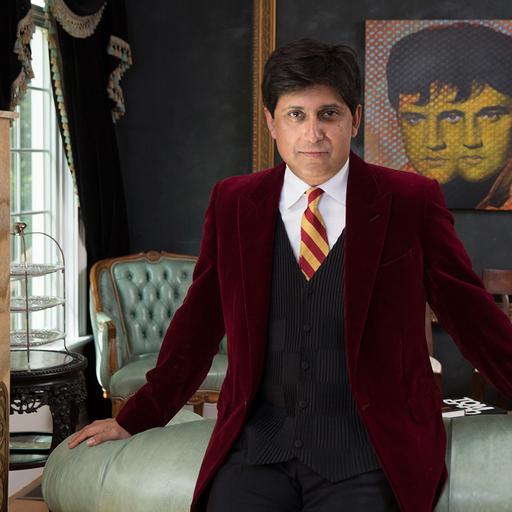
Harvard-Trained Psychiatrist, Author, Brain Researcher & Co-Founder of Reulay Digital Therapeutics.
17 years Federally funded brain researchTop 20 Leadership development mover & shaker6 Books authoredHarvard Medical School Assistant Professor of Psychiatry
Dr. Srini Pillay is a Harvard-trained psychiatrist, neuroscientist, entrepreneur, and author exploring one of the defining questions of our time: What makes us uniquely human—and how can we develop those capacities in an age increasingly shaped by AI?
Trained as a physician in South Africa, where he graduated at the top of his medical school class, Srini earned a Medical Research Council fellowship in neurochemistry before completing his psychiatry residency at McLean Hospital through Harvard Medical School. He became the institution's most awarded resident and went on to direct its Outpatient Anxiety Disorders Program and Panic Disorders Research Program in Brain Imaging. For 17 years, he conducted federally funded brain research while serving as an Assistant Professor of Psychiatry at Harvard Medical School.
Today, Srini brings that scientific foundation to questions extending far beyond traditional medicine. His work explores how belief, attention, emotion, creativity, and human connection influence the way we think, perform, adapt, and potentially age. Through his work on psychogenic longevity, he examines the relationship between psychological experience and physical health, expanding the conversation about longevity beyond biology alone.
As AI transforms the workplace, Srini is developing a powerful new perspective on human potential. He argues that our greatest advantage may not be faster thinking or tighter control, but our capacity for insight, imagination, unexpected connections, and reinvention.
More from Dr. Srini Pillay
All episodes → Ageless FutureYour Mindset Is Medicine: The Psychology of Longevity with Dr. Srini PillayNov 2026Play episode →
 Sustaining Creativity PodcastLiving a Creative Life with Dr. Srini PillayOct 2026Play episode →
 The Communicative LeaderReclaiming Cognitive Capacity: Neuroscience, Uncertainty, and Intentional UnfocusOct 2026Play episode →
 The Conscious Man 7 PodcastEpisode #154 - He's Building VR to Replace Psychedelics | Dr Srini PillayOct 2026Play episode →
 Mindset BoosterRewire Your Brain for Confidence, Creativity and BreakthroughSep 2026Play episode →
 The Deep Wealth Podcast - Unlock Your Deep Wealth In Business and LifeHarvard-Trained Psychiatrist Dr. Srini Pillay: Relentless Focus Is Robbing Your Profits, Success & Health (#579)Sep 2026Play episode →
 Peak Performance Life PodcastEPI 269: Harvard Trained Psychiatrist On How Your Mindset And Other Mental Factors Impact Inflammation, Immunity, Healthspan, & Longevity. With Dr. Srini PillaySep 2026Play episode →
 Mirror Talk: Soulful ConversationsReinvent Yourself: Neuroscience, Spirituality & the Power of Possibility (with Dr. Srini Pillay)Sep 2026Play episode →
 MadPo3t Podcast| Art|Life| Creative explorationInto the Abyss| Ft Dr. Srini PillayAug 2026Play episode →