
October 3, 2026
Episode #154 - He's Building VR to Replace Psychedelics | Dr Srini Pillay
Sound bites
We don't have the tools right now. I think someone could develop an AI that could help pick that up.
Illumination is moving away from the doom and gloom narratives of life to understand the essence of your being, which is being, consciousness, bliss.
In this episode
Dr. Srini Pillay joins The Conscious Man 7 Podcast to talk about AI, healing, identity, and a new way of thinking about consciousness.
- Mindset, lifestyle, nutrition, exercise, meditation, and stress all shape health and longevity.
- Stress was framed as one of the biggest killers on the planet.
- An AI tool could help identify when people are getting worse or better in treatment.
- Illumination means moving away from doom and gloom and toward being, consciousness, and bliss.
- Knowing your shadows matters too, because illumination includes understanding what drains your energy.
Transcript
Automatic captions of the conversation. They can contain errors and do not name who is speaking.
Speaker 1: And it's not like I've reached the pinnacle of myself, Speaker 1: but what's so hard about dressing, like how I feel Speaker 1: like dressing? So, you know, I feel like if you're Speaker 1: open to love, you will find it or it will Speaker 1: find you. Speaker 2: You know, it's true because I find that I have Speaker 2: seen people in my life that are like 70 years old. Speaker 2: It really just goes to show that there are so Speaker 2: many different factors. Mindset, lifestyle, nutrition, exercise. And then other Speaker 2: little things like meditation, stress, you know what I mean?
Speaker 2: Because stress is probably the biggest killer on the planet. Speaker 1: We don't have the tools right now. I think someone Speaker 1: could develop an AI that could help pick that up. Speaker 1: But right now, it's very difficult to do that. A Speaker 1: lot of people have paper mills in places like China, Speaker 1: for example, where they manufacture papers with figures from previous papers. Speaker 2: It's almost like we're stepping into a world where how Speaker 2: do we know what is real and what is fake, Speaker 2: you know?
So it's almost like we're going to have Speaker 2: to use like intuition, like you were saying, to actually Speaker 2: be able to decipher if something is legitimate or not. Hey, Speaker 2: Conscious Man 7 family. Quick question before we start. Do Speaker 2: you love the depth of these conversations but hate when Speaker 2: ads break the flow? I get it. Ads can feel Speaker 2: like speed bumps on a highway. pulling you out of Speaker 2: that deep zone. That's why we created a way for Speaker 2: you to enjoy every episode completely ad-free while supporting the Speaker 2: show at the same time.
For just a few bucks Speaker 2: a month on Patreon or Locals, you'll get full access Speaker 2: to uninterrupted episodes, you'll get direct access to me so Speaker 2: you can ask me any questions that you have, some Speaker 2: cool other perks like early releases, And you'll also help Speaker 2: us keep bringing you the powerful conversations that mainstream platforms Speaker 2: won't touch. The link is in the show notes. Join Speaker 2: us there and be part of this movement. Ever look Speaker 2: up and see those dull gray skies streaked with chemtrails Speaker 2: and you feel your energy sink?
You're not imagining it. Speaker 2: Something in you knows the sky isn't supposed to look Speaker 2: that way. But what if you could bring back the blue? Speaker 2: What if there was a way to clear the air? Speaker 2: inside you and above you. That's where the Kembo comes in. Speaker 2: They create powerful organite, tools that generate organ energy, the Speaker 2: life force that helps neutralize EMFs from your mobile phone, Speaker 2: your Wi-Fi, and even 5G. It's nature's way of restoring balance, Speaker 2: bringing cleaner air, calmer energy, and deeper sleep.
Every piece Speaker 2: from the Kembo is handmade, from tactical tower busters to Speaker 2: beautiful pyramids and jewelry. crafted with the precise ingredients to Speaker 2: generate real Oregon energy. And here's the best part. They've Speaker 2: proven it. For over 10 years, they've cleared thousands of Speaker 2: miles of chemtrails, bringing the blue back to the skies Speaker 2: around the world. So if you're ready to take back Speaker 2: your weather and your well-being, go to thechembo.com. Use coupon Speaker 2: code CM7 for 10% off and experience the shift for yourself.
Speaker 2: Don't fear the chemtrails or the EMF. Be empowered with Speaker 2: the Kembo and never feel helpless again. If you are Speaker 2: new to this podcast, please don't forget to like, subscribe Speaker 2: and to share because that helps us to be recommended Speaker 2: in the algorithms. If you would like to support this podcast, Speaker 2: please check out our merch store on Amazon with the Speaker 2: brand Todd and Me. We've got some cool t-shirts, tank tops, Speaker 2: hoodies and sweaters. Link will be in the description of Speaker 2: this podcast.
And if you're now starting a spiritual journey, Speaker 2: you would like to start a spiritual journey or you're Speaker 2: currently on a spiritual journey and you would like some Speaker 2: help removing some fears and traumas, please hit me up Speaker 2: on my Instagram at Adriano underscore 246 and it will Speaker 2: help you to get some magic mushrooms. Enjoy the show Speaker 2: and stay tuned because we have some more great content Speaker 2: coming soon. What if the same technology being built to Speaker 2: replace your doctor is also being built to replace psychedelics?
Speaker 2: Most people think artificial intelligence is coming for their job, Speaker 2: almost none of them are asking what it's coming for next. Speaker 2: Their identity, their healing, even their sense of what is real. Speaker 2: In this episode of the Conscious Man 7 podcast, I Speaker 2: sit down with Dr. Srini Pillay, Harvard-trained psychiatrist, brain researcher, Speaker 2: and the man institutions like the United Nations, the World Bank, McKinsey, Speaker 2: and the U.S. Department of Defense call in to train Speaker 2: their leaders.
He grew up in a humble home in Durban, Speaker 2: South Africa, under apartheid, and became the first person of Speaker 2: color in his department at one of the country's top Speaker 2: universities before conquering Harvard itself. Today, he's building virtual reality Speaker 2: designed to mimic the effects of psychedelics and easing anxiety Speaker 2: in astronauts bound for Mars. And he's asking one question Speaker 2: most people are too afraid to sit with. Artificial intelligence Speaker 2: can already out-diagnose your daughter, so what's actually left that Speaker 2: makes you human?
Liberate your fears and walk with me. Speaker 1: Sit down and meditate. Speaker 2: Connect with your soul. Be a monster and then learn Speaker 2: how to control it. Speaker 1: You gotta be willing to do the work. Speaker 2: So it really goes really deep in terms of words Speaker 2: and etymology and what they mean. So this is why Speaker 2: it is really hard to really crack the matrix because Speaker 2: there's so many levels and layers to it, you know? Srini, Speaker 2: welcome to the Conscious Man 7 podcast. How are you today?
Speaker 1: Thanks so much for having me, Todd. I'm feeling great Speaker 1: and I'm really looking forward to our conversation. Speaker 2: Yes, I am really looking forward to this conversation because Speaker 2: like I said, I, I guess you can call me Speaker 2: a psychonaut because I've done more ceremonies than my hands Speaker 2: and my toes and fingers. And when I saw an Speaker 2: opportunity to talk to you, to talk about this, because Speaker 2: I would never have thought that you could use technology Speaker 2: to even replace the psychedelic effect, because obviously we're talking about, um, Speaker 2: visions and patterns and shapes and colors.
and probably geometry Speaker 2: to create this effect. I thought it was quite interesting Speaker 2: because I don't think that most people would even think Speaker 2: it's even possible because it is from the medicine. So Speaker 2: I'm really interested to hear about your background, how you Speaker 2: came up with this idea and all of that good stuff. Speaker 2: But before we get there, let's talk a little bit Speaker 2: about your childhood and your past and stuff like that. Speaker 2: So your mother told you you could be anything at all.
Speaker 2: What did those words end up giving you permission to become? Speaker 1: Well, I think it was more than her words that Speaker 1: influenced me. I think it was her way of being. Speaker 1: She had a permission that I always felt some kind Speaker 1: of permission from her to try to be as great Speaker 1: as I could be, but also to know that I Speaker 1: was human and that I was probably going to mess Speaker 1: up a lot along the way. And In terms of Speaker 1: unconditional love, it really is one of the most remarkable Speaker 1: examples of unconditional love.
So I think what my mother Speaker 1: did for me was to inspire my curiosity, to really Speaker 1: make me understand the power of loving and being loved, Speaker 1: and to understand how it was much more than just Speaker 1: a heartfelt sensation, that it had something to do with Speaker 1: a fundamental oneness of being. which is a philosophy that Speaker 1: guides much of how I live my life while I'm Speaker 1: listening to other people and how they live their lives. Speaker 2: I think that is a very good mother that you Speaker 2: had and a very good way of being and upbringing Speaker 2: because there are a lot of people that don't have Speaker 2: that kind of permission from their parents because it's super Speaker 2: strict and very restrictive parents.
And I mean, talking about Speaker 2: no possibilities or imagination, like I was saying, like who Speaker 2: would even have thought about even using technology to replace psychedelics, Speaker 2: which I can't wait for us to touch on. So Speaker 2: you were the first person of color in your own Speaker 2: department at Stellenbosch University. What did that moment actually feel Speaker 2: like from the inside? Speaker 1: You know, it's firstly, memory is so unreliable. So I think, uh, Speaker 1: I want to provide a caveat, which is that whatever Speaker 1: I'm remembering may or may not be true, which I Speaker 1: think is true.
I think the experience of being a Speaker 1: person of color in South Africa was a peculiar one Speaker 1: for me because I am by nature, the love that Speaker 1: I received from my family was a love that I Speaker 1: felt I could give to the world. And it didn't Speaker 1: have to do with what people's skin colors were or Speaker 1: what they were doing for a living. So I think Speaker 1: when I arrived at Stellenbosch, most people thought I was Speaker 1: crazy to do this because it would feel lonely and Speaker 1: it would feel strange.
And I thought I had a Speaker 1: pretty wide range of foods that I ate, for example. Speaker 1: I ate beef, I ate pork, I ate vegetables. But Speaker 1: when I arrived there, I remember the first day in Speaker 1: the dining hall, it was like ostrich and crocodile and wildebeest. Speaker 1: I was like, oh my God, I thought I ate everything. Now, Speaker 1: I'm not sure. And there was a big hush in Speaker 1: the hall because no one had actually interacted with anyone Speaker 1: like me for any extensive period of time.
Um, and Speaker 1: so initially I think I felt, uh, you know, a Speaker 1: little out of place, but I don't think it was Speaker 1: so much about my color. It was about just being Speaker 1: new to a place. Um, I for some reason had Speaker 1: learned to not operate in the world with a color Speaker 1: in my consciousness about myself. And I think it's because Speaker 1: I libidinized, um, whatever emotions were involved with such a Speaker 1: tense hierarchical political structure. I'll just give you an example Speaker 1: of what I mean.
When I was walking past a Speaker 1: pool as a child, I'd said to my mom, I Speaker 1: really would like to swim. And she said, I'm sorry, darling, Speaker 1: but that's only for whites. And rather than, a lot Speaker 1: of people would see that as being an abomination that Speaker 1: they would protest against. I felt two droplets of water Speaker 1: reach me. from other white kids who were playing in Speaker 1: the pool. And it was so stimulating, it was so Speaker 1: forbidden that somehow I had this forbidden water in my hand.
Speaker 1: And so what makes one person object to not being Speaker 1: able to be somewhere and another to enjoy what is forbidden? Speaker 1: I think it has something to do with libidinal drives Speaker 1: and it has something to do with how you want Speaker 1: to experience the world. And I think for me, a Speaker 1: lot of what I was surrounded by set me up Speaker 1: for wanting to be curious, to enjoy the world, and Speaker 1: to recognize that despite the difficulties, that I probably, when Speaker 1: I think about the hardships in my life, I don't Speaker 1: think that, I think all humans suffer and all humans Speaker 1: have an amazing life.
And I think it's up to Speaker 1: you what you want to make of your life. So Speaker 1: when I arrived at Stellenbosch, I think I didn't experience Speaker 1: the race quite so acutely. It was also a different language. Speaker 1: It was my second language, which was Afrikaans, which I Speaker 1: had a very ambivalent relationship with. I think a lot Speaker 1: of people called it the language of the aggressor because Speaker 1: of how important Afrikaans was in setting up apartheid. I Speaker 1: didn't feel that. I loved the language.
Now, you might say, well, Speaker 1: maybe I had Stockholm syndrome. I was identifying with the aggressor. Speaker 1: It's possible. Or maybe I just loved it. And I Speaker 1: did love how it sounded. I loved the meaning of it. Speaker 1: I loved the people who spoke it. So within a Speaker 1: very short period of time, I found myself assimilated in Speaker 1: a community that was not used to assimilating people who Speaker 1: look like me. What you attribute that to, I don't know. Speaker 1: But I do feel like in general, if you approach Speaker 1: any situation as a potential victim, often what you expect Speaker 1: to be treated as, you are treated as.
Whereas I think, Speaker 1: even if you are aware of the injustice of a Speaker 1: political system, if you recognize that you want to just Speaker 1: deal with people on a one-on-one basis, you recognize that Speaker 1: there is not some ubiquitous evil that is cast upon Speaker 1: the world, that within these structures of injustice, there are Speaker 1: opportunities for love and there are opportunities for connection. And Speaker 1: up till today, I still have some of my lifelong Speaker 1: friends who came from that environment.
So I am super Speaker 1: grateful for having had that opportunity I'm also grateful for Speaker 1: all of these paradoxes that I'm talking about, because to me, Speaker 1: life is just full of contradictions and learning how to Speaker 1: escape those contradictions to other planes of existence has always Speaker 1: been an impetus of mine. Speaker 2: You know, the way you're speaking, it is almost like Speaker 2: what I call the victor mentality and opposed to the Speaker 2: victim mentality. And I find that today you can use Speaker 2: any group, any group, sexual orientation, any fill in the blank.
Speaker 2: And there's always a reason to blame others or to Speaker 2: have a negative mindset because it's someone else's fault. But Speaker 2: it's almost like if you have like, you alchemized it, Speaker 2: where it was like this thing that you're not supposed Speaker 2: to do. And it just made you more curious to Speaker 2: find out almost like why it was almost, the way Speaker 2: I see it is almost like a child, like saying like, why, why? Speaker 2: And then you took it to another level to just Speaker 2: think on, okay, well, I'll just, think about other things Speaker 2: and do other things and not really let it bother me.
Speaker 2: Because I think that most mavericks in the field of Speaker 2: expertise tend to have characteristics like that, where they don't Speaker 2: really see limitations and they just push through it. And Speaker 2: certainly you've done that, you know, because, and also to Speaker 2: be eating ostrich and wildebeest or crocodile, that's some good Speaker 2: experimentation there, to be honest with you. Speaker 1: Well, you know, as a child, I came home because, Speaker 1: you know, we were raised Hindu. And in general, that Speaker 1: meant that you didn't eat in that environment.
It meant Speaker 1: that if you ate meat, you ate lamb, but you Speaker 1: didn't eat beef and pork. And I grew up eating Speaker 1: beef and pork. And so when I went to school Speaker 1: and I told my friends I was Hindu, they were like, Speaker 1: you're not Hindu. You eat like roast beef and eat bacon. Speaker 1: So I came home and I said to my mom, Speaker 1: why did you tell me I was Hindu? Because My Speaker 1: friends told me I'm not Hindu because of what I eat. Speaker 1: And she said, you are whatever you want to be Speaker 1: and you eat whatever you want to eat.
She said, Speaker 1: you really believe there's a God saying you can eat bacon, Speaker 1: you can't eat bacon, you can eat beef, you can't Speaker 1: eat beef. She said, honestly, whatever you do in your Speaker 1: life and whatever path you choose, recognize that they're your Speaker 1: choices and whatever conceptualization you want to have of God Speaker 1: is personal. It's yours. So, you know, I think I Speaker 1: think I grew up with that kind of permissiveness. And Speaker 1: so when I saw the ostrich, I was like, Oh God, Speaker 1: I don't really want to imagine an ostrich would have Speaker 1: eating this ostrich.
But then I was like, you don't Speaker 1: need to imagine it, just eat it and see what Speaker 1: it's like. And that wasn't standard anyway. It would happen Speaker 1: to be on that day. You know, when I, when Speaker 1: I came back, I could eat whatever I wanted to Speaker 1: eat wherever. And my mother was ridiculous. I mean, she would, Speaker 1: for the first couple of months, she would air freight Speaker 1: me food to my door in my tiny dorm room. Speaker 1: And I had this small refrigerator and a, electric frying Speaker 1: pan where I would reheat it.
So, you know, I Speaker 1: had solutions for things. And once you made it out Speaker 1: of there, there was like regular food outside of there. Speaker 1: So I think for the time, it was quite unusual. Speaker 1: But you know what might be even more unusual was Speaker 1: that when I went to the program that I was Speaker 1: accepted to at Harvard, which at the time was ranked, Speaker 1: there are a few different Harvard programs. At the time, Speaker 1: it was ranked the number one program in the country. Speaker 1: I was the second person of color and the second Speaker 1: person from another country in the history of that program.
Speaker 1: So it wasn't like, in terms of admission, people would Speaker 1: always joke about this. They would say, 10 years later, Speaker 1: you'd go to an emergency room and three quarters of the, Speaker 1: half of the doctors would be Indian. When I came Speaker 1: to Harvard, it was not that different. It's not like Speaker 1: there were other people of color you know, who are Speaker 1: roaming around. So it's interesting to me that people speak Speaker 1: of South Africa in that way, when in fact, I Speaker 1: think there was a gradual assimilation going on all over Speaker 1: the world.
And I don't really see this as like, again, Speaker 1: I don't see this as a, in a victimized way, Speaker 1: because I always think, you know, I'm fundamentally, it's very Speaker 1: hard not to be a hypocrite. I'm fundamentally hypocritic. Like, Speaker 1: if you asked me. Speaker 2: What a statement to make. Speaker 1: Well, if you asked me, do you think it's good Speaker 1: to invade a country and take over with their possessions Speaker 1: and start colonializing and building whatever you want to build? Speaker 1: I'd be like, no, I mean, it sounds terrible.
Like, Speaker 1: why would you want to do that? But if you Speaker 1: look at all the things I enjoy, I love the Speaker 1: colonial things. You know, I don't spend all my time Speaker 1: in huts and in temples or I like beautiful hotels. Speaker 1: I like the productions. You could say, well, I've been indoctrinated, Speaker 1: which might be the case, but it still is my preference. Speaker 1: So how can I like something that I think is Speaker 1: not right? It's very difficult to make sense of life Speaker 1: in general.
I think when it comes to matters of Speaker 1: even making choices amongst school subjects in the musical that Speaker 1: I wrote, There's a line that is school subjects, love objects, Speaker 1: they are all a form of torture. It's like, how Speaker 1: do I choose between this and that? How do I, Speaker 1: you know, what's the right thing? So I think when Speaker 1: one comes to terms with this fundamental torture of human existence, Speaker 1: one understands that there is a call to discover another Speaker 1: level of consciousness.
And for me, it's never been like Speaker 1: a kind of preachy thing, I'm not sort of like, Speaker 1: I'm a monk and I do this thing. On my Speaker 1: Twitter profile, I used to describe myself as somewhere between Speaker 1: martinis and meditation. I like the worldly life. I like Speaker 1: the worldly life and I like the spiritual life. And Speaker 1: I feel like they all contribute to great amounts of Speaker 1: meaning in my life. Speaker 2: Yeah, I think it's just a matter of finding a balance, really, Speaker 2: is really...
the love, happiness, and abundance occurs, you know? Speaker 2: So you've spoken publicly about positive disintegration, the idea that Speaker 2: falling apart can be the doorway to a stronger life. Speaker 2: What was the first time you lived that theory instead Speaker 2: of just teaching it? Speaker 1: Um... So many reasons, so many places. I don't know Speaker 1: what the first time was, but I'll reference an earlier Speaker 1: stage of life where, you know, I was in the Speaker 1: 11th grade. There was an exam that was given to Speaker 1: all races.
Prior to that, they were all segregated, you know, Speaker 1: where in South Africa, Indians had very difficult exams. In general, Speaker 1: when we would take exams given to white students, they Speaker 1: were much easier. But It didn't really correlate. I mean, Speaker 1: when I met people subsequently, I felt like they were Speaker 1: equally distributed intelligences. So I don't know what it translated into. Speaker 1: But I had taken this exam. It was meant to Speaker 1: be an advanced exam for advanced English.
And I was Speaker 1: the first person of color to ever be placed in Speaker 1: the English Olympiad. And I was like, oh, this is amazing. Like, Speaker 1: it's so good. But then I learned that the award Speaker 1: was that I had to go to Grahamstown and live Speaker 1: at a university there in a dorm room and share Speaker 1: a bathroom with people I didn't know. I positively disintegrated. Speaker 1: And it didn't feel very positive. I was like, what? Speaker 1: I don't bathe with other people. What is this? I Speaker 1: don't take a shower.
So I would get up at Speaker 1: 2 a.m. to go just to make sure that I Speaker 1: didn't encounter anyone in the bathroom. It was an identity Speaker 1: that was about assimilating what that identity was. And then Speaker 1: When I met everybody subsequently, it was also unusual because Speaker 1: I was the only person of color in this group. Speaker 1: And it's weird to call it of color because it's Speaker 1: not like people who are white have no color. They Speaker 1: have skin of varying degrees of intensity. But it was Speaker 1: very distressing for me initially.
But when I congealed and Speaker 1: I recognized the independence of moving away when I got Speaker 1: back home, it made me so much stronger. So I Speaker 1: would say some of the earliest moments were like that. Speaker 1: But I think I've made a habit of positively disintegrating Speaker 1: throughout my life. Because according to Dabrowski, whose theory this is, Speaker 1: when you positively disintegrate, you come apart. It's kind of freaky. Speaker 1: You're not always determining that you're going to disrupt your life.
Speaker 1: You know, like leaving South Africa, to come to America. Speaker 1: It's kind of scary when you don't know what's going Speaker 1: to happen. But when you get to put yourself together again, Speaker 1: you realize you might actually have a choice of what Speaker 1: you can shape into this new identity. So I think Speaker 1: for me that the first thing about moving away from home, Speaker 1: I think to grandstand just for a week and then Speaker 1: again moving away, I think even now I'm going through Speaker 1: a phase where I've really recognized after feeling like I Speaker 1: was lost in the world, I now suddenly, because I Speaker 1: accepted something I've been ignoring, I've suddenly found a sense Speaker 1: of purpose that is probably one of the strongest sense Speaker 1: of purpose I've experienced in my entire life.
But sometimes Speaker 1: you've got to hit that rock bottom of extreme fear Speaker 1: to recognize that you've got to pick yourself up and Speaker 1: put yourself together in a different way. And I can Speaker 1: talk about the details of that. I think for me, Speaker 1: because I'm a doctor and executive coach and a musician Speaker 1: and a technology entrepreneur, everyone's always saying choose one. And Speaker 1: I'm like, again, I don't want to choose one thing. Speaker 1: All of these are all things I do have deep Speaker 1: knowledge of.
And so there are probably many people who Speaker 1: have deeper knowledge in any one of those things. But Speaker 1: I think the depth combined with integrating those different things Speaker 1: made me understand that I needed an umbrella to cover Speaker 1: everything that I'm doing, except that was not how I Speaker 1: thought about it. It's only how I'm framing it now. Speaker 1: I discovered through a conversation that I am going to Speaker 1: form a counter movement to the doom and gloom mentality, Speaker 1: not to make it an enemy, I own my shadows.
Speaker 1: I think we all have darkness that we have to Speaker 1: deal with. And I'm not morally superior. I just feel Speaker 1: like there's so much investment in that mentality, in the media, Speaker 1: in the result of what's evolved over the years. But Speaker 1: there's not a ton of investment in human illumination. And Speaker 1: so I'm right at the beginning of this, but I Speaker 1: want to invite the world to give up this narrative Speaker 1: of doom and gloom and to enjoy life as much Speaker 1: as we can as we're trying to build a new Speaker 1: existence at a very different time in the history of mankind.
Speaker 2: Certainly, that's a positive message. And I think that if Speaker 2: people were to really just go back to the basics, Speaker 2: which the yogis and the masters talked about was just Speaker 2: living in love. But the thing is that a lot Speaker 2: of people conflate the term love with an emotion. In Speaker 2: my humble opinion, love is more of an action. It Speaker 2: requires effort and doing. it shows up because of taking Speaker 2: action and not just sitting in a circle, holding hands Speaker 2: and singing Kumbaya.
I mean, that's great, but you need Speaker 2: to have the action behind it to show love. Because Speaker 2: I always say to people that words mean nothing unless Speaker 2: they're backed up by evidence. So you can tell someone Speaker 2: you love them, but do you show them you love them? Speaker 2: That is where the love actually manifests, becomes present and Speaker 2: is confirmed. It's through the doing and through the action. Speaker 2: And some people look at me like if I'm mad, Speaker 2: but I'm just saying what you're saying, but just in Speaker 2: a slightly different terminology, but it's just, you know, me Speaker 2: enjoy life.
If you enjoy life, you're living in a Speaker 2: place of love. You know, if you're happy, you have Speaker 2: to be in a state of love. You know, when Speaker 2: you're giving, you're also in a state of love. So Speaker 2: everything comes back to love, but all of those things Speaker 2: require doing, taking action, having a transformation. And This is why, Speaker 2: you know, I'm really pleased to talk to you today Speaker 2: because we can, you know, propagate this message, you know, Speaker 2: more of, of, of that, because I think it requires Speaker 2: a change in mindset and a shift in consciousness that Speaker 2: you said, you know, so you've called it really does.
Speaker 1: Yeah. Speaker 2: So you've called yourself a polymath, psychiatrist, musician, poet, digital artists, Speaker 2: which one of those identities showed up first before any Speaker 2: of the titles arrived? Speaker 1: I don't know that I believe in the notion of identity, Speaker 1: the way that people talk about it. So I, as Speaker 1: he was speaking, I was reminded of something, you know, Speaker 1: even though I grew up here, we didn't have a Speaker 1: lot of theory of, it was more like rituals. But Speaker 1: over the years, you know, I read the Bhagavad Gita, Speaker 1: I read the Quran, I read the Bible, I read Speaker 1: the Yoga Sutras of Patanjali.
I read a lot of Speaker 1: different books and Kabbalah and sort of got a sense Speaker 1: that they were all saying pretty much the same thing. Speaker 1: just in different language and different words. And the one Speaker 1: thing that really appealed to me in non-dualism, one of Speaker 1: the strands of philosophy in Hinduism is this notion that Speaker 1: our fundamental nature is being, consciousness, bliss. That anything else Speaker 1: that disrupts it, if you're having a bad day, you're Speaker 1: feeling angry, you're feeling sad, That is just taking you Speaker 1: away from your fundamental nature.
It is a perturbation of Speaker 1: the mind that you have succumbed to to take you Speaker 1: away from who you are. And so for me, there Speaker 1: was never a single identity. I always felt pluripotent. I Speaker 1: still feel pluripotent. There's no commitment to an identity. But Speaker 1: I will say that because I did particularly well at Speaker 1: music at school, and I also did well at the sciences, Speaker 1: when I was in high school, my music teachers called Speaker 1: my parents to talk to them and I asked my dad, Speaker 1: what does my teacher want to talk about?
He said, oh, Speaker 1: she thinks you should be a musician. And I said, well, Speaker 1: what do you think? He said, it's not my life. Speaker 1: I don't want to be blamed for whatever you feel. Speaker 1: Life's going to be tough as an adult. You don't Speaker 1: even recognize it yet. But I don't want to be Speaker 1: blamed for that. I said, no, why are you lying? Speaker 1: You want me to be a doctor? He said, yeah, Speaker 1: I mean, it's what I want. But It doesn't mean Speaker 1: you should do it. You should do what you want Speaker 1: to do.
And so what he said was, they said, Speaker 1: you know, there are a lot of, your kid's definitely Speaker 1: going to get into medical school, but there are no Speaker 1: Indian kids who are musicians. It would be so good Speaker 1: for the community if he could pursue that because he Speaker 1: actually has a talent. And I wondered about it for Speaker 1: a while, you know, and so I came to this Speaker 1: curious conclusion that I had to go to medical school Speaker 1: Because as an artist, I could not imagine not having Speaker 1: an intimate understanding of the human body.
Like the first Speaker 1: time you put your hands on a cadaver and you Speaker 1: feel the latissimus dorsi in the back and you're you're Speaker 1: peeling the skin away and you're touching this. It's not Speaker 1: just the science of the attachments and what they're doing Speaker 1: and how the joint is moving. It is the art Speaker 1: and essence of being human. And so for me, like, Speaker 1: you know, a good, funny example of this is the Speaker 1: last thing anybody expected was that I would win the Speaker 1: orthopedics prize.
And because orthopedics is a rough thing, it's Speaker 1: sort of like a lot of joint manipulation. But I Speaker 1: was just enamored by the way in which you could Speaker 1: put on a plaster of Paris in someone's leg, you know, Speaker 1: the way you could attend to joints coming together. There Speaker 1: was a kind of gentleness to it. And I had Speaker 1: a friend who loved orthopedics. And when they called us Speaker 1: for the oral exam, they only call you if you're Speaker 1: going for the prize or if you're on the border Speaker 1: of failure.
And in his mind, he was thinking, no Speaker 1: way am I, going for the orthopedics prize. He goes, oh, man, Speaker 1: you got called for the oral exam? And I was like, yeah, Speaker 1: I hope it goes well, thinking I was going to fail. Speaker 1: And then I got the orthopedics prize. And he was like, what? Speaker 1: You like orthopedics? And I was like, yeah, I was Speaker 1: really into it. I like surgery. When you're in an Speaker 1: operating theater and your hands are in someone's body, it Speaker 1: is an incredible privilege.
I mean, there's nothing like it. Speaker 1: Excuse me, Alexa's talking. Alexa, stop. So when your hands Speaker 1: are in someone's body, I remember my mother saying to me, Speaker 1: remember that you are the instrument of God and that Speaker 1: you should pray for every patient you're seeing so that Speaker 1: you can have whatever that light is move through you. Speaker 1: So even though I was an agent, I... It's all Speaker 1: a spiritual experience, an artistic experience. So for me, identity Speaker 1: was always pluripotent.
And I like staying in a pluripotent state. Speaker 1: It's sort of like a metaphor. It's like being a Speaker 1: stem cell forever in your life. Because the idea of Speaker 1: commitment is interesting, but it is, as Kierkegaard said, anxiety Speaker 1: is the dizziness of freedom. I think when we give Speaker 1: up the freedom of our pluripotentiality, We may rationalize that Speaker 1: we've committed to an identity, but what we've done is Speaker 1: we have also developed a very complicated relationship with freedom, Speaker 1: the freedom to be who we want to be when Speaker 1: we want to be that.
Speaker 2: I like that saying, anxiety is the dizziness of freedom. Speaker 2: I'm going to nick that because it does make sense, Speaker 2: you know, because you can't be in a free state, Speaker 2: which is a love state, if you're anxious, you know. Speaker 2: It is a negative energy and emotion. So yeah, it Speaker 2: makes total sense. So let's transition and talk about the Speaker 2: healing at the edge of science. Now, your company has Speaker 2: patented something called Cyberdelic, built to stimulate the effects of Speaker 2: psychedelics without the medicine.
What made you confident that that Speaker 2: was even possible? Speaker 1: So the first thing I want to say is that Speaker 1: our intention was not to replace psychedelics. it was to Speaker 1: offer the therapeutic effects through a technology. Because I think Speaker 1: therapy by mouth is probably different from therapy by eye. Speaker 2: Possibly, yes, quite possibly. Speaker 1: They go through different pathways. Speaker 2: True, true, because one is in the system and one Speaker 2: is external stimulation. Speaker 1: And the external does eventually get into the system and Speaker 1: it does influence your body.
So what we did was Speaker 1: we decided that we want, so it really actually first Speaker 1: started as an epigenetic restoration company. And we couldn't say Speaker 1: this to anyone because no investor wanted it to be that. Speaker 1: What I had believed through my life is that stress Speaker 1: causes epigenetic changes. It doesn't change the gene, but it Speaker 1: causes methylation or histone modification, which means that the genes Speaker 1: themselves get distorted because things get inserted. And as a result, Speaker 1: it triggers of a cascade of events that lead to Speaker 1: chronic disease like cancer, heart disease, stroke, and neurodegenerative disease.
Speaker 1: And everyone else in medicine was focusing on what's happening Speaker 1: when they get cancer, how do you prevent cancer? No Speaker 1: one was trying to, no one was looking at one Speaker 1: of the biggest determinants, which is how can we manage Speaker 1: stress on a day-to-day basis so it doesn't lead to Speaker 1: those pathways. Now, because early on we recognized this could Speaker 1: not be an investor story, We decided that we were Speaker 1: not going to do that. And we conducted a study Speaker 1: at Mayo Clinic.
We were able to show statistically significant Speaker 1: improvements in anxiety, emotional distress, and focus. And we had Speaker 1: nature-based experiences. But that nature is like one form of Speaker 1: art in the world. There's also an extensive literature on Speaker 1: geometry and how geometry can impact the brain. For example, Speaker 1: the brain doesn't respond very well to upside-down triangle. and Speaker 1: wellness gets diminished. And we found another 20 criteria like that. Speaker 1: And then when it came to psychedelics, there were all Speaker 1: kinds of criteria that were associated with well-being.
Things like Speaker 1: fusion with the environment, fractal patterns. Fractals are just such a, Speaker 1: they're repeated patterns. And they are so interesting as patterns Speaker 1: because a lot of what goes on in the body, Speaker 1: you will see evidence for in nature. In the same Speaker 1: way that a tree branches, in your lung you have bronchioles, Speaker 1: and the branches in the lung are very similar to Speaker 1: the tree. In the way that lightning branches, it's kind Speaker 1: of interesting that you also get these branches in neurons.
Speaker 1: So we started to ask, I wonder if there's something Speaker 1: therapeutic about fractal patterns which arise during psychedelic use. I Speaker 1: looked deeper into that, and I was like, this is Speaker 1: kind of interesting. There's a bunch of different things sudden Speaker 1: cardiac death, inflammation. When you look at what happens to Speaker 1: the physiology, it loses its fractal nature. And you're like, Speaker 1: so if your physiology stops being fractal, it's a problem? Speaker 1: And it's like, yeah.
And now there's preliminary studies showing Speaker 1: that when you restore fractal patterns to physiology, you also Speaker 1: can create healing. So we were very interested in, when Speaker 1: we first started, it was terrible. It took so long Speaker 1: to make this. But then AI came along And we Speaker 1: had these 20-something number of criteria, and we would just say, Speaker 1: use these five criteria and construct a brief video of Speaker 1: this number of minutes. And we're able to construct a Speaker 1: whole lot of things because our hypothesis is that there's Speaker 1: no one-size-fits-all, that some way embedded in how a psychedelic acts.
Speaker 1: You see, what people don't recognize about psychedelics is that Speaker 1: it's not just about the psychedelic. if I put the Speaker 1: psychedelic on the table, it's a very different effect than Speaker 1: if I put it in your brain. Because in your brain, Speaker 1: it's interacting with your brain. And how your brain is Speaker 1: will determine how you're interacting with that psychedelic. And brains Speaker 1: are so individual. So it's hard to imagine there's only Speaker 1: one kind of psychedelic that's helping, or there's only one Speaker 1: aspect of psychedelics that's going to help.
But we did Speaker 1: think that that these experiences would likely reduce stress and Speaker 1: anxiety and would likely be protective. So we're in the Speaker 1: early stages of investigating that. We did it initially in Speaker 1: virtual reality, but Roulet has taken, is now, we've made Speaker 1: multiple turns. There's Roulet, the original Roulet, which is for Speaker 1: the indications I just described, reducing stress and anxiety, where Speaker 1: you have these three channels. I'm also researching three other Speaker 1: channels right now.
One is symbolic art, The other is architecture. Speaker 1: The third is fashion. Because I really think there's a Speaker 1: lot about healing that's boring. And so I also didn't Speaker 1: want to be like one of these boring companies that Speaker 1: was just using the same boring meditations to calm you Speaker 1: down and speak to you in a soft voice. There's Speaker 1: also a vitality that we all yearn for. So a Speaker 1: lot of our experiences are geared toward enhancing that vitality. Speaker 1: But then we also have Meridian, which is powered by Roulette.
Speaker 1: which is our human advantage platform. So we've taken those Speaker 1: same experiences and we've put them into categories where we Speaker 1: can enhance either critical thinking or focus, or we can Speaker 1: enhance creativity. At Mayo Clinic, we were able to show Speaker 1: statistically significant improvements in anxiety, emotional distress, and focus. And Speaker 1: we found something similar in Blue Shield of California. So Speaker 1: these are small studies though. And yeah, I think it Speaker 1: would be nice to have a large sample size, but Speaker 1: I think what would be better is to really start Speaker 1: figuring out how to deliver individualized experiences.
But to answer Speaker 1: your question briefly, to summarize what I said, there's enough Speaker 1: evidence in the literature that there are aspects of psychedelic Speaker 1: experiences that have been associated with well-being. I still think Speaker 1: we'd need trials to prove that at a clinical level. Speaker 1: But as a well-being intervention, we felt convinced that from Speaker 1: subjective reports and from anecdotes, That there was enough in Speaker 1: the literature to suggest that these fractal patterns or these Speaker 1: patterns where you dissolve into nature could actually be healing.
Speaker 1: And I wrote an article that was accepted by Mayo Speaker 1: Clinic Proceedings Digital Health of the metaverse for longevity. And Speaker 1: the point that I made was that if transcendental meditation Speaker 1: in a preliminary study was able to downregulate all 49 Speaker 1: genes associated with inflammation, I mean, it literally turned those Speaker 1: genes off and was able to upregulate, turn them on, Speaker 1: the genes for immunity and oxygen carrying capacity then might Speaker 1: virtual reality or the metaverse be a place where you Speaker 1: could provide an alternative to meditation with these healing experiences?
Speaker 1: And can we measure the inflammatory consequences? So no one's Speaker 1: done that yet, but that's the direction in which it's Speaker 1: one of the directions I'd like to. Speaker 2: Everything you said is very interesting. And I did a Speaker 2: podcast with a group, a couple, they go by the Speaker 2: name of geophilia. Arturo and Lydia de Leon. And they Speaker 2: combine architecture with sacred geometry. And they have proven that Speaker 2: the shapes of geometrical shapes and being on certain parts Speaker 2: of the planet, there are different energy frequencies that you Speaker 2: can promote healing.
And she did her PhD and in Speaker 2: her PhD, she was in, I think from memory was Greece. Speaker 2: and there was this farmer that had like a warehouse. Speaker 2: And in one part of the warehouse, they had the Speaker 2: sacred geometry and the crystals with the geometrical shapes on them. Speaker 2: And then in the other part, it was nothing. And Speaker 2: the part that had the sacred geometry and the actual Speaker 2: like outline shapes on the floor yielded three times more Speaker 2: produce and grew three times higher than the other part.
Speaker 2: So what you're seeing because she's done her PhD on it. Speaker 2: And that was one of the experiments that she did. Speaker 2: So sacred geometry and healing and energy for that matter. Speaker 2: And then they were throwing sound again, which is all Speaker 2: basically sacred geometry and patterns of fractals is basically the Speaker 2: way that we as a species are going to have Speaker 2: to go in order to give us liberation and realign Speaker 2: our consciousness with source. Because the things that you are Speaker 2: doing talking about and saying, I just find it fascinating Speaker 2: because I'm like, well, I actually did a show on that.
Speaker 2: And here you are talking about, you know, and these Speaker 2: things are out there possible. And it's like, no, not Speaker 2: just possible. They are right. So that's really, really cool. Speaker 1: Well, you know what? So firstly, we also have a Speaker 1: sacred geometry channel. So I'm a big believer in sacred Speaker 1: geometry in changing consciousness states. But I kind of don't Speaker 1: believe in mental health, even though I'm a psychiatrist, because Speaker 1: I wouldn't be able to move my right foot without Speaker 1: my brain.
So the fact that we only target the Speaker 1: brain when, in fact, there's enough evidence to show there Speaker 1: are two-way interactions with the gut, there are two-way interactions Speaker 1: with the adrenal gland, there are two-way interactions with the Speaker 1: immune system, there are two-way interactions with the heart. This Speaker 1: fetish to separate things out, this kind of bodily apartheid, Speaker 1: is something I'm not, I would not stop at that. Speaker 1: I think there's value in each local community, the heart Speaker 1: and the gut and the brain.
But I think you Speaker 1: have to step back and ask yourself, maybe I have Speaker 1: other entrance points to be able to heal myself. And, Speaker 1: you know, sometimes my friends will say, oh, you know, Speaker 1: you're speaking a little loosely about that. I have a Speaker 1: course on my website that's called Implementing the Science Behind Speaker 1: the Law of Attraction. they were like, why would you Speaker 1: put out a course like that? You're a brain researcher Speaker 1: and you've been studying biotechnology and looking at drugs in Speaker 1: early stage development for cancer, heart disease, stroke, and neurodegenerative disease, Speaker 1: of all the courses to put out.
And I said, well, Speaker 1: because I think the business of science, which is based Speaker 1: on evidence, is a profitable business. Sometimes it's laborious, but Speaker 1: it is a very protected business Because it preaches that evidence, Speaker 1: up until now, most people have thought of evidence as Speaker 1: a group effect. Either it works for the group or Speaker 1: it doesn't. I have huge problems with this, even in Speaker 1: double-blind placebo-controlled trials. Because just because something, let's say an Speaker 1: intervention works for 80% of people.
And so I say, well, Speaker 1: as a result, it works. When you walk into my office, Speaker 1: how do I know you're going to be one of those? Speaker 1: I have no idea. Secondly, I don't mind talking about Speaker 1: healing outside of the lens of science. Even if someone said, oh, Speaker 1: that's not scientific, but what was the sample size of Speaker 1: the number of trees that grew? What was the sample Speaker 1: size of the number of geometric figures? Those are good Speaker 1: scientific arguments against the existence of scientific evidence.
But is Speaker 1: scientific evidence the only evidence you need in order to heal? Speaker 1: And I would say anecdotal evidence is pretty powerful. And Speaker 1: those people who can believe enough might be able to Speaker 1: achieve it. Certainly placebo studies have taught us that your Speaker 1: brain is very powerful in healing. It's not just, doesn't Speaker 1: just trick you. It's just powerful in healing. You know, Speaker 1: there are studies that show that, I mean, there's so Speaker 1: many studies. There's a study by Ellen Langer, which is Speaker 1: very interesting.
They looked at 70-year-old men and above. And Speaker 1: for two weeks, she had them take on the habits Speaker 1: of 50-year-old men, meaning they watched TV that they watched Speaker 1: 20 years prior. They ate what they ate 20 years prior. Speaker 1: And what she found at the end of it was Speaker 1: that they had greater muscle strength, better vision, and better hearing. Speaker 1: So if you stop being 70 and you just start Speaker 1: being 50, it's going to change how you manage your Speaker 1: body and how you see and hear.
You know, there Speaker 1: are studies that show for certain kinds of knee surgery, Speaker 1: you have one group that goes in and gets the Speaker 1: real aspiration. They're getting the real knee surgery. They have Speaker 1: another group. They don't realize the doctor just opens them Speaker 1: up and closes them up, does nothing. Equal responses. So Speaker 1: when you believe in things, belief has a chemistry behind it. Speaker 1: We know it can change dopamine levels, you know, likely immunity, um, Speaker 1: These things always don't cleanly fall into the category of science.
Speaker 1: But I don't know why we wouldn't integrate them, even Speaker 1: if they're anomalous, or even if they're unusual. Yeah, maybe Speaker 1: they wouldn't be the standard of care, because the standard Speaker 1: of care would be something more mainstream. But why not Speaker 1: use it as an adjunctive? Certainly, that's the way we Speaker 1: were positioning Roulet as well, the idea of using it Speaker 1: as an adjunctive with preliminary evidence until there was greater Speaker 1: evidence out there. But I mean, does everything have to Speaker 1: be explained by science in order for it to be healing?
Speaker 2: That's a very good question to ask. And I think Speaker 2: is a question that I think the scientific community should Speaker 2: start asking themselves because I am all for data and Speaker 2: evidence and peer review and fill in the blank of Speaker 2: what else criteria you can add. But there's something about Speaker 2: the felt, the seen, and the believing that science can't Speaker 2: really explain because I can tell people, well, okay, if Speaker 2: you do this protocol, then you will get results.
But Speaker 2: I can't come and give you anecdotal evidence to say, well, Speaker 2: 12 people have done this and these 12 people are Speaker 2: having these results. I can only tell you based on Speaker 2: my experience and the experience that I've had with my Speaker 2: clients that And stuff like, and I always tell people that, Speaker 2: because I think that there's some things that at the moment, Speaker 2: we just don't have the level of consciousness to explain. Speaker 2: And I think it has to be experienced, which is Speaker 2: like one of the things I like with psychedelics, because Speaker 2: someone can say about how Todd, you can take psychedelics Speaker 2: and get healing from fears and traumas and stuff like that.
Speaker 2: I said, well, again, I can't give you a book to, Speaker 2: to show you, well, I had a fear of this Speaker 2: and now I don't have a fear of that. I Speaker 2: can just tell you my experience. And say, maybe it Speaker 2: would be beneficial for you. Maybe you try. And if Speaker 2: you believe that I told you, I tell you that Speaker 2: I've had other clients that have had this result that Speaker 2: you can possibly get it too, then you can use Speaker 2: the power of your mind that you're saying to believe, well, Speaker 2: you know what, this can work.
So I do think Speaker 2: that even if you get the right medicine that has like, Speaker 2: say the best, say 99.9% efficacy of working, you could Speaker 2: be that 0.9%. 0.1% that doesn't work simply because you're Speaker 2: a skeptic and you don't believe it works. So there Speaker 2: is a lot of mind and belief that has to Speaker 2: go into healing. And it's just a phenomenon that we Speaker 2: just don't have the thing we can put touch and Speaker 2: taste and feel to tell people it works. So this Speaker 2: brings me on to my next question.
So you've also Speaker 2: built VR to reduce anxiety and astronauts bound for Mars. Speaker 2: What does treating fear in space teach you about treating Speaker 2: fear here on Earth? Speaker 1: Well, so we ended up not completing that project, but Speaker 1: we did build those experiences. So I did a lot Speaker 1: of the research behind that. I did a lot of Speaker 1: the research behind, how that was different. Firstly, the end Speaker 1: results are quite similar, meaning if your heart is racing Speaker 1: or you're short of breath or you're feeling disoriented, the Speaker 1: end results are the same, but the conditions are quite Speaker 1: different when you have no gravity.
Anxiety is the dizziness Speaker 1: of freedom. When you have no gravity, technically you're free Speaker 1: from gravity, but it's kind of freaky. And so it Speaker 1: made me understand that, and also just the huge unknown Speaker 1: and uncertainty of heading into space and the uncertainty of Speaker 1: being able to return, I think had a certain valence Speaker 1: to it that is different from what's on Earth. So Speaker 1: I think that in result, the symptoms are similar, but Speaker 1: the conditions under which the anxiety occur are different.
And Speaker 1: I often worry, I often wonder why we worry the Speaker 1: way we do. Like, it seems like the human beings Speaker 1: have the propensity to worry. And the leading theory around Speaker 1: worry is called contrast avoidance theory. And basically what research Speaker 1: has found is that in life you have peak experiences where, Speaker 1: you know, it's amazing, you fell in love, you had Speaker 1: a child, And then you have these trough experiences where Speaker 1: you've lost a loved one or you lost a job.
Speaker 1: And what worried people do is they keep themselves in Speaker 1: the miserable middle because they don't like the contrast. They Speaker 1: don't like to feel elated and then terrible. They'd rather Speaker 1: feel slightly miserable and then terrible because the contrast is Speaker 1: not as bad. Now, on Earth, what we know about Speaker 1: the fear circuitry in the brain is that if your Speaker 1: fear circuitry gets trained, The next time there's even a Speaker 1: hint of a stimulus, the brain can respond even faster Speaker 1: because it's supposed to be.
That's what's supposed to happen. Speaker 1: The problem is if that happens every time there's tax Speaker 1: season because one year you felt like you did poorly Speaker 1: or every time you meet someone on a date, you're Speaker 1: like freaking out. You're developing the habit of fear and anxiety, Speaker 1: which actually it's important to cut or stop that habit. Speaker 1: So I've entered a little further from your original question, Speaker 1: but I think We didn't see the results from space, Speaker 1: but in building that experience, we recognized the conditions for Speaker 1: the anxiety are completely different there than they are on Earth.
Speaker 2: Okay, okay. Now I want to talk to you about Speaker 2: something that might feel like a gear change. Stay with me. Speaker 2: You know what genuinely frustrates me? Watching men who are Speaker 2: spiritually switched on, doing the inner work, evolving their consciousness, Speaker 2: reading the books, listening to the podcast, but still completely Speaker 2: lost when it comes to what they're putting into their Speaker 2: body every single day. Still carrying weight they do not want, Speaker 2: still operating below their potential, still letting food control them Speaker 2: instead of the other way around.
And here is the Speaker 2: truth nobody wants to say out loud. An awakened mind Speaker 2: living in an undisciplined body is still a divided man. Speaker 2: I've seen it too many times, and it bothers me Speaker 2: enough to build something about it. So I created the Speaker 2: Compound Body Training Custom Meal Plan, a done-for-you four-week nutrition Speaker 2: system built specifically around your body, your biology, your goals, Speaker 2: and yes, your favorite foods. This is not a template. Speaker 2: This is not a generic diet sheet somebody copy-pasted from Speaker 2: the internet.
This is your personal nutritional blueprint, designed around you, Speaker 2: delivered to you, ready to follow from day one. Because Speaker 2: if you want to take a do-it-yourself approach to your Speaker 2: health and your sovereignty, This is the most powerful tool Speaker 2: you can start with. Just go to compoundbodytraining.com forward slash Speaker 2: meal plan. The link is in the description below. Your Speaker 2: body should reflect the standard you actually live by. Now Speaker 2: here's the thing about that meal plan.
It only works Speaker 2: if your body can actually absorb what you're putting in it. Speaker 2: And that starts in your gut. Most people don't realize Speaker 2: their microbiome is the foundation of everything. Energy. Focus. Mood. recovery. Speaker 2: Which is exactly why I want to tell you about Speaker 2: Good Brew. Most people walking around right now are dealing Speaker 2: with some version of the same problem. Bloating, brain fog, Speaker 2: low energy, mood instability, burnt out they cannot shake and Speaker 2: they're blaming stress, sleep, their diet, trying everything but here's Speaker 2: what almost nobody is talking about.
90% of your serotonin, Speaker 2: the neurotransmitter that controls your mood, your calm, Your ability Speaker 2: to think clearly is produced in your gut, not your brain, Speaker 2: your gut. So if your microbiome is damaged or depleted, Speaker 2: your mental and physical performance suffers every single day. And Speaker 2: most people have no idea that's what's happening to them. Speaker 2: Good Brew was built exactly to fix that. It's a Speaker 2: prebiotic and probiotic powder. One scoop into your morning coffee, Speaker 2: tea or oatmeal, delivering 1 billion active life cultures per serving.
Speaker 2: Plus 3.5 grams of soluble prebiotic fiber to rebuild and Speaker 2: feed your gut microbiome from the ground up. And the Speaker 2: probiotic strain they use, BC30, survives 10 times more effectively Speaker 2: than standard yogurt cultures. That means it actually reaches your Speaker 2: gut and gets to work. No sugar, no gluten, no dairy, Speaker 2: no compromise. This is a clean, clinically grounded product. And Speaker 2: it's one I want in the hands of every person Speaker 2: in this community. I've been taking it now for a Speaker 2: few weeks and I have had more energy during the day, Speaker 2: faster muscle recovery from training, more mental focus and improved Speaker 2: mood and better quality sleep.
Go to goodbrew.com slash CM7. Speaker 2: Use code CM7 at the checkout for 10% off exclusively Speaker 2: for this community. Link is in the show notes below. Speaker 2: So you've co-founded Mindform Sanctuaries using science-based digital art in Speaker 2: hotels and homes to support people's well-being. what can a Speaker 2: room actually do to a nervous system? Speaker 1: So MindForm Sanctuaries is powered by Roulet, and we had Speaker 1: this idea when we recognized that we didn't just want Speaker 1: to be like a static, only VR experience.
We wanted Speaker 1: to be incorporated in wellness houses. And in fact, we Speaker 1: are in a conversation with a company in Dubai. I Speaker 1: had a conversation yesterday with someone in the U.S. who's Speaker 1: building wellness facilities. We've installed this preliminary system preliminarily at Speaker 1: a hotel in Palm Beach called Amrit Ocean Resort, which Speaker 1: has more than 100,000 square feet of spa. And really Speaker 1: the thesis is that any of these digital experiences, you Speaker 1: can make part of your entire well-being journey.
You can Speaker 1: log into the Rulé app when you're signing the contract Speaker 1: in the house. You can have fractal patterns in a Speaker 1: gym or in a yoga room, or you can have Speaker 1: digital art on the walls of your home, or in Speaker 1: a living space. And unlike art that's installed there permanently, Speaker 1: you can change the digital art by changing the projector. Speaker 1: So the same criteria that applies to wellbeing in other Speaker 1: spaces can apply to wellbeing when this art has been Speaker 1: projected outside of you.
And so Mindform Sanctuaries is really Speaker 1: a company that has been formed to partner with people Speaker 1: who are building wellbeing or wellness real estate to offer Speaker 1: this angle of wellness so people can be healed by light. Speaker 1: You know, light is a very, I mean, it's talked Speaker 1: about so much through every major religion. Tom, the Egyptian god, Speaker 1: let there be light, lead me from darkness into light. Speaker 1: There's something very therapeutic about light, and I think incorporating Speaker 1: light sensitively into architecturally crafted environments I think offers a Speaker 1: great potential and differentiation in wellness homes and hotels as well.
Speaker 2: Well, if people can do a little bit of research Speaker 2: in the up to the early 20s, all hospitals had Speaker 2: outdoor wards where you would actually put patients out to Speaker 2: literally get sun. So what you're saying about like it Speaker 2: was confirmed over 100 years ago. And now to have Speaker 2: a ward that is outdoors where people just get in Speaker 2: sun would be seen as crazy, a conspiracy theory, and downright, Speaker 2: probably people would say you're irresponsible because people are sick.
But, Speaker 2: you know, as all my listeners know, everything that they Speaker 2: label at us, conspiracy theorists or crazy or mad, tends Speaker 2: to actually be the thing that you should do because Speaker 2: they just don't want you to I guess, become a Speaker 2: better human being because they want to keep you in Speaker 2: a box. So, you know, I think there's a lot Speaker 2: to it, you know? Speaker 1: Well, you know, this is not related to light necessarily, Speaker 1: although it could be. But when I was training, I Speaker 1: had a patient who, a former resident who was leaving Speaker 1: handed to me.
She said, you know, I'm giving him Speaker 1: to you, but he's very precious to me. I have Speaker 1: to give up my patience. I'm only giving him to Speaker 1: you because I know you'll know how to love him. Speaker 1: That's all he needs. He just needs love. And so Speaker 1: he was schizophrenic. He was very pleasant. The first day Speaker 1: he came into my office, he somersaulted into my office. Speaker 1: We're not supposed to touch our patients, but he was Speaker 1: about to hit his head against the table. And I Speaker 1: was like, oh, my God, I put my hand against Speaker 1: the table so he doesn't hit his head.
And then Speaker 1: he'd look at me and say, I like your teeth. Speaker 1: So like just random things. And as he was sitting there, Speaker 1: I was thinking, God, I really believe in this guy. Speaker 1: I really think that he had been, at that time Speaker 1: they used to hospitalize people for years, decades sometimes. And Speaker 1: he had been in the hospital for a very long time. Speaker 1: And I was like, I don't know what to do, Speaker 1: but I have a feeling I'm terrible at basketball. So Speaker 1: I was like, I should play basketball with him to Speaker 1: help him restore his ego because he loved basketball.
And Speaker 1: so I asked my supervisor, I said, you know, would Speaker 1: you mind if I left the office? So for his session, Speaker 1: I think I just want to play basketball. And my Speaker 1: supervisor laughed and he goes, well, I mean, I'm going Speaker 1: to see the headline tomorrow. Patient kills himself after therapist, Speaker 1: after Harvard therapist plays basketball with him. And I said, well, Speaker 1: He said, but because it's you and you're so dedicated, Speaker 1: I'm going to say yes, but let's keep a close eye.
Speaker 1: And to make a long story short, within that year, he, Speaker 1: for the first time after, I can't remember the number Speaker 1: of years, but it was close to a decade, he Speaker 1: was able to live independently. He took a GED. He Speaker 1: formed a relationship. And part of where that came from Speaker 1: was I was so bad at basketball that He would Speaker 1: be like, no, don't do that. That's not what you do. Speaker 1: You don't dribble like that. I said, well, show me Speaker 1: how you dribble.
So he'd show me. All of a sudden, Speaker 1: he began to realize that he was good at something Speaker 1: and that he could help someone like me because I Speaker 1: was not good at it. And it's amazing how if Speaker 1: you find something in life that you can be good at, Speaker 1: in that case, what a dramatic shift from being in Speaker 1: a hospital for so long to independent living. So I Speaker 1: feel like That's a riff off of what you were Speaker 1: saying about why do we just accept what people tell us, Speaker 1: or that's kind of a crazy idea.
As long as Speaker 1: you keep a close eye on it, if I saw Speaker 1: him getting worse, I would stop doing that. But all Speaker 1: I could see was he was getting better and better Speaker 1: and better. I was like, wow, this guy's been on Speaker 1: heavy-duty medication for so many years, and all of a Speaker 1: sudden he's functioning like a regular human being. There's a Speaker 1: part of me that also thinks that it's something to Speaker 1: do with love. I think doctors who love their patients Speaker 1: provide an alternate pathway for healing, regardless of what they're doing.
Speaker 1: It's just their fundamental love for their patients, I believe, Speaker 1: is part of the healing process. Speaker 2: I concur. So let's transition to the age of illumination. Speaker 2: You've proposed we're moving through enlightenment, industrialization, information, and intelligence. Speaker 2: into what you call an age of illumination. In one sentence, Speaker 2: what does illumination actually mean? Speaker 1: Illumination is moving away from the doom and gloom narratives Speaker 1: of life to understand the essence of your being, which Speaker 1: is being, consciousness, bliss.
Wow. Speaker 2: And I guess as well, you would also put in Speaker 2: there knowledge of self because being you can't move into Speaker 2: that bliss unless you actually know that yourself. Speaker 1: I think knowing yourself is an important step. I think Speaker 1: that in the ultimate state, we are probably beyond the Speaker 1: mental faculties of knowing, not just cognitive, and beyond the Speaker 1: faculties of experiencing. And I think the way I imagine Speaker 1: that state to be, because I don't feel like I've Speaker 1: achieved it in any permanent way, but the way I Speaker 1: imagine that state to be is in a state of Speaker 1: oneness with the universe.
Speaker 2: And a state of being. Speaker 1: And so illumination is... Pardon me. Speaker 2: And a state of being, no? Speaker 1: Right, absolutely. And so it's really powerful to think that Speaker 1: we could be. And, you know, I made a point Speaker 1: in the first... I have a sub-stack that I'm calling Speaker 1: the illuminated human. And it's essentially... I'm interested in people Speaker 1: also not feeling like they've just got to pretend to Speaker 1: have light if they're having a dark day. Part of Speaker 1: being illuminated is also knowing your shadows, knowing your darknesses, Speaker 1: knowing things that make you feel bad, things that take Speaker 1: your energy away.
So illumination is not, but what I Speaker 1: do in sort of the paid parts of my sub Speaker 1: stack is I try to provide value from my years Speaker 1: of experience of understanding what's going on in the unconscious mind. Speaker 1: Because so much of our dialogue these days is about Speaker 1: the conscious mind. And the conscious mind is cool, but Speaker 1: it's really not all of who we are. And even Speaker 1: the conscious and unconscious minds are not all of who Speaker 1: we are. It's hard to, you know, a metaphor that Speaker 1: I use in my course, implementing the science and the Speaker 1: law of attraction is, you may think it's unrealistic to Speaker 1: imagine that you're connected to something hundreds of thousands of Speaker 1: miles away from Are you connected?
He's like, well, how Speaker 1: can I be connected? Hundreds of thousands of miles away Speaker 1: from you. Well, do you see the moon? He's like, yeah. Well, Speaker 1: why do you see the moon? Because the moon is Speaker 1: living on your retina, in your body. The thing that Speaker 1: is far away is forming a connection with you by Speaker 1: being an image on your retina that is then affecting Speaker 1: the rest of your body. Now, if the moon is Speaker 1: responsible for the waves in the ocean, Do you think Speaker 1: it has nothing to do with the fluids in your body?
Speaker 1: And so is the moon separate from the ocean? Is Speaker 1: the moon separate from you? And why is that valuable? Speaker 1: It's valuable because when you operate in a place of oneness, Speaker 1: you cannot have conflict with something that does not exist. Speaker 1: If everything is one, then it's one. It's only when Speaker 1: you break things into two that you can have one Speaker 1: against the other. And, you know, I always, I have Speaker 1: many friends who are skeptics of this approach to life. Speaker 1: They're like, oh, come on, it's too heavy.
What are Speaker 1: you doing? And I'm like, I mean, you're right. I'm Speaker 1: not going to do this just before a football game Speaker 1: or talk about it in that context. But I do Speaker 1: think it's good for every human being to, try to Speaker 1: ask questions about it. The first person who introduced me Speaker 1: to Transcendental Meditation was my brother. And when he told Speaker 1: me about it, I was like, it sounds like a Speaker 1: lot of nonsense. He said, what do you mean? I said, Speaker 1: sit in a chair, close my eyes, and say a mantra?
Speaker 1: That's ridiculous. What's that going to do? He said, oh, Speaker 1: I thought you were a scientist. I said, what do Speaker 1: you mean? He goes, why don't you try it for Speaker 1: three months? If it doesn't make a difference, stop it. Speaker 1: If it makes a difference, keep doing it. And in Speaker 1: a short period of time, I saw what he massive Speaker 1: difference it correlated with. And so I did it. So Speaker 1: I think it's good to try these perspectives out. But again, Speaker 1: I don't like to talk about this like I'm some Speaker 1: higher being.
I'm there to hang with people so we Speaker 1: can learn together and grow together. Speaker 2: I agree. So AI can already outperform doctors reading surgical Speaker 2: video and passing medical exams. If reason no longer belongs Speaker 2: only to us, what's left that makes us human? Speaker 1: Well, first of all, right now, AI is mostly a Speaker 1: model of a brain, which is like here to here. Speaker 1: We've got arms, legs, bodies, hearts, adrenal glands, immune systems, Speaker 1: lymphatic systems. So at a very literal level, AI robots Speaker 1: are going to have to develop all of those organs Speaker 1: that work functionally without depleting the world's energy to be Speaker 1: able to be like us.
So at a physical level, Speaker 1: I think right now we're very different from AI. At Speaker 1: an operational level, I think apart from reasoning, which is Speaker 1: more menial reasoning, collection of information, synthesis of information, and Speaker 1: then maybe making connections, We still, when I work with corporations, Speaker 1: I help them with critical thinking guides. You have to ask, Speaker 1: what if I was wrong? What if I was right? Speaker 1: What if the AI was wrong? What are the consequences? Speaker 1: How much money would I lose?
Creativity, I think, is Speaker 1: still in our hands. Setting the frame and the problem Speaker 1: is still in our hands. And I think as Andreessen Speaker 1: Horowitz pointed out, taste matters. you know, having taste, you know, Speaker 1: I still think we owe it to ourselves to recognize Speaker 1: the specifics of the relationship with AI. In fact, I Speaker 1: was going to post something for the next round of Speaker 1: Instagram that was looking at an article. It was a Speaker 1: very remarkable article. There was a philosophical article about what Speaker 1: technology is to us.
And it made the argument that Speaker 1: technology is something we created. not separate from ourselves, but Speaker 1: as an extension of ourselves. So just like a blind Speaker 1: man holding a stick is tapping on the ground and Speaker 1: the stick becomes part of his apparatus for navigation, we Speaker 1: are looking into the blind ability of wanting to find Speaker 1: an answer and when and when we get an answer Speaker 1: it's it's orienting us but it's also part of us Speaker 1: so i believe the brain and technology is part of Speaker 1: what i call the internet of things i in my Speaker 1: book tinker dabble doodle try i talk about this um Speaker 1: where you can think of us as having separate brains, Speaker 1: but in reality, we have to think about how to Speaker 1: use what we've got together with AI.
And so critical thinking, creativity, agility, Speaker 1: the capacity for resilience, and understanding how to form teams Speaker 1: is an extremely important capacity that's going to impact I Speaker 1: think companies, and it will impact people and their choices Speaker 1: of jobs as well. Speaker 2: Okay. You've coined a concept called psychological Halloweenism, trying on Speaker 2: another identity to unlock capacities your usual self suppresses. Whose Speaker 2: identity have you personally tried on? Speaker 1: Oh, so many different identities.
I recently, I live in Speaker 1: New York and I'm very playful about this. So I, Speaker 1: I live in New York and New Jersey, and one Speaker 1: of the days, and I like wearing jewelry, and I like, Speaker 1: but I'd never had, I usually wear chains. I'd never Speaker 1: had a choker, but I knew one of my friends Speaker 1: is like very conventional, and I knew it was going Speaker 1: to really irritate him. So I bought a choker that Speaker 1: was like, you know, it wasn't tight, but it was Speaker 1: like right around my neck.
And he was like, dude, Speaker 1: what is that thing? He's like, take it off. And Speaker 1: I said, no, I want to experience what it's like Speaker 1: to be like, a Jersey dude. I want to see, Speaker 1: cause it's such a classic Italian, Italian American, like identity. Speaker 1: And I wore it with clothes like that. So I Speaker 1: am constantly changing my identity. I think sometimes I don't Speaker 1: know if I'm changing it or it's just, you know, Speaker 1: sometimes I'm serious. Sometimes I'm playful. Um, I, I strongly Speaker 1: believe in this because, you know, in this study that Speaker 1: this was based on, there've been a few others that Speaker 1: backed it up.
Uh, when you give someone a creative Speaker 1: problem to solve, if they behave like a rigid librarian, Speaker 1: they are statistically significantly less likely to solve that problem Speaker 1: than if they behave like an eccentric poet, which means Speaker 1: that when you can solve a problem, it's not that Speaker 1: you can't solve the problem. It's that you can solve Speaker 1: the problem and you can solve the problem. And it's Speaker 1: a real issue because you, Your identity is blocking you, Speaker 1: not your cognitive capacity.
Speaker 2: I see. So let's transition into the psychology of a Speaker 2: frightened world. You published a piece recently showing American optimism Speaker 2: has just hit its lowest point in almost 20 years. Speaker 2: What broke first, the economy or our imagination? Speaker 1: So I don't believe in causal phenomena. So Dennis Noble wrote, Speaker 1: who's a physiologist at Oxford, pointed out how self-defeating the Speaker 1: chasing after a root cause is. Because the root cause Speaker 1: assumes that life works linearly.
One thing happens and it Speaker 1: leads to another, leads to another. He uses as an example, Speaker 1: he built the first mathematical model of a cardiac cell. Speaker 1: And he said, have you recognized that the heart starts Speaker 1: beating in the fetus before the brain is fully developed. Speaker 1: So what is making the heart beat? And people were like, oh, Speaker 1: it must be the, you know, the cells, a pacemaker cell. Speaker 1: It's like, oh, it's not the pacemaker cell. It must Speaker 1: be the gradient of electrical particles.
It's like, no, no, Speaker 1: it's not those particles. He goes, it's impossible to tell. Speaker 1: It's impossible to tell because Everything, the cell impacts the organ, Speaker 1: the organs impact the cell, it impacts the whole body, Speaker 1: the body impacts a single organ, the outside impacts the inside. Speaker 1: Causality is, I think it's a convenient framework to tell Speaker 1: a story. But I think fundamentally, if you ask, did Speaker 1: the economy break first before the optimism break or did Speaker 1: the lack of imagination break?
I don't know, but it Speaker 1: seems like there is a, if you ask me to Speaker 1: think about this spatially, there has been a trend toward Speaker 1: this doom and gloom. It's why I wanted to start Speaker 1: the Center for Human Illumination. And simultaneously, you could argue, Speaker 1: did that trend towards doom and gloom lead to not Speaker 1: being able to imagine a way out of a difficult Speaker 1: economy that then made the optimism drop? Or did the Speaker 1: economy drop first, thereby making people feel less hopeful?
I Speaker 1: think For each person, my answer to this is that Speaker 1: I think it's a labyrinth. It's not a system of causes. Speaker 1: It's not a domino effect. It's like out of nowhere, poof, Speaker 1: this labyrinth arises. And the labyrinth has a function and Speaker 1: it does certain things. And so if we do this Speaker 1: in a causal way, then it's like, well, do I Speaker 1: go to this finger or this finger or this finger Speaker 1: or this finger? Or do I go to the hand Speaker 1: or the joint? Or do I say the way out Speaker 1: of this is more like a Kung Fu maneuver?
It's Speaker 1: more like I get out of this because I figured Speaker 1: out a way out of this labyrinth. I'm no longer Speaker 1: searching for a cause to treat the cause because there's Speaker 1: no single cause. I am searching for whatever the characteristic Speaker 1: of the origin is. I, in an abstract and metaphorical way, Speaker 1: believe you have to choose to vibrate at a different level. Speaker 1: I believe we're all energy. And I believe that in Speaker 1: addition to communicating in words and in love and in Speaker 1: sentences and in gifts, we are also beings that are Speaker 1: vibrating energy.
And you know the kind of energy that's Speaker 1: moving through your body. And I do believe we can Speaker 1: be in control of that energy. So I don't really Speaker 1: believe it's causal. I believe that there's something, there's a Speaker 1: phenomenon that's occurring in the world as a result of Speaker 1: multiple things. And I think we have to ask a Speaker 1: very simple question, which comes under the topic of existential confidence, Speaker 1: which is, do my commitments determine my reality or does Speaker 1: reality determine my commitments?
Because for most people, reality determines Speaker 1: their commitments. When reality slaps you in the face 10 times, Speaker 1: you're like, I'm not even going to try. But that's Speaker 1: because you made reality your boss. But if you are Speaker 1: reality's boss, your commitments would determine reality. Your commitments would Speaker 1: shape reality. And I don't want to act as if Speaker 1: that's easy. It's not easy. But if you use that Speaker 1: as a guiding principle, then whenever you feel like you're lost, Speaker 1: go back to what can I be committed to?
What Speaker 1: do I want to be committed to? And as I Speaker 1: said earlier, Commitment is a double-edged sword. It's like on Speaker 1: the one hand I'm saying, this is another example of Speaker 1: my hypocrisy. I'm saying I'm pluripotent, so I'm not committed Speaker 1: to any identity. But I'm asking you to be committed Speaker 1: to a possibility. And so maybe what I'm saying, if Speaker 1: I had to be coherent, is that this pluripotent self Speaker 1: can be committed to a possibility. And then the different Speaker 1: parts of me can help work out whatever that solution is.
Speaker 1: But I'm concerned about the general idea direction of the world. Speaker 1: I am much more concerned about, I don't know. I Speaker 1: feel like my super rich friends think the world's getting Speaker 1: better and better. Speaker 2: Really? They think it's getting better. Wow. That's levels. Speaker 1: When you're talking about the world is much better than Speaker 1: it was like 50 years ago. I mean, look at Speaker 1: what we can do. And I'm sort of like, okay, well, Speaker 1: I guess your, your wealth alleviates that.
So that's how Speaker 1: you see things. I don't want, I never believed, I Speaker 1: came from fairly poor circumstances, but I always was given Speaker 1: this experience of, you know, it is possible to emerge Speaker 1: from that. Now, you know, I'm not where my super Speaker 1: rich friends are, but I'm definitely in a more financially Speaker 1: comfortable place. But if you ask me, you know, am Speaker 1: I happier now? I think I was like happy then Speaker 1: and now. And I don't know if I'm happier now. Speaker 1: But I'm grateful that the same happiness can occur regardless Speaker 1: of circumstance.
Okay. I'm also the most stressed out person Speaker 1: I know. I don't know how you can be so Speaker 1: happy and stressed out at the same time. It's another country. Speaker 2: True. You wrote about a study on nearly 700,000 Facebook Speaker 2: users showing fear spreads through a news feed the same Speaker 2: way it spreads through a room. Have you ever caught Speaker 2: yourself mid-scroll and consciously stopped the spread? Speaker 1: Yes. In fact, I saw something a couple of days Speaker 1: ago that was about someone of color being held at Speaker 1: an airport.
I was like, I don't know if this Speaker 1: is properly, I don't know what this is, but whatever Speaker 1: it is, I don't want to have this. story. Time out, Speaker 1: going to something else. So I have stopped myself from Speaker 1: the scroll many times. I'm not fond of, I'm not Speaker 1: the person who looks for the frightening story. I like Speaker 1: fun things. I like informative things. Frightening things, no thanks. Yeah. Speaker 2: Yeah. Speaker 1: You can keep that. Yeah. Speaker 2: You've said a frightened group can feel comfortable while quietly Speaker 2: making each other more afraid.
Have you ever sat in Speaker 2: a room and watched that happen in real time? Speaker 1: Yes. I think I'm sitting in the room right now Speaker 1: in the world. Like, I think, you know, fear is contagious. Speaker 1: And in a lot of places you look, everyone's kind Speaker 1: of freaked out. Like, oh my God, where did, you know, Speaker 1: the prices of things are, they're absurd. Speaker 2: That's a fact. Speaker 1: Yeah. Like there's a very regular, like, like mom and Speaker 1: pop store, you know, BYOB, Korean restaurant in the town Speaker 1: in which I live.
And I just was like, well, Speaker 1: I feel like some kalbi, which is the poorest kind Speaker 1: of meat. I mean, it's, I looked at the menu Speaker 1: and I'm like, what, this is $ 37? Like, what? $ 37 Speaker 1: in like the least fancy place you can possibly imagine. Speaker 1: And I'm like, who eats? No one's going to be Speaker 1: eating this then. That's absurd. And I remember, in general, Speaker 1: I remember when martini prices went up from $ 15 to Speaker 1: $ 20 a And then $ 25. And then I remember being Speaker 1: in Santa Barbara a couple of years ago and I Speaker 1: was like, this is $ 35.
From Martini. From Martini. And Speaker 1: I think things are getting expensive all over the world. Speaker 1: A lot of people are feeling the impact of it. Speaker 1: But I think what I like to do with the Speaker 1: Center for Human Illumination is something similar to what a Speaker 1: teacher did in Detroit. So I was working with a Speaker 1: group of very disadvantaged students in Detroit from inner city school. Speaker 1: I don't know what I was thinking. I mean, the Speaker 1: superintendent was driving around in an armored vehicle.
I showed Speaker 1: up with all my jewels. I showed up with all Speaker 1: my jewels and my big eagles in my hand. I Speaker 1: was like, someone was like, did you want to get Speaker 1: murdered here? Because this is heavy duty landscape. And I Speaker 1: was like, and so they had a little boy meet Speaker 1: me And the principal was like, you know, can you Speaker 1: take the doctor to this room because he's going to Speaker 1: be teaching us some things. And so he's walking with Speaker 1: me and then he was telling me he got into trouble.
Speaker 1: I asked him why and he said because he told Speaker 1: a joke in his class. His teacher got angry with him. Speaker 1: And I was like, well, and then what happened? He said, well, Speaker 1: she put me in detention. I said, well, what if Speaker 1: you were a comedian? Like, have you ever wondered that? Like, Speaker 1: just because your teacher did that, it's your teacher's action, Speaker 1: but Did you enjoy being funny? And he was like, yeah. Speaker 1: And then his teacher was like, okay, you got to Speaker 1: leave now.
He's like, I'm not leaving. And he jumped Speaker 1: up on the wall. He's like, I have a lot Speaker 1: to learn. And it was very cute to see that Speaker 1: kind of curiosity. But then we go through all the Speaker 1: grades of the students. And it's an inner city school, Speaker 1: not a lot of supportive parents. All the grades are Speaker 1: like really bad. The girls were actually doing better than Speaker 1: the boys were, but the grades were really bad across Speaker 1: the board. And then you go to the math class, Speaker 1: and almost everyone has an A.
So I'm like, okay, Speaker 1: what is going on here? You're in an inner-city school Speaker 1: where everyone's doing poorly. How is it that almost everyone Speaker 1: has an A? And so I spoke to the math teacher, Speaker 1: and I said, what are you doing with these kids? Speaker 1: They're doing so well at math. It's an exception, right? Speaker 1: And he said, oh, it's a four-letter word. It's called love. Speaker 1: I had them love the math. I have them love Speaker 1: each other. And I tell them, if one person comes Speaker 1: down in this class, you're bringing everybody down.
So I Speaker 1: want you to be accountable to each other and to yourselves. Speaker 1: And if someone's struggling with a problem, you go help Speaker 1: them with that problem. And so I have a very Speaker 1: dynamic class where people are walking about helping what they Speaker 1: know they've got to understand their math. And to me, Speaker 1: that was like, that is amazing that there can be Speaker 1: an exception that is so powerful And so what I Speaker 1: feel is in the center of a human illumination, I Speaker 1: think one of my visions is that we'll be like Speaker 1: that math class.
Like we will be in favor of Speaker 1: a life of light, an amazing life. And since I've Speaker 1: seen it in a math class, I think it's possible Speaker 1: to create as a group of people. I always hesitated. Speaker 1: Because the words like community and all of that, they Speaker 1: sound a little like... For me, they're sometimes imposing. Because Speaker 1: I'm like, I've got enough of a community. I've got Speaker 1: my friends. I hang out with my friends. I've got Speaker 1: my relatives. I don't need another external community.
But I Speaker 1: like it if we can find an identification with a Speaker 1: fundamental spiritual principle that is the light. And that the Speaker 1: darkness can do what it wants to do. But But Speaker 1: we will hold that other pole up and be the light. Speaker 2: Okay. So guys, we can take a very short break Speaker 2: here to say, if you're getting value from how deep Speaker 2: this is going, do us a favor and show us Speaker 2: some love by smashing that like button. Drop a comment Speaker 2: telling us what part caught your attention the most.
And Speaker 2: share this with someone you think will also like this conversation. Speaker 2: If you're listening on one of the podcast platforms and Speaker 2: you're not a fan of ads, Join us on Patreon Speaker 2: on Locals for a few bucks a month to get Speaker 2: ad-free episodes with some exclusive content. You also get direct Speaker 2: access to me and early releases of all the podcasts Speaker 2: that I do. Links to the Locals or Patreon community Speaker 2: are in the description below. Guys, the Conscious Man 7 Speaker 2: podcast has been heavily suppressed by the algorithms of late, Speaker 2: so help us combat the censorship by heading over to theconsciousman7podcast.
com Speaker 2: and compoundbodytraining.com scroll to the bottom and get on the Speaker 2: email list and join our newsletter so that you stay Speaker 2: connected with me no matter what happens to this platform Speaker 2: or what the algorithm decides. Your inbox is the one Speaker 2: thing they can't censor easily. Follow us on Instagram at Speaker 2: Adriano underscore 246 and the Conscious Man 7 podcast or Speaker 2: Todd Cave on Facebook to see how I merge consciousness, Speaker 2: fitness and spirituality together to help people get into the Speaker 2: best shape of their life.
Today's episode is brought to Speaker 2: you by The Kembo at thekembo.com. So head over there Speaker 2: to get your organite and start reclaiming your energetic space. Speaker 2: Use coupon code CM7 to get 10% off your order. Speaker 2: No back to Dr. Speaker 1: Srini. Speaker 2: So let's go into the, a little bit to the Speaker 2: organizations and institutions that you've been in that nobody questions. Speaker 2: When you were standing in a room with Department of Speaker 2: Defense officials one month before, and United Nations officials the next, Speaker 2: what does that vantage point teach you about how power Speaker 2: and most people never get to see it?
Speaker 1: I guess I have a similar response to that when Speaker 1: I think about it. I haven't really thought about this before, Speaker 1: but to my response to apartheid, meaning in terms of identities, Speaker 1: I do have a strong affiliation to the identity of Speaker 1: being a doctor And a doctor doesn't differentiate between anybody. Speaker 1: I mean, your job is to take care of whoever, Speaker 1: whatever political party, Department of Defense, United Nations. You know, Speaker 1: that's what a doctor does.
So I think with both Speaker 1: of them, I felt like my job is to get Speaker 1: to understand them in their context, not to impose restrictions. Speaker 1: my world or my context on them and then to Speaker 1: help them within their context. So I don't really take Speaker 1: the stance of let me, you know, I have an Speaker 1: opinion about this. I mean, there are probably some extreme Speaker 1: groups I would have opinions of, but I probably wouldn't engage. Speaker 1: I mean, even that it would depend if it was Speaker 1: in a medical context or not.
Okay. Speaker 2: So is there anything that you've seen like behind the scenes, like, Speaker 2: you know, people would like love to understand the inner workings, like, Speaker 2: because obviously with these organizations, most people don't even get Speaker 2: the privilege to meet someone that even works there. So Speaker 2: I guess my question is like, you know, it's easy Speaker 2: to speculate. It's easy to invent and create a story. Speaker 2: So like for the conspiratorial minded person, How was your Speaker 2: experience working with these people?
Did you feel like if Speaker 2: you were being forced in order to do certain things Speaker 2: or it was just... a matter of you were brought Speaker 2: there to do a specific job it was specific to Speaker 2: in your field and that was it you did your Speaker 2: job and you left there was no other like ulterior Speaker 2: motives that these organizations may have had or anything like that. Speaker 1: Yeah, I don't think my work with them was that intense. Speaker 1: It was a pretty focused piece of work. So I Speaker 1: did not feel like they were forcing me to do anything.
Speaker 1: There were some surprises I had. Like when I was Speaker 1: with the U.S. Air Force once, one of the participants Speaker 1: came up to me and said, wow, this session really Speaker 1: blew my mind. And I was like, oh, I heard Speaker 1: about you. I kind of remember, I'm not plane expert, Speaker 1: but I think he flew an F-14 Tomcat. He was like, Speaker 1: it must have been incredible to go at that speed. Speaker 1: And he was like, yeah, but not as incredible as Speaker 1: your mind. I wish I could sit with you and Speaker 1: go at the speed you're going at.
And it gave me, Speaker 1: it broke a stereotype I had. I thought these were Speaker 1: all like external people who just wanted to drive. I Speaker 1: didn't realize how contemplative they were and how intelligent they Speaker 1: were that they were who were not just, the people Speaker 1: who I talked to anyway, they were deep thinkers who Speaker 1: were not just into superficial things. I think there is Speaker 1: an incredible hunger for love and meaning, no matter how Speaker 1: political the group is. People want love and meaning.
And Speaker 1: if they can, and that doesn't just mean love from me, Speaker 1: it means letting down their defenses so that they can Speaker 1: experience a feeling of love. I remember working with somebody Um, Speaker 1: you know, I'm a pretty eccentric dresser in general, and I, I, uh, Speaker 1: I worked with one from the US Navy and I Speaker 1: wore like a very crazy, I wore these Louis Vuitton Speaker 1: tights with this top and something else. And I, you know, Speaker 1: but I was teaching this pretty serious brain science and Speaker 1: was doing it.
And he came up to me and Speaker 1: he said, you know, I wish my guys had what Speaker 1: you have. And I said, what do you mean? He said, Speaker 1: you're so you're you. He said, you know how powerful Speaker 1: that is to be able to be you? Like not Speaker 1: many people would, most people would, even if they dress Speaker 1: like this, they would put on like a Navy suit Speaker 1: because they'd want to look normal. And I said, well, Speaker 1: I'm going to give you my best. I'm not going Speaker 1: to give you my best if I'm being someone else.
Speaker 1: And it's not like I've reached the pinnacle of myself, Speaker 1: but what's so hard about dressing, like how I feel Speaker 1: like dressing. So, you know, so I feel like the, Speaker 1: It's the same thing I felt now that you're asking Speaker 1: that question in the context. In most environments, not in Speaker 1: every environment, but in most environments, if you are open Speaker 1: to love, you will find it. Or it will find you. Speaker 1: But it does take a certain kind of letting your Speaker 1: guard down.
Or also a certain kind of humor. I Speaker 1: remember being One of the first times I went into Speaker 1: a psychiatry ward, you know, I'm from South Africa originally. Speaker 1: I'd never been to India. And I had a patient Speaker 1: come to the window and bang the window and was like, Speaker 1: go back to India. And I remember being like, well. Speaker 2: Well, you want me to go home, isn't it? Speaker 1: Well, I think you're frozen there for a second. Well. Speaker 2: It should be fine because you were frozen as well, Speaker 2: and your video came back, so it should be good.
Speaker 1: Okay. Yeah, so he goes, go back to India. And Speaker 1: I'm like, well, I mean, I would be able to Speaker 1: accept go to India, but I've never been to India, Speaker 1: so I can't really go back to India. And he Speaker 1: didn't really know what to say about that. Or when Speaker 1: I worked in the emergency room, I would sometimes have Speaker 1: someone coming in being completely drunk, abusive, swearing at me, Speaker 1: saying all kinds of things. The nurses would say to me, Speaker 1: why are you behaving like this is the Marriott?
Because Speaker 1: I would fluff their pillows. I would say, I'll be Speaker 1: with you. So they'd be swearing at me and I'd say, Speaker 1: it doesn't sound like you're in the mood for a conversation, Speaker 1: but can I get you something to eat? Like, why? Speaker 1: Because that's my job. Because my job is to take Speaker 1: care of those people. No matter what organization I'm in, Speaker 1: that is my job. And so if you anchor to that, Speaker 1: you find a very different end result a lot of Speaker 1: the time.
Now, it's not like you don't get shocked Speaker 1: or you're not affected by it. You know, there are Speaker 1: obviously extremes of this kind of behavior where you will Speaker 1: definitely be uncomfortable. You know, so many examples of this. Speaker 1: I think about, you know, when 9-11 happened, I came Speaker 1: back and I was with a friend and we were Speaker 1: going to go. I said, oh, let's go to this Speaker 1: bar we usually go to. He said, no, we're not Speaker 1: going there because it was a He was white and Speaker 1: it was a very white bar, but it was a Speaker 1: very particular kind of white bar.
And I was like, Speaker 1: I'm going to go there. I don't think you understand Speaker 1: the sentiment of people in this country towards anyone who's Speaker 1: of any other color right now. Everyone's really angry. And Speaker 1: I said, well, I'm also angry. So somebody tried to Speaker 1: pick on me. They were like, anybody of any color Speaker 1: needs to leave this place right now. And I was like, Speaker 1: I'm not leaving. I live here. And he came up Speaker 1: to me and I put my arm around him and Speaker 1: I said, We're feeling the same thing.
We're both not Speaker 1: happy about what happened. And, you know, fast forward to Speaker 1: later on, we were both shooting pool together and had Speaker 1: a great time. But I think you sometimes have to Speaker 1: get over the bias and the reaction of people to Speaker 1: be able to find a place where you can experience Speaker 1: that love. Speaker 2: Yeah, definitely. Now, you train leaders inside McKinsey, own internal Speaker 2: learning consortium. If McKinsey asks you tomorrow, what's broken in Speaker 2: how they develop leaders?
What's the first thing you tell them? Speaker 1: Well, I, you know, with regard to the training of anybody, Speaker 1: I can't really speak to that explicitly, but I am Speaker 1: part of the consortium for learning innovation, uh, which is Speaker 1: a group of people who are innovators in learning, who Speaker 1: exchange ideas about how to be. If McKinsey felt that Speaker 1: they were broken, um, in how they train. So what's Speaker 1: your specific question in how they work with leaders? I Speaker 1: just want to know your specific question.
Speaker 2: In how they develop leaders, if they thought, you know, Speaker 2: that it was broken. Speaker 1: Well, I will say that I don't think McKinsey is Speaker 1: a homogeneous organization. I think different people operate very differently Speaker 1: within the organization. But I don't want to get technical Speaker 1: about that. If someone said to me, what, what's broken Speaker 1: about how we deal with leaders, probably my first question Speaker 1: would be, what makes you feel it's broken? Because I Speaker 1: would want to understand why they were making that diagnosis themselves.
Speaker 1: So maybe we could simulate a situation. Maybe you could Speaker 1: tell me what made you feel it's broken. Speaker 2: Okay. And then after that, what would be the next Speaker 2: question or the next step? Speaker 1: Well, it would depend on what they answered. I think Speaker 1: if they said, well, You know, I mean, so there Speaker 1: are very specific events that have been quoted in the Speaker 1: news around ethical dilemmas related to all of these companies Speaker 1: and many individual people. But I don't know that I Speaker 1: would jump to the conclusion that it was all of Speaker 1: a company.
I think often within, it's a little bit Speaker 1: like in apartheid again, like, how come everybody I met Speaker 1: who was white and Afrikaner was very loving towards me? Speaker 1: How come we had lifelong friendships? How come people who Speaker 1: were English in South Africa, we had lifelong friendships? Because Speaker 1: they don't represent the whole, the establishment. They just are Speaker 1: who they are. So I think at McKinsey, if they Speaker 1: were wondering about broken leadership, the first place I would Speaker 1: go to is I would say to what extent Are Speaker 1: you allowing people to discover themselves?
Because my favorite definition Speaker 1: of leadership is that becoming a leader is synonymous with Speaker 1: becoming yourself. It's precisely that simple and also that difficult. Speaker 1: And if the leadership is broken, if the leadership development Speaker 1: is broken, then is it possible that you're not making Speaker 1: enough space for people to become themselves? I mean, that's Speaker 1: one of many routes I could possibly take. Speaker 2: Okay, understood. You walked away from full-time academic life at Speaker 2: Harvard to build something of your own.
What does the Speaker 2: outside world get wrong about how hard that decision actually was? Speaker 1: Well, you know, when you're at Harvard, it's a very Speaker 1: prestigious institution. There are a lot of supportive people within Speaker 1: the network. You get paid what you get paid, so Speaker 1: you don't have to take a risk of being an entrepreneur. Speaker 1: So when you're leaving Harvard, what people sometimes refer to Speaker 1: as the golden handcuffs, you have to take on these Speaker 1: challenges and you have to be on your own and Speaker 1: you have to figure out how to make a living Speaker 1: and you have to pursue your own path.
And because Speaker 1: I think Harvard invested a lot in me, and I Speaker 1: also invested a lot in Harvard, when you're leaving, you Speaker 1: have to sort of come to terms with yourself in Speaker 1: examining whether you have guilt or not you know they Speaker 1: gave me lots of scholarships they helped me develop but Speaker 1: hopefully it was unconditional because I still feel like what Speaker 1: I got from that I can still do good for Speaker 1: the world and hopefully make the people who needed to Speaker 1: be proud proud But there is a dilemma there.
The Speaker 1: dilemma is that when I was out on my own, Speaker 1: there were some people who just accepted it and were like, Speaker 1: good for you, good luck. There were others who were like, Speaker 1: why would you even leave this? What do you mean Speaker 1: you're doing this on your own? Do you really think Speaker 1: you're going to survive? You'll be back here again. And Speaker 1: those were just unsupportive people who believed that the structure Speaker 1: of an academic institution is where I wanted to live.
Now, Speaker 1: I believe because of vulnerabilities of my own that I Speaker 1: had to stay within that structure for a certain period Speaker 1: of time. But when I was able to grow out Speaker 1: of it, the thrill of taking what I had been Speaker 1: taught to help people elsewhere in the world was really Speaker 1: remarkable for me. So I think people don't recognize that, again, Speaker 1: anxiety is the dizziness of freedom. When you are freer Speaker 1: to do what you want to do, it's also anxiety-prone. Speaker 2: Okay, now let's transition to the science we're not allowed Speaker 2: to question.
You've pointed out that lowering LDL cholesterol is Speaker 2: standard medical advice, yet some studies show it can raise Speaker 2: your risk of death. Why do doctors really say that Speaker 2: part out loud? Speaker 1: I don't know why, but there are a couple of Speaker 1: possible reasons. One of them is that they are taught Speaker 1: that that that's the standard of care and that's what Speaker 1: they need to deliver. A lot of times they are Speaker 1: not taught to do a deep dive into the literature Speaker 1: and to see that sometimes there are U-shaped curves.
Sometimes Speaker 1: when you lower LDL too aggressively, it can make someone Speaker 1: die sooner. And so I think to a certain extent, doctors, firstly, Speaker 1: they follow the standard of care. Secondly, they often feel Speaker 1: like what the patient wants is clarity. And so engaging Speaker 1: them in the messiness of this data and the confusion Speaker 1: of the data may make the patient more confused. So Speaker 1: they try to stay away from that. I don't think Speaker 1: there's like a cabal of doctors that's some kind of Speaker 1: majority cabal that's sitting there saying, let's not tell anybody this.
But, Speaker 1: you know, I also think that there are many influences, Speaker 1: influences from studies, for example. If you think about in Speaker 1: medical journals, it is recognized that fake papers double every Speaker 1: one and a half years, whereas true papers double every Speaker 1: 15 years. So there's a huge dilemma about, in 10 years, Speaker 1: more than 50% of what we're reading in published, forget Speaker 1: about Instagram and all of that, that adds another layer Speaker 1: of complexity. But 50% of published medical literature is is Speaker 1: likely to be fake.
So how do we discern this? Speaker 1: How do we figure it out? I think the medical Speaker 1: community in general has recognized that this is a crisis. Speaker 1: The question though is whether anyone will do anything about it. Speaker 1: And it's very difficult. There've been people like Marsha Angel, Speaker 1: who was the editor of the New England Journal of Medicine, Speaker 1: who said that after her several decades at the journal, Speaker 1: she wasn't sure if there was such a thing as Speaker 1: a trusted physician because even when they rejected papers, they Speaker 1: got published elsewhere.
So I think the state of medicine Speaker 1: in general is always evolving. I think people in general, Speaker 1: my experience is that they have the best of people's Speaker 1: outcomes at heart. I think there are a few outliers, Speaker 1: people who don't care, people who might have stronger affiliations Speaker 1: to companies that they feel they have to support But Speaker 1: this naivete in medicine is something that I feel quite Speaker 1: strongly about. And I feel like we must become more Speaker 1: ready to discuss the complexity of these results with our patients.
Speaker 1: A similar thing with antioxidants. Of course, there's a lot Speaker 1: of evidence to show that any antioxidant can mop up Speaker 1: free radicals that are toxic and can prevent tissue destruction. Speaker 1: But there's also evidence that antioxidants may accelerate malignant progression. Speaker 1: So your cancer could spread faster. And so why not Speaker 1: know that you want to ask your doctor, what do Speaker 1: you think is my baseline inflammatory status? Do you think Speaker 1: it's safe for me to be taking antioxidants?
I think Speaker 1: as we're evolving as a field, we want to also Speaker 1: be able to have more complex discussions with our patients. Speaker 1: But there's another danger inherent in this, which is AI Speaker 1: and how the AI is trained. Because if the AI Speaker 1: is trained in standard of care, the AI is only Speaker 1: going to deliver standard of care. But if the AI Speaker 1: is trained in complexity, then the AI will deliver complexity. Speaker 1: The question is, are we prepared to develop AI that Speaker 1: recognizes the complexity we're talking about, or is AI going Speaker 1: to be just delivering standard of care?
In which case, Speaker 1: it brings about the same kind of naivety as well. Speaker 2: So the thing is now is that if the fake Speaker 2: papers are doubling every few years like you're saying, and Speaker 2: then If an AI can be trained to mimic those Speaker 2: same papers as well, because obviously it's only as good Speaker 2: as the programmer. And if the programmer doesn't know that Speaker 2: these papers are fake, how can we actually determine what Speaker 2: is actually real, peer reviewed, legitimate? Because if you go Speaker 2: back six years when we had the pandemic, I mean, Speaker 2: we had doctors that were actually giving us mal-information.
it Speaker 2: was clear that they were bought and paid for. So Speaker 2: how does a person that is saying, okay, I would Speaker 2: like to question it, but if the papers are doubling Speaker 2: at this rate, what tools do we have to even Speaker 2: investigate that the papers are actually fake or not? Speaker 1: We don't have the tools right now. I think someone Speaker 1: could develop an AI that could help pick that up, Speaker 1: but right now it's very difficult to do that. A Speaker 1: lot of people have paper mills in places like China, Speaker 1: for example, where they manufacture papers with figures from previous papers.
Speaker 1: So what I like to say is that I'm not Speaker 1: a nihilist at heart. I believe there are a lot Speaker 1: of amazing things. You see people whose hearts are not working, Speaker 1: they begin to work again. You see someone who's sick, Speaker 1: who takes an antibiotic and gets better. You see someone Speaker 1: with cancer, where the cancer goes away with chemotherapy. There Speaker 1: are a lot of positive things about medicine. I don't Speaker 1: think we can throw the baby out with the bathwater. Speaker 1: But I think what we can do is begin to Speaker 1: ask more intelligent questions.
So even as a psychiatrist, when Speaker 1: a patient comes to me and tells me about their Speaker 1: medical visit, I'm never pleased with it. I always write Speaker 1: a list of questions. I will say, ask your doctor. Speaker 1: They want to put you on a lipid lowering agent. Speaker 1: How do they know where on the U-shaped curve you fall? Speaker 1: And by doing this, we are asking people, to do Speaker 1: two things. One is to recognize that they can make Speaker 1: a choice if they want to go with the standard Speaker 1: of care.
If they don't want to go with the Speaker 1: standard of care, then how do they open up more Speaker 1: lifestyle interventions and change their lives so that they can Speaker 1: have lifestyle interventions that improve their lives? I think eventually Speaker 1: the answer is in the brain or the hands or Speaker 1: the heart of the patient. And I think what doctors Speaker 1: can do is provide, is synthesize the evidence that we Speaker 1: have so that they can make a decision And a Speaker 1: lot of times, sometimes it's not messy at all, but Speaker 1: a lot of times it is.
So for me, where Speaker 1: we're at is where we want to make a call Speaker 1: and we want to be intuitive about that call as well. Speaker 2: Okay. You've called yourself a non-nihilistic critic of certainty in Speaker 2: any realm. What's the belief inside your own field of Speaker 2: psychiatry you've had to quietly let go of? Speaker 1: Well, that the brain is separate from the rest of Speaker 1: the body. I think it's sort of absurd that the Speaker 1: only way to change what we call mental health states Speaker 1: is by giving people drugs.
That serotonin is at the Speaker 1: core of depression. I mean, there's a big umbrella review Speaker 1: that's widely respected that showed that serotonin may have nothing Speaker 1: to do with depression. That the standard of care is Speaker 1: better than individualized care because I don't think it is. Speaker 1: I think to a large extent, it depends on who Speaker 1: the person is. So my feeling, there's a lot of Speaker 1: stuff that I've had to let go of in psychiatry Speaker 1: in order to try to provide the best care that Speaker 1: I can provide and the best advice that I can provide.
Speaker 2: Okay. And our final section, we can talk about what Speaker 2: healing actually requires. So you call your work psychogenic longevity therapy. Speaker 2: Using mindset to explain how long and how well we live, Speaker 2: what's the biggest myth in the longevity world you would Speaker 2: like to correct? Speaker 1: I think the latest data shows that longevity is not Speaker 1: necessarily increasing. So to talk about longevity confidently, I think Speaker 1: is difficult. What we can talk about is health span Speaker 1: or how healthily you live into old age.
And I Speaker 1: think that we can have a choice over. I think Speaker 1: one of the second myths is is that people think Speaker 1: that the number of diseases they have are going to Speaker 1: determine how healthily they live into old age or how Speaker 1: long they live. But in fact, the World Health Organization Speaker 1: has identified that an even more powerful predictor of that Speaker 1: is a dimension they call intrinsic capacity, which means how Speaker 1: well do you see and hear? How well do you move?
Speaker 1: How vital do you feel? How clearly do you think? Speaker 1: And how in control of your emotions are you? This Speaker 1: is a better determinant of living healthily into old age Speaker 1: than just the number of diseases you have. But there's Speaker 1: a concept called centroverdita, which relates to the fact that Speaker 1: it extends it even beyond intrinsic capacity, saying health is Speaker 1: not a static state. Between the ages of 40 and Speaker 1: 50 or 50 and 60 or 60 and 70, you Speaker 1: can make dramatic changes to your health.
Health is a Speaker 1: dynamic state that is fluid. And no matter what you're experiencing, Speaker 1: If you focus on improving some dimension of your health, Speaker 1: that is likely possible. I feel like I've really appreciated Speaker 1: that because at medical school, we don't really get taught Speaker 1: about the dynamics of potential dynamic recovery. And so if Speaker 1: you get a pain in your Achilles, for example, you Speaker 1: don't recognize that you might actually be able to reverse this. Speaker 1: Some people commit themselves.
They're like, oh, I'm getting old. Speaker 1: My back hurts. This hurts. Why commit to that if Speaker 1: you know that you can make dynamic changes? Speaker 2: You know, it's true because I find that I have Speaker 2: seen people in my life that are like 70 years old. Speaker 2: And then I've met people that are the age that Speaker 2: I'm at now. And there's some people that are 30 Speaker 2: years older than me that have a better lifestyle now. Speaker 2: are more active, physically stronger than people in my age range.
Speaker 2: And it really just goes to show that there are Speaker 2: so many different factors, mindset, lifestyle, nutrition, exercise, and then Speaker 2: other little things like meditation, stress, you know what I mean? Speaker 2: Because stress is probably the biggest killer on the planet. Speaker 2: And I think that what you said there about like Speaker 2: stress levels, it goes a long way because I think Speaker 2: that if you look at any leader, when they go Speaker 2: into office, especially if they're young, they may be full Speaker 2: head of hair.
If they have black hair, it's fully black. Speaker 2: If they're ginger, they're ginger. When they come out of office, Speaker 2: they look like they've aged 20 years and they may Speaker 2: only been in for one term. Speaker 1: So that's true. Speaker 2: Stress I think is one of the biggest agers and Speaker 2: one of the biggest things that affects longevity and life Speaker 2: than anything else. And human beings seem to have this Speaker 2: very strange way of being where even though we don't Speaker 2: like physically being in distress, on a subconscious level, it's Speaker 2: like we like stress and it's like an addiction and Speaker 2: a drug that we get that we just can't help Speaker 2: and we just want to keep with.
And I find Speaker 2: it very, very fascinating that we do things like that. Speaker 1: Yeah, well, if you go back to anxiety being the Speaker 1: dizziness of freedom, stress is one of those things that Speaker 1: can keep you away from your freedom and make you Speaker 1: less anxious, paradoxically. That said, there are good kinds of stress, Speaker 1: which are called eustress, EU stress. And there have been Speaker 1: studies recently that show that if you believe that any Speaker 1: stress that comes your way could enhance your life, you know, Speaker 1: like working out, it's difficult, you're lifting up a weight, Speaker 1: but Your muscles are going to get stronger.
There's also Speaker 1: the stress is enhancing. If you believe stress is enhancing, Speaker 1: it can actually lower your cortisol. It can actually be Speaker 1: good for you. So your beliefs about stress matter. But Speaker 1: when stress is obviously not enhancing and you're believing it's enhancing, Speaker 1: that's a problem. The whole thing about what doesn't kill Speaker 1: me makes me stronger. True. Speaker 2: And if you're a Dragon Ball Z fan, you know Speaker 2: that Goku always goes to the brink of death.
And Speaker 2: then he comes back even stronger and is almost like Speaker 2: he's addicted to, to get him beaten up because he Speaker 2: knows the more he gets beaten up, the stronger he becomes. Speaker 2: So I always, when I'm going through difficult times, I Speaker 2: always remember Goku and I always tell myself I'm a Speaker 2: super saiyan and I'm just trying to reach God mode, Speaker 2: you know, because he has his hair red in the Speaker 2: latest series becomes God level, you know? Speaker 1: Yeah. Speaker 2: So Carl Jung believed illumination isn't about adding more light.
Speaker 2: It's about facing your own darkness first. What's something in Speaker 2: your own darkness you've had to make conscious? Speaker 1: I think the sadness after the death of my mother. Speaker 1: I think I did not expect to be as shaken Speaker 1: by it because we were very close. And typically when Speaker 1: you have an unambivalent relationship with someone, when they pass, Speaker 1: There's a kind of peacefulness. But there were a lot Speaker 1: of questions around how she died and whether she should Speaker 1: have died and how that happened.
And it remained in Speaker 1: my mind. And I think there was a kind of Speaker 1: darkness in her not being here. I did not anticipate how, Speaker 1: even though I generally saw her for half the year, Speaker 1: she would come visit me. I underestimated the extent to Speaker 1: which we were so intimately connected and so I think Speaker 1: even now I feel like I've mostly it wasn't any Speaker 1: kind of traditional grieving most people who observe me would Speaker 1: think the grieving was over it followed a traditional pattern Speaker 1: but I think what was left over was a kind Speaker 1: of heaviness in my heart and also the sense of Speaker 1: powerlessness about not being able to do anything about the Speaker 1: inevitability of death and so I think I think the Speaker 1: darkness there is also a delusion of control that somehow Speaker 1: I think I can control.
I should be able to Speaker 1: control that. I know cognitively that I can't, but I Speaker 1: haven't fully accepted that. I mean, that's just a part Speaker 1: of my darkness. I have like a million dark things Speaker 1: about my life. Speaker 2: Okay, so let's get you out on this one. You've Speaker 2: written that enlightenment invited us to dare to know What Speaker 2: does the age of illumination dare us to do instead? Speaker 1: Well, the Enlightenment was really where a lot of logic Speaker 1: began to determine how we were thinking.
I think the Speaker 1: age of illumination is asking us to let some of Speaker 1: this logic go so we can discover a deeper intelligence Speaker 1: within ourselves. And I don't think it's about becoming illogical. Speaker 1: It's about learning about what's not non-logical but deeply intelligent. Speaker 1: within your brain. And so I think to explore the Speaker 1: parameters of consciousness that lie outside of logic but that Speaker 1: are nevertheless deeply intelligent is what the Age of Illumination Speaker 1: is inviting us to do.
Speaker 2: Okay. So Srini, this was a very interesting conversation and Speaker 2: I think we've given the listeners a lot of food Speaker 2: for thought with some of the interesting topics and I Speaker 2: think the one about The thing that bothers me the Speaker 2: most out of this conversation is the papers, because for Speaker 2: the conspiracy theorists, they like to pull up studies and Speaker 2: papers and reference stuff. And it has me now in Speaker 2: a position where I'm like, okay, so if, while most Speaker 2: people would have some sort of common sense that certain Speaker 2: things are basically not how they say, but how can Speaker 2: we use evidence if we have such a large number Speaker 2: of papers that are actually being fake?
Then it comes Speaker 2: the question where you would actually have to almost know Speaker 2: a researcher, you know, that does the actual work to Speaker 2: come back and tell you, no, I have actually done Speaker 2: the research. So I think that, you know, medicine is Speaker 2: in a very precarious situation if these papers are doubling every, Speaker 2: how many years did you say? Speaker 1: Every one and a half years. Speaker 2: Every one and a half years. Oh my goodness. And Speaker 2: then every 15 years, you said that legitimate ones are doubling.
Speaker 1: Yeah. Speaker 2: So we can actually end up having a situation where Speaker 2: we have supposed peer reviews, supposed reviews and papers that Speaker 2: are saying, yup, this is the, the, what it is. Speaker 2: And it might actually be flawed. And we don't even have, Speaker 2: we can't even use AI. You're saying to possibly even Speaker 2: detect if there's a problem. So, It's almost like we're Speaker 2: stepping into a world where, how do we know what Speaker 2: is real and what is fake? Speaker 1: You know?
Speaker 2: So it's almost like we're going to have to use Speaker 2: like intuition, like you were saying, to actually be able Speaker 2: to decipher if something is legitimate or not. So that's Speaker 2: the part that for me sat the worst, but you know, Speaker 2: I like to hear any comments from other people because Speaker 2: as a conspiracy type person, I am, if I can't Speaker 2: even pull papers to, to confirm my point of view. Speaker 2: You're in a very sad state of affairs in the world, Speaker 2: you know?
Speaker 1: Yeah, and then what I'll do is I'll give you Speaker 1: the link to a paper that quoted those statistics. So Speaker 1: you can actually look at the medical paper that was Speaker 1: published that showed that these fake papers were a problem. Speaker 2: Yes, please do that. I would put that in the Speaker 2: show notes. So tell the lovely folks at The Conscious Speaker 2: Man 7 where they can find you. Tell us about Speaker 2: everything that you're going on, the name of your book Speaker 2: or books, and all of that good stuff.
Speaker 1: So you can find me at drsrinipillay.com. It's D-R-S-R-I-N-I-P-I-L-L-A-Y.com. You Speaker 1: can also find me on nbgcorporate.com. I also have a Speaker 1: corporate life. So it's nbgcorporate.com. You can find me on Speaker 1: Substack at drsrinipillay. You can find me on Instagram at drsrinipillay. Speaker 1: And you can find me on TikTok at dr.srinipillay. You Speaker 1: can also find me on Facebook at srinipillaymd. And you Speaker 1: can find my books on Amazon, Tinker, Dabble, Doodle, Try, Speaker 1: Unlock the Power of the Unfocused Mind will teach you Speaker 1: about why this obsessive, relentless thing with focus is not Speaker 1: necessarily in your best interest and how to unfocus strategically.
Speaker 1: My book, Life Unlocked, Seven Revolutionary Lessons to Overcome Fear, Speaker 1: is also a book that won a Books for a Speaker 1: Better Life award. It's a pretty helpful book if you're Speaker 1: anxious and afraid. And then I have a book called Speaker 1: Your Brain in Business, The Neuroscience of Great Leaders. I Speaker 1: also have a course which is Implementing the Science Behind Speaker 1: the Law of Attraction, which explains how you can think Speaker 1: scientifically about the law of attraction.
And I'm about to Speaker 1: launch a podcast basically a protocol called the Optimism Protocol, Speaker 1: which is, again, all research-based, but I actually put the Speaker 1: level of evidence to show what's level of evidence one, two, three, Speaker 1: or four. And what it does is supports you through Speaker 1: a seven-day booster and then 30 days of different practices, Speaker 1: just five minutes, four times a day. So you can Speaker 1: try to rewire your brain to try to look at Speaker 1: the positive things in life.
Not like in a kind Speaker 1: of forced way, but in a way that compensates for Speaker 1: the fact that your brain generally tends to over focus Speaker 1: on negative things and on things that make you afraid. Speaker 1: So I'd love to interact with people in any of Speaker 1: those contexts. Speaker 2: I totally agree with you that the brain tends to Speaker 2: over focus on the negative things, which is why, guys, Speaker 2: I'm going to give you all a positive thing for Speaker 2: you all to focus on. And as part of this conversation, Speaker 2: we spoke about health, And one thing that you can't Speaker 2: fake is how healthy you are because it tells in Speaker 2: the physical world with evidence.
So if you're fat and Speaker 2: slow and out of shape, it means you're actually not Speaker 2: really in shape. So that one you can't fake. So Speaker 2: if you would like to actually get into fantastic shape, Speaker 2: you like to level up in other areas of your life, Speaker 2: you like to grow mentally, physically and spiritually, hit me Speaker 2: up on my Instagram at Adriano underscore 246 or my Speaker 2: name Todd Cave on Facebook. send me a message. Let's Speaker 2: have a chat and let's see if you're a good Speaker 2: fit for the compound body training army, because people that Speaker 2: actually get into shape now are going to create the Speaker 2: mindset that they need in order to overcome the challenges Speaker 2: that are coming in 2027.
Because please believe me, folks, Speaker 2: we're going to have a hell of a ride next year. Speaker 2: And if you think this year was challenging, next year Speaker 2: is going to be levels. Now, if you are actually Speaker 2: on a journey of fitness already, but you're having a Speaker 2: little bit of trouble with your nutrition and and you Speaker 2: don't really need to have someone to coach you or Speaker 2: to help you to get into shape, I can actually Speaker 2: create a custom meal plan for you. I can create Speaker 2: a four-week meal plan with delicious and nutritious food that Speaker 2: will tell you exactly how many macronutrients you need to Speaker 2: eat per day in order to achieve the fitness goal Speaker 2: that you desire.
Or if you just are a person Speaker 2: that wanna put on some weight or lose some weight, Speaker 2: I can do that as well. So head over to Speaker 2: my website, compoundbodytraining.com forward slash meal plan, scroll right to Speaker 2: the bottom, fill out a form and I will help Speaker 2: you to achieve your fitness goals with a four-week custom Speaker 2: meal plan. So when you also do that, you can Speaker 2: also join our email list. And as I've said earlier before, guys, Speaker 2: I got heavily censored a few months ago and I Speaker 2: lost my social media accounts temporarily.
So in order to Speaker 2: help us combat this censorship, head over to theconsciousman7podcast. com or thecompoundbodytraining.com Speaker 2: scroll right to the bottom, hit subscribe and join the newsletter. Now, Speaker 2: when you join the Compound Body Training site, I will Speaker 2: send you an email with the nine tips to burn Speaker 2: stubborn belly fat. And when you subscribe to the Conscious Speaker 2: Man 7 podcast, I will send you an email with Speaker 2: the 20 most important episodes that I've done so far Speaker 2: in this over 150 podcast journey that we're on.
So Speaker 2: all the links to those websites will be in the Speaker 2: description of this podcast. So if you are on a Speaker 2: spiritual journey or you would like to start a spiritual Speaker 2: journey and you would like some help in moving some Speaker 2: fears and traumas, I can help you to get some Speaker 2: magic mushrooms. So magic mushrooms are really, really good for Speaker 2: helping people with PTSD or CPTSD because they grow new Speaker 2: neurons in the brain, help to create new neuron pathways. Speaker 2: And they're also very good for depression.
So hit me Speaker 2: up on my Instagram at Adrenal underscore 246 or my Speaker 2: name Todd Cave on Facebook. Send me a message. Let's Speaker 2: have a chat and I'll help you to get some Speaker 2: magic mushrooms. If you would like to support this podcast, Speaker 2: you can do that by visiting our merch store. We Speaker 2: have some cool tank tops, hoodies, shirts, and sweats. Link Speaker 2: to the Amazon store, Todd and Me, is in the Speaker 2: description of this podcast. And as you can see today, Speaker 2: I have on the Conscious Man 7 shirt.
So head Speaker 2: over to there, get yourself some merch, support the Conscious Speaker 2: Man 7 podcast, be part of the crew. And if Speaker 2: you get one of the shirts, take a picture of yourself, Speaker 2: send me it on Instagram or via email, And I Speaker 2: will either shout you out in one of these episodes Speaker 2: or I will tag you in the story on my Speaker 2: social media. If you're listening to this podcast on one Speaker 2: of the podcast platforms and you simply don't like the ads, Speaker 2: you can consider becoming a member of our patron or Speaker 2: locals community.
You will get early access to all the Speaker 2: podcasts that we release. You'll get direct access to me Speaker 2: because I get a ton of messages on social media. Speaker 2: And I reply to those messages first. And you will Speaker 2: also get some exclusive ads. content there as well that Speaker 2: they are not found on the public podcast platforms. So Speaker 2: for a few bucks a month, you can help us Speaker 2: out with things like editing. You can ask me any Speaker 2: questions you want. And as our community grows, we will Speaker 2: be having Zoom calls and meetups and all that kind Speaker 2: of stuff.
So link to the Patreon or the Locals Speaker 2: community will be in the description of this podcast and Speaker 2: join the community and let's link up and have a Speaker 2: good chat. So don't forget to check out the sponsor Speaker 2: of our show, The Kembo. at thekembo.com to get yourself Speaker 2: some cool organette pyramids, tower busters, and jewelry. Start reclaiming Speaker 2: your energetic space now. So head over to thekembo.com, use Speaker 2: coupon code CM7 to get 10% off your order. Dr. Srini, Speaker 2: thank you for being a guest on the Conscious Man Speaker 2: 7 podcast.
This was an interesting conversation and I'm sure Speaker 2: that people got much from this conversation and they have Speaker 2: much to think about today. Speaker 1: Thanks so much for having me, Tyler. It's lovely to Speaker 1: talk to you. Speaker 2: You're very welcome. Guys, if this conversation cracks something open Speaker 2: for you, that's exactly why we do this show. Tell Speaker 2: me in the comments which question hit you hardest. Share Speaker 2: this with someone in your world who needs a better Speaker 2: lens on AI, identity, and what healing actually costs.
Everything Dr. Speaker 2: Srini is in the description below. Leave a like and Speaker 2: subscribe to the channel so that you know when I Speaker 2: release the next episode. To all the Conscious Man 7 Speaker 2: family around the world, thank you for tuning in today. Speaker 2: Thank you for supporting the mission and thank you for Speaker 2: choosing to look inside of you to heal as it Speaker 2: creates a ripple effect in the world. This was another Speaker 2: episode of the Conscious Man 7 podcast, the place where Speaker 2: we go beyond the veil in search of the truths Speaker 2: that they hide from you to help you reclaim your power, Speaker 2: to help you heal your body and mind in order Speaker 2: to step into the truest version of yourself.
You are Speaker 2: the help that you've been looking for, folks. So remember, Speaker 2: keep smiling, keep shining, and keep being the change you Speaker 2: want to see. Before we wrap up, whatever today's conversation Speaker 2: sparked in you, use it. Growth isn't just mental. It Speaker 2: isn't just spiritual. It's physical. And it starts with what Speaker 2: you're putting into your body every single day. 1 billion Speaker 2: live cultures, 3.5 grams of prebiotic fiber, zero excuses. Go Speaker 2: to goodbrew.com slash cm7.
Use code CM7 at the checkout Speaker 2: to get 10% off. Link is in the show notes below. Speaker 2: A conscious man doesn't just think about change, he makes it. Speaker 2: Speak to you soon. Cheers and Namaste. day.
About Dr. Srini Pillay
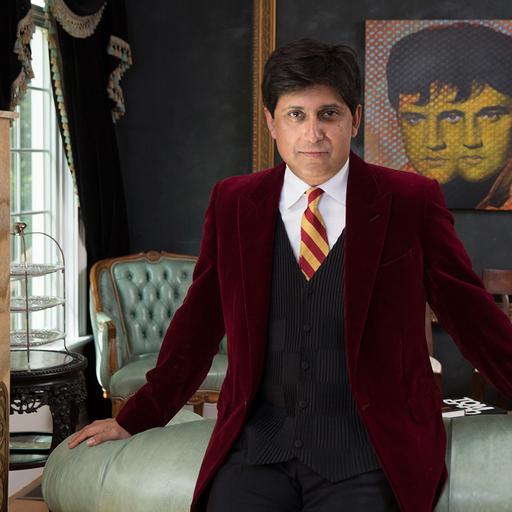
Harvard-Trained Psychiatrist, Author, Brain Researcher & Co-Founder of Reulay Digital Therapeutics.
17 years Federally funded brain researchTop 20 Leadership development mover & shaker6 Books authoredHarvard Medical School Assistant Professor of Psychiatry
Dr. Srini Pillay is a Harvard-trained psychiatrist, neuroscientist, entrepreneur, and author exploring one of the defining questions of our time: What makes us uniquely human—and how can we develop those capacities in an age increasingly shaped by AI?
Trained as a physician in South Africa, where he graduated at the top of his medical school class, Srini earned a Medical Research Council fellowship in neurochemistry before completing his psychiatry residency at McLean Hospital through Harvard Medical School. He became the institution's most awarded resident and went on to direct its Outpatient Anxiety Disorders Program and Panic Disorders Research Program in Brain Imaging. For 17 years, he conducted federally funded brain research while serving as an Assistant Professor of Psychiatry at Harvard Medical School.
Today, Srini brings that scientific foundation to questions extending far beyond traditional medicine. His work explores how belief, attention, emotion, creativity, and human connection influence the way we think, perform, adapt, and potentially age. Through his work on psychogenic longevity, he examines the relationship between psychological experience and physical health, expanding the conversation about longevity beyond biology alone.
As AI transforms the workplace, Srini is developing a powerful new perspective on human potential. He argues that our greatest advantage may not be faster thinking or tighter control, but our capacity for insight, imagination, unexpected connections, and reinvention.
More from Dr. Srini Pillay
All episodes → Ageless FutureYour Mindset Is Medicine: The Psychology of Longevity with Dr. Srini PillayNov 2026Play episode →
 Sustaining Creativity PodcastLiving a Creative Life with Dr. Srini PillayOct 2026Play episode →
 The Communicative LeaderReclaiming Cognitive Capacity: Neuroscience, Uncertainty, and Intentional UnfocusOct 2026Play episode →
 Confidence Through HealthThe Importance of Integrating Thought, Emotion, and Body w/ Dr. Srini PillayOct 2026Play episode →
 Mindset BoosterRewire Your Brain for Confidence, Creativity and BreakthroughSep 2026Play episode →
 The Deep Wealth Podcast - Unlock Your Deep Wealth In Business and LifeHarvard-Trained Psychiatrist Dr. Srini Pillay: Relentless Focus Is Robbing Your Profits, Success & Health (#579)Sep 2026Play episode →
 Peak Performance Life PodcastEPI 269: Harvard Trained Psychiatrist On How Your Mindset And Other Mental Factors Impact Inflammation, Immunity, Healthspan, & Longevity. With Dr. Srini PillaySep 2026Play episode →
 Mirror Talk: Soulful ConversationsReinvent Yourself: Neuroscience, Spirituality & the Power of Possibility (with Dr. Srini Pillay)Sep 2026Play episode →
 MadPo3t Podcast| Art|Life| Creative explorationInto the Abyss| Ft Dr. Srini PillayAug 2026Play episode →