
November 20, 2026
Your Mindset Is Medicine: The Psychology of Longevity with Dr. Srini Pillay
Subjective age, the way you feel, is a much better predictor of health span and longevity than your chronological age.
In this episode
Dr. Srini Pillay and Regan Archibald explore how mindset, psychology, and intrinsic intelligence may shape healthspan, longevity, and responses to care.
- Mindset influences inflammation, immunity, healthspan, and longevity.
- Beliefs and expectations can affect treatment outcomes beyond biomarkers alone.
- Older men in a study improved motor strength, eyesight, and hearing after acting younger for two weeks.
- Hostility in relationships was linked to slower wound healing.
- Social isolation was described as carrying a higher mortality risk than untreated hypertension.
Chapters
Written from the transcript. Pick a chapter to play the episode from that point.
Transcript
Automatic captions of the conversation. They can contain errors and do not name who is speaking.
Speaker 1: She took 70-year-old men and plus and had them behave Speaker 1: for two weeks as if they were 50, meaning they Speaker 1: ate what they ate when they were 50, they watched Speaker 1: when they were 50. And what happened? They had improved Speaker 1: motor strength and improved eyesight and hearing. There was a Speaker 1: study in which they must have been in an amazing Speaker 1: IRB process, but they inflicted deliberate wounds in the skin. Wow. Speaker 1: And then they looked at the wound healing relative to Speaker 1: the degree of conflict in the marriages or in the relationships.
Speaker 1: And they found that if you had hostility between couples, Speaker 1: the wounds took much longer to heal. And what you Speaker 1: believe about aging and old age matters a lot. Subjective age, Speaker 1: the way you feel, is a much better predictor of Speaker 1: health span and longevity than your chronological age. Speaker 2: Hello, welcome to Your Ageless Future, everybody. And today I've Speaker 2: got a very special guest, Dr. Sharini Pillay. He's trained Speaker 2: as a physician in South Africa, graduated the top of Speaker 2: his medical school class before earning a Medical Research Council Speaker 2: Fellowship in Neurochemistry.
He completed his psychiatry residency at McLean Speaker 2: Hospital through Harvard Medical School, where he became the most Speaker 2: awarded resident in the institution's history. He later directed both Speaker 2: the Outpatient Anxiety Disorders Program and the Panic Disorders Research Speaker 2: Program in Brain Imaging at McLean, and spent 17 years Speaker 2: conducting federally funded brain research while serving as an assistant Speaker 2: professor of psychiatry at Harvard Medical School. Speaker 1: So Dr.
Speaker 2: Serrani, it's so good to have you on because I'm Speaker 2: excited to talk about some of the things you've learned Speaker 2: when it comes to psychiatric care and maybe the differences Speaker 2: we could just kick it off with what you thought Speaker 2: psychiatry was 20 years ago versus how you perceive it today. Speaker 1: Sure. Well, thank you for having me. It's lovely to Speaker 1: be in this conversation. So, you know, I think when Speaker 1: psychiatry first came around, I was sort of interested in Speaker 1: the abstraction of emotional phenomena, in disorganization of the psyche, Speaker 1: in feeling states like anxiety and depression, and then became Speaker 1: especially interested in the sort of crossover between the biology Speaker 1: of those conditions, as well as the cognitive structures that Speaker 1: had been stuck for people to have ruminations and depression, Speaker 1: as well as the deeper psychodynamic factors.
But since then, Speaker 1: it's occurred to me that I find the way in Speaker 1: which we characterize what's going on medically in the human Speaker 1: body to not be very accurate. So an example would be, Speaker 1: If I asked you, can you move your right foot Speaker 1: without using your brain? It's pretty impossible. Right. So why Speaker 1: do we have this thing which is supposed to be Speaker 1: only related to the brain when the brain is clearly Speaker 1: connected to the heart, to the gut, to the adrenal gland, Speaker 1: and your right foot?
And so over the years, I've Speaker 1: begun to really think much more in an integrative way. Speaker 1: And the way this is relevant to anyone who's listening Speaker 1: to this is that Psychological factors have, we've come up Speaker 1: with these names to characterize them, like anxiety, if it's Speaker 1: a condition, or depression, or pessimism, or social isolation. These Speaker 1: all sound like they're abstract and like they have nothing Speaker 1: to do with the body. But through my work in Speaker 1: biotechnology as well, where I looked more deeply at receptor Speaker 1: dynamics and how drugs were impacting those dynamics while I Speaker 1: was being a psychiatrist, I I recognize that I don't Speaker 1: believe this current model in psychiatry, where there's this targeting Speaker 1: of receptors in order to remove the symptoms, when in fact, Speaker 1: the impact of psychological factors goes far beyond the brain Speaker 1: and can actually impact how healthily you live into old age, Speaker 1: as well as your longevity.
One of the reasons this Speaker 1: probably has not been popularized is that there hasn't been Speaker 1: a great business model around it. And so people generally Speaker 1: know more about stuff when they have to pay for it. Speaker 1: But one of the reasons I'm excited to talk to Speaker 1: you and your audience is that there are simple things Speaker 1: that we can do with our psychology that can impact Speaker 1: our biology and health span and longevity as well. So Speaker 1: over the years, I've come to really identify several research-based Speaker 1: mindset states that can impact health span and longevity.
Now, Speaker 1: if you look at the way in which people currently Speaker 1: think about anxiety disorders and depression, we don't really think Speaker 1: about those only as sort of emotional conditions right now. Speaker 1: We think of those as having huge metabolic consequences. There's Speaker 1: a big connection between the gut and the brain, and Speaker 1: there's a two-way connection between the gut and the brain. Speaker 1: And although it's 90% of the serotonin receptors in the Speaker 1: body are in the gut.
And a lot of the Speaker 1: things that are going wrong with anxiety and depression relate Speaker 1: to serotonin related symptoms. I think it's important for people Speaker 1: to understand first that mindset matters, that it matters because Speaker 1: it impacts markers of inflammation and immunity and health span Speaker 1: and longevity. And I'm happy to go into some of Speaker 1: those mindsets so we can start talking about what those Speaker 1: mindsets are and what some of the data shows. I'd Speaker 1: love that.
Yeah. Speaker 2: What have you learned? Speaker 1: Well, there are a couple of different mindsets that I Speaker 1: think deserve some attention. One of them, for example, is optimism. Speaker 1: And people who are optimistic have 11% to 13% longer lifespans. Speaker 1: And in fact, when you look at people with pessimism, Speaker 1: or cynical hostility, the level of inflammatory markers, the level Speaker 1: of inflammation goes up in the body. So if we Speaker 1: know that something's going to prolong your life by 11% Speaker 1: to 13% and that being pessimistic can actually affect your Speaker 1: immune markers, why wouldn't we try to do something to Speaker 1: become optimistic?
So for a lot of people, they see Speaker 1: themselves as born seeing the glass half full or half empty. Speaker 1: But the reality is that we have the power to Speaker 1: change our mindsets. And optimism is not about, I believe Speaker 1: every day is great and the world is amazing and Speaker 1: like an unrealistic description of reality. Optimism is the willingness Speaker 1: to believe that the world can be better. The willingness Speaker 1: to believe that it matters how you see the world. Speaker 1: Because we think we see the world as the world is.
Speaker 1: But that can't honestly be the case because you already Speaker 1: have the same world that non-psychotic optimists and pessimists are seeing, Speaker 1: and they're seeing the world differently. So the filter that Speaker 1: you use when you're an optimist is a brighter filter Speaker 1: for the world. The filter you use as a pessimist Speaker 1: is a darker filter, metaphorically speaking. Sure. And from a Speaker 1: brain science perspective, there's been a really influential paper that Speaker 1: was written this year by Lisa Feldman Barrett and a Speaker 1: colleague that showed that categorization, the way we analyze things, Speaker 1: the way we see the world is baked into the brain.
Speaker 1: And what that means is that we don't arrive at Speaker 1: data with a blank slate. And then we figure out, well, Speaker 1: you know, there's a war there and there's a doom Speaker 1: and gloom narrative here and there's lots of money here Speaker 1: and the world is a terrible place. I could not Speaker 1: argue with you if you gave me those data and Speaker 1: told me the world is a terrible place. Neither could Speaker 1: I argue with you if you told me there was Speaker 1: a beautiful sunrise, you've just had a baby, and you Speaker 1: had the most delicious meal, and the world is an Speaker 1: amazing place.
So what we choose to fill our attention Speaker 1: centers with matters. It matters to your immunity, and it Speaker 1: matters to your longevity as well. So let's say you Speaker 1: have 10 units of attention. Obviously, there's no such thing Speaker 1: as a unit of attention, but let's say you have 10. Speaker 1: If I get up and I look at the news Speaker 1: and I'm occupying six of those units with disastrous things, Speaker 1: I basically only have one or two units left to Speaker 1: navigate my day. But if I tell myself my brain Speaker 1: is not a garbage can, I'm not just going to Speaker 1: throw all kinds of stuff into it.
I'm actually going Speaker 1: to try to curate what goes into it. If you Speaker 1: think of your brain more like a museum, you will Speaker 1: have a very different understanding of reality. Now, what Thelma Speaker 1: and Barrett and her colleagues found was that there's a Speaker 1: prediction network in the brain. So let's say you think Speaker 1: the world is terrible, and everything you show up to, Speaker 1: you show up to like that. Well, your brain will Speaker 1: do everything in its power to show you that the Speaker 1: world is terrible, because you've created that category up front.
Speaker 1: If you think that the world is amazing, your brain Speaker 1: will direct your attention to what's amazing. So the first Speaker 1: thing I would say to people is, Rather than being Speaker 1: committed to a fixed identity, recognize that identity can change Speaker 1: and that one way in which your identity can change Speaker 1: is you can drop the pessimism and the cynical hostility Speaker 1: in favor of your body, which means... looking at the Speaker 1: world through a different lens. And I can talk about Speaker 1: other mindsets as well, but I wondered if you had Speaker 1: any questions about that.
Oh, yeah. Speaker 2: And so, I mean, as you worked at like the Speaker 2: outpatient anxiety disorders program, the panic disorders, do you see Speaker 2: it as a, It's just like a compounding effect of Speaker 2: looking through life through a pessimistic lens. Does it have Speaker 2: anything to do with mindsets there or is there something else? Yes. Speaker 1: So if you look at the neurobiology of fear, what Speaker 1: you find is that fear biases attention to look for threat. Speaker 1: So if you are in a threatened state, it then Speaker 1: creates this vicious cycle where you're always looking for threats Speaker 1: and the threats always make you more anxious and then Speaker 1: you look for more threats.
So there is a mindset Speaker 1: shift that one has to make. And one way one Speaker 1: can do this is, I mean, studies have shown that Speaker 1: positive affirmations about a possible future can be helpful. Keeping Speaker 1: a gratitude journal can be helpful. And I don't like Speaker 1: talking about these things like a goody two shoes and keep, Speaker 1: it's annoying when people don't recognize that it's a complex Speaker 1: thing to be human and we can't be positive all Speaker 1: the time. But what if we added like, an hour Speaker 1: a week to notice the positive things that exist around us, Speaker 1: we'll be protecting not just our minds, but our bodies.
Speaker 1: And it's similar with depression. Depression often involves being stuck Speaker 1: in a loop and you're ruminating over the things that Speaker 1: upset you over and over and over again. And to Speaker 1: be able to break that cycle, you want to be Speaker 1: able to, I have a very simple principle right now. Speaker 1: I tell everyone, every day of my life, I build Speaker 1: something to look forward to at the end of the day. Speaker 1: And what they say is like, oh, that's unrealistic. Life Speaker 1: is such a, it's not unrealistic.
What are you going Speaker 1: to do? Live for however many years and then be like, dad, Speaker 1: I had a couple good days. Right. You can always Speaker 1: look forward to things. You can always, there's always something Speaker 1: to like about the world. So direct your attention there Speaker 1: and create new habit pathways in your brain. You know, Speaker 1: it's commonly said neurons that wire together, fire together, And Speaker 1: neurons that fire together wire together. And the idea being Speaker 1: that habit circuits in the brain will keep doing whatever Speaker 1: they've been doing unless you interrupt that habit.
So my Speaker 1: recommendation to people would be to interrupt that habit as well. Speaker 1: But it's not just optimism and pessimism that impact lifespan. Speaker 1: It's how you think about your life. So a good Speaker 1: example is Ellen Langer, who's a researcher at Harvard. She Speaker 1: took 70-year-old men and plus and had them behave for Speaker 1: two weeks as if they were 50, meaning they ate Speaker 1: what they ate when they were 50, they watched when Speaker 1: they were 50. And what happened? They had improved motor Speaker 1: strength and improved eyesight and hearing.
Now, what does that Speaker 1: say to you? If I said to you, I told Speaker 1: 70-year-olds to behave like 50-year-olds and they suddenly became strong, Speaker 1: does it not tell you that If you sign on Speaker 1: to this, well, as I get older, things get tougher Speaker 1: and rougher. And so if you can change your physical Speaker 1: function and your hearing and eyesight just by believing that Speaker 1: you are 20 years younger and you're living in that world, Speaker 1: how would you interpret that? Speaker 2: Right.
Well, I mean, that study is fascinating because she Speaker 2: took them to like a cabin and they couldn't How Speaker 2: the newspapers were from 20 years prior. I mean, pretty Speaker 2: fascinating just how powerful our mind is over our physiology. Speaker 2: And I think it gets forgotten in medicine. And psychiatric Speaker 2: care is all around suppressing the symptom and not looking Speaker 2: at things holistically and tactfully. And what do you see Speaker 2: as far as looking forward to something positive at the Speaker 2: end of every day?
It's a powerful practice. What are Speaker 2: some examples of what people could do to have some Speaker 2: kind of framework where they are looking forward to something Speaker 2: every day? Speaker 1: Well, you could have a great meal that you really enjoyed. Speaker 1: You should drink something you really enjoy drinking. You could Speaker 1: have a massage. You could call a friend you love. Speaker 1: You could watch a comedy. I mean, there's so many Speaker 1: things we could do, but we just don't do that. Speaker 1: We just live in a kind of automatic way.
And Speaker 1: I think it's important to, again, I'm not saying life Speaker 1: is that easy and every day you can do that, Speaker 1: but I think if you try to do that every Speaker 1: day and you make that a practice, you'll be able Speaker 1: to build that practice into your day. When I say Speaker 1: do a great thing, most people are like, well, I Speaker 1: go on a vacation. It's not possible. I mean, it's Speaker 1: not possible to go on a vacation, but you could Speaker 1: go on a walk that's amazing in the middle of Speaker 1: the fall.
You could see beautiful leaves. So I do Speaker 1: think that it's a good default to go back to Speaker 1: thinking about your fundamental nature. I mean, at a spiritual level, Speaker 1: I think I am signed up to the idea that Speaker 1: the mind is not who we are. I am signed Speaker 1: up to the idea that we are bliss. And if Speaker 1: you didn't think, well, that's my fundamental nature, every time Speaker 1: you're not in bliss, you'll ask yourself, how do I Speaker 1: correct to bliss? And so if we can correct to Speaker 1: that and make that a new habit, it can be helpful.
Now, Speaker 1: there are at least 10 or 11 different mindsets that Speaker 1: can influence inflammation and immunity and health span and longevity. Speaker 1: One of those is related to human connection. When I Speaker 1: asked you, what increased risk of mortality does untreated hypertension confer? Speaker 1: It's a 30% increased risk of mortality. Speaker 2: Yeah. Speaker 1: That's pretty big. Substantial. What increased risk of mortality does Speaker 1: social isolation confer? It's 50%. So you're like, oh, so Speaker 1: I heard about hypertension, but I didn't hear about the Speaker 1: importance of hanging out with other people who I feel Speaker 1: connected to.
Because those connections affect your physiology and they Speaker 1: affect you. your hormones, they affect your inflammatory markers. So Speaker 1: having a connected mindset is protective to your body. And Speaker 1: you can see this in many of the anecdotally in Speaker 1: the Blue Zone studies where they have people who live Speaker 1: the loners. Some of them drink two drinks a day. Speaker 1: Some of them don't drink. Some of them eat more Speaker 1: fish than others. Some of them eat more meat than others. Speaker 1: But one of the practices that's always there is regular Speaker 1: downshifting and operating as a community.
And the research shows Speaker 1: that the quality of your friendships also matter. And there Speaker 1: is a contradiction in the literature, meaning to the extent Speaker 1: that you have high-quality friends, it can actually protect you. Speaker 1: When you have conflictual relationships, it can hurt you significantly. Speaker 1: For example, there was a study in which they, it Speaker 1: must have been an amazing IRB process, but they inflicted Speaker 1: deliberate wounds on, in the skins of the neck. And Speaker 1: then they looked at the wound healing relative to the Speaker 1: degree of conflict in the marriages or in the relationships.
Speaker 1: And they found that if you had hostility between couples, Speaker 1: the wounds took much longer to heal. Really? They did Speaker 1: not have hostility. So that's another example of how social Speaker 1: functioning can influence how the body itself heals. Now, it Speaker 1: may seem abstract, like, How can social functioning do that? Speaker 1: How can optimism do that? All of these things are Speaker 1: expressed in the brain and in the body. You know, Speaker 1: there's a syndrome called Takotsubo syndrome, which is related to Speaker 1: the fact that when somebody has a romantic rejection, they Speaker 1: are more prone to actually having an actual broken heart Speaker 1: as well.
Speaker 2: Right. The broken heart syndrome. Speaker 1: Takotsubo. Right. So the idea being that I think it's Speaker 1: high time that we began to recognize that the mind Speaker 1: and the body are working together and that they're working Speaker 1: together toward well-being. You see this in studies on spirituality Speaker 1: and religiosity as well, which is part of what I Speaker 1: call the self-transcendent mindset. So we're always stuck in our Speaker 1: heads and we're stuck in our own problems and we're Speaker 1: always stuck in our own worries.
But if you actually Speaker 1: think about, well, what if I transcended myself? And how Speaker 1: do you transcend yourself? You transcend yourself by connecting with others. Speaker 1: You transcend yourself by connecting with awe in nature. And Speaker 1: awe is actually protective to inflammatory markers and can actually Speaker 1: influence the brain very positively and enhance well-being. And in Speaker 1: addition to that, spiritual and religious practices, more than 70% Speaker 1: of the studies, and that's high for people for medicine Speaker 1: in general, show that there's a protective effect on health Speaker 1: span and potentially on longevity as well.
So what that Speaker 1: makes me think is that if we're stuck on Earth Speaker 1: bound only by our senses and we don't try to Speaker 1: experience ourselves as abstract beings, then we're actually worsening our Speaker 1: overall health and we're worsening what's going on psychologically and Speaker 1: medically as well. My arm. Speaker 2: On friendships, if you had relationships that have a lot Speaker 2: of conflict, those relationships can be just as detrimental to Speaker 2: your health as they could be beneficial if the relationships Speaker 2: are healthy.
Is that what you're saying? I mean, the Speaker 2: wound study is crazy. Speaker 1: It really is. And the relationship stuff is much more nuanced. Speaker 1: You know, for example... there are studies that show that Speaker 1: people who come from poorer socioeconomic circumstances, it's actually better Speaker 1: for the relationship if they don't communicate. What do you Speaker 1: mean by that? Well, you know, commonly in the tabloids, Speaker 1: everyone's like, oh, you must communicate, communicate more, communicate more.
Speaker 1: And communication can be helpful, but if there's nothing you Speaker 1: can do about it, it's just sort of like, well, Speaker 1: what are we going to talk about? It's a And Speaker 1: I find sort of fights between couples to be quite Speaker 1: funny after a while when you think about it. The Speaker 1: argument is usually, it comes out of one thing, which Speaker 1: is why are you not like me? No matter what Speaker 1: you're arguing about. Like, why did you go there? Why Speaker 1: are you not like me?
Why did you talk to Speaker 1: that person? Why are you not like me? Why are Speaker 1: you not like me? Every argument is like, why are Speaker 1: you not like me? You can make lighter. You can Speaker 1: sort of be like, If someone you're in a relationship Speaker 1: with starts saying, we need to talk, I don't understand Speaker 1: why you did this, I think you should say, are Speaker 1: you asking me why I'm not like you? Because would Speaker 1: a perfect relationship be only when I am exactly like you? Speaker 1: Because that seems kind of odd to have in a relationship.
Speaker 1: So the relationship thing is sort of unusual in that way. Speaker 1: I think it's good to use intuition because none of Speaker 1: these factors also are probably accounting for 100% of outcomes. Speaker 1: But it's good for you to figure out, like if Speaker 1: you're a loner and you're listening to this and you're like, Speaker 1: oh my God, I don't want to have a relationship. Speaker 1: Maybe that will make you more stressed out. Maybe there Speaker 1: are other ways to engage the world that are not Speaker 1: just with relationships.
So I'm not an autocrat about these principles. Speaker 1: I feel like choose the ones that work for you. Speaker 1: Things like confidence matters. can actually be protective. And there's Speaker 1: different kinds of confidence. Like in this day and age, Speaker 1: confidence is not just like, well, I know what I'm doing. Speaker 1: Sometimes you can not know what you're doing at all Speaker 1: and still have what I call existential confidence. And existential Speaker 1: confidence means that your commitments determine your reality.
It's not Speaker 1: reality that's not, most people live their lives saying, I Speaker 1: can't do this in life because I don't have access, Speaker 1: I don't have this program. But if you have a commitment, Speaker 1: You become a creator of your life. And creativity in Speaker 1: multiple ways is protective to health as well. Speaker 2: And so a commitment is like I'm committed to work Speaker 2: or I'm committed in a committed relationship or I'm committed Speaker 2: to exercise today. Speaker 1: Is that what you mean by commitments?
Speaker 2: Yeah. Speaker 1: So by commitments, I mean in general, people let their Speaker 1: commitments be shaken up by reality. Yeah. Reality is for Speaker 1: them the God they pray to. And then based on Speaker 1: that reality, they'll figure out what they can do. Speaker 2: Oh, got it. Speaker 1: Okay. Speaker 2: Something comes up and now I'm not going to exercise Speaker 2: because I got this call and, you know, I can't. Speaker 1: Right. But instead of doing that, why wouldn't you say Speaker 1: my commitments determine my reality?
Like I'm committed to making Speaker 1: a million dollars. Yeah. And so whatever... makes you veer Speaker 1: away from that commitment, move away from that reality. You Speaker 1: can make your own reality. People forget this innate intelligence Speaker 1: that they have. It's like when they learn to walk, Speaker 1: no one is like, I'm not going to walk unless Speaker 1: I go to an Ivy League school, or I'm not Speaker 1: going to walk until you give me an instruction manual. Speaker 1: It's like you walk with intrinsic intelligence.
And we are Speaker 1: going to need this intelligence in the age of AI Speaker 1: more and more. This intrinsic intelligence is what's going to Speaker 1: give us the edge, insight, intuition, this prediction brain that Speaker 1: I talked about. All of these things are things we Speaker 1: are endowed with. So now that we don't have to Speaker 1: do routine tasks, you just hand it over to your Speaker 1: LLM to do, you've got to feed our brain. And Speaker 1: if you don't use it, you will lose it. So Speaker 1: why not use it for things that are life-enhancing, like creativity?
Speaker 2: Right. And it seems like the way society is built Speaker 2: right now is society wants to service up the reality Speaker 2: it wants us to see the world through, you know, Speaker 2: whether that's, you know, anything you see on social media, Speaker 2: somebody else's reality is getting plopped down into your lap. So, Speaker 2: I mean, how does social media, by the way, how Speaker 2: does that work as far as like health goes from Speaker 2: a cognitive perspective? Speaker 1: Well, the studies on both sides, some studies show that Speaker 1: some social media enhances creativity.
I think comparisons through social Speaker 1: media can be detrimental. Most people are only posting their Speaker 1: happy times. And so you're like, oh my God, this Speaker 1: person's having a party every day, dancing around in a Speaker 1: garden every day, having whatever they want every day. I Speaker 1: feel strongly that in general, I feel like social media Speaker 1: does what it does. The question is, don't we also Speaker 1: have a responsibility to think about how we want to Speaker 1: interact with it?
Speaker 2: Yeah. Speaker 1: Like, you know, like in general, I don't blame ads Speaker 1: for influencing my mind to buy something. If I see Speaker 1: an ad enough times, I might be in there. What Speaker 1: am I going to say? Well, this ad made me Speaker 1: buy this. Like it's, it sort of, it feels like Speaker 1: you're giving over your life to the rest of the world. Speaker 1: I think if we just assumed we had agency and Speaker 1: we were like, I don't want to watch so much Speaker 1: social media anymore. I want to change my feed so Speaker 1: that I only get to see laughing monkeys.
You can Speaker 1: change your feed. That's true. Monkeys. So I think that Speaker 1: social media, for the longest time, I have felt that Speaker 1: there's a growing doom and gloom mentality in the world. Speaker 1: And it troubled me, but there was nothing I wanted Speaker 1: to do about it because I don't like activist energy. Speaker 1: So I was like, I'll just stay away from that, Speaker 1: try to figure out my own life. I don't even Speaker 1: want to participate in this conversation because I do have Speaker 1: hypotheses in my mind about how technology has influenced the Speaker 1: state of humanity.
But I recently had this major breakthrough Speaker 1: in a conversation with a colleague where I just decided Speaker 1: to start this. I decided to start what I'm calling Speaker 1: the Center for Human Illumination just to upend the doom Speaker 1: and gloom narrative. I'm down with the doom and gloom narrative. Speaker 1: I don't want to spend the rest of my life Speaker 1: immersed in it, somehow lost in it, And so I'm Speaker 1: trying to gather people who will support, who invest in Speaker 1: humans as much as they do in technology.
And I Speaker 1: think the technology people would be great to include in Speaker 1: this conversation. I myself have AI-based companies. I'm very AI-friendly. Speaker 1: I'm technology-friendly. But I do think that we've invested more Speaker 1: than something like $ 2. 9 trillion in artificial intelligence. Who's investing Speaker 1: in humans? And why. Speaker 1: I mean, I see the debates going on online, like Speaker 1: about work and the future of work. And every day Speaker 1: you have companies firing a bunch of people.
Everyone's saying, well, no, no, Speaker 1: work's not going to disappear. It'll just be different. I Speaker 1: think it's under great threat to disappear. You know, I Speaker 1: think I have friends who work in this area who've Speaker 1: said that close to 50% of jobs will be gone soon. Speaker 1: But if that's the case... How do we retrain people Speaker 1: to live in the world? How do we train people Speaker 1: to have purpose? How do we train people to have drives, Speaker 1: to make money? I think it's important to take life Speaker 1: back into our own hands, have a sense of agency Speaker 1: and have a sense of autonomy.
There actually was a Speaker 1: study done in nuns that looked at their writings to Speaker 1: see whether there was a correlation between autonomy their ability Speaker 1: to make their own decisions and how long they lived. Speaker 1: And they found that there was a correlation between the two. Speaker 1: So if we just sort of lie down and take Speaker 1: whatever the world's giving us and like say, well, AI Speaker 1: is going to take over my life and become, I think, Speaker 1: live in this, feed into the partisan world of politics.
Speaker 1: And if we try to do that, it's going to Speaker 1: be very difficult to mobilize ourselves to live pleasant and Speaker 1: happy lives. Yeah. Well, it's fascinating. Speaker 2: So the nuns that say, how much longer did they live, Speaker 2: the ones that had autonomy? Speaker 1: I don't remember the number of years, but it was Speaker 1: statistically significant. Okay. Yeah, it's fascinating. Speaker 2: And I love how if you could run things through Speaker 2: the filter of, am I committed to this or am Speaker 2: I committed to reality?
Reality is, I perceive it right Speaker 2: now because I can change moment by moment. And so Speaker 2: if you look at AI, what could you do to Speaker 2: invest in HI or human intelligence? I mean, you said, man, Speaker 2: we're $ 2. 9 trillion into AI. And what road is that Speaker 2: taking humanity down? But tell me what human illumination, maybe Speaker 2: you could define human illumination for me as well. Speaker 1: Well, I always tell people I'm reticent to make it. Speaker 1: an organization I'd rather it be a party so I Speaker 1: like I just feel like I was put on earth Speaker 1: to do that and it's not about fighting AI or Speaker 1: fighting the depressive people like somebody told me recently someone Speaker 1: who I really admire was like my heart is broken Speaker 1: for the world I can't believe that the world is Speaker 1: torn up as it is, like, don't you feel that?
Speaker 1: And I was like, no, my heart's not broken for Speaker 1: the world. Like, someone's heart's got to stay intact. Like, Speaker 1: you want to take care of people, it's very hard Speaker 1: to take care of people if all you're doing is Speaker 1: going about with a broken heart. So I feel like Speaker 1: the Center for Human Illumination is about shining a light Speaker 1: on the essence of the beauty of being human. And Speaker 1: it's about reminding people that we're not lost to machines. Like, Speaker 1: we don't have to be, here's a really great example.
Speaker 1: from my executive coaching life. People are always saying, well, Speaker 1: machines think so much faster than us. We're never going Speaker 1: to catch up with them. So there's going to be Speaker 1: an exponential rise in the degree of intelligence. Well, there is. Speaker 1: But there are a few people, like a client that Speaker 1: I've worked with and who I'm going to work with, Speaker 1: who have said, actually, my job is not to, I'm Speaker 1: not going to catch up with quantum computers. But what Speaker 1: I am going to do is try to figure out Speaker 1: how to scale my company from $ 5 billion to $ 50 billion.
Speaker 2: Wow. Speaker 1: That's the commitment. Yeah, that's the commitment. And it's how Speaker 1: he wants to express his exponential power. Speaker 2: Yeah. Speaker 1: And he knows he can't do it alone. He wants Speaker 1: to do it with the people who are working there. Speaker 1: But we have exponential capabilities. You know, the brain doesn't Speaker 1: only operate in linear ways. There's a course that I Speaker 1: recently released, which most people were like, what? Brain scientists Speaker 1: and medical experts?
Why do you put a course on Speaker 1: implementing the science behind the law of attraction? And I Speaker 1: was like, well, I wanted people who understood the brain Speaker 1: to understand that there are nonlinear ways in which things happen. Speaker 1: You know, like when I think about some of my Speaker 1: own life, for example, it's hard to put a finger Speaker 1: on how this happens. But I was standing at a Speaker 1: game reserve in South Africa and just went to a talk. Speaker 1: that this guy had given. I was completely mesmerized by Speaker 1: what he was talking about at the time.
It was Speaker 1: about water intoxication and schizophrenia and something, but I was like, wow, Speaker 1: this guy is amazing. When I stood next to him, Speaker 1: I just decided, I was like, I said, you know, Speaker 1: I just have to give into this intuition. I have Speaker 1: a feeling you could change my life. And he looked Speaker 1: at me and was like, well, you know, I don't Speaker 1: know you, but I mean, what are you interested in? Speaker 1: And I said, well, I'm interested in the brain and Speaker 1: I'm interested in human emotion and And he goes, well, Speaker 1: there's a Medical Research Council scholarship that's due tomorrow.
We've Speaker 1: never given it to anyone in psychiatry, and we've never Speaker 1: given it to anyone of color before. So the likelihood Speaker 1: of you getting it is close to zero, but if Speaker 1: you get it, it will change your life. And I Speaker 1: was like, well, okay, I'll apply for it. And so Speaker 1: I did apply for it, and the next afternoon, he Speaker 1: called me and said, congratulations, and welcome to Western Stellenbosch. Oh, yeah. Speaker 1: It's the same thing with Harvard. I had an examiner Speaker 1: in South Africa who was from NYU who put it Speaker 1: into my head because I had done well on my Speaker 1: oral exam.
He was like, you should be at Harvard. Speaker 1: I can take you to NYU any day, but you Speaker 1: should be at Harvard. And then one year passed. One Speaker 1: year passed. And then all of a sudden, I was Speaker 1: in a dorm room. I was like, let me just Speaker 1: give Harvard a call. I'll speak to the head of Harvard. Speaker 1: To make a long story short, I got a FedEx. Speaker 1: couple weeks later and congratulations and welcome to Harvard. Now, Speaker 1: how do these nonlinear sudden exponential things happen when you're Speaker 1: not trying, it's not correlated with the degree of effort?
Speaker 1: If you look at how brain processes work, and there Speaker 1: are a lot of brain scientists who want to refute Speaker 1: this because there's not enough hard evidence, but I think Speaker 1: it's a worthwhile hypothesis to say that the brain does Speaker 1: not only function in linear ways, it can function in Speaker 1: nonlinear ways as well. You know, there are these molecules Speaker 1: called Posner molecules that illustrate that there are probably quantum-like Speaker 1: processes that are going on in the brain.
We need Speaker 1: more evidence to substantiate that. But if that's the case, Speaker 1: why can we as humans not hypothesize exponential shifts and Speaker 1: ask ourselves, how do I grow exponentially as a human Speaker 1: while AI's intelligence is growing exponentially, rather than being threatened Speaker 1: by what's happening with AI? Because my guess is AI Speaker 1: is going to be around for a long time. And Speaker 1: my guess is that it will be a major shift Speaker 1: in humanity. But I think as humans, we're pretty powerful.
Speaker 1: And we can do things with our imagination. We can Speaker 1: do things with one another. And all of this is Speaker 1: part of what I was talking about earlier. It's part Speaker 1: of the social connection. It's part of the resilience of Speaker 1: being alive. Lots of studies show that having higher resilience Speaker 1: also correlates with greater longevity. But what's interesting with the Speaker 1: data is that it shows that it has a huge Speaker 1: impact between the ages of 90 and 100. And what Speaker 1: a lot of people don't recognize, if I asked you, Speaker 1: if one person has five diseases versus another person who Speaker 1: has two, is the one with five diseases more likely Speaker 1: to be unhealthy?
And is that person more likely to Speaker 1: not live healthily to old age? The answer is that Speaker 1: a better predictor of a better predictor of health span Speaker 1: and longevity is not the number of diseases you have. Speaker 1: It's what the World Health Organization calls intrinsic capacity. And Speaker 1: intrinsic capacity relates to how well you move, how well Speaker 1: you can hear and see, how vital you feel, how Speaker 1: clearly you think, and how much in control of your Speaker 1: emotions you are.
These are like things that people would Speaker 1: think are very soft But they're not that soft. When Speaker 1: you put them together, they are one of the strongest Speaker 1: predictors of mortality. And so vitality is something that I'm, Speaker 1: it's part of my whole draw to the Center for Speaker 1: Human Illumination. Vitality is sort of like, I feel, well, Speaker 1: Pierre Marte and his colleagues at the Paris Psychosomatic Institute Speaker 1: found that there's an epidemic of this lack of vitality, Speaker 1: which they call essential depressions.
And it's because people live Speaker 1: all these kind of overly operationalized lives, you know, nine Speaker 1: to five, what do I do? Everything's planned, everything. And Speaker 1: when that happens, you have a greater degree of physical illnesses, Speaker 1: greater degree of cosmetic surgeries. You have, we as humans, Speaker 1: we owe it to ourselves to live vital lives. But Speaker 1: I think most people have given up on the vitality. My, Speaker 1: you know, one of my colloquial things that I say Speaker 1: to people is that I don't like that in medicine Speaker 1: and in coaching, everything's geared towards leading a slightly less Speaker 1: slain life.
Like who wants that? Like people want to Speaker 1: kick ass. Nobody wants a slightly less slain life. So Speaker 1: to preserve your vitality, to preserve your energy, you have Speaker 1: to allow yourself to have that energy. And what you Speaker 1: believe about aging and old age matters a lot. Subjective age, Speaker 1: the way you feel, is a much better predictor of Speaker 1: health span and longevity than your chronological age. Fascinating. Speaker 2: So someone could have seven diseases and we'd say, okay, Speaker 2: they're probably going to die in about five years, but Speaker 2: they have these intrinsic factors.
They can hear well, they Speaker 2: can move their body. They have social relationships. They'll far Speaker 2: outlive the predictions is what you've seen. Yes. Speaker 1: I mean, that's what the research shows. Fascinating. And I Speaker 1: think a lot of people could afford to have more Speaker 1: vitality in their lives. I think everyone's in this burnout narrative, man, Speaker 1: I'm burnt out. It's like, well, burnout is not just Speaker 1: from work overload. Burnout is from not feeling engaged. When Speaker 1: you love what you do and you give yourself the Speaker 1: gift of doing what you love, you actually allow yourself Speaker 1: to feel more engaged with the world.
And when you Speaker 1: feel more engaged with the world, you don't feel that Speaker 1: burnt out. You just feel like it's cool. I mean, Speaker 1: there's different kinds of passion. There's obsessive passion, which is Speaker 1: not that helpful. But if your passion is giving you Speaker 1: something back and you can make modifications around it, I Speaker 1: really think we can change this narrative in the world. Speaker 1: We can change this narrative and we can all have Speaker 1: a party. Like, try to figure out I mean, some Speaker 1: things are superfluous.
How are we going to set up Speaker 1: structures for kids? What are we going to teach them? Speaker 1: What's the syllabus going to be? They're probably going to Speaker 1: have very different career trajectories. I was just thinking this Speaker 1: the other day about my nephew who was a management Speaker 1: consultant and just decided in the spur of the moment, Speaker 1: after his father paid for a lot of his education, Speaker 1: that he wanted to be a comedian. He just started Speaker 1: a social media comedian thing and it completely blew up.
Speaker 1: He's making much more money than he made as a Speaker 1: management consultant. Speaker 2: But his dad was probably like, what are you doing? Speaker 1: When he called me, he was like, he's an older brother. Speaker 1: And he was like, man, I know what to do Speaker 1: with this guy. He wants to be a comedian. Like, Speaker 1: this is so crazy. And I was like, well, does Speaker 1: he really want to be a comedian? And he goes, yeah. Speaker 1: I said, well, why shouldn't he try? Speaker 2: Oh, man. Speaker 1: He's doing that, and he has a startup, and he Speaker 1: has ideas of what he wants to do.
You know, Speaker 1: once you're released to your own freedom, it affords a Speaker 1: whole different opportunity. But as Kierkegaard said, anxiety is the Speaker 1: dizziness of freedom. We say we want to be free, Speaker 1: but actually we're petrified of being free. It's like going Speaker 1: into a parking lot. There's like 700 parking spots. Like, Speaker 1: where do I park? Park in the second one? Or Speaker 1: the fourth one? Or the sixth one? But if there's one, Speaker 1: you know where you're going. There's no freedom there, but Speaker 1: you're like, I'm going there.
So I think we have Speaker 1: a very ambivalent relationship with ourselves. And I think it Speaker 1: would be in our best interest to clarify our relationships Speaker 1: with ourselves. Damn. Speaker 2: Well, and Dr. Sreeni, I mean, like if you, If Speaker 2: you had like one or two things that somebody could Speaker 2: do to actually start developing that relationship with themselves and Speaker 2: creating this human illumination, which I love it. Where does Speaker 2: somebody start just to tap into these tools and these Speaker 2: principles you've talked about?
Speaker 1: So Richard Boyatzis and his colleagues at Case Western University Speaker 1: have studied how people solve problems effectively. And what they Speaker 1: find is that problem solving is not the best way Speaker 1: to start solving problems. The best way to start solving Speaker 1: problems is to first define your ideal self and let Speaker 1: that be your compass so that you navigate as toward Speaker 1: your ideal self. So I've created an ideal self guide Speaker 1: that's free and is downloadable on nas.com.
You can certainly Speaker 1: put it in the show notes. People would love to. Speaker 1: They can download it and... and then fill it out Speaker 1: and it walks you through all your values. What do Speaker 1: you care about? What do you need to change? And Speaker 1: once you have a good idea of your ideal self, Speaker 1: you use that as your navigator. That's the first thing Speaker 1: I would say. The second thing I would say is Speaker 1: there are simple tools you can use to manage your anxiety. Firstly, Speaker 1: if you're someone who's super worried all the time because Speaker 1: you're like, I don't know if I have enough money Speaker 1: and I'm not sure if I have enough relationships, understand Speaker 1: why we worry.
We don't just worry because reality is happening. Speaker 1: Reality is happening to everyone. There are poor people who Speaker 1: are worried and poor people who are not worried. There Speaker 1: are rich people who are worried and rich people who Speaker 1: are not worried. So the leading theory in worry is Speaker 1: called contrast avoidance theory. And contrast avoidance theory teaches us Speaker 1: that people who worry, in life you have peak experiences Speaker 1: like emotion or falling in love, and you have trough Speaker 1: experiences like the sudden death of someone.
People who worry Speaker 1: like to keep themselves in the miserable middle because they Speaker 1: don't like the contrast from great to like trough experience. Speaker 1: So I always say to people, build one thing that Speaker 1: takes you out of the miserable middle into your day. Now, Speaker 1: you might say, yeah, but I'm always anxious and I Speaker 1: don't know. My mind is always racing and I don't Speaker 1: know what I'm going to do about it. There I Speaker 1: teach a simple mnemonic like CIRCA, C-I-R-C-A, which is a Speaker 1: brain-based technique to reduce over-activation of some of the parts Speaker 1: of the brain that are active when you're anxious.
The Speaker 1: first C is chunking. Don't just get up on a Speaker 1: Monday morning and open your email and see the 10,000 emails. Speaker 1: It's too much. It's important to figure out what you're Speaker 1: going to do when, so chunk it up. Your brain Speaker 1: responds to that well. It's also good to have ruthless prioritization. Speaker 1: Ask yourself, how will I prioritize what I'm doing today? Speaker 1: Or delegation. And that's what the chunking is for. The Speaker 1: eye is ignore mental chatter. You can do that in Speaker 1: one of two ways.
You can either just do mindfulness Speaker 1: meditation where you're sitting in a chair, closing your eyes, Speaker 1: placing your attention in your breath, and just watching every Speaker 1: breath in and every breath out. This has been shown Speaker 1: to potentially even influence your genes and potentially prolong life Speaker 1: by affecting the telomeres, which are at the end of chromosomes. Speaker 1: But even more effective than mindfulness at Stanford recently is Speaker 1: they were able to show that cyclic sighing, which is Speaker 1: basically you breathe in through your nostrils to halfway, and Speaker 1: then you breathe to the top, and then you breathe out, Speaker 1: maybe even more effective than mindfulness.
The R in circa Speaker 1: is for reality check, which is the reminder this too Speaker 1: shall pass. The second C is for control check, which Speaker 1: is what can I control, what can I not control, Speaker 1: and why don't I just let go of the stuff Speaker 1: I can control. And then the A is for attention shift, Speaker 1: which is how do I shift my attention from the Speaker 1: problem to the solution? So chunking, ignore mental chatter, reality check, Speaker 1: control check, and attention shift are ways to manage fear Speaker 1: so you can live more as your ideal self without Speaker 1: worry in the service of your goals.
That is brilliant. Speaker 2: And, um, uh, you've got a book, uh, tinker dabble Speaker 2: doodle try. Speaker 1: Yeah. Speaker 2: And, and, um, is that a, a good place for Speaker 2: people to start as well? I mean, is to grab Speaker 2: a copy of your book or what, what's, what would Speaker 2: be a great next step for, for our audience? Speaker 1: Yeah, I think two of the books that I've written, uh, Speaker 1: could be potentially helpful to people. The last book is Speaker 1: all about what we're talking about.
Possibility illumination, creativity. Tinker, Dabble, Doodle, Try. Speaker 1: You can find it on Amazon. And I also, there's Speaker 1: a book prior to that that I wrote that was Speaker 1: called Life Unlocked, Seven Revolutionary Lessons to Overcome Fear. That Speaker 1: is a detail on how to overcome dread, how to Speaker 1: overcome fear. I think both of those books can be Speaker 1: super helpful. You know, I would love it if people, Speaker 1: so I post a lot on Instagram, probably two to Speaker 1: three times a day.
And there are usually research-based facts Speaker 1: on psychogenic longevity. At least one of those facts is that. Speaker 1: So I'm at Dr. Srini Pillay. That's my handle. Or Speaker 1: they could also follow me on Substack, also at Dr. Speaker 1: Srini Pillay. Or on TikTok at Dr. Dr. Srini Pillay. Speaker 1: Or on Facebook or Meta, Srini Pillay MD. Or at LinkedIn, Dr. Speaker 1: Srini Pillay. So on all of those platforms, I post Speaker 1: a lot of free content that people can take a Speaker 1: look at. And I've actually started a channel now that's Speaker 1: both free and has a paid component called The Illuminated Human, Speaker 1: in which I get into pretty funky spaces about what Speaker 1: it actually is to be alive.
Because, you know, most people, Speaker 1: the person they're not listening to the most is themselves. Speaker 1: They have intuitions. They have all kinds of feelings. I Speaker 1: can't leave this relationship. I got to stay in here. Speaker 2: Wow. Speaker 1: You don't have to leave the relationship, but you can Speaker 1: try to change something in the relationship. You can try Speaker 1: to do something in the world. We can all do Speaker 1: these things. We just have these narratives in our head Speaker 1: from past failures that push us back.
And so I Speaker 1: think it's important to remind ourselves that we can always Speaker 1: pull ourselves up by the bootstraps, get back on the Speaker 1: road again, and create a life that's worth living. Love that. Speaker 2: Yeah. This has been a phenomenal conversation, Dr. Srini, and Speaker 2: we'll provide all the links in the show notes so Speaker 2: that you guys can find him on Instagram or LinkedIn Speaker 2: or whatever channel you like, Substack. And man, this has Speaker 2: been a pleasure and can't wait to dive into your.
Speaker 1: Work even more. Thanks so much. The pleasure was mine. Speaker 1: Thanks a lot, Fred. Speaker 2: And for those of you who love this conversation, make Speaker 2: sure you share it with your friends, family and loved ones. Speaker 1: We'll talk soon.
About Dr. Srini Pillay
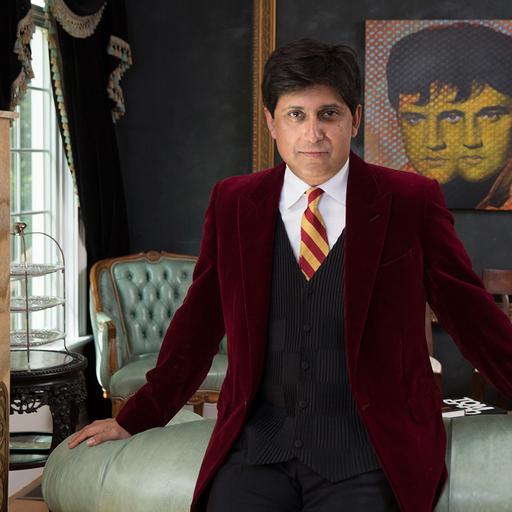
Harvard-Trained Psychiatrist, Author, Brain Researcher & Co-Founder of Reulay Digital Therapeutics.
17 years Federally funded brain researchTop 20 Leadership development mover & shaker6 Books authoredHarvard Medical School Assistant Professor of Psychiatry
Dr. Srini Pillay is a Harvard-trained psychiatrist, neuroscientist, entrepreneur, and author exploring one of the defining questions of our time: What makes us uniquely human—and how can we develop those capacities in an age increasingly shaped by AI?
Trained as a physician in South Africa, where he graduated at the top of his medical school class, Srini earned a Medical Research Council fellowship in neurochemistry before completing his psychiatry residency at McLean Hospital through Harvard Medical School. He became the institution's most awarded resident and went on to direct its Outpatient Anxiety Disorders Program and Panic Disorders Research Program in Brain Imaging. For 17 years, he conducted federally funded brain research while serving as an Assistant Professor of Psychiatry at Harvard Medical School.
Today, Srini brings that scientific foundation to questions extending far beyond traditional medicine. His work explores how belief, attention, emotion, creativity, and human connection influence the way we think, perform, adapt, and potentially age. Through his work on psychogenic longevity, he examines the relationship between psychological experience and physical health, expanding the conversation about longevity beyond biology alone.
As AI transforms the workplace, Srini is developing a powerful new perspective on human potential. He argues that our greatest advantage may not be faster thinking or tighter control, but our capacity for insight, imagination, unexpected connections, and reinvention.
More from Dr. Srini Pillay
All episodes → Sustaining Creativity PodcastLiving a Creative Life with Dr. Srini PillayOct 2026Play episode →
 The Communicative LeaderReclaiming Cognitive Capacity: Neuroscience, Uncertainty, and Intentional UnfocusOct 2026Play episode →
 Confidence Through HealthThe Importance of Integrating Thought, Emotion, and Body w/ Dr. Srini PillayOct 2026Play episode →
 The Conscious Man 7 PodcastEpisode #154 - He's Building VR to Replace Psychedelics | Dr Srini PillayOct 2026Play episode →
 Mindset BoosterRewire Your Brain for Confidence, Creativity and BreakthroughSep 2026Play episode →
 The Deep Wealth Podcast - Unlock Your Deep Wealth In Business and LifeHarvard-Trained Psychiatrist Dr. Srini Pillay: Relentless Focus Is Robbing Your Profits, Success & Health (#579)Sep 2026Play episode →
 Peak Performance Life PodcastEPI 269: Harvard Trained Psychiatrist On How Your Mindset And Other Mental Factors Impact Inflammation, Immunity, Healthspan, & Longevity. With Dr. Srini PillaySep 2026Play episode →
 Mirror Talk: Soulful ConversationsReinvent Yourself: Neuroscience, Spirituality & the Power of Possibility (with Dr. Srini Pillay)Sep 2026Play episode →
 MadPo3t Podcast| Art|Life| Creative explorationInto the Abyss| Ft Dr. Srini PillayAug 2026Play episode →