
September 22, 2026
Rewire Your Brain for Confidence, Creativity and Breakthrough
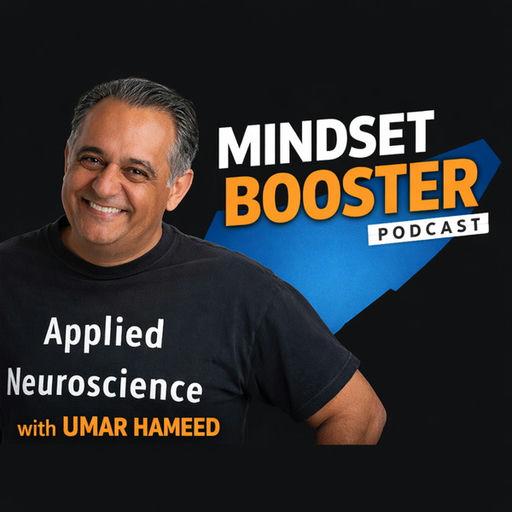
Listen
Sound bites
Becoming a leader is synonymous with becoming yourself. It's precisely that simple and also that difficult.
If you spend your whole day with focused fatigue, you are not turning on the self network at all.
In this episode
Dr. Srini Pillay talks about why people get stuck, how self doubt works, and why unfocused time may be essential for leadership and creativity.
- Becoming a leader is tied to becoming yourself, not just solving the next problem.
- An ideal self can serve as a compass when constant firefighting keeps people from seeing their direction.
- The default mode network, an unfocused brain state, matters when focused fatigue blocks self reflection.
- People may add rules and restraints to their lives because freedom itself can feel intimidating.
- Attention flexibility and built in unfocused time may matter more than nonstop productivity.
Transcript
ShowHide
Automatic captions of the conversation. They can contain errors and do not name who is speaking.
Today, I have the privilege of welcoming Dr. Srini Pillay. He is the head honcho at Neuro Business Group, and as neuroscience is where I live. Doctor, welcome to the program. So excited to be talking with you. Thanks so much for having me, Umar. I'm excited for the conversation as well. So it's really kind of interesting. Since the dawn of time, leaders, one, they fight their own demons, but oftentimes the people they're leading, they can see such greatness within the people they're leading, but oftentimes people don't step up to where the leader knows they're capable.
So this is not a new problem. This is in the most ancient writings, leaders are writing about why, what stops them. So help me answer that general broad question. What stops us from executing when we know what to do? We have a desire to do it. Some people can execute and get great results and then move on, and other people hesitate or they try and do it and they fail, or they do it and succeed, but then doubt themselves and step back into a lower level. If you could answer that in the next five minutes, we would have changed the world forever.
I think fundamentally, it's probably different for different people. But my favorite definition of leadership is that of Warren Bennis. And what Warren Bennis said, and he studied leaders for decades, he said, becoming a leader is synonymous with becoming yourself. It's precisely that simple and also that difficult. And so if we look at that definition, one of the answers to your question, which is why do people not manifest who they are, it's because they're not being who they are. Now, if we look at the research of Richard Boyatzas at Case Western University, Richard Boyatzas has pointed out that, and he's done this both at a behavioral level in his intentional change theory, and also at a brain imaging level.
He has found that the best way to solve problems, or to come forward as your greatest self, is to have, is not to put out fires. Most people get up on a Monday morning, they're like, what's this problem? What's that problem? How do I figure this out? Especially at the age of AI, people are constantly feeling that they need to upskill, and they need to have back-to-back meetings so that they can solve these problems. What he says is you need to take a step back, and you need to ask yourself, what is my ideal self? Because the self that you are today is striving to become the ideal self.
And if you don't have a good understanding of what your ideal self is, then you don't have a compass that can help you navigate toward what you want to be. Now, on nas.com, Dr. Srini Pillay, I have a free ideal self guide, which people can download in order to just ask themselves questions about what is my value? How can I actually bring value to the world? And what am I not acknowledging in my value set? At the end of this, I actually ask people to take that and put it into whatever LLM you're using, get a summary, and maybe ask ChatGPT to draw a picture.
And what I find most often when I'm working with organizations is that they come up with the most generic representation of who they are. I want to be successful, I want to be healthy, wealthy, and wise. And so we lose the nuance of who we are. And part of the reason we lose the nuance of who we are is because we're not really connected to the self. Now, in the brain, the self network is the default mode network, which is the unfocused network. And so if you spend your whole day with focused fatigue, you are not turning on the self network at all.
So if you don't turn on the self network and if becoming a leader is synonymous with becoming yourself, you actually have to build unfocused times into your day, as I point out in my last book, Tinker Dabble Doodle Try. Okay. So let's, one of the phrases you used is people are striving to discover themselves. And I would think that is not a true statement. I think a lot of people have aspirations, I want to be like Elon Musk. Or if I was a good mother, I'd be holding a job, looking sexy and doing this. We have these ideals we're striving for, and it's almost as if it's a distraction from what the true journey should be, or could be for people.
And sometimes it takes a life-threatening event, like a near car crash or a sickness where people kind of go, let me let go of all the bullshit and let me do that inner journey to step forward. Would you say that's a true statement that most people are caught in this story of themselves as opposed to discovering themselves? And why do you think that's happening? And two, how do we break through that cycle and actually take what you suggested, having that unfocused time? So, yeah, I think what I meant when I said it was that I think it's ideal to be able to be in self-discovery.
And I think if you say, I don't think most people are actually oriented that way, they're trying to be someone else, I think I would agree with that. I want to point out at the outset, though, that pretty much anything that I say is often is accompanied by its opposite. On the one hand, I'm saying become yourself. On the other hand, I can give you lots of reasons why you should, there are instances in which you should not become yourself. And I'll give you an example. People have an idea that the self is rigid and that it's fixed.
But the term that I coined in my book Tinker Dabble Doodle Try, which is psychological Halloweenism, based on a study that showed that when you are trying to be creative, if you take on the identity of a rigid librarian, you are statistically significantly less likely to be creative than if you take on the identity of an eccentric poet. So in some instances, we may need to leave the rigid understanding of who we are in order to explore other domains in which we could function differently. And what's interesting about that study is the same person, if they take on the identity of a rigid librarian, suddenly the brain stops.
It can't really do what it wants to do. But if you give yourself permission to be an eccentric poet, then all of a sudden your brain is like, okay, that's cool. Let me try to make these connections. So I think that I would agree that it is important to become yourself, but it's also important to realize that the self is ever evolving. And the self is not a sort of static endpoint. So here's the way I see it. If I'm building a building, especially a very tall building, the most important part of that building is the foundation.
If I've got a solid foundation, then I can build upon it, and I can build really high. And when you discover yourself, and you figure out this is who I am, and you have a good, solid sense of that, that gives you a strong foundation. And when you have a strong foundation, and then you say, hey, I'm gonna be as zany as Robin Williams to solve this problem, you can do that wholeheartedly and enthusiastically. But if your foundation is wobbly, then of course getting up on that chair called Robin Williams is tougher too.
So I agree with you. Once we get down to the foundation of who we are, that allows us to play more. And then once you've got that solid foundation, it allows you to maybe go deeper into self and evolve. When somebody like yourself, we're chatting and you say something that's like, oh my God, I never thought of that. That changes my understanding of myself. But if that foundation is kind of rocky, then I get into a defensive pose. It's like, you stay away. Do not change my identity. So it's a paradox. Once you have that strong foundation, you have the ability to strengthen it and to change it.
Thoughts on that? Accurate, not accurate? I'm not much of a believer in right and wrong when it comes to intellectual ideas. I like evolving together. I think what you said to me made me think about the fact... So when you have a foundational self, is this foundational self material? Is it spiritual? Is it concrete or is it abstract? Now I think a lot of leaders often feel like they have to define themselves by their work ethic, by what they like to wear, by what they're doing. But if you look at some spiritual teachers, like Ramana Maharishi, for example, his entire philosophy is based on...
He believes that you will reach bliss if you ask yourself, who am I? But not answer that question. So the idea is, when you ask, who am I? You are introduced to the notion that you are beyond your skin and bones and the things that you think define you, single, married, religion, weight, height. There is something more abstract about being who one is. And so for me, paradoxically, the solid foundation is to move beyond the demographics and the LinkedIn profile, to really give leaders the opportunity. I would say the deepest work that I've done, a lot of organizations have a certain kind of intolerance for anything that is that abstract.
But the nature of being is abstract. And so if you can give yourself permission to explore that, paradoxically, the foundation is one way to think about it. The other is giving yourself wings to fly. So the idea is, on the one hand, you do want, but again, to have wings to fly, you still have to have all the necessary solid components that allow you to fly. So I think that as a leader, it is important to engage in a process of self-inquiry, but to take it beyond just the concrete definitions and to really begin to understand what is the nature of who I am.
And when you do that, you often discover that there are dark sides to you and there are light sides to you as well. It's not just all the positive stuff. It's complicated being human. And the more you can come to terms with the complication of being human, the more this foundational strength will support you. What I was thinking on when getting to know oneself is, let's say we had, you had a really good sense of your values around work and the criteria your unconscious mind uses to validate. So let's say one of the things around work that you valued was communications.
And communications, what it means to you, it means to me, could be two different things. So once we get a clear definition of what you think, and you have your values and criteria for work, for spirituality, for marriage, for love, and you have that kind of understanding of who you are, how would you label that? And how important is that aspect of understanding oneself? Because most people don't do that kind of introspection themselves. I think all of those things you just described are extremely important. What comes to mind when you say that is a theory called the theory of positive disintegration, which is a theory that Kasimir Dabrowski described.
He studied gifted students and found that gifted students are constantly disintegrating. They have an identity, then they reinvent themselves, and they become something else. Now, in the current work environment, this is going to be inevitable. There's no way with the rise of AI that leaders are not going to have to reinvent themselves all the time. And if you reverse to that and you cannot really move with the changes in the world, I think it's going to really hold you back from being the greatest that you could be.
Now, one of the things Dobrovsky points out, he said, most of the world, probably 70% or more, are living at this basic level of this pyramid. He basically says, people are just satisfied. They eat, they sleep, they drink, they procreate. That's what life is. And they don't really have time for much introspection. The second level, he says, you kind of have a sense that maybe you should be thinking about the gap between who you are and who you want to be, but it's too much, so you don't really do anything. So you have this mild worry.
He says that the third level is where you realize that there is a huge gap between who you are and how you're living your life and who you want to be. And one of the ways in which he recommends bridging that gap is to really do a deep dive into your values. Do you value money? Do you value time? Do you value love? Do you value connection? And once you begin to recognize that your life is or isn't being run by your values, if it isn't, you start to change. A good example of this is Lady Gaga. She talked to students at Yale, where she said that she reached a point in her career where she didn't want to sing.
People were like, what do you mean? She said, I just didn't feel like singing. And when she went home and she thought about that, she said it's because she was doing a lot of stuff that she didn't really like to do. She didn't like to sell perfumes. She didn't want to feel like a money making machine. She wanted to keep her original artistic identity alive. And so she said, and then I learned that I needed to start saying no. So people asked me to do things that I didn't want to do it. I said no. And then I went home and I looked at myself in the mirror and I said, you, I can go to bed with any time because you have priorities, you have pride, you stand up for what you actually think and you know when to say no.
And I think that was a pretty profound discussion. Because what she said was, we are unconsciously lying to ourselves the entire day. We are unconsciously saying to ourselves, that my life is fine as it is. Is that what you want? Do you really want your life to be just fine? Or do you really believe it is possible to strive for something much greater than just this low level fine? So two things. So thank you for sharing that. That's a really great story. Here's the counter example to that, which is interesting. I'd like you to go deeper in this after I finish my second statement.
I think the name of the woman is Yolanda Rimes. She is a show producer and made a lot of super successful shows, like Scandal being one of them. And she has this book out, The Year of Saying Yes. She said she was depressed and any opportunity that came her way, she was forced herself to say yes to it and how it just opened up her entire world because she did things that she normally wouldn't have done. So I thought it was an interesting counterpart to say no, because no takes more strength than saying yes. And the second part was very much that parenting.
So right now, there's a gap between who we are and who we want to be. And oftentimes, that's hard to see in ourselves. But how do you think that translates when you're a parent, and it's much easier to see it in your kid in terms of, this is who you think you are and this is who I think you are, and there's a delta there. Do you think that causes any kind of enlightenment or that's not a thing? So firstly, I want to acknowledge that I think that contradiction is a helpful contradiction to embrace, it's a helpful paradigm.
When do I say no and when do I say yes? You say no when you're overwhelmed, you're doing stuff you don't like and you want to move toward authenticity. You say yes when you want to be curious, and you want to be open to what life can offer. In terms of how that, so in terms of parenting, what was your specific question in terms of? So the question was this, oftentimes, like it's hard for me to see flaws in myself, but if we were friends, believe me, I'd see the flaws in you a lot more easily. And so when we're parents, we have the best hopes, dreams, desires for our kids.
So we may not be able to see the delta between where we are and where we could be as easily. Like you said, when you're more mature, you get that ability to see that clearly. But in your 20s or these days, in your 30s, you start having young kids. I was wondering if that gives you permission to see the delta in your child more easily than you see it in yourself. And if that's the case, how does that influence looking at oneself? Are kids a gift? There's a quote that I love, goes something like this. Parents don't raise adults, adults raise, children raise adults.
So that was the question I had. Does having kids allow us to see that delta first in them and then by us mostly seeing ourselves more clearly? I think it's well known in most parents, but the parenting is an extremely challenging thing. I think it starts with the relationship you have with yourself and the child. A friend of mine recently had a child and he said it was the weirdest experience because he knew that the child was created by him and his wife, but he felt like it just came through her. That he was somehow made to be responsible for someone who was biologically related to him, but he felt spiritually this was another being coming through his wife.
So that's a very unusual relationship. Most people believe when they have children that they own their children, they are their children. But if you realize that this is a body that is biologically connected to you, but that it is imbued with the spirit that is part of greater consciousness, then you take on a very different kind of responsibility with that child. I think it is easier for people to see false in others if one is not contemplative than it is to see in oneself. I feel pretty, in terms of parents, I think that for some parents, it's a great opportunity to be able to interact with their children, to be able to watch their children grow.
But I don't think all parents feel the same. I think some parents feel like they wanted to have kids, and they change their minds about, why do I want to spend my time telling someone to do something, and all they do is say no, and now I have to deal with what that is, what is the meaning of this conflict in my life. But all of those are opportunities to grow. They're all opportunities to, I remember, I'll give you an example. I liked everything when I was at school, and I liked music as much as math, and I liked, I did well at school.
And my teachers called my father to school to speak to him. And basically they said, there are a lot of kids of Indian descent, your son is definitely going to get into medical school if he wants to go to medical school, but we really think he's good at music. It would be great for the community if he could launch a musical career. And so when my father came home, he said, I said, what did my teacher want to speak to you about? He said, your teacher thinks you should be a musician. And I said, what do you think? He goes, I think it's your life.
I don't want you to blame me for whatever choice you make based on what I think. Dad, I know you have a preference. He said, I have a preference. It's my preference. But it has nothing to do with what you should choose. Just think deeply. I think it's possible for you to go to medical school and then continue a musical career. But it'll be more difficult to start with a musical career and then go to medical school. But I'm biased because I think it's better for you and more secure to be a doctor. And I said, why don't you just say that?
He said, because I don't want you to follow what I'm saying. Now, it's a, so that's an interesting dialogue where we're both growing. And I eventually chose to be a doctor, but I didn't choose to be a doctor in my mind for the reasons that people thought. Yeah, I was very curious about science and I liked medicine and I thought it was a cool career. But it occurred to me that as an artist, I could, I did not want to go through life without having this intimate understanding of the human body. And so it was more than just science.
It was science and art. So I think that parents often discover in dialogues with their children more about themselves as well about their kids. And I think the same is true. I wouldn't agree that children raise, I think it's both ways. What we're discovering in our conversation, there are contradictions in pretty much everything. And there's no origin of things. Dennis Noble, who's a physiologist at Oxford, pointed out that he made the first mathematical model of a cardiac cell. And he said, the heart starts beating before the brain is full.
And so we've asked ourselves, then what's making the heart beat? And he said, it's not the brain. Then people were like, oh, maybe it's the pacemaker cells. Maybe it's calcium gradients across membranes. And then he said, there is no one cause. Every cell is influenced by the organ, the organ influences the cell, the outside environment influences the organism, the organism influences the outside environment. I don't think, I think causation is a fetish of scientists. And I think that beyond causation, there is some other mechanism of mystery that I am intrigued by and I am engaged by.
And I find when I leave the world of linearity, I often find really miraculous things starting to happen. And by miraculous, I mean, I cannot determine the cause. I have no idea where they come from, what's happening. But there is something outside of cause that I think deserves attention as well. I guess a pretty, that's a whole 10 episodes by itself, that thought. And it kind of reminds me, there was a fiction book called The Black Order. And they were trying to describe how life got started on earth. And it was like this primordial ooze had to come together to create life, because the universe needs to measure.
And measurement creates particles or waves, so that need to be created the beingness. And it sounds like the heart thing. The heart started pumping, because that's what it was meant to do. And it may or may not have needed something to kickstart it to go. So let's kind of wind back a bit to... Let's talk about the imposter syndrome. And I kind of like that. It may not be the best label, but here's my understanding of it, especially when I see it in the real world with real world people. Apparently Charles Darwin suffered from imposter syndrome and delayed his release of his pivotal book by 10 years.
That the most observable often end up being Hollywood actors. And you've got somebody with multiple Oscars, a large body of work that proves that they are exceptional at what they do. And they're like, I was thinking, I'll never get hired again. They're going to figure out I'm a fraud. So from your work with humans, why do you think that happens when people have enough evidence to prove that they are exceptional at what they do, still have that doubt that I'm not good enough or whatever? If you think about what self doubt is, self doubt is a complicated idea.
But I think that when you manifest yourself that freely, the freedom itself is intimidating. And my mind first goes to Kierkegaard, who said that anxiety is the dizziness of freedom. And so we say we want to be free, and we want to be great, and we want to be at the top of our game. But there's several things that prevent us from doing that. One is that we feel if you're that free, are you really going to stay at home and take care of your children? Are you really going to be with one spouse? Are you really going to not have multiple affairs?
Are you really going to not eat or drink whatever you feel like drinking? So people will often add balls and chains to their lives because they are intimidated by freedom. Now you might ask what is so intimidating about freedom? And there's a theory related to worry, which is called contrast avoidance theory, that explains why we worry in the world at all. And in people with imposter syndrome, there is this constant worry. Now, the leading theory of why we worry is that in life you have these peak experiences. Think of whatever peak freedom you had.
It's trough experiences, loss of a job, loss of a loved one. Worried people keep themselves in the miserable middle because they're afraid of the contrast of, if I have a great time and if I really manifest, and if my book becomes a huge success, what if after that someone dies? Then I have this big drop from, and they're afraid of the contrast. But if they're slightly miserable, the contrast is not that much. And so I think people have a fear of success because success is intimidating when you know that you could fall at any one moment.
I also think to be human is to be vulnerable. And I think people who are great often recognize that there is a function of the ego. But paradoxically, the call at a moment of the expression of greatness, I think the call is not to lead with ego, but to lead with awe, to actually understand that what you've mastered is not just the brilliance of your own brain, but the connection to a worldwide system of information, which creates incredible awe to realize that you are channeling information. Einstein, for example, described his discovery as a musical experience.
He didn't arrive at it logically. So the call for greatness is often a call to let go of logic and to let go of the ego. And we use the ego as a crutch in our LinkedIn profiles or educational backgrounds or expertise, not recognizing that the greatness is really about allowing the self in its vast expansiveness to express itself. What I've seen concretely in organizations is that leaders who are constantly questioning themselves, are also questioning themselves, because there's so much fear of what could go wrong. It's like anyone who's about to do something great is also asking, what if I don't?
The person who breaks the world record for high jump also knows they could hit the bar. The person who is diving to a pool also knows they could hit their head against the board. And so when that fear becomes overwhelming, it takes over multiple parts of the brain, including the amygdala. And I often tell people that when you are in that state of fear, there are some brain-based techniques that you can use to reduce that fear. One of these techniques is a mnemonic that I call CIRCA, C-I-R-C-A, where when you are overwhelmed, the first thing is chunk it down, break it down so your brain doesn't feel it has to eat up your entire week's worth of goals.
The I is ignore mental chatter, which is a form of mindfulness, which is pay attention to your breath five minutes a day, just so that you can get out of the chatter of the mind. And if you're not a meditating type, there's a type of breathing called cyclic sighing, which can really help you. Basically, you breathe to halfway. This is a study at Stanford, it was found to be more helpful than mindfulness meditation in this study. You breathe to halfway through your nose, then to the top, and then you breathe out. And so that's the ignore mental chatter piece.
Then there's reality check, which is, no matter how horrible any event is, you say, this too shall pass, and you use self-talk to do that. Control check is where you say, what can I control? What can I not control? And what's the difference? You get up in the morning, you're reading about wars in every country, and you're not going to do anything about it. Why keep that in your attentional network constant? And the last A is attention shift. How do I shift my attention from the problem to the solution? And so there are ways to manage these fears.
But I think when people have Impostor Syndrome, they are afraid of freedom, they feel they have to worry to protect themselves so they don't have to experience this contrast. And I think that they are overridden with fear, which is actually controllable. Everything that I just told you, those five steps, there are brain imaging studies to show that it calms down the overwhelm in the brain. Okay, so one of the things that humans are really great at is meaning-making machines. Something happens, we make meaning out of it.
Now, two people can be looking at the same event, and one person says, hey, this is a great opportunity to change our organization. And the other one says, oh my God, this is gonna be really hard work, and maybe we can survive. How does one go about changing the meaning that one has already prescribed to something? Because logically, you and I can go and say, hey, this could also mean X, how about looking at that? But then intellectually, maybe understanding, but where it counts is when it kind of goes deep within.
A, your thoughts on that, and B, how would you coach someone to change one of those meanings that could change the results that they get? And I'll give you one last example. Doing something, somebody labels it anxiety and shuts them down. The other person gets the same emotion, labels it excitement, and that gives them the energy to go attack what they're doing. So how do you go about helping clients change their meaning about something? So a couple of different thoughts come to mind. One is ways to develop confidence when your world feels a little shaken.
And one of the things is affect labeling, which is call out the emotion, and it doesn't have to just be one emotion. It could be, I'm anxious and I'm excited. But when you call out the emotion, it decreases the amygdala activation in the brain. The amygdala processes emotion, so it decreases overwhelm in the brain. The second is, rather than saying, I should not do something, when under stress, the brain does the exact opposite of what you wanted to do. Studies have shown that if you have eye tracking devices, and you're about to score a penalty when you're playing soccer, if you say, do not kick the ball to the right, the eye goes to the right.
So what you want to say is, kick the ball to the left. That's a simple thing. And the third thing is to actually, if you want to make yourself feel a little bit more confident, because you're experiencing the stress or anxiety, and you're attributing things to it, you speak, you call yourself by name, and you speak in the second or third person. So if I were about to give a talk, rather than saying, oh my god, I'm so anxious, this means I'm not prepared, I'd say, Srini, you're gonna crush this. Now, if I just said, I'm gonna crush this, my brain would be like, yeah, whatever, you're not crushing anything, you're totally freaked out.
But when I say Srini, you're gonna crush this, it actually recognizes there's an anxious part of me, but there's the rest of me as well. Now, if we try to understand more deeply, what is going on when people are feeling that anxious? And one question I have for you is, in your work with people, how have you, when people come to you and they're not feeling confident about something, and they're feeling afraid, and they're feeling like they have no meaning, one, I guess one example maybe I'll give you before I ask you that question is, there's a body of work that's just come out of Stanford as well, showing that if you have a Stress is Enhancing Mindset, the Stress is Enhancing Mindset actually decreases cortisol, and it improves cognition.
So same stress, but in one group, you have a different meaning, which is just like when I work out, it hurts, so it's heavy, but I still develop. Whatever stress I get, it's there to help me grow. And if you teach yourself that this is enhancing, it changes your cortisol, and it changes your cognition as well. So the meaning that we attribute to things, I think, really matters because it can change things hormonally. And the one thing that I would say to people is, reality should not be determining your commitments.
Most people say, I can't make it, this market is terrible, no one's buying. There's a thing that I worked on for many years called existential confidence. One of the principles of existential confidence is that your commitments should determine your reality. What are you committed to? Because once you know your commitment, the reality can be completely chaotic. You are a maker of your reality. And I think reminding leaders, when I coach leaders and I'm working with them, I remind them that nobody can keep up the rate of change of what's going on right now.
It's impossible. But what you can do is be a creator in the chaos. And if you are creator in the chaos, you actually realize that is your strength. And I think that really grounds people in what they're doing. I'm curious though, in your work with people, what do you feel? What happens when they get to the meaning question? So oftentimes they don't get to the meaning question, and that's kind of our job is to say, like a good example. This is one of the books that kind of changed my life. This is like a million years ago.
It was called Let's Get Off Our Butts and Do It. And by butts, they meant, I'd really like to do it, but if I had more education, that kind of butt. And one of the things they pointed out that was life-changing for me is that when somebody is angry, I can't believe you did that. And it's like, what a jerk. But they said, no, the level of anger is only there if they have a level of caring. They didn't care about you, they wouldn't get angry in that way. And if they got a level of caring, then all of a sudden it was like, oh, okay.
Now I want to engage and find out what's happening. Whereas before it was a threat, and then all of a sudden it's like, it changes things. So I think sometimes having a different perspective on things is so critical. And a long time ago, somebody taught me this really interesting technique. It was, what if you thought of yourself as your head, and your heart, and your gut? And there was a TV show that you probably saw as a kid called Star Trek. And the three main characters were Mr. Spock, Dr. McCoy, and James D. Kirk, the captain.
McCoy was all about heart, all about feelings. Spock was all about logic, and James D. Kirk was about gut reaction. And so oftentimes when I'm confronted with something, or I teach people is, okay, this thing is bad and it's dangerous. What does your heart say about this? And that within gives them a different perspective. What does your gut say about it? And so just that internal check sometimes can give enough insight for people to go, huh, I don't have to fret about it so much. And so I thought that was such a simple, elegant way that can be self-directed.
And if you want to coach, you've got your head, your heart, your gut to help you transcend the situation. And what you're saying relates very much also to the placebo studies. There's a placebo study, just sugar pulse, where... So there was one particular, many studies. One study that impressed me was they took this neutral paste, and it was just neutral, there was nothing in it, but they labeled one tube lidocaine for pain relief. They labeled the other one capsaicin, the active ingredient in chili, and the other one was neutral.
But they were all the same neutral paste. When people thought they were taking lidocaine, they were like, oh wow, this is really calming. And you look in their brains, and the reward centers turned up. When they thought they were taking the active ingredient of chili, they were like, oh, this kind of stings a little bit. And the pain centers were turned on, and not much happened with the neutral. Now, that's a very profound finding, that what you expect changes your brain, and the meaning you attribute to it changes your brain, so that in this exact same paste, is activating the pain pathways in one instance, and the reward pathways in the other.
And this gels with the body of research. It's been on-going, but this year, there was a pretty profound paper by Lisa Feldman Barrett and her colleagues, showing that categorization is baked into the brain. We think we collect data and make decisions, but we come to every situation in life with a pre-baked bias about what's gonna happen. So if you think, oh man, these are tough times, and then you try to figure something out, your brain is trying to prove, it's trying to help you. It's trying to say, yeah, you're right, it is tough.
Let me show you another tough thing. Let me show you the second tough thing. But if you say to yourself, even though these are tough times, I'm going to be the one to rise in these tough times. The brain is like, okay, cool, this is how you rise in these tough times. So the pre-baked categorizations change brain functioning, because the brain will simply try to confirm what you think life already is. Yeah. Beliefs are self-fulfilling prophecies. Here's one thing I do not understand whatsoever. I'm not sure if you've seen these studies, these are placebo studies.
Would they tell one of the groups that, by the way, you are 100% getting a placebo, and they still get a beneficial result from it. Any thoughts on why that happens? Because I understand a placebo, when you don't know you're taking it, and that it's a placebo, it's an active ingredient that's going to help you. But when they tell you 100% this is a placebo, why does it create benefit? It depends a little bit on the individual study design. I think in some instances, any kind of human interaction is actually therapeutic.
Yes. So the human interaction is probably at some kind of value. I also think that this notion of, it's not supposed to help me, but what if it could actually create a brain state of it is possible. So I think it leads to what was underlying your question, which is when leaders are facing a wall, they forget to ask what is possible. I always ask people, do you want to live an exceptional life? And they'll say, yeah, definitely. I said, by definition, an exception is low probability. So you can't tell me it's not likely.
If it's not likely, that's great, we're on the right path. Because that means that you want to live an exceptional life. I think that cultivating a sense of possibility, regardless, based on these placebo studies, for example, and allowing yourself to ask the question, what is possible? Where should I go? And you suddenly realize that if you keep knocking at certain doors, very often the right door opens. It's just a question of persistence and how long you're willing to persist. There's a self-help person whose name is John Kehoe from Canada, and he talks about an experiment he did with his assistant.
It was Easter, and they had Easter eggs. And he said, Oh, I've hidden a few gifts for you. And the person looked and they found two, and they came back and he said, How do you know they're just two? They go, What do you mean, there are more? And he goes, Yeah. So they kept looking for more, and then they found more. And he said, How do you know that? He said, Actually, there are 12 things there. And then they went back. But if you expect two things in life, you'll get two things. If you expect five things in life, you'll get five things.
The question is, how do you live in a world that feels limitless so that you can learn and discover all that is waiting for you? And I say that with a certain reserve, because I, too, have been through times where I've been like, Oh my God, everything feels so bleak, and how, what to think. But for me, what it comes down to is, do you want to sit down and wait for the world to happen, or do you want to keep exploring to find a way out of there? It's a little bit like there was an exhibit that I discovered by accident in Milan.
It was Anish Kapoor, and I was with a friend, and we had a couple of drinks at lunch, walking along the street, and we were joking because Anish Kapoor always makes these profound statements in museums, but they're also funny. We saw a broken fire hydrant. He was like, Oh, there must be Anish Kapoor sculpture. Anyway, we go into the museum, and there's this big cave, and it's an Anish Kapoor installation, and I'm like, so we go in, and all of a sudden, as we're walking, this woman starts screaming, because it's dark and there's somebody else there, and she sees these two other people, the outlines of people, and I was like, God, this is so terrible, because suddenly it became dark, and I didn't know what to do, and I thought, what can I do?
Just keep walking, keep walking. And I was scared at certain points, I didn't know how high the ceiling was, and I bent down on my knees, and I crawled forward, and then I got up, and eventually I saw the light. And so, for me, even though I was wanting to make fun of it, it actually taught me something, that if you keep moving, you will find the light. And it's something that I like to remind leaders of, no matter how bleak things are. I think this could be a Winston Churchill quote, when you get to hell, keep going.
So before we part company today, you've also got some tools for humanity to get better. You're releasing some apps in the brain space. Tell me about those. Sure. Roullay is an AI-based video therapeutic app. It's reulay.com. And you can find it there. And we've shown at Mayo Clinic in a preliminary study that we were able to statistically significantly improve anxiety, emotional distress, and focus. It's really a mindset shift app, feeling down. We've identified nine mindsets that are actually connected to healthspan and longevity.
And so you go in and you can choose a couple of minutes, three to ten minute experience, and it's like a mindset shift on demand. I have an app that will be out in about six weeks. That's called Attune, and it's for attention deficit hyperactivity disorder, but it's different because most people think attention deficit disorder is about not being able to pay attention and being distracted. But the more recent sign shows that people also get hyper focused, and so they're not able to attend to anything else. And so this app addresses both of those.
My books, Tinker Dabble Doodle Try, Life Unlocked, and Your Brain in Business are all available on Amazon. And I also have a course that I've published recently, which is for people who are doubters about the law of attraction but wonder about it. It's called Implementing the Science Behind the Law of Attraction. And it's an eight week course with just a commitment of 10 to 20 minutes a day, in which I describe the signs of being able to rewire your brain to allow things to enter your life. And you can find all of these things on drsrinipillay.com.
Doc, this was a really great conversation, and I want to go another four hours more, but you got a hard stop. And so we'll have to do another episode soon. I would love that. Thanks so much for the conversation, Umar. It was wonderful.
About Dr. Srini Pillay
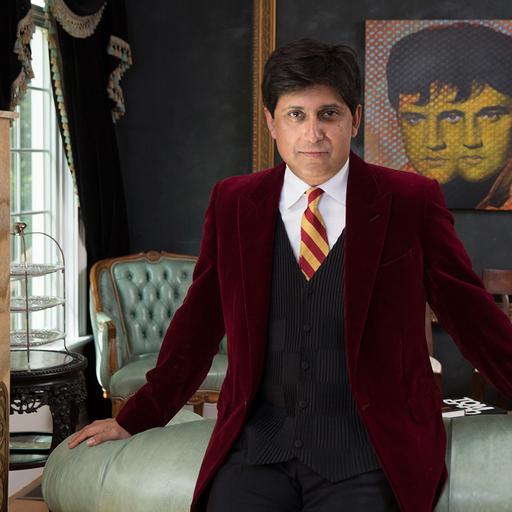
Harvard-Trained Psychiatrist, Author, Brain Researcher & Co-Founder of Reulay Digital Therapeutics.
17 years Federally funded brain researchTop 20 Leadership development mover & shaker6 Books authoredHarvard Medical School Assistant Professor of Psychiatry
Dr. Srini Pillay is a Harvard-trained psychiatrist, neuroscientist, entrepreneur, and author exploring one of the defining questions of our time: What makes us uniquely human—and how can we develop those capacities in an age increasingly shaped by AI?
Trained as a physician in South Africa, where he graduated at the top of his medical school class, Srini earned a Medical Research Council fellowship in neurochemistry before completing his psychiatry residency at McLean Hospital through Harvard Medical School. He became the institution's most awarded resident and went on to direct its Outpatient Anxiety Disorders Program and Panic Disorders Research Program in Brain Imaging. For 17 years, he conducted federally funded brain research while serving as an Assistant Professor of Psychiatry at Harvard Medical School.
Today, Srini brings that scientific foundation to questions extending far beyond traditional medicine. His work explores how belief, attention, emotion, creativity, and human connection influence the way we think, perform, adapt, and potentially age. Through his work on psychogenic longevity, he examines the relationship between psychological experience and physical health, expanding the conversation about longevity beyond biology alone.
As AI transforms the workplace, Srini is developing a powerful new perspective on human potential. He argues that our greatest advantage may not be faster thinking or tighter control, but our capacity for insight, imagination, unexpected connections, and reinvention.
More from Dr. Srini Pillay
All episodes → Sustaining Creativity PodcastLiving a Creative Life with Dr. Srini PillayOct 2026Play episode →
 The Communicative LeaderReclaiming Cognitive Capacity: Neuroscience, Uncertainty, and Intentional UnfocusOct 2026Play episode →
 Confidence Through HealthThe Importance of Integrating Thought, Emotion, and Body w/ Dr. Srini PillayOct 2026Play episode →
 The Conscious Man 7 PodcastEpisode #154 - He's Building VR to Replace Psychedelics | Dr Srini PillayOct 2026Play episode →
 The Deep Wealth Podcast - Unlock Your Deep Wealth In Business and LifeHarvard-Trained Psychiatrist Dr. Srini Pillay: Relentless Focus Is Robbing Your Profits, Success & Health (#579)Sep 2026Play episode →
 Peak Performance Life PodcastEPI 269: Harvard Trained Psychiatrist On How Your Mindset And Other Mental Factors Impact Inflammation, Immunity, Healthspan, & Longevity. With Dr. Srini PillaySep 2026Play episode →
 Mirror Talk: Soulful ConversationsReinvent Yourself: Neuroscience, Spirituality & the Power of Possibility (with Dr. Srini Pillay)Sep 2026Play episode →
 MadPo3t Podcast| Art|Life| Creative explorationInto the Abyss| Ft Dr. Srini PillayAug 2026Play episode →
 The Mental Fitness Podcast | Building Mental Strength & ResilienceYou Are Your Own Guru: Dr. Srini Pillay on Vitality, Stress, and Living Like You're AliveAug 2026Play episode →