
September 16, 2026
EPI 269: Harvard Trained Psychiatrist On How Your Mindset And Other Mental Factors Impact Inflammation, Immunity, Healthspan, & Longevity. With Dr. Srini Pillay
Sound bites
What you are committed to, you will allow yourself to then create that reality.
If we live in a world where we understand that positive expectation in the form of optimism or growth mindset or possibility thinking is a form of medicine, then all of a sudden you're realizing, actually, my body is a natural pharmacy.
In this episode
Dr. Srini Pillay talks about how mindset, emotion, and brain science shape inflammation, immunity, healthspan, and longevity.
- Early medical training in South Africa led to research at Harvard, psychiatry residency, and years of brain imaging work.
- Psychogenic longevity links mindset factors to inflammation, immunity, health span, and longevity.
- Beliefs and expectations can change the brain, including dopamine, stress hormones, reward, and pain responses.
- Mindsets such as focus, optimism, confidence, awe, somatosensory awareness, social connection, autonomy, resilience, and empowerment support health span.
- Self transcendence through social, spiritual, or awe based connection is presented as a powerful health promoting mindset.
Transcript
ShowHide
Automatic captions of the conversation. They can contain errors and do not name who is speaking.
Welcome back to another episode of the Peak Performance Life Podcast. Today, we have a very special guest. One of my favorite topics that we'll be diving deep into has a lot to do with the mind-body connection. We have Dr. Srini Pillay, a chief medical officer and co-founder of Reulay, which is an AI-driven digital therapeutics company that's developing strategies to enhance well-being and health longevity. He's also the founder of NeuroBusiness Group, and he is a world-renowned keynote speaker, lecturer, author, consultant, and Harvard-trained psychiatrist.
I heard a fascinating conversation with him that I can't wait to get into. Just about how different things, different emotions, different thoughts, different lifestyle habits affect our health way more than we know. Thank you so much for joining us here today. Thanks for having me, Tuluwa. It's lovely to be here. Yes, it's an absolute pleasure. Why don't we start with a little bit of a background to just kind of catch people up to speed. How did you get interested in the work that you're doing today? Well, I'm sure I can make up a linear story.
I think that probably the truth is I don't know. But I grew up in South Africa and went to medical school. I loved everything in medical school. So I just decided directly after that, that I wanted to study more about the mind and the brain, and serendipitously was standing next to someone at a conference. I had just been to his talk. It was an amazing talk. I just had an instinct. So I just looked at him and I said, I have a feeling you could change my life. He looked at me and he said, I don't know you. I said, well, what are you interested in?
I said, I'm really interested in the brain and what's going on chemically in the brain. He said, well, I'm a professor at the University of Stellenbosch. We have a scholarship due tomorrow. If you want to apply, you can do it. But we've never given it to a person of color and we've never given it to anyone in psychiatry. So I said, well, I'm not a psychiatrist yet, but I'd like to study that. So I submitted the application and the next day, he walked it over to the committee and then gave me a call in the afternoon to say congratulations and welcome to Stellenbosch.
I studied neurochemistry and did a year's worth of research there. Because my final examiner at medical school was actually from NYU, they had a tradition of inviting external examiners. That examiner had done well and he said, you should go to Harvard. I didn't even know really what Harvard was. I was planning and doing some postgraduate studies in London. In a small dorm room, I just decided, why not just call Harvard, see if they have anything available. I made a call and few years later, I was doing research at Harvard and then did my residency in psychiatry.
Then ran the Outpatient Anxiety Disorders Program, and also ran a part of the Brain Imaging Center. I did about 17 years of brain imaging research. At the same time, was doing biotechnology consultations to companies across medicine, looking at drugs in early stage development for cancer, heart disease, stroke, and neurodegenerative disease, which I think those things really led to my current interest, which I'm calling psychogenic longevity, which has to do with the mindset factors that impact inflammation, and immunity, health span, and longevity.
But simultaneously, I launched a company which was brain-based leadership development, and subsequently also serendipitously got into a think tank at McKinsey, and then started lecturing globally and doing leadership facilitations. But this non-boundary theme has continued throughout my life because I also studied music, and I recently wrote a musical. Then I decided I wanted to also deliver a lot of the interventions I was talking about at scale. So I co-founded Reulay, which is an AI-driven video therapeutics company, where the videos are actually designed based on brain science.
And we were able, with Mayo Clinic, to show statistically significant improvements in anxiety, emotional distress, and focus. And so I'm also developing two other technologies, one for ADHD and one for psychogenic longevity to be able to integrate this with other platforms as well. Wow. Okay. Now it's making a lot more sense. That's a great background, makes a lot of sense. You've seen so many things from the drug research to the anxiety disorders, to all sorts of things there. And it seems like it all came together and really figured out how to best make use of that and help the most amount of people.
So it's amazing. Well, this non-boundary theme also applies to my frustration with how we think about medicine these days. How medicine evolved. And there are many positive things obviously about seeing a specialist because that specialist has studied a particular region. The problem is, you know, when we come to life, the sperm and the ovum come together, they form a fertilized egg. There's one egg and then it begins to divide. But the brain, you couldn't move your right foot if you didn't have a brain. So the brain is connected to everything in the body and everything in the body is reciprocally connected to the brain.
So when we talk about medicine, I much prefer to think about things in terms of the actual complexity of the body. You know, like so often to go on Instagram, we'll be like, don't eat this, eat this. Or if you do this, this bad thing will happen. Well, and then you'll see somebody is like 120 years old, I mean, 110 years old, and they've been drinking throughout their lives, and you see someone else who's only eating vegetables and someone who's eating meat. And I remember saying to myself, why is this nonsensical information being communicated to the public?
Because what the public buys is a story. Like if I told you cholesterol will go into the artery and it blocks the artery, which is why foods that contain bad cholesterol, you should not, you should definitely not eat. It's a story you could want to buy. I mean, you could say like, well, that makes sense. I mean, I just heard that this is, there's this thing called this fatty thing. And the bad fatty thing is something you should not consume. Now, in general, people would say that's true. But there is a huge body of evidence that actually shows that when you lower bad cholesterol, you have a greater chance of dying.
So, what I would say to anyone is, has your doctor told you that? Has your doctor mentioned to you that if you are on a statin to lower cholesterol, it might worsen your diabetes? So, medicine is complex, and every organ is interacting with every other organ. And so, I think the bottom line, so I think the bottom line is that we want to make sure that we ask the right questions to our doctors, and we want to make sure that we don't just believe singular advice without thinking of the body as an entire system. And so, I think this non-boundaried mentality of mine has brought me to this place where I wanted to ask questions like, well, what does it mean if you're more optimistic?
And does this kind of mindset change inflammation? And that's what got me much more deeply immersed in that subject, Matt. Yes. Yes. That makes a lot of sense. I used to be, when I first, I went through my own health journey of lowering inflammation in my body, two ways, by the way, through eating less inflammatory foods and also by doing some mental work as well. But I used to be like, yeah, everyone should go paleo and eliminate all these processed foods because that's what worked for me. And I was kind of like, that's how I used to be.
But as I've done now, 270, 280 episodes, whatever it is of this podcast, like I start realizing, hey, wait a minute, this person had success with this route, this person had success on a totally different route. There is no one size fits all. Some foods are actually great for some people and awful for other people. And there's so much nuance to it there. So it makes a lot of sense. I'm also very much into this mind-body connection. In fact, a few episodes ago, we had someone on who was a student of Dr. John Sarno. I'm not sure if you've ever heard of him, but he wrote a couple of books, one called Healing Back Pain, one called The Mind-Body Prescription.
And he talked about how people would walk into an office with their MRI results, and he would basically tear them up and say that, you know, we've done MRIs on 100 healthy people who have no pain and 60-something percent of them have herniated discs. And so, and he found that it was very common with very type A, very driven, this inner tension, he called it Tension Myositis Syndrome, where people are just, I got to get this done, and there's a lot of frustration and anger there. And he showed how those are the people that tend to have the most back pain, or even if they heal their back pain, maybe it goes to their shoulder or their knee.
You know, I was talking to someone recently who had two surgeries on one shoulder and three on the other one. And I start to think, you know, I wonder how much of that is coming from the brain and the mind and things like that. Now, I don't know, but we love to dive deep into this conversation here. Yeah, you know, there's an organization, which is a psychosomatic organization, a mind bodies organization in Paris, the Paris Psychosomatic Institute. And Pierre Martet and his colleagues have studied this phenomenon. And as they interviewed people, they realized there was this condition that they called essential depression.
And in medicine, essential means primary or the cause is not known. But this depression is not the kind of depression we talk about when we talk about depressed mood or problem sleeping or appetite or guilt. It's actually what he called an absence of vitality. And I think in our society right now, we are seeing an epidemic of an absence of vitality. And what they found was that one of the main associations with this absence of vitality is being overly operational. You know, too back to back meetings, too many lists.
And what was even more fascinating was that they found that these people who are overly operational, who do not invest their emotions in their words. They just say stuff. The emotions are like in a different part of their lives. And then they, you know, like a lot of people show up and work like that, right? They feel like they've got to have this kind of corporate look. And they have to speak a certain way. But what they found was that these people actually have an increased rate of cosmetic surgeries and an increased rate of physical problems.
Now you might ask, wait a minute, so if you don't invest your words with emotion, it starts to give you physical problems. And I would say to somebody, well, what's an emotion? I mean, emotion is, it's a feeling you feel that correlates with an activation in your brain. And you are saying, you are closing the gates on it. You are like saying, no, no, don't go out. And what's going to happen? It's going to push back and try to spill over somewhere. And so if you think about that, it correlates with the literature that shows that emotional suppression, and everything that I say, there's evidence for the opposite of as well.
But emotional suppression over a 12 year period was associated with increased mortality. Now, that's interesting because we live in a society where increasingly people even say things like, oh, that's so funny. When people say that, I'm like, well, then why are you not laughing? Why are you not rolling on the ground? Why don't you have a belly laugh? What happened to your emotion? It got put somewhere else. And I think emotions are frightening to a lot of people, in part because there is a literature that shows that destructive emotion expression can correlate with increased blood pressure.
So people want to be able to figure out how to be constructive. But in the age of AI, where a lot of stuff is just like dealing with this technology, we have to also look out for ourselves and ask ourselves, how do we maintain what makes us unique compared to machines, which is the ability to have this spontaneous emotion, the ability to process emotion. There's a neurologist, Antonio DiMarsio, who wrote a beautiful book called Descartes' Error. In it, he pointed out that when Descartes said, I think, therefore I am, he was wrong because the thinking brain and the emotional brain are both connected.
If we spend the whole day being overly focused, we actually leave out one of the most important brain circuits, which is the default mode network, which we used to think was the do mostly nothing network. But in my last book, Tinker Dabble Doodle Try, I point out why it is important to harness the power of the unfocused mind. Because when you stop focusing, when you're not overly operational, you actually activate this unfocused circuit only comes on when you stop focusing. But this unfocused circuit is the part of your brain that manages complexity, abstraction.
It digs in the nooks and crannies of your brain and brings out data from the past that the focused brain can never bring out. It is also sometimes referred to as the crystal ball of the human brain, because it is the one part of your brain that allows you to predict. So often we hear of people, we ask, in fact, I saw an interview with Elon Musk, where someone asked, where do you think you have your best ideas? He said, well, I don't know why, but I think in the shower. Because in the shower is where you're not focusing.
So now there's a large body of literature to show that it's important to have an on-phase in your day, but it's equally important to intersperse several off-phases during your day. In Tinker Dabble Doodle Try, that's what I emphasize as I try to help people not be overly operational, not only because that's a habit that you can get stuck in, but because it's not good for your body either. Yes. So good. I would say that me personally, as I have become less and less scheduled, and giving myself more free time, and not being so- I was listening to a podcast, a business podcast recently, and it was some high-level entrepreneur, and I'm thinking to myself, let me listen and see what he has to say.
He's talking about how he has 15-minute blocks, and every 15-minute block of his day for the whole week is blocked out with something to do. I'm just thinking, that sounds awful. That sounds horrible. That's not, how do you even, yeah, like, and I also think that many people actually don't give themselves the space or the time to think about, what do I really want? How do I want to design my life? Do I even, you know, do I even want to be going to law school and be a lawyer, or is it just because my parents told me my whole life I should be a lawyer, and that's why I'm going to be a lawyer, because I'll be safe and secure, even though I may be miserable working 12-hour days in office for the next 50 years, and some lawyers are having fun and they're doing great, but in general, right?
It's like, do you actually think about it? Have you designed your life? So having this space like you talk about and not being so operationally scheduled, I can see how that would be extremely beneficial. It has been for me for sure. Yeah. So I've identified at least nine and probably more mindsets that are associated with abnormalities in inflammation, with accelerated downward trajectories of health, and in some cases, premature mortality. Now, focus is important, but a lot of people misunderstand what ADHD is. Most people think ADHD is Attention Deficit Hyperactivity Disorder, so they think it's actually like that you're too distracted.
But we're finding increasingly that it's that the whole attentional system is not regulated well, and you become hyper-focused or very distracted. Now, it is of interest that if you look at people with ADHD, and they have both of these things, they have twice the rate of death before the age of 46. Wow. Or if you look at optimism, for example, some people will be like, what's that? Well, again, for this, the data is also somewhat mixed, but I would say the most recent studies have shown that optimists have 11-15 percent longer lifespans.
Now, if you think about it and when you look at the biomarkers and you see what's going on at the level of physiology, you see that they have decreased levels of inflammation. Now, you might think, well, why would my inflammatory markers in blood be changed by a mindset? Well, again, what is the mindset? The mindset correlates with something in your brain, which then correlates with its relationship with your heart and your immune system. So the brain, the heart, the gut, and the immune system are all talking to one another.
If we ignore our mindsets in a day-to-day basis and just allow this decline, it's actually going to take something away from us. The thing I said about vitality earlier is actually one of the criteria. It's one of the features that correlates with growing healthily into old age as well as mortality. The World Health Organization has pointed out that it's not the number of diseases you've been diagnosed with that determines how healthily you will live into older age. It's five factors and they call this intrinsic capacity.
An intrinsic capacity refers to how well you think, so how clearly you think, how well you manage your emotions. Psychologically, what's going on, your vitality, hearing, and vision. These five factors are important. When you look at all of this literature, you're like, oh, that's interesting. In a psychosomatic institute, they're figuring out that if you don't have vitality, you get more diseases. The World Health Organization is saying, actually, if you do have vitality along with those other four factors, you're going to live longer.
The puzzle pieces start to come together, and you start to think, am I living at my most vital core? Do I feel energized and alive? Because I work with corporations, I can tell you, the number one problem I've been hearing from groups right now is burnout. Everyone is completely burnt out from dealing with AI, learning new AI, trying to figure out, are they going to keep their jobs, are they going to lose their jobs? How do they manage the home and family life? It's actually a problem with what I think you implied, which is not having the time to think about what you truly want.
You know, Richard Boyatzas at Case Western University has studied what allows people to solve problems more effectively. And paradoxically, problem solving is not where to begin when you're trying to solve a problem. When you're trying to solve a problem, the place to begin is by having a good understanding of your ideal self. So I actually have an ideal self-guide that I offer free of charge at nas.com, Dr. Srini Pillay, where people can go in, download that and then it asks you questions. Like, what are your values in life?
Who brings you down? What brings you down? What makes you feel better? And at the end, I say, take it and put it into any LLM, ChatGBT or Claude and then get a one paragraph summary and then ask ChatGBT to draw a picture of that person. And the biggest error that I find when I'm working with corporations doing this kind of exercise, for example, is that it's so generic, ChatGBT spits out a very generic picture. And it's like, well, is that who you truly are? You are Mr. or Mrs. I want to be healthy, wealthy, and wise.
Like, what color do you like? What do you like to smell? What do you like to taste? What kind of people do you want your life to be filled with? You have this one life. A lot of times, because I studied this so intensely, people will ask, look for some kind of profound thing and they'll say, well, what's the one key piece of advice you can give me? And I say, you live, you die, you do something in between, so make it count. And we're in charge of making it count. We are in charge of allowing ourselves to explore the boundaries of ourselves.
Even so often, that means making mistakes. It means thinking on your own two feet. And I think we live in a society where that is implicitly discouraged. You must go to school. So all of a sudden, you're handing over your power to the schools. You're forgetting that you have an innate intelligence. And this innate intelligence is part of what makes intrinsic motivation and vitality come to life. If you look at what causes intrinsic motivation, the self-determination theory is a theory that tells us there are three factors that allow you to feel jazzed.
One is autonomy, the other is competence, and the third is social relations. And it just so happens that autonomy and social relations are correlated with increased health span and longevity as well. So, you know, there was a nun study that looked at the nuns who lived longer, and the study actually found that if they had more autonomy, you know, but you made decisions on their own, they were actually able to live longer. And social relationships, you know, loneliness and social withdrawal is one of the strongest determinants of poor health span and dying sooner.
In fact, hypertension increases the risk by about 50% of dying sooner, loneliness by about 50%. And it turns out that it's not just having a large number of people in your life, it's that those relationships should matter. That they matter is what actually matters eventually. So once again, I think if you feel vital and you feel connected, and you feel like you're in charge of your life, you're putting yourself on a course in life where you can take charge, like what you just said earlier, where you felt like you had this inflammation and you took charge of your life.
You were like, I'm going to try this, and I'm going to try this diet, and I'm going to feel better. And so having that autonomy allows us to address where the normal problems that come up in day-to-day life are things we can change. And a lot of people don't realize that. Yes. Yes. So good. This is so good. I've also heard you talk a lot about growth mindset and fixed mindset, which is something I actually teach when I mentor youth as well. It's like one of the first things I teach is like, look, we have a growth mindset and a fixed mindset, right?
Fixed mindset is like, well, I can't do this. I'm not good at this. I may not even, I may as well not even try. Whereas the growth mindset is more of, okay, maybe I don't know how to do it right now, but I can figure out, I can learn, I can do it, right? Is that how you would sort of describe it as well? Yes. So what I say to people is if you say to your brain, I can't do it, your brain says, thank you, good night, I'm going to sleep. I'm not going to figure this out. But if you say to your brain, I can do this, but I don't know how.
Your brain then starts saying, okay, let me try to figure out, maybe we do this, maybe we do that. It makes such a huge difference. To your point about schools, I once worked with a group of teachers at an inner city school in Detroit. I was looking at the results of the kids, and the results were terrible, appalling. They were failing out of everything, but the majority of students had A's in math. I said, what's going on here? I wouldn't speak to the math teacher. I found the math teacher and I said to him, how are you getting results like this from the kids who are failing out of everything else?
He said, it's a four-letter word and it's called love. He said, I love my kids and I teach them to love one another. So no kid will leave the classroom if some other kid doesn't understand what's going on. So we very overtly say, I don't understand this. So they are in the mode of figuring stuff out, and that's how they're going to grow. So growth mindset, I talk about through a different lens in Tinker Dabble Doodle Try, which is a possibility mindset. And when I say to people, it's important, no matter how, even if you feel like you've hit rock bottom, it's important to ask the question, what's possible?
How do I move forward? What's my ideal scenario? Because what Boiazas points out about having the ideal self, is that the ideal self becomes a kind of compass. And so you know what you're going to leave out of your life, what you're going to keep in your life. And so if you know you're going to leave these things out of your life, you make much better decisions. You don't waste your time in conversations you don't want to have. So when I say this to people, a lot of people will be like, yeah, but that's not reality.
And I say, yeah, of course it's not reality. It's possibility. It's the way you create your reality. Because one of the features of this, it's a concept called existential confidence, which I developed with Jim Selman, who sadly passed, but was an amazing influence, and an amazing partner to think with. One of the features, and this is one thing I would want everyone to take on, which is that we all live our lives so that reality determines our commitments. It's like, well, that's not possible. That's not possible because that's reality.
But people with existential confidence say that their commitments determine their reality. What you are committed to, you will allow yourself to then create that reality. Now, if you say, well, how does that happen? How can you create your reality? Well, if you look in the brain, what you believe changes the brain. So in placebo studies, for example, you take a sugar pill, but if you believe something is going to work, it increases dopamine, so you feel more rewarded, and it also decreases your stress hormones. So all of a sudden, your thinking brain is able to figure stuff out because you're believing.
There was a really cool study which took a paste, and the paste was just a neutral paste, but they labeled one lidocaine for pain relief. They labeled the second capsaicin, the active ingredient in chili, and the third was just neutral, but all the same neutral paste. When people took the lidocaine, which was not really lidocaine, they were like, oh wow, this is really calming. When they took the capsaicin, which was not really capsaicin, they were like, oh, I think the stains. When you look in their brains, those who expected calming, the reward center was activated.
If you look at those who expected something negative to happen, the pain centers were activated. To your earlier point about pain, expectation can change the experience of pain. If we live in a world where we understand that positive expectation in the form of optimism or growth mindset or possibility thinking is a form of medicine, then all of a sudden you're realizing, actually, my body is a natural pharmacy. Actually, I think maybe I can take control of some of these factors. I'll just name some of the other mindsets.
We can go into any of them. The third is, so it's focus and optimism, and then confidence, and awe. We try to always relax when we're stressed. But when you're stressed, what's counterintuitive is that you actually want to make the self smaller. So you go look at an amazing ocean or an amazing sunset. So awe is a very healing emotion. And then somatosensory awareness, like just being aware of our bodies can be helpful. And then social connection, and autonomy, resilience, and empowerment. All of these mindsets have actually been shown to be linked to better health span and longevity.
And for me, one of the most amazing mindsets is the self-transcendent mindset. So if you look at self-transcendence, what does that mean? It's like, well, every day we think of ourselves as who we perceive. Right? So I see me, I hear me, I smell me, and if I wanted to taste me, I could. And so then you're like, well, so then what is self, how do you transcend the self? Well, you transcend the self in a number of ways. One is through social connection. The other is through awe or spiritual connection or God. And you might say, well, what does that have to do with anything?
Over 75% of studies that have examined spiritual connections and connections to religious institutions, have found that those people live more healthily into older age and they live longer. As you said, there's no one size fits all, but the data are compelling when you begin to say to yourself, how do I transcend the self that I think I am? And I think what a lot of people don't realize is that the self circuits in the brain are not fixed. People always say, oh, that's just me. I cringe when I hear people say that, because I feel like, oh, my God, they've given up on the fact that the default mode network, this book that I wrote about, the circuit that I wrote about in Tinker Dabble Doodle Try, is actually, they call it the self center of gravity.
This unfocused circuit, it carries the story of your life, and the story of your life can change. And when you change the story of your life, you actually change what you're capable of. I coined a term called Psychological Halloweenism, which essentially references a study where they gave people creative problems to solve. But in one situation, they had them behave like what they thought a rigid librarian was, and in the other, they had them behave like an eccentric poet. And what they found was that if you behave like an eccentric poet while solving a creative problem, you are statistically significantly more likely to solve a problem than if you behave like a rigid librarian.
Same person, different identity. So we often think we have to think harder. But when we are facing something, we might have to think as a different person as well. Yes. Yes. It's so much easier to give someone else advice than to give yourself that advice. Actually, someone this morning taught me a strategy. He said, imagine the problem you're trying to solve for yourself. Imagine that was your best friend and you were thinking of them. Kind of like what you said, shifting the way you're thinking about it, right? Yeah.
The reality is that what the self is is much more mysterious. For me, it's one of the most exciting things about being alive, trying to understand through techniques like meditation. Although before my Twitter account was hacked, I used to say I was somewhere between Martinez and meditation, where I still am. But I think it's important to think about different ways that you want to use to transcend the self. Sport is also an amazing way of actually finding another part of yourself. Sometimes in sport, you find an aggression that in everyday life, there's no context for the expression of it.
Once you realize that you are this multi-factorial changing organism, you realize, wow, there is a possibility that I could change into whatever I want. Visualization is a really powerful technique. It's certainly been shown mostly in sport. How effective it can be. But when people, I think I told you earlier on, I just launched a course called implementing the science behind the law of attraction. Because when people hear law of attraction, they're like, whatever. I'm sitting at my desk, I'm not attracting any check.
I'm sitting at my desk, I'm not attracting any check. How do these people do this? You've heard celebrities like Oprah talk about this, and how these things came into their lives. What I wanted to do is point out that the studies do show that if you just sit there trying to attract something, you can engage in high-risk behaviors that are not helpful. But there are ways in which the brain works that you can leverage to harness what we're calling this law of attraction. Firstly, when you look at how the brain works, there's not definitive evidence for this, but there's increasing evidence that one neuron, a nerve cell, does not communicate with the next neuron linearly.
There's actually a quantum effect where somehow something happens in two places, and there are these molecules called Pozono molecules that support the quantum functioning of the brain. So the first thing is to say, well, I guess it's possible that my body doesn't operate linearly. It's like, well, if that's the case, that's how most people have discovered anything, say they discovered it, right? Like in Tinker, I point out, there's a, the way in which synthetic DNA was discovered, was discovered by Carrie Banks-Mullis, who went for a drive from Berkeley to Minasino.
He was with his girlfriend, and he even had a little bit of wine before that, then scribbled on a cave. Eventually, he went up to their cabin and he had this eureka moment. Einstein has said that his discovery was a musical experience. So there's something about non-linearity, that is intrinsic to who we are. Not everything has to be a linear strategy. But this idea of non-linearity is important because it means we can go in and rewire our brains firstly by visualizing and learning how to visualize, and there are very specific things that one can do to enhance visualization.
But in addition to that, one can also redefine one's assumptions. What you were saying about the fixed mindset earlier is important because Lisa Cullman Barrett and her colleagues have published a very important study this year in which they looked at excruciating detail of neurons in the brain and found that actually we think we collect data and make decisions. But the truth is categorization is baked into the brain. We arrive at all situations already biased. You're like, yeah, I'm not going to be able to do that.
Well, if you change the category, if you tell your brain, you're not going to be able to do that. Your brain tries to find evidence to support you. Go there because you're going to fail. Go there because you're going to fail. Go there. But if you tell your brain, actually, I'm changing the category. I am a different person. I am now going to be able to make that amount of money or be healthier. Then you have a different set of assumptions and your brain collects different data to support that. Now, it's not all linear and it doesn't happen all immediately.
But once you learn that this law of attraction thing actually has a neural basis, and there are actual practices you can engage in, like in that case, what I recommend in the course is to actually spend time rewiring your predictive brain. Identify three categories and assumptions that are negative assumptions, drop them and replace them by new assumptions, and then practice for the rest of the week what new assumptions are. What I can say is try it, and you'll see that when you take on new assumptions, your brain looks for new possibilities.
Yes. So good. So much good stuff there. I even want to go back real quick to what you said about, your past is malleable. Actually, I know someone who for many, many years held this grudge and anger towards their parents, then went to some transformational seminar for like a week, came back and said, you know what, my parents were just doing the best they knew how to do with the tools that they had and they had a messed up childhood on their own. And they actually didn't do that bad. They, considering where they came from, they actually did okay and just changed their whole view of their history in their past, let go of such a huge weight and actually change their past, the way they viewed it.
In fact, memory is such a complex phenomenon. It's a complex phenomenon because memory is not necessarily, in fact, a lot of the time it's not the truth. It's our story, the story that we make up about the past. And so I don't even let those kinds of memories really impact my narrative. I feel like we are creators of the stories of our future. And if we can figure out how to detach from the memories that are holding us back, we allow ourselves to then ask questions that allow us to move forward. I mean, a case in point is Martine Rothblatt, who is the CEO of United Therapeutics.
And she had three kids and was told by a doctor, she had no background in medicine per se. She studied medical ethics and she studied business. And she was a lawyer. I think she went to law school. And so she went to a doctor and the doctor gave her this prognosis for kids. I'm sorry, they've got this lung disease. We don't have anything for it. Now, what would any truly loving mother do? They'd probably try to find a solution and she did and there wasn't any. If you had a fixed mindset, you would say, well, I guess there's nothing I can do.
Let's try alternative things and hope for the best. But she had a growth mindset. She decided, I'm starting a pharmaceutical company because they don't have the drugs. I'm going to make the drug. And she now has five drugs that are FDA approved. And then she said, well, what if these drugs stop working? So she started to manufacture lungs. And initially, the tissue was all rejected, but now she's actually able to make a lung. And then she said, well, the lungs may not be able to make it in time to the hospital. So why didn't I make zero carbon drones?
And so she made zero carbon drones that broke Guinness Book of World Record records. And so if you think about it, why don't we take that as an example for what might be possible if we actually believed that something was happened? She didn't do it on her own. And you know, when I actually talked to her once and I asked her, I said, you know, this is brilliant. It's really not that brilliant. It's just an engineering mentality. If something is broken, you figure out where it's broken, you try to fix it. And most people, when something's broken, they spend the rest of their lives crying rather than saying, okay, it's broken, let me try to figure out how to fix it.
And so, whatever is in your life, whether it's your relationship, whether it's your financial state, we all go through ups and downs in life. And even though this is what I do for a living, I sometimes forget, I'll go be in back to back meetings all the day and then I'll say, wait a minute, what am I doing? I need to protect time for more strategic living. And the point you made earlier made me think about something, when you were talking about the hostility that this person felt towards their parents. And when we keep this kind of hostility in us, we don't realize what it's doing to us internally.
And even when you have hostility in relationships. I read a study recently where they actually, they created these small wounds in people's skin, they have a blistering. And they found out that those couples who are in these hostile conflicts, in those couples, the wounds healed much slower. So that's interesting. The hostility can actually impact wound healing. And think about what it does to your body. If it's changing the way your immune system is responding to an external wound, it's definitely impacting what you have internally as well.
Yes, 100 percent. And I think we mentioned even hypertension, high blood pressure earlier. To me, again, this is just my own personal opinion. I'm not a doctor, it's not medical advice. But for me, this is such an obvious one where it's so internal. We see this all, and I know someone very close to me who literally had a situation come up in his life that he didn't know how to deal with, and his blood pressure went through the roof. He ended up having strokes and things like that. But it was all based on an outside situation that happened to him and his, I would say, inability to process it.
I would also think that if he would have maybe done more self-development on himself over his life, where he would be able to handle a stressful situation better, that his blood pressure would not have risen so much. He wouldn't have gotten so angry. He wouldn't have had these strokes. To me, it's a very clear direct correlation there, and would love to hear if you have any other examples. Then I know we don't have too much time too, but I also want to talk about what are some, and I know people should read your books, but we'll tell them where they can get your course as well.
Because I also want to leave people with some, I'm huge on personal development self-development. I'm a self-proclaimed personal development junkie. I also spend 30-60 minutes every morning in visualization, in gratitude, in quiet time, and all these things have had a profound impact on my life. But I sometimes struggle to give people practical actionable steps that they'll actually take or use. That's why I love when people like yourself who are so well-spoken actually come out with programs and trainings and teachings to help people with that.
Because I want to leave people with what are some practical steps they can do to maybe help themselves be more calm and ultimately help their own health as well. Sure. As you mentioned in my book, Life Unlocked, Seven Revolutionary Lessons to Overcome Fear, I actually outlined a lot of detailed things and I divide things into three categories. There's cognitive things you can do, there are emotional things you can do, and then there are spiritual things you can do. Now, I'll give you one overarching brain-based technique that I teach when I work with organizations.
When you are anxious and stressed, there are a lot of things that go on in your brain, and one of the things that has been shown repeatedly is the brain's emotion processor, the amygdala, the needle gets stuck in a high position. Your job is to figure out how to bring that down. Well, it turns out, there are five things that you can do, defined by the mnemonic circa, in any stressful situation that will move that needle down, so that metaphorically speaking, you don't have this hyper activation of the amygdala. The first C in circa is for chunking, which means break things down when you're feeling overwhelmed.
You open up your computer, you look at your e-mail, you're like, oh my God, this week is so out of control. Take five minutes just to write down what needs to be done when, and it actually calms down your brain immediately. But chunking is also about ruthless prioritization, because there's so much to do in a day. You have to identify what must get done, what would be nice to get done, and what you might not actually reach. Chunking is also about delegating. So the first C is chunking. Then the I is ignore mental chatter.
The brain is constantly chattering, you're not going to get this, you're going to do this, you might get ill, you're getting older, when you're going to die, what's happening. It's like you have to figure out a way to quiet down this constant murmuring in the brain. Now, one way you can do this is with mindfulness meditation. Mindfulness meditation really requires you to just sit back in a chair, close your eyes, place your attention on your breath, and just place your attention on every inhale and exhale. If your mind wanders, just like a spotlight, just bring it back, to the breath, and start off with five minutes a day, and build up slowly to 15 to 20 minutes a day, or some people recommend twice a day, and that can be super helpful.
Now, if you're not a meditating type, you can try what they just studied at Stanford recently, which is cyclic sighing, which is you inhale to half, then you inhale to the top, and then you exhale through your mouth. If you just do that, they found that cyclic sighing was actually more effective than mindfulness meditation. If you think this is just some kind of whatever, the reality is that increasing research is showing that mindfulness meditation can also impact genes. As we get older, the telomeres, which are like the plastic part of shoelaces if you cross them, they get shorter and shorter, and eventually we get diseases and die.
But if you practice mindfulness meditation regularly, it keeps the telomere longer throughout your life. So mindfulness, the ignore mental chatter is important. Then there's reality check, which is basically self-talk. When something horrible happens, it's just like this too shall pass. Just use that self-talk and it calms the brain down. Then there's control check, which is what can I control, what can I not control, and what's the difference? Under this is an example that often uses Lady Gaga, who came to a point in her singing career, when she spoke to Yale students, she said, I just didn't want to sing.
People were like, why would you not want to sing? You're famous, sing really well. Said because I was doing stuff that I didn't really like. I had to sell perfume. I didn't really want to do that. I didn't want to just be a money-making machine for people. So I started to say no. When I said no, I'd go home and look at myself in the mirror and I'd say, you, I can sleep with any night, because you have integrity, you are representing who you are and what you want. For everyone, there's one thing in everyone's life that we could say no to.
It's important to say no to that. Then there's the last A, which is attention shift. How do I shift my attention away from the problem to the solution? If we're able to do that, chunking, ignore mental chatter, reality check, control check, and attention shift. This can actually also lower the needle on the amygdala and then impact your body in a positive way as well. I think another piece that I've summarized from Tinker Dabble Doodle Try is, if you're trying to strategically unfocus, one thing you can do is take a high activity break.
In a lunch break, just take 15 minutes and go on a brisk walk. So many benefits to that. Studies also show that if you walk on a curvy path, you're likely to be more creative than if you walk around the block. The second thing is napping. Five to 15 minutes of napping can give you one to three hours of clarity. The third is what we call positive constructive daydreaming, which is studied by Jerome Singer in the 1950s, where he said daydreaming sitting at your desk is not that helpful. Daydreaming, thinking of last night's indiscretions is also not helpful.
But if you are doing something low key, like if you can knit, knitting, garden, gardening, or just walking. If you're doing something low key, you would draw in a safe way, you would draw your perception from what's external, and you start imagining something wishful, like running through the woods with your dog or lying on a yacht. This stimulates the unfocused brain, but also has all of these other benefits to creativity, and then potentially also to health. Then doodling is also important. Jackie Andrade and her colleagues found that people who doodle had 29 percent strong memories.
More recently, studies have shown that you have to be doodling what's relevant to a conversation if you're listening to it. But I say, try any of those. Try brisk walk or positive constructive daydreaming or napping or doodling, and see what a difference it can make to your life. There are caveats to this, like if you nap too much and it disturbs your sleep, it becomes a problem for your heart. But I think those two sets of things, the circa and the unfocused practices are critical. But the number one thing I would say one should do is, have a better understanding of your ideal self.
Fill out the ideal self-guide. Look at it and then feed it into Chachi PT and keep on refining it until it starts to sound like you. Amazing. Dr. Pillay, this has been so great. I want people to know where they can find you, follow you, get your books, take your assessments, do some of this work. There's no better investment than the investment you make in yourself. Now, you're showing the science behind how this actually affects your health, affects your future and ideal life that you can create for yourself. This has just been, I've really, really enjoyed this and I really want to encourage people to learn more.
Where can they get access to all your stuff? Thank you so much. It's a delight speaking with you. You can find me at drsrinippillay.com, drsrinipillay.com. There you'll see guides to how to find the books and how to find the course. I'm also on Instagram pretty regularly, pretty much every day, at least twice a day. That's at drsrinippillay is my handle. At that same handle, you can find me on TikTok. I also have a sub stack, which is 52 recipes for success, which is at drsrinippillay. You can find me at srinippillaymd on Meta or Facebook and on LinkedIn at drsrinippillay.
I would love for people to join the e-mail list. Every week, I put out a newsletter in which I describe one mind-body phenomenon based on the research, and I decided to integrate it with quotes and literary ideas and poems, and also actionable ways that you can get to work on those things. Because I think so many people are not aware of the mind-body connection, and so if you sign up to my newsletter on drsrinippillay.com, you'll get this free newsletter every week. Amazing. I'm going to go sign up for that newsletter.
I want to get these weekly e-mails. Dr. Pillay, this has been amazing. So much to learn here, so much more to do, a journey that will continue throughout our entire lives to continue to develop ourselves and stay calm and be healthier and do the things that you talk about. So yeah, I hope we can do this again. I think maybe we'll reach back out in several months and do around two of this. But this has been amazing and I hope we can do it again. Thank you so much. It's an absolute delight to be with you too. Thank you.
Thank you for listening. If you enjoyed this episode, it would really mean a lot to me if you would forward this episode along to any friends, family members, anyone that you think that would get value out of it and learn something important. The mission at Peak Performance is to help people prioritize and transform their health. If you think someone will get value, please do forward this episode along to them. Also, if you could please rate and review and subscribe on whatever podcast player you are listening to this on, we would greatly appreciate that as well.
It means a lot. I want to tell you about a couple of new products that we just released. You can get 20 percent off your first order at BUYPEAKPERFORMANCECOM, that's BUYPEAKPERFORMANCECOM. We just released a brand new grass-fed beef protein isolate. This is my favorite new protein powder because it's great for muscle building and recovering and all that kind of stuff, but it doesn't give the stomach discomfort and gas that a lot of people get from different types of proteins like whey proteins, some types of plant proteins can do the same as well.
It seems to be really, really easy on the stomach while still giving all the great benefits of muscle building and everything else that you want from taking in adequate protein. So check out our new beef protein isolate. We have it in unflavored, which I actually mix and blend with my morning coffee every morning. We have a vanilla and we have a chocolate. You can buy it on Amazon, but again, you also do get 20% off your first order at buypeakperformance.com, buipeakperformance.com. We've also recently released Organic Mushroom Coffee.
We have these in Keurig compatible K-Cup coffee pods. We have Organic Mushroom Coffee with Lion's Mane, Rishi, Cordyceps, Turkey Tail and Shaga Mushrooms, blended with the high altitude organic coffee that we've been using and that we've been famous for for years. So that's been a big hit, that one as well. You can get on our website or Amazon, any of our products. And of course, we're always famous for our Organic Green Superfood Powder that has almost 5,000 reviews on Amazon with a very high star rating. We're known as the best tasting USDA certified organic green superfood powder with over 25 plus organic ingredients.
Again, we also have the Organic Red Superfood Powder. We still, of course, have the Organic Plant Protein for those who do prefer the Plant Protein. But I'm really excited about this new Beef Protein Isolate and all of our other products. We do have over 100 products. So just check us out if you type in Peak Performance Supplements on Amazon or if you go to buypeakperformance.com. Thank you so much, and we'll talk to you again soon.
About Dr. Srini Pillay
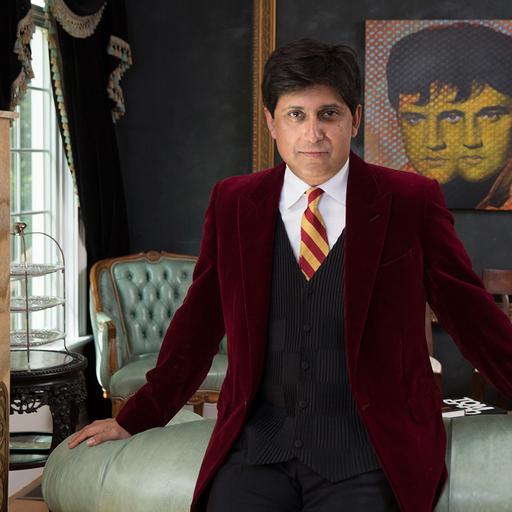
Harvard-Trained Psychiatrist, Author, Brain Researcher & Co-Founder of Reulay Digital Therapeutics.
17 years Federally funded brain researchTop 20 Leadership development mover & shaker6 Books authoredHarvard Medical School Assistant Professor of Psychiatry
Dr. Srini Pillay is a Harvard-trained psychiatrist, neuroscientist, entrepreneur, and author exploring one of the defining questions of our time: What makes us uniquely human—and how can we develop those capacities in an age increasingly shaped by AI?
Trained as a physician in South Africa, where he graduated at the top of his medical school class, Srini earned a Medical Research Council fellowship in neurochemistry before completing his psychiatry residency at McLean Hospital through Harvard Medical School. He became the institution's most awarded resident and went on to direct its Outpatient Anxiety Disorders Program and Panic Disorders Research Program in Brain Imaging. For 17 years, he conducted federally funded brain research while serving as an Assistant Professor of Psychiatry at Harvard Medical School.
Today, Srini brings that scientific foundation to questions extending far beyond traditional medicine. His work explores how belief, attention, emotion, creativity, and human connection influence the way we think, perform, adapt, and potentially age. Through his work on psychogenic longevity, he examines the relationship between psychological experience and physical health, expanding the conversation about longevity beyond biology alone.
As AI transforms the workplace, Srini is developing a powerful new perspective on human potential. He argues that our greatest advantage may not be faster thinking or tighter control, but our capacity for insight, imagination, unexpected connections, and reinvention.
More from Dr. Srini Pillay
All episodes → Sustaining Creativity PodcastLiving a Creative Life with Dr. Srini PillayOct 2026Play episode →
 The Communicative LeaderReclaiming Cognitive Capacity: Neuroscience, Uncertainty, and Intentional UnfocusOct 2026Play episode →
 Confidence Through HealthThe Importance of Integrating Thought, Emotion, and Body w/ Dr. Srini PillayOct 2026Play episode →
 The Conscious Man 7 PodcastEpisode #154 - He's Building VR to Replace Psychedelics | Dr Srini PillayOct 2026Play episode →
 Mindset BoosterRewire Your Brain for Confidence, Creativity and BreakthroughSep 2026Play episode →
 The Deep Wealth Podcast - Unlock Your Deep Wealth In Business and LifeHarvard-Trained Psychiatrist Dr. Srini Pillay: Relentless Focus Is Robbing Your Profits, Success & Health (#579)Sep 2026Play episode →
 Mirror Talk: Soulful ConversationsReinvent Yourself: Neuroscience, Spirituality & the Power of Possibility (with Dr. Srini Pillay)Sep 2026Play episode →
 MadPo3t Podcast| Art|Life| Creative explorationInto the Abyss| Ft Dr. Srini PillayAug 2026Play episode →
 The Mental Fitness Podcast | Building Mental Strength & ResilienceYou Are Your Own Guru: Dr. Srini Pillay on Vitality, Stress, and Living Like You're AliveAug 2026Play episode →