
October 8, 2024
Russell Harvey - Mastering Leadership Resilience
Listen
In this episode
Russell Harvey joins The Legendary Leaders Podcast to talk about resilience, leadership, and how people and organisations can adapt through change and setbacks.
- Resilience as springing forward with learning, not simply bouncing back.
- Building support networks, maintaining communication, and staying connected during organisational change.
- Balancing humanity, data, and process when making leadership decisions.
- Reading the room through conversations, situational awareness, and openness to what is really happening.
- Personal setbacks, including redundancies, shaped his approach to self care, purpose, and listening to gut instinct.
Transcript
ShowHide
Automatic captions of the conversation. They can contain errors and do not name who is speaking.
Hello and welcome to Legendary Leaders, the podcast. My name is Cathleen O'Sullivan, and I am the host of this show. And together with a wide range of legendary leaders and experts in the field of leadership of self and others, we are going to explore concepts and ideas that show you how you can move past potential fears, negative self-talk and constant doubts in order to encourage you to becoming a legendary leader yourself, with far more natural impact, influence and inspiration. We want you to be you, to be at your best and to show up in the most authentic way.
So are you ready for it? Well, welcome once again to Legendary Leaders, the Podcast. Hello and welcome to today's episode. And today we are diving deep into a topic that touches every aspect of our lives, which is resilience. Now let me ask you this, how do you handle life's inevitable setbacks? We all experience them from time to time, don't we? But how do we handle them? Do we just try to get through them and somehow everything is going to change and will be okay? Or do we take it as an opportunity to do we actually sit perhaps with the discomfort as well, trying to make sense of it, try to really work through the emotions that come with setbacks.
There are different ways how to go about it, obviously. However, when the storm hits, do you find yourself struggling to stay afloat? Or are you the type who somehow manages to navigate through the chaos and clarity with clarity and strength? To help us unravel the secrets of resilience, we have a special guest with us today. Meet Russell Harvey, also known as the resilience coach. Russell has dedicated his life to understanding resilience, not just as a concept but as a practical tool for thriving in both personal and professional spheres.
And with over two decades of experience, learning and development, Russell has coached countless individuals and organizations, guiding them to not just survive but to thrive through adversity. He is also the author of the resilience coach and the sought after speaker on the topic of mental toughness and adaptability. But what sets Russell apart isn't just his expertise, it's his personal story and the unique insight he brings from his own experiences and experience that he currently lives through of overcoming challenges.
So before we dive into this enlightening conversation, I want to leave you with one question. When faced with the unexpected, do you simply endure or do you actively cultivate the resilience that will propel you forward? So stick around because Russell is about to share the strategies and mindset shifts that could change how you approach every challenge in life. Oh, Russell, welcome to today's show. It's so good to have you here. Thank you, Cathleen. It is fabulous to be here. I appreciate it. We're having some fun, aren't we?
I'm sorry. You make me laugh a lot today, and I'm going to share with you why. So, the first reason you noticed why, and what the listeners didn't notice, that Russell was connecting to the ethernet. You had to get a cable, I assume? Yes, I did, absolutely. So, I got one nearby. I haven't used it for a while, but I'm in a back-to-back house. So, yes, the computer and the box are four stories distance between them. So, you know, I've just done a bit of exercise, you know, is what I've done. Well, being the resilience coach, one element of resilience is keeping fit.
Here we go. But what you might not have heard when you were listening to the first seconds was Russell doing this. I was really out of breath and it made me giggle. I'm sorry, Russell. Do you do this with all your guests? Do you suddenly say, right, we run off and just do this for us? Well, I always think about something else to do, to take you a little bit out of the conference zone right away. Most importantly, create some humor, some ease and tune into this conversation. There we go. I'm there. I'm here. I'm ready.
I'm going to tell you why you made me laugh today as well. I was listening to a couple of podcasts that you were on. One of them a few days ago and one of them this morning. And then one of them, you were introduced as a resilience coach. And you immediately turned in and you said, I'm the resilience coach. And I was literally laughing out loud. And the question for you is, what makes you the resilience coach? Absolutely. Absolutely. It is. It's great marketing. The resilience coach. I'm not any old resilience coach.
I am the resilience coach. So, what makes me? So, in my opinion, because I've spent the last 13, 14 years specializing in being the resilience coach, and all day, every day, multiple times per day immersing myself in actually, what does it mean to be a resilient leader? How to lead yourself and others well in a full on mad, bonkers, crazy world. So, talking about the anachronym of VUCA, and I do sometimes feel like I'm familiar with David Brent from The Office, and terrible management speak. I do come times wonder that if I'm doing that.
However, I aim to clarify, be more specific to go, right, there's a buzzword, now let's bring it to life. So, I'm the resilience coach because I made the decision. After the last role I did before I became the resilience coach, it was at the Co-op Group in Manchester, and literally, they got themselves into a serious pickle as a business, and all of my internal clients were literally coming to me with their head in hands going, why on earth we do Russell? Literally, the business is in trouble. It was like, okay, so well, there's this word resilience, there's this an acronym called VUCA, and if you look behind the scenes of all of those, literally, any of the solutions that we need, they're in there somewhere.
So, I spent the last 13 years continuously trying to strive for, where's the solution? The answers exist, so how do we find them? And what does it mean to be a resilient leader? So, and life circumstances as well, you know, being made redundant six times over the course of my career, you know, coming after to come home and sort of say, you know, six times, the job's gone again, we've got to find another one, and then it was on the sixth time and that happened to go, right, let's create the resilience coach now because the university is telling me something.
And actually, the journey to becoming the resilience coach, you know, required resilience to make the choice about what's the best way I'm going to achieve my purpose. And it was, as the resilience coach, rather than as in the corporate world. There's so much I want to talk about in particular, Vukka. I'm fully aware that this acronym has been around for at least a decade. Yeah, at least, yeah, if not longer, probably 30 years now, yeah. And I'm not sure if everybody is necessarily familiar with the acronym and knows what the letters stand for.
So Vukka, tell us more about it. So there's eight words to start with. So this is like an opportunity for eight buzzwords that we'll hear all the time. So it's Vukka twice essentially. So the world we live in is volatile, uncertain, complex and ambiguous. To counteract that, you then need vision, understanding, clarity and agility. So it's just there's an explanation for them. So really quickly. So volatile, speed and rapidity of change. So vision to counteract that is you need situational awareness. It's your eyes.
You need to be looking up and out for actually what's the speed and rapidity of change that's going to happen. So uncertainty, the fact that we're not sure about actually how things are going to impact us. So our understanding needs to be actually, I have to feel comfortable feeling uncomfortable. So to me, that's very much about our emotional intelligence. Complex. So yes, that sort of, we don't understand actually how one decision and one thing is going to impact upon another. So it's a bit like the butterfly effect.
As a principle, as an analogy. So what we do need clarity on are what are our boundaries? What is it that we've got to work within? And sometimes the only clarity that we may get is we've got no clarity. Sometimes that's what it means essentially. And then ambiguous, okay, is absolutely the lack of a right answer a lot of the time. So this is thinking about actually when leaders are thinking about their job role, it isn't about fixing one problem. It's about this lovely sentence of they're there to resolve a suite of dilemmas ethically and creatively.
That's what they are there to do. So agile then is linked to this word adaptability, which is a key component of being resilient. So agile is about making quick decisions about actually what you need to do differently. So you then to link that with your situational awareness, to go actually now is the right time to stay the course because it is right. But I'm looking up and around and going, actually, do you know what? We need to quickly make the choice to make a shift, to make a change. That is a lot of, you know, there's a lot of stuff around the VUCA piece, but that's the best way that I can describe it right now.
And thank you so much for it. In particular, the second VUCA, I'm sure, is not something that a lot of people have heard in this combination too often. And we should definitely talk about this more. I actually, I'm raising my pen here like a teacher. And to be clear, they all link to resilience. So resilience and VUCA are heavily intertwined. That's why it's not one or the other. It's literally, they talk about leadership capabilities and peak performance behaviors within a VUCA world. And they link very, very closely to what it means to be a resilient leader.
So you put them all together, there's actually an enormous amount of ideas, behaviors, capabilities, mindset and attitudes to develop and build upon. So it's all helpful and useful for leaders. And we should certainly delve into some of those ideas, behaviors and actions. But you're literally taking me in all sorts of directions. Yes, well, I'll stop now. I'm sorry. I get excited about this stuff. It's great. Not your fault at all. I'm trying to build some structure right in front of me, because in order to remain focused and when there's a lot going on, resilient as well, that is something that helps me personally, building structure, making sense.
And then I can be more agile within that structure, which is really helpful. However, resilience, you say, if we can resilience go together, and then there's a range of behaviors, for example, around that. If you were to define resilience, how would you define it? So I always define it as springing forward with learning. That's how I would like people to get their heads around what resilience is. Springing forward with learning. When somebody role models the suite of behaviors by that, which we will delve into, then actually give you a best chance to be resilient.
I'm not a fan of the term bounce back, because there is a risk that because life happens to us and around us, and we face into it with whatever level of resiliency that we have. And then if we say to ourselves, okay, I'm going to bounce back now, sometimes we make a subconscious instruction to our brain to go, I'll now go back to how I was before I faced into this situation. And then me personally, I'm going, hang on a minute, okay? You can't go backwards, all right? Because then it sometimes tips into the sentences of like, well, when things get back to normal, we'll go back to how they were.
And I'm going, yeah, they're never going to go back to normal. One of the things to wrap your head around in a VUCA world is it's a great way of saying change is constant. So that's another sentence we may have heard loads, change is constant. But when you delve behind resiliency and VUCA, you get to understand, actually, I genuinely know what it means. But yet, it's going to be changing all of the time, somewhere, everywhere. And a lot of the time, it'll impact me and a lot of time, it won't. But whether it is or isn't impacting me, I am choosing to engage in my resilience, my personal resilience, by role-modelling the behaviours and springing forward with learning.
And so some of those behaviours are, from all of life's events, you need to pause. Pausing might be going for a walk. So it's still an activity, but that's pausing. Pausing might be having a cup of coffee with a mate, go, let's chat about what's happened, you know, and reflect upon it. And pausing also includes re-energising yourself. Because when we are facing into tough situations, if we aren't playing to our strengths in those toughest situations, then we will be depleting our levels of resilience. So in your pauses and your reflections and your re-energising, they'll enable you to spring forward with learning because you're going to go, what am I going to keep doing that worked well for me in this situation?
And what am I going to leave behind? Because it didn't work well for me in this situation. And I'll move forward with those learnings and do more of the things that actually worked well for me. Yeah. I couldn't agree more with everything, really, you said. The bounce back, we talked about it last time, right? It's for me a real, I have this inner challenge that I experience right away when we talk about just bounce back. And when somebody says, as soon as it's going to be, we are going to be back to normal. And I'm like, what's a new normal going to be?
Right? There is no go back to normal. There is something new. It can be a minor new, it can be a major new, but there is something new that will have changed. So let's remove this word normal even. What is normal nowadays in this multidiverse field? And I suppose that we could just whilst you're saying that, you know, one of the questions I have asked some of my clients is, okay, so a version of a normal that you could have is you being a resilient leader role model. How do you make that your normal? If somebody is like obsessed with, yeah, I'll just need to get back to normal.
It's like, okay, well, let's enable you to co-create what that is. You know, the normal you is being resilient and is thriving. So let's talk about what that means for you. What did he think? For them, it was absolutely about much greater clarity on genuinely what their role was as a leader. It was, you know, there's so much that's asked of me. There's so much that I think that I have to do. And there's so many things that are pulling on my time. And I feel like actually I'm chaotic. So I want to get to a place where I am, you know, and I said, you know, do the reframe.
What is it of less chaotic to you? It's like I am far more focused. I'm genuinely doing this thing called priorities and remembering that priorities won. When we so many people have a list of 100 priorities, I go, well, that's not a priority, is it? You know, so they were going, yeah. So it was literally for them really discovering what their three priorities were. And it was actually really honing in on delegating brilliantly. That's what it was for them to start with, you know, it's literally everywhere I go, I've got to use the people around me, I might have to delegate upwards, sideways, you know, downwards, I've just got to delegate brilliantly, which includes, you know, working with others, it includes actually understanding my people's strengths, it's really understanding my own strengths, and literally all day, every day, we've got the right people doing the right activities.
And you probably communicate well with one another to really understand all of these factors, what to delegate, when, when maybe to hold back with it and so on. I mean, that's, that's crucial. And again, it requires pausing. It does. It absolutely does. And it requires a lot of coaching as well. So that was one of the things they sort of said, actually, I have got to be a coach, haven't I, as a line man. And I went, yeah, you do. I know I'm biased, you know, but yes, you do. So what type of coach are you and how good are you at it?
So that was another thing. I'm going, right. Oh, yeah, right. Loads more development for me. Why? What type of coach am I? You know, asking for feedback. So it was quite a raft of things, but it was hung on. Their priority, singular priority, was delegating brilliantly. And that immediately, I think, I could tell, I know that immediately felt lighter and easier for them. That definitely went from far less of like, you know, squirmy, frowny face to more sort of actually, there's a bit more brightness in their eyes. There's less fog, actually.
I've got an idea about day by day, I'm here to do something and it's this one thing. Right. You know, that helps me. It reminds me of a conversation I had with somebody this morning. We were talking about, amongst other stuff, delegation. And inner critic, by the way, which might also be a very interesting topic in the sense of resilience. And she said, I remember one situation when I was feeling so overwhelmed with everything going on. I had to go to the toilet. So not to go to the toilet, sitting literally on the toilet, head in the hands and just kind of hiding away.
And at some point, her manager at the time approached her, so went into the bathroom and said, hey, are you there? And they had a chat. And they started to chat about, you could say the Eisenhower metrics that they ripped apart, right? In terms of first of all, what's really going on? What's happening in your world? And what are you feeling right now? And then moving slowly but surely into, so what are the real priorities as you've just highlighted it? So they went through, they had a great discussion. She said it didn't take longer than an hour.
But she realized the following. A, she had this habit of just trying to do everything on her own, no sharing whatsoever. And we have all different reasons why we may be doing this, and I'm guilty of that. The second thing is she didn't really step back and pause and consider again what's really meaningful and important. And the third one was, why am I not delegating? What's stopping me from doing that? Because she was even delegating then to her manager. And often what I hear is, I can't delegate, I don't have direct reports.
I'm like, okay, who else do you have around you? But your direct reports. And she realized asking for help is so powerful and builds trust and strengthens trust. And I thought there was so much in this short story, where I'm pretty sure a lot of listeners will listen and say, okay, that's me, that's me as well. And we make it sometimes harder for ourselves than it has to be. Yeah, absolutely. One of the things that was in terms of her delegating to a boss. So that connects with another thing that I say to a lot of my clients.
So anybody who's a line manager, whether it's chairperson to CEO or whatever, somebody who's the first line manager, I say as a line manager, you're only responsible for three things. Okay. Try and enable them to sort of go, okay, I've got all this stuff to do. No, it's just three. It's literally just three. You know, delegate brilliantly to people's strengths. Then it's about remove blockages. So, what I mean by that and this is what links to that comment about the person you're talking about. I can't delegate to my boss.
But one of the roles of a line manager is to remove blockages to your people performing. So, it's the fact that, you know, when you're a line manager, yes, you delegate to your people and yes, you may coach them to come up with some ideas for themselves about how they resolve their situations. And at some point, the person can go, so there's nothing more I can do in my role at my level. You're the boss. You need to go and talk to your people and your colleagues and more senior people to go, actually, the way we do this system or this process or this bit of a culture that's around here or this strategy that we've got in place, it doesn't enable my people to perform.
So, we have to talk to each other about how do we actually, how do we remove this blockage to our people performing. So, delegating upwards is at some stage, you go to your boss and go, there isn't any more that I can do. You can keep coaching me, but it's you. It's now you, your responsibility to go, actually, this doesn't work. Yeah, I need to go to my team meeting with my peers and go, we've got to solve this. We've got to remove this blockage. Then the third thing is creating a resilient culture by you being a resilient leader role model.
You're responsible for three things. Though the intention behind that, everybody I support is that they go, yeah, there's a million one things in front of me, but how many of these things go into these three buckets? Everything that's in my diary, all the meetings I go to, all the people that I see, everything I do, how many of these activities that are in my diary and where I am, are meeting these bucket of three things? Delegation, remove blockages and create a resilient culture. If they're not in those three buckets, that's when you have to do the, I ain't doing that, get rid, stop, delegate to somebody else, delete it.
That's where it gets to. In everything you said is bravery from my perspective. Yeah. I'm thinking of very specific teams, organizations that I've worked with only this week when I felt there was a real fear factor, nervousness in the room. So we could make it about psychological safety up and down now as well. Yeah. I do wonder where does the connection lie between resiliency and having the bravery to challenge back and to say even to more senior people beyond our manager, I need you now to do something different.
So specifically, one of the dimensions of being resilient is this word confidence. So I have the resilience wheel. It's got seven aspects to it and that's how individuals and leaders and teams work on their resilience. Engage with all these different aspects of the resilience wheel and they all have positive knock-on impacts upon others. So it isn't pinpointing about whether people have a lack of confidence or not. I'm not in that space and I don't enjoy the term imposter syndrome. It's about actually, okay, so where's your confidence in all of your resiliency piece?
Sometimes you can build your confidence by working on other aspects of the wheel. However, to directly answer your question, bravery takes confidence and one of the dimensions of being resilient is this confidence aspect. And when you spend more time identifying what your natural strengths are and spend more time doing those, they build natural confidence and natural resilience. So the more confidence you have, the more inner resilience you have, the braver you feel. Or you're not even seeing it as bravery. Your mind has shifted into, well, this is just the right thing to do.
It's literally, I'm not thinking about it, whether it's brave or not. It's like, I know this is the right thing. It's just what we have to do. You know, this is the way forward. You know, now I need to sort of engage and persuade people that this is the thing that we have to do. So the bravery piece may diminish then. I so concur with that. And what I heard in a room this week was, and that makes me, stories make me smile. They talked about pharmo-senior decision-makers and they were like, well, they are people, aren't they?
And they might be actually appreciative of our views here. I'm talking to another person. I'm respectful of what they have achieved in their status, but it doesn't mean I can't talk to them anymore openly. And there was this real ease, the real confidence in them. And I enjoyed that tremendously. Yeah. It's that thing of like, one of the other dimensions of being resilient is your support network. So when you can get to the place, when you understand actually, everybody you work with is an opportunity for them to be part of your support network, then that goes into actually, yeah, we'll just see each other as an, you're another human being, aren't you?
You know, whatever attachments I may or may not have made to you about whether I can or can't talk to you, they've gone, it's like we're in this together. You've got a role and I've got a role. So it's getting to that place. And we have loads of interferences around that. We've got loads of them. I can't talk to them. I can't go to my boss and say, you need to do this boss because I believe I should do it all for myself back to the lady that had to go to the toilet. So that's when you have to do that work of like, what is it that's influencing your decision making and your behaviours right now?
How helpful is it to you? Pause and reflect. What's useful? What's helpful? And what isn't? And how are you going to replace the unhelpful behaviours with helpful behaviours? I'd love to know a little bit more about the other components of the resilience forum. Yeah, absolutely. So at the heart of resilience is our attitude. So what I'm talking about here is a build upon all of the great research from Roberts and Cooper around actually a resilience model. So I don't know them personally, I know one of them, I know who they are.
I know some people that have worked for them as an organisation. But yes, they created actually the dimensions of being resilient. And I've added to it. So I'm really clear about that on website as well ago. So it's Roberts and Cooper's information. They put it in the universe for free. And I've added bits to it. So the heart of resilience is our attitude. Then we need to have a purpose. So if you listen to the other podcast you mentioned, I may have talked about my purpose. But mine is by the year 2025, I want to positively affect 100,000 people.
And right now up to about 47,000, you know. And then it's the confidence, balance of positive negative thoughts. Then it's adaptability. And adaptability has got a little bit more weight to it. So there's some good research from Jenny Campbell at the Resilience Engine in Edinburgh, who once again, I don't know her personally, but you know, we see each other's stuff around resilience. And, you know, she's worked with us, some great research that those leaders, individuals that can genuinely state that they're thriving, the research shows that they spend a third of their time working upon their adaptability, which is their openness to change, which links to the agility bit of VUCA, you know, with the VUCA Prime.
So the nuance between adaptability and agility is adaptability is openness to change, but not necessarily doing it. It's like, I'm open, but I didn't actually do it. So, but agile is doing it and doing it quickly. That's the nuance between the two. So adaptability has got a bit more weight to it. A third of our time working upon and engaging about being open and being curious. Then there's a support network. So the balance of people we've got in our lives that energise and de-energise us. And I know what we do about that.
Sometimes we have to have family members that we might struggle with. But we have to just see, am I spending all of my time with just people that de-energise me? So I need to get them into a good place. Then the ones that I've added is this word meaning. So that's our internal storytelling. So you like stories. So the meaning bit may resonate well with you. So it is absolutely working with individuals about what are their internal stories about how they're describing life's events to themselves. What meaning are they attaching to their life's experiences?
So it's the answer to the question, how was your day? Is it a case of, yeah, it started at 8 and it was a disaster and it went downhill from here and I feel useless. Or it's like, okay, how might we frame that to go, was all of your day terrible? Or go, do you know what? No, actually, I had a wonderful conversation with Cathleen at 10 a.m. and she made me feel good about myself. Ah, yes, maybe my whole day wasn't a disaster. Ah, right. Okay. So maybe this is, so just the internal storytelling we're doing. Because every time you tell yourself a story, you're putting memories in your brain.
So what memories do you want to create? And finally, is this word energy, which is predominantly about the strength-based approach, which I keep talking about. 24 strengths on a psychometric called strength scope, and we identify our significant seven. Play to your strengths. How are you looking at your energies? But what also goes into the energy box are also the five ways of well-being, which I know of, I do talk about, but I sort of say I'm a resilient specialist by it rather than a well-being one, but they're heavily intertwined.
So that's the resilience wheel in its entirety. They're all interconnected, and you can apply it to the individual, a leader and a team. And just to share a bit of transparency here with the listeners as well, so when we talk about well-being, we're probably the physical well-being, the mental well-being, emotional, spiritual. Yes, absolutely, yeah. What have I forgotten? It's all of that. Oh, it's all of that. Psychological, yeah, all of that. Yeah, yeah, yeah. Here we go. Yeah. I would like to delve a little bit deeper into some of the elements you mentioned.
Of course. However, before we do that, something that literally made me fall off my chair earlier on was when you said I was being made redundant, or better said my role, six times. Yeah. I have been there once and I had enough, but it taught me a lot. I see it very positively nowadays. But six times, I mean, how resilient must one be? Talk me through this experience. I think it was part of my whole personal journey to find how I was going to meet this purpose that I've got. Going through life, I didn't realize that I genuinely had this purpose of positively affect 100,000 people until the resilience coach was created.
So I absolutely knew that I wanted to do something around people development. So it all came from, it was 1996 in Hong Kong and I was teaching in Hong Kong, and I'd done around the world traveling. Some magic was happening in the room. I didn't know what the magic was, but it turned out people learning, having their lightbulb moment. I want to do this for a living, but I don't want to be a teacher. So I think I want to be a trainer. So my whole career is like I came back from traveling, and people had always said to me, oh, you're good with people Russell, you can either do sales or personnel.
So I did do a sales job, but I knew I wanted to do learning, development and training. So it was the whole creator to find the right organization that was going to click, the skills that I had to be able to do learning and development. And I just didn't make some of the right choices, essentially. A number of different businesses went under, and I happened to be there whilst it was happening. When I went to the Co-op group before the Resilience Coach, I felt like I'd found my home in terms of their values. So when I left there, when I was made redundant from there, it was more on the lines of I know this is going to happen, because it's going through so much change, supporting everybody else through their own redundancies.
I know it's going to happen to me at some stage, because I can see the writing on the wall, but actually, I'm more ready for it. The opportunity is going to come to set the Resilience Coach. So throughout all of that, what was really, really, really tough and challenging was coming home and telling the wife, you know, so lost my job again. You know, that was the worst bit. That was horrific. And then this is what I'm doing about it and doing networking. And, you know, I haven't go to lots of different interviews. I found the recruitment industry quite battering, essentially.
That didn't feel as though it was really supporting us. The recruitment industry, I know it's made lots of improvements, but it just felt like it was a sales bums on seats thing. And actually, nobody was actually hearing me or listening to me. You know, that's often still the case. Yeah. So I'm not, you know, it just that was my experience. I know there's some really great ones out there. So it was, it literally was that thing of keeping going to go, I've got this fire inside myself that I need to find the right environment where I can be a coach and a facilitator.
And it was my journey to finding that. And it was ultimately, the resilience coach, well, she's nine years old, you know, next month. I'm not going to make myself redundant, essentially. I'm not going to sack myself. But yeah, it was far more about being stubborn, I suppose, to find the right environment and then not learning very well, to be honest with you, about what the right environment was, because six redundancies, you know, just realizing I shouldn't have made that decision. Listen to your gut. And still, there's still areas for improvement of that about my own personal decision making and listening to your gut.
And not getting disheartened, essentially, having this inner resolve, I think. What really touched me was when you said the hardest part was to come home and to tell my wife happened again. And I could literally see the emotions. What was going on for you there? What was the inner voice that you heard in this moment? Oh, absolutely that, you know, I've let her down, I've let us down as a couple. She's going to have to step up again, is going to put more pressure on her. She was already very good at putting pressure on herself.
So absolutely not doing the role that one had attached to myself of, yeah, I need to find a way to have a steady job so I can take pressure off my wife. And each time I come home and go, it's happened again, literally I feel like is all I'm doing is I've failed her because I'm piling pressure on her. That's horrific, you know? Yeah, that's just the worst, essentially. Isn't that at the same time, potentially at least, a good example for our inner critic? Yeah. And what the reality actually looks like, because I'm pretty sure the response from her was not, how can you?
No. You're useless. No, none of that ever. No. No, bless her. She was like, how dare they? Do they not realize what they've got? Which was beautiful and wonderful. So yeah, absolutely. No, there was none of that ever. Yeah. Our own inner voice, right? I mean, seriously, we can put so many blockages in our own way from time to time. No, we completely can. We completely can. So this is why, that's why I added the meaning part to the resilience wheel, to go what's my internal storytelling. So I know that that is higher for me than maybe for others.
But if everybody's listening now, I promise you, you've all got an internal voice. It's that question you might have been asked before of like, do you think? Well, yeah, I do. Okay, well, you talk to yourself then, okay? Because when you think you're talking to yourself. So I talk to myself a lot. Okay? Yes, I've got a high one of those. And so it is a perpetual area of learning for me to go, what's your inner voice, Russell, right now? What are you telling yourself? How are you going to reframe this? Well, when you reframe things, it is about you have to be able to reframe them so that you believe them.
You can't kid yourself. It's only occasionally would I ever suggest to some people of like, you know, fake it till you make it. It's more about, okay, so how are you going to reframe this in a way that you can buy into, that you could start to actually to attach some belief to it? You know, in this difficult situation, you go, right, I want to say to myself, everything's great. I go, well, do you believe that? No, not at all. Not in the slightest. Okay, well, what's the next little tiny step from, it's an utter disaster at this moment in time, and I feel this, and I think this, I feel it.
I just, what is the tiniest little bit of the next step forward to getting to a slightly different reframe around that? And then people will come up with things and go, can you accept that? And you go, yeah, actually, I can accept that. That's shifted me a bit. So when you do your reframe, you've got to make sure that you can buy into your reframe. I love what you highlighted in terms of take these teeny tiny steps, because if the situation really feels crap, I mean, come on, accept that it feels tough in this moment as well, but find this little teeny tiny light.
So that's beautiful what you said. I promise you, I'm not going to stay with the six times redundancy for too long. But you mentioned that you have to listen to your own voice more. It happened now for the six times, so better choices around the environment had to be made, for example, so you create your own environment, which is brilliant. However, I believe every single experience gives us a ton of learning if we want to see it. I call it the stumble upwards. We fail, we fall, we learn if we pause and reflect. So I'm going to talk to you mentioned earlier on, and we grow along the way.
What were some of the teeny tiny, medium-sized or large learnings from one experience to the other with regards to your resilience in particular? So each time it happened, I could immediately say to myself, well, this has happened before Russell, so you know what to do. You know, and you know, fingers crossed you learned from. So, you know, the first, the second, the fourth, the fifth, the sixth time, it's like every single time I can go, well, it's happened before, so I know what I'm supposed to do. Then it was like, what have I got the energy for?
And there's a list of things that I need to do, practically and pragmatically. I think one of the more difficult ones, I have no idea where it was, somewhere in the fourth, fifth and sixth, but really, really giving myself permission to use some of this new spare time on my more of my well-being to go, actually, okay, you've got some real space now, Russell, to actually go for walks, do some more mindfulness, go to the gym more, think about your diet and what's going on, see some people that you've not seen for a while, take yourself off somewhere, go stay overnight somewhere, do the things that you need to do to replenish yourself, and be kind to yourself, rather than actually just because, well, I can't do that because I have to spend 24-7 job hunting, networking.
So enabling myself to do that, giving myself permission to do time for me, so that I could turn up to my networking conversations or talking to recruitment agencies with a much better version of myself, so that I know absolutely I will come across as the real Russell, the authentic Russell, and then that will go into, well, if I'm right for this or the recruitment person literally goes, actually, do you know what? Yeah, I'm willing to ring up all my clients and go, I've just spoken to this guy, Russell, you know, I think you should talk to him, you know?
So I suppose that might go into, I don't know what they, I don't think I ever did, but making absolutely sure that you never come across as desperate and pleading. You came across as I absolutely have got an awful lot of value to add to an organization. So, you know, let's explore that, essentially, and I'm comfortable and confident to say that, you know, and if we're not right for each other, then so be it. Sounds the question? Yes. Yeah. And it's okay that we didn't go into every single step of the redundancy path.
That's totally fine. What you highlighted was again, the confidence and the importance behind confidence. Yeah. The attitude that's at the core. I deliberately make this choice now to look after my well-being in this moment as well. And by the way, you reminded me of the other element of well-being, which is the social well-being, connecting with others. And that is so important too. And that comes in the support section of the wheel as well, doesn't it? It most definitely does. It most definitely does. Yeah, we are absolutely social creatures as human beings.
So we have got to. And I think actually, I have learned, and I know I still do it now, if I am feeling depleted and for whatever reason, my confidence is taking a hit, I do know that I go within myself. I don't reach out. So actually, that's what I do find that hard to go. I've noticed, you Russell, I've noticed, you actually have gone quieter, you haven't reached out, you haven't spoken to people, and this is the time when you've got to do it, you've got to pick up the phone, you've got to message somebody, you know, and they're going to ask you how you are, and then be willing and comfortable to go, I'm not good, I'm not great.
Things aren't right, aren't nice right now, essentially. So that was another learning of, behaviorally, that's what I did, I would go within myself. Yeah. That was actually a question I wanted to ask you. Just because you're running your own enterprise, doesn't mean now everything is perfect. I've built my own environment, it's great. I'm now super resilient. It's a roller coaster journey, isn't it? Totally. Being a business owner, it's that massively steep learning curve. So much about not knowing what it means to run your own business.
So yeah, nine years and it absolutely has been a roller coaster. It totally is still elements of feast and famine. And absolutely, like everybody else, trying to do all those things that you're supposed to do to stop that from being the case. Nobody's got a magic bullet around that one. But yeah, really, really understanding actually what my strengths are in terms of running a business. You know, and so I do remember early on, I did a reframe because people would ask me, who are you? And I go, well, I'm a coach and a facilitator.
And for myself, I had to add in this self description of, actually, I am a managing director, a coach and a facilitator. And that was to remind myself, you know, that I have these roles that I need to do. It's not just about actually doing a coaching. You and I need to run a business, so you've got clients to do the coaching with. And have I really, really got my head and heart around what that means and the amount of activities that I'm going to need to do that de-energize me, because they don't play to my strengths.
So running my own business has been one of the most incredible lessons about what it means to be a resilient me, a resilient Russell. Today's podcast is sponsored by Inner Professional Online Training Programmes. With courses geared specifically for legendary leaders, Inner Professional provides an extraordinary catalogue of leadership and professional development programmes unlike any online training you've experienced before. Hone your conscious and authentic leadership skills with peer group, networking communities, direct engagement with life experts and a wealth of compelling, easy to engage, on-demand content.
Learn more at cathleenmerkle.com/innerprofessional. What are some of the day to day activities? And they can be mental activities or physical activities that keep you in a resilient space or bring you back? Well, so it is having conversations like this, you know, they energize me, they enthuse me, talking about resilience and coaching, energizes and enthuses me. So actually, so this is the sort of double-edged sword, making sure I'm having enough coaching clients to have coaching conversations with, because there I get some wonderful feedback, and I don't do it for the feedback for my ego, I do it for actually I'm meeting my purpose, you know.
So literally this week, there's been a couple of extra amazing pieces of feedback from the clients that I'm supporting, about just how much I am doing for them in these conversations, just how much I am supporting them to get to where they want to get to. So they energize me. So every time I have a really great coaching session or I facilitate a session, they absolutely, you know, float my boat, re-energize me, understand I'm playing to my strengths. And then the next day, I've got to do some admin. I'm all right. I'm fine.
I'm good to go with the admin that I need to do. I think when it comes to the annual accounts, I will never have this since it's my big procrastination area. But yeah, I felt actually quite emotional when I was just listening to you, because I'm in the same boat. I've been doing a lot of training workshops, and they energize me as well, and I have fun doing that and meeting the people where they are, and those different characters and cultures in a room. But where I really feel I have an impact is in this one-to-one conversation or small group conversations, where there's so much shifted and being created.
I said, I'm going to shift my purpose again and do more of that, and be very deliberate about it. When you just said, I realized how much I'm doing for them, what I wanted to say to you and I'm saying it now is, you realize how much you are being for them. Yes, thank you. Because often, particularly when it comes to resilience, we are so caught up about doing as much as possible. But one thing that often has a real impact on people is how you're being with them and for them and how you're showing up. True. That's just beautiful.
So we can build upon an example of this. So share with you offline that my wife's not been very well. So this thing about when it's really difficult times, it was an example of me about laying to my strengths to support myself through these difficult times. So for 15, 16 months now, my wife is recovering from a breakdown. And until somebody really understands what that is or experiences a part to go through it, it's very difficult to describe. So the words depression and anxiety are used and this word psychosis exists as well.
And it's just, it's incomprehensible to try to describe to people what that's like. So somebody being in an altered state of reality and essentially losing themselves. So that's been going on. So I've been a carer essentially for a lot of the last 15, 16 months. And there's still a long way to go and there was some small improvements. And just last week, about 10 days ago, she had a stroke, which was just incomprehensible at the time. Thankfully, we caught it early. So within an hour of it happening, and I didn't realize what it was that was happening.
I just knew something weird was happening. You know, dialed some numbers and an ambulance came and we got into A&E, front of the queue, seeing a stroke nurse within less than an hour of the stroke happening. And she spent a week in hospital. You know, resilient people find the good in situations. So there's an awful lot of good. We caught it early. Speech was impacted and it doesn't appear to be any more. There were no physical symptoms. So that's good. That's brilliant. And so the thing that needed to be sort of fixed medically before we have an MRI is blood pressure, which it is, okay?
So there's medication for that. And she's still her and she's still with me. So that's fantastic and that's brilliant. And coming back to this point of play to your strength to re-energize and recuperate and restore yourself. So I never find it hard or difficult to support my wife. So, you know, I have compassion and empathy as two of my significant seven strengths. Okay. So, you know, a friend said to us some time ago, who unfortunately had a family member who went through a similar experience. It's like your role, Russell, is to love her.
And I go, well, I can do that. That's dead easy. No problem at all. I can do that. So I had a role that energized me, you know, all of the time, even through some of the most horrific things. And while she's in hospital, I had some, you know, sessions with clients booked in where I was going to go and support them. It was actually NHS clients support them with their coaching skills, so facilitate sessions. So it was like, well, I'll go early, I'll drive to where it is and I'll be there and I will be my authentic self.
I won't do it. I'll be there and be my authentic self. And this is restoring me and recuperating me and re-energizing me. And I can come back and I can go to hospital visiting hours. So I had a choice if I could sit at home and wait for hospital visiting hours. Or I could go do something that I love doing, which is going to restore me. And I can turn up to visiting hours in a better place. I don't quite know what to say. You hardly ever get any speechless. But this is such a tough and beautiful story at the same time.
And I'm genuinely sorry that you are, both of you are going through this. Thank you. I am not sure if I could be in a position where I said, you know what, this has happened to my wife. And there's basically, there's a shift happening for her in her own reality. Yeah. And my choice is, I'm going to be there, I'm going to love her full stop. I'm not sure if I would be able to be in that place. I have just the utmost admiration for who you are being. Thank you. Yeah, because that was interesting for me. So, I don't know this part of me of like, I don't need a role.
So, I think there might be some element of, there wasn't, so love is not pragmatic, but it was actually, and love isn't a task either. So, love is being. So, I was actually, okay, yes, I can be a loving husband, essentially. That's something I can do, but it's a suite of, I just have to be myself, essentially, to go, right, well, I love this person, so I've just got to continue loving them. So, yeah, and so finding the good, it's been an opportunity for both my wife and I to go, actually, our love for each other has deepened.
So, that adds to the core of me as a person. I want to stop here and end on this note because it's so beautiful. And I don't want to stop at the same time because you have so much to share in such valuable insights. And one of the valuable insights that came out of this beautiful story is emotions and how to sit and how to be with emotions. And for me, when something tough in life happened, I had this urge to push those emotions to decide and not to feel them. And I realized for my level of resilience, for my well-being, that wasn't a good choice, because at some point they will come back and then probably with more power.
How do you access your emotions? How do you, if you sit with them, sit with them? How do you go about them? So I think that really is an understanding of emotional intelligence. So, you know, we talk, so emotional intelligence for me is really making sure that people that I support, everyone's listening now, it's about our feelings and our thoughts. So we're going to have preference for accessing the world. You know, we have a preference to go, I'm going to go with logic or I'm going to, you know, face the world with logic or face it with feelings, you know?
Really simplistically, we've got a preference around that. And you have to do both. So there is a client I'm working with at the minute of like, one of the things we were turned is like, just remember, you can't batter your feelings with logic. You know, we need it every time. Oh, I'm just doing that, aren't I? So we have to access them. We need you to engage with these feelings. So I have a preference for logic. So, you know, it's over the years, in terms of being an authentic role modeler around coaching, I asked, you know, the client's questions, how are you feeling about this?
How are you thinking about this? But I have to ask myself the questions, oh, Russell, how are you feeling about this? What are your feelings? So, and that links to the VUCA piece of the understanding on VUCA Prime, which is the set of set of the VUCA words, understanding. So that is about understanding emotional intelligence that you have to feel comfortable feeling uncomfortable. So when you go to work life some days and go, ooh, ah, this feels, oh, gosh, right, this is difficult, you know, something's happening here, you know.
So you need to be able to raise yourself awareness about that and go, right, how do I make myself okay with this? And you know, it's like, right, comfortable feeling uncomfortable. It's one of these, and Russell says one of these moments, Christ, I'm here now. Right, right, so it's an emotion, it's feelings, right, okay, yeah, I've got to tap into these feelings, you know, what are they, can I describe them, you know? How are they impacting my behaviours? So it was me continuing to get better at accessing my own feelings, understanding them, being clear with myself about where they're coming from and how come they were coming from there, and thinking about where might I be able to get these feelings to.
Or have I generally got to sit with them for a while? Have I got to be really comfortable feeling pretty damn horrible for a long period of time? Actually, a similar conversation I've had this week with a group of leaders in a room, huge change process and some people feel like I need a bit more sense making here and clarity and others who are like, I'm tired of all of these changes. And a lot of the questions referred around structure processes, what do I say in which situation it felt very factual. And my thinking and I expressed it at some point was, I wished we could have an all day training on how to be with emotions and not only our own ones, but also those of others, because we are encountering individuals, human beings in those processes.
And it's like the structure of the process is going to give us a sense of security, of safety in the moment. I know how to deal and go from step one to step two to step three. But those emotions, that feels tough. Yeah. And there's a possibility, everybody's listening now, that you can give yourself a chance of doing that by remembering that with processes and spreadsheets and computers, you can ask the question, why? You know, continuous improvement, why? With human beings, we don't. Okay. But the simple reframe to go from a spreadsheet in a computer to go, why computer?
Why process? You know, literally turn to the human being and you go, how come? So, you know, how come you think that way? You know, how come that's your answer? If you say to somebody, why do you think that way? It feels accusatory and judgmental. Even if you've got a nice tone of voice, you know. So, I'm with you. On a weekly basis, I absolutely say, yeah, so where we are now is we need to do some emotional intelligence, is what we need to do now, you know. Who wants to stick their hand up and talk about their feelings, you know?
And everybody goes, oh, no, not me. I did not sign up for this. Oh, right, yeah. But then that's when you have to role model it and go, so my feelings are, you know, I'm feeling actually quite frustrated with all of you. And let that land in the room and see what happens. People go, what on earth do you mean by that? You know, and then that's literally the door is opened then. It's just an example of how I've done it, you know, in the past. I knew that I could, I knew that they would be receptive to it. Another point I want to go back to is the one around adaptability and agility.
This week I read an interesting article, nothing new really, but it brought something back to me and that was the following. In times of change, when we feel a bit overwhelmed and perhaps not quite as resilient, what we often do is we try to get the certainty, right? And cut our way through complexity and make sure we build clarity for others. So we've got to have a plan. And then in some situations we think a lot, we take this pause and the pause is getting longer for the purpose of getting the perfect plan. And this article was all about what if the unknown just remains, we don't know what we don't know.
And the key is that you feel the confidence, here's the word again, to say, let's take a first step. Let's do something. And we don't just think, we actually take action. And we step through a door and we see what the room in the new room basically offers to us. And we learn from that experience. And then we open the next door and take the next step. But we literally often over plan, over think. So where's the balance from your perspective between pausing, reflecting, and also taking action? So it's, where's the balance?
It's our balance. Maybe there isn't one. Well, it's, I feel like I'm going to just play back some of your own commentary to you. And that's what I'm trying to avoid. Because it is about where is an organization or a team going to start on engaging with Resilience and VUCA? It's like, anybody that's listening now, every organization, yeah, Resilience is a buzzword that's been around for a long time. Wonderful, great. Let's get the world talking more about Resilience. It's a tiny sidebar. More people need to understand it better about what it actually means, you know?
So the balance will be struck when leaders of an organization make a conscious decision to go, right, let's engage with all this stuff around VUCA and Resilience. Let's really engage with it. Let's talk about it as a leadership team. Let's get our heads around it and our hearts around it and actually understand what it means we have to do day by day. Then they'll strike a balance on. We've got a purpose and a strategy and a vision, and we've got enough of a plan to execute it. We are comfortable with waking up day by day with the aim of good enough, which is a wonderful conversation to have the senior leadership team, good enough, based upon all the uncertainties and ambiguities.
Well, what we've got is good enough. Then we are perpetually open and curious, which is adaptability. Adaptability is right. All day, every day, we're being open and curious about how much of our approach is working. Do we just leave it to let it run its course because it's working? How open and curious you're around actually, do you know what? Situational awareness coming over the hill is a curve ball, so that we now need to be agile. So I'm not entirely sure if that answers, but the balance is you literally, you engage with resilience and VUCA and you'll achieve the balance, I think is my answer.
Yeah. You mentioned the expression situational awareness again as well. For anybody who hasn't heard this expression before, what does it exactly mean despite the fact that you've just given an example? No, no, no. It's great. So it's openness and curiosity. It is using your eyes and your ears and your conversation, okay? So the principle, as they say, is like in all of the team meetings that you go to, part of the agenda, okay, has to be an element of somebody leading the conversation around. So who's heard what? You know?
What do we all know? Who's heard what? So part of the behaviours that each of the team are doing is literally going and having conversations with people across the business, stakeholders, people outside the business to go, so what's going on? What do you do? What do you know? What are you working on? And you come back to all your team meetings and go, ah, I spoke to, you know, Asif and Joanna and Mary and Bob and they know this. So we go, oh, is that going to stop us doing our job? Or is that going to help us do our job?
So situation awareness is gathering of information. It's not gossip mongering. And then it's like this rule of three. If somebody sort of says, well, I was talking to Cathleen and she said this, and somebody else in the room goes, ah, yeah, you know, I was talking to Tom and they say this and go, oh, should we just go away and investigate that? You know, somebody just go off and just see if there's anything there that we need to find out more about. So that's situational awareness. Using your eyes to look up and look around and through your conversations be open and curious, bring it back together and then discuss it.
That's situational awareness. It links with the adaptability and the agility. I've read another article about it. I think it was a Deloitte research that was done when they said, most dynamic leaders keep their feelers out, everything you've just shared, and always having an eye and an ear open, showing interest, talking to people on all levels and making that a habit. So if you listeners are already saying, who is time for that? Make time for this. You don't have to talk to 100 people a day. But who do you want to approach today?
What do you want to hear? What do you want to learn about what's really going on in the business? What's being said? What are the concerns? What are the enjoyments? The other part was, they also step out of themselves. Yes. IE instead of I know it all, I do the same thing every day because I've done it like this for 20 years. They literally shift their position. To say if I was in a different organization, I would look at my decision, how would I make that? What information would I require? Yeah. I do think it is, I know I feel like I'm biased about this because my raison d'etre is more on the human side.
I do still concerned even with the over, people talk about data is king. It's actually, how do you strike a better balance between humanity and data and process? It's just where I'm at. It's far more about you need a community to do this and it's your people. So keep talking to them. With that, I'm going to say thank you so much for being here because that was the best finish that we could bring. Thank you so much, Russell. It's been pure joy talking to you and experiencing your passion. My absolute pleasure. I really appreciate it.
Thank you. To all of you out there who have listened to the buzzwords around resilience at the VUCA world, which of those messages, insights, behaviors that Russell shared with us stuck with you particularly? Why? Here I'm asking the question, why, not how come? Do share it with us and in order to share it with us, we need to know from Russell, how can they share anything with you, where can they find you? Fantastic, thank you. Brilliant segue. So yeah, it's The Resilience Coach. So website is theresiliencecoach.co.uk and email is Russell at theresiliencecoach.co.uk and it's all over social media with The Resilience Coach.
So that's how you find me. Brilliant. Thank you so, so much again. And thanks to all of you for listening in here today. I'm looking forward to speaking to you again very, very soon. Bye, everybody. Thank you so much for listening to The Legendary Leaders Podcast. If you enjoyed this episode, then remember to subscribe to the show either on Apple Podcasts, Spotify, Amazon Music, or my website, www.cathleenmerkel.com. I would also love to hear from you to discover what topics you'd like to hear more about, what topics really resonated with you, and how you're enjoying the show in general.
Perhaps you have some ideas for additional topics, something that you're truly curious about. Please do leave your review on Apple Podcasts as well. It would mean the world to us. Thank you so much and speak to you again next time. Take good care. Bye.
About Russell Harvey
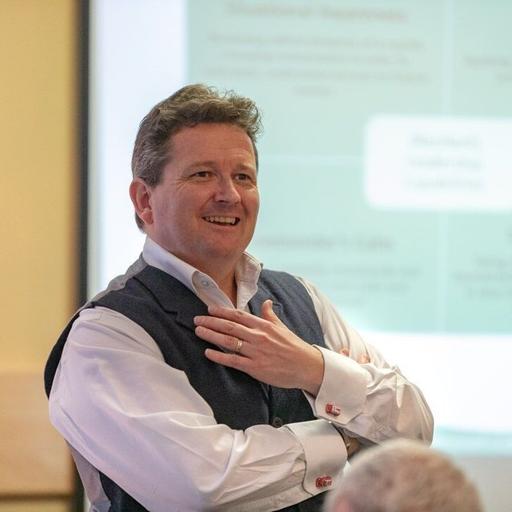
The Resilience Coach | Resilient Leadership Expert
100,000+ People positively affected6,000+ Executive coaching hours£12M+ ROI delivered by RWE npower leadership programme20+ years Learning, leadership and organisational development
Russell Harvey is The Resilience Coach - a resilient leadership expert, executive coach, facilitator and keynote speaker who helps leaders and organisations perform at their best when the world refuses to stand still.
With more than 20 years in Learning, Leadership and Organisational Development, 6,000+ hours of executive coaching and over 70 published podcast appearances, Russell is an experienced and engaging voice on resilience, leadership and navigating persistent change. He has worked with leaders across organisations including Novartis, the NHS, AB World Foods, Kerry Group and The Co-operative Group.
Russell’s work goes beyond helping people simply cope with pressure. He believes true resilience isn’t about “bouncing back”, being tougher or pretending everything is fine - it’s about springing forward with learning and becoming better equipped to lead because of the challenges you’ve faced.
His approach connects the human side of leadership directly to what matters to organisations: engaged people, stronger cultures, better decisions and improved performance. His work has delivered measurable results, including a leadership programme that returned £12 million to the business and a Resilient Leader Programme that achieved more than 1,100% ROI.
In August 2025, Russell achieved his long-held purpose of positively affecting 100,000 people.
More from Russell Harvey
All episodes → Living the Dream with CurveballSpringing Forward: Russell Harvey's Insights on Building Resilience and Embracing ChangeNov 2026Play episode →
 Transformation Station Leadership PodcastTSLP Season 5 Ep. 26- Thriving Is A VerbNov 2026Play episode →
 An Evolving Man PodcastReal Resilience: Why Pushing Through Isn’t Enough | Russell Harvey | AEM #172Oct 2026Play episode →
 Leadership From The Heart | Transformational Leadership InsightsResilience Without the Rebound | Leadership Mindset ShiftAug 2026Play episode →
 Burnout Proof Leadership: Identify Shift and Leadership Skills for Midlife Women EntrepreneursEssential Leadership Skills You Must Have If You Want to Build Resilience & Avoid Burnout When Your Business Gets Hard - with Russell HarveyJul 2026Play episode →
 Your Career JourneyHow to Build Resilience at Work: Leadership, Change & Thriving in Uncertain TimesJul 2026Play episode →
 The ThriveWell Journey | Entrepreneurship, Leadership & Life After DisruptionHow to Build Real Resilience Under Pressure | Russell HarveyJul 2026Play episode →
 Future Fit LeadershipThe 2030 Leader: Why Resilience is Your Most Vital Skill with Russell HarveyJun 2026Play episode →
 Different thinking for Different Time - Mindset Change and Thought LeadershipDifferent Thinking for Different Times - 7 Keys to Building Resilience with Russell Harvey How to Nurture a Resilient Mindset in Business and LifeMay 2026Play episode →