
October 1, 2024
Episode 194 with Russell Harvey - Cultivating Resilience for Life
Sound bites
I'm one of those that just seems to be going through life and I haven't got a purpose. That's okay.
The world we live in is volatile, uncertain, complex, and ambiguous.
In this episode
Russell Harvey and Brian Berneman talk about resilience, adapting to change, and how leaders can navigate uncertainty without relying on empty positivity.
- Resilience as springing forward with learning rather than simply bouncing back
- A purpose can help resilience, but not having a clear purpose is not a failure
- VUCA frames the world as volatile, uncertain, complex, and ambiguous
- VUCA Prime points to vision, understanding, clarity, and agility as responses to change
- Strengths based resilience helps people expand comfort zones and engage with discomfort
Transcript
ShowHide
Automatic captions of the conversation. They can contain errors and do not name who is speaking.
@5:14 - Brian Berneman (Conscious Action | Auckland) Welcome everyone to a new episode of the conscious action podcast I am Brian Berneman, your host and I have the pleasure to be joined all the way from Leeds, Yorkshire in the UK By Russell Harvey. Thank you so much Russell for being here for taking the time For this conversation that I mean, there's a lot of topics that we're going to explore around resilience and life in general Before we get into that, I would love it if you can share to everyone that is watching and listening to us a little bit more about you Thank you.
@7:52 - Russell Harvey (Russell Harvey) No, I appreciate that. Thanks very much, Brian. It's great to be here And thank you so much for having me on I appreciate it. So I suppose a little bit about me. So yes, I'm in Leeds. I'm in Yorkshire. Some people say God's own country. So you know, if you've never been to Yorkshire, you must come and find out about it and go to the Yorkshire Dales. It's an amazing place. So a about me. I think I have always, always been interested in human behavior. I've always been interested in how come humans do do the things they do and don't do the things they do.
That's just always fascinated me. And then, as I was growing up, because apparently, you know, people seem to, like my people skills, they said to me, well, maybe when you grow up, you should either be in personnel, which is like human resources, or in sales. And both of those just immediately made me go, oh, God, no, thank you. Ironically, I am under the banner of personnel and resources that is ultimately where my career went. And I did have a sales job when I came back. from traveling around the world and how the birthplace of the resilience coach came out was actually when it we my wife and I were traveling around the world many many years ago and I was teaching in Hong Kong and something magical was happening in the room and at the time I didn't know what it was I just thought there's something magic that's happening here I want to do this for a living but I didn't want to be a teacher in a school and then when I came back to the UK it was like I think I want to be a trainer that was the title of it at the time and recruitment agencies will sort of say well what do you know and what you qualified in around training well nothing at this moment in time but that's that's what formed my career so after having done a sales job then I went into training then learning and development then coaching and my last permanent role was an organization called the co-op and there are properties all around the world and there's a co-op in the UK and not long after I joined it was in see it's trouble as a business and actually all of my internal clients so I was a leadership coach literally came to me with a head in the hands and said what the hell are we going to do and I said well there's this word resilience and there's this an acronym called VUCA and I went our solutions all in there and when I left the co-op knowing that I was going to set up by myself it was like what am I who am I actually I am the resilience coach all I've been talking about for the last few years is this word resilience so how to lead yourself and others really well in a full-on crazy you know volatile uncertain world is my specialism so that that's the short version of of me for right now and hopefully we'll discover a little bit more as we go along thanks for sharing that you know I often find it interesting how people we in our own journeys of life like we go through different things and @11:00 - Brian Berneman (Conscious Action | Auckland) We start to sometimes stumble upon things, realize things, or, you know, things that perhaps didn't exist before.
I was talking the other week with some of my students at university about, you know, like, life purpose. And it's like, you know, some people have an inkling of what they like to do, what they want to do, like, career wise or things like that. Some people have no idea, like, even until they die of old age. And it's like, one of things that I told them was, you know, like, don't put so much pressure into finding your purpose, because it can be that it unfolds through whatever it is that you're doing on your life. And perhaps you will find it, perhaps you won't, perhaps it will change, perhaps, you know, like, how to allow that.
And I think that's part of the resilience piece as well, of understanding, you know, how to navigate that. @12:00 - Russell Harvey (Russell Harvey) It's so interesting because specifically one of the dimensions of being resilient is, know, it's a statement of resilient people have a purpose. And for all those that are listening and watching now, it's not for them to suddenly be worried to go, well, I haven't got a purpose. I'm one of those that just seems to be going through life and I haven't got a purpose. That's okay.
It's sort of like, it's a bit of a trust me moment. But, you know, if you have the opportunity to talk about it more, and I suspect those people that feel that they are drifting through life. Actually, there is an underlying guide that their value system is taking them through. And actually, whether you really reflect on it, they could see actually that there's some commonality and threat that's about it. And, you know, it's a question to ask a lot of people about what's your purpose. As a leadership coach, just sort of say, so what's your leadership purpose?
And it's just a fascinating conversation to some of them are immediately going, yeah, it's this, I know it. And others are like, I haven't got a purpose. clue. I don't even know where to start. Who on earth am I? Oh, God, you've stumped me. But in all of those instances, there's opportunity to either go, yeah, this is my purpose. And I let's go, hmm, I think I'll discover it then. I think I'll have a go. Let's create one. Oh, okay. So I do have a purpose. So it really is really interesting. It's one of the dimensions of being resilient than having a purpose.
But there's multiple ways in which you can articulate it and discover it. @13:29 - Brian Berneman (Conscious Action | Auckland) Yeah. And you know, one of the things that I have found through the years is as well, how many of the people that I worked with, their purpose a lot of times is tied to career instead of just like things that perhaps are not how they make money. And, you know, like, someone perhaps their purpose is to be, as you're saying, something with values, being a kind person. And that is their purpose.
And that is, you know, like, has nothing to do with their work or with their career. And for some people, it is like, people perhaps, you know, when I was a kid, like since I was four years old, I thought like, I want to be a journalist. That was the thing that I wanted to be. And when I worked as a journalist after some years, I'm like, actually, this is not for me. And then I changed. And I was like, well, like, we'll see amazing skills that I got doing that. And then it's like, well, let's figure out something else.
And I think that this is part of them being able to navigate life and to serve through all the circumstances is that even that purpose or asking ourselves those questions, what are my values? What is my purpose? It's a reflection that we can continually do. It's not a fixed thing that we do it once. @14:51 - Russell Harvey (Russell Harvey) that's it. No, absolutely. There's a couple of things here. There's one about this word money that I'll just want to come back to. And I If this is useful for people, so my purpose, because I realised that I wanted to be a resilience role model, so I like, well, I have to have one.
And it absolutely did start some years ago with, literally, I want to help people. You know, that's what it did. then in the last number of years, it's quite specific in the fact that by the year 2025, I want to positively affect 100,000 people. Right now, I'm up to about 76,312 ish, you know. And that just came about because if that evolved from, you know, I believe in supporting human beings to be at their best, I mean, learning and development. So the people side of the business has always been the core. then, you know, it was like, want to help people.
And then others will go, yeah, but that's, that doesn't sound like a purpose. So it became, then it became numbers to it. Some people sort of said, well, you've got to make it smart, Russell, S-M-A-R-T. Like, yeah, I suppose I do. Yeah. And I've got it to the stage now where it actually, it motivates me, it inspires me to be able to achieve the 100,000 by the year 2025. And it'll be 2025 soon. So I'll have to have a new one, which I realized the other day, and went, Oh, no, okay, I'll get a new one at some stage. But that gets me out of bed each day.
supports me to about the decisions I make. I have to look after myself and be in a good place to be able to achieve the purpose. It has to be the approach that I make. So it's about which clients I say yes to and no to. Because if I can't positively affect in this space, I've got to say no to it, essentially. So it's just, that's just an example of like, I have one, there's mine, people listening right now, if that helps you in some way. And then part of this as well is it's an absolutely fascinating conversation I've had so many times around this word money.
it will, you know, as a facilitator coach and go, so people aren't motivated by money. You know, anybody that's listening now always going to have a variation of a reaction to that. And then I say, so, so we need money in certain circumstances. There'll also be other sort of going, well, no, actually, I can survive without it, you know, but predominantly we need it the way our global society has been going has been giving us the messages that money is the be all and end all in a vast amount of time. that gets some people really into a pickle, you know, about I have got to chase money and that'll make me happy.
I haven't really yet found somebody that has been happy by money. And even if somebody literally has a monthly wage and takes the money out of the bank and has a pile of cash in their living room, and they watch that instead of watching the TV, they're still not motivated by money. They're motivated by the watching what the pile of cash gives them, essentially, inside themselves. So those are just for a couple of things that have fallen off in my head, around purpose. And you mentioned about the money piece. @18:09 - Brian Berneman (Conscious Action | Auckland) Yeah, that's what was just going off in my head.
And you know, I think that this is one of the things that I find it in that conversation, as you're saying, with, with how it is our society, mostly nowadays, and how we've been conditioned to chase that money to to work and just to to work for money to be able to accumulate or however that is, that there's a difference between understanding what gives us happiness. And there's a space of survival that is like, if you don't have that enough money, then the focusing on money is really important, because we're in survival mode.
And for those of us that were privileged to not be on survival mode, then we realize money is not going to bring me happiness. It is part of enabling my life and whatever makes me happy. It's not the goal, it's just medium to allow that to happen yet I have enough. So I can say like that. @19:20 - Russell Harvey (Russell Harvey) Yeah, and absolutely in terms of me saying not motivate my money, it is the fact that we need it. So those that are, you know, we can go back to Maslow's hierarchy of needs. It's, you know, it's been around for an awful long period of time.
Yes, relevant. We are also all day every day. We are in terms of evolution and cave people. It's literally, there are some things I need right now to continue to live. So absolutely, that is the element and it's not me preaching to like anybody listening to go, yeah, I've got very little money. It's going, yeah, I know you need to find some more. Absolutely, you've got to find some more right now. Fingers crossed when you found enough of a little bit more, we can start to get to the next bit, essentially. @20:05 - Brian Berneman (Conscious Action | Auckland) Yeah.
And I would love to know a little bit, Russell, just as we are talking about resilience, we touched on a few different things like purpose and money. you mentioned already a couple of models that I want to explore a little bit in depth. Before we get there, what is your definition of resilience? Or how would you talk about resilience? @20:31 - Russell Harvey (Russell Harvey) Absolutely. So I always define it as springing forward with learning, springing forward with learning. So when you role model that, you ultimately shift away from persistently surviving and coping, and you get to this lovely word of thrive.
Okay. So I appreciate it's a play on words when I talk about springing forward, but I'm just personally not a fan of this term bounce back. Because part of being resilient as well is also recovery from adverse events. But what I hear an awful lot of the time is that when people have, you know, faced into a challenging event, they'll go, right, I'll now bounce back. And it literally is this subconscious instruction to your brain to go back to how you were before. And I'm going, yeah, what have you learned? What have you realized from this experience?
So the resilient people, two bold models bring in forward learning. They get into the habit of pausing and reflecting and learning. And learning is hard, you know, and learning about what it is that they've done in their recent times that worked really well for them. Strengths-based approach, what worked well for me in recent times. What did I learn about myself? What inner strengths did I, you know, able to tap into and utilize? And actually, behaviorally, what are the things that are... I am just going to stop doing because they didn't work well for me.
So to be able to achieve springing forward with learning, you need to get into the habit of pausing, reflecting, re-energising and recuperating. But it's the spring forward with learning that I'd like people that are listening and watching to really remember and go, okay, what does that mean for me? And the key component as well as the purpose of resilience is the word adaptability. So these are words that are thrown around. So the adaptability is the openness to change. So there's some good research that shows that people that spend a third of their time engaging with being open to change, learning, then they get into thrive.
So if you really want to break the cycle of coping and surviving and you shift into thrive, then it's the spring forward with learning and adaptability is how to do it, essentially. @23:00 - Brian Berneman (Conscious Action | Auckland) And that's what I work with my clients on. Yeah, you know, I really appreciate that because a lot of times I think that there is some, you know, different ways that we've been conditioned or that we think of even things like resilience, as you're saying, majority of people is the bounce back.
like the word stability. usually use the word navigate just to be able to navigate things. I work a lot with the nervous system. So it's, you know, an understanding on how do we get to a place of self regulation? How do we get to a place of understanding? know, like, how do we navigate and serve the waves of life? Because there's going to be different things taking place. And how can we start to, as you're saying, notice with that pause, with that reflection, how can we notice so that we understand what do we need to learn?
What do we need to incorporate? What are the ways that? I, Brian, or you, or anybody actually operates, because when we understand our tendencies, it's easier to actually say, I have a tendency to do that, and that's not supporting me at this moment. What are the changes that I need to incorporate to be able to actually go towards that thriving go as you're saying, know, like springing forward with this new understanding that is how we actually create different habits, different beliefs, different patterns of behavior, or even just different ways of choosing how to be in a single moment.
@24:46 - Russell Harvey (Russell Harvey) Absolutely. Different ways of choosing is fantastic because that goes to the heart of resilience, which is about attitude. So being able to buy in to believe, accept that we always have a choice in any particular moment, is at the heart, obviously, it's about what's my attitude towards this, you know, my attitude towards the changes I need to do is like, where are you on that sentence? Are you going, my attitude towards the sentence of like, I've got choices is anything ranging from no, I don't, all the way to, yeah, brilliant.
I've got loads. I'm excited about the one, the number of ones I can choose and that they're on the scale in any particular moment in time. So it's all interlinked, essentially, all these different aspects. Yes, it's brilliant. Yes, my brain lights connections. So sometimes I look from where they aren't, but actually in the resilience space, because it's about the human condition, there's an awful lot of interconnections that we can do. @25:51 - Brian Berneman (Conscious Action | Auckland) Yeah, and, you know, I often find, in my own experience, and all of the seers of working with resilience.
And even if that's not like how I talk about it a lot of times, it's understanding everything is connected. And how do we create many other things? How do we open ourselves to different perspectives? How do we open ourselves to change? Because that is us. For me, I learned the only constant in life is change. And yes, we are the ones that are, in a sense, trying to prevent it. Because we are creatures of habit and we like the known. So it's easier for us to be like, no, I like to stay here. I don't want to change. And perfectly OK, because that's also a way for us to survive, to feel safe, to feel comfortable.
And also, how can we allow that? @26:48 - Russell Harvey (Russell Harvey) Absolutely, absolutely. And there's probably an opportunity in there because you said the sense of change is constant. It's probably a real out moment to bring in the inaconimavuca because that's. one of the reasons why I like it as an approach and a model, because, you know, I've facilitated, you know, hundreds of workshops around change, you know, it is the fact that there is a sentence that's been said, you know, hundreds of thousands, millions of times have changed constant.
Okay. And then the Vuka piece for me is a is a really great way of articulating that differently and enabling people to find multiple ways of actually being able to understand what that genuinely means. So if people aren't familiar with the Vuka term, it's been around for some time. It's got military history to it as a model and it got brought into the business world in about the 1990s. And I just enjoy it for how much sort of delving behind a lot of the words you can utilise. I'm going to say a load of business buzzwords now in terms of what Vuka is, but just bear with us.
Okay. So for a better way of saying changes constants, think about the fact that VUCA, and I'll say this twice because there's VUCA and VUCA prime to counteract it, the world we live in is volatile, uncertain, complex, and ambiguous. So I appreciate those four words. fingers crossed, I've not had anybody yet, let's turn around and I don't know what you're on about Russell, it's not, it's not, literally, as you were just doing there nodding away, every single time so far they've ever said this to a room of people, they've just been going, yeah, it is, yeah, you're right, it's, yeah, it is completely.
They go, okay, so it's always going to be like that in some way, shape or form. Okay, so it is about accepting that with good grace, then to counteract it, rather than just saying, world is mad, deal with it, you sort of say, okay, so how we now face into volatile, uncertain, complex, ambiguous, is we need vision, understanding, clarity. and agility for more business buzzwords, okay? However, each of those eight has got a bit of a description behind them about what it means. So the understanding one, I just highlight, so this is about we need to understand as humans and leaders, we have to understand that we need to feel comfortable feeling uncomfortable.
Which goes all the way back to that you said, you know, we are hardwired as human beings to just keep ourselves safe. Our brain is literally going do not go outside of the cave because cave is scary, you know, because it's out scary outside. So doing change going outside the cave doing something difficult, you know, we have to understand that at times we're going to feel comfortable feeling uncomfortable. And then it's about our overall levels of resilience and our strengths based approach that can support us best in those moments, essentially together.
I'm prepared to have this feeling of being uncomfortable, but actually I'm now going to do something with it. I'm going to face into it. I'm going to engage with it. I understand the approach that I'm going to take with it. there are like leadership capabilities and peak performance skills that are behind all of these words as well. So it's just a fact for me, it's a really great way to actually explain, get people to wrap their heads and hearts around. change is constant, right? It's got all of these eight words. Look at the meanings behind each one.
Get a bit of understanding about actually the behaviors that are required in each space. oh, okay, so my resilience is going to support me in this. These skills, these capabilities, oh, they're all going to support me as well. Okay, so change is constant. And actually I feel far better about that sentence now. @30:50 - Brian Berneman (Conscious Action | Auckland) Yeah, and you know, I said a lot of times when, when I said same, for some people, it's like too many words and to, you know, this jargon of all of these acronyms.
they sometimes are really helpful because they can give us some framework and not every framework is going to be beneficial for everyone there's frameworks that are going to resonate with us and frameworks that are not and at the same time what are the meanings as you're saying of each of those words for each of us and how are we living those I there's something that I that I often say to people and that is that well what does feeling uncomfortable mean because feeling uncomfortable is just a construct all that we're doing is we're just feeling and that's another way of understanding that and you know I was talking with someone the other time about instead of perhaps going outside of your comfort zone which as we've been talking there's a survival component there to feel safe so what if instead of stepping outside of the comfort zone we expand the comfort zone so that But we have more space, more capability, more room for growing, developing and changing without having to potentially going to a place that we don't feel safe.
So different people, depending on our life path, depending on the trauma that we've been through, depending on our, you know, like childhood or circumstances, stepping completely outside of the comfort zone might be super scary. So, you know, what, how can I expand that? How can I allow that? you know, this is as well as part of the resiliency. We're all different. We're all needing something different. And we all need to experience it in our own way to as I was thought, you know, to be the leader of your own life so that then we can lead others.
@32:55 - Russell Harvey (Russell Harvey) Absolutely. Absolutely. And I have found one of the best ways to expand your comfort zone. then is the whole strengths-based approach. So I use a psychometric called strengthscope, you know, there are 24 strengths that have been identified and you know, you would do a psychometric and you identify your significant seven. So genuinely understanding what your significant seven out of these 24 are, because you cannot be naturally, highly energized by all 24, sorry, you know, there are a significant seven of them you might have some bubbling understrength as well, but how you harness and expand your comfort zone is actually in any particular difficult challenging situation, it's even more important for you to go, how can I bring my strengths into play right now, because those are the things that naturally end with me, which, you know, how can I tap into that strength there is the one that is going to be really useful for me right now and normally go to that strength, but now actually I'm just going to dial that down a bit.
because this strength is going to be far more useful to me in this moment in time. That's most definitely a way in which you can expand your comfort zone. @34:10 - Brian Berneman (Conscious Action | Auckland) And you know, continuing with that, I think that I'm going to love to get your experience and your take on this is for teams, organizations, when they are going through challenges or they need to adapt or change. As you're saying, there's a lot of unknown, there's a lot of constant change in the world and businesses, organizations, just as people need to adapt, need to change.
Like there is, as you're saying, there is power in understanding as well in what your team's capabilities are, what are their strengths and how to actually meet them so that there's an understanding on how does the business or the organization decide to move forward, whereas as a lot of times there is, in my experience at least, is a top-down approach of like, well, this is what we're going to do instead of understanding what can we do based on who's here. @35:12 - Russell Harvey (Russell Harvey) Yeah, there's absolutely, there's so much in there.
So resilient people equals resilient organizations in my humble opinion. And what I've found is the vast majority of the time when consultancy firms, you know, people that talk about resilient organization, they dominantly talk about how you survive a cyber attack, how you make your processes more flexible. And I'm always the one that's going, yep, I get, I understand that there's an importance to that. And what if we also just started to go resilient people equals resilient organizations. And it always creates a good conversation, there's still a massive more progress, I think that we could do around all of that.
So yeah, completely any, any line manager that exists anywhere, and that's from chairperson to CEO, they're a line manager, you know, all the way from somebody that is just the first time they're line managing somebody and they've got a team of people that report into them. It's just absolutely how clear is it to you what energizes you naturally in the workplace, and how clear is it to you that the people are important to you what naturally energizes them. Okay. And what are you doing day by day to harness that? It's literally going to so this work needs doing these KPIs these tasks this stuff needs doing and you've got these human beings.
How well are you meshing those two together around their natural strengths. So that's going to be all the naturally resilient team. And yet is there's loads as well about really understanding what leadership style to take in any particular moment. So sometimes it is correct to be top down and sometimes it is not, sometimes it is correct to be devolved decision making to go, actually, the people that are doing the role, they're the ones that know the answers, I now need to enable and empower. And the more senior you are in the organization and this sort the leadership training that happens globally, we do too much, essentially, of making people believe that one size fits all.
There are hundreds, if not thousands, of different leadership styles. And I'm part of my company's part of an organization called the Oxford Review, who does research on all leadership in human behavior and organization development things, and says good research, bad research. So they're doing a big project in the and so it's absolutely what's coming through is yet we can have transformation leadership. We have servant leadership, could have emotionally intelligent leadership, we could have autocratic, we could have devolved.
But the real golden nugget is to understand when to do each particular leadership style, for what reasons. And when you're in a VUCA world, that decision has to be made a lot of the time, you know, multiple times in a month or six months or in a year to go, that shifted, right, we just leadership style, there's this one, our leadership style, there's this one. And so that's challenging for a leader because I've suddenly sort of said, yeah, if you've been on a course and sort of says this is the leadership style you need to make, it's like, yeah, sometimes, not necessarily all of the time.
@38:46 - Brian Berneman (Conscious Action | Auckland) And as I depending as well on your team, because if your team needs, you know, they need someone to, as you're saying, and someone to motivate them and to keep them accountable all of the time, then even if that's not the. style that you were told and said, well, that's what your actual, actual people need. And it's about adapting with the needs of the actual people, not with the theory of how this would be the most appropriate thing. I think that is a lot of times, the understanding, as you're saying, it's not definitely one size fits all.
This is why I keep on telling a lot of times to some businesses, you know, when, when I'm being approached and I'm talking to, to the people that might decide to, to hire my services, it's, well, I cannot give you like a program that is the same for everyone, I need to actually understand your business, your team, your people so that then I can understand what's the approach that I need to take to facilitate so that you get actually benefit from this and not just like Okay, cool. Like we did this course, we understand this, but it doesn't really help us.
@40:06 - Russell Harvey (Russell Harvey) No, I know. And it is really fascinating talking about exactly that with just so many, you know, peers and colleagues over the decades, right? And it's just all the time. It's like people asking for off-the-shelf stuff. We need a course on this. And, you know, I will do it. But at the same time, sometimes it's because I'm doing this because I'm hoping that I can create enough of a conversation going to go, this isn't enough. You know, we've done this and we've realized we need something else.
Actually, we need to change the conversation with you. And then sometimes you sort of go, I just know, even if you literally you just want to do a tick box exercise. So we'll leave it because it's just not going to get you anywhere, you know. And it is. It's still fascinating. It's been around for a long time, but I am just... Try to find a better way to be able to have those conversations with prospective clients around There's some different questions you need to be asking me For you to understand what it is that you need essentially Yeah, and I think that you know there is a benefit on certain basis That is that okay.
@41:20 - Brian Berneman (Conscious Action | Auckland) Yeah, like this this can be the same for everyone And that is the starting point with the knowing that that's not actually going to serve you in this specific Circumstance with what your business is at the moment and and I think that the same it's like I usually Every year I go to University and you know, I have a new group of students and it's like well, I'm Teaching the same curriculum It's always different based on the students that I have because they might have a different understanding Some of the things they already know some of the things they have no idea about out some of the things.
They don't understand how to incorporate them and some of the other things they do. So, you know, I need to every semester adapt to the needs of my students and not just being the curriculum says I am going to say A, B and C. @42:16 - Russell Harvey (Russell Harvey) So that's all that I'm going to say. Yeah, I had a brilliant experience just this last week. it's a session I facilitated probably thousands of times around coaching skills. And it was the first time that actually all of the delegates were in varying levels of hearing impaired.
So I had two sign language support and actually one individual was both hearing and visually impaired. So I had had just single delegates occasionally over the last 20 years that had some level of sort of hearing impairment. This was specifically this is how they described themselves. They're a charity that deaf women that support deaf women in the community. That's who they are. And so it was just an extra layer of me adapting, an extra layer of me feeling a little bit nervous, an extra layer of things that I'd thought about for decades and said, and actually check in, how is this translating?
And we had some fascinating little cyber moments between myself and the interpreters where they clicked what I was trying to say and going, yeah, actually. So that's not going to work in sign language. We would translate it like this, and that's not the point that you're trying to make. So we would have a, you know, just a conversation to go, we've got the pain trying to make Russell. So how are we going to do this in sign language like this? And that was just really intriguing and curious to me. It was, I felt a little bit sad as well.
It's like 20 years. And that's the first time that all are delegates with some, you know, hearing impaired. I don't know what that means, but it was like, that was just another sort of sidebar. reflection that I had. @44:01 - Brian Berneman (Conscious Action | Auckland) Hoping it will open up more opportunities to do that again. @44:06 - Russell Harvey (Russell Harvey) And this sounds egotistical, but actually at the end of it, one delegate came right at the end and said, best training I've ever had. So at the same time, even though I was a little bit worried about it, it's like, well, there you go.
What are you about, Russell? @44:28 - Brian Berneman (Conscious Action | Auckland) It's like, you used to many, many years ago now. I used to do a lot of translations from English to Spanish or different things. And I remember some of the ones that you just mentioned about the importance of the person that is interpreting or translating, the importance of them actually getting really understanding what it is that you're trying to combine because I realized I was working once and we were translating some books because it was a lot like we actually hired someone to translate one of the books and when I got it back to proofread it, I'm like, this doesn't make sense, they don't understand what this actually is about.
They translated it kind of like, know, verbatim, it makes sense, the essence of it wasn't there. So I had to, you know, like go back to it and actually do a lot of translation and it was the same in in moments, you know, sometimes I'm my teacher and we were doing workshops, live workshops and I would translate and you know, like real time and it was yes, I can do it because I'm actually I understand what he's saying. If I was just, you know, a translator that was hired to do that, that would have been challenging. @46:04 - Russell Harvey (Russell Harvey) Yeah, yeah.
But what was really good is I had the opportunity to talk to the interpreters before around the session. And it was really interesting. And they sort of said, we don't get to do this very often, in, just literally, we just turn up all day to situations. And, you know, that are having to react into the moment of like, what it is that we're being asked to do. some of it was really fascinating. It was a bit scary. And yeah, so when the three of us had a conversation before, and it was, they were just going, so was I going, this is brilliant.
This conversation that I get, I get the session. I understand it. I know what I'm going to turn up to. I'm looking forward to coming to do it. Because yes, know what my role is. And so yeah, just that one hour contributed to the session one in really well. @47:00 - Brian Berneman (Conscious Action | Auckland) beautiful. Russell, I'm aware of our time. would love for you to share, you know, with everyone that is listening. If there's one thing that you wish are very new, especially around resilience, perhaps it's something that you already mentioned, or perhaps it's something that is new in the conversation, what would that piece of advice or suggestion be?
@47:28 - Russell Harvey (Russell Harvey) So it's the word optimism. That's what I'm going. really like people to understand the nuance between and the difference between optimism and positivity. Well, a little bit concerned that we're in a world where we can flip into toxic positivity. So resilient people are optimistic. Now, there's a route to get there. So if you look at the dictionary definition of optimism, it includes the word positive. to describe it. So they're heavily intertwined. And this is something that you have to achieve to be able to spring forward with learning as well.
So optimism is grounded in reality. Okay. And it can be difficult and challenging and hard to have quality conversations which are discussing the challenging reality of a situation. You know, it's like if you're sitting there as a team and you go, I don't want to talk about this because I don't want to face the size of the scale of the horribleness of the problem. You know, I don't want to lift that stone up. I don't want to ask that question because I'm frightened of the answer. So it does require, you know, a level of resilience in the team to have the quality conversation to go, please can we discuss the reality of the situation that we're in, how we think about it, how we feel about it.
grounded in reality, and that takes effort and energy to do so. Then the next thing you do and you can't necessarily do all this in one go, the next thing you do is then you add in the strengths-based approach to go okay. We've understood the reality of the situation so let's think about what's my individual strengths as the leader or whoever's leading the conversation, what's my individual strengths, skills, capabilities, experiences, attitude, mindset, behaviors that I've got, what's the ones that everybody around me has got, the collective strengths, skills, capabilities, attitude.
Get them all on a table and out there and when you do that you more than likely get genuine feelings of hope. Real hope to go okay. The size and the scale of this challenge or the reality is it's not feeling so awful. Actually I'm hopeful that with my strengths and skills and everybody else's we can get by going through this, we can find a path through this. So I'm starting to feel positive. about this so the route to positivity is to think about how can I get optimistic about this or if you're a leader of a team it's like how optimistic are we feeling about this situation and if like no we're not okay right we need to have that conversation around it so role-modeling leading a team is and creating the culture of optimistic I think it's far helpful and I just want to avoid people falling as the trap are yeah this situation is horrible you've just got to be positive can we move away from that please I find that unhelpful to be in that mindset so optimism is what I would like everybody to sort of really focus on essentially I really really appreciate that because a lot of times as you're saying that positivity can be @51:00 - Brian Berneman (Conscious Action | Auckland) it actually can be completely ungrounded from reality into a way of avoiding things instead of looking at things to be able to actually be with them, which is how we become resilient.
So if we are not looking at things, we cannot reflect, we cannot learn, we cannot bring trouble forward. So that is, that is beautifully said. Russell, before we wrap up this conversation, if people are resonating with you, what you're sharing, where can they find you? @51:33 - Russell Harvey (Russell Harvey) Yeah, absolutely. So the resilience coach, put that into what is known as the internet, you know, then that's where you'll find us. So that's what my website is.co.uk, all social media, LinkedIn, the resilience coach.
That's how you'll find me. And there's ways of just getting in touch through there. @51:54 - Brian Berneman (Conscious Action | Auckland) Beautiful. All done for everybody watching and listening. You can find those links easily on the show notes so that if you're in the interested in more about Russell and his work, you can go and check that out. Thank you, Russell, for this conversation. you for bringing this into the world, which, you know, we need more of this. @52:14 - Russell Harvey (Russell Harvey) So thank you.
@52:15 - Brian Berneman (Conscious Action | Auckland) did. you for your time as well. for everybody listening, thank you for being here. If you're still listening to us now. What did you learn in this conversation? What actually resonated with you? What are you incorporating within to your life? you explored these models? you done these reflections? Just leave us a comment anywhere that you're finding this conversation just to keep that going. thank you, Russell, once more. @52:46 - Russell Harvey (Russell Harvey) thank you, everyone.
enjoyed it. you. @52:49 - Brian Berneman (Conscious Action | Auckland) Yeah. Awesome. Talk to you soon, Russell. And yeah, have a beautiful rest of your evening over there. @52:55 - Russell Harvey (Russell Harvey) Thank you, Brian. Thank you. @52:57 - Brian Berneman (Conscious Action | Auckland) Bye, everyone.
About Russell Harvey
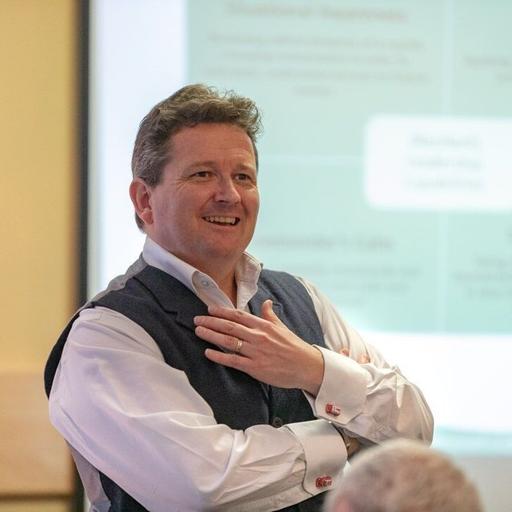
The Resilience Coach | Resilient Leadership Expert
100,000+ People positively affected6,000+ Executive coaching hours£12M+ ROI delivered by RWE npower leadership programme20+ years Learning, leadership and organisational development
Russell Harvey is The Resilience Coach - a resilient leadership expert, executive coach, facilitator and keynote speaker who helps leaders and organisations perform at their best when the world refuses to stand still.
With more than 20 years in Learning, Leadership and Organisational Development, 6,000+ hours of executive coaching and over 70 published podcast appearances, Russell is an experienced and engaging voice on resilience, leadership and navigating persistent change. He has worked with leaders across organisations including Novartis, the NHS, AB World Foods, Kerry Group and The Co-operative Group.
Russell’s work goes beyond helping people simply cope with pressure. He believes true resilience isn’t about “bouncing back”, being tougher or pretending everything is fine - it’s about springing forward with learning and becoming better equipped to lead because of the challenges you’ve faced.
His approach connects the human side of leadership directly to what matters to organisations: engaged people, stronger cultures, better decisions and improved performance. His work has delivered measurable results, including a leadership programme that returned £12 million to the business and a Resilient Leader Programme that achieved more than 1,100% ROI.
In August 2025, Russell achieved his long-held purpose of positively affecting 100,000 people.
More from Russell Harvey
All episodes → Living the Dream with CurveballSpringing Forward: Russell Harvey's Insights on Building Resilience and Embracing ChangeNov 2026Play episode →
 Transformation Station Leadership PodcastTSLP Season 5 Ep. 26- Thriving Is A VerbNov 2026Play episode →
 An Evolving Man PodcastReal Resilience: Why Pushing Through Isn’t Enough | Russell Harvey | AEM #172Oct 2026Play episode →
 Leadership From The Heart | Transformational Leadership InsightsResilience Without the Rebound | Leadership Mindset ShiftAug 2026Play episode →
 Burnout Proof Leadership: Identify Shift and Leadership Skills for Midlife Women EntrepreneursEssential Leadership Skills You Must Have If You Want to Build Resilience & Avoid Burnout When Your Business Gets Hard - with Russell HarveyJul 2026Play episode →
 Your Career JourneyHow to Build Resilience at Work: Leadership, Change & Thriving in Uncertain TimesJul 2026Play episode →
 The ThriveWell Journey | Entrepreneurship, Leadership & Life After DisruptionHow to Build Real Resilience Under Pressure | Russell HarveyJul 2026Play episode →
 Future Fit LeadershipThe 2030 Leader: Why Resilience is Your Most Vital Skill with Russell HarveyJun 2026Play episode →
 Different thinking for Different Time - Mindset Change and Thought LeadershipDifferent Thinking for Different Times - 7 Keys to Building Resilience with Russell Harvey How to Nurture a Resilient Mindset in Business and LifeMay 2026Play episode →