
October 3, 2026
Real Resilience: Why Pushing Through Isn’t Enough | Russell Harvey | AEM #172
Sound bites
Pushing on through a challenging time is only useful when you've truly learnt from it.
In this episode
Russell Harvey talks about resilience, purpose, and leading well through constant change, with a focus on emotional intelligence and avoiding toxic positivity.
- Purpose helps leaders make better decisions and feel more comfortable and confident about who they are.
- Pushing through a hard experience only helps when there is real learning, reflection, and the chance to speak up.
- Dissociation can look like resilience when people are told to keep going regardless and cannot challenge the system around them.
- Resilience includes emotional intelligence, empathy, compassion, and honest conversations about what is good and difficult.
- Optimism works best when it is grounded in reality rather than toxic positivity.
Chapters
Written from the transcript. Pick a chapter to play the video from that point.
Transcript
Automatic captions of the conversation. They can contain errors and do not name who is speaking.
Okay, welcome to An Evolving Man Podcast. Today, I'm excited to be speaking to Russell Harvey. Russell is the resilience coach, an executive coach, leadership facilitator, and keynote speaker with over 20 years in learning, leadership and organizational development, and 18 years specializing in resilience and leading in a persistently changing world. Welcome, Russell. Thank you, Piers. Very nice to be here. Appreciate the introduction. Yeah. Fellow Yorkshireman, even though I'm not Yorkshire, but someone who lives in Yorkshire.
Absolutely. Yes, we are. We're both here. I don't know. Well, I've got Yorkshire in the blood, essentially. It's in heritage and parentage. So yeah, I do just amuse me being Yorkshire like 30 years now. I do still go places occasionally and go, am I allowed to be an honorary Yorkshireman yet? The response is like, not yet. I'm just like, and when they go, I don't know, but soon. That's been going on for quite a long time, essentially. Interesting. Yeah, I don't think I've got to that point either. It's 20 years in Yorkshire, but certainly the longest I've ever lived anywhere.
Okay. So the first question I have, Russell, is just around how did you get into this work around resilience and working with organizations and people around this topic? Yeah. So the specific resiliency piece came from my last permanent role, which is at the co-op group. That's because there's some things that happened there, which I'm sure I will return to. And I think it's just always been part of my DNA of who I am. I've always been interested in human behavior, about why people will do the things they do and don't do the things they do.
Why I do the things I do and don't do, essentially. So 95% of my career has been learning leadership development, hence on that intro. Described myself as a coach and a facilitator. And so The Resilience Coach was 11 years old a couple of months ago, which is great. And then prior to that, the last permanent role was at the co-op group, where it went through enormous change. And at that time in the business, the word resilience was getting bandied around, as well as, it's an acronym of VUCA, V-U-C-A, Leading Change, Crazy World, essentially.
So my various different strap lines, the LinkedIn profile is like, I support leaders to stay good leaders through constant change, specialized in that, and also how to lead yourself and others as well as you can in a full on mad bonkers crazy world essentially. And it excites me and I love it and, you know, get nice great feedback. So yeah, it's good. Mm. Mm. Fascinating. Yeah, the idea about leading yourself, you're leading yourself. I've been reading Raymond Kethledge and Mike Irwin's book, Lead Yourself First, and it's great.
They share these stories of, you know, Eisenhower or Churchill or all these people who, yeah, took time out to to fill their cup up and journal or. So I'm hearing that a lot. Yeah, it is one of the questions. So one of the dimensions of being resilient is having a purpose. So a vast majority of the time, when I ask on individuals or teams or rooms full of people, they're like, okay, so what's your purpose? Can you articulate it to us? That's when it's like, you know, 95% of the time, it's tumbleweeds or suddenly go inside their heads in a good way.
You see them drift off and go, what the heck? What's this for? So one only needs one purpose. But I will ask it in a number of different ways. So I've literally just generally, what's your purpose? I then go, if anybody here is a lead in the room, I go, so what's your leadership purpose? And then I go, maybe it would be reasonable for you to go to your teams and go, what's our purpose? And it's less on the KPIs to start with. That comes later, but as a suite of humans. All of it to enable people to reflect and just go, what am I here for?
Why am I doing all of this? What's the point? So that opportunity for that, reflection, introspection, and then I've seen significant chunks of the time on the one-to-one coaching piece, that when the leader goes, that this is the thing that's really helped me the most, Russell, of having got it, honed it, articulated it a bit. It's like this is really supporting me to make decisions differently about all these things I've got in front of me, about what I could choose to do. When I do it through the lens of my purpose, so that for me is another example of leading self and others.
It's like it's got a value system to it. It's got a realness to it. It's got a framework to it. It's got feelings and values and head, heart and gut in alignment, you know, all of that. And you can see people feeling far more comfortable and confident with who they are as a consequence. So with purpose, what are some of the questions that you ask people to guide them towards finding their purpose? Yeah, so to start with it, it's what do you want to be known for? What's important to you? How come you're here? When others speak about you, what do you want them to say?
How do you want them to speak about you? What do you want those responses to be? Then some of it's a case of what are you concerned? Some of the responses might be that you might not like, and how come that's the case? It's like what floats your boat? Then if you can visualize yourself with your head, your heart and your gut in alignment, describe that to me. You as a straw person, what's in it? What's happening? What's going on? Then also as well, there's a Japanese term of Ikigai. That's another way of like, if all of those questions that I've asked, I'm really, then have a look at that image of the Ikigai.
And just start to put things in that, into that diagram and see what comes up, essentially. Would you like to describe what those four questions are for Ikigai? Well, I can visualize it and try to remember what's in it. Well, grab it up at some stage. So it's like, yeah, what you love doing, what the world needs, what you could get paid for. And then there's another one which escapes me right now. Yeah, so I use this with my clients quite a lot. So it's what you love doing, what you're good at. Yes, that's the one.
What the world needs and then what you can be paid for. And sometimes there's a gap between what you love and what you're good at. But often we can train ourselves up that, oh, I really love this. So it becomes something we're good at. And that is, yeah, one of the other dimension of resilience is energy. So what I'm referring to in my head is the resilience wheel, which is built upon loads of research, which is on the website, not self-promotion. I'm just explaining to everybody watching and listening. This is why I'm talking about these dimensions.
There's seven aspects to it. And one of them is this word energy. And exactly your point about something that you love doing, energy is the strength-based approach. You know, in what I do, it also includes absolutely the well-being piece, but it's far more in the psychometric strength scope that exists. I do my clients about, yeah, I actually enjoy doing it. And when I do more, do it, if I'm currently not good at it, the more I'll do it, better I'll get. So a sweet spot to tie it together, strength scope, Ikigai purpose is like, okay, energy, love doing, meet my best.
And then, you know, in the real world, some of you familiar with strength scope, Piers? I don't know, please, for the listeners. Yeah, so clever people and I have identified 24 strengths. So there's things that we naturally enjoy doing. And if we take the psychometric, I don't work for them, you have to pay for a report and get somebody to take you through it. But on the purposes of today, listeners watches can really think about actually, what is it I naturally enjoy doing, what am I drawn to? So some examples of the 24 are detail orientation, strategic mindedness, critical thinking, leading, compassion, empathy, emotional control, results oriented.
And you take a self-assessment and you identify your significant seven out of them. And then one of the points of the strength-based approach is to actually go, right, how can I utilize those the majority of the time? And it's a very different way of looking at traditionally development. So many of my clients, when they get their strength-based report, their eyes will go to the thing that they're energized by the least, and they see that that is their low score. And they go, oh, so I suppose also my homework is to develop that low score.
I go, no. Tell me about what that means. He's like, well, I don't like doing it. The art sinks when I have to do it. I go, so do you really want to spend your time doing that? No, I don't. So I said, your homework is, see those things there, which is like the larger length bars. Your homework is to do those more often. And then quite often, people's minds are blown and they go, oh my god, really? They go, well, I'll do your best. So out of my significant seven, my top three strengths personally, that I chose out of the seven are collaboration, strategic mindedness and developing others.
So what that means is I face into the world naturally from those three places, which means that everything that I do, I've got some element of what's the end point here? What's the big picture? What's the direction of travel? Strategic mindedness. How can we do this together? Collaboration. And along the way, you're going to get coached developing others, essentially. And that's me, essentially. And then it is then with a level of sophistication is understanding actually when I have to do certain things. For me, the thing I am energized by the least is detail.
Okay. Yeah, yeah, yeah. So it doesn't mean that I can't do it. It's just we have to put strategies in place to do those things that we are energized by less or medium or middling, essentially. Thank you. Yeah, so the strengths scope. I have heard and I've done, give this often to my clients, is the strength and values. I think it's the positive psychology, Martin Seligman's. Yeah, so that will be similar. Well, so there'll be a crossover around that. So yeah, in the space that we're potentially both in. Yeah, so positive psychology approaches underpins a lot of my approaches, philosophies as well.
So yeah, there'll be some crossover with that. Yeah, and they say exactly the same thing, which is focus on what you're good at, rather than what you're not good at. So I think... And I'll take it to a slightly extra level around understand what you are naturally energized by, and the more you do something you're energized by, you'll be good at it, essentially. So one of the... I did a simple post on this the other week. It's like anybody that's listening, watching now. It's the Sunday night reflective question. As a leader, officially, to go, so if I reflect back on last week, how much did I add to my levels of energy, or how much did I deplete them in what I did, you know, in my role, essentially?
And then, you know, in the, I live in the real world. If individuals are spending too much time giving the answer of like, you know, I took away from my energy levels, week after week after week. It's like, okay, we really need to have a moment's pause on this. But if you can get to more often to go now in general, actually, the way I chose to face into all of the activities, work, job role that I had to do, actually, I was more of the time, I was in a place when I was utilising my strength, so my energy levels ultimately were added to.
That's a great reflection. I like that. To do the test. And I'll put a link into the show notes for the, I've forgotten the name of the test that Martin Selen does. It's free, but it's really useful. And I'll see if I can find the Strength Core as well. It's strengthscope.com, I think, it's their organisation. And so, to maybe just follow that up and square a circle, because I define resilience as springing forward with learning, just in my opinion, that's how I want the world to feel about resilience. You do that reflective back question on energy levels last week, added to or depleted.
Then, obviously, the next bit is going, right, how do I learn from that and face forward into tomorrow, next week, the next month, actually giving myself the best opportunities possible to do more of the things that add to my energy levels. So to ask that question, reflect on how the week has gone, but then to go, right, what am I going to do differently next time? So you mentioned there about your definition of resilience, springing forward with learning. Is there anything else that you could add in about what real resilience is?
Yeah, there's loads. Where do you want me to start? I love this because it's like, this is me and my happy place, Piers, just now talking about subject close to my heart. So it's the same for you as well. So there's a few things. So we are born with some levels of resilience in being able to face into life's events. And so there's also an element of recovery from adverse events is what resilience is. And adverse doesn't necessarily have to be a negative. It's just was challenging. And so there's an element of recovery from that.
Then there's absolutely the whole nature nurture debate about, you know, whether you're going to maintain, develop, grow, nurture your levels of resilience, all around these seven aspects of the resilience wheel, which is built up on loads of research from Robertson Cooper essentially. So I'll do a very quick whistle stop tori. You know, some of it is buzzwords. So heart resilience is attitude. Then the spokes of a wheel is purpose, understanding what enables us to feel confident, essentially. And I may come back to it.
I would very much like people to think more about confidence rather than imposter syndrome. As I understand it, imposter syndrome isn't real, a proper thing. It's more about the confidence base. So adaptability, openness to change, our support network, meaning, which is our internal storytelling, and the memories we create, and this word energy in a strength-based approach. So the resilient individual is making the decision and the choice to develop and grow and nurture their resilience wheel. Just for then thinking about three more buzzwords about surviving, coping and thriving.
So surviving is hanging on by your fingernails. So this is thinking about how you answer the question, how are you? Essentially what's going on, how's life? What's the crack? How's things? So surviving is hanging on by your fingernails. Coping is a broader spectrum of like, I'm okay, fine. It might be, I'm okay, but I'm on the cusp of not really okay. Might be going in town by my fingernails. And then thriving is where you can legitimately say, so the resilient individual has nurtured their resilience wheel. And so the majority of the time, they can legitimately say, when asked, how are you?
They can go, there's a lot going on. The world is crazy, change is always happening and I'm good. So that's what resilience is to me. It is less about solely only believing you're being resilient when you're keeping going regardless. Yeah, yeah, yeah. There's an element, when you're going through challenging times, once you've obviously built and grown and nurtured your levels of resilience, you've got internal levels to face into life's challenges. And sometimes I'm just having to go through stuff, but you've got the self-awareness that that's what you're doing, and you know that you're doing it, and you know that actually you can't just keep going.
At some stage, it's going to have to shift into something different. So three questions that role model resilience are asking themselves in their reflections. So resilient individuals choose to pause from all of life's events, and pause is listening to a podcast. Pause is a great conversation. Pause is going for a walk. Pause is staring into the wall, you know, into space. Pause, you know, reading the book. And you ask yourself three questions, which is, what have I been doing behaviorally recently against the resilience wheel that has been serving me well?
Second question is, what have I been doing behaviorally recently against the wheel that has not been serving me well? And how can I do more of the answers to the first question? So what have I been doing well? What have I not been doing well? And how can I do more of the answers to the first question? Yeah. Fascinating. Yeah. And I can relate before we began, I shared about my wife passing and I realized I've just had this trip to Europe. And I realized that this insight that, yeah, I've been feeling a bit depressed the last few months.
And after my wife died, I got back into my practice, I run, I do stuff, and I was just releasing a documentary at the time. And it was very stressful around that time. And I realized, yeah, that my levels for the last few months have been quite low. And it was really lovely to be able to top myself up, but also to admit, God, yeah, actually, I've been quite, quite down. I think spending time, 20 years with someone and then them not being there, it's like, yeah, so that was useful to see. And I think what you've just said there about, yeah, staring into the water, having some time off, you know, and I see that, yeah, that's kind of what I've been doing.
So, and, you know, needing to do that more. Yeah. And I know you've talked about it openly, but I appreciate you talking openly about your wife and your experiences and her passing. It's just like, yeah, unimaginable, really. So thank you for that. And in the resiliency space, it's just massive amounts of emotional intelligence that that's involved with like what is actually going on for me and how is this impacting the behavioral choices and decision making that I'm doing. So I can't remember why I had this. I think it was a Ted talk from somebody.
You know, once again, one of the things that an individual does is they sort of go, they can be self aware to go, is the behavior that I'm about to do, is that going to be helpful or harmful to me? Oh, yeah, yeah, yeah, yeah. They just, they sort of go, so and then there may be times as well to go, probably going to be harmful. I'm going to do it anyway. But I'm acknowledging that I'm doing it. And I've got some level of habits that I've got in place, that it's, I'm not going to repeat it too much. And bringing that mindfulness to, okay, yeah, I'm doing something rather than it being unconscious.
It's actually bringing it to consciousness. Okay, it's a choice here. So it's like we're stepping back into sovereignty. Yeah. Yeah, I have actually heard that. I've often used that with my clients, especially for the inner critic. You know, if they're beating themselves up, I'm like, and that's quite common for ex-borders to have a brutal inner critic, because that was how we survived as children in these environments. Yeah. And that might get us in our 20s or 30s to a certain point because we're driven, but it often leads to burnout.
And that question is what I'm telling myself helpful or hurtful. And 99% of the time, what they're saying to themselves is really hurtful. Yeah. Yeah, it will be. And it's that thing of like, you know, a survival technique or a means of feeling in control. You know, it's become a learned pattern of behaviors. You know, what the resilient individual gives themselves a better chance that they can break the cycle of unhelpful behaviors. So this is why, for me, all aspects of the wheel are interconnected, you know, because they are, because you can just choose, you know, to just have a look at it, rate it out of 10, you know, or whatever, or put some emojis to it to go, that one's all right, that one's not, you know.
And then the principle would be the one, put the aspect of the dimension of the wheel that you think is in a half-decent place or a good place, develop it again, you know, to go, OK, I'll make that even better and go, so which bit of the wheel do I want to have a little look at next? And my point being that that may be an opportunity, rather than to try and immediately tackle, face into a set of behaviors you're doing from all of these in life's experiences that you know that probably aren't harming me, rather than just going, right, I need to tackle that, that bit of head on.
It's like come at it from another angle, essentially, give yourself some, so it's building internal resources, essentially, is the resilience building. So I believe in the proactive building of resilience, because unfortunately a lot of the time people don't know how resilient they are until an unpleasant thing happens to them. And then I'm sort of the opinion, why wait? You know, it's just make the decision, the choice to just nurture it now. And then unfortunately, because life isn't fair, when the unpleasant thing comes along, you're facing into it from a level of resilience that you have built.
Thank you, Russell. So we've got resilience here, dissociation. Now, what I see a lot in the UK is we say, oh, you know, they're resilient. I mentioned this before we began. Boarding schools will often say in their prospectus, boarding schools create resilience. And I'm like, well, actually, they create dissociation, not resilience. They kind of connect. And I see, and I've mentioned this before on LinkedIn, about this idea we're praising resilience, say, oh, you're resilient. But again, I'm like, no, no, that's dissociation.
Taking one for the team, keep pushing on. So I'd love for you to just unpick that. What's the difference between resilience and dissociation? So I think that's, yeah, to play around words back to you, it's like, only occasionally, so pushing on through a challenging time is only useful when you've truly learnt from it. You know, if it's, so the system that you're in, the boarding school system, is going to have an impact on everybody. And when the underlying message is still about, keep going regardless or or or it's a ironically, then people might say, it's a learning experience.
But I think it's like, well, not really. It felt like a brow beating experience or a gaslighting experience or something that was akin to like an unpleasant experience or a bullying experience. You know, well, yeah, what I learned from that is that don't feel great. And and I am not essentially in a system that enables me to go, excuse me, didn't like that. Can we not do that, please? You know, that doesn't work for me, you know, because, you know, the response will be shut up. Yeah. You know, essentially. So, yeah, we will protect ourselves, go within ourselves, so that disassociate from our environment, essentially, and go, right, my frame of reference here is that if I don't choose to follow the path that this environment is creating around me, then I'm going to be in trouble.
So you never get the opportunity to work through the thoughts and feelings, to have a half-decent conversation about what I like about this, I don't like about this, what I agree about this, what I don't agree about this, there isn't an environment available for me to then do something about it, somewhere to go, essentially. Sorry, that was just an absolute, yes, download of a response to your question. What did you pick up from that, Piers? Yeah, so it's like, yeah, being in that environment where, yeah, it's challenging, and we're told, keep pushing on, but if you don't learn from it, then yeah, I guess that's what I'm getting there, is that keep going regardless, keep pushing on.
And actually, you mentioned this before, just this idea that resilience is equal to a massive amount of emotional intelligence. And I know for a fact that that's not what we've learnt in these schools. There's no emotional intelligence. You can't cry, you can't get angry, you can't show any emotion. So how do you develop emotional intelligence? So that's what I take out of it. So I'm not an absolute specialist in the area, I've got a peer that is, but so there is some intertwining between mental toughness and resilience.
And I've also now got academics that talk about hardiness and grit. And from a personal point of view, there is the risk that's still in all of these spaces that we're just trying to get people to sort of be tough. And I miss the resiliency piece and misunderstand it for what it is, which is, you know, how do you enable, you know, lead yourself and others well, so you can say, yeah, there's a lot going on. You know, there's an awful lot of challenges in my business, in my team, in the workplace today, and I'm good, genuinely good, because I understand how I'm going to face into it, essentially.
And so a huge amount of my inquiries are still from organizations, teams, people who sort of go, yeah, our people have sort of said, wow, things could be better. So we've got an away day coming up, you know, in the morning, we're going to talk about, you know, KPIs, the numbers, because they're important, and we're going to play a game. And then will you come along for an hour and make us resilient? And, you know, I have that choice in that moment in time, you know, to ask a few questions, and then just see where they're coming from, and go, actually, no, it's a pointless waste of your time and mine, versus, I will come along, but I think I might be able to do enough in an hour or two hours, or, you know, to sow enough seeds for them to go, actually, I think it's a bit more to this.
So, I can't stand toxic positivity and toxic resilience, which is where if somebody in an organization says, which is, I think, probably akin to potentially what the boarding schools are doing, it's like somebody may speak up in a meeting or, you know, a situation, just go, I don't think we're going about this in the right way. And then they get the finger pointing, well, you just need to be positive. You just need to be resilient. You know, it's that, you know, frustrates me. Piers, you know, that's toxic. And finally, to try and get a conversation going, in lots of networking meetings, I've been going around places and going, do you know what?
A resilient organization doesn't need a well-being strategy. And just wait to see what response I get from people. So when you build and resilient organization, resilient leaders and teams, you're giving yourself the best opportunity that everybody's coming to a place with practicalities and pragmatism, but coming to a place where they can be at their best. They've got agency or autonomy, you know, they've got the opportunity to develop and grow. When you really ask them about you, enjoying your job and things are okay, etc.
You go, yeah, it's all good. And so they are well. And you don't need to, well being is really important. And I'm not trying to do anybody with a job title of head of well being out of a job. I don't mean that. It's just that if your organization is going, this is who we are and essentially and naturally how we culturally go about things. People aren't great, you know, we'll give them some gym membership or we'll, you know, bring fruit into work or, you know, we'll put massage chairs out the front, you know. I know I'm paraphrasing and I don't know anybody angry comments afterwards, but that's what I mean.
It's like you have a risk that your well-being is just putting a sticking plaster over your natural organizational approach. So it's like changing the culture rather than sticking a sticking plaster over it. Absolutely. Yeah, this is it. This is it. Making sure people know their purpose, you know, making sure. I mean, Jim Collins talks a lot about this in Beyond Entrepreneurship. Also in Daniel Goldman's work about emotional intelligence, same thing. It's like, how do you change the culture? How do you bring the people up?
Be interested in them. And, you know, again, John C. Maxwell talks about that a lot in his work around leadership is, as we go up the levels of leadership, it's like our time is spent with people. How can I help you? How can I serve? Whereas often the opposite happens. And I'm in space all of the time, Piers, around, you know, trying to find ways into organizations to be interested in, bothered it about this. So I try really hard to equate it to what businesses talk about most of the time, which is the numbers and the data and the profits and the money, which is vastly important.
And so I come at it from actually, when you do all the things, resilient leaders and teams, etc. culture, your numbers improve. You know, it's like often go to senior leadership teams and say, look, you know, you've done all of your presentations and the data and numbers and you talked about them, some you're okay with and some of that you're, you know, worried about and frustrated with. It's like, you know, if you're up for it, if you're open, my comment with kindness is every single number and thing that you see, you're talking about is down to your behaviors in this room.
And it's like, I'm not having a pop, I'm not having a go. It's just like, if you're up for being open to discuss it in that way, then we have a chance that we can change them, essentially. So yeah, it's always trying to find a way in the door of like, business is quite legitimately talk about, we are here to meet these outputs, outcomes, KPI's, data's, statistics, figures. And it's literally, they all, I can equate them all to a certain set of behaviors. And resiliency is about actually giving yourself the best chance to enable the behaviors that you need.
What are some of these behaviors, Russell? Yeah, so, this is, so purely from a resilient leader perspective, so rule of three again, three things. So to support leaders, feel less overwhelmed and to understand that there's a way through the quagmire. I just go, right, to start with, you're only responsible for three things, which is first one is delegating brilliantly to your people and their strengths and removing the blockages to them performing. And I'll come back to any detail necessary around that. The second one is to choose to nurture and grow and develop a resilient team against the will and the third one is work personally on your own resilience will.
You are responsible for those three things. So then I will ask leaders, look at your diary, how many of the things that are in your diary are in those three buckets? And the vast majority of the time they go, not a lot. And so on the back of those three. So, and it's not rocket science and in thousands of people in this space, we'll talk about it. So back to the first one, delegate brilliantly on moving blockages. So there's no getting away from, it's about humans and the people. So how well do you know that your team and their strengths?
So that's really thinking about on this one hand here, these are all the KPIs, statistics, data, stuff that my team has to do, and I've got these humans. Am I meshing them together as well as I possibly can, essentially. So delegate brilliantly to those. And then it's coaching skills on the back of that. And at some point, legitimately, the person you're delegating to will go, I'm sorry, boss, it doesn't matter how many times you ask me how I want to solve this. I can't, you can. You're more senior to me, so you need to go and talk to a colleague or a peer or a different part or take it up the chain, you know, and remove the blockage in this system, this process, you know, this culture.
And then when you do that, I'll be able to crack on, you know, essentially. So that's what it's about. And so it is an awful lot of coaching skills, behaviorally, to what it is for a leader. And, you know, in all sorts of other bits of research have got in my head, you know, there's six things that resilient leaders role model. And one of them is massively creating the environment for psychological safety. Yeah. Yeah. How much do you see that in British companies at the moment? Psychological safety. It's really mixed, Piers.
It's really, I think as ever, it's challenging for a suite of humans to really get what it means, what it looks like, sounds like, and feels like on a day-to-day basis with a suite of humans. It is also about having the, I was trying to shy away from difficult heart conversations. It's about having the quality conversations all of the time that talks about the stuff that we need to talk about. It isn't about the fact that nothing challenging is not spoken about. It's the fact that it is always spoken about, but actually it doesn't feel challenging.
It just feels okay and it feels all right. It's like, this isn't happening how it should be. Oh, all right. I hadn't realized that. Tell me more and what needs to happen? Yeah. It's a great coaching question. Tell me more. What needs to happen? Yeah. But the style and the feel behind it is like, all right, that's fine. I hadn't realized. Educate me. Yeah. I notice so many of the leading thinkers in leadership, Simon Sinek talks about this, the importance of the circle of safety, psychological safety, Amy Edmondson, psychological safety.
The talk about those people and those companies where there is a psychological safety, they admit some mistakes. Yeah. But it makes such a difference. It's like they're not shamed for it because, I think Simon Sinek says in Leaders Eat Last, this idea of 3M, the mistakes they made with Superglue, they made it into Post-it notes. And if you can turn that around, but I see that we have a culture certainly in Britain, that you can't make mistakes, you know? And I think it's a lot more in the public sector. So it's about the long tail of the environment that's being created.
So absolutely, and that VUCA acronym changes constant. Yeah, what's the VUCA stand for, please? Yeah, so I'm going to throw eight buzzwords at you now, essentially, so there's VUCA and there's VUCA Prime, essentially. So it's been around for a while, since 1990s, it came from the military into the business corporate world. And so I like it in terms of building upon the sentence of change is constant. So it's thinking about the fact that the world we live in is volatile, uncertain, complex, and ambiguous. And VUCA Prime to counteract it is that we need vision, understanding, clarity, and agility.
So coming back to volatility, volatile, uncertain, uncertain, complex, complex, ambiguous, ambiguous, and then counteracting, we need vision, vision, understanding, understanding, clarity, clarity, clarity, and agility. So there's descriptions of all A and there's hundreds of blogs on the website. So have a look at those. So that before you face into a constantly changing world, you need to build your resilience, in my opinion, and you face into it. And so, yeah, in my opinion, for a long time, so potentially, so austerity, leaving the European Union and all things that come after the pandemic, you know, and really just for an exceptionally long period of time, talking more about doing more with less, being more efficient, efficiency drives rather than potentially effectiveness drives.
We've just, we haven't built resiliency behaviors into facing into that. We've essentially done anti resilience. We've taken away from our opportunities with that long tail, essentially. So, yes, get off my soapbox. No, I totally agree with that. And I think what's fascinating, and obviously my research is a lot around boarding school. So many of those leaders who brought in the austerity measures had been to boarding school. David Cameron in his speech in 2006, he said, it's all about the families. That's what the conservative party needs to be about.
2010, he says, we'll make a few cuts in public spending around benefits and things like that. So he gave the figure of 5 billion, he said, cuts. And we're like, okay. So over his period of time, he was in office, they cut it by I think between 90 to 95 billion. And it's like, so he's gone from saying it's all about the family, to totally destroying the families. And it's like, who benefited was, yeah, not the people, not the families. And we don't seem to have that resiliency. So what do you feel? We were to envision, coming back to VUCA, vision.
What's your vision for how we start to make British society more resilient? Well, so, you can't get away from the politics. So Andy Burnham's speech, you know, I know it's part of their strap line. So it gave me hope, essentially. It was like, there's something that we can nail our colors to the mast on, essentially, so instead of a vacuum of like, you know, things are horrible. So it is shifting away from the default state saying, there's something wrong that you need to be frightened of, to actually, here's a future that we can hang our hat on about the type of society that we're going to have.
So we do absolutely have to understand that it is generally about community and society. So it is about that coming together because the resiliency, our support network, one of the dimensions of being resilient is you support our network. You have to have your community around you. And it is the strength-based approach. It's going around everywhere and going, so what do you enjoy doing? What's good about you? What's right about you? What you want to have a go at? And how do we create the environment where you can give yourself a chance, where you can have a go at that?
And people then as a consequence contribute and they feel more confident. And when we feel more confident, we're more open and receptive to ideas and new things. We have fallen into the trap of be frightened, protect yourself. Somebody's trying to take something away from you. And that for me, detracts from, takes away from resilience building. Thank you. So what I'm hearing is having a future vision. The Andy Burnham, it's like something inspiring. Having a sport network around you, a strength-based approach, which is beautiful, you know?
Yeah. And moving away from being fear-based. And yeah, it's interesting as you say that, it's like so much of our system, it's like almost still trauma-based. It's like, you know, fear and it's like, whereas actually a great leader comes in and they give a great vision. It's like, no, we can do it. We can do this. Like Churchill did or others that came in. It's like, this is where we're going and we've lost that vision recently. And it comes out in, let's see, significant chunks of private public sector organizations I go to.
People do not feel equipped to have a go at making it better. They're coming from a baseline of like, they just look defeated. Or, and then, you know, when people may be raised things to leaders, you know, so I do a lot of emerging leaders programs, because you need new threads of people coming through that can take this on and look at it. But one of the questions that I quite often get asked is like, so Russell, we are understanding actually, there's a better way of doing things. We've shared in our, you know, sessions about our frustrations and we've got ideas.
We can see them, we're willing to go on this line. But what do you want to do when the people above you, their sort of default state is some very behavioral variation of like, it's all well and good, but will you just shut up? And so it's like, the answer to that question was like, it's still about the content we've covered. It still is about this support network of these people you've got around you, you're not alone. And there are actually swathes of others out there that do understand there's a better way of doing things.
So you need to keep networking to go find them across your organization, across your sector, you know, there is a way through. Yes, you're getting in a slightly immediate barrier above. Then it's all the other things about yes, what might you be able to do to influence and manage upwards? You know, there's all of that stuff as well. But it's not an uncommon thing that people come back with it to go, you know, get it, I want to do it. But I keep just a lot of the time I'm getting, that's a good idea, but not right now.
Or, yes, sounds good. And then that's it, a tumbleweed, just like sounds good. And there's no like, so how do I support you to, you know? So yes, it's interesting. So you get enough people together that have those levels of resiliency built. They can find a way through it. They can navigate it, essentially. Mm-hmm, yeah. I do hear this quite a lot in organizations, clients I work with. Sometimes the senior leaders are just not interested. It's falling apart, and it's like, they've just started to take the bull by the horns and go, right, I'm gonna change the leadership.
I'm gonna be there for people. And things are changing. I remember we talked before we began, because I live in Yorkshire, and Hebden Bridge had floods. And the day after the floods, Boxing Day, or it's the 27th, Boxing Day was, no, it was, I think it was Christmas Day, the water came in, flooded on the 26th, but then the 27th, all of the town turned up, just started to clear up the town. And the newspapers got in touch with the officials and said, which of you organize? It's really great. And they were like, it wasn't me.
It wasn't me. It's like just the goodness of people. Everyone got out and did. And I see that almost in organizations is we're waiting for someone up here to do it. And actually, we've just got to begin now. And no, exactly. Yeah, a colleague of mine sort of said, you know, yes, it is. It is a, it is a trueism that, you know, change has to start at the top. But actually, sometimes you've got to light some fires. Exactly on your point. So one of the other way, if you're finding that from the scene leadership, you're not getting what you need, then they need to not advocating any form of violence.
The analogy is they need to feel their feet burning. Essentially, they sort of like something needs to come up from underneath of like they are behaved too differently or different results coming through or somebody comes there, peer taps them on the shoulder and go, hey, this is happening over there and isn't that interesting and exciting? And they're going, I didn't, I don't know anything about that, what's going on? I need to go discover it, essentially. So yeah, there's other ways in which you can instigate. So as we start wrapping up, Russell, what ideas, thoughts would you like to leave the podcast with?
So please remember springing forward with learning. Please remember that. Please remember that resilience is only partially about pushing on through. Sometimes that's what you have to do. Really consider what a thriving you is, which is, yeah, a lot going on. The world's a bit crazy and I'm good. You know, draw that straw person for yourself. Head, heart and gut. And finally, often talk about it, to shift away from toxic positivity. Please think about the word optimism. Optimism grounded in reality. So, the ability, either as a leader or yourself with a conversation with colleagues, it's like we need to have the open and honest conversation about the grounded in reality for us is actually the size and the scale of this challenge.
He's enormous. Okay. Grounded in reality. But we can do that in a way that doesn't scare us to death, you know. So, it requires emotional intelligence, coaching skills, empathy, and compassion to have an optimistic conversation. And also, tinged around, you've had the purpose conversation as well. So, grounded in reality about what's the things that worry and concern us. But what's also grounded in reality is what's good about us, what's right about us, what our strengths are, what our skills are, what our capabilities are, what our behaviours are, what our levels of resilience are that I and you and we have got.
And if you hold those well, then you lift up more the grounded in reality conversation about what's good and right about us, etc. And people feel hope when you do that. And then obviously they feel positive. So for me, keep asking yourself, your teams, colleagues, how optimistic are we? Thank you for coming today and speaking. And yeah, it's been fascinating, really interesting to hear that take on resilience and the importance of bringing the emotional intelligence in. So how do people find out more about you? Obviously, you've got your website behind you.
So people... I mean, that's it. So yeah, at Russell The Resilience Coach, you'll find us on the majority of places and platforms doing that. Please feel free to play around with the website, look at it. There's some very simple like two-minute diagnostics which are based on the wheel. Just a few questions to just give you a sort of snapshot for about surviving, coping, thriving. Where am I essentially? Yeah, lots of blogs on there, lots of other content and material on this. Have a look at that. Connect is on LinkedIn and just make some observations about some of the things I post.
What resonate, don't resonate, like, don't like. Well, thank you. Thank you for coming and bless you for your work. It's so important during these times of change. Thank you for coming. Thank you for having me on. Okay. Take care. Bye bye.
About Russell Harvey
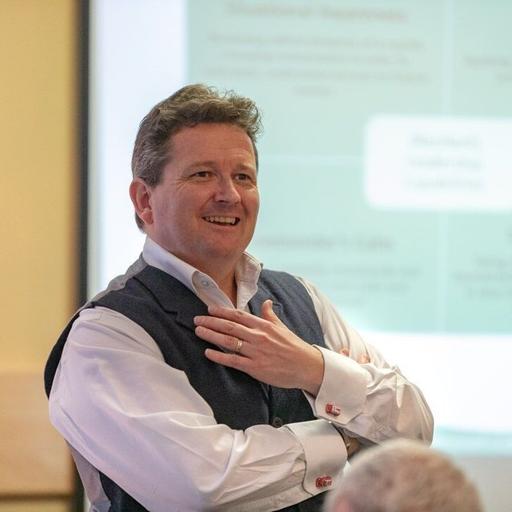
The Resilience Coach | Resilient Leadership Expert
100,000+ People positively affected6,000+ Executive coaching hours£12M+ ROI delivered by RWE npower leadership programme20+ years Learning, leadership and organisational development
Russell Harvey is The Resilience Coach - a resilient leadership expert, executive coach, facilitator and keynote speaker who helps leaders and organisations perform at their best when the world refuses to stand still.
With more than 20 years in Learning, Leadership and Organisational Development, 6,000+ hours of executive coaching and over 70 published podcast appearances, Russell is an experienced and engaging voice on resilience, leadership and navigating persistent change. He has worked with leaders across organisations including Novartis, the NHS, AB World Foods, Kerry Group and The Co-operative Group.
Russell’s work goes beyond helping people simply cope with pressure. He believes true resilience isn’t about “bouncing back”, being tougher or pretending everything is fine - it’s about springing forward with learning and becoming better equipped to lead because of the challenges you’ve faced.
His approach connects the human side of leadership directly to what matters to organisations: engaged people, stronger cultures, better decisions and improved performance. His work has delivered measurable results, including a leadership programme that returned £12 million to the business and a Resilient Leader Programme that achieved more than 1,100% ROI.
In August 2025, Russell achieved his long-held purpose of positively affecting 100,000 people.
More from Russell Harvey
All episodes → Living the Dream with CurveballSpringing Forward: Russell Harvey's Insights on Building Resilience and Embracing ChangeNov 2026Play episode →
 Transformation Station Leadership PodcastTSLP Season 5 Ep. 26- Thriving Is A VerbNov 2026Play episode →
 Embracing Digital TransformationHow to Build a Resilient Team Without Toxic PositivityNov 2026Play episode →
 Leadership From The Heart | Transformational Leadership InsightsResilience Without the Rebound | Leadership Mindset ShiftAug 2026Play episode →
 Burnout Proof Leadership: Identify Shift and Leadership Skills for Midlife Women EntrepreneursEssential Leadership Skills You Must Have If You Want to Build Resilience & Avoid Burnout When Your Business Gets Hard - with Russell HarveyJul 2026Play episode →
 Your Career JourneyHow to Build Resilience at Work: Leadership, Change & Thriving in Uncertain TimesJul 2026Play episode →
 The ThriveWell Journey | Entrepreneurship, Leadership & Life After DisruptionHow to Build Real Resilience Under Pressure | Russell HarveyJul 2026Play episode →
 Future Fit LeadershipThe 2030 Leader: Why Resilience is Your Most Vital Skill with Russell HarveyJun 2026Play episode →
 Different thinking for Different Time - Mindset Change and Thought LeadershipDifferent Thinking for Different Times - 7 Keys to Building Resilience with Russell Harvey How to Nurture a Resilient Mindset in Business and LifeMay 2026Play episode →