
October 31, 2024
Building Resilience: Mental Tenacity for Lasting Impact
Listen
In this episode
Russell Harvey joins Remarkable Leadership Lessons to talk about resilience, leadership, and how to build stronger teams through clearer purpose and better habits.
- Resilience matters for leaders working in uncertainty and ambiguity.
- Leadership is framed as influence and the ability to build collaborative, inclusive, high performing workplaces.
- Building resilience starts with clear intention, purpose, and a vision that can carry people through tough moments.
- Small behavior changes work better when they replace something specific instead of simply adding more to an overloaded routine.
- Strengths based reflection can help people identify energizers, watch outs, and ways to collaborate around weaker areas.
Transcript
ShowHide
Automatic captions of the conversation. They can contain errors and do not name who is speaking.
Hi, and thank you for tuning in. You know, I don't know anybody doesn't have a hard time understanding what leadership is about. It is changed in the 21st century. And because it has changed, you know, there's not a lot of information out there that pulls it all together so that you have the steps you need to be the best leader that you can. Leadership is all about influence, and this podcast is about helping you understand how to influence others and to build the collaborative team that provides you the inclusive, high-performing workplace that you are looking for.
Whether this is the first job you've had as a leader, whether you're an individual contributor or you've been in leadership for 30 years, there is something for you on this particular podcast. It's called Remarkable Leadership Lessons, shared by Denise Cooper and her friends. And if you like, you can always go over to my website and pick up other gems that will help you become a Remarkable Leader. What would it mean if you pledge to impact a hundred thousand people positively by the year 2025? Imagine, you know how I feel about pledges and versus what's your passion or your mission.
A pledge is when we actively make a statement that we are going to do something. It's like a vision goal, that's something that you can achieve through it. Well, imagine impacting a hundred thousand people positively. Your idea of positively impacting people is to increase their resilience. Imagine teaching and guiding others so they can live better lives, so they can rediscover their mojo. Well, my guest today is Russell Harvey, and he is the resilience coach. Russell's area of specialization includes resilience in our modern world of uncertainty and ambiguity.
He's an executive coach in leadership, development, talent, management and career coach. You know, he facilitates change in others, which is the behavior. He focuses specifically on one of those few things that you can do to change your behavior so that you have more energy, you have more joy and that you can be much more impactful to do more good in the world. His clients is a long laundry list and you can read it in the show notes. But I found Russell to be engaging and pathetic and pragmatic. I hope you'll enjoy this conversation about resilience in a world filled with uncertainty and ambiguity.
And you've already heard from Russell. I'm sorry, my infuse. I'm going to say, isn't it brilliant? Imagine doing that. And then it's like, I suddenly went, oh, I think, oh, that's what I'm trying to do. Yes. It's one of those moments of like, this is brilliant. I wouldn't even imagine do that. Yes. Oh, it's me, I think. It's just one of those. Brilliant. Lovely introduction. Thank you, Denise. You're welcome. See what happens when you talk to me. It's great. Yeah, it's grand. It's really good. Most of my regulars know that we always have a pre-call and we just get to know each other and sharing ideas.
But one of the things I found so fascinating was, my initial question I asked most people, how did you get into this? Why resilience? What led you down this road? Thank you. Yes. And thanks again for the introduction. And hello to everybody that's listening. It's very nice to have the opportunity to share some things with you. So how I got into it, the resilience. So it started essentially in 1996 in Hong Kong, is where it started. So traveling around the world for a year with my lovely girlfriend who later became my wife.
And we did that stopover in Hong Kong. And I was teaching, I was teaching English to just people off the street essentially, four-hour lessons. We were given this single piece of paper from a book that was photocopied and said, there's your lesson plan, make it last four hours. And whilst I was doing that, magic was happening in the room or lovely feelings I was getting about something wonderful and gorgeous is happening here. It later transpired, it was people learning, people having lightbulb moments, people having realization moments, people having aha moments.
When that happened, I thought, this is brilliant, I want to do this for a living. But then I didn't want to be a teacher in a school, I just knew that that wasn't me. And then I was like, okay, so I think I want to be a trainer, you know, business training. That's way back then as well, the description for it was it. So came back from traveling, and then went to recruitment agents say, I want to be a trainer and they asked the questions about, well, what you qualified in and what do you know around training? And I went, nothing and not.
So then it's like, okay, so I need to do something about this. So then that was my whole career of going to night school to get some qualifications in this thing called training and then finding job roles. And so my whole career, last 20 years has been going from training, oh, learning and development, oh, leadership development, oh, organizational development. And then today, essentially, I am a facilitator and a coach. And it was probably about 50 years ago that coaching came in to play. And I was like, oh, yeah, this is it.
This is probably the best way to do it. And then the resilience piece came in roughly about 13, 14 years ago. So the last corporate role that I had worked for an organization called the Co-op Group, which is brilliant for values, fantastic organizations, people sort of research it, it will be good. And whilst I was there, it got itself into a serious pickle, serious challenges of business. And my internal clients, the internal leadership team, they would come to me with their literally with their head in the hands going, what do we do?
What on earth do we help? What do we do? I said, well, there's this word called resilience and there's this an acronym called VUCA, V-U-C-A. And I went, our solutions are all in there. To enable us to sort of shift away from this and move towards something better. And then when I left the co-op and set up as myself, I did that navel gazing of what's my USP? Who am I? You know, and as a result of that, I went, well, I've just spent the last few years literally all day, every day talking about resilience coach. So I am the resilience coach.
That's who I am. So then the business name came up. And then I'll be nine years old in July. And from that, which we'll talk more about in a second, came the pledge, came the purpose, because it is a specific dimension of being resilient. But the birthplace of resilience coach and the pledge came from 1996 in Hong Kong. You know, I love the story primarily because there's so much out there that says your purpose will just pop up and hit you in the face. Yeah. And I really find that that's not really true. It really evolves over time of, you know, kind of molding it and making the choices.
It's like with anything would change if, you know, at first it's big and nebulous, and then you start putting some meat on it. And, you know, I love the fact that rather than just, you know, jump in, you said, well, you know, maybe I don't know what I'm doing. Totally, totally. And it absolutely did get honed. So, you know, I always knew that, so in learning development, I always liked this idea of, yeah, helping people. So, you know, there's loads of people that are in the helping profession. And it's like, actually, this needs to become more, something more specific and concrete.
And so one of the specific dimensions of being resilient is that you have a purpose. So I obviously, I needed to be a role model for it. I had to have one, you know, when people ask me, what's your purpose, Russell? I needed to, well, I felt like I needed to say something better than, I just want to help people, you know, that didn't quite have enough meaning to me. So from that, the muscle memory of like, why am I in learning development? Ah, the Hong Kong experience, I've spent sort of decades trying to find the best role in an organization to be able to do that in the best way.
Actually, the best way I can do that is now setting up my own business. I got made redundant six times in that whole career. And it was the seventh, you know, opportunity to do I get another permanent one or do I finally go independent, was one of the many catalysts for that. And then really being specific around, yeah, light bulb moments, realization moments, actually people understanding what their true resilience means to them, actually being in a good place most of the time, thriving, rather than just hanging on by your fingernails, coping and surviving, you know, it's, I get concerned that people believe that resilience, that they are only being resilient when they're hanging on, you know, and actually the true resilience is getting into, no, there might be a lot going on.
And I'm in a really good place. So that's the positively effect. It's like your challenges have not necessarily gone away, but how you view them, how you face into them, how you play to your strengths, how you feel optimistic about and hopeful about it. You know, it's like, so let's put something to this, like the 100,000 people by the year 2025, let's how could I do that and positively effect. And right now I'm up to 44,215. You know what, we can go get it. Guess what? I'm hoping that this will get you another 50,000 people.
Yeah. Hey, hey, that would be fabulous. That will be absolutely fabulous. Very good. And then I genuinely, when I've hit the 100,000, I'm not sure. I'll need another. It's rather than just going to 200,000. So in a good way, it's like, oh, I'm currently of the view now. I can't just sort of repeat and add some more numbers. And I've got to make it different, better. I've got to build upon it. It's got to grow into something else, essentially. So I'm really curious about what that will be, because right now, I haven't got a clue.
But let's get to the 100,000 first, shall we, before we do that. And it will evolve. And I think it is the being comfortable with the evolution of change. It's got to be one of the colors of resilience. But before we get there, for my US friends and listeners, when the English are so good about having wonderful words that make us feel better, you heard him say he was redundant, made redundant six times. That means laid off. Yeah, yeah, yeah. You know, your services are no longer required. Seven times. Yeah, yeah, yeah.
And that was the epiphany that made him go, do I want to do this one more time or can I take another chance and do something different with it? Isn't that what we're faced with all the time? Sometimes I think that's terrible about the resilience, right? It's what drives us down. Yeah, it does. It does. And so from that, so I define resilience as springing forward with learning. So I am always aiming to be a role model around that as well about what am I learning from life's experiences, you know? So maybe I could have learned that, you know, on the third or the fourth, laying off, you know, that could have been the time to go independent.
However, it didn't feel right. I didn't feel ready, you know, at that moment in time. So, yeah, I could have sort of gone, what if I've chosen to set up by myself sooner? But I also know right now that I just wasn't ready. It wouldn't have worked. You know, my head, heart and gut wasn't in alignment until the sixth time of being laid off to go, yeah, this is it. I'm ready to go by myself. So springing forward with learning, I'm not a fan of the term bounce back, because you can't go back essentially. So, you know, resilience is about facing into life's events, not always negative, fingers crossed, lots of them are positive.
But to be able to do this springing forward with learning, you need to be able to pause from all of life's events and reflect. So being good at reflecting, reflecting well, strength-based reflection is a key element of being resilient. And really making great choices about what you'll keep doing, they work for you, and actually what you're going to leave behind and maybe replace them with because they are not working well for you. And in all of your life's experiences, you also need to re-energize. So your pause and your reflections and your re-energize.
I do feel like sometimes I'm trying to find anything to do with the letter R because it's Russell, it's resilience, re-energize, it's reflect, it's recuperate. They're real words, but I'm going, this is fabulous alliteration. I'm not making it up. It's the real words that I mean, essentially. They fell out of place. Yeah, absolutely. And so that's when you can do your learning. So you've got to be able to reflect well and make sure that it isn't just about everything that isn't working because we have negativity bias as human beings.
So it's being really mindful that, you know, 50,000 thoughts a day, over half are negative, 90% of our thoughts today are from yesterday, and they're going to be negative too. So conscious over reflection to start with what's working well is good. And then you talk about the things that aren't working so well. But what we have a bias towards is to immediately go into the negative. So to start with, it has to be habitual and behavioral to go. My reflections are about a strength-based approach. I'm still going to look at the things that aren't working, but you do that second, essentially.
And these are the components of something that you develop, which is called the wheel. And give us a quickly what, again, so I got reflection, I got choices, strength-based focus and re-energizes. Is that it? Is that the wheel? No, no, no. So the wheel is, so that's what you're doing to actually build and grow your wheel. So the resilience wheel is a build upon lots of research from Robertson Cooper about actually what makes a resilient human being. So there's seven aspects to it and very quickly. So the heart of resilience is our attitude, okay?
So our settled way of thinking and feeling about life. The thing that really fascinates me about the attitudinal piece is that it includes our beliefs. So the dictionary definition of a belief is something that we behold to be true without basis in fact. So that always fascinates me about challenging our beliefs. So the heart of resilience is being able to challenge some of your beliefs. And then, it's purpose, it's the word confidence, it's the word adaptability, it's our support network, it's the meaning, the storytelling that we tell ourselves about life's events and life's experiences, the meaning that we are attaching to events in our muscle memory and this word energy, which includes taking a strength-based approach and how we re-energize ourselves around our well-being.
So, you can just do a self-assessment around actually, oh, which aspects of my wheel are in a good place, and do more about making them sure they stay in a good place, and which aspects of my wheel aren't, and they're all interconnected. So, when you make an improvement in one aspect of the wheel, it'll have positive knock-on benefits in the other areas. So, reflecting on your wheel, re-energizing your wheel, springing forward with learning about your wheel, that gets you to a thriving place, rather than just always coping and surviving.
By putting in this wheel, it kind of gives us or visualizing a wheel of it. It gives us a way in which we can reflect or assess where we're at. So, it gives us a tangible way of kind of looking at it. But let's take a little bit of a deeper dive. There's a lot of callouts and work out here around strength-based training and looking at that. But I think it's generally about assessments and those kinds of things, which I'm a fan of. My audience knows that I have assessments that help you with your passion and how people impact you upon others and how they perceive you, as well as where's your mindset and how close are you to your values, those kinds of things.
But when you talk about strength-based, I get a sense that it's more than just like our competencies or our expertise. So it is about this word energy. So it really is understanding what we are naturally energized by. So yes, there is psychometric that I use around that. So clever people and I have come up with this 24 strengths. You do a self-assessment and you identify your significant seven. And so some of mine are collaboration, strategic mindedness and developing others. So those are three of my seven things that I am highly energized by.
They're key strengths of mine. So when I get the opportunities to utilize those strengths, I am at my best. I am feeling good. It builds natural confidence and natural resilience. And so tapping into those, it has positive exponential benefits, you know, as much of the time as possible. And it also means that when I turn up to any situation, either, you know, email comes in front of me, or anybody asked me to do something, I'm responding it to actually three of these seven ways, the three I've mentioned. So strategic mindedness is big picture.
So I immediately respond with, hmm, what's the end goal here? You know, what's our direction of travel? How can we do this together? Collaboration. And actually, how can I coach you along the way, develop you along the way? That's my natural style. That's when you get the best of Russell. This is when I feel great. This is when my results are the best. The outcomes are good. The people around me are going, yeah, this is really good working with Russell. Yes, great. So the strength-based approach is, do you, all the people listening now, leaders, line managers, do they know their own natural energizers?
And do they know it of their team? And are they harnessing them? And then the additional part of it is absolutely plenty of time, and effort, and work on which of those areas that don't naturally energize me the most. What are your watch outs? What are your limiting weaknesses? You know, if you have to spend some, mine is detail orientation. If you ask me to go and spend a day doing detail, it's like you've burst my balloon, and I'm withering and I'm dying inside, you know? I can do it. I can do detail, you know? Absolutely.
But it doesn't naturally make me feel great inside. Right. So, you know, so I can spend an hour doing it, then actually can I go tap into some strengths? Or how do I harness my other strengths to do the detail bit, you know? And strategies in place, or genuinely ask somebody else to do the detail. Imagine you're highly enthused by detail, Denise, and I come up to you and go, hey, I was wondering if there's something that you could support me with, you know? There's this thing we need to look at, which is full of detail.
And you immediately go, yeah, right. You want me to do, oh, yeah, I love detail. Yeah, I'll do it. It's like, there's no downside to that, essentially. Which goes back to your ability to collaborate. Yeah, totally, totally. And so there's, you do absolutely spend time, quality time, looking at what doesn't energize you, what isn't working through a strengths-based approach. So if people are listening now, it's not in cloud cuckoo land. You have real quality time to think about what isn't working and how do we harness our strengths to understand how we can make this different, you know?
So it's not in sort of cloud cuckoo land of like, let's just all be happy all of the time. It's like, we've got all of these wonderful strengths. Are we harnessing them to face into those areas where it isn't working? I love this, especially the really sitting down and doing this. But I wonder, you know, people I meet, you know, as you said, they're hanging on by a thread here kind of thing. And oftentimes, the thought of doing one more thing. It's just, that's kind of the block in the brain that says I can't do this.
So, you know, I want to do this. And how many times have we started with planners? And, you know, I'm going to start my emails in the morning, and I'm not going to look at them the rest of the day. I still have 17,000 of them. Help me, as you see a person, as you start working with a person, how do you get them to find that, that, okay, I can take on one more thing? I'm going to do this habit. I'm going to change this behavior. So I try really hard to make people understand that I'm not asking them to do one more thing.
Okay. So it's like, it's, you know, when we start a conversation, I often quite overt around. So my intention is I'm not adding to your to do list. Okay. If you're, if you're feeling all full up right now and one more thing is going to tip you over the edge, the absolute bare minimum that I need to do is to make sure that you stay at this sort of top, top level. And if I'm going to ask you to do one more thing, we have to be really clear, what's the one thing that you're going to stop doing? Because it's about, it's about replacement of behaviors.
So in an issue, working people that are absolutely feeling full up and hanging on by the fingernails, it is really catching the conversation around our intention is that we are going to take some things away from you. You know, so either some thoughts or some behaviors or some activities that you're doing now. So that it is literally, when you come away from our conversations, if you've got things to do or additional behaviors or habits to add in, we're very, very clear about what that's going to be instead of. And then actually, let's have a really good conversation about what's the multitude of things that you can stop doing.
So if we immediately sort of go, look, to start with, all you're doing is taking a few of your strengths and doing that. Like the amount of times that I, the leaders that I coach and sort of say, so my homework to work on my weaknesses then, is it? And I go, no, no, it absolutely is not. Okay. Your homework is to go, there's these two or three things out of these seven that you love doing. Your homework is to do those and do loads of those. And they go, I need to develop myself by doing things that I love doing. And I go, yes.
And they go, well, that's ridiculous. That's amazing. That feels brilliant. You know? And they go, we will come back to those things that you find more difficult. And the reason that you came to me in the first place, we'll come back to those. But our starting point is that we need to get you off this hamster wheel. So anything that they do with me, it's about a replacement. You're going to stop doing this because you're going to start doing that instead. But actually, can we talk more about, are there a few more things that you can stop doing?
Can we reduce that? Well, that sounds inviting. And to someone who's probably hanging on, it genuinely sounds like, okay, I can start to see a path forward here, which is the first thing that we have to do with them is to help them see a way forward instead of where they've been stuck for so long. So tell me about, pick one other than the others, and tell me another one of the pieces on the wheel. How does that work? What does it do? Yeah, so the one, they all fascinate me, but adaptability. So in the world that I work in, I do feel like I spend my life doing business buzzwords.
It's like, I understand the faster time, the more time I listen to myself, I'm literally just doing a walk in business bingo dictionary, you know? So the adaptability piece, there's some research that shows that those individuals that choose to spend a third of their time engaging with their adaptability, then they get themselves in to thrive, okay? So hopefully, that sounds enticing to people. So yes, you've got to do some work, you've got to engage your adaptability. Remember, it's about replacement, not adding to, it's replacement.
Yes, so adaptability is openness to change. That's the definition, openness to change. But it's also, it's not necessarily actually doing the change, okay? It's just, I am open to doing change. Yes, you're open to change. Wait a minute, wait, wait, wait, wait, wait. First of all, adaptability, openness to change, that kind of bumps up against, I'm hanging on. Yeah, it does. Yes, it does, it does. So in general, what resilient people do is they cultivate their openness and their curiosity about the idea of doing things differently.
Okay, so you work upon that openness. Inside that, then we bring in another business buzzword, which is agility. So agility is actually making the decision quickly to do a change. So you know, often you come into the workplace and you get thrown, you need to be resilient, you need to be flexible, you need to be adaptable, you need to be agile. They're just thrown at you. So we need to support people to go, actually, there's a nuance and there's a difference between them. So you got to meet people where they're at. So if they're hanging on by their fingernails, it'll simply be, okay, let's just get you to work on some of your strengths.
And that's replacing a number of things that you're doing. So you're literally either at the same level as you first came to talk to me, or you might be slightly better because there's a few things we got rid of. And then it's about actually, so when you're going to add in slowly, like just a third of your time, engaging with your adaptability, that's just anything and everything that you can start to think about doing, just doing things differently. I'm really just making stuff up now, Denise, but it's like if you've had a, if you always drink from the same mug, change the mug.
If there's literally, there's a route that you take to work, change the route. If there's a place that you always go for something, then go somewhere else. You know, if literally you will always ask the same people to support you with somebody, with something, ask somebody else, you know? Literally start to add in some different things so that you're open to change. And when you work upon your adaptability, it will also enable you to get better at your agility. You know, you feel more comfortable being open about the fact that actually I've actually now got to do a change.
Adaptability is I'm open to the idea, but agile, ah, I'm actually going to do it, and I can do it more quickly, and I'm being more decisive, and I feel more comfortable and confident being more decisive. Right, right, right. Adaptability plan is just think about the multitude of things on a daily, weekly, monthly basis, that you can just do slightly differently, and then reflect upon those experiences. And it's the way you're talking about adaptability, it's kind of another business buzzword, right? Becoming comfortable with being uncomfortable.
Absolutely. Absolutely. In the process of what it is. And it's interesting because it's partly the reflection and intentionality. But then the other side, which is the agility, is the actual doing it. So they're complementary partners to each other. And so you can think about what you want to do, and then you have to do something about it. And it doesn't have to be big, I hear it. You know, it's the old exercise, well-worn exercise of fold your arms one way and now flip it. You know, how do you feel about it? Just simple things like that and noticing when you're uncomfortable.
Because what I found, and I know you have too, because we've talked about it is, for the most part, we don't know how to name our emotions. And so we kind of lump them all into the same uncomfortable. Well, maybe it's not that I'm uncomfortable. It's just I'm not used to doing that. There's a very difference in that, so changing that habit. And those well-worn habits are just things you do unconsciously. You just move through it and you just keep doing it. And throughout all this, so yes, your personal emotional intelligence is a significant part of this.
So when you're working upon the resilience wheel, you can pretty much find anything about the human condition to go, actually, in this space, we're talking about this thing here. It's also reminding, so we're talking about behavior change. It's remember that human beings only do the things, the behavior change, that they see the value and benefit to themselves doing. So when working with clients, it's a case of yet you right now, you may be initially coming to see me because hanging on by fingernails. So it's actually by working with me or we're going to ask you to do something and they might initially respond with this.
Literally, I'm full up. There's not one more thing I can do. Right. It's this is sort of saying, yeah, we're not going to do one more thing. We're going to keep it at an even kill. And it's considering how will your life be better? How will your life be better and how will your life improve as a consequence of actually doing this one behavior change? What will you have more of? So it's like, well, I want to have less stress, more calm. I want to feel more optimistic. I want to actually feel as though I'm in a place of thriving.
I want to get there. This place sounds great, OK? Right. You know, your first step to get in there is making a choice in the decision to do this one thing. So, you know, the other enemy of change is sustainability. And, you know, we all, it's the first quarter of the year and half of the year. And we can all look back to say, you know, those goals I set at work, those goals I set personally, lose weight, eat better, you know, break up my day, empty my email box, whatever it is that we said that was the one thing we're going to do.
That's going to make our lives better. There's a point where, you know, the old habits begin to creep in. How do you help people figure out sustainability? And how can I keep doing this? I mean, it's a process, but we hate processes. We want it instantly. We do, we do, we do. So I suppose it's a strength-based approach. You've got to keep reflecting on what is working, you know, what's good and right about you. That's one way around it. It is also, you have, you know, seven aspects of the resilience wheel to tap into, to support you around this, because they're all interconnected.
So for some people, it may be the case of actually, you know what, I have connected so much with my purpose, my pledge, that actually, when I notice that there's anything that's taking me away from my person, my purpose, my pledge, then actually, you know, I can do the things that I need to, to get myself back on track, essentially. It's then it is in, in all of this, it's about the spring forward with learning. It's about your reflections. So it is part of like, from all of life's experiences, pause, reflect on what's going well, what am I going to keep doing?
Because it's working, what am I not going to do anymore? Because it's not working. Ah, some old bad habits have come in. All right, self-compassion, be kind to myself that I've done that, and how am I going to reset? Some people may need to tap into their confidence around actually keeping going. One of the aspects of real is the confidence. We've just talked a bit about this whole thing of adaptability. So are you open to the idea that you've fallen into old bad habits? And are you okay? And how do you make yourself okay with that?
And then how do you do a reset? And your support network, you need one, you can't do it all by yourself. And it is your internal self-talk, the meaning we attach to events and your other reflections are, what are the reasons that I've fallen into bad habits? Could it be to do with something that I'm not playing to my strength, to my energizers? That's interesting. We go into bad habits because there's a risk that we have not been playing to our strengths. So the sustainability comes from, well, let's look at, you've got seven starting points on this resilience wheel.
Your underlying attitude to life and your belief systems, they're going to impact about how come you've fallen into old habits again. So you've just got multitudes of opportunities to pause, reflect, re-energize, and go again. Because a place called Thrive, the value and the benefit to you is you've rekindled it, you've re-lit that fire to actually where you want to get to and go, oh yeah, right, I knew I was off track, but I know where I'm going and I know what I did wrong, and I know what I'm going to do about it, and right, I can get back on track again.
Yeah, yeah, the way you describe it, it complements the best business models, right? In a strange way. You know, your support network, both of us go in and we talk to teams, leadership teams about how to get the best out of them, how to support each other, what that network might look like. But the other side of or another point I want to make about what you just said, is this idea of, I don't think we really spend much time reflecting. We just go, go, go, and go, go, go, go, go. Okay, fine. But wait till the end of the year.
Oh, what did I do? And, you know, notorious every, there's lots and lots of studies, as I say, performance reviews that are annual, you really are only looking at maybe the last two months. It's the same phenomena with, you know, elections, the same phenomena with all kinds of things that you really aren't looking at a full year, your own, it's recency. And it's the idea of recency about it. And so this idea of plan, if you don't do anything else, I think, but just plan to reflect, one, you'll get great value out of it.
But the other is, is that you'll notice, I like to say, you'd notice over time that it is a process. And that with anything, there are stops and starts and have plateaus where you've got to think about moving it forward and how do you move it forward. So the model that you use is not just, seems like to me, one for individuals, but could be very easily adapted in terms of a leadership team who's reflecting on their strategy and the performance of the team in general and the results of the company. Totally, absolutely.
And part of this is like, it's cultivating optimism, not positivity. We'll come, it's like we'll get to that, but the route to positivity is through optimism, is how I like people to think about it. So optimism, your starting point, as you know, Denise, is grounded in reality. Okay, so we have to have quality conversations about what's the reality of a situation, you know, the size of the challenge, what we are doing well, what we're not doing well, being able to have quality conversations about sometimes the size and the scale and the challenge and size and scale of the problem, and being able to use our most intelligence at those moments in time to not get into ourselves into a pit of despair, essentially, about the size of the challenge.
So starts with grounded in reality, and then you do loads of reflection on, okay, so what are our individual and collective strengths, skills, behaviors, attitudes, mindsets, experiences, qualities, enablers, you know, let's get them all out there. And as soon as you start to look at those, you go, do you know what? I'm feeling hopeful. I'm starting to get some belief that actually, do you know what? We, individually and collectively, can face into this challenge and I'm feeling optimistic about the future. And you can do your reflections also as well around this optimism piece, you know?
We set out on this direction of travel and how well are we doing against it, grounded in reality about what we're doing well, strengths-based and what we're not. And then actually, what do we need to keep doing with it? And from that as well, you're also working upon your adaptability because you can't just sort of say, right, we said this is how we're going to do it and we're going to stick to our guns because you've got to be open to change to go, actually, what we're doing isn't working. So it's all interconnected.
And it seems big, but when you talk about it the way you just did, it seems fluid. Oh, yes. It feels fluid to me. Yeah. You're just sliding in and out. And it's a practice of sliding in and out around the wheel. And it is really about intentionally setting times when you're going to reflect, good, bad, or indifferent. It's just really about being really intentional about the reflection. Yeah, most definitely. So the intention is for people listening now, organizations and teams, it's like, actually, we are going to become a resilient team, or I want to be a resilient leader that enables a resilient team.
That's my intention. And then it's like, right, what does that mean? What does that look like? Now where's the pledge on it? Yeah, absolutely. What's it sound like? What does it feel like? What does that mean that I'm doing day to day? How am I behaving? Because then you've worked upon, actually, do you know what? When I am with the intention of being a resilient leader to build a resilient team, actually, I know that when we get there, we'll be thriving and we'll be optimistic. And it's like, oh, wow, that feels so much better than hanging on by my fingernails.
All right, guys, I can't believe, again, we hit the end and I didn't get through my 50 questions. So I hope I got through the most important ones and the ones that my listeners would want to know more about. But how can people learn more about you? How can they follow you, find you, all those other good things? Yeah, yeah, absolutely. So website is all the W's. So www.theresiliencecoach.co.uk. So not any old Resilience Coach, the thereesiliencecoach.co.uk. There's loads and loads of blogs on there. So there has actually just been a series of four on Resilience Self-Reflection.
So there's a series on those. There's a podcast on there, all on the home page, you know, series one about how to build your personal resilience, and series two about how to build a resilient organization on a human side. That's about to get launched. And I'm on LinkedIn if people want to connect with us. And there's a means of getting in touch with me. If you go on the website, there's a contact form. And you can reach out and we can have a chat and have a cup of coffee. But there's loads of blogs to read. There's a podcast to listen to so that you can hear more of my voice and understand a bit more about what I do.
And fingers crossed, you know, you want to get in touch at some stage. Yeah, I got it. Oh, thank you very much. I thoroughly enjoyed chatting with you. I get very enthusiastic about the topic. I love it, Bill. Oh, it's wonderful to be able to do so. So massive thank you and thanks everybody for listening. And that is it. Well, as I said before, this is a wrap. Hey, thank you so much for following me. And if you really, really want to make things better and help me get the word out, please go like this wherever you're listening to your podcast.
Follow me on LinkedIn, Instagram and Twitter. All of that's in the show notes. And for doing that, go to my website and click on the network and you'll be able to get some free gifts that will help you figure out how to be the best leader that you can be. As I always say, if you like it, share it. If you don't like it, share it, because I guarantee it will definitely help you become the most remarkable leader you can be.
About Russell Harvey
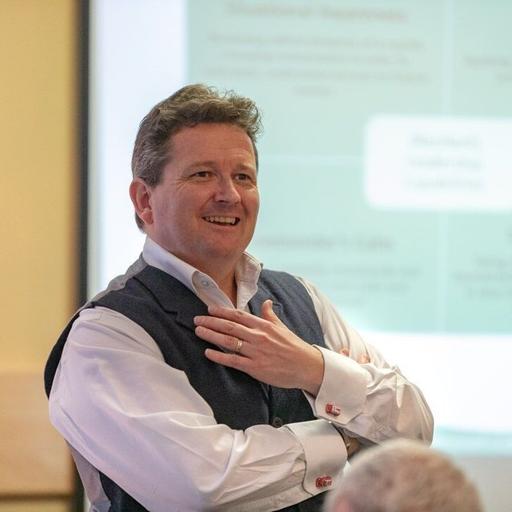
The Resilience Coach | Resilient Leadership Expert
100,000+ People positively affected6,000+ Executive coaching hours£12M+ ROI delivered by RWE npower leadership programme20+ years Learning, leadership and organisational development
Russell Harvey is The Resilience Coach - a resilient leadership expert, executive coach, facilitator and keynote speaker who helps leaders and organisations perform at their best when the world refuses to stand still.
With more than 20 years in Learning, Leadership and Organisational Development, 6,000+ hours of executive coaching and over 70 published podcast appearances, Russell is an experienced and engaging voice on resilience, leadership and navigating persistent change. He has worked with leaders across organisations including Novartis, the NHS, AB World Foods, Kerry Group and The Co-operative Group.
Russell’s work goes beyond helping people simply cope with pressure. He believes true resilience isn’t about “bouncing back”, being tougher or pretending everything is fine - it’s about springing forward with learning and becoming better equipped to lead because of the challenges you’ve faced.
His approach connects the human side of leadership directly to what matters to organisations: engaged people, stronger cultures, better decisions and improved performance. His work has delivered measurable results, including a leadership programme that returned £12 million to the business and a Resilient Leader Programme that achieved more than 1,100% ROI.
In August 2025, Russell achieved his long-held purpose of positively affecting 100,000 people.
More from Russell Harvey
All episodes → Living the Dream with CurveballSpringing Forward: Russell Harvey's Insights on Building Resilience and Embracing ChangeNov 2026Play episode →
 Transformation Station Leadership PodcastTSLP Season 5 Ep. 26- Thriving Is A VerbNov 2026Play episode →
 An Evolving Man PodcastReal Resilience: Why Pushing Through Isn’t Enough | Russell Harvey | AEM #172Oct 2026Play episode →
 Leadership From The Heart | Transformational Leadership InsightsResilience Without the Rebound | Leadership Mindset ShiftAug 2026Play episode →
 Burnout Proof Leadership: Identify Shift and Leadership Skills for Midlife Women EntrepreneursEssential Leadership Skills You Must Have If You Want to Build Resilience & Avoid Burnout When Your Business Gets Hard - with Russell HarveyJul 2026Play episode →
 Your Career JourneyHow to Build Resilience at Work: Leadership, Change & Thriving in Uncertain TimesJul 2026Play episode →
 The ThriveWell Journey | Entrepreneurship, Leadership & Life After DisruptionHow to Build Real Resilience Under Pressure | Russell HarveyJul 2026Play episode →
 Future Fit LeadershipThe 2030 Leader: Why Resilience is Your Most Vital Skill with Russell HarveyJun 2026Play episode →
 Different thinking for Different Time - Mindset Change and Thought LeadershipDifferent Thinking for Different Times - 7 Keys to Building Resilience with Russell Harvey How to Nurture a Resilient Mindset in Business and LifeMay 2026Play episode →