
November 12, 2025
Resilient Leadership: Thriving in Uncertainty with Russell Harvey
Sound bites
Adaptable is like, I'm open to it. Agile is then actually, there's the next step where you do the actual behaviors reasonably quickly that are required to do the change.
In this episode
Russell Harvey joins The Dave Pamah Show to talk about resilient leadership, adapting to change, and how leaders can turn uncertainty into opportunity.
- Six redundancies and a seriously unwell wife shaped his understanding of resilience.
- Resilience means springing forward with learning, not just bouncing back to the way things were.
- Adaptable means being open to change, while agile means actually changing behavior quickly.
- Leaders often confuse openness to change with real follow through from teams.
- Human behavior in organizations affects the bottom line and is influenced by leaders and line managers.
Chapters
Written from the transcript. Pick a chapter to play the video from that point.
Transcript
Automatic captions of the conversation. They can contain errors and do not name who is speaking.
Welcome to The Dave Pamah Show, the podcast that revives, restores, and awakens your innermost capabilities. You have the training and the talent to succeed, but do you have the guts to fail? I love what I do. When you love what you do, you want to be the best at it. Today is about the power of you. You will change the world. Find your path to success through the journey of those who have succeeded. And now, your host, Dave Pamah. Hi. Welcome, welcome back to The Dave Pamah Show. And today on The Dave Pamah Show, I'm joined by The Resilience Coach himself, Russell Harvey, a dynamic leadership expert who spent over 20 years helping top executives from the National Health Service to Morrison's turn uncertainty into opportunity.
With more than 10,000 hours of coaching under his belt, Russell is on a mission to positively impact 100,000 lives by 2025, showing us that true resilience isn't about grinding harder, but rediscovering your mojo, when life throws it, it's toughest challenges your way. Russell Harvey, welcome to The Dave Pamah Show. Thank you, Dave. That was a fantastic introduction. Oh, yeah. No, it was brilliant. So what's good, hopefully good news, is that Positively Effect 100,000 has happened. We've done it. Oh, wow. Okay. So I need a new purpose.
So maybe you listeners can help me. Yeah. Well, I've got a bit of a rough, woolly one right now of business as a force for good. That's my next purpose. Okay. So I'm just wondering, because obviously I do get a lot of business-minded people discover me on here and their public relations. I also do a lot of entertainment. I get people you probably if you search for my episode, you'll see some Hollywood stuff and things like that there as well. I'm trying to still get into sports because that was my first thing before doing firefighting.
But business, yeah, I mean, I do get a lot of business people. So hopefully, we can point that direction and see what we can get there from them. That'll be good. That'll be good, yes. So Russell, you spent nearly two decades helping leaders thrive in high pressure, ever changing environments. So what was a personal turning point or experience that first taught you the real meaning of resilience? And how has that shaped the way you coach others to find their own strength and confidence today? Yeah, so a great question.
So I don't think it was like one singular thing. It was multitudes, multiple sort of examples. So I have been made redundant six times in my career. Oh, that's a fair amount. Yeah, so it's a lot, isn't it? Yeah, it is. So it's like a couple of them are sort of engineered and the others were surprises. So that was like multiple opportunities for me to understand, oh, okay, the resilience. As well, unfortunately, in the last few years, my wife has been incredibly unwell. And so I am putting some, some all of my years of experience into supporting myself and her through those times.
So you mean unwell as in not able to do things or? Yeah, yeah. She's been very unwell. She's been very unwell. There is a recovery where she gets to, we shall see, essentially. But that was, that was, was, is some of the most sort of interesting, challenging times that both of us have been through, essentially. And then it's through those like thousands of hours of coaching and thousands of conversations with humans and the business world about learning about this resiliency word. And so that's why I describe resilience and define it as springing forward with learning.
Yeah. I'm not a fan of the term bounce back. Because there's a risk that people will face into life's events and then go, I know I'll bounce back. I'll go back to how I was. And I'm going, hmm, how did you learn? So it's literally my whole life's experiences today are showing me when I am and I am not demonstrating resilience. Yeah. Yeah. Yeah. So that's quite interesting, really. So could you tell us more about your own personal resilience first? Yeah. I mean, obviously, six redundancies. Obviously, some you've obviously tried to sort of make it happen.
But obviously, that's quite a thing in itself, really. But tell us really about your journey before you get into all this work so that we can see your own kind of path. Yeah. So, you know, I've always been interested in human behavior. So since even a child, there was some element of like, how can we do the things we do and don't do those things? And that was sort of crystallized in terms of actually what I might want to do for a living. So very nicely, my wife and I went traveling around the world for a year in 1996-97.
So our ability to do that was incredible. And I spent some of that time, we both did, living and working in Hong Kong, where I was teaching. I was teaching people off the street, the local Hong Kong Chinese. And there was some magic happening in the room, but I didn't quite know what it was. And then it was like later when I came back and reflected, it was like, people learning, people having light bulb moments, people going from confused face to a-ha face, essentially. Would you know all that? That's magically zapped my heart.
I want to do that for a living. But I didn't want to be a teacher in a school. I knew that wasn't it. So that became like business training, learning development, and then my whole career. Essentially, I am a coach and a facilitator, Dave. That's how I described myself, especially in the resilience piece. And my last permanent role was at the co-op group in Manchester. And not long after I joined, it just got itself into an incredibly difficult business challenging place. And all of my internal clients, me and a large team of others supporting the top 300 leaders, they literally came to me with their head in the hands and went, what the hell do we do?
And I went, well, I've been looking at this word resilience and I've been looking at this an acronym called VUCA, V-U-C-A, which you may or may not be familiar with, which we'll describe in a sec if we need to. Yeah, we will get back to that. Yeah, yeah, yeah. And then I was like, can't forget about me. Yeah, yeah, yeah. I went and all of our answers are in there, essentially, like capabilities, mindset, attitude, approaches, what we do. So as a result of that, the co-op was the sixth redundancy, and the timing felt right for me then to set up The Resilience Coach.
So when I did the, what have you been doing, Russell? What's your USP? I was like, well, you are the Resilience Coach. You have literally been spending all day, every day talking to leaders about what it means to be a Resilient Leader and how to face into challenges. And that's become my life's work, essentially, over the last 15, 16 years. Yeah, yeah, that's a fair amount. So, I mean, you was an English teacher in Hong Kong. I've been to Hong Kong twice, by the way. Yes. And then I think the latest times was just before the pandemic.
So you must have done a good job out there because most people do speak English. But that was back in 2018. And in 2019, I went to China twice, Beijing. And then I was living between Philippines and here. So I was going to my family and my family and my young daughters was born there. Well, at the time, all of the families, the kids wanted to speak English and Mandarin. So it was obviously Cantonese, Chinese. But because the handover was about to happen, they all wanted to speak English. Oh, the time when you were there?
Yeah, it was about to happen. Yeah, it was on everybody's minds. So they had to really. Yeah, because like I was going to say, but when I went to China, about a year or two after Hong Kong, the latest visit to Hong Kong, because I've been there twice, they were giving me phones with translators saying, I don't know what you're talking about. Only one or two people helped me find my way around, you know, it was very difficult. And English teachers are very well sought after there in mainland China at the moment. Absolutely, yeah.
I don't know, I haven't been there since 2020, since the pandemic, I had to actually come here because I actually had an illness, which I still have, well, I was diagnosed with prostate cancer, so I couldn't really go around, divided my time around, yeah. So I'm sorry about that. No, no, it's all right. It's in remission. So hopefully I'll live a good long life. My positive mindset helps me with that. So it's not only that, but you know. However, going back to your progress yourself. So you did English teaching before you did the Resilience work for 16 years.
Is that right? No, no, no. So just for a few months, I was teaching English in Hong Kong. Yeah. It was like from there, that was essentially the birthplace of what is it that I love doing. And it was people learning. Yes. That's where that came from essentially. So yeah. And you wanted to be, do some form of learning and development in the business world. And so after Hong Kong, so in 1997, initially I took a sales job and then got a training manager's role. And essentially that's where that learning and development career took off.
That's how it happens if you get a foot in a door somewhere. And sales is actually a good skill to have, isn't it? I mean, I did mine for an Australian company out while I was in the Philippines, when I was in the pandemic. And I thought, well, now what do I do? I can't go out doing fitness coaching. I did do a resilience coaching qualification afterwards. As I came back here, I thought, no, I'll take it anyway, even though I'm actually in the process of being diagnosed. It will help anyway. However, yeah, so the sales bit I did do for that little tiny few months, actually was helpful.
I was actually working for a company in Australia. I just did it remote from Philippines, that's all. It's got skills to have, but yeah, you look at it as stepping stone as well, don't you really, I suppose? Well, we're always selling ourselves. So running a business, I was talking about this yesterday, everybody everywhere is marketing themselves, and you're sort of just practically pragmatic around that's what's happening. Everybody's trying to enable themselves to be heard in a very noisy environment. And so that's one of the things.
So The Resilience Coach, he was 10 years old in July. So it's still here through all of these times. It still can be tough. Earlier in this year, it was like, gosh, it's one of these tough moments again, what we're going to do. And you just have to keep understanding what works, what doesn't work, what are the right things to do. And then this lovely, lovely word of adaptability, when you realize actually that's not working. I've got to change, I've got to do something different. That's the word that she bands it. Well, for me, I learned about adaptability because the body's incredible way of adapting to training and hard work.
I was an 800-meter runner, well, 400, 800, but once you start doing 800 and above, all the coaches say, just we're going to push it up more and more cardiovascular-wise, because your body's got this amazing way of adapting to the harder training to go further and further, and that's what you want to do, you know, to... It was an old memory, but I remember when I was a teenager at school, and for some reason the athletics or the PE class that day, our gym teacher said, right, we're going to get eight of you to run 100 meters as fast as you possibly can.
Yeah. You know, and I wasn't a great sprinter, but I was one of the eight. And then he says, and we'll compare your time to the current world record. Yeah. And we were just miles off it. And like, there's eight of us looking at each other, blowing out of our backside, going, blimmin heck. Wow. Oh, God. You know, you can't run 800 meters like that. Well, clearly these people do. It's incredible. It's absolutely cool. I think I'm about eight seconds away from the world record or something like that. So it's still crazy, though.
I was probably thinking I'm about an hour away, Dave. I'm probably about an hour away. As you know, everybody played football at school, and it helps with the fitness as well. So it wasn't a bad thing. You know, it wasn't a bad thing. No. An interval session with a ball, running for the ball, even if you can't get the ball or whatever. Anyway, let's not go down that route. We're talking UK now, which is good because when I'm talking to a lot of American guests, it's like, we call it football, not soccer there, and we played a real football as well, not American.
Anyway, let's not go down that route. Yeah, we're talking about adaptability basically. So yeah, you were explaining about this wonderful word called adaptability with regard to Resilience. And the way that I build upon it as well with people, so when you're talking in the business world about change, and that's where that VUCA thing comes from, which is about, it's a really great way of talking about how change is constant, which we all just nod at. I walk into a room, a lot of people, and just we go, right, change is constant, and the room nods, and they go, right, we now need to move beyond this nod, and we absolutely have to pull it apart.
So I also then talk to people about just the nuance between adaptability and agile, because we throw an awful lot of business buzzwords around all of the time. That's another word used in sports a lot, agile, as you know already. So that's pretty amazing, isn't it, really? But it is really a mindset thing as well as a physical thing, isn't it? When you look at it, building resilience even in sports, you know, a lot of top sports people say it's a mindset thing mainly, you know. Oh, yeah, well, for me, it's all about the behaviours.
And so it's your attitude, drives your behaviours. But just on the adaptability thing, so people that are listening, watching, so openness to change. So people need to explore really well what enables them to be open to change. Because you can walk into a room full of people in the business world and go, we're going to do this change. And you know, you will ask the room, are you open for it? And the room will go, yeah, yeah, yeah, yeah, or not sure. So we're open to change. But adapt, it doesn't mean you'll actually do anything.
It doesn't actually mean that behaviorally you'll do anything. Adaptable is like, I'm open to it. Yeah. Agile is then actually, there's the next step where you do the actual behaviors reasonably quickly that are required to do the change. So it's quite confusing for leaders a lot of the time, because they sort of say, right, we're going to do this change and we ask a room, you up for it, and they go, yes, we are, and the leader assumes a whole suite of things are going to happen. But what the actual business does and the humans in the business do is they stay as they are.
Yeah, it's like it's confusing then for the leader to go, well, you said you're up for this, but what? So it's understanding the difference between openness to do it and actually doing it, which is the adaptable and the agile piece. So it's good for people to understand. So when you work hard or engage with your adaptability, and what is it that enables you to be open, then you'll get better at being agile as well. Right. That makes sense. That does make a lot of sense. I mean, I can understand it anyway, but I didn't really ever think about this relationship between adaptability.
Yeah, I didn't see that at all. Well, we throw words at people, Dave. We walk into business and go, right, you need to be resilient. You need to be adaptable. You need to be agile. You need to be flexible. Everybody is sitting there and going, well, which one do you want me to be? Even if you said flexible, I think, oh, I'll go and do some stretches or a bit of yoga or something. Well, this is it. People don't realize it's a mindset thing as well. And then they'll suddenly throw in there as well. We also want you to be creative and innovative.
Yeah. And it's like, come on, it's like all of these have got a slight difference to them. So they're all a set of behaviors linked to a mindset because at the heart of resilience is our attitude, which is our mindset. So engaging with these different aspects of what it means to be resilient is going to ultimately have a positive impact upon these different areas. But yes, we run the risk of just keep saying to people, you need to be this, you need to do this, and you need to do that. And they're going, well, none of this is enabling me to actually be resilient.
Actually, I feel overwhelmed. So your work is to actually put that into action and understand what it is that they have to do, not just buzzwords flying around. No, it's like, so I do spend a lot of time saying buzzwords. Yeah. And then I go, right, let's bring that to life and unpick it essentially. Yeah. And one of the questions that I ask people in businesses is, how confident are you right now that the behaviors of the people in your organization are positively contributing to the business bottom line? So that's a, I know it's a long question, but I just say, how confident are you that all of these behaviors that your business, that your humans and your business are doing, are positively contributing to the business bottom line because that's what it's about essentially.
Yeah. And then, you know, there's some really fascinating conversations that fall out from that. You know, they'd sort of go either, I'm sure in this area or I'm not sure or I haven't got a clue at all, or it's like, what do you mean? You know, you get all of these responses, but that's the conversation that I spend my time in. But so I can make a direct link between the behaviors of the humans in the organization, which are influenced by the leaders and the line managers. Yeah. And go, actually, how does that link to when the CFO or the accountant or you're sitting in a board and going, what's our numbers looking like?
I'm good at making a direct link between these is my understanding of the behaviors that are happening and this is how it's impacting upon the numbers. And actually, the resilient organization has unpicked that and is actually getting some better leadership and line management happening so that the behaviors change. So the things that they need to change on the statistics and the spreadsheets, they get to where they need them to get to. Yeah, when I went to study my politics degree, sponsored a little bit by the trade union, Fire Brigade Union and a little bit by London Fire Brigade was, I was looking at the culture of the fire brigade.
And there's been a lot of investigations into that, you know, that cultural change is linked to behavioral change as well, isn't it really? And things like that. So, yeah, I did a politics and economics degree. I had to give up. My mother's politics and society, so sociologist. There you go. Yeah, OK. Well, we can talk about that another day. Use crunchy numbers. I was crunching groups. No, I didn't understand the numbers, Dave. I had to give up the numbers. All right. I had to give it up after a while and focus on the politics.
All right. The fire brigade is a fascinating thing. So I've done a tiny bit of work around the periphery of it, but I do understand around its command structure as a principle. Yeah. And just how that immediately impacts upon. I mean, any emergency service will work very similar to how the military works, et cetera, and everything else like that. And even an emergency medical worker and the paramedics would have to also have that discipline as well. Because I've worked together with all of them in major incidents. You see what I mean?
So yes, yes, yes. And it's interesting, you have done some work with the NHS, haven't you? So you probably wouldn't know about the organization would have that similar kind of thing, I think. It would. It would. Yeah. The NHS is just absolutely, it's absolutely fabulous. And it's so because it's so large. It's about if you want to shift the culture of the NHS, I don't I think it's entirely unfair that it keeps getting the sort of the the so the public love it, but it also still keeps getting a battering about you're not efficient enough.
And those two things don't sit well with me. I think there's a better way of there's a much better way of finding ways for it to make the improvements that it actually needs to essentially. But the thing is, that's politic speaking as well, because they all like to say, well, that they all want to take the NHS as their kind of real baby and say, look, this is what we're doing. It's not like this is what we would do. The NHS and Boris will say one thing and Keir Starmer saying another thing. They all want to save the NHS.
But at the end of the day, it's still there and it's still the envy of the world. Any American listeners listening, because I do get a lot of them. NHS means our National Health Service, which is not a marketplace where you can suddenly get into medical bankruptcy. We do have a cradle to a great system here. Yeah, it's incredible. So that's fantastic. Yeah. Well, as I say, we're trying to have a chat about what we can do around the area that I've been trying to break into, which is my former, as I say, I was a former UK athlete, did Olympic trials, Commonwealth Games, everything else, you know, so I've been around that sort of mindset.
And I love the sport and analogies to bring into the business and workplace. And vice versa, you know, the fire service is a good place to start with. And as you know, well, when I worked at Morrison's, you meant to Morrison's, they were doing the thing. Yeah. So we, so we're in, Morris is in Leeds, Yorkshire. So we absolutely did do some cricket. I got some cricket coaches from Headingley with leaders, because it was, it was, Where is Headingley again? It's Leeds, so that's the Leeds. Yeah, in Yorkshire Cricket Club.
Yeah. So we actually took, because we wanted to create a coaching culture at Morrison's. And so it was a case of actually, let's enable people to go play some cricket, be coached, to understand what it feels like, and then take that back into the workplace. So yeah, that was really interesting and fascinating. So there are good crossovers around this. Coaching analogy is always being brought into it. And of course, in our type of occupation, sports plays a big part in, you always see people saying, oh, he's also in the army, he's also a police officer, firefighter, blah, blah, blah, blah.
So, you know, if you look at the Bobsleigh team, it's mostly military, ex-military or ex-sprinters, you know. I've had lots of club mates and firefighters that have done the British Bobsleigh team, you know, things like that. No, it's incredible. It really is. Yeah, yeah. So, just to get moving away from the coaching bit now, because obviously you're doing something similar to what I do as well, which is have a podcast. Yes. So, you are quite successful in that, which obviously is another thing we can talk about here, and maybe do some little, you know, cross-promoting with that, feeling as I'm in the UK, and I seem to be just getting more interest in the US, but I should really be doing more in the UK, really, shouldn't I?
But tell us more about that. Yeah, go on. Well, no. So, that was... So, we've got the first series, and I've recorded the second one. That was... So, it was thinking about how to get the message out there. So, if anybody asks me, so Russell, how do I build my resilience? I go, there's the Resilience Wheel built upon loads of research, and I've added a bit to it. So, there's seven aspects to the Resilience Wheel, and I've done a podcast episode on each one of the aspects of the Resilience Wheel. Okay. And a couple of other bits.
So, there's a series of 10. So, not in terms of self-promotion, but if you go on my website, the podcast is on the homepage, essentially. So, they're solo ones, they're not interviews like this. So, there is a chap called Steve that is interviewing me. We are having a conversation around it, essentially. So, it's just you two rather than inviting guests like I've got. Yeah. Mine's more of an entertainment run really, you know, because I do. But series three will be more about getting some guests in. So, series two is recorded about resilient organizations, and then series three will be about getting some more guests in.
Oh, I see. Okay. That's quite interesting. It's quite interesting why you phased it all and given different, yeah, sort of audience, well, not audiences, but like, you know what I'm trying to say. Yeah, different approaches to it. Different approaches, that's it. Yeah. Yeah, yeah, yeah. Thanks for you have to do. I mean, I wrote a book, but it's more to go with inspirational speaking, which I do in schools. I did one yesterday, actually. I'm trying to do it in corporates because obviously, that's, you know, I'm doing it literally for nothing in schools, you know.
And I don't see that you've written a book anywhere. No, people keep asking me, they're like there's 170-odd blogs on the website. So there's enough. Oh, that's enough. I tried blogging, podcasts work better for me. But anyway, carry on. No, no. And so people, yes, people do say, well, have you got a book out? There's a book in there. So it's just all the way back to alongside doing business development, networking, delivering, paid work. Doing these, it's just like, actually, when will the opportunities come for me to sit down and go, right, let's collate the book, essentially.
It's just a timing thing, Dave, about it will be out at some stage. Yeah. The thing is with the advance in software and AI as well, there's an app for that now where you can just tick the button, turn your blogs and podcasts into a book, apparently. No, there's loads of those. Yeah, I'm doing lots of investigation into AI at the minute. It's absolutely fascinating. Yeah, it does help me a bit with a lot of stuff. So, I think it's about the appropriateness of it. So, yeah, I'm really, really concerned about those that are promoting AI as a replacement for coaching and therapy.
Well, that's the thing. Yeah, I'm really concerned about that. All technology is fabulous to enhance, complement, augment the human, and we're falling into the trap again of thinking that AI can replace inappropriately some of the human side of things. Well, it can't listen and give empathy, can it, for a start? It can't listen and it can't give empathy. It can mimic empathy. It can mimic it, which is the worry that humans are then thinking, ah, this tool has been empathetic. You go, no, it's mimicked it. Yeah. And so forget, be careful about what you now project on to it as a consequence of how it is pretended to make you feel.
And I think that's where we need to have a good conversation around that. I said, yeah, yeah, yeah. And it also can't really well, I suppose if you use a video, it could see your body language and read that if you train it too. But anyway, let's not go down that route because there is a lot of flaws in AI. A lot of dangerous things going on with all this deepfake stuff and things like that. That's a real, real dangerous stuff going on at the moment with that. So it does need to be regulated as well. However, it does help people a lot.
And exactly what you said, I wouldn't really rely on it at all as a standalone thing to say, yeah, it will do everything for me like a personal assistant would. It would just be wrong to do it. Just do it like you use Google as a, oh, let me search that, let me verify it, make sure it is right. Where did this come from? Because sometimes they search the Internet for you, and you still got to double check it and verify it. Absolutely. Yes. Yeah, absolutely. Anyway, that's another conversation. We're not even talking about resilience, are we?
What's next for you and what do you hope to be projecting onto now? You spoke a little bit about your podcast, what the next one is, what about your coaching and everything else? What do you hope? Well, so coaching-wise is continuing to coach leaders. So ideal clients are people that have got the job title of head of and director of and also business owners. So my specialism, how to lead yourself and others well in a full on mad bonkers crazy world. So if anybody feels like they need some support with that, individually or their team or organizationally, that's perpetually what I do.
And then it is also circling back to the new purpose. Business is a force for good. I need to bring that to life to really think about and articulate what that actually means and make that real, essentially, because that's one of the dimensions of being resilient, is having a purpose. I had one, achieved it, and so I need to just build upon that essentially. Yeah, fantastic. Well, it sounds like you've really built a really good business for yourself, really, from the 16 years of doing it yourself. Thank you. Yeah.
My mind's just, it's just fallen in place because, well, to be honest, as I say, there's been some behavioral issues with people in the frontline services, with stress and how it affects people. And there's been some suicides in America. It's actually overtaken people getting killed in the job in the frontline, you know? It's like, so it really concerned me because it also affected me a bit as well. So that's why I looked at that rather than just fitness alone. It just, it's not about that only now these days. No. And resilience was one of the words.
They said, I want you to do it. Resilience and blah, blah, blah. And that's why I went down that road in 2020, especially when the podcast is really, really flying and because everyone was sitting at home thinking, oh, Netflix and podcasting. So, yeah, no, it's a vitally, vitally important word, which I would like people to understand much better. Yeah, exactly about it. And I think we have a massive opportunity to allow people to stand much more clearly what it does mean to be resilient. I don't want it to be in any way, shape or form toxic quite often.
Yeah. People do some finger pointing to go. Yeah, no, it's not good. You just need to be resilient. That's not how I want anybody to be thinking about. No, no. I'm feeling about the resilience word. Yeah. It's a bit like saying you need to be thick skinned. Well, yeah. What do you mean by that? Well, yeah, absolutely. Yes. So there's, yeah. Getting people to, enabling people to understand it is one of the missions that I'm on. Yeah, exactly. Well, on that note, we'll get people to actually find out where they can contact you to find out where you can understand it.
So if you can tell us audience where they can find you, I think we can see if you watch YouTube, although this is audio mostly, if people go into YouTube, they can see your website, but hopefully you can tell people now. Yeah. So the website is www.theresiliencecoach.co.uk. So just go on that. I'm on LinkedIn, I'm on social media with The Resilience Coach. So that's how you'll find us. Excellent. Well, Russell Harvey, it's been an excellent conversation with you today on the subject there. Actually, it's close to my heart as well with what I've explained to you.
And I'm sure everyone will learn more about it, just simply being a word resilient, as you said. So thanks very much for coming to the show today. My pleasure. Thank you for having me on. That's all for this episode. Thanks for listening. And remember, if you want to support what we do, then share, subscribe, and leave a review over on Apple Podcasts. Or head over to my website, davepamah.com, and click on Rate Show. Well, that's all for now, but I'll see you in the next episode of The Dave Pamah Show. Follow us on Facebook, Twitter, and Instagram.
About Russell Harvey
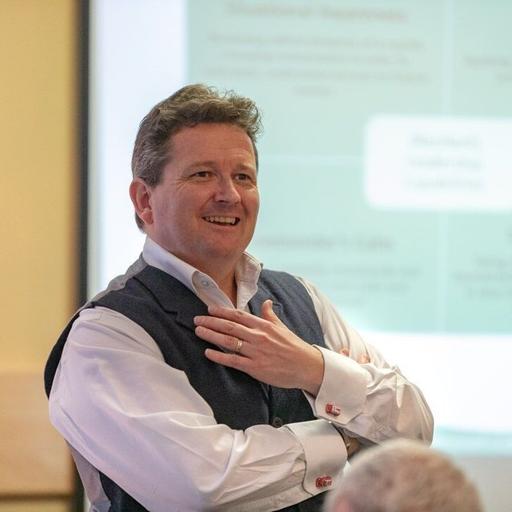
The Resilience Coach | Resilient Leadership Expert
100,000+ People positively affected6,000+ Executive coaching hours£12M+ ROI delivered by RWE npower leadership programme20+ years Learning, leadership and organisational development
Russell Harvey is The Resilience Coach - a resilient leadership expert, executive coach, facilitator and keynote speaker who helps leaders and organisations perform at their best when the world refuses to stand still.
With more than 20 years in Learning, Leadership and Organisational Development, 6,000+ hours of executive coaching and over 70 published podcast appearances, Russell is an experienced and engaging voice on resilience, leadership and navigating persistent change. He has worked with leaders across organisations including Novartis, the NHS, AB World Foods, Kerry Group and The Co-operative Group.
Russell’s work goes beyond helping people simply cope with pressure. He believes true resilience isn’t about “bouncing back”, being tougher or pretending everything is fine - it’s about springing forward with learning and becoming better equipped to lead because of the challenges you’ve faced.
His approach connects the human side of leadership directly to what matters to organisations: engaged people, stronger cultures, better decisions and improved performance. His work has delivered measurable results, including a leadership programme that returned £12 million to the business and a Resilient Leader Programme that achieved more than 1,100% ROI.
In August 2025, Russell achieved his long-held purpose of positively affecting 100,000 people.
More from Russell Harvey
All episodes → Living the Dream with CurveballSpringing Forward: Russell Harvey's Insights on Building Resilience and Embracing ChangeNov 2026Play episode →
 Transformation Station Leadership PodcastTSLP Season 5 Ep. 26- Thriving Is A VerbNov 2026Play episode →
 Embracing Digital TransformationHow to Build a Resilient Team Without Toxic PositivityNov 2026Play episode →
 An Evolving Man PodcastReal Resilience: Why Pushing Through Isn’t Enough | Russell Harvey | AEM #172Oct 2026Play episode →
 Leadership From The Heart | Transformational Leadership InsightsResilience Without the Rebound | Leadership Mindset ShiftAug 2026Play episode →
 Burnout Proof Leadership: Identify Shift and Leadership Skills for Midlife Women EntrepreneursEssential Leadership Skills You Must Have If You Want to Build Resilience & Avoid Burnout When Your Business Gets Hard - with Russell HarveyJul 2026Play episode →
 Your Career JourneyHow to Build Resilience at Work: Leadership, Change & Thriving in Uncertain TimesJul 2026Play episode →
 The ThriveWell Journey | Entrepreneurship, Leadership & Life After DisruptionHow to Build Real Resilience Under Pressure | Russell HarveyJul 2026Play episode →
 Future Fit LeadershipThe 2030 Leader: Why Resilience is Your Most Vital Skill with Russell HarveyJun 2026Play episode →