
November 2, 2025
The Power of Resilience
Sound bites
I define resilience as springing forward with learning.
AI doesn't think and AI doesn't learn. It gives us the perception that that's what it's doing.
In this episode
Russell Harvey joins the show to talk about resilience as a practical leadership skill, including how to reframe challenge, build adaptive habits, and work with AI without losing humanity.
- Resilience as springing forward with learning instead of trying to bounce back to who you were before.
- Three self check questions about what behaviors are serving you well, what are not, and how to do more of the useful ones.
- Thriving, coping, and surviving as different states, with resilience aimed at staying in thriving as much as possible.
- Strength based habits that build confidence and energy by playing to natural strengths and flow.
- AI literacy for emerging leaders, including understanding what AI can and cannot do and remembering it does not think or learn.
Transcript
ShowHide
Automatic captions of the conversation. They can contain errors and do not name who is speaking.
Welcome to Be an Encourager podcast where real stories of transformation, faith, and redemption come to life. I'm your host, Clarabel Coraniano. Today I'm absolutely thrilled to welcome an incredible guest to the show, Russell Harvey, widely known as the resilience coach. Russell is a dynamic leadership coach, facilitator, speaker, managing director, and podcaster with over 20 years of experience in leadership and organizational development for nearly two decades. He specialized in resilience, helping individuals and organization thrive amid uncertainty.
Passionate about impacting a 100,000 lives by 2025, Russell has already reached more than 78,000 people through his coaching workshops and talks. His engaging, empathetic, and practical approach helps clients rediscover the confidence, clarity, and passion. He's worked with major organizations including NHS BT, the cooperative group, the great Orman Street Hospital. Beyond his corpor beyond his corporate work, Russell also gives back a share of governors at a local primary school and a volunteer with leads young authors running confidence in public speaking workshops for students.
With a wealth of expertise and a heart for empowering others, Russell's brings a unique blend of insight, authenticity, and joy to every conversation. Again, join me in welcoming Russell Harvey. So Russell, you're known as a resilient coach. For listeners who might still associate resilience with bouncing back, how do you define true resilience and what are some of the continuous misconception about it? >> Thank you Clarabel. Uh hello to everybody listening. So I define resilience as springing forward with learning.
springing forward with learning which I appreciate is a is a simple reframe of bouncing back. However, when you apply it, it's quite different. So, I've noticed that one of the reasons I'm not a fan of bouncing back as terminology is that many people believe that they're being resilient when they face into a challenge and then they say to themselves, right, that challenge is over. I'll now bounce back. I'll go back to how I was before this situation happened. I'm standing there or sitting there and going, "Well, you can't go backwards.
We we just can't. Our brains can't go backwards. We can only learn from nice experiences." So, the resilient individual springs forward with learning and they do that by asking themselves three questions on a regular basis, which are uh what have I been doing behaviorally recently that's been serving me well? What have I been doing behaviorally recently that's not been serving me well? and how can I do more? The answer to the first question in terms of useful help uh helpful behaviors and misconceptions uh can often the time is that if people believe they are solely res being resilient by just keeping going regardless.
Uh so when we are overwhelmed and keeping going yes there's an element of resiliency to that. However the more resilient individual will actually pause. They'll stop. they'll understand that they are in this hamster wheel this in this situation and then actually they'll find ways to do things differently essentially because resilience is hugely about adaptability doing things differently. So if you're just keeping going regardless doing more of the same you're not being resilient essentially you might have to do something to get through.
So um yeah, spring forward with learning and be careful that you are solely believing you're being resilient by just keeping going regardless because that's only occasionally. >> That's a great explanation because I always saw it like that. If you don't learn your lesson while you're surviving, you cannot just survive. You have to thrive and apply like you said, apply the lessons and what are you going to change? Because we all have to change in order for things to be different. So, I appreciate that. >> No, no, it's all good.
Yeah, good. And it's really interesting those three words as well of um I know you mentioned two, but there's surviving, coping, and thriving. We we we talk about this in this space. So, for me, surviving is hanging on by our fingernails. >> Literally, I'm just coping is some variation of I'm okay. You know, it's like how I am okay. That can mean the coping, but it could be coping. I'm okay, but I'm actually, you know what? I'm just about to tip over into surviving. and I it's not going to be good. Or it could be I'm okay coping but I actually do you know what I think I might be about to tip over into thriving in a really good place.
So the resilient individual engages with growing their personal resilience so that most of the time even if there's a lot of things going on they'll be thriving which is yeah there's a lot going on and I'm good essentially that's the thriving piece. So from what I heard you say, it's almost like a process like there's times that you're going to have to like you will go back but and then restart again and and and learn. Is that what I heard? >> Well, yeah. So it's um so it's not about living in a perfect world because we don't and resilient people understand that life is not fair.
They accept with that with good grace. But when an individual chooses to engage with growing their resilience, which we'll talk more about um today, then they give themselves the best chance to be in thriving more often more of the time essentially and can find strategies, tips, tools, techniques, behaviors, approaches to potentially maintain being in this place. So you don't necessarily want them to be going backwards and forwards between surviving and thriving. You want to be able to stay in thriving as much as humanly possible with with understanding that to do that is quite it can be difficult essentially.
>> Dar now I understand it better. Thank you. >> You're welcome. >> Thank you. So the heart of coaching for resilience in your experience coaching leaders and teams what are some of the largest barriers people face when trying to build resilience and how um does coaching help them move through those challenges and also for individuals I don't know if you do individuals as well >> yes individuals teams whole organizations clarabel is you know it's like what does it mean to be a resilient leader personally resilient resilient teams, resilient organizations.
It it it's all of that. So barriers wise, it's it'll [clears throat] be the individual's starting point because if somebody's going to engage with a coach, it's that whole conversation about how do they view coaching? How do they view personal development? Do they see that as a good thing or do they see it as actually well it's a deficit thing? There's something wrong with me. Um then it's about you know the barriers are how well is the individual going to engage in the process the conversations the openness the curiosity so resilience builds openness and curiosity and learning so if you have a desire to do that you need to make the first step essentially so the barriers are always about what's an individual's or a team's starting point on this whole thing about actually I've got to change.
I I've got to adapt and I am willing to do so or I I need to hear some things before I'll I'll do it. And a lot of the time we don't quite know where we're going to end up until we've started. So when people sort of say um but tell me what will be different and I'll go well I don't know you don't know but we need to explore first what you would like to be different better for you. If we can clarify that, then we've got something to go at essentially. >> That's great. And and I want to ask you another question. Can you give us an example of three or four traits of a resilient leaders?
>> Yes, absolutely. So, I can give you loads, but so I'll do a little um just an additional caveat. So if anybody ever in general Clarabel asked me the question, so how do I build my resilience, Russell? >> The answer is that there's a resilience wheel. It's on my website. It's built upon research and there are seven aspects to it. Okay. >> So when an individual chooses to um engage with their personal resilience and also their leadership resilience, the resilience wheel with seven bits on it is the way to do it. And now to answer your question about what three things does a resilient leader need to do here.
I've got these these are when you come on my resilient leader program. This is what I talk about. So a resilient leader uh delegates brilliantly to their team based upon their team strengths and removes the blockages to their people performing. So that's one thing that a resilient leader is responsible for. Yeah. Delegate brilliantly and remove blockages to people performing. The other thing that they're responsible for is to develop, grow, and nurture a resilient team against the resilience wheel. And the third thing that they're responsible for is personal growth around resilience.
Those are three things that a resilient leader needs to do and is responsible for and should be doing essentially. >> Those are great. Thank you for sharing those. Now, we're going to be speaking about resilience in a changing world. We live in a time of constant uncertainty, pressure both personally, professionally. How can individuals stay grounded emotionally balanced when everything around them feels like unpredictable? >> Yeah. So, it's it's not going to be one thing. So, it's going to be different for each individual.
So, this is an element where potentially um I'm doing a little bit of um repeating myself, but it's to hone the point. [snorts] >> It's it's back to this resilience wheel that I've referred to because part of, you know, what does it mean to be resilient actually is answering the question of what does it mean to be human? Okay. So, that's not a one-sizefits all. That's all about each individual essentially. However, when an individual makes the decision, makes the choice to engage with their resilience wheel and nurture and grow all seven little bits of it and they've got positive impact upon it, then that that's how they will actually face into a very challenging world.
So, in my yes, my specialism is the resilience piece and it's an acronym of vaua vua. I don't know if if you're familiar with it and the fact that the world is volatile, uncertain, complex, and ambiguous. And to face into it, you need vision, understanding, clarity, and agility, which are eight buzzwords, but when you go behind the scenes of them, there's loads in there, and they link to um resilience. However, one practical tip is that if if an individual is feeling all that sea or they feel that the rug has been pulled from underneath them and they feel like everything's changed or there's too much change, then one of the things that has worked quite a lot of the time for a lot of clients is I go, okay, it's like if you feel that's happening, we now need to just pause and think about everything that stayed the same.
Okay. So, if you feel that rug's been pulled from beneath you and you feel like you're in like inside a washing machine and you're spinning around, it's like, right, let's take a moment to ground ourselves. Let's think about anything and everything in your whole life that has stayed the same, which is absolutely as it has always been. So your values, your strengths, your skills, your personality, the things that you've achieved, the roof over your head, family members, friends, just what is real and has stayed the same.
And then that gives people sometimes a sense of grounding, you know, literally their feet on the ground and go, okay, I've got I've got some uh solidity to what's going on for me at this moment in time. And if people are then really feeling like totally overwhelmed, it's like actually spend some time and just start to talk about and discuss make a list or a mindm of everything that has stayed the same about who you are and your experiences and that sometimes grounds people. So focusing on the things that are stable so it can bring some comfort to the person that even though all these things are happening look >> you are stable you you have this and you're you you're doing good basically [clears throat] it's like almost reassuring yourself that things will get better.
>> Absolutely. >> We you have this uh stability. >> So that's great. That's a good way to look at it. So now we're going to be talking about from setback to strength. Can you share a story either from your work or personal journey where resilient transform a difficult situation into a moment of growth or renew purpose? >> Yeah. So um there's probably you know there's a few. So in my lifetime I've been made redundant six times essentially uh from corporate roles. A couple of them sort of I engineered or was aware might happen and others were a complete surprise essentially.
Uh and each one of those gave me an opportunity to really um reflect upon uh who I am as a person, what types of roles I wanted to do, what was important to me and you know um where was I trying to get to in my career. And it was the sixth one uh of the redundancy where it all aligned essentially all of these reflections, all of these learnings, all of these sort of oh I've got to try again and find a job role and find it in the right place essentially. So the sixth one was my last permanent role at an organization called the co-op group which is uh there's co-ops all around the world and I and I love the co-op and its value system.
Um and however that was the birthplace of the resilience coach essentially. So when I knew that at some stage I was more than likely going to leave the co-op the experience has been at the co-op but they had been through some extreme challenges as a business and I was there with a team of others supporting the senior leaders face into this vaua world and needing resiliency skills. Um and but I knew my time might be coming to an end in the organization. And it felt right. My head, my heart, and my gut were in alignment that now is the time to set up my own business.
And that was 10 and a bit years ago essentially. So that was the birthplace of the resilience coach. And when I was doing some naval gazing about um what's my USP as a business uh when I left the co-op, it's like you know what, I am the resilience coach. I I have that's what I've been doing, supporting leaders about how to lead themselves and others through, you know, really crazy times. And so I've used those experiences over the last 10 years, you know, uh essentially. Um so a lot of it was about being uh all of those redundancies, a number of different lessons over and over again, other opportunities to reflect and they all aligned at that moment in time.
>> That's a great uh story you just share um for anyone that's thinking of starting their business to, you know, like do that self-awareness, right? you mentioned that introspection, self-awareness, and you realize, okay, this is it. This is what I want to do and I'm going to go for it and this is what I'm going to be doing. >> Yeah. And on on the back of that, so one of the dimensions on the resilience wheel is having a purpose. >> So, uh, about eight years ago, um, in terms of role modeling, I didn't my purpose wasn't as clearly defined as it could be.
So eight years ago, my purpose was that by the year 2025, I wanted to positively affect 100,000 people. And so that was about everywhere I went, everything that I did was to actually give leaders, line managers, humans, their light bulb moments, their learning moments, their res their resiliency moments essentially. And in July of this year, I achieved it. The 100,000 number was hit essentially. >> That's great. >> Yeah. So now I'm in the purpose of finding my latest purpose and at this moment in time which I need to add uh some detail to it but it's essentially um using um resiliency to support businesses be a force for good.
That that's >> that is correct. >> That's my purpose this time. It needs some meat and bones on it and I'm just writing some >> uh blogs on it now. Um but that's it. So a resilient individual has a purpose and had mine updated it >> and yeah business is a force for good. >> Yes. You mentioned you set a goal and you met that goal because you said it. >> Well so the the purpose is so goals help help you achieve your purpose essentially. >> But I appreciate in my description of my purpose there is some goal element to it.
And hand on heart clarabel that's that was probably more for slight marketing reasons you know people said you need to put a number to it Russell okay I go yeah okay all right you know it's about the positive the effect and the light bulb and the learning moments but in general a purpose is more overarching it's about a whole value system and a lifestyle choice essentially >> thank you for elaborating on that so now we're going to talk about building a resilient mindset >> yes And so for our listeners who are ready to strengthen their resilience today, what are three practical steps or daily habits that they can start practicing to become more adaptive, hopeful, and confident in life's challenges?
>> Yeah. So, um remember there's seven on the resilience wheel, but we'll go with three essentially uh now. So I think really taking a strength-based approach. So really genuinely understanding what your natural energizers are. Um so I I think in the USA there's strength finder. In the UK we use strength scope. So there's a psychometric and there are 24 strengths on there and we can't be energized by all 24. You have a significant seven and a top three. So my top three strengths are collaboration, >> strategicmindedness and developing others.
So I am at my best when I can do big picture together with somebody else and coach them along the way. That's me highly energized and I when you play to your strengths, you build natural resilience and natural confidence. So the practical application of that for everybody that's listening and watching now is for them to really understand on a day-to-day basis in the job role that they're doing or the life that they're in actually where are they enthused when are they energized when are they in flow when they actually feeling like time's not passing and actually they had a really great time it'll probably be because they were playing to their strengths and so one practical tip is to do that another practical tip is what I've talked about already is that refct effective practice springing forward learning about the behaviors that I've been doing recently that have been serving me well getting me into thrive the behaviors I've been doing that aren't getting me to thrive and how do I do more of the um >> first and then because uh adaptability is um has got some sort of extra weight to it in terms of resilience building you know it's a word that's thrown around all the time so it's openness to change but research research shows shows that those individuals that spend a third of their time, engaging with being open to change, they give themselves a chance of getting into thrive.
So for everybody that's listening now, it's like, you know, what does that mean to them? like a third of your times just like I'll be open. I'll be curious. I'll go to different places. I'll try out different things. I'll have conversations with different individuals about that wouldn't normally talk to. Just any way, shape, or form that you can just do something slightly different and that grows your adaptability essentially. >> That's awesome. That's great. Um it's almost like a catalyst when you decide to be open for change.
It's a catalyst to bring in more open doors. Now I have a question for you. I did the strength finders uh >> many years ago. I think I have to do it again. >> Okay. >> That my question is can those strengths change over time? Like people go through phases in life and you know different careers and things like that. Can those strengths change? >> So the the short answer is no. But then there's a few uh there's been probably there's a few caveats around that. So when anybody so all those individuals that you know create psychometrics they're clever and I am you know they do it in such a way to go um you know this is you you know we answer the questions well enough >> we ask them in a number of different ways that it should tease out the real you essentially.
Mhm. >> Um and the only sort of add-on to that is that if somebody takes um their psychometric at a time when their personality is under high stress. Yeah. >> Um then there there's sometimes that they can take it later in life where their personality is under less stress and actually the more authentic or the more real version of them will come through. Sometimes if you've, you know, a person like has really been under stress, it'll have driven some behaviors or driven a belief that you're a particular way, then sometimes people will say, "Oh, I took it a while ago and I took it again and it was quite different." And a lot of the time when you explore that, you understand that there was quite a bit of stuff going on, >> you know, at that first time that they took it.
But the short answer is no. It doesn't change if you've answered the questions well enough. >> I see. But let's say for instance there won't be no change in added strength like if they grow. >> Uh no no because um so this is the principle around the strengthbased approach. So um it really uh the volume of my clients who so we'll do their strength scope with them and their eyes will go to their scoring and they'll look at the um bars length of bars where they've got least energy for them and they go I suppose Russell my homework is to spend time developing this non strength and I went no why would I ask you to do that and I'll go do you enjoy doing this this thing that's a non strength.
They go, "No, I hate it." I go, "Well, why would I ask you to spend loads of time doing something that you hate doing?" The principle of a strength-based approach is to do more of the thing that you love doing because that's you at your best >> essentially, and it builds natural resilience and natural confidence. We put strategies in place for when you will have to do those that you're energized by the least because you can still do them, >> but we want to cultivate in our environment where you can play to your strengths essentially.
>> That makes a lot of sense. You answer my question. >> Thank you. Can you discuss strategies for helping individuals build resilience and manage stress in their lives in their personal and professional lives like how they can balance them both? >> It's well um in terms of personal and professional lives. So I'm I'm shifting away from the language of um work life balance because I I I've um took this from somebody else whose name I've completely forgotten. So I'm attributing this to a conversation over somebody else and I apologize I've forgotten the name.
Um cuz they talk about work life harmony. >> Mhm. >> Okay. Um so our work and personal life will it'll never be in balance and we shouldn't strive to try and make it so because it'll cause us problems. So what I mean by that is um legitimately in our lifetimes there will be legitimate moments when personal life is more important than work life. So we will be out of balance >> and that's fine. That's legitimate. And there'll be other times where actually do you know what? I'm going to focus on my career and personal is going to take a bit of a back seat.
So the the trick is to understand it's about work life harmony >> and it actually where it you know it may go wrong for you is actually your you're out is is disharmonious if that's um the right language >> essentially. Um, so you know for people that are listening watching now it's for you to want for them at all to individually sort of decide what what does a harmonious life look like, sound like and feel like to me and then actually put the steps in place to do that and understand that actually um the balance will always be um out of whack.
So don't even try and strive for balance. Go for harmony. >> For harmony. And so I have a question for you. How will can you give us an example of how that would look like? >> Oh well, so um yeah, so if somebody's um potentially earlier in their career, >> then um I with with lots of different caveats of um we are trying hard with the whole sort of well-being approach not to do this. But earlier in our career, we are happier to work longer hours, >> you know, and and we it's so because we're going to go actually, do you know what?
No, I I'm I'm enjoying this or I'm doing it for the reason or I'm legitimately doing it because I know where I'm trying to get somewhere. Okay. And this does actually mean that I'm going to spend more time doing work things than actually doing personal things. So, that would be an example of it. And that's okay >> as long as you're as long as you're okay doing it. You know, if you're feeling like actually, you know what, I'm working all these longer hours and I'm putting extra effort in and it's not getting me anywhere, then that's a different situation essentially.
>> That's a good example. Thank you. Now, we're going to shift a bit to another topic. >> Okay. Yeah. >> How do you incorporate positive psychology and strengthbased approach into your coaching sessions? Yeah. So, so like I've said um with the vast majority of my clients um we talk about uh they do the strength scope psychometric. So that the strengthbased approach is absolutely part of what I do because it's built a natural resilience natural confidence >> and confidence is one of the dimensions of the resilience wheel those seven.
So there's a bit of a double whammy there. So it's literally it's just there all of the time essentially the strengthbased approach when we're talking about um you know their coaching outcomes where the team's trying to get to or the individual's trying to get to it's like right how do we apply your strengths in this situation or if we understand that actually a strength that would be useful here is not one that you've got >> what are we going to do what strategies are going to place put in place how we going to you know compensate for that and the whole positive psychology approach is also just informs everything that I do as well around um exactly everything that that's about.
And what I also want to make sure that I get across is I absolutely am not uh wanting ever to do toxic positivity or toxic resilience. Okay. >> Can you give us an example of that? >> You Yes, absolutely. >> Now that you mention it, >> absolutely. So uh my intention my value system is that I do not want people to do the following. So a lot of the time we have conversations, we ask people how they are and hopefully some of the time say, "Oh, do you know what? I'm finding this situation a bit challenging." Or, "Do you know what?
I'm a little bit worried about this." If anybody at that moment in time literally goes, "You just need to be positive and you just need to be resilient. That's toxic. That's gaslighting. It's tantamount to bullying. So please don't do it and don't say it." Okay. what we uh do is that we utilize all those components of the resilience wheel. We talk about them individually, collectively uh the majority of the time and that is building general resilience and as a result of shifting away from toxic positivity. The other thing that I talk about is the word optimism instead of positivity.
So the reason that I do that is that optimism is grounded in reality. Okay. So what we need to get better at as leaders of teams and as a society is to have optimistic conversations which are ground in reality. So we talk well about the things that are worrying and concern and the size and the scale of the challenge. We have to face the challenge, >> talk about it well >> using empathy, emotional intelligence and compassion. And then what's also grounded in reality is our current strengths, skills, capabilities, behaviors, levels of resilience, experiences, mindset, attitude.
That is our current reality as well. So you like talk about the challenge, concerns, and talk about strengths, skills, and behaviors. And when you start to raise those up a little bit more, humans then start to feel hopeful and they start to feel positive. >> So my question for people that you know listening, watching now and clients they work with is how optimistic are you right now? Mhm. >> And then they either say, "I am or I'm not." Because some clients come to me and say, "My word, Russell, this is this is the size and the scale of the challenge at the moment." And I go, "Okay." And how optimistic are you?
And sometimes they go, "I still am for all these reasons." Other times they go, "No, I'm not actually. No, the the opt the hope is gone." And go, "Right, we need to find ways to rekindle that hope." That's um a great example elaboration and I you know it just gave me a lot of insight. Thank you for sharing that. Now we we have 10 minutes left and I wanted uh ask you the last question and what do you uh foresee and new emerging leaders will need to become successful leaders in their fields especially how things are evolving and constantly changing in our society and um you know with technology becoming more of a of a more favorable force just what will be three recommendations or encouragement tips that you would like to share to help emerging leaders and individuals who may be struggling in the workforce.
>> Yeah. Um so it's like make the decision to build and grow and nurture your resilience around the resilience wheel. That's that's just like >> and then you've got to work out um what the value and benefit to you will be. So, resilient individuals um are more open, they're more curious, they become they're more confident, they become better at making decisions, they become better at critical thinking, even though it's one of the 24 strengths, they might not be naturally energized by it. >> If you've got a purpose, you know, essentially that's like a guiding light that drives you.
So you know one practical tip is make the decision make the choice because you see the value and the benefit to you of engaging and nurturing and you growing your resilience wheel because then you will become a thriving individual. The other thing then in in the you know the world that we're in the technological world that we're in um so if if we specifically if we refer to good old artificial intelligence okay >> so if we talk about that right now so my opinion is so I know we can't do this um my opinion is that before we engage with artificial intelligence leaders emerging leaders need to really understand what it means to be women first.
>> That's a good good point. >> Okay. >> So, because we talk about AI human augmentation. >> All right. >> So, I'm I'm being you know the analogy is if you want so if you imagine you've got a suite of human beings as a team >> and if you want to add AI to it as a team member. >> Yeah. Mhm. >> Before you do that in a perfect world, and I know don't live in one, the team needs to really understand how resilient they are now around the high performing resilient team. Understand what that means and what they how closely they currently, you know, meet that benchmark of a high performing resilient team on a human level amongst themselves.
And then you can add AI into that situation and you'll be able to complement each other. you'll be able to augment each other. Okay? >> So, I know you can't necessarily do it that way. So, we'll do it alongside essentially because AI is here, but actually understand what it means to be human. And um my company is a member of a think tank, a research tank around all things learning development called the Oxford Review. Uh and they did a a series on artificial intelligence recently. And so some of the takeaways from that is just remember AI doesn't think and AI doesn't learn.
It gives us the perception that that's what it's doing. >> But it isn't. Okay. And I know some people might be listening now and go yeah but what about this and what what about that? I just went just it if you take human learning and human thinking and AI learning they are so far apart at this moment in time >> that they don't think and therefore the other thing the skill that all emerging leaders need to do is they need to understand what AI literacy is >> how well they are doing that so AI literacy is how well do you understand what AI is and isn't doing and can and can't do and the assumptions that you are making about that.
So to help yourselves a emerging leaders need to become AI literate which is understanding how it works essentially. >> Um >> yeah that what that's what I'll say for now. That's uh very important that um what you mentioned that they should get trained and learn what it is actually because it doesn't it does it doesn't have empathy. So you have to remember that and know that you're the the individuals that are going to be working with this tool because it's a tool that you know remember your humanity that you don't adapt to the way that the technology is acting or saying or giving you answers or however it's helping you know you don't become that you know it's a tool that you use to you know help you with your performance your things that you need for your you know to do your job and not >> it's an amazing tool.
It's absolutely incredible what it can do. It's phenomenal. Just be mindful >> what you what you are projecting onto it. >> Yes, that's also very important. Thank you. So one last question for you. What would be one takeaway that you want to leave the listeners with? And it can be a quote, it can be a words of encouragement, whatever you feel like uh sharing with us. >> Yeah. Let's just remind ourselves of defining resilience as springing forward with learning. So how are you going to do that is that's what I will leave the listeners with.
Springing forward with learning. >> Awesome. Thank you. So I want to thank you for taking the time to um be in this podcast, be an encourager podcast. I appreciate your time >> in answering all those questions and that great information that you share with us >> and glad to have you. Have a wonderful day.
About Russell Harvey
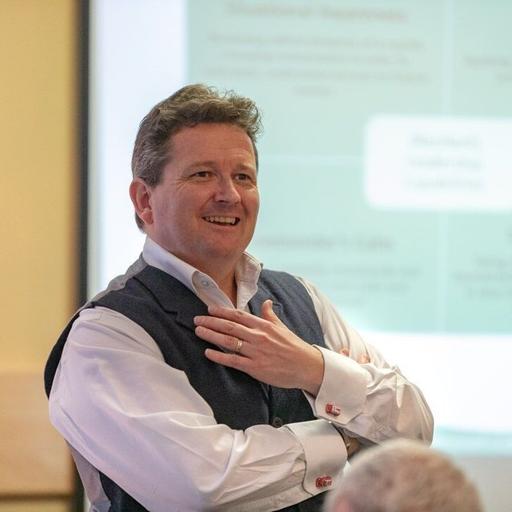
The Resilience Coach | Resilient Leadership Expert
100,000+ People positively affected6,000+ Executive coaching hours£12M+ ROI delivered by RWE npower leadership programme20+ years Learning, leadership and organisational development
Russell Harvey is The Resilience Coach - a resilient leadership expert, executive coach, facilitator and keynote speaker who helps leaders and organisations perform at their best when the world refuses to stand still.
With more than 20 years in Learning, Leadership and Organisational Development, 6,000+ hours of executive coaching and over 70 published podcast appearances, Russell is an experienced and engaging voice on resilience, leadership and navigating persistent change. He has worked with leaders across organisations including Novartis, the NHS, AB World Foods, Kerry Group and The Co-operative Group.
Russell’s work goes beyond helping people simply cope with pressure. He believes true resilience isn’t about “bouncing back”, being tougher or pretending everything is fine - it’s about springing forward with learning and becoming better equipped to lead because of the challenges you’ve faced.
His approach connects the human side of leadership directly to what matters to organisations: engaged people, stronger cultures, better decisions and improved performance. His work has delivered measurable results, including a leadership programme that returned £12 million to the business and a Resilient Leader Programme that achieved more than 1,100% ROI.
In August 2025, Russell achieved his long-held purpose of positively affecting 100,000 people.
More from Russell Harvey
All episodes → Living the Dream with CurveballSpringing Forward: Russell Harvey's Insights on Building Resilience and Embracing ChangeNov 2026Play episode →
 Transformation Station Leadership PodcastTSLP Season 5 Ep. 26- Thriving Is A VerbNov 2026Play episode →
 An Evolving Man PodcastReal Resilience: Why Pushing Through Isn’t Enough | Russell Harvey | AEM #172Oct 2026Play episode →
 Leadership From The Heart | Transformational Leadership InsightsResilience Without the Rebound | Leadership Mindset ShiftAug 2026Play episode →
 Burnout Proof Leadership: Identify Shift and Leadership Skills for Midlife Women EntrepreneursEssential Leadership Skills You Must Have If You Want to Build Resilience & Avoid Burnout When Your Business Gets Hard - with Russell HarveyJul 2026Play episode →
 Your Career JourneyHow to Build Resilience at Work: Leadership, Change & Thriving in Uncertain TimesJul 2026Play episode →
 The ThriveWell Journey | Entrepreneurship, Leadership & Life After DisruptionHow to Build Real Resilience Under Pressure | Russell HarveyJul 2026Play episode →
 Future Fit LeadershipThe 2030 Leader: Why Resilience is Your Most Vital Skill with Russell HarveyJun 2026Play episode →
 Different thinking for Different Time - Mindset Change and Thought LeadershipDifferent Thinking for Different Times - 7 Keys to Building Resilience with Russell Harvey How to Nurture a Resilient Mindset in Business and LifeMay 2026Play episode →