
November 21, 2025
Springing Forward with Learning Part 1: Redefining Resilience with Russell Harvey

What it means to be resilient is what it actually means to be human.
In this episode
Russell Harvey talks about resilience as practical leadership growth, focusing on strengths, purpose, and how people can spring forward with learning.
- Resilience as more than bouncing back, with learning, purpose, and a way forward through uncertainty.
- A mission built around helping people have light bulb moments and understand resilience in real work and life.
- Strengths based coaching that shifts people toward the work they enjoy and do best, rather than low scoring areas.
- Leadership culture shaped by delegation, confidence, and giving people more energy for their best contributions.
- Resilience as part of being human, not a quick fix you can plug in for a team.
Chapters
Written from the transcript. Pick a chapter to play the episode from that point.
Transcript
Automatic captions of the conversation. They can contain errors and do not name who is speaking.
Welcome back to The Personal Success Podcast. I'm your host, Ryan Watts. And today, our guest is someone who has built a career around one of the most essential qualities we can cultivate in life and leadership, resilience. I'm joined by Russell Harvey, widely known as The Resilience Coach. And over the past decade, Russell has made it his mission to positively impact 100,000 lives through his work with leaders, teams, and organizations across the globe. And just this year, he achieved his goal, proving in real time what it means to set a vision, commit to it, and live it out.
Russell's approach to resilience isn't about bouncing back, as he says, it's about springing forward with learning. It's about pausing long enough to ask, what did I gain from this challenge? What strengths can I carry forward? And how do I thrive, not just survive, when life feels uncertain, complex, and unpredictable? In our conversation, we'll explore why resilience is more than just endurance, and how it connects with fully being human. The seven dimensions of Russell's resilience wheel, and how to apply them in your work and life, how resilience can transform leadership, workplace culture, and even the way we face burnout in today's VUCA world.
Russell brings warmth, pragmatism, and relentless belief that business and people can and should be a force for good. So whether you're a leader navigating a change, or an individual looking to reclaim energy and clarity, this conversation will give you practical ways to start Springing Forward. Here's my conversation with Russell Harvey. Russell Harvey, thank you for joining us in The Personal Success Podcast. Thank you, Ryan. Very nice to be here. I'm really excited to have this conversation today about Russell, your work, resilience, and some other things.
But let's start way before that. I just want to ask who is Russell Harvey and what is his mission? Well, yeah, thank you. So, who is Russell, you know, right this second, 54-year-old bloke, man, somewhere in the north of England, you know, United Kingdom. And actually, so, my mission, I've just achieved it. So, I need a new one, essentially. So, one of the dimensions of being resilient is having a purpose. So, for me to be a Resilience Role Model, I need one. So, until a couple of months ago, my purpose was to positively affect 100,000 people by the year 2025.
And in July 2025, I hit the number, essentially. Congratulations. Yeah. Yeah. And so, I'm reflecting on, actually, I need everybody's help to go, actually, what's the latest purpose? At the moment, I've got something that is like, business should be a force for good. That's what I've got going on at this moment in time. So, the mission and the purpose goes to all of my values. So, the positively effect is essentially my intention, when I go around the world all day, every day, is to support people to have their realization moments and their light bulb moments, and their understanding around this resiliency word, and what it actually means to them to actually be personally resilient and also a resilient leader, and they can just get aha moments, light bulb moments, practical, real world, pragmatic.
Right, I see how I can do that. Right, I get that now. You know, this challenge that I had in life and work, I know that there's a way through it, a way forward. That's in this positively effect space, you know, light bulb moments essentially. And, you know, I wasn't necessarily bothered about putting a number to it, but a lot of personalities in the world go, well, it needs to be smart, Russell, S-A-R-T, you know, and it needs to be out there for marketing. And they go, yeah, okay, all right then. So that's where the 100,000 came from.
And it got me out of bed each day and it drives me. So that will always be there, but I feel like I would, so that's my mission, that's my purpose, to everywhere I go, enable humans to understand that actually there's a better way of doing something. And when they engage with developing and growing their personal and their leadership resilience, that's how they'll get there, essentially. And my role is to support them to understand that. Let's start with the 100,000 lies. First of all, congratulations on that. What does that look like?
What did the impact look like? So genuinely, it's people, when they go from confused face to a lighter face, they sort of go, oh, right, okay. So I don't have to do it that way, I can do it like this and I feel and I understand and I suddenly believe that I can do this. It's like I had this challenge about my team wasn't performing or how was I going to engage with somebody or this isn't working and they shift from, I don't know what to do to I know what to do. That's what it looks like, essentially. It was really interesting when the first, so it's about seven years ago, so The Resilience Coach is 10 years old a couple of months ago.
It was about seven years ago that the purpose got crystallized for me. When I started sharing with people, I didn't think about the reactions I get, but it was really interesting. I got a variety of, get you, you're a bit arrogant, aren't you? I was like, okay, that's a reaction. All right, fine. No problem. Others went, add me to the list. I said, anyway, what are you on about? Yeah, add me, Russell. I've like, well, I've just spent the morning with you. Add me to the list. Oh, oh, oh, right. Yes. Okay. I get it. You know?
And yeah, and it actually is, and I was doing a number of sessions at a conference last week. And that purpose conversation, just every group that I was with, nobody's asked me about my purpose. You know, you're the first person that's asked me to think about what's my, and if there were line managers in the room, I just went, you only need one purpose, but to crystallize it for yourself, you know, think about what's your personal purpose. But if you're a line manager, what's your leadership purpose? And if you lead a team, then go have a chat with your team to go, what's our team's purpose, you know?
And as a consequence of those few conversations, you as an individual go, oh, right, that's mine. But there's so many people turn around and say, yeah, nobody's asked me that before. I mean, that's what I'm going to go do this weekend and think about it, you know? And you can see that there's a different way. Yeah. Yeah, I think. Well, let me ask you this. Still, before we get really into that, what led you to this path of sort of a resilience coach and wanting to have this positive impact? Like, was there a certain event, a certain series of events, what happened with Russell that led you down this road?
I think there's a little bit of the way I was born, essentially. I think that's part of it. So I've noticed from a very early age, I've always been interested in human behavior. How can we do the things we do and don't do the things we do? And I've always been walking around for years. You know what? It's about the people. Yeah, I know systems and processes are relevant. Yeah, but it's about the people. And still today, you know, occasionally it feels like I'm banging my head against a brick wall sometimes when I'm going, come on guys, I know, but it's about the people.
So that's always been part of me. And then how it crystallized into The Resilience Coach is that I'd always been told at school, you know, careers, you're good with people, Russell, hence I'm interested in, you could do personnel or sales, you know, as a career. And at the time, those two words made me feel a little bit sick. Yeah, yeah. You know, I was going, no, no, no. Ironically, I've done both of those things. I mean, I am in personnel because I'm in learning and development. That's what it used to be called, personnel, HR.
So that's where I'm at. And I suppose I am selling myself all of the time, you know, and I know I did have a sales job for a while. But it was 1996, traveling in Hong Kong, to answer your question a bit more about the real sort of crystallization of that. So I was part of travelling around the world for a year with my lovely, gorgeous girlfriend, became my wife. And I was teaching English language lessons to people off the street in Hong Kong, so Hong Kong Chinese. And in the room, some magic was happening. And my brain was going, this is brilliant.
This, I love this. I want to do this for a living. But I didn't know what it was. It turned out later, it was people having their lightbulb moments, realization moments, people learning. So when the people in the room was suddenly going, I get that, it had an emotional impact upon me to go, I like this. This is good. This feels like this is worthwhile. And so then I came back from traveling. And so I went to recruitment agencies and said, I think I want to be a business trainer. That was the best way I could describe it at the time.
And they would say, well, you qualified in and what do you know? And I went, well, nothing. And now I just, you know, that's what I do. And so then that's where my career went from there, essentially. So moved into learning and development and then all leadership development, all coaching, all organizational development. So yeah, ten years ago, The Resilience Coach was born, essentially out of a corporate career, being made redundant six times, essentially over the course of a learning and development career. And finally, you know, on the sixth one going, I feel ready and I feel right to set up by myself.
And then understanding a bit more about my values of like, it's always been about, this is about future generations, businesses are forced for good, engaging with human beings so we can face all of the business challenges. In the pragmatic of the world, of like, the world is run on shareholders and money, and actually, how do we all think and feel about that? And how do we navigate our way through that for our own sort of personal value system and what we contribute to it and what we're comfortable contributing to it and what we're not, essentially.
Well, thank you for sharing that. We overlap on a couple of different things there. And first of all, you said right at the beginning, business should be a force for good. And I think, you know, there is kind of a weird, you're holding two ideas at the same time that, oh my gosh, everybody's trying to get your money. And then this other idea in your hand that, like, you know, we look out into the world and we, problems are, solutions to our problems are marketed to us. And that's sort of, that's really moved society forward in a way, you know?
So how do you sort of, how do you make a distinction between these two things? Like, it's almost, I've heard it said this way, too. Nobody wants to be sold anything, but everybody wants to buy something. Yeah, and it is a challenge, and I go around in circles on this, you know, when in the course of the last sort of 10 years, you know, the business has peaks and troughs, you know, and a lot of people say to me, gosh, you must be, or you should be inundated, Russell. We all need resilience, you know? And at times I am, and at other times I'm not.
Then you sort of revisit the whole marketing approach to go, who's my ideal client? Am I, you know, am I going to talk about pain points again? Because that's what marketeers says that we have to do to get the message out there. And I suppose it is just consistently being out there to go, look, you know, my ideal clients, and it's not a sales pitch, but to answer your question, it's like my ideal clients are people that are, I've got the job title of, head of or director of. And it doesn't matter or more senior to that or slightly less senior to that.
And then if you ask them right now, how are you? You know, they'll give a variation of like, well, it'll be all right if it wasn't for, or actually, do you know what my boss is an idiot? Or actually, my team's not really performing. It's got, they're my ideal client, as well as business owners, essentially. And to go, right, you know, we want to shift you from this idea of surviving and coping into more of the time, even with the challenges that the world faces, you actually can feel like you are thriving. And so the reality around that is that you, during and after working with me and you ask them, how are you?
They go, I'm good. I've got clarity. I understand my purpose. I know, I understand far better about how I think and feel about the challenges they face, how I want to face into them. Absolutely loads more clarity about who I am at my best, a strengths-based approach, really nailing that and understanding that. And actually, I'm spending more of my time in the right places, doing the right things that get me to the right outcomes, essentially. And so that's what I'm here to do. And it's like there's a number of different clients that I've chosen to not work with because this one's a little bit extreme.
And it's a while ago, but one individual said, oh yeah, I want some coaching. And then when I asked them, how come you do, they said, right. So you know, my boss goes everywhere and he's really successful. And you know, he's really full on and he sort of shouts and screams a lot and people run around like headless chickens around him and he's really successful. I want to be like him. Yeah, I can't help you. And I went, okay, so I'm not going to be your coach. Yeah. And they stopped in their tracks and went, what are you on about?
I just went, so in my opinion, that isn't the best way to go about being successful. So I don't want to support you to do that. If that's what you want, fine, you know, but you need to find a different coach to do that. And they did come back to me, you know, once or twice just to sort of go, are you still, are we still in the same? I went, yeah, yeah, yeah, yeah, yeah, yeah, we are, you know. Yeah. So that's it. It's like, I think that thing of like, business should be a force of good. It's like, okay, so what's the behaviors that each individual, you know, human leader needs to be doing on a regular basis so that most of, you know, so their people can come to work.
And also when you ask them the question, how are you? They go, yeah, it's good because according to the last two World Happiness Reports, any human's ability that's in work to answer the question well of how are you, there's something ridiculous like 75% of their ability to answer that question well is down to their relationship with their line manager. Yeah, yeah. So, let's make that good. Yeah, yeah, I know, why not? It's funny, there's an issue that comes up with a lot of conversations I have on this podcast about leadership.
And it's funny because if you look out there, there's literally hundreds of thousands of books on leadership and we still sort of conflate, I think even when I was younger, I thought what leadership was, was the general standing on the hill going charge and you know, everybody's like, it goes. But leadership is actually what happens that leads up to that point. It's like, why are they going to charge when you say it? Because you're going to yell? That's not leadership, right? So I think it's interesting, that showed up there.
But what I'm curious about is that you said you work with people who are directors of or directors or head of. What is the connection between the work you do with them and that initial magic that you felt at that in Hong Kong, where you were like, whoa, there's something happening here? Yeah, so it comes in. So I do one-to-one coaching, do it teams, I do leadership development programs, and could do some organizational stuff as well. So where it comes in the one-on-one coaching is in the conversations that we have.
You know, even if it's, I do a psychometric called strength scope. So I think in the US, there's a thing called strength finder. Strength finder, yeah. Yeah, so strength scope. So 24 strengths, and most of my clients do the psychometric, and then they get their results, and it's important for them to understand that they have a significant seven out of these 24. And a lot of clients will look at their result and go, oh, I've noticed that this score that I've gotten here is quite low. So I presume my homework, Russell, is for me to work on, you know, this low score.
And I go, no, tell me about that low score. It's like, yeah, well, hmm, I don't really enjoy doing it. So I go, so why on earth would I ask you to spend loads of time doing something that you don't enjoy? Because you won't be very good at it, and it will be depleting your levels of resilience and your levels of confidence. So these other things where you've got these higher scores, it's not about the scores, but you've got more energy for that. You love doing that. That's your best. You get results. Your homework is to do more of that.
And most people's brains then they go, oh, my God. Oh, my God. You mean your homework is to do things I enjoy doing. And I went, yes. And they go, oh. And I go, then the next bit is for you to discover that for your people and then delegate brilliantly to them, to their strengths, so that they spending as much as they can, with lots of practicalities around this as well, because I live in the real world. But most of the time, they are doing the things that are playing to their strengths because it builds a natural resilience and natural confidence.
So, you know, at the start of the coaching relationship, for the relation to the Hong Kong light bulb moment, is people taking their strength scope assessment and going, so this is me at my best, this is why I enjoy this, this is why I enjoyed that day and I didn't enjoy that day. And you go, yeah, that's why. So how do we harness all of this for you, so we can shift you into more times doing the things that you at your best? Yeah, it's funny, this shows up with me in my own development sometimes. I work with a coach and whatnot and I will show up like, and it's this realization that, oh, wow, I don't have to, in order to improve or grow, I don't have to do things I don't like to do.
There's like some, I don't know, some implicit suggestion that that's the way to grow is do things you don't like to do. Yeah, the next bit of the sophistication, though, is there will be things that you may not be able to sort of set your life and work practice up, that you don't ever do the things you don't enjoy doing, because, you know, that's not necessarily real. So there's gonna be loads of times when you have to do these things where they don't have a lot of energy for it. But then the really great conversation with clients is, okay, so in that space, you only need to be good enough.
And so talking to different human beings is about how they think and feel about this idea of only being good enough at something. That's a brilliant conversation. You know, as well as how okay are you that when you delegate to your people, that some of the things that you delegate to them, they are only ever gonna be good enough. Now, and is your standard, your interpretation, your desire of that, you know, is your good enough? How closely aligned is it to they're good enough? You know, and so that says the leader looks on guy actually, okay, hmm, yes, I do have an expectation of a standard of this and they're gonna struggle to meet it.
Hmm. And then the coaching question is right. So how are you going to face into that? Yeah, that's good. So you are known as the Resilience Coach, right? Yes. And so let's start with just how do you define resilience? Thank you, yes. So, Springing Forward with Learning. That's what I really want to get out there as a message. Springing Forward with Learning. I appreciate that in all of the research, you know, and millions of people out there today are saying, oh, resilience, bounce back, yeah? I get it and I appreciate the minutes of playing words, but bear with me.
What I have noticed is that most people will face into a life event, a challenging event, they'll face into whatever levels of resiliency that they've got, and they'll go, right, I face into that, I'll now bounce back, which is a subconscious instruction to go back to how you were before this life event. And I'm there going, whoa, whoa, whoa, whoa, hang on a minute, what did you learn? What did you learn? You know, what are you going to keep doing, behaviourally, because it served you well during this? And what are you going to do differently?
So how are you going to get forward into a better place? Because there's been a risk over the years that too many people believe that they are only being resilient when they keep going through tough times. That is one part of being resilient. So I am of the opinion of I encourage people to engage with their resilience wheel, which is on the website, which we might talk about in a minute, to build and grow and nurture their resilience day to day. Find a way that's interesting and enjoyable to you, for you to be continually growing, nurturing and building your resilience.
So your internal levels of resiliency are increasing, so that you face into life in a very different way. You will give yourself a chance to move away from surviving and coping into this thriving place. You know, life's challenges are all there. Life keeps still throwing challenges at us. All the time, you know, if you look at any bit of news that you want to, it's just all sorts of real unpleasant things that are happening all of the time. But the resilient individual goes, I see all these things that are going on, and I'm good.
I know who I am, I know where I'm going, and I know how I want to face into life. So you do that by Springing Forward with Learning. So the resilient individual makes the decision from all of life's events, whether good or not so good, to pause and ask themselves three questions. Now, a pause can be listening to a podcast, a pause can be a great conversation with your team, a pause can be literally staring at the wall and dribbling, essentially. We just, you know, call that mindlessness, you know, essentially, and a pause, touch a mate, pause going for a walk.
So, pause can be loads of things, essentially. But in those pauses, ask yourself three questions. What have I been doing behaviorally recently that's been serving me well? What have I been doing behaviorally recently that has not been serving me well? And how do I do more of the behaviors that are the answer to the first question, essentially. And so, you do your reflections around this resilience wheel that I talked about, which is the seven ways to build resilience, essentially. Yeah, well, I was going to talk about the resilience wheel.
So, it's got components, attitude, purpose, adaptability and self-talk. Yeah. There's seven. What is the resilience wheel? Yeah. So, it's built upon research and Robertson Cooper, and I've added a couple of bits to it from my years of experience, essentially. So, yeah, you've done it. So, Heart of Resilience is our attitude, which is about our beliefs and our value system, essentially, how we think and feel about life. My belief is that, and that's probably not necessarily the best place to start, because that is immediately trying to go right to the root cause of who you are as a human, okay?
And so, maybe come to that in through some other things. And then the other is like purpose, having one. Then it's sort of buzzwords of confidence. So, the resilient individual understands when and where they feel confident. And if we get time, I'm not a fan of imposter syndrome, which we'll come back to if necessary. There's this lovely word of adaptability, which is just out there all the time, openness to change. But the thing on that one that I like people to think about is openness to change is not necessarily doing it.
Okay, so I might be open to it, but it's like, what did you do? So, agile is a build upon that, because the agile individual actually makes the decision and then does a behaviour change reasonably quickly. So, if you work on your adaptability, you get better at agile. Then there's building your best support network possible, essentially, just the one that nurtures and gives you positively challenging feedback that you'll receive, you know, the best support network. Then there is internal self-talk, because all of our self-talk is about creating memories and beliefs inside ourselves.
They're all interlinked. And then finally is the energy one, which is massively in the place of the strengths-based approach that I've already talked about. It does include as well, obviously, diet and exercise and circadian rhythms, but I'm not a specialist in that area, okay? It's more about actually what are your strengths. So, they're all interconnected. You can just utilize it and do a quick self-assessment on it, you know, as you go through it. And if people aren't bored of the sound of my voice on my website, I've done a podcast episode on every aspect of the wheels, so you can listen to that.
And then I encourage people, because you can apply the wheel to personal leadership, team and organizational resilience, I encourage people to just keep reflecting on which areas of the wheel are in a good place, do a bit more to keep it good, and then think about which area of the wheel would like to be better. As you engage with one, they'll all improve and they'll all grow essentially. It's interesting as I hear you talk about resilience, there's a lot of, this is like a word that's at the center of our zeitgeist and our culture or what not.
I wonder what causes us to soon need to develop this trade of resilience. What is, it seems that it's, I don't know, is it new? I guess I have the general feeling I get that it's like, why are we talking about it now? We sort of, yeah, so thankfully it's come up an awful lot more. So there's a couple of bits in there. I think I might mention it before. Unfortunately, most people don't think about the resilience until something unpleasant happens to them. So I'm of the opinion, why wait? That's why I keep sort of saying, I invite you, everybody listening now to make the decision and the choice now to grow and develop and nurture your resilience wheel because you give yourself a chance of having a better life.
So that's the... I'm sorry to interrupt, but you mentioned that it's on your website that people can use this, right? Absolutely. Yeah, yeah. So the resilience wheel is there on the website. There's a podcast episode on each one of them. So yeah, it's just there. It's a tool that's there that you can just listen to a play around with and self-assess and keep nurturing and growing it. And if you get stuck, get in touch, essentially, is the next bit. So yeah, we are talking about the resiliency word a lot more. People are asking the question about, oh, is this generation of people coming through, millennials, X, Y, Zs, A's and B's?
Are they more or less resilient than the previous generation? There is a lot of pieces of research that have been done on it. I believe that the latest, latest, latest one says no, each generation has its own challenges and they're just equally as resilient as the next. But I have just a personal feeling that the next piece of research might just show that those that are coming through because of the pandemic and how it impacted their education, that there are a lot of missing pieces for people essentially in that space.
And one of the things that really concerns me in The Resiliency Place is that it is still being used in a toxic way. So what I mean by that is I am absolutely not anywhere in the space of if somebody says, do you know what? I don't think things are going quite as well as they need to or this organization, it's a bit tough around here, but do not want people to go. So you just need to be resilient and you just need to be positive. Okay? And that is still a lot of the time I get a lot of inquiries. People will go, we've got an away day, we're going to do a business update.
We've got a half hour slot. Can you come along and make us resilient because our people are a bit tired, you know? And sometimes I say yes, because there might be a way that I can get a foot in the door. And other times after I have a chat, I'll sort of say, look, no, because it's going to be a waste of time. You know, you can't take the money from you, but nothing's going to change because your interpretation of what it means to be resilient is not in the right place, essentially. So it talks about a lot more, you know, there absolutely have been fundamental challenges to the world, so this resiliency was come up.
But I, you know, there's still a long way to go before more people are thinking about, actually, there was a little individual, through all the Springing Forward with Learning, we actually do do things differently, we do adapt. Because there's still the risk that actually we are seeing resilience as, and we just find more ways to keep going. And that's, there's a real risk for me around that. It's like, there's only going to be so long that you can keep going in the way that you are. We absolutely need to do some fundamental shifts and changes in society and life and leadership and personal approaches.
And the resilient individual goes, yeah, I'm going to change my behaviour. I'm going to change this, I'm going to change this approach, or I'm going to challenge differently, or I am going to go to the organisation and actually have a different conversation with the senior leadership of the board to go, yeah, actually, we have got to do something different. Otherwise, we run the risk of it as seriously falling over. You know, I think I did a lot of research into emotional intelligence. I knew what that was. And then I got down, you know, not that I didn't, I think most people do.
But when you, I think that word too, it's like, oh, you have to have emotional intelligence. And I hear people, I'm like, you know, and that's really not the use case for that word. But I understand what they mean. And when you dig down into it, there's different components of, you know, there's empathy, there's social skills as part of emotional intelligence. And that was just kind of like, oh, wow, social skills. I'm getting the same impression here. When you think about resilience, like you said, we're throwing it around a lot.
They're like, hey, Russell, can you come? We're gonna need some more resilience today. Can you come and just like plug it in? But there's, you know, as you talked about, there's different levels to it. It does involve your attitude and purpose and your adaptability and these other things as well. And so I think, you know, I struggle to find a way for a while when I talked about emotional intelligence to get people to be curious about it. And I just want to openly say, get curious about resilience here because I think, you know, it is a word that's that, like I said, it's in the zeitgeist right now.
We just, we hear it everywhere. There's books about it. And we also, there's a deeper level of understanding here, right? It's not just like, hey, can you just plug us in real quick, Russell? Well, and so that was my opening line last week at this conference. I said, so I've got, and this wasn't one of those situations of like, we've got half an hour, come and fix us. It was part of a much bigger thing, but I just did three half-hour sessions at a conference as a taster. But my only line is like, so I've got it for half an hour.
So what it means to be resilient is what it actually means to be human. So in the next half an hour, joke, joke, joke, it's like there's only so much we can do in the next half an hour, we're going to get a flavor and we're going to get a taste. But I just, you know, but what does it mean to be resilient is actually what does it mean to be human. That's the end of the first half of my conversation with Russell Harvey, clear, grounded and human, about resilience, not bouncing back, but springing forward with learning.
If this conversation nudged you, don't let it fade without the next notification. Take one step that moves you from efficiency to effectiveness, from coping to creating. I'd love for you to subscribe to YouTube, youtube.com, forward slash at The Personal Success Podcast. That's the best way for you to hear part two and to stay connected with future episodes to continue finding this pace to define you.
About Russell Harvey
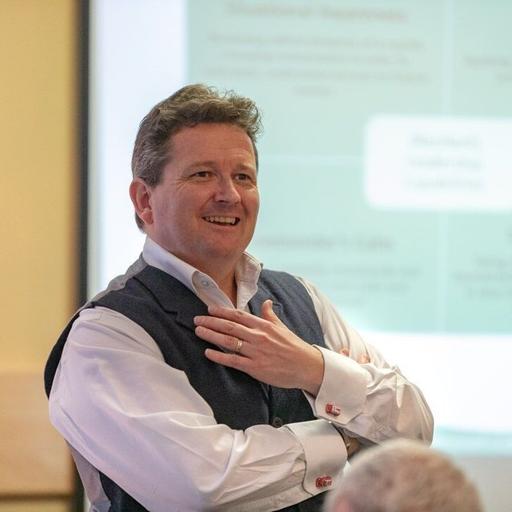
The Resilience Coach | Resilient Leadership Expert
100,000+ People positively affected6,000+ Executive coaching hours£12M+ ROI delivered by RWE npower leadership programme20+ years Learning, leadership and organisational development
Russell Harvey is The Resilience Coach - a resilient leadership expert, executive coach, facilitator and keynote speaker who helps leaders and organisations perform at their best when the world refuses to stand still.
With more than 20 years in Learning, Leadership and Organisational Development, 6,000+ hours of executive coaching and over 70 published podcast appearances, Russell is an experienced and engaging voice on resilience, leadership and navigating persistent change. He has worked with leaders across organisations including Novartis, the NHS, AB World Foods, Kerry Group and The Co-operative Group.
Russell’s work goes beyond helping people simply cope with pressure. He believes true resilience isn’t about “bouncing back”, being tougher or pretending everything is fine - it’s about springing forward with learning and becoming better equipped to lead because of the challenges you’ve faced.
His approach connects the human side of leadership directly to what matters to organisations: engaged people, stronger cultures, better decisions and improved performance. His work has delivered measurable results, including a leadership programme that returned £12 million to the business and a Resilient Leader Programme that achieved more than 1,100% ROI.
In August 2025, Russell achieved his long-held purpose of positively affecting 100,000 people.
More from Russell Harvey
All episodes → Living the Dream with CurveballSpringing Forward: Russell Harvey's Insights on Building Resilience and Embracing ChangeNov 2026Play episode →
 Transformation Station Leadership PodcastTSLP Season 5 Ep. 26- Thriving Is A VerbNov 2026Play episode →
 Embracing Digital TransformationHow to Build a Resilient Team Without Toxic PositivityNov 2026Play episode →
 An Evolving Man PodcastReal Resilience: Why Pushing Through Isn’t Enough | Russell Harvey | AEM #172Oct 2026Play episode →
 Leadership From The Heart | Transformational Leadership InsightsResilience Without the Rebound | Leadership Mindset ShiftAug 2026Play episode →
 Burnout Proof Leadership: Identify Shift and Leadership Skills for Midlife Women EntrepreneursEssential Leadership Skills You Must Have If You Want to Build Resilience & Avoid Burnout When Your Business Gets Hard - with Russell HarveyJul 2026Play episode →
 Your Career JourneyHow to Build Resilience at Work: Leadership, Change & Thriving in Uncertain TimesJul 2026Play episode →
 The ThriveWell Journey | Entrepreneurship, Leadership & Life After DisruptionHow to Build Real Resilience Under Pressure | Russell HarveyJul 2026Play episode →
 Future Fit LeadershipThe 2030 Leader: Why Resilience is Your Most Vital Skill with Russell HarveyJun 2026Play episode →