
December 2, 2025
Mastering Resilience with Russell
Listen
Sound bites
I really invested in the resiliency piece, and then all the stuff I was looking at with a colleague around the VUCA piece.
Where you start is discovering what your natural energizers are.
In this episode
Russell Harvey talks about resilience, leadership, and how to build confidence by understanding your strengths and natural energy.
- A childhood interest in human behavior led into a long career in learning and development and eventually The Resilience Coach.
- The VUCA idea helped frame responses to difficult business change and uncertainty.
- Resilience works better when people reflect, adapt, and look at what is helpful rather than just being told to be resilient.
- Natural strengths and energizers can support goals, confidence, and sustained progress in work or exercise.
- Starting with what energizes you can reveal where you are in flow and how to bring that into leadership or fitness goals.
Transcript
ShowHide
Automatic captions of the conversation. They can contain errors and do not name who is speaking.
Welcome to the Incite Change Podcast brought to you by Incite Coaching and hosted by Coach Mauro. Listen to health industry professionals and people like you discuss their fitness and health journey. Real people, real stories, real inspiration. Hello, everybody. Welcome to this week's episode of the Incite Change Podcast. This week, we have Russell Harvey with us, The Resilience Coach. I'm excited to have him aboard here today. Welcome to the Incite Change Podcast. Thank you, Mauro. Lovely to be here. Looking forward to our conversation and seeing where it goes.
I'm excited as well. I'm always excited when a guest gets recommended to me. I said, hey, how does this fit the audience? And when I started diving deep into your profile and such, I was very excited about the resiliency component because that has so much impact on whether people achieve their fitness goals as well, their health goals for a lot of people. So I'm excited to bring that aboard. So before we sort of dive right into it, I'd like to introduce you a little bit better, Russell. Tell the audience a little bit about yourself.
Thank you very much. So yes, since a child, I've been interested in human behavior, essentially about how come we do the things we do, and how come we don't do some other stuff that we're supposed to do. That's always fascinated us. So when I was a kid growing up, people would say to me, your career, Russell, should be in either sales or personnel. At the time, both of those made my stomach churn and made me feel a bit sick. I thought, I don't want to be a salesperson and I don't want to be in personnel. But low and a hold, I'm in personnel because I'm in learning and development, you know, essentially, and one has to sell oneself, essentially.
So yeah, ironically, that's what I'm doing. And so most of my career in learning and development, I was traveling around the world in 1996, my lovely girlfriend, now my gorgeous wife. And I was teaching in Hong Kong. And there was some magic that was happening in the room. I didn't know what it was, but I'm going, there's something brilliant that's happening here. And it transpired a bit of reflections a little bit later as I go, ah, people learning, people having light bulb moments, people going from confused face to, ah, I get it now.
That did something to me. That gave me a nice positive zap to my heart, essentially. And what do you know what? I want to do that for a living. But I know I don't want to be a teacher in a school, in a classroom. That wasn't what I envisaged to myself. It's a brilliant profession, but it wasn't for me. So then when I came back from traveling, I went to recruitment agencies and said, I think I want to be a business trainer. That was all I could describe it at the time. And this is, you know, decades ago now, cause I'm like 112, Mauro.
I look good for me age, you know? And so that's decades ago. And they sort of said, oh, what are you qualified in? And what do you know? And I went nothing and, and out, essentially. And so I took a sales job. But then I did all the training and then got a training manager's job. And then my whole career then is learning, development and how The Resilience Coach came about is that my last permanent role was at the co-op group in Manchester. And I was part of a big leadership development team. And not long after I joined some really difficult, challenging, exceptionally difficult business challenges came along.
And everybody that I was supporting counted with their head in the hands and went, Russell, what do we do? It's literally, I don't know. I said, well, funny enough, I've been looking at this word resilience. And there's this model as well called VUCA, V-U-C-A. And I went, all our answers are in there. Okay. How are we going to face to it? All of them are in there. And so there was there for about four or five years of the co-op group. And then I knew that I would be moving on because there was so much change and restructures and then the timing felt right.
And a little over 10 years ago to set up The Resilience Coach because that's what I've been doing. So how to lead yourself and others really well in a full on mad bonkers crazy world is my specialism, essentially, and that's the story. A little bit of point on the VUCA there. It sounded almost like you're bluffing when you brought it in, but did you know all about it? You knew it was the right answer? Yeah, it was just because I really invested in the resiliency piece, and then all the stuff I was looking at with a colleague around the VUCA piece.
Are you familiar with that terminology? I think I've come across it, but not yet. Yeah. So why I like it is everywhere we go, I walk into a room and can be like five people or a thousand people in it, and I'll go, change is constant. Everybody will just nod. Exactly as you are now, people will just nod. And I go, yeah, but we now need to explore that sentence, you know? And the VUCA model, which is just eight buzzwords I'm going to throw out there. So they're buzzwords, you know? So the world we live in is volatile, uncertain, complex and ambiguous.
And we need vision, understanding, clarity and agility. And when you look behind the scenes of all eight of those words, there's more information and detail, about our leadership capabilities and peak performance skills to face into it, it can persistently change your world. And they all were linked to what it means to be resilient. So it's just, I've got all of this stuff, research, information to play around with and just tie it all together, essentially. I know you said before we got on air here that the fitness is not your special, physical fitness is not your specialty, but I feel like we can apply that model to this.
So can we work through that, Vukka, quickly? Like just one word at a time, I guess. Of course you can. Yes. So the volatile is about the fact that the change is you just don't know how much the change is going to happen, essentially. It's the fact that it's going to be happening all of the time. It's the fact that it's crazy somewhere all of the time, and sometimes it impacts you. So it could even be literally you've made the plan, you've made the decision to go and do a workout or do part of your plan, and the universe will transpire to knock you off course, essentially.
So uncertainty is that we are absolutely, we are unclear about how things impact each other, okay? So we might not be sure about actually whilst I'm feeling good, trying and having a go at doing something, I'm not really actually sure about what's impacting my ability to do something or not. Complex is just, that is the case. It's like, the world is complex essentially. And what was the, Vuka, so what was the A? That's a test now, Mauro. Can you remember what I said? Multile and certain complex and agile. Was it agile?
That was the other one. So ambiguous. Yeah. So our lack of understanding how something relates to something else, ambiguous. So the solutions for that are vision, which is foresight. It's our eyes. It's not a vision statement, it's what can we see? So it's our situational awareness around us essentially. So what can we see that might get in the way? What are we aware of in our environment that may help us or hinder us or get in the way or knock us off course? And understanding is actually about emotional intelligence.
So we have to understand that we need to feel comfortable feeling uncomfortable. We have to be okay with the fact that we're going to put ourselves in stretch or going to put ourselves outside of our comfort zone. And it's like, how do we face into that? And the clarity is in a completely uncertain and crazy world. It's actually sometimes understanding the only piece of clarity that we have got is that there is none. There is no clarity. It's like we're clear there isn't any. Sometimes that's all you've got. Other times it's boundaries.
And then the agile piece is absolutely about making quick decisions because we have also worked on our adaptability, which is a massive link to the resiliency piece, that when we're being agile, we can make quick decisions on changing course. I like this. I think as I look into a little bit more detail, I want to start applying it to people because as we said, resiliency is such a big part of people making changes in their life. Yes. And that is physical, that is emotional, that is mindset. That's all of this. In your case, a lot of time it's leadership and it's personal growth.
But as I said to you before, I think we can apply this to even people's personal changes. Absolutely. Yeah, completely. We can. So I define resilience as springing forward with learning. I'm not a fan of the term bounce back because, so you're nodding away there, yes. So that's the fact that most people go, right, I will face into a difficult situation. I'll face into it and I'll now bounce back, which is a bit of a subconscious instruction to go back to how they were. Yeah. And I'm going, man, you can't go back. You know, I'm going, what did you learn?
How are we going to move forward with learning about all of the things that enable you to be resilient, essentially? I like, I noticed that your selection of words, it comes back to ML, MLP, and I know that's one of your things. You said that exactly. To say the word bounce back, it's like almost giving yourself that out to go back, right? And I think that's why you said you don't want it to be that way. It's the NLP influence here. Yeah, it is. So words and phrases and language, they've always fascinated me. And yes, when I did, I think when I did my NLP many years ago, it was like, oh yeah, actually, and it's come even more to the fore.
So I do notice that I notice language. And then actually, what does that do to our mindset and our behaviors and our instructions? I am, I'm absolutely fascinated in what it is that drives what we actually do or don't do, behaviorally, essentially. And some of my clients will sometimes get upset because they'll make jokes about themselves and they're sort of derogatory jokes. And I always say, this is not the way to approach yourself because it's almost like you're setting yourself up for failure to identify what this derogatory terms that you have here.
Yes. And so the specific link to that around the resiliency pieces. So there's all that VUCA stuff. And then what I also talk a lot about. So if anybody asks me the question, so Russell, how do I build my resilience? I go, there's a resilience wheel. So on my website, got seven bits to it. It's built upon research that was put into the world for free from Robertson Cooper. And I've added a couple of bits to it. And one of the ones I've added to it is exactly this about our self-talk. So I've got an aspect on the wheel there, which is called meaning, which is the meaning we attach to life's events.
So if we, it's always noticing how we are answering the question, how are you? Or how was your day? How was that workout? How is your training plan going? How is this meeting going? How is such and such project going? And it's just noticing how you answer that, because that's an immediate opportunity to put muscle memory and belief systems and levels of confidence inside yourself. So it's noticing how you're doing it and giving you an opportunity to reframe it back to the NLP stuff. I found that when I first heard about it, maybe 10, 15 years ago, I wasn't totally sure how it could apply to what we do here, or what I do here.
The more and more that I see it come up, it's every day how you're speaking to yourself, and the words you're saying, it's how you are identifying. I think it's such an impactful part of change. Yeah. Your self-talk, it's for me, so all of the aspects of the wheel are interlinked. So the heart of resilience is attitude. So a significant chunk of how we talk ourselves is going to impact our attitude and our mindset and our belief systems. So the thing around belief always fascinates me as well. So the dictionary definition of belief is something that we behold to be true without basis in fact.
Okay. So it's like you say something, I believe X, Y, Z, and then you got to be open and curious to go, well, is it true? Is it something that you've just gathered along the way? What's your criteria? What's your evidence? What's your proof? What's your reasoning? What are your examples about how come you believe this? Essentially. So yeah, challenging people's belief systems about themselves is a really interesting space to be. Yes. I guess I want to use an example, how you go through your resiliency wheel, right?
When somebody is maybe telling themselves that they're putting all this effort forward and they're not moving ahead, they're not seeing the results they want to see, how would we apply the resiliency? So if you're not seeing the efforts that they want to see, in a coaching sense, that may very well be about the goal they've set themselves, which could also be aligned to their purpose. So having a purpose is one of the dimensions of being resilient, and purpose is a little larger, a little broader, a little bit more out there, and our goals enable us to achieve the purpose.
So if somebody is saying, I'm putting all this effort in, but I'm not seeing what I expected to see, then for me, that's an opportunity about revisiting the conversation about what were your expectations, and how realistic were they, essentially, and what was your understanding of all this effort that you were about to put in, what's your understanding of what results it was actually going to give you, and did you make some assumptions about those that we've not explored? But that's where, once again, it's the spring forward with learning.
So it's like, do something, pause, reflect against the resiliency wheel, spring forward with learning to go, which would be exactly that, some of your remote role modeling, it would be going, putting all this effort in, it was not working for me. Hmm, okay, let's pause, let's reflect about what were my expectations, and actually, do you know what, I need to readjust them, or I need to rethink how I was viewing what all this effort was for. Mm-hmm, mm-hmm, it's interesting because sometimes that, the belief that they're going to see a large change is what helps them to get started and moving.
But then at some point, you come to this space, this almost reality where it's not happening, maybe as quickly as you want it to happen. And this is where I see the resiliency piece really coming back into the fold. Yeah, completely. And there's lots of different ways that you can look at it. There's also the potentially the word optimism as well is something that I always talk about because I'm not a believer in toxic positivity or toxic resilience, you know. So quite often it's a case of how optimistic are you still, given what's happening, how optimistic are you still?
And that's about the fact that optimism is grounded in reality. Essentially, so having an okay conversation about your reality and the understanding of your reality is useful, but also what's part of your reality is what's good about you, what's right about you, what are your experiences, where have you done this in the past, what's your strengths, your skills, your behaviors that are going to take you forward, and when you build those up enough, then you get hope, genuine feelings of feeling positive. And all of that can challenge people's belief system.
But the other part of it, though, is really, one of the other aspects of the wheel is the energy word. So quite often people don't harness their natural strengths well enough. And so in terms of taking a plan of approach and plan of action to get into an endpoint, it really is actually harnessing their fundamental natural strengths, natural energizers to get there. Because we quite often find that we are using, utilizing things that don't give us natural energy. So we'll be tired before we start, essentially. Okay.
So it's almost like you're entering into it without enough energy, enough, I guess, bandwidth. Yeah. Yeah. So it's like I use a psychometric called strength scope. So there are clever people and I, 24 strengths and you can't be energized by all 24. So some examples of the 24 are detail orientation, strategic mindedness, compassion, empathy, critical thinking. That's some of the 24, essentially. And understanding how you are harnessing those strengths to achieve your plan, or your goals, or your aims, or your purpose is going to enable you to keep going with your beliefs.
Because plan to your strengths builds natural confidence, which is another part of the wheel, and natural overall resilience as well. So people are often finding that their approach to their activities or their outcomes, they may not be harnessing their natural strengths well enough. And you mentioned toxic resiliency before, does that apply here? If we define that, what's toxic resilience? Well, yeah. So if anybody says to you, so if we're having a conversation and I said, so Mauro, I'm struggling a bit with how I'm doing things and results I'm getting.
If you suddenly said to me, essentially either with an actual finger pointing or the words of, okay, Russell, you just need to be resilient. That doesn't do it for me. That doesn't land well with me. That doesn't make me feel good, essentially. Then go, well, yeah, okay, there's no point just throwing a word at me because it's not getting me anywhere. It's in that moment that we need to empathize, pause, reflect, and do some learning and move forward differently because we've adapted, essentially. It reminded me of, I don't know if you know David Goggins.
Do you know David Goggins? I don't think so, no. This guy got super popular because he went from being 300 pounds to going down to 150, becoming a US Marine. He had failed out of the Marine Corps two or four times, became a ranger and all this other stuff. He started becoming very fingerwaggy, if we could use a word. It was really interesting how that came about. Yeah. And I suppose it's like, you know, you've got, yeah, you do, you have just have so many people out there have got some brilliant experiences. Then it's all the way back to how they present it.
And for some people, it works really well about, you know, that slightly more sort of vocal loud, you know, come this way. This is what I've learned. This is what you've got to do. This is what works. And that doesn't work for everybody, essentially. Exactly. Everyone has their own approach, I guess, their own style. Yes, they do. They do. They do. And in terms of resiliency coaching, do you majority working with business people or is it a mixture of people of their own? So it is, yeah, it is business people. So it's business owners and that can be any size of business.
I mean, and generally speaking, you know, when I do the, you know, elevator pitch, it's like ideal clients of people who've got the job title of director of or head of, essentially. Okay. Okay. Are they people leaders usually? Yeah. Oh yeah. People leaders. Absolutely. Yeah. That's the space I'm in about, you know, what does it really mean to be a resilient leader? As in, you are demonstrating for yourself personally, from a leadership point of view, and you are building and growing and nurturing a resilient team. So I'm of the opinion, if you know, resilient humans equals a resilient organization.
So it's like, okay, so what on earth does that mean for you specifically, essentially? So yeah, there's been a, there's the real mixture of, it doesn't matter what industry that it is. And yeah, individuals, teams and organizationally is what I support. Exactly about, okay, so how are we going to individually and collectively lead ourselves? Well, in this full on changing world, let's harness it for you specifically in terms of what it means. And so it's usually people leaders, right? Do you feel like the sort of individual level employee or people, let's say, in, you know, we're just working on themselves, maybe making some self-development.
You feel like it's just as helpful for them, or do you feel like it's more geared towards the executives? No, it's for both. So the resilience wheel that I'm talking about, I always say, look, anybody in any walk of life can use this resilience wheel for their personal resilience. Yeah, that's anybody. Then it's a case of, and you can also apply it to leadership, essentially, and you can apply it to a team, and you can apply it to organization. So the lens that you look it through, you can look it from all these different areas essentially.
So people can look at it and do a self-assessment really and just go, which aspect of my wheel is already in a good place, which could be slightly better, and then okay, then I'll reply it to what on earth does it mean to be a leader? Because, so you only need one purpose, Mauro. It's not like confusing yourselves, but I say to certain individuals in a leadership event, I'll say, look, you only need one purpose. However, to help you define it, my question for you is, what's your personal purpose? Then I've got an additional one to go, what's your leadership purpose?
And then what I invite you to go and do is, I invite you to lead a conversation with your team about what's the team's purpose, yeah? And then, so it's not about having three, it's just go, go have this conversation in three spaces. And you, from an individual point of view, will crystallize a singular one for yourself, that you can apply whole life, essentially. And resilient people have a purpose, essentially. Yes. And so if someone's interested in, I guess, learning about that and figuring it out for themselves, you said that on the Resilience Coach website, .co.uk, they can find...
Absolutely, yeah. So there are, yeah, and there's, you know, there's a podcast episode on each aspect of The Wheel, Mauro. Really? Oh, okay, that's really cool. On the, just on the home page of my website, and The Wheel is on there as well, and like hundreds of blogs and things like that. So yeah, so they're on there, that's how they can learn about it, essentially. Am I correct to assume that there's eight episodes now? So there's ten, because, you know, we did one about what's resilience, then we did one about each aspect of The Wheel, so there's seven bits of The Wheel, then we did one about resilient leader, and then we did one about just a deeper dive into resilience and change, because it's just like, oh yeah, let's, you know, tens around number, essentially, so that's what we did.
Is there a book in The Wheel? There isn't at the minute, but there's a lot of people asking that question, you know, that there's enough content there for a book, there is. It seems so, yeah. Yeah, there's definitely enough content in there for a book, and it's just then that's like, you know, do people want, need another one, but that's all the way back to the marketing speak of like, well, Russell, you know, if you do the marketing right enough, everybody will buy the book. Yes, exactly. And I think, like you said, you evolved into this role.
This wasn't something you anticipated in the first place, so maybe that is the next evolution. Yeah, and this, there's 20 years worth of like, experience in the real world and personal experiences around this. So, you know, I've been made redundant six times. So, you know, I'm not just talking about it from like, you know, I've read a book and now I'm talking about it. It's like, I've got a lived experience around this as well. Yeah. I saw on your bio that you had over 4,000 hours of coaching. Yeah, it's probably closer to six actually.
So I need to update that. Yeah. Update that for sure. Yeah. And also, I don't know if it's come through as well, because I need help from you and your listeners because I need a new purpose, because I had a purpose and I've achieved it. So my purpose was to positively affect 100,000 people by the year 2025. I saw it was like 77,000 or something. Yeah. So the 100,000 has been hit essentially. Yeah. So at the moment, my purpose at the moment is not fully defined. I've literally got business as a force for good. That's what I've got and I need help to hone it, articulate it.
So if anybody that's listening now has got some ideas about bringing that to life more, I'm open to that. So are you saying that you want to work with businesses as a force for good or do you feel like you want to evolve some of the businesses to be more? Both, essentially. Yeah, both. Definitely. I like that. And having all that experience with 100,000 people and all these 6,000 or more hours of coaching, there's got to be some common themes that come up, some things that you've learned by carelessly through other people.
What are some of those lessons for yourself? It's all about the self-awareness. It might be so obvious. I've got a client recently just sort of said, they started to smile as they said it. They said, so I think I'm self-aware. But I suppose we'll find out, won't we Russell? And I go, yeah, we will. We'll find out essentially. And I'm still working on my self-awareness as well. So finding a way that's interesting and enjoyable for you to just keep playing around with your self-awareness is absolutely really useful. And I know I've mentioned it a little bit, but I just have a massive firm believer in the strengths-based approach.
That the amount of clients that I've had, that have taken their strengths-based psychometric and they get, it's another circle. It's a wheel that it's, yeah, it's just, there's wheels of blaze matter, yes. And so, so many of the clients will look at their results, and their eyes most of the time are drawn to the result that they are defining as the lowest and therefore needs to be worked upon. And so they go, I suppose my homebustle is to work on it. And I go, no, tell me, tell me about it. It's like, well, I hate it.
You go, well, why would I ask you to do it? It's like, it doesn't, so I see your homework. These things that you love doing and you're good at, I want you to do more of those. And so many clients just go, well, my mind is blown. Well, this is good. I'm liking this. Right. And they go, and we will put strategies in place for the other stuff. So self-awareness and the strengths-based approach. And I mentioned it before the optimism piece as well. So let's dive into this strength-based just a little bit, because I think what you're referring to is that instead of working on shoring up your so-called weaknesses, just do what you're good at and get really, really good at those things.
Yes, absolutely. Yeah, that's it. And in a nutshell, because it builds natural confidence and natural resilience, is to go, I really enjoy this. I get good results from it. I'm smiling. I'm happy. I'm enthused and I'm in a good place. And you go, yeah, all right. Self-awareness, that that's you at your best. What are the other ways and places in which you can do that? And then the next bit is to go out of everything that you've got in front of you. How can you harness some of those strengths into those areas you find a bit more challenging?
And actually, where you are not able to utilize your strengths in certain situations and can't delegate it, what strategies are you going to put in place to just manage yourself in those moments? That's the secret, having the strategies and the tools, or maybe even other people in place to support you in that. This is it. Have a great team around you. It's things that get said all of the time. And if we can just shore up the optimism piece, if we can speak about that in a little bit more detail. What's, I guess, your individual learning on that one?
So it requires that the learning around that one. So from a leadership point of view, for a leader, they need to be able to role model optimistic conversations with their team. So this is a, it requires emotional intelligence, understanding how energized they are by compassion and empathy, because it does, it's good to have those two, but not everybody, they're two of the 24 strengths, and not everybody's energized by them. So understand where you are there. And it requires really good coaching skills as well. So that whole bucket of skills in coaching to be able to hold an optimistic conversation.
So it's about being okay with talking to your team about, tell me what's going on for you. You know, tell me how you are, tell me what some of the, you know, worries and concerns you've got, something that's not quite right, you know, or if we know that a change is coming, you know, how clear is it to us, the size and the scale of the challenge, you know? And if anybody has that we're talking about, that is starting to go, oh god, oh, blimey, oh, I'm a bit frightened, boss. You hold that conversation well, you know?
You allow it space and when you get more practiced at it, it's not a conversation about going into a downward spiral. Okay? It's about holding it. Yeah. Holding the space for that conversation and not allowing it to get. And then, sorry, alongside that, what is also grounded in reality. So at the same time, you're talking about what's going on for us. You're also saying, well, let's explore what's good about us, what our strengths are, what's right about us, our experiences, our behaviors. We collectively as a team, how can we face into this?
And then when you bring that more to the fore, people will start to go, oh yeah, I'm feeling hopeful. I'm feeling positive. It's like, yeah, we've talked about the size of the scale. The size of the scale of it is just the same as it was before, but I've now got hope. And that's optimism. That's important. Yeah. Yes. Yeah. And that helps you sort of to become more resilient, as you were saying, and bounce back, but you learn, spring forward with learning. That's the one. Yes. Yes. I really like that one. And I want to double check here, Russell, that we've spoken about everything that you wanted to speak about today.
Yes. I think so. Yes. I suppose the only build upon, so to role model, springing forward with learning, what that looks like is that an individual makes the choice on a regular basis from all of life's events to pause. Okay. And a pause includes going for a walk, a pause includes spending time with friends, a pause is actually holding an optimistic conversation with your team or a colleague, and a pause is also literally, you know, staring into space. That's a pause. Yeah. And in those pauses, people ask themselves three questions.
What have I been doing behaviorally recently that's been serving me well? What have I been doing behaviorally recently that's not been serving me well? And how do I do more of the behaviors that are the answer to the first question? Essentially, and those reflections are against their resilience wheel. So what's the behaviors that I've been doing? Where have I been demonstrating the behaviors that have been useful? And where have I not been, you know, what behaviors I've been doing that have been unhelpful for me in this moment in time?
So that's how you role model springing forward with learning. I like that. And I think there's definitely somebody listening in today and they want to know more. They want maybe to build up their resiliency. And I want to just leave them with, where should they start? They finished listening to this conversation today. Where should they start? With their strengths, Mauro, with their strengths. So, energy. So, it's literally reflecting upon. You can either look back or you can look forward. So, it's like if they were looking back to go, so, let's imagine, you know, Monday to Friday, where were you enthused?
Where were you energized? Where were you in flow? Where were you enjoying yourself? And where were you not? Or you can go, right, imagine you look to your diary a week ahead. What are you looking forward to? And what are you not looking forward to? And all of those are clues to your natural energizers. So, where you start is discovering what your natural energizers are. And you go, actually, I really like that, and I'm good at that. And you go, right, how do I then bring that into either my leadership journey or my exercise journey?
Essentially, to go, yeah, actually, that gives me energy and enthuse and I'm good at that. So, how do you then harness that? So, that's where you start. I would start with being clear about what energizes you and what your natural strengths are. And is there a workflow that you can maybe find on the website or is that just something that you, as you said, just a reflection? So, I mean, so officially, if somebody wants to do it, it's so I'm not affiliated to them. I don't get extra, sorry, strength scope is the psychometric.
I use it, so I'm qualified to use it. But, and so if anybody wants to do it, get in touch and we can come up with a reasonable fee to sort of go, right, let's do your strength scope and let's do a feedback on it, and actually identify sort of what you need to do next around it, essentially. Perfect. I mean, leading with that strength is very important. I think that's something that people can go with right away as they come off this conversation. I want to thank you, Russell, for coming on to this episode of the Incite Change Podcast and supporting us with everything you do with your Resilience Coaching.
Thank you. It's an absolute pleasure to be here. Thank you so much for having me on. Have a great rest of your week. Thank you for listening to today's episode of the Incite Change Podcast hosted by Coach Mauro. You can find the show notes and all mentioned links at www.healthyinsight.com/incitechangepodcast. Make sure to subscribe to our podcast, rate and leave us some feedback. We appreciate you listening and trust we succeeded in our mission to insight motivation, insight passion, insight action, and insight change.
About Russell Harvey
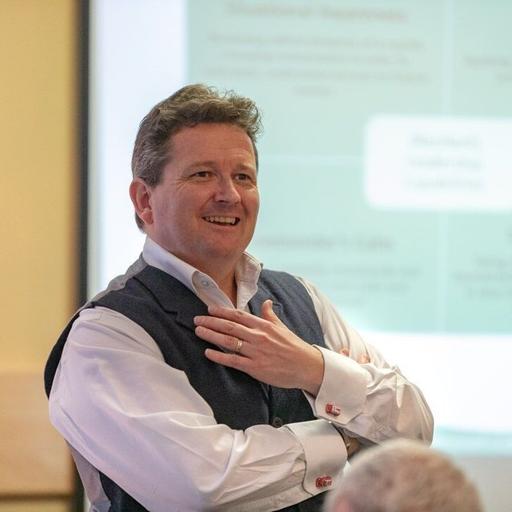
The Resilience Coach | Resilient Leadership Expert
100,000+ People positively affected6,000+ Executive coaching hours£12M+ ROI delivered by RWE npower leadership programme20+ years Learning, leadership and organisational development
Russell Harvey is The Resilience Coach - a resilient leadership expert, executive coach, facilitator and keynote speaker who helps leaders and organisations perform at their best when the world refuses to stand still.
With more than 20 years in Learning, Leadership and Organisational Development, 6,000+ hours of executive coaching and over 70 published podcast appearances, Russell is an experienced and engaging voice on resilience, leadership and navigating persistent change. He has worked with leaders across organisations including Novartis, the NHS, AB World Foods, Kerry Group and The Co-operative Group.
Russell’s work goes beyond helping people simply cope with pressure. He believes true resilience isn’t about “bouncing back”, being tougher or pretending everything is fine - it’s about springing forward with learning and becoming better equipped to lead because of the challenges you’ve faced.
His approach connects the human side of leadership directly to what matters to organisations: engaged people, stronger cultures, better decisions and improved performance. His work has delivered measurable results, including a leadership programme that returned £12 million to the business and a Resilient Leader Programme that achieved more than 1,100% ROI.
In August 2025, Russell achieved his long-held purpose of positively affecting 100,000 people.
More from Russell Harvey
All episodes → Living the Dream with CurveballSpringing Forward: Russell Harvey's Insights on Building Resilience and Embracing ChangeNov 2026Play episode →
 Transformation Station Leadership PodcastTSLP Season 5 Ep. 26- Thriving Is A VerbNov 2026Play episode →
 An Evolving Man PodcastReal Resilience: Why Pushing Through Isn’t Enough | Russell Harvey | AEM #172Oct 2026Play episode →
 Leadership From The Heart | Transformational Leadership InsightsResilience Without the Rebound | Leadership Mindset ShiftAug 2026Play episode →
 Burnout Proof Leadership: Identify Shift and Leadership Skills for Midlife Women EntrepreneursEssential Leadership Skills You Must Have If You Want to Build Resilience & Avoid Burnout When Your Business Gets Hard - with Russell HarveyJul 2026Play episode →
 Your Career JourneyHow to Build Resilience at Work: Leadership, Change & Thriving in Uncertain TimesJul 2026Play episode →
 The ThriveWell Journey | Entrepreneurship, Leadership & Life After DisruptionHow to Build Real Resilience Under Pressure | Russell HarveyJul 2026Play episode →
 Future Fit LeadershipThe 2030 Leader: Why Resilience is Your Most Vital Skill with Russell HarveyJun 2026Play episode →
 Different thinking for Different Time - Mindset Change and Thought LeadershipDifferent Thinking for Different Times - 7 Keys to Building Resilience with Russell Harvey How to Nurture a Resilient Mindset in Business and LifeMay 2026Play episode →