
January 29, 2026
Resilience Isn’t Optional: Tools Every Nonprofit Leader Needs Now (Russell Harvey)
Listen
Sound bites
Delegation is a conversation. Delegation is the F word Patton, which is feedback.
In this episode
Russell Harvey and Patton McDowell talk about resilience for nonprofit leaders, including how to handle change, delegate well, and use practical frameworks like VUCA and the Resilience Wheel.
- Resilience is treated as a human quality, not just a leadership buzzword, and worth revisiting in today’s world.
- The same resilience framework applies across nonprofit, public, and private sectors, but the application changes by person and organization.
- Delegation depends on emotional intelligence, empathy, compassion, and quality feedback, not just task assignment.
- Delegate brilliantly to people’s strengths and remove blockages when performance is being held back.
- A leader’s job includes supporting a team through change, understanding strengths, and making decisions about roles and responsibilities.
Transcript
ShowHide
Automatic captions of the conversation. They can contain errors and do not name who is speaking.
Welcome to Your Path to Nonprofit Leadership, the go-to podcast for current and aspiring leaders in the philanthropic sector. I'm your host, Patton McDowell. I'm delighted to bring you resources and ideas you can put to work right away. Now, if you are listening today, there's a good chance you are carrying a heavy load. Nonprofit leaders do a lot with a little, and of course, you're now dealing with increasing amounts of change. It's constant. Expectations keep rising and the pressure to respond quickly can make it hard.
And I get that. And while the term resilience is often talked a lot, it usually is a pat on the head kind of phrase, like, well, just be more resilient. And you're not really given tools or ideas how to address this vague notion of resilience. You know, that's why I really enjoyed this conversation with Russell Harvey. He's the founder of a practice called The Resilience Coach. He's based in Leeds, England. And we had a great conversation about the work he's doing with leaders like you and teams that work across sectors, both for-profit, non-profit and the third sector.
And he helps them with what he calls a full-on worldview that is adaptable to constant change. He has a very interesting framework. He calls it the VUCA, the VUCA Framework, Volatility, Uncertainty, Complexity and Ambiguity. And he gives you responses as to how to deal with each of them. He also shares a tool he calls his Resilience Wheel. It's a practical framework that you can use to strengthen yourself against all of this change I know you are dealing with. If you felt stretched thin right now or have in the past, this is a conversation for you and without further ado, please enjoy this discussion with Russell Harvey.
Russell, thank you for joining me on The Path. Thank you, Patton. It's great to be here. Really looking forward to our conversation. As am I. You have had a wonderful experience, a global perspective literally, into nonprofit leadership, leadership in general, but we'll talk about, of course, the NGO or nonprofit sector in particular. So, you amongst your many fine writings and other publications, you talk about resilience is the most critical quality for nonprofit leaders. Why is that? Well, not just for nonprofit leaders, but for all leaders and essentially all humans, because what does it mean to be resilient actually means what does it mean to be human?
And I think we just need to revisit that question, and everything that's happening in the world today, we just need to revisit it. So to be resilient is to be human. And if a leader can actually spend a little bit of time going, hmm, what does that mean to me? I just think that's really important for them. I'm glad you're raising it. And we've got listeners nodding their head that they are practicing resilience. I think it's best they're able. You're going to help them do it even better. I hope so. Yeah, I definitely hope so.
Yeah, yeah. How did you get into the coaching consulting space around resilience? So the short version, I think ever since I can remember as a wee child, I've just been fascinated by human behavior, what makes people tick. So that ultimately meant through a few different paths, a bit of traveling, I realized that actually I wanted to be a business trainer decades ago. That's what it was called. I was traveling around the world in Hong Kong and had a few lightbulb moments. And then so came into the corporate world and sort of said, hmm, what does that mean, business trainer?
And then it was like, you know what, it's coaching. Do you know what is learning and development? Well, do you know what? It's coaching and facilitation. So literally, I am a coach and a facilitator, Patton. It's who I am. It's what I do. And then the resiliency piece came about 13ish years ago at my last permanent role, where the business I was supporting, the world fell on its head. Essentially, all of its leaders came to me head in the hands and go, what do we do, Russell? And I've already been looking at this resilience word, and I've been looking at this VUCA acronym, and I went, all our answers are in there.
So my specialism is how to lead yourself and others really well in a full on mad bonkers crazy world. I can't wait to unpack that, Russell. It's a fascinating framework and helpful and practical. But you make a good point, I guess for your resilience coaching, and your practice is called The Resilience Coach, right? Yes. Are there differences between working for the nonprofit leadership that you do and the corporate? Or do you find the framework is the same? So, well, the framework is the same, but then the application of it to the individual and the system and the organization is different.
So you got private sector, public sector, non-profit, third sector. So, you know, there are always some similar challenges, you know, essentially around in who are we and why are we here and what are we doing and how do we get to our end point. But then the application of it, the nuances in actually in our industry or our sector, there's some extra layer of challenges around this bit. So third sector has this, private has this, public has this. Essentially. If someone wants to work with you and The Resilience Coach is, I'm assuming in one-on-one executive coaching or team coaching, talk about the programs and services you offer.
Yeah, so it's both. It's one-on-one coaching leadership. You know, I'm essentially senior leaders, people that are business owners or job title of director of or head of or CEO, one-on-one, but then actually work with the teams. And then it's also working across organizations as well. So, in terms of the framework of, which I'm sure we'll go out to, of the Resilience Wheel, which I'll talk about, that can be applied personally, leadership, team and organizationally. So, it's just like, which bit do we need to go at?
I'm sure our listeners are going to want to learn more about you and from you as a result of this conversation. So, I'm glad. And let's break down the VUCA Roadmap. You teased it to our listeners. You reference it. What does it mean and why is it relevant to a non-profit leader? So, the reason I like it is that everywhere I go, I quite often walk into a room and go, change is constant. And the room does exactly what you're doing now, Patton, which is they start nodding. Nodding. And I go, right then, we need a better way to talk about those few words of change is constant to really bring it to life.
So, I like the VUCA framework. So, it's not mine. It's got military context to it. It came into the business world in the 1990s. And I just still think it's still valid. So, I'm going to throw eight business buzzwords out there right now. Okay. They're just buzzwords. Okay. So, there's VUCA. So, the world we live in is volatile, uncertain, complex and ambiguous. And people keep nodding. They go, yeah, you're right, Russell, it is. And they go, right, okay. So, what we need to do to face into that as a solution is we need vision, understanding, clarity and agility.
And behind those is lots of descriptions. And behind those are peak performance skills and leadership capabilities and they all relate to, what does it mean to be resilient on the resilience wheel? So, there's just all sorts of things to play around with and make connections with. So, yeah, it's a way of really understanding as a leader and a team individual. This change is constant, what it genuinely really means. And those eight words then start to bring it to life. It's a fantastic framework. So, kind of in parallel, right?
The challenges on one side, the solutions on the other. Because, and let me start with volatility or whatever variation synonym that someone is feeling and nodding. Yes. We all want to react kind of spontaneously. We want to impulsively respond. And I guess you would counsel us maybe not to do so. But talk about that natural reaction and what do we do about it? Yeah. So, you've got your volatility and the vision. So, the vision is literally our eyes, our foresight. What can we see happening around us? And that's about sort of the collation of information.
So, it's a case of, imagine you're sitting around as a leadership team or a team of people, and part of the conversation is, what do you know and what have you heard? And it's not about gossip mongering. It's about, okay, I spoke to Patton or I spoke to Mary or I spoke to Asif, and they said this was going on. And somebody else goes, yeah, do you know what? Yeah, I've heard that too. And then it's about the discovery of like, how valid that is. And actually, do we need to go away and just investigate it a little bit more?
So, it's understanding with vision and foresight and looking around us, what might be the next thing that's going to come along and sort of bite us on the backside, essentially. What do we need to be aware of? What do we not need to think about for now? But behind all of that, then, is also a lot of skills around decision making, critical thinking. And we aren't all naturally energized by those, essentially. We have varying levels of this. We have to understand then the human strengths and skill sets around those individuals that are making decisions, options and choices after they've done the vision situational awareness piece.
So stepping back is part of your advice, because again, my urgency is around, oh, everybody wants an answer. I'm not sure, given the volatility, but perhaps, is that what you're saying? We need to step back and pause? Totally. So sometimes doing nothing is the right thing to do. Got it. I just caveated with some people go, I don't like the idea of making a decision, so I listened to a podcast where somebody said doing nothing is the right thing to do. So I'm going to just do nothing for a very long period of time. You don't want to be quoted on that necessarily, right?
So it's like, how does the individual decide when they need to do something or nothing, and when they do the something, what is it that's the right thing to do, essentially? Well, here in the States, as you know, I mean, the federal funding is among the biggest kind of challenges a lot of non-profits are facing, and all of their stakeholders are kind of yelling and screaming, like, all right, what are we going to do? But again, that's where you would apply some of the visioning framework. Let's make sure what is true.
Is that among the advice you would give? Let's first of all make sure we fully understand what's going on. Yeah, so this is where there's some linkage between the resilience wheel, seven bits to it, just a tiny explanation. If anybody asks me the question, so Russell, how do I build my resilience? I go, there's a wheel, seven bits on it. It's on my website, not self-promotion. It's like it's all on there for you to look at. One of the dimensions of being resilient is having a purpose. This is an opportunity to really revisit the purpose of the team, of the individual, of the organization and go, we need to do our decision-making against that purpose, essentially.
Then it's in the circumstances that people are now about funding being taken away or the overarching system that decides a little bit what your purpose is, that's being taken away from you. You now need to revisit your own purpose and what's in your gift. Part of all of that is you're coping with change, you're coping with multiple changes of like, I don't necessarily believe in what has happened around me systematically. Somebody else higher up somewhere differently has made a decision that impacts us all in our value system and my value system is not the same as theirs.
That's all part of change is constant, I need to adapt, I need to be agile. Okay, how do I adapt? Oh gosh, I've now got to adapt to one thing, three thing or ten things. And you know, you literally, the glasses come off and the hand goes on the face. And so the resilient individual whilst engaging with their wheel, they get themselves into a better place to be able to face into all of that, essentially. I'm struck by the wheel as a concept that would bring clarity to an otherwise complex and ambiguous environment. Is that, and maybe you could give us an example or two of what is on the wheel, but it strikes me a leader would be very effective to say, all right, I know it's crazy out there right now, but remember the wheel, but talk about what that is.
Yeah, absolutely. So this is where there's the link issues between the resilience and the VUCA piece. Yeah, so the resilience wheel, seven aspects, is built upon research. So heart resilience is our attitude. So our whole subtle way of thinking and feeling about life based upon our life's experiences and our beliefs, and the one thing that really interests me and I offer up to lots of leaders, that the dictionary definition of a belief is something that we behold to be true without basis in fact. So this is an opportunity to revisit your beliefs, which is hard.
It's the tough stuff, okay? Right, right. But it is the heart of resilience. Then purpose, then how an individual actually enables their confidence. Then there's a lovely word of adaptability, openness to change. Then there's our overall support network and our community. Then there is meaning, which is our internal storytelling. So exactly as a leader is going to stand up in front, what story are they going to tell about actually how they are thinking and feeling about and interpreting what's going on and what we're here to do in our value system.
The final one is energy, which is about our strengths, our natural strengths and skills and harnessing those. Because when you spend time playing to your strengths, you build natural resilience and natural confidence. So that's the wheel, the seven bits to it essentially. I like it. So as a leader, I develop my own wheel or I personalize each of those elements, is that fair? Absolutely. So as an individual and a leader, you do. You just go right, you make the decision and the choice because you can see the value and the benefit for the rest of your life to grow and nurture and enable your resilience wheel.
And you can do it on a personal leadership and a team basis. So you only need one purpose, but it's really interesting to me the number of times when I go around organizations and do it last week when you sort of say purpose, they all go, hmm, hmm, not sure. Can't give you the same answer if you ask individuals. Yeah. So I say to them, look, you only need one. However, I want to go and think about what's your personal purpose. But if anybody in the room is a line manager, you are a leader. So my question to you is what's your leadership purpose?
And they all go, oh yeah. And I go, right, if you're a leader of the team, I'm just curious what's your team's purpose? So I go, it's the same question in three different areas. But go away and play around with it, and you will suddenly find that there's some connectivity amongst them. So you only need one purpose, but you sometimes have to go into different spaces to discover it. And then I said also as well, actually, people are part of a family unit. So I'm not a parent, but I've sort of said, if any of you are parents, just think about actually what's the purpose of your family.
You know, imagine that you're around the dinner table and, you know, the kids say to you, this happened today at school, or this happened to me today. How you respond to that as a parent is from a purposeful value system. Yes. So these are just all opportunities for individuals to reflect upon this and start to get some solidity, some grounding about who they are. And when you've got this solidity, a changing world you feel more okay with. What are the characteristics, and you may have just answered this, of an organization that's struggling?
Is it things like everybody you talk to gives a different purpose answer, or? Yeah, absolutely. When you arrive, what does it look like for an organization that frankly needs help? So on that purposeful one, if I turn up as a stranger and go, so, you know, what are you all here to do? If I start to get a whole host of vastly different answers, or I start to get blank faces, or if somebody turns around and says, I'm just here to do what my boss tells me to do, those are some sort of amber flags for me, you know? So that will be it around there.
And then the lovely question is like, so, how well do you do change around here? I can come along and I can ask these great questions, and I can set rabbits off and throw rocks into ponds all over the place, but then people will start to tease it out and give some consistent answers. So I'm not there to create havoc, but I'm just going, I'm curious, what's the answers to these? And there are some places you go where, no, it's this, we're here to do this, and my role is, and the reason why we're doing it is this. Some of them, when you do that, you go, great.
You've absolutely sorted it. And how do you then face into these challenges? When you've got this problem, how do you all face into it? We do it like this. This is our approach. This is the value and the benefit. This is why we do it. And we understand our role in it. And you go, great. Brilliant. Yes. You've reinforced what I think is an increasingly important characteristic of good leaders in any sector, but is change management, the ability to manage change. And so are you saying a lot of times you'll ask the question, how do you manage change here?
And if they get very defensive or resistant even to the concept, is that something you're kind of looking for? If they can't articulate how we do it? Yeah, absolutely. And I know I'm biased because I describe myself as a leadership coach. So instead of change management, I'll always go and change leadership. Good way to put it. And so over the decade, so I appreciate that there is a difference between leadership and management. We can all sit down and on flip charts and do two columns and put things. I did it last week.
I get it. And then I, but I caveat it with, look, the second that you've got line manager in your role, or if you sign off somebody's holiday, you have immediately become a leader, whether you wanted to or not. Okay. And I said, for me, people are expecting you to do all of these leadership soft skills. And I just sort of say, look, management is included underneath leadership. That's just the conclusion that I have come to and how I frame it. And you're nodding away now, hopefully others when they're watching this, they go, okay, yeah, I'll just say yes.
Yeah, I get the fact that, and you know, there'll be two columns. And then you're thinking about actually, are my natural energies and strengths, are they more on the leadership or the management side? And then the individual will start to sort of go, oh, actually, right, there is, there are these roles and responsibilities, these expectations of me about how I'm going to lead a resilient team through change. This is where I'm good at it, and this is where I'm not. So actually, maybe I need to rethink the makeup of the team and how we're utilizing their skills and capabilities.
You say outstanding leaders, and maybe it's in this context as a change leader, they do three things. Yes. Delegate, remove blockages, and build resilience amongst their team. But why are these things so hard, particularly delegation for leaders? Yeah, absolutely. I've made a slight tweak to those three as well, which I'll come back to after, but I promise I'll answer. Yeah, the delegation, because it's about the soft skills. That's my simple answer to your question, Patton. It's like, because it included in delegation are emotional intelligence, empathy, compassion.
What does it mean to be human? Am I bothered about understanding the humans around me? Have I really worked out what, when we say things like right people, right role at the right time going in the right direction, it's like, do I get that or am I just going that means nothing to me, Russell? Because delegation, it's including it. Delegation is a conversation. Delegation is the F word Patton, which is feedback. Thank you for clarifying. Yes. Saying to somebody, do you know what, this is going really well. However, these behaviors that you're doing here, they're not going as well as we need them to be.
The human race is not very good at providing quality feedback around, this is really useful. These behaviors here, actually, they're getting us where we need to get to, and actually these behaviors aren't supporting us the way we need to get to. So what can we do about that? Then it's really is that language about the I's, the we's and the you's. What am I going to do? What are you going to do? So yeah, high support, high challenge is delegation and it's not an easy thing to do. It's not naturally what most of the human race does.
They need some support with it. You're answering the listener question that I'm imagining is out there now. All right, Russell, I want to be a better change leader. I need to delegate better, but it sounds like you might have changed your big three there. How have you adapted the three things? Yeah, it's a slight tweak and I was talking to somebody and I think they help with it. So I do need to call out somebody's name. I forgot who it is. We can tag them in the show notes if you remember later. Thank you, whoever it is.
So it's delegating brilliantly to people's strengths. Okay. Good point. That's what it is. So the first two are now into one. So delegate brilliantly and removing blockages to people performing are now one. Okay. So to clarify that, you can have the coaching conversation and delegation, but at some point the individual can't perform because you as the leader needs to go fix something higher up. Yeah. So you need to remove the blockages. You need to take ownership and responsibility to go to your peers and go, my people can't perform here because it's broken, and we are more senior and we need to fix it essentially.
So that's removing the blockages to people perform. Sorry to interrupt you, but what would an example of that be? I don't have the tool or technology to do my job. So it might be the case of like, so I might be delegating to you, Patton, and then you go, look, it's all well and good you're saying, Russell, that you need to go over here and work with these stakeholders, but that whole department is not performing the way we need it to, and they're not willing to engage with me. Their boss of that department is your peer, Russell.
So you need to go and talk to their boss and go, it's like you need to go talk to them and say, okay, my team can't perform because some of the behaviours of your team are stopping them. So how do we at this level sort that out? So that's now one. Then the second one is still as it always is, which is build, grow and nurture a resilient team around the resilience wheel. The third one, it felt like it was an assumed state, the obvious to me, so never assume Russell. The third one is make the decision to have lifetime personal growth.
I like it. What do you mean or how do you do that? Yeah. Choose to make the choice to engage with your resilience wheel for the rest of your life. Because you need to continue to grow and nurture and develop your personal and leadership resilience. In order that you can do bullet point number two, enable and grow, develop resilience and others. So personal growth is another thing as a leader that you are responsible for. I like it. In a way that's enjoyable and interesting for you. It doesn't need to be painful. I never want personal growth to be inappropriately painful.
Behavior change can feel painful. But I don't want the personal growth, the decision to go, you know what? I'm going to grow my resilience for the rest of my life. I want that to be interesting and enjoyable for an individual. How do we put that into play? Is that like you sit down with me and say, all right, Patton, here, what do you want to work on in your personal growth journey? And let's talk about what you're going to do this year? Or how do you see it play out? So, if we go back to... So, I know a question you're going to ask.
So, how I define resilience is springing forward with learning. Okay. What do you mean by that? Yeah. So, I'm not a fan of the term bounce back, because quite often people say, right, I'll face into a challenge with whatever levels of resilience they've got. And when that challenge is over, I'll now bounce back, go back to how I was beforehand. And I'm stood there and sitting there going, well, what did you learn? What did you learn? And so, the resilient individual, how they role models bring in forward learning, is they make the decision to pause on a regular basis, in some way, shape or form, and ask three questions.
What behaviors have I been doing recently that have been serving me well against the resilience wheel? What behaviors have I been doing recently that have not been serving me well against the wheel? And how do I do more of the answers to the first question? Bringing forward with learning enables you more often as a change leader, to be in thrive rather than coping and surviving. That's where you get to, that's the value and benefit of making the choice out of those three things that Lyman is responsible for, personal growth.
If I make that choice, do you know what? I'll have a better life. So as a good and resilient leader, I need to ask those questions of myself. Yes. And then ultimately, I want all of my team members to ask those questions of themselves, right? Exactly. This is it. And so then, because one of the other questions that I ask individuals, leaders and organizations is, so how much of a learning organization are you? How much of a learning team are you? And everybody will give me a different set of answers. How do we know if we are a learning organization?
Because they will actually tell me how they do reflective practice. So if you think about project management, there's always that bit of, oh yes, we've got our lessons learned meeting. And I'll go, tell me all about that, okay? Because that might be 30 seconds in the pub to go, hey, we've finished the project and yay, it's done and we don't really want to talk about anything that went wrong because it's too painful, but we've done our lessons learned. Yeah, move on. Oh, they have a real quality, open, honest, curious, open conversation about the three questions.
This project that we did, what were the behaviors and the attitude that we did that served as well? What did we do that didn't? And next time around, next project, how do we make sure we do more of the first? So, if somebody says, that's our lessons learned, I go, brilliant. Then it's the next bit is, how sure are you that you are putting those lessons into practice? What examples have you got where in the next project, this is how you applied them and can you articulate what the different results were by the application of the learning?
That's nirvana, that's perfection, essentially. I love that. Frankly, I see and I was guilty myself, in a under-resourced non-profit organization, sometimes you're exhausted, you're just ready to move on and you're tired, instead of doing the post-mortem that you just described. If I'm looking for evidence of a strong organization, you're right. They would tell me, yeah, this is what we did after the event, or after the campaign, or after whatever the project was. That's what it seems you're reinforcing. Yeah. If the individual is building a growing nurturing resilience for the team and personally, what they're also doing day-to-day and week-by-week Patton, is they're pausing and they're reflecting.
A pause can be going for a walk, a pause can be talking to a friend. A pause is a team meeting to go, let's just check in on how everything's going. I'll ask three questions. Behaviorally, what are we doing that's working, that's achieving the project? What are we doing that isn't? What do we need to tweak? What do I need to take ownership and responsibility for of the leader to go remove some blockages? It's all interconnected essentially. The lessons learned in an ideal world is informed by the daily reflective practice or the weekly one.
It's not over the top. It's like weave it into the natural behaviors of change leadership. I'm so glad you're lifting up reflection as an attribute. For an individual and an organization, I've taken up journaling as a reflection exercise. Would you agree that's an example of what you're looking for? Absolutely. Yeah. You've got to totally do it in the way that works for you, most definitely. All right. If I ask you a question, so as a result of journaling right now, what's the number one thing that you've learnt, Patton, as a result of doing journaling?
Pausing and not reacting to spontaneously. I guess that's the immediate answer that comes to mind. Great. Fantastic. Thank you. Appreciate that. I've encouraged leaders that I work with to consider their own reflective practice. For me, it happens to be pen to paper. Yeah. I'm guessing again, you're looking for reflection practices that could be the weekly meeting or the walk around the block, maybe even. How you then interconnect the building and growing the resilient team is that I want you to do the reflective practices around the resilience wheel, and then also the VUCA capabilities and peak performance skills.
There's things there to play around with. There's a lot you can play around with, so you've got to find a way to do it. It's not overwhelming. My intention when I ever talk to anybody about resilience, because quite often when they come to me, people are up here. Yeah, right. Yeah. And I go, right, for us for you to get here, or even here. Lower the pain, lower the pressure. It's like my, so my intention is not to add to your overwhelmances, but we're going to have to talk about some things that need to be different.
But then you have to think about it as like replacement, behavioral replacement. So right now, these are all the things that you're doing, might be attitudinally, might be your self-talk. And we now need to understand what more helpful self-talk is. So you replace one with the other. And then we hope then that actually this feeling of overwhelming reduces. That's my intention. But sometimes initially when people say, what do I need to do? So these are some things you need to do, but we can't suddenly add those to an already full to-do list.
We now need to go, what are you going to stop doing? What are you going to replace with and go from there? One more question before we close. I have to ask you, how do you stay organized? What practices do you have to keep yourself from overloading? Because I know we have a lot of leaders out there listening that just feel like, they're played as fools. I'm always curious, how do you maintain your sanity and your productivity? Yeah, it's really interesting question. I do get asked it a lot. My starting point is, well, I am not perfect.
I am not perfect. My starting point is, I have to ask myself, so Russell, how much have you role modeled all of these things that you've been talking about recently? Good point, yeah. That is important to me as part of my value system to role model this. That's my catalyst for me to go, my version of your journaling is like, what reflective practice have you done? I do reflective practice in a whole variety of ways. Actually, coming on and guesting on some podcast is reflective practice for me at times. Good point.
It forces you to collect your thoughts and share them, right? I'm about to say something comes out of my mouth, and then I'm going to go, am I about to tell a white lie or am I about to, and talking to others, so I have a real natural high self-talk, so I have a busy mind and talk to myself a lot, and then chatting with others. I have a really great support network, lots of fellow coaches, so that is my reflective practice. Yeah, so that's how I am. I've got the wheel in my head, heart and gut all the time, and I'm always reflecting on where are you, Russell?
What are you doing about this bit? What have you neglected? Well put, and your practice, what you're preaching in that regard, and that's, I think, an important as a leadership characteristic. Russell, this has been fantastic, as I knew it would be. For a listener that maybe still has the question, all right, what else would you want them to know as they work on their journey to be a more resilient leader? So I may talk about the word optimism, Patton. I really want to talk about that. So I am not a fan of toxic resilience or toxic positivity.
So what I mean by that is when anybody walks into a room or you yourself sort of say, I'm a bit worried about this or I'm a bit concerned or I'm feeling overwhelmed or I'm not feeling my best. I don't want anybody to do that. You just need to be resilient and you just need to be positive finger pointing. Okay. That is whining basically. Yeah. Absolutely. Just yeah. Don't, I'm a bit, so out there there is a methodology of it. Sumo, shut up and move on. I'm not a fan. Well, I'm not sure about that. So optimistic individuals, so optimism is grounded in reality.
So this is a route to feeling hope and positive. So optimism is grounded in reality. So we need to have a really emotional, intelligent, empathetic, compassionate, soft skills, coaching conversation around actually what are our worries and our concerns? What's the size and the scale of the challenge that we are facing? We need to look at that. But Alina needs to be able to hold that well that it doesn't become depressing. Right. Okay. People might be feeling things that are akin to depression, but we need to talk about it in a way that we've acknowledged.
Then what's also grounded in reality as well is what's good about us, what's right about us, what are our strengths, what are our skills, what's our current levels of resilience, what are our experiences in life, etc. We look at myself and the people around me and go, this is our reality as well. When the leader does that conversation well and they hold what's good and right about his strength skills a little higher, people then start to feel hope. And then they start to feel positive. So one of the other questions that I asked clients is, how optimistic are you right now?
And then sometimes a client will come along and say, my world is like this since I last saw you, Russell, and all of these things are going on. And I go, how optimistic are you? And sometimes I go, no, no, I still am. Yeah, because of, yeah, all of resiliency. And I mean, we talked about, yeah, so optimistic. And other times I go, I'm not, I've lost it. He's gone, Russell. And we go, okay. At least we know where we are. At least we know where we are. And that's ground in reality. So what can we do to rekindle that hope for you?
So optimism is something else that I'd like people to go away and then explore. Thanks for the encouragement, Russell, like you have provided throughout this conversation. That's fantastic. My pleasure. One more question you knew was coming about a book that has been meaningful to you that you'd recommend to our listeners. Yeah, so fantastic authors name. They were very memorable. So Rutger Bregman is the author. And the book is Humankind. And it revisited the question, humans are horrible, or humans nice? And it rekindled, in the last few years, a lot of things out in the world where my faith in human beings was getting a bit battered, essentially.
But it rekindled my faith in human beings. So my faith actually is in humans. I don't have a religious faith. My faith is in humans. I absolutely think they're the most amazing, you know, creatures and individuals, you know, ever. And so Humankind, that book, it revisited all the stories of like, who are humans and what are they here to do? And there was just so many different little snippets of stories, things that we believed about previous ideas and scientific projects that were out there and he's going, no, no, let's revisit it.
Because that wasn't true. That didn't actually happen. Oh, wow. This is what happened. And if there's time, they're just very quickly. People are filling in the book Lord of the Flies. Oh, yeah. Yeah. So he wanted to just double check. Did this actually ever happen in real life, of boys stranded on a desert island and then essentially just fought each other and somebody died? Or did that happen in real life? And if it did, as in boys stranded, what did they do? And it did happen in real life. He found that actually there was a set of boys that stole a teacher's boat rather than go to classes and they got stranded on an island for 18 months.
And what they actually did, and he met one of them, what they actually did was whenever they were having a disagreement, they literally just said, right, you two go to different ends of the island for the day. Go have a word with yourselves and you come back and we shake hands and we carry on with our community. Interesting. That was what really happened. That's what really happened. And if you look at, yeah, so yeah, I won't spoil it. If you look at some of William Goulding's attitude, interesting stuff in there. No spoilers.
No spoilers, but a fascinating read. I can't wait to add it to my reading list and for that Russell and everything else. Grateful. Where do you want our listeners to go to find out more about you and the work you're doing? Literally, for those that are watching this, it's right behind me. For those that are listening, it is theresiliencecoach.co.uk. That's the website. I'm all over social media with that. And that's where you'll find me. And you know, there's pop up boxes to just get in touch and just e-mail me and go, I'd like a chat.
Very happy to talk. Thank you, Russell. We'll put it all in the show notes. And grateful for all the work you're doing to help leaders all over the world. And thank you once more for joining me on The Path. Thank you, Patton. Very welcome. Well, I hope you enjoyed that conversation with Russell as much as I did. And his message is powerful. It's a reminder. Resilience isn't about pushing harder. It's about responding better, especially when the pressure is on. And more importantly, this episode should help you pause and assess how you respond to change.
Could you use the VUCA framework and Russell's Resilience Wheel to help you collect your thoughts and perhaps be more effective, a small shift even, and that would bring more clarity, better delegation, and even stronger support to your leadership. You'll find links to all of Russell's great work and the resources he and I discussed with the show notes of this episode. Remember, it's episode number 353, and you can find out more about how to get a hold of Russell if you'd like to connect with him for any of your needs or your team's needs.
Also, you'll see on the show notes more information about the merger. Yes, you've likely heard it already, but PMA Nonprofit Leadership and Armstrong McGuire are now one. I'm excited about the resources and programs and consulting services this combined firm can provide you and your organization. Just go to armstrongmcguire.com. You can learn more about the merger and ways we can help you out. Thank you as always for the wonderful work you're doing for causes that mean the most to you. Keep up the great work and I'll keep bringing you content to help you do it even better.
Have a great week. I'll see you next time on The Path.
About Russell Harvey
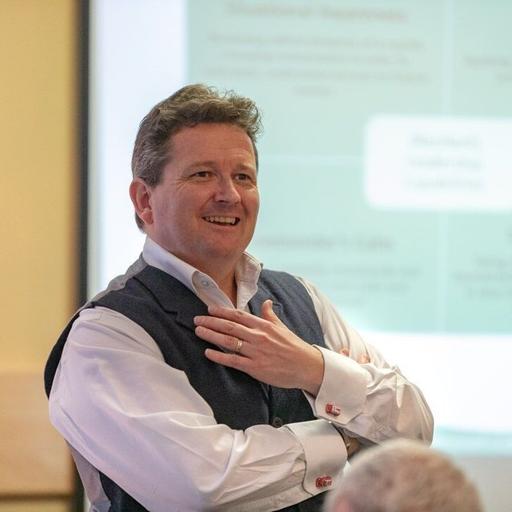
The Resilience Coach | Resilient Leadership Expert
100,000+ People positively affected6,000+ Executive coaching hours£12M+ ROI delivered by RWE npower leadership programme20+ years Learning, leadership and organisational development
Russell Harvey is The Resilience Coach - a resilient leadership expert, executive coach, facilitator and keynote speaker who helps leaders and organisations perform at their best when the world refuses to stand still.
With more than 20 years in Learning, Leadership and Organisational Development, 6,000+ hours of executive coaching and over 70 published podcast appearances, Russell is an experienced and engaging voice on resilience, leadership and navigating persistent change. He has worked with leaders across organisations including Novartis, the NHS, AB World Foods, Kerry Group and The Co-operative Group.
Russell’s work goes beyond helping people simply cope with pressure. He believes true resilience isn’t about “bouncing back”, being tougher or pretending everything is fine - it’s about springing forward with learning and becoming better equipped to lead because of the challenges you’ve faced.
His approach connects the human side of leadership directly to what matters to organisations: engaged people, stronger cultures, better decisions and improved performance. His work has delivered measurable results, including a leadership programme that returned £12 million to the business and a Resilient Leader Programme that achieved more than 1,100% ROI.
In August 2025, Russell achieved his long-held purpose of positively affecting 100,000 people.
More from Russell Harvey
All episodes → Living the Dream with CurveballSpringing Forward: Russell Harvey's Insights on Building Resilience and Embracing ChangeNov 2026Play episode →
 Transformation Station Leadership PodcastTSLP Season 5 Ep. 26- Thriving Is A VerbNov 2026Play episode →
 An Evolving Man PodcastReal Resilience: Why Pushing Through Isn’t Enough | Russell Harvey | AEM #172Oct 2026Play episode →
 Leadership From The Heart | Transformational Leadership InsightsResilience Without the Rebound | Leadership Mindset ShiftAug 2026Play episode →
 Burnout Proof Leadership: Identify Shift and Leadership Skills for Midlife Women EntrepreneursEssential Leadership Skills You Must Have If You Want to Build Resilience & Avoid Burnout When Your Business Gets Hard - with Russell HarveyJul 2026Play episode →
 Your Career JourneyHow to Build Resilience at Work: Leadership, Change & Thriving in Uncertain TimesJul 2026Play episode →
 The ThriveWell Journey | Entrepreneurship, Leadership & Life After DisruptionHow to Build Real Resilience Under Pressure | Russell HarveyJul 2026Play episode →
 Future Fit LeadershipThe 2030 Leader: Why Resilience is Your Most Vital Skill with Russell HarveyJun 2026Play episode →
 Different thinking for Different Time - Mindset Change and Thought LeadershipDifferent Thinking for Different Times - 7 Keys to Building Resilience with Russell Harvey How to Nurture a Resilient Mindset in Business and LifeMay 2026Play episode →