
March 7, 2025
Russell Harvey on Leaders LIVING Their Values
Sound bites
I believe that actually when I engage with people on the things that they do that there's got to be some real key takeaways of me sharing my experiences.
In this episode
Russell Harvey talks with Mitchell Levy about values-led leadership, resilience, servant leadership, recognition, and grounded optimism.
- Meaning and purpose need to show up in client work, with real takeaways and a positive impact on others.
- Resilience can come from repeated setbacks, including redundancies, bullying, and caring for an unwell spouse.
- Servant leadership means delegating to strengths and removing blockers so people can perform at their best.
- Recognition matters, especially when effort goes unnoticed after a major project produces clear results.
- Optimism should be grounded in reality, facing what is not working while still building hope.
Transcript
ShowHide
Automatic captions of the conversation. They can contain errors and do not name who is speaking.
Hi Mitchell Ley Global credibility expert and I am so glad that you're here to join me at one of the funnest times of my day and that is interviewing a leader on their values today we have Russell Harvey and and Russell great to have you here thank you very much Mitch very good to be here as well I am very much looking forward to our conversation oh good good good good and and so who are you it's just a great question I've been thinking about this
About this loads so who am I I'm somebody that really believes in meaning and purpose that there has to be some actual value to the things that I do with my clients I believe that actually when I engage with people on the things that they do that there's got to be some real key takeaways of me sharing my experiences want to try make the world a better place leave a bit of a legacy behind even if that's in actually just their leadership skills you know share
My experiences so actually they could be better leaders so they can have a positive impact upon others and make organizations Better from a a a leadership point of view and I absolutely fundamentally believe there's got to be you there's got to be a way in which you treat each other you know treat human beings there's got to be some morals and some ethics to the standards of um standards of behavior and uh finally I'm aware that you know for the efforts that I do I I
Do understand that I would like some appreciation for them I have understood actually that um you know if I'm doing lots of things and and I don't get acknowledgement at all for them I have understood that actually that's something that I I I find difficult and challenging so that's today's answer to the question you know it might vary but that's that's today's answer uh thank you for that you've given me a couple different places to go um and uh the first though tell me a little
Bit more about the the the wholeness of your life you know the who else who else is part of your life and uh who do you look that sort of thing yeah yeah so uh my lovely gorgeous wife uh my parents I'm very lucky that they're still with us and I saw them at the weekend they make me laugh H in terms of their interactions if you didn't know them you just because there's so much sort of um bickering going on you're just like gosh do
These people actually like each other um but they do it's it's part of their vernacular and it's part of their approach there's uh mother-in-law as well and brother-in-law and just uh really great fantastic uh friendship groups um wholeness of life you know we've traveled loads we went traveling around the world in 1996 and 1997 uh and so travel has been part of mine and my wife's uh life as well so I've been very lucky to go to uh different places and in terms of fullness of
Life at the moment the last couple of years my wife has been on well so part of my experience that's new and different is you know I'm taking on more of a caring role and a supportive role because she's just been exceptionally unwell I'm sorry to hear that it's okay um we will say that's part of life we will say that you're being resilient in dealing with that aspect of life but we'll come back to that yes um tell me about you mentioned something about recognition
Tell why I mean because I love the core values of of of being Humane being more valuable being better humans all that all that jazz but it seems like there's a thorn about being recognized tell me about this well yeah so I think because um so I where it came from so many years ago um led a fantastic project about big massive leadership development program across an organization and you know I loved it I was putting a huge amount of effort into it creating a whole
Host of programs leading it dealing with challenges but it the ask for it was from the managing director of the organization and it was just I realized that um I'd spent you know almost a year you know 12 months uh doing this and it was getting lots of great feedback and it was providing actual uh money real hard cash uh back to the business um but I just I realized I wasn't get any acknowledgment from the original individual that tasked me were doing this you know
Uh so you know people around us were giving us great feedback and there was good um lots of great feedback around it but I just thought how come this is bothering me how come this is annoying me you know how much it doesn't really matter it's working well but I think it was a case of I I have no idea whether it's like yes I'm a people pleaser uh so I just didn't know whether actually I just wanted that individual who had originally asked me to
Do something and i' created something great from my other value system of make the world a better place and you know there was just something about actually this individual isn't coming along going oh that's that's quite good Russell actually that's that's that's good um they did eventually and and not with me going up and sort of um going why aren't you giving me praise it just it did actually happen a few months later in a public Arena and I just realized just how good that made
Me me feel I was like hm there's somethingone in this you know just what's that all about Russell how how come that was something you really waiting for you've been you know you got praised but you got praised for that individual how come that was so important to you um so yeah that that's that's where that came from essentially just to understand yeah there's C certain individuals that you know want them to just sort of acknowledge the effort that you're putting into something so I want
You to answer the question you you technically asked yourself then why was that so important to you yeah do you know what um I'm not entirely I'm not entirely sure that's because I've been tasked with doing something and I suppose that it was really important to me what I was doing and I would have overlaid all sorts of additional aspects to what I was doing about this leadership development program lots of my values on to it you know make the world a better place and I
Suppose I wanted somebody else in a position of seniority actually maybe that's it position of seniority to concur with me that my view of the importance and the relevance of people development um was the case I suppose somebody more senior in organization to go yes I agree with you Russell that actually yes this is important this is you know absolutely what you're doing is important it is important about the people that's what's just struck me right now Mitch as you've asked me interesting so the the
People who you served how much feed feedback did you get from them loads and it was brilliant it was great you know you know you set it up with with this particular one really tried to do absolutely everything right there was there was another part what was driving me is also at the same time at some point in there there was a finance director that had said to me like yeah we we don't know if this people development stuff is actually adds value to the business
And that properly annoyed me that that absolutely and I and it's like so everything I do now I if I can I find ways to go you gave me money or you paid me money to do these soft skills and here is cold hard cash back as well as loads of improvements in people's soft skills and performance and feelings and motivations and outcomes so I know that was really bothering so we were getting loads of fantastic feedback from uh the delegates that were on the program
They're line managers and would' also set it up that we could do um a financial return so I walked into the finance director's office and go you gave me a 100 Grand here is £ 4.2 million and and the finance director went what you on about he said you said to me some time ago I don't know if you remember it you know it was a throwaway comment potentially about yeah is this people stuff does it had value and I went there you go 4.2 million
Quid and yeah it it was real provable upws sideways downwards you know couldn't be argued with in any way shape or form it existed so I think that was that was more of like a more of a poke and a prod back from me to go there you go pipe down you know people development has value get back in your box so well so did you know that before the finance guy said that I did not know what sorry Mitch oh did you know that um
Did you know the value the hard the hardcore value of the people development side well well I did you know and and it but it suppose it's trying to it's finding trying to find a way to equate that to the you know the variation of people's systems and process in an organization so I knew that it had value and it's like you know I'm doing that um Balancing Act in my mind of like look it's not just about your point of view of the world Russell
You know you're not right about everything um but actually you fundamentally believe that actually the development of people is something that's got real value to it and relevance to it and business is about numbers and it is about you know Cold Hard Cash and cash is King and a business fails if it doesn't actually have that so um it was trying to make sure that we could get more people on the same page of yeah spend time developing people because it gives you cold hard cash
Back to the business I I want to say this and then put it aside so that we can focus on on you a little bit more I think in the future when you when you go into organizations you should know ahead of time hey we're going to we're going to work with your people and we're going to develop this is what we're going to do and what we're measuring is the soft skill side and we'll also come up with a hard SK a hardcore number at
The end but let's not worry about that we whatever it is it'll be most likely significantly greater than the soft stuff and then here's the hard part you need to just believe it and own it and not worry about the pound in the back oh thank you yes and I do do that now yes so it's like this is been many years ago so yes when I turn up now I do exactly that I go by the way you know the the values and the benefits
We're g we're going to give you all these things as a as a result you know it's sometimes it's a trust me sometimes it's a trust me moment and but each time you know when we've done it we'll go back say do you remember I said when we had our first conversation or the first few this was going to happen and have you seen it yes yes we have have you got it yes yes we have go okay I said it what happened and here it
Is so so what what is the what is the that tell me give me a couple things that typically transform inside the employees of a corporation when you're working with them they see that there can be a better way of them um facing into their role delivering their role leading themselves um they completely shift from you know the vast majority of time when you ask people um how's work how's your job you're going to get an answer more often not in the space of yeah well
It's all right well it's okay if it wasn't for you know if it wasn't for a boss or or if I could get my people to perform better or you know it's so that so after they've worked with me when you ask them the question how's your job they say it's good I'm enjoying it I know what I'm doing and I know how I going to face into the challenges that I've got the challenges haven't gone away we've actually since working with you we've got new
Challenges new curve balls but actually how I feel about them and my approach to them is shifted so yeah the job roll is good I know what I'm doing that that's that's the difference essentially it seems like you should be purely measuring employee engagement and employee happiness before and after you start yeah yeah I suppose it's um and it really is trying to find a way um to do that because the the figures a lot of the time you go into organizations and they had you
Know they have the head of Employee Engagement you know they've got their engagement surveys so they have the measures that are there but I think it's so I think it's a bit more than that I think we can demonstrate with what I do actually where it shifts the needle on some of these engagement scores or potentially asking a different question um so I I do always under this word of resilience which is you know uh what I do you know resilient individual ual resilient leader resilient
Team resilient organization it really is actually teasing out actually what's the measures now around that and that is part of the understanding process everybody's go what what do you actually mean by this resilience word and I go look I I'm viewing it like this I've got these thoughts and feelings about it to me it means this I think that equates to that in your business so it's probably a way of gluing together a lot of other disperate measures that they've got going on was the story
You mentioned your most resilient moment or give me your most resilient moment the point where you hit rock bottom and realized you needed a come back um so I don't think it's that it's one moment um because it's about life experience so I've I've been made redundant six times in my lifetime and it was on the sixth that my own business the resilience coach was born so I think it's it's for me it's a case of it's a question of learning as you go so yes
There were many times I could have set up my own business in any one of those six times but it felt right it felt right to do it then so maybe Rock Bottom was like I'm just trying to think I've probably so I have been bullied twice in my career really unpleasant you know having to um take action um to you know counteract it and get some help and get some support um and and so I suppose those were when I felt at my lowest and
It was you know how I came through that how I extricated myself from it um what I started to do instead you know a new role coming out of it that those were significant times of um demonstrating resilience and handon heart so a little bit earlier on when the person that you love most in the world is exceptionally ill that is made you know demonstrating resilience probably on a day-to-day basis as well no kidding no kidding it it's funny I'm thinking about uh core values of
Credibility uh being vulnerable focused on Integrity external and internal um being a servant leader that's the interesting one I tell me about servant leadership to you what's that mean and and how do you deploy it well yeah so you are you are you you understand as a leader that you are there to delegate brilliantly to your people to their strengths and you're there to remove the blockages for them performing and being at their best so in there you are serving them but not at detriment to
Yourself it it's very much about actually um that version of I am here for you but absolutely there's some equity in the relationship as well we're there to serve each other and as a consequence of that we will all grow our resilience that's my answer yeah I'm thinking about that tell me about a leader you've worked with that was more serving of self versus serving of others um so yeah there've been a few yeah it's been a few over the years and so just in your
Question that's that's what they did they it was it was about them we were there to make them look good essentially um and it was it was really you know it was disheartening it was disappointing it was hard work you know the conversations that you had as a team you know or with certain colleagues when you you know or cups of coffee about the leader you know it's like how are you feeling today how are you feeling this week it's like well I've just had my
Onetoone with so and so or I'm you know trying to do this piece of work for so and so and you know I'm I'm fed up you know it it's just I'm not enjoying it it's not nice and so it turned we turned into a support group for each other essentially about how to deal you know with this person's behaviors by by not challenging them but just by actually by we we were a support group to go I'm going to see so and so it's like
Okay so we need to make sure that you're going to get a bit battered in that conversation so when you come out of it we'll be here for you we'll we'll we'll we'll be ready to pick up the pieces you know loads of conversations about how we're going to stand up for ourselves more but when people are battered you know it's difficult to stand up for yourselves and you know there's one or two times when I've taken the lead of sticking my head above the parit
P and going and giving the feedback you know uh couple of times it's really not gone well you know uh and one other time it's gone really well so you know um it's making that decision from my value system of like there's got to be a certain way in which you treat people you know and if it's not happening am I gonna when am I going to make the decision regardless for me personally to just go start to do something about it go start to have
The conversation go provide the feedback go provide provide some support for them try and be different trying to get them to change essentially how' it feel in the times in which it didn't go well you taking lead versus the times in which that one time I guess where it really went well is that where where com in yeah so when it didn't go well you know and there was you know there was raised voices and there were tears uh not from me at the time uh
Maybe afterwards well after coming away and then the support group going how did it go and I went it was a disaster you know uh but the big thing actually in those moments was you know what I'm all right because I'm glad I did it I feel better for having done it rather than not so even though it was a disaster I actually feel all right because I've done it and I and I know and I know I know what's um how they've taken it I
Know what going to do it's giving me some my he's giv me some real indication about what's going to happen next I.E it's not going to change they're not going to change so okay so that's what I know that now can face into it and when it's gone brilliantly it's it's it's just exciting it's it's infusing um it it's it's um it completely opens up it just loads of fabulous energy around it to go gosh that's gone really well you know they they've they've taken it
On board and they're changing and it's shifting and yeah so it was it's brilliant it's absolutely brilliant nice that is nice all right so it's interesting where the examples you gave was that were were those examples when you were working for somebody else or the question I had is when you as a firm get hired in to bring resilience to the company do you what happens when you come in and you really realize that the person hiring you is not resilient not credible they're doing it
For self do you actually say no or do you think you want to do do you think you try like what do you do then yeah it's it's a real mixture and it's it's a real mixture of going do I think and I'll chat about it with colleagues and peers as well it's like do I think that there's enough there to give it a go so so there's sometimes when I've gone the this is definitely going to nowhere and in giving them the feedback around these
Are the reasons why I'm not going to work with you you know that's also led to some different outcomes some of them are being like well you you know don't know what you're about you're an idiot okay I'm I'm glad we're not going to work together or find somebody else um others have gone what on Earth do you mean you it's like you don't why don't you want to work with me like what you mean oh and that has led to somebody going well I really
Need to work with you Russell because I've been so taken a by what you've said I want to you know do something about it so it it's really is a bit of like it's a gut feel so I often talk about head heart and gut with clients so if they're out of whack uh then it's like I'm GNA say no if they're in alignment because they go I think there's enough here that maybe we can get somewhere then I'll start and if as a result of
That I have to be really clear about what my cut off points are to go I thought we could get somewhere and not so I've got a CES now and I thought we could get somewhere and we are so we can get to the next phase and go a bit deeper interesting all right well thank you for that now I I know personally from the fact that although I focus on Clarity and credibility most people use those words potentially in a different way than I mean
Them I use the word resilience what does that mean to you yeah so I Define resilience as springing forward with learning so it is an actionable doing thing on a day-to-day basis you know growing and developing and nurturing your own resilience it's a decision it's a choice but doing that and because you understand the value value and benefit of how your life will improve as a consequence of growing your resilience and you got to do it in a way in which you find it interesting and
Engaging it hasn't got be a SLO yeah learning it can be hard work absolutely so springing forward with learning and then you know that the learning can be tough until the moment that the learning happens and you go I've got it it's all going to be better um so I'm really concerned with actually resilience being used as a sticking plaster it's like we'll just have some resilience training of like you know our organizational culture isn't the best it could be or we're not really nurturing our
People so let's just give them some training so if anybody if you turn up to anybody that's listening watching now if you hear yourself saying the following please stop it if you hear others saying it to you recognize that there's an opportunity to shift it so if somebody turns around in a meeting and says you know what I don't I don't think this is working as well it could be or I'm a bit concerned about it if somebody does the finger pointing and goes you just
Need to be resilient you just need to be positive then that's toxic essentially that is gaslighting so that and that is not where I am coming from I absolutely want people to understand that it is going to shift you into a much better place so um it's moving away from the coping and surviving into the thriving and on an individual basis uh individual or a leader how you start to action springing for your learning is just on a regular basis get into the Habit in your
Reflections when you pause from all your life's experiences of just asking yourself two questions what behaviors have I been doing recently that serve me well what behaviors have I been doing recently that haven't been serving me well and how do I make sure that I do more of the ones that serve me well that that's that's a a real starting point um and then when I work with clients we do that around a number of different models and tools about their their learning and they're springing
Forward but I absolutely don't want people to see it as like resiliences I've just got to be tough and I've just got to get through and it's just got to be a SLO so funny where I'm coming from yeah it's so funny I if I'm applying The credibility values on top of your definition it's being a servant leader being of having the intent and commitment to do the right thing being vulnerable having Integrity internal and external it's it's being coachable yes yeah yeah yeah I love
That so so yeah that's the thing is springing forward with learning so then it's the whole thing about okay uh how do you view learning do you like learning what type of learn all of that has to be explored what enables you to learn that that yeah that has to be teased out how ready are you for learning or if this feels too difficult and hard but actually you know that you really really need it it is about getting off the hamster wheel so it's like
How how what would be the way that we could just entice you off the hamster wheel for a short moment so you could just start to do a little bit things differently and we could put you back on the hamster wheel but it's gonna be quite different it's gonna be quite different yeah love that Hey listen if if you're listening to this and watching it I've got two questions for Russell the first one is if if you're in the audience and you're like hey I I
Need to speak to this guy Russell what is the best way for people to reach out to you yeah so it is the resilience coach is where I am so the s it is the resilience coach.co I'm on LinkedIn with the same and my email address Russell the resilience coach.co that's how you get hold of me if you put in the resilience coach I'll pop up all over the Internet perfect thank you all right so based on this conversation is there a question that you think
I should have asked or is there a question you'd like to ask yourself that that that I didn't get to um so I'm glad that we absolutely got to do the springing forward with learning the the other little thing is like um so Mitch please ask me what's optimism ask me that question I could do that first of all I'm gonna say it's Mitchell and then apologize I'm say Russell what's optimism I to apologize I'm sorry really okay yeah so optimism is a is a build
Upon shifting away from this toxic positivity um because we talk a lot about you've just got to be positive so how people feel positive is thinking about it from the optimism point of view so optimism is grounded in reality okay and I think that's what people forget okay so as an individual as a leader being able to hold an optimistic conversation does require a lot of soft skills okay decent amount of emotional intelligence and empathy and compassion so you need to be able to hold the
Conversation of grounded in reality of what isn't working what we're not enjoying the behaviors of the size and the scale of a challenge of a problem so no ostrich no bearing our head in the sand but doing that in a way which doesn't absolutely scare us to death or depresses okay but we acknowledge it but it's also then segueing into the reality of what's good about us what's right about us what are our strengths what are our skills what are our capabilities and experiences when you
Do that well people people then will have hope genuine hope hope not false hope and when you feel hope you feel positive so I'd like everybody to be thinking about you know if you reflect upon your role right now or your life or your team and my question is how optimistic are you so if you've got hope where's it come from essentially oh I love that thank you Russell Harvey thank you so much for uh for being with me today my Pleasant Mitchell and I apologize
Again I don't know why I went for the short version from there we go there we go have resilience it's okay um okay good so listen if you're still here at the end here's the most important thing for you to do is take that quote take that aha moment that really meant something to you and share it share it on the social media platform that's most relevant and uh Russell thanks again for joining us and for everyone else thanks for joining us thanks for being here
Looking forward to seeing you at the next leaders living their values take care everyone bye now
About Russell Harvey
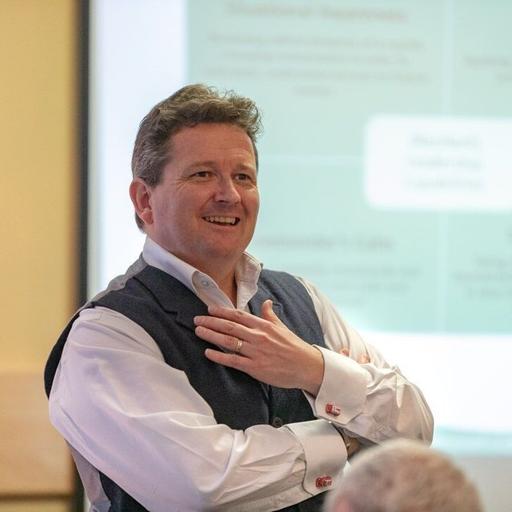
The Resilience Coach | Resilient Leadership Expert
100,000+ People positively affected6,000+ Executive coaching hours£12M+ ROI delivered by RWE npower leadership programme20+ years Learning, leadership and organisational development
Russell Harvey is The Resilience Coach - a resilient leadership expert, executive coach, facilitator and keynote speaker who helps leaders and organisations perform at their best when the world refuses to stand still.
With more than 20 years in Learning, Leadership and Organisational Development, 6,000+ hours of executive coaching and over 70 published podcast appearances, Russell is an experienced and engaging voice on resilience, leadership and navigating persistent change. He has worked with leaders across organisations including Novartis, the NHS, AB World Foods, Kerry Group and The Co-operative Group.
Russell’s work goes beyond helping people simply cope with pressure. He believes true resilience isn’t about “bouncing back”, being tougher or pretending everything is fine - it’s about springing forward with learning and becoming better equipped to lead because of the challenges you’ve faced.
His approach connects the human side of leadership directly to what matters to organisations: engaged people, stronger cultures, better decisions and improved performance. His work has delivered measurable results, including a leadership programme that returned £12 million to the business and a Resilient Leader Programme that achieved more than 1,100% ROI.
In August 2025, Russell achieved his long-held purpose of positively affecting 100,000 people.
More from Russell Harvey
All episodes → Living the Dream with CurveballSpringing Forward: Russell Harvey's Insights on Building Resilience and Embracing ChangeNov 2026Play episode →
 Transformation Station Leadership PodcastTSLP Season 5 Ep. 26- Thriving Is A VerbNov 2026Play episode →
 An Evolving Man PodcastReal Resilience: Why Pushing Through Isn’t Enough | Russell Harvey | AEM #172Oct 2026Play episode →
 Leadership From The Heart | Transformational Leadership InsightsResilience Without the Rebound | Leadership Mindset ShiftAug 2026Play episode →
 Burnout Proof Leadership: Identify Shift and Leadership Skills for Midlife Women EntrepreneursEssential Leadership Skills You Must Have If You Want to Build Resilience & Avoid Burnout When Your Business Gets Hard - with Russell HarveyJul 2026Play episode →
 Your Career JourneyHow to Build Resilience at Work: Leadership, Change & Thriving in Uncertain TimesJul 2026Play episode →
 The ThriveWell Journey | Entrepreneurship, Leadership & Life After DisruptionHow to Build Real Resilience Under Pressure | Russell HarveyJul 2026Play episode →
 Future Fit LeadershipThe 2030 Leader: Why Resilience is Your Most Vital Skill with Russell HarveyJun 2026Play episode →
 Different thinking for Different Time - Mindset Change and Thought LeadershipDifferent Thinking for Different Times - 7 Keys to Building Resilience with Russell Harvey How to Nurture a Resilient Mindset in Business and LifeMay 2026Play episode →