
March 5, 2025
How Leaders Can Develop Resilience in Themselves and Their Teams, with Russell Harvey
Sound bites
We cannot put our heads in the sand here.
In this episode
Russell Harvey talks about how leaders can build resilience in themselves and their teams, using practical reflection and a resilience wheel approach.
- Resilience means facing hard realities rather than ignoring them or putting your head in the sand.
- Building resilience starts with a conscious choice to develop it regularly because of the benefits it brings.
- Pausing to reflect on what behaviors are working and what are not helps leaders strengthen resilience over time.
- Seven aspects of the resilience wheel help leaders look at purpose, attitude, optimism, openness to change, and support.
- Improving one part of the wheel can create knock-on benefits in other parts, for individuals and teams.
Transcript
ShowHide
Automatic captions of the conversation. They can contain errors and do not name who is speaking.
Do you want to transform your HR and make it more relevant and impactful in today's rapidly changing world? Why not check out the Disruptive HR Club, a community designed to help HR professionals like you. You'll get access to regular live training, structured development, helpful tools and resources, and a global network of like-minded professionals. Sign up today at disruptivehr.com and use the offer code PODCAST10 to start transforming your HR. Welcome to the HCI Family of Podcasts. We're your source for personal, professional, and organizational growth and development.
We share our own original research, explore industry trends, and interview executives and thought leaders from across the globe. Join us for practitioner-oriented content around all things leadership, HR, talent management, organizational development, and change management. Maximize your personal and organizational potential with the HCI Family of Podcasts. Russell Harvey, welcome to the conversation today. Thank you, John. It's very nice to be here. Thank you for having me. It is a pleasure to be with you. You're joining us from across the pond in England.
I'm South of Salt Lake City in Utah. And today we're going to be talking about how leaders can develop resilience in themselves and their teams. I don't know about you. I don't know the state of politics and society. They're in England at the very moment. But I know here in the United States, it's kind of crazy. And so I think, in terms of resilience, I was just talking with my wife last night, things are feeling heavy right now. And I feel like I need to bolster myself up and be resilient, like generally just in day-to-day life, let alone in my organization and my leadership and that sort of stuff.
And so as I was prepping for today and I was looking over for this conversation, I was like, oh, my goodness, I need this as much as anyone needs this right now. I personally need it. I think it's always a good reminder also for how we approach our people, how we interact with our teams. So I'm super excited to have this conversation with you. As we get started, I wanted to share Russell's bio with everybody. Russell Harvey, the resilience coach, is a dynamic and engaging leadership coach and facilitator, public speaker, managing director of NED, a podcaster and radio host with over 20 years of experience in learning leadership and organizational development.
Russell has specialized in resilience and VUCA, V-U-C-A, he'll talk more about that in a bit, for the past 18 years. He is passionate about positively affecting 100,000 people by the year of 2025. We're there, so we'll talk about that too. And has already impacted so, so many. Russell, anything you would like to highlight by way of your background or personal context before we dive on in? Yeah, thank you. So right now, in terms of the 100,000, I'm up to about 78,012 ish, John, just in terms of, yeah. So, you know, if there's anybody that's listening, watching today gets positively affected and we'll come back to what that means, then please act yourselves to the pot.
No, nothing to add to the bio. Just to suppose, yeah, English politics in terms of, so, you know, there are, really simplistically, there are predominantly two parties in the United Kingdom, so there's Labour and Conservative. With the simplest way you can think about it is Conservatives would be Republican and Labour would be Democrats, and we had a choice recently and the country went for Labour, essentially, but there was also very much a strong underlying vote for reform, which are probably even sort of harder right, you know, Conservative, Republican, you know, with that, they had, they got the very first members of Parliament in.
So, yeah, we are, Labour is best trying to fold your way forward where people, where populism is really, really strong as well. That's the way we are as a nation. And personally, traditionally, I'm, I was often quite down the middle, Liberal Democrat, but at the moment, it's like, yeah, I think we need to be Labour to try and counteract some of the populism is my humble opinion around the politics. That's where the UK is at, at this moment. Yeah. Well, I feel like there's some similarities there. My personal opinion is we are almost falling off the cliff of extremism here, but that's another conversation for another day probably.
Yeah. Anyways, well, let's go ahead and really dive on in. We're going to focus on organizations, not politics, but within organizations. What can we do? We want to make our teams, our organizations, the best possible places they can be. That starts with us. That starts with us as individual leaders, because if we can't be resilient, if we can't model resiliency for our people, it's going to be hard to have resilient teams. It's going to be hard to help our people be resilient. So in all the work that you do in this space, what are some of those first things that you'll do when you work with executives, when you're coaching or when you're going in and working with the team to start to build that foundation with the leader themselves?
So we do have to do the age-old thing about how I'm defining resilience. So we need to get the same page of that, because I'm quite concerned that it's, a word is used in an awful lot of the minute, but it feels quite toxic. So I don't want anything to do with any toxic positivity or any statements around, you've just got to be resilient. If you hear yourself or people in your organization saying that, that's a real opportunity to have a great conversation about shifting that. And then I define resilience as springing forward with learning.
I'm just personally not a fan of the term bounce back, because what I notice is that people face into a challenge, and they have got their internal levels of resilience at the time, and then they will face into it, and I'll go, right, now that's over, I'll bounce back. I'll go back to how I was before the thing happened. And I'm sitting there, standing there, waving my arms going, well, hang on a minute, no, you can't go back. We can only go forward. So how do you want to go forward? So it's an actionable word, the springing forward learning.
And it includes recovery. So, you know, this is when you're going to teams or leaders, it's like, how have you recovered from recent times? And, you know, with leaders and teams, there's often blank faces. I do find a lot of the time, John, when I start working with people, they're sort of going, I don't know, I've never thought about these questions before, Russell. I don't know where to start. And so, you know, how have you recovered from recent times? How have you recovered from the pandemic? You know, emotionally recovered from the pandemic.
Those are still questions that I ask and people sort of go, well, we probably haven't. And then what have you learned from it? And then also to make sure that I'm really clear on moving away from toxic positivity, I talk about the word optimism as a route to feeling positive. So that's how I start, essentially. And feel free to pick my brains on any of the things I just said. I appreciate that clarification. I completely agree. I've heard people say things like, you're feeling frustrated, you're down, you're depressed.
Go to the store, buy some lumber, build a bridge and get over it. Or nonsense like that. Just like totally dismissive, totally just saying, pick yourself up by your bootstraps and just get over it. Or whatever the cliché thing is, this toxic positivity, toxic resilience. That's not what we're talking about here. We need to validate people in the experience that they're having. We need to have empathy and we need to understand that, yes, there are really genuinely hard things that people are dealing with, from personal issues in their home life, health issues, whatever, to real issues at work.
There are real hard things that are happening in the workplace, from just the day-to-day complexities, and I mentioned the VUCA stuff. The world is a nutty place, and with constant change, that alone is enough for us to say, yeah, we need to have empathy around what it's going to take to have resilience in the most positive way, without getting into these toxic kinds of approaches towards resilience. So I appreciate you clarifying that. Yeah, yeah. And it's a real art form. So as a leader of a team, it is supporting that individual leader to be able to hold an optimistic conversation and then build the resilience of the team.
So in a second, I'll clarify the optimism piece. But then also in terms of how I work with individual teams and organizations to some extent, is that when anybody asks me, so how do I build my resilience, Russell? I just go, look, there's the resilience wheel. It's built upon loads of research. I've added a couple of bits to it. So there's seven aspects to it. So as a simplistic tool, and in terms of people listening today, we'll try to make sure we get as many ideas and take away as possible. But it's like how the individual, from a personal point of view, and from a leadership point of view, and from a team point of view, you can actually utilize the resilience wheel to build your resilience.
So it's slightly twofold. You need to be making the choice and the decision to engage with building and growing your resilience in order that actually how you face into life is different and better. And then how you have an optimistic conversation, it's the fact that it is grounded in reality. So that's where you need to be able to do two things, essentially, which is talk about the hard, difficult reality about people's thoughts and feelings, or if it's an organization, actually some things around here really aren't working.
Systems, processes, culture, the way we do things, it's not good. It doesn't where we need to get to, and we need to talk about that in a way which is not an argument or blame-free, or is putting us into a spiral of negativity. So that's challenging to do that. But also, the grounded in reality is actually what's good about us, what's real about what's good about us, what our strengths are and what's right about us. When you do that well as a leader, then you give people genuine hope. Then they start to feel positive.
So for me, the route to feeling positive is to start with this word optimism. Yeah. Optimism is so important. I think in everything you were just saying, I'm thinking, yeah, we cannot put our heads in the sand here. No. Right? No, we can't. And I think sometimes when people are thinking about optimism, or they're thinking about resilience, that's really what they're thinking is, let's put our head in the sand. I don't like negativity. I don't like being faced with hard things. And so I'm just going to avoid them. I'm going to pretend like they're not there.
I'll just put my head in the sand. I'll just keep moving forward. And that is so unhealthy. I mean, you can pretend, I suppose you could try to pretend, like that's the case, but it's still happening around you. People are still being impacted, and it's still happening to you, whether you acknowledge it or not, and it will eventually manifest, right? I was having a conversation with a gentleman once, this was a few years back, but he was making the argument, he's like, hey, if things are hard, if things are bothering you, just turn it off, just stop reading the stuff, stop interacting with that person, stop, like just stop.
And I'm like, okay, to an extent, there's some, maybe some wisdom there. But you also can't just ignore the realities around you, especially when those realities are hurting people, when they're hurting your team, or your family, or whatever. And you have to engage, you have to choose to engage, right? And everyone has to decide that level of engagement for themselves. But again, I just want to highlight what you said, like optimism does not mean we're like a Pollyanna-ish, you know, blind optimism, where we're just pretending like everything's good all the time.
Because it's not. That is absolutely the case. And so, so what resilient individual and leaders do is that they face into the optimistic conversation. They're okay with it. Because their internal levels of resilience are higher, or they're feeling good, or they've got good levels of resilience, then they are willing to start the conversation with people, you know, and they're okay with it, they're comfortable with it. They're confident with it. They're okay with the fact that actually fit guys does start to go down some sort of rabbit holes of negativity, that they are comfortable, that they can draw it back into something that's useful and worthwhile and productive.
So the challenge for leaders is sort of a little bit where to start. That's why I just encourage everybody that on the, you know, seven aspects of the resilience wheel, it's making this conscious decision as a choice, that because you see the value and benefit to your life of being more resilient, you understand what it will give you, you're going to make the decision to engage with building your, growing your resilience on a regular basis. It's, it's, and that's the springing forward with learning. So it's from all of nice experiences, is taking the opportunity to pause.
Now, pause can be listening to a podcast, pause can literally, literally be staring at the wall and dribbling. Pause can be going for a run, pause can be going for a coffee with some mates, but pause can be lots of different things. Pause can be an optimistic conversation. But in those pauses, you're asking yourself a couple of questions, which such as, what have I been doing behaviorally recently that's worked really well for me? And how do I keep doing that? And what have I been doing behaviorally recently that hasn't worked well for me?
Do you want to transform your HR and make it more relevant and impactful in today's rapidly changing world? Why not check out the Disruptive HR Club, a community designed to help HR professionals like you. You'll get access to regular live training, structured development, helpful tools and resources, and a global network of like-minded professionals. Sign up today at disruptivehr.com and use the Offer Code Podcast 10 to start transforming your HR. And how am I going to enable myself to do more of the helpful stuff and less of the unhelpful stuff?
That's that learning moment. So you're... And all of that is the adaptability piece, one of the dimensions of being resilient, which is this openness to change. And there's some good research that shows that those individuals that spend a third of their time engaging with their adaptability and the openness and the curiosity in learning, then they get themselves into this place that we call Thrive, which is the fact that they can genuinely state, yep, there's lots of Fuqua worldies going on around me. There's all sorts of things that are happening around me, which are full on.
And I can genuinely state that I'm good. I have clarity. I have my purpose. I know what I'm there to do. I understand what my role is. I've got an inkling about actually how I'm going to go about doing things. And if I don't have the answer, I know what I'm going to do about it. So then you've asked those individuals, how's your job going? And they go, oh yeah, it's good actually. It's all right. It's a bit crazy, but it's good. So it's like how many individuals that are listening now answer that question in that way is what I'm curious about.
And how many people will sort of say, when you say, how's your job, how's your role? They'll go, well, it's all right. It's all right. But, you know, those are the ones that people like myself go, I really want a conversation with you. I really do want a conversation with you right now. Because we can shift you from all right to, do you know what? It's good. Yeah. Hopefully, hopefully we can all get there, right? You've brought up some really, really great points around the resilience wheel. I love your definition.
I love how we're trying to reframe this in a really positive light and get away from some of the more toxic elements or the ways that maybe resilience has been co-opted to just try to get people to suck it up and do more things. You know, like sometimes it's been co-opted to just exploit people, frankly. Yeah, it really has. Absolutely. Yeah. It's this gas lighting. Unfortunately, it's akin to bullying. Unfortunately, you know, you've just got to be resilient. So if anybody that's listening now has realized that they've said that as a leader to the members of their team, now is an opportunity to not do that again, essentially.
Yeah. So another term that, there's a famous book about it. I like the term generally, but often it can be used in negative ways, like we've been talking about is grit. So resilience, grit. Yeah, yeah, yeah. I like the term grit. I think it's wonderful to have people who are just like gritty and driven and resilient, and they can go out and they can make things happen. I think that's wonderful. The problem is it sometimes gets weaponized. Yeah, it really does. So yeah. So in our world, my world, yes, you've got resilience, mental toughness, grit.
And there's one called hardiness as well, which I've really not looked that much into. But yeah, so the grit piece is what I really took from all of that, is this word perseverance. For me, perseverance is springing forward with learning. In my head, that's a good way to think about the perseverance piece in that particular way. So it is, and that's why I like the VUCA an acronym, because it's a much better way of having a really great conversation around change is constant. So rather than just walking from a room, people pick people and say, right, change is constant, suck it up, you go, right.
Let's talk about this thing called VUCA and VUCA Prime. There's loads of words and phrases in it, and when you unpick and look what's behind all of these, there's a sweet and a raft of tips, tools, techniques, leadership capabilities, behaviors that link to resilience. There's an awful lot of opportunity within the resilience in the VUCA space for leaders to be able to do things differently. So we get our minds right, we get the framework right, we understand what it is and what it isn't. Hopefully, as leaders, we start to foster this within ourselves, so we can model it for our teams, so we can be supportive of our teams.
Now, how do we really start to do that though? How do we start to do that modeling? How do we start to create a resilient team, so that people feel supported, they feel like they can have the empathy? Yeah, so the best way is playing to people's strengths. So I think people in the US are more familiar with Strengths Finder. So I use the Strengths Scope Psychometric. So on the Strengths Scope one, clever people and I have identified there's 24 strengths. You take the psychometric and you identify your significant seven.
So many of my clients as leaders, when we do the Strengths Scope Psychometric with them, their eyes naturally go to their low score and go, so I understand my homework is, Russell, this thing that I'm not so good at, I need to do more of that. And I go, no, absolutely not. We're not going to do that. It's like, see this bar over here, this is something that you love doing. You're naturally energized by, you're naturally good at it. Your homework is to go do more of that. So many individuals, their minds are blown. They go, really?
I thought I had to go to my development areas, okay? Well, your development is to do more of the things that you love doing. And then the next phase as a leader is to just revisit their performance management or their one-to-ones or their delegation conversations or the coaching conversations they're having, and actually really reflecting on how much are they delegating to their team members' strengths. You know, whether the activities that they've got to do in a daily, weekly basis is just like, how much are you enjoying this?
How much are you enthused by this? And you, you know, not everybody has to take the psychometric. You can just ask your people some simple questions around. So since we last spoke, you know, fingers crossed it's in the last week or last month, you know, tell me about the things that you've been doing. And then you're more than likely to going to get a twofold answer. You can say, well, last week I was working on Project X and it was really good and I was doing this and it was yeah, it was nice and it was great. And you go in your head, you go, right, strengths.
Okay. And they say, you know, and the week before I was working on Project Y and yeah, it was a bit of a challenge and not sure about it. You go, right, they're not playing to their strengths in there. In terms of immediate tips, tools, techniques, just anybody that's a line manager, that's listening right now, just revisit your conversations with people about the activities you delegated to them. And then just go, so just talk to me more about what you're enjoying. Okay. And because playing to your strengths builds natural resilience and natural confidence.
So I, on the resilience wheel, that all of what I've just talked about there is encapsulated in the word energy. So after that, you can just look at the different aspects of the wheel. So the heart of resilience is our attitude. Then we've got purpose, confidence, adaptability, support network and meaning. And what I mean by that is our internal storytelling, the memories that we put inside ourselves, our reflection. And as an individual and as a team, how you go at building your team's resilience and your personal and your leadership resilience is to look at each aspect of the wheel for you.
So what's your leadership purpose? What's the team's purpose? What's the attitude of the team? How optimistic is the team? How open to change is it? How supportive is it? And then from there, you can have some really great starter for tens about actually what's working well and what we could do differently. And all of that, because they're all interconnected, you make an improvement in one area of the wheel, it has a knock-on benefit in another area of the wheel. And that's how I start with individuals and teams. And you see where it takes us.
You see from there where the challenges are, the things that you can't necessarily do some easier fixes to, and then you face into those with an increased level of resilience. So your attitude about it is already in a much better place. I love it. I love it. Russell, we've only just scratched the surface. There's a whole lot more to talk about, but I do note the time. I need to let you go get on with your evening. Before we wrap things up, I wanted to give you a chance to share with the audience how they can connect with you, find out more about your work, your books, your podcasts, all the cool stuff that you're doing.
And then give us the final word on the topic for today. Yes. So nicely picked up the start. It's the resilience coach. So that's how you find me. Essentially, if you put the resilience coach in, you'll find me. And that's now for the website.co.uk. It's Russell, the resilience coach on LinkedIn and other different social media platforms. And if you go on to the home page of my website, you'll see the podcast that's on there. And in the first series, it actually, each episode takes you through the wheel. So seven of the ten episodes take you through the wheel.
And there's a few more bits and pieces on it. And so, yeah, final word on resilience. Please do remember the definition, springing forward with learning. So, in your reflections, what are you gonna keep doing? Because it works well for you. How are you going to make some changes to those behaviors that aren't working well for you? Wonderful. Russell, thank you so much. It's been a pleasure. I encourage the audience to reach out, to get connected, find out more about what Russell can do for you. And as always, I hope everyone can stay healthy and safe, and you can find meaning and purpose at work each and every day.
And I hope you all have a great week. Thanks for joining us for this episode of the podcast. We hope you stay healthy and safe, and please join us again soon. Do you want to transform your HR and make it more relevant and impactful in today's rapidly changing world? Why not check out the Disruptive HR Club, a community designed to help HR professionals like you. You'll get access to regular live training, structured development, helpful tools and resources, and a global network of like-minded professionals. Sign up today at disruptivehr.com and use the offer code podcast 10 to start transforming your HR.
About Russell Harvey
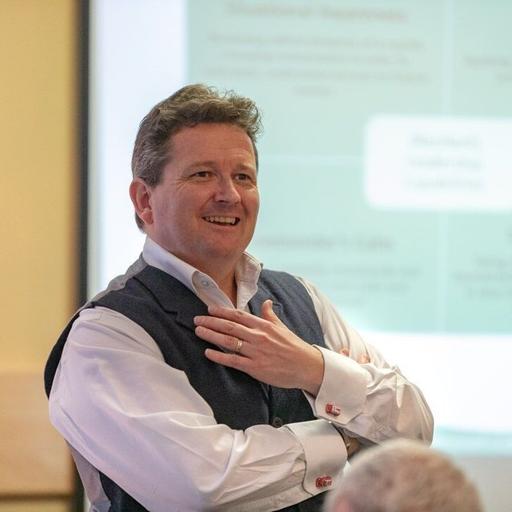
The Resilience Coach | Resilient Leadership Expert
100,000+ People positively affected6,000+ Executive coaching hours£12M+ ROI delivered by RWE npower leadership programme20+ years Learning, leadership and organisational development
Russell Harvey is The Resilience Coach - a resilient leadership expert, executive coach, facilitator and keynote speaker who helps leaders and organisations perform at their best when the world refuses to stand still.
With more than 20 years in Learning, Leadership and Organisational Development, 6,000+ hours of executive coaching and over 70 published podcast appearances, Russell is an experienced and engaging voice on resilience, leadership and navigating persistent change. He has worked with leaders across organisations including Novartis, the NHS, AB World Foods, Kerry Group and The Co-operative Group.
Russell’s work goes beyond helping people simply cope with pressure. He believes true resilience isn’t about “bouncing back”, being tougher or pretending everything is fine - it’s about springing forward with learning and becoming better equipped to lead because of the challenges you’ve faced.
His approach connects the human side of leadership directly to what matters to organisations: engaged people, stronger cultures, better decisions and improved performance. His work has delivered measurable results, including a leadership programme that returned £12 million to the business and a Resilient Leader Programme that achieved more than 1,100% ROI.
In August 2025, Russell achieved his long-held purpose of positively affecting 100,000 people.
More from Russell Harvey
All episodes → Living the Dream with CurveballSpringing Forward: Russell Harvey's Insights on Building Resilience and Embracing ChangeNov 2026Play episode →
 Transformation Station Leadership PodcastTSLP Season 5 Ep. 26- Thriving Is A VerbNov 2026Play episode →
 An Evolving Man PodcastReal Resilience: Why Pushing Through Isn’t Enough | Russell Harvey | AEM #172Oct 2026Play episode →
 Leadership From The Heart | Transformational Leadership InsightsResilience Without the Rebound | Leadership Mindset ShiftAug 2026Play episode →
 Burnout Proof Leadership: Identify Shift and Leadership Skills for Midlife Women EntrepreneursEssential Leadership Skills You Must Have If You Want to Build Resilience & Avoid Burnout When Your Business Gets Hard - with Russell HarveyJul 2026Play episode →
 Your Career JourneyHow to Build Resilience at Work: Leadership, Change & Thriving in Uncertain TimesJul 2026Play episode →
 The ThriveWell Journey | Entrepreneurship, Leadership & Life After DisruptionHow to Build Real Resilience Under Pressure | Russell HarveyJul 2026Play episode →
 Future Fit LeadershipThe 2030 Leader: Why Resilience is Your Most Vital Skill with Russell HarveyJun 2026Play episode →
 Different thinking for Different Time - Mindset Change and Thought LeadershipDifferent Thinking for Different Times - 7 Keys to Building Resilience with Russell Harvey How to Nurture a Resilient Mindset in Business and LifeMay 2026Play episode →