
January 21, 2025
The Resilience Factor: Thriving Through Challenges
Sound bites
I define it as springing forward with learning.
In this episode
Russell Harvey joins IMPACTFUL Teamwork to talk about resilience as a practical leadership skill, including how to recover, reflect, and build stronger teams.
- Resilience defined as springing forward with learning, not bouncing back to how things were before.
- Pausing, re energizing, and reflecting as habits that rebuild resilience over time.
- A resilience wheel built around attitude, purpose, confidence, adaptability, support network, meaning, and energy.
- Adaptability linked to thriving rather than merely surviving and coping.
- Trusting teams able to share fear, check in honestly, and rebuild hope together.
Transcript
ShowHide
Automatic captions of the conversation. They can contain errors and do not name who is speaking.
Teamwork isn't just nice to have in business, it's the undisputed competitive advantage. When your team members work as a unified force, your whole operation benefits through higher productivity, thriving creativity, and unstoppable momentum. Welcome to the IMPACTFUL Teamwork Podcast, where we share with you strategies and tactics to help you develop game-changing teams so that you and your business can make a real difference in the world. So, welcome everyone to this week's edition of IMPACTFUL Teamwork. My name's Julia Felton.
I'm going to be your host and guide for the next 20 to 30 minutes. And I am so excited today because I have a guest for you. And I'm joined today by Russell Harvey, who is the Resilience Coach. Welcome, Russell, and thank you so much for joining us here on IMPACTFUL Teamwork. Thanks, Julia. It's lovely to be here. Appreciate the invite. Looking forward to our chat and seeing where it goes. Absolutely. And for our listeners, I've known Russell on and off. We've been in the same, he also lives up in Yorkshire, not that far away from me, so we bump into each other occasionally.
And one of the things that many of you know I've been talking a lot about is about reinvention and the continual need that we need to adapt and change. And Russell is just a master in the art of resilience. So I thought he would be a great guest to bring onto the show to help us learn a bit more about resilience and how it's just a required attribute in the world that we live in today. So Russell, why don't you just start us off with a little bit about how you define resilience? Because I know that there's kind of a lot of definitions and different people might be seeing different things.
So where do you start when you think about the topic of resilience? Yeah, absolutely. So thank you for that. So everybody listening now, I really, really want you to as a takeaway to remember that this is how I define resilience. So I define it as springing forward with learning. Okay, I am personally not a fan of the term bounce back. So if you think about part of the resiliency piece is that we face into life's experiences and if we found them more challenging, that we're facing them with whatever levels of resilience we've got, and they might get depleted.
So I'll come back to that in a second. So then if we face into life's challenges and go, okay, I'll now bounce back. It's actually a subconscious instruction to go back to how you were before the experience happened. Oh, interesting. And we can't do that. We can't go back. We can only move forward. Or we need to make choice to go, actually, do you know what? I'm understanding that I'm only moving forward in life. And how you move forward better by permanently building your resilience is with learning. So to be able to role model the behaviors of springing forward with learning from all of nice experiences, whether good or not so good, challenging, not so challenging, you need to pause.
Now, a pause can be going for a walk. A pause can be going spending time with some horses. A pause can be literally staring at the wall and dribbling. A pause can be literally, you know, watching a TV program. But in those pausings, you need to be re-energizing. You need to be rebuilding your levels of resilience. And you also need to be reflecting so that you can. No, a leadership point of view from an individual point of view, it's finding a way as an individual that works for you to get into the habit, the behavioral habit of, from all of life's experiences, I'm actually going to pause and reflect and re-energize.
And by doing that, you'll be building your levels of resilience. And then your reflections, which we'll come to in this conversation, your reflections need to be against something called the resilience wheel, which we'll talk about. As it's like, you know, how do you build my resilience? Russell is the question I get asked and I go, there's this wheel thingy. So if you can reflect against that. So it's about recovery. It's literally, because my name's Russell and I've worked in resilience, I try and find literally every word I can think of with the letter R.
So it is about recovery, generally. It is about re-energizing and it is about reflecting, you know, sorry, it just happens to be the case. Against these same things. So springing forward with learning, it is what I would like people to really think about in relation to resilience. And I really love that because I know I've been guilty in the past about talking about resilience as bouncing back. And you make such a big point there that, you know, everything we've got to move forward, we always talk about energy on this podcast and, you know, regulating the amount of energy, you know, there's no such thing as time management.
All we've got is energy management, right? How do we manage our energy? And so it's so interesting as well that you were talking about this sort of stop and reflect, because a lot of the podcast, just before Christmas, we were talking about the need that the winter time is the time in nature when we stop and we reflect. But I was also urging people that don't just do it in the winter at Christmas. It's not just one time for Christmas. We need to continually be doing it. But as humans, we really don't, we just go through life, don't we, at like 25,000 miles an hour and never stop.
But I think one of the difficult things for business leaders and all of us to do is actually give ourselves permission to pause and stop. And I wonder, have you got any tips to help give people permission to do this? Because sometimes people feel guilty. Oh, I've got to stop and you know, I have to do things because we live in a culture, right? Where everyone says, do, do, do, do, do. And if you're not doing, then you're lazy. That was my programming when I was a kid. So there's a number of ways in which you can look at this.
So I'm going to ask a number of different questions to yourself and everybody that's listening watching now as a routine for, you know, some ideas about actually how they pause and reflect. So one question is, how comfortable are you right now with the life that you've currently got? You know, and then, yeah, so it's like people are going, I'm not sure Russell, I don't know. Yeah. Okay. So these are a route into, because it's going to make, it's got to be a decision. It has to be a choice. Why can't, we can both tell everybody that's listening now, watching now, you need to pause, but that's pointless.
So it's like, what's going to enable you to actually, do you know what? I've clicked that if I want a better life, or if I want better energy, or if I want more calm, or if I want my team to perform more, as a leader of this team, I have to role model pausing. You know? And then actually, what's the value and benefit to me as a leader, and as a human, and as a team, that when I pause and reflect more, what will I have more of that I desire? Okay? So it's like, I can, we can tell them you're supposed to pause, but it's like for everybody listening, watching now, what is it that's going to enable you to pause?
What do you want more of? And then how you'll get the more of is by pausing and reflecting more. Now pausing as a leader of a team is actually having potentially a very different conversation. So pausing is also is a doing thing. So as a leader of a team, to be able to build a resilient team, you need to be leading to start with and role model a pausing conversation. So what I mean by that is it's actually linked to how we describe optimism. So it's about turning up to your team meeting and going, all right, so we need to just have a chat about what things are working well.
So we've done, we've been doing loads of stuff recently. We've been on the hamster wheel. We've been doing a project. This has been happening. We've been do, do, do. So actually, this chat is a reflective chat, okay? And that's under the banner of pause. You're having a different type of conversation. And, you know, as a consequence of that, we're doing this balance, this artful balance of what did we do well, strengths-based approach, and actually, what didn't we do well? What, what was actually, what were we terrible at, you know?
What was really poor, you know? But this is about absolutely their psychological safety, all of those things that are in place, you know? But you are pausing and reflecting and learning, essentially, is what you're doing. And so, what I'm trying to get people to shift away from in these conversations is towards optimism and away from toxic positivity, okay? Don't... Positive positivity! Oh, tell me more about that. That's... Yeah, so one of the things that I want people to think about in terms of the resilience words, and then, you know, in terms of, like, changes happening all the time, there are a lot of people that are sort of saying, gosh, you know, there's an awful lot going on, and somebody says, yeah, you just need to be resilient.
And that is gaslighting. That's toxic. Okay? It's like, you just need to be positive. It's like, no, no, don't say that, you know? It's like, okay, you know, it's full on, there's a lot that's going on, actually. Things aren't working well around here. Okay, let's chat about that in a better way. Let's really understand what is and isn't working. And then we need to get into grounded in reality of what isn't working. And then you need to talk about actually, so what are my strengths, my skills, my capabilities that all my team members have got.
And oh, do you know what? I'm feeling hopeful that we'll be able to get through this. And oh, actually, now I do feel positive. So your route to feeling positive is not to just turn around and go, you just need to be positive, you just need to be resilient, because that just doesn't help. It doesn't help at all in any way, shape or form. So it's like, anybody that's listening to this now in terms of like how they're going to pause, one of the ways in which you pause is that as a leader, you have a different type of conversation.
And in those pausings, you reflect, you re-energize and you learn and you come away and go, oh, actually, I think and feel quite differently about the situation that we're in, the challenge we're facing and how we're going to go about it. Oh, actually, you know what? I think I'm feeling a little bit more resilient or optimistic about the future. And so it's like, what is it that's going to enable you to do that? Essentially, but pause is also literally going for a walk, doing a hobby, reading a book, you know, seeing a mate, going to a footy match.
Pause is lots of things, you know, essentially. Yeah. Wow, that's fascinating. And this optimism, I think this is, I don't want to get on the social media bandwagon and the news, but everything that we see at the moment is just so negative. And so much tragedy going on around the world, particularly at the moment as we're recording this, everyone, we've got the wildfires in Los Angeles and Mr. Trump about to get inaugurated on Monday. And I think it's difficult, isn't it, for people to stay optimistic when we're in an environment that if we're not careful and don't control, can send us into quite a spiraling negative place.
Yeah. So the resiliency piece there is like, if there's things that's happening in the world and your life that you don't like, they are going to be having a negative impact on your levels of resilience. You know, I don't like this. And so you have to be aware and most intelligence about what are the things I'm liking and not liking. And if something's happened in your life that literally was, you know, was challenging and difficult, you then need to engage with your resilience wheel to rebuild your levels of resilience.
You need to recover, essentially. Oh, yes, we were laughing and joking beforehand about the plant over your right shoulder. It's not very resilient plant, but maybe it is, we'll wait and see. Well, yes, so if it has passed this earth, that plant, then it has gone. However, if it is literally just its levels are depleted, if we can recover it, feed it and nurture it and water it, it will recover, okay? So it's doing a level of resilience. Then you want it to be able to keep going with that so it grows, essentially. So, yeah, Tom, it really is things that are happening in the world right now.
Once again, it's another opportunity to have this conversation level under optimism, which is extra difficult. If somebody's in government that you didn't vote for or your view around actually how we are aren't facing into climate reality and change. If you're looking around, you're going, bloomin, norah, it's just going to get worse. We're not doing anything that we should be doing. It's also, okay, so what's the reality about how come that's happened? It's going to be difficult and painful to go, the reality is that there's things in place that I can't do anything about, which are meaning that we are going to get even worse.
But actually, what can I do about it? Then when I get to the stage of what can I do about it, how much does that contribute to my feelings of hope, you know? So that's within there as well. Yeah, and I think it's about, isn't it, it's about being really clear about what we can control and influence versus the things that are outside of our control. And I've just become very deliberate. I don't really listen to the news because it's too downing most of the time. So I really don't, I stay away from that in order to keep a much more positive state of mind, but also recognizing this, I can't really do anything about, you know, Mr.
Trump or whatever political thing or whatever the government does. And just focus on what can I control in my environment that I can make a difference to, to make things better for me. Yeah. And it's also in all the Bukka stuff that I do, it's at this moment when people start talking about these words of control, and I know it comes from Stephen Covey's, you know, influence model. It's also for people listening now to think about actually, leaders need to be in command of their environment, not necessarily in control of it.
Yeah, great language, yeah. And so the intention behind that, so if anybody that's listening watching now actually realizes that they have an internal need for high levels of control, ergo a control freak, listening now, you are, you are going to find this challenging, you know, but it's a bit of a trust me moment. If you can get yourself into the place of like, you know what, as a leader, what I need to be doing is feeling in command of everything that's going on. As a consequence of that, you'll feel more in control.
It's a bit of a trust me moment, okay? So I'm not saying to control freaks, you've got to forget about that. I'm actually saying, no, there's a different way of how you are going to satisfy that need. Because it's like you're saying to leaders, like they'll come to me as a client and go, this is all going on, that's going on, this is all going on. Then one of my questions is, so how in command do you still feel? Sometimes they go, Ashley, no, I do still feel in command. Yeah, it's an absolute basket case of all sorts of stuff.
It's literally bonkers, but I do still feel in command because of all of these reasons. Others go, do you know what? No, I don't, I've lost it. I've lost all of it, command and control. I go, okay, so our conversation needs to shift. Yeah, so that sometimes is helpful for individuals of just shift the language around it. You've alluded a couple of times to your resilience wheel. So perhaps you could share with everyone about the resilience wheel and how we as leaders can use that to improve our resilience. That would be great.
Yeah, so I mean, it's got a lot of buzzwords on it, but it's then it's about using it. So the Weather Wheel comes from, so it's built on all of the research on how to be resilient from Roberts and Cooper. So, you know, it's like, and they, you know, blessed them many years ago, did all the research and put it out into the world for free. So absolutely, I've taken it, just added a couple of bits to it. But where it came from is just, you know, about 18-ish years of time working on the word resilience. I just added a couple more.
So when anybody asked me, so Russell, how do I build my resilience? I go, there's this wheel thing. It's got seven aspects to it. So Heart of Resilience is our attitude. Okay. So you need to understand that. But absolute Heart Resilience is our underlying attitude to everything and life. Then there's the word purpose. Okay. So it's, and I know that's a lot of the word that you do. It's like, actually, so as a leader, what's your purpose? As a human, what's your purpose? And remember, purpose is more than, it's more than goals.
Your goals will help you achieve your purpose. So, you know, my own purpose is, you know, and it's, yes, it has got goal type language in it, but that's for marketing reasons. So, my purpose is that by the year 2025, I want to positively affect 100,000 people. Right now, I'm up to 77,000. Congratulations. Awesome. Wow. Thank you. So, that's my purpose. That's my reason for being. That's who I am. That's my value system. That's my identity. It gets me out of bed each day. That supports me to make decisions about what I do and don't do, how I look after myself, my energy levels.
So, it's a guiding light for me. So, pick a purpose and then you will need to break it down and think about the activities, the energy management that you will do to achieve your purpose. As a leader, it's like what's your leadership purpose? Essentially, I'm not saying you have multiple purposes. I'm just saying think about why you're here and then what's your leadership purpose. Then there's the word confidence. So, our belief in whether we can do things. Then there's the lovely word adaptability. So, openness to change.
I'm sorry it's on there. The research shows that those individuals that actually spend a third of their time engaging with their adaptability, then they get themselves into thrive rather than surviving and coping. So, with everybody's listening and watching now, my rhetorical question to you all is the third of your time engaging with openness to change, what does that look like, sound like, and feel like to you? And your team as well. And so, if you spend more time in there, then that actually gets you into the thrive.
Then there's our support network. So just, who's in it? What's the balance? How much time are you spending with people that you're not enjoying? Which will be the case. How much time are you spending with people that are really supporting and nurturing and maybe telling you some home truths? But they're useful. Then there is this word meaning, which is our internal storytelling and our opportunity to imprint beliefs inside ourselves. So meaning is literally how we answer, how was your day? How's the project going? How was you meeting?
How was life? How was the weekend? So you're noticing how you're answering that question and noticing that as soon as you answer that question, you're then putting in memory. My weekend was awful because, right, I have the memory now, weekend was awful. And when you say that, you normally sort of affect your confidence levels. So it's noticing what you're doing and then it's the reframing and the rephrasing that you need to do. It has to be truthful, has to be truthful, essentially around it. So our internal meaning, our storytelling imprints beliefs inside ourselves, which impacts our attitude and our confidence.
And then there's the word energy, which is very much in the space for me is about the strengths. So I use a psychometric called strength scope. 24 strengths, you get your significant seven. When you play to your strengths and harness them and delegate to people's strengths, you build natural resilience and natural confidence. So your routine, you know, essentially is to just, you know, that wheel I've talked about is on the website. I've got a podcast episode on each one if people want to look at it in terms of a free resource, and it takes you through the wheel.
So it's literally self-assess yourself to go, oh, these bits of my wheel are quite good. How do you keep them so? And then you make the choice to engage with those bits of the wheel which are answer good. And when you look at one aspect of the wheel, it has a positive impact upon the other. And all of that engaging with your wheel is re-energizing, pausing, re-flecting and springing forward with learning. So making the choice to engage with your wheel. Yeah. And I love that because there's so many areas of that wheel that we've been talking about quite a lot in this podcast.
The energy, the purpose, the adaptability. And I love to hear you talking about giving everything meaning there. So yeah, it is. It's our internal story telling. It's literally, you know, how is your day at work? It's like, you might sort of say, well, I got to the office at 5 to 8, and by 10 past 8, the day was ruined. And then it only went downhill from there. Now, so that's one way of answering the question. It's being able to sort of go, I have noticed that my day was awful. I went to all these meetings, nobody listened to me.
And as a consequence, I think I'm pointless and I'm worthless. So you've literally put the belief in, I'm pointless and worthless. So we have to go, okay, all right, let's just take a moment and take a step back and go, can we unpick that and see if there's actually some elements in it that aren't necessarily quite like that. Then normally sometimes I go, do you know what? I was walking down the corridor at 11 o'clock and Julia came to me and she just went, are you all right Russell? And I went, do you know what? Julia noticed that was having a bad day, wasn't that nice?
And actually, the meeting I went to at 1 o'clock, somebody did actually listen to my opinion. Okay, all right. So the day wasn't necessarily as horrific as I thought it was, right? Can I just do a little bit of a retelling and a reframing in this? Yeah, that's so valuable. So I'm curious then Russell, a big challenge for leaders right now is this balancing our team welfare, team mental health with productivity. So how can leaders help our team members balance this need for productivity without burning out? Because I'm guessing when you burn out, that's when you've lost your resilience, right?
Yeah, it is. Yeah, absolutely. Yeah, it will be. Yeah. Well, your levels of resilience have got that low. So for me, surviving is literally hanging on a cliff edge. You know, I'm literally just hanging off, you know? Coping can be quite a broad spectrum of, it's literally under the banner of like, how are you? I'm okay. But you could be, I'm okay just about to tip off the cliff edge. So actually, I'm okay. I'm about to tip into thriving. So, you know, okay is a broad spectrum. So it really goes back to the strengths, Julia.
So to answer this question, what can lead us to? You absolutely need to delegate brilliantly to people's strengths. That is the answer to your question of like, how do I strike a balance between burnout and procter productivity? It's really as a leader and you're each individual in your one-to-ones, your cups of coffees, whatever it is, your performance management conversations, you absolutely have to go, okay, what naturally energizes you? When you come to work, and the projects that you've been working on, actually, which ones have you felt like you've been slow, or a bit enthused, or you enjoyed, you're excited?
Okay, so tell me what you were doing in there. What were you being able to do? Right, okay. How do we find ways to harness that more? It is about really striking a balance as well, that if there's an activity that's part of somebody's job role that they have to do, which doesn't energize them, then it's a real quality conversation with your line manager around, how do we make this good enough? It's like, okay, in this instance, you're not going to be knocking doors through windows. We aren't able to utilize your strengths in this instance, or we can't harness them up, or there's things that you're going to have, because I'm not energized by detail.
Right, okay. So if you ask me to do, I can do detail, but if you say, we need you to go over and do a lot of detail, Russell, but it is only you that can do it in this particular instance. Literally, that's my burst balloon, and the energy has been sucked out of the aural line. So it's like, right, but I'm aware and then need to break that up with some other things that do energize me. Now, 99 percent of the time, I can get around this lack of energy for detail is because one of my strengths is collaboration. So when I'm collaborating with others, as long as they enjoy it too, I'm having a great time, you know?
So I can collaborate with others to do the detail. And so that's how we do it. So how you strike the balance between productivity and burnout is you absolutely, you've got to understand what people's natural energizers are, and actually how much they're being able to utilize, harness those, strike a balance between good enough, understand actually if there's something that they need to do, which doesn't energize them, that they're not going to be do spending all day every day doing that, there's a balance in it. And you will strike that balance then between productivity and burnout by playing to people's strengths.
And I love what you said there, because that's a lot about what I talk about as well, is how do we harness the energy of our people? It's exactly that. Get them doing roles and activities that make them thrive, right? When they're in flow, that's when we're energized, we're productive, it's enjoyable. And I think with that is also helping your team members understand, well, Russell is a big picture guy, so understand if you've given him something with detail, it's going to be more challenging for him, he's likely maybe to procrastinate.
And I think when we can get everybody in the team understanding what everyone's strengths are, then the team can work more effectively together, because we can have more empathy for when things don't go to plan, because we're like, oh yeah, no, we've asked Russell to do something, it's out his comfort zone, but we know that, so what support can we give him to help him get that done? No, no. And so an activity that a line manager leader can do is like literally write down everything that they do on a daily, weekly, monthly basis on a post-it note, yeah, and just put them in a room and get the team members in and go, right, these are all the post-it notes, seriously.
So I want you all to go grab the post-it notes that energize you. Yeah. And literally they've delegated to people's strengths. Yeah. I'm being really simplistic, but that's what you do. And I've said, we did another piece of work, done like a massive leadership development program, and said on everything, and literally every line manager just went, oh my God, that's just genius, you know? So the next bit, you've got to be mindful of this, if the Post-It notes that are left on the wall, all they do is de-energize you, okay, then actually, so you just need to go right.
I need to just be involved in some of these other ones, because literally, you know, what's left does not float my boat. So that's the next bit, if you play around, but really simplistically, just go, everything that you do, it's like, so who's interested in these? Who's excited by that? You know, it's like, right, okay, let's go have a chat about how you can do more of that. And I think, you know, we've become so conditioned to work on our weaknesses, and I'm much more from the camp of let's have our strengths and continue to develop our strengths.
And that's why we ignore your weaknesses. But I remember when I was in the corporate world, and one of my team members, she was running my data center. And every single appraisal I was telling her, Jane, you need to get better at Excel spreadsheets and being able to model on it. And, you know, it was years afterwards I learned about strength-based training and work. And, you know, looking back on it now, what her zone of genius, where her strength was, was in galvanizing the team and getting everyone together. And I lost that great value she could give to the team because I was making her sit there, struggle through Excel.
And that really is a massive lightbulb moment for a lot of my clients as well. When they do their strength scope and their eyes go, oh, so these are the ones that I've got least amount of energy for. So I need to go away and work on these, don't I, Russell? And I go, no. You see these things here that you've got loads of energy for. I want you to do more of them. And they go, mind blown. Right. So we're going to come back to these, you know, but actually, no, I just want your homework, you have to go away and do more of the stuff that you love doing.
And then they look at you and go, yeah, right. Why wouldn't you do that, essentially? Absolutely. Okay. So one last question then, something we talk about a lot on this podcast, IMPACTFUL Teamwork, is about the need for trust. And you had the psychological safety earlier on. What do you think is the connection between trust within the team and overall levels of resilience? In other words, if there's higher levels of trust, are you typically finding it will work higher levels of resilience within the team? I'm just kind of curious.
Yes, is the short answer, really. And so if you think about what's included in the environment of trust is that you understand each other, you appreciate each other's strengths. You are aligned to a purpose. You are playing your role. You understand where you fit in and where you add value. You know that people appreciate who you are and got your best interests at heart. So, you know, when something comes along where it's an extreme challenge, when you think you are needing, oh, I used to be resilient now because an extreme challenge, it's not the only circumstances.
But then if you were underlying principle is that I know that these people have got my back, you're just going to go straight into it in a very, very different approach and a suite of behaviors, an attitude and a mindset, and you're going to be more open and more curious about actually what's working well. You'll be able to role model this optimism conversation to go, oh, okay, you know, this challenge has come along. And actually, do you know what? I'm in a trusting environment, so I'm comfortable to sort of say, oh, God, can I just share with everybody?
I am frightened to death right now. Yeah. You know, this is properly, gosh, this is right. I didn't realize, but you can say it, and it'll be okay because you trust the colleagues that are around you. And people will listen and hear that and go, oh, okay, right. Let's just check in on that. Anybody else getting some worry beads around this? And I was going, yeah, I wasn't sure about how we're going to tackle this one. It's like, okay, so let's have the real conversation about how we think and feel about it. Let's remind ourselves of our past experiences, our current levels of resilience and what we're good at around the resiliency piece.
And actually, do you know what? Let's rekindle the hope, the real hope, the genuine hope around this. So yes, think about the environment that trust creates and trust means that you will be more resilient. Excellent. Well, Russell, I want to thank you so much for your time today and all those gems of wisdom that you've been sharing with us and the listeners on how to build resilience. Where's the best way and how can people get in contact with you to find out more about the resilience wheel, if they wanted to work with you, what's the best way?
It's the website. So they're behind me for people that are watching, for people listening. It's all the W's dot theresiliencecoach.co.uk. So the resilience coach is who I am, essentially. And that's how you find us, LinkedIn, social media, and so you can go on the website. There is, on the homepage, is a series of podcasts which goes through each dimension of the resilience wheel. There'll be other series coming out soon. There's hundreds of blogs on there with just things for people to read and have a look at, and just to impel us and get in touch.
It's russell at theresiliencecoach.co.uk. All right. Fabulous. Well, everyone will put that information in the show notes as well, so you've got it easily to earn. Russell, I want to thank you so much for your time today. It's been such a pleasure to talk to you. Thank you for all your insights and the wisdom you've been sharing with us on resilience. And everyone else, thank you so much for listening to us today. And we'll be back next week with another edition of the IMPACTFUL Teamwork Podcast. So we'll see you next week, everyone.
Bye bye. Thanks for listening to the IMPACTFUL Teamwork Podcast. Please stay tuned for future episodes, and do subscribe wherever you get your podcasts. If you've enjoyed this episode, please leave a rating on your favorite platform. Recommendations are essential for attracting new listeners. Please follow us on social media at at Julia Felton and at Business Horsepower. And if there are any topics you'd like us to cover on future episodes, please do let me know. Remember, you and your team are always making an impact.
What impact will you make today?
About Russell Harvey
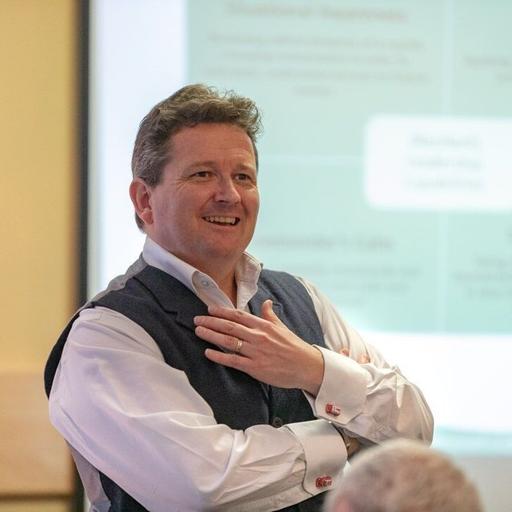
The Resilience Coach | Resilient Leadership Expert
100,000+ People positively affected6,000+ Executive coaching hours£12M+ ROI delivered by RWE npower leadership programme20+ years Learning, leadership and organisational development
Russell Harvey is The Resilience Coach - a resilient leadership expert, executive coach, facilitator and keynote speaker who helps leaders and organisations perform at their best when the world refuses to stand still.
With more than 20 years in Learning, Leadership and Organisational Development, 6,000+ hours of executive coaching and over 70 published podcast appearances, Russell is an experienced and engaging voice on resilience, leadership and navigating persistent change. He has worked with leaders across organisations including Novartis, the NHS, AB World Foods, Kerry Group and The Co-operative Group.
Russell’s work goes beyond helping people simply cope with pressure. He believes true resilience isn’t about “bouncing back”, being tougher or pretending everything is fine - it’s about springing forward with learning and becoming better equipped to lead because of the challenges you’ve faced.
His approach connects the human side of leadership directly to what matters to organisations: engaged people, stronger cultures, better decisions and improved performance. His work has delivered measurable results, including a leadership programme that returned £12 million to the business and a Resilient Leader Programme that achieved more than 1,100% ROI.
In August 2025, Russell achieved his long-held purpose of positively affecting 100,000 people.
More from Russell Harvey
All episodes → Living the Dream with CurveballSpringing Forward: Russell Harvey's Insights on Building Resilience and Embracing ChangeNov 2026Play episode →
 Transformation Station Leadership PodcastTSLP Season 5 Ep. 26- Thriving Is A VerbNov 2026Play episode →
 An Evolving Man PodcastReal Resilience: Why Pushing Through Isn’t Enough | Russell Harvey | AEM #172Oct 2026Play episode →
 Leadership From The Heart | Transformational Leadership InsightsResilience Without the Rebound | Leadership Mindset ShiftAug 2026Play episode →
 Burnout Proof Leadership: Identify Shift and Leadership Skills for Midlife Women EntrepreneursEssential Leadership Skills You Must Have If You Want to Build Resilience & Avoid Burnout When Your Business Gets Hard - with Russell HarveyJul 2026Play episode →
 Your Career JourneyHow to Build Resilience at Work: Leadership, Change & Thriving in Uncertain TimesJul 2026Play episode →
 The ThriveWell Journey | Entrepreneurship, Leadership & Life After DisruptionHow to Build Real Resilience Under Pressure | Russell HarveyJul 2026Play episode →
 Future Fit LeadershipThe 2030 Leader: Why Resilience is Your Most Vital Skill with Russell HarveyJun 2026Play episode →
 Different thinking for Different Time - Mindset Change and Thought LeadershipDifferent Thinking for Different Times - 7 Keys to Building Resilience with Russell Harvey How to Nurture a Resilient Mindset in Business and LifeMay 2026Play episode →