
March 27, 2025
Decoding AQ with Ross Thornley Feat. Russell Harvey - The Resilience Coach
In this episode
Russell Harvey joins Ross Thornley to talk about resilience, leadership, and how personal crisis reshaped his view of acceptance, purpose, and moving forward.
- Work in leadership development and organizational change led to a focus on resilience during major restructuring and financial disruption.
- Resilience is defined as springing forward with learning, not simply bouncing back.
- A difficult period caring for his wife forced a personal test of resilience, acceptance, and grounded optimism.
- Love for his wife became a guiding light and a practical thing he could do each day.
- New habits and perspectives can come from necessity, including learning to approach familiar moments with fresh eyes.
Transcript
ShowHide
Automatic captions of the conversation. They can contain errors and do not name who is speaking.
Hi, and welcome to Decoding Aq, helping you to learn the tools, mindsets and actions to thrive in an ever-changing world. Welcome to the next episode of Decoding Aq. I'm thrilled to welcome Russell Harvey to the show. He is the resilience coach. And what does Russell do? Well, the opening line of his website, I think, says it all. It says, he supports leaders who are wading through treacle to rediscover their mojo and make great decisions. So welcome to the show, Russell. Thank you, Ross. That is brilliant. Yes. I was thinking, oh, golly, gosh, what on earth is the first sentence on my website?
What's he going to say? It's one of those things, isn't it? You do it at the time. You think it's right. And then it totally goes out your mind. Well, he's... Absolutely. That's super. So he's got two decades of experience in learning, in leadership, in organizational development. And in fact, he's dedicated the past 18 years to resilience and navigating the complexities of the VUCA world, something we talk a lot about on this show. So he's an engaging leadership coach. He's a speaker. In fact, he helps people with public speaking.
He's a facilitator. I've been learning about some of the projects that he's been involved in here in the UK. And he has an ambition to impact 100,000 lives by 2025. And now we're in 2025. 2025, yeah, yeah. We're going to see how we're doing on that. He's pragmatic, playful. I've already got a flavor of that in our little green room setup. So I'd like to just start off with, you know, why resilience? What was it? Is there something that happened to you to make it so central to your work, Russell? Yeah, so it was my experiences at the co-op group, essentially.
I mean, prior to that, the word resilience had been around for a while, but not long after I joined the co-op group, as part of a team of many people of leadership development, you know, the top 300 leaders in the corporate center, you know, the world fell on everybody's heads, literally, you know, there was a big financial black hole in the finances, you know, and literally all of my leadership clients, my internal clients, literally come up, head in my hands, going, Russell, what the hell do we do? The world's literally just gone on a, it's gone on a 720, it's gone, is there anything bigger than a 720?
It's just all gone, changed. I said, well, there's this word resilience and there's this acronym, VUCA, and I just went, all our solutions are in there. And, you know, when we really do wrap our heads and hearts around what that actually means and that means what we've got to do, then there is a way forward. And then, throughout all of this, because there was so much restructuring and change going on the COP, I knew that my role would probably be restructured at some stage. I love the COP, still do, love its values.
But when the time came for me to move on, and then eventually set up by myself, I say eventually because there was opportunities in throughout my career to set up by myself, the time it just felt right after the COP group. And then I did another coaching qualification and did the navel gazing of, who am I? What's my USP? And it literally was, do you know what, Russell, you are the resilience coach. This is what you have been living and breathing for some time. So that's how it came about. I've always been interested in human behavior.
What makes people tick? How come we do the things that we do and don't do the things that we do, that we're supposed to? How come we're behaving in this way? What on earth is that all about? You know, so that's what has fascinated us. So it was essentially the experiences of my whole career crystallized at the co-op when, yeah, the resilience coach was born, essentially. And in terms of, you know, spending time in that world, right, it's a great way to learn about something. I think is to teach it to others, write about it, put programs together, and work in that world to take often sometimes these conceptual words, scientific words that we kind of use interchangeably in media or in Latin sentences.
What does it really mean to you in terms of a lived experience? What will it give me a client journey in terms of why would they come and see you? What do you do with them? And then what happens as a result of it? Just walk me through that with a lived experience. Yeah. So it goes with, starts with the definition of how I define resilience. So I define it as springing forward with learning. That's how I define resilience. Me personally. I'm personally not a fan of the term bounce back. I appreciate that it's out there and there's science and evidence and proof behind it.
It's just in my time in this space of working with the resilience, what I've observed people do, which I'm not sure is them demonstrating resilience, is that they'll face into a challenge. They'll face into it with whatever levels of resilience they have at that moment in time. And they'll go, okay, I've done that now. I'll now bounce back. And that really comes across a lot as a subconscious instruction to go back to how they were beforehand. And I, for some reason, my brain's going, whoa, stop, hang on. What have you learnt?
You know, what are you going to keep doing because it worked for you? And what are you going to do differently? Because it didn't work for you, you know? And what are you going to keep doing? So, a client journey with me, an individual coaching client, is somebody that is in a version of overwhelmed. Of treacle. Somewhere on the coping towards the surviving place. So, you know, coping, surviving, thriving. Surviving, in my head, it's like hanging off the cliff edge by the fingernails. I'm literally, I'm just on the edge.
And coping can be a broad spectrum of answering the question of like, how are you? I'm OK. It can be OK, I'm about to tip into surviving or OK. Do you know what? I'm about to tip into thriving, you know? So that OK can be a broad spectrum. So a client of mine is more than likely, you know, at the lower end of the coping. And yeah, overwhelms and trickle. So it's a real interesting thing about when a client might reach out. Because when you're in overwhelm, the idea of doing something about it is just so difficult. It's just so challenging.
My intention when working with clients is never to add to their to do list. It's like, we want to be able to reasonably quickly reduce a level of overwhelm. And that's a real art form of like, you know, when they do reach out and we have an initial conversation about this is what we'll do, the approach we'll take, which I'll talk about in a second, is to go, yes, you're going to have to go away and do some things from our conversation, but I want you to immediately understand actually that some things are going to drop away straight away as well.
So as a bare minimum, your to-do list hasn't got any bigger. You might have had something in, but we're taking some away, so it's just bare minimum has stayed the same. So journey with me when an individual coaching client is because one of the dimensions of being resilient is the purpose. So we'll start to tease out actually what's your leadership purpose, that how come you do what you do, why you're bothered, what do you want to be known for? Hence, my purpose, myself, have a positive effect to 100,000 people and I'm up to 77,006 right now, you know, if people want the numbers.
And if anybody's listening to this now, you can be added to the pot. It's those that have their lightbulb and their realization moments. That's positively effect. And then we absolutely, the vast majority of the time, the big massive lightbulb moments for individuals is because you're overwhelmed, you don't have energy. So we do their strength scope, you know. Playing to your strengths builds natural resilience and natural confidence. So it's like, how aware are you as a leader that what you're doing day to day is playing to your strengths.
If you're not playing to your strengths, you're going to feel overwhelmed. If you are playing to your strengths, you are less likely to be so. So, you know, to start with, it's just seeing where they are on those. It's like we talk about purpose and energy. I mentioned in the, you know, the green room, I've got the resilience wheel. That was what it is that working with a client. And if anybody asked me the question of like, so Russell, how do I build my resilience? I go, there's a wheel, it's got seven bits to it.
And we will get you to engage with your seven bits, you know, and they're all interconnected. And when you work on one, there's positive impacts upon the other. So, you know, client feedback is, you know, that phraseology, do you know what? I'm starting to see the wood for the trees. I've got much greater clarity on, you know, what I'm supposed to actually be doing as a leader, how I go about it, what my responsibilities actually are and aren't. There are fewer things in front of me that I have to do, they're reducing.
One of the other things that I talk about with leaders is to try and simplify it for them. I say that you're only responsible for three things as a leader, which quite often picks their eyes up. They go, what, three? I go, yeah, it's just three things that you're responsible for. You know, they go, what? Delegate brilliantly to that person's strengths. Remove the blockages to your people performing and build, create and cultivate a resilient team. I said, those three things. So literally, every single thing that you've got in front of you and your diary, your to-do list, your meeting and stuff like that, how many of what you're doing meets those three things.
And the vast majority of the time, I go, very little. So it's like, right, our next bit is to now transition you to get rid of all of that stuff that's not meeting those three things, and actually just do the things that meet the three things that you're responsible for. So that's what it's like, you know, as a journey with me as an individual client and the leadership development programs that are on, I sort of go, look, this is the setup, this is what we're gonna start, this is where we're gonna try and get to, and along the way we'll do a much deeper dive into what it is to be resilient, the whole VUCA piece, what we mean by optimism, we're not doing any toxic positivity or toxic resilience, we're not doing any of that, and they start to feel lighter as a consequence.
You can see it, you can see it actually happen to them. And it's interesting, you start off with, getting a common language of what does it actually mean? And so once we have a common understanding of something, we can then build from there in terms of how does it apply to them? Having your framework, your seven stages inside your wheel of looking at it from different lenses. And it's interesting you come to energy as part of it, because from our experience, a lot of what we've recognised and realised is that speed to be able to get to the next place.
And I agree with you, we the same feel it's not about bouncing back. In fact, it's not possible. We can't bounce back because we can't unlive that experience, we can't unsee that situation. And so we're in a new place anyway. And so it might take us a long time, a duvet, a dark room and an ice cream to get over it. Or it could be by the time I finish that conversation, I've already dealt with it because I've got practices, I've got in various places and what my triggers are that actually erodes my resilience and my fuse.
And so that point about energy is so important, isn't it, in terms of how do we foster that energy? Because I know my perhaps resilience and my tolerance for things changes if I have a bad night's sleep, versus a good night's sleep, for example. And all of these things that we think might be, you know, we don't know till we know them. And you talked about when does somebody come? And we're a society of sick care, not health care, aren't we? We wait until it's at the absolute last moment before we'll put in some of these practices.
And maybe we can't even see it. So do you get situations where others can see it and perhaps they're calling it out and offering opportunities for you to get involved with teams and other people than just that individual coming to you? Yeah, absolutely. So, you know, in my humble opinion, you can apply the wheel to an individual. You can apply it as somebody is like how to be a resilient leader. You can, all of the leadership theory and stuff you can connect to different elements of the wheel. Because actually one of the bits is about confidence.
So, you know, there's some emotional intelligence in there. So, you know, things around that. So, you can apply the wheel then to the team as well. So, it's like you've talked about a leadership purpose, but what's the team's purpose? You know, how well do you understand all the different teams' strengths? You know, and at the heart of resilience is attitude. So, it's like what's your attitude? What's your attitude as a leader? What's the team's attitude? These are great questions. They're questions that people get asked a lot, you know?
So, there's a lot of tumbleweeds to start with to go, oh my word! But then you can delve into a whole variety of different ways looking at this. So, yeah, and it applies to an organisation as well, in my humble opinion. I'm just doing some thinking about that, working with some colleagues around that to go, you know, resilient organisation. I'll be really interested in your opinion because whilst there's absolute massive crossover between the well-being word and the resilience word, as long as it's not too controversial, and I appreciate some of the audience might have this job title, but I've got a thought of if an organisation is a resilient organisation, you don't necessarily need a head of well-being, because your organisation is being resilient and as a consequence, your people feel well.
So, the head of well-being is quite often the case that it's there because something's not right organisationally. So, we need to… Yeah, so, you know, I'm not trying to do anybody out of a job. I'm just like, I've got a question that I want the universe to discuss, essentially. I think it's like many things, there's a continuum, right? You talked about the continuum of one putting, you know, survival and thriving at two ends and where people are and using gray words like OK. You know, well-being can mean a lot of different things to a lot of different people, you know, and from, you know, even just the subtle differences of lifespan to healthspan.
And so, for a person to be resilient versus thriving and the definition of thriving, I think resilience definitely plays a key component to someone's wellness in terms of how they are able to deal with an outcome that was not a desired outcome and how they get closer to being able to process that. And, you know, it then spawns into all these other things that you talk about, you know, of resilience leading through energy, through purpose, through adaptability, through a variety of things. What I'm interested in also is your own journey.
So you decided and found this opportunity of, here's my niche. There's lots of coaches around there, lots of people who have frameworks doing great work. And then you set out this ambition that you've said, 100,000 people, 77,000 or so already. What are you working on at the moment that you're really excited about that's going to help you hit the rest of that number? What does that look like for you? What sort of activities are you up to? Yeah, so it is... I'm looking at an online programme. You know, I've looked at it a few times.
That's what I'm looking at as well. I've been working with a couple of colleagues, I know, for a while on actually, you know, resilient organisation piece. You know, what is that going to look like? So that, you know, that will mean as a product that a number of different people within an organisation are going to have to go through something. So each one of those is going to be positively affected as a consequence of doing it. And it's still the things that I've been doing about, you know, guesting on podcasts, having my own, doing public speaking.
It's just like, whenever he first said it a number of different years ago, I didn't think about the responses that I would get, you know. It fascinated me because I'd not thought about it around, I absolutely, I need to be a role model and have a purpose, and that's where the 100,000 came about. And the, the, the right responses I got were, oh, get you, you're a bit arrogant, aren't you? That was one response that, you know, for you that I got. It's like absolutely got that, how are you going to measure it? You know, the human race likes the specifics and the details, so there's clarification around that.
And then the ones that took me a couple of minutes to work out were, add me to the list, Russell. And I was like, what are you on about? And I went, oh, add me. It's like, I'm one. And you go, oh, oh, okay. All right. You know? So, yeah, that's what it looks at for sort of 2025. It's been a bit of a slow burn, you know, and then the last couple of years was, you know, it took off. Probably actually about, yeah, three years ago. The last couple of years have been a bit challenging, which I'm happy to share as part of my own personal resilience journey as well.
And so I've got the rest of 2025 to sort of nail the rest. I haven't got a clue what comes afterwards. I've not thought that far ahead, essentially. And a lot of people, you know, go through reflection to figure out, what do I want to leave behind? What's my legacy? What's my impact on the world? You know, how do I affect my inner circle of my family, people I love? And then we shift to wider parts of that, right? And we have these various different channels. You talked about digitizing things, creating programs, and then communication programs like podcasts.
And also, intentionality gives you then collaborations. How do you partner with other people that you expressed? So I think many who are listening are, you know, often got their ambitions hidden inside them or articulated somewhere depending where they are on that scale. And then how becomes at some points a, you know, real heavy weight to carry, and others brings you the lightness and inspiration to what I'm doing works. You inferred a little bit to some darker times. Can you share a little bit more about that? Yeah, yeah, absolutely, I can.
And just also on about, if there's anybody inside themselves have got this, there's something I want to say. So one of the dimensions of being resilient is confidence. So, you know, and so that can be a double edged sword of like, I want to say, share something, but I'm only going to feel more confident in it when I talk about it. So, you know, I just had to put on some, you know, confidence underwear that day and go into a room full of people and go, right, I want to tell you about my purpose, essentially. So, yeah, so from on a personal point of view, the last couple of years, my wife has been exceptionally ill and I've become her carer.
So she's had the most horrific time with her mental health and she's also had a stroke. So, you know, she's just one of the most incredible individuals on the planet. I know I'm biased, you know, essentially, but she's, you know, polymath, highly intelligent, full of absolute enormous energy and enthusiasm for life. And the last couple of years, that's gone. It's disappeared. And she's still there inside herself. And so it's just that, so my identity, you know, my purpose still exists, but my, you know, I have had to persistently and permanently look at the resilience wheel myself and go, OK, Russell, how are you role modelling this?
What are you doing? I've talked a lot of times is all about the word optimism. So for me to role model optimism, you know, starts being grounded in reality. So the times, my reality is, there's no way I can describe to you how horrific my reality was at times, what I was looking at, what I was dealing with, what was in front of me. But I also then had to have those conversations with myself and my support network, one of the other dimensions of being resilient, to go, this is my reality. And how much do I accept it?
Oh gosh, I've always said to loads of different clients, you have to accept your reality with acceptance, with good grace. How the heck are you doing that right now, Russell? It's like, oh God, I'm not, I'm hating this and I'm, you know, I'm struggling. I have got myself through at different times. Things would sometimes change on an hourly basis about what was in front of me. Sometimes it was weekly, sometimes it was monthly and it will continue to change again. So the acceptance of my reality needs to keep shifting because where my wife will actually get to in her recovery is just an open-ended question at this moment in time.
She'll get somewhere, you know, but where she'll actually get to, I have no idea. So that's another reality that I have to accept. So you choose to accept, right? Yes, yeah. Because there's options, you know, in these things from delusion to, you know, reality and acceptance. And of course, reality is a perception, a perception of that individual. So your reality and the perception you have will be different to your wife's of what's going on and people around you of those things. And to live and embrace that can be challenging, like you say, with good grace.
Oh, yeah. Yeah, it's just one of the most... Well, one side of the coin, one of the, you know, I say the positive unintended consequences. But one of the things that has really given me succor, salvation, you know, heart and hope is our love for each other. That has just been, you know, consolidated exponentially. So, it's like, OK, I have got a real serious grounding. Something deep-rooted inside me has been solidified and grown and made better. And so, that is, you know, a guiding light that was also something else that has just kept me through each day to go...
It's like you've got a task to do, not a task. You've got... There's something that you can do, Russell. The thing that you can do is you can love her. I was like, yeah, well, OK, I can do that. That's dead simple. That is absolutely just no problem with that at all. I can do that. I can do that all day, every day, and that's easy. So that was a real, you know, saviour for me. So for people that are listening, it's like, what's your version going to be of your guiding light or the thing that's going to solidify you?
And it's linked to purpose, but that really was something that's useful for me. And it's a, I've spoken to a good friend of mine who runs an addiction recovery organisation. His name's Joe Polish and it's called Genius Recovery. And a lot of what he talks about when people are in very dark moments of their, do they have a place in the world anymore? That disconnection of where's my value to being able to find connection in service and to see how you help somebody, serve somebody, brings back a level of vibration to you to take the next step, take the next breath, you know, see the next sunrise of those things.
And I think it is for many people, we will all experience transformations of our current physical being and people around us. And at those times, it questions us and it questions our values. And values are only really questioned when it's tough, when it's difficult. And so what a great opportunity to reveal oneself when we're in those moments of challenge. And it is because, unfortunately, with exactly your point, we don't know how resilient we are until something unpleasant happens. So I'm of the opinion, hence, you know, the springing forward with learning definition, I'm of the opinion of like, why wait until the horrible thing happens before you choose to engage with your resilience, you know?
So I'm about this idea of building proactive resilience, you know? So choose to engage with your resilience wheel now, today, because then you'll be building... Physical resilience, emotional resilience, mental resilience, all of those sorts of things that, you know, compound and correlate with each other. Yeah, totally. So it's like I'm of that view. And it's also potentially a challenge in the world that we're in today. I do still concern that we are really falling into a trap and too many of us believe that this is a quick fix.
I can take a pill to build my resilience. And I go, no, I'm ever so sorry today. It's a lifetime choice, you know? However, how can we do that so that you find that interesting, enjoyable, motivating, inspiring, to go, actually, do you know what, I'm going to choose to develop my resilience day to day. And I'm doing it because actually, I'm enjoying doing so, you know? Choosing to, and you mentioned the word attitude. We use the word, you know, mindset around certain things. And we actually assess that component. And I'm interested if we flip it a little bit, Russell, for others that are perhaps they're not necessarily facing the loss of somebody close to them, but they might be suffering the potential loss of responsibility, the potential loss of role and the potential loss of identity, right?
We're going to see a monstrous shift in the workforce, yes, you know, in terms of AI as the broad spectrum. And we can do that in terms of software and agents completing tasks for us, assisting as co-pilots in every area, from health care, walking from diagnosis to actually surgery to aftercare, being tech enabled without humans, some will be augmented by humans. And there is a potential future where many roles will be taken by humanoid robots. And we might be comfortable if those were dirty, dangerous and disgusting jobs.
We might not be happy if it was my job that made me happy. So in the same thing of dealing with these transitions of loss of others or ourselves, of identity, what are some of the things people could leverage that you might have experienced or that you teach when they're facing a change that is impending? I mean, you know, right now, many of them, you mentioned re-structures, but technology is driving a lot of those re-structures because the types and skills that we need are different. Yeah. So, ironically, it's about this lovely word of adaptability.
So for people, so it's the classic question of like, what do you think about change? It's that question. And I know that the response is going to be, it depends, Russell, and I'm aware of that. However, to prepare for this future, this imminent future, and each time I look at all of the AI stuff and find my own personal way to go, right, yeah, you need to understand what this is all about. Every time I look at it, my mind is absolutely blown and I get excited and fearful in equal measure about what on earth it's going to mean.
However, I can't get away from how people are going to support themselves, face into this, is to really reflect upon how they view change. And, you know, what changes do they like? What changes don't they like? What is it that enables them to face in to change? It's also really understanding the nuance between adaptability and agility. So you know, openness to change, adaptable, agile, doing the change quickly, making the decision. So there's decision points. So it's about actually cultivating the adaptability part of you in just continually finding simple, easy ways to do new things.
If you always take particular one new route to work, take a different route to work. If you always drink from one mug, drink from a different one and see how out that feels. It's getting yourself into the reasonably permanent place of actually just openness and curiosity and understanding how you enable yourself to do that. And that will build to... OK, right. I'm now prepared to realise that my role is about to go. And I'm now more OK with that than I was, because I've been working on my general openness and curiosity.
And so I am prepared to go now have a conversation that I wasn't prepared to have to go, what's the crack then? How soon is it before my role's actually defunct and gone? And, you know, right, I need to now think about what I'm going to do instead, you know? Yes. And, you know, in that point, we'll probably leave it too late, and we'll either armor and defend and push those things away, or we'll champion them and make them happen. And I think it's an interesting paradox of this permanence of impermanence, you know, that is in flux.
And you talk about VUCA, you know, the acronym of volatile and certain complex and ambiguous. I've been talking about for a while now about BANI, and I wonder if you're familiar with that in terms of brittle, anxious, non-linear and incomprehensible. And I think where we are facing things that are incomprehensible, I can't imagine what it is going to be like in five years time, because things are shifting that quickly. How we are training, how we are upskilling, how we are preparing our workforce, is an absolute responsibility of leaders and organizations to do that.
And it goes from a, oh, that's good, we don't want people to burn out, we don't want, you know, we want well-being, to actually, you're going to be defunct unless you do this. And Peter Diamandis talks about, you know, 2030, there'll be two types of organizations. There'll be the organizations that have adopted AI, and there'll be the organizations that don't exist. And it's as black and white as that. And so where it permeates in so many different ways is fascinating to then our resilience when we're figuring stuff out, because things will go wrong unexpectedly and expectedly.
And this experimentation that's required from managing processes that I know what's going on to, I don't know what the right questions are to ask, who to ask or what the result is going to be. How do we figure that out? Yeah, and I don't know if this helps, but I'm of the opinion that if I go back to, how do I define resilience? You know, springing forward with learning. So there are some behaviours. So if you're role modelling that, in my mind's eye, what I view leaders doing to role model is bringing forward learning, is from all of their life's experiences, they are pausing.
And now pausing can take on a whole host of forms, which we'll come back to in a second. And in their pauses, they are recuperating. They are re-energising. They are recovering. They are reflecting. And they are learning. So they are asking themselves two questions as a bare minimum, you know, which is in terms of what I've been doing, in terms of what I've been doing recently, what am I going to keep doing behaviourally, because it's working really well for me? And what am I actually going to consider stop doing, because it's really not working well for me?
OK? That, in my mind's eye, is somebody that is role modelling, springing forward with learning, you know. So it's the R word in there as many times as, you know, you want around that. You've articulated really well the component that we called unlearning. So intentionally letting go of something that's no longer serving you. And often we get a little glimmer of an applause along the way. It might be that monthly check. It might be the pat on the back of well done. And all of those signal us to saying, oh, actually, I should keep it until it doesn't work anymore.
It all works till it doesn't. And the key, I think, is to get further upstream, to not wait until it completely fails. The, oh, that's no longer serving me in my reflection. What am I actually... What's my baseline? Is it not working or is it I get no joy from it? Or it's not working well enough? What is well enough to you before you'll let go to seek next of that? And I think this is where the, you know, EQ and the Aq really need to come together. Because our ability to reflect hinges massively on our emotional intelligence.
You know, what am I thinking and feeling? How come I'm having the thoughts and the feelings that I am? Am I aware of where they're coming from and what they're connected to and actually how they're impacting how I'm behaving and my mindset essentially? And then, you know, so as a consequence of all of that, and I've worked out what I need to stop doing, how willing am I to adapt and change my behaviour around it? We all need help with this, right? Whilst we can have a solo sport of reflection and development and those things, it works much better when it's played as a team with another person.
It's why, you know, coaching and the impact of coaching is so profound. Whether you're an elite athlete trying to perform to be the best in the world, or you want to be the best version of you in the world in your role, your role as a husband, as a wife, as a father, as a son, as a daughter, as a, you know, account manager, whatever it is that you do. And so I think it really is the hour and the period of coaches and coaching in the future of work where we had management and lean and trying to make efficient things, because we've made it up, we made it real, and we were then in the make it reoccur.
And so it was all about the efficiency of recurring what we did before. We're going back to make it up and make it real. And then we might not even get to the make it reoccur, we have to make it up and make it real, make it up and make it real. And in that phase, there's an awful lot of uncertainty that we need outside people. So that that reflection, we need conversations, we need coaches, we need other data, assessments, all of these parts in the mix. So as we come to the final sort of phase of this, I want to build my resilience.
I want to work on that. I want to work on it for me, for my team in those pieces. In the next 10 days, what are some of the things that I could do, Russell, to help me do that? Yeah. I would, in terms of purpose, and I've been talking about this a lot, there's a number of different reasons to it, and some people will find this easier than others. So to help with defining your purpose, to think about actually what your future holds in the future world of work. It's actually, it's an old tip and tooling technique that I learned about 12, 15 years ago.
So, for people that are listening and watching now, it's reflect back on your life. Doesn't matter how old you are. Reflect back on your life and start to remember those things that have made you feel proud, OK? So, just those things that you've been involved in, that have given you a warm and fuzzy feeling about, actually, yeah, I was involved in that and I've got a sense of pride in doing it. And then start to sort of unpick, you know, what were you doing in those instances? Were you leading it? Were you part of a team?
What was your role? What strengths were you playing to? What skills? What capabilities? What was your mindset? What were the conversations that you were having? You know? And I do this a lot with clients and some people start to do it straight away and some people take quite a few goes at it, but when they start, when the floodgates open, the floodgates open, you know? And they literally go, I've got all of this stuff. And they create this enormous mind map for me, you know? About these are all these things in my life that have made me feel proud.
And you go, OK, well, that's your purpose. And they go, huh, huh, right, OK, all right. So it's like, so going forward, how are you going to find ways to do these things that make you feel proud? You know, what might be the environment? What might be the circumstances? Or in circumstances which are completely incomprehensible, how are you going to continue to do these things? So that's one thing that individuals can do. I'm really, really linked to that as well. I absolutely, please think about your natural energizers and your strengths.
You know, to build natural resilience and natural confidence. There are triple whammy around the resilience piece or your strengths. So understand, you know, that out of the strength scope psychometric I use, you know, you've got empathy, compassion, you've got optimism, you've got critical thinking, you've got creativity, flexibility, you know, you've got all these different things. Really start to sort of go, okay, which of these float my boat? You know, and think about, okay, I need to turn up to life each day, giving myself an opportunity to actually play to these strengths.
And that is going to keep building your resilience. So, if that's, do you need any more over the next 10 days, Ross, or is that enough? That is a great way to start very practical and something that, you know, you mentioned before, it's not a pill you take and ta-da, it's a continual journey of life to work on and enjoy the work. And often when we're doing something that is new, it can often be, you know, unfamiliar reads on the same coin, on one side excitement and on the other side fear, and, you know, not enjoying it.
But where do we find those opportunities to do that? So some great practical... One other thing, if I may, just make... Yeah, in those reflections, make some really great decisions about who you want to be with you on this journey. So think about your network. Think about the humans that you've had in your whole life, you know. Thinking about all those things that make you proud, you know, it's like, actually, you know, I was working with Ross on this, and I don't know what, I've not spoken to him for five years. I would reach out to Ross, reach out to Fred, reach out to Asif to go, are you, you know, we used to do stuff together and I really quite enjoyed it.
What are you up to? You know, absolutely make some real clear decisions about who you want with you on this. That intentional choice. Yeah. Yeah, that that you don't change your choosing. And so choose wisely. One of the questions I ask at the end of every episode is around curiosity. It's inspired by the first guest I had, Dr. Diane Hamilton, who wrote The Curiosity Code. And the question, Russell, is when was the last time you did something for the first time and what was it? God, when was the last time I did something for the first time and what was it?
Do you know, that's brilliant. Well, hmm, it will be, hmm. So, this does link back to the experiences with my wife. So, it was my first experience of asking for help from the mental health services of the United Kingdom. And it not going very well, essentially. That was, I never had to do that before. I'd never had to go out and say, actually, I need some, I need some help, you know. And it, and, so, you know, NHS is wonderful and fantastic, and there were so many brilliant people trying to do great things. But the help that I needed didn't exist, essentially, at that moment in time.
We have got help since, but yeah, that was the new thing that I had to do, and it was in the last couple of years. And so, yeah, that, yeah, it expanded my horizons, essentially. Yeah, and often we do things as a result of necessity or desire. And both are powerful drivers, right? But to reach out to something we haven't done before, as I say to all my guests, can either be literal, or it can be the same thing you do every day, but with new eyes. How might we find ways to think that's the first time, the first time I've hugged her?
The first time I've kissed her thousands of times. What if this was the first kiss? How would I approach it? What would I do? And living life with those naïve childlike eyes and mind is a beautiful one. It opens up for the preparation of what's to come, where there will be many more new than there will repeat. And so it's been a real wonderful episode. Everyone is so different. You know, you have a plan at the beginning, you put a few questions and a few ideas, and then you discover energy and journeys in conversation.
And I love the flow. I truly appreciate you being you authentically and sharing your life and your journey with all of us today. So thank you. No, you're very welcome. Thanks very much for having us on, Ross. I didn't know where we were going to go. I didn't know there were some of the things that we were going to talk about. I didn't know they were going to come up, but it was like, yeah, they're here. So let's just accept the reality. If people want to get in touch with you, the Resilience Coach, how do they get in touch with you, Russell?
Really simple. So it is probably through the website. So it is alltherw.theresiliencecoach.co.uk and email is russell at the Resilience Coach and all on social media. It's just literally the Resilience Coach. You will find me essentially. Brilliant. Thank you. Give your wife a hug. Yes, I'm going to do that. Like it's the first time. Yeah, no, I was thinking literally, I was thinking about that. Yeah, that's exactly what I'm going to go and do. I'm going to go and do the same. I'm going to go and do the same and yeah.
Thank you so much. Yeah, my pleasure. Do you have the level of adaptability to survive and thrive the rapid changes ahead? Has your resilience got more comeback than a yo-yo? Do you have the ability to unlearn in order to re-skill, up-skill and break through? Find out today and uncover your adaptability profile and score your AQ. Visit aqai.io to gain your personalised report across 15 scientifically validated dimensions of adaptability. For a limited time, enter code podcast65 for a complimentary AQ me assessment.
aq.ai, transforming the way people, teams and organisations navigate change. Thank you for listening to this episode of Decoding Aq. Please make sure you subscribe on your favourite podcast directory, and we'd love to hear your feedback. Please do leave a review, and be sure to tune in next time for more insights from our amazing guests.
About Russell Harvey
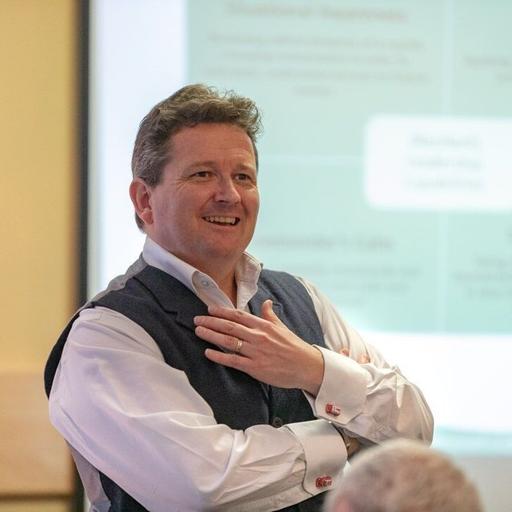
The Resilience Coach | Resilient Leadership Expert
100,000+ People positively affected6,000+ Executive coaching hours£12M+ ROI delivered by RWE npower leadership programme20+ years Learning, leadership and organisational development
Russell Harvey is The Resilience Coach - a resilient leadership expert, executive coach, facilitator and keynote speaker who helps leaders and organisations perform at their best when the world refuses to stand still.
With more than 20 years in Learning, Leadership and Organisational Development, 6,000+ hours of executive coaching and over 70 published podcast appearances, Russell is an experienced and engaging voice on resilience, leadership and navigating persistent change. He has worked with leaders across organisations including Novartis, the NHS, AB World Foods, Kerry Group and The Co-operative Group.
Russell’s work goes beyond helping people simply cope with pressure. He believes true resilience isn’t about “bouncing back”, being tougher or pretending everything is fine - it’s about springing forward with learning and becoming better equipped to lead because of the challenges you’ve faced.
His approach connects the human side of leadership directly to what matters to organisations: engaged people, stronger cultures, better decisions and improved performance. His work has delivered measurable results, including a leadership programme that returned £12 million to the business and a Resilient Leader Programme that achieved more than 1,100% ROI.
In August 2025, Russell achieved his long-held purpose of positively affecting 100,000 people.
More from Russell Harvey
All episodes → Living the Dream with CurveballSpringing Forward: Russell Harvey's Insights on Building Resilience and Embracing ChangeNov 2026Play episode →
 Transformation Station Leadership PodcastTSLP Season 5 Ep. 26- Thriving Is A VerbNov 2026Play episode →
 An Evolving Man PodcastReal Resilience: Why Pushing Through Isn’t Enough | Russell Harvey | AEM #172Oct 2026Play episode →
 Leadership From The Heart | Transformational Leadership InsightsResilience Without the Rebound | Leadership Mindset ShiftAug 2026Play episode →
 Burnout Proof Leadership: Identify Shift and Leadership Skills for Midlife Women EntrepreneursEssential Leadership Skills You Must Have If You Want to Build Resilience & Avoid Burnout When Your Business Gets Hard - with Russell HarveyJul 2026Play episode →
 Your Career JourneyHow to Build Resilience at Work: Leadership, Change & Thriving in Uncertain TimesJul 2026Play episode →
 The ThriveWell Journey | Entrepreneurship, Leadership & Life After DisruptionHow to Build Real Resilience Under Pressure | Russell HarveyJul 2026Play episode →
 Future Fit LeadershipThe 2030 Leader: Why Resilience is Your Most Vital Skill with Russell HarveyJun 2026Play episode →
 Different thinking for Different Time - Mindset Change and Thought LeadershipDifferent Thinking for Different Times - 7 Keys to Building Resilience with Russell Harvey How to Nurture a Resilient Mindset in Business and LifeMay 2026Play episode →