
July 23, 2024
Playing to Your Strengths: Proactive Resilience | Russell Harvey
Listen
Sound bites
Your purpose is to discover the organization that is going to enable you to do those as much as possible, and you're going to have a really great career.
If I spend time doing that behaviorally, is it putting me into one of my three buckets? If it's not, don't do it.
In this episode
Russell Harvey joins The Resilience Podcast to talk about proactive resilience, strengths based leadership, and how leaders build resilient cultures.
- Proactive resilience means using tools and techniques before adversity arrives, not waiting until after a crisis hits.
- Leadership work should focus on three responsibilities: delegating to strengths, removing performance blockers, and creating a resilient culture.
- Strengths matter more than dwelling on weaknesses, especially when people struggle to name what they are good at.
- Purpose, reflection, and community support are central parts of resilience and personal identity.
- Resilience is not just toughness; it also depends on caring relationships and group support.
Transcript
ShowHide
Automatic captions of the conversation. They can contain errors and do not name who is speaking.
Think about some of the things that you've done in your life today, that you've given you that warm and fuzzy feeling. Okay, if I spend time doing that behaviorally, is it putting me into one of my three buckets? If it's not, don't do it. Your purpose is to discover the organization that is going to enable you to do those as much as possible, and you're going to have a really great career. Russel Harvey, The Resilience Coach, is a dynamic and engaging leadership coach, facilitator, public speaker, managing director, podcaster, and radio host, with over 20 years of experience in learning, leadership, and organizational development.
Russel specializes in resilience and VUCA, and is passionate about positively affecting 100,000 people by the year 2025. Russel, welcome to The Resilience Podcast. Great to have you here. Thank you ever so much, Brad. It is brilliant to be here. I've been looking forward to this for some time, so it's fabulous to be here. Likewise, likewise. Perhaps for those who haven't encountered your work yet, you could share a little bit about who you are and what you do. Absolutely, yes. So I am the resilience coach, not just any old resilience coach.
Nice marketing plug there. I am the resilience coach. So whole career in learning and development. And I think really since I was like a young kid, absolutely fascinated in what makes humans tick, how can we do the things that we do, do and we don't do. And so the resilience coach is nine years old this month. I've been in corporate world, public, private, mutual sector. And I describe myself as a coach and a facilitator. And one of the dimensions of being resilient is having a purpose. So my purpose is by the year 2025, I want to positively affect 100,000 people.
And right now, I'm up to about 72,000-ish, essentially. Wow, that's a lot of coaching and sessions and facilitation. It is, it is. It's also, so there's a bit of science behind it, and there's also a bit of other commentary around it about when I started. So, you know, guesting on podcasts, I have my own radio show, got my own podcast, coaching, facilitation sessions. And actually quite a lot of people have sort of said, well, actually, Russel, you've positively affected me. I've role modeled some of the things that you've shared with me.
And so I've positively affected somebody else. So I think you should add them to your list as well. So it's just over time, it's gone, okay, let's think about how many things have happened and legitimately, how could we come to a number, you know, around this? Not, you know, trying to be as genuine as possible around it, but some element of it is a little bit of a finger in the air, essentially. Of course, of course, but it is that ripple effect. And sometimes we don't even know how many people we've impacted. I know through my work, it's often someone's family or daughter or spouse that learned the tip from their partner or their parent, and that really helps them on their journey.
And those are the stories that we sometimes don't even know about. And that really, really matter. But I wanted to ask you, why resilience? Why were you attracted to this idea of resilience? Yeah, so it came about essentially from my last permanent role, which is an organization called The Co-op. So cooperatives exist, you know, globally, worldwide, and there's The Co-op Group in the UK based in Manchester. And my last permanent role before I set up The Resilience Coach was doing leadership development with them. And not long after I joined as an organization, it got itself into serious trouble.
So it's like, it'll be almost getting close to 200 years old now, and I was about 180, 80-ish when I was there, not long after I joined. It was just scary close, how close it came to disappearing. This episode is brought to you by The Resilience Institute's new Resilience Assessment. It's designed to redefine how we understand and enhance organizational resilience with features like leadership lenses so that you can view your data from multiple perspectives. Imagine being able to understand mental health risk or wellbeing, resilience, even happiness within your organization and team by team.
The tool features simplified scoring and it's based on our robust and reliable resilience, diagnostic and development framework. The Resilience Assessment is designed to equip leaders with the tools needed to support a thriving workplace. It's built on two decades of research, five rounds of psychometrics and it will help you to identify risks like burnout before they affect your team, empowering you to build a healthier and more productive work environment. So click the link in the show notes below or visit resiliencei.com and sign up for a demo.
You can try it for yourself or book a demo for your team. The Resilience Assessment is where well-being meets performance, ensuring that your team not only survives, but thrives. Let's get back to the episode. And so all of my internal clients, literally were coming to me with their head in their hands, going, Russel, what are we going to do? The business is just in our streets. And I said, well, there is this word resilience that keeps getting talked about, and there's this an acronym called VUCA, V-U-C-A, the world we live in, volatile, uncertain, complex, ambiguous.
And I said, our answers are in there. So all day, every day, everybody that I was supporting, I was talking about the word resilience. And when I left the co-op and did that navel-gozing of like my USP, it's like, well, literally, I am the resilience coach. That is what I have been doing and it's what I love. And it makes total sense to me. It's about the human condition. And so that's why the resilience piece came about. I've never tire of talking about it, never tire of thinking about it, never tire of finding opportunities to support people to think about their resilience.
So essentially that's it. I love it. I love it. Have you found that people push back against the word resilience at all? Because we have, and some people say it's not about resilience, it's about the system is making us work too hard and it's burning us out. Any pushback that you've experienced? Yeah, lots. And so my intention is to try and cut that off at the pass, you know, and sometimes a fail. But yes, plenty of pushback. I get really concerned about this general sort of approach of like, this thing isn't working, you just have to be resilient.
And that immediately sort of gets my back up. And to me that sounds like, you know, toxicity, or you know, or you've just got to be positive. So toxic positivity. And also, well, actually one of the other pushes backs as well is, so through the pandemic, you know, our national health service, you know, same as other countries came under extreme pressure and trying to then sort of say, we're gonna put some resilience events on for people to support them. You know, one person who was at the front line said, oh, for goodness sake, literally all day, every day, I get up and I kill myself trying to survive in this environment.
I'm being resilient, I don't need a resilience workshop. And I'm like, oh, if I could find a way to engage with you, you are in such dire need of support right now around this word resilience. So how can we find a way to say, we're gonna put something on to support you and maybe not call it resilience? Because that's immediately annoying you and frustrating you and turning you off. So yeah, there's pushback about it all the time. And my intention is to shift that narrative away from that. I'm really not a fan of like, yeah, it's all not working.
You've just got to be resilient to do with it. You've just got to suck it up. And I'm going, I don't believe that's not my view of what resilience is. So can we talk more about that? Yes, definitions are important. We called several of our programs, Performance with Care during the pandemic, because it's kind of like, we need to maintain a level of performance because it's important. We're serving customers, especially in healthcare. But we need to care for ourselves. And often that care was a missing piece. People were suffering and they were burning out, but they were also on their device until 2 a.m.
and then sleeping for four hours and then getting up. And so it's really about which rhythms, how can you care for yourself a little bit more? Because that's ultimately going to boost your resilience. I don't know if you found the same type of thing. I absolutely do as well. So I define resilience as springing forward with learning. That's how I like people to engage with it. Because for me, that is what we are doing. So behaviorally, to be actual, to achieve that definition from all of life's experiences, you need to pause, you know, and pause can be mindfulness, pause can be going for a walk, pause can be literally looking at the wall and dribbling, you know, pause can be talking to a friend, you know, pause can be in all sorts of variety of things.
And in those pauses, that's when there's an awful lot of the self care would come in for me, because that is the emotional, physical, mental, spiritual to sort of say, okay, I'll ask myself a couple of questions right now about behaviorally, the things I'm doing, how many of them are useful and helpful to me right now? And how many of them are unhelpful and not useful to me right now? And how am I going to move forward, keeping hold of the ones that are useful, putting away the ones that aren't useful and actually maybe adding in some additional behaviors that are gonna be useful and helpful to me.
So I also want people to think about proactive resilience because as well you know, is this recovery element around resilience. People don't know how resilient they are until they have to recover from an adverse event. And I'm going, why wait? Why wait for the bad thing to happen before you engage with the resilience? How come you don't engage with it right now? Engage with literally, you know, the tools and techniques that exist. So that actually, when unfortunately, an unpleasant event is going to come your way, you're better equipped to deal with it.
And actually, your view of how negative an event it is, could be shifted, it could be shifted. If your resilience levels are already high, how you face into it in your view of it could be better than if literally, you've not done anything around your levels of resilience and then it happened. How you deal with it would be more challenging and more difficult. I really like that. It's almost taking a step back. I like the idea of the pause, audit those behaviors and practices that are supporting you, those that are not, and bounce forward, spring forward with learning.
See, I'm not spring forward, absolutely, yeah. Cause I'm not a fan of the term bounce back, cause we can't go back. Yes, exactly. So I know it's a play on words, but every time I say it, other people say, I want you to do this immediate free frame. Everybody in the room or the individual always starts to nod, to go, if we say to ourselves, right, negative event happened to me, I'll now bounce back. You were doing that subconscious destruction of, I'll go back to how I was. And I'm going, oh, okay, you can't do that.
It's like, how are you going to take this experience, the learning from this experience forward into the more resilient you? So, it's bringing forward learning. So aligned. In fact, we talk about bounce forward. Rather than bounce back. Yeah, because you can't go back. It's just integrate what's happened and commit to moving forward. That's the way. So I've got an interesting statistic here, which is that 80% of executives who receive coaching report increased self-confidence. How does executive coaching contribute to this boost in self-confidence?
In general, the executive coaching conversation is probably quite unique style of conversation or very nicely the feedback that I get from a lot of clients is the type of conversation I have with you, Russel, is like no other with anybody else that I have in my life, not even with my partner. I have a different style of conversation with you. So it's also those things that if you're a leader, they can say it's lonely being a leader. So you've got somebody that's like a trusted support that is there. And the tool, there's two tools that I use.
One of them is a build upon all of the great work from Robertson Cooper about what it is to be resilient. And on my website, I have the resilience wheel. And so I've just taken Robertson Cooper's work and added a couple to it. So the resilience wheel, I engage with my clients on and it's got seven aspects to it. And it's like, one of those is confidence. So that's how we, you know, we look at that. But at the same time, an awful lot of what we do is looking at all different aspects of the wheel, because they're interconnected.
And actually that they have a knock on positive impact on somebody's confidence. So sometimes the route to building confidence is to not really talk about it, is to not really go there, look at all other aspects of the resilience wheel. And the other significant one for me in terms of it really seems to work well for me is I use a psychometric called StrengthScope. Clever people and I have identified 24 strengths. Playing to your strengths, as you know, builds natural confidence and natural resilience. So the volume of conversations that I have with my clients, which start from, so please tell me what your strengths are, quite often they're silence, you know, because they go, I'm not entirely sure.
So we go, right, let's do your StrengthScope. Let's do your significant seven in your top three. They'll get their report. And generally speaking, their eyes will go to their low score, the one that they've got least energy for. And they go, oh, so is my is my homework Russel to work upon this that I'm not good at? No, no, you see that thing over there that you love doing, and you are doing doing your homework, for want of a better word, is to do more of that. And the volume of people's minds that are blown by. So you want to spend time doing more of the things that I love doing.
I go, yeah, absolutely. That's all I want you to do. He says, well, look at the other stuff. That's what we want to do. Because through life and educationally, and the vast majority of performance management conversations, they're all about actually, so you're pretty good at that. Let's forget that. These are the stuff you're not so good at. Let's spend time doing that. And the things that you're not good at, you won't have natural energy for. So you're literally asking people all day, every day, to do something that de-energizes them and destroys them and breaks them.
And I'm going, let's not do that. Let's literally just spend all of this time in this place that you love doing, that you're at your best and you feel great, and we'll build upon that. And that just, for my clients, just blows their mind and really impacts their levels of confidence because they're literally going, right, so I have to find ways every single week to harness the things that I naturally enjoy doing. I go, yeah. They go, that's genius. That's just literally, that's just blowing my mind. And I go, okay.
And we go from there, essentially. I think that's how I have sort of an impact when I do. And they're getting people to harness their strengths. Yes, it's interesting how many high level executives, and we're talking CEOs and CTOs and CFOs have a level of imposter syndrome, and they always feel like they're not enough. I just need to, if I could only improve my writing skills, if I could only improve my presentation skills, have you encountered that kind of imposter syndrome at the top? I absolutely do. And I also go for an immediate reframe as well.
So I think this is the third time I said this. I'm a fan of a lot of things. So I'm not a fan of bounce back. I'm also not a fan of imposter syndrome as a terminology. And it really is fascinating about, it came up this week on some social media post, and I decided to weigh in on it. And it's fascinating because for me, it's more in the space of self-worth, self-esteem, self-efficacy, self-belief, self-confidence. And it's also interesting as well that one of the strengths around the strength scope is self-confidence.
So even when some of the clients I work with, if they've got a really low energizer on self-confidence, I'm at pains to explain to them that that does not mean that they are lacking in confidence. I'm at pains to explain to them that they just don't have any natural energy for bigging themselves up. It isn't their go-to place to literally immediately think about what my skills and capabilities are. However, they can learn it. It's a behavior, it's a habit that they can get into. And when they play to their other strengths, they'll be building natural confidence.
So I absolutely, yes, I do encounter people that say, yeah, I've got imposter syndrome. But my goal to response to that is, let's explore this terminology. And it's a label that I don't think is helpful to attribute to anybody. I don't have a better explanation for trying to get people to think about it, but the most prominent syndrome that we hear about in the world is Down syndrome. So it's likely that's a syndrome. Imposter syndrome is not the same as that. So I counter it and I challenge it and I shift it more into this line.
Let's talk about this confidence word, because it's one of the dimensions of being resilient. There's a way in which we can naturally get you to build it by playing to your strengths. And actually, let's look at what your natural strength energizer is around confidence. And all of those together refrains the whole self-talk about what they can and can't do and who they naturally are. It's very important to challenge some of these labels. And I never thought of it from the perspective of a syndrome is normally a medical diagnosis of some sort.
So to apply a label like imposter syndrome, I have a syndrome because I feel that I'm in the wrong place at the wrong time, it's not helpful. And it's similar, we've been exploring the term burnout. While it has been classified by the World Health Organization, to label yourself as burnt out is not helpful. You know, humans are not like candles that just burn out and you're done. We're regenerative systems and often it's just, and you mentioned the word habits, often it's a change in some habits and practices and thinking patterns, and you can bounce forward, spring forward again.
You can, you can, totally. And for me, that's why it just resonates so well with me, but I feel free to, I'm happy to be challenged on it around this, you know, why I talked about resilience as springing forward with learning, with this habit of, from all of life's experiences, pause. So also if you think about when you've played to your strengths, you are, you are nice tired. You've played to your strengths, you're feeling great, but you're also nice tired. You need to recover from nice tired, as well as recover from, actually, do you know what?
I have had to spend time recently where I am de-energized, I am depleted. I haven't been able to play to my strengths. I've had to do those things that I find difficult or I've had life circumstances, which just means that I am, I am battered and depleted. So you've got to recover from those. But I think we miss this idea of like recovering from all of life's experiences. Yes, I love that idea of nice tired, because there is a very real experience of, I've been playing to my strength, I've been in flow state, I've had a great day.
And in the evening, you feel fulfilled and a little fatigued. And you fall asleep and you wake up going, life is going well. That's what we need to aspire towards. Most definitely. Yes, most definitely. So how can we get into nice tired more often? That's a question that I have asked of many others, you know. Some people are still cogitating on it. I'm sure everybody listening now is going to go away and think about, okay, how can I get into nice tired more often? Yeah, there's a name, isn't there? Nice tired is great.
And I think that when you've been in flow state, which is matching your skills to a challenge, and that's leveraging your strengths, you can't stay in flow state forever. Flow state is, for most people, it's around 90 minutes of deep immersion in a task. And after that, you do need to rest and recover. It was interesting. I was speaking to Professor Tal Ben-Shahar. He's a professor from Harvard on the podcasts. And he was talking about Resilience 2.0. So of course I was interested in that. And he said it's anti-fragility.
And I said to him, so what is the key to anti-fragility? And he said one word, which was rest. It implies reach your full potential, play to your strengths, and then just make sure that you recover. It's a no-brainer, really, isn't it? So what is it? How come we have, as different nations, how come we, that isn't a habit that is just more common? Rest. It's a good question. I don't know. Good question. With all of the technology around us, that was supposed to enable us to rest a little bit more. We've got AI now that can even write our emails if we wish.
However, we just try and do more and more and more rather than stepping back and creating those pauses that you mentioned earlier. Yeah. Most definitely. I don't know why this just popped in the head, but I was chatting to somebody, one of my networking groups, who works on business people's energy, but more from a physical point of view. So I'm not a specialist in physical health. But one of the things that came up in that was, he'd noticed information around the generations that are coming through, that are used to influences in their lives.
So influences, generally speaking, look really good. Physically, they look really good. And I also, I'm in a massive student area in Leeds. So literally, I live in a student land. So whenever I go out and about, I see an awful lot each year that they come through of more physically fitter and healthy-looking 18- and 19-year-olds coming through. I remember when I was at university, it wasn't that fit and healthy. So image-wise, they look amazing. They've got incredible bodies. But the research shows that their mental health is pretty poor.
And we used to sort of say, well, good physical health, well-being, go do some exercise, you'll feel good. But it seems to be not the case. All these individuals are looking good, but feeling bad. And so that's just yet another thing that we seem to have done to ourselves as a global community around this. I don't have an answer to all of that. It was just like an observation, really. It's funny, I was scrolling Instagram, which is not a good thing to announce on The Resilience Podcast, but sometimes it's useful to stay in touch and promote the show and various other things.
I was scrolling Instagram and one of my favorite influences is Chris Williamson. He runs the Modern Wisdom Podcast. And it's been very interesting, in fact, quite inspiring to follow his journey. But this post had him and two other experts analyzing each other's forearms and were they big enough? And I was like, why? Is this really helping your experience of life to feel deficient because your forearms are good, but your chest and shoulders could be slightly bigger for the aesthetic appeal? Really? And I know that he was doing this to provoke a conversation in a way, like, is this good or is this bad?
I mean, wouldn't you rather just feel good and feel healthy than think my shoulders are not quite as big as that guy? Really? It's an interesting world when we can analyze each other in so much detail. And I don't think that does help our overall resilience if you buy into that. No. And I think a lot of people are buying into it inappropriately, really. So, yeah, I suppose it's more back to... Well, you can't go backwards, can you, Brad? So, you know, it's more about thinking forward, about identity, I suppose. Yes.
What do you want, what do you genuinely want your identity and your self-description to be about who you are? And I'm just wondering, again, is yet another opportunity for people to talk about their strengths. I know I keep talking about it. And because I was doing a session today supporting, actually, yes, national health service individuals about coaching skills and asking them and persuading them to literally say the sentence of, so Russel, I'm good at, my strengths are, it was like pulling teeth. It was literally like pulling teeth.
We had some fun with it, you know. But overcoming, I suppose, the negativity bias that exists is a real challenge these days. It's a real challenge. It is. Getting to know yourself a little bit, and many people have been so caught up in the busyness of life and their own journey that stopping and just spending some time reflecting and introspecting. You know, what am I good at? What is my identity? Which leads me to my next question, which is another interesting statistic. 70% of executives report improved work performance after coaching.
Perhaps you have an example or two of how your resilience coaching practice has led to improvements in a leader's performance. Yeah, absolutely. So one of the things that comes up so much with the leaders that I support is, you know, literally being unsure about what it is they're supposed to be doing. What are they responsible for, accountable for? They're battered from all corners of like, this is you, this is on your shoulders. And in my opinion, from just decades of doing leadership management facilitation, I have the belief that any particular line manager, so whether this is from chairperson to CEO or somebody that is line managing people for the first time, every single line manager on the planet is only responsible for three things.
Okay? Delegating brilliantly to other people's strengths. They are there to remove blockages to other people's performance, and they are there to create a resilient culture. They're responsible for three things. So literally, all day every day, we use three buckets that they literally need to be working in, essentially. And anything that comes across their desk, anything that they get asked to do, their absolute default state is, okay, if I spend time doing that behaviorally, is it putting me into one of my three buckets?
If it's not, don't do it. So it's way easier said than done, because then to achieve it, this is literally about, well, how much am I doing? Christ, I'm spending all my time in none of these three buckets. Right, I've got a lot of behavior changes to do. And so when then people come to me and say, yeah, my performance has completely changed, it's built upon because they're spending an awful lot of time doing the three buckets, essentially. And so to be able to delegate brilliantly to other people's strengths, they have to know their own, they have to know their own first of all.
And removing blockages, that's that idea of when they go to meetings with their peers and they'll be in hundreds of thousands of meetings, it is literally they should be turning up to those with their colleagues and going, I've done everything I can to delegate and coach and support my people to do what they need to. We've got to the stage where they're coming to me as their line manager and going, boss, I can't do anymore. This one's on you. You need to go and talk to the senior people higher up, and you need to go to your meeting with your people and you need to say, this system, this process, the way we do things around here, this culture, how we do things, it doesn't work.
It does not enable my people to perform. So we, us, peers, we need to do something about it. We've got to remove this blockage for them because it's stopping them performing. So yeah, when we get to that stage, that's when an awful lot of my clients go, I've got total clarity on what my priorities are. When I wake up every single day, I've got a much better understanding about actually what I'm supposed to be doing and how I'm going to do about it. And I've got some successes that I've done it. And I'm feeling good, i.e.
I'm feeling resilient and I'm playing to my strengths and I know what to do when I'm not in that space. I know where to go to, I know who to speak to. That, for me, is where I get the successes around this. Yeah, absolutely. I notice micromanaging and focusing on every little detail is not included in those top three. It's an important shift in mindset for many people who might be managers, but not yet leaders. There's a difference there, right? And I've run hundreds, thousands of sessions around, let's talk about the difference between leadership and management.
Where I've landed is, if you have line management responsibilities, if you sign off somebody's holidays, you're a line manager, okay? Ergo, you're a leader responsible for these three things, and included in leadership is management. That's where I've landed in this. It's less about, let's do two signs of a flip chart and list, you know, and name me some leaders and name me some managers. I'm like, can we just sort of go with actually, you're all leaders and included in it is also management activities as well. Then obviously the trick is to understand when you do, you know, more of the leadership side and when you go, yeah, I've got to do some of the activities which we would label as management.
That's quite inspiring. And I'm sure for many people who've just considered themselves managers, to start to consider their own strengths and the strengths of their team. It's quite a transformative shift in how you approach your day-to-day work, because suddenly we're thinking much more strategically and holistically about, well, how can we actually, and that was the question, elevate our performance? And it's about everybody that's listening now that is a line manager and therefore a leader. It's just if you will visualize the people that report into you, how well can you immediately say, oh, yeah, so Mary's strengths are, Bob's strengths are, Asif's strengths are, you know, Khadijah's strengths are.
How easily could you do that? And if you can't, there's an opportunity to go find out, go discover. They don't need to do like the strength scope psychometric. It's literally thinking back to previous conversations they've had and going into the next ones, just literally asking a few simple coaching questions around. So just tell me recently, where have you either been at flow, felt at your best, been highly energized, had the best day, enjoyed something. Tell me about something you've enjoyed doing recently and tell me about those things that you've not enjoyed doing recently.
And all your clues are in there. So you literally go, OK, this thing that you've got quite excited about that, your eyes went bright, you started smiling. What were you doing? What was going on? OK, how would you like to do more of that? And this thing here that you found really difficult, what can we do to maybe sort of lessen that or actually take some of the good things that you like doing into this bit that you don't like doing? Or can we get somebody else to do that for you or with you? That's how you do it straight away.
It doesn't have to be complicated. And it does require a level of trust or psychological safety to have those conversations with your team. Any tips for a leader who perhaps has been somewhat aloof, they've been there in their office and people come to them and they delegate, building trust amongst your team? So, once again, we are on behaviour change. So if they have been slightly aloof or in the office, then that's their comfort zone. So for them as an individual, we've got to think about actually, you know, what's going to be stretching for you.
And as you know, the idea of stretching is, it might be a little bit scary, but it's nice scary, you know, to go, well, I'm going to walk out of the office and I'm going to communicate a bit more with people. If that's not your natural style, we understand that, but it's actually then about stretching yourself. So it's like just where are you going to start, you know? Start small around it. Think about the opportunities that are coming up. The next one-to-ones that you're having, or the next team meeting that you're having.
What might be one or two questions that you could ask differently? It's also the majority of the time, if you ask a leader of a team, there'll be somebody that they've got a bit more of a connection with on their team. There'll be somebody whose opinion they ask a little bit more, you know? So you ask them who that is and go have a chat with them first, because you already feel more comfortable talking to them about this and build upon it and then take that example of a blueprint and just try it with somebody else, you know?
Ask the person that you already have a reasonably good relationship. Ask them, who else do you think will be open to this type of conversation with me? And they'll tell you, they might say, oh, Mary is crying out for one of these conversations with you. Well, she should be so receptive to it, literally. Yeah, she should be brilliant. Go talk to her next, you know? Nice, nice. What are your thoughts about resilience in the changing landscape of modern work with flexible and hybrid working arrangements, the gig economy and so forth?
I think we simply need to spend the time talking more about all the things that we have so far today about what resilience is and what resilience isn't. Our balance isn't right on talking more about this word resilience. We spend some say, AI is coming, we need to worry about that. And the topic goes into worry about AI or the gig economy. That's not right. So we need to worry about that. Populism is more, we need to worry about that. So I think we need to shift this balance of this conversation about these are all these things that you should be worrying about too.
Let's actually focus on one actually what our resilience is, where we're at and then how we think and how we feel about these new challenges or shift and change. I just think we haven't quite got the way in which we approach talking about the future changes. So, you know, the VUCA world, it's, you know, talk about loads. We don't understand just how the underlying skills and capabilities of resilience enable us to think and feel differently about this term of VUCA, because it's got these, you know, scary words on it of volatile, uncertain, complex and ambiguous.
They're a bit frightening. Let's just, you know, move away from them. So it is then shifting into the VUCA Prime conversation about, you need vision, understanding, clarity and agility, because they're more, oh, this is what we can do about it. And all of the skills and capabilities and attitudes around vision, understanding, clarity and agility are linked to resilience skills. So we've literally got the VUCA Prime and the resilience skills completely outweigh volatile, uncertain, complex and ambiguous. So let's spend more time in all of that space, all of that opportunity of all the skills and capabilities about how to face into it.
And then how we view all of these changes, AI, what's going to happen to our worries and fears, they'll be different, they'll be in better balance and they'll be lessened, in my opinion. I hadn't heard of the VUCA Prime perspective before. It's a very nice way to offset the tendency to focus on the negative and say, hey, well, we're probably not going to go back to what was the old normal. In fact, disruption is, I think someone said to me, it's instead of business as usual, it's change as usual. And we just have to accept that and hold that tension and actually perhaps even enjoy it.
Yeah, totally. And that's why, as you know, adaptability, one of the key dimensions of being resilient. So it's understanding as well that the nuance between adaptability and agility is phraseology. So I love the VUCA framework. So when I'm specifically asked to do something around, you know, change workshops or things like that, I say, OK, so who's familiar with VUCA? It's a great way of talking about this sentence of change is constant and not just literally going, OK, change is constant, right, session's over, just move on.
It's like, let's really understand what that means. So let's get all this VUCA stuff out there. And then these are all the things, VUCA Prime, that you can do about it. You know, you're not just saying it's just horrible and terrible. There's a whole load of solutions. And they linked the whole Resilience piece as well, all the skills and capabilities that are there around that. Hmm, very interesting. What are some pieces of advice that you would give to someone who is just starting their career or considering a career change in today's world?
Think about your answer to the question of in your life to date, what has made you feel proud. That is really good. Think about some of the things that you've done in your life to date that you've given you that warm and fuzzy feeling. Then really think about that example, whatever it is. Just think about actually what was the starting point of this example, this story, and you know, was something broken or fixed or was there a blank canvas that you created or were you part of something or did you lead something? What was the starting point?
Then what did you do? What were your behaviors, your attitudes, your mindsets, your skills, your capabilities, the things that energized you? What were they? And then what was the result of what you did? So it's the anachronym of CAR, Challenge, Action, Result, in this thing that you felt proud. And do that, you know, a number of times for a variety of things that made you feel proud. And then in the letter A space, you'll have a load of commonality, you'll have a load of connectivity, you know, around actually these three, five, ten, twelve things that made me feel proud.
And my letter A of all of my strength skills, behaviors, attitudes, capabilities, my levels of resilience, or literally, they're there. And if you start when as you're starting out in your career, you want to be able to find the place where you can do those. You know, when you go to then organizations and you're in the interview, you may do this naturally or you might have to sort of say, be brave, ask the interviewers, ask the organization, this is me at my best. How, organization, are you going to enable me to do these things?
That's me at my best. How are you going to harness them? And if the organization turns around and says, yeah, we're not because we want you to do this job over here, there's got nothing to do with that, then they're not the right organization for you. You know? Don't go there, essentially. So if you're starting out in your career, if early on in your career, you can really clarify absolutely all those things that you're great at that make you feel proud and understand that your purpose is to discover the organization that is going to enable you to do those as much as possible, then you're going to have a really great career.
I like that. Talking of purpose, some people are really on a mission to discover their purpose, and they find that it's difficult to define. How important is it to have a very clear, well-articulated purpose? And I know when I meet someone who has that, it's quite impressive. But some people, I dare say, it's more about what you just said, or there's an emergent sense of purpose when you align your strengths to meaningful work. You know, at the start of the show, I talked about my purpose, partly because it's one of the dimensions of being resilient.
And so there was some element of role modeling in there, and it wasn't clearly defined for me some years ago. You know, because I'm in the learning and development field, the purpose was literally, I just want to help people for an awful long time. You know, and nicely, lots of us have got that. And so the reason that I said I want to positively affect 100,000 people, et cetera, the positively effect is where the actual sort of real gold dust is. Because I discovered some time ago when I did a round the world trip with my wife, I was teaching in Hong Kong, and there was some magic that was happening in the room.
I didn't know what the magic was. But then I realized a little while later, it was people learning. So people having light bulb moments, people having realization moments, people going from confused face to, ah, all right, I get it now. I know I can apply that. So each time a client of mine goes, oh, so you want me to play to my strengths rather than the things that don't energize me? Light bulb, go, yeah, that gives me a warm and fuzzy feeling. When somebody turns around and goes, oh, obviously, I'm only responsible for three things, not 303 things, yeah, literally, just three things.
Oh, my God, you know, light bulb moment. That's positively effect, you know? So that got cultivated from me doing my own What Makes You Proud, Russel. Think about in your lifetime all of the things that you've done that really make you proud. And it was then, you know, my letter A was literally, essentially ended up with me going, I'm a coach and I'm a facilitator. So that is who I am. And very nicely, one of my best mates, we were out for a beer one time. And he just said, do you know what? You're just you all the time.
You're just the same all the time, wherever you go. I went, yeah, brilliant. Thank you. And he is, I'm literally, I'm a coach and a facilitator. So it is my purpose to do that. All the skills and capabilities behind being a coach and facilitator is to do that and then henceforth positively affect 100,000 people. Partially because when we do come up with a purpose, the universe does like us to make it smart. S-M-A-R-T. Some days of the week, I'm all right with that and some days of the week, I'm going, I can't be bothered with smart.
But that is why. It is clearly defined, Brad. That's why, essentially. So yeah, that's where it comes from. How important is being of service? And I know that you do a lot of volunteering and you support young people in schools. The research shows that when you volunteer, you do something without any expectation of getting anything back. It does something for you on a human level. I think it's probably part of my value system. And I worked for a number of different sort of corporate organizations. And when I went to the co-op that I mentioned before, they've got a phenomenal value system.
And I felt that when I landed there, I'd landed home. So I've been on a search for an organization, and when I landed the co-op, I thought I'd landed home and their values. And they were brilliant because they really got you all the time to think about actually how can you live these values. And they had also recently got an Academy chain of schools. And I also as well had read or watched something either a TED talk about say yes to everything. I can't remember what it was, but it was one of those. So literally as a lady called Mags Bradbury, she was in our big head office and she just walked up to me and she says, I'm going to court you Russel.
And I just went, yes. She was, you've got no idea what I'm going to ask you. She says, it's going to be hard. It's going to be tough. And I went, yeah, it's yes. Whatever it is, it's yes. She went, oh, once I've explained to you, I think you're going to say no. But it was a case of we've got this Academy chain of schools and we've got one school where there's a few problems. It's a bit difficult and a bit challenging. And we're just hoping that you might be able to go there and do something with it. And that translated into six years as a chair of governors of a local inner city primary school that was deprived and had its challenges.
And we had to do an awful lot of different things. So as of that, it just hit home to me this idea of giving something to your community. It makes me feel proud. And it's actually what you're supposed to do. Community and support network is actually resilience. If we literally are focused on the individual all of the time, we aren't going to be resilient as a globe, essentially. It is about community. So sort of all of that hit home to us and means that I do work in schools. And it's a while ago since I've done it, but there was a local Li Jiang authors that use poetry to harness young minds.
Brilliant. Amazing. Took them to a competition in London, which they won. It was just fabulous. Amazing. That's so interesting. And I agree with you. I think it was, and I did post this on Instagram, it was a quote from Martin Seligman from his book Flourish, which said that doing a kindness is the most effective way of increasing well-being. Something along those lines. So just doing something for someone else, it takes you out of your own mind and gives you a sense of purpose, and it will be good for you and good for the other person.
It's a no brainer, really. It is. But I also think we have diverged as a globe about whether that's a good idea or not. You know, in a lot of our sort of two party systems, we appear in politics, we appear to have a suite of value systems more along the design side. It's about the individual. And then the other side is more along, it's about the community. So I have landed on, I think it's more about the community, the collective. And if we solely only literally go, it's about the individual. We get ourselves into a bit of a pickle.
So we do need to harness, I think, collectiveness and community. I think that supports our resilience for sure, because we know that when people feel lonely and isolated, their resilience decreases. So go out there. And how can there be a loneliness epidemic in cities like London or New York? This to me seems so crazy when people are craving connection, maybe trying to find it on smartphones, but it's not going to be the same as just reaching out, spending time with people. You never know how many people out there would love to have a little bit of your time.
No, no, no. And I think it then goes into some of the unhelpful attachments, the word resilience, because if it's just about the individual, then the belief system goes into, I've got to be tough. Now, I absolutely get that mental toughness and resilience are intertwined. I understand that. I've got a good friend who specializes in the mental toughness, and I specialize in the resilience. And we have good banter. So I'm not as expertise in the mental toughness. But I do get worried when people believe that the only way they're being resilient is by being tough.
And I think when you've got this sort of individual mindset, you think you've got to do it all by yourself. And that's when I think you can fall down. Yeah, it's interesting. A lot of people, when they think of resilience, they'll think of a Navy SEAL, for example, and think it's all about mental toughness. But what they don't see is that actually Navy SEALs, it's all about community and caring for each other. Five percent is being a tough warrior, and the rest is being part of a group that really deeply cares for the others.
Totally, yeah, completely. They really do. Interesting. Who inspires you, Russel? Who inspires me? My wife does. Who else? Some of the fellow coaches and facilitators that I know, they inspire me. Young people inspire me, so the lead young authors people I've talked about do a lot of work. I did do a lot of work with Speaker's Trust, which goes into year 10s, which will be teenagers, 14-year-olds. And we spend the day with them, taking them through how to do a 90-second speech, without looking at a script, and talk about things that motivate, engage and inspire them.
So yeah, all of that inspires me. I suppose it's when about the individual overcomes a challenge, but within utilizing all of the proper resilience skills, that warms the cockles of my heart. That's what I enjoy. Wonderful. How can people connect with you and find out more about your work? Where would you like them to go? So the website is theresiliencecoach.co.uk, and if you look for Russel, The Resilience Coach on the internet, you'll find us. So that's on LinkedIn and Instagram and Facebook. It's The Resilience Coach and Russel.
That's where you'll find us. But if you go on the website, you can literally just go on there, and there's opportunities to just go, contact me and send me an email, and just go, when I get in touch, when I have a conversation, and that's it. We'll just have a conversation and see where it goes. Excellent. Thank you for all the work you do. I know you'll achieve that target that you've got. Any final thoughts for those listeners and viewers who've stuck with us all the way to the end? So, I suppose the absolute sort of golden takeaway.
Let's go for what have you done recently that's made you feel proud? Just think about that and let that grow. What an excellent way to finish off. Thank you, everyone. Please do check out the links in the show notes, connect with Russel, and spend some time, create that space. And the one thing that I really loved that you said was, how can you feel nice tired? I think that's the title of a book for you, Russel. Right. That's brilliant. Fingers crossed I'll do that. And I'll make sure I attribute it to you. Co-created.
Thank you so much, Russel. And thank you all for joining the Resilience Podcast. We'll see you in the next episode.
About Russell Harvey
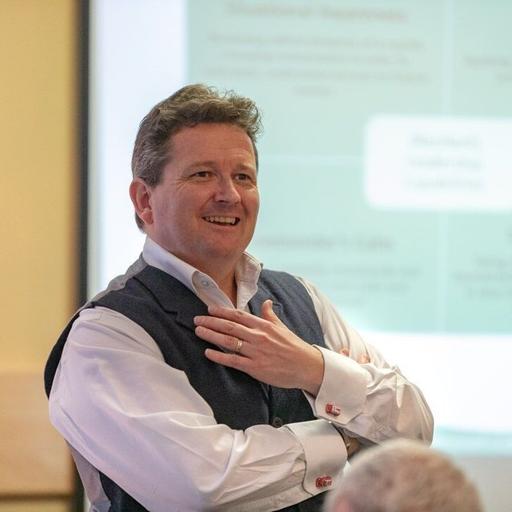
The Resilience Coach | Resilient Leadership Expert
100,000+ People positively affected6,000+ Executive coaching hours£12M+ ROI delivered by RWE npower leadership programme20+ years Learning, leadership and organisational development
Russell Harvey is The Resilience Coach - a resilient leadership expert, executive coach, facilitator and keynote speaker who helps leaders and organisations perform at their best when the world refuses to stand still.
With more than 20 years in Learning, Leadership and Organisational Development, 6,000+ hours of executive coaching and over 70 published podcast appearances, Russell is an experienced and engaging voice on resilience, leadership and navigating persistent change. He has worked with leaders across organisations including Novartis, the NHS, AB World Foods, Kerry Group and The Co-operative Group.
Russell’s work goes beyond helping people simply cope with pressure. He believes true resilience isn’t about “bouncing back”, being tougher or pretending everything is fine - it’s about springing forward with learning and becoming better equipped to lead because of the challenges you’ve faced.
His approach connects the human side of leadership directly to what matters to organisations: engaged people, stronger cultures, better decisions and improved performance. His work has delivered measurable results, including a leadership programme that returned £12 million to the business and a Resilient Leader Programme that achieved more than 1,100% ROI.
In August 2025, Russell achieved his long-held purpose of positively affecting 100,000 people.
More from Russell Harvey
All episodes → Living the Dream with CurveballSpringing Forward: Russell Harvey's Insights on Building Resilience and Embracing ChangeNov 2026Play episode →
 Transformation Station Leadership PodcastTSLP Season 5 Ep. 26- Thriving Is A VerbNov 2026Play episode →
 An Evolving Man PodcastReal Resilience: Why Pushing Through Isn’t Enough | Russell Harvey | AEM #172Oct 2026Play episode →
 Leadership From The Heart | Transformational Leadership InsightsResilience Without the Rebound | Leadership Mindset ShiftAug 2026Play episode →
 Burnout Proof Leadership: Identify Shift and Leadership Skills for Midlife Women EntrepreneursEssential Leadership Skills You Must Have If You Want to Build Resilience & Avoid Burnout When Your Business Gets Hard - with Russell HarveyJul 2026Play episode →
 Your Career JourneyHow to Build Resilience at Work: Leadership, Change & Thriving in Uncertain TimesJul 2026Play episode →
 The ThriveWell Journey | Entrepreneurship, Leadership & Life After DisruptionHow to Build Real Resilience Under Pressure | Russell HarveyJul 2026Play episode →
 Future Fit LeadershipThe 2030 Leader: Why Resilience is Your Most Vital Skill with Russell HarveyJun 2026Play episode →
 Different thinking for Different Time - Mindset Change and Thought LeadershipDifferent Thinking for Different Times - 7 Keys to Building Resilience with Russell Harvey How to Nurture a Resilient Mindset in Business and LifeMay 2026Play episode →