
August 30, 2024
Teaching Resiliency to Your Child
Sound bites
We cannot use our emotions to fix somebody else's emotions, even though we desperately try.
In this episode
Russell Harvey joins The Fatherhood Challenge Podcast to talk about building resilience in children and balancing help with support as parents respond to disappointment and meltdown moments.
- Why resilience matters for a child’s future success and for parents learning to respond well.
- How a strengths based approach can help parents understand natural energy, compassion, and empathy.
- The difference between helping too much and supporting children so they can learn from experience.
- Why emotions belong to each person and can’t be fixed by someone else’s feelings.
- A dad challenge centered on enabling and empowering children, not just telling them what to do.
Chapters
Written from the transcript. Pick a chapter to play the video from that point.
Transcript
Automatic captions of the conversation. They can contain errors and do not name who is speaking.
What do you do when your child or your teen has a meltdown how do you help your kids bounce back after suffering a bitter disappointment or Worse trauma or grief teaching your kids resilience is so key to their success as an adult that I've asked a resilience coach to join us here this will help us Master resilience for both ourselves and our kids so don't go anywhere before we begin I'd like to thank our proud sponsor of this episode and the fatherhood challenge ingenius prep in
Genius prep is the world's Premier admissions consulting firm proud to be officially recognized as the country's top college admissions Consultants helping students prepare for admissions to top schools through individualized educational programs that increase chances of admission by up to 10 times ingenious Prep students work with former admission officers to differentiate themselves from other competitive students in three areas colleges evaluate students in academics extracurricular activities and personal characteristics just this past admission cycle ingenius Prep students have secured 110 offers from IV League schools 268 offers from
Top 20 schools and 94 offers from top 50 schools ingenus prep Student Success lies within the fact that ingenious prep is an allinone consulting firm offering every service of family needs whether it be test prep tailored candidacy building mentorship academic mentorships the leadership and Innovation lab soft skills courses writing courses and other customized programs to develop their application Persona to the most effective and authentic extent to share with colleges just click on the link in the episode description to book a free strategy call with one
Of ingenius prep's college experts or you can visit ingenius prep.com that's ingenius prep.com and let them know you came from the fatherhood Ood challenge welcome to the fatherhood challenge a movement to awaken and Inspire fathers everywhere to take great pride in their role and to challenge Society to understand how important fathers are to the stability and culture of their family's environment now here's your host Jonathan Guerrero greetings everyone thank you so much for joining me also joining us is Russell Harvey Russell's passion and Mission is
Giving others the tools and techniques to create the right conditions to apply transformation to their roles as parents and leaders Russell thank you so much for being on the fatherhood challenge oh thank you so much for asking me Jonathan it's an absolute pleasure to be here and to have all of the listeners tuning in hello to you all one of my favorite questions to start out with is a dad joke so Russell what is your favorite dad joke I'm in leads UK and there is in
Scotland there's the Edinburgh um Festival Comedy Festival came up again so I actually had a look for last year's top 10 jokes for last year now for me a dad joke has to have this real mixture of like groan and laughter to it at the same time so the number one joke which I think uh sort of fits this bill from last year's Ur Fringe Festival was as follows I started dating a zookeeper but it turned out they were a cheater so that should should yet
Do the laugh and the groan at the same time and that's actually from a uh Lor Rose train that we need to attribute that to and then I saw another one that caught me eye in the top 10 I thought there was this is number four or five so this one is when women gossip they get called toofaced but when men gossip it's called a podcast so those ones tickled me and I hope they tickle everybody else as well so those yes those are two for
You there a two for one Russell they were true dad jokes sense I enjoyed it all right well let's Dive Right In Russell you have an impressive career what is your story and journey that led you to become a resilience coach I'm being cheeky now because it's not a resilience coach Jonathan I am the resilience coach if you want if you want to find me anywhere it's it's not any old resilience coach it's the resilience coach I managed to snaffle that one for a website domain
So I'm sticking to it um so my uh Journey I've always really been interested in human Behavior I think I've been fascinated since a really early age about how come people do the things that they do how can we do behave in this particular way or we don't behave in this particular way and the vast majority of my career has been in uh Learning and Development and leadership development but it started 1996 in Hong Kong so I was traveling around the world for a year with
My lovely girlfriend who later became my wife and I was teaching in Hong Kong I was teaching English language lessons to essentially just local Hong Kong Chinese and in the room some form of magic was happening I didn't know what it was but I just thought you know what I think I want to do this for a living uh but I knew I didn't want to be a teacher a teach in a school I just knew that wasn't me and then I came back to the
UK and thought you know what I think I want to do training because the magic that was happening in the room it turns about later was people learning people having light buold moments people going from confused used face to aha I understand face that did something to me that did something to my my heart and my gut and my head and it actually just sort of gave me a zap of a wonderful feeling and that goes into my purpose so one of the dimensions of being
Resilient is having a purpose and we may talk about this later but uh by the year 2025 I want to positively affect 100,000 people and right now I'm up to about 72,324 essentially so I am when I mean by positively effect is there anybody that I support to have their realization their light bul moments their learning moments and so when I came back from Hong Kong in 1997 essentially had a career in Learning and Development and today I call myself a facilitator and a coach and
The fact that the resilience coach came about is that my last permanent role was a a business called the co-op and they are cooperatives worldwide and not long after I joined it got itself into to a real pickle as a business and I was just there supporting all of the leaders the top 300 leaders uh around actually this business is in trouble what do we do how do we resolve this I said well there's this word resilience and there's this anacronym called vuka which people may
Or may not be familiar with and I went all of our approaches our Solutions our answers are in there so my specialism is how to lead yourself and others really well in a volatile uncertain complex an ambiguous world and that is the resilience coach in what ways can dads model resiliency for their kids what are the long-term impacts of such modeling I I think the really important thing right now is how I describe and Define resilience so I would love you know yourself Jonathan and everybody
That's listening now to get their heads and hearts around how I Define resilience which is as follows so resilience is about springing forward with learning springing forward with learning so I'm personally not a fan of the term bounce back because we can't actually go backwards there sometimes is's a risk that when a challenging event happens to us yes we do need to recover from it but then we all quite often say to ourselves right I'll now bounce back and it's can there's a risk it's a
Subconscious instruction to the brain to go back to how you were and and you can't do that resilient people are perpetually learning springing forward with learning so to answer your question how leaders parents dads can actually cultivate resilience in their children and in their team is to cultivate optimism and the growth mindset that that's what they can do and then so explain what they are and then the long-term benefits so optimism is the fact that we're trying to move away from toxic positivity so how you
Get to feelings of Hope and uh and feeling positive is to actually think about optimism first now now if you look up the dictionary definition of optimism uh it's got the word positive to describe it so they're heavily intertwined and the starting point of optimism is the fact that it's grounded in reality so one of the things that we have to find a way throughout life to accept with good grace is that life is unfair it's just really horrible things happen to wonderful amazing gorgeous people
Uh life is unfair so cultivating that attitude and that understanding in your children and in the team that you lead is really helpful so optimism is grounded in reality so you do need to understand that if there's a size and scale of a problem or think something's not working in the way that you would like it to we have to be open and honest about that we have to be really clear about what the size of the challenge is of what the problem is and find
A way to talk about it without going into a negative spiral but just talking about it openly and honestly then then next thing to do is to immediately think about so what are my strengths what are my skills what are my capabilities what are my attitudes what's my current level of resilience that I've got actually that can face into this Challenge and when you focus on that for yourself and the people around you then you can start to get genuine feelings of Hope and then you
Start to feel positive to go you know what there is a real challenge we've got but actually if I think about myself the strength skills capabilities attitude mindset behaviors experiences I've got and there is around me You' got then actually you start to get genuine feelings of Hope and face into it and part of that is cultivating a growth mindset so actually somebody from the US A lady called Carol s d is specialized in fixed and growth mindset so she's got some done some great TED
Talks uh around this if people listening now want to find out more but a growth mindset is absolutely cultivating in the CH your children and your team people around you getting them to actually really H get into the place that they are perpetually learning they can always grow they can always improve and how you do that is about giving feedback and I praising people on the effort that they are putting into things let's less about the outcome the end result the achievement you absolutely acknowledge that
You know so if a child comes home and you know brings you know the drawing and a pting from you know kindergarten or you know certificate from school you you don't suddenly put that to one side and go tell us about the effort you put in you absolutely praise this Brilliance of the the Masterpiece of art that you're going to put on the fridge um and you know they've got a certificate you're going to praise that but also start to ask some questions about actually what
Was the effort they put in where did they persevere when they found it challenging um how did they overcome that and so it's about asking some open qu coaching questions uh around that so the long-term benefits of doing optimism and growth mindset is you enable the people around you and your children to understand what their strengths are and I will talk about this a lot by taking a strength-based approach because uh when you identify what naturally energizes you then that builds natural resilience and natural confidence
And there's many studies that shown that if a child has had a really difficult background a big difficult upbringing when someone a parent a guardian or a mentor or a teacher uh you know or a a guidance counselor clicks that there's something that they enjoy doing and they actually find a way to just find opportunities for the this particular child uh to do these things that they enjoy doing and just find multiple opportunities for them to do them week by week then actually they come out
The other side of their difficult challenging experiences far more resilience than those children that didn't have that experience so optimism growth mindset those will cultivate the springing forward with learning and they will cultivate natural resilience I absolutely love that my wife and I have had fascinating discussions um it started out as a disagreement over the whole string strength-based approach mindset because the way I grew up and the way I was taught in uh my my main thing I do many I feel like I wear many
Hats but one of the main hats I wear is is music I'm a musician and a and a teacher and I teach cello and so I grew up with this whole mindset of and the way I was taught was not strengths based it was focused on your weaknesses find all of your weaknesses let's figure out what they are let's bring them to the surface and let's turn those let's do drills exercises everything and let's turn every single weakness into a strength to where you don't have
Any weaknesses and that was the focus and so my wife wife and I have had quite a few uh discussions over that in in the past and um and I got to tell you uh she's right no surprise there I think it's because it's about this word energy so when I come from the strength based approach it's a case of there's a particular psychometric called strength scope you know that I utilize with my clients and clever people and I have come up with you know there's
24 strengths and you do a psychometric and you come up with your significant seven so you can't be naturally equally energized by all 24 of these strengths there's seven of them that you are your significant seven things that you're energized by and everybody's psychometric is different so it's about harnessing those and with so many of my leadership clients when when we do their psychometric their eyes will naturally go to their low score and they go okay so I presume my homework Russell is for me to
Work upon my weaknesses and I go no no it isn't we're going to look at those those things that you've got less energy for they're not a weakness less energy for them but what your your homework is is to look at these significant seven these things that you love doing and will be naturally good at your homework is to do more of those as much as you be possible and for so many of my clients it's like a it's like a light bulb wow oh my
God what I don't have to spend all these time on my weaknesses but it's also been really clear that we find a different way to and put Str is in place to think about okay so there's something that you have to do as part of your job role it is genuinely yours to do but you don't have natural energy for it so there's multiple strategies that we can put in place to actually support you in those moments so you know um your your parents done would
Have been you know wonderful and and and great we we we will do these things about I'm not very good at this I'd like to get better at it that's fine but it's understanding if you spend all of your time focusing on things that naturally de energize you it's it's going to batter you because you're spending all your time doing something that de energizes you so it'll just make you feel even more deenergized so we're trying to make sure we don't get into that place thank
You for explaining that a little bit more in depth because because I've been curious as to why I mean experientially I've seen the strength-based approach achieve and do more but I've never understood the mechanics of why so your explanation was was very very helpful in that regard I appreciate that one of my favorite quotes that I've heard my father-in-law say a lot is that there are no there's no such thing as failure only new data and it's become a favorite of mine um so when a
Child suffers bitter disappointment what is the boundary and difference between coddling and help them helping them become resilient and recover yeah so for me this goes to I'm going to back to this the strength based approach so two of these 24 strengths are compassion and empathy okay so we're all um you know energized differently some of us are going to have little Natural Energy for either and that's okay some of us are going to have lots of energy for both okay and some of us are
Going to have lots of energy for one or the other by sheer coincidence two of my seven significant seven are compassion and empathy but these play out in I want everybody that's listening there to think about as well about what's the difference between help and support so the definition around the compassion strength is that we've got varying levels of energy some of us High some of medium some of low The Compassion descriptor is that you deeply care about the well-being of the person or the people
In front of you you you genuinely want to do things for them you want to help them you want to look after them you want to take care of them and that's great it's lovely and I do an awful lot of work in the UK with the um National Health Service that we have and that's the caring profession so I I support them around coaching skills and we have lots of conversations around there the likelihood that you've got a compassion driver because of the job role
That you do but it's actually how much are you helping your your um clients and patients and how much are you supporting them to do things for themselves so if you your compassion driver Energizer is too much then you will be codling your phraseology your question that you asked there is a risk that you'll go into coddling and it'll be too much in the space of the person not learning from The Experience so empathy the empathy descriptor is about you have lots of energy to actually
Discover what is making this person tick in front of you how are they thinking and feeling what how are they processing their thoughts their feelings their experiences you know you will ask open coaching questions you'll empathize them you'll be understanding their point of view and you won't necessarily be wanting to slip in to fix it for them okay so it is understanding that people's emotions belong to them we we we cannot you know use our emotions to fix somebody else's emotions even though we desperately try
And I still fall into that trap on a regular basis and when love comes into play you know loved ones then absolutely you know you know the compassion is going to come to the four so it's about tapping into your empathy driver and even if you've got little energy for it how you role model that is essentially being curious and asking questions about how they're thinking and feeling how they want to process it what they want to do with their thoughts and feelings how it's impacting
Their behaviors they'll feel heard they'll feel understood and then it is then an appropriate Point shifting into that Mantra mine of springing forward with learning to go okay so what are you going to learn from this experience what are you going to keep doing that's worked well for you what are you going to do differently next time is anything that you're going to stop doing and if you can tap more into your empathy side of things then that will be more supportive and learning rather than
Too much helping and sort of just doing things for people without them learning you work a lot with adults who are often stuck and I one of those there was a time in my life when I felt exactly that way I felt stuck I felt like I was lacking purpose in life um it can also be career related how do you help them find their purpose and gain their courage courage is actually one of the specific 24 strengths as well so I'll come back to that
In a minute um so purpose is one of the dimensions of being resilient and I know you'll ask at the end how people get in touch with us but uh on my website I have the resilience wheel which is seven aspects to it so if anybody asks me okay so how do I build my resilience Russell I go look there's this wheel and there's seven aspects to it engage with your wheel in varying ways all seven aspects of it and uh that's how you'll build your
Resilience one of them is the purpose which I mentioned at the start what my purpose is so um and it's not a question that you can immediately just walk into a room and ask a lot of people so what's your purpose there's there's a root into it one of the roots into it is is a different question about so talk to me about the times in your life when you felt proud that's a starting point to enable wers to discover what their purpose might be um
So and sometimes that takes a little while some people need to think of some examples so you do need to do some reflection you might need to chat to some people you know you might need to go for you know a walk get some pen and paper and scrr about when's the times in my life that I felt proud once you've started you'll you'll you know the floodgates will open and you'll get some experiences once you've got these an example of what made you feel proud
Then I want you to think of the an acronym of a car C and that stands for challenge action result so when you think when you thought of one particular example what makes you feel proud then you need to break it down to go okay so what was the challenge at the start what was the starting point what was the example was it like you know a really difficult time was it a project uh was I asked to build something was I involved in something so
What was the challenge at the start and the a is action which is what did you do in this in this example how did you behave uh were you were a leader or a follower were you a team member um what were your skills what were your capabilities what were your behaviors what were your strengths when were you energized so put lots of things down around the actions and the behaviors and the strengths and the skills and then what was the result of what you did
And when you do that for a few of them the letter a is where all the great stuff is because that letter A will be telling you and telling yourself actually what's important to you what your value system is actually what your purpose was in each of those examples and then it will be demonstrating to yourself actually who you are as a human and then you can translate that into okay for me to do more of that that's my purpose and so it also goes into
You know I ask a lot of my clients you know have you got a purpose have you got a leadership purpose so I'm also curious as well around actually everybody that's listening now what's your parenting your fatherhood purpose you know what what's people's answers to that now I'm not about the fact that you have to have lots of purposes that's not what I mean you know there'll be one overarching one and they can all be interconnected but sometimes when you ask people what's your life purpose
And they say so how does that translate into your leadership purpose you know that they have to do a little bit more thinking and reflection around it so the the rottin to rediscovering your purpose is to think about this question of when's the times in my life when I felt proud what was the challenge what were the actions that I did and what was the result and spend lots of time in the actions because that will be explaining to you who you are as a person
What your value system and then you can translate that into a purpose I want to go into an area that might be a little uncomfortable for some but I think very much Essential talk about numbing through addictions for reasons maybe it could be divorce it could be job loss or it could be any traumatic event are there healthier or more constructive ways to seek this dopamine Rush that we're after to overcome the emotional loow lows and the force of a loss yeah so if anybody's you
Know in that place or has been in that place now you know I'm I'm hopefully showing some empathy now I'm just really sorry that that's happening for you the simple answer the question is like yeah there are better ways of facing into the emotions that you're having than you know doing unhelpful P behaviors around you know alcohol or drugs or something else um now the way forward from this is once again you know think about there's seven aspects of the resilience wheel so working or engaging
With any aspect of that wheel has KnockOn impacts uh on all the other areas um and one of the ones I want people to think about is one of the aspects of resilience wheel is your support network so the other thing that um when I was reflecting on this sort of this question is for everybody's listening now it's how currently good are they at both asking for help and accepting help because when we go through really difficult times and unfortunately um my wife has been very
Ill the last couple of years and I've become her carer and so I I've been going through difficult times and I have been been quering myself on how have I I have been offered a lot of help it's and I've been thinking about when have I accepted it and when have I not accepted it so we do fall into the Trap of believing that we can you know sort things out for ourself and fix ourselves um and so um when so right now everybody that's listening
Now is just think about how do you answer the question and Jonathan that was a really good M when I said it of like how good are you asking for help and then therefore accept acting the help so you really do need to go to your support network and if there isn't one isn't one there you have to cultivate one that that's absolutely what you have to do at this moment in time and as a result of that you need to be open and curious um
But it's also it's also a state of Readiness for this as well so there isn't necessarily a simple answer but it's a case if if you're feeling alone it is absolutely about making the choice to literally put one foot in front of the other to walk into a room and ask for some help that's that's a a really significant starting point for people around this and then it's about allowing yourself to be open and curious about the help that you're going to accept that that's that's
The best answer I have right now there is a better way which what we turn to because it feels easier um but yeah it's like how how good are you at asking and accepting help I'm listening to how you're answering these questions and and how you're just diving into the topic and it it is clearly evident to me that what really drives you um what really gets you going is seeing people succeed you feed I can tell you literally feed off of your clients getting unstuck
And improving their lives and getting getting better this is what gets you out of bed in the morning I don't even have to ask that question question I know what gets you out out of bed in the morning and you make that very obvious to me thank you so that might be asking maybe I'm already answering the next question for you but why would you recommend that a dad work with a resiliency coach instead of trying to tackle some of these strategies on their own we
Can't do everything by ourselves you know when you work with a coach you will then actually be equipped with more tips tools and techniques to things um you know for yourself the the point and purpose of the coach is to set you up to actually face into life's challenges and spring forward with learning when the coach isn't there so um I will be by your side you know physically virtually and metaphorically it's really interesting some of the feedback that I've had over the sort of decades
Is do you know Russell I was uh just about to do something the other day with one of my uh Team and I and and your voice was in my head I was remembering back to one of the conversations that we'd had I was just about to behave in a particular way and suddenly your voice was in my head and I changed my behaviors and I got a better outcome so that's lovely feedback to get um I suppose it's it's that question about why would it
What's the benefits of working with a coach essentially so it's that whole thing of like a coach is there to support you to discover whatever ever it is that you want to be different better in your life and enable you to get there and then part ways essentially and but it has longlasting impacts so working with the resilience coach will actually set you up with resiliency skills for life and who wouldn't want that Jonathan who wouldn't want that absolutely there is a there's a pride in
Getting to that point where you feel like you can Master life no matter what throws at you you can't change what happens to you but you can change what you do about what happens to you and having those skills always with you uh I yeah I can't think of anyone who would not want that no absolutely absolutely and it's like there's one was one client recently if people want to look at my socials it's I've got permission it's it's a testimonial that's out there but they
They really shifted from they were in a you know they had the you know ideal client is some has got you know job title of head of or director of uh um and they were in a director of position and they were um taking lots of things out of the earth to build stuff and they weren't happy and you know um they weren't personal and work life wasn't great and they completely andly shifted they changed jobs and you know last time I spoke to them relationships
With family are so much better as well and they're in a completely different place doing um conservation for you know the um protection of birds so they've sh shifted from taking stuff out of the earth to actually conserving the Earth and I mean that's the significant transformational difference um and not all of my clients is quite significant as that but that's a recent one and it is it's definitely something that I'm very proud for them that they've managed to achieve Russell how can dads learn more
About what you're doing or get in touch with you with questions or to get coaching also how can find your podcast so literally everything is on the website so all the ws. the resilience coach.co UK the podcast that I have is on the homepage that's there there's a form of contact Russell which is on there there's Ting Ting blogs uh that are on there as well that people can read through so that's the easiest way to get hold of us I'm on you know uh LinkedIn
And Facebook and Instagram so the resilience coach there's there's multiple ways about how you can get in touch with us and just literally I'm open to a you know virtual cup of coffee physical cup of coffee in a chat you know we um that individual that I just talked about the example that transformed that 99% of all of that coaching was virtual uh so it doesn't necessarily have to be face to face and just to make things easier if you go to the fatherhood challenge.com that's
The fatherhood challenge.com if you go to this episode look right below the episode description I'll have the link that Russell mentioned posted there for your convenience and Russell as we close what is your challenge to dad's listening now my challenge is how how not what how are you going to enable and Empower your children that's my challenge Russell I've learned so much from you in this episode that's what makes this so much fun and I know the audience did to just this conversation alone I'm already
Feeling better about my day so there's some there's something to thisk so I thank you so much for for being with me and being with us on on the fatherhood challenge I really enjoyed it my absolute pleasure thank you so much thank you for listening to this episode of the fatherhood challenge if you would like to contact us listen to other episodes find any resource mentioned in this program or find out more information about the fatherhood challenge please visit the fatherhood challenge.com that's the fatherhood challenge.com
I'd like to pause and thank our proud sponsor of the fatherhood challenge Zen Caster if you've thought about podcasting before and realized that you need a lot of different tools and services those days are over with Zen casters all-in-one podcast production platform you can create your podcast all in one place and distribute to Spotify apple and other major destinations but the reason I personally use and trust them with the production of this syndicated radio program is their professional broadcast quality sound there is no better time
Than now to start your podcast using Zid cter for all your needs go to zenc caster.com pricing and use my code fatherhood and you'll get 30% off your first month of any Zen Caster paid plan I want you to have the same easy experiences I do for all my podcasting and content needs it's time to share your story story
About Russell Harvey
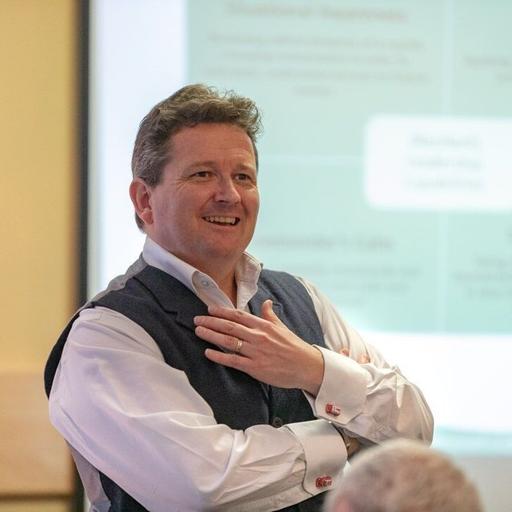
The Resilience Coach | Resilient Leadership Expert
100,000+ People positively affected6,000+ Executive coaching hours£12M+ ROI delivered by RWE npower leadership programme20+ years Learning, leadership and organisational development
Russell Harvey is The Resilience Coach - a resilient leadership expert, executive coach, facilitator and keynote speaker who helps leaders and organisations perform at their best when the world refuses to stand still.
With more than 20 years in Learning, Leadership and Organisational Development, 6,000+ hours of executive coaching and over 70 published podcast appearances, Russell is an experienced and engaging voice on resilience, leadership and navigating persistent change. He has worked with leaders across organisations including Novartis, the NHS, AB World Foods, Kerry Group and The Co-operative Group.
Russell’s work goes beyond helping people simply cope with pressure. He believes true resilience isn’t about “bouncing back”, being tougher or pretending everything is fine - it’s about springing forward with learning and becoming better equipped to lead because of the challenges you’ve faced.
His approach connects the human side of leadership directly to what matters to organisations: engaged people, stronger cultures, better decisions and improved performance. His work has delivered measurable results, including a leadership programme that returned £12 million to the business and a Resilient Leader Programme that achieved more than 1,100% ROI.
In August 2025, Russell achieved his long-held purpose of positively affecting 100,000 people.
More from Russell Harvey
All episodes → Living the Dream with CurveballSpringing Forward: Russell Harvey's Insights on Building Resilience and Embracing ChangeNov 2026Play episode →
 Transformation Station Leadership PodcastTSLP Season 5 Ep. 26- Thriving Is A VerbNov 2026Play episode →
 Embracing Digital TransformationHow to Build a Resilient Team Without Toxic PositivityNov 2026Play episode →
 An Evolving Man PodcastReal Resilience: Why Pushing Through Isn’t Enough | Russell Harvey | AEM #172Oct 2026Play episode →
 Leadership From The Heart | Transformational Leadership InsightsResilience Without the Rebound | Leadership Mindset ShiftAug 2026Play episode →
 Burnout Proof Leadership: Identify Shift and Leadership Skills for Midlife Women EntrepreneursEssential Leadership Skills You Must Have If You Want to Build Resilience & Avoid Burnout When Your Business Gets Hard - with Russell HarveyJul 2026Play episode →
 Your Career JourneyHow to Build Resilience at Work: Leadership, Change & Thriving in Uncertain TimesJul 2026Play episode →
 The ThriveWell Journey | Entrepreneurship, Leadership & Life After DisruptionHow to Build Real Resilience Under Pressure | Russell HarveyJul 2026Play episode →
 Future Fit LeadershipThe 2030 Leader: Why Resilience is Your Most Vital Skill with Russell HarveyJun 2026Play episode →