
March 19, 2026
Too Nice to Lead? The People-Pleaser Trap | Russell Harvey | S2 E10
Sound bites
I am absolutely against toxic resilience and toxic positivity.
Resilience is springing forward with learning and not keeping going regardless.
In this episode
Russell Harvey talks about people pleasing, workplace bullying, and how resilient leadership can help people handle pressure without burning out.
- People pleasing and empathy can make bullying at work harder to recognize and harder to challenge.
- Workplace bullying showed up as interruption, misinterpretation, personal attacks, and being told not to overstep.
- Real resilience means springing forward with learning, not just keeping going regardless.
- Strength based coaching can help people rebuild confidence, clarity, and a better fit between work and purpose.
- Optimism works best when it stays grounded in reality and focuses on strengths, skills, and the scale of the challenge.
Transcript
ShowHide
Automatic captions of the conversation. They can contain errors and do not name who is speaking.
So I am absolutely against toxic resilience and toxic positivity. So if somebody comes along and says, I'm a bit concerned about some things here. I'm not sure how we're going to achieve this. I don't want anybody to be doing that. You just need to be resilient and you just need to be positive. I know it's not really bad right now. However, if you don't choose to engage with a coach right now, there's a significant risk. It's going to be awful. But you could stop that from happening. Too many people believe that they are only being resilient when they keep going regardless.
What they don't do is they go, "Right, I've just faced into a challenge. I'll now bounce back. I'll now go back to how I was before." And I'm going, "No, no, no, no, no." Before resilience became something he taught, it was something he had to live through. Today's guest, Russell Harvey, works with senior leaders and executive teams who are operating in constant uncertainty, helping them navigate pressure, burnout, and complexity without losing themselves or their results. In this conversation, you'll learn how to lead through pressure without burning out, how to make decisions when clarity is missing, and what real resilience looks like when it's no longer optional.
So, welcome to the Badass Leaders Podcast. I'm your host, Angela Gil Nelms, and each week I sit down with leaders, founders, and change makers who refuse to play small. People pushing the limits in their careers, companies, and lives. So, if you're ready to dive into that kind of purpose-driven work without all the corporate BS, then buckle up, get ready, and let's go. Okay, Russell. So long before you were advising other leaders on resilience, you were leading in environments where performance, people and pressure collided daily.
Tell us a little more and specifically a moment from that chapter of your life where you were handling pressure and it wasn't sustainable. What allowed you what forced you to that realization? >> And thank you very much. Great question. Um, so I I've known um that I'm a people pleaser for a long time and I also sometimes really forget the fact that I'm a people pleaser. And there was twice unfortunately in my career when I was uh bullied. So the pressure around that was really rather insignificant and one of my um strengths is also empathy.
Trying to see something from somebody else's point of view. So that uh those three things a couple of times in my career where I've been bullied trying to please them trying to understand their point of view absolutely got me into a pickle of literally I am not in a good place. I am not very happy. I don't quite know how I'm going to get through each day until you know one of many sort of reflections and actually one or two people just reaching out and going are you all are you all right Russell? Is is everything okay?
Uh those moments made me suddenly go, "No, they're not. I absolutely now need to um understand that actually I'm not in the wrong. Some other people are treating me really poorly and really badly. So I now need to just assert myself and I need to give some strong feedback that I do not like the way that I am being treated." Um, and that was, you know, I've had to do it a couple of times in my career, but the first time that I did it was was probably one of the biggest useful, helpful, light bulb moments, pieces of learning essentially that I needed to do.
>> First off, how how long ago was that moment? >> Probably about 20 years ago. >> And when we say bullying, I know I can bullying resonates with me. I think oftentimes people are bullied in their work settings that maybe maybe they're afraid to t to assign that label to it or they don't actually understand that that's what's happening. So what are some examples if listeners are are thinking okay how could I be bullied at work? What are some examples you would provide to them? >> There was quite a few unfortunately.
So never being able to finish a sentence. Oh, as a as a female engineer, I can appreciate that. >> Yeah. >> Okay. Never being able to fix >> and then the moment you're trying to explain a point, somebody jumping on with it and absolutely just misinterpreting it and taking it particular way and then it turning into a personal attack. Then also, you know, being dragged into an office on multiple occasions and had been really being told in no uncertain terms, don't behave like this, don't say this, or there was one time I shook somebody's hands and said, you know, uh, nice to meet you.
Welcome to join the team essentially. Um, and I got called into an office and going, that's not your role to do that, Russell. It's mine. So, you know, don't don't take it upon yourself to go above your station. And lots of things like that. But in general, it was pretty much every single thing that I said and I did being picked up upon and being commented on and being turned into then a personal attack of don't do that essentially. >> Okay. And I see this a lot and I think this will resonate with with with other individuals and team members where they feel as if their voice is not being valued in a way.
And I as a leader I understand that as a very big leadership problem because all of the voices are what really help us drive towards the best success in areas. So in those instances was your perspective I I should leave this company, I should leave this organization, I'm not a good fit for this or was it another approach that you would recommend at that point? So prior to me sort of having the light bulb moment of actually I've got to stand up for myself and I also need to go and ask for some help for some people to deal with this.
Um it was from the perspective of like okay so what do I need to do to change because one's level of confidence at the time was um reduced and I was starting to question myself more about maybe it's me maybe it's my fault. Okay maybe I need to listen to that. you know, this person is a senior and he's more experienced, so maybe they got some valid points. But then also realizing at each day as I was driving to and from work, I felt horrible inside, you know? So, it's like that's a signal to me to go, "This isn't right.
I'm not supposed to feel like this. I'm supposed to feel as though I've got value or worth." Or people absolutely can give me feedback. Essentially, that is my whole life. Every day, everywhere I go, I ask for feedback. So I'm happy to get feedback. Um but so initially it was um trying to fit in was my initial response until two things. Somebody come along and had noticed what was going on cuz they'd done it to lots of others and just sort of said are you all right? And in that moment, me having to suddenly be a lump in my throat and go, "Uh, no, actually I I don't think I am.
Um, I think I need some help, you know." And in that moment went to spoke to somebody and going, "This is happening to me." And they said, "Right, yeah, we can support you with that. That shouldn't be happening. You're not in the wrong. It's not your fault. Uh, they've got form. Uh, so yes, we'll support you in terms of pushing back against it." You know, it ended in me leaving, but I was so pleased to leave essentially. Yeah. So, I I can think of listeners who might be on both sides of this story that are listening.
When you find yourself in in a a position of authority and you're cutting people off, you're telling them to be less of something, maybe pause and think about that component of it. And here hear what Russell is saying like this is how it's being perceived on the other end. And then we're gonna talk about the amazing work that Russell's done, which is also if you're a leader and you find yourself doing this, you might be pushing away the next great amazing star who really can drive you and everything toward success.
So, you're going to miss out. And and for those of you who are listening to this and you think, you know what, that just happened to me yesterday. I was in a meeting and I got cut off or I was told, oh, I am like kind of skating beyond my skis or something like that. You also want to continue to listen to hear Russell's story. So Russell, tell us more about you as a human. >> Who are you? And then let's dig into your professional career and our our talk today which is going to be a lot about resilience and about amazing leadership.
So who are you? >> Thank you. Yes indeed. So um today I describe myself as a coach and a facilitator. That's who I am 247. That is my identity. But my journey to that is the fact that I have always been interested in human behavior. What what it what is it that makes people do the things that they do. So I am absolutely just uh 24/7 always interested in each individual human being. Who are they? What makes them tick? What makes them interesting? What makes them happy? What makes them sad? Those types of things. So it's very much about uh humanity, community.
I'm seeing that the world is diverging it seems in two really simplistic um ways. One side of it is literally it's all about the self and I've just got to fight for me and you know everybody else can go by the wayside and there are others that going you know what I think it's about community I think it's about others and we'll all succeed together and they think the world is diverging on that essentially some people are going one way and some people are going another based upon uh recent experiences so I'm in the space of like it's all about the community so even with the advent of artificial intelligence What I would love the world to do which we can't is press the pause button first and then actually ask ourselves what does it mean to be human and then how are we now going to interact with the artificial intelligence now that we better understand better what it is means to be human.
So, as part of all of that, I um love traveling the world. Um and my wife and I did around the world the trip in 1996, 1997 where the birthplace of what I do came about because I was teaching people in Hong Kong and some magic was happening in the room. I thought I want to do that for a living, but I knew I don't want to be a teacher. And at the time it was like the only uh when I came back to the UK went to the recruitment agencies it's like um I think I'm gonna be a business trainer and then at the time wasn't qualified didn't have the experience but that was the birthplace of me in my corporate career and then setting up um the resilience coach.
So I'm I'm a looker afterer of other human beings. That's that's that's who I am. >> I I love that. A big piece of the AGN group and the work that we do is seeing humans as humans. And I am a strong believer that if many of us can have that as our goal and task in every interaction that we have, the outcome and the impact later is huge significant. We start to really see the core of the situation of the person and I think that's where real magic happens. Okay. So, you work with leaders who look successful on paper but feel like an elastic band about to snap.
What's the earliest warning sign leaders consistently ignore before burnout hits? And what do they usually tell themselves when they're just ignoring it? >> So, it's really all very much around their self-awareness, uh, around the answer to the question, how are you? We get asked this an awful lot essentially and um it's then being able to notice in that moment does their answer feel it's like in the surviving the coping or the thriving space. So it isn't one particular thing that they have to look out for Angela but it's like raising their awareness but when they check in with themselves on a regular basis about how am I is really noticing how they're answering that question.
So surviving feels like hanging on by your fingernails essentially. So if you're struggling to give an answer or if there's a lot of tension in that answer or there's part of you going, I wish I'm just hoping nobody does ask me how I am. Then there's some clues. There's some signals there that you might be in the surviving space. Coping is essentially some variation of I'm okay. Now it might be I'm okay, but I'm I'm a bit worried. I'm about to tip into not okay surviving or it might be you know what I'm okay but I think I might be tipping into thriving which is I'm good.
So when people work upon, engage with, build their resilience, all the stuff that um you know I work with them on their answer, the the resilient leaders, the resilient humans answer is genuine and real where they will say to themselves, do you know what there's an awful lot going on um and there's an awful lot of challenges and I feel good and I feel optimistic. So any any answer other than that is a warning sign. >> Yeah. One of the things that I see oftent times in leaders is their fear of looking like they're less than.
Their fear that other people will perceive any response other than I'm doing great. Because when I hear when I when I ask how are you doing and people say great I'm like okay are you really great? You know, but but a lot of people don't ask that dig in that, right? So, how do you >> Exactly. How do you encourage people to get over that fear of looking vulnerable, of not looking like they're on top of things and thinking that they're going to lose the confidence of their team or the confidence of their investors or the confidence of those around them and their community if they're transparent in a situation?
>> Yeah. Yeah. So it's it's not going to be necessarily one singular thing. So how I work with clients is um when anybody asks me, "So Russell, how do I build my resilience?" My response is there's a resilience wheel on my website built upon research, seven aspects to it. Okay? And if there's time, we'll do a whistle stop, you know, tour on them. So um when leaders choose to engage with their resilience wheel, you know, they will enable themselves to get into thrive. One of the dimensions of being resilient is this word confidence.
Okay. So one of the choices that individual does is to just keep playing around with um what is it that enables a particular human being to build and enable and grow their confidence their belief in themselves essentially. So the confident individual is more comfortable being vulnerable. >> Yes. Yes. you know, so they're more okay to literally be all the time, you know, their self-t talk being I'm all right that I don't know all the answers. I'm perfectly okay that I don't need to. So, you know, and we're having conversations about things in a room where I'm going, yeah, I've got a clue what was going on here.
This is, oh gosh, this is new to me. They're okay with that and they're happy to explore it. So, they're open. They're curious. They're more comfortable being challenged. you know, they they purposefully go into rooms and go essentially do the behavior of tell me what I don't know. >> Yes. Yes. >> Because they're comfortable in their own skin essentially. Um, so you it's it's it's all of those types of uh watch outs and then as a result of that there'll be less fear inside themselves that they don't know everything and every time their line manager their boss or a peer sort of says how's X project going or how's Y project going or how's Zed project going you know that they're more comfortable giving whatever the truthful answer is rather than I h I have to give a I have to give a certain type of answer because I'm supposed too, >> right?
And I the thing that I want those who are listening who are afraid to do this to realize is that those of us in the know when we see those behaviors, I trust those employees so much more. When someone on my team >> displays that walking into a meeting and saying, "Okay, I don't know anything about this area. I know about this area. I'm excited to learn more about this area." I immediately in my brain even in my body language I can feel even within myself I relax more which is a sign of trust and acceptance. So I as maybe their leader I relax more.
>> I trust them more. I know when subsequent times when they tell me something I have more trust and value in what they say later because I know they're not going to BS me. I know they're going to tell me the truth. So it is actually a confidence builder in me. Now granted if they came into every meeting and said I didn't know anything then I would at some point say >> right exactly there is there is there is that that balance within those two different scenarios. >> So one of the things that is really important that is how each individual line manager that exists on the planet is playing their part to enable the people that report intimate to behave like that.
Okay. So, circling back to this question of how are you? So, according to the last two or three world happiness reports, roughly 70% of our ability to give a decent answer to the question how are you is down to our relationship with our line manager. >> How do you define line manager? Because I think that may be a a European phrase that I haven't heard as much in the US. >> So, it's your boss. It's the person you report into. somebody that signs off your holidays is when whatever performance management conversations that you are having about the activities that you're working on.
>> Got it. >> You know that that's your line manager essentially. >> I think it's important to remember that piece as a as a manager, the impact that you're having on that piece of them, right? >> Absolutely. So you want to be able to encourage people within the workplace that are going to be the leaders of the future to be comfortable in their own skin. So if you're a line manager, you're the one that plays a significant part in enabling each of the people that reports into you, your direct reports, to be comfortable in their own skin, understand what you value about them, understand their strengths.
You know, that feedback loop is absolutely built upon the things that you um appreciate about what they're doing and things that actually could be, you know, different, could be better essentially. So that relationship is very key in building resilience. So the resilient leader role models really useful resilience building conversations >> which I think ties back to us getting to know humans as humans because you as a leader if you've taken the time to get to understand your team members as human beings then that's the first step to being able to make those connections and and be able to drive that towards success.
>> Absolutely. Absolutely. And going a little bit back to, you know, who are you Russ? So, one of the dimensions uh of being resilient is having a purpose. So, until recently, my purpose was to positively affect 100,000 people by the year 2025. And in August 2025, I achieved it. So that positively effect is with all of the people I've support in a whole variety of different ways is that they have their individual light bulb moments about what it means to them to be resilient. A resilient leader that can go back into the workplace and be themselves and perform much better.
And that purpose has now uh segueed into championing businesses to be a force for good. And the detail behind that is every single line management relationship in the world in the universe. I'm just going to play my part with whoever my clients are to go, let's see if we can make your relationship with your reports as good as it can be through resilience role modeling. And then as a consequence of that, that person will be at its best. and the business will be giving itself the chance that it's got the right people in the right roles in the right time going in the right direction.
>> And I can't think of a better time in history to talk about resilience than now. So the other piece the the other side of resilience though can also be the whole burnout side. So, I want to peel the onion a little bit on the burnout piece because that's often what I see, especially when I see leaders who are very resilient and are very tied into human nature. They can often struggle with that next piece of also getting burned out because there is a balance. I believe everything you say yes to means you're saying no to something else and so there is that struggle.
So for you, when you're working and collaborating or you see something, what do you see as the earliest warning sign that leaders are consistently ignoring before that burnout hits? And what do they usually tell themselves to justify ignoring that warn out warning sign? >> So I I take a um strength-based approach. So in the USA, I think you're familiar with StrengthFinder and in the UK and others, it's strength scope. So one of the 24 strengths is compassion. So I see a lot of individuals in the work that I do is depending on about whether they've got a compassion strength or not.
So those individuals that have the strength of compassion, they have natural energy to deeply care about other people's well-being. As a consequence, they take on too much of other people essentially and that burns them out. The biggest burnout that I see in the public sector over here do a lot of work in the national health service and councils. These people, you know, very simplistically, their value system is that they want they care for others. They want to look after others and they forget to look after themselves essentially.
In addition, regardless of whether you've got the compassion strength or not, the burnout comes because you are not choosing to engage with your resilience wheel and nurture it day by day, week by week, month by month. The individuals that do that, then they spend more of their time, as I've said previously, in this thriving space. So all of your burnout and your watch outs comes with the fact that some individuals are choosing not to make the effort um to engage and nurture their internal resilience >> which for some people is terrifying.
So yes, going along that journey, walk us through a specific client moment where you saw a leader that was close to a breaking point and when you when you think about that particular client moment, what options were on the table, you know, what do they want to do and what did you push them to do instead? >> Most human beings don't ask for help until it's, you know, crunch time. And so the, you know, space I've been in for 20 plus years is is trying to say to individuals, I know it's not really bad right now. However, if you don't choose to engage with a coach right now, there's a significant risk.
It's going to be awful. But you could stop that from happening. But most people will hear that and go, um, no, I'm going to wait. It's it's not bad enough for me to now sort of talk about these things. So, one individual or quite a lot of individuals that come to me, you know, when when they ask that question, how are you? They go, I'm really struggling with, you know, things in the workplace. There's too much challenge that's going on. I'm not enjoying myself. I don't quite know how to um fix the challenges I've got.
Actually, I dread, you know, the the Sunday night feeling that those are all the things they have, you know, relationships with family. So, I've got this example I give now is is multiple clients essentially that came with some version of nothing's going well. I'm not enjoying myself. Family's life is not good and I'm I'm dreading every time I get a telephone call from my boss because I just I've got no idea I'm going to answer the questions they're going to ask me. >> Right? >> So, then I support them with okay, let's um have a look at your strength profile.
Essentially, let's just understand what that is. And for a lot of clients, it's a real light bulb moment. Their eyes will normally go to their strength score, which is their lowest. And they'll go, I suppose, Russell, my homework is to to do sport. And I go, no, do the opposite. And their minds are quite blown with, you mean you want me to spend time doing things I love doing? And I go, yes. Okay. Because they build natural resilience and natural confidence. Then we just look at their wheel and just do a bit of a simple self assessment to sort of go these these seven aspects of what it means to be resilient.
Where is it? Where are you? And then it's some little simple steps to start to nurture each of these areas. And they've got knock-on impacts. And one of my favorite examples of an individual that came to us with in a really difficult place. said, um, actually since I met last our last coaching session, Russell, I was walking in my local area and somebody hadn't, uh, that I normally see walking around just stopped me and went, >> you're um, you're really happy. What's going on? >> I got chill chills hearing this. Okay, carry on.
>> This makes me happy to hear. >> Yeah. And the individual went, "Yeah, I am. There's a real weight that's gone off my shoulders. I've got a bit more clarity, you know, says, "Yeah, you've got a bounce in your step. The last two years I've seen you walking around our town and oh golly, you have not looked in a good place and suddenly you're happy and bouncy." So that that was nice. And then this individual uh to do with their purpose. They realized that their job role that they were doing was not their purpose and their value system.
So they shifted from an engineering firm to um a charity that was uh the Royal Society for Protection of Birds and they're a project manager for them now. >> And and we often forget that or don't realize that the impact we have in these situations is visible to others in many other areas of our lives. So when I think of people that are resistant, for example, to work with a coach or to work with a therapist or work for some with someone like that, I'm like, you have no idea what you're passing up. You're passing up joy in every single area of your life.
>> Yes. Yes. Yes. Absolutely. >> One thing you said there as well that I want to tie into because you are really big about the idea of focusing on strengths and not focusing on weaknesses. So first I want to know why do you think it's human nature that those of us who want to succeed and want to be great that have in our head we should focus on improving our weaknesses versus amplifying our strengths. >> So I think in the UK that's part of the educational system. You know I'm absolute fan of like all all public sector.
Everybody's working extremely hard in challenging circumstances. with the educational system is to go um these are the grades that you've got in this you know like the abs and c's and you've got dz's and fs in these other subjects so spend more time doing the dz's and fs however um when you ask that individual how come you know tell me about this subject where you're getting dz's and fs their body language will probably be yeah golly I know I'm uh I go to those classes and I don't really know what's going on and I just dread walking up into that classroom.
So their energy for that is on the floor and you go, "Well, so telling me what's going on with these grades where you've got abs and c's and you go, oh yeah, I like I like that. I look forward to that." So it's it's the case of okay there there's lots of research that shows that uh from a young age regardless if there an individual's had some very challenging life circumstances if somebody somewhere either a parent guide or a mentor or a teacher or just a an adult from a community center sort of goes ah I know actually Angela really enjoys doing X and I just need to find a way to just nurture that to just allow this person to do that as much as they can.
The research shows that that individual that managed to play to their strengths even in really challenging life circumstances, they actually have a very different lifestyle. They are more resilient. They have more opportunity to thrive even with challenging circumstances. So, um that's that's one of the sort of many reasons why I advocate the strength-based approach. And then it is the language about good enough. So those things that you're not >> not energized by have to support individuals to go. So these things here for the rest of your life.
The best place you can get this to is good enough. And then in the workplace you sometimes have to have some interesting conversations with your line manager that their version of good enough is not the same as your version of good enough. So some compromise needs to take place on both sides sometimes. Um, so, so it's it's part of life. You're still taught you got to be good at everything or you've you you've got to take these tests, you get these grades, and the grades that are not good enough. You've got to spend loads of time on them and try and make them better.
But we don't balance that with we really understand the strengthbased approach is do more of the things you enjoy doing and these things that you enjoy less. Just get them to good enough. >> I I love that. I talk a lot about the whole idea of like I think it's a Voltater quote which is like um don't let perfect be the enemy of good and I even say to my students I'm a professor as well at Emory University in the master's program and I I talk to them about some of the work that they're doing and I'm like we're not you don't need to build a baby grand piano.
We need at this stage a piano that just plays music, right? It doesn't have to be a baby grand in this instance. And I I think sometimes with high performers, we struggle with that good enough, right? We struggle with being okay with the piano that plays music so then we can move to the next uh vent or the next step, right? Or the next phase or the next whatever that successfully. And sometimes there are some situations where you do need the baby grand piano. You do need something that's a level of excellence. So then you bring in the people whose strengths tie to that.
You get it to the phase of the piano that plays music and then you hand it over to the experts who are specialists in this other area and then you can move forward and everyone is success in that area. But I find that that's hard. I find that even people like us, Russell, that sometimes we focus a little bit too much on our weakness. So, I want to hear for listeners that are listening, can you share a concrete example of when you personally doubled down on a weakness because you thought you had to and it later backfired?
>> Yeah. So, out of my strengths profile, so my top three strengths, strategic mindedness, collaboration, and developing others, they're my top three strengths. And the thing that I'm energized by the least is detail orientation. Okay? So, I I can do detail. And there was a time when I uh was uh a project manager. So um throughout my career, somebody did the sort of the tap on the shoulder like we like the qualities that you've got. We want you to become sort of uh learn more about project management in our whole sort of business change transformation team essentially.
I had a mentor who was very very very detail orientated about this is how you do project management. And anytime I spent any time with them, I felt a little bit broken inside essentially >> because they were giving me great information about what it means to be, you know, a project manager, but they were doing it from their perspective with just the level of >> Gant charts and detail and micro elements of everything and minutia. And so that wasn't playing to my strengths, but I was spending all of my time trying to role model that essentially.
But I also had some people around me um who were sort of good friends that would sit on, you know, day-to-day uh desks with them. And I would just be going, my my head's broken. Um, it's like I'm getting taught all of these things, but I I don't feel like I'm achieving anything or or doing what I need to because my head has got all of these great ideas, strategic ideas, end point, paint the rainbow of the picture of the future world of how it was going to be, what it would look like, sound like, and feel like. And I could articulate that and describe that and get everybody excited about it.
And then it was like, right, I've now got to put this into a project. Uh oh god. So trying to perpetually do that got me into trouble until one of the people that I was sitting next to and went, "Look, Russell, what you are a project leader and you need a business analyst to support you." >> Yes. Yes. And so that was the that was the way out. You know, I would sit down with a business analyst and go, I've got this idea, describe the future world. And they were highly energized by the detail that my mentor was showing me.
And then they would literally stick all of my words and phrases. They would stick into this amazing project and Gant charts and detail and milestones and together, you know, we ruled the world essentially. >> Well, exactly. Have you ever done the So you talked you mentioned strength finders before. Have you done the working genius analysis? Have you worked with that? >> No, I haven't. No. >> Okay. So, one of the things I I'm actually a big Working Genius fan. And the thing I love about it is that if you have all of your teams take this analysis, you can then identify the people that really love an Excel.
And it basically it has six different things. I can't remember what they all are, so forgive me on this. everyone. We'll put a link in the show notes so you can pull it up. But it has the the two things you're really good at, okay? The two things that you're kind of good at and you can manage and then the two things you're really horrible at or you hate doing, okay? And it's more of like love, really good, you know, can do and then really dislike doing. And I love when teams will do a a something like that and then compare because often find times exactly you're saying you were just using the example there are project managers or business analysts who thrive off it like Excel sheets and Gant charts and all that it brings them great joy right uh exactly and finding the people on your team who do and partner together and then rule the world that's a recipe for success in a focus Focus on highlighting your strengths of each of you and also identifying the weakness and then saying who can fill in this weakness with their strength.
Right. >> Yeah. So just to reiterate when you play to your natural strengths it builds natural resilience and natural confidence and confidence is one of the dimensions of being resilient. So there's a bit of a triple whammy there essentially about nurturing and growing your resilience. >> Okay. I'm I'm excited about this. So, so for those overachievers who are listening to this podcast today, many of them may hear the words be more resilient and their heads translated into just endure more. Okay. So, when does that Yeah, exactly.
When does that translation become dangerous and how would you challenge leaders who hide behind that toughness spectrum? So, let's dig a little bit into that. Yeah. >> Well, yeah. So my my intention my value system is that whenever I talk about the word resilience I never ever want to to feel toxic. So I am absolutely against toxic resilience and toxic positivity. So if somebody comes along and says this I'm feeling a bit challenged by this or this. I'm a bit concerned about some things here. I'm not sure how we're going to achieve this.
I don't want anybody to be doing that. You just need to be resilient and you just need to be positive. Okay? because that is akin to gaslighting and bullying essentially. So, um that's not how I want to come across. So, everybody that's listening now, you've got to have this self-awareness or this choice to go hm uh yeah, is is that what I've done? Have I done that? Has that been done to me? So, step one, self-awareness of like, have you role modeled the you've just got to be resilient or yeah, I hear you that this is a bit of a challenge, but can you just get on with it, please?
It's risky to do that all of the time. Okay. >> Yes. >> So, I define resilience as springing forward with learning. >> I'm not a fan of the term Yeah. So I'm not a fan of the term bounce back essentially seen there in all the literature. Too many people believe that they are only being resilient when they keep going regardless. Okay. So the resilient individual they u what they don't do is they go right I've just faced into a challenge. I'll now bounce back. I'll now go back to how I was before. And I'm going no no no no.
What did you learn? What did you learn? And so the resilient leader role models like pause in life. and pause is listening to a podcast. Pause is having a great conversation with a mate. Pause is going for a walk. And in those uh pauses, they ask themselves three questions. What behaviors have I been doing recently that have been serving me well against my resilience wheel? What behaviors have I been doing recently that have not been serving me well against my resilience will? And how do I do more answers to the first question?
So when you role model those that reflective practice and the springing forward with learning then you actually get to the space of thriving rather surviving and coping. So those individuals that go I know it's tough but just keep going for now and we'll talk about it later. That's putting you in the coping space and the and potentially the risk of putting others in the surviving space. The better conversation is somebody comes along and says I'm not entirely sure how we're going to do this. Then the leader at that moment in time is comfortable to go, "Oh, all right.
Let's talk about it. Let's be curious about it. Tell me more about that." You know, how do we find a way to work through this together essentially? And that leader at that moment is not feeling the pressure of, "Oh my god, my boss is just telling me to get on with it, so I just need to tell my people just to get on with it." I need now need to be the one that's the buffer that's going that pushes back against my boss and going stop telling us just go on with it because something's not right and we need to find a different way and I also feel comfortable to say to the people reporting to me okay I hear you it's not working so let's let's talk about it differently >> you said a word that I want to double click on for a moment you said the word curious >> and I love that I think more in life as a leader, we should spend way more time being curious in situations, asking better questions, trying to get to the heart of stuff versus just trying to move forward.
>> Yeah, that absolutely. And we're able to be more curious once we have nurtured our resilience >> because being curious means that you have got to challenge uh your confirmation biases essentially and being open-minded. So, you know, when our brains are taking a path of least resistance, we uh and we're not feeling very resilient, we potentially don't want to ask the question of tell me more about that because you sort of going, I don't think I've got the energy to listen to it. But but when you are feeling more resilient, you sort of go, yeah, there's an awful lot going on, but I'm now also still willing to open a door which might initially cause me more problems on top of all the problems that I've got.
But but the resilient individual is more willing to go there essentially to be more curious. The benefit of being more resilient is to be more curious and open-minded. >> So I think a warning sign as a leader you should see in yourself. If you're afraid to ask or to say make the statement, tell me more about that. If that triggers fear within you, then I think that's an early indicator that you need to pause within yourself. That is triggering something that is unsettling within yourself that I think the greatest thing you can do to be the best leader is to pause yourself and try and determine why you're so hesitant to dig into something more.
>> Brilliant. Yes. Yeah. Right. Totally well articulated. Thank you. >> So for those team, those people who are listening, you're a leader and you're listening and you're feeling overwhelmed. Are you still functioning? Okay. So what would you advise the first small decision they need to make this week right now to stop heading towards that burnout? >> Yeah. So in addition to this, whenever um I talk to people about resilience, my intention is not to add to anybody's overwhelm. Okay. So the answer to your question and what they need to do it does include them doing something.
Okay. But if if the individual is already feeling overwhelmed as an analogy of like the water's above my head, you know, and like we're listening to this podcast, it's like, oh gosh, I need to go away and work on my resilience wheel. That's something I've got to do in addition to the overall. So that's not my intention. So the answer to the question is in its simplest sense go look at the wheel that's on my website and just sit down and just have a little bit of a reflection of like how many of the aspects of my wheel are in a decent place you know and whichever one is the highest score that you've put to it it's just an easy self assessment just ask yourself the question okay so how do I make that one one better >> okay that that that one one better because they have a positive impact upon on the others.
But then that needs to be uh it's a behavior replacement. So it's making the decision because they they've listened today and they've gone actually working on my resilience the I see that there's benefit into me. I can have a better life. Okay. So I see the benefit in it. So I'm willing to go and have a look. But looking at your resilience wheel and and just sort of saying, okay, what's one aspect of it going to make one thing better? That has to be instead of something else, >> right? Because you can't do everything.
So what is that instead of >> well that's their choice that's their choice Angela it's it's a case of like you know >> be calling that out because we we need to be cognizant of that right like I am going to focus on this and by focusing on this I'm not focusing on this I think it needs to be a conscious decision like you're saying instead of right not not just it happens to fall off the wayside but consciously make because I find when I do that when I say, "Okay, I'm going to do this." Which means I'm not going to do this.
Then it reduces my level of stress. If I just say, "Oh, I'm going to focus on this and I don't cognizantly let something go," then my stress level internally increases because I feel like I've added more work to my plate and now I have more stress versus the other approach. Right. So it's exactly it's avoiding that you know when the so so that is it does take a bit of a challenge to start with um because when quite often clients initially come to me they're not in a great place you know so I have to have this conversation with them it's like my intention is not to add to any of this unpleasantness but we need to be really clear that that um for you to feel better there's some things that you need to do so then it is asking the question you know you tell me what you do dayto-day sometimes you A lot of it is your internal thoughts.
One of the um dimensions of the resilience wheel is this word meaning as in our internal storytelling. The meaning we attach to events. So with a lot of clients, one of the initial things that they do is just raise a bit of their self-awareness of what their internal storytelling and their internal self-t talk is. And we sort of go, okay, well, you know, if there's one sentence that you know that you're saying to yourself, we need to replace it with something else. And it's got to be replaced with something that is realistic and believable essentially.
maybe not where they want to actually get to, but it's a step to where they want to get to. Um because um you know, heart of resilience is our attitude which is driven by our belief systems which is driven by how we talk to ourselves essentially. Uh so it's just somewhere in there doing an element of replacement as a starting point. >> Let's go back to the reality that we said. A lot of the people listening this podcast are probably overachievers and they might say, "Okay, great. I'm listening to all of this brilliance on resilience and now what I need to do is I need to add it to my performance metric chart that I now measure.
How do we prevent them from doing that? >> Well, it's it's whether they've really listened to what we've just said, >> right? SO, SO, SO WE SAY rewind and listen again. >> So, yeah. So, overachievers is like it's not a new additional performance metric. It's the metric that underpins all others. Look at the resilience wheel piece and then start to think about how the resiliency piece will have a where it can have a positive impact on all your other metrics that you're looking at right now because it underpins anything.
It's a piece of glue that holds it together. So, it's going to be like how do you incorporate not add to how do you incorporate the resilience wheel into your existing performance metrics. >> Okay. Okay. And that's the challenge I want to hear from the listeners and post in the comments as well. We'll include the link in the show notes to go to the wheel and I really want to hear what resilience areas you're focusing on. Okay, Russell, are you ready for some rapid fire questions? >> I am. Yes, indeed. Yes, I am. >> Okay, the first one is, what is a leadership habit you had to unlearn the hard way?
>> Um, it was the people pleaser. That was, you know, that was the thing. Yeah. I I just Yeah, I'm still learning on that one. Angela, >> uh, agreed. Ditto. Guilty as charged. Okay. What is a question every leader should ask their team but they usually avoid? >> How optimistic are you feeling right now? >> Oo, that is good. Okay. If you could give advice to yourself as a young leader early in your career, what would you tell him? um sounds a little bit arrogant I think but it's like um keep going Russell all of these thoughts you're having about actually um that it's about humanity and the humans keep going don't be don't be taken off course >> perfect what is something you said you'd never do as a leader but you ended up embracing >> I think it was too much tell rather than not asking enough Yeah.
Yeah. Okay. What is one signal that tells you a leader is about to grow or about to break? It's literally it it sort of it plays across their face. You can you can see them talking to themselves. They're either got like a light bulb moment of like, "Oh, there's a different better way of doing this versus slight frowny face of like, I'm not really listening. I'm just going to I'm going to keep doing what I'm doing." essentially. >> Perfect. Okay. So, if they take nothing away from this podcast but one statement, what is the major thing that you want them to walk away with today that will help them live a better life?
>> Uh really understand that resilience is springing forward with learning and not keeping going regardless. And then also really understand what it this word optimism means. So it's grounded in reality is optimism. It requires emotional intelligence, empathy, compassion and coaching skills to understand uh what how to have an optimistic conversation. So it's about having really uh human conversations about size and scale of the challenges. But also grounded in reality is about what's good about us, what's right about us, what our strengths are, what our skills are.
And then when you actually highlight what's good and right about as our strengths and skills and it's higher than the size and scale of the challenge, people feel hope and then they feel positive. Okay. So we get to feeling positive by having optimistic conversations. So spring forward learning and keep asking the question, how optimistic are we feeling? >> Amazing. And how can listeners connect with you, learn more about the resilience wheel, and if they're interested in being one of your clients, how do they how can they make that happen?
>> Yeah, so website and all sort of social media is the resiliencecoach.co.uk. So Russell the resilience coach, not any old resilience coach, Angela, the resilience coach. That's how they get hold of >> that's how they get hold of me. Yes, there there is only one as they say. >> There there is only one. Okay. So, a requirement of this podcast is everyone share their favorite motivational quote. What is your favorite motivational quote, Russell? >> They they do um they do change, but right now uh John C. Maxwell, resilient leaders don't wait for a storm to pass, they learn to dance in the rain.
>> So, thrive in the circumstances you're in. >> I love that. I love that. Well, thank you for taking time out of your day to share your wisdom, your resilience, your courage, your motivation. I'm very curious to dig in more, and I really hope the listeners are inspired to do the same. Thanks for joining me for today's episode of the Badass Leaders Podcast. To hear more interviews with industry experts and learn how to grow your career in leadership potential, be sure to like, subscribe, and turn on notifications to ensure you do not miss future episodes.
This podcast is a production of the AGN Group. To learn more about the AGN Group, visit our website at the AGNR.com. There you can discover more about our services which include hosting workshops, management, consulting, brand strategy, keynote speaking, and more. Follow us on all social media channels shown on the screen and displayed in the show notes. And until next week, be brave and be badass.
About Russell Harvey
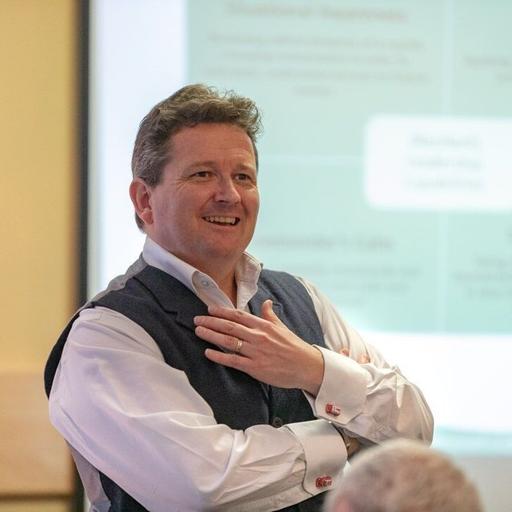
The Resilience Coach | Resilient Leadership Expert
100,000+ People positively affected6,000+ Executive coaching hours£12M+ ROI delivered by RWE npower leadership programme20+ years Learning, leadership and organisational development
Russell Harvey is The Resilience Coach - a resilient leadership expert, executive coach, facilitator and keynote speaker who helps leaders and organisations perform at their best when the world refuses to stand still.
With more than 20 years in Learning, Leadership and Organisational Development, 6,000+ hours of executive coaching and over 70 published podcast appearances, Russell is an experienced and engaging voice on resilience, leadership and navigating persistent change. He has worked with leaders across organisations including Novartis, the NHS, AB World Foods, Kerry Group and The Co-operative Group.
Russell’s work goes beyond helping people simply cope with pressure. He believes true resilience isn’t about “bouncing back”, being tougher or pretending everything is fine - it’s about springing forward with learning and becoming better equipped to lead because of the challenges you’ve faced.
His approach connects the human side of leadership directly to what matters to organisations: engaged people, stronger cultures, better decisions and improved performance. His work has delivered measurable results, including a leadership programme that returned £12 million to the business and a Resilient Leader Programme that achieved more than 1,100% ROI.
In August 2025, Russell achieved his long-held purpose of positively affecting 100,000 people.
More from Russell Harvey
All episodes → An Evolving Man PodcastReal Resilience: Why Pushing Through Isn’t Enough | Russell Harvey | AEM #172Oct 2026Play episode →
 Leadership From The Heart | Transformational Leadership InsightsResilience Without the Rebound | Leadership Mindset ShiftAug 2026Play episode →
 Burnout Proof Leadership: Identify Shift and Leadership Skills for Midlife Women EntrepreneursEssential Leadership Skills You Must Have If You Want to Build Resilience & Avoid Burnout When Your Business Gets Hard - with Russell HarveyJul 2026Play episode →
 Your Career JourneyHow to Build Resilience at Work: Leadership, Change & Thriving in Uncertain TimesJul 2026Play episode →
 The ThriveWell Journey | Entrepreneurship, Leadership & Life After DisruptionHow to Build Real Resilience Under Pressure | Russell HarveyJul 2026Play episode →
 Future Fit LeadershipThe 2030 Leader: Why Resilience is Your Most Vital Skill with Russell HarveyJun 2026Play episode →
 Different thinking for Different Time - Mindset Change and Thought LeadershipDifferent Thinking for Different Times - 7 Keys to Building Resilience with Russell Harvey How to Nurture a Resilient Mindset in Business and LifeMay 2026Play episode →
 The Next Interview ShowRussell Harvey Answers: How Leaders Build Resilience Without Burning OutMay 2026Play episode →
 Mindset BoosterThe Resilience Coach: Russell Harvey on Purpose, Mental Toughness & Why Most People Give Up Too SoonMay 2026Play episode →