
December 4, 2024
S3 01: How To Be A Resilient Leader With Russell Harvey
In this episode
Russell Harvey joins Dolly Waddell to talk about resilient leadership, simplifying resilience, and using strengths, coaching, and reflection to help leaders perform better.
- A three bucket approach for leaders: delegate brilliantly, remove blockers to performance, and create a resilient culture.
- Resilience as springing forward with learning, including being open, curious, and willing to do things differently.
- A practical need to pause, re-energize, and reflect through coaching, mindfulness, exercise, baking, or team conversations.
- Alignment between head, heart, and gut as a sign that a leader is ready to act.
- Strengths work can increase mojo, energy, sleep, and confidence by helping leaders do more of what they do well.
Transcript
ShowHide
Automatic captions of the conversation. They can contain errors and do not name who is speaking.
Welcome back to the extraordinary leaders podcast with me Dolly woodell this is the show where we dive into the extra things we can add to our ordinary in leadership to dial up our game and today I am joined by none other than Russell Harvey who is none other than the and I say the resilience coach what is so fabulous about this conversation with Russell is he really simplifies resilience it's quite a complex theme but he simplifies it into such manageable bite-sized tactical approaches he has a
Three bucket approach which we're going to dive into and I know you're going to get loads of takeaways from it so let's dive in so wrestle it is such a pleasure to have you on the show how are you doing today I'm really good thank you Dolly it's lovely to be here and thank you for asking me I'm just looking forward to the conversation we're going to have them wherever it goes me too and I'm just going to say I love the shirt you're wearing like
A proper viy shirt that makes me feel happy on this grizzly rainy Monday morning Russell say thanks for that it's not it's the Summer shirts we're still short sleeved the wintry time is sometimes the waste coats but I'm I'm like I'm not ready to put the waste coats on yet Essen so we're still on the short sleeves stay in the sumon margarita Vibe I love it so Russell let's dive in what does extraordinary leadership mean to you so genuinely I do think it is about this
Word of learning which can be tough and it can be difficult to actually learn so I Define resilience as springing forward with learning so when a leader actually chooses to be open to be curious to learn think about the things doing things differently what they're not gret at accepting what they're not great at and doing things differently that's that's what the extraordinary is for me and a little build upon that is to try as a practical tip to support leaders to understand what they're genuinely responsible
For I say they're only responsible for three things as a leader we get confused essentially about waking up staying what am I here to do you're getting pull from Pillar To Post so literally every single thing that's on your desk as a leader needs to fit into one of three buckets which is to delegate brilliantly it is to remove blockages to your people performing and it is to create a resilient culture you're only responsible for those three things so it's literally every single day as a
Leader when you go what have I got in front of me what's in my Dar what am I being asked to do if he doesn't fit into one of those three buckets don't do it wow I think that's I love it I love being given top tips I'm like great now my life's sorted thank you very much so just going back a beat because there's a lot there to dive into when I said what does extraordinary leadership mean to you you've gone straight into this space
Of resilience which I know you are the resilient coach yes let me understand I'd love to know what's your journey in resilience how come you've ended up in this space yeah so my whole lifetime career interested in human behavior so how can we do the things that we do and we don't do the things that we probably should do essentially that's always fascinated me so that meant after a year traveling I had a light bulb moment in teaching in Hong Kong going there's something magical happening
Here I don't know what it is at the time but I know I don't want to be a teacher in a school so I was teaching English language lessons to people off the street but when there was magic happening in the room it was people learning essentially so I thought you know what I think I want to be a trainer so this is back in 1997 you know it's hundreds of years ago essentially so I came back from traveling going to recruitment agencies and going I
Think to want to be a trainer and they go well what do you know and what you qualified in in around training and go nothing and out you know it's just literally that's it so that's my whole career literally having cultivating a career in Learning and Development leadership development organizational development and in that Journey I've been made redundant six times gosh yeah so as you know hopefully it's not the fact that there's something awful and terrible at me and unemployable but actually in this field of
Learning and Development you know that's quite often the place that you know uh uh gets um cut first so I was often in that space and then the last time my last permanent role was at the co-op group in Manchester love the co-op I love its values and I was part of a team of people that was supporting the top 300 leaders in the group whilst I was there it got itself into such a pickle as a business had a massive Financial black hole and all
Of my internal clients came to me with their head in their hands literally going Russell what on Earth we do and I said well there's this word resilience which I've been looking at and working on for a little while and there's this anacronym called vuka vua good I'm glad you're noding to know it and I said all of our Solutions are in there okay a way out of all of this pickle is in there and then I also knew because there was so much change happening
In the cop that once again Learning and Development HR would go into its own restructure and my job would be under threat again but I also knew that actually at that time the timing was right for me to set up the resilience coach right because I sort of said actually you know what I know that this seventh sixth redund is coming I don't want to go to another corporate job I want to set up by myself and the timing was right so forging that whole career
In finding my path dealing with the setbacks keeping going into organizations that I really thought were going to actually do something genuine with their people it finally took me the opportunity to go you know what I got to set by myself and find my clients that's the best way in which I'm going to be able to make the difference essentially which actually personifies your definition of resilience before which is springing forward learning you know you could have been crushed by those redundancy moments I know many
Many have so just nodding back to the vuka thing just in case people do I do know it but um it's an acronym which stands for things that are volatile uncertain complex and ambiguous when you say all the answers are found within that what do you mean yeah so Al so when you look behind vuka there's the same an acronym more business buzzwords of vuka prime so you need Vision understanding Clarity and Agility so there are solutions to the first vuka behind that there are Peak
Performance skills and there are leadership capabilities so actually when as a leader you understand what the leadership capabilities you are that you need then those are your Solutions and your behaviors and your guides and your ideas about what to do in all these challenging times and they all actually connect to a link to what does it actually mean to be a resilient human and a resilient leader so all of the solutions in the v place to go actually do you know what there's connections there with
Being a resilient leader so that's why I say all of our Solutions are in there we're not just literally saying the world is complicated and difficult and suck it up we're going here's a whole load of strategies behaviors ideas capabilities Peak Performance skills that enable you to face into these challenges so something that I really like about your work that I've seen is you you talk about helping leaders get their mojo back when they're you know in trial essentially and yeah like leading is you know
I've talked to you before about this russle but leadership is a very ordinary thing and in a capital O many people are leaders and yet it can be it can be a really exhausting role and it can be a really big Daily Grind role especially if goalposts keep moving and you've got stakeholders to deal with and you've got complex working from home you know scenarios with your teams the landscape is constantly shifting for so many businesses and to to be a leader in that space it
Is exhausting it can be a bit like tree cool but if we're wanting if you're offering a way to find Mojo and and connecting them to resilience how do you help people do resilience in the way you've been describing it because it's it's quite an active thing to learn to lean forward when actually people might be knackered and just want to lean back like how how do you deal with that it can sound challenging to make a start it it is a it is there's not
Necessarily a hard and a fast answer so my intention is and so when I engage with clients or I run sessions I say right so my intention to start with is I'm not here to add to your to-do list okay it's like as an absolute bare minimum I want to keep your to-do list the same you know yes but actually I want what I want to do is I want to be able to reduce your to-do list in your head of like you know you're overwhelm
All these things don't want to do so that's why I went in with the look if you can understand you're only responsible for three things then actually straight away let's go for the rule of three so your to-do list has gone from 150 to three okay straight away as a starting point so then it's also a case of sharing with people how to be a resilient leader and uh we'll come back to it a massive amount of it is playing to their strengths that's actually understanding
Okay I've got an idea that there's one thing or five things or 10 things having worked with rle that I know I need to do better what's the one five or 10 or 20 things on my existing to-do list that I'm going to you know stop doing it's about the idea of a replacement of a behavior and doing those will mean that actually you will move away from that overwhelm more towards more energy more of your your mojo I think it is this cognitive overload you've
Heard this concept and um that is what is really exhausting people people just the amount of of content and information and emails to go through so actually giving a sort of three-part three buckets as you call it is is genius because it simplifies the cognitive overload but if you were I was just thinking of it from my own personal life and the stuff I've got going on in my life can I put it in those three buckets and actually even you know I'm a busy mom
With four kids run my own business actually yeah I can see that delegating more stuff to the teachers to the you know to to my children will will probably fit that first bucket but what happens if some things people don't know which bucket to put it in I'm just thinking of my clients so big problems they've got are things like stakeholder conflicts of interest that's a big one isn't it like this department wants this and this department wants that they're a conflict we've got targets that
Are if I have a a green Target that I hit green it actually makes it red for the next so where where would you fit things that are quite in the Middle where how how do you categorize certain things so that for me goes into the whole Space of removing blockages to your people performing got it okay that that's where it goes to me so there's there's lots of things that you do in each of these three buckets you know but you need you need to
Be able to clear with yourself that's what you're doing so yeah part of your role as a leader as a line manager is understand actually I do have these stakeholder relationships how how well are these stakeholder relationships going what actual conversations have had with these about how we support each other how well we perform together how well we are playing to each other's strengths and if you've not had that conversation you can have it from tomorrow to literally go can we just have a sit down
And just answer the question of like how is this going yeah you know how how is this you know relationship going what's working well for you on it and what isn't and as a consequence of that you go yeah so what's working well for me is this and actually what could be better for me is this it's the classic it's just the conversation and it's it's feedback you know people sty away from the f word essentially but part of it really is is feedback so when
You do that that means actually you in your role as a leader you're working at your level to improve the relationship with your stakeholders so that actually your te you're removing blockages for your team one of the things that your team can't do is like we're trying to fix this Russell but those guys over there they're they're not doing what they need to do so it's like yeah it's that's on me that's on me as a leader to go over there and talk with my peer
And go yeah can can we have a chat about actually how you're performing how I'm performing how your team's performing and what we can do about that it it takes confidence to do so which is one of the dimensions of being resilient but that's that goes into that space essentially what's really interesting because actually it's the most basic thing sometimes you know Big L &d stuff like oh you know what's the thing to get to remove blockages oh what's the sort of 10 part process just
Talk just actually go up to someone and have a conversation is is almost too simple isn't it people miss it yeah they do it never SE amazing me when I say it and people sort of go oh oh I just need to talk to them yeah what what a crazy idea so I I've actually been doing some work with a client recently and this vein and helping with confidence and I always think whenever I'm asked to do confidence coaching I'm like it probably isn't about confidence
Actually it's about something else and it's as simple as this person I'm coaching and the team it's really hybrid so they just don't know each other and it's got to the point if work is just really transactional and no one knows who's got a pet no one knows how they take their tea like just these normal things and so actually we've just worked on that like just actually trying build a little bit of Rapport and relationship and as a result their subsequent appraisal has been entirely
Different just because they've been human yeah it is there's there's a lot of stuff in the in the confidence place and and you're absolutely right so one of the specific dimension of being resilient is is the word confidence so what I'm talking about in Dimensions if you go on my website there's the resilience wheel if anybody asked me the question so Russell how do I build my resilience and how to become I was going to ask you so go on let's go there yeah how to
Be a resilient leader I go look there's this wheel it's built on Research from Robertson Cooper did loads of research around resilience and put it into the world for free so credit and Kudos and thank you to them and I've added a couple of different dimensions to it so uh really simplistically heart resilience is attitude resilient people have a purpose uh they have confidence in terms of their balance of positive negative thoughts it's about the word of adaptability it's a really openness to change it's about
Your support network just how good it is it's about our internal storytelling so the meaning that we attach to events about life's events so what's the story that I tell about being made redundant six times you know how what's the best way I can tell that and then it's this word energy which is about playing to your strengths yeah so quite often when I work with clients and we're talking about the confidence piece I go look it's one of the dimensions of being resilient but because
They're all interconnected Let's ignore confidence for now and let's go on to all the other aspects of the wheel because that'll have a knock on impact and the one where I go to First is the energy one which is this word strengths just pause one sec I just want to interrupt because there's so much here I don't want to miss bits so strength scope I know it strength space coaching ABS focusing on what we're good at that gives us the drive and the energy is that
Is that why you're using the word strength being synonymous with energy absolutely yes cuz strength is about your natural energizers got it and when you play to your strength you build natural confidence and natural resilience so for for example if I have a strength in communication or in empathy what would you be encouraging me to do with that literally do more empathy and communication find ways to harness it that's it it's literally it's like in your working week that's coming up it's like what opportunities have
You got to play to your strength and harness your strength and if you think about actually you know if you look ahead to your diary everybody that's listening watching now it's literally you know have a look at it and go where where does your eye go and your heart go and your energy go ah Tuesday afternoon I'm doing XYZ oh yeah great uh Wednesday morning I'm doing oh oh right okay so I've noticed that Tuesday afternoon what I'm doing then I'm playing to my strengths I'm
Not on Wednesday morning and the the whatever the task of the activities are so he's thinking about how do I either delegate that MH or how do I actually then bring in my strengths so I can make what what I'm doing on Wednesday morning more enjoyable for me so it's literally do more of your strengths so can I just can I just do a little fact check with you have I got this right or have I got this wrong so I've just thought of my week
And I've got some proposals I've got to write and they make me go yeah there you go right my energy is just gone I'll do it but actually I love communicating orally so maybe I do my proposals on little videos just really quickly with a transcript if they want to see it but that energizes me more than writing a big document is that what we're talking about that's exactly what we're talking about and I would also genuinely go straight for your empathy as well because you
Want to be in their shoes and it's a proposal so spend the time really thinking about actually who are they who is the client what's important to them what does that mean to them and then that means you're really to talk their language more and you're going to be energized and Infused on your video to go I really get you I understand you this is why I'm putting this proposal in nice is what I would suggest but isn't that that's really cool that's already a little
Dialup for me of having a more resilient week in doing that but sometimes what do you do with this Russell so some people know what their strengths are but they have that block you know going back to your second bucket that block to just make a start to make a change to to actually do it so it's one thing me just saying yes that does make me feel better I could do that but then I might not do it what's your push there how do you
Do how do you coach that so you do have to ask all those questions around okay so we're really clear you know you and I client that actually there's just a blockage you are stopping so we do need to spend a little bit of time seeing what we can do to explore explore that yeah and I see if it's about head heart or gut essentially yes I do engage with clients around that of like can you say a little bit more about that I'd love to
Know more I do know a bit but carry on the greater likelihood that we're actually going to get up and do something or move forward with something is because our head on our hard G feel in alignment so the head is the logic the heart is the emotion and actually within our gut we've got a second nervous system essentially so if you're feeling like any of that is discombobulated or out of sync or isn't quite you know in a line you go okay there's still still
Something that's not quite right for me and when you as a client we would talk about all those different three spaces and try and explore what it was about each one that the blockage is most of the time we get we find it and we remove it and then I'll ask the question around so how's your head heart and gut right now and they go yeah it's in the line I'm I'm now literally going to go do this I am going to go do the thing
That I need to do because I'm in alignment right now that's sort of the analogy I use a lot of the time and it seems to work well for a lot of my clients I think there's something really powerful about this alignment because you one of my favorite words is being congruent I just think that you know we'll talk about integrity but Integrity essentially is is being congruent isn't it with how your body language shows up and matches your words shows up and matches your value
Shows up and matches your choices the small choices you know it always about the little things the extra things and there has to be a congruency and I don't know how easy it is for leaders to get congruent when we are running around like blue ass flies with alerts pinging here left right and center and um something in my book that I've I've got a book coming out in November and there's a chapter called the ation chamber which you might like I saw it's this thing
Of coaching and why do we need coaching these days but I think it is this space to aate like a a red wine like to let the enzymes breathe and let the toxins come out and get that alignment you're talking about because we just don't have we don't have the natural spaces we don't just have views that we can look at without tech for three hours to do it on our own we almost have to pay someone as a thinking partner to help us yeah get
An alignment I don't know what's your I mean I'm going off on a tangent here but like what what do you see as the importance for coaching for leaders in like it is exactly that it's we seem to have fall in the Trap even in the you know when I talk about the vouer space if the world is all of these things and you have to understand that and accept that with good grace still people feel like that they fall in trap of like right I
Have just literally got to accept it's crazy so I'm going to act crazy yes go and I go no that's absolutely not what I mean you know it's a case of we have to understand know we're in this vuk world so how are you going to find opportunities for you to be in flow in it to go with it to feel okay with it to have time to think so that's why I hammer the message of resilience is bringing forward with learning because the behavioral Norm
That you need to get into to achieve that is pausing and re-energizing and reflecting so pausing almost sounds like a paradox to springing forward indeed it does absolutely so but pausing can mean a coaching conversation yeah okay that's pausing is literally having a chat with somebody pausing could be mindfulness pausing could could be going to the gym pausing could be baking a cake you know pausing could be a team meeting where we go literally we're going to sit around here today and we're going to have
A reflective conversation we're pausing and we're going to have a reflective conversation about this and really understand actually what's going well and what isn't and what we need to do about it and what we're going to learn from it so pausing can be active so yeah it totally can sound like an oxymoron essentially to be able to move forward you have to find what's the way for you to pause and that for me that's where coaching comes in because as you know and I know you
Know my clients say to me type of conversations I have with you Russell I don't have them with anybody else and I go great can you tell me more about what that is I don't know I just I seem to sort s stuff out in my head and my heart yes and I I I and I go somewhere different with it and it's better and so that's why you need your coaching conversations essentially yeah they are they are such a valuable place if you find the
Right coaching partner aren't they to consider and take I mean I think of it as taking audit yes of just where are we you know and auditing is actually I always say it's one of the most boring words in the world we all go oh audit ra but actually auditing your life is so healthy it's like seeing the landscape of where we are so that you can then make you know different conscious decisions of moving forward yeah one of the other things that just popped upe
Me come exactly what you said but to achieve when it's all busy for individuals to decide actually what they're going to do one of the dimensions of being resilient is having a purpose so that's a question that I ask my clients and people all the time to go so what's your purpose but then also specifically from a leadership point of view I go what's your leadership purpose so that's a case of what's your intent what's your value system what everyone you wake up each day what
Are the behaviors that you are aiming to do and most of the time people look at me and going I haven't I haven't got a clue yeah and you go okay if we create your purpose that'll give you greater Clarity and then that will enable you to have the head space to think about this is how I'm going to do these three things I'm responsible for because I've got intention I've got purpose I've got harnessing of my strengths I've got knowledge about how I'm going to
Go about doing this but it's quite tricky this purpose word again like these Buzz words like resilience purpose you know communication whatever they are we all kind of know them so well but do we really know what they are no and when we talk about purpose this is something I've really struggled with in my life is like what is my purpose and sort of wish I had some elevator pitch on hi I'm Dolly and this is my purpose but it's it's a shifting landscape purpose isn't
It and it's lots of things and yet it's one thing and I just wonder how do you define purpose so I have one you know in terms of aiming to be a role model I was talking about this lots and a number of years ago somebody said so what yours and at the time it was like I just want to help people you know nice oh lovely that's so refresh it's just so simple yeah and then it has become because it's really meaningful to me is
By the year 2025 I want to positively affect 100,000 people and right now I'm up to 7632 that is my purpose at this moment in time wow it comes from you know part of it is so it's real and it's true and it's authentic hopefully that came across as I said it it's also part of marketing and it's also people have sort of said well how do you define it and you like well I need to put some numbers to it I'm going to make it
Smart okay all right you know I'll do that yes but that is what gets me out of bed every day I I have an intention to go today in you know coming on this with you I'm hoping that somebody is listening right now or watching and going you know what learned something so positively effect is somebody's learned something that they can Implement and actually put into action and it never ceased to amaze me that when I started talking about this the reactions I got the reactions
Varied from oh get you you've got a big Ed you know for sure that's going to happen I was like okay thank you all feedback is a gift yeah then people were sort of saying you know how do you define it and I go well it's about people learning you've taken something from today that you can actually Implement and oh yeah and then another one that took me a couple of times before it somebody came and said add me to the list I was going to
Say add me to the list for sure yeah so I the first time they said it I said what you on about I said you're 100,000 add me to it I went oh oh all right cool yes good right great I've got a tally excellent yeah but it also defines who I say yes to and no to as well so it it drives my behaviors and my decision making I mean something I was funny was doing last week with a business was we were talking about
Vision and then talking about the kind of goals that sit with underneath the vision but it's essentially that isn't it like what is the kind of big exciting bold vision of who I am like I want to do x y and Zed or I want to be this person that motivates or inspires or I want to solve water for third world like you have your big exciting vision and then underneath it you have your Dar the smart goals but it's it's those metrics and those things
That are either marketing but to get you out of bed otherwise just becomes a pipe dream doesn't it it does it does and it also doesn't have to be as big as that it's just that's what worked for me it's like I've created the business the resilience coach I want it to have an impact and as a consequence of that that's that's where we we came to but it can from a leadership point of view in terms of people listening now it's you know your purpose
Essentially is to consider and understand what your top few strengths are and to ually harness and do those today as much as possible that that should should is an amazing word that should be your purpose to start with and then if anything else grows from that because you sort of go oh this is the impact I'm having or this is how this is what's making me feel actually this is where I'm enjoying it more or actually to know what this is where I'm getting a shift
In Clarity or a shift moving from overwhelm to you know feeling more energized you go oh you know what I think maybe I could just harness and tweak this purpose a bit more yeah do you know what though I'm going to be a bit and good I I don't like the word should because I feel that should is a word that's like oh you should be better I should be doing something I'm not doing and it kind of can for me hearken to kind of like
GH I'm failing so I would reframe the word should as an invitation to because that's the thing if you want to have we all get we're all invited in life to live it to live it however you want we all are invited to have agency and make choices and lots of people don't want that invitation to make good choices they they make bad choices or they choose to have mindsets that damage them or they make choices to not to not do things and then not get
Their Mojo and so the invitation I hear in this is actually you're invited to really consider your strengths and you're you're invited to really leverage them and that's where you'll find Mojo in life right absolutely and I'd add to that I'm inviting people to engage with their resilience wheel I'm really intrigued about that wheel I love that that's something like a takeaway to go and look at is on your website it is as well and as if you go on to it's all on the website
And actually I've done a series of a podcast on each one of the dimensions of the wheel so if you're interested yeah just literally go on the homepage they're all on there there's a conversation about each aspect of the wheel on there which just brings it all to life so I invite people engage with their wheel we'll put that in the in the show notes for sure but just there's one one other thing we haven't touched on we've touched about the resilience a tiny bit and
Nodded to removing blockages a tiny bit but we haven't really talked about delegating brilliantly yeah how do I delegate brilliantly so remember it's a conversation you know and it's also remember we still it's the the theme that's running through it you are delegating to your people's strengths ah so you know you understand your own what you got at so my question to everybody listen and watching now that is a line manager leader how well do you know the strengths of your people you know so you
Literally once again going to have a simple conversation to go you've got this work to do which is your job description and your job role okay how much of this energizes you as a role you know really understand well these bits energize me and these bits don't okay right let's acknowledge those because we need to get the strategies in place for those of the bits that you don't and you have the same conversations with them as he did with yourself to go in your working week
Ahead or the working month ahead all these things youve got to do where do your energies go and so it's like so we need you to produce this kpi this target this output this outcome it's like how can you harness your strengths to be able to do that as well as you can and when we're both aware that there's some things that you've got to do which don't energize you what's the strategies that we're going to put in place could you work with somebody that is
Energized by this you're not abdicating responsibility still your but can you work with them can you dial up some other strengths to help you in that moment or do you just need to create a habit so I am energized the least by detail if you ask if you ask me to do detail you've literally I'm enthusiastic now you you literally are my burst balloon essentially oh Russell we're the same Cut From the Same Cloth me too so I can do detail really well but I have
To understand how and when I'm going to do it if I can't in that moment Del it to somebody else you know but then it's like I've spent a period of time doing something which the energizes me so clearly and then then need to go do something else after which which does energize me so in the round on that day or in those couple of hours I have got my energy levels back to an even kill so this might be a bit of a left field
Conundrum that I'm going to throw at you I'm just wondering does this fit in with what you're sharing or is this about a block with people performance but just thinking of examples from my clients I've got one client who's got a team that they they constant rhetoric is they just won't do what they're told they say they will they Nord and say they'll do it these small details that need to be done on behalf of the customers that they've got and all part of customer service
And they just don't do it and their leaders are blue in the face saying just do it and they don't do it where would you go with that because that's kind of they're doing a delegation thing but maybe it's not delegating to their strengths it's it's also connected to there's a blockage in performance where would you go with that so I appreciate that you know this attention's never to patronize so it's all in that word of telling so it stop telling at the moment nice okay
Because it's not working you know so where I would go with it is human beings only do the things that they do because they see the value and the benefit in the why so coming cold to all of this I would explore you know with the client around actually how much do you understand that your people know why they've got to do this what's the value and benefit to them so then it goes back to the delegation coaching conversation so it is line manager as coach
To go you know rather than to say you've got to do this it needs to flip to so help me understand how come you're not doing this I've asked you to do it 50 times so talk to me help me understand how come you're not it's that good old fashion just ask someone isn't it yeah absolutely absolutely so they they do need to shift away from and this is where the leadership bit comes in you have to sometimes you need to tell so delegating brilliantly part
Of that is understanding where you need to flip your leadership style so it's like telling is not working so adaptability is a key component of being resist I it's like I have to adapt my style as leader and go right tell's not working so I need to do something else I'm actually now going to go and ask and have a conversation and yes I might get frustrated and annoyed when they give me all of these answers and I haven't got to jump in that moment and
Shout at them I've got to go okay that's what you've told me that's clearly what's important to you then it's like so you know then we need to have a chat about how we are going to enable you to do this and somewhere in there at some stage you do need to asked the question of so if you choose to continue not to do this thing that I'm telling or asking you to do what do you think the consequences will be yeah and good question you
What you're hoping the individual might do at some stage is doesn't have to be stressed but they might go you'll sack me yeah and then you have to go yes that might happen you know because you've got I don't need people that are listening watching now to go straight in with that no no no but it's just it's it's the conversation we don't have to go so you've got this job role we pay this money to do this job role you know it's you're not doing
It when a to support you to understand and you know look at your strengths and actually support you to go click the reason behind it and why and go there but it's like you know if you choose to continue to not do what's in your job description what do you think the consequences are going to be 100% that is such a good question for a leader to ask after they've been around around the houses yeah yeah once you yeah it's literally go around houses and then
You hope the individual will turn around and go ah there's going to be some consequen yeah there are but this is it I call it the transactional transformational side of leadership and yeah transactional sometimes it is just like transactional this this is what it is you've got a job to do these are the metrics ABC but then you got the transformational conversations that underpin it of like what's going on help me understand but we're not we're not there to be friends and pastors and sort of
You know chaplains we we are there to to drive performance aren't we we are so delegate brilliantly is about having the quality conversations there's no such thing as a difficult conversation there are only quality ones you know and quality ones include those soft skills which are actually hard conversations if that once again doesn't sound like an oxymoron you know yeah sounds like an oxymoron those quality conversations you I love that because people do talk about difficult conversations and which immediately neurologically puts you off having them
Yeah it does and it's how do you lean in to to Quality conversations Russell as we really enjoyed this conversation there's I mean I feel like there's about sort of 10 episodes worth of content to talk to you about your your wealth of wisdom I'm loving it what I'd love to know as we land is what's the kind of one word if you were going to give a leader listening now one word for them to Camp around to absorb to drill into to explore for the
Coming I don't know six months what do you think it is well you might I was going to put it back on you because you from everything I've said today what do you think is going to be the word that I'm going to say well I mean it it quite possibly is resilience not quite it is strength it's strength say a little bit more why do we need to Camp around that word because this is literally all about what actually drives your behavior when you are
Playing to your strengths the things that naturally energize you you naturally enjoy doing that will that's what drives your behavior every single day so my top three strengths are collaboration strategic mindedness and developing others so whenever anything comes across Ross my desk or I get into a conversation with anybody that's my go-to place so I am immediately energized and my behavior are being driven by what's the big picture strategic mindedness what's the end point what's the direction of travel how can we do this together collaboration
And coaching because I'm developing others that's where I'm at my best and that drives my behaviors every day so everybody that's listening and watching Now understand what your natural energizers your strengths are because that is driving what you do and so also there's going to be helpful for you and very unhelpful for you that if you turn up every single day and your top three stengths are you know critical thinking uh common sense and results Focus you are literally going to be turn up every single
Day from those three things and you can't do that 24/7 no because the people around you could but the people around you can't handle it the people around you are going to be struggling with it okay so it's really understanding what your strengths are and so do the campfire that really hone into what your strengths are understand them what your top three significant seven are what your limiting weaknesses are really get those and actually utilize your strengths into to deliver your role dayto day yeah I
Love that and if if people are wanting to dive into that where do they go they obviously reach out to you because you can coach them in it um they do the strength scope is that your recommended one yeah they do they do the strength scope one it's the one that's overseen by the British psychological Society y you know it's got validity to it and the other reason that I say the strengths well than the resilience word even though I'd love to say the resilience word
I said earlier on that strength builds natural resilience and natural confidence so you've got a triple whammy essentially of of how to do this so yeah just reach out to me and we'll do their strength scope profile and have a chat about it Russell I love it and do you know I can really vouch for it myself because five years ago I stepped into my strengths as a way out of my Lethy and you wouldn't have known it from the outside but I was on a
Kind of Wheel of just function but didn't didn't feel Mo the Moor I felt like I was int treal and that's when I went right I know I didn't I didn't do a assessment or anything I just knew one of my strengths was pioneering some sort I had to build something and so I thought I'm going to build a business and it was in doing that just taking the small steps daily that what happened was I stopped getting ill as much and I had more energy
Um I slept better like on a really physiological level totally I was more well and it was just by following I called it like following the breadcrumbs of my strengths and and it's that isn't it it's a really empowering thing it is it is it's mind blown to so many my leaders when they do the strength SC profile their eyes naturally go for the low score they go oh I suppose my homework is do this and went no see these ones here that are really high
Score do more of and they go so my homework is to do more of the things that I love doing I go yeah and they literally just go mind blown oh my gosh I'm actually allowed to enjoy my life this is crazy yeah this is it this is it oh well Russell thank you so much for coming on the show I'd love to have you on again and yeah glad to have made a new friend let's stay in touch thank you absolutely thank you so much
Really enjoyed it thank you a huge thank you to Russell for sharing such practical takeaways on resilience and thank you for joining me on this episode and listening something I've really taken from that is thinking about strengths and how strengths gives you Mojo it's such a paradigm shift where we're always striving to do different things to get our mojo but actually just leaning into what we're good at is so brilliant and if you want to know your strength more if you want coaching around how you
Can add extra to your ordinary components of leadership then get in touch I would love to work with you
About Russell Harvey
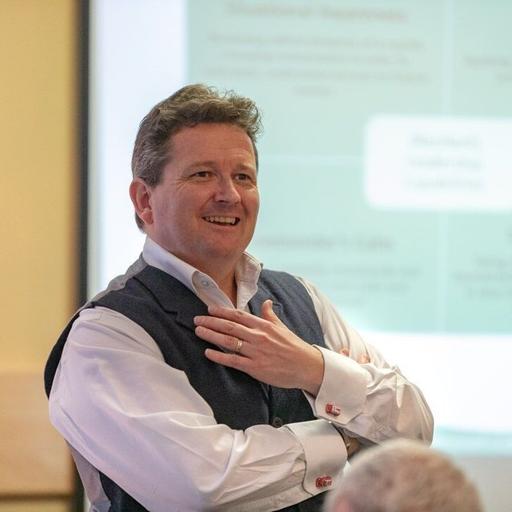
The Resilience Coach | Resilient Leadership Expert
100,000+ People positively affected6,000+ Executive coaching hours£12M+ ROI delivered by RWE npower leadership programme20+ years Learning, leadership and organisational development
Russell Harvey is The Resilience Coach - a resilient leadership expert, executive coach, facilitator and keynote speaker who helps leaders and organisations perform at their best when the world refuses to stand still.
With more than 20 years in Learning, Leadership and Organisational Development, 6,000+ hours of executive coaching and over 70 published podcast appearances, Russell is an experienced and engaging voice on resilience, leadership and navigating persistent change. He has worked with leaders across organisations including Novartis, the NHS, AB World Foods, Kerry Group and The Co-operative Group.
Russell’s work goes beyond helping people simply cope with pressure. He believes true resilience isn’t about “bouncing back”, being tougher or pretending everything is fine - it’s about springing forward with learning and becoming better equipped to lead because of the challenges you’ve faced.
His approach connects the human side of leadership directly to what matters to organisations: engaged people, stronger cultures, better decisions and improved performance. His work has delivered measurable results, including a leadership programme that returned £12 million to the business and a Resilient Leader Programme that achieved more than 1,100% ROI.
In August 2025, Russell achieved his long-held purpose of positively affecting 100,000 people.
More from Russell Harvey
All episodes → Living the Dream with CurveballSpringing Forward: Russell Harvey's Insights on Building Resilience and Embracing ChangeNov 2026Play episode →
 Transformation Station Leadership PodcastTSLP Season 5 Ep. 26- Thriving Is A VerbNov 2026Play episode →
 An Evolving Man PodcastReal Resilience: Why Pushing Through Isn’t Enough | Russell Harvey | AEM #172Oct 2026Play episode →
 Leadership From The Heart | Transformational Leadership InsightsResilience Without the Rebound | Leadership Mindset ShiftAug 2026Play episode →
 Burnout Proof Leadership: Identify Shift and Leadership Skills for Midlife Women EntrepreneursEssential Leadership Skills You Must Have If You Want to Build Resilience & Avoid Burnout When Your Business Gets Hard - with Russell HarveyJul 2026Play episode →
 Your Career JourneyHow to Build Resilience at Work: Leadership, Change & Thriving in Uncertain TimesJul 2026Play episode →
 The ThriveWell Journey | Entrepreneurship, Leadership & Life After DisruptionHow to Build Real Resilience Under Pressure | Russell HarveyJul 2026Play episode →
 Future Fit LeadershipThe 2030 Leader: Why Resilience is Your Most Vital Skill with Russell HarveyJun 2026Play episode →
 Different thinking for Different Time - Mindset Change and Thought LeadershipDifferent Thinking for Different Times - 7 Keys to Building Resilience with Russell Harvey How to Nurture a Resilient Mindset in Business and LifeMay 2026Play episode →