
November 11, 2024
Springing Forward with Learning
Sound bites
The truly resilient leaders engage in learning which is hard learning is difficult learning is about looking at the things that you don't want to look at or having to put some serious effort and energy into it.
In this episode
Russell Harvey joins The Maverick Paradox Podcast to talk about resilience, adaptive leadership, and how leaders can grow through learning and reflection.
- Defining resilience as springing forward with learning, not just bouncing back.
- Leading yourself and others well in a full on crazy world.
- Authenticity, purpose, confidence, adaptability, support, storytelling, and energy as building blocks of resilient teams.
- Pausing, reflecting, and re-energizing after hard learning to keep growing.
- Optimism grounded in reality as the basis for honest conversations and genuine hope.
Transcript
ShowHide
Automatic captions of the conversation. They can contain errors and do not name who is speaking.
The truly resilient leaders engage in learning which is hard learning is difficult learning is about looking at the things that you don't want to look at or having to put some serious effort and energy into it and also that can deplete your levels of resilience so you need to then once again go right my learning has deenergized me hm I need to re-energize from my learning and go again I like that I create clear thinking and decisive leaders who can amp ify their influence contact me
To find out how I can help you or your organization and today our guest is Russell Harvey how you doing Russell I'm very good thank you julith I'm very good how are you I am good and I am curious are you a dancer uh I'm not no uh you know it's like I'm quite comfortable being the first up on the dance floor um but I'm not actually a dancer myself whilst I'm not a parent it's like I do feel like I'm doing Dad dancing a awful
Lot of the time but it's like I'm just I'm more like stuff it you know dance like nobody's watching go enjoy yourself so yeah I'm not a dancer but I'm right just to get up there and you know do my thing you know what I think that is a dying art because of all the Tik Tock dances it's like I'm noticing and this going I listen to Young people talking they are great at doing dances together so you know some sort of dance hits the viral
Everyone's doing it and then whatever but when it comes to just moving to the music it's like they're not sure what to do because for them dancing is doing something that thousands of other people are also doing so I think there's a great thing lost there and I and also I think it kind of like translates into leadership in a way because that you to stand out and and do the thing that you think is right as opposed to everybody else is right I know there's
There's an old there's a clip I don't know how old it is and you know as sometimes it's really good and sometimes I think it's a little bit Twee of like it's at some form of Music Festival somewhere and there's like there is an individual that is dancing by themselves on a hillside yeah and then um yeah people slowly start to join in and copy and it's like right lead a follower discuss um sometimes it works well and sometimes I think it's can be a little
Bit patronizing depending on how experienced the room is I think or more importantly the message that you're trying to pull from that video yes can determine whether it's twe or not I think yeah very true very true tell us more about you Russell uh so uh I am the resilience coach Judith not any old resilience coach I am the resilience coach and um so a little bit about me so whole career in learning leadership organizational development I describe myself today as a coach and a facilitator
Um all through this lens of what on Earth does it really mean to be a resilient leader you know um for the individual themselves so I specialize in how to lead yourself and others well in a fullon crazy world um and that came about all of that came about so the resilience coach is n and a half half years old now and that came about originally at 1996 in Hong Kong I was part of the Rand World trip with my lovely girlfriend at the time now
My wife um and we were in Hong Kong and I was teaching just people off the street English lessons and something magical was happening in the room and I didn't quite know what it was it turned out later people learning and I thought do you know what I want to do this for olivan but I don't know what this is and also I know I don't want to be a teacher in a school that wasn't my thing so when we finished traveling came back to the
UK and sort of said oh I think I want to be a business trainer I think that's what you call what I do so I I Adore people having their light bulb moments and their realization uh moments and that feeds into my purpose which is one of the dimensions of being resilient and then my whole career went from there so it literally business trainer all sorts of different Industries and that culminated in me nine and a half years ago setting up the resilience coach yeah and
What makes you the resilient coach rather than a resilient coach what's the difference well actually it was nice I was doing a speech last week and I was introduced um by someone and they said they been doing a bit of research and ask some people that worked uh with me and they said actually he just he lives and breathes and um stick a rock bleeds resilience it's sort of it's who he is uh and I've been talking about this topic for about 14 years um and
So I think that becomes part of it a very nice one of my best mates said to me over AER a few years ago you're just you all the time Russell there's no sort of difference you turn up to everything in the same way as essentially you and the resilience coach so I think it's just a combination of of me and who I am my value system and a little bit well Judith is is the marketing thing I'm like you know I'm not any old resilience
Coach it's like no no no it's the I've got the you know the monik from the website so have the result coach okay that makes a lot of sense so you brought up some two things there I think that's really key one is that kind of living your truth consistently every way that you go and I think there's a a huge gap that people have where they um live in a version of themselves in different places which could be quite difficult yes I that's interesting and
Also you're talking about having the right personal brand that you are indistinguishable like between you and the business brand as well so I think Brandon is really important so that there is a big difference between the resilient coach and a resilient coach so I think that's quite that's quite interesting yeah absolutely it is and so you know through all of the time of supporting leaders and then you know these things of you know authenticity genuiness role modeling they come up as part of uh leadership and
I I it's taking me a while and I'm still not what sure where I am on this but a lot of the time I was really struggled with people that um were actually being genuine but there were about this is who I am this is my leadership style and I actually realized I didn't like it and and then I had to do in my own head I do that thing or to talk to a mate or a fellow coach and go yeah they're being authentic they're
Being genuine which is what we talk about but actually I don't agree with their style and their approach so ah which am I more bothered about that they're being authentic there are there is an alignment between what they say and what they do um but actually I don't agree with it ah you know what do I do with that one essentially um that's part of it but so it was really important to me to think about what my value system is um and live my purpose
Um and so yeah that that's most definitely uh it and it is about uh people learning so my purpose is by the year 2025 I want to positively affect 100,000 people and right now I'm up to 76,2 is now um I was less bothered originally about putting some numbers to that but people say it's got to be smart Russell RT went yeah yeah okay all right and the positively effect is actually where the differentiator is for me that's about when people interact with me my intention
Is that they'll learn something about themselves you know as a one-on-one leadership coach they'll learn about who they are what they want to do where they're at now where they're going to get to what the value system is how resilient they are what they need to do to become more resilient etc etc etc um and as a consequence of that that's where I Define resilience as bringing forward with learning I'm not a fan of this term bounce back because there's a bit of a subconscious instruction
That once we've faced into a difficult challenging thing we'll then go back to how we were H and that's when I'm going no no no no you you can't really go back or actually it's more important for you to understand as a result of your experiences what have you learned so learning for me is a fundamental premise of being resilient that's why I really Hammer home the message of a Define resilience as springing forward with learning okay thank you so that's quite interesting because you're focusing
On post event as opposed to dealing with the event well in that yeah absolutely so it there is an element of so how you then connect those things together I I say look my followup is to spring forward to learning is to think about what does that look like in terms of some habitual Le leadership behaviors so that is getting into the Habit from all of life's experiences whether they're good experiences not so good experiences is to do some form of pausing and so pausing could
Be going for a walk pausing could be listening to a podcast pausing could literally be staring at the wall and dribbling you know there's hundreds of different ways in which you can pause and in those pauses you need to do the combination of recovery re-energizing and reflection uh and so that's how I combine that those twin elements of resilience about you will be using your levels of resilience your resilience Reservoir to face into the in the moment challenges but then also you need to replenish yourself
And and I think I haven't I just still get concerned that we really really don't do enough of replenishing our eles via learning so even even through you know the pandemic leaving the European Union um all sorts of different um things that have happened the last few years it's it's it still seems to be the mentality of like well that's done now we just need to move on to the next thing and I'm going and what have you learned and quite often that's met with tumble
Weeds essentially you know the truly resilient leaders engage in learning which is hard learning is difficult learning is about looking at the things that you don't want to look at or having to put some serious effort and energy into it and also that can deplete your levels of resilience so you need to then once again go right my learning has deenergized me hm I need to re-energize from my learning and go again I like that see I like the idea of springing forward with learning as
A as an action orientated thing to do I'm not sure that I agree that that is in effect resilience because it's because if if resilience this is my hypothesis if resilience is about adapting to something that's a stressor or maintaining psychological well-being due to some stressor or adversity or something like that spring forward in is what you do after you've become resilient or am I missing something in your methodology um I don't so it's both this is the thing so this it's it's a duality to
It there's absolutely so it's making the conscious decision to choose to engage with developing your resilience dayto day okay and as a consequence of that you will build your levels of resilient that actually when you face into life's challenges actually something that you used to view as challenging you might find less so because your resilience levels are higher but then also at the same time once you've you know if you do something that um you really love doing place your strengths then after that you've got
A nice tired yes so you actually need to recover and recuperate nice tired and then when you place it have to face into something which is completely de-energizing you where we seem to predominantly spend our time of like yeah you got a tough time so you got to be resilient um that we seem to just only talk about that absolutely once you've U faced into something that you are finding that's not playing to your strengths is de-energizing you then uh you are uh I don't I
Don't necessarily want to swear but you're essentially got there's a difference between nice tired and the other thing I agree you know what I suddenly think I think this is me a bit cheeky really because this is your methodology I think what works for me for what you've said yeah is just a change so springing forward with learning suggests to me that it's a constant thing that's happening spring forward seems to me as the end action but that's just me but you know just no it's
Great I just springing forward it'sit what you're saying mean I think that fits what you're saying more than spring forward which seems to be an event after yeah springing forward with learning absolutely yes that's how that's what it is it's so it encapsulates that those two things of like ah yeah I need to recover so um and I also then need to make the choice just all of the time in a way that works for you that is enjoyable and is nice it's like that choice
To go I'm going to persistently and permanently engage with developing my resilience yeah I get you and sorry about that I mean one of the things that I do is um help business owners um really Define what their proposition is and it's a bit like a busman holiday so when I hear something like doesn't feel quite right feel a little bit more like this so but that's cool what I am interested in talking to more more interesting in a way is your idea that resilience can
Be the key key to extraordinary leadership now I'm all about extraordinary leadership and I know resilience is a key part of it so I'm interested to know your view on that yeah so I appreciate that I'm biased and so the sh answer is absolutely it can and it goes back to what we've been talking about if the leader is truly learning about what's working well for them and what isn't and they're able to do that thing of adapting where they need too so you know I
Spend my life in like you know business Buzz world you know when you talk about all the things to do with adaptability it's like it's attitude it's confidence it's purpose it's adaptability and it's like y y they the words that are thrown there out there all of the time so um enabling a resilient leader uh to spend more time in the adaptability place but really beneficial there's some really great research from Dr Jenny Campbell at the resilience engine um I don't know her she's a fellow
Person in the resilience space and they've looked at those individuals that make the choice to spend a third of their time developing their adaptability engaging with their adaptability openness to change then they get themselves into this place called drive you know another buzzword so it's also in the whole resilient space anybody that's listening now understanding whether they are surviving Hanging On by their fingernails cope there's some variation of When anybody asks you are you right they go I'm okay and okay can be on the verge
Of thriving or it could be on the verge of actually going back to hanging off the cliff Edge surviving um so those that engage with this openness to change a third of their time then they get themselves into Thrive so leaders that are truly engaging with this idea of um doing things differently openness curiosity um even when you know it's like you know what I'm just grateful that there's been just a moment of quiet in I just literally we've managed to have a few seconds where
It's not crazy you know it's also G right so Now's the Time when I need to be open and curious and when you're tired you won't necessarily want to do that that's why it's good to keep building your resilience of reservoirs around all of this um so yeah that's just what uh my response to question essentially makes sense I mean if you think about what is happening now in the world and what will continue to happen I.E we will continuously face more complexity more uncertainty yeah
Things that we used to rely on um you know firm rules of this is how things are is is no longer really in existence we need to be able to be adaptable and we need to be able to not only be resilient but enable other people to be resilient as well so we can teach others how to be resilient through our own uh messaging and reaction to things totally totally so there's a couple of things um there so you know I have noticed for quite some
Time um it does still come from leaving the EU just literally every day those those in the business Community were saying like we need certainty and I'm sitting there you know in my you know Tower with my vuka head on going well vuka there is no certainty in the vuka world uncertain is one of the letters you know so um you know one of the words so you know then taking my arrogant head off is to go resilient leaders really uh do start to unpick and
And understand just what Clarity that they do and don't have and a lot of the time engaging with leaders that are support to actually in this particular instance we have agreed that the only Clarity that you've got is that there isn't any and how do you feel about that you know that's that's we in this instance we've agreed the only Clarity we've got is is that um so that's just really is interesting about um supporting resilient leaders that are building resilient teams to go asle uncertainty
Is the norm um and how well do we deal with that face into that but then as a consequence what do we have Clarity on because we do need to ground ourselves so you ground yourselves in um your experiences your strengths your skills your capabilities your camaraderie your your team the people that are looking around you and some of that is why I also hopefully to um make life slightly easier for leaders I just say to them look just think about it leaders in this way
Of like you are only responsible for three things as a leader and that is delegating brilliantly to people's strengths removing the blockages to your people performing and building a resilient team and I say so rule of three you know there's a lot behind those three but essentially if you need something to hang your hat on day today about what am I to do a lot of my clients and you a lot of sessions that I facilitated people have gone you know what that ruler three just
Worked for me Russell that that that just helped so much to go yeah I know there's a lot in those three buckets but literally if there's only three things that I'm doing that has simplified my world and I'm grateful for that thank you for that I'm wondering then how do you build a resilient team what are the things key components you need to do yeah so it's it's the same for the individual and a team so when anybody ever ask me the question question how do
I build my resilience Russell or how to build a resilient team So based upon Robertson Cooper's research around resilience I've got the resilience wheel on on the website and it's like there's seven aspects to it so once again it's it's words that you know buzzword so heart resilien is attitude then it's your purpose your confidence your adaptability how you're supporting each other it's our storytelling the meaning we attached to events and it's this word energy so how you build your own as a on a human
Level how you build it on a leadership uh sense and how you do on a team it's these seven aspects of the world so it's like what's the fundamental attitude of the team you know how are they thinking feeling reacting to what's the value system around it what is the purpose of these Sweedish human beings coming together and that's less about the kpis and the data it's more about what are the outcomes of as sweat sweet of human beings coming together what's our purpose what we
To do and then it is about all those different aspects of the will and the leader um well you know needs to instigate it uh but then it is about the conversation amongst them all they don't have to take ownership and responsibility for delivering all of that it's a collective effort and behind all of that is all the things that we know around psychological safety emotional intelligence you can talk about high performing teams and you can link it to uh some of or all of the
Seven aspects around the resilience wheel okay when you work with your clients and you turn about energy what what do they take from that what did they think feel that you mean and how do you get them to be to use their energy well yeah so that for me is strengths so I use a psychometrical strength scope so predominantly that's what I'm in my energy and sometimes that's also where the well-being word comes into there so I'm not a specialist in diet and exercise um and
You know the the five ways to well-being from the NHS um for me I'm prly around do you know what your natural energizers are from this strength scope tool and are you playing to those strengths are you harnessing them are you utilizing them in the best way possible how aware are you of what de energizes you dayto day so the the best way to think about it is imagine so if you're thinking ahead to the weak ahead in your diary and it's you know you've got
Lots of things booked in your diary workwise or LifeWise it's like where where where are your eyes drawn to what are you looking forward to because then you might say oh yeah Tuesday afternoon I'm going to a meeting about project Zed oh and I love that because da d d da when you explore that then you'll find out actually they're probably being able to play to their strength more in that space and they might go oh yeah Thursday morning oh yeah I'm going to meet these
People about project f God yeah not and if you UNP pick that it's likely that they are not actually harnessing and being able to play to their strengths in that moment so it's understanding over the course of their working week working fortnite how often are they playing to their uh natural strengths and then actually if there's a lot of times when they're not how can they bring their strengths into play in those moments and those will affect their levels of energy and play to your strengths
Builds natural resilience and natural all confident so that that that's where the energy space is it's about strength thank you for that I wasn't sure what you meant by that because I know that sometimes uh corporates can have an aversion to the word energy so I was just wondering what you were doing there all right then I think before we um wrap up what would you like to leave with the audience is there um a couple of key points or something I'd really like um to
Talk uh to work optimism so as well as springing forward with learning they can take that as a takeaway I just of a bit of a worry personal worry and concern about uh toxic positivity so it's really good to be yeah and it's interesting the reactions I get when you say that um so it's fantastic to be positive and for everybody's listening now um I just the root to positivity think about it through this word optimism now if you look up the a dictionary definition of
Optimism they use the word positive to describe it so I know I might sound like I'm splitting hairs but just bear with me you know so optimism starts with grounded in reality so for a resilient leader to be able to have a quality conversation under this Banner of optimism it does take a sweet and a raft of skills so grounded in reality is having this proper uh safe conversation about the things that aren't working and and also about what's not working behaviorally what are we not
Doing behaviorally that we should be doing or actually the size and the scale of the business challenge that we've got you know just how bad things are and being able to have that conversation without it depressing people and then going into a spiral essentially um so it's grounded in reality so it's having a real quality conversation about the reality of the situation and there's no head in the sand and doing that well then the next thing that you do is to go right let's now look
At our strengths my strengths your strengths your levels of resilience your capabilities your experiences your attitude your mindset everything that you have and I've got and go oh actually I am starting to get Jenine feelings of hope that we can face into this Challenge and oh you know what that hope is making me feel positive so get get being able to do that you can't do it all in one go it has to be a style and approach of the leader in the team so a
Resilient team is an optimistic team um but being able to do that well is is is really useful so I'm I'm wanting people to shift away from yeah we know it's not great but you just got to be positive at that um I don't think that's very helpful and so I would like people to be really understanding what optimism wins and how you can get to genuine feelings of Hope and positiveness I like that words of action doesn't really mean anything does it no it really
Doesn't it really doesn't Russell it's been great having you on the show thank you thank you I've appreciated it thank you for your time you're welcome and thank you out there for tuning in to the Maverick Paradox podcast I'm ju Jermaine your host and I hope you've enjoyed listening to today's conversation the Maverick Paradox magazine the Maverick paradox magazine is for the pathologically curious written by a Swagger of socialized Mavericks who are Divergent thinkers the magazine tackles the biggest issues affecting Maverick leaders today you might
Be a business owner or a leader within an organization who wants to have your thinking challenged to be exposed to a diversity of thought or to learn from diverse experts in their fields if so the Maverick Paradox magazine is for you join the Swagger at the Maverick paradox.com and engage in the conversation
About Russell Harvey
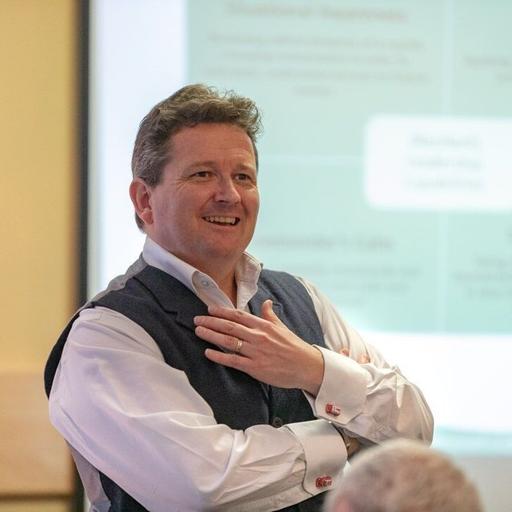
The Resilience Coach | Resilient Leadership Expert
100,000+ People positively affected6,000+ Executive coaching hours£12M+ ROI delivered by RWE npower leadership programme20+ years Learning, leadership and organisational development
Russell Harvey is The Resilience Coach - a resilient leadership expert, executive coach, facilitator and keynote speaker who helps leaders and organisations perform at their best when the world refuses to stand still.
With more than 20 years in Learning, Leadership and Organisational Development, 6,000+ hours of executive coaching and over 70 published podcast appearances, Russell is an experienced and engaging voice on resilience, leadership and navigating persistent change. He has worked with leaders across organisations including Novartis, the NHS, AB World Foods, Kerry Group and The Co-operative Group.
Russell’s work goes beyond helping people simply cope with pressure. He believes true resilience isn’t about “bouncing back”, being tougher or pretending everything is fine - it’s about springing forward with learning and becoming better equipped to lead because of the challenges you’ve faced.
His approach connects the human side of leadership directly to what matters to organisations: engaged people, stronger cultures, better decisions and improved performance. His work has delivered measurable results, including a leadership programme that returned £12 million to the business and a Resilient Leader Programme that achieved more than 1,100% ROI.
In August 2025, Russell achieved his long-held purpose of positively affecting 100,000 people.
More from Russell Harvey
All episodes → Living the Dream with CurveballSpringing Forward: Russell Harvey's Insights on Building Resilience and Embracing ChangeNov 2026Play episode →
 Transformation Station Leadership PodcastTSLP Season 5 Ep. 26- Thriving Is A VerbNov 2026Play episode →
 An Evolving Man PodcastReal Resilience: Why Pushing Through Isn’t Enough | Russell Harvey | AEM #172Oct 2026Play episode →
 Leadership From The Heart | Transformational Leadership InsightsResilience Without the Rebound | Leadership Mindset ShiftAug 2026Play episode →
 Burnout Proof Leadership: Identify Shift and Leadership Skills for Midlife Women EntrepreneursEssential Leadership Skills You Must Have If You Want to Build Resilience & Avoid Burnout When Your Business Gets Hard - with Russell HarveyJul 2026Play episode →
 Your Career JourneyHow to Build Resilience at Work: Leadership, Change & Thriving in Uncertain TimesJul 2026Play episode →
 The ThriveWell Journey | Entrepreneurship, Leadership & Life After DisruptionHow to Build Real Resilience Under Pressure | Russell HarveyJul 2026Play episode →
 Future Fit LeadershipThe 2030 Leader: Why Resilience is Your Most Vital Skill with Russell HarveyJun 2026Play episode →
 Different thinking for Different Time - Mindset Change and Thought LeadershipDifferent Thinking for Different Times - 7 Keys to Building Resilience with Russell Harvey How to Nurture a Resilient Mindset in Business and LifeMay 2026Play episode →