
January 3, 2025
EP 172 Building Resilience in a World of Uncertainty with Russell Harvey
Sound bites
I think that I've always been fascinated by how can we do the things that we do and how can we behave in the ways that we do and how can we don't do the things that we should do.
I've been looking at. And there's this acronym called VUCA, V-U-C-A. And I went, all of our solutions are in there.
In this episode
Russell Harvey talks about resilience coaching, leadership development, and how leaders and teams can adapt when business conditions get uncertain.
- A career in learning and development began after teaching in Hong Kong and noticing the moment when people suddenly understood something.
- The Resilience Coach brand grew out of work with leaders during a difficult period at the Co op Group.
- Resilient leadership can mean personal resilience, leadership resilience, team resilience, or even organizational resilience.
- Some coaching engagements are declined when a leader’s values or expectations do not fit the coaching approach.
- A weekly radio show focuses on personal development, resilience, and VUCA, with no news or adverts.
Transcript
ShowHide
Automatic captions of the conversation. They can contain errors and do not name who is speaking.
Welcome back to the Pro Series Podcast, episode 172 and the first of 2025. Excited to start off the year strong with this guest. I shot this over Zoom. This guest is over in England. His name is Russell Harvey. He's a leadership resilience and growth coach. And it's a perfect time to release this because everybody's making their New Year's resolution. So if you're making one for business-wise, trying to get your leadership skills up, growth, resilience, this is the episode for you. But before we get into this episode, please like, subscribe, and review Pro Series Podcast on where I view this in the podcast.
And now I hope you enjoy Episode 172 with Russell Harvey. Russell, thank you so much for hopping on the Pro Series Podcast today. I'm excited to talk to you. And where are you shooting from? Are you in London? I'm in Leeds, so that's North England. It's the county of Yorkshire, which is the largest county, I think, still. Okay. And it gets the moniker of God's Own Country. So if you're a proud Yorkshire person, I wasn't born here, been here for 30 years, and I do keep asking real Yorkshire people, can I be a proper Yorkshire person?
They still go, no, no, the 30 years is not long enough. You need to stay for longer. I've got no idea when there will be a time. And they go, yeah, yeah, yeah. You can be a Yorkshire man now. That's so funny. We were talking off camera, you do a bunch of stuff, not just podcasting, radio. I really got excited when I saw your bio about just being a resilience coach and kind of helping people in the business. And I kind of want to talk about that. We'll talk about that more towards the end of the podcast. But I want to talk about your journey.
Like when you were little, did you always think you were going to be on the radio or speaking or helping people with business? Like where did that all start? So from when I was little, I've always been interested in human beings, in people, in behavior. I think that I've always been fascinated by how can we do the things that we do and how can we behave in the ways that we do and how can we don't do the things that we should do. I think that's fascinated us. I've absolutely always wanted to look after her. I like to look after people as well.
So there was always a real significant people slant to what I do. I always do this and it's just part of the marketing. So I'm not a resilience coach, Eric. I am the resilience coach. We have to make sure that people understand, there's not any old resilience coaches, which is the resilience coach. So yeah, and so that all came out from there. So my whole career has been learning and development, leadership development, organizational development. It started properly 1996 in Hong Kong. I'm going to travel around the world for a year with my girlfriend at the time, now my lovely wife, and we were living and working in Hong Kong as a sort of stock gap in between where we were.
And I was teaching, and there was some magic that was happening in the room. I didn't know what that magic was, but I thought this is beautiful. I want to do this for a living. I don't quite know what this is, but I want to do this for a living. And I knew that I didn't want to be a teacher in a school. That just wasn't me. And then when I came back from traveling, it was like, ah, people learning. I love it when people are learning light bulb moments, realization moments, aha moments. They go from like confused face to understanding face.
When that happens, that absolutely just, it was like manna from heaven for me. There was like a zap inside myself. So when I came back from traveling, I thought at the time, the description of it was like, I think I want to be a business trainer. You know, recruitment agencies would go, well, what you qualified in and what do you know? And I go, well, nothing and out, essentially. So from there, it was build a career in learning and development. And The Resilience Coach is now nine and a bit years old. And that came about because my last permanent role was a company called the Co-op Group.
And whilst I was there, it got itself into a real pickle as a business, nothing to do with me. There was a significant financial black hole in the business to just do with a whole variety of reasons. And it was sort of in serious trouble of business. And all of my internal clients, I was coaching internal leaders, literally came to me with their head in the hands and going, what on earth we're going to do? And I said, well, there's this word resilience, which I've been looking at. And there's this an acronym called VUCA, V-U-C-A.
And I went, all of our solutions are in there. And then when I left the Co-op and decided to set up by myself, it was, I was like doing the naval gazing of, who am I? What am I doing? I was like, you know what, Russell, you are the Resilience Coach. That is what you have been doing. So that's a real short, potted version of like how it all came about. Essentially, that trip to Hong Kong, how old were you? So I would have been 26 or seven, I think. Okay. Yeah. 26 or seven. Yeah. So what were you doing before that? So I had taken a sales job from having left university.
So I did a few different things at university. I did a business and finance diploma, and then that went into an economics and politics degree. I found the economics confusing, so I transferred and just focused on the politics, essentially. Then people had said to me from a very young age, Russell, you're good with people, you should either do a role in sales or personnel. Literally, when I was a kid, both of those made me cringe and go bleh. Ironically, I have to sell to do business development. I am in personnel, which is human resources, which is learning and development.
That's why I ended up. I was in mid-20s when I did that. Very cool. The Resilience Coach, did that start in 1996 or when did that all start up? No. That was nine and a half years ago, the Resilience Coach. Okay. So 20-odd years in corporate career in all sectors, public, private, mutual, as in my role. Throughout my career, in terms of personal resilience, I've been made redundant six times. Okay. So those are things that you have to deal with facing too. Then the last time leaving the co-op, it was like, yeah, the timing feels right for me to set up by myself, set up my own business, and that's where the Resilience Coach was born from.
For anybody out there that is trying to find that time that feels right to jump to their job, that they want to do their whole life, how do you describe that? Because I feel like there's a lot of people that struggle with when is the good time to jump. So, I suppose one of the things is it's not going to be perfect. So, don't let the perfect get in the way of the good. And you need to have enough of your head, your heart and your gut in alignment. There just needs to be enough of that in alignment for you to go, yeah, the timing is right.
It feels right. Yes, it might still be scary. Yes, I might still be having some of the thoughts about not doing it, but something else has tipped the balance. So, it is a bit of introspection about, yeah, it feels right. But for others, it might be the factor that my head, heart and gut is completely out of whack, but I've literally got to do it because I've got no other options. And that's how some other people go about it. But for me, it was like my head and my heart and my gut were in enough of an alignment to go, it feels right for me.
I feel ready. Yeah, I just feel ready to do it. Yeah. How do you say that to a realist, though, that someone that's just like, they're never going to feel like they are in the right mindset, or they feel like they're thinking about finances and quitting a full time job at a corporate level or something with healthcare. There's like, I can't do that. So I am a pragmatist. I'm curious about whether that is realism or confidence. That's the chat. That's big. That's the conversation I would have with them. If anybody's listening right now and goes, I mean, they're saying exactly what you're saying, Eric.
My chat with them would be, OK, let's explore how much of this is confidence and how much of this is realism. And you've got to strike a balance, essentially. It might be that they need a push to tip over the edge to go, yeah, I don't feel confident in it, but there's enough that it's going to push me over into making the decision. Yeah, who is your main clientele who comes to you? Is it someone that is already just started their business, or maybe they're years down the road in their business, or do you just have a mixture of clientele?
There's a real mixture. The standard answer is one suite of clients. So it's global and it doesn't matter what business it is. So anybody that's listening now that's got the job title that starts with either head of or director of. Somebody that's in that space, they're an ideal client and the reason they may come to me is for a variety of reasons. Sometimes they've gone for a job and it's the first time they've not got it. They've been given some feedback, which for the first time they've always in their careers today, they've like, yeah, come over here, you're great, we want you.
Actually, it's the first time somebody turns around and says, yeah, somebody's not quite right about you, or other people were better than you for these reasons. Sometimes those individuals come to us. It's an experience leader that he says, as it says on my LinkedIn bio, if they're feeling a bit like they are wading through treacle, which I think translates to syrup in North America, essentially. If you're wading through syrup, and you go, actually, this is the same problem, the same challenges, or they're feeling like meh, meh energy is gone, or people aren't performing and I don't really know what to do about it, or I used to like change, and do you know what?
I think, can we just not do change? They're in that space. As well as those that literally, everything's going really great. It's brilliant, but they want to keep it going, they want to maintain it. So an individual with directorialism ahead of, and then there's others, and they're in a certain age bracket, and then the second suite of people are in that space where they are, maybe in a corporate career, but are asking themselves the question of like, is this it? They might have been on a graduate program and been sold, literally come to this corporate space, we're brilliant, we've got all these values, and they've been there for a while and go, yeah, I think I've been sold a pub.
I don't think these values are for me. And then I've got that decision to make of, should I stay and just navigate my way through it, or should I leave and do something else? So in that space, it's more about career decision-making, you know, actually, should I set up by myself? And how do I do that? And, you know, am I confident about it? Realistic, pragmatist, decision-making. So that those two brackets are the ideal clients. OK, so you're really dealing with, I've had multiple business coaches on here, but they kind of analyze the company as a whole.
You're kind of going by the employee itself, like helping them with their leadership goals. Absolutely, yes. So I'm a leadership coach in the first instance. OK. So what does it actually mean to be a resilient leader? For every individual that's a leader on the planet, what that is for them is going to be different and unique. Because it's for each of my clients, as it goes. So they say, yeah, I want to be a resilient leader, and we have to explore what that actually means for you, essentially. And then sometimes it's about supporting the leader to build a resilient team.
Actually, it's a fair bit. A lot of the times, it's that as well. Personal resilience, their leadership resilience, and then the team resilience. And then sometimes I do work with organizations to go, so what on earth does it mean to be a resilient organization? That's really fascinating and interesting, but it's a leadership coach in the first instance. Can you give us an example of like the hardest client, you don't say names, the hardest client you've ever had to deal with that might relate to someone out there that maybe is on the border of maybe hiring someone like you to help them out with their leadership goals.
So do you mean a client that I found hard to support or? Probably difficult to comprehend what you're trying to, like a lot of these people that are head of or directors of, like you said, your main clientele, they might have a bigger ego because they're higher up. They are, like you said, not willing to change. So I assume there are some that butt heads with you that are very hard and difficult to work with. And then they have that aha moment, like, oh yeah, maybe he is right. Maybe I need to change this or change that.
Yeah. So part of my response to that is their route to seeking me out. So if an individual has sought me out, then as well you know, then we will do the contracting piece about, I'll be right for each other. Okay. So I haven't had, when somebody has reached out to me, I've declined to work with some people. Okay. Because it's like, we've had the conversation about, this is me, this is my style, we're trying to get to. So yeah, one particular individual just sort of say, I want to coach because I want to be like my boss.
And so I said, so what's your boss like? And I go, well, they shout and they scream and they berate people and they get stuff done and like, you know, they're horrible to individuals and he's successful and I want to be like him. And I went, so I'm not going to be your coach. Yeah. And I was like, that's not what I believe in as leadership, which they were shocked at. So I didn't work with them. So when an individual reaches out to me, we do the contracting conversation and explore whether we're going to work together or not.
Where it's been more challenging is if the corporate system has tapped somebody on the shoulder, and they've had the conversation in either their talent management conversations or succession planning, go, actually, we like to promote sort of Mary or Bob or Fred or Asif, but actually, behaviorally, yeah, they're not, they're good at this, but behaviorally, they're a bit of a problem. So let's get them a coach. Let's see if there's something wrong with them, so get them a coach. So that's when, when they come to me, when I start conversation around, do you know what we're here for?
And if they start with, no, I was just told to come meet you because I need fixing. Fixing? Yeah. So that's ones where you are a bit more around, the corporate entity has paid you to do something. So whilst the client is the individual, you've got a relationship with the organization. So those have been those tougher ones, where you've had to have the open honest conversations about supporting them to understand what it is that they're not doing well enough, behaviorally right now. I might be the one that have to give them the feedback, which their line manager should be giving them.
Yeah. So their line manager should be telling them in an appropriate way. The reason that we wrote about you, Neri Bob, Asif, is because, but it's me that delivers that message or asks the appropriate questions, so they click, they get a lightbulb moment. And then some of them in that instance have changed, and some of them have taken their bat and ball home and resigned and gone elsewhere. Bonnie, you bring up that in the beginning of this story, the person wanted to be like their boss who was very demanding, very mean.
I think we're like, I feel like we've all have had a boss or know of a boss like that. But it's funny how we all perceive these bosses from just what we have seen. Like it's what we believe, but they don't know that there is another way to build up in the corporate world. I think a lot of people think you have to be demanding, you have to be evil in a way to get what you want to get to that place. Yeah, and I suppose that's the debate that rages around every time you go into a room and go, so what's good leadership then or defined leadership?
You are going to get all of the answers based upon people's experiences. So I always say the sentence as well of behavior breeds behavior. And that can be in all sorts of different ways. So you may have had a bad boss, and then that have actually made you realize that that's not how you want to be. So your behavior then is to go, that's terrible. I don't want to be like that, so I'm going to be different. Others go, oh, maybe that's how I'm supposed to be behaved. Their procedure is successful, so maybe I've got to copy that.
But then that internally means that your head, your heart and your gut are going to be all out of whack because, you know, your head might be saying, I'm supposed to behave like them, but your heart and your gut are going, this is awful. I don't like this, you know? Yeah. And so, yeah, in all sorts of different ways, how others behave towards you informs how you behave. So it's about unpicking that. I think it's a lot of people think leadership as a managing role or a director role or something. But in my opinion, I feel like no matter what position you are in a company, or if you have your own business or whatever, you're leading in some way, you're leading the client, you're leading something.
So you have to benefit from a leadership program like yours. Do you agree? Absolutely. So when I started out in my career, I did facilitate workshops to go, okay, so what's the difference between leadership and management? When you would get a flip chart and you'd have two columns and you'd put loads of things in it. Now, when I'm a bit older and wiser and more grizzly, I'm like, look, exactly as you've just said, Eric, I go, look, regardless of where you are in the organization, it's about this word leadership. And let's just be clear that management is included in leadership.
That's how I aim to support my clients to get their head around this. So, leader first, and somewhere in there, you're going to have to do some management stuff as well. Excuse me, I just need a drink of water. Yeah, you're good. Do you have different programs for different people? Are you only meeting people in person around you, or is it kind of like all around the world? Like, can they do it over the Internet? Or they can do it all over the Internet and face to face. Yeah, absolutely. So program wise, it's a couple of little slants around it in terms of like purely the resilience piece or the resilience and the VUCA piece.
So the absolute full gamut of what I do from a leadership point of view is how to lead yourself and others really well in a full on always changing crazy world. That's my specialism, essentially. So I often talk about the VUCA piece. So the world we live in is volatile, uncertain, complex and ambiguous. And we need vision, understanding, clarity and agility to be able to counteract that. So there's a VUCA model that's been around for some time. Some people love it, some people hate it, some people are fed up of it, but it's still relevant, essentially.
And the way I like that is because it's a really good way of building upon the sentence of change is constant. And also businesses quite often say we need certainty. However, it's really understanding actually that they're never going to get enough of the certainty they need. In a VUCA world, you don't get enough of the certainty that you need. So how on earth do you face into that? So it's the change piece, you know, how to lead others, lead to change in a crazy world is all the VUCA stuff. And there are peak performance skills and leadership capabilities in there and they link to resilience.
So if anybody asks me the question, Russell, how do I build my resilience? I go, right, there's the resilience wheel on my website. It's built upon research. It's got seven aspects to it. And I go, we need to support you to engage with your resilience wheel. And you can use it to build your personal resilience. And you can use it from a leadership point of view as well. And you can use it from a team point of view. So there's all of this content. There's all of this wonderful, you know, ideas, tips, tools, techniques, behaviours to have a go at.
And it's either go, do you know what? I just want to focus on the resilience wheel bit or actually, do you know what? I want a bit more on the change piece. There's crossover amongst them all. They might say, do you know what? Yeah, it's resilience and change. So can we have the lot, essentially? And the program that they get or the program that I might deliver for certain clients is depending on actually where they want to focus around that. They're all interconnected. So regardless of what they want to focus on, we do do a bit of both because you can't really do one without the other.
Yeah, that's very cool. It's cool that you could touch other people that are not in your direct area and spread your knowledge throughout the world. Yeah. Oh, it's brilliant. It's absolutely brilliant. So that really because it helps me meet my purpose. So one of the dimensions of being resilient is having a purpose. And so everybody's listening now. It's like, hmm, what's your purpose? And everyone from a leadership point of view also asked the question, what's your leadership purpose? But my purpose of my business and me is by the year 2025, I want to positively affect 100,000 people.
And right now I'm up to 76,012. Very nice. So, you know, so people that are listening in now, it literally is common to go, oh, yeah, add me to the list, Russell, you know, something that you've said, an idea that you've come up with. Do you know what? I've learned something. So somebody that's learned something goes into the heart of positively effect, essentially, or that made sense to us. So and it gets me out of bed every day. And it's brilliant and it's enjoyable and it's wonderful. And it drives me, it motivates me, it enthuses me to do it, you know?
Absolutely. When did the podcast get in part of this? Is that part of trying to reach out to more people? Totally. Yeah. And that's literally just on the home page of the website. So this series one is how to build your resilience. Okay. So I go through each aspect of the wheel on that and a couple more bits and I've recorded one with a colleague I know about how to build a resilient organization. And that's more from a human leadership point of view rather than from a process disaster recovery point of view. That's not where my specialism is.
Yeah. Yeah. So when it comes to the radio show, how did that all come about? Because it still kind of touches with this theme, right? No, no, it's just come, absolutely does. Yeah. Yeah. So a chap called Steve Twynum, one of many thousands of networking conversations I had. He's had a career in leadership and management, but he's also been into radio. So he's been a radio host. He still is. Excuse me. And he created a radio station. And it was literally just in a conversation, I had with him over a cup of coffee and I said, Oh, I am, he said, he just bought his phone out.
He said, just record me some resilience tips. And he literally put his phone in front of my mouth. And I just said, here's three tips. He goes, right, we're going out on the radio tomorrow. And I just kept sending him loads of tips about resilience get played. And he said, you up for your own show, Russell? I went, yeah, of course. Yeah, of course I am. So, Russell's Resilience Radio Show, where it's like, it's three hours, there's loads of music and it's me just literally sharing anything and everything that I can around resilience and VUCA.
And this is what's happened and this is how you build your resilience. And yeah, it's great. It's all of it. You said it's every Saturday? Yeah, it's every Saturday, 3-6 in the UK. It does get repeated. So, the name of the radio station is a funny name to it, but bear with me. It is YOWA, which is Y-O-W-A-H. YOWA. So, it's a place in Australia, but it also stands for your only well-being and happiness radio station. Ah, I like that. There's a story behind that because it was called something else, and Steve tried to trademark it and couldn't.
And then we're on a team meeting sometime. He says, I don't know why I'm talking about it. My wife and I went to YOWA, which is an opal mining place in Australia. Okay. They all live underground and they're all millionaires. And he says, I don't know why I'm talking about this, because I'm going to have to shut the radio station down. But actually, I'm just going to talk about it. And my brain was going, because of what we do as a radio station, was all about personal development and inspiring people. I just went, well, it stands for your only well-being and happiness station.
And everybody in the call went, genius, that's connect, can that be our new name? Can it be our new name? And it became our new name. That's awesome. Is everything on that radio station, like in the same world as you, is it like helping out? Absolutely. It's all about personal development. So there's no news on it. There's no adverts on it. So it's yararadio.co.uk. It's on the Internet. It's on 24-7. And there's just a whole host of different radio hosts on there with different things, their own shows, all sorts of different personal development and sort of inspiring, well-being, nice topics, essentially.
Yeah, that's awesome. Very cool. Well, I want to end with where people could follow you. I know you have some links behind you in your background, which is a genius move right there. I didn't really think about that, but I will put it in the caption of the podcast and caption on the social media post. But I want to end with how people could follow you on social media. Yeah, so literally anywhere you go is Russell the Resilience Coach. So website, theresiliencecoach.co.uk. Instagram is Russell the Resilience Coach. Same on Facebook, same on LinkedIn, essentially.
That's how you find me. Yeah, it's as simple as that, essentially. Awesome, Russell. Well, thank you so much for hopping on the podcast and taking some time out of your day to come on. No, thank you for having me. I really enjoyed it. Thank you, Eric.
About Russell Harvey
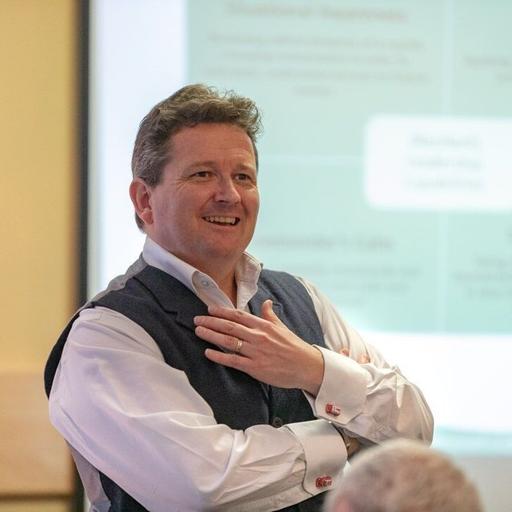
The Resilience Coach | Resilient Leadership Expert
100,000+ People positively affected6,000+ Executive coaching hours£12M+ ROI delivered by RWE npower leadership programme20+ years Learning, leadership and organisational development
Russell Harvey is The Resilience Coach - a resilient leadership expert, executive coach, facilitator and keynote speaker who helps leaders and organisations perform at their best when the world refuses to stand still.
With more than 20 years in Learning, Leadership and Organisational Development, 6,000+ hours of executive coaching and over 70 published podcast appearances, Russell is an experienced and engaging voice on resilience, leadership and navigating persistent change. He has worked with leaders across organisations including Novartis, the NHS, AB World Foods, Kerry Group and The Co-operative Group.
Russell’s work goes beyond helping people simply cope with pressure. He believes true resilience isn’t about “bouncing back”, being tougher or pretending everything is fine - it’s about springing forward with learning and becoming better equipped to lead because of the challenges you’ve faced.
His approach connects the human side of leadership directly to what matters to organisations: engaged people, stronger cultures, better decisions and improved performance. His work has delivered measurable results, including a leadership programme that returned £12 million to the business and a Resilient Leader Programme that achieved more than 1,100% ROI.
In August 2025, Russell achieved his long-held purpose of positively affecting 100,000 people.
More from Russell Harvey
All episodes → Living the Dream with CurveballSpringing Forward: Russell Harvey's Insights on Building Resilience and Embracing ChangeNov 2026Play episode →
 Transformation Station Leadership PodcastTSLP Season 5 Ep. 26- Thriving Is A VerbNov 2026Play episode →
 An Evolving Man PodcastReal Resilience: Why Pushing Through Isn’t Enough | Russell Harvey | AEM #172Oct 2026Play episode →
 Leadership From The Heart | Transformational Leadership InsightsResilience Without the Rebound | Leadership Mindset ShiftAug 2026Play episode →
 Burnout Proof Leadership: Identify Shift and Leadership Skills for Midlife Women EntrepreneursEssential Leadership Skills You Must Have If You Want to Build Resilience & Avoid Burnout When Your Business Gets Hard - with Russell HarveyJul 2026Play episode →
 Your Career JourneyHow to Build Resilience at Work: Leadership, Change & Thriving in Uncertain TimesJul 2026Play episode →
 The ThriveWell Journey | Entrepreneurship, Leadership & Life After DisruptionHow to Build Real Resilience Under Pressure | Russell HarveyJul 2026Play episode →
 Future Fit LeadershipThe 2030 Leader: Why Resilience is Your Most Vital Skill with Russell HarveyJun 2026Play episode →
 Different thinking for Different Time - Mindset Change and Thought LeadershipDifferent Thinking for Different Times - 7 Keys to Building Resilience with Russell Harvey How to Nurture a Resilient Mindset in Business and LifeMay 2026Play episode →