
January 17, 2025
Springing Forward with Learning featuring The Resilience Coach, Russell Harvey
Sound bites
Springing Forward with Learning, because it's an actionable thing. And it's also the fact that it's permanent, it's not a quick fix.
In this episode
Russell Harvey joins Barriers and Boundaries Resilience Leadership to explore resilience as springing forward with learning, and how leaders can build stronger teams by changing behavior and removing obstacles.
- Resilience as a lifetime choice to learn from experience rather than trying to bounce back to the old self.
- Reflection through pausing helps people recuperate, re-energize, and carry forward useful lessons.
- Behavior change starts with asking what has been serving you well and what has not, then doing more of the former.
- Leaders are responsible for three things: delegating brilliantly, removing blockages, and building resilient teams.
- Organizations create peak performance by treating people as humans with strengths, needs, and different working patterns.
Chapters
Written from the transcript. Pick a chapter to play the video from that point.
Transcript
Automatic captions of the conversation. They can contain errors and do not name who is speaking.
Hello, friends, and welcome back to another episode of Barriers and Boundaries Resilience Leadership Podcast. I'm your host, EB, and I have a fascinating guest, Russell Harvey, the Resilience Coach with me today. How are you doing, Russell? I'm really good. Thank you, EB. I'm really good. Thanks for asking. I hope you are, too. Doing well out here in California, and you're out there in northern England and the UK and living large. We are. Yes, we had our version of snow and ice is what we've been having for a while.
We've had the opposite of what you guys in California have been getting. Thanks for coming on the show. Thanks for being a guest today. And I was really impressed with a lot of your work being the Resilience Coach. And I love some of the things that you talked about. I will say up front, you challenged me even just by watching some of your material from earlier stuff because on this show, I have actually defined resilience as bouncing back and learning from in the process. And I love that you challenged that with Spring Forward.
Is that correct? Absolutely, yes. So, Springing Forward with Learning, because it's an actionable thing. And it's also the fact that it's permanent, it's not a quick fix. So, it is about the fact that resiliency is essentially a lifetime choice to develop. So, Springing Forward with Learning is how I define resilience. The only, certainly not alone, the term bounce back exists with resilience all of the time. The reason that I just personally get a little bit concerned about the word is that, so, something unpleasant will happen to us.
And unfortunately, most of the time, that's the only time we understand what our levels of resilience are. But then what I see an awful lot of people doing is going, right, I've faced into a different thing. I'll now bounce back. And then that's a subconscious instruction to the brain to go back to how you were. And I'm sitting there standing and going, well, hang on a minute. What have you learned from this experience? So I do appreciate some play on words, but what we say to ourselves immediately impacts upon how we behave.
So I really do want people to think about bringing forward with learning is actually what resilience actually genuinely is, because it's about the human condition, and we can't go back. We can't go back. In the essence of bouncing back, and the more I listened to you talk about that, the more I was kind of exposed to that. Really, I went down this rabbit trail of thought of the whole, well, if I'm bouncing back, perhaps I'm bouncing back to the me that got me into the adversity to begin with. Really interesting, AB.
Yeah, really interesting. So there is a level of learning that's going on in that thought process, because there's reflection. So for people to be role modeling the behaviors of this definition of Springing Forward with learning is what everybody is listening and watching right now. That how I know that a leader that I'm coaching is doing it is that actually in a way that's energizing for them from all of life's experiences, they're pausing. Now, pausing can take on a whole host of factors. It can mean going for a run.
It can be having like a team meeting in a different way. You can be looking at the wall and just staring into space. But in your pauses, you're reflecting, you're recuperating, you're re-energizing, and actually you are rewiring yourself to take the learnings from your experience into the future. So it's brilliant that you sort of said you went down this rabbit hole. That's great around. Ooh, maybe the me that I am got me to here. So that is Springing Forward with learning as a living embodiment. Absolutely. It's really good.
And then I'm curious about, so what are you going to do next with it, EB.? You know, that's the next bit. You know, what's like, oh, I've got a bit of an awareness, but am I just going to go, oh, that's too scary to look at? Or am I going to go, no, all right, then I'll reflect a bit more and I'll do something with it. Growth has a chance to be a bit uncomfortable. All the time, yeah, it can, it really can, yeah, it really can. So yeah, I encourage the people I work to ask themselves two questions in their reflections, which is what have I been doing recently that's behaviorally that served me really well, and what have I been doing recently behaviorally that hasn't been serving me really well, and how am I now going to do more of the things that have served me well, and fewer of the things that haven't served me well.
So, you like to focus on behaviors. Is that a starting point for you? It is really because it's only about behavior. So, you're exactly your point of like, maybe the me that I was got me here. So, there's a suite of behaviors that are attached to the me that I was. So, I've always been interested in human behavior since I can remember, since a kid, essentially. It's like, I've always been, how can we do the things that we do, do and don't do some other things? What that's about? What's informing us? What's influenced us to behave in a particular way?
So, human behavior absolutely fascinates me. And sometimes the more I study it, the more I get confused by it. I think behavior and strengths are the starting points. So, I take a positive psychology approach, and this strength-based approach. So, strength is a massive part of what I do as well. How do you engage a conversation about strengths? So it's this word, energy. You know, it's a case of, what have you been doing recently that's really sort of floated your boat? Or where have you realized that actually time has passed and you've not noticed it?
Where have you felt enthused, interested, focused? You found it easier? So all of that is language for people to tap into their strengths. So I know more in the US people are familiar with Strengths Finder, and now that we use the psychometric, it's not just UK, it is global, but there's Strengths Scope, which I use as a psychometric. So clever people and I have identified these 24 strengths, and we take a psychometric and we identify our significant seven, and playing to our strengths builds natural resilience and natural confidence.
So that's a starting point for people. Just to ask people about what have you been doing recently that you have enjoyed, essentially, and somewhere there will be some gold dust. Backing up a little bit, how long have you been doing coaching, executive coaching, leadership coaching? Yeah, so about 18 years now. So yeah, it is. It was a really nice thing. Just getting warmed up. That's it. Just getting started. Yeah. It's just fantastic. It's like I am a coach and a facilitator. That's how I describe myself. And I nicely picked up on the moniker of my business, which is the resilience coach, not just any old resilience coach, the resilience coach, which is not about arrogance or ego.
It's just that's what I've been doing for about 13, 14 of the last 18 years. You know, essentially is resiliency and coaching and leadership coaching around how to lead yourself and others really well in a full-on, crazy, mad bonkers VLUCA world, which I know we might come on to shortly. So that's been my specialism, and I just love it. I love it. What's the most exciting and the most challenging aspects of being a coach? So the most exciting is when you see an individual, you're with an individual, you're by their side, a leader.
As they change, as they see things differently, as they have their lightbulb moments, when they have their realization moments, that absolutely floats my boat. It has since, has some for a very long time. So one of the dimensions of being resilient is having purpose. My purpose is to positively affect 100,000 people by the year 2025. And right now, I'm up to about 77,020. Oh, fantastic. Thank you. And the positively effect is those people having their lightbulb moments, their realization moments, those aha moments.
And on my words, this can be different. It doesn't have to be as difficult as this. It can be better, and I can see a way forward with this. That's what excites me really around it. And when the challenges are getting to that point, you know, those are the challenges. The other part of the challenge, though, actually is, and I've not cracked it, I really haven't cracked it. The other part of the challenge is enabling the individuals that are out there that would benefit from coaching, not just from me, you know, there's millions of coaches out there.
The challenge is getting them to reach out. A leader will be in some version of overwhelm or wading through tree call or something's not quite right. And for them in those moments, realize that that's the time that they need to look up and they need to just go, yeah, coach, conversation, somebody else. The challenge is, you know, if anybody's listening and watching now is that if that's you, just reach out. Don't just, not necessarily to me, just anybody that's got the word coach, there's millions of us out there, talk to loads of them, but reach out because if you're stuck, they will enable you to become unstuck essentially.
How often have you experienced leaders that you're sitting there in your mind, you're thinking, they should have reached out to me months ago? Yeah, most of the time, most of the time, it's a huge amount of the time, but you've got to be grateful that they have eventually reached out. And that's the challenge again, the resiliency space is that unfortunately, most of the time people don't understand how resilient they are until they are facing the real difficult challenge or something really unpleasant has happened.
And that's the moment when they do reach out. So you can see an awful lot of networking, an awful lot of conversations, and you can see people that are, that in my opinion need the coaching now. You just, you have to wait until they're ready. You have to wait until they're ready. And sometimes they're in a more depleted state when they choose to be ready. Any experiences where they reached out, but yet they're still resistant to change, to getting the help. They're just doing it because someone else told them to. There's loads of those.
So yeah, that's the other part of our, of the coaching industry is, and that's what you do at your initial conversations. You know, your chemistry calls about, are we going to be right for each other? It's understanding their route to coming to you. If a larger corporate business is paying for the coaching somewhere, somebody in a line manager or HR or learning and development will go, we think you need a coach. There's a real mixture of like, where that individual is going, oh, goodness for that. Or, why? What's wrong with me?
There's many conversations when I've turned up to a room and somebody else, and I've gone, do you know why you're here? They go, not really. I was just told I needed to talk to somebody. And they go, okay, so let's start from scratch. And then when people do reach out to me directly through email or website, or they see us at a meeting, it might be a case of my team isn't performing or this isn't working. Probably on the one where my team isn't performing, my question pretty early on is, how much do you realize that you're contributing to that?
Is my question to the prospective client. And then depending on how they answer, is going to give me a clue about what's going to go next. Because some individuals will go, what are you on about? My team are just a bunch of idiots. It's got nothing to do with me. So, there's a resistance there. And somebody else will sort of stop and they'll go, yeah, I was worried you were going to ask me that question. Oh, golly. Any techniques to kind of help increase their vulnerability, their openness? So, I suppose it takes a little bit of time really.
That's in the building of the overall relationship between the coach and the client. It's setting up the style and the feel of our coaching relationship and in the chemistry call that we have and them actually, after probably two or three conversations, some do it quicker. Some people turn up and go, my team's not performing, and I know it's my fault. If a prospective client says that, you go, brilliant. OK, you're 99% of the way there. We'll build upon that. But others, it's in the rapport building in the early conversations.
And then they finally sort of go, second or third conversation, or fourth or fifth, and go, there's something I've been wanting to sort of share with you for a while, but I only feel ready to share it now. And you go, OK, great. Now is the perfect time. It sounds like 18 years of doing this, you've adapted to the ability, the competency, skill level, the tact of approaching a business. Going in and not prejudging. You might have some data, but not kind of prejudging before you go in. Right. You've really got to, you can from the outside looking in, you can have some ideas.
And I'm talking with, I've done some work before, but I'm talking with some colleagues again around, what does it really mean to be a resilient organization from the outside looking in? And you just hear all the words and phrases in the news, in networking events about we're waiting for something, or just phraseology and terminology about these are the things that we can't do, or yeah, we've adapted loads. But then when I unpick what they've actually done, they believe they've adapted, but it sounds like literally they've just worked a lot harder at doing the same thing.
And it's about really listening to what's going on to give me an indication about what they're ready for or what they're not ready for, or the questions to ask, or keep asking, or to play back them around. I've heard you say all of this, and my opinion about what you've said is in this space over here. And then if they stop and go, oh God, wow, I've never thought about it in that way. That's really good. As long as they sort of go, I think we need to talk to you more. Or they might turn around and go, yeah, never thought about it that way, but that feels too scary to me.
Someone's going to stay as I am. Can you deal with that in the moment? Yeah, we talk about healthy employees creating healthy organizations here on the show a lot. And I love the connection piece with there might just be one aspect of the organization that's struggling, but it has a huge impact on the rest of the organization. Yeah, it does. It does definitely. And I suppose it's like if I may ask you a question, so what does a healthy employee look like to you? Well, you know, what do you mean by that? I would say it depends.
That's my answer for everything. It depends. I learned that in college. I was taking some systems engineering classes and we were talking about KPPs, you know, performance parameters. And they're like, what does success look like for this? And the professor was, well, it depends. And that was his answer for everything. And I was like, that's brilliant. I'm just stealing that for the rest of my life. But what are the outcomes that you're seeking? When you engage with employees, I like the idea of contributing to not getting from.
Like I want employees to come into the office. How can they be value added? How can their creativity be captured? And it kind of goes into some of the inclusivity and discussions like that. But context matters. What's the environment? And I know you have a lot of work discussing business environments as well. I mean, probably know a lot more than I do for sure. No, no, no, no. I'm working it out. Really, I want to have the conversation going because I agree with you. A healthy individual will contribute to an organization.
Absolutely. Then it's just sort of looking behind that. So whilst there's a real significant crossover between the word of well-being and the word of resilience, there's absolute crossover between that. I'm just really concerned that we've fallen into a bit of a trap that an organization's culture is not the best it can be, and the solution is being, we'll have a well-being strategy. Now, I'm of the opinion that if you build and create a resilient culture, you don't need a well-being strategy. So I see you're nodding away, which is nice.
And so I'm not trying to do anybody out of a job, but if anybody is like a head of well-being, if you build and create a resilient culture, that isn't needed, essentially. So it's not too radical, but... Almost as if it was arbitrary, a check in the box, per se. And I'm really concerned as well about the toxicity around the word resilience and positivity as well, because we sort of say, this isn't working, or I'm concerned about this, or things are not great around here, and people say, you just need to be positive, you just need to be resilient.
And that's not where I'm coming from. I think that's an inappropriate response in those moments. How much of lead by example comes out of your conversations when you talk about behaviors in the environment itself? Yeah, it does. Once people have engaged with me, this sentence of how to lead yourself and others really well in a full on crazy monk as world is what that means as to how to be a resilient leader. So to continue with the role modeling, I'm of the opinion and I say this to all leaders, anybody out there that's a line manager, whether it's chairperson to CEO or you're the very first time you're line managing somebody lower in a hierarchical organization.
You're only responsible for three things as a line manager, as a leader, it doesn't matter where you're on the organization. So, number one is to delegate brilliantly to people's strengths, okay? Number two is to remove the blockages to your people performing, okay? So once you've done delegate brilliantly, which includes a lot of coaching, so it's line manager as coach and understand people's strengths. You have many conversations where the individual comes to you and say, well, this isn't quite working, and then with a bit of coaching, they go away and do it.
At some point, that won't work because the individual go, there's nothing more I can do. It doesn't matter how much coaching you give me. It's because this system or this process or the way this organization works, it is stopping me from performing well in my role. So you're the boss. You now need to go to your peers and higher up and go and talk at your level to go, actually, my people can't perform. We, at our level, we need to do something about this. So you're responsible for doing that. And the third one is to build, create and grow a resilient team.
So you're only responsible for three things. Yes, there's plenty that's included in those three things. But when you get out of bed every single day as a line manager and a leader, and you can get confused and go, what am I here to do? Please remember the rule of three. And then look at everything that's on your desk, all your emails, all your meetings that you go to, and ask yourself the question, how many of the things that I'm involved in day on day and week on week are meeting these three things? And if they don't stop doing them, which I know is way easier said than done, but that's how you become a resilient leader.
The Resilience Triangle there, three sides, and that second point, obviously this being barriers and boundaries, what are the obstacles leaders need to remove? That's the job of a leader, is to remove obstacles for your staff, your team. Yeah, it is. And that's difficult, it's hard. So when you do a leadership development program, and you can get in front of and facilitate sessions with levels of line management to go, you're responsible for removing blockages. If you've got all of these people in a room on the training course to go, okay, so when they go back into the workplace, they'll go to their meetings and go, right, on our agenda, how much of our agenda is about moving blockages to our people performing?
You've got a chance then that they'll be looking at each other going, we're supposed to be removing blockages, are we doing this? Are the conversations that we are having, are they removing blockages or are they adding blockages to our people performing? I'm thinking about the amount of personal obstacles an employee may have that the organization leader may not be thinking about. Commute time, child care, school schedules, how much of personal obstacles come up in conversations when you're talking to leaders about, hey, there's a key aspect to your business developing and growing, but it's not actually the performance or the sales numbers.
What if it's just simply, you need to take better care of your staff and having honest conversations with them about their needs? It's a huge part of it. You know, so if you think about, going back to this resilient organization, so one of the ways in which me and a couple of colleagues are playing around with this is like, an organization needs to create the conditions for peak performance. Okay? That's what the organization needs to do. And this really came up throughout the pandemic, and we're still talking about now, we're still having a bit of a black and white conversation about, do you want to be in the office or work from home?
Beat me to the punch by asking that. So it's thinking about the fact that any team or organization, I've got my fingers and hands up now, it's like you've got all these KPIs and stuff and targets and things that need doing, and you've got these humans. And it's literally, when you put them together, do they miss or do they interconnect nicely and intertwine nicely? It's still about taking an outcomes approach, if it is what I talk to teams and line managers about, to go, your team, your function, the biomass do all this stuff, and you've got these humans with their strengths.
So if you take the whole human, and it's just how much does it really matter to you? How often you actually see them? If in your interactions with them, your conversations about what they're doing and how they're performing, and giving you enough information that the things that they need to be doing are happening, what does it matter where it happens? If they choose legitimately and it energizes them to do things at different times of day to 9 till 5, so what? As long as they're genuinely happy and they're not working like until 9 or 9 till 10, is to go, actually, this individual chose to go for a walk in the morning, take their kids to school or whatever, but then they did a couple of hours in the evening, but they were happy to do so.
And actually, the next time you have a one-to-one with them, it's like you have been delegated to do these things and they're all happening and you're doing them well and you're feeling good and I'm happy. So what does it matter about the structure of the place? That is a very impactful conversation. I could just imagine the challenge for some to go outside their normal boundaries of what they think productivity is. In their workplace. And when you add in to that, delegating to somebody's strengths, so delegate brilliantly is exactly in this outcomes approach.
It's to go, okay, we've employed you to do this job. Yes, you've got a job description. Let's really unpick about how much of this energizes you, place your strengths, how much of it doesn't. Okay. But you still need to do them. So what strategies are we going to put in place to support you? And you have to do the things that energize you less. And that's the approach that you take. And I've done it in organizations that it was like 1,500 leaders at a large program about delegating, and articulating what that was. And a number of different heads of functions just went, oh my God, I am literally just going to completely, that's exactly what I'm going to do.
I'm literally going to get everyone together, 200 people and go, right. Our function is this does this stuff, and the 200 of us need to do it. So who wants to do what? Who wants to do it? And it's like, we're going to put some structure around it, but who's interested and excited in which? Right, they're yours, okay? What's left? So we just need to find a way to do things. And yeah, there was a department of 200 people and the leader, role modeling, going back to an early question just went, yeah, it's literally just, you know, it's dead simple, Russell.
I don't know why we haven't thought about it before, but they got it, they understood it, they believed in it, they could see the value and the benefit. Would it be safe to say the outcomes are an expression of the behaviors of the organization? I think so. Tell me a bit more about what they... I'm just thinking about, like, when they, their expectations, their values, their behaviors, all of that's going to come out in the performance of the organization, the outcomes, the deliverables. So I'll just talk about something else and bring it back exactly to that.
So yes, I do agree with you. And so if anybody ever asks me, how do I build my resilience, Russell? I have, which you'll have seen on my website, I have the Resilience Wheel. She's got seven pieces to it. And it's a build upon all the Robertson Cooper work. So you can take this resilience wheel from an individual basis, from a leadership point of view, from a team point of view and an organizational point of view. At the heart of resilience is our attitude. So, conversation you have with an organization is, what's your attitude as an organization?
You can get a sense, you can get a feel of it, you know. If you walk into a head office and you walk around, you can actually, you can feel the attitude. And also, one of the other dimensions of being resilient is, what's your purpose? So that's also back to your question as well. From the attitude and the purpose comes our value system and our outcomes and the behavioral style in which we achieve what it is that we're supposed to do. What's the purpose of the organization? They might say that we've got the values that we want to look after our people, but actually what actually happens is all your people are burnt out and miserable and unhappy.
But if you genuinely say, do you know what our purpose is, to create the environment for people to perform at their best, and we all genuinely get that in our head, hearts and guts, what that means and the leadership behaviors we need to do, then you'll meet that purpose. Everybody will be resilient. And as a consequence, people will be well and they will be happy. And so you may not need to do some separate well-being programs. I'm not trying to stop colleagues in the well-being space from getting work. It's important, but I'm just like, I'm really concerned that we're doing another sticking plaster in those instances.
Would you encourage those who don't have a well-being program or plan in place to at least start with that just so they can learn and then slowly build that in or keep the plan on the table for the time being? So right now, if there's people that are listening in or people are working, excuse me, working within organizations, if you've currently got nothing around that, and you choose to do, so we need to do something around well-being, there's a risk you're going to go down a rabbit hole, and you're going to create this well-being culture and you're not actually fixing the problem.
So there's a risk it's the wrong solutions, the wrong problem. So I would encourage people, as long as it doesn't sound arrogant of me, is have a resilience strategy, not a well-being strategy, and then go and talk to some resilience specialists about, well, we need the resilience strategy, you know, can you help us with that? And the consequence of that is that your employees will be well. The importance of the strategy and being mindful of the resilient culture in the organization. I want to touch on that VUCA. VUCA?
Yeah, VUCA, absolutely, yes, yes. And because, I mean, that's why you need it, right? Because of the world that we live in, something that you talk about a lot. Can you share more about your engagement with that? Absolutely. So why I like it, so that the VUCA model has been around sort of since the 1990s and a bit longer in the corporate space. Some people haven't heard of it, some people are sick and tired of hearing of it. However, it's still relevant. So the reason that I think it's still relevant, and I personally like it is that it's once you unpick it, it's a really great way to find a better way to have a conversation about the sentence of change is constant.
So we've been saying for quite some time, change is constant. I don't think we've been supporting people well enough to really understand what that means and what they do about that. So to start with, VUCA is a load of business buzzwords, EB. So just bear with me. I'm going to say eight words that we could just swallow. So the world we live in is volatile, uncertain, complex and ambiguous. And nicely to counteract it, it's the same acronym of VUCA that we need, vision, understanding, clarity and agility. Okay? Once you unpick each of these eight words and understand that behind each one, there is a meaning, there's an attitude and skills and capabilities and behaviors behind each one, you get to understand much better about what it really means to be in a full-on VUCA on the site world.
And they all link to the capabilities and the skill sets around resilience. So Resilience and VUCA are interconnected, essentially. I love it. Yeah, I'm not too familiar with some of this discussion, so I'm learning on the fly here as well. Clarity kind of sticks out to me as something that I'm just drawn to naturally. I'm a big fan of having the right information and maybe the right attitude behind it. Clarity is the counterbalance to complexity. So the clarity piece is, so our starting point is we understand that we don't know an awful lot of what's going on and we're unsure.
Complex, we don't understand how things are interconnected with each other. So what you need to do in the clarity space, and this goes, is linked to delegating brilliantly, okay? Complaining to people's strengths. Everything's all interlinked in here, EB. As in terms of making it easy for people, it's not a whole suite of separate things. It's actually that connects with that, and that connects with that, and that connects with that. So it all meshes together. So this is about having a quality conversation about what do we know?
What can we get clarity on? Now, sometimes the conversation is the only piece of clarity that we're going to get is that there isn't any. Okay? So we are clear that we haven't got any clarity. That's the clarity that we've got. And sometimes that's the starting point. And you go, okay, all right, then. I have clarity. You know, that there isn't any. That reminds me, there's a neuroscience book called The Quiet Leader by David Rock, I don't know if you're familiar with that. I've heard of it, yes, I've seen it. And one of the models for learning that he presents in the book, the starting point is unconscious incompetence, like you don't know what you don't know.
Totally. And hopefully, in the conversations that you get, you will start to get a level of clarity about, imagine it's a line manager with an individual, no matter where it could be, chairperson, CEO, all the way down in an organization. You sort of say, okay, so I'm delegating this thing to you that I need you to do, okay? So we need to now sort of talk about, what's the boundaries that you've got to work within? So you get clarity on the boundaries. The boundaries might be, the most important thing that we do here in terms of you achieving this task and activity is that you really must consider the company value of, okay?
That's a boundary. That's a piece of clarity that you've been given. Or there's this much budget for it. It's not always about the money, but you'll be given something. It might be like three things, so it's a triangle, four things, so it's a square. And you go, right, that's the clarity that you work with. Well, if you know those financial limitations that you have to work with, that will help you get clarity. There was another one that it was kind of subtle, but it goes back to your point about delegating well, and the roles of the people on your staff.
So you can start, like, man, this is so great, because this is where you start to unpack this. Well, if there's complexity, and we're seeking to get clarity, what do we know, as you talked about? And some of it just starts with, well, I know what role I'm in. I know what role you're in. I know how much money we have. I love talking about this stuff. I love having this type of conversation, because it's just communicate, just talk, and you're going to start to figure things out. But having someone like you come in and guide and facilitate those conversations, there's a lot more benefit to that that I think people understand, just because you come in with fresh eyes, you come in with a perspective on what does healthy look like, what does success look like, and you're able to ask those questions.
I was curious about the behavior, maybe the values and purpose. How often or what's your experience with organizations or leaders, not even knowing their values? Is that common? Yeah, it's just highly common. It really is, because one of the dimensions of being resilient is having a purpose. So I talk to my leadership clients and teams to go, so what's your leadership purpose or what's your team purpose? And I don't think yet anybody has instantaneously told me ever. You know? That's fascinating. That's eye-opening.
I mean, that's very insightful for your experience to be able to share. Hey, look, we got to start. And for you, these are the basics. These should be your bread and butter. These are the things that everyone should be aware of. What's the mission of the organization? What are your values in the organization? Well, yes, they might have a lot of things written down. And sometimes the response is, Oh, golly, God, yeah, somebody else came in, and we did a team charter and things like that. And I go, where is it? It's in a drawer.
And I go, yeah, so that's not what I mean by a team purpose or a leadership purpose. So, yeah, the leadership purpose is how come you're getting out of bed each day? How come you're doing this? And they will start to say some things. But we take a step back from here and look at other aspects of the resilience wheel. And then it starts to become clearer for them. So they get some clarity on their leadership purpose. So and the team purpose as well, is so much for me around a human level. It's once again, it's like the team's purpose for me is behaviorally, what is it that we need to be doing to enable each of the humans that I work with, to be healthy, to be well, to perform at their best, to play to their strengths, to be the best versions of themselves.
You go, that's your purpose. So what are the behaviors that you need? I lived in Japan. I've lived overseas quite a bit. I lived in Japan for a year. And long before the book came out, I knew about Ikigai. And the way that they discuss it, it's that which wakes you up in the morning. You talk about purpose. What are you engaged in? And that's been with me for 25 years since I lived with Japan. And very happy to see some people writing about it now. But that way of life of, don't waste your life. Engage and live it and do something you're excited about.
Do something that you want to contribute to. Some, just to clarify, sometime a lot of people may be able to sort of say, because they might be on a wall or on a poster, they might be able to say, oh, our organization's values are. And they go, yeah. And I'll go stand in front of the posters they can't see anymore and go, that's not the question I'm asking. I'm going, what's your purpose for being here? On a human level. And that's the one that I haven't had somebody immediately go, oh, my purpose for being is this.
They might be able to tell me the organization's values or like, oh, yeah, we did a team charter. But there's a difference in it for me in terms of how I'm talking about it. It sounds like that could be a great way to do some team building as well, when you just use it as an opportunity for them to get to know each other. Yeah, yeah, absolutely. You can get to know each other differently based upon their strengths. So as you walk into a room of, so anybody that's listening now, any line manager that's listening now, watching now, if you're a line manager and you got four or five people in your team, how well can you write now on a piece of paper, write down the top three strengths of each of your individual members of staff?
Can you write down the top three things that float their boat? The top three things that they really get enthused by, that they really love doing. Every line manager should, is an amazing word, should EB be able to go, yeah, Fred likes doing this, Mary likes doing that, EB likes doing this, Asif likes doing that. But as a leader, you're supposed to know those things because you're supposed to be delegating to those things, delegating brilliantly with those in mind. So anybody that's a member of a team right now, same question for them.
Your peers, could you say, the people that you work with in the office, what their top three strengths are, or any one thing that really energizes them? I definitely agree that that connection piece and building that community of identifying purpose in the individual, can it be done in a fun way? Can you go in as a coach and have fun with an organization? I get the sense you want it to be a positive, engaging experience when you go in and coach. How much fun do you have? I have a lot of fun, EB. I don't know how well it's coming across in this, but I am quite mischievous, so I have a lot of fun.
I can ask some of the most challenging questions with a smile on my face, and people are okay with it. They enjoy it. No, I do. I've had the feedback over the years that people should have said, we have covered some really challenging topics, but we've had so much laughter. So I don't quite know exactly what I've done, but there's some element of my style of like, yeah, this absolutely does need to be fun. There's often been some emotional negative outbursts as well, as we've had to go to places where people have been really struggling.
But we bring it back. We bring it back. So yeah, sure answer is I have a lot of fun. I picked up that essence all the way from UK to California, as we've talked for a while here. I appreciate that. And what's the best way for listeners, viewers to connect with you, see what you're up to? Yeah, so if you put it anywhere, The Resilience Coach and Russell with two S's and two L's, it's Russell, The Resilience Coach. So the website, theresiliencecoach.co.uk, social media, The Resilience Coach, email is russell at The Resilience Coach.
So that's how you find me, essentially. Excellent. Any final remarks as we kind of wrap up here? I appreciate your time and your willingness to share and a lot of great stuff. Please remember the definition of resilience, of springing forward with learning. That's what I would like you to just keep saying that to yourself as a bit of a mantra, and go, yeah, springing forward with learning, what does that look like and feel like for me, essentially? Perfect. Please go check out his website, check out his socials and connect with him.
Invite him to your business, invite him to meet with you and just stay connected so you can grow, your organization can grow. It's not an arbitrary conversation to talk about resilience. It should be very influential throughout the ranks there. Thank you, Russell. I appreciate you. Okay, my friends, that was Russell Harvey, the resilience coach all the way from the UK to here in California and across the world. As you're listening and tuning in, a lot of great insights shared today. He talked about springing forward with learning.
He talked about delegating brilliantly to people's strengths and removing obstacles, building and creating and growing resilient teams, and just a whole lot more information that was shared over the course of this conversation. Comment below, what were some of the insights for you? What were some of the things that challenged you or things that maybe you hadn't thought about before that you really took interest in? We're going to keep fighting the good fight. And until next time, EB, out here.
About Russell Harvey
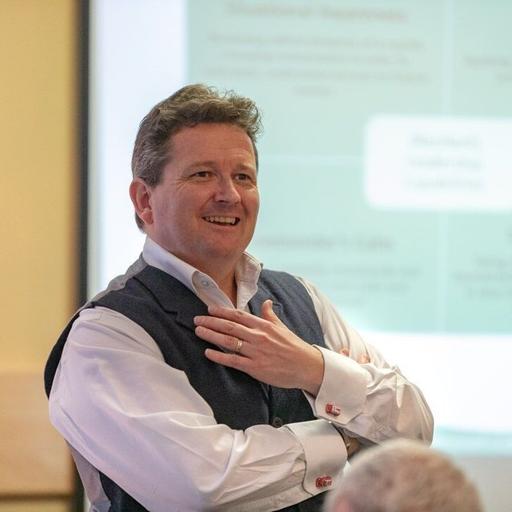
The Resilience Coach | Resilient Leadership Expert
100,000+ People positively affected6,000+ Executive coaching hours£12M+ ROI delivered by RWE npower leadership programme20+ years Learning, leadership and organisational development
Russell Harvey is The Resilience Coach - a resilient leadership expert, executive coach, facilitator and keynote speaker who helps leaders and organisations perform at their best when the world refuses to stand still.
With more than 20 years in Learning, Leadership and Organisational Development, 6,000+ hours of executive coaching and over 70 published podcast appearances, Russell is an experienced and engaging voice on resilience, leadership and navigating persistent change. He has worked with leaders across organisations including Novartis, the NHS, AB World Foods, Kerry Group and The Co-operative Group.
Russell’s work goes beyond helping people simply cope with pressure. He believes true resilience isn’t about “bouncing back”, being tougher or pretending everything is fine - it’s about springing forward with learning and becoming better equipped to lead because of the challenges you’ve faced.
His approach connects the human side of leadership directly to what matters to organisations: engaged people, stronger cultures, better decisions and improved performance. His work has delivered measurable results, including a leadership programme that returned £12 million to the business and a Resilient Leader Programme that achieved more than 1,100% ROI.
In August 2025, Russell achieved his long-held purpose of positively affecting 100,000 people.
More from Russell Harvey
All episodes → Living the Dream with CurveballSpringing Forward: Russell Harvey's Insights on Building Resilience and Embracing ChangeNov 2026Play episode →
 Transformation Station Leadership PodcastTSLP Season 5 Ep. 26- Thriving Is A VerbNov 2026Play episode →
 Embracing Digital TransformationHow to Build a Resilient Team Without Toxic PositivityNov 2026Play episode →
 An Evolving Man PodcastReal Resilience: Why Pushing Through Isn’t Enough | Russell Harvey | AEM #172Oct 2026Play episode →
 Leadership From The Heart | Transformational Leadership InsightsResilience Without the Rebound | Leadership Mindset ShiftAug 2026Play episode →
 Burnout Proof Leadership: Identify Shift and Leadership Skills for Midlife Women EntrepreneursEssential Leadership Skills You Must Have If You Want to Build Resilience & Avoid Burnout When Your Business Gets Hard - with Russell HarveyJul 2026Play episode →
 Your Career JourneyHow to Build Resilience at Work: Leadership, Change & Thriving in Uncertain TimesJul 2026Play episode →
 The ThriveWell Journey | Entrepreneurship, Leadership & Life After DisruptionHow to Build Real Resilience Under Pressure | Russell HarveyJul 2026Play episode →
 Future Fit LeadershipThe 2030 Leader: Why Resilience is Your Most Vital Skill with Russell HarveyJun 2026Play episode →