
April 8, 2025
EP.51 -Don’t Quit Now: Russell Harvey on Grit, Growth, and Getting Results
Sound bites
My career went from there. So literally, the vast majority, 90% of my career has been in learning and development, you know, leadership development, organizational development.
In this episode
Russell Harvey joins Pursue The Pull to talk about resilience, leadership, career transitions, and how to keep going through uncertainty and setbacks.
- His career began after a year travelling and teaching English in Hong Kong, where he realised he wanted to work in learning and development.
- A resilience coach’s identity and values keep him going, even after redundancy, business disruption, and caring for an ill wife.
- Optimism matters, but not toxic resilience or toxic positivity when life and business feel difficult.
- Fear can be turned into hope by asking what will work personally, who to talk to, and what mindset shift is needed.
- People already have answers inside themselves, so coaching focuses on questions that help them picture and plan a hopeful future.
Transcript
ShowHide
Automatic captions of the conversation. They can contain errors and do not name who is speaking.
Hi, everyone, and welcome to Pursue The Pull, the podcast that is geared towards helping people who are looking for a career change, or for those who want to pursue their dreams and start their own business. Now, how do we differ from all of the other inspirational podcasts out there? Well, what we do is we interview people from a range of different industries, which is very specific. So, if you wanted to set up your own marketing agency, your own software company, your own floristry, whatever it might be, we have someone specific from that industry to tell you get started, and the highs and lows, but also the truth.
Now, we are one group, one community, and we have all of the answers. I'm your host, Stacey Bevan, and today I have an amazing guest. His name is Russell Harvey, and he is a leadership, resilience, and growth coach and founder of the Resilience Coach. So, first of all, I want to thank you so much for joining us, Russell. I am very excited for this interview. My absolute pleasure, Stacey. I shall be as enthusiastic and enjoyable as I possibly can. Brilliant, brilliant. Okay. So before we go into the questions that have been devised by our audience, I just want to give the audience a little bit of background into what it is that you do.
Of course. So you are a dynamic and engaging leadership coach, facilitator, public speaker, managing director, podcaster, and radio host. We have over 20 years of experience in learning, leadership, and organizational development. Now, you have specialized in resilience for almost 20 years as I mentioned before, but you have facilitated over 10,000 hours of training. Now, your facilitation style is engaging, empathetic, and pragmatic, and you challenge people to think and reflect on their behavior and encourage them to rediscover their mojo.
Now, you have worked with a range of clients, including the NHS, BT, the Cooperative Group and Bank, Morrison's, Great Ormond Street Hospital, and many more. Now, in addition to your work with clients, you are the chair of governance of a local primary school and a volunteer with lead young authors in the UK. You also run public speaking and confidence workshops in schools. You have a range of qualifications, including certifications in training, education, coaching, and you are an ILM and CIPD facilitator. You have also been a National Training Awards judge and are a member of the Association for Coaching, NLP, and again, the CIPD.
Now, this is amazing. I'm just going to just say, Eerie, that's okay. Of course you are. There's loads in there, isn't it? That's ridiculous. There's loads. It's great, though. It's great. So, on to that, tell us a little bit about your background and how you got to where you are today. What does that transition process look like? Did you go to school, work full time? How did it all come about? Well, yeah, thanks for so much for that introduction. A couple of those things are in the past. So, the chair of governance finished a few years ago.
But anyway, yes, that's in there. Achievement. Yeah, yeah, that was an amazing experience. It really was. So, I have always been interested in human behaviour. Like, how come we do the things that we do when we don't do the things we do? And why do we do that? And why do we not do that? That has just fascinated me for years. And then the real lightbulb moment for where I am now was... My wife and I went travelling around the world for a year in 1996, 1997, which obviously I don't look old enough to have gone back in that in time and done that.
It's my birthday tomorrow, actually. So, I was teaching English language lessons in Hong Kong as part of this round the world trip. We lived there for a few months. And something magical was happening in the room. And they didn't quite know what it was. And the magic that I learned later was people learning. So, when people have their light bulb moments, their realization moments, when I see another human being doing that, that gives me like fire inside me. It infuses me. I get excited. And I thought, you know what?
Christ, I want to do this for a living. You know, I don't know what this is, but I want to do that for a living because it's the secret of life. Find something you love, get paid to do it. So I knew I didn't want to be a teacher in a school. I just, you know, that blueprint in your head to go, actually, you know, that's not for me. And when I came back in 1997 to the UK, I went to recruitment agencies and went, I think I want to be a trainer. I think it's called, I think the job is a business trainer. And then that essentially, at the time they asked me what you qualified in and what is your experience around this?
And I went, well, nothing and out. I just, it's literally. So then my career went from there. So literally, the vast majority, 90% of my career has been in learning and development, you know, leadership development, organizational development. And today, I literally, I describe myself as a coach and a facilitator. It's who I am specializing in this word resilience. So that's the starting point. And then, well, I'll tell you a little bit more shortly about how the resilience coach came about. But that's the first answer to the question.
OK. And so to, did you straight away go into that area employed as yourself? So you were self-employed or did you kind of work for a company and then make that transition? Yeah, so I've worked for many companies, public sector, private sector, mutual sector. And part of my story is in the world of learning development, I've been made redundant six times. So it was an each time you get made redundant, somebody somewhere along there said, well, why don't you sell by yourself? OK? Yeah. And so I did try it once and it just wasn't quite right for us in terms of timing.
And then it was on the sixth time of being made redundant. That the timing was right. It felt right. I was ready to set up by myself. You know, so you know, that was a good long career in the corporate world, doing learning and development roles. And then the time came. So my last permanent role, so the resilience coach will be 10 years old in July. So my last permanent role before I set up was at the co-op group that you mentioned in Manchester. And not long after I joined the co-op, it just all came out in the newspapers that it was in trouble, essentially.
And I was there as part of a large team of people supporting the top 300 leaders of the whole group navigate through this trouble. So literally all my clients came to me with their head in their hands. And we were all, what do we do? And I said, well, there's this word resilience, and there's this an acronym called VUCA, V-U-C-A. And when all of our answers to how we are going to navigate our way through this, be human and be resilient leaders, all of our answers in there. And then when I left the Cog Group and did the naval gazing around, I feel ready to sat by myself.
I did the naval gazing around, what's my USP? And I went, do you know what? I am the resilience coach. That's how it came about. Wow, okay. So look, I know leadership is a very important area and it's a very difficult skill to acquire. Yes. It's, you know, some people kind of say the word leadership, not really understanding what is actually involved in leadership. It's very difficult. So you talk about leadership and resilience. So tell me, what is the meaning behind it? Yeah. So I define resilience as springing forward with learning.
So I'm not a fan of the term bounce back when we talk about resilience, because we can't go backwards. So part of resilience is facing to life's challenges. And then what we often do is we say, so now bounce back. Yeah. And I'll go, you can't go back. Excuse me. You know, it's like, so I'm there going, what have you learnt? So a resilient leader is the living embodiment of springing forward with learning. So behaviourally, what that looks like is day to day, week by week, in a way that you find interesting and enjoyable from all of life's events, you pause.
And in those pauses, you re-energise, you restore yourself, you recuperate and you reflect. You ask yourself two questions, which is, what have I been doing recently behaviourally that's been serving me and others well? What have I been doing recently behaviourally that has not been serving me and others well? So your lens, which you look through that through, has to be through some form of value system. And it has to be through some form of purpose. So because at the heart, resilience is our attitude. So what's your attitude around leadership?
What's the type of leader you want to be? What's the type of human that you want to be to encourage and grow the humans around you? And actually, against what value system and purpose is that being done, essentially? That is, to me, is today's answer to the question of what's a resilient leader, essentially. Amazing, amazing. So what is, I mean, in terms of leadership training, and especially the type of training that you do, why would you say that this is important for people in business, business owners, but people in the corporate world, why is it important to get training?
Yeah, around this. Because, so, you know, ideal clients are absolutely, generally speaking, are people with the job title of director of and head of, it doesn't matter where they are, what business that they're in, and at business owners. So it's amazing, when you run a business, if you think about really simplistically, there's three buckets that you need to think about when you're running a business. It's the bucket of everything that you have to think about in terms of processes and credit and cash is king, all of that.
It's everything that you have to think about around business development and marketing and networking and sales and your USP, etc., etc., etc. And then there's the human that runs the business, and that's where we stop. We don't go there well enough, often enough. So we will absolutely run a business thinking about, what do I need to spend on my IT systems? What do I need to spend on my marketing? And we rarely go, and my budgeting for my financing of running my business, what is my spend on my personal development?
Yeah. And it's not there. The vast majority of the time, it's not there. So my question then to every business owner is, who is the most important person in the business? Wow. You are. Yeah. Yeah. If you're not there, there is no business. So how to be a resilient leader that is building and growing a resilient set of humans in the business that builds and grows a resilient business? It's like you need to understand it. You need to role model it. You need to be the living embodiment of it. You need to be spending every single week, every single day, engaging with developing and growing your resilience on a personal level and on a leadership level.
Because when you are in a much better place, then you will actually make much better decisions. You will actually role model all the things that you're supposed to do as a high quality leader because everybody's looking up to you. You don't realize it. The second that anybody ever comes to you and says, can I go on a holiday? You're the boss. And the last two, World Happiness Reports, they identified that when you ask any human being, how are you? 80% of how well that person can answer, how positively that person can answer, is down to their line manager.
Yeah. Okay, so when you're the business owner, you are your own line manager. Yeah. Okay, so if you 80% of that is, if you're saying, how are you? And go, well, I'll be all right if it wasn't for my boss. And you go, oh, blimey, I'm the boss. Oh, right, okay. So it's just enabling business owners to understand the relevance, the balance about actually them engaging with their personal resilience and understanding what it generally means to be a resilient leader so you can grow a resilient business. For me, personally, that's the most important, but we put it low down the list.
Yeah, yeah, that's amazing. So I just want to go back a little bit about your transition because I'm really interested in this as well. So when you made that transition and you actually started doing this, how did you get your first client? And how did you know what was the right content to propose or the right content to teach and the right prices? Because as a coach, especially a leading coach, there's a lot out there. Some not great courses and some amazing. But how did you know where to fit in? How did that all come about?
Yeah. So in terms of the content wise, everybody is exploring who they are and what it means to them to be a leader. So the content came from my previous decades in the corporate world of actually looking at leaders and going, actually, which one's doing the ones that seem to be doing okay, successful, or do I respect? I might not like them, but I respect that. So I need to open myself up to going, that's a good way of doing it. So all of the content comes from, and it still does, the last 10 years, honing your craft about what great leadership is.
And then first clients, so one of the dimensions of being resilient is your support network. So my first clients just came from my network, who I knew, who I spoke to. So people were in the co-op, and actually a lot of my first work came from associate work, essentially. So training companies that are a lot larger and bigger than me, they have associates. So they would bring large contracts and go, actually, we've got these coaching clients, so we've got these leadership programs. Will you be the, you know, the facilitator on those?
So in the first couple of years, the vast majority, I didn't need a website. The vast majority of what I did came from word of mouth, essentially. And then, you know, just things change all of the time. So in terms of how I run my business, I think about it in terms of income streams, of taps, essentially. So there's associate work, okay, that I do. There's also my own coaching clients, my own facilitation. Public speaking, you know, looking into actually non-executive director roles, which I've not done yet, but that's something that I want to do.
Yeah. So you've got these different taps of income, essentially, so that, you know, if one dries up, you can turn another one on, or they're all dripping along nicely. So as a consequence of that, that's about it. So yeah, that's how I got the first clients. And then obviously over the following eight years, he was literally, okay, so create your brand, you know, as we are looking at right now, essentially. We are. Way more about, you know, who are you, what's your USP, do your marketing, do your social media. However, still in the last 10 years, even though, you know, I've done so much about, you know, you need to think about the algorithm, here's the system, here's the process, this is how you gain your clients.
Still the ones that absolutely work is when you are physically standing in front of a room of your ideal clients. When you are stood up in the room with them, talking about who you are and what you offer, that's still the best way to get clients. Even with all the things that you do on social media and globally and things like that, that's still the best way to get the clients because they can look you in the eye. Yeah, yeah, incredible. And when you initially made that transition from the corporate world into working for yourself, how did you do that?
Because a lot of entrepreneurs struggle with that transition. One, there's a lot of fear. Am I going to make enough money? How am I going to survive? How am I going to pay my bills? And the other aspect is just how am I going to do it? Did you have a marketing plan? Did you have to have money to invest? How did you manage that? Yeah, so there was a buildup to it. So I knew that the sixth time of being made redundant was more than likely to happen. Okay? Yeah. So there was a little bit of time to think about, okay, do I search for another job?
Okay. Or do I now finally invite the bullet to go, actually, I'm going to set up by myself. And in terms of my understanding of myself and my personal decision-making process, that's something that you have to work out. So it's a slow burn. I needed five other redundancies before I went, do you know what? The time is right, Russell. So generally, my head and my heart and my gut were in alignment about this idea of setting up by myself. I personally felt ready. So that gave me the confidence to go, okay, yes, I'm going to go away and do it.
So the fear was lessened. So previously, my choice is there was probably too much fear in the previous redundancies. Right, yeah. And so the fear had diminished enough, it was still there, so it was more worry and concern. But it was overridden by my personal confidence. And actually, I finally feel ready and I know who I am, I know what I've got to offer, and I've got some ideas about how I'm going to go about it. Then the simple practicalities of like, you know, how do I set up a company? You know, you can ask somebody and find these things out, and you go on a website and you press a button and it's done.
Yeah. You know, essentially, I had a very small amount of redundancy and it was small, you know. So then it was a case of just all of that sitting down with the plan of, what's the type of lifestyle or money I want to earn? What's my incomes and my outgoings? What's the number of clients that I need? At what price? You know, that I can physically do and fit into a seven-day week that enables me that to happen. And what's all the activities that I need to be doing to enable that to happen? And that was a big light bulb moment around, actually I thought if I'm spending X amount of days per week working with clients, I don't have enough time in the week to gain new clients.
So the real challenge as you grow is perpetually looking at what's the number I'm trying to achieve to live the lifestyle I want to, and income is an outgoing, and what do I have to fill my day with to achieve that as well as doing the work? And when does the point come when I have to go and ask somebody else to do some things for me? So this morning, I was like going to my marketing people who support me with my social media. It's like it's me and I do a lot of it, but they support me with it. And then when you get your accountant and when actually you go to all sorts of other people for all sorts of different things, you factor that in essentially.
So yeah, so it was that moment when it felt right, essentially, I don't have a better way of describing it. I had opportunities before to do it. It was like it didn't feel right before. And did you ever, when you first went into it and you were first approaching clients or speaking to clients, did you ever do anything for free or anything for a heavily reduced cost and then have to build up that way? Yeah, a lot of the time. And that is still a challenge today, Stacey. It is still a challenge today. It's literally out on a weekly basis.
I still get clients literally going, we need this doing and we've got no budget. And you just go, what do you want me to do with that piece of information? Yeah, it's difficult. And at your stage now, I think when you're starting out, you're quite like, oh, I need to build up my client base. As you go on and that keeps happening, I mean, how do you handle that? Do you stick to your guns where it's like, this is what I'm worth, this is what I charge, or is it a case of, okay, let me negotiate? Yeah, you've literally got to make a decision around, actually, I'm happy to do this for free because I can see there might be some benefit in the future, or I can see actually I'm going to get a foot in the door here.
So I'll do it, but then you have to have sort of clarity with the people you're doing it for, about why you're doing it for free. And you still need to have that conversation around, actually, this is, you know, I am doing you a favor. So I am expecting something in return, even if it's the fact that you talk about it and you mention it, you know, I need you to play your part. And then with every client that comes along, you absolutely, you know, get much better over the years to go, this is me and this is my price.
Yeah. And then there are others that sort of say, can we negotiate for these reasons? Then it's literally, it's a decision in the moment to go, what do I think and feel about their reasons? You know, and actually, am I still prepared to do it? Because I still feel valued and I'm adding value. And actually, that's building reputation, essentially, and knock on effect. So yeah, it's still something that people do today. I haven't yet met anybody. I mean, obviously, the really successful ones, but I haven't yet met anybody that sort of says, I don't always stick to my prices regardless.
Everybody does some version of like, I decided to do some wriggle room on this one, you know, for these reasons, essentially. Yeah. And look, you've been in business for a long time, and you've grown and you've been working for yourself for a long time. So has there ever been a point where, you know, you've had some challenges and you've really felt like just giving up and going back into, you know, the corporate world? And if so, can you give me an example of, you know, things that might have happened that might have caused you to want to do that?
So, yeah, so leaving the European Union was difficult and challenging. That was a struggle. That was a change of the world. The pandemic was a massive change and a difference and a hit, you know, on everything. I've literally a whole year's plan to work, gone overnight, you know, because literally everybody turned out. So new stuff came in, but then you rebuild. So that happened and also as well the things that life's curveballs throw at you. So in the last two years, my wife has become exceptionally ill and I am her carer.
So as well as running a business, I am also a carer. And so that just completely, so I am role modeling resilience day to day, essentially. So a lot of the time then, you got to go, right, does this mean it's actually practical for me to put the business to one side and actually to get a job? Because our circumstances have changed. So there's been a number of instances. And the irony being, earlier on in the show, I don't know if you're familiar with it, I talked about this an acronym of VUCA. V-U-C-A. Yeah, yeah. Yeah, yeah, yeah.
So I am living and have been living volatile, uncertain, complex, and ambiguous as a business owner all of the time. So I have all of this collateral as well. All of this information research around what it means to be resilient have to turn it on myself. I have to understand that I am living in the VUCA world day to day myself. And how am I facing it? All of the things that I say to clients all day every day, I can go, Russell, how much are you role modeling? All of this information, all of these tips, these tools and techniques.
And in openness and honesty, on a weekly basis, I am both a superb resilience role model and a spectacular failure at it as well on a weekly basis. Because we are human. Yeah. There's no getting away from it. I am not perfect. I don't have, I have more answers in front of me than most, because I know all the information and the things and the tips and the tools and the techniques and the ideas. Yeah. Then I have to go on my own personal journey of like how much you're applying it to yourself, Russell, you know. That's so interesting.
I mean, what are some kind of tips? Because it would have been, you know, probably easy if it's been like, right, I'm just going to go back and get a job and, you know, what stops you from doing that? I know you have to kind of be the role model, but when you're in that situation, it's really difficult to stay motivated and kind of keep going when you think that the easiest solution is to just go and get a job. So what has prevented you from going kind of back to that? And for other people thinking the same thing, because, you know, a lot of people have that, I think I should just go back.
They feel like it's safer and let me give up on this. And so on. So what keeps you going? So it is my value system. So my identity, I am the resilience coach sort of 24, 7, 3, 6, 5. So what I mean by that is I'm not working all that time, but one of my best mates said to me a few years ago, so you're just you all the time. You never change. You're just in every circumstance, in every arena, you're just you. And in my head, that is right. I am me and me is the resilience coach. So that's part of it. It's my identity, you know.
It's who I believe I am as a human being. I also have a purpose, which I'm on a way to achieving. So by the year 2025, I want to positively affect 100,000 people. And right now I'm up to 79,402-ish, essentially. So I need to do something with that to finish that. And optimism is a real thing for me in terms of business owners, people that are listening now. It's really to wrap your head and heart around what optimism is. So I absolutely want to make sure that we never get to the stage where we do toxic resilience and toxic positivity.
Okay? I am not into that in any way, shape or form. So what I mean by that is if anybody sort of says, oh, things aren't quite going as I need to. I'm finding things a bit tough. If anybody goes, you just need to be positive. You just need to be resilient. That's not what I am a fan of. I do not believe in that in any way, shape or form. No. So how you feel optimistic, hopeful and resilient is to understand that optimism starts with being grounded in reality. Okay. So you have to be able to have the conversation with yourself and as a leader, with your team, about actually what's real about our challenges, what's real about our worries and our concerns, what's real about them.
No head in the sand. Now to be able to hold that conversation well without it being too scary, requires an awful lot of emotional intelligence and empathy and compassion. Okay? You can balance that really well. That's good. So, alongside the reality of the challenges, you also need to look at the reality of what's good about you, what's right about you, what your strengths are, what your skills are, what your great behaviours are, your capabilities are, your experiences are, your life lessons. They're also the reality of where you are.
And when you do that well, okay, you then shift into genuine hope to go, all right, I've seen the size and scale of the challenges, and we've talked about them, and poor God almighty. However, we now look to the reality of who we are as humans, and what we've got to add. And do you know what, that is starting to make that other stuff feel better. You know, I am hopeful and I'm feeling positive. And that is one of the many ways in which you role model resilience. A huge part of it is your strengths-based approach. So, I use a psychometric strength scope.
And three of my significant seven strengths are literally what make me a fantastic coach and facilitator. I don't sound too egotistical. So, three of my strengths are developing others, compassion and empathy. And so, when I am doing that all day, every day, that's me at my best. So, whilst my wife was at her most ill, I left her in a hospital to go drive and run and facilitate a session, because I was at my best. I was reviving myself. I was restoring myself by going to a different space, being me, being enthusiastic, feeling great.
And so, I could drive back to the hospital and be at my best to support my wife. That's how. Yeah. So, you mentioned empathy there, and this is a key point that I wanted to bring up. Do you think everyone can be coached into being a good leader? Are there skills that, if not really there, so some people might not be as empathetic? No, not everybody can. You know, there are some people in there. I believe that. Yeah, yeah. So, because you have to want, you have to be interested in. So, I mean, yes, there is the sidebar.
Really important question of, like, what makes a great leader? And there will be names that are in the news today that will come out and say, so-and-so, leader. You know? And some of us will go, yay, great. And some of us will go, really? They'll do a bit of a head wobble. You know, won't they? Yeah. So, we have to have to be clear about actually what do we mean by, what's our blueprint for a great leader. But people have to want to get there. Yeah. If you don't want to get there, then that's a significant part of the challenge.
Now, you know, the whole route to actually how I gain a client, you know, there's lots of them that I say, I'm not going to work with you, I can't work with you. And some turn around and go, what do you want about? Why? Because you're not ready, you know? And sometimes when I say that, that turns them into ready. Because they suddenly go, what do you mean I'm not ready? He says, well, I've asked you all these questions about who you are and what you want to be. And I need you as my client to be in a certain place to start with, you know?
And you're not there. And so they're like, but, but, but, but. And I go, OK, well, if that has flipped you, then maybe we can start. So, yeah, you've got to think about, with the empathy and the compassion thing, they are two distinctly different strengths. So the reason I talk about strengths and awful art is because they build natural resilience and natural confidence. OK, so that's something that we need to look at. So, and it's about whether we are energized by them, is about how good we're going to be at them.
We can develop it, we can put strategies in place. But not all of us are naturally energized by compassion or empathy in these 24 different strengths. We've got different levels of energy for them. So compassion is the fact that you, some of us are naturally energized and infused by deeply caring about another human being's well-being. We're infused by it, we're energized by it. It drives our behaviors. And some of us are energized by empathy, which is that we've got this natural energy enthusiasm to be curious about another human being and what makes them tick.
OK? So I suspect, I don't know Stacey, but I expect that empathy, OK, might be one of your strengths because you're curious and you ask questions and you're interested and you're intrigued in who I am and all your guests are, you know, and it's you at your best and it makes you smile and you're enthused. Yeah. So, you know, we don't necessarily need to develop that in you because you've got it naturally. You're going to just do it naturally. So others, you can get, enable them to understand what empathy is. And if they're not naturally enthused about it, then you can put strategies and behaviors and tips and ideas in place so that they can do it, they can actually role model it.
And so they will only get to do a level of good enough at it. Yeah. If it's not a natural enthusiasm for them. Yeah. I think one of the things that a lot of people as leaders tend to struggle with is dealing with negative people and how to deal with negative people. I think it's quite a big area. And a lot of people question and struggle with on how to deal. Because if you're managing a large team, everyone's different, you're dealing with different personalities and so on. So, I mean, what advice can you give for that when you've got people?
This goes a lot, Stacey, it really does. Yeah. So my approach is to go back to the strengths-based approach. Okay? Okay. To go, okay, so my rhetorical question to everybody's listening, watching now, and to a room when I facilitate it and this question is asked. Yeah. The rhetorical question at the time is to go, okay, how can you see that negativity is a strength in the other person? That's my starting point, and I struggle with it myself personally, when I've led people that have been having negativity as a strength, okay?
And then it's like, okay, right. But how do I appreciate that in them? So there are certain people, personality types, that will actually see how things don't work. Yeah. You know, that's their natural style. They're energized by that, okay? So they're enjoying themselves, going, well, this is the reasons why this won't work, you know? So it's like, that's a great thing to harness. Yeah. It's part of your team, you know, essentially. But then also the next bit is the lovely F word of feedback. Oh, can't you scare me then?
Where are we going? Yeah. So that's the feedback. So part of the conversation has to be, so because I really struggled with this, and I had a really great line manager, Freya, who was supporting with this, how can you see this as a strength? So if you've got an idea, it's your baby, and you love it if you've got an idea, you need to go and take it to the person that's going to pull it apart. You need them to go and ask them to just destroy your baby. Yeah. Okay? And that's hard, that's tough. But whilst you're doing that, give the feedback of, which I have done to another people who have been on team, it's like, you know, thanks for pulling it apart.
It's like, do you know what I've noticed? In any team meeting that we've had, you've only shared with me what's wrong with every idea that I've ever had, okay? And I've noticed that I find that disheartening, and I find that de-energising, and I come away from these team meetings when you've just, you know, said how everything I'm thinking is wrong. I come away really deflated, and then you wait to see what they do. And then what's happened so far to me is the person's gone, oh god, I didn't realise I was doing that.
Oh god, that wasn't my intention, you know, then we have a good conversation about it. And I say, okay, so please continue to tell me what's not working about my ideas. However, my expectation of you as your line manager is that you will also tell me some of the things that are working about it that you think are good about it. I mean, it's like, you know, can you do that for me? And I go, yeah, yeah, yeah, okay. So that's the approach. That's the approach. And do you, most of your work, you've mentioned workshops, but do you do like one to one?
Oh, yes. Because there's a big demand for that as well. You know, I've had people that say, you know, the kind of one to one leadership development, not so much like the corporate room workshops. So do you do an element of that as well or? Yeah, it's equally that. No, no. So as a leadership coach, it is one to one, essentially. And it's like, it's leadership development programs are normally group work. So yeah, leadership coaching is one on one, essentially. Or sometimes I have some, you know, maybe one to four or one to six, where actually we do some group coaching, essentially, with leaders.
But yeah, officially, leadership coaching is one on one, essentially. So I am a coach, and then the facilitator is the group work, essentially. Yes, yes. And where's more of the demand in the coaching, or is it more in the... It's both, essentially. It just peaks and troughs. It literally just depends what inquiries are going on. So it depends on each individual's current life journey about actually, do you know what? How am I doing? Or what support do I need? So, yes, so leadership coaching. That's why I say, ideal clients are business owners, people that have got the job title of director of or head of, doesn't matter what industry or what the next bit is.
That's the sweet spot, because those are individuals that you could get some real traction with, that you can really support them, because they're leading departments a lot of the time, essentially. And so, actually, what they can role model is resilient leadership to build and grow resilient teams, which will then support resilient organizations. Wow, incredible. And look, so how did you, so you've mentioned, I just want to touch on a couple of things as well. So you mentioned, you know, you identified that this was something that you wanted to do before.
How did you know that this was your passion and that you should continue on this journey? So literally, it goes all the way back to 1996 in Hong Kong. That's when I knew it was my passion. It's literally, anytime you see somebody having a light bulb moment. So sometimes today on our call, when your brain has gone from reflection to, when somebody, when a human being does that, that literally makes me smile, essentially. Oh, that's so nice. That is my passion. Yeah. Literally every single time anybody goes from thinking, confused face to, oh, I get it.
Oh, I know how I can use this to make my job life better. I'm just sat there in the background smiling away, going, brilliant. Thank you. I feel great. Off you go. You know, that's my passion. And so the fact that I get to do that every single week, why wouldn't I want to do that? Yeah, definitely. Okay. So we're coming to the end of the interview. It's gone so quick. It's gone really quick. But I've got a couple more questions. This is more of a two-part question. So business owners and entrepreneurs, because those are the main people that watch this podcast.
What advice can you give to entrepreneurs and business owners who are starting out? And obviously they have to have this leadership elements. You know, what advice would you give to them? And why is it so important? And what have you seen if they don't develop that kind of skill in that area? Yeah. Well, so the statistics has been around for ages. I can't remember the exact one, but it's a case of, you know, most SMEs fail within the first however many months and years. Yeah. I have a belief that they fail because they haven't done the resilient leader piece.
Yeah. That's my opinion. So an activity that I still do with business owners and all leaders now, is to get people to sort of just do a grid, essentially. So draw two lines, you know, vertical, horizontal, and so you've got four spaces on it. So make a long list of everything that running a business involves, includes, okay? Put each individual item on a post-it note, okay? And what you want to do is in the top right of this grid, in terms of you thinking about yourself personally, okay? What you put in the top right of the grid is the things that you enjoy doing and are good at.
Okay. So you make a big long list of everything that a business own, somebody owning a business has to do, all the tasks, all the activities. And you think about yourself and go, pick the post-it notes and go, all the things that you love doing and are good at, put in the top right, all the things that you are good at, but don't enjoy doing, bottom right. Okay. Bottom left of the grid, you put the things that you're neither good at, nor really enjoy doing. Okay. And the top left of the grid, you put the things that you enjoy doing, but you're currently bad at them.
Okay. Now, you might not have something in every part of the grid. Okay. But you do that to understand the strategy about how you are at your best leading your business, which is in the top right. Yeah. And all of the things in the bottom half of the grid, you need to delegate. You need to employ somebody else to do, essentially. And if you're not there at that moment in time, then you need to put some strategies in place. That when I do some things in the bottom half of this grid, they don't naturally energize me, so I won't enjoy doing them.
So it will suck the life out of me, and I'll be de-energized, and I'll be drained. So it won't make good decisions, okay? So you only need to do those for a short period of time to then get back to the top right, okay? But all of those things and all those posted notes, so what a business owner needs to do, so then that is your people strategy about who are the individuals I need in my business. So those things that are in the bottom half of your grid, they need to be in the top half of somebody else's grid, essentially.
So it's like, I give you these things on my bottom half because you love doing them. They're yours. That is a great way to strategize that because I thought about it in terms of, okay, I might be good at this, I might not be so good at this, and so on. And I thought, okay, you know, the finance side, you know. But, and I thought about it, but I haven't consciously thought about it where I need to write it down. But doing it like that is really, that's really good actually. I really like that. Good. That's a good framework to utilize.
Yeah. So you can't get your things on the bottom half of the grid to the top half. It's not about doing things on the bottom half to get, because you're not energized by them. You never will be. Okay. So you might get things from the left hand side to the right hand side. Yeah. Yeah. Because if there's something that's in your top left, you love doing it, but you're currently rubbish at it. The more you do it, you'll get better. So it'll go from top left to top right. Yeah. Yeah. So there's a possibility that things in the bottom left, the more you do them, they may go to bottom right.
Yeah. Yeah. That's it. So if somebody that's listening, watching now thinks they want to do something around this, then get in touch and we'll sort of do your strength scope and we'll do it together. Because it's like, you know, I've tried to explain it as well as I can on here today. And you can have. People do it. But yeah, there needs to be a bit of follow up to it as well. Definitely, definitely. And that's incredible. I mean, just that as a starting point, that would help in so many ways. So that is really good.
I do like that and I'll be doing that myself. But the second part to that question is, what advice would you give to people that want to do exactly what it is that you do? Do they need to go to any training? Do they need to develop any skills? How can someone become a resilience coach or a leadership coach like you? Well, there's no one like me, is there, Stacey? Well, no, no, no. Yeah, so as part of my value system, there are an awful lot of people out there that call themselves coaches. Yeah. So I would really, I would go get qualified.
There are a number of different professional bodies. You know, there's the Association for Coaching, there's the International Federation of Coaches, and there's the European Mentoring and Coaching Council. Okay. And there's probably a few others. Do a qualification that's overseen by one of those bodies, you know, because you really get to understand what coaching is and coaching isn't, you know. And then as part of that, part of what all of those qualifications are is that each individual works out what's their coaching style, what their USP is, you know, what name they want to give themselves.
And then you do need to come up with some form of brand and marketing to go, okay, you know, my ideal clients are people that, you know, are in these roles, or have had these careers, or are thinking this. They want to go from this thought to that thought, or that feeling to that feeling. And this is how I do it. And then you have to just put yourself out there, essentially. What you also, what you really have to think about right now is how you're going to do that alongside artificial intelligence. Yeah. That's what...
We have to think of that. You have to think of that right now. And I do not have the answers. I'm exploring it. I am seeing what I can do with it. Yeah. But it is actually that thing of... You know, the artificial intelligence piece is human augmentation. So the most important thing is that the coaching industry, the leadership, the human coaching industry, everybody needs a human conversation, okay? Because it's different, better, different, to a conversation with the artificial intelligence tool, you know? And there's no empathy.
Yeah. So they can't... They might be able to role model it, but it's not necessarily there. But then, this year, I was talking to a colleague yesterday, and it was like, okay, so maybe you'll meet your client's virtual face-to-face, you know, Russell, in between your meetings. They're... Part of their homework is actually to spend time with an AI tool, having coaching with the AI tool to bring it to your human AI session. You know? It's like, and I'm thinking about, okay, how do I feel about that? But yeah, that's the way we're going.
So yeah, that's the way we're going. Yeah, yeah. And just a final, final thing, because I really want to touch on this, because I know you said about the six times, you know, that you were made redundant. And look, that is reality sometimes. There were so many times that I went, tried, came back to work, tried, you know? So just one last piece of advice for people that do have that fear, like, how do you overcome that? Like, is there any advice you can give for anyone now that's got a business idea, entrepreneur, they've got this fear, and they're just scared to make that transition?
You know, so they are coaching questions right now, Stacey. So, you know, so for everyone that's listening and watching, it's like, what I would ask is, because the individual's got the answers inside themselves, you know, I can give advice until I'm blue in the face. Yeah. So, my questions are, what will work for you personally to turn that fear into hope? Yeah. You know, what is it that you've got to do? Who is it you've got to talk to? What mindset shift do you need to do to shift from fear to hope? It's like, talk to me about what a hopeful you looks like, sounds like and feels like.
Imagine you have successfully implemented your idea at some point in the future. Paint that picture for me, talk to me about it, describe it to me, live it for me, and then tell me what's the steps that you need to do to get yourself there. The individual, they've got the answers inside themselves. That's my advice. Answer those questions, you know, or get in touch. If there's a few more you want me to ask you, you know? Yeah. And that's how to, because it's literally, okay, yeah, you're worried right now. I get that.
And actually, so, you know, when in the past have you turned a worry into hope or a worry into something else? What can you learn from that past experience and bring it into the here and now? Those are some questions that I ask my clients all the time. Brilliant. Look, you have been fantastic. I have probably enjoyed this interview. There's so much that I'm going to take away from it, and I know that our audience will really appreciate everything as well. You know, you've given so much insight and advice and guidance.
And look, you know, if anyone wants one-to-one coaching or any coaching only, I would definitely recommend your good self or support. Thank you so much. It's been fantastic. My absolute pleasure. Thank you. Thank you. Bye.
About Russell Harvey
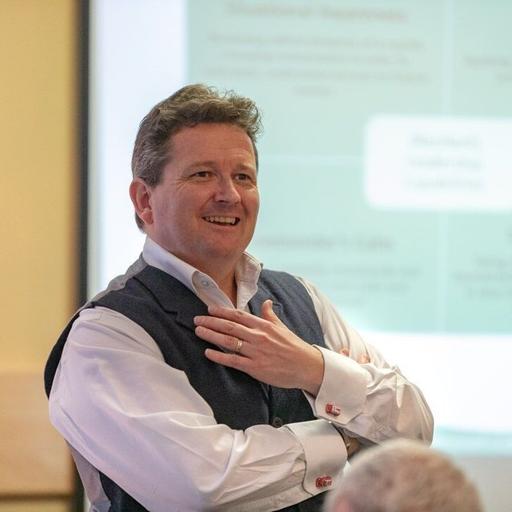
The Resilience Coach | Resilient Leadership Expert
100,000+ People positively affected6,000+ Executive coaching hours£12M+ ROI delivered by RWE npower leadership programme20+ years Learning, leadership and organisational development
Russell Harvey is The Resilience Coach - a resilient leadership expert, executive coach, facilitator and keynote speaker who helps leaders and organisations perform at their best when the world refuses to stand still.
With more than 20 years in Learning, Leadership and Organisational Development, 6,000+ hours of executive coaching and over 70 published podcast appearances, Russell is an experienced and engaging voice on resilience, leadership and navigating persistent change. He has worked with leaders across organisations including Novartis, the NHS, AB World Foods, Kerry Group and The Co-operative Group.
Russell’s work goes beyond helping people simply cope with pressure. He believes true resilience isn’t about “bouncing back”, being tougher or pretending everything is fine - it’s about springing forward with learning and becoming better equipped to lead because of the challenges you’ve faced.
His approach connects the human side of leadership directly to what matters to organisations: engaged people, stronger cultures, better decisions and improved performance. His work has delivered measurable results, including a leadership programme that returned £12 million to the business and a Resilient Leader Programme that achieved more than 1,100% ROI.
In August 2025, Russell achieved his long-held purpose of positively affecting 100,000 people.
More from Russell Harvey
All episodes → Living the Dream with CurveballSpringing Forward: Russell Harvey's Insights on Building Resilience and Embracing ChangeNov 2026Play episode →
 Transformation Station Leadership PodcastTSLP Season 5 Ep. 26- Thriving Is A VerbNov 2026Play episode →
 An Evolving Man PodcastReal Resilience: Why Pushing Through Isn’t Enough | Russell Harvey | AEM #172Oct 2026Play episode →
 Leadership From The Heart | Transformational Leadership InsightsResilience Without the Rebound | Leadership Mindset ShiftAug 2026Play episode →
 Burnout Proof Leadership: Identify Shift and Leadership Skills for Midlife Women EntrepreneursEssential Leadership Skills You Must Have If You Want to Build Resilience & Avoid Burnout When Your Business Gets Hard - with Russell HarveyJul 2026Play episode →
 Your Career JourneyHow to Build Resilience at Work: Leadership, Change & Thriving in Uncertain TimesJul 2026Play episode →
 The ThriveWell Journey | Entrepreneurship, Leadership & Life After DisruptionHow to Build Real Resilience Under Pressure | Russell HarveyJul 2026Play episode →
 Future Fit LeadershipThe 2030 Leader: Why Resilience is Your Most Vital Skill with Russell HarveyJun 2026Play episode →
 Different thinking for Different Time - Mindset Change and Thought LeadershipDifferent Thinking for Different Times - 7 Keys to Building Resilience with Russell Harvey How to Nurture a Resilient Mindset in Business and LifeMay 2026Play episode →