
April 9, 2025
Building Resilience for Mid-Career Change with Russell Harvey

Listen
Sound bites
So my specialism is how to lead yourself and others really well in a full on crazy, difficult, challenging world.
Career resilience isn't about avoiding challenges, it's about adapting, learning and gaining clarity.
In this episode
Russell Harvey joins Mid-Career Change to discuss resilience, career development, and how mid-career professionals can navigate uncertainty with more clarity.
- Career resilience as adapting, learning, and gaining clarity rather than avoiding challenges
- Mid-career transitions as a time to reassess what matters beyond title, salary, and role
- Alignment between head, heart, and gut as a sign that change may be needed
- Strengths and energy as practical guides for deciding what to do more of and what to reduce
- Simple reflection on the diary to spot work that energizes or drains you
Transcript
ShowHide
Automatic captions of the conversation. They can contain errors and do not name who is speaking.
Welcome to the Mid-Career Change Podcast. I'm Mark Crossfield, a professional career coach, here to help you turn mid-career uncertainty into an exciting journey of self-discovery and reinvention. Whether you're feeling stuck, seeking new opportunities, or ready to inject more meaning into your work, this podcast is your roadmap to transform your career. For episode show notes, visit bravocoaching.co.uk/podcast. Now, let's get started with today's episode. Hello everybody, welcome to episode 116 of the Mid-Career Change podcast.
I'm your host, Mark Crossfield, and today I'm joined by Russell Harvey. Russell is an executive coach, public speaker, and managing director of The Resilience Coach. Over the last 20 years, Russell has helped thousands of leaders and professionals to develop their resilience and navigate complex challenges with clarity and confidence. In this episode, we'll explore Russell's career journey, his insights into building resilience during mid-career transitions, and his practical strategies to help mid-career professionals to thrive amidst uncertainty.
Russell, welcome to the podcast. Hello Mark, thank you so much for inviting me on, much appreciated. Yeah, it's great having you here, and I'm very interested, first of all, to hear a little bit about your background. Yeah, absolutely. So I've always, since a little kid, been interested in human behaviour. How can we do the things we do and don't do the things we do, or how come we're behaving in a particular way? What's happening? What's driving it? I think that's just always been there as a curiosity. So, yeah, most of my career, 95% of my career has been in learning and development.
Leadership development, organisational development. So today, I'm a facilitator and a coach. Worked in all sectors in a whole variety of different ways, which we may explore a bit later on. Had a varied career in terms of, whilst there's always been a theme of learning and development as roles, there's been some changes and differences in that. I live in Leeds, married to a gorgeous wife called Trish. I'm trying to be an honorary Yorkshireman, but it's still after 30 odd years in Leeds, I still occasionally ask regular Yorkshire people, can I be?
And they just go, no, not yet, a bit longer. And I think they might go on for forever, essentially. Keep trying though, can't you? Yeah. That's the key thing. I know that you describe yourself as a resilience coach, so I'm quite interested to know what inspired you to focus specifically on resilience as a cornerstone of career and personal development. Yeah. So it came about, so The Resilience Coach will be 10 years old this year. In July this year, it will be 10 years old, which is phenomenal to say. So prior to me setting up The Resilience Coach, my last permanent role was at the co-op group in Manchester.
So you know, whole career in learning and development, and it's about the people in the workplace, get the better balance around that, has always been a driver, and I love people learning. That influences my purpose, essentially. And then, not long after I joined the co-op group, it came out in the papers that it was in serious trouble. So all of my internal clients, I was part of a big team that was supporting the top 300 leaders in the corporate center of this enormous organization. And literally, those that I was supporting came to me with their head in the hands.
I went, what are we doing? What's going on? The world's fallen on our heads. And I said, well, I'd already be looking at this word resilience. It was out there, and there's an acronym called VUCA, V-U-C-A. And I just went, all our answers, all of our way forward, all of our solutions are in there. So a few years at the co-op, supporting everybody through that, loads and loads of restructures happening and changes of people coming in and leaving and going out. And I was aware at some stage that my role would be up there.
And then just felt the timing was right to set up then, set up by myself, essentially. So that's how The Resilience Coach came about, because I was doing another coaching qualification and did some naval gazing and said, what's my USP, Russell? And I went, you know what, I am The Resilience Coach. It's what I've been doing. I've literally all day, every day, I support people around this word resilience and what it actually really, really means. So my specialism is how to lead yourself and others really well in a full on crazy, difficult, challenging world.
Yeah. And as you know, this podcast focuses very much on the mid-career professionals. So let's just think about that in terms of resilience, in terms of that context. What are some of the things, why is resilience important, first of all, for mid-career professionals to deal with? Yes, it's part of the human condition. And a lot of the clients that come to me in that mid-career phase is, you know, the LinkedIn profile says that, you know, our support leaders that fill out their wading through treacle to rediscover their mojo, you know.
And so in some way, shape or form, people come to me and do a variation of like, something's not quite right, or is this it? Or I'm flogging away here and I'm not sure if this is what I really like or what I want or I keep, I feel like I'm searching for something or I'm confused or I'm overwhelmed or I haven't got clarity. A resilient leader has the opposite of all of that. Essentially, they have clarity. They understand their purpose. They've got a much greater understanding of who they are as a leader and what it means for them individually to be a resilient leader, how to lead their team, what to be doing day-to-day in their job role.
And so there's an awful lot more energy to it and them. And that comes from each individual in their own way, understanding, so what does it mean for me personally to be resilient and be a resilient leader? And they work that out for themselves or with me as a coach. And as a consequence of that, you know, they make those choices about actually, are they going to keep going in the existing career that they've got, or are they going to find something new? And then there's a much better way in which how they find something new.
They don't just go from frying pan into fire. They find something new and different that, you know, floats their boat, meets their purpose, drives them, energizes them, infuses them, interests them, essentially. I like that definition, particularly around the clarity aspects of it, because some people might think resilience is somehow suggesting that you, you put up with it, you actually, you know, you've got, you put protection around yourself and you carry on the way you are. But you're not saying that, you're saying basically you actually get clear on what you want and you have the wherewithal to navigate to the things you want to do in life and your career.
Absolutely. So I define resilience as springing forward with learning. That's how I would like people to interact with me, engage with me, to reflect upon it and think about resilience in that particular way. I am personally not a fan of the term bounce back. I mean, it's there, it's said all day, every day, you know, around it. However, because resilience is partly about the recovery from challenging events, or the recovery of day to day that we're finding less interesting, well, then we sort of say, OK, I've faced into a challenging event.
I'll now bounce back to how I was. And it's a subconscious instruction of the brain to go back to how you were. And I'm sitting there, standing there going, wait, hang on, no, you can't go back, OK? You can only move forward. And as a consequence of that, it's getting people that are listening now to think about, you know, these words of surviving, coping and thriving. So the resilient leader is more often they're thriving rather than the other two. So surviving to me is hanging off the cliff edge by your fingernails.
So coping is quite a broad spectrum. And normally when you ask people, how are you? They'll do a version of, I'm fine. I'm okay. Now it can be, I'm okay. And I'm just about to tip over into surviving. I'm just literally about to tip over the edge. Or it can be, do you know what? I'm okay. And do you know what? I think I'm literally about to go into thriving. I think I am engaging with my resilience in the coping bit. And I've headed towards the thriving side. And certain aspects of being resilient actually support people to get into the thriving space.
Yeah. And I think one of the things here is about taking responsibility for your career as well. And quite often in the professionals I meet in mid-career, quite a lot of them have really been on, some sort of autopilot, you know, they have some career progression, which is a version of autopilot. They've been in the same organization or same industry. And sometimes you have to actually look at that and think, well, I need to take control of the trajectory of my career. My company are not going to do that for me, so I need to do that.
And I don't know whether you see that in your work as well, that sort of mindset of owning the change is quite important, isn't it? It really is. And this is the real challenge to, for everybody that's listening now, to make the choice to have something different in their life. To make the choice to go, actually, I've got a level of self-awareness that it's a little bit meh. Or if you ask, if I'm asked how's work, I'm doing the it's okay but response. Or it's all right but we'd be better if. All of those individuals, yes, right here and then, the answer is to go, right, I need to take ownership and responsibility for making it different and better.
However, when you're feeling a little bit meh, you don't have the energy to do so, essentially. So it's about where you're gonna start. So those individuals that have actually got a pretty good level of resilience, they will notice that they're feeling a bit meh and they'll go, I need to do something about it. And they'll do something about it. They'll start to talk to more people and start to engage with others. So it's about what will break the cycle for you, essentially. Do you have any examples of any clients that have done that and sort of explain and give demonstrations at this point?
Yeah, absolutely. So to quote a lot of my clients, one in particular, they, when they came to us, came to us through the website and said the words and phrases of like, I'm overwhelmed and really not enjoying my job role. So a lot of my ideal clients are people who have got the job title of director of or head of, and this individual has had exactly that. And so they were an operations director. And all of those things about family life is suffering. I'm getting out of bed each day and I'm really not enjoying it. My stress levels have gone through the roof.
So many conversations with me, they got to the place of completely redefining their purpose. One of the dimensions of being resilient is defining your purpose. That enabled them to realize actually that what they were doing day to day, wasn't meeting their value system. So their words were, so they're working for a large engineering firm. They said, you know what, I'm a geologist at heart. I've spent a lot of my career destroying the earth. And do you know what, I've just realized just how little well that sits with me.
And I actually want to do something to give back to the earth. So they are now a project manager for the Royal Society of Protection of Birds. And prior to getting that role, they left their existing role and went to work temporarily on an oyster farm in Scotland. But as a consequence of all of that, you know, their feedback to me when I've seen them, it's a lovely phrase, theology of like, you've changed my life. People see me walking around town now and go, what are you so happy about? And he goes, yeah, I'm walking around with a smile on my face, you know, and he'll share it.
And he said, yeah, relationships with kids, wife, everything is so much better. So it doesn't have to be sort of quite dramatic as that. But in terms of me working with this particular individual, the result was, they went from somebody is not quite right, it's not quite right enough that I'm going to search on the internet for like coaching resilience thingy. And then I came up, we got in touch and he said, yeah, brilliant, we're going to work with you. We work together and it's like, yeah, I've completely shifted and sorted out, you know, my confidence levels, attitude, what I want to do, where I want to be, how I want to go about it.
And I'm making the decision because resilient people make great decisions, essentially. Yeah, and in times of uncertainty, those values you talk about are so important, aren't they? Because they become almost like the compass, you know, they focus us back in the direction maybe that serves what we want and our purpose. Yeah, yeah, and I talk a lot of the time with clients about, or even when I'm seeing them, when I look at them, when they're talking to me, sometimes they give their answers and I go, you know, the answer you've just given there, it looks to me like your head, your heart and your gut are completely in alignment.
And they just lick at you and go, yeah, it is, it's completely. So it's like, what do you want to do with that? And then a lot of times people give answers and they go, doesn't quite look like those three are lined up, something looks like it's missing or out of sync or out of whack. And they go, yeah, you're right, it is. Right, what is it that I need to do to change into the next place? And that comes from the values. So the heart of resilience is our attitude, which is about our whole life's experiences, nature, nurture and our value system.
So it is understanding actually what's your attitude to your role right now, what's your attitude to life, what's your current attitude towards your career change, do you believe it's possible or not? That's all to do with your attitude. And that's why I do spend a fair bit of time engaging with leaders and sort of saying, okay, so do you know what your leadership purpose is? You know, when you take on a new role and you'll be a leader, we'll talk about purpose, but in addition, do you know what your leadership purpose is?
And then the others are just, you know, when they sort that out, they get absolute clarity and focus in the new role about how they actually want to go about it, how they want to lead themselves, how they want to lead their people. When they face into challenges in the workplace, it's like, you know what, I'm going to make decisions and face into it based upon a level of resiliency. And I've got my, you know, values, attitude, head, heart, purpose, all in alignment. So they get some inner strength and some inner confidence as well.
Yeah, what's coming here, through here really, is this alignment that you mentioned in. That's going to cross all strong. I echo what you're saying. Actually, when you're working with clients, you can see a shift when you can see that alignment, and people actually become aligned with what sounds sensible, the thing that's in the heart in terms of what they really want to do, and that sort of feeling of the right thing to do. When all those line up, it really is good to see, isn't it? And then you commit that they're quite aware of that, then that aha moment is possible, isn't it?
It really is. It really is. And it's for those that are listening right now, you know, how do you feel about how much your head, heart and gut is in alignment? You know, and if it isn't, it's like, you know, because we are coaches, it's like, okay, so what would you like to do about it? What are you going to do about it? And if you are currently in the place of your feeling, your confidence, your levels of resilience are a little bit lower, that means your confidence is a little bit lower. So you are going to find it slightly more difficult to then reach out and go, actually, do you know why I need to talk to you?
So it is chicken and egg here, but it's actually what is it that's going to enable you to reach out and make the first step? Because you will have potentially the mindset of like, I'm not sure it's possible. I'm not sure if it's I can. And when you are feeling more resilient, your mindset is, well, yeah, it's a really challenging situation, but I know I can do something about it. You know, there's a complete flip. Yeah. And that alignment can happen at any time, of course, in your career. But I actually think Mid-Career is a time where it starts to become a little bit more obvious that that's something that's required.
Maybe early in your career, there have been things that have been more of a driver. It could be about the role, the title, the salary. Some of these things probably do predominate a lot of people in their early careers. Because when you get to your mid-career, some of those things are less important. And for the first time, you start to recognize the shortness of your career and your life, of course. Not to sound too morbid, but you recognize that there are bigger things in life and that alignment becomes evident then, doesn't it?
No, it really does. It really does. And because when you get to the mid-career thing, it's like, yeah, you'll have been told a lot of things. You'll have had an awful lot of information. But then I'm curious about what have you learned? So resilience, bringing forward learning. So, you know, you will have... Yeah, so your words a little bit, not necessarily been drifting through life, but things have happened, or you might have had taps on the shoulder, or it might have been interesting and exciting. But the point comes when you're starting to just sort of go, is this it?
Is there anything else? What more is there to this? And as a result of that, you'll have had different line managers, you'll have been experiencing what it is to be a good line manager, what a good culture is, what a good culture isn't, roles that you've liked, situations, projects that you've worked on that you've liked. So that's the moment here and now in the mid-career to go, what have you learnt? What have you really learnt about your career to date? And actually, how much of that do you want to take forward into the next 10, 20, 30 years that you've got?
You know, into, fingers crossed, doing that and into retirement. Are you looking ahead of that and going, oh god, that is, oh no. Or are you looking at that and going, brilliant, because if you're looking at that, brilliant, great. But if you're doing any version of like, hmm, not sure about that, now's the time to go, so what have I really learnt from all of my experiences and how do I want to take that learning forward into my next ones? That's a good point. And I know that fear is often something that shows up, doesn't it, when we start to contemplate change in our mid-career.
That certainly showed up for me when I started looking at my options. It's something that really tries to put off you making changes and it sort of really interferes with the process. How do you address that in your work? So I talk a lot about the word optimism. So the reason to talk about optimism is I'm really concerned about toxic positivity and toxic resilience. Okay? So I am not a fan of and don't ever want to advocate somebody saying, things aren't great around here, or this isn't going as well as I could. And people just turn around and go, you just need to be positive.
You just need to be resilient. If you hear anybody saying that, it's inappropriate. Okay? In my humble opinion. And it's toxic. So, in terms of overcoming the fear, it is then actually, so optimism is grounded in reality. So, we have to strike a balance between having a conversation with an individual about, okay, so what's the reality of your worries and your concerns? How come you're thinking and feeling in this particular way? What are your triggers? So, we need to do an emotionally intelligent conversation and actually understand what is it that are barriers and blockers for them.
So, they have to understand that reality. And that can be difficult, that can be challenging. But if you do that well with enough empathy and compassion, you know, you can look at that reality in a way which doesn't add to the fears. You know, it just keeps them, holds them, or might actually make the fears a little less. And then the next thing that you do is you also have the reality of the conversation of what's good about them, what's right about them, what are their strengths, what are their skills, what are their experiences, what are their capabilities, what's their attitude, what's their mindset, who have they got in their support network, what do they know, you know, what's valid about them, what's their values and this, because all of that, you know, and also what's stayed the same.
And as a consequence of that, they start to get genuine feelings of hope, genuine feelings of positivity to go, okay, so I need to make a change, but I'm now feeling hopeful that a change is possible. And so, you know, how you overcome the fears is this optimism conversation. I remember in my own career, when that the clouds finally parted and that I felt like there was daylight, sunlight that came through, that hope for me when I first saw that, I had that sort of doubt for a long time that was shrouded in fear about making a change.
So the hope really is an important factor because that actually keeps you going when maybe you might quit. So important, isn't it? Yeah, it is. But it hasn't got to be false hope, though. It's got to be genuine hopes. But it's, yeah, absolutely, it's like, where and how are you going to find the hope in this situation? Because, you know, a lot of clients come to me when I'm working with them and say, you know, they might give me an update of how they've been since I've last seen them. And they'll more often as I say, still been a bit full on, there's still been a lot of change, there's still been lots of things happening.
And then I'll actually go, but how optimistic do you feel right now? And, you know, it's about 50-50 where they go, oh, yeah, do you know what? I'm still optimistic. But others will sort of go, do you know what? I've lost it. I've lost me optimism. You go, okay, you know? So, you know, where our conversation goes next is defined by how they answer that question about how optimistic are you right now. I like that, because I sometimes calibrate clients on, you know, how we get in near to the goals they've got for coaching.
But I like the idea that you calibrate on the levels of hope in sessions, because that is actually something which is going to fuel the energy, the motivation. So that's quite a good approach. I might try that myself, actually. Good, great. Go for it. Yeah, that's a good one. You've mentioned, I heard you mention before about how people can feel like an elastic band about to snap. And that's a great metaphor, isn't it? Yeah. And I'm just wondering what happens in that situation. So we've all seen professionals that have got to a point where there looks like there's going to be some sort of breakdown.
It feels like it's burning out there. Tell me a little bit about how you approach that situation, Russell. So for me, yes, it's whichever analogy will work for them. So when you, unfortunately, a lot of the time clients don't come to you until literally there has been some version of like a, it's all gone wrong or there's been a breakdown in inverted commas. And so then I go back to something I've talked about before about surviving, coping and thriving. And so, you know, let's just clarify what that means. You know, are you hanging on by your fingernails?
Or sometimes I sort of say, do you know what? I think I might have even fallen off, you know? And I'm absolutely drifting. I'm nowhere in any of those. So then it's just exploring what's contributed to that. Then it is about giving them hope that there is going to be a possible future change to that, that we're going to get into coping. We're not going to suddenly just flip into thriving, essentially. There's going to have to be a bit of some effort that needs to be put into this. Then it's that open and honest and realistic, optimistic conversation that this is not, you know, resilience is not just a pill that you can take.
It is absolutely going to be something that you need to make the choice to engage in building your resilience for the rest of your life. But actually, they get to understand that they can do that in a way that is interesting and enjoyable for them. So, you know, if people are in that real fear stage in the breakdown phase, then you need to meet them where they're at, have the optimistic conversation with them, but then also demonstrate to them that there is a way out of this. There is a way through this. There is something that can be better, and is actually entirely within their gift to be able to do it.
Yeah. You mentioned earlier on that you were at the front line at Co-op helping people deal with the situation that was happening there. How have you navigated resilience in your own career? You know, what lessons have you learned that might be able to help other people? Yeah, it's good. So, I've been made redundant six times in my career, you know, learning development often gets, you know, the kibosh first, essentially. So, that has happened. And I was really thinking about this. So, my learning is, I wish I'd learned sooner what it was that I really wanted.
So, I felt like I was probably repeating mistakes about, you know, going into the next role. Alongside that, though, I've really enjoyed all of the roles that I've done, or I've really learned from them, and or they've really shaped me into the person I am today, and they actually make me the resilience coach, and they also make me get the feedback that I do from clients. So, I suppose it's a question of like, it is what it is. When the timing's right to set up the resilience coach, the timing's right. Maybe I simply needed those six redundancies.
So yeah, what have I learned from it? I suppose I've learned ultimately that it happens when it happens. It's just the timing is right when the timing is right to do the next thing, essentially. And if it happens and you're resilient, then you're more likely to be with the situation, aren't you? Absolutely, absolutely, yes. That's right. I like how you... I mean, you can't redo your career again and do it a different way. So you're never quite sure how it would have turned out if you'd learned those lessons earlier.
So I look back and sometimes I think the same way. You know, if I'd done it differently, wouldn't have... could I have been somewhere else? But then I'm like you, really, I tend to think, well, the things I've learned along the way and the learning I had and the development I got and the person I became allowed me to be who I am now. And I'm pretty happy with that. So it's... Yeah, absolutely. So, yeah, so in terms of me answering that question, I was like, and I was thinking about that beforehand, I was like, do I wish I'd learned sooner?
But yeah, it's like landed where I landed. It is what it is, you know? I learned everything that I learned along the way, so it can be how I am today and be the person I am today. And I'm pretty quite happy with the person I am today, and I get nice feedback. Yeah, I'm not surprised, and you've been really a great guest today. You've given us so much good information. I wonder whether you could leave us with one tip maybe for someone considering a mid-career change. What advice would you give them to get started? Yeah, so we haven't talked about it a lot, and I would just really, really, absolutely get to understand what your strengths are.
Because the strengths, playing to your strengths, understanding what your natural strengths are, the things that naturally energise you, and there's a psychometric I use called strength scope. Essentially, clever people have identified 24 strengths when you do your significant seven. But those individuals that really understand what their strengths are, and then compensate for those ones that they are less energised by, and I am purposefully in you avoiding the W word, the weaknesses. Weakness, yeah. Yeah. We do talk about that, but I just want you to, you know, the things that energise you.
When you harness those well enough in your career, then you build natural resilience and natural confidence. And your head, heart and gut are in alignment, essentially, when you are understanding and playing to your strengths. So, anybody right now that is thinking about what I need to do, do it from a place of really understanding what your strengths are, and getting your head around what playing to your strengths and compensating for those things that energise you less, what that actually means, because there's terminology about being good enough.
It just gives you a completely different perspective on life, and it just enables you to just relax a bit more, to go, ah, so I like doing these things, and I don't really like doing those things. And my trick of life is to go forward doing more of the things I like doing. Wow. Brilliant. Okay. You can just breathe out when you realise that. Yeah, absolutely. And the day flies by, and you enjoy the work, don't you? And that's the difference between putting up with stuff you don't particularly enjoy doing, getting through the day, and maybe doing a job where you're using your strengths, it's aligned with your values, the things are important to you.
That just makes things so much easier, doesn't it? It does. It does. It does. But it's also alongside that, knowing when you're going to have to do those things that don't energise you and drain you, but really knowing that it's happening, and also knowing that you're going to do something about that and have strategies in place to face into that, and then also spend the majority of your time doing those things that you enjoy doing. Yeah, I like that. Very pragmatic, because you can't completely remove those things.
No, you can't. You know, you still have to do, for example, you have to do your accounts or whatever it might be, or you might have to do a monthly report, whatever it is that is a drag for you. Yeah, sometimes you do have to do things that you, you know, they're not really your strengths or the things you enjoy doing, but you don't want to be doing that all the time, and you want to try and minimise that. And focus on, as you say, the things that you're strengths. That's the key, isn't it? Yeah, it really is, it really is.
So, just understand what energises you week to week. Think about your diary. Think about either looking in the past, where were you feeling like you were in flow or really enjoying it, or didn't know it was time passing, or you just thought it was really enjoyable, and which part, you know, periods of the past week where you sort of go, do you know what, I absolutely just, that sucked the life out of me, and do the same looking forward. So look forward in your diary, dead. How many things have you got in place that you were looking forward to doing, and how many things have you got in your diary when you go, oh, I don't want to do them.
And you know, that's a simple activity that you can do to start to think about these. Thanks, Russell. We've learned so much more about how you apply resilience to dealing with mid-career change in particular, your ideas, and we probably could have had another half an hour talking here, but I want to be respectful of your time. Thank you so much for coming on. Before you go, though, tell us a little bit about where we can connect with you and everything that you do. Absolutely. So, The Resilience Coach, good marketing name, that one.
Not any old Resilience Coach, The Resilience Coach, Mark. So, that's the name of the website, theresiliencecoach.co.uk. I'm on LinkedIn as that. So, Russell, The Resilience Coach. That's how you can find me on socials, essentially, as well. Wonderful. Thank you again for coming on the show. Thank you, Mark. Much appreciated. So a huge thank you to Russell for joining me on the podcast today and for sharing his wisdom on resilience and career development. Hope you found Russell's advice on playing to your strengths, aligning with your values and building resilience as valuable as I did.
Remember, career resilience isn't about avoiding challenges, it's about adapting, learning and gaining clarity. As always, if you enjoyed the episode, please subscribe, leave a review, and share it with someone who might benefit from Russell's insights. I'll see you in the next episode of Mid-Career Change. Take care and thank you for listening. Bye for now. Thanks for listening today. I hope you have gained some valuable insights to help you navigate your mid-career journey, enjoy what you do each day, and build a fulfilling and successful next chapter.
Don't forget to check out previous episodes and the show notes at bravocoaching.co.uk If you're wondering what's next for your career, download my free guide Should I Stay or Should I Go? at bravocoaching.co.uk And feel free to connect with me at mark at bravocoaching.co.uk or you can catch me on LinkedIn. See you next time.
About Russell Harvey
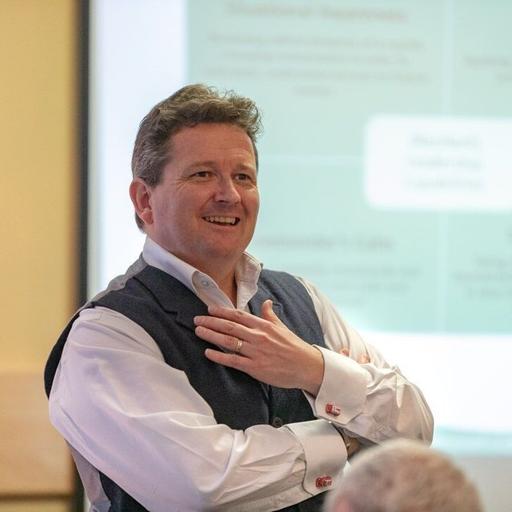
The Resilience Coach | Resilient Leadership Expert
100,000+ People positively affected6,000+ Executive coaching hours£12M+ ROI delivered by RWE npower leadership programme20+ years Learning, leadership and organisational development
Russell Harvey is The Resilience Coach - a resilient leadership expert, executive coach, facilitator and keynote speaker who helps leaders and organisations perform at their best when the world refuses to stand still.
With more than 20 years in Learning, Leadership and Organisational Development, 6,000+ hours of executive coaching and over 70 published podcast appearances, Russell is an experienced and engaging voice on resilience, leadership and navigating persistent change. He has worked with leaders across organisations including Novartis, the NHS, AB World Foods, Kerry Group and The Co-operative Group.
Russell’s work goes beyond helping people simply cope with pressure. He believes true resilience isn’t about “bouncing back”, being tougher or pretending everything is fine - it’s about springing forward with learning and becoming better equipped to lead because of the challenges you’ve faced.
His approach connects the human side of leadership directly to what matters to organisations: engaged people, stronger cultures, better decisions and improved performance. His work has delivered measurable results, including a leadership programme that returned £12 million to the business and a Resilient Leader Programme that achieved more than 1,100% ROI.
In August 2025, Russell achieved his long-held purpose of positively affecting 100,000 people.
More from Russell Harvey
All episodes → Living the Dream with CurveballSpringing Forward: Russell Harvey's Insights on Building Resilience and Embracing ChangeNov 2026Play episode →
 Transformation Station Leadership PodcastTSLP Season 5 Ep. 26- Thriving Is A VerbNov 2026Play episode →
 An Evolving Man PodcastReal Resilience: Why Pushing Through Isn’t Enough | Russell Harvey | AEM #172Oct 2026Play episode →
 Leadership From The Heart | Transformational Leadership InsightsResilience Without the Rebound | Leadership Mindset ShiftAug 2026Play episode →
 Burnout Proof Leadership: Identify Shift and Leadership Skills for Midlife Women EntrepreneursEssential Leadership Skills You Must Have If You Want to Build Resilience & Avoid Burnout When Your Business Gets Hard - with Russell HarveyJul 2026Play episode →
 Your Career JourneyHow to Build Resilience at Work: Leadership, Change & Thriving in Uncertain TimesJul 2026Play episode →
 The ThriveWell Journey | Entrepreneurship, Leadership & Life After DisruptionHow to Build Real Resilience Under Pressure | Russell HarveyJul 2026Play episode →
 Future Fit LeadershipThe 2030 Leader: Why Resilience is Your Most Vital Skill with Russell HarveyJun 2026Play episode →
 Different thinking for Different Time - Mindset Change and Thought LeadershipDifferent Thinking for Different Times - 7 Keys to Building Resilience with Russell Harvey How to Nurture a Resilient Mindset in Business and LifeMay 2026Play episode →