
May 8, 2024
Corporate CPR Episode 120: How A Lack Of Resilience Might Be Killing Your Company
In this episode
Russell Harvey talks about resilience as a practical leadership habit and how strengths based management can improve engagement, performance, and organizational culture.
- Resilience means springing forward with learning, not just bouncing back after difficulty.
- Proactive reflection helps people notice what energizes them and what behaviors are unhelpful.
- Resilience workshops and well being perks do not change a business unless culture also changes.
- Regular conversations about strengths can help managers place people in roles and tasks that fit them better.
- Delegating to strengths and building resilience into leadership development are part of resilient organizations.
Transcript
ShowHide
Automatic captions of the conversation. They can contain errors and do not name who is speaking.
Welcome to another episode of corporate CPR where we breathe life back into your organization projects and processes giving you insights to recovery and avoiding corporate mortality events today we'll be talking about how a lack of resilience might kill your company and joining us to contribute to the conversation is Russell Harvey welcome Russell Hi there Jenna thanks so much for having me on it's a real pleasure to be here yeah glad to have you can you share about your background yes absolutely so uh here and now
I'm almost nine years as the resilience coach it's very important Jenna not just any old Brazilian coach the the Brazilian coach the English language is is brilliant so the vast majority of my career has been in leadership development uh and sort of organizational development and human beings I'm all about the people I I understand how important systems processes and finances are to a business and I'm uh all about the people so probably about 20 years working in this space and my uh Origins about why I
Do what I do uh 1996 traveling the world but having a stop in Hong Kong for a few months and I was teaching English to local Hong Kong people from off the street and some magic was happening in the room I didn't quite know what it was and I thought you know what this is wonderful what's happening I don't know what it is but I think I want to do it for a living and then from there it transpired people learning people having realization moments people
Having light bulb moments was the thing so then it was like when I came back to the UK how do I find this to living and that and that formulated my career so been in the corporate world and I've been independent for you know nine years now as the resilience coach well that's awesome well let's talk a little bit about about resilience then and and I always like start simplistic and um with the what's the definition what do you Define resilience as so how I Define
Resilience is springing forward with learning that's what I like everybody that's listening now to to Really sort of incapsulate that and remember that springing forward with learning um because resilience is about The Human Condition you know there's so many aspects to how you can build your resilience um but if you can just you know really think about actually um it's less about bouncing back that's a term that's used all the time I know I'm doing a play on words but the risk is that most of
The time people don't know they're resilient till they have to face into a challenge which is uh unfortunate so don't wait my advice to everybody my suggestion is let's be working now proactively on your resilience and so to be able to Spring Forward learning from all of life's events whe whether good or not so good you need to pause you need to re-energize and you need to recuperate yourself you need to reflect which is where your learnings are about actually what have you been doing this
Recently that's worked well for you and what you've been doing recently that hasn't worked well for you so it is intentional you know practice a behavioral intent to go I am going to reflect well and what I mean by that is allegedly we have about 50,000 thoughts a day and over half of those are negative and we have 90% of our thoughts are from yesterday and over half of those will be negative so reflection you know needs to be actually about taking a strengths based approach
To our Reflections which is about what's good about me what's right about me what energizes me and how much have I utilized that in the first instance and how can I do more of that how can I actually stop doing the behaviors which are unhelpful and not useful to me so spring forward with learning if you do that you'll get into this magical place we talk about which is thriving essentially rather than just hanging on by your fingernails we're trying to avoid that um one of
So maybe we just talk about the Western world because if we talk about Trends globally that might be too broad um so if we if we talk about more the western style um um of organizations and people within those organizations are there any Trends around resilience like improvements or decline over the past a few years well a you um gosh yes what a brilliant uh question to ask so the trends are which I think uh started out with good intentions Trends often start with good intentions
A lot more people are looking to this word well-being the trend appears to be though unfortunately about a sticking plaster approach right it's like we're just going to put on a resilience Workshop or a well-being event or we're going to provide a gym or we're going to have some massages you know which are great but they don't do anything about actually fundamentally challenging the culture of a business so that actually is genuinely a um resilient organization you know a resilient leader feeling good about themselves build
A resilient team um so trend-wise people talk about the word resilient all of the time fabulous brilliant as a trend um and I'm not sure everybody actually gets the fact about springing forward with learning there's too many people that think it's just about uh powering on through and you've just got to be positive so there's toxic positivity as a trend which is not nice is not good and so when people turn around and say oh yeah I know I know things aren't right just now but
You just need to be resilient that's not what I want people to be thinking about in terms of this word resilience it's more around things aren't good things aren't great let's genuinely understand what's not working and how do we harness our strengths around this so a good trend is that there are an awful lot more people talking about a strengths based approach but then it is about being really clear that sometime people assume that a strength-based approach is just about in sort of um laa land
Cucko land you know like it's all good it's like no a strength based approach means that you genuinely look at what's not working but then actually how can you harness your strengths to do it so I I absolutely want us all to be talking far more about this word resilience brilliant wonderful great because I know I'm biased but actually just be mindful that he's not just about uh being strong and tough mental toughness is a specific thing and in in the sphere that I'm in you've
Got resilience mental toughness grit hardiness the these are all things yes there's interconnections between the two but the resilience piece is where you'll get yourself far more into this Thrive place but so if you just literally going it's tough I've got a power on through and that's all you do you literally are depleting your resilience reservoirs all of the time sorry so do you think that and I don't know I might have to stumble over this because I don't want it to sound come off the
The wrong way but do you think that there's a level of people hiding behind the phrase mental health and actually not being resilient meaning when there are tough times rather than learning from it and springing forward they say oh I need a mental health day and I I don't want to discount that that's the part I don't want to be taken the wrong way because I do know that sometimes what is right for us is we do need a break and it's great it's a healthy
Thing to be able to recognize that but I also have just a trend where um you know where people are just like you know this project is tough or this you know it's crunch time and so I'm just going to shut down and take the day off um as more of a A coping mechanism rather than a healthy like dealing with it mechanism yeah and I I understand about you um your intentions behind the question so once again labels are put things so I I am
In this world of resilience where terminology around mental health and well-being is there and absolutely you want you know to think about actually what gets you into good mental health um and it's a case of we we get oursel into a a with too many labels around things and I know that I'm part of the problem because you know I'm going I want us to talk about resilience and I want us to label it and talk about it in this particular way so we need to
Take a step back and as long as I'm not sort of being hypocritical now it's like I would like us to have a resilience strategy rather than rather than and under that term we'll be able to consider what do we do around people that have got poor mental health that are really suffering and challenging actually what are we doing as an organization around that what can we do what can't we do how do we enable our culture to be as best to look after people you
Know in those instances and you know strike the right balance with looking after the organization as well um we it's a debate that does rage about um is each generation less resilient than the one that's you know that's happening now there's so much research that's done around or are some people today being too soft you know uh it's like yeah this project was a bit too tough so I just I need to go and have some sort of downtime or I need to take a mental
Health day that would I'm not sure if that's the right sort of label around that so it's probably it's better in my opinion it's better to go actually what what enables a resilient organization you know let's talk talk better around actually what does a resilient organization look like sound like and feel like what does that mean that in our boardroom conversations anybody that's a line manager anywhere what's the conversations that we're having about resilient organization that is playing to its strengths how well do we know
All of the you know strengths of the individuals knowing that there's so much research that exists the um the relationship with your line manager so chairman to CEO all the way down to first line managers the relationship with your line manager at um contributes massively to how well you feel on a day-to-day basis you know when everybody gets asked the question how are you and how is work how his work is dependent on in that instant moment what's your relationship like with your line manager so
Uh you know resilient organization means that you've got really great leadership really great line management great empowerment really great coaching going on all of the time that is taking a strength based approach um so I don't know if I actually did I answer your question well yeah kind of and you let it you kind of let into the next question because you've mentioned it a few times is um we need to to um um build a resilient um organization or build resilience into it and I'm
Just wondering then how you know what are the I guess building blocks of resilience yeah absolutely so um it is most definitely about um the conversations that you have in each of your your teams uh you know how open and honest are they you know can bring in some other buzzwords around psychological safety you know how trusting are they um how optimistic are they so grounded in reality um but also we know we having been talking Lots about so what's your strength skills capabilities attitude mindsets
Behaviors that's going to support us with this challenge what's mine what's yours how do we harness them um it's very much you know once again um you know buzzword around adaptability and Agility it's understanding the difference between the two so adaptable being open to change there's lots of research that shows that when an individual spends a third of their time working on their personal openness the personal adaptability they get themselves into a place called Thrive uh so you know how adaptable is your team open to
Doing things differently uh and then the agile piece is actually doing something differently adaptability is thinking about it but not necessarily doing it agility is doing it making good quick decisions to go now is the time to actually make the change because what we're doing isn't working and and we've reflected well on that um and I know I've said it loads a resilient organization is absolutely understanding what are your individual natural energizers of all of your people do you know what they are so any line
Manager that's listening now and they've got a number of people that report into them could they just take a moment on a on on a tablet or a piece of paper could they write down the top three energizers of each of the individuals of the people that report into them what floats their boat what makes their Sparkle what gets them excited what gets them interested what do they enjoy doing if they had if they had a perfect working week could you could you describe it do
You know what each of your individual people are reporting to you what they would love to do to play to their strengths and if you don't know that go find out then your role as a line manager is to enable that to happen as much as humanly possible and then put strategies in place when the individual uals uh have to do things as part of their job description which they don't naturally enjoy it's understanding don't naturally enjoy doing this I know it's my job I know
I've got to do it but when I when I have to do these things I'm like oh God do I do I have to you know it's like right we understand that it's like right how are we going to employ some behavioral strategies in this moment with these things but how do we get into an 8020 rule where 80% of the time you're doing the things as part of your job that you naturally enjoy doing that just creates natural resilience and natural confidence and natural openness
And natural appreciation and a natural ad ability so that's very simplistically how you do that underpinned by a coaching culture essentially it's way easy to say it's literally it's fabulous it's so easy for me to say it here and now you know but that's that's how you do it there there just there's no other way around it and how you know you have mentioned the strength things quite a bit and so how do you um uh you know work to really um understand people's strengths and
Leverage those yeah yeah absolutely so um officially there's you know there's a psychometric that you can take you know don't worry I'm not going to it's like a company I use when I work oneon-one if my coaching client wants to I go we'll do your strengths profile you know clever people than I have you know sort of clarified there are 24 strengths and we can't be naturally energized by all 24 you do a self assessment and you get your significant seven of the 24 when everybody's
Strength profile is individual so you can have a psychometric to do it and uh really simplistically it's a set of uh coaching questions or open questions that you ask yourself and you ask your people around without being factious J it's like so what energizes you ask that question you know then it's like thinking about the week ahead that you got coming up in your diary which bits are you looking forward to doing the most and then exploring how come you're interested in those what is it
That you're going to be able to do in this place in this meeting or this conversation or this project or this idea how come you looking that and going oh yeah I can't wait till Tuesday afternoon because I'm going to be doing dot dot h and then conversely which bits of the week you know have you got coming up where you're like you're less you're like been a bit meh about them and explore what's the case and you can also Look Backwards and sort of go
Actually last week or last month where were you feeling as though you were in flow uh you are you were feeling highly confident uh you were feeling as though you know any challenge that came along you would find a way to sort of um face into it so that's just it's just conversations with your people um so if as a line manager you're not having those conversations with your people you've got a massive opportunity to go do so do you think people feel uncomfortable having those
Conversations or that it's inefficient in the you know sometimes we have a difficult time looking at the long run right we're so focused on the short run I I I don't know how do you find that people resp respond to that so that so they so the irony here is about what a whether they find these conversations uh easy difficult energizing or not depends on their natural strengths okay so you can harness your strengths in this in situation so as you may be able to tell
Because of the line of work I'm in a lot of my strengths are in the relational aspect you know empathy compassion you know um engaging with others and discovering more about other people you know so I'm curious about actually asking questions so I'm naturally energized by doing that not everybody is so I will find it easier okay others can harness different aspects of their strength profile to be able to go then do H um you know sit down and have a conversation with somebody um if
If people are in roles where the idea of of ever talking to another human being is challenging well you know um fingers crossed they're in a particular role that plays to their strengths you know and is line management of people you know um uh the right place for them to be so some people will be absolutely naturally energized by it and some people go you know what I've got to work at this um but then You' got to think about the benefits so people listen now
It's like you know what's the benefits of you finding out more about what your people enjoy doing and what's the benefits of them feeling more confident and happier dayto day how will your life as a li manager be better when your people are more enthused about being in the workplace you know I think they know the answers that people are listening now you know you know you'll have fewer problems and fewer challenges you know you'll have more people coming to you with ideas essentially about how
To do things rather than problems there'll be you know EMP empowerment will be going on there'll be enthusiasm will be happening or will be taking place and who doesn't want that as a line manager essentially so yeah if you've got to put some extra effort into it you got to think about actually what will be the benefits to you personally in your role as a line manager for finding out more about people's strengths and then fingers crossed that'll give you enough um information if you want
To go right I'm I'm going to go do this essentially um what what do you what does an organization then look like I guess if they if they do put a focus on resilience what are the what's the ROI or the you know maybe even unintended outcomes yeah so um some of things that I have you know uh mentioned already so you know organizations will be doing their staff surveys okay so you know the Roe maybe a bit more run the ROI but your staff survey
Scores will go up you know your um your glass door you know or you know scores will change you know you whatever if you're if you're doing sort of some you know Google metrics around it how people talk about your organ your organization about actually does it nurture me does it enable me to grow is there a career here can I be at my best here all of those will improve and then you'll find discretionary effort will increase performance will increase in enthusiasm engagement excitement interest
Ideas a willingness to do things will improve and will increase so you'll meet all of your kis essentially is is the ROI that's on this when you've got people that um are feeling as though that they are not being listened to or heard or understood they they're not going to want to do things for your organization they're going to find somewhere else else that I want to and I have to say for everybody it's leing now if if if people haven't got it uh you know
The pandemic that you know um it has released employee power rather than employer power globally there's far more people going this organization over here actually it's not looking after me in the way that I want it to so I'm off you know this organization over here actually generally looks like it's got a real interesting about who I am and how I can do things uh and when it's struggling and it's difficult we find a way through that actually enables me to come out the other side
You know a better person and feeling better for it I'm springing forward with learning all of the time so I'm going to work there so your Roi is the fact you don't have to keep re-recruiting people how do you think um you know I guess that that ability to learn you said spring forward is really dependent on I mean obviously leers can understand strength leaders can help try to um give work that more aligns with strengths um which creates you know a positive feeling but um
In the end it's it's really on on uh the employee so are there things leaders should be doing to uh that can help give the employee tools to respond appropriately in in tough times or uh stressful times or or whatever um they encounter well um so there's there's probably a few things here so um the LIE manager themselves need to be considering about actually how they are building their own personal resilience themselves you know uh so that they can share stories and anecdotes about what they
Have been doing to get themselves into a much Bas better place personally um so they can give examples to their people uh around that that the people can pick and choose to do um and so there are you know um a number of aspects there's seven aspects to sort of how you build your resilience so tiny bit of self um not promotion but you you'll ask me later on about how do people get in touch with you so on my website there's the resilience wheel got
Seven bits to it so the heart of your resilience is your attitude okay that's at the heart of resilience and then you've got having a purpose considering how you continue to build your confidence this word adaptability your overall support network there's the meaning in the Intel storytelling that we do and this word energy which is heavily linked to a strength based approach so all seven of these aspects are interl so you can work upon your resilience by getting your resilience wheel into a great place okay
And that's all on my website it's just there for free and there's a podcast episode on every single one of those that's on the hom page you know so leaders can do that share their learnings with their individuals and also say to their individuals um I went on this website there's his blow C Russell podcast listen to it you know and they can work up on their resilience wheel and then they can chat about it essentially so there's hundreds of tips and strategies uh that are
On there um the thing that immediately in the moment line managers can do is that they they need to be able to find a way once again is about uh line manager as coach asking questions that cultivate openness and curiosity that's one of the things that they need to do it's um because then that is about where the learning takes place so it is absolutely the question about in in any any of their oneto ones their appraisals their Performance Management conversations it's absolutely asking the question
About what have you learned or how have you learned or how are you going to learn from this experience so it's cultivating this idea that there is a learning approach that we're going to take trial and error you know we are going to enable appropriate risk around this which which enables trust okay which will then go back to the much more sort of um positive responses from individuals all day every day about how they are and how's work well that is immediately as I said earlier
In the session your response to how work is predicated on your relationship with your line manager so if your relationship with your line manager is about encouragement learning playing around resilience enabling it I've got trust I can try things out we learn from my mistakes then people's overall feeling dayto day is far more improved are there ways um you can I don't know if you incorporate this in your in your coaching at all but can you roleplay resilience or I mean I don't know is there
Ways to practice it without it just being always real life uh in the moment application well yes so yes you can because it's sort of proactive resilience so there's a few blogs that got on the website which are in called proactive uh resilient and I was um talking about it um today um got on a radio show uh radio station and got my own radio show uh here in the UK um and so this is about healthy coping strategies so it the roleplay element to it
Is about um your self talk um which is you know you you can do this by yourself and about actually what Reflections you can write things down essentially you write a column of a list of things about how am I thinking and feeling about my circumstances right now another list to sort of go how would I like to think or another way of doing it is you get a a sheet of paper and um you know uh a number of them and put them on the
Floor and stand on one of them and go how am I feeling about this situation right now and then like just look you know a meter in front of you or a meter and a half in front of you on the floor with another piece of paper and go how would I like to feel about it you know and put that in front of you like a Meer or a Meer and a half in front of you and go right what's the steps that I need
To take another piece of paper three or four pieces of paper around can't immediately magic a new feeling inside myself you know might say I feel horrible about it now and I'd like to feel better about it but actuallyy what's the steps of the feelings that I need to take to get and how am I going to get myself there and you could rooll play it by having a mate a line manager a colleague a family by your side and go right we're we're stood here
Now and we want to stand over there that's how we want to feel about it what's the steps we need to take look back on it step back to the other one and go right how do I get from here to here how did I get from there to there what's past experiences that I could do around it um so that's an off the-top answer to your question essentially so yes you can roleplay it essentially oh awesome no that's that sounds uh fun um what I
Guess what you how do you scale how do you scale um resilience you know you been kind of talking about um the relationship between a a manager and and their employee but is there are there techniques that companies can do to um really dial this in across all their leaders totally well so then you know it's talking now to either you know chief chief exec or Ops directors or head of HR or head of Learning and Development any of those that are listening now it's actually
How you scale this as you think about your leadership development strategy that that's how you scale it to go actually what are we currently including in our sort of leadership development offering you know how are we interweaving this word resilience you know is it I know I know I'm biased but if you've got a resilient strategy you've got a resilient organization where you're meeting your kpis you're facing into persistent consistent change well and better than your competitors and your people are playing to their strengths so
Most of the time the energy that you need to harness is there rather than feeling downtrodden so how you scale it is uh genuinely now taking a moment to pause and reflect for those are listening around how much are we including this um um cultural norm of resilience into our leadership development strategy what does this mean that actually anybody that comes on either our virtual sessions or our modular programs or however we do it right now how much is resilience interwoven into everything that's how you
Scale it excellent um and then maybe what are what are the biggest um pitfalls or things that you can do that work against a goal if you if you do have a goal of being resil resilient organization or being a resilient um instilling resilient I and your your team as a leader what are the things that you can do that actually work against you if you're not aware of them well this is probably a bit more of a sort of human psyches it's probably you know
Your your yeah the self sabotage because this is about a behavior change so it's you know anytime that you've got this intent to uh you know consciously make the efforts to S do a change of behaviors um the risk and the pitfalls are what do I normally do to sabotage myself you know uh if I'm aware that I give up easily on things uh or something um you know it's built on Sand about my efforts to do this um then that's that's what will get in
The way um that's why you know the seven aspects of the resilience wheel they're all interconnected so uh when people look at that uh resilience wheel you can just do a very simple self assessment from the descriptions you know you you just look at yourself and go right I'll rate myself from a scale of one to 10 10 high one low or smiley face to sad face just pick something that works for you about actually each of these you know seven aspects dimensions of um being
Resilient you know where am I you know and where what you need to do is to start with um that aspect or those dimensions will that are in a good place so start with what's already got a reasonably good score to it okay actually do you know what my purpose is quite you know it's quite good um it's got right how do we make sure that we enhance and we nurture and we embed your purpose work there first and then go to the sort of next
One which uh is sort of the next lower score down and when you do that because each of the aspects of the resilience wheel has positive impact upon the others you'll find that actually those scores that you've sort of done as lower you might say my support network is probably my lowest uh don't go there first you know leave that for a while because you do other things and you'll find actually your support network is probably naturally improved excellent well this has been a great conversation
Russell I'd love to hear what three things you want to leave top of Mind three things I want to leave top of mind so yeah let's go for please remember spring forward with learning please remember a strengths based approach about what naturally energizes everybody and as a lie manager um we can get confused about what am I here to do what am I supposed to do to here as a a line manager and one of the things that you're genuinely responsible for is to delegate brilliantly
What I mean by that is that you delegate to somebody's strengths okay so delegate brilliantly is alignment it to their strengths H and third um yeah for all of those you know that have got the ownership responsibility per strings or can have influence over the leadership development strategy go chat to your colleagues and ask yourselves the question how much is resilience interwoven into our leadership development strategy go go ask that question go have that conversation those would be um my three things for now excellent and
How can people get in contact with you or learn more about what you do thank you so much so yes so the website is all the ws. the resilience coach.co so that's the website and you know there's a podcast on the homepage how to build your resilience series two is about to launch of how to build a resilient organization is on there um and there's loads of blogs on there and I'm part of a radio station called called yawa which is y wah so Yaar radio.co
And it is literally a 247 online radio station and yawa stands for your only well-being and happiness radio station and every week on there is Russell's resilience radio show with loads of music and loads of resilience tips so you can listen to that um and I'm on LinkedIn um so you know the resilience coach and Russell Harvey on LinkedIn just excellent Reach Out get in touch cell we'll have a virtual coffee um and just go from there essentially well thank you so much for being a
Guest on our show and sharing your experiences my absolute pleasure jna thank you so much for asking me and just whatever everybody's doing L that's listening just please have a good day is all I hope for you absolutely and to our audience until next time keep your organizations healthy hey short tomorrow
About Russell Harvey
The Resilience Coach | Resilient Leadership Expert
100,000+ People positively affected6,000+ Executive coaching hours£12M+ ROI delivered by RWE npower leadership programme20+ years Learning, leadership and organisational development
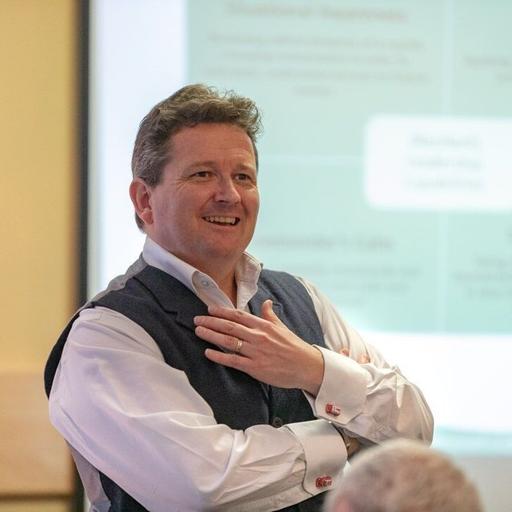
Russell Harvey is The Resilience Coach - a resilient leadership expert, executive coach, facilitator and keynote speaker who helps leaders and organisations perform at their best when the world refuses to stand still.
With more than 20 years in Learning, Leadership and Organisational Development, 6,000+ hours of executive coaching and over 70 published podcast appearances, Russell is an experienced and engaging voice on resilience, leadership and navigating persistent change. He has worked with leaders across organisations including Novartis, the NHS, AB World Foods, Kerry Group and The Co-operative Group.
Russell’s work goes beyond helping people simply cope with pressure. He believes true resilience isn’t about “bouncing back”, being tougher or pretending everything is fine - it’s about springing forward with learning and becoming better equipped to lead because of the challenges you’ve faced.
His approach connects the human side of leadership directly to what matters to organisations: engaged people, stronger cultures, better decisions and improved performance. His work has delivered measurable results, including a leadership programme that returned £12 million to the business and a Resilient Leader Programme that achieved more than 1,100% ROI.
In August 2025, Russell achieved his long-held purpose of positively affecting 100,000 people.
More from Russell Harvey
All episodes → Living the Dream with CurveballSpringing Forward: Russell Harvey's Insights on Building Resilience and Embracing ChangeNov 2026Play episode →
 Transformation Station Leadership PodcastTSLP Season 5 Ep. 26- Thriving Is A VerbNov 2026Play episode →
 An Evolving Man PodcastReal Resilience: Why Pushing Through Isn’t Enough | Russell Harvey | AEM #172Oct 2026Play episode →
 Leadership From The Heart | Transformational Leadership InsightsResilience Without the Rebound | Leadership Mindset ShiftAug 2026Play episode →
 Burnout Proof Leadership: Identify Shift and Leadership Skills for Midlife Women EntrepreneursEssential Leadership Skills You Must Have If You Want to Build Resilience & Avoid Burnout When Your Business Gets Hard - with Russell HarveyJul 2026Play episode →
 Your Career JourneyHow to Build Resilience at Work: Leadership, Change & Thriving in Uncertain TimesJul 2026Play episode →
 The ThriveWell Journey | Entrepreneurship, Leadership & Life After DisruptionHow to Build Real Resilience Under Pressure | Russell HarveyJul 2026Play episode →
 Future Fit LeadershipThe 2030 Leader: Why Resilience is Your Most Vital Skill with Russell HarveyJun 2026Play episode →
 Different thinking for Different Time - Mindset Change and Thought LeadershipDifferent Thinking for Different Times - 7 Keys to Building Resilience with Russell Harvey How to Nurture a Resilient Mindset in Business and LifeMay 2026Play episode →