
May 22, 2024
Ep 55 - Russell Harvey - Talking Leadership TV
Sound bites
Reflection, you have got to be really mindful that you're not going to go into a negativity spiral, a beating up spiral.
What's your leadership purpose? That's alongside that essentially. So it's there. I don't think there is a singular question.
In this episode
Russell Harvey talks about reflective leadership practice, self awareness, external feedback, and how leaders can connect purpose to better decisions and resilience.
- Reflective practice starts with self awareness and an honest view of the leader you are now.
- Leaders often struggle to reflect well because the mind tends toward negative thinking and self criticism.
- External feedback matters, but the word feedback can trigger fear unless people understand it as support for growth.
- A strong support network can offer honest home truths and help leaders identify what they need to improve.
- Leadership purpose and personal values help guide reflection and make it easier to turn insights into action.
Chapters
Written from the transcript. Pick a chapter to play the video from that point.
Transcript
Automatic captions of the conversation. They can contain errors and do not name who is speaking.
Hello and welcome back to the talking leadership TV podcast series thank you for joining us again our guest today is Russell Harvey Russell is also known as the resilience coach he's a leadership coach and facilitator a public speaker managing director podcaster and radio host he brings over 20 years of experience in the learning leadership and organizational development space in particular his areas of specialization are resilience Executive coaching and leader development talent management and career coaching as well as facilitation change leadership and creativity he's worked with
A range of clients including the NHS BT The Cooperative group and Bank WM Morrison's and the Great Ormond Street hospital I really enjoyed the podcast today with Russell looking at reflective leadership practice from his perspective but as always enough from me and I'd like to hand over to today's guest Russell Harvey Russell Harvey thank you for joining me on the podcast today mate welcome it's my absolute pleasure Eric thank you very much for having me on it's nice to have the opportunity to chat with you
Brilliant and so I'm recording this from uh not so sunny in the evening Brisbane and I'm talking to you from leads so this is a international episode of the podcast which I'm very glad to get out to the world but today my friend friend we're going to be talking about reflective leadership practice and just as a bit of a reminder for those that are following the podcast or listening to it uh in the audio version that the new themes that I'm trying to investigate at least
This year is is um are important to me because they've come from previous discussions with leaders right across the Spectrum and reflective leadership practice seem to have come up either Direct or indirectly in the conversations I've had so I'm looking forward to having this chat with you now I'll begin by asking you you've met obviously or I'll put something to you first you've obviously met leaders in your travels you've seen what constitutes good and bad practice in leadership practice and I just want to get from
You your perceptions of how well or not so well reflect reflective practices is undertaken by those leaders you've met again not don't need to name anyone but just from your experience as Russell yeah so I think it starts at the good self um reflective practice starts with good self-awareness so that's part of the answer to the question for me you know how well they do it is immediately on sort of their self-awareness uh so to also answer your question in brief not very well at all
In general and that's is part of the reason why coaches people like myself um you know we are in a role we have a job because we can support people to get much much better at their self-reflection um so and it just really interests me you know the vast majority of the time when clients come to me and say oh you know I need some support or my team's not working so the from the classic one is like say oh my team's not performing my initial
Respons will to be is something along the lines of okay and what role do you think you play in that the second you know the way in which they answer that immediately if if they immediately sort of go yeah yeah no absolutely I know I'm completely yeah totally that's part of it valid question that's part of why I want to talk to you I'm immediately going okay good I think we can start in a really great place with the individual if the individual goes what are
You on about it's like no they're all just a bunch of idiots you know and we need to get them sort of working better going okay we're going to take a d different route around this and somebody else might say yeah I had a funny feeling you going ask me that question I was sort of hoping that you wouldn't but now that you have all right then let's go down that route um so our ultimate self-awareness about um the type of leader that we currently are
Any thinking that we've already done on actually what's the type of leader I want to be what's my leadership goals what's my leadership purpose um then that's going to enable some reflection in a useful and a helpful way and part of the reason why I think it's um I think the human race is not great at reflection so we're not having a criticism of of uh leaders I think it's really good for listeners and uh Watchers straight away to just remember or know for the first
Time that we have about 50,000 thoughts a day and over half of them are negative and 90% of our thoughts today are from yesterday and lo and behold they'll be in the negative space predominantly as well um so reflection um you have got to be really mindful that you're not going to go into a negativity spiral a beating up spiral um and one of the specific dimensions of being resilient I use this word meaning as in what's the meaning that we are attaching to events what's
The internal stories that we're telling ourselves about actually our experiences what we're doing what we're not doing so it's the it's the basic answer to the question about how are you or how was your day or how's project going or how's this week going it's noticing how you answer that because in the United Kingdom um you know it's different in the states I think it's a bit mixed in Australia I think you know about the immediate response is it more in the useful helpful worthwhile optimistic
Space or is it immediately in that yeah everything's awful and it's not going well so there's there's some cultural bits that that sort of come into it as well but short answer question we're not great at it as human beings and the you know the leaders that I engage with um you know we support them to get an awful lot better at it there are some very interesting things you raised there the one that sort of jumped out at me is that cultural differentiation I have
No research to back me on this I would assume that culture factors play some role in your ability to reflect whether or not the culture around you is supportive of self-reflection but I I think going back to what you said at the beginning that most human beings let's just not isolate um leaders here that being self-reflective I think is a very much a purposeful act you're G to want to reflect and you have to be aware that you're reflecting and then um I think at at
That meta level why are you reflecting so is a reflection to get better at what you're doing or to look at what happened and to learn something from it and um my personal view here only personal I I think you need to spend time on what that process is for you because in previous discussions around this and I love to get your take on this if I can Russell is what does good quality reflection look like and is there such a thing as bad quality reflection
When you're getting into that space particularly from a leader point of view why I ask this is I have some people that I put on a pedestal that I know for me uh what the the archetype really good leader is and I don't think that they're aware themselves or at least I haven't asked the question so again it's a personal view that they're very good at reflecting and they'll bring you in to that reflective space and not know that they're doing it and at the end
Of the conversation I sort of turn around and go I've had a session here talking a really good leader and they've proposed some things and asked me to test some thinking and um yeah it's it's interesting to me in that space that um I've never asked those leaders that I put on that pedestal what what is good quality reflection for you versus bad and I'll put that to you as my guest today mate what what does good look like and what does bad look like so
There's a couple of things to remind me later that when you were speaking there was something around confirmation bias so just uh remind come back come back to that later okay um it's a really great quality reflection um so it's openness and curiosity so what what will drive really great quality reflection is thinking about your natural human state how open and curious are you okay um be because that naturally drives um broadening and deepening um the questions that you'll ask of others and yourself and the
Conversations that you'll have so you know everybody's listening watching now you know be curious about how curious you are you know and if straight away people are listening going what Earth you want about it's like okay there's a real great opportunity there for you to become more open and curious so ask more questions essentially ask more open questions let's caveat that uh please ask more open questions so really great quality uh reflection is going to come from so another dimension of being resilient is having a
Purpose okay so it's you know have you got a purpose and also for leaders listening actually have you got a leadership purpose have you got something like a pledge your head your heart and your gut to an alignment about who you know your Humanity your value use the type of leader that you're going to be because that's going to give you something useful worthwhile and helpful to reflect against it's going to give you a blueprint to go actually the what I'm reflect the point and purpose
Of my reflection is how am I doing against my purpose so quality reflection needs to have some purpose to it I.E you know have a purpose around it um and then for me really great um reflection I know I'm biased because I'm in the resilience space so I Define resilience as springing forward with learning so reflection has to include learning you know in it it's not just um yeah this happened and that happened move on it's actually what did I learn from it you know it's
What am I going to keep doing that worked really well for me you know uh you know behaviorally or playing to my strengths or the people that um I collaborate ated with or what who was in my support network at the time um and what are the things that I'm going to stop doing because actually in my recent experiences they didn't work well for me so to be able to achieve this definition of resilience springing forward with learning you need to get into the Habit from
All of life's experiences the good ones and the Nots of good ones of pausing and pausing and then having a conversation either with yourself self-reflection or with somebody else and in both of those be open and curious but please do start with building upon the good so because we got this negativity bias 50,000 thoughts you have to consciously and overtly start with what's going well what what was good what you know what was right what what did I manage to achieve even if it feels like
The situation you're in is just absolutely horrific and awful you know uh then um you still got to turn around and go okay well the only positive I can find of this is that literally I survived I got through it you know what went well and then start to consider the things that um you could do differently so really great reflection it cultivates um optimism uh as a root to feeling more positive so optimism is grounded in reality so in your Reflections whilst you are um
Reflecting on what went well you also have to be clear about actually your current reality you know what's the real genuine current state of the circumstances that I am in so you're not doing any sort of head in the stand or ostrich or anything like that it's being really open and honest and being okay with that so there's a big bunch of emotional intelligence that comes in that if we reflect if we're reflecting on the reality of this is really difficult and challenging we haven't necessarily
Got to tip that into oh my God I feel awful it's like right I've got some strong feelings about this which I need to to process then in your Reflections about what's good and what's right you absolutely spend a lot of time yourself and with your team on our strengths our skills our cap capabilities our attitude our mindset our resilience our experiences um what did we manage to do and what we managed to do in the past and what have we got and that's going actually
I'm now feeling genuinely feeling hopeful hopeful that we can face into this Challenge and it's like ah I'm now getting feelings of positivity so don't do toxic positivity of just be positive regardless because that doesn't work you know start with your your optimism so really great reflection is make sure that you've got um something you're reflecting against I.E your purpose um start with a good take a strength-based approach and cultivate openness and curiosity and optimism that's what really reflection is to me sure and that gives
You a template for what bad or not quite so good reflection might look like so thank you for answering the second part of that um I think yeah just just literally yes you know yes it it makes sense but um everything you've outlined there uh requires some time and investment of your own energy to to understand and unpack that um one observation I would make is there's a self-reflective bit and then there's the uh seeking uh feedback from others as part of that reflection process and
That can be exceedingly difficult if you potentially have a easily bruis ego or you're not ready to hear that um less biased perspective and that one is always um interesting to me because whilst I've heard friends who are in in leadership role say I welcome feedback I love it I need it um yeah sometimes it's hard to hear and also you really genuinely have to create an atmosphere where that can come in um that allows the third party to provide you with that feedback and and
Why where I'm going with this is some leaders will choose to get that feedback from th those that they lead and I think that can be Frau with danger because are you going to tell the boss the whats and all of a situation or you going to hold back and and there's that potential danger and then there's I guess the benefit of if you go to colleagues or a coach or someone who's helping you better your leadership practice they're going to have no investment necessarily in
Uh offending your feelings because this is about understanding where you're coming from and that is a mix of of facts and feelings post post an event post a situation and um what that leads me to is to ask you do we tend to reflect as people and include leaders in this when we've had some kind of major event or catastrophe or some major win uh the triggers for reflection or um and and if that is the case then does that put into context that reflection is
Is something we do often because we need those triggers necessarily to get us in that head space am I overthinking that one I I would go with you Eric I really would um you know so one of the so whilst this word resilience is being talked about an awful lot more in the world great brilliant uh massive opportunity to actually talk about it a lot better the the challenge is that the vast majority of time people don't know well um all of the time we don't
Know how resilient we are until a bad thing happens it's it's just it's you know uh therefore I'm in the space of uh why wait for the bad thing to happen I'm I know I'm biased I'm in a space of like actually why don't you choose to do proactive resilience today right now you know why don't you choose to immediately work upon you know and engage with your resilience today right now because when unfortunately this unpleasant thing happens you'll be in a much much much better
Place to face into it and to deal with it and you know for it to actually not be as bad you know uh so yeah it's it's because resilience is Absolut is whilst I talk about spring forward with learning it is about recovering from Adverse Events now it does and it doesn't always have to be really bad Adverse Events um it was a as a woman one time just asked the question um I'm H why it's a woman for a particular reason she sort of said
Adverse Events she says does it does it have to be something really bad you know in terms of it she says no no it doesn't so I said tell me what about what you're thinking and she sort of well I recently became a mother you know uh and it it is and it was absolutely fantastic to be a mother and give him birth I would put it in an adverse event space and I'll go yeah yeah yeah absolutely great point and I asked to say can
I steal that for future reference and future examples and she went yeah of course you can of course you can um so it it doesn't always have to be really horrible it adverse is like it was a challenge you know you got to recover from the event and yeah you um most time then clients come to us in terms of when people access coaching um it is often the case that they've had to tap on the shoulder to go oh we've got your coach and they
Sort of go uh why why what's wrong with me you know it's it's like well I would just think you you might need one or somebody's for the first time hasn't got a promotion you know uh and it's like the first time ever they've not got a promotion or they've had a piece of feedback for the first time around actually you know you you need to do something around your leadership style because it's causing us problems you know um so um the the reason that people
Might start doing the reflection it is too often got some negative connotation to it therefore um I am absolutely please people watching and listening now you know how oh how would your life be better if you choose today right now to proactively engage with this word resilience what will you have more of how will your life be better and there's hundreds of thousands of things that you could put down for that answer so what would work for you to make the choice go you know what
Probably on a on a weekly basis I'm going to do some proactive reflection about you know what's good about me and what's right about me and actually how do I improve and build my resilience yeah that's um and thank you for that that um could lead me down several rabbit holes but we'll stick to the leadership we'll stick to the leadership one if we can um I I take from what you say there that not only is better reflective leader practice something that is very much
Top of thinking if you if you're going to make your own leadership practice better but it's understanding what are the benefits to you and the people around you around building your own um and I'll I'll steal your wording here your own resil resilience um in the leadup to potential events now when I asked the question I should have been more clear and this is is the uh host's fault not the uh guest fault is um when I say events I don't necessarily mean that they have
To be catastrophic although that's part of it it can be small little adverse things that happen in the world of work or an interaction you might have had with a subordinate or someone more senior to you and those are very real things you talked about not getting that promotion or getting tapped on the shoulder and saying hey we need you to use a leadership coach or what's wrong with me it instantly you go to the negative rather than saying hey we see lots more potential in
You but it looks like there's a opportunity here to um build on your leadership toolkit um if we if we can use that terminology and um that I like using that because as as you grow into your leadership space whatever that might look like you bring your own uh capabilities in and you've learned some things along the way and you'll apply those things on an ad as needs basis but this thing around reflective practice around looking after the you part of it is I think neglected
Because because and and this is a view my view my view only sorry that um in leadership positions you're expected to to be infallible leading the team not making mistakes and when there are hiccups along the way being picked up on that can be quite confronting and not just from day-to-day operations but if your board or a senior management team sort of looked at you and go look we need you to do this better it's not necessarily an attack it's more an observation that we need
To succeed and to for us to succeed sorry for us to succeed we need we need you at your absolute best or as as much as you can achieve that and so I really um resonate with what you're saying around building that resilience not so much as an armor but another piece of uh thinking that you can bring uh to the four which leads me to the next question for you if I can Russell or theme at least around this idea that reflective practice can seem
To be a solo Pursuit but taking external feedback is an important part of that how do you rate that bit around external feedback to help your reflective practice and building that resilience that you've been talking about it's incredibly important because that is a conversation with a coach you know so it's is part of it and and for me it goes back to what we've talked about before this lovely word of feedback on occasion I um do think we need to find it we need to go
To a thesaurus and find a better word for feedback because you and I do this all the time in lots of um sessions I facilitate it's like let's pretend you know that I work with you I may I may not be your line manager but it's like well imagine I've caught you in a corridor I caught you on a virtual I'm glad I caught you want to give you some feedback you know I ask everybody what's your immediate reaction about what's going to happen and 97
Time people go to get toed off you know um so we need to support people to understand that that's not necessarily always the case you know um and one of the dimensions of being resilient is your support network so you absolutely you have an opportunity to cultivate a fabulous support network that really um enables you to be at your best that will tell you home truths you know will be open and honest with you um a and um you know um you you you find those
Individuals as well that you understand that are just are never going to give you the the feedback that you need so you know on those ones stop trying um but I do I have it's really really important and so I would as a leader you do have to ask your team you know some version of like how am I doing but it's immediately as people are watching and listening now it's like how does the idea of that sound to you you know like people going yeah
I'm fine with that or it's like you know no thank you no I really don't want to do that because I'm frightened of the answer so where the resilience piece can help is one of the dimensions of resilience is confidence so all of these B aspects of these Dimensions I'm talking about on this thing called the resilience wheel that I utilize um which is on the website if it's not I'm not self-promotional I know I've been talking about these dimensions of resilience it's just these are
Where they're coming from and they're all interconnected uh so you don't have to go and work on your confidence to get to necessarily to feel more comfortable asking for feedback you can engage with different aspects of your resilience wheel there's seven on them and they all have knock on if positive effects on the others so your route to building your confidence um you know is not necessarily by specifically working on your confidence you know so for example I've talked before about building upon your strengths so
When we play to our strengths those things that naturally energizes it builds natural resilience and natural confidence so I'm just a massive advocate of um play to your strengths so you you can use that as a framework for the feedback that you ask for you know so you can ask the questions around so in terms of how my J is leading you can sort of say you know where have you noticed that I've been energized or you know actually you thought actually I was I got
Some really good outcomes you know how was I behaving what was I doing what was I saying you know how was I coming across essentially um and that and so you know that's to start with as I said right at the start you know start with a good so it's like talk to me about what I'm doing well tell talk to me about what you appreciate about what I do talk to me about actually how I support you when I have you know and then you
Know it's like go okay so the other bits you know equally as important talk to me about when it hasn't gone quite so well or it looks like I've been struggling now for you to be able to you know go ask your team members all of this I totally totally get that you have to have a level of comfortableness inside yourself doing those things I get it um and I just in terms so I'm lucky in terms of who I am as a person I just
Knew decades ago that doing some form of asking people so how am I doing you know was was something that I could do I have had a lot of feedback in my time an incredible amount of feedback you know uh because I've just sort of cultivated asking for it and you know not all of it has been easy to hear um huge chunks of it have been you know very very brutal you know because of just the circumstances that you're in um and some people chose
Those opportunities to be extremely unkind you know however you know uh by keeping doing it I'm I'm learning um so it it's incredibly important to cultivate a really great Support Network people that you can chat with um to just uh add to your own personal Reflections and and one of the specific ways in which you build your confidence that from all of the research from Albert banura is is about actually just chatting with others you know about you know this is what I think and feel
About myself um and get enabling those others around you to say well actually I've not observed that you know I've not seen it that's not what I've observed I've seen you do this so I'm just reminded of the confirmation bias that I mentioned before so it's also um really good to remember that confirmation bias is that sweeping generalization as human beings we have beliefs and we have our thoughts about what's the way the world should work and we are actually searching to confirm our view of
The world okay so cultivating openness and curiosity that we talked about is about challenging your confirmation bias because it's like right I think this about the world or I think this is going in this way talk to me and people go yeah I concur with you on that one and actually others will go no I completely disagree with you on that one and you have to listen to that a bit more on occasion and and once again as a leader if you go around the table
And you get uh I'm sanitizing now l you go around and ask loads of feedback from your team and it comes back as yep it's all good you're great um there is a risk of group think there so that say you go well it's absolutely fabulous everybody's gone yeah it's going good plent of feedback we're all working well together but we all think that which could be it could be true absolutely could be true like yeah it's working well so great let's celebrate it's working well
But they just needs to be a part of you to go I might just go and ask a few others am I I might go ask some of my stakeholders or my customers or I'll just go ask a few others to go you know is our view of the world is it as good as we think it is um so yes the confirmation bi I've closed that Loop in my mind no I appreciate that I was going to come back to it and um yeah I
Had a sense you would go down that track the one thing the stood out in that response for me Russell is when you're seeking feedback you've got and and I would say 99% of the world will provide you with constructive feedback you just get that 1% of that will come at you with uh with what I term destructive feedback because they're just the just the wrong people in the world that want to that that don't want to give you constructive feedback because they they don't care
One way and the other and that can have impacts even on season veterans in in that leadership space that yeah that was really tough to hear particularly if it goes from being work related to something more personal about you and then the reflective bit goes out the window because it's an ego bruising process and yeah I think we've all been hit by that particular um man or woman that we've worked with that's just decided to be destructive in the way that they approach um the world
And you can't escape that I think for my own learning and for the learning of others if you've got some feelings about something think about what you need to say and unpack that with what what you're really getting at because I I I believe in my heart that when someone comes at you with destructive feedback they've got an issue with you or something unresolved themselves that that I can't express any other way than becoming aggressive or providing feedback that just doesn't reflect what their own head
Space is at and I think the more kind leaders Among Us will try and dig out what that is to try and resolve a situation but uh me personally I I don't invest a lot of time in people that that take that pathway because there's so much more to your life as a leader and outside of work that concentrating like you said on just the bad stuff is is is the um I think it's almost the path of least resistance to go the world is gone
To poo things aren't working out easy to wallow in that side of things without saying hey everything's pretty good except for this one little hiccup uh but that that takes time and and some of us do that better than others and I'm not saying I do that well um I think it's an ongoing conversation and at times like you said is to think think back and and absorb some of what's coming in right rather than react to it and that that was going to be my
Next um question before getting to the last theme Here is that jump in one second so so I'm just mindful we've been talking about this word feedback and so there there there is a way that I'd share with people about how you can do it for the things that you appreciate and the things that you'd like to be different sure sure I absolutely do not want to patronize anybody that's listening now but there's lot so it's not it's like so it is a model there are
Lots of feedback models out there and I found this really useful over lifetime so and sometimes I have to personally get a script in my head of the first few sentences that I want to say if it's like I'm actually wanted to go to somebody because there's a behavior that they're doing that I'm finding difficult and fining challenging so this model is absolutely thinking about um if whenever you're giving feedback whether it's the stuff that you really appreciate that you want to do more of it's
About the behavior and when there's Behavior somebody's doing that you want to be different remember it's about the behavior okay so really get that in your head and you sometimes I have to think about what is it that they're doing that I'm enjoying and what is it that they're doing that I'm not enjoying you sometimes I have to reflect on that so that you can say the feedback so it's essentially it's it's um it's a three sort of sentence structure to start with there's a bit
More to it it's a three sentence structure so it's it's a version of like uh um you want to talk about a situation you want to talk about uh the behavior that you saw them do uh or you heard them say and then the impact it had upon you okay that's what that's what you start with so for example Eric H I am genuinely really appreciating in our conversation that we're having now so the situation the podcast I'm appreciating how much you are listening to me
You're empathizing with me uh and that you're reflecting back the comments that I make and you're building upon them and uh the impact standing upon me is that I feel listened to I feel heard I feel understood and I feel valued that's a feedback model OKAY the other flip side of it could be so Eric been chatting for a while H now on this podcast and um what I've noticed is that you've been interrupting me a lot and you've been talking over me um and um
You've sort of dismissed a few things that I've said so the impact had upon me is that I I I feel as though actually I feel undervalued I don't think you're really are interested in my point of view and I feel really rather despondent right now it's a model you know it's like I wanted to talk about when I saw I heard I thought I felt that's the model okay you're avoiding as much as you just are avoiding you made me feel because that's an argument
You know um so I know that it it's it's everybody's listening now and then what you need to do is those three sentences then you need to pause then you have to bite your tongue then you have to bite your lip you know and wait to see what the other person does and then it needs to shift into a conversation a quality con human conversation uh and it needs to finish with the sentence of from the individual that started it you know my expectation is you
Haven't done the feedback properly until you've landed with my is so if a leader is listening now and there's a behavior change that you want from an individual uh you know about how you want permanently want them to behave it's just you haven't genuinely had the proper conversation until you finish it with okay so thanks for the chat just be clear going forward my expectation is of their behavior you know if you don't do that you've not really had the conversation because you you got to
Need to sort of hit them between the eyes of like ah the expectation of my behavior going forward is um so I don't know if that's helpful I just we've been talking about this word feedback a lot and we're not great at it as a human race and it's just that is an approach I take for the behaviors that we're enjoying we want people to keep doing and actually if there's behaviors that people are doing that we want them to change it's exactly the same model
For that well let me start R by saying thank you for jumping ahead I was gonna ask you around the tips to give and this one's a good one around feedback like because like you I hear that word quite a lot but I didn't realize the end bit about closing off the feedback loop is to say hey from this point on my expectation is this or some way to close it and that's um eminently useful because none of what you said seems intuitively difficult to do
It's just you need to stay to a script and when you said the word script I'm like yeah I have to run it through my own head as well it wouldn't come out natural and um in me saying this I have to say or I have to ask you sorry giving feedback is not a natural process either is it no no it's not yeah okay okay it's not yeah it has to be conscious and overt um and and a sort of tiny addition as as leaders
In terms of a tip um getting into the Habit uh so I'm going to sound a bit contrary now but just just bear with me but just get into the habit of the people that you work with either you know colleagues your boss even and the people so just go and get in the habit of doing the first three sentences of like oh um I've noticed that you did that um and I thought that was really good you know be specific about the behavior and don't
Finish with the my expectation is that you'll keep doing that yeah okay so that's me being contrary but just get into the habit of just doing the first few sentences you know so that everybody around you is used is get gets used to hearing these things so that when you need to segue into so could just have a little chat about that behavior s over there you know when you do that I feel really concerned or when you do that you know uh I feel really
Rather frustrated you know you can get so that's just an additional bit around that words of wisdom Russell I was going to say if I was talking to my chair I wouldn't be ending the conversation with well my expectations going forward is BL well no we're not quite there and yeah there's there the the chain up and the chain down I guess uh Russell this has been an interesting conversation and I do appreciate your insights here the the conversation around reflective leadership building resilience in that
Space is one that I think we will continue to have because one thing that I note in the leaders that I've spoken to when you bring in that time Factor as you age and mature in into your leadership roles over 5 years 10 years 20 years you're at different points in your own professional development these things um come in waves and I think you learn as you go what I don't think we do well through that that journey is look at do I reflect enough is
It quality and to what end uh because at the start of this conversation and just to wrap up and close the circle here you mentioned and I don't think you use the word in this way but what's your why what's your value proposition for being in a leadership position and that that to me is really important and it's not often that I ask this of leaders um face to face because I don't know how to quite put the question to them but not only is it
It what it's a two- part of what's your why and how do you make that align to your leadership and can be highly personal so I've never quite crossed that Rubicon and and sort of asked that question but the Y bit I think is important because it's part of that reflective practice that you talked about if you don't understand your why the hell are you reflecting on what absolutely absolutely and so so there isn't an easy way to get people to think about their why uh
And so you know you you have to start somewhere so the various questions so it's back to your purpose you know you ask a lot of people what's your purpose many many people you know are going I'm don't know what you're on about you know so uh it is it's not one of those that there I haven't yet unless there's people listening now watching now uh that have got haven't got a question that Nails it in one go I don't think it exists because we're going
To what's your values what's your attitude your life you know um how come you get out of bed each day um one that can really start is you know tell me about a time when you've recently felt really proud you know and then really really explore that because the reason they feel proud is that because they they've done something they've played to their strengths their skills their capabilities in some way shape or form you know so it's in there it's like so how do you hone
That how could you turn that to a purpose so my purpose is by the year 20202 what year was that 2025 I want to positively affect 100,000 people that's my purpose okay and right now I'm up to 44,4 120ish you know and the positively effect is that I want to support people to have a realization moment a light bulb moment to go from confused face to ah ah I get it now or actually this is how I can translate some of this Theory into practice I
Know what I'm going to go away and do you know about actually being a better leader or actually making some changes around things um because that absolutely has a wonderful impact upon me it gives me a warm and fuzzy feeling so you know uh that's my purpose and then underneath that there'll be some goals to achieve the purpose you know if that if that makes sense so purpose is sort of bigger and broader and more overarching so then when you get people got that purpose then
It's like so what's your leadership purpose that's that's alongside that essentially so it's there I don't think there is a singular question it's like what's you why how can you get out of bed what makes you proud any idea what your values are you know what's important to you it's all of those yeah I I see a connect in my head between that and being able to reflect deeply about issues because if you know you're why then the reflective bit shouldn't be that well wouldn't be
That hard but if you need help then you need help to get there and um yeah for from for what this is worth Russell and this has been a really interesting conversation I hadn't thought of it in this way that the why that I bring to my leadership in my own professional life is very different to the why that I have around my family and friends and it's different to the why on things that interest me that have nothing to do with work and nothing to
Do with my family and at at their core it's about a passion for something for me and I think if you can discover what that looks like more power to you but um I think part of uh being human beings that we're searching for that and that might sometimes change so I'm not saying it's a fixed uh thing in time but Russell Harvey this has been great thank you for your time sir thank you Eric I've loved it too so thank you very much for all
Of your brilliant questions and your Reflections and playing it back to me and making me feel valued I I really genuin appreciate it so thank you thank you sir for those listening this has been the talking leadership TV podcast series thank you for following have a good rest of your week and we'll catch everyone on the next edition of the podcast
About Russell Harvey
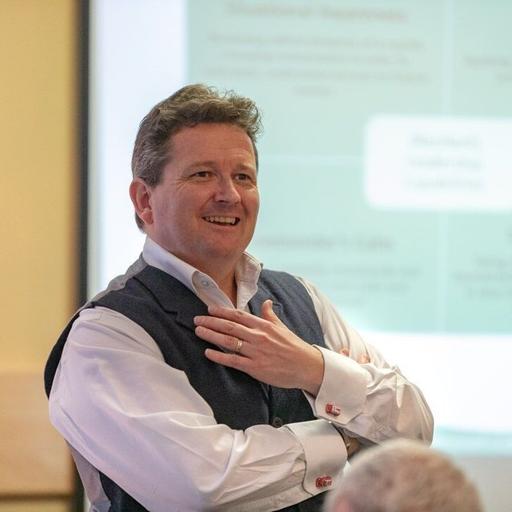
The Resilience Coach | Resilient Leadership Expert
100,000+ People positively affected6,000+ Executive coaching hours£12M+ ROI delivered by RWE npower leadership programme20+ years Learning, leadership and organisational development
Russell Harvey is The Resilience Coach - a resilient leadership expert, executive coach, facilitator and keynote speaker who helps leaders and organisations perform at their best when the world refuses to stand still.
With more than 20 years in Learning, Leadership and Organisational Development, 6,000+ hours of executive coaching and over 70 published podcast appearances, Russell is an experienced and engaging voice on resilience, leadership and navigating persistent change. He has worked with leaders across organisations including Novartis, the NHS, AB World Foods, Kerry Group and The Co-operative Group.
Russell’s work goes beyond helping people simply cope with pressure. He believes true resilience isn’t about “bouncing back”, being tougher or pretending everything is fine - it’s about springing forward with learning and becoming better equipped to lead because of the challenges you’ve faced.
His approach connects the human side of leadership directly to what matters to organisations: engaged people, stronger cultures, better decisions and improved performance. His work has delivered measurable results, including a leadership programme that returned £12 million to the business and a Resilient Leader Programme that achieved more than 1,100% ROI.
In August 2025, Russell achieved his long-held purpose of positively affecting 100,000 people.
More from Russell Harvey
All episodes → Living the Dream with CurveballSpringing Forward: Russell Harvey's Insights on Building Resilience and Embracing ChangeNov 2026Play episode →
 Transformation Station Leadership PodcastTSLP Season 5 Ep. 26- Thriving Is A VerbNov 2026Play episode →
 Embracing Digital TransformationHow to Build a Resilient Team Without Toxic PositivityNov 2026Play episode →
 An Evolving Man PodcastReal Resilience: Why Pushing Through Isn’t Enough | Russell Harvey | AEM #172Oct 2026Play episode →
 Leadership From The Heart | Transformational Leadership InsightsResilience Without the Rebound | Leadership Mindset ShiftAug 2026Play episode →
 Burnout Proof Leadership: Identify Shift and Leadership Skills for Midlife Women EntrepreneursEssential Leadership Skills You Must Have If You Want to Build Resilience & Avoid Burnout When Your Business Gets Hard - with Russell HarveyJul 2026Play episode →
 Your Career JourneyHow to Build Resilience at Work: Leadership, Change & Thriving in Uncertain TimesJul 2026Play episode →
 The ThriveWell Journey | Entrepreneurship, Leadership & Life After DisruptionHow to Build Real Resilience Under Pressure | Russell HarveyJul 2026Play episode →
 Future Fit LeadershipThe 2030 Leader: Why Resilience is Your Most Vital Skill with Russell HarveyJun 2026Play episode →