
June 20, 2026
The Science of Human Potential: How the Brain Shapes Aging, Health & Performance | Dr. Srini Pillay
Sound bites
There are at least nine or 10 different mindsets which can impact inflammation and immunity.
Loneliness, for example, is equal to smoking in terms of its impact on mortality.
In this episode
Dr. Srini Pillay talks about how mindset, psychology, and brain science shape aging, resilience, and performance.
- Psychogenic healthspan and longevity link psychology to inflammation, immunity, and how healthily people age.
- Mindsets such as focus, optimism, confidence, and uncertainty can measurably influence physiologic processes.
- Loneliness can affect mortality as strongly as smoking, and poor social relationships raise mortality risk.
- Subjective age may predict healthy aging better than chronological age.
- Self transcendence can come through mind wandering, relationships, spirituality, or altered states of consciousness.
Transcript
ShowHide
Automatic captions of the conversation. They can contain errors and do not name who is speaking.
Welcome to another episode of progress, potential, and possibilities, discussions with fascinating people designing a better tomorrow for all of us. I'm your host, Ivor Pasture. And welcome uh everybody again to another episode of the show, bringing another really fascinating guest for you today. Um on the show today, uh we're honored to be joined by Dr. Srini Pillay, who is a Harvard-trained psychiatrist, brain researcher, entrepreneur, author, and expert uh in the science of human potential, uh resilience, longevity.
Uh Dr. Pillay previously served as assistant professor of psychiatry at Harvard Medical School, and directed both their outpatient anxiety disorders program, as well as the panic disorder research program in brain imaging at McLean Hospital, one of the world's leading psychiatric institutions. And over the course of his career, has uh focused on understanding ultimately how the brain shapes not just performance, but also creativity, emotional health, leadership, and even what we're talking today, biological aging. And his work bridges the really interesting areas of neuroscience, psychiatry, technology, human behavior.
Uh Dr. Pla is also the co-founder and chief medical officer of a company called Rulais, which is an AI-driven digital therapeutics company and mindset technology company that's focused on healthy longevity as well as stress reduction and human performance. Also a founder of the Neuro Business Group where he works with leaders and organizations around the world on brain-based approaches to innovation, adaptability, resilience, as well as navigating the complexity of the age of AI. Uh Dr. Pla is also the author of several very influential books including uh Tinker, Tailor, Wiggle, Try which explores the neuroscience of creativity and the unpacked power of the brain's unconscious mind and processing systems.
Um and uh what we get into today, a really fascinating intersection of neuroscience, psychobiology, longevity. Um an honor to have uh Dr. Srini Pla. Uh thank you so much for the time and welcome to the show. Thanks for having me, Aaron. It's I'm looking forward to the conversation. Yeah, I I I'm really looking forward forward to getting into a lot of themes. I mean, I think a great place to start out um would just be by, you know, introducing, you know, the principle of psychobiology, you know, as sort of at its basic, you know, we understand, okay, this is a broadly how the psychological process is influenced biological function, but it really, you know, when you look at it in 2026, a really convergent intersection of everything we just mentioned, neuroscience, psychology, psychiatry, some subsections in terms of psychoneuroimmunology and behavioral neuroscience.
Um how do you define it? Uh how do you talk about it as we sit here in 2026? So, the term that I coined to describe this is psychogenic healthspan and longevity. And essentially, what that means is that your there are many ways in which your psychology can impact uh physiologic processes like inflammation and immunity, which in turn impacts how healthily you live into older age and how long you live. So, what I've been sort of delving into is what are the connections between human psychology and mindset. You know, things like focus and you know, whether it matters if you're optimistic or not or whether you feel confident or uncertain.
So there are at least nine or 10 different mindsets which can impact inflammation and immunity so that people can understand that there's a really, you know, right now the field of health span and longevity is essentially about biomarkers and disease. But what we recognize over time is that firstly mindset can shape a lot and no matter what your age is. Human physiology doesn't just go downhill. If you look at anybody between the ages of 30 and 40 or 40 and 50 and 50 and 60 or 60 and 70 within each of those groups you get people who are pretty healthy and doing well and vital and you get people who are not doing that well.
So the age group itself does is not some kind of jail in which you find yourself. There's always power, there's always potential to change things and the cool thing about mindset is you don't have to pay a lot of money to be able to change your mindset. So essentially what I'm saying is that psychological factors and mindset have a very profound influence on how healthily we live into old age. I'll just give you one example which I think is a stark example. So if I asked you if you had high blood pressure, you know, what risk does that confer on mortality if you don't if you just leave it high?
And it's a 25% higher risk of dying if you don't attend to your blood pressure. If I said to you if you had poor social relationships, what risk does that confer on in terms of your mortality? It confers a 50% risk of mortality. In fact, loneliness for example, is equal to smoking in terms of its impact on mortality. So people because these are abstract states, people tend to ignore them and what I like to tell people is don't ignore your psychology because your psychology is very connected to your biology. It's interesting when you you know you mentioned you know longevity there before and you know we we spend a lot of time on the show on this topic and you know you know talked about everything from the genome to you know the epigenome is very hot nowadays, the microbiome of course.
But as you're pointing out you know there's a much more sort of complex hierarchy here that sort of sits above um you know some of these systems and and it's really interesting cuz you know when we think about you know what you write about and and we're not just talking about stress. I mean you point out other things like perception, um attention, a lot of psychological mental dynamics that ultimately then filter down and we can we have a sort of whole set of physiological symptoms there in terms of the autonomic nervous system and HPA axis and all that which itself leads you know further.
You know longevity as we traditionally think about it and talk to some of those thought leaders it's really small piece of a of a much bigger puzzle and I don't think we sort of understand how you look at that puzzle cuz obviously we see results like you know several years ago that the telomere and aging study with Elizabeth Blackburn, a lot of other types of things no doubt that you work in but talk about the broader architecture here because I think it's a really important and something that at least in the longevity and gerontology space we hear pretty much nothing nothing about the importance of and I'd like you to go a little further here.
Yeah so you know I think people generally think of their bodies as being confined to the space that we call the body. But if I asked you did you see the moon last night? The moon is outside and you'd say yeah I I saw the moon if you if you did in fact see the moon. And if I said well where do you think what do you think happened when you saw the moon it landed on your retina and got processed by your brain. So what is outside of you can strongly influence what is inside of him. And so, while people have been talking about the epigenome and the genome, uh and you know, there's been a lot done in terms of trying to advance knowledge on on on genetics and epigenetics, uh besides the epigenome and the genome and the proteome, all of this is just sort of what's going on in the body at a cellular level, there's also what we call the exposome, and the exposome is the external environment.
So, every human being should be thinking not only about what's going on inside their bodies, but what are they allowing from the outside to come into their bodies, and how are they interacting with what's going on on the outside. You know, for example, uh you know, so and so so at a high level, the the first thing I would say is that we are not our health is not just about what's in our bodies, it's connected to what's outside of our bodies as well. The second thing I would say is that uh I'm I'm slightly alarmed and dismayed by the way in which medical information is being communicated for two reasons.
One is in the last 2 years in very prominent journals, we have had a significant rise in fake citations and fake papers in medicine, which means just because you hear recent research shows when you look at Instagram, it means nothing until you delve into the nature of the paper. So, something that is called science is great, but you have to look at the quality of the science that you're being presented with. The the the second thing is that if you look at if you look online or you look at the media in general, there's a lot of single factor stuff, you know, like don't drink alcohol, don't eat oxalates, uh eat the Mediterranean diet, and that's not how human biology works.
Like human biology is an incredible interaction of a number of different factors, which is why you might be able to find 124-year-old who drinks alcohol twice a day, uh who smokes, and it's fine and you might find a 50-year-old who dies from a heart attack. You know, there's there's there's no one-size-fits-all. So, when it comes to thinking about your own health, it's important to take in what the science is, but also to remember that you have to stay intuitive about what works for you. You know, I I'll give you a good example of this.
Um I was talking to my brother who's a physician as well. Um and he was like, "You know what? I was thinking maybe I'll put myself on a statin cuz my cholesterol's a little high." And I said, um "Have you read the studies in the American Journal of Cardiology and the British Medical Journal that show that there in certain instances when you lower bad cholesterol, uh you you you accelerate the path towards death." And he's like, "What are you talking about? Is that some Is that some fringe journal?" And I was like, "No, I'm Let me Let me send you the links." So, I send him the links to these mainstream journals and he's like, "But, you know, this is not the standard of care." And I said, "Well, who do you think makes the standard of care?
It's like a random group of people who decide, based on a certain number of studies, what level they they think you should be at." And so, the truth is, when somebody gives you something to lower your cholesterol, it may be very helpful for you and what doctors generally think is in all likelihood it will be, but there are other studies that show, you know, it the impact on lifespan is not more than a couple of days. And there are other studies that show that if you lower that that cholesterol, you might actually make things worse.
It's the same thing with antioxidants. You know, you hear like, you know, these things that are antioxidants, they mop up free radicals and they prevent the cell from dying. So, you're like, "Oh, that's good. So, make sure you eat your green vegetables and make sure you're eating a lot of healthy food." Of course, eating vegetables and healthy food is very important. But, is has your doctor told you that in certain cases antioxidants can also accelerate malignant progression? They can increase the chances of cancer.
And if your doctor hasn't told you that you should Nobody can actually predict this. You know, when I was at Harvard, one of the things that one of the leading researchers in psychopharmacology told me is he said, "You will be a distinguished physician if you remain humble about the fact that there's much more that we do not know than that we know. And the way you're going to be different from the majority of people out there is you're not going to go out and say, 'Eat this, don't eat this, do this.' You'll communicate the science, but you also have to understand that communicating the science is is difficult if you just look at one factor.
And there is no currently no platform. I'm actually building a platform to help accommodate this, but there's there's no platform that actually looks at the actual way in which physiology works. You know, and here's another example. Let's say Everybody knows that that 10,000 steps a day is a good number of steps to be following. But if you actually look at the research, what you'll see is that you get bene- a large benefits until 7,000, and then the benefits start to plateau. Now, what this tells us is that if you walk 15,000 steps, it's not necessarily going to be better or if you walk 20,000 steps, it's not necessarily going to be better because the shape of improvement is not linear.
In some cases, it's sigmoidal. So, but marketing doesn't accommodate this complexity. Most marketing People want to hear like, "Should I do this or should I not? Is this good or is this bad?" And it's hard to accept it, but if anybody told you, "Do this and don't do that" without thinking about the complexity of the picture of your life, then you should pause. It's enough to pause to say, "I don't really understand what's going on. I need to make some informed decisions for myself." That is also to say that when you say comment on on this at a bigger picture, what what what I'm saying is firstly that the outer environment matters as much as what's going on inside your body.
Secondly, that things that can really help you might also harm but might might also cause harm. And thirdly, that the way in which something helps or causes harm is not always linear. Sometimes it's non-linear. And so the the the reality of human health is that it's pretty complex. And so the so what's the take home? When you go to your doctor, ask your doctor this thing that you're saying can help me. Are there ways in which it could hurt me? Secondly, is there any information out there that shows the opposite of this?
You know, and thirdly, aside from taking pills and checking my biomarkers, is there anything I can do with my mindset and with my psychology that could help my biomarkers or inflammation along the way? Those are some of the take homes that I think you can take from that broad high-level picture. Mhm. Yeah, and that that segues, you know, very nicely into I know you're you're building a couple different platforms here, but I think a great place to start uh is with what you're doing at Rule 11. Again, you know, you mentioned the you know, when we're talking about things like social connection and emotional regulation, these are extremely complex, multi-factorial.
Um and you know, you should really I mean and again, you should like you take this and run with it. Um you're building well, really two things. One, uh this very comprehensive AI-enabled psychobiologic and behavioral therapeutics tool, um which is a lot more than hey, you know, I'm stressed, you know, try to calm down. It's we're going beyond those very simple apps. Uh and then, you know, mindset technology, which um is a lot more again, um it appears to that you know, you're again, you're coalescing the principles of neuroscience, what, you know, in behavioral psychology, uh, ultimately into a comprehensive digital coach here.
Um, take a little time to talk about sort of what the system is that you're building or built, and what Mind Shift technology really implies. So, Remente is an app. You can download it from the App Store, or you can, you know, you can you can download it from the from the from really from Google or Apple. So, it's it's an app that's available. Um, what this app has been So, the the the genesis of Remente came from when I met with Patrick, who's the CEO, and we co-founded the company, he was like, "What do you What would you most What What do you think people most most need?" And I said, "Well, you know, there are apps that help calm you down, and there are apps that help you de-stress.
I think what people don't recognize is that stress is Firstly, stress is what we call a hormetic phenomenon. Meaning, small amounts of stress can be very helpful. You know, it's like when you get infections when you're younger, it trains the immune system, the immune system can then protect you later on in life. You get too much infection, and then it overwhelms the immune system. Stress is is similar. A little bit of stress can be helpful. Too much stress moving to burnout territory territory is not helpful. That too much stress has been shown pretty convincingly to be associated with what we call epigenetic changes.
And epigenetic changes are not changes to the gene themselves, but changes to the molecules that are around those genes. And And what that does is, it eventually is associated with chronic disease, like cancer, heart disease, stroke, and neurodegenerative disease. So, it would help all of us if we could have something on hand that can help us shift our mindsets, because when we shift our mindsets, we can actually potentially change what is happening with with the epigenetic phenomena, and then delay the onset of of chronic disease.
That's that's our thesis. So, we've done some preliminary studies at Mayo Clinic to show that Rula technology is able to statistically significantly improve anxiety, emotional distress, and focus. Now, you might say, "Well, that's great, but what does that have to do with my genes?" Well, let's take a look at at focus. Right? So, focus, you might be like, "Yeah, you know, I just try to focus." Some people say they have ADHD. Like, so what? Well, are you aware that the rate of death in people with ADHD before the age of 46 is twice They they they have twice the risk of dying before the age of 46 which are than the general population, which is kind of a lot.
And a lot of those things happen because because of, you know, non-medical factors. Meaning, you know, accidents, they're driving, they can't really pay attention. But, what we also know about ADHD patients is that they have an increase in inflammatory markers, like interleukin-6 or TNF-alpha. These are just names for things that usually are there to protect you. You know, if you Inflammation on its own is not a bad thing. It's it's a response to a stressor. But, if it starts to create autoimmunity and it starts to attack the normal cells, then you're like, "Okay, th- this is too much." And so, lack of focus sets up a state in your body where those two things are increased.
You you mentioned the hypothalamic-pituitary-adrenal axis earlier, which I think is a great example of how, you know, one of the reasons I don't really believe in psychiatry or the way we talk about medicine these days is that everything is connected. Hypothalamic-pituitary still in the brain. The adrenal is above your kidney. So, you're like, "Wait a minute. Like, so something that's near my kidney impacts my brain and my brain impacts something near my kidney?" It's like, "Yeah, actually, your brain interacts with your heart, your lungs, your legs.
You wouldn't be able to move if you didn't have a brain. So, physiology is very interconnected. And when it comes to focus, what we know is that not only does it increase those inflammatory markers but when you don't have focus, but it can also impact it can increase cortisol and it can because it it causes a stress to the hypothalamic-pituitary-adrenal axis. Um there's also tryptophan metabolism that is interfered with. So, immediately if you say well well oh, so what you're saying is your first step is to improve focus as we did at Mayo Clinic.
The second step would be to have larger studies and look at it for given individuals. But along with that, what we want to do is be able to study what's the impact of improving your focus on your inflammatory markers, on your cortisol, on your tryptophan metabolism. Because that's important. You know, the the second thing is is when you when you when you say well, you know, emotion instead of emotional distress, everything feels terrible. You you're just like you're not in a state of possibility. You're not in a state of thinking about your life in a positive way.
And often, people who are in a state of emotional distress have hostility or cynicism. Cuz they're angry. They're like, my life's not working out. I Why is this happening? Well, you might just think anger is a normal thing and then and it is for for most people, but when the levels of cynical hostility are too high, it actually impacts these inflammatory markers. It it it increases uh interleukin-6, it it increases C-reactive protein, and it can also increase TNF alpha. And and what we know about it is that is that that pessimism, you know, when you're always looking at the the dark side of something, is and um cynical hostility uh are both associated with increases in abdominal fat.
So, you know, you might be like, well, how exactly is this happening? How is my mindset impacting my body? Well, your brain is connected to your to your immune system. Your brain is connected to your gut. And so, what we wanted to do with Ruelle A was create a platform where people could go and get a personalized recommendation. So, we actually looked at nine different mindsets. Like, we looked at focus, optimism, uh confidence, a state of awe, somatic awareness, uh then we looked at social con- like, how connected are you, autonomy, like, how much are you running your own life, uh resilience and empowerment.
So, when you go to the platform, you talk to the LLM that we have on there and you're like, you say, this is what I'm feeling, and the LLM, once it understands what you want, will direct you to a video experience that could be just, you know, 90 seconds, 3 minutes, or 10 minutes. So, you have a choice. And you can do this on your cell phone, you can do it uh on an iPad, you can do it on your television, you can do And many of the experiences are also in virtual reality, so you get immersed in those experiences. And the idea is, once you feel like something has shifted as a result of this, you can then And you can connect this to your Apple device, we're connected to Apple Health, so you can connect it to your You can say, oh, I guess when I did this exercise, it improved my VO2.
Or when I did this exercise, it I actually was able to do more steps today than the other day. So, when you do a mental exercise, you can connect it to these these physical parameters. And And so, for each of those different mindsets, you know, I mentioned focus, optimism versus pessimism, um you know, as I said, we also decreased anxiety. And anxiety often comes from an intolerance of uncertainty. Now, when you look at the brain and what in in what happens when people are like, "Oh my god, I don't know what's happening in the future and I'm feeling anxious." You you get an increase in activity in the conflict detector, the anterior cingulate cortex.
You get an increase in activity in the dorsolateral prefrontal cortex and in the insula. And essentially what we're finding is that this is not just some abstract state, it's changing your your brain. You know, and and similarly, we have experiences that deliver experiences of awe. So, and awe is simply to be in rapture of something. You know, I was the other day I was driving on the highway. I was going from New Jersey to New York and I just suddenly saw this early morning sky and it was breathtaking. And I was like, you know, there are certain situations like in general we all want to have our breath, but if there are situations where something takes your breath away, where you're like, "This is pretty amazing." And you look at the literature and you say, "Actually, the more experiences of awe you have, the more likely it is that you will be able to deal with abnormal inflammation." So, if you're someone who is following any program, any biomarker program where you're tracking your biomarkers, tracking your blood levels, you can correlate it with what you're getting exposed to on Rela and say to yourself, "Oh, I you know, I did Rela for for 2 months and then I got my my levels checked again and then I can see what it affected.
And in all likelihood, we're not expecting it to have the same effect on everyone. Different people will respond to different things, which is why we've built it on an AI platform to be able to personalize it. And the more the system learns about you, the more it will be able to deliver what you want. And we've also created this We initially, you know, when we first did this AI was not where where it's at right now. But once AI made We we moved from taking 3 months to make one experience to be able to do it in 15 minutes.
Because we could just use AI programs. Our patent is based on the fact that we defined we looked at the signs so we said, if I made images of nature what are the brain-based things that I could use to create the imagery? Then we said if I give you geometric images, you know, like are you aware that upside down triangles increase anxiety? So we we change that and and give you a different kind of geometry or or or we have fractal imagery, you know, which is just basically repeated patterns. And with the fractal imagery, we had a set of criteria that we used that we fed to the AI to create these images.
So it's not just random YouTube images. It's actually images that have been constructed using science to change how you feel with the hypothesis that because there's a lot of research to show that changing your mindset can actually change your biology, we expect down the line to be able to show that. And that's what we're looking to build further. That's what we're looking to get funding for. Uh we believe that there's been a lot of you know, a lot of therapies are given by mouth and a lot of therapies are are you know, through injections.
There's not a lot of therapy by eye or by ear. And uh you know, what's really cool is Meta has actually come up with a program when you feed it information that's visual or auditory, it can tell you where in the brain it's affecting you. And it's and sometimes it's more reliable than an MRI. Because they were able to actually do take a lot of data points to come to those conclusions. So down the line, we think it's going to be much easier to correlate what's going on in the brain with what's going on in our audio-visual features that we've created.
And what we'd want to do is build a data set to be able to enhance the artificial intelligence that's contained in these audio-visual therapies. You know, I I like to call it sort of a digital capsule. So, rather than taking something that you're swallowing, you're taking it's therapy by eye and ear. And again, this is not something a lot of people have done. People have done it sort of you know, in a kind of global way, like take a look at this art and makes you feel better. But, I think the more we're able to nail down what's making this person feel better, how is the art constructed, what in particular is it affecting in their physiology, the more we'll be able to understand that that the audio and visual experiences are forms of therapy that people can respond to.
And we've launched Relaé now in pretty large companies, uh have had a lot of positive feedback. Um we've some companies have given us NPS scores, which is uh the net promoter scores. Uh and the last three we got were like 86, 89, and 91. And 80 is world-class. So, and most people have a hard time getting to that because it means that that percentage of people think they can tell other people about it. So, we're very happy with the outcome of what we've built so far, but we feel like we're only getting started. And we want to be able to partner with larger distributors to be able to spread the word.
Yeah, it's it's it's very impressive. And and and you mentioned before and and we'll put a link to this. You you have the the Mayo Clinic Proceedings Digital Health from 2024 February where you sort of in this paper that's entitled Leveraging the Metaverse for Enhanced Longevity as a component of of health 4.0. And a lot of you know, your in the vision in here is what you're just talking about. I love how you talk about sort of this digital exposome. Um and you know, you you take the reader through not just longevity mechanisms.
You talk about what you're just saying about the unique components of geometry and architecture and art. There's an interesting section here um on non-ordinary states of consciousness in the paper. And you know, we've done our share of um uh the stuff on you know, the emerging psychedelic, uh, pharma pharma psychedelic space over the last couple years. Could you say a couple words about how that all fits in because I know that's, you know, hot as a theme nowadays and from a, uh, you know, someone with your background, love to just hear how that component of of what's happening in the psychobiological world fits into, uh, the grand scheme here of, uh, the plan for the digital exposome.
Yeah, so in in that paper, I was very excited to write that paper because, um, it was, you know, when we think about self-transcendent states, uh, the there's a whole model of self-transcendence, which is, you know, you transcend yourself by going more deeply into your own mind with mind wandering, which is my last book, Tinker Dabble Doodle Try, shows the the the advantages of mind wandering and also how you can specifically mind wander strategically. But in addition to that, you can also transcend the self by having relationships.
You can transcend the self by hopping off the space of time. And a good example of how you can do this is, you know, Ellen Langer did studies at Harvard. She did a study called the counterclockwise study, where she took men over 70 years old and she had them behave as if they were 50. And so she put them in rooms where they were watching TV that they watched 20 years before and they were eating stuff that they ate 20 years before. And what did she find? They had improved vision, hearing, and muscle strength because in their minds, they were no longer the age, they were not attached to the the chronological age.
And in fact, we now have evidence to show that subjective age, how old you feel, is actually more correlated with how healthily you'll grow into old age than you'll than the than the number that you're at. So, it it the the the the lesson there is don't go along with the number. Like that I always tell people that's the earth's business, it's doing its own thing around the sun. It's got nothing to do with my body. Like my body and my mindset is something that I have some control over, so I'm going to try to control it as much as I can.
And then the other and then and then comes to this paper, which is the other form of transcendence is either spirituality or religiosity or drugs that can change your states of consciousness. Now, what studies had shown was that long-term transcendental meditators were able to turn down all 49 genes associated with inflammation. And they were able to turn up the genes associated with oxygen carrying capacity and with and and with immunity. So, I was like, what? Just meditating can change your cells at a genetic level?
And it's like, yeah, I mean, it's preliminary data, but it's pretty powerful data to follow up on. And what I proposed was rather than only relying on Eastern techniques, what if one of the contributions from the West could be immersion in virtual reality and in the metaverse to change our state of consciousness. Now, and and so so suddenly that's the hypothesis and I think it was accepted because it was a novel way of thinking about non-ordinary states of consciousness. The non-ordinary state of consciousness created by psychedelics is being is being studied pretty intensely now.
Now, in our prac- patterns that we have on roulette, I actually researched the psychedelic literature pretty deeply to come up with criteria. You know, when when people have psychedelic experiences, they see art that has a certain form. They might see fractals or they might see the intricate difference. So, I when I looked at what's the science behind the state of consciousness, and then asked AI to create fractal fractal art to create a digital equivalent of a psychedelic experience. So, that that was sort of a that that's where we got started.
I I don't think it's a it's a full psychedelic experience because it's not the drug acting on the brain. Right, right. The imagery that's already generated impacting the brain. Whenever people ask me about what do I think about psychedelics, I think I think of it like any other uh medication. I think for the longest time it was not within the field of medicine, right? It was It was like plant medicine was something you saw a shaman for and and it was and a lot of people reported many positive things about it. But when medicine took over, I think medicine is asking the question if I if I use this in a double-blind placebo-controlled trial, is it going to help the state of mind?
And we certainly know that phase two trials have shown that there's been a statistically significant positive impact. I think what we're looking for is more phase three data so we can understand whether this can be done safely. That said, I'm not a huge fan of the way we do science. I think that double-blind placebo-controlled trials tell you a lot about a group effect. But there's several things about the group effect that are a little bit odd. Firstly, we change we take our subjective states and we represent them by numbers, right?
Are you a two out of 10 out of 10 are you a 10 out of 10? All of a sudden I changed your feeling state into a numerical device. And then, to make it even more absurd, I start adding, subtracting, subjecting to statistical analyses your feeling states that have been made into numbers. Now, I would not argue that I could I could add and subtract and apply mathematical constructs to numbers. That can be done. But when you convert feeling states to numbers, it it you're creating a a conversion that's a little bit more confusing.
You can't really conclude anything about that. I also think that the future is really in N of 1 trials, meaning we we need more than like this works or it doesn't work for this group. Cuz let's say, for example, the phase three trials show that it just didn't work. It wasn't that much better than placebo or existing treatments. Then are you going to conclude that they don't work, but there's so many anecdotal studies where people say this has been helpful. So, I don't think it's about whether something works or not.
I think we should be asking who does this work for and who does this not work for. And if we ask that question, I think it's a much more intelligent way of going about trying to discern whether psychedelics could be helpful or not. It's again it's a it's an interesting space and you know, I you know, it gets me thinking a lot about your your other you know, we can segue a little bit now from you know, the psychobiology of human health to the your other sort of major body of work and that's you know, the psychobiology of human potential and you know, I know you write a lot about this in in your book A little double doodle tribe, but you know, these principles of you know, human potential that you know, can be too often suppressed by the brain cuz it's not really designed for thinking about possibility possibility thinking but really for survival.
You talk a lot about sort of the importance of the unconscious brain in terms of daydreaming and reflection and play and and all of that in terms of increasing you know, creativity human potential on that front. Again, just a couple words here but also you know, I'd love to hear how some of this taps into what you're doing at Rulais. You know, if I if I'm not sort of a burnout executive that has high cortisol levels and interleukin-6 and all that but I'm a maybe I'm a young engineer that just you know, no longer feels creative and I'm struggling with you know, some new innovation concepts.
How you know, the app could potentially help me on that front cuz it seems like it work here too as well. Yeah, so one of the channels in Rulais is the possibility channel and the possibility channel gets you out of the stuck reality in your life to get your brain to be in a different predictive state where it starts to feel positively about the future, and it starts to and and you unleash I think one of our greatest um strength in the human brain is the capacity to believe. Now, you might say, "Believe, but that's like such a you know, what what does believe do?" My response would be take a look at placebo studies, and you will understand that in many instances, up to 30% of people respond to sugar pills.
And that's a that's kind of an interesting thing. And you might ask, "Well, what you know, so here's an example of a study. Um there there was a study in which um Crum and colleagues uh had two milkshakes, and they were the exact same caloric amount, but they told one group that they had double the amount of calories than the other group. And so, the group that thought they had double the amount of calories stopped drinking the milkshake first. And and that's because they believed that they had double the amount of calories, but they didn't.
But what was really interesting was that in that group, believing that something had double the amount of calories dropped their hunger hormone levels. The The hunger hormone is ghrelin. And so, what this showed us is that believing can actually impact your your hormonal state. There was another study that uh that gave people a neutral paste. And and and but they labeled one lidocaine, one tube lidocaine for pain relief. They labeled the other one capsaicin, the active ingredient in chili. And they labeled the third neutral.
And so, what they found was when you even though it was the same paste, all neutral, when you saw the word lidocaine, people were like, "Oh, wow, this is pretty It's cool. It's like it's really relaxing me." And you look in their brains, and the reward center is turned on. When you gave people capsaicin, people were like, "Oh, this stings." And you look in the brain, and the pain center is activated. Now, these are not truly relaxing creams, truly creams that sting you. But when you believe, that anticipation changes your brain.
So, for me, possibility thinking is taking you out of a negative brain predictive state into a positive state where you are changing your physiology. Studies have shown that placebo can, you know, decrease stress hormones, can increase dopamine, which is a reward substance in the brain. So, you can change your brain state by having this possibility. And so, at Rule A, we have specifically sort of created these possibility state videos so that, you know, it's like sometimes you're out and you're like, "I can't think of something positive right now.
I just got this bill and it's annoying me." Or I I just fought with my spouse, or that person disappointed me at work. Well, you can change it. And you don't have to do it on your own. If you went to Rule A, and you were like, "I just want to see something that gives me a sense of possibility." When you see the thing that gives you a sense of possibility, you realize, "Wow, I can actually I can shift my mindset." Now, one strong body of evidence that we know that that that helps us think that possibility matters is the is the research in growth mindset.
You know, most people live in a fixed mindset, right? You know, life is life and that's what it is and you got to live with it. But, people with a growth mindset have this belief that no matter how many times they fall, they will figure out how to get to a solution. Now, a lot of times people feel like, "Yeah, well, you know, those are the high achievers." And I always say to them, "Well, that's kind of how you learned how to walk." Like, when you learned how to walk as a as a kid, you were not like, "I'm not going to walk unless you give me an instruction manual." Or I'm not going to walk unless you send me to an Ivy League school.
You had innate intelligence. And your innate intelligence allowed you to figure out, even though you fell each time, the falling didn't make you feel Can you imagine if a if a kid was like, they fell down first and they're like, "I'm never going to I Well, I fell down 10 times, I'm never going to walk." You have to fall a lot of times before you before you figure out how to walk. And so, that child is infused with possibility thinking. Because they have a they have a goal, they have an idea of where they want to be, and they they actually try to get there.
Now, one of the the tools that I use to help people get there is based on research by Richard Boyatzis and colleagues at Case Western University. So, he they have they have basically tried to figure out who's the best at solving problems. And what they found is people who get up and start putting out fires are not that great at solving problems. That's because what you need before you problem solve is to have a pretty clear state of your ideal self. Like, who who not not your ought self. Don't put some not what some somebody else thinks you should be.
But your ideal self. And you have to ask yourself, you know, what are my values? Am I honoring them? Is there a gap between who I am and who I want to be? And and how do I close that gap? And people who have who who have a very clear understanding of themselves are much more likely to solve problems effectively. Now, the what the couple things about this. If if someone wanted to figure out how they understand themselves, I have a free uh download at nas.com nas.com/dr.sreeni, um which is called the ideal self guide where people can join the community and then just download that guide and fill it out.
It's a couple of pages, so it'll take you through like what do you actually think? Who brings you down? What brings you down? What what what makes you feel great? So, at the end of it you've got a great summary of yourself. But what I ask you to do is take it and put it into whatever LLM you're using, ChatGPT, uh you know, but it really doesn't matter, Claude. And then ask it to give you a summary of who you are. And if you're on a platform that can make a picture, ask it to draw a picture of who you what your ideal self is.
Cuz then you don't have to remember this whole four or five page thing you filled you filled out. You have a symbolic representation of who you are, and that becomes your compass. That becomes what you listen to. And listening to yourself, you know, in in my experience, the the best guru of all is the self. And most people do not listen to themselves. They have an intuition about where to go, and they're like, like my job, when I first started, I I used to be like, well, you know, I got all these tips that can help people figure out how to get somewhere.
But then I realized that actually people know how they want to live their lives. They just don't listen to themselves. They they they don't they're not somehow we want to hear things from the outside. And so having faith and belief in yourself matters. But what's really interesting about this is that the story you write about yourself, the biography that you have, is actually mostly written by this unfocused network, the default mode network. Mhm. So, in Think a Devil Do Try, I point out that the self circuitry in the brain, what we call the brain center of gravity, is this unfocused circuit.
So, if you spend the whole day with focus, focus, focus fatigue, you're not connecting with the deeper self that you are. But if you if you instead do focus, unfocus, focus, unfocus, then in the unfocused times, you're beginning to connect more deeply with who you are. And what is really interesting to me, and this is not a conclusion, but it's a correlation that I'm interested in, is that when you look at most diseases, like inflammation, major depression, bipolar disorder, if you look at sudden cardiac death, one of the one of the uh circuits in the brain that's disturbed, where the connection that is disturbed is the default mode network.
Which means that we really have to train ourselves how to be both focused and unfocused, how to have what I call cognitive rhythm. And in the book I point out many, many ways that people can actually build strategic unfocused into their days, so that the day is not just checking off lists and doing what you have to do, but you actually allow yourself to to be in an in a in a strategically unfocused place. You know, an example of a technique would be positive constructive day dreaming. Where uh Jerome Singer studied in the 1950s, and he said it doesn't really help if you're day dreaming at your desk.
It doesn't help if you're thinking of a prior night's indiscretions, like oh what did I say at a party or what did I do, but it does actually help if you do something low-key, like knitting, gardening, walking, and you you take your perception that's directed outward, and you start imagining something wishful and something positive, like lying on a yacht or running through the woods with your dog. And just doing that activates this default mode network, and also allows the mind wandering to you know, sometimes in your mind wanders you get more depressed and more anxious cuz it finds all the problems in your life.
But but if you if you say, "No, no, my mind's wandering to me on a yacht. My mind's wandering to me running through the woods with my dogs." It it enhances creativity. Now, what I think is interesting about this is is biography, which is the same circuit that has a big say in your life story, is the circuit that gets disturbed when you have any illness. And so, one of the thoughts I have is can you change your life story and make it a different set of possibilities? You know, when I work with leaders in organizations, I walk them through this, cuz initially everyone's resistant, right?
They're like, "No, I am who I am and that's that." And I actually you're not who you are. Like there's a term that I coined that I coined that I talk about in Tinker called psychological Halloweenism. And it's based on studies that show that one particular study showed that if I give you a creative problem to solve, you are statistically significantly less likely to solve that problem if you act like a rigid librarian than if you act like an eccentric poet. Now, think about that. Same person, same problem, but if your identity is rigid, your brain takes on its own rigidity.
If your identity is more flexible, your brain is like, "Oh, I guess I can figure out the the solution." And it starts to become more creative. So, when we cannot solve a problem, it is very often not just that we don't have the brain to figure it out. It is very often that we are we have rigid identities that we need to help fall apart. You know, suddenly, uh people who use psychedelics have reported anecdotally that the psych we we know from brain imaging studies that one of the things they do is they create disorder or entropy in the self network.
So, they're basically taking the self together. They're saying, "Let's take these puzzle pieces apart, and let's build a new puzzle, a new you." And for me, this sense of possibility is is so important because uh Lisa Feldman Barrett showed uh in a paper that she wrote just a couple months ago that categorization is baked in the brain. Like, whatever we think we're solving, we have a preconceived notion of whether we could solve it. People will be like, "I'm not I'm not a creative. I'm I'm not sure. I mean, I I don't like thinking about engineering.
I don't like math." And so, your your brain tends to create the reality that you want. And it creates the reality that you want based on the predictions you're giving it. You know, I I also recently launched a course called Implementing the Science Behind the Law of Attraction. And in it, one of the exercises and I you know, I point out I'm not like saying if you sit down you're going to attract whatever you want to your life. What I'm saying is that what you bring into your life is determined to a large extent by the information you're feeding to your brain.
And so it's it's a 5 minutes of video per day you know a little bit of reflection exercise for 5 days a week. You do this for 8 weeks. But I ask you, what what in your mind do you think life is right now? People will be like, well, you know, I'm okay. I I live in a suburb and I make a decent amount of money. I'm worried a bit about my kids' future. I uh And I I think I'll be okay as long as I'm saving for retirement. But you know, things are getting more expensive and it gets really difficult to do anything. So I would say, well, okay, so that's the reality you just told your brain to create.
That's the category that's been baked in the brain. And so if you go in a if you go through life with that story, your brain will go out of its way to create exactly that story for you. But if you went back and you said okay, dear brain, we're changing this. And in the course I've walked people through this. It's a hand-holding thing. So to say, change four predictions for yourself. I will be a millionaire in 2 years. I will be I will be my happiness level will be twice what it is right now. Now you're feeding your brain different information.
So your brain it's going to reject things that are not going to make you happy and it's going to reject things that are not going to make you money. It's basically going to say I'm going to now pay attention to this reality. You just told me this is your new reality. It starts creating this new reality. And a big piece of this is not just cognitive, right? It's belief. It's knowing and feeling it in your bones. It's it's having what I call existential confidence. And existential confidence is a is a concept I worked on with a guy named Jim Jim Selman, who unfortunately passed recently.
But he and I talked very very deeply about existential confidence. And and existential confidence is a commitment to a possibility that is not yet a reality that you know you can deliver on even if you have not delivered on it in the past. And and I wish we could keep the intelligence of how we walked throughout life, but eventually we get to schools and we go to colleges and you're like, "Yeah, no, no, I got to teach you." I mean, sure, it's good to learn from other people, but you know, there's there's a thing called street smarts and there's a thing there's the intelligence you had, your original intelligence that gets damped down by everybody telling you, "Don't do it like this, do it like this.
Don't do it like this, do it like this." And you know, when Satya Nadella took over Microsoft, one of the things he said was he got the best advice ever uh from his predecessors. And the one thing they said to him was, "Don't be us. Be you." You know, we don't don't copy what we If you try to copy me, if you try to copy me, you're going to be a copy of me. And a copy of me is not what built this company. I built this company. So, we want you not to be a copy of anyone. We want you to be you. And so, you know, when I talk to people, I ask them questions like, "Well, what's stopping you from being you?" And you know, in my mind, one quote that's pretty uh profound uh is is a lot of people are just too anxious to be fully who they are.
And Kierkegaard said, "Anxiety is the dizziness of freedom." We become anxious when we consider cuz most people are What is freedom? They're like, "Yeah, I want it. Give it to me." Do you really want it? You know, what would you do? Would you stay in your marriage? Would you want to be with one person? Would you stay in your current job? And people are like, "Oh, you know what? You can take that away. Why don't I just have, you know, balls and chains that keep me locked to the ground so I don't have this freedom and then I won't have that much anxiety." But within every human being, there is this constant fight with with do I want freedom or do I not want freedom?
And what I say is that if you approach this with a sense of possibility, you will be able to call the shots on what kinds of freedom you want and what kinds of freedom you do not want. And in my book Life Unlocked, I actually talk a lot about how to manage the anxieties that get in our way cuz I think anxiety is a way of diminishing the fullness of who you are. You know, that that's why uh you know, it's it's an interesting what one tip that I use when I work with leaders is that I try to teach them how to build confidence.
There's a Ethan Kross and colleagues have found that if I'm trying to pump myself up, just say before talk, rather than saying I'm going to crush this. Cuz you say I'm going to crush this but you're anxious, your brain's like, "Yeah, whatever. You're not going to crush anything." But if I call myself by name and if I said, "Srinivasan, you're going to crush this." Your brain knows that there's a part of you that's anxious, but that there's a part of you that can crush this. And so and so it's much more effective. And there are simple things you can do like that, you know, like a mnemonic that I I talk about called CIRCA, which is chunking, ignore mental chatter, reality check, control check, and attention shift.
When you're overwhelmed on a Monday morning, the chunking is about breaking stuff down and ruthlessly prioritizing. Ignore mental chatter is about is about mindfulness or a technique called cyclic sighing where you breathe halfway through your nose and through the top and then you breathe out through your mouth. Reality check is self-talk, which is when something bad happens, you say this too shall pass. You know, it's like, you know, tennis champions are very good at deliberate forgetting. And then there's control check, which is what can I control, what can I not control?
And if I get up in the morning and if I start looking at stuff I can't control, what why am I filling my brain with that? My brain is not a trash can. You know, I I should put stuff in it. Should take care of it. Put good stuff in it. And then attention shift is how do I move from problems to solutions. And that five-step process is a way to manage anxiety. But I you know, I really think that a great place for anyone to start is to download that ideal ideal self guide and get a clear understanding of who you actually want to be and what that gap is.
And there are ways you can actually build that bridge to get to the other side. It's a it's an amazing set of messages and I um yeah, I it's extremely impressive what you put together there, Sweeny. I I realize we're coming up against the top of the hour and that you have other things on the calendar, but I I just really appreciate you sharing um all these parts of your story with us. Um last thing while we have you, aside from Rule A and the Nora Business Group and obviously we'll we'll put the link to Thinker Dabble Doodle Try in the the show notes.
Anything else coming up as we get deeper into 2026 that we should know about while we have you today um and any other public facing stuff that I did not touch on while we have you, please. Thank you. Well, the course Implementing the Science Behind the Law of Attraction is available. Certainly would be happy to provide a link at a discounted rate to anyone who listens to your podcast. So we we can give you that link which brings it down from 197 to 97 on the website. If you go directly to the website, it's a higher price.
Every week I have I also have a a newsletter that I put out on the mind-body connection that combines inspirational combines a set of scientific research with recommendations and then inspirational quotes from and poems from from people who have talked about the subject. You can do that by you can get that free newsletter by signing up by joining my community at drsreenipillai.com. And then we are frequently hosting events at Amrit Ocean Resort in Palm Beach, Florida. So if you're interested in that, suddenly we can put you on a wait list.
There's a private group of people interested in well-being that we're really trying to curate, called the society. And you know, that's a higher price point. The lower price point is is the society online where we do webinars every week and through the society online you gain access to recordings of those webinars as well. Every month we have experts coming in talking about nutrition, talking about, you know, physical health, talking about psychological health. So, there's a lot going on. I would love it if people join the community and feel free to ask any questions.
I'm very frequently on Instagram, so I post pretty much every day at least one to three times. I'm kind of a character. You know, I don't like to stick in psychological Halloweenism is like the name of the game for me. So, I like I believe in working hard and playing hard. And I invite people to consider just for a minute why it matters to live your best life now. It's awesome message. Awesome message. And we again we'll put the link to Shrini to your website, to Rule A, to to the Ticket to Have a Lovely Day Try and and and the other books.
But again, really impressive. Really appreciate you sharing your thoughts and your knowledge with us today. Again, for everyone out there that will be listening to this episode on the various podcast networks or will be watching on the YouTube channel. You've been listening to Dr. Shrini Pillay. Shrini again, I want to thank you for taking the time out of your schedule to talk to us for a little while. Thank you for everything you do there. And as we like to say here on our show, thanks for helping create a better tomorrow for people.
Really an awesome story and I look forward to helping you share it and continue to follow everything you do. Thanks so much, Aaron. It's a pleasure speaking with you. Thanks. It was great having you. Mhm.
About Dr. Srini Pillay
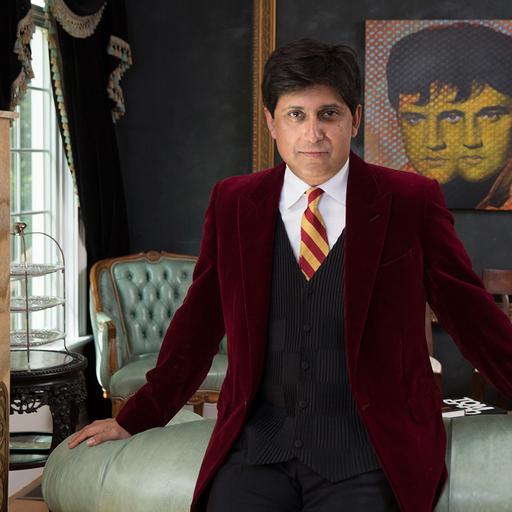
Harvard-Trained Psychiatrist, Author, Brain Researcher & Co-Founder of Reulay Digital Therapeutics.
17 years Federally funded brain researchTop 20 Leadership development mover & shaker6 Books authoredHarvard Medical School Assistant Professor of Psychiatry
Dr. Srini Pillay is a Harvard-trained psychiatrist, neuroscientist, entrepreneur, and author exploring one of the defining questions of our time: What makes us uniquely human—and how can we develop those capacities in an age increasingly shaped by AI?
Trained as a physician in South Africa, where he graduated at the top of his medical school class, Srini earned a Medical Research Council fellowship in neurochemistry before completing his psychiatry residency at McLean Hospital through Harvard Medical School. He became the institution's most awarded resident and went on to direct its Outpatient Anxiety Disorders Program and Panic Disorders Research Program in Brain Imaging. For 17 years, he conducted federally funded brain research while serving as an Assistant Professor of Psychiatry at Harvard Medical School.
Today, Srini brings that scientific foundation to questions extending far beyond traditional medicine. His work explores how belief, attention, emotion, creativity, and human connection influence the way we think, perform, adapt, and potentially age. Through his work on psychogenic longevity, he examines the relationship between psychological experience and physical health, expanding the conversation about longevity beyond biology alone.
As AI transforms the workplace, Srini is developing a powerful new perspective on human potential. He argues that our greatest advantage may not be faster thinking or tighter control, but our capacity for insight, imagination, unexpected connections, and reinvention.
More from Dr. Srini Pillay
All episodes → Sustaining Creativity PodcastLiving a Creative Life with Dr. Srini PillayOct 2026Play episode →
 The Communicative LeaderReclaiming Cognitive Capacity: Neuroscience, Uncertainty, and Intentional UnfocusOct 2026Play episode →
 Confidence Through HealthThe Importance of Integrating Thought, Emotion, and Body w/ Dr. Srini PillayOct 2026Play episode →
 The Conscious Man 7 PodcastEpisode #154 - He's Building VR to Replace Psychedelics | Dr Srini PillayOct 2026Play episode →
 Mindset BoosterRewire Your Brain for Confidence, Creativity and BreakthroughSep 2026Play episode →
 The Deep Wealth Podcast - Unlock Your Deep Wealth In Business and LifeHarvard-Trained Psychiatrist Dr. Srini Pillay: Relentless Focus Is Robbing Your Profits, Success & Health (#579)Sep 2026Play episode →
 Peak Performance Life PodcastEPI 269: Harvard Trained Psychiatrist On How Your Mindset And Other Mental Factors Impact Inflammation, Immunity, Healthspan, & Longevity. With Dr. Srini PillaySep 2026Play episode →
 Mirror Talk: Soulful ConversationsReinvent Yourself: Neuroscience, Spirituality & the Power of Possibility (with Dr. Srini Pillay)Sep 2026Play episode →
 MadPo3t Podcast| Art|Life| Creative explorationInto the Abyss| Ft Dr. Srini PillayAug 2026Play episode →