
June 6, 2024
Russell Harvey, Matt Raad, Dr. Priya Nalkur | Office Hours #615

Sound bites
So one of the other things that I do. So how you make the hard easy is playing to your strengths or easier.
In this episode
Russell Harvey, Matt Raad and Dr. Priya Nalkur talk about resilience, business setbacks, gratitude, and inclusive leadership on Office Hours.
- Resilience as a habit of pausing, reflecting, re-energizing, and deciding what to keep or leave behind
- Working with the path of least resistance while building enough resilience to make meaningful behavior change
- Playing to strengths as a way to make hard things easier and reinforce confidence through acknowledgment
- Matt Raad’s early business path, from studying zoology to buying a first manufacturing business that nearly failed
- Gratitude and forgiveness as a way to appreciate circumstances, events, and people, even after setbacks
Transcript
ShowHide
Automatic captions of the conversation. They can contain errors and do not name who is speaking.
Good morning, every good afternoon and good evening as we're around the world with Russell Harvey, Michael Unbroken, and myself here on Office Hours in the middle of an island, El Nido in the Philippines. I feel like Michael Unbroken traveling the world and just enjoying myself. Well, I always say, yeah, Michael, so we're still stone cold sober. Thank you for joining me, Michael Unbroken. Of course, always. Happy to be here with you, man. Awesome. Well, we have a special guest. He's aligned with what we do every day, considering my mission of empowering over a billion people to be happy through enjoying the consistent every day, persistent without quit, pursuit of your own potential.
Russell Harvey has been doing it for years. He's one of the greatest resilience coaches in the world. You can check him out at theresiliencecoach.co.uk. Welcome to Office Hours, Russell Harvey. Hello there, thank you so much for having me. So yes, it is evening time here in Leeds, Yorkshire, England. That's where I am. Brilliant to be here. Thank you. So the leadership coach from Leeds, Yorkshire is definitely appropriate as well. I've been dying to talk to you, Russell, and let me tell you why. I'm a math person and I'm trying to apply math to resilience.
And what I found is, one, resilience, a commitment to consistent behavior is how I define resilience. It's a commitment to a consistent behavior is counter-human nature. It's counterintuitive, in fact. And so what's so interesting is nothing gives us more exponentiality of our behaviors than resilience, but yet it's not within the context of human nature. And so as you're training and coaching and teaching leaders to help people be resilient, they themselves, I am sure, throughout their own constitution, are resilient people and have methodologies.
As you're trying to positively affect so many people like me, how do you overcome human nature when it comes to resilience? You know, a brilliant question, just an easy one to start with, David. We don't have time. When you give someone 10 minutes, we got to get right to it. Yeah, absolutely. Well, so that's so I define resilience as springing forward with learning. So when I find a way to enable my clients, people that I support, people that listen to stuff that I say, and they really click and they get that it's about doing that habit of going through all of life's events, but getting to the habit of regularly pausing in some way, shape or form.
And pausing can be going for a walk. But in those pauses, they also re-energize, recuperate themselves and reflect. So loads of words begin with the letter R because I'm Russell, the resilience coach, and they reflect. And then in those reflections, then they absolutely have to get into the habit of saying to themselves, what am I going to keep doing because it's working well for me? And actually, what am I going to leave behind because it's not working well for me? So that when I can get my clients to get that light bulb moment, put that into their everyday lives, put it as some habitual norm to pause and reflect and re-energize, then they spring forward with learning.
And when it works, it works brilliantly in its simplest sense, how we do it. But whilst you're doing all of that, you are working with the fact that humans beings want to do the path of least resistance. So if in those reflections, they've got to do a pretty significant behavior change, then that's when the really hard stuff happens. But what helps with that is when they work upon their overall resilience, so seven aspects on the resilience wheel that I talk about, when they engage with that, that actually builds their levels of resilience and it enables them to do more springing forward with learning.
So you spring forward learning, you help your resilience, you engage with the resilience wheel, you help your resilience, which enables you to do more springing forward with learning. So it's that then just becomes an optimistic cycle leading you to lots of positivity. I love that, man, and I constantly think that you need to build confidence to some capacity to be able to navigate that. And to me, my definition of building confidence is consistently doing incredibly uncomfortable things. And one of the things that we typically run into, just I'm going to point back to what David said, is as human beings, we don't like doing hard things.
One of the things that I've discovered over the years in my coaching practice and what I've guided and helped people discover is they don't generally nourish themselves and their journey through the acknowledgement of giving themselves their flowers. How important is acknowledgement of one's, dare I say, greatness and resilience and the things they've actually overcome? How important is that in this journey? It's absolutely massive. So one of the other things that I do. So how you make the hard easy is playing to your strengths or easier.
So it's absolutely how do you really harness what your genuine natural strengths are, what naturally energizes you, because then the things that you find more find difficult when you can harness your strengths and tap into those, they can become easier essentially when you do them. So playing to your strengths also builds natural confidence and natural resilience. So when you do those things that you're naturally energized by, you are naturally at your best. So find ways to spend as much time as possible playing to your strengths.
And it completely goes against all of the ways in which we do education in the United Kingdom and maybe in some other countries, because generally speaking, when you do education and personal development and leadership development, people sort of say, OK, so I'm good at these things and I seem to be not good at these things. I need to be spending more time on these things I'm not good at. And I'm going, no, probably the reason you're not good at those things is you're not naturally energized by them. So don't do it to start with.
And so many of my clients have these lightbulb moments of like, so you mean my sort of development and my homework, for one of the very reasons, is go and do more of the things that I naturally enjoy doing? I go, yes. And it's so, so many people just their minds are blown to go, isn't that brilliant? I thought I was going to have to come here and work upon the really hard stuff. It's got, no, go do the stuff that you enjoy doing, essentially. And I, I agree with that completely. One of the other nuances of that was in the context of resilience coaching and leadership, is finding an ability to find the light, the love and the lessons through gratitude and forgiveness.
And so a lot of people are not aware of a given, because they don't have the right mindset in order to have a positive promotion, protection type of attitude. One of my friends and Michael's friends, the CEO and founder of GoDaddy, Bob Parsons, he had a brilliant statement. He said, if you learn to love what you don't like, if you can learn to love what you don't love through gratitude and forgiveness, life will tell you all its secrets. And then all of a sudden, you have more things that you enjoy. And Russell Harvey's philosophy applies at an amplified magnitude in order to effectuate more of what we love by learning to love things, by looking at them in the right perspective.
How true is that within the context of resilience? It's completely true. Absolutely. It is. And one of the things that I really do also want people to think about is about the route to positivity. So I talk an awful lot about optimism as the route to positivity. Now, when you look at the dictionary definition of optimism, then you see that the word positivity is there, OK? However, optimism has got to be started with grounded in reality. So it has to be the reality of what are the things that you naturally don't enjoy doing, accept those with good grace and gratitude.
If you've got a really tough and difficult, challenging situation, you absolutely have to understand just how tough and challenging and difficult it is. None of these impressions of being an ostrich of head in the sand. You have to be able to have quality conversations about this is horrible. This situation, actually, we have to accept with good grace that this is horrible. And then you lean into, so what are my strengths, my skills, my capabilities, my experiences that I've got? And the people around me have got, my team have got.
And actually, now that I've looked at all of those, I've got genuine feelings of hope that I'm going to be able to face into this challenge and overcome it. And then you start to feel positive. I get worried when people just sort of say, yeah, this is a difficult situation. You've just got to be positive or you've just got to be resilient. That doesn't work for me, you know, that frustrates me. So there is an element of that gif of like, keep calm and carry on. It's like, well, no, because you actually need to understand.
The reason I can't keep calm at this moment in time is I have to accept my starting point of just how difficult and horrible this challenge is. So I don't feel calm, I feel scared, you know, then you can shift into the optimism. And that's why we have to have you back. Because we're blessed now with the expert in that, the amazing Michael Diamond, who helps people through addiction. And he's a leader as a media star and, of course, as a coach in addiction, which is facilitated with that same philosophy, understanding what we have the power to change and what we don't, within the context of...
Russell Harvey, leading the way for leadership, managing director at The Resilience Coach. Go to theresiliencecoach.co.uk. If we are resilient, committed to the conciliator, it'll provide us 9% of the outcomes exponentiality in our lives. He's a facilitator, speaker, an amazing teacher, coach and mentor. Please promise us a comeback. We really didn't mean Mike for you anyway because he's from Australia. People think people from England and Australia have the same accent, but they don't. The Americans don't like Mike, not the Aussies.
I can hear that he was British for sure. He's not an Aussie. Exactly. Well, the next guest is from Brisbane, so you'll know Matt Raad. Matt, I'm sorry when you hear him talk. But Russell, promise us a comeback. We have other shows. We want to get more into resilience and the commitment to behavior. He's positively affecting over 100,000 people and just an incredible force in our mission to empower others, to empower others to be happy. Thanks for joining us, Russell Harvey. My absolute pleasure. Thank you ever so much.
Lovely to see you all. Great answers. Brilliant. Thank you. All right. Double mics are back up. Looking good, man. You should have put a hat on like us, I think. What do you think, Michael Broken? Yeah, but Luca didn't text me. Totally. What would an office hours have? It's a bad hair day for everybody. Well, Matt has his hat on. Speaking of that, Matt, he's an investor, he's an expert in an area that everybody better become familiar with. Under the stage of investments, it is moving and changing quicker than the speed of light.
That's because the speed of thought is exponential to the speed of light. And what we're talking about is most aligned with the speed of thought, not the man-made construct of time. Welcome, Matt Raad from Brisbane. Thank you so much for having me on, David. It's fantastic to be here. Enlightened to have you. And I know our friend, Mike Diamondfield, is at home having you here, of course. But I'm really interested in what eBusiness Institute is, helping to educate people around the world to up-level their own future, which, as I stated, because the speed of thought is so quickly.
We need some sort of eInstitute in order to facilitate better forms of alignment with timing and risk tolerance. Give a little bit of background on the eBusiness Institute that teaches, and you're a leading expert in dual investments at. Yeah, we do things a little bit differently. My wife and I, we've made our wealth through buying and selling businesses, and in particular, online businesses. And being two kids from the country in Australia, we're from rural Australia, we always wanted freedom. For me, it was financial freedom.
I grew up with no money. And for my wife, it was time freedom. So we found online businesses worked really well. And one of the biggest struggles that we had when we started to do this, being from the country, we didn't grow up with computers. I'm in my 50s. We didn't know how computers work. So one of the things we're really passionate about is teaching other people what we've done, and not only how to make money, but also how to get online basically with businesses. Because really all it is is a knowledge gap. And we love teaching beginners how to do the technical stuff that you need to do to make money online.
Because then your life frees up that you can get. We find a lot of our clients these days. I'm sure you guys have all seen this. The burnout now in society is just mind blowing. Especially in the last five years, we've been coaching people for a long time. And so we love helping people who want to make a change in their life. They're typically high achievers. They probably listen to this podcast, David. They love your sort of a message as well. And we resonate with that a lot. We learned many years ago, you can change your life with the power of your mind.
Setting goals and just with sheer determination as well. So we love coaching those kind of people. And I think what we do really well at eBusiness is teaching beginners the actual practical digital skills that you need to make money online. So then you can go off and do whatever you want with those skills. Matt, love that, man. All of us are eCommerce or eDigital or product creators, sellers. We build digital platforms because that's the world that we live in. What do you think is the biggest thing that keeps people stuck from being able to step into this vehicle?
Because now we have access to more information than ever. We have more ability to go and create eProducts quickly and efficiently. With this really looking like the future of business in so many ways, where are people getting stuck? I think on the technical side, from our point of view, what we see, we train, say, typical person might be a couple with kids, a high income earner, used to working in corporate and they're working big long hours. Actually, Michael, there's two things that popped in my head there. The other gut feel thing that popped in my head was mindset.
Honestly, people don't think they can do it. That's one of the things we were really lucky in our early days. We had some personal mentors, very successful business people, and I think they taught us just through inspirational stories of what they've achieved in their lives that you can do it. I think that's the first thing. A lot of people don't even, like they see all these amazing businesses like we all own and think, I could never do that. That's the first thing where I think they're getting stuck. They need a kind of role models of success, the stories.
But then it is the technical ability because they haven't been trained online. They don't really know. So you mentioned an online business. Most people that we talk to, especially the sorts of online businesses we do, we don't do e-commerce businesses. We do everything but e-commerce. So people don't even realize what are the technical steps of how do you make money online? So I think it's knowledge would probably be the main limiting factor that we personally see. Matt, so good. You were a zoologist, is that correct?
Yes. And my wife. That's how we met. So you're in the country in Brisbane. You're a zoologist. And then there's a knowledge gap massively, which I love you said. And you got to have a mindset shift. Yeah, you get mentors, but from a zoologist to flipping companies online, that's a big gap, my friend. It's pretty brilliant. So what happened? What was the leap off? Because that's a big leap. You know what I mean? It is. And I think where do I say it's a big story, Mike. But Liz and I met. So my wife and I met at university in New South Wales, and we were both studying zoology.
And we were destined to be Australia's leading experts on red kangaroos. So David and Michael, you know, the big red kangaroo. We actually worked with one of Australia's leading professors on that. And I won a scholarship. We had no money or anything like that. But I handed it back because what happened was this mindset. Ever since a kid, I think, you know, different things drive people. So I came from a background where my mum was originally a single mum. You know, I lived in, Mike, you'll know, the western suburbs of Sydney, pretty rough, very rough area.
And especially back in the 70s. And so we mum remarried, luckily, and we moved on to the farm with dad, who's my stepdad. But even then, it was super tough. I watched my parents nearly go bust a few times, bankrupt, all that sort of stuff. So that's what drove me to ever since a kid, I was unusual in that all I was interested in was making money somehow, ideally out of thin air. So I used to trade toys and stuff like that. And, you know, I got in trouble off my granddad for constantly asking, how much is that worth?
All those sorts of things. So it sounds weird. But I ended up studying zoology because I followed my heart. That's what because I grew up in a country, I loved animals and I failed school. I didn't get the marks to get into uni. And my mum said to me, when you're young, you can take risks and do whatever you want. It doesn't matter. You don't have any got no ties. You don't got no kids. So she said, do what you want. So I said, all right, I'm going to uni to study zoology. Now, in a weird way, it worked out brilliantly and never use zoology.
But I met Liz, my life partner, who is also, I guess, a kindred spirit on this journey. She wanted freedom to work wherever we wanted, particularly go back to the country. And I wanted financial freedom. And I realised, luckily, that working a nine to five job was never going to give me financial freedom. And I always wanted a business. But because I didn't come from a family of entrepreneurs, I had no idea how to do it. So that's why, in a way, I kind of I wouldn't say wasted four years, but, you know, spent four years just following my heart, like mum said.
But look how it panned out. Isn't it bizarre how life goes? Honestly, I didn't even quite know what I was doing, doing science. It was the only zoology. I thought it may lead into a leverage point where I could become a salesperson in the medical industry. I know it sounds bizarre, but the only way I knew how to get wealthy then was through sales and selling in medical. I figured there's lots of money. That was vaguely my loose plan. But what happened was we started hanging around entrepreneurs and I realized, no, I want a business like I always wanted ever since I was a kid.
And I started my first business, which was personal training for people wanting to get fit. And that's how I paid for myself through uni. But then with friends and family money, what really happened was we bought our small first manufacturing business out in the country and it nearly went bust within the first week. So we made every single mistake because we got the wrong advice. And so ever since then, we have been on a mission to figure out how do you do proper due diligence and not get ripped off? And we're going to teach people how to do it because it was pretty scary.
But although both Liz and I and Go Our Family, they backed us. You know, we didn't have kids then. We were high risk takers, like in terms of what we're doing with business. And I think I can honestly say we're addicted to business within about 48 hours of owning that business, like literally within the first day or two. And I just said, right, I'm handing back my scholarship, which was a lot of money to me back then. And I'm quitting uni right now. And so that just started. So what you've got to realize, Mike, too, it's been a 30 year journey or 27 odd years, you know.
So it's not as I know, if there's young people listening, you think, oh, man, you did zoology and then went straight into business and were hugely successful. It took another 10 years to get hugely successful as well. So there is that journey there. No such thing as an overnight success. And check out the eBusiness Institute at ebusinessinstitute.com.au. You will find practical courses on buying and building income generating websites and effective digital marketing strategies of how to trust and vet opportunities in the appropriate way, no easier way to have the freedoms that technology affords us than to understand the strategies incorporated into eBusiness and your own eStrategy for your own ePersonalities like the mics on the mic.
It's great to have someone from the homeland for Matt Raad and Michael Dimond. Come back to join us, my friend. Keep up empowering others on the overnight successes. My average is 17 and a half years. That's what it takes in the overnight success. So you are ahead of your curve in 10 years. All the people that you're helping, I'm sure, will have the same. It's your skills, your knowledge, your desire that you're lying to the industry job career that you're looking for. He also will help you understand where you can apply your own zoology, skills, and desires to be a multimillionaire and a multi-success.
Thank you so much for joining us. Thank you very much, David. Bye, man. Bye, man. All right. We're moving right along. And I know my schedule here looks like we have our end. Priya is here, Nalkur, out of Austin. Hi, David. Good to see you. Thank you for coming. So happy to be here. Thanks for having me. No problem. I just all the way from NIDA here in the Philippines. I'm glad the Internet works all over the world or I couldn't do what I do. And we're so blessed to have to part with me as well. I want to talk about your book, Priya, Stumbling Towards Inclusion, which is Finding Grace in Imperfect Leadership.
Inclusion is interesting because it's different than equity. And those two terms fall hand in hand a lot as we have initiatives of diversity, which is obvious, inclusion, which is a huge proponent of helping people to understand what that is. And then there's equity, which I'm actually not a fan of, I just have to say. Reason I'm not a fan, and I'd love your opinion in how your book talks about or is related to stumbling towards inclusion, equity presumes that the equality exists between people. And if you look at the math of people, we're one in a trillion here.
And then every one of us is an individual, a footprint, a fingerprint, every one of us. So that makes you one in eight billion when you're here. The math says to me that maybe we should focus in on inclusion and not equity. When I look at inclusion, I talk about appreciating value to each other through our differences, not our sameness. And, you know, looking at the four mugs that are here, one beautiful, the other three not so beautiful, you can obviously see the difference. There's trans-advances between just the four of us.
So how are people misunderstanding this idea of equity and inclusion and how does it apply to stumbling towards inclusion? Well, I find your definition really insightful and unique, and I really appreciate it. I'm a psychologist, so I have a bias. My bias is, you know, to prioritize inclusion, right? I want leaders to be inclusive. I think effective leadership is inclusive leadership, period, right? So what are you doing? It means that you are paying attention to the interpersonal dynamic or paying attention to the intrapersonal dynamic.
You're doing things that make people feel valued, welcome, worthy so that they can share their best ideas, take risks, challenge each other and resist each other. To me, that's what an inclusive environment means. Now, you're right to say that inclusion has been lumped with these similar but very different ideas, like diversity and equity and justice. They're actually completely different things. They're related. But equity has gotten diluted or some of these terms have gotten diluted because they've been lumped together.
I really think of it as a separate thing. And like you, I would rather invest in inclusion than in equity. If I had to pick one of those two things, I would invest in inclusion. I think it's a little bit more accessible. It's more universal. Equity is really hard to measure. It's really hard to get right because things change all the time. Inclusion is a little bit more accessible. We can do it through our behaviors and our mindsets. Yeah, absolutely. Just sorry for interrupting, but everybody go back and listen to that.
I know Priya knows her stuff so well. She speaks as quickly as I do. And they're golden, golden nuggets in that. So luckily, the replays are available. I'm going to go back, and I highly suggest everyone go back and listen to that slowly if you want. Usually, I'm speeding up people. This one, I'm going to slow down, take my time, listen to it 10 times, because there's some golden nuggets to the success of our country and even our world. So brilliant. I love the way you articulated that. I'm going to go back and go back and really let people absorb it and learn what you were saying.
But wow. Go ahead, Mike, sorry for interrupting. No, I mean, I couldn't agree more. And I mean, I would say three for three so far on the agreement about what inclusion means and the idea of like fostering it in our communities, our families, our businesses and everything. And, you know, one of the things I think is fascinating about in the way that you wrote your book is that we talk about this idea about stumbling towards this idea of inclusion. I think there's this very weird bias that's happening where people are like, we must be inclusive because we must be inclusive, but it's like, but we're not doing it right.
And you see this time and time again, especially at corporate levels, at government levels. And it almost feels like something that is more done in passing than with insight. And so I'm very curious, you know, big part of your book is about creating this guide to fostering leadership by understanding these stories, this research and these strategies. What is the biggest misnomer? Like, what is the thing people are completely missing the boat about inclusion about? Such a great question. I mean, for me, I think that, yes, it can be an exercise where people just simply check off a box because they know that they're supposed to do it now.
You can't ignore inclusion. But the thing is there's no playbook to do it right. So everyone's journey towards inclusion is going to be different. What did people get wrong? I think people think that it's easy to do. But on the other hand, I think people think that people don't recognize that they're actually really afraid to do it. And so don't do anything at all. I want people to be able to face the fear that they may get it wrong. They may be accused of being racist or sexist or homophobic, and they've got to push through that fear and do it anyway.
And they've got to learn to repair and apologize, prevent harm and then reduce harm if they do do it. But don't stop doing the work. So it's called stumbling towards inclusion because we're going to stumble. You're not going to get it right. And if you think that just checking off a box and putting it on your website is enough, you've got it completely wrong. That's just like table stakes at this point. You've really got to think about what kind of leader you are, what kind of environment you want to create for the people there to really bring out the best in everyone who works with you.
Which leads me to me asking, is that why you say finding grace in imperfect leadership? So it's like finding that grace that you're going to make mistakes, and we're all imperfect and flawed, and that's part of the human experience. And then to be brave enough and vulnerable enough to say, hey, I've got to work on this. Is that why that's the tagline in it? It's very much related, right? Like if we're going to make mistakes, that means we have to afford ourselves and others the grace to make mistakes. Listen, I think we live in an environment where people are really emboldened to ask for what they want, and they're not afraid to ask for what they want, and they're going to hold their managers and their employers to task for what they want.
And when they're so bold to ask for it and they're willing to quit because they're not getting it, the managers are afraid that they might get it wrong. Like we're in really short supply of grace and empathy. But if we are willing to listen to each other that, okay, I'm going to try to hear you, I'm going to try to hear what you want, and I'm going to move towards you, I may not get it right, but you got to move towards me too. And that's how we're going to create an environment of safety and courage and all those things that I said before.
And I love how you incorporate asking because asking goes both ways. And it's also inclusive in the philosophy driven by gratitude and forgiveness. We just spoke about earlier finding the light, the love, and the lessons in circumstances that may not feel well or feel great, but also to forgive ourselves. But incorporated in a confirmation of inclusion is the comfortability and confidence in asking because when we ask for what we want, we're not demanding. We are commanding. We're working with someone. But when we ask for what we want, it's a confirmation that our faith is that there's more than enough of everything for everyone and that there's some sort of inclusive compromise to be made to facilitate stumbling towards a better way of doing things where we make more money, we help more people, and we have more fun.
And so I'd love that you've incorporated the ask in there. It's a confirmation of someone who understands the more we give, the more we give, elevate your awareness through forgiveness and gratitude to what we're given and feel worthy of receiving it by confirming it with an ask. We definitely need more of you. All three of us have shows. The world needs to read this book. It is an inclusive book. And okay, stumbled towards inclusion, the ability to appreciate each other for our skills, our knowledge and our desire, appreciate each other for our strengths, as well as our weaknesses.
We appreciate weaknesses. It allows us to move those weaknesses to somewhere where they can be seen as strengths. And Priya, you always go to nuggets. I'm going to go back, listen to this, as I'm in the Philippines and got plenty of time while everybody's sleeping to get caught up onto the new hits, the new lessons and the new stories. One of those is going to be this book, Stumbling Towards Inclusion, Finding Grace in the Imperfect Leadership that we all participate in. Please promise me you'll come back. We'd love to see you when we're down in Austin as well.
Thanks for joining us. Please do. Thank you so much for your time. I loved being with you guys. You're amazing. Thanks for brightening our day. Look at that smile. She's amazing. All righty. Check out that book. You can go to priyanalkur.com. P-R-I-Y-A-N-A-K-A-N-A-K-R-I-Y-A-N-A-L-K-U-R. P-R-I-Y-A-N-A-K-A-N- P-R-I-Y-A-N-A-L-K-U-R. I'm not as bright as I look..com. Anyway, I'm stumbling towards the takeaways of the day. Two good friends from Mike. Two of us are smart enough to put a hat on. One of us did not wash his hair today.
Which one does not belong with the other? All right. Greasy Mike. Greasy Mike. You go first. Well, I got the first guy at the end, Resilience, which was fantastic. You know, it was really this beautiful thing came through all three guests of like, there was this mindset and knowledge gap, which I found really fantastic. Like, you've got to have that mindset and the resilience to close the gap. And you've got to gather as much information as possible and just work really hard. And most people just they can't turn that switch on and they're not willing to gather the information to close the gap.
And I really felt like the Alaska really blew me away because she was just so flexible. And I love that, you know, so that's mindset and knowledge gap, close that gap. Yeah, I love that, Mike. That's such a great takeaway. For me, it was you you see people who have been able to actually create change in the world and they play to their strengths. And I think Russell really hit that home starting off this show because for so long you we have this narrative like make your weaknesses strong. But it's like, is that really the way to go about creating what you want to create in your life?
And as I in my personal life have leaned more towards my strengths of writing, of coaching, of doing podcasts, like that's done massive wonders for me. When I try to sit down with a calculator, I might as well just burn the building down because this isn't going anywhere. And so I think more people it would be in their interest to play to their strengths. I love in playing to that strength. It comes down to one of my favorite takeaways, which comes up in variant goes. And it's the importance of gratitude for gives in all aspects of what we do.
And Matt, obviously, as a resilient leader, we need to forgive ourselves and be gracious to find, seek the light, the love and the lessons to be resilient, to learn to love what we don't love or don't like, and be committed to consistent behavior, consistent good behavior, good behavior in alignment with where we want to be or better, bad behavior, figuring out what we're doing to interfere with it. Russell, as well, as you know, he lives off of philosophy. Matt, think about the 27 year journey. If he didn't have forgiveness and gratitude, his funding him on just a shit show of a business, he would not have the amazing life that he has today in Brisbane, Australia, full of the obvious perspective and inclusion of appreciating our differences through gratitude and forgiveness.
If every time you were upset with someone else, every time you felt attacked, and instead of being defended, you use gratitude and forgiveness as a shield, imagine how much we would appreciate. And the word appreciation means add value. Imagine how much value we'd be adding every day, how productive, accessible, and gracious we are. So my takeaway is be great and forgiving, and you'll learn to appreciate and add value to everything you do. You say every circumstance, event, and every person in your life deserves your forgiveness and your gratitude.
I'm so gracious and forgiving of you too. You can't imagine because I'm gracious and forgiving of myself. I appreciate you coming around the world. You can find all three of us. Just so you know, this is episode 614, 614. We've been doing this for years. Don't even call it a comeback. Thank you guys for joining me. I'll see you next Wednesday. All right. We are just a reminder. We're going to be back. I'm going to be now quick trip to Japan. A little bit of business and content there. And then we'll be home for a mastermind in Orange County.
Then off to Chicago. Then to Toronto. Then to Orange County, LA, New York City, and New Jersey. But big one. She's going to put it up there. It's everywhere. July 19th, I'm going to be collabing. That's right. The first collab, the collab. Dane Cook and I are collaborating together. It is quite a scene. We will make you laugh, cry, and change your mindset all at the same time. We'll be collaborating with our special guest and host, Rob Riggle, an amazing talent. Baron Davis, Marshall Falk, and many, many more. The list keeps going on.
If you want to join us from around the world, go to Ticketmaster, ticketmaster.com. That's where you can join us on July 19th. It's at SoFi Stadium's YouTube theater. It's adjacent to SoFi Stadium in Los Angeles, really close to the airport. And see us Friday, July 19th, with Dane Cook and I. We're going to be collaborating with all these people and the audience. So come on stage and ask us a question, collaborate, laugh louder, think bigger. It's comedy that will change your mindset with me and Dane and many, many more.
Go to Ticketmaster today, July 19th. We'd love to see you. If you have any questions on where we're going to be, just email me, David at dmeltzer.com or join our text community, 949-982-905. We're in a lot of cities, 200 cities this year. You got to text me to know where we're at. You know, I know that because I got to text me to know where I'm at. 949-298-2905. Remember most importantly, be more interested than interesting. Be kind to yourself and do good deeds. We'll see you later. Thanks so much.
About Russell Harvey
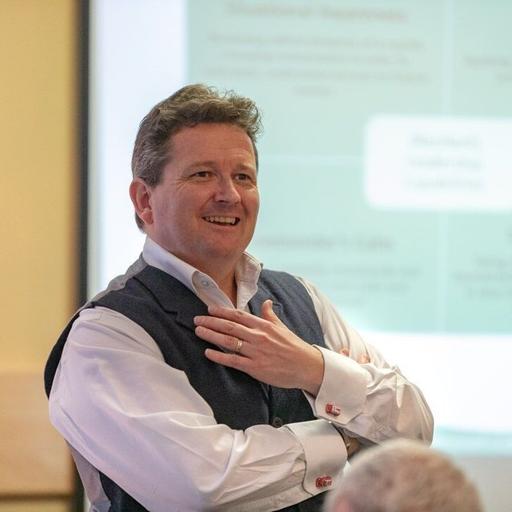
The Resilience Coach | Resilient Leadership Expert
100,000+ People positively affected6,000+ Executive coaching hours£12M+ ROI delivered by RWE npower leadership programme20+ years Learning, leadership and organisational development
Russell Harvey is The Resilience Coach - a resilient leadership expert, executive coach, facilitator and keynote speaker who helps leaders and organisations perform at their best when the world refuses to stand still.
With more than 20 years in Learning, Leadership and Organisational Development, 6,000+ hours of executive coaching and over 70 published podcast appearances, Russell is an experienced and engaging voice on resilience, leadership and navigating persistent change. He has worked with leaders across organisations including Novartis, the NHS, AB World Foods, Kerry Group and The Co-operative Group.
Russell’s work goes beyond helping people simply cope with pressure. He believes true resilience isn’t about “bouncing back”, being tougher or pretending everything is fine - it’s about springing forward with learning and becoming better equipped to lead because of the challenges you’ve faced.
His approach connects the human side of leadership directly to what matters to organisations: engaged people, stronger cultures, better decisions and improved performance. His work has delivered measurable results, including a leadership programme that returned £12 million to the business and a Resilient Leader Programme that achieved more than 1,100% ROI.
In August 2025, Russell achieved his long-held purpose of positively affecting 100,000 people.
More from Russell Harvey
All episodes → Living the Dream with CurveballSpringing Forward: Russell Harvey's Insights on Building Resilience and Embracing ChangeNov 2026Play episode →
 Transformation Station Leadership PodcastTSLP Season 5 Ep. 26- Thriving Is A VerbNov 2026Play episode →
 An Evolving Man PodcastReal Resilience: Why Pushing Through Isn’t Enough | Russell Harvey | AEM #172Oct 2026Play episode →
 Leadership From The Heart | Transformational Leadership InsightsResilience Without the Rebound | Leadership Mindset ShiftAug 2026Play episode →
 Burnout Proof Leadership: Identify Shift and Leadership Skills for Midlife Women EntrepreneursEssential Leadership Skills You Must Have If You Want to Build Resilience & Avoid Burnout When Your Business Gets Hard - with Russell HarveyJul 2026Play episode →
 Your Career JourneyHow to Build Resilience at Work: Leadership, Change & Thriving in Uncertain TimesJul 2026Play episode →
 The ThriveWell Journey | Entrepreneurship, Leadership & Life After DisruptionHow to Build Real Resilience Under Pressure | Russell HarveyJul 2026Play episode →
 Future Fit LeadershipThe 2030 Leader: Why Resilience is Your Most Vital Skill with Russell HarveyJun 2026Play episode →
 Different thinking for Different Time - Mindset Change and Thought LeadershipDifferent Thinking for Different Times - 7 Keys to Building Resilience with Russell Harvey How to Nurture a Resilient Mindset in Business and LifeMay 2026Play episode →