
April 27, 2023
Ready For Resilience With Coach Russell Harvey

We can't you know we don't want to lie to you about this we're in trouble; and by saying that and being open and honest we are hoping that you will believe in us to also get us out of it.
In this episode
Russell Harvey joins Limitless Leadership Lounge to talk about resilience coaching, leadership in uncertain times, and how people and teams can respond well to change.
- Defining resilience coaching as helping leaders understand their values, strengths, and best way of facing challenges.
- Building resilience through honesty about trouble, rather than papering over problems or pretending things are fine.
- Leading through a VUCA world with capability, mindset, skills, and optimism.
- Why some younger people may struggle more with resilience, networking, and problem solving in a protected, phone centered environment.
- Finding a coaching arrangement that fits the person or organization, with flexible conversation about needs and budget.
Chapters
Written from the transcript. Pick a chapter to play the episode from that point.
Transcript
Automatic captions of the conversation. They can contain errors and do not name who is speaking.
You can't just go up to people and go, you really need some resilience. You could tell they did. You could tell you could look at them and go, gosh, you really could do with my support. But if they weren't ready, it didn't matter what I said. Do you want to be a leader? In a constantly changing world, our emerging leaders look different, come from various backgrounds and from all different age groups. Leadership is changing and it's hard to keep up. But the good news, you can be a leader too. You can be an emerging leader.
Welcome to the Limitless Leadership Lounge, a tri-generational conversation for emerging leaders. Come spend some time with us to discuss leadership from three angles. The coach, Jim Johnson. The professor, Dr. Anuma Karim. The host, John Gehring. A monthly guest. And you. Get in on the conversation on Facebook and Instagram. And be sure to follow us on Apple Podcasts, Spotify, and Spreaker. So come on in and make yourself comfortable. Are you looking to take the next step in your personal development or your team's development?
Well, then Coach Jim Johnson's speaking may be exactly what you need. Hiring him to speak to your team or at your corporate event will inform, inspire, and direct you to take the next steps to become a more effective individual or organization. CoachJimJohnson.com is where you can learn more about coaches speaking. It's CoachJimJohnson.com to get in touch. Definitely worth your time to at least learn more about what Coach has to offer and potentially hire him to talk to your next event or to your team. We want to thank you for tuning in today to the Limitless Leadership Lounge.
Wherever you are listening, whether it's in the car or while you're doing some chores around the house, this is an episode that you do not want to miss. We are so delighted to have Russell Harvey with us. And Russell is a resilience coach, facilitator, and public speaker. He has a 20-year career in learning leadership and organizational development. And his overall style is influenced by positive psychology, which we all need nowadays, more than ever, and strength-based approach. Resilience coach, and I went to his blog, and there are so many amazing testimonials.
So Russell, welcome to Limitless Leadership Lounge. and I would like to start with this question and there were so many will ask this question what is a resilience coach and how did you come to become a resilience coach? Absolutely no thank you lovely to be here thank you for all the introductions and I believe we may have some people in Bangladesh so I want to make sure we say hello to them too. So yeah the resilience coach is how I came about essentially. So my last, so my whole career, as you've already said, is in learning, leadership, organizational development.
And the resilience coach will be eight years old in July. And my last permanent role before that was an organization called the Co-op Group. So it's retail, it's banking, it's insurance. There is a worldwide cooperative movement, which is fantastic and amazing in terms of co-op principles. however not long after I joined the co-op group as a leadership development person it it was in trouble so it was in serious financial trouble nothing to do with me just from historical things and so I was employed with many others to support like the top 200 top 300 leaders in the organization around all things leadership development however we had to make a change because the business came close to not existing so everybody came to me with their literally the head and hands and went russell what on earth do we do and i said look there's this word resilience and there's this acronym called vuca and our solutions to how we're going to face into this how we're going to deal with this how we're going to behave how we're going to make decisions how we're going to feel about it they're all in there okay we need to find a way to access all of this like capability attitude and mindset way of thinking skills and uh our solution to how we'll come out the other side of this is with resilience and VUCA so when I left the co-op group and I sort of said all right set my own business and went well where am I it's like well I am the resilience coach that that is what I have been doing so in terms of what is it uh from a purely leadership point of view it working with individuals to sort of go so a resilient you what is that for you What does that look like sound like and feel like for you in terms of your leadership capabilities and experiences?
And then hopefully from that, it's actually working out their values, understanding their strengths, you know, how they actually genuinely are at their best, how they get to optimistic, not just positive, but how they get to optimistic about facing into their challenges so that they can lead themselves and others well in this mad bonkers crazy VUCA world that we live in so I hope that answers the question well that's today's answer to the question around what is a resilience coach well that's how I do it anyway right and and we are collectively uh we are that experiencing that collective suffering after COVID um the pandemic now we are experiencing the Russia-Ukraine war so so many things are testing us our economy all across the world uh so um just carry on carrying like tagging over the previous question uh you have also experienced uh like you had to go through that resilient stage during the time could you just uh talk a little bit about that how you experienced and how you overcame that absolutely yes so as we were saying just sort of um a fair moment ago so when the pandemic started in terms of my own business literally everything was cancelled so i went from a full book of work to nothing because literally the world had shut down so in that moment it was a mixture of okay that's scary however right then russell you are equipped with or you have knowledge of all of the tips tools and techniques to be able to help yourself face into this and face into this challenge so I was incredibly lucky I think I was incredibly lucky to know this word resilience and to know what it means and then thankfully I was also in the place of actually wanting to apply it to myself and want to be a role model and that turned into the lovely word of adapting to go okay I've still got to you know run my business so it's like I have to rebuild it I have to sort of just be out there permanently podcasts talking you know webinars to go what sport you need with resilience and the real challenge about when would that turn into money coming back into the business had to be keeping the faith and holding the course because it was a state of readiness you can't just go up to people and go you really need some resilience you could tell they did you could tell you could look at them and go gosh you really could do with my support but if they weren't ready it didn't matter what I said so I had to just make sure that I was out there people know that I existed and have the faith um that actually they would come back to me when they were ready and thankfully it worked because I'm still here and didn't have to shut the business down and all of that groundwork all of that legwork I put in place over the pandemic I don't think I'd ever worked so hard in my life essentially it's it's paying dividends now essentially so and I pivoted I adapted I did some different things it made me do some things that I was thinking about as I'm running my business so that's how I did it essentially you see the signs and then you you have to accept that the world is telling you something russell you need to adapt so are you gonna do it or not essentially oh yeah that's how i did it well it's ironic that the the resilience coach had to go through a really really difficult time they're requiring a lot of resilience but like you said you already have the tools i mean who better to take your own advice than than you so that's that's great uh russell and also talk a little bit as the pandemic came through and, you know, the switch to more remote, virtually talked about podcasting, you talked about some of these things that you now do and now are going to be a permanent part of your business.
What role does relying on others play for you too, as well? Because, you know, resilience is really important, but we have to accept that we can't do it all ourselves. What did you do to bring in other team members or get that support that you needed to adapt? Yeah so once again naturally lucky So I talk about strengths So there a psychometrical strength scope There 24 strengths out there And one of my significant seven is collaboration doing things with others So I am naturally energized by asking for help, talking to others, asking for support.
And one of the tips and tools that I had to my disposal is I know that a dimension of resilience is your support network. so i have you know a support network in life and part of it to do with business but it's like who am i talking to um that's in a similar position to me that actually has experience of this uh talking to others helps um you come up with new ideas sharing thoughts helps you be open helps me do creativity um i'm good at creativity when i'm with others i need to bounce ideas of others if i have to do it by myself i'll get stuck essentially get stuck inside my own head so to answer your question john i just knew that i was a natural collaborator and i needed a support network so i'd already sort of created that did a lot of networking uh in terms of building a business so i'd already started to find my tribe that's terminology that you sort of use find the people that you you're just going to look at them and talk to them initially and go yeah i think actually you you're going to be useful and supportive not just finding people like you but finding people that you know you could add to you and positively challenge you um so so i already had a good spot network and i was really conscious because in the pandemic for a year i was literally where i am now looking at a green dot on my laptop for a year 24 7 essentially i know that i needed to find ways uh to go see you know my support network and um expand it but it also taught me as well um you know slightly more disappointingly out of the existing network i had who was really there for me so i've there are some people that have gone by the wayside you know because it's like well actually the chips are down we really need to come together We really need to support each other.
We really need to do this thing called community. Some people were like showed that that wasn't for them. There was more about actually it's me first and probably going to just stay with me first. And so I really found out actually who I was going to keep in my tribe and who I was going to let go. Sure. Yeah. And you talk about staring at that green dot. And I think that's a good way of noting just how lonely and isolating a good period of our lives were throughout those months and even into a year. So talk a little bit about that and maybe also for the people that you've coached.
How do you become resilient through even the midst of isolation and loneliness and not being able to see people? yeah so um it's a whole it's probably a whole mixture of um some sentences i feel i feel like i do management speak a lot of the time but sometimes they're sort of truisms truisms so self-awareness has got to be in this as well you could come at it from if familiar with like you know personality types of introversion and extroversion so in terms of supporting individuals and coaching individuals it was helping them understand actually where they were on that about are you energized by spending time with others or you're energized more inside your head um really helping me understand actually the different aspects there are to resilience so my whole way of working with people is that i have the resilience wheel on my website so there's seven aspects to it so being resilient is not just a one size fits all and that's a build upon you know research from robertson cooper so i've just added to it so i just work with clients to sort of go there's seven bits that you can play around with on the resilience wheel which one of these sevens already in a good place and start there you know and build upon that and one of the dimensions of the resilience wheel is your support network so it was a case of actually when you're ready and my advice you know not coaching my advice is make sure that you have a support network so if you are feeling isolated um if it because actually you used to the introversion of just being energizing by by yourself it even more important right now that you do something about spending some time with some other people So really helping them map out what their support work needed to be so that they didn't feel isolated essentially.
So it was all of these conversations were getting so many people to just revisit before the pandemic. What worked well? That was a question that still us now and still us a lot because there's loads of behavioral traps that we've fallen into new behavioral norms. We've got used to being at home, you know, inside this. So if somebody turns around and says, oh, do you fancy coming out? Even I found it. I was like, well, I'm used to I'm in my comfort space of not going out. So when somebody said, come over here and have a cup of coffee and do that, it'll be like, well, come and not do it online.
but then I had to have a word with myself to go come on Russell you know you love going out and seeing other people so you know actually need to give yourself a kick up the backside so um it throughout all of this working with clients is like when you were functioning well before the pandemic what was going on what was happening and actually revisiting actually what worked well for them because they a lot of the time there were some habits they got into they'd stopped doing something that enabled them to be at their best so it was getting them to revisit that and actually what can you now add that into your life you know and then that that would help and and I think another term that I think you you are putting into the picture I recently came across this term anti-fragility I think Abu Taleb he's the one who came up with this term and it's like resilience 2.0 so resilience is you something bad happens then you try to cope it up cope up with that but resilience 2.0 anti-fragility is you become stronger from the experience absolutely yes and that really feeds into how I like to talk about resilience which is spring forward with learning so I know that the terminology there is around bounce back I'm on a bit of a one-person mission so you can join me everybody's listening and watching now you can join me the next time somebody says what's this resilience thing everybody answers whether it's about bouncing back you can go well hang on a minute there was this bloke called Russell that talked about springing forward um so i know it's a play on words but as as uh we may know exactly as you've just said um you know life's experiences happen to us and we face into them then if we say to ourselves we'll just bounce back it's the idea that i'll just go back to how it was and we can't go back it's a bit of a subconscious instruction to go just go back to how you were And we know as humans, you can't.
Everything is about springing forward with learning. So to be able to do springing forward with learning, I encourage everybody to think about the idea from all of life's experiences, really good or not so good, we need to pause. We need to re-energize and we need to reflect. and in those reflections it's about what have i learned about my resiliency in my reflection so i can spring forward with a more you know increased level of resilience so i ask people to reflect upon their resilience wheel those seven bits you know to go actually what what what worked for you what didn't work for you if this happens again what would you do because it really worked and what would you do differently next time and that's the reflective thing so we need to re-energize from lovely experiences so because it's nice tired it's lovely it's gorgeous but we're tired nice tired you need to re-energize from those and the more challenging experiences you need to re-energize from those and it's actually understanding everybody that's listening now or even you know the two of you it's like how do you re-energize from a great experience versus how do you re-energize from a not so great experience?
Right. And one thing that I learned from my experience, I had to go through so many challenges in life, like, If I don't, like I have to transform all my pains into purpose. So when I do that, then it's not me only. I reflect like, okay, how can I transform it? How can I make this a fuel to make some positive changes around me and not just in me, but also around me? And I think that helped me in a different way. So like transformation is the key when we are talking about resilience. And as leaders, I would like to emphasize that as leaders, you have to have that, like you mentioned, like leading yourself and leading others.
How do you portray yourself during those tough times? So from there, you lift up the others in your team. So do you have any experience or any stories where you helped a leader in your business, in your clientele? yeah so um positive energy absolutely so he's thinking about this idea so this specifically comes from the the vuka work there's a bit of terminology in there called commander's calm okay so if people are familiar it's a little bit like the swan analogy so you know you've got the swan that's sort of serene but underneath there's things that are going on so it's a little bit of a build about that um so um linked to it it absolutely is a lot to do with emotional intelligence and people with emotional agility that this is part of it as well i'll keep coming back to it but it's also about people understanding their strengths and playing to their strengths so if they are having to stand up in front of a large business and say these are difficulties these are the challenges or they've got to live a difficult message it's absolutely understanding what is their overall emotional and physiological state you know so they need to be doing something with that there's the absolutely the whole um bundle around how they're communicating so you know just good communication is part of that as well um and it's also about learned experience so there are there are two um so these aren't examples that people i've worked with but these are the two examples i always give of commanders calm so one of them was with um sort of a difficult indistence that happened in london so there was some terrorist bombings in in you know seven seven um so it was just the case of there was a guy on the radio um a doctor who was actually part of the emergency response team uh who was there on the day and he said on the radio when i got to the site of the things that were going on obviously it was a pretty horrible place he said the first thing i did was put my hands in my pockets so this person is a doctor okay but then they're there to sort of you know save people and help people but he went if i do that right now if i go help people I've failed because my role is to actually command and support and direct everybody else.
So I have to just stand here with my hands in my pockets. No, you can't see that now on the video. And then I had to wait till people came to ask me a question and I could direct them. So they were feeling awful. But they knew that their role was to do that. So that's an element of commander's calm. And the other one is a story about an American astronaut. I can't remember exactly which one. So we've got a TV program in the UK about stargazing. And there's Professor Brian Cox and Dara O'Brien is an Irish comedian. They run it.
So Dara O'Brien was talking to a US astronaut about, just tell us the time when you steered the shuttle with your thumb. And Dara O'Brien was just like, that's mad. and the astronaut was just going yeah well i know that we were in a bit of a pickle um but i also knew from like previous experience and chatting with the people on the ground if i stuck my thumb out sort of the window the shuttle and looked down at earth i could sort of start doing some mental calculations and give them so the astronaut was just calm and dara breen who suddenly went that's mad how can you be so calm you know it all broken and the astronaut was like yeah well i knew from all of the training that i had and all of my experiences and the skills that i had that this was the way to do it so that was commander's calm essentially so it isn't the fact that you're being robotic because that wasn't the case you know it was lots of training lots of experiences lots of instinct and the faith in your own strengths and skills and capabilities and that was also a brilliant example of optimism from the astronaut right it was grounded in reality so optimism is grounded in reality as you know the challenge that you're facing however with your strengths your skills your capabilities your attitude your mindset your behaviors your experiences that you've got and those around you have got you genuinely believe that you can face into the challenge and overcome it um so optimism commanders calm yeah and going off of that russell you talk about you know being grounded in reality i like that term because um many coaches or just people in general in order to you know if you think that we need to be resilient a lot of times the first thing we do is we deny reality and we don't we don't realize the severity of whether it's an obstacle like you just talked about or whatever it is we don't understand the severity or the reality of it so would you say that is the first step to um to moving towards resilience is accepting the reality that man this is hard yeah absolutely so you know a positive mental attitude is really good so i'm I'm not dissing positivity.
Positivity is awesome. But to get positivity, you need to sort of, I talk about it whilst they're heavily intertwined. I talk about optimism first. And to start with, it is grounded in reality. It's like, okay, we do need to understand, accept, where are we at? What's reality here? If it's really difficult and challenging and horrible, we have to accept that. Not necessarily to frighten ourselves. So absolutely, John, I would agree with you. It's a really good starting point to go. Are we clear and in agreement or consensus of the trouble that we're in?
Yeah, it's a hard balance. It's a hard balance, right? Because, you know, one thing, one topic that would really come to mind with this is like mental health, where you see a lot of people, you know, well-intentioned people just trying to shrug it off as, well, it's okay, you know, you'll feel better, whatever. Just these very half-hearted statements that might be well-intentioned, but they don't accept the reality of the situation that is very dire and very challenging. So I feel like that's one example. And I'm sure there's so many others that you have run into that require you to actually accept the severity of a situation.
Yeah, no, absolutely. There's just, yes, lots of times in business. so the co-op group one in terms of where this sort of mostly stemmed from for me it was a lot of hard work with people to understand the reality of the trouble that the co-op business was in you know yeah and that but and as a big business as well that was a real challenge for the leadership and all different leaders to tell the truth around the trouble that it was in um not to frighten people but to sort of go we can't you know we don't want to lie to you about this we're in trouble you know um and we by saying that and being open and honest we are hoping that you will believe in us to also get us out of it you know as well and from a leadership point of you um and so people can see that honesty ownership responsibility accountability was being taken for the trouble that we're in they weren't trying to paper over the cracks it's like these are difficult hard conversations we've got to have they've all now got to sort of trickle down through a large business so in any way shape or form the different people um can understand it and accept it um and find their way through it on a personal level so that then we can have the great conversations around so what we going to do about it we know where we are and we know where we start to understand where we need to get to what might be our first steps right and resourcefulness as you uh both of you mentioned that resourcefulness is so important and during this time of crisis do are you prepared as uh the astronaut was mentioned like i had the training so if you are prepared if you're optimist and you have the resources you have the network then you have all those components together to rise to go to that position and interestingly nowadays because I teach students in the college and those who were and there is a research done by I think Berkeley and also Stanford they found out that after generation who are born after 1995, they seem to be less resilient, more mental health crisis.
And usually the generation X, we experienced a lot of things. Parents like, like, do what you want and all those kinds of stuff. And we were thrown into a lot of challenges, which made us hardy. But nowadays we see parents are more protective, like, oh, we don't want our kids to experience any negativity or no heart. You cannot talk to them in a strong way. I got beaten up when I was naughty when I was growing up, but it did not create any mental trauma for me. So my take is, why do you think that this generation we are building, they're less hardy?
And I've seen the students, they're not also networking, those skills of networking. They're in their phone all the time. They come into the classroom, but they're not communicating with each other. They're communicating with their phone. They don't have that friend circle or hanging around in the universities, problem solving and all those kinds of things. So what would be your advice? Like, how can we transform them? Yeah, that's brilliant. I suppose, thinking about the optimism thing, we have to, which may not be easy to do, we have to be in agreement or a consensus about how resilient this latest generation is or isn't and we could probably talk about this for weeks months before so there's some some way of getting to some consensus around actually what are the resiliency levels of the next of the latest um generation to then understand what can be done to support them to grow and build their resilience so yeah i in my humble opinion um you know sitting in my little office looking at the world and thinking and cogitating on like what's going on that so i'm not a parent so i think parents are amazing they're brilliant whatever you manage to do as a parent is amazing um and there has been some shift in what parents do for their children you know what how they support them what they give to them what they don't give to them how they look you know how they are trying to protect them so i think there has been a shift in overall um letting their children discover the things some things for themselves i think there's been a shift away from that to go right just gonna let it happen you know and pick up the pieces afterwards essentially um and i suppose from all experiences it is some version of like spring forward with learning so i would i was saying just before we came on i've just picked up carol s2x book again about fixed and growth mindset so i actually think there's something around really doing a lot around the growth mindset with everybody you know effort hard work so praising effort and hard work rather than the outcome um and there is there is a fair bit that does happen in schools um and i think our biggest challenge is um with social media just everything is amplified so all the good is amplified and all the not so good is amplified as well so i suppose um if as parents it's a case of how do you strike a better balance when when enabling your children to see the good that is happening because then i would think that that might help with um you know you sit down any child sort day to day and go so uh the world good or bad you know supporting them to answer that differently i think might be useful so if they are seeing a better balance of there's some really great things that are happening over here look at all these stories of what people are doing to make the world better they are trying they are doing look at this all these experience look at all these people in these communities that have done these things that have had these difficult times we need to probably amplify that more because as human psyche we have a negativity bias so when i talk about the strengths-based approach you can sometimes like feel like i'm blowing a lonely furrow to go should we talk about our strengths then you know um so taking this strength space and that's really making sure it's about what naturally energizes people and what they're good at but not what they're good at to put them into a fixed mindset because you know if you say you're really good at this you've got a risk of uh putting in the fixed mindset but they're good at um their behaviors and their overall strengths and um the effort and the energy that they've put into things highlight that more so you just help with the growth mindset approach you are so right and the negativity biases negatives are like velcro like it sticks to you it like it sticks to you for a longer period of time it doesn't go and often uh the sense of gratitude uh there there has been like i'm doing all this research on positivity uh and the strength of gratitude so they had an experiment with groups of people thousands thousands of people and for six months like they had to record three good grateful for three good things that happened today so once they started recording that they found that more good is in this world and they could transform themselves into much better leaders much better person so gratitude I think the power of gratitude is so important when we are talking about positive psychology what is your take on that yeah totally it absolutely is as we said i said the positive psychology conversation you can you can talk about all of these different things so so there are so many ways in which you can build your resilience you know you've got um you know all the research around resilience which are put to the resilience wheel but behind each dimension of that there's loads of different aspects to it absolutely there is the the gratitude piece the growth mindset piece the you know your support network so there are so many different ways in which you can build your resilience and i think the um opportunity here is that unfortunately a lot of the time we don't have to think about how resilience we are until something unpleasant happens so we have a bad experience because the resilience definition as well is around recovery from adverse events so there's a bit of a risk there that we don't ever think about this resilience thing until a bad things happen you know now what was really good I was challenged on that or added to that today I was in a networking group and a lady sort of said well doesn't always you know have to be the bad because I recently became a parent she said that it was the first time that I suddenly thought about wow this is an incredible experience a big thing I need to work on my resilience now to be a good parent so that that was a brilliant example of adding to of like it wasn't exactly an adverse event it was a big event you know so I needed to recover from you know the giving the birth and now being a parent and what does that mean so i think in everything that's happened recently you know um the pandemic and we've got wars it's they've always been going on forever um but it's a case of supporting people to actually make the choice to be working upon their resilience right week right week it's it's part of what i do i work upon my resilience Yeah.
Yeah. In the midst of the mundane, right? Because a lot of us, our lives are maybe right now Now we're feeling kind of mundane. They're like, well, what do we need resilience for? We don't have any radical, you know, there's no war in our country. Thank God, or your country. Thank God for that. But still, you talk about building this week by week on a mundane basis. What are some of the ways that we can do that? The answer is, when anybody ever comes to me and goes, how do I build my resilience? My response is, there's this wheel, okay, which has got seven bits to it, you know?
so i i would sort of say you know take a screenshot of it you know or print it off and stick it on your fridge as long as it doesn't damage the environment and actually have it there uh so it's like do some self-rating about how each aspect of your wheel is because it's got attitude purpose confidence support network energy meaning all of these things adaptability um so it's like in a way that works for you that you enjoy doing have a little play around with your wheel on a daily weekly monthly fortnightly basis just do a little thing on it to make that bit a little bit better and that'll be building your resilience the bit that's slightly more important is that the adaptability element of the wheel um which is openness to change not necessarily doing the change openness uh there's a fair bit of research that those people that spend a third of their time working upon their adaptability their openness to change they get themselves into a place called thrive rather than coping and surviving they often get themselves there so even they might have a lot going on and difficulties and challenges because they've worked upon their adaptability their openness their curiosity their growth mindset their self-development their gratitude um then that helps and then when you work upon your adaptability you can get better at being agile all these buzzwords that we throw out there so agile is actually quickly deciding to do the change you know so that's the difference between the two um so yeah making the choice john to actually uh so i would ask the questions of everybody uh because human beings only do the things that they value and benefit so everybody that's you know watching and listening now how will your life be better when you have improved your resilience good question yeah yeah So what will you have more of?
You'll have more calm, more optimism, more enjoyment, better relationships, more clarity. You'll have a purpose. You'll have more community. So with any of those, what would you like more of? And then that might start you to go, yeah, actually, even when it's mundane or I'm feeling a little bit meh, actually, you know what? I'm going to do something around my resilience. date. Right. And it's so I've heard this story of like be a coffee bean instead of a boiled egg or a carrot in the warm water. So it was such an interesting analogy.
Like if you put the coffee beans in the warm water, hot water, it becomes coffee and it transforms and you are healthy. People are enjoying that boiled egg. Like if you put a soft egg there, that it becomes hard. and sometimes tough things and challenges make you so hard and bitter inside that that you are not likable anymore yes and then the carrot you put it in the boiled water it becomes all soft and mushy and it's like the hardness can make you mushy and weak also in life so there are so many things that people go through so be a coffee bean where you transform and often um this leaders i have seen that when you go through those challenges you become empathetic and compassionate how important is uh for a leader uh to be to have that and there is a difference between empathy and compassion the strength scope psychometric talked about two of those strengths are empathy and compassion so it is understanding that there is a real difference between the two So even if you not naturally energized by either they are things that you can work upon most definitely And I suppose so yeah ironically two of my significant seven strengths are empathy and compassion So I'm lucky in that sense that I'm going to do those and see the importance of them.
And I suppose how you would encourage other leaders to do so, it really is thinking about actually what's the type of leader they want to be and there's a lot of people talking to these days about you know human leadership you know servant leadership um there's an organization that i'm part of that is doing like um a study on leadership styles and at the minute they're up to there's 180 leadership styles and you're just like okay all right uh you know but the one that appears to be um having the most sort of validity and results to it is servant leadership so i'll just put that out there that's the one that at the moment the research sort of says actually tangible outcomes certainly so that is that element of like it's not just about you you know and so in the leadership sense um it is thinking about actually is it leader as hero and the me me me um or is it about more than that so anybody that's listening now as a leader it'd be good just to sort of go how are you defining yourself are you the hero in your own story and you're the brilliant one uh or actually is there some we and us in there as well um because then as soon as you can do that you're immediately tapping into some form of empathy and compassion so the empathy about actually i am interested in others and the compassion about i also care about them a wee bit as well um so it's like yes empathy and compassion are important i think even in today's world because we are figuring out and it'll probably go back to the uh different generations and how resilient they are i just keep seeing a bit of a divergence on is it about self only or is it about self and others just in the world that we're in and the last sort of 20 30 years of cogitating on why is the world going in the way that it is you know why have we got some of the decisions that have happened uh in the different countries that we're in i think there's the real divergence on people going no no it's about you know just there is only the self and there is others going well actually do you know what i think it's about community you know and in social media everything is um you know heightened so there are still lots of people are going actually community and we're seeing lots of people going no it's just about the self so make the decision about what you really believe and i would encourage people that are currently on the just purely on the self side to just think about actually if i thought about this idea of community a bit more actually how would that make improvements around what i'm trying to achieve when you are giving back I think that also gives you that is that compassionate part of it like as leaders as an individual when we are into action that is when we can cope better also instead of just sitting sitting around doing nothing and contemplating so I found out like when I'm acting like okay this is the problem and now I need to solve it like just do something that is when I better.
So where do you think we're up to on about whether the latest generation is less resilient or not? What would you say today? What would your answer be right now? I'm a little bit biased, born in 98, right? Okay. But I would say that our resilience is in many ways equal to generations before us. However, it does look a lot different. Our tolerance to certain things like, you know, the whole idea, I think Renuma, you touched on it earlier, you know, you have participation trophies. You have a little bit of a softer upbringing.
So maybe our resilience to criticism, hard feedback, those kinds of things, that is challenged. And we've seen that a lot. And you've seen that a lot with your students. But at the same time, I think our adaptability has grown because of how many difficult things that we've encountered already in our young lives. So I think it maybe a little bit of a different resilient but I do believe that we are probably more adaptable than a lot of our older counterparts Nice Yeah No really helps And you guys are also more conscious about the environment the climate so many issues which the previous generation did not pay attention to.
So that's also another thing I've seen, that huge movement led by younger generations because they care about the community. So that's happening. No, it is. It is. And I have to really stop myself. I know it's a trap I've fallen into in the last few years. Been really helpful for unhelpful other generations. I've sort of said, yeah, so my generations messed it up. Sorry. And thank you for starting to sort it out. That's so unfair. That's just unfair of me to say. So I've realized that I was saying it and hopefully I've stopped myself.
the fact that nervously you also genuinely have a part to play as well now don't abdicate responsibility i'm grateful gratitude i am grateful that the people you know coming behind me are passionate and do care and are interested and do want to make a difference and are actually really doing something about it full of incredible admiration for lots of people that um you know climate activists uh you know lobbyists in a good way you know doing everything that they possibly can to go actually this isn't right so we need to make a change and we need to galvanize and we need to create a community and we need to do these things and you know an awful lot of social enterprises so business should amazing word should be a force for good but you know it's like um i think that the next generation coming through gets that we do have to be careful as a younger generation in placing any blame or looking at others you know those that are middle-aged or older about you know how they've ruined the climate how they've because they you also you know everybody else hasn't had those resources generations that came before us have not had the information available to them to realize that certain things aren't very wise um we are blessed with a lot of information that our previous generation counterparts did not have and so it's easy for us to place blame on them thinking well why didn't they do anything about it but maybe they didn't really have an opportunity to yeah yeah i mean absolutely in terms of being forgiving as well we do the best that we can with the information we've got at that moment in time so yes i that's a nice thing to say i appreciate it you know um i'm not sorry it will completely get rid of like a tiny bit of guilt of like could could have done better you know uh this generation but yes i appreciate that um it's a good thing to say of course and to kind of bring this all back in because we've gone a lot of different places which is great but russell your resilience coach um if you're watching on youtube right now you could see all of russell's information there behind his head and there you go yeah move your head a little bit there it is and we'll also have all that down in the show notes for you russell at the resilience coach.co.uk and the resilience coach.co.uk how would would you know russell if somebody's listening that they might benefit from a resilience coach and then what can they expect by working with you yeah so um purely from uh if there's leaders that are listening now if they are um feeling like um that the challenges that they face they're not entirely sure what to do or how to go about them or their energy levels are depleted or they're just feeling you know some sense of overwhelm around how do i do things you know my linkedin profile says if you feel like you're wading through treacle okay i'm not sure if treacle is a global product or you know maple syrup or honey or something like that if you're wading through one of those types of things and you want to rediscover your mojo rediscover your enthusiasm and your passion and your purpose um then those are ideal clients of mine as well um so you know generally speaking i sort of say from a leadership point of view anybody's got the job title of like head of i'll be head of anything you know head of marketing head of staples you have a head of cupboards, whatever it is, just that job title, or operations director or finance director Then in a leadership sense that where we gonna support And also generationally um people that are actually probably uh it a different age group maybe 28 to 35 that are still sort of discovering what they might actually really want to do so they might actually be in a big corporate right now but they're thinking do you know what i'm not sure this is for me you know they're ideal clients and if actually somebody is in um a business in a big corporate and going this is brilliant i love this i want to do this for a life you go they're also good the clients of mine as well to go right well it's like how do we make sure that you give yourself the best opportunity to keep doing the things that you love doing so it isn't always from a deficit-based point of view it's like actually it's going really well and go right then brilliant let's see how we make sure it stays going well then for as long as humanly possible um and then working with us um we can do this strength scope psychometric i talked about in terms of people really understanding their strengths and then it's it's a coaching relationship so i'm highly flexible we can talk about a time scale few months six months nine months it's individual and then you know we talk about the value from there i'm flexible around that thinking about people's budgets whether they're paying for it all the organizations paying for it.
So we have a conversation essentially to go, what do they need? And can we find a halfway house that suits both of us? Wonderful. Sure. That's great. And then what are the best ways if we do think that we could benefit from that coaching? What are the best ways to get in touch with you? You mentioned your LinkedIn profile. Yeah. LinkedIn profile. So absolutely Russell Harvey put in the resilience coach anywhere. So yes, the website, as you've said that the resilience coach.co.uk you can go on there and then one of those forms will be go like if you want a conversation just you know send me an email um and that's the easiest way to get hold of us and we'll just have a chat russell harvey he is the resilience coach and all of those information's again down in the links in the show notes below so that you can get in touch with russell yourself and potentially improve your resilience we are the limitless leadership lounge Thank you for listening to our tri-generational conversation for emerging leaders today.
If you're on YouTube, be sure to subscribe. And if you're on Apple Podcasts and you have some feedback for us, just leave us a review there. We really appreciate hearing that. We'll be back next week for another conversation. Thank you for joining us this week at the Limitless Leadership Lounge. To listen to this episode again and to find previous episodes, check us out on Apple Podcasts, Spotify, and Spreaker. You can also get in on the conversation. Find us on Facebook and Instagram. Then tell three of your friends to join in as well.
Coach, Renuma, and John will be back again next week for another tri-generational leadership discussion. We'll talk to you then on the Limitless Leadership Lounge. For everyone. Sign up now to Crown Coins, America's number one social casino. Use promo code WINNER for an exclusive welcome bonus. And start winning today. Crown Coins Casino. You're number one. Code valid for new users only. No purchase is necessary. Voidware prohibited by law, 18+. Terms and conditions apply. Forget whatever plans you have this weekend because you're staying at home and playing on SpinQuest.
And there's never been a better time to sign up than right now. New users get $30 coin packs for just $10. All the table games you love with hundreds of slot games and real cash prizes. That's at spinquest.com. S-P-I-N-Q-U-E-S-T dot com. SpinQuest is a free-to-play social casino. Void where prohibited. Visit spinquest.com for more details. Sign up now to Crown Coins, America's number one social casino. Use promo code WINNER for an exclusive welcome bonus and start winning today. Crown Coins Casino, you're number one.
Code valid for new users only. No purchase is necessary. Void where prohibited by law, 18+. Terms and conditions apply.
About Russell Harvey
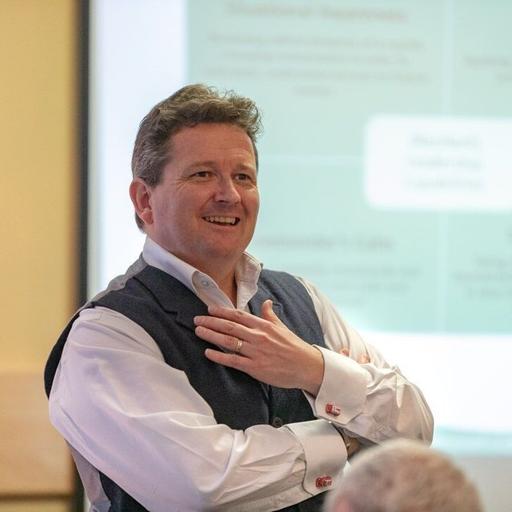
The Resilience Coach | Resilient Leadership Expert
100,000+ People positively affected6,000+ Executive coaching hours£12M+ ROI delivered by RWE npower leadership programme20+ years Learning, leadership and organisational development
Russell Harvey is The Resilience Coach - a resilient leadership expert, executive coach, facilitator and keynote speaker who helps leaders and organisations perform at their best when the world refuses to stand still.
With more than 20 years in Learning, Leadership and Organisational Development, 6,000+ hours of executive coaching and over 70 published podcast appearances, Russell is an experienced and engaging voice on resilience, leadership and navigating persistent change. He has worked with leaders across organisations including Novartis, the NHS, AB World Foods, Kerry Group and The Co-operative Group.
Russell’s work goes beyond helping people simply cope with pressure. He believes true resilience isn’t about “bouncing back”, being tougher or pretending everything is fine - it’s about springing forward with learning and becoming better equipped to lead because of the challenges you’ve faced.
His approach connects the human side of leadership directly to what matters to organisations: engaged people, stronger cultures, better decisions and improved performance. His work has delivered measurable results, including a leadership programme that returned £12 million to the business and a Resilient Leader Programme that achieved more than 1,100% ROI.
In August 2025, Russell achieved his long-held purpose of positively affecting 100,000 people.
More from Russell Harvey
All episodes → Living the Dream with CurveballSpringing Forward: Russell Harvey's Insights on Building Resilience and Embracing ChangeNov 2026Play episode →
 Transformation Station Leadership PodcastTSLP Season 5 Ep. 26- Thriving Is A VerbNov 2026Play episode →
 Embracing Digital TransformationHow to Build a Resilient Team Without Toxic PositivityNov 2026Play episode →
 An Evolving Man PodcastReal Resilience: Why Pushing Through Isn’t Enough | Russell Harvey | AEM #172Oct 2026Play episode →
 Leadership From The Heart | Transformational Leadership InsightsResilience Without the Rebound | Leadership Mindset ShiftAug 2026Play episode →
 Burnout Proof Leadership: Identify Shift and Leadership Skills for Midlife Women EntrepreneursEssential Leadership Skills You Must Have If You Want to Build Resilience & Avoid Burnout When Your Business Gets Hard - with Russell HarveyJul 2026Play episode →
 Your Career JourneyHow to Build Resilience at Work: Leadership, Change & Thriving in Uncertain TimesJul 2026Play episode →
 The ThriveWell Journey | Entrepreneurship, Leadership & Life After DisruptionHow to Build Real Resilience Under Pressure | Russell HarveyJul 2026Play episode →
 Future Fit LeadershipThe 2030 Leader: Why Resilience is Your Most Vital Skill with Russell HarveyJun 2026Play episode →