
June 27, 2023
The Resilient Path to Optimism with Russell Harvey
In this episode
Russell Harvey joins Building a Coaching Culture to talk about resilience, adaptability, strengths, and how leaders can stay optimistic under pressure.
- A strength based approach can help people do more of what they enjoy and compensate for what they do not.
- Resilience includes adaptability, openness to change, and adjusting to different organizational cultures without losing personal values.
- Working on adaptability can help people move toward thriving, not just coping.
- Awareness of weaknesses can lead to habits, help from others, and better ways to handle tasks like detail work.
- Curiosity and experimentation can bring new energy into work and coaching conversations.
Transcript
ShowHide
Automatic captions of the conversation. They can contain errors and do not name who is speaking.
How can you get to a place where you feel optimistic you feel good even though there's lots of craziness going on and you don't have an awful lot of the answers you're still in the good place to be able to face into them you're listening to the building a coaching culture podcast if you need to compete and win in the 21st century labor market as an employer of choice this podcast is for you each week we share leadership development coaching and culture development insights from leading
Experts who are developing world-class cultures in their own organizations here's your host Jr flag hey welcome back everybody I'm J.R flatter and as usual I'm here with my co-host Lucas hello I'm in Las Vegas this week at the society for human resource management conference so you can imagine all the excitement with all these HR folks running around actually 20 plus thousand come to the city yeah it's an amazing show we're here with our distinguished guest Russell Harvey hello hello there's an eight-hour time difference between you
And me Russell so it's just after eight in the morning here and normally when I'm on the west or east coast it's plus five so I'm just assuming it's plus eight so one o'clock in the afternoon for you yeah it's actually it's four o'clock here oh okay so given the time change okay yeah but time zones are they are really confusing even sometimes just the one hour one with Europe which can be so much back and forth of like I thought we meeting at 12. no
I said one and you know it just it goes around in circles forever essentially and then we have daylight savings time oh yeah this is a global cohort it's so I'll just remind everybody all of our listeners and viewers leaders of complex organizations from across the globe different cultures different ethnicities so we we're across Sydney Island now you and others in the UK and yeah so we're struggling with those time zones all the time we teach at five o'clock in the evening on the East Coast
Because it's depending on the time you're anywhere between seven and nine a.m in Sydney so they're getting up and we're finishing our date so uh Russell uh leaders of complex organizations that are trying to compete and succeed in the 21st century in This Global labor market with all of the things going on we're well into the 21st century now almost a quarter of the way through this first century and you have a topic in your life that's near and dear to Lucas and I and that's
All about resilience as my thinking continues to mature and I'm looking at this relationship between resilience and perhaps Grit and vulnerability because we're asked in the 21st century be vulnerable but also we need to be resilient so I want to pass over to you and let you first of all brag about yourself I know that's probably challenging for most of us but tell us about this great work that you're doing that I'm seeing here on your website on your LinkedIn profile thank you thank you well
I'll try yeah so I I'm brilliant I'm amazing now yeah that doesn't work you're like I'm British it's like this did my insides have just turned to jelly you know it's like it is fantastic when you do different work in the states than the UK when you know yes you ask people to just when they walk into the room in the states people come up and shake your hand and go hello this is my name's so and so let me tell you about yourself and in
The UK they're literally just walk in the room and give you a nod you know it's it's brilliant it's amazing so I am the resilience coach you know fancy marketing not any old resilience coach the resilience coach and I describe I am a coach and facilitator that's who I am that's what I do good mate of mine the one who was just talking about off air that went to Vegas with recently it did say it's a bit of a side by the last year of light
You just do all the time Russell which is nice because that was an intention of mine be authentic just be me all the time so how the resilience coach came about so I've always been interested in human behavior I think you know from the moment I could sort of walk and talk I think I've been curious about human beings and why they do the things that they do so it took me a little while to get there but most of my career has been in learning
Leadership and organizational development and how the resilience coach came about is that my last permanent role was at a company called The Cooperative group in Manchester so there are co-ops all over the world and it's a particular way of running the business it's a highly value-based business system which I loved however not long after I joined it it got itself into a pickle financially nothing to do with me but it literally got to the stage where the business was about to just come to an end
And it had been around for 180 years so all of my internal clients literally come to you with their heads in their hands going Russell what what on Earth would do the world has fallen on our heads and I went well there's this word called resilience and there's a lovely an acronym called vuca which I presume that you are familiar with and I went our answers are in there our solution Solutions are in there so in terms of just working with them on actually how can
You get to a place where you feel optimistic you feel good even though there's lots of craziness going on and you don't have an awful lot of the answers you're still in the good place to be able to face into them that's what I was working upon and then when I left the co-op and I did some Naval gazing around it's time to go out by myself which was eight years ago next month it's like who am I what am I doing I went actually you
Know what I am the resilience coach I have spent the last number of years talking about it so how to lead yourself and others well in a full-on crazy world something that I'm having a go at specializing in but also learning all of the time every conversation with every client every company to go well this is supposed to be the answer that does work it doesn't work and if that doesn't work what else could we try living leads married gorgeous wife no kids oh we love
To travel so you know we'll just as much as humanly possible we like to travel on the pandemic did have an impact upon that but now we will be going to Australia in the summer to see family so that's me essentially oh that's today's answer to that question so it's going to be winter when you get there if you're living in your UK somewhere it is yes I made a mistake the other day as I stated when we're out there we have a global cohort and
We were taking a two-week break in July and I made a mistake of saying we're taking a summer break and my Australian friends jumped in and quickly said no no no it's not summer and we really are having a heat wave in the UK right now so I'm really not trying to complain it's just that we were just like a tiny bit of rain please it's like I'm not complaining but the heavens can you could you just give us a little bit of water is all
We want well tell us what a heat wave is in leads because I think it's probably a bit different than something right so it's it's like 28 degrees 29 you know so yes but we're not used to that essentially and some random thing that's just come up on the feed about the wettest place in the United Kingdom their biggest river has almost dried up so we're just like okay that's not good so tell us a little bit about Buca you mentioned that acronym is that a
Central piece of your framework for coaching yeah so I mean I take a strengths-based approach and it is it is really all about working with clients on you know what does a resilient them look like sound like and feel like but then part of that is just trying to get people to think differently about the lovely sentence of change is constant so you know the food could face volatile uncertain complex ambiguous it's it's we're saying change is constant there's always something going on somewhere that could
Impact you at some stage and when you walk into a room full of people and you say change is constant they're just going to go yeah we know and duh and so it's then using the vuca model to go can we really unpick and understand how come their change is persistent there's something always going on somewhere but then the next bit and linking it the resilience is I also say and some things are always going to stay the same so let's have a really great conversation
About what's staying the same as for you and to start with that's actually their strengths their skills their capabilities their attitude or what could they develop that stayed the same that would be really useful really helpful for them really worthwhile that they could always hang their hat on or give them a sense of grounding so even though it might be full-on crazy they can actually go do you know what I am aware of all of these things that have stayed the same or I am working
On staying the same because they're useful to me they're helpful to me they're worthwhile to me and for that for me is how I link the resilient human piece in you know change is constant but actually let's support you about what can we make sure and grow for you that stays the same that's useful worthwhile helps you helps you phase into the world helps you be in this lovely place called thrive rather than just hanging on so there's this huge amount of sort of buzzwords that
I I feel like I use so I I do always try and then to go but what we mean by that is you know because you know thriving coping and surviving I think we sometimes there's a risk that when people are coping and surviving they believe that they are being resilient but sometimes they're not they might be using their some resiliency skills or they might be depleting some of their resilience but actually if they can shift themselves predominantly into a Thrive place then that's where the
True resilience is and that's why I like to Define resilience as springing forward with learning I'd just like to challenge this idea of bounce back you know because you know life happens to us and if we say right that happens and I'll go back to how it was I'm sitting there as a coach going well hang on a minute let's let's just see what you learned from it you know what could you take away from it so to be able to spring forward with learning you
Need from all of dice experiences whether good or not so good to pause and re-energize and reflect and in those Reflections it's the learnings to go actually from my recent experiences what am I going to keep and what am I going to leave behind because it didn't work for me so perpetually finding a way that's useful and worthwhile for you to Spring Forward learning that's for me is where people then get actually into the resilience space in my humble opinion there are a lot of common
Themes between what you're describing and what Lucas and I think and teach coaching we're always thinking about looking forward and growing and I heard you use both of those words you said something that resonated with me where um you're just you all of the time and and we're as coaches we're always trying to cultivate that self-awareness and getting people to you know be recognize their strengths and things that they could learn and grow and improve on so how do you see that self-awareness piece adding in
Like enriching the conversations around resiliency so I have to keep talking about my own sort of personal lived experience so I know that I'm privileged no it is the the white male you know nice lovely family background got a good education things like that you know there were some challenges growing up in the fact that it took me a while to find my Niche so at school education wise just my own sort of teenage version of working out how I like to learn so I went
To grammar school and it was like end of year exams but I did well throughout the year but failed all of my under-year exams it was just working at that early age and sitting in like the Headmasters imposing office at grammar school with like the cape on if you imagine a bit of a Hogwarts said Master it was it was a bit like that and I've been sitting there it was you know brilliant Headmaster but sort of going so Russell how come you failed your exams
And me sort of saying yeah I can't regurgitate all the information I'm not good at exams and they'll tell you all of like you've got to revise and so it just was like three years on the trial being a headmaster's office and going I told you I'm no good at exams and then actually when you could go on to six four more College me making the decision to actually go do you know what continuing to educate myself in the same way is not working for me
So I need to take ownership and responsibility so I remember I went to a college rather than staying at school it's the open day and to sort of see if this was a different type of learning that worked for me and they sort of said we don't do exams here uh it is actually about coursework throughout the year and I remember that I signed up there and then and I rang my dad from a telephone box because mobiles weren't around then I'm old um and I
Said all right I've signed up brilliant and I was excited and I remember as a sponsor at the end of the phone which was like um I thought you were just going to check the place out and and I was like oh no I've signed up I'm coming it's this later I'm doing it so it in my small way you know really understanding how actually uh how I like to learn and what works for me but some of the things that I needed to do and
Then actually career-wise before I realized I wanted to be in learning development doing lots of different roles which weren't quite Learning and Development and felt like I was Batman against the brick wall and then a winner did get Learning and Development roles because when a company goes into trouble learning development is the first to get caught being made redundant six times throughout the course of my career and then it's sort of going okay you know I have to come home and tell girlfriend and then the
Wife right back down to one salary again but all of it was with I know inside me I had a purpose that there's actually a particular way that I want to do this thing called learning development and it took me quite a long time to go actually it's coaching and facilitation you know and it's it just took a while for me to work the hell and when I got there you know I flew I was like ah it's all you know I've gone into place now
And then throughout all of that as you start to do like learning Development Career I did buy into the fact of like well you've got to be a role model you know you you have to when people when you stand in front of others for credibility and you facilitate an event and people sort of say what have you done you have to have good answers for that you know you have to have lived experience good answers around this is what I've done when I had this
Challenge this is how I came about it this is what I was feeling this is what I was thinking so standing up in front of others and talking about your feelings isn't necessarily something that people find easy and they're running a business for eight years that's not dead simple you know it's got its ups and downs the pandemic was a challenge but it's eight years old uh next month is the resilience coach so and most businesses small businesses fail within the first few years so I've
Come out the other side it's grown and it's growing again and and you have to do all those things about being a resilient human to make your business grow and flourish so hopefully I'm role modeling as much as possible around these different aspects of being resilient so you mentioned something a minute ago about your strengths-based approach and this is more from my own insights so maybe for our listeners and viewers I struggle with that because I have some significant stress but I also have some significant
Weaknesses and if I ignore them especially if I'm a one-man show you're you're talking about entrepreneurship and perhaps even working in the freelance Market if I'm starting a coaching business hanging my shingle as we might say in America can I ignore my strengths or ignore my weaknesses just focus on my strengths and how do I do that so traditionally I'm not so sure what it's like in uh in the US but mostly in the United Kingdom when we talk about you know this is what you're
Good at and then these are all your development areas we have the risk then that we spend too much time focusing on the things that we don't like doing and de-energize us and bring us down so that's why I really like the strengths-based approach so and this is a massive light bulb moment a huge amounts of my clients when I say look we're going to do this psychometrical strength scope there's 24 strengths clever people and I have come up with the fact that these things that
Energizes we enjoy doing them so three of my significance uh seven strengths are strategic-mindedness big picture collaboration working with others and developing others being a coach I'm energized by those you know I love doing them so that's me at my best so to start with it is to go to say to everybody find out what you naturally really enjoy doing and do more of that because it builds natural resilience and natural confidence you know then everybody everybody straight away every time you show them they sort
Of there's this wheel of like what their strengths profile is and they've got these lengths of these you know bars whilst it's not about that their eyes go to the short bars and I go oh so that's that's my development and go no no no no stop stop I said to start with forget about that and you go but but I'm surprised because it used to be the case of um these are things that you're really good at so you're good at those so stop doing
Them and focus on these things that you aren't so imagine so this was a conversation there with my dad it's nothing against him but it was a case of like when I was doing my um o levels at school so my high school things and it would sort of say okay so tell us about human biology I loved human biology so I would go oh yeah brilliant Mr Nichols great teacher I I understand Tommy is brilliant I've got this extra homework I'm gonna go and do
It now then you go okay you've got good grades in that tell us about the chemistry oh you've got low grades in chemistry and I would go yeah not sure about that me and the teacher just look at each other and go we know that we both don't get on and don't understand this and on I hate walking towards chemistry and it goes right then okay so human biology you love you've nailed that forget that what we're going to do in the holidays is you're going
To go to chemistry School 's like why why'd you hate me what what have I done you know so you do need to be aware of the things that you don't enjoy doing and so they you know it's limiting weaknesses but then that's when you compensate for them so that's when you purchase some other you ask for help in those moments or you consider how you could bring your strengths to help you with the things that you don't enjoy doing and it's also if you can't
Die over those two things just some develop some habits so the thing that I enjoy doing the least is detail if you ask me to do detail lines like you've burst my balloon and I've withered inside however I'm aware of that uh and go right in this moment of time I'm gonna have to do lots of detail I do have to do it by myself so these are the habits that I put in place you know to help myself to detail in that moment but the
Majority of the time I'm aiming to harness the things that I enjoy doing naturally because I'm good at them and it's me at my best and that is keeping me as much as humanly possible in a good place and it's a massive light bulb moment for a huge amount of my clients they sort of go so you don't you don't want me to work on the little bar no you want me to do more of the thing that I love doing and I go yes and
I go well isn't that brilliant and speaking of resiliency and you know hearing your story of you know this school works for me and this school doesn't I'm watching this documentary about the 2008 Olympic basketball U.S team and they were talking about how their challenge was taking NBA basketball and then adapting to international basketball where there's different rules there's different team structures you know it's almost like a whole different game so I want to talk about are there some aspects of resiliency that's kind of adapting
To the organization and like kind of from that perspective I guess totally so one of the specific dimensions of being resilience is the lovely word of adaptability so the short answer is yes it's it's significantly about adaptability to is part of being resilient and so if you look on my website I've got the resilience wheel so there's seven aspects seven dimensions to being resilient and one of them is adaptability and the resilience well it's just something I put together it's a build upon proper research from
Robertson Cooper and others there's also some research that shows that the adaptability element of being was resilient is slightly more significant because it shows so adaptability is openness to change I'm sure we've you know so it's really considering everybody's listening now about what changes do you like how much you like change which changes you're okay with which changes you're not okay with really understanding that and then the research shows that those people that spend a third of their time working upon their adaptability they actually appeared
To get themselves into this place called thrive that we talk about you know so they're open and they're curious so clearly the fact that the US basketball team was aware that's what they needed to do brilliant great because they didn't go down the route of we're gonna make what we know we're gonna force it upon to these circumstances we know that we need to adapt our experiences to something else because if we don't we'll fail you know so I would guess I would imagine you know
That part of the conversation is you know what do we need to do to win the gold medal so they look at themselves strengths and weaknesses you know how do we compensate for it when are we at our best and well actually we've noticed all the rules are different actually so we're gonna have to be adapting ourselves so organizationally absolutely is an individual organization it is considering how much you want to adapt to the organization's culture that doesn't necessarily take away from your own personal value
System that's the struggle a lot of time with individuals so quite a lot of my coaching clients sort of go I do really like my job but I'm struggling with some of the things the organization does so then we have to talk about their options and choices where they are prepared to adapt where they're not or is this time for them to leave and to find something else that will align more with their values and one of the dimensions of being resilient is also having a
Purpose so it really is actually figuring out what's there because the leader what's their leadership purpose do they know it can they articulate it you know uh you know how much does it link to their life's purpose and the purpose one is really fascinating to me because as part of being a role model around resilience I had to have a purpose you know so mine is by the year 2025 I want to positively affect 100 000 people and right now I'm up to about forty thousand
And four hundred and twenty two ish okay when I started there wasn't the statistics behind it because I was like I don't do detail but somebody said you need to make it smart Russell SM everything has to you know if you've got an object just it's like okay so purpose is a little bit bigger than light objectives but yes I'll put some things to it and then it's really fascinating to just see how people react to that of going gosh have I got a purpose do
You know I know what I'm here for what's the point so it's helpful it's helpful to know what your direction of travel is what your grounding is what gets you out of bed each day how can you do the things that you do you know when you put all this effort and energy into life what's it against what's it for and so I would imagine that the U.S basketball team you know the purpose was to win the goal but at the same time I would imagine
It's also to get the best from each other it's also we enjoy ourselves we want to look back at our experience around we were a good team we've got to know each other I would guess I would imagine so here you are in Leeds and Lucas is in Virginia I'm in Las Vegas and we teach the global cohort and we coach a global cohort so give us your thoughts on cross culture cross-generation an element of it is value systems and purpose what's Collective purpose and Collective
Value system but I also talk an awful lot about what enables an individual or a team or an organization to get to optimistic so we often sort of talk about in challenging times just be positive and that can really turn into the toxic positivity which is you know not what we want to do so I I think you may be familiar with this but the whole optimism piece is coming from the Stockdale Paradox you know hope for the best and plan for the worst that's what
I'm talking about so it's finding some common ground so when you've got cross-cultures and you've got cross Generations you know you get that room of people together and just go when we look each other in the eye and we know each other we understand each other's strengths our weaknesses that we'll compensate for how do we get to optimistic what does that look like sound like and feel like that for me would actually create some common ground and then it really is then an opportunity to celebrate
The differences which I know we talk about an awful lot you know got to have diverse cultures you've got to celebrate the differences so start with we probably don't do enough about celebrating understanding the diversity of thought of different people in the room it's like at any time when you you could lay a problem or lay a challenge or lay a picture or something in front of a room people streaming with people and go what do you see you know we don't do enough of understanding
The various responses to that because straight away that's like ah how come you came to it from that place or gosh how did you see that or your brains thought about it in this way wow isn't isn't that incredible how could we harness that so people listening in terms of the optimism piece is linked to you know change is constant but things stay the same so think about optimism has got to be ingrounded in reality so you know don't bury ahead in the sand when there's
A problem when there's a challenge you've got to get consensus on what the actual challenges and problems are and you've just got to be in agreement not to feel down-hearted or down beaten or depressed around oh my God this is our challenge it's just get some consensus on one what's you know the problem we've got to face then it's all about going what are my strengths skills capabilities experiences behaviors attitude and what's everybody else's they've got and how do we harness all of that so we
Can feel genuinely hopeful about facing into our challenges and as a result of that we get feelings of positivity so and just like for me I quite often walk into a lot of rooms now and go so how optimistic are you and see what happens see where it goes essentially and then I'm picking from there gotta find the common ground essentially and if it's about your strengths and your skills first because if you sort of talked about common ground around climate change that's when it can
Turn into a bun fight between the generations can't it it's going well thanks Russell you messed this up for us and I go yeah no we did I'm sorry well what can we do about it essentially also thinking about that that cross-generational you know different cultures and and things like that trying to gain the common ground as coaches we're talking to the individuals a lot right but we're talking now about like okay how do we go from having a group that's kind of in the storming
Phase to performing well do you do that through individual coaching or is there more of like a group based approach there so it's it's individual and group on both really and it is exactly that it's taken them through those phases you know forming storming norming etc etc realizing as well that it might be persistently changing as well people coming in and out so there's there is a fundamental core that's going on and you know the risk of repeating myself it is probably a good point to
Just keep starking with the purpose and the values what are we here to do how can we've all turned up you know and then from there you'll get to understand people's Passions and enthusiasms and then actually where they would like to um contribute I would also at the same time which I do do with teams and individuals I'm going what does a resilient you or a resilient us look like sound like and feel like it's like you need to map that out as in terms of
A direction of travel you know we take the resilient wheel and go when we've got our wheel as our team in a really good place what we got what's happening what have we done and what falls out of that it's all the stuff you would expect and they won't necessarily use the fancy terminology for it but also say well we'll respect each other you know we'll talk about no idea is a bad idea you know we'll actually really understand each other we'll we'll look after each
Other you know we'll we'll actually understand when they're at their best or they're not feeling great and what they need in that moment and that essentially is psychological safety you know is essentially what you're talking about here we can talk about anything and it's all right we can get on we can we can have a disagreement and it's fine so yeah what does a resilient team look like sound like and feel like and you know make sure they put some markers in the stand and then
It's also about totally making sure that people are comfortable with the feedback around what they are and aren't doing around that so huge amounts of times and say right we've talked about how we're going to have this learning experience and I asked two questions so we've agreed we're gonna do this this is our map of what we're going to look like so I always say are you okay when I tell you all when you're doing that well and everybody goes oh yeah yeah yeah yeah absolutely
Yeah so you're also okay when I share with you and tell you when I don't think you're doing something that we agreed we would do and everybody sort of goes um man okay all right then okay so you have to open that door to go we're gonna share all right we're gonna you know gonna take the lead on it but we're also gonna do a good conversation about how well are we doing what are we not doing we agreed with what's on something on here we
Agreed what we would do and we're not doing it yeah our team does Retros every two weeks and it's what went well what didn't go well and that's really what I want to hear what didn't go well you know what what well is that's easy stuff well so this is where this the strengths-based approach also comes in and trilling trying to get help people on snacks so we have negativity bias as humans as you're you know you're well aware so we do initially want to focus
On what didn't go well but if you can get into the habit and I know previous episode was on habits um if you can get into the habit of asking first what went well but unpicking how come it went well what were the strengths the skills the capabilities the attitude mindset that contributed to this going well you know and really just make sure that's clear then you talk about what didn't and then you have to link the two you're gonna have to say okay so all
Those things that went well and how come they went well how many of those things will be useful in making the improvements in these areas and you the vast majority of the meetings in the world around organizations start with feel free everybody to you know message me if I'm wrong but they start with showers you know the red boxes on the spreadsheets the things that aren't right you know show us where the things are down that should be up you know they start there and then
Suddenly go oh gosh we were told by HR we needed to do celebrate success quick somebody just just somebody tell me something nice I've done well uh I went for a walk yeah great brilliant we've done that one so flip it on its head essentially and even if there's only one thing that's gone well start there really understand how coming went well and then see anything there that will help us with what hasn't um yeah Lessons Learned is brilliant it's like how well do organizations do
Lessons learned so my last question I'm really intrigued by this relationship between resilience and purpose and I think it speaks very loudly to me personally I'm in the Fifth Act of life if you read Shakespeare I was a lover and a soldier and now I'm a Justice telling stories for a living I got my spectacles here like round belly as I went from fourth to fifth so I stepped out of the CEO chair five six seven years ago I really struggled with who am I now
What do I do now and I got through that with a coach a lot of introspection so talk to us in your coaching practice of that when you come across someone that's struggling with resilience and has a lack of purpose what does that look like so what it looks like is I think potentially what you experienced it's either they are behaviorally coming across or they're specifically overtly saying the sentences of I don't know what I'm doing I don't know why I'm doing it I feel all
At Sea and I'm not sure what the point is I'm questioning everything so anxiety in some shape or form is is coming to the fore worries concerns so that's first of all it's about recognizing that it's then supporting them to tell the story of their chapters and there are also an awful lot of the time in terms of career coaching clients come to us because For the First time ever they didn't get a job role they went for or for the first time ever somebody's tapped
Him on the shoulder and gone you know go and talk to a coach you're a bit broken it's like what okay that's how a lot of clients come to coaches as well so you have to unpick that or they had their last performance review and they just weren't interested in it or they just come away and gone you know what that far in the belly or why I'm doing it it's like yeah it's gone essentially so then you have to unpick when they did have their
Version of a purpose and it's actually a lot of the time you know people don't talk about this word purpose and you know a lot of the time you talk to people why do why do you do something saying well I do it for my family you go yeah great absolutely and so that's something where you have to build upon it you know so we have to find the sort of you know the right questions to help them sort of tease out what gets them out
Of bed each day and what do they enjoy doing how come they enjoy doing it one of the great questions to ask which they also have to think about is give us some examples in your life when you felt proud of what you've done you know you don't necessarily have to have led it it could have been part of something you could have even been on the periphery of it but it gave you a warm fuzzy feeling inside you know and try and think of some
Examples about when they've had that feeling of sort of Pride worthwhile and then you work with them and I'm picking in terms of what were they doing what was their role in that in that story and then what behaviors what skills what strengths what conversations what experiences they have and then you'll have some common core around it you'll have some common themes and that could or most of the time enables them to say actually I've understood I've gone looked at the past and understand actually what
My purpose is and Yes actually I can rekindle that going forward in this new place this new role or actually that purpose is really not relevant anymore however by talking about the old purpose not relevant do you know what I think a bit of a new one is just beginning to emerge around actually what is important to me and what is you know relevant to me and then you can ask other questions as long as they don't sort of sound morbid but you know what you
Want people to say about you when you're gone you know those types of things if you were to write your own eulogy you know what would you like on it you know if you want to tell the story of the fifth chapter of your life what you want that to be you know when somebody's talking about it with sort of bright eyes and enthusiasm or they're talking about it positively emotively what do you want those emotions to be those could be ways that they would sort
Of tease that out you see your mind's definitely going there J.R if you're thinking about some of that oh yeah I have a full page of notes already Russell so uh our tradition is Lucas gets asked the final on the record question so we'll chat a little bit after we turn the recording off so you talked a lot about um in that answer you know finding things that you're proud about things that kind of give you that joy that that feeling of fulfillment and I've noticed
That in my life um kind of embracing things that are outside of work in my personal life Hobbies things like that like music art things exercise those have kind of enriched my professional life because I can kind of okay I can go and do these things that I find enjoyable and then kind of picked pieces and help you know maybe give me some perspective so I'm curious uh Russell do you have any hobbies or things outside of your profession that you find that kind of feed
Into your abilities as a coach yeah you know it's a funny one uh Hobbies because I am I am because I don't necessarily have like a real specific hobby there are lots of things I like to do so if everybody's listening now I I have been searching for a couple of years for like I'll just give me some ideas about another hobby that I can do so I read books I love spending time with my wife I like to travel I have a push bike as
A local Canal to us so go out on that when I feel like it genuinely you know like spending time with friends just that social interaction is there so whilst it might still felt sound like work I've got my own podcast I'm part of a radio station as well and it it's just these are these are things that I do then all of them sort of energize me and in me doing them I'm probably doing some permanent self-reflection and go oh yeah I can bring that
Back into you know the job role the next coaching conversation that I do but I do I did play instruments as a child but I didn't you know play the piano and trombone but didn't keep those going my mate that I've talked about uh Richard that I went to Vegas with recently he has recently just taken up singing he's in a choir I'm not entirely sure if anybody really wants to listen to my singing voice my wife's a great singer but that's made me sort of
Um think of something um I did as a child growing up also Richard was by that was in an amateur Dramatics group so theater Club so my wife I have done theater at times so some of these things might come back I don't know I've got a potential idea and if you see one of those things if you say out loud you'll see but I didn't know whether to go down the comedy stand-up learning you know genuinely to sort of because I do a bit of
Public speaking to just actually try and make that better that would be my reason for doing it you know I absolutely have no idea whether I'm funny or not you know that's not why I'm doing it but I was like I just want to understand a bit more about Ashley what what's what's comedy what what is that because maybe I could bring it in and enhance some of the things that I do so I have enough going on at the minute that I bring back but
I am on I am always on a bit of a Perpetual search to go huh why else where else could it be no totally that search and that experimentation is totally what I'm trying to get at I think just I think it's amazing that like uh 50 year old man might take up like karate lessons or something you know something just completely out of left field yeah no yeah I don't I don't not don't think that's going to happen I think the comedy things have fit
Fairly left field to go right then you know I'm a little bit later in life with it yes I also have the belly I do like the occasional drink so let's go on stage and see what fun I can make of myself be vulnerable there you go that might be it yeah I'd pay a few pounds to see that Russell let us know when and where okay all right well that's gonna be streaming online actually for millions of people that concludes this episode of building a
Coaching culture I truly hope that this episode was helpful to you if it was be sure to follow us wherever you listen to podcasts maybe stop and give us a rating or review and share this podcast with someone who might find it helpful as well thanks again and we'll see you next time
About Russell Harvey
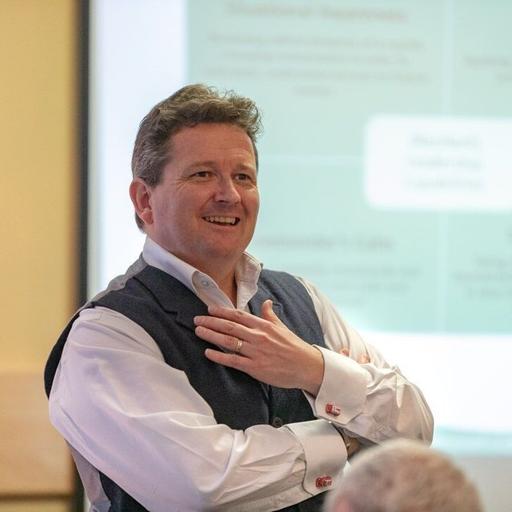
The Resilience Coach | Resilient Leadership Expert
100,000+ People positively affected6,000+ Executive coaching hours£12M+ ROI delivered by RWE npower leadership programme20+ years Learning, leadership and organisational development
Russell Harvey is The Resilience Coach - a resilient leadership expert, executive coach, facilitator and keynote speaker who helps leaders and organisations perform at their best when the world refuses to stand still.
With more than 20 years in Learning, Leadership and Organisational Development, 6,000+ hours of executive coaching and over 70 published podcast appearances, Russell is an experienced and engaging voice on resilience, leadership and navigating persistent change. He has worked with leaders across organisations including Novartis, the NHS, AB World Foods, Kerry Group and The Co-operative Group.
Russell’s work goes beyond helping people simply cope with pressure. He believes true resilience isn’t about “bouncing back”, being tougher or pretending everything is fine - it’s about springing forward with learning and becoming better equipped to lead because of the challenges you’ve faced.
His approach connects the human side of leadership directly to what matters to organisations: engaged people, stronger cultures, better decisions and improved performance. His work has delivered measurable results, including a leadership programme that returned £12 million to the business and a Resilient Leader Programme that achieved more than 1,100% ROI.
In August 2025, Russell achieved his long-held purpose of positively affecting 100,000 people.
More from Russell Harvey
All episodes → Living the Dream with CurveballSpringing Forward: Russell Harvey's Insights on Building Resilience and Embracing ChangeNov 2026Play episode →
 Transformation Station Leadership PodcastTSLP Season 5 Ep. 26- Thriving Is A VerbNov 2026Play episode →
 An Evolving Man PodcastReal Resilience: Why Pushing Through Isn’t Enough | Russell Harvey | AEM #172Oct 2026Play episode →
 Leadership From The Heart | Transformational Leadership InsightsResilience Without the Rebound | Leadership Mindset ShiftAug 2026Play episode →
 Burnout Proof Leadership: Identify Shift and Leadership Skills for Midlife Women EntrepreneursEssential Leadership Skills You Must Have If You Want to Build Resilience & Avoid Burnout When Your Business Gets Hard - with Russell HarveyJul 2026Play episode →
 Your Career JourneyHow to Build Resilience at Work: Leadership, Change & Thriving in Uncertain TimesJul 2026Play episode →
 The ThriveWell Journey | Entrepreneurship, Leadership & Life After DisruptionHow to Build Real Resilience Under Pressure | Russell HarveyJul 2026Play episode →
 Future Fit LeadershipThe 2030 Leader: Why Resilience is Your Most Vital Skill with Russell HarveyJun 2026Play episode →
 Different thinking for Different Time - Mindset Change and Thought LeadershipDifferent Thinking for Different Times - 7 Keys to Building Resilience with Russell Harvey How to Nurture a Resilient Mindset in Business and LifeMay 2026Play episode →