
January 31, 2024
Season 2: Ep 2 - How to become more resilient

Listen
Sound bites
Resilient people are able to get themselves through to this other side of thriving.
In this episode
Russell Harvey talks about resilience, failure, and how to move forward after setbacks on London’s Leadership Podcast.
- Resilience as springing forward with learning, not bouncing back to the old normal.
- Failure as unavoidable, with value only when it becomes part of learning and reflection.
- Fear of failure can stop people trying, even when they have gifts and talents to offer.
- The resilience wheel includes attitude, beliefs, purpose, confidence, and energy related habits.
- Six redundancies preceded the creation of the Resilience Coach, with timing shaping that path.
Transcript
ShowHide
Automatic captions of the conversation. They can contain errors and do not name who is speaking.
Hello everyone, and welcome to London Leadership Podcast. Today I'm with Russell Harvey, who's a resilience coach, and over the past few weeks you've been talking about this sub this topic of failure, how we can view failure, how we can overcome failure, how we can look at and think about a fear of failure. So today we're going to continue talking about that. But Russell, tell us what does it mean to be what is it? What is a resilience coach? Well, yeah, you know, marketing wise, it's it's the resilience coach. Fernando, It's not a it's just not any old resilience coach.
On Yeah, it's the resilience coach. So yeah, what does it mean. It means that I have a very privileged life life in terms of supporting clients. That's one of the things it means. You know, I had a great coaching session with client this morning. It was in Chang Mai in Thailand, doing loads of traveling because they've shifted from being stuck in an absolute rut to completely transforming what they wanted to do with their lives. So seeing something with this huge smile on the face, that's what it means is incredible.
It means that I get to think a lot about my own personal resilience, so you know, the old physician healed myself. It means that I've meant a lot of time going, oh am I doing how many of these things am I doing that I'm sort of talking to my clients about? And yeah, it gets to essentially get to do the things that I love doing, of like supporting people to work through their challenges and get into this place called thrive. Really, rather than believing that resilience is predominantly about coping and surviving, resilience is more about shifting, really shifting into life might be challenging, and I can generally say that I'm feel like I'm thriving.
I'm in a good place essentially. So if the resilience is not just coping and surviving, but thriving in the midst of adverse circumstances, is that what you're saying, Yeah, it is, it is. There's just there's been a little bit over these sort of decades or centuries around resilience, like sometimes people feel that they're only being resilient when essentially we're sort of they're hanging on you know I'm getting through and myself and many many others actually would like people to understand actually is a bit more than that.
You know, there are times in life when you absolutely are coping and surviving. However, they are resilient people and able to get themselves through to this other side of thriving. Resilient people are able to get themselves through to this other side of thriving. Great, well, I think that's incredible to think about. So let's think how do we how do we build a resilient mindset that's able to get through to the other side of thriving. What would you say, I like key components for someone to build a resilient mindset.
I do this sport called CrossFit, and it's filled with adverse moments and circumstances and daily having to get through it and not just cook and survive, but thrive in the midst of it. But what would say, like in life? Yeah, yeah, so there's so there's how I define resilience me personally, which is about springing forward with learning. So it's not about bouncing back for me, because we can't go back, you know. So I appreciate it to play on words, but is sometimes what I observe in people is like, Okay, so I'm going through a challenging event, I'm facing to life, and now I'll bounce back, and it's like, it's just a risk risk that you're going to I'm going to go back to how I was.
When people are not sort of saying when it gets back to normal, it's like, in the nicest possible sense, it never will ever. Yeah, there will always be things that will be coming along. So the simple thing is about how I define as it is springing forward with learning. And then the more long winded answer, which we haven't got time for today, is it's not about one singler thing. And if it's okay, I talk about the thing called the resilience wheel. It's seven aspects on it. It's on my website. And so if you want to build a resilient person, the short answer is get the seven aspects of your wheel into a good place and then they're all interconnected and they'll help you to thrive.
Well, you might as well go and just talk us through just to mention the seventh, but just to say I do think that springing forward with learning is an incredible way of thinking about resilience. Rather than bouncing back. Because yes, because I think you're defining it as that resiliency are I'm moving forward instead of resilience, I'm going backwards. No, in the midst of this, I'm going to learn from this and move forward, which is I think, really it's a real different mind shift of hard to view it. But go on, what are the seven I think that's interesting.
So this is a build upon the old of research from Robertson Cooper. So the heart of resilience is our attitude and our beliefs. Then you've got resilient people have a purpose. So mine is by the twenty twenty five to positively affect one hundred thousand people, and right now I'm up to forty three two hundred and twelve ish. Then there is the word of confidence, so resilient people work on and build their confidence. There's the word of adaptability, which is openness to change. And then the research also shows that those people that spend a third of their time working upon their adaptability they get into thrive.
Then is the support network. Who have you got in your life that is supporting you your balance of radiators and drains, and what are you doing about those people that you might be draining you. Then there's the internal storytelling we do as human beings. So the meaning that we attach to events, how we describe lives events to ourselves, is that in a spring forward with learning approach. And then there's this word energy, which is about playing to your strengths, things that you naturally energize, buy, It's about your diet and exercise, It's about how you recuperate and reenalergize yourself.
Is about your circadian rhythms and your bi rhythms. So when you get each of those seven aspects of your wheel into a decent place, then you can have this real fantastic sort of resilience s glow around you that will enable you to face into lives of events. Brilliant. Well, I would encourage everyone to go on this website and the Resilience Coach dot co dot uk to find those seven aspects of that will. But okay, so let's so resilience, your definition of resilience is springing forth with learning. Okay, so how do we how do we think about resilience?
How do we think about failure through the lens of resilience, Like what would be your what would be your definition of failure without trying to be facetious. So I was thinking about this before talking to you today. It is the definition. So absolutely I'm not I'm not of the mindset like there is no failure. We absolutely there is, and there's also what's our opinion of it? How do we feel about it? You know? How okay are we with this word failure? Whenever we say it? Are we? You know that you're not going to be in just two camps.
But if you need a camp of like failure makes me bad, negative self talk impacts and confidence, you know, then that feeds the negative. If you can get yourself into the mindset of you know, this went wrong, but okay, it went wrong. Are always going to go wrong in life and literally every single day, all day, every day is an opportunity to learn and then move forward with it. So it's for me whilst failure exists and you must fail, you must get things wrong because that's the only way that you're going to learn. It's not about having any negative connotations around it.
But the real challenge around that, though, is that we have a negativity bassis human beings. So apparently fifty thousand thoughts to day over half of those are negative. Ninety percent of our thoughts are from yesterday, and over half of those are negative. So our spring forward learning in our reflections, in our discussions, conversations, reflections around what's gone wrong, our failures. It's about actually, how do we strike a balance between you know, learning from it and churning it into reframing it and something good and understanding that we're going to have a bit of a negative look at it.
But how do we stop ourselves from getting into a negative spiral? How do we stop ourselves from getting into a negative spiral? Self talk? Fifty thousand thoughts and half of those are negative, half of those from yesterday's and half of those are negative. Negative. That's crazy, okay, So yeah, it's changing our view of failure because we will have to fail eventually otherwise that that's how we learn. How how would also I also find that people, including myself, we have a fear of failure like that actually prevents us from even attempting the thing, so that we don't need we don't fail, but we don't win anyway because we're scared of failing, So we don't try and we don't move forward.
How can we how can we be how do you think people can be resilient with their fear of failure? Because I feel like people have so many gifts, talents and things that they're just not putting out there because they're too afraid that it won't go well, that it won't succeed, So they don't even try. And that's like a fear of it, and that's failing in and of itself because they don't accomplish what they want to do either way. No, So it's about sort of where you want to start on the resilience wheel, about approaching this thing of fear of failure.
So, you know, confidence is one of the aspects of the wheel. You could spend some time actually thinking about, Okay, how do we in general I build my confidence? But actually, if your starting point is like what if I get, you know, looking at confidence wrong, that's going to get in a way, that's going to interfere. So you might want to redefine your purpose. You might want to really spend a lot of time doing some things that are playing to your strength. So it's making a choice about where you might start on the wheel to task all this fear of failure, because they're all interconnected.
When you get one aspect of the wheel into a better place, it has a positive impact on the other aspects. So sometimes how I support clients to do something with the confidence, it's not really ever go anywhere near it is, you know. Or if like somebody says I've got a fear of failure, it's like, well, let's look at loads of other stuff first and then see what that does to your fear of failure. Sometimes it then sort of cracks that nut or the better analogy, But other times you have to then then it's a bit more of the analysis around.
Okay, so where'd it come from? Where did it start? What was the first thing? Can you remember back through time of like what was it that meant that you certainly created this belief that you know you're now good at things. Sometimes you have to go back to the root cause m yeah, fascinating. I find that fear of failure often prevents me, So I'm constantly trying to push against that and do things that I'm afraid to do, or do things that I kind of don't want to, like not don't want to do, but I know that I'm going to pick me outside of my comfort zone.
So I'm not so afraid of them. Yeah, so it's about you could sort of sorry, I mean to talk over fand it's about so the strength based approach is and then this may or may not work for you. But another option that you can go with is, you know, make a list, do a mind map, talk to loads of people, you know, do a spider diagram of literally everything that went right, anything you did succeed with, you know, and really create a college, create something, add music to it, science, sound, smells, whatever, you know, really build something to let yourself know that actually you do achieve things.
So what are all the things when it's like you've achieved it, you've been successful, and that might give you a sense of sort of grounding. Actually, do you know what? There are lots of things that I've achieved and I am getting a feeling I feel like I want to have a go at something else, and I don't have quite so much of like a self talk around it of this could go wrong. Actually I've got a self talk around in it of actually I know where this could go right? Hm hm, really good. Yeah, self talk. I find it interesting that's come up quite a few times with recently with people I've spoken to our own self talk into these situations.
All right, Well, last question, if if it's all right, what what what? What would you say? Russell has been your your biggest failure, and but how has that failure shaped you to become who you are today? So I was really thinking about this because this too, I'm lucky because I'm in that place of what I understand failure that exists. I don't view any of those things as failures. However, answer your question, what what have you What have you sprung forward with learning from? Yes, the biggest thing is probably learning forward from learning with Yet it's probably so I've been made redundant six times in my lifetime.
Wow, And it was the seventh time that from that that the Resilience Coach was born. So you know, my learning is so it's like, you know, I've made redundant, got sacked, lost a job. Those are phrases that I could say, but it's like and I'd forgotten all about it. Essentially, I was telling the story about how the Resilience Coach came from when it was the face of fact that yeah, the seventh time I was made redundant, That's when the timing was all right to create the resilience coach. But what I learned was I wasn't ready.
I wasn't ready for the other times. I could have created the resilience coach after the first, second, fourth, or fifth time, but I wasn't ready, you know, So timing was right. So yeah, So my biggest learning is like it is about the timing essentially around all of those experiences. And I've had to pick myself up from six redundancies, you know, one go out and job search again and do that thing, have come home six times and go right, then we need to change our circumstances because one of our wages is gone. Really good.
Thank you so much for sharing that. I think that's really insightful that. Yeah, the things that you sprot sprung forward with is learning your definition of resilience six seventh redundancies. I think people would think, oh, that's really difficult, but actually out of that was born the resilience coaching. And often when we're going through the difficulty, when we're going through the adverse circumstance, we can't see how it's or the failure, we can't see how it's working out. But on the other side of it, you look back and you realize, Wow, all those things work together for the good.
There's a there's a scripture in the Book of Romans that says all things work together for the good and it's and I think it's the similar thing from what I'm hearing you say with it with failure that in the moment it doesn't feel like it, but we learned from it, we move forward and we get better. That's it to bring forward learning, Fernando. That's it. Well, thank you so much Russell for your time today, and thank you so much everyone for listening today on lon Is Leadership Podcast. Remember to go on www. Resilience Coach dot co dot uk to find out more about resilience and from Russell.
But thank you so much Russell for your time today. Absolute pleasure. Crenando loved talking to you. Thank you for having me on GYD. Bye.
About Russell Harvey
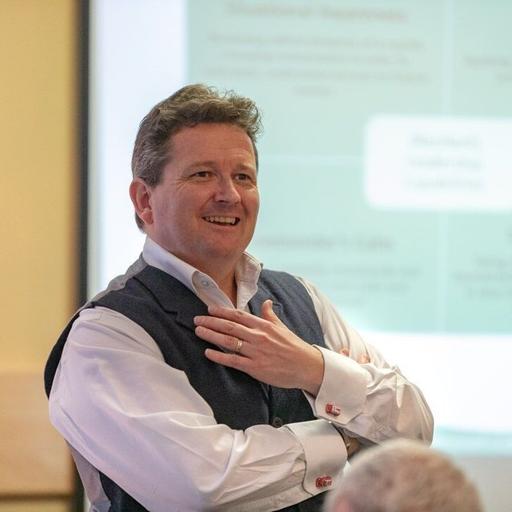
The Resilience Coach | Resilient Leadership Expert
100,000+ People positively affected6,000+ Executive coaching hours£12M+ ROI delivered by RWE npower leadership programme20+ years Learning, leadership and organisational development
Russell Harvey is The Resilience Coach - a resilient leadership expert, executive coach, facilitator and keynote speaker who helps leaders and organisations perform at their best when the world refuses to stand still.
With more than 20 years in Learning, Leadership and Organisational Development, 6,000+ hours of executive coaching and over 70 published podcast appearances, Russell is an experienced and engaging voice on resilience, leadership and navigating persistent change. He has worked with leaders across organisations including Novartis, the NHS, AB World Foods, Kerry Group and The Co-operative Group.
Russell’s work goes beyond helping people simply cope with pressure. He believes true resilience isn’t about “bouncing back”, being tougher or pretending everything is fine - it’s about springing forward with learning and becoming better equipped to lead because of the challenges you’ve faced.
His approach connects the human side of leadership directly to what matters to organisations: engaged people, stronger cultures, better decisions and improved performance. His work has delivered measurable results, including a leadership programme that returned £12 million to the business and a Resilient Leader Programme that achieved more than 1,100% ROI.
In August 2025, Russell achieved his long-held purpose of positively affecting 100,000 people.
More from Russell Harvey
All episodes → Living the Dream with CurveballSpringing Forward: Russell Harvey's Insights on Building Resilience and Embracing ChangeNov 2026Play episode →
 Transformation Station Leadership PodcastTSLP Season 5 Ep. 26- Thriving Is A VerbNov 2026Play episode →
 An Evolving Man PodcastReal Resilience: Why Pushing Through Isn’t Enough | Russell Harvey | AEM #172Oct 2026Play episode →
 Leadership From The Heart | Transformational Leadership InsightsResilience Without the Rebound | Leadership Mindset ShiftAug 2026Play episode →
 Burnout Proof Leadership: Identify Shift and Leadership Skills for Midlife Women EntrepreneursEssential Leadership Skills You Must Have If You Want to Build Resilience & Avoid Burnout When Your Business Gets Hard - with Russell HarveyJul 2026Play episode →
 Your Career JourneyHow to Build Resilience at Work: Leadership, Change & Thriving in Uncertain TimesJul 2026Play episode →
 The ThriveWell Journey | Entrepreneurship, Leadership & Life After DisruptionHow to Build Real Resilience Under Pressure | Russell HarveyJul 2026Play episode →
 Future Fit LeadershipThe 2030 Leader: Why Resilience is Your Most Vital Skill with Russell HarveyJun 2026Play episode →
 Different thinking for Different Time - Mindset Change and Thought LeadershipDifferent Thinking for Different Times - 7 Keys to Building Resilience with Russell Harvey How to Nurture a Resilient Mindset in Business and LifeMay 2026Play episode →