
February 16, 2024
The Resilience Leader: with Russell Harvey

I always define resilience as springing forward with learning.
Sound bites
My leadership philosophy, it is the strengths based approach. It's that, essentially. And I think I might have said the why already, essentially. But it's like, you really want to support people to be at their best.
In this episode
Russell Harvey talks about resilience, VUCA, vulnerability, and strengths based leadership for leaders facing uncertainty.
- Resilience framed as springing forward with learning, not just coping or hanging on.
- Leadership purpose and life purpose used as a way to drive motivation and engagement.
- Situational awareness built through regular conversations about what people have seen and heard across the business.
- Vulnerability centered on saying I don't know and accepting the limits of having all the answers.
- Strengths based leadership favored as a way to help people be at their best.
Chapters
Written from the transcript. Pick a chapter to play the episode from that point.
Transcript
Automatic captions of the conversation. They can contain errors and do not name who is speaking.
Hello and welcome to the All Things Leadership Podcast, where we bring together accomplished experts to share their diverse perspectives, compelling stories and insightful lessons on effective leadership and personal growth. So whether you're a seasoned executive, navigating the corporate world or an emerging leader on the rise, this podcast is your go-to resource for valuable takeaways to fuel your success along your leadership journey. I have with me a very special guest, Mr. Russell Harvey, who joins us from the UK to talk to us about VUCA and Resilience.
Russell has over 20 years in the leadership development and coaching space, and we're gonna have a really good conversation about how you can use VUCA or what lessons you can learn from resilience as you build your leadership journey. Russell, welcome to the All Things Leadership Podcast today. Thank you, Fred. It's brilliant to be here. Thanks for the introduction and hello to everybody that's listening. Yeah, looking forward to see where our conversation goes. That's right. It's gonna be a fun one and I'm looking forward to it.
Russell, tell us a little bit about your background and what you've done over the years and why you happen to be working in the space. Yeah, so pretty much, yes, most of my career has been in the learning leadership, organizational development space. So today in 2024 and probably for the last couple of years, I've just described myself as a facilitator and a coach. It's essentially, it's who I am, very nicely got a bit of feedback from a mate one time to say, look, you just, yeah, you all the time. It's Russell, it's a coach.
That's who you are, which was very nice to hear. And I've specialized probably the last 14 years around this word resilience. Hence, the company is The Resilience Coach, not any old resilience coach, The Resilience Coach. And that has also meant that another an acronym of VUCA also gets utilized in the things that I talk about. So I absolutely, my intention when working with all clients is really trying to get them to reconnect with what resilience means to them. And I always define resilience as springing forward with learning.
So that's what I would like the people that I support to get their head around and get their heart around, springing forward with learning. And what does that mean to them so that they can actually be truly resilient? I get a bit concerned that at times people believe that if they're just coping and surviving or just hanging on all of the time that they believe they're being resilient. And it's about how can we predominantly shift people into a really good place, i.e. thriving, even though there might be a lot of things that are going on in their lives, but they can genuinely turn around and sort of go, okay, no, but I'm good.
There's a lot going on and I'm genuinely, I'm in a good place. I love that springing forward to learning as we're chatting earlier, Russell, before we started taping here, I consider myself as a lifelong learning enthusiast because I realized that learning is one of those things that never ends, right? I mean, regardless of how many degrees you have or how books you've read, learning really never ends. It's an ever-changing, ever-continuing dynamic of life. Why does resilience, and we've heard about resilience in life and having fortitude, overcoming adversity and all of that which we get.
Why is springing forward to learning or this whole thing about resilience important in your field of leadership and personal development? For me, resilience is about the human condition. So the heart of resilience is our attitude, it's also about our beliefs, it's about our value system. So that's something that's often talked about in the leadership space. You need to get one of the dimensions of being resilient is having a purpose. So it's really good to connect with leaders and ask them the question of like, what's your life purpose and actually what's your leadership purpose, essentially, and a lot of the time, my clients do look at me quizzically and go, hmm, right, so anybody that's listening now, it's a case of can you reasonably easily state, write down, what are your life's purpose or your leadership purposes?
If you can't, there's a massive opportunity there to create one for yourself. Actually, then that will drive you and motivate you and energize you and engage you. Yeah, the reason that resilience is really relevant to me is before I set up the Resilience Coach, I'd worked in corporate and public, private, mutual sectors and the last business that I worked for as a leadership coach, it got itself into a serious set of difficulties. All of the internal clients I supported will come to me with their head in their hands going, what on earth do we do?
I said, well, there's this an acronym called VUCA and there's this word resilience, and our solutions are in there. Our way forward, our feeling better about this, a route to optimism, it's all in there. Then when I left that role and set up by myself and did the naval gazing of like, what's my USP? What's my business going to be called? It went, you know what? What I've been doing the last few years is the resilience. I am the resilience coach and it just connected with me essentially. It's who I am. I love that you talked about finding or answering that question about leadership purpose and I find that intriguing because many folks happen to find themselves in leadership, right?
In some of the corporate places where I work, you know, you find someone, because they're good at numbers, because they're good individual contributors, they make them leaders and then they get into the realm of leadership and realized, oh, I wasn't prepared for this. How do I do this? Right? And that has been one of the problems that I've been seeking to solve, which is what led me to, you know, becoming a leadership development coach myself, to ensure that we're equipping leaders or people with the tools and resources they need.
So when they get into those leadership roles, they're ready, right, and not having to go back and, you know, how do I, you know, learn how to communicate hard, well, learn to deal with my teams and all that. So I find that in some cases, people are doing it backwards. And your goal, my goal, our purpose is to help people get it right, right, get prepared, get ready. So when you find yourself in that leadership position, you don't find yourself wanting it's often a head scratcher. But going back to that leadership purpose, why is it important, Russell, for us to answer that question?
What is your leadership purpose? Why shouldn't we just go with it and wing it and just try and fill? Why should we seek to answer that question? So I suppose it's from personal experience. So there are, so I always talk about the resilience wheel, if you're going to ask me the question, how do I build my team or resilience? I go, look, there's this wheel thing, which I have that I utilize with clients. And as I've said, one of the dimensions of it is having a purpose. So my personal purpose is that by the year 2025, I want to positively affect 100,000 people.
And right now I'm up to about 44,212-ish, you know, and positively effect is that when as much as possible, people will engage with me, they learn something, okay? So I'm leading up to answering your question more properly. So I now have this purpose that gets me out of bed every day, helps with all of my decision making, helps me feel good about myself, helps me understand actually what it is that makes me tick and what drives me, what motivates me. So every single time that somebody is positively affected by me, I can see that actually they've learned something, they've got an aha moment, a lightbulb moment or a realization moment.
It like it, you know, it gives me a warm and fuzzy feeling in my heart and my gut. And I go, actually, do you know what? That's been worthwhile. I've done something to support somebody, so that meets my value system. But it helps me make great decisions about the clients I do and I don't support. And so it helps me understand what I say yes to, what I say no to in work and in life. And it also helps me understand actually how I need to be and how I need to look after myself to be able to do all those things. So I feel energized, significant amounts of the time because I am living to a purpose.
So hopefully that answers the question. If people are being a leader, going back to your comment of like, still, you know, huge swathes, tens, millions, even billions of people fall into line management slash leadership. I just know over the decades have been supporting line managers and leaders. When they do connect with a purpose around their leadership, they find it an awful lot easier and nicer and enjoyable and pleasant. And so does everybody around them. And, you know, they meet their targets and their KPIs and the statistics that they're supposed to meet.
They find them slightly easier to do or they actually understand actually the way in which they can achieve this. And a huge part of the purpose is getting people to understand what their strengths are. So that and so we'll talk, I'm sure, about more about that later. But I hope that answers the question. I know it does. And I love that because oftentimes answering that purpose question is general, right? What's your life purpose? And so we tend to know, you know, what's your life purpose? It's to be this. But I haven't quite heard it the way you explained it, which it's brilliant, by the way, tied to leadership.
I agree with you, Russell, 100 percent that, you know, when you tie that purpose to leadership, you become more effective leader, you're able to make more impact significantly, like you rightly said. So absolutely spot on there. Let's talk about VUCA, V-U-C-A. And I'll admit that it's interesting that VUCA had been around since 1987. I didn't even realize that until I heard about it a couple of years ago through a training or a workshop. We're having a warm presenter came in and started talking about VUCA. And I thought about something they coined, but I realized this has been something that's been around for about two decades or close to three.
But I think it's become more popular given what we've had to go through over the past couple of years, the pandemic and all of that. But let's talk about VUCA. First of all, what does VUCA mean? What does it stand for? Yes. So the world we live in is volatile, uncertain, complex and ambiguous. Nicely, there's also VUCA Prime, which goes alongside it. It's like a counteraction to it. To deal with volatility, uncertainty, complexity and ambiguity, you need vision, understanding, clarity and agility. Now, to start with, I absolutely appreciate that it's just throwing a load of buzzwords out there.
However, I have found that it is a really great way to approach differently the sentence of change is constant. So why I like it is that I've facilitated and I've been to many workshops, so change is constant. You need to be adaptable, you need to be flexible. You need to be resilient. So people need a lot of support with, what on earth does that mean? For goodness sake, you know? So when you unpick these eight buzzwords, and then there are peak performance skills and leadership capabilities alongside them, loads more buzzwords.
However, when you get people an opportunity to sort of unpick all of that, understand what it means to them, then they can absolutely face into this idea that change is constant, far more easily. They can approach it with optimism. They can actually understand what they can do about it, and they don't just have to sort of sit there and just go, oh my God, you know, what do I do? It gives them lots of tips, tools, techniques, ways, attitudes, skills, capabilities, behaviours to go, ah, right, the world is always going to be a bit full on, a bit mad bonkers, a bit crazy, and I actually can accept that with good grace, and I actually know what I'm going to do, how I'm going to face into it, how I am going to thrive in this full on, always on world that we talk about.
That's why I like it. For me, it's a much better way of actually doing something about this sentence of change is constant. Because sometimes people just will say, suck it up. I go, well, it's not really supporting people to be at their best, to say just, okay, suck it up, change is constant, crack on. It's like, nah, that's not going to help people or leaders or humans be at their best. Yeah, that's a lot of background there, Russell. So how then do we as leaders, most cases, we don't even understand the changes that we're going through, what's happening to us, let alone prepare our teams to move along the right way or adapt or whatever.
But what are some ways that we can get ready for change? I mean, it's not the pandemic happened, no one had it coming, no one saw it coming. And then within a couple of months, the whole world have changed, right? How do we go through? I mean, that's an extreme case, but change happens all around, right? We're not sure what's going to happen here in the next hour, next two hours, let alone dealing with something as significant as that. But are there ways that we can position ourselves to be able to deal with change in a much more effective manner?
Yeah, so there's a couple of things to bring to mind. It's sort of, essentially, everything I'll do, Fred, and you, is the answer to that question. But I'll go with a couple for now. So I'm going to talk about, I've said optimism a couple of times, so optimism and one of the many additional sort of buzzwords around the workplace is situational awareness. Okay, so let's start, so step one is that you do need to be engaging with your personal resilience, you know, state in the obvious, I understand, and I know I'm biased because of what I do, but it is actually making the decision and the choice to sort of engage with building your resilience because it will just have lots of exponential benefits.
So, optimism for me is trying to counteract this idea of like toxic positivity. It's like there's a lot going on, you know, just deal with it, be resilient and go away, essentially. So optimism is grounded in reality. Okay, so you absolutely need to be able to get into a place where you can have real quality conversations as a leader as a team or with your coach or with your peer group or your own line manager about actually what's our reality. You know, we need to absolutely have these open and honest and curious conversations about actually what's the size, the scale of the challenge that we are facing, you know.
Are we clear what it is? Are we making sure we're not burying our heads in the sand? And you have to do that in a way that doesn't depress you. You have to be able to do that in a way that doesn't frighten you too much, you know, to go actually, we have finally had an openness and honest conversation, just actually how the state of our business, the difficulty that it's in, if it is, but we've accepted that with good grace. I know it's a sentence I keep saying, but that's people listening now need to consider, what enables me to accept with good grace?
So the second thing that you then do is once you've grounded in reality, as you then think about yourself and the team that you lead, and your peers and colleagues and think about, okay, so what are my individual and collective strengths, skills, capabilities, behaviors, levels of resilience, attitude, experiences, skill sets? Actually, as a result of me understanding what I've got and what others have got, I am genuinely starting to get feelings of hope. That we can face into this and actually are. Then those feelings of hope will lead to positivity.
So it's like the route to positivity is optimism, is the way that I would like people to think about it. They're heavily intertwined as words. If you look up the dictionary definition of optimism, it says positivity, but I think it's good because just not often enough are we having good enough quality conversations about the consensus of what's the reality that we are in. And so part of your looking at reality is this thing called situational awareness. So this is like you need to have a habit as leaders and as the team that you lead, that you're actually talking to each other about the things that you've seen and heard that are going on.
So it's outward looking. It's the conversations you have. So, you know, sometimes at all it's sort of networking. But what I mean is just your regular conversations with people across the business or even general stakeholders and you just sort of saying, what's going on? What do you know? What have you heard? What's happening? And you bring that back to your team conversations and you literally go around the table. It needs to be a gender item, essentially, a lot of the time. And it's not about gossip. It's just literally, so who's heard what this week or this?
Well, since we last met, you know, who's spoken to whom and what's going on. And then within a business, when that's going well, you start to hear about, you know, so Fred, he works in such and such division. He's telling me about this project that they're doing. And actually, it completely connects with the project that we're doing in our department. Oh, we can help each other out. Or it's like the project that the friend's doing. It might break our, oh God, if he does that, it will break this over here that we're doing.
So we need to go and have a chat about that. So, optimism, situational awareness. But you can, what helps you with these optimistic conversations and being more open and curious is having some really good general underlying levels of inbuilt resilience, essentially. Yeah, that's brilliant, Russell. Being positive, right, and having that sense of optimism, I feel like it's critical. What role, if any, does vulnerability play in this process? Because as a leader, I want to project optimism. I want to be able to assure my team that we're going to be okay.
I want to be there. I want to be present. I want to have all the answers. I want to look like I'm a superhero. I want to paint a picture that it's all going to be great. No one's going to die. But in the process of that, there is a part of me that feels like, what am I doing here? I don't even understand the process of change. And I'm not even sure what is going to happen, what the end result is going to be. How do I let that humanness be made visible to my team so they know, oh gosh, he doesn't know all the answers, but we're going through this together.
I ask this question because oftentimes the leader is seen as the superhero, right? You have all the answers, let's go. But sometimes I don't have all the answers, right? And I want to show that I don't have all the answers. How do we juxtapose that? How do we find that balance between being that leader who leads and want to show or help us become positive, but then also show you on your human side of it without seeming weak, or like you don't know what you're doing? Totally. So there's a couple of things that are floating around my head.
So I know you're giving an example there of like, oh, I want to be the superhero, but that phrase like, well, let's actually talk about what's your leadership purpose, okay? Is your leadership purpose to be a superhero? And actually, what are the benefits in that? And what are the consequences and the risks in that? And for people listening now, or even yourself, Fred, it's like, how comfortable are you standing in front of or virtually, saying to your team a lot of the time, I don't know. I haven't got a clue. No idea.
How comfortable are people that are listening now actually doing that? Is that something like, yeah, I haven't got a clue about that. Or some people listening going, oh God, no, I can't do that. So you just need to understand how you feel about this idea, to start with, saying, I don't know. And then that does absolutely go back to, yeah, what you want your leadership style to be, your purpose to be, how, you know, what do you want people to sort of think and feel about you, is when they visualize you as a leader, is this somebody that actually, yeah, I want Russell to solve all my problems for me.
That's the type of leader that I expect. Or actually, I just want Russell to engage with me in an open and honest way, and together we'll figure it out. It's that. So it's showing vulnerability or it's probably the confidence word. So one of the other dimensions of being resilient is this amazing word, confidence, you know, and we know our balance of positive and negative thoughts and timing-wise. My next few blogs are going to be about self-confidence and what it is because I've got a bit of a thing, me personally, about imposter syndrome.
I don't personally like labeling people with it. I think I just there's a bit of a theme at the minute because I've been talking as well about neuromyths recently, things that... So I think we're not helping our leaders enough with some lots of information that's out there about actually how we work as human beings. So be careful of labeling yourself with imposter syndrome. I think it's just think more about actually how confident you feel or what enables you to feel confident. So self-confidence and self-worth and self-efficacy, all these different things, it's actually look into that a little more.
And some people are more naturally energized by this idea of self-confidence and some people aren't. However, even those individuals that aren't naturally energized by self-confidence, it also does not mean that they are an unconfident person. It's just that they don't naturally big themselves up. Okay. And that comes from, there's a tool I use called strength scope. And, you know, talking about people's strengths, things that naturally energizes. And one of the 24 strengths is self-confidence. So sometimes in a work of clients, their self-confidence measure is very small.
And I go, right, we need to talk about that. So you don't immediately start to think, I've got no confidence. I'm going, that's not what it means. You know, so, yeah, think about, yeah, to show your vulnerability, you probably need to link it to your self-confidence. Yeah, yeah, that is so true. The current environment, Russell, you'd agree or maybe disagree, that we live in and work in calls for a different set of leadership skills than we did back, say, maybe in the industrial age where, you know, command and control, right, was more the thing.
How does VUCA impact today's leadership? I know we kind of touched on that a little bit, but, you know, back in the day, you just take it, deal with it, do it, yes, boss, yes, okay, let's do that. But now, situational awareness, you brought up a while ago. When you ask me what kind of leader I am, I will tell you I'm a situational leader. Reason being that one size really never fits all when it comes to leadership. In fact, contrary to what people believe, you know, you're consistent, I'm authoritarian, democratic, whatever.
But the environment now calls for, and it's always been really calls for leaders to be able to flex their leadership skills to be able to thrive, especially in this VUCA world. Agree, disagree, response to that. So I totally agree. So I do appreciate that I'm biased, you know, and that life, work, organizations, leadership, you know, I'm still like, it's all about the people. And I also appreciate that I'm biased on that, because it's also about the money and the finances, and it is also equally about the processes, you know, so it's about balance, you know, around those.
And I do feel that it's even more relevant that anybody that has got line manager, anybody anywhere that's listening now that signs off somebody's holidays, you're a line manager, whether you like it or not. So what that means is you've got to be pretty good at the people stuff. And you've got to really understand what your strengths are around the people stuff and what they aren't and just how you're going to be good enough in those moments, you know, where you need to. And people are expecting far more of their leaders as a result of the last few years.
There's been an awful lot more conversation about what does it mean to be human, you know, human leadership and actually what are individuals expecting from organizations. And so I do think organizationally those businesses that are still trying to be command and control or still trying to say, you know, literally everybody back in the office, regardless, you know, you know, crack the whip, you've got to be face to face, you know, significant chunks of the population are going, no thanks, that's not for me. I have seen that there could be an alternative way of doing this.
So you have to find out more about what your team's value systems are, what their circumstances are, what they want. And then it's a really great conversation about what is or isn't possible. And it's about managing expectations and allowing people to make a choice to go, actually, if you want to work within this organization, this is our culture. These are some, like, you know, givens that you have to do. If you're okay with that, great. If there's some of those that really, you know, challenge you, then you've got a choice to make.
Like, do you leave or do you stay? And do you actually genuinely, you stay and you deal with, you deal well, you accept with good grace those things that you're not enjoying about the organization, but there's enough about it for you to feel as though that you can thrive in it. Yeah. What challenges do leaders face, especially those who just can't seem to be situational in that approach, right? This is just my style. You take it or leave it. I'm here to do the work and, you know, we're not here to listen to folks and you've got to be, you've got to hold people accountable and all of that stuff.
And I have worked with folks like that. And I'm sure you've worked with folks like that. What advice do you have for them? Well, for them, so interestingly, if the organization that they're part of is happy with that approach, because they are, you know, their line manager, their peers, the organization sees that their department or their function is hitting its numbers or doing what it needs to do. And it's curious, those leaders that are a little bit more along the lines of this is me, it's my way or the highway, they haven't got to do anything.
That's, you know, no, it's like, if there's members of the team that are like unhappy or complaining and they go to the line manager and say, things could be different, you know, I'd like you to just adapt a little bit, you know, boss. And if they're sort of going no, and the organization itself is not going to that individual who's the line manager and saying, actually, we need you to adapt, you know, then they'll do nothing. They don't need to do anything. So there's a bit of a risk that some people might be listening now to go, well, that's great, that's me.
I'd say my way or highway and nobody's telling me off. Right, I'm going to just keep going. It's just those individuals at some stage, there's a catalyst moment. And they quite often become coaches, clients. Yep. You're nodding very furiously. So it's quite a lot of times they go to a coach because they sort of say, I went for a promotion and I didn't got it. And that was the first time ever. And the feedback was, you're not actually the type of leader that we want within our organization. Nobody's ever told me that before.
Everything was fine. And or they suddenly get the tap on the shoulder and say, oh, we've got you a coach. And then coach talks to them. So why are you here? Somebody told me that. Somebody told me I just need it there. It was just like, is there something wrong with me? And so then the coach has to do there. Let's do this thing called contracting and let's just discover a little bit more. So, yeah, so I suppose to try and answer your question about what should they do, if they are noticing, if they've got enough of a self-awareness that the team aren't really happy.
So if they've got some empathy, if they are noticing, they've got this feeling that actually, do you know what? I think my team's just possibly not as engaged as it could be. Then that's an opportunity to start doing a bit of discovery and maybe tipping their toe in the water to sort of go, I may need to go and have a few more chats with my team members to go. So give me some feedback. And I'm really going to try and listen to it, you know? Yeah, yeah. And I think that's where the personal development comes in. Right.
And I feel like the responsibility and organizations to to provide that feedback and not and not allow these things to fester. Because, yes, they may they may say, OK, no one's telling me about it. Everything is OK. But then there's a price to pay. I believe in the end. The culture is going to become very toxic. Attrition rate is going to be very high. And then, you know, there are bigger problems for other organizations to run to when they choose not to address some of these behaviors. So I love that feedback. Let's sort of wrap things up, Russell.
Let's talk about strengths based approach in leadership. Let's I know that's another one of your passions, but what is that? Yeah, why is it important? So I use a psychometric or strength scope, which is and people might be familiar with Strengths Finder. Yes. Yeah. Yeah. So it's that so it's it's about helping each individual human and leader generally work out what their natural strengths are, what naturally energizes them. And one of the dimensions of the resilience wheel is this word energy. So and that really supports people to get into this place that we call Thrive.
So this is why I'm really passionate about it of like so much through life. Most of our educational experiences we talk about, you know, these are the things that you're good at and these are the things that you're not good at. So we're going to get you to your personal development is spending loads of time doing things you're not good at. And the likelihood that you're not good at them is because they don't energize you. So, you know, you feel like you've been punished, you know. So it's that, yeah, it's just so when I talk to a lot of clients and go, right, we've looked at your strength profile, you've got your significant seven strengths.
These are the seven things that you are highly naturally energized by. And I go, right, your homework, your personal development is to go away and do more of the things that you love doing. And most of my clients look at me and go, but what, really? You want me to go do the stuff I enjoy doing? You want me to do more of that? Yeah, what about all these bits here that I'm not so good at? And I go, for now, forget about them. OK, we'll come back to them later. But for now, forget about them. And they just you can see there's a dance in their step.
You know, there's bright eyes, there's enthusiasm, there's excitement, you know? So harnessing your strengths, understanding that there are those things that don't energise you as much and then actually understanding that you're going to have to do them, you know, at times. But what strategy are you going to put in place to compensate in those moments so that you're just good enough in those moments when you need to be? It feels like it's like a release and the shackles are off for an awful lot of, you know, people to sort of go, God, wow, there's these things I love doing and actually my life plan is to do more of the things that I love doing.
My God. And playing to your strengths, it builds natural confidence and natural resilience. So all of these things are interconnected. You're nodding away furiously. It's brilliant. I love it. It is brilliant. It is. I really resonate with that because you're really speaking my language here, Russell, and I'll give a moment's response. But yeah, it's because we report otherwise, right? Turn your weaknesses into strengths, right? When we go for reviews, we only hear about the things that you're not doing well. And it's almost like the focus is only on the opportunities, right?
And not so much about strengths. So I'm nodding here. You can't see it, but I'm nodding because I'm in total agreement with what you're saying. So yeah, harness your strengths. You build a natural confidence and natural resilience. And yeah, that enables you to spring forward with learning. So it's all interconnected. It's literally all interconnected. Oh, this is this is so great, Russell. And we could we could go on and on and on here. But let's talk a little bit about the work that you do with people coaching and resources and how people can reach out to you or learn more about about what you do.
We're going to put in the show notes. But just just talk a little bit about, you know, what you do for individuals, corporations, whatever. Yes, thank you. So pretty much everything's on the website. So all the W's dot the resilience coach dot co dot UK. There's a series one of my own podcast on there. I talk all about all aspects of the resilience wheel. And yeah, I work with individuals and all variety of businesses, you know, public, private, mutual sector charities. It's just whoever needs some support around actually genuinely understanding what does this word resilience actually mean?
You know, it keeps getting bandied around brilliantly. It's getting spoken about an awful lot more, which is fabulous. And I really do want to support people to understand that it's about shifting away from just believing that you're only being resilient when you're hanging on by your fingernails. Okay, it's like, actually, how do we shift your way from hanging on by your fingernails? The challenges that you face may be the same, but how you think and feel about them and how you know you're going to face into them, that's what we want to shift.
And it just, yeah, it's just liberating for an awful lot of people. So, yeah, as everything's on the website, all the clients I've worked with, all sorts of different things. So just go on there. Yeah. I feel like I could answer this question for you, but I will not. I'll let you answer it for yourself, because I feel like we've been talking about it, but if you could think of a leadership philosophy or a leadership tenet or whatever that resonates with you, that's your favorite. That will be our closing tip. What would that be?
Our closing tip. And why? Leadership philosophy, your favorite, and why? My leadership philosophy, it is the strengths-based approach. It's that, essentially. And I think I might have said the why already, essentially. But it's like, you really want to support people to be at their best. So, you know, why on earth aren't we doing that literally all day, every day? Yeah. Russell Harvey, thank you so much for coming on the podcast and talking all things leadership. This was very, very integrative. As you can tell, we've talked about leadership purpose, finding a why, we've talked about VUCA, we've talked about finding that strengths based approach in your leadership, your role, we've talked about vulnerability, we've talked about situational awareness.
Man, there's so much that we've unpacked today and I have benefited a lot. And I hope that our listeners have benefited a lot. I mean, hopefully this has sparked a little thing inside of you, maybe changed your part-time or mindset a little bit. That is what All Things Leadership is about. So, Russell, thanks again for coming on. And to our audience, thank you for sticking around and supporting. And hopefully you found a nugget or two that would help make you a better leader. So until we come your way again next time with another episode of the All Things Leadership Podcast, this is Fred.
Thank you again and see you next time.
About Russell Harvey
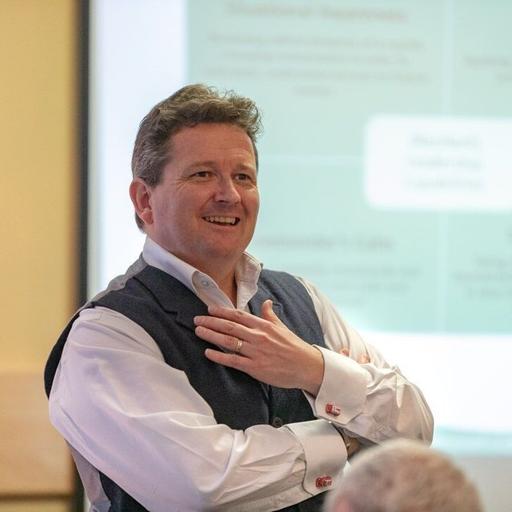
The Resilience Coach | Resilient Leadership Expert
100,000+ People positively affected6,000+ Executive coaching hours£12M+ ROI delivered by RWE npower leadership programme20+ years Learning, leadership and organisational development
Russell Harvey is The Resilience Coach - a resilient leadership expert, executive coach, facilitator and keynote speaker who helps leaders and organisations perform at their best when the world refuses to stand still.
With more than 20 years in Learning, Leadership and Organisational Development, 6,000+ hours of executive coaching and over 70 published podcast appearances, Russell is an experienced and engaging voice on resilience, leadership and navigating persistent change. He has worked with leaders across organisations including Novartis, the NHS, AB World Foods, Kerry Group and The Co-operative Group.
Russell’s work goes beyond helping people simply cope with pressure. He believes true resilience isn’t about “bouncing back”, being tougher or pretending everything is fine - it’s about springing forward with learning and becoming better equipped to lead because of the challenges you’ve faced.
His approach connects the human side of leadership directly to what matters to organisations: engaged people, stronger cultures, better decisions and improved performance. His work has delivered measurable results, including a leadership programme that returned £12 million to the business and a Resilient Leader Programme that achieved more than 1,100% ROI.
In August 2025, Russell achieved his long-held purpose of positively affecting 100,000 people.
More from Russell Harvey
All episodes → Living the Dream with CurveballSpringing Forward: Russell Harvey's Insights on Building Resilience and Embracing ChangeNov 2026Play episode →
 Transformation Station Leadership PodcastTSLP Season 5 Ep. 26- Thriving Is A VerbNov 2026Play episode →
 Embracing Digital TransformationHow to Build a Resilient Team Without Toxic PositivityNov 2026Play episode →
 An Evolving Man PodcastReal Resilience: Why Pushing Through Isn’t Enough | Russell Harvey | AEM #172Oct 2026Play episode →
 Leadership From The Heart | Transformational Leadership InsightsResilience Without the Rebound | Leadership Mindset ShiftAug 2026Play episode →
 Burnout Proof Leadership: Identify Shift and Leadership Skills for Midlife Women EntrepreneursEssential Leadership Skills You Must Have If You Want to Build Resilience & Avoid Burnout When Your Business Gets Hard - with Russell HarveyJul 2026Play episode →
 Your Career JourneyHow to Build Resilience at Work: Leadership, Change & Thriving in Uncertain TimesJul 2026Play episode →
 The ThriveWell Journey | Entrepreneurship, Leadership & Life After DisruptionHow to Build Real Resilience Under Pressure | Russell HarveyJul 2026Play episode →
 Future Fit LeadershipThe 2030 Leader: Why Resilience is Your Most Vital Skill with Russell HarveyJun 2026Play episode →