
February 23, 2026
EP 155: The Power of Resilience in Leadership w/ Russell Harvey
Sound bites
I define resilience as springing forward with learning.
The current research shows that that has the least impact upon outcome.
In this episode
Russell Harvey talks about resilience in leadership, how line management shapes well being at work, and why servant leadership outperforms other styles in the research.
- Resilience as springing forward with learning rather than simply bouncing back
- A person's answer to how are you can depend heavily on the relationship with their line manager
- Six redundancy experiences shaped his mission and his view of resilience
- Leadership starts with understanding your own head, heart and gut reactions
- Research cited servant leadership as having the best impact on outcomes among many leadership styles
Transcript
ShowHide
Automatic captions of the conversation. They can contain errors and do not name who is speaking.
So, they've said, so when a human being that has a job is asked the question, how are you? Okay, a ridiculous proportion of our ability to give a decent answer to how are you, something like 70%, is down to our relationship with our line manager. Wow. So, this is why I'm on a mission, a passion, a purpose to go, how can we make sure that every line management relationship everywhere is as good as it can be? In my career, I've been made redundant six times. So that is six times that I've had to face into the fact that I don't have a job and got to find a new one and pull that effect and energy into that and understand how come it's the case.
One or two of them, I engineered myself around restructures coming, things are happening, but it was also a case of not 100% sure until the final redundancy about what was going to happen next. Your professional development is one of the keys to your career success. When you combine your desire to grow with actionable steps, your journey to success becomes an incredible reality. Hi, I'm Paul Faronbi, aka IncrediPaul, and welcome to IncrediPaul Leadership, where I talk to incredible people, do incredible things, so we can become the most incredible versions of ourselves.
First off, thank you so much for listening. But I also want you to know that you could also watch this episode on YouTube. Regardless of your listening or watching this show, thank you so much for your support. Today, I have the honor of having Russell Harvey on the show. He is known as the resilience coach. He is a dynamic leadership coach, facilitator, speaker, podcaster, and radio host over 20 years of experience in learning, leadership, and organizational development. He specialized in resilience and VUCA for the past 18 years and is driven by his mission to positively impact 100,000 people by 2025.
And he is well on his way there. So that was just a brief introduction about you, Russell. But how about you introduce yourself the way you would do it. Thank you, Paul. I appreciate that. I need to update things so that 100,000 people have hit the number. So positively affecting 100,000 people by year 2025. It was done. It was done in August. There you go. This is it. I'm working on the next purpose, because one of the dimensions of being resilient is having a purpose. So right now, I'm honing the detail. But my next purpose is championing businesses to be a force for good.
And that is in the space around really great line management, leadership and line management everywhere you go, essentially. So yeah, I always had a passion for human beings. They fascinate me. My faith is in humans, essentially. It gets tested at times. There's some things that happen in the world. Yeah. My faith is in humans. And I just love talking about the topic of resilience and what it really means, because it sometimes gets slightly misunderstood. So yeah, that's today's intro, Paul. No, I love it. Thanks for the correction, because I know we're actually recording this episode of 2025, but by the time it's released, it's going to be 2026.
So thank you for that. Thank you for that correction. So let's just dive right in. And then I definitely want to come back to learn a little bit more about you. But when you say what resilience really means, what does that mean to you? Well, quite often people use the term bounce back in relation to resilience. So it's there as a piece of terminology. And I would like everybody watching, listening right now to think about it like this. So I define resilience as springing forward with learning. That's how I define resilience.
Springing forward into a better place, a more resilient version of yourself, having learnt from your experiences. Resilience does absolutely include an element of recovery from life's challenges, but it also can be recovery from the nice stuff. Because when you're doing stuff that you really enjoy, that actually is nice tiring, but you need to recuperate and restore yourself from that. But in general, the reason why I'm just not a fan of the term bounce back, is that quite often people say, right, I will face into a challenging event with whatever levels of resilience that I've got, and then now I'll bounce back.
I'll go back to how I was before. And I'm like, well, well, well, what did you learn? What did you learn? And your reflections need to be against the resilience wheel, which is on the website, built upon research. So the resilience wheel is the answer to the question of, how do I build my resilience, Russell? I go, a wheel, seven bits, and you can apply it to personal leadership, team and organization. So the springing forward learning is how you restore, you reflect and actually understand where you are doing well on your resilience wheel.
So the springing forward is to get you into the thrive. A different better place. So those people that make the decision to choose to engage with developing their resilience for the rest of their life, they give themselves a better chance of thriving rather than just surviving and coping. So that's how I like people to think about resilience. I love that. For thriving as opposed to just surviving, really key. Yeah, there'll be times when we will need to survive and cope. But it's like when the resilient individual chooses to grow and nurture, develop their resilience, then they give themselves a much better chance, even with life challenges of being in a good place most of the time, essentially.
So it's proactive resilience building. That's really good. So just thinking about all the stuff with resilience, was that a topic that you have always been a passionate, you are as passionate about? Or like talk me through your story, how you started to focus in on resilience. Yeah, so it's roughly, it is roughly 18 years ago that the resilience and the VUKE piece came about, which I'll come back to in a second. So like I said, I've always been interested in human beings, human behavior, I think since I was small, and I really got the first sort of light bulb of what I wanted to do.
My wife and I were traveling around the world for a year, and we stopped off in Hong Kong, and we just did some teaching, and there was magic happening in the room, and I didn't quite know what it was. But I thought, you know what, I want to do this for a living, but I don't want to be a teacher in a school. That just didn't appeal to me. And so then actually, when I came back to the UK, how I described it was, I think I want to be a trainer, a business trainer, learning. So when people had light bulb moments, realization moments, that absolutely zapped me inside and just was like, this is brilliant, this is amazing.
So then my career became, how do I get into a career of training and learning development? So today, I describe myself as a coach and a facilitator. That's what I am, essentially, through the lens of the resilience piece. And then where the resilience piece came about is that my last permanent role was at the co-op group based in Manchester, in the UK, but they're based all over the UK, and they're co-ops all around the world. I think I read in some information about you, you worked in a co-op, I think, at somewhere, but I apologize if I misread that.
Yeah, you're right. Yeah, so there's co-ops all over the world. And it got itself into a real pickle. So my role, along with loads of others, were to support the top 300 leaders across the business, but it was in a dire state for all sorts of reasons. And at that time, I was looking at the word resilience, and I was looking at this an acronym of VUCA. And so when all my clients came to me with their head in their hands, I went, what do we do? I went, all of our answers are in this resilience and this VUCA piece. And that has culminated in the resilience coach is 10 and a half years old now.
So my specialism is how to lead yourself and others really well in a full on always changing crazy world. That's my specialism, essentially. Well, that is a perfect specialty for this show because we're all about coming most incredible versions of ourselves and leading ourselves well. And we do live in an ever changing crazy world. There we go. Yeah, it is. So this loads in there really. And it's really fascinating, Paul, that the amount of times that I can walk into a room with people similar to you doing, you know, speaking or just facilitating a leadership program.
And I'll say, okay, so change is constant. And everyone in the room just starts nodding their heads and they go, right, we need to unpick that and really understand what that means essentially. And then I utilize all of the resiliency skills so that people can just feel much better about going, oh yeah, I'm more all right with this change is constant sentence, you know, I understand it better essentially. Yeah. So when you're working with either individuals or teams, what is something that comes up more often than others?
Yeah. So I think it's quite often it's a bit of a drip feed. So what comes up is this constant change for that particular team in that moment in time, has become too much, essentially. So we have levels of resilience and generally speaking, we don't know how resilient we are until something really unpleasant happened to us. I'm off the view, why wait for the unpleasant thing? Please start building your resilience now, essentially. But when I get called in is that people will say, so we know we're supposed to adapt.
Yeah, we've got an inkling it's constant change, but it's like, do you know what, we've had enough. The things that we would normally do aren't working. So then that is that pause and revisiting this resilience wheel that I talk about for the individual, the leader or the team to go, okay, so where are you on purpose, confidence, how you're using your strengths and skills, how you genuinely support each other, what's your internal storytelling, what's your underlying attitude as a team, and all these things and play around with them.
And there's always room for improvement on them, but they'll find something, they're all interconnected. So it really interests me at times. And I've mentioned about the purpose, the 100,000 and the new one, that seems to be having in the last six months or so, that's been having a lot of traction with clients and individuals. You know, whenever I have an individual leadership client, I will ask them, you know, what's your leadership purpose? And at that moment in time, more often than not, there's a pause and they look at me blankly.
And I go, okay, there's an opportunity in there. It's in there somewhere, and it's in your heart somewhere, but we need to do that. That's one of the dimensions, having that really solidified for yourself about, what am I here to do? How do I want to come across? What impact do I want to have? What's my relevance, essentially? So, the common thing is that, for whatever reason, a particular team or a leader has got to the stage of, the usual things I do to lead myself and others, they've stopped working. So, I need to think of something else, essentially.
Yeah, they've hit a roadblock or a mental block or something. Yeah, absolutely. And it's more than likely because the individual hasn't understood the resiliency piece and has stopped engaging with their growing and nurturing their resilience. So, it's like, it's a case of, my absolute intention is never to add to somebody's to-do list. So, that's one of the things that I've got to really strike a balance upon, because when people are asking for help, there's some level of overwhelm a lot of the time. And then it's like, okay, so there are some things that you're going to need to start doing, you know, in terms of developing your resilience, etc.
But it's like, I don't want to add to this list that you've got. If you're feeling like this right now, I don't want to come along and add to it. So, you just, it's like, it's got to be in replacement of something, essentially. So, behavior change has got to be in the replacement. So, it's like, understand the things that they could do in terms of the development they need to do, and then decide what that's going to be instead of, essentially. And then, hopefully, also reduce an awful lot of the mental weight of the to-do list that they've got going on.
And also, just thinking far more differently about how they're going to face into all of the activities that they're supposed to be doing in their job role, essentially. It's really good. So, thinking along the lines of the audience, primarily Gen Z, might not be leaders yet, might be newer leaders. And I know you mentioned, like, earlier on, about you don't necessarily know how resilient you are until something happens. Is there a way to find out or test it, or do you just have to work on developing it, or just, they talk you through more of that?
So how you, it's about making a decision. So if we go back to, like, you know, people that are listening, so they may be new to line management, or they may be thinking about becoming a line manager. And still, most of the time around the world, people are good at a job. People, an organization sees that they're good at a job, and they promote them into management, you know, without supporting them. So there's something to really think about there in terms of, yes, we can talk about the fact that there are variances between leadership and management.
However, the way I, of all the people I engage with, I say, look, the second that you have like this responsibility for being a manager, it's exactly the same time everybody is assuming that you're also going to be a leader. They're just immediately assuming, whether you realize it or not. So I always talk about it. Look, you're going to be your lead, even if your job title is manager, you are a leader, and it includes management, essentially. So that's something to think about. And then I say, for simplicity, every single line manager slash leader around the world, whether it's first time or chairperson to CEO, I go, look, I always want you to think about it, that you're only responsible for three things.
Okay, so first one is to delegate brilliantly to your people and to remove the blockages to them performing, okay? That's one thing. The second thing is to make the decision and choice to grow and nurture and develop a resilient team. And the third thing, which probably should come first, but the third thing is that you may need to make the decision to do personal development around your resilience for the rest of your life. When you do all of those things, you will face into life with a very different approach. So when unpleasant things come along, your capacity and capability to face into them is improved.
So that's why I'm about why wait for the really challenging things before. It's like they're going to come. So like choose today to grow and nurture personal resilience, so that when it comes, you'll be more equipped to face into it essentially. Absolutely. That makes sense. Being more proactive as opposed to reactive. Yeah, absolutely. And it's then human beings only change their behaviors when they see the value and benefit to themselves. So it's not the fact that we're selfish, it's just our brains are hardwired to take the path of least resistance, as well you know.
And so it's like, okay, if you're saying to somebody, right, you need to have to make the decision to grow in your personal resilience, unless the idea of that is compelling enough, they probably won't do it in as well as they could do. So then, you know, the question that I ask everybody is like, so when you choose to build and grow and nurture your resilience, how will your life be better? That's the question I ask, what will you have more of? And it's all variations of like, well, I'll have purpose, I'll have clarity, I'll be better at making decisions, I'll feel more calm, I'll feel more equipped, I'll be happier, I'll sleep better, I'll be more optimistic.
Whatever any of those are for people, you know, I'll have a greater career. It's like whichever of those people's answers are, you go, right, is that compelling enough for you to go, oh, okay, so day to day, week by week, I am going to engage with nurturing my personal resilience. Very good. So it sounds like when you're starting, you want them to create a vision of what the future looks like and make sure that vision is compelling enough that they're going to stick to it because it is a process. You mentioned, it's a lifelong process.
So you have to have a compelling vision. Yeah, absolutely. And I'm not coming at this. So I absolutely don't want, my intention is never for this to feel like toxic resilience or toxic positivity. So what I mean by that is that quite often, I hear the conversation which I don't want the world to do. I hear the conversation of like somebody might say, I'm finding this a bit challenging or this is a bit tough, and then somebody comes along and says, you just need to be resilient, you just need to be positive, and that's not where I'm coming from around it.
So I talk a lot about optimism in this. So optimism is grounded in reality. So being able as a leader, line manager to hold an optimistic conversation is a set of skill sets that everybody needs to do. Whenever somebody sort of does say, actually, I think the size and the scale of the challenge, we haven't talked well enough about the reality of just how big this challenge is. So you need to use emotional intelligence and compassion and empathy to listen to those, but hold them in a way that don't become literally a spar of negativity and overwhelm.
And that's artful, takes a lot of soft skills to be able to do that, essentially. So you need to talk about the reality of the size and the scale of the challenge. But what is also grounded in reality is in that moment in time, what's good about us? What's right about us? What are our strengths? What are our skills? What are our levels of resilience? What are our experiences? What are our qualities? What are the behaviors at work? And then you hold those a little bit higher up. And when people then go, okay, I get the reality of all the things that we can utilize to face the challenge and they feel a bit higher.
Okay, I'm feeling hopeful. I'm feeling positive that we'll be facing to it. So it's using an optimistic framework for people to have hope. That is part of the resilience conversation as well. Wow, that's powerful. I like how you mentioned that it's not toxic positivity, because I've definitely heard that before. It's like, oh, you just need to be positive. You just need to be resilient. And I don't, that's not how that worked. There's a sense of reality to things. And it is, I definitely agree that it is something, it is a unique skill to be able to hold to seemly conflicting things together.
And not attract from the reality, but to elevate what our experiences and resilience is, to say that, hey, this is a really tough time, whether individually or as a team, but our track record and what we're capable of doing, we can overcome this. Yeah, absolutely. And it does, it requires a lot. So, you know, the individual themselves needs to understand how they think and feel about the challenges that they're facing. So it's also, you know, everybody that's listening now, it's absolutely what their current head, heart and gut reaction to this idea is of being a leader.
It would be really good for those that are listening watching now to go, okay, if the label of leader is attached to me, what is my head, heart and gut? How does it react to that? Which bits am I okay with? Which bits am I not okay with? Essentially, because that will feed into a starting point of how you lead. You know, you absolutely do have to lead in your own way. There's so much leadership research out there. Yeah, there's just so much leadership research out there. One of the things that on that leadership research, so my business is a member of something called the Oxford Review, which is a think tank, which looks at all research that exists around leadership development and organization of them and all sorts of different things.
And one of the projects that they started was, what's the answer to the question of like, what's the best leadership style? Okay, so the first thing they did was double check how many leadership styles there are. And when they got to 350 that are mentioned on the internet, they sort of stopped and went, okay, 350, all right, there'll be more. So, they look at all of the research exists around all of the 350. And at this moment in time, a leadership style that is mentioned the most is transformational leadership. And the current research shows that that has the least impact upon outcome.
Really? Yes, okay. And then another leadership style, which is, I think it's mentioned like maybe third or fifth is servant leadership. And that currently demonstrates that it has the best impact upon outcome. So, if anybody's, you know, so sometimes say this to rooms full of people whose job titles are Transformation Director, and then I go, okay, just let me, you know, the job title of Transformation Director, you know, that's your job title. Your style, if you're doing this transformational thing, which really simplistically is, is sort of like the best way can just sort of give an analogy of like, it's this blueprint of come with me, I'm going to transform the world.
It's like that doesn't, you know, that style doesn't quite work according to the research. So, the servant leadership, which has got equity to it and reciprocity to it, that shows that it has the best impact on outcomes. And when you're doing servant leadership, you will probably be also naturally being able to hold an optimistic conversation in my, in my opinion. I like that you just walked us through that research. I wasn't aware that transformational leadership was mentioned that much, and it was not as effective on that.
Yeah, it's, yeah. And it's just that's why these clever people at the Oxford Review, you know, the volume of pieces of research that have done a brilliant, fascinating, it's, it's really useful. And for me to then, you know, walk in rooms full of leaders and go, are we aware of this? What do we think and feel about this? It creates such incredible conversations around it, essentially. Absolutely. I'm even thinking back to myself, the leaders that I've resonated with, even my leadership style is definitely one of servant leadership.
And I think that equity piece, I think, is so key, because I think sometimes when someone feels too far removed, there's less... It's hard to connect when someone is so far removed, and then there can be a lot of things that you don't feel as motivated. It seems like the research lends itself to that, but I don't know what specifically transformational is kind of, is not as impactful as servant leadership. Because my sense is that it's too much in the space of trying to force people to do something, essentially. So it feels like there's a little less listening that's involved in it.
So for me, that's, I don't know whether it's to do the research or just my natural thinking, that's why, you know, I talked about those three things that leaders are responsible for. First one, delegate brilliantly, remove blockages. So that for me, the delegate brilliantly is a real, is a potentially a servant leadership based quality conversation around. Now we're asking you to do something. Let's understand what your natural strengths and skills are. What's you at your best? And we're trying to delegate what we're asking you to to your strengths and skills as a principle in itself, because that's when people will be at their best.
When you play to your strengths, it builds natural resilience and natural confidence. And then it's that real quality conversation about managing expectations. And actually, if there's certain aspects of what you're asking somebody to do, they have to do it, because it's part of the job role, but they've got less energy for it. It's about to watch strategies are we going to put in place, are you going to put in place to support yourself. When you've got to do those things that you find a bit more challenging, how are you going to do those and face into those?
And then part of that servant leadership is to demonstrate as a leader that you've got an individual's back, is that at some stage, you delegate something to somebody, and you'll have the coaching conversation about what's the challenges, how are you coming about them. At some stage, the person that reports in to you and goes, look boss, it doesn't matter how many coaching questions you ask me, this isn't something that I can do, because it requires you to go and talk to somebody more senior and remove the blockage for me to be able to do it.
And so it's like, it could be, you need to talk to your peer in a different department, because that department's not helping me do what I'm trying to do. So you need to talk to their boss and go, yeah, my people are struggling because your department's not helping me. Or you need to go more senior and go, one of the systems, structures, processes in our organization isn't enabling my people to do their job. So we, at a more senior level, we've got ownership and responsibility to fix it, you know? And so that's, you know, you are serving others so that they can do their job, essentially.
Wow, that's really good. Yeah. So anybody that's listening now, that's what you're supposed to be doing. As a decent leader and a line manager, those are some of the things you're supposed to be doing, essentially. Yes. Delegate and remove blockages, but the key first thing that you mentioned is make sure you're working on your resilience before you need it. Yes. Absolutely. Yeah. So I'm curious and if you're comfortable sharing, are there any key things in your mind, or other personal professional that you've actually had to walk out resilient?
Yeah, absolutely. So in my career, I've been made redundant six times. So that is six times that I've had to face into the fact that I don't have a job and got to find a new one and put all that effect and energy into that and understand how come it's the case. One or two of them, I engineered myself around restructures coming, things are happening. But it was also a case of not 100% sure until the final redundancy about what was going to happen next. So it was the sixth redundancy where it felt for me, maybe the timing was right for me to set up the resilience coach, essentially.
Also, on a personal basis, unfortunately, in the last three years, my wife has been incredibly unwell, essentially. Exceptional unwell, really difficult at times to try and describe how unwell that she has been. And she's on a road to recovery, where she gets to in that recovery. There isn't a specific clarification about what that recovery will be. So, yeah, I have had to use my strength wheel. I use a psychometric called strength scope. I've had to reflect upon all of the different things that I talk about with clients over the last 18 years and go, Russell, how much of this are you applying to yourself?
So, I am not talking about all of this resiliency piece from any lack of lived experience. There has been a lifetime of lived experience around how am I being resilient, being optimistic, facing into things. At times, having to have the grounded in reality conversation with myself or part of my support network, that sometimes is really tough to go, okay, my reality right now is this. And talking about it was bloomin tough to go, right, this is my reality. And then I go, right, the next thing I'm supposed to do is like, what are my strengths?
What are my skills? How am I going? So, I have aimed to be a role model around this as much as humanly possible. And occasionally, Paul, if somebody says this word resilience, on certain times, I've gone, it's a stupid, chuffing word. I ate it. I wish I'd never heard of it. Can it all just go away? You know? So, there are times when you go, I've had enough. It's like, I mean, he says the word resilience to me, then go and take a running jump. And then I'll take a breath and we'll come back to it. So, yeah, you know, and I've talked about that in various guises on different things, sometimes on leadership programs and speeches and other podcasts.
But yeah, so I do have personal experience around this. Yeah. Well, I really appreciate you sharing that because you didn't have to for like I'm pushing on the spot. But I was curious, because I feel like a lot of times with topics like this or any topic that people get really passionate about, I feel like there's a lot of lived experiences, like what you said with being made redundant six times and on the sixth time, you're like, I know what I'm going to focus on. I'm able to build something so incredible. Even the situation which your wife can only imagine, like all that goes through your head with that.
But I really appreciate you sharing that. No, no. My pleasure. All of this comes into the refinement of the next purpose. What am I here to do? This is like championing business is to be for a force for good. And that is in the basis of every single line management conversation everywhere around the globe, you know. And part of the additional reason for that is that the last three World Happiness Reports, so they've said, so when a human being that has a job is asked the question, how are you? Okay, a ridiculous proportion of our ability to give a decent answer to how are you, something like 70% is down to our relationship with our line manager.
Wow. So this is why I'm on a mission, a passion, a purpose to go, how can we make sure that every line management relationship everywhere is as good as it can be? So that when you say to a human being, how are you? They can go, yeah, I'm all right, actually, you know. They don't have to go, I'm great, but for a human being, maybe potentially a bit more British, I have worked in the US, so I know that there is an extra layer of natural enthusiasm in the USA to how are you. Yes. So there are some cultural differences, but in the UK, for a human being to go, yeah, I'm all right, actually, that's the USA's versions of, I'm great, you know, that's what it is.
Okay. Okay. I was going to say like, all right, the US is not as safe to say, but that's the cultural difference. That's the bit of a cultural difference. Yeah, absolutely. So and all of that in terms of my reflections all the time about what you're trying to do, Russell, what impact you're having, where you're having traction, where you're getting good feedback. It's like, you know, the positive effect, 100,000 people was for each individual, in a whole variety of ways I interacted with, so it was time to have a learning moment around resilience, a light bulb moment and do a behavior change so they're more resilient.
And that has now shifted into the championing businesses and all line management relationships, essentially. That's really powerful. And just to put it into words, that makes sense that your line manager has that much of an impact. I think that is definitely why I've become more and more passionate over the years to become the leader that I've always wanted and even like starting this podcast to interact with other incredible leaders and make sure people understand really that we talk about soft skills. I don't like to call them soft skills because they're very hard to do.
I like to call them life skills because they're things that everyone needs in their life. And the more we pay attention to that, we can make better lives for everyone. Yeah. And a little build upon that line manager relationship. So I also say as well, and I think Gen Z is doing this a lot more, you know, that entrepreneurial mindset. So they want to become their own boss. But please, please remember that when you're running your own business, you are your own line manager. So the fact that somebody might make the decision to go, I don't want to be in a business or a corporate world because of the boss relationship.
It's like, but you're your own boss. You are line managing yourself. So your ability to ask the question, how are you, is all down to you. So, and it's literally, that's where you now need to make the decision and the choice to nurture and grow your own resilience because you'll give yourself a chance of line managing yourself. Well, I'm so glad you brought that up. But I hadn't thought about that. It seems like it's even more crucial if you are your own boss and the entrepreneurial mindset because you are driving everything.
Because everywhere I go, I do ask the question about who's your leadership coach. But I really, those that are sort of business owners, entrepreneurs, it's literally, yeah, who's your leadership coach? There are millions of people out there that are maybe millions, hundreds of thousands that are business coaches. And what they do can vary. That's why I say, who's your personal leadership coach? That's the question I ask. So yeah, anybody's listening and watching now, that's my query for you in that space. If you're a business owner or entrepreneur, it's like, who's your leadership coach?
Essentially, and if you haven't got one, find one, you know? Yeah. Yeah. Leadership coaching is very different from business coaching because sometimes people will reach out for business. I thought I am very much on the leadership side. I can help a little bit on the business side, but that's not the focus. Yeah. Yeah. But I think a lot of time, maybe you've seen this, there's a tendency to equate business and leadership, you know, there's two different focuses. Yeah. Yeah. They are. They are. So I've just found that interesting over the years, the last 20 odd years of like go everywhere, do lots of different networking, lots of people describe themselves as a business coach and they'll be good.
But then I'll say, just tell me what you do. And it isn't necessarily my interpretation of what the coaching will be, you know. So yeah, it's just make sure, because yes, an individual could have a business coach and a leadership coach. Obviously, it's not confusing for them, but they could, you know, essentially. Yes, absolutely. But yeah, you got to do what works for you. But there's a distinction, there's a difference to me. Definitely a distinction. I'm glad you brought that up for everyone listening, because yeah, it is the nature of being your own boss, being an entrepreneur.
I like to joke about entrepreneurial mindset that people say they want to quit their nine to five so they can work wherever they want. But you just quit your nine to five to work all the time. And that's why it's so crucial to make sure you're leading yourself well. And so Maxwell Leadership certified. And one thing that John Max always says is that the hardest person to lead, just look at the mirror to yourself. Which is it, because we will be taking the path of least resistance. So the resilient individual finds it easier to push back against that path of least resistance.
They'll find it easier to put themselves into stretch or do a bit more of challenging themselves around their behavior chain. Yeah. I like that you emphasize easier and not easy. No, you've got to manage expectations. It's like, you know, sometimes with, yeah, occasional clients have gone, so how are you going to fix me, Russell? It's like, okay, let's have a good conversation about that sentence. Yeah. Let's just explore what is going on for you around this. Yes. You truly are the only one that can fix yourself. People can give you opportunities or reasons or challenges, but unless you make the decision for yourself, nothing externally is going to change.
Unless something that really breaks you down and then you decide, I don't want to live like this anymore, like you were saying, then that's when you can make the change. Hopefully, it doesn't take that, but for a lot of people, it does. Yeah, it will do. It will do. And as you know, it's about making the first step. You know, I haven't really talked about it explicitly today, but everything is about behavior change. So I just spend all of the time sort of saying, so just tell me what you're doing now, not what you're saying, what you're actually doing, and, you know, understanding which of those are useful and helpful and which of those are aren't.
Really, in the last two and a half, three years, I've really, my intention is really trying to make sure that I am not talking about or giving the impression of either good and bad behaviors. Okay? It's as I'm really trying to put it in the space of like, you know, which behaviors are happening which are useful and helpful, and which behaviors are not useful and helpful for you. It's just because if there's even this perception of like something I'm doing is bad, it shuts us down as humans, closes us down. So you know, absolute positive challenge around it.
But that's just one of the other shifts that I've done in the last couple of years and it seems to have a bit more traction. People are more willing to engage in that or when they get used to that, they understand that actually we're not in the space of like, criticism or doing it down. It's like, well, how helpful is that behavior? It's like, it wasn't. You're okay. It's fine. All right. So what do you want to do about it? I want to change it. Okay. You know, that type of thing. No, I like that reframe. We've been going for a while, so I want to make sure, is there anything that we haven't talked about either in what you're doing?
Because I know you have a podcast, we didn't get to talk much about the podcast, but you want to talk about that or anything or professional personally. I think we've talked about all of it. I've absolutely had the opportunity to talk about the Spring and Forward Learning, those three things for your audience, about actually what's a Lion Manager leader there to do, and I always make sure the optimism piece. I've talked about it all. I'm a coach, a facilitator, public speaker, all of the things are on my website, essentially, Paul.
You can find me on social media with the Resilience Coach. Not like plugging things, it's just like, if you want to find out, this is where I am, essentially. Yeah. No, I totally understand that. Well, I definitely want for you to be able to plug it to you. It'll be in the show notes, but whether the website or whatever your social handles are, just to share what that is so people know how to stay connected with you. Good. Yeah, no, it's all there. The Resilience Coach, that's how you can find me. Okay. The Resilience Coach.
No, Russell, it has been incredible having you on the show. Really could feel it from the very beginning, like the passion you have about around resilience. And I had a sense that there's probably some things that you had gone through that you were able to get through and use your framework for that. I really appreciate you sharing that with the audience. My absolute pleasure. Thank you for having me on. And yeah, I look forward to what everybody thinks and feels about it, what resonates. So when you watch it, please just comment and go, oh, actually, that was interesting, you know.
It's just, I'm always really curious to understand what resonates with people. You know, I talk about this all the time and it makes sense to me. So I'm always curious about, you know, how much makes sense to others. So let us know. Absolutely. Definitely let us know and really turn it to the audience. I know you got something from Russell's story and his passion around resilience. I think he thinks is to make sure that you are developing and working on your resilience before you need it. I think it's one of those things I often come back to working out and eating right.
Because it's those things that you have to be proactive and you don't often see the results until a lot later on. And I think resilience is just like... Totally, totally. Yeah. So for everyone listening, watching, definitely stay connected with Russell, all the incredible stuff he's doing. Reach out to him for leadership coaching. And I know I talk a lot about mentorship, but coaching is also is really important as well, having different coaches in different areas. Because there's not just one coach that can specialize in everything.
So just make sure like if there's a specific area you want to develop in, that you're finding a coach that specializes in that area, as opposed to one that just does everything. Yeah. Totally. Absolutely. But yeah. So wrapping things up, make sure you are developing your resilience and you too can truly be incredible. Be sure to rate and review this podcast on your favorite podcast listening platform. We'll see you here next time. And be incredible. Incredible.
About Russell Harvey
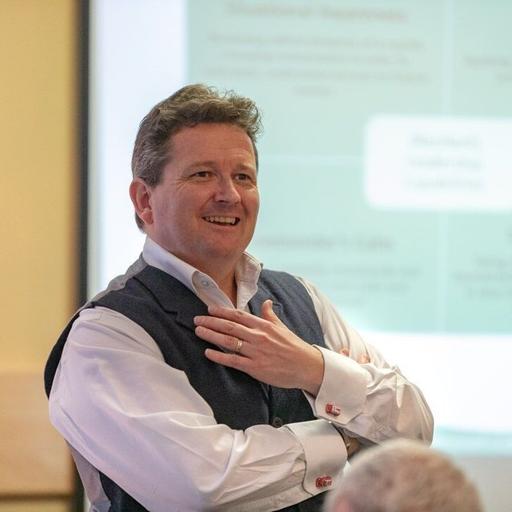
The Resilience Coach | Resilient Leadership Expert
100,000+ People positively affected6,000+ Executive coaching hours£12M+ ROI delivered by RWE npower leadership programme20+ years Learning, leadership and organisational development
Russell Harvey is The Resilience Coach - a resilient leadership expert, executive coach, facilitator and keynote speaker who helps leaders and organisations perform at their best when the world refuses to stand still.
With more than 20 years in Learning, Leadership and Organisational Development, 6,000+ hours of executive coaching and over 70 published podcast appearances, Russell is an experienced and engaging voice on resilience, leadership and navigating persistent change. He has worked with leaders across organisations including Novartis, the NHS, AB World Foods, Kerry Group and The Co-operative Group.
Russell’s work goes beyond helping people simply cope with pressure. He believes true resilience isn’t about “bouncing back”, being tougher or pretending everything is fine - it’s about springing forward with learning and becoming better equipped to lead because of the challenges you’ve faced.
His approach connects the human side of leadership directly to what matters to organisations: engaged people, stronger cultures, better decisions and improved performance. His work has delivered measurable results, including a leadership programme that returned £12 million to the business and a Resilient Leader Programme that achieved more than 1,100% ROI.
In August 2025, Russell achieved his long-held purpose of positively affecting 100,000 people.
More from Russell Harvey
All episodes → Living the Dream with CurveballSpringing Forward: Russell Harvey's Insights on Building Resilience and Embracing ChangeNov 2026Play episode →
 Transformation Station Leadership PodcastTSLP Season 5 Ep. 26- Thriving Is A VerbNov 2026Play episode →
 An Evolving Man PodcastReal Resilience: Why Pushing Through Isn’t Enough | Russell Harvey | AEM #172Oct 2026Play episode →
 Leadership From The Heart | Transformational Leadership InsightsResilience Without the Rebound | Leadership Mindset ShiftAug 2026Play episode →
 Burnout Proof Leadership: Identify Shift and Leadership Skills for Midlife Women EntrepreneursEssential Leadership Skills You Must Have If You Want to Build Resilience & Avoid Burnout When Your Business Gets Hard - with Russell HarveyJul 2026Play episode →
 Your Career JourneyHow to Build Resilience at Work: Leadership, Change & Thriving in Uncertain TimesJul 2026Play episode →
 The ThriveWell Journey | Entrepreneurship, Leadership & Life After DisruptionHow to Build Real Resilience Under Pressure | Russell HarveyJul 2026Play episode →
 Future Fit LeadershipThe 2030 Leader: Why Resilience is Your Most Vital Skill with Russell HarveyJun 2026Play episode →
 Different thinking for Different Time - Mindset Change and Thought LeadershipDifferent Thinking for Different Times - 7 Keys to Building Resilience with Russell Harvey How to Nurture a Resilient Mindset in Business and LifeMay 2026Play episode →