
March 28, 2024
Ep 91 Russell Harvey - The Resilience Coach / Impact 100k by 2025 / Coaching is his drug

Listen
Sound bites
Keep going, everything will be all right. You did that. That sounds like resilience to me.
In this episode
Russell Harvey talks about his path into executive coaching, resilience, and how his career shaped his purpose.
- Coaching began in Hong Kong in 1996 during a round the world trip and led into learning and development work.
- Six redundancies shaped the move toward working independently and toward the Resilience Coach identity.
- Executive coaching felt like finding a drug, and coaching became closely tied to his purpose.
- Avoiding toxic positivity and modeling resilience came up as part of how he thinks about supporting people.
- A goal of positively affecting 100,000 people by 2025 was part of the conversation.
Transcript
ShowHide
Automatic captions of the conversation. They can contain errors and do not name who is speaking.
I love coaching and love talking about coaching just as much. I created Coffee House Coaching as a space to have conversations with other executive coaches, to learn about their journey, their practice, and their philosophy. I'm your host, Gary Nowak, and I popped over the pond today to connect with a wonderful coach and maybe even a better human being with my guest, Russell Harvey. Russell came to us from Yorkshire in the UK. Coaching started for Russell in 1996 in Hong Kong. Discovering executive coaching, according to Russell, was like finding a drug, being the resilience coach.
Coaching aligns to his purpose, and he positively wants to affect 100,000 people by the year 2025. Avoiding toxic positivity, modeling being resilient, being made redundant six times prior to going out on his own, listening to the universe on what you should be doing next. What are your natural energizers? I've come home. Russell is always himself, all the time. David Bowie is the soundtrack to his life. Okay, enough from me. Let me get out of your way so you can enjoy my conversation with Russell Harvey. Russell, great to see you.
I know I'm looking far over the pond to see you right now, so I appreciate your time. Being on my podcast and looking forward to hearing your executive coaching journey. Thank you. No, it's lovely to be here, Gary. It is. I forgot to ask you where you actually are. You gave us a time, so where are you? That's an important question. I live in Las Vegas, and for our listeners, where do you live? So I'm in Leeds, West Yorkshire, United Kingdom. So if you're in Yorkshire, it's known as God's Own Country. There's a county across the way, Lancashire, that isn't God's Own Country.
And right now, if anybody from Lancashire happens to be interested in, they literally will be throwing things at the radio and just going, how dare you? That's disgraceful. So yeah, it's the War of the Roses. So I'm the White Rose of Yorkshire. So who makes these determinations, like you're the best or you're there? Who oversees that? Come on. If it's God's Own Country, so yeah, I don't know. Maybe there's a clue there. I'm not religious, so I can't really. I think there's a bit of hypocrisy coming in straight away.
So if we look at, you're always in the sunshine, across the river, wherever they're in the dark clouds and storming. Absolutely, yes. Yes, they only just got electricity in Lancashire, like last week. They're in the dark ages. Well, we're safe because they're not listening to this podcast. I'm wincing now. I was in Las Vegas in April, actually. Yeah, it's good. Why were you here? So it was a long-term coming, so it was due to be, it was there with my best mate, Richard. We would want to do something for our fiftieths, and because we were, because of COVID, we were there on our 52nd birthdays, or just shy of it.
And you know what? We never gambled once, anywhere. We just walked around, went to a couple of magic shows, which were brilliant because I was part of both of them, and did an awful lot of sitting in a bar, drinking beer and talking and just walking around Vegas and literally never gambled once, anywhere. You're the smart one. And being such an introvert like I can sense that you are, it's amazing you got up on stage like that. Congratulations about breaking out of your shell. Thank you so much. Yes, it was really, yeah.
Oh, yeah, it was a real stretch for me. It really was. You said 52. I'm like, is that 10 years from now? What's going on? You don't. 52 years. You're carrying yourself well. I try my best. Yes, I try my best. There's more gray hairs that come in. Every time I see my parents, they're like, there's a few more. They're good. I like them. They make me look distinguished. Embrace them. There's a couple of people that try dying their beards or hair. Once you start, you can't ever stop. It's a lifelong commitment. So let it go.
Embrace it. Love it. And the only time I grow beard mustache was for Movember. Do you have Movember in the States? Yeah, you do, don't you? Yeah. I lived in Australia and it was a big thing, but here, not so much, I don't think. No. And so there's a ginger red comes out in there, essentially. Oh, sorry about that. It's all right. My brother-in-law is a redhead, so it's okay. It's all right. There's somebody redder than you, so you spend more time with your brother-in-law in Movember than you do otherwise. Yes, absolutely.
No, I do. I do. I do. I do. So yes, random things. Sorry, that's just the way my brain works, which you're just getting used to right now. Unfortunately, or fortunately for the listeners, we need to talk about executive coaching. I know you're heavy duty into this, so wanted to talk to you about that. First and foremost, what was your journey into executive coaching? Thank you very much. My whole journey into exactly where I am now started in 1996 in Hong Kong. So I was, that was part of a round the world trip with my girlfriend, my name was now wife, Trish.
And we were living and working for a few months in Hong Kong and did the thing that you always do, which is like teaching. So I did a variety of things. I was teaching some kids, which I didn't enjoy. I did a little bit of one-to-one sort of business English support. And then the stuff that I really enjoyed was these four-hour lessons I did, which was essentially local Hong Kong residents off the street would come to this English language club. And I was given like a piece of paper that was photocopied from a book to say, that is today's lesson plan.
So it was an exercise in going to all of the annals of my brain of all of the rubbish that I can think of to make this single page last forever. And, whilst I was doing that, magic was happening in the room. And I didn't quite know what it was, but I'm going, this feels magical. I like, I want to do this for a living, but I don't know what it is. It turned out to be people learning, people having light bulb moments, people having realization moments. So I knew I didn't want to be a teacher in a school that just wasn't for me.
So when I came back to the UK, it was going, I think I want to be a trainer. And then that was my career. So it was like business trainer, learning development, organizational development, coaching. Coaching a facilitator is who I am. It's who I am today. And it was just with part of all of that, I've always been fascinated around how come humans do behave the way they do or don't behave the way they do? Just what's that all about? And that's just fascinated me forever. And one-on-one coaching now, probably the last 18 years, is properly focusing on coaching.
And that's when I feel I get the most value of people having their light bulb, their realization moments, their aha moments. Anybody goes from confused face to smiling face or ah, I get that now, I know how I can use that. That's just, it floats my boat, it makes, gives me a nice warm fuzzy feeling inside. You must be looking at my confused face wanting to coach the heck out of me. I'm guessing. You need coaching. So 1996, Hong Kong, and very extremely early in our world of executive coaching, right? It's a pre-thought to where we sit now.
And it looks like, it sounded like you went through a lot of different assessments of what you can do with teaching. You don't want to be a teacher, you don't want to do this, you don't want to do that. What was it about coaching that you thought really stuck? And I do want to talk about your facilitation because, and I want to understand how you, being a facilitator and a coach, how do those intertwine in a facilitation session? So I guess first question, I'm great at layering my questions, if you didn't notice. I'm the worst podcast host ever.
I know you do podcasting, so I want to hear about that. But how did you come down and distill into coaching, or how did you even discover that it existed at that point in time? Yeah, so it was at a particular organization. So it was about 18, 20 years ago. And so I'm open to personal development. So I had a day to go somewhere. Somebody had advertised something. I don't know whether they called it coaching or not. But I just had an external training session that I was going to. And it was from a couple of ladies that had worked at Virgin with Richard Branson.
And they were talking about this whole topic called coaching and the difference it can make when you ask questions to unlock how people think or when it empowers them. It actually creates a significant, amazing behavior change. I remember that I came back from that just, I'm already pretty excited, but I came back from that absolutely bright-eyed. And I remember there's a chap called Ian Mason, who was my boss at the time. He just, he said to me a little while later, you came back from that day. And I said, I had no idea what had happened, but you look like you were on drugs, drugs of happiness, drugs of enthusiasm.
And he just came into the office and went, Ian, this is brilliant. We can, we've got to do more of this. So he just said, I know I needed to take that and just let you run with it. That was, no, the bit about, actually, do you know what? I think coaching might be the way to get the behaviour changes that we're trying to get in life and in work. So I got the drug from then, essentially. So it wasn't just learning and development. It's going, actually, do you know what? There's this thing called coaching, which is asking questions, and they seem to make an even better difference to all the other things that I've been doing in trying to support people with their challenges and the things they're trying to do differently.
So you were already doing something to try to support other people to get better? Yeah, absolutely. So I was in training and development, so I was running management training. Absolutely, yes. So I was already doing training, essentially. And so that's that thing about teaching, training, counselling, facilitation, coaching. What's the similarities, what's the differences? All of that. And so training was a thing like that. It's actually that still trying to push information into people's brains, and actually we want to try and pull it out of them.
So that's when I got my light bulb on. So actually, do you know what? It's about pulling out of them because fundamentally I'm thinking, I believe one of the principles of coaching of we've more than likely got the resources inside ourselves to achieve the thing we want to achieve. So on Earth, do we find a way to help that person just click and go, oh, so I can do this then? Yeah, so it was just that really. How do you intertwine facilitation and coaching? So I start with a, so if I'm being pedantic about it, I'll start with coach and facilitator.
All you do is ask open questions. That's where I'll start. Depending on the responses, so from a facilitation point of view, depending on the responses that you're getting about people understanding what you're asking them. Actually, do they have the capability in that moment to be able to answer the question, which is different to have they got the internal resources. It's actually do they need a bit of knowledge and subject matter? So that's when I go, okay, I'll do a bit of, are people familiar with this model or this idea, and do it on the flip chart or pre-prepared slides?
So then you've got that mixture of, I think you need a little bit more information to be able to answer the question and work some things out to yourself. That I believe is my facilitation style. Let's discover where you are in the things that you might need to know, and then what's the extra level of input I might need to do. And that's the interesting part is where somebody is, which as we individually coach, that's a bit easier because we're dealing with one person. As we get into bigger groups, 10, 15, 20, 30 people, it's harder to define because we want to connect with everybody when we facilitate.
I want to hit everybody right square in the eyes, which is ambitious and I might say extremely difficult because everybody's at their own different journey. When, how would you describe your individual one-on-one coaching style? Yeah, thank you. Appreciate that. So I think it's about drawing upon the depth, sort of experience and skills I've got, because I've got a number of different qualifications around learning and development. So sometimes you'll draw upon those, those and a few psychometrics. And it's about flexing in the moment for the person that's in front of me.
Style-wise, because I am the resilience coach, I'm slightly unable to not talk about this word resilience in the sessions that we're in one-on-one, because all of the clients that come to me, there's some reason that they want to talk about something to do with their personal resilience. Or actually, how do I build a resilient team? So part of the style is drawing upon the depth of things. I know people aren't watching it now. I feel like behind my head and my ears, I'm holding my hands behind my head, I'm drawing upon actually, they've got all of this stuff that I can draw upon.
So it's being able to just bring that to the fore with individual clients in the moment to go, okay, I think what you might need for us to talk about now is, or have you ever heard of this tool, this tip, this tool, this tool, this model? As a style-wise, I do get asked for a lot of feedback, and believe me, I get some really great things. One of the common ones which I still not managed to unpick is about five or six different clients have said, the conversations I have with you and Russell, I don't have with anybody else.
Those types of conversations I have with you, I don't have with anybody else. Or when I try and say, brilliant, what does that mean? I need a strap line for my website, what does that mean? I mean, they just go, it's different. It's different good, but it's just different. So yeah, I don't know where I was going with that, but that's just trying to say, do you want to have a really different, good conversation that gets you somewhere different to where you are now? How do you feel after you had a great coaching session?
Oh, just fabulous. Any conversation really feels great, but a really great coaching session. It aligns to my purpose. So one of the dimensions of being resilient is to have a purpose, mine being positively affect 100,000 people by the year 2025. And so when I have a great coaching conversation, somebody's been added into that number for my purpose. So it meets my head, my heart, and my gut. It satisfies all of those. I feel he boosts my confidence. It makes me feel more resilient. It feels as though I'm adding value.
It feels like any of those times when you're struggling and go, what on earth is going on? Am I doing the right thing? What's the point? Our times are difficult. Actually, have a great coaching conversation, just counteracts all of that. I talked to your wife Trish. She said that she's not part of that people you've impacted. Is that true? She's not. No, you're still working on that. Okay, I'm still trying my best. Absolutely, yes. My guess is she was number one. Come on, let's be honest. Totally, totally, totally.
You are the resilient coach. How does that manifest itself, or how would you describe that to people, or why do people mostly come to you? So how it manifests itself, probably to do with how I define resilience. So I talk about it as springing forward with learning, rather than bouncing back. I'm just, bouncing back is there as the definition of it, but I'm just saying there's a risk sometimes. If we say to ourselves, I've faced into something, and now I'll bounce back, if it sounds like you're going back to how you were, and you can't do that, how the resilience piece manifests itself is supporting my clients with, so how much are you now doing this springing forward with learning?
How much are you pausing? How much you're reflecting? How much are you asking yourself the question of, from recent experiences, what do I want to keep doing because it works really well for me? And what do I want to leave behind because it doesn't work well for me? And as a result of that, how much are they re-energizing themselves as they go along, recuperating, re-energizing? And I talk a lot about the word optimism. So I'm trying to avoid toxic positivity. So this is... Everything is terrible, but let's just be positive, isn't it?
That's... Don't do that. So optimism, grounded in reality, and now that sometimes is where the extreme challenges are. So it's accepting with good grace some of the things that are going on that are reality, but we don't like it. But how do we accept it with good grace? So that we can have those good old quality reflections or conversations with our teams around, we're really, really clear what the size of the challenge is. We're really, really clear and got consent and so what it is and how difficult it is. However, we will now look at ourselves and each other and go the strengths, the skills, the capabilities, the attitude, the mindset, the experiences, the resilience that I have, the confidence that I have.
Okay, I genuinely believe that myself and others, we can actually face into this challenge and we can do something about it. And then that gives you feelings of hope, genuine hope. And then those give you feelings of positivity. So for me, the route to feeling positive is through optimism. Now, they're intertwined. The dictionary definitions have the same words in them. They use positive to describe optimism. And that's how all of that manifests itself in my coaching style with my clients and the resilience piece, because I then also, as much as humanly possible, like, try to be, lovely word try, like to be a resilience role model.
And at times, I'm not. There are times when people turn and go, so how resilient are you, Russell? And if there's circumstances of being gone, I might go, oh, God, I hate the word resilience. It's a stupid word. And there are other times when I'm going, yeah, I have actually managed to turn on myself all of the things that I've been discussing and chatting or explaining around resilience to others. I get those opportunities to keep turning it on myself and go, Russell, how much of this are you doing? How good are you at doing this?
Where do you need to improve? What do you need to do more of? Being the resilience coach with clients, as I've explained, and then with myself, I want to be a role model. I want to be authentic and genuine around being resilient. So I'm always trying to make sure that I'm turning up myself when I'm doing the things that I am offering that is good for clients to do. And that's what's striking me is, as a resilient coach, what was running through my mind was you're optimistic. You seem very genuine. You relate to people.
Very authentic with the way, yeah, just the way you presented. I know we don't know each other, but just your assessment of where you live and where others live is that's very genuine of what you think. And I believed you in all of that. What's striking me is you had mentioned you bouncing back and looking forward, and don't go backwards. One of the concepts I probably pull from James Clear Atomic Habits was explore and exploit. Explore very horizontal. Explore everything. And this is what I feel we do when we're younger.
We try everything. And then we exploit, we go vertical, go deep on something that we really like. So we may explore 20 things at 5,000 feet deep, but we may only exploit four things at 50,000 feet because we really, really, really like it. It feels like what you try to do, because you mentioned optimism, and when you said toxic positivity, I think we've all met those people that are always positive, and it's draining to me because it doesn't feel authentic and genuine. And when you mentioned that, then you followed up with being genuine and authentic.
I was like, okay, that's the piece, because you feel like if I were to talk to you and you're having a bad day, like Garrett said, I'm having a crap day. It's not this toxic positive, it's genuine. You still might have a smile on your face, but you're, hey, I'm in touch with my emotions right now and working through that. You had mentioned earlier, I ask about epiphanies, but I think for you it's a light bulb moment. When you went to Virgin Territory, meaning meeting with Richard Branson's company, that felt like a light bulb moment.
You were, it was an epiphany of holy moly, which happened super early in your career, because I think you were probably in your 30s, it sounded like. Yes, it would have been, yeah. If not a little bit about that, yes, it would have been, yeah. So I was doing some quick math, not to be done on a podcast, by the way. That felt like it. So you had enough traction in your career, you knew what you were doing, you knew training and development was it. I do like the trip in your 20s when you went to Hong Kong in 96 and just went up and being a Brit, that's what you do, and Hong Kong is a fantastic city, and you're going to teach other people how to speak English, which is the proper way because you have the right accent for that.
If I go over there, we don't like American accents, and you get out of here, and plus 96 was right before the handover. It was absolutely fascinating to be there then. It was lots of families, families and young children, so they would do English lessons. They were also Mandarin lessons because they spoke Cantonese, but managed to do it that way, and then also sports and violin lessons. And I didn't bless, there was one time a young girl, I think she was only being about eight or nine, and I probably, I think, might have been the third tutor she'd seen that day.
And it's after school, English, and just to let her have a little bit of a five-minute nap. She literally was just head on the desk, and so I just was keeping an eye out for her mom. There's no criticism. It's just, okay, this kid needs a nap. I really deeply prepare for my podcast, and I actually spoke to this young lady. She remembers that. She said that was me. Yeah, she remembered that Russell. He gave me a nap. He gave me a five-minute nap when I needed it. He is very observant, and you were the best tutor of the day.
On all those days, she got to work with you. So, yeah, lest anybody think I don't prepare for these, I go deep. You spoke to my wife and everything. Yeah, it's amazing. In fact, her and I are going to record after the New Year, just so you know. Okay, all right, yes, tell me really about Russell. Yeah, I would. I interviewed him, but I don't think I got the real authentic guy. Come on in, give me the real deal. What do you appreciate most about, I guess, your career, where you're sitting right now? Because it just feels like, boy, you seem like a happy guy and you're doing things that you absolutely love.
So what are you most happy about your career? And then I want to know about this 100K by 2025, how that manifested itself, how that came about. Yeah, absolutely. I suppose I really what I appreciate about my career is timing. Everything happened for a reason. So part of my career, so it was in learning and development, but I got made redundant six times. In terms of me searching for the absolute best manifestation of me being able to support human biggings in the workplace, which was the resilience coach, which is eight years old, that's the best manifestation for me.
The fact that I can describe myself today as a coach and a facilitator, and I'm very comfortable, that's who I am, all of the time. And so it's about timing. So there were opportunities, six times being made redundant. How did I spring forward from each of those? I could have set up by myself in each of those instances. However, I didn't feel right. So the seventh time it happened, it's like the time is right, actually finally set up by myself. And the last experience in corporate permanent role, it crystallized the birth of the Resilience Coach, because the organization I was working with got yourself into an absolute pickle.
It had nothing to do with me. It had billions of pounds of black hole in its finances. And so everybody that was my client, the leadership teams, heading their hands going, Russell, what on earth do we do? There is this word resilience, which I've been toying around with and just starting to be thinking about. And there's the lovely an acronym of BUCA, B-U-C-A, if you're familiar with that yet. So it was a case of light. Our solutions, our answers are in really understanding, unpicking what BUCA really means about change is constant, about really unpicking that and this word resilience.
And so when I left that organization, and set by myself, did that little bit of navel gazing about, so what's the name of my business going to be? Who am I? And I just went, Russell, you are the resilience coach. All you've been talking about for the last two years is resilience, so that's who you are, so there's your business name. So timing, it was right, manifestation, name came, and yeah, it all felt right. If I can edit this to put this part ahead, because here's what strikes me, you were very reluctant to go out on your own.
Nope, nope, nope, I'm a corporate guy, I'm going to do this. Six times you're made redundant. What strikes me is you have to be resilient to be made redundant six times and say, pick up yourself by your bootstraps and go. Then, so the universe speaks to us, and you were listening, essentially. And you had the wherewithal to have somebody say, oh, you've been doing is talking about resilience. That is who you are, that's your DNA, and that's why you're branded accordingly. Because you listen to the universe, the other people talk, your own voice.
I'm sure there were a lot of difficult times in that. I can't imagine, right? Yes, there were. Questioning yourself and what am I doing? And now, that's maybe why you look so at peace right now, to me, is because, okay, you went through some trials and tribulations, and it makes you a great person to talk to about somebody else that has just lost their job. Career development is another area that you focus. Is that something that's a nice segue to talk about on helping people with their careers? Totally, it is as well.
The Ardell Klein thing is like any particular individual, if they're finding that actually they have lost their enthusiasm for something, or throughout most of their career, they've just gone for jobs, or then their next job has fallen in their lap, because somebody tapped on the shoulder and go apply for this. But they haven't realized any of that. So it's the first time when actually they don't get the promotion, or they lose the job, or they get a pretty significant critical performance review. That's when they come to people like to go, I think I'm questioning who I am and what I want.
So it can be any age. Traditionally, I talk about like anybody that's got the job title of head of. Is the ideal client. However, it's also a thing about those individuals that might be in sort of big consultancy firms. They've got sucked up in graduate programs to go, and they either say, I'm loving this. How do I do more of it? I need a coach to help me do more of it. Or going, I think I've been, I think I hate it. I need to talk to somebody about actually, is this not me? Type of conversation. So yeah, career development can be at any particular age, any circumstances, but if people are just feeling as though they have absolutely just lost their enthusiasm for the role, or feel like something's missing and it's it, it feels like it's gone.
Let's help you to rediscover your it. And there are some amazing, lovely six-step stories. There's two, which are just two gentlemen. There's one that I was having a conversation with because he was in Taiwan yesterday coming from Sri Lanka. But he was in IT his whole career and didn't really enjoy it, and wanted to be a transformational coach. So I've been supporting them to go, yeah, all right then, so how do we... He's doing some of that whilst he's travelling. So that's a massive success story. He's being a transformational coach whilst he's in some travelling.
And another individual, their words are not mine. They said they were working in the construction industry and supported them to just rediscover, actually. They're a geologist by trade. So rather than just taking things out of the ground and destroying it, actually, their first passion was to put things into the ground and look after it. The last time I spoke to them, they were on an oyster farm in Scotland with a big beaming smile on their face. I knew farming was going to come out. That's the first thing that popped up.
It's like they're planting trees or they're harvesting something. But you didn't think oysters. Farming oysters is just going down there and grabbing them, isn't it? I don't know that you have to farm them, do you? Well, you have to nurture them, and it's when to grab them, and you have to let them grow. You have to nurture them, Gary. They have feelings, too. Do you use in your coaching at all or in anything you do, any assessments? Yeah, I've been qualified in a few of the years, and one I've used the last few years is strength scope.
So people may, there's like Strengths Finder, and in the UK, you can use it globally. It's overseen by the British Psychological Society, so it's got that extra layer of credibility to it, and it hugely relates to resilience. It's really fascinating with a lot of clients when you ask them, what are your strengths? Describe your strengths to me. A huge amount of the time people are like, and so when they understand that what we mean, what naturally energizes them, what gets them out of bed, what infuses them when they've had a great day, it's really an incredible or massive opportunity for coaches, but people don't think about that a lot.
So part of working with me is to go to support you to discover what your natural energizers are. And when you play to your natural strengths, it builds natural resilience and natural confidence. So that's connecting dots, essentially. So that's why I use that psychometric, because people are like, so you want me to spend more time doing the things that I naturally love? Go, yes. They go, what about all these bits that are like my weaknesses? To start with, don't do them. And their minds are blown around, you don't want me to work on my weaknesses?
No, no, no, ignore them for now. We'll come back to them later. And they just go, that's just ridiculous. That's amazing. So you give me permission to enjoy myself. But yeah, I am. Unless they're an engineer and don't understand physics, then you might say, let's shift things up a little bit. Let's shake the dice, and maybe physics isn't for you. True. There are some times when you look at their job role and go, tell us about things that energize in your job role. That's when a lot of time people turn around and go, there is nothing that energize it.
And they go, right. So we're having, that's going to inform our conversation, isn't it? And they go, my word, yes, it is, isn't it? I think I need to leave, don't I? They go, very possibly, yes. Unless you can find another role in your organization. If not, then yeah, you need to leave. What strikes me about you is you always knew you wanted to be teaching or helping people learn about themselves. It feels like a threat. Yeah, totally. What's interesting is you didn't know what the manifestation of it was. You always knew you wanted to do it.
And then once you discovered coaching, you're like, bingo. You're on drugs, as you said. I can't believe I discovered it. And I think for me, I read a book on coaching, and it was like, I like it, I like it, I like that, I like that, I like that. Because careers, sometimes you take your career over, your career takes you over. A lot of times, people that you're talking to, their career is taking them over. It's like, I got a promotion, I'm going to do this, and it's different skill sets, but I don't care. And you're getting maybe further away from where you want to go.
Yeah, I think that's interesting, but you're living the life that you were meant to live. Not that I'm going to psychoanalyze you, but boy, you sure look gosh darn happy in it. Yes. No, no, the resilience coach is I've come home. I've found it. I've come home. This is the place that I am supposed to be. This is where I'm adding the most value, and it never ever feels like work or a job. And I know how lucky I am. It's a sentence that was said many years ago. Find the thing that you enjoy doing and get paid for it. And oh, my word, I'm doing it.
And what a privilege that is. And you live in God's country. I do, don't I? I absolutely do. I absolutely do. Final couple of questions before we get into the fun stuff. What are you most proud of about your career thus far? So, I really am proud of the Resilience Coach being eight years old. Partly because they talk about small businesses most failed in the first three years. I rode out, the pandemic kept going. So the fact that I'm just most proud of the fact that it's eight years old, and it doesn't feel like eight years.
It's where it is now. It's developing, it's continuing to grow. There's still loads more to it. It's enjoyable. It's fun. I'm just so proud of that, essentially. Okay, I lied. Now I have two more questions, because I asked about the 100,000. How did that come about? 100,000 people you want to impact by 2025. Absolutely. So one of the dimensions of being resilient is having a band. So I would talk about it, and then sometime people would say, so Russell, what's your purpose? And I had a slew, things fell out the side of me, because I suddenly went, hey, God, I want to help people.
So it was a rubbish purpose. So I thought, I'm not being a role model. So I went away and had to think about it and go, okay, so I absolutely want people to have their lightbulb moments. Why do I do what I do? It's learning. I just want to impact people up, positively affect. And then other people said, we need to make it smart, Russell, S-M-A-R-T, which I get. And that's where the 100,000 is. What feels doable? Right now, I'm up to 43,712-ish. Okay, we can be 713 after this conversation. Bless you. Thank you. Yes.
That's great. Put a run on the board. That was the thing that fascinated me, or what fascinates myself. I didn't think about the response. And so I get a number of different responses over time. When I first started to say it, 100,000, this is what I'm up to. And people would go, add me to the list, Russell. And when the first time somebody said that, I went, what do you want about? They said, no, no, no, add me. And they went, oh, oh, oh, thank you. There are others that went, you're a bit of an egotist, aren't you, Russell?
That was another response. And I was like, OK, thanks for the feedback. That's great. And others which were, which was interesting, and it was really nice. Actually, you positively impacted me, Russell. And I'm now doing things differently as a consequence of what we've done together. And actually, I'm positively impacting others. So I think you're having more of an impact than you think you are. It's like, oh, that's brilliant. Great accountability. Beautiful, that is, yeah. And I'm reading 35,000 of those people were in the pub when you impacted them.
Is that true or not? I don't know. Maybe 34. There were some that couldn't get in. They were outside. If you, if all I have to do is buy somebody a drink to impact them, I'm well on my way to 100,000. Because if you see me in a pub and you even say hello or how you doing, I'm buying you a drink. There's no two ways about it. That's brilliant. I look forward to that. That's my philanthropic way. Final question is, how has coaching impacted other areas of your life? I've said a couple of times that I am a coach and a facilitator.
So it's who I am all the time. It's really nice. One of my best mates, Richard, whom I went to Vegas with, he said to me a few years ago when we were having a drink, you're just you all the time, Russell. And it was like, I have to start with him, Ben, what are you on about? He says, no, no, no. I see all sorts of different settings. You're just you all the time. So you are a coach. I'm not sure if this is an answer to your question. So it's not the fact that coaching impacts other areas of my life. I just, I am me all of the time, and I am a coach and a facilitator all of the time.
You're comfortable in your own skin, everywhere. There is no differentiation. That's a silly question for you because, Gary, that's who I am. Gary, you jackass, come on. Make it something better than that. I'll buy you a pint to solve your... You buy me one, you got two more coming back at you. That's just the way it goes. I've learned that. Because once I buy somebody a drink or somebody buys me one, it's like, oh, I'm in it now. This is going to be ugly. Uglier than it starts out to be half the time with me and a pup.
Okay, time for some fun stuff questions. Okay. Not that it hasn't been fun up until now, Russell, to be honest. Yes. Okay, favorite movie. So, MacVicar. So, it's about a prison break. So, John MacVicar is a real person, and it was a film that I watched loads for some reason when I was at university. It has Roger Daltrey in it from The Who. So, it's probably from the 70s as a film, 70s or 80s. Yeah. You're going to stick with that? Yeah, MacVicar, yeah. I thought it was going to be a Scottish priest or something. MacVicar, I'm like, it's got to be a priest somewhere.
He's a real chap. He challenged, gosh, it was a British Olympic sprinter that won gold medals. He took him to court for failing drugs tests. Bizarre. Just, yes, look up John MacVicar. I'm going to have to because I have no clue what you're talking about. Yeah, there you go. What is your favorite meal? Yeah, it's my two of my favorite foods. So it's a version of surf and turf, I think, so it's got to be proper British butchers sausages. And prawns. Just, I'm a fiend, prawns. So prawns and sausages, but I don't know whether there isn't a specific meal, but those are my literally sausages and prawns.
If I was stranded on a desert island, that's what I'd get the prawns, hopefully on a desert island, fingers crossed. But I'd have to take a pig with me and work out how to make the sausages myself. It's no longer a pet. It's dinner. Trish, just for the Americans listening, prawns are shrimp. However, if I were to provide guidance to you, if I was inclined, you would go lobster. I want to do sausage and lobster because that's more your prawns. I think you'd like, yeah, I think you'd be a lobster. I absolutely would.
Yeah, that would work. And that would be Surf and Turf, 100%. Any artist concert, musical concert, artist present or past, who do you want to see? Our absolute favorite is David Bowie. He is the soundtrack to my life. And so this Richard that I mentioned that said, you're you all of the time, he and I, we were 14, and there was a VHS video that was put into his dad's video recorder, which was the Hammersmith Odeon concert of Ziggy Stardust and the Spiders from Mars. And it was the one where he said the immortal words of not only is this the last day to the tour, it's the last concert we'll ever do.
My mate, Richard and I watched that when we were 14 and just went, oh my god, who is this person? And he's the soundtrack of our lives, essentially. He turns up in everything in, we're both each other's best men at weddings. Just David Bowie is the one, essentially. It sounds like I'm lining up Richard as my next guest along with Trish. Indeed. Based on everything I'm hearing. What did you want to be when you were growing up? Well, it was something to do with what I'm now. So people just said, you're good with people, Russell.
So they said either sales or personnel, you know? And both of those are like, I don't like the sound of that. I went into personnel because it's HR. Yeah, I wanted to be supporting humans, but I had no idea what that was like or how you would articulate it at that time. Well, you found it or it found you. I'm not sure which. What is your go-to alcoholic beverage? You have one of these in Vegas, which we went to. So there's, it's Punk IPA is my, which is with, are we allowed to talk about it? It's BrewDog, essentially.
Russell, you can tell about anything, anything you want. Yeah, yeah, yeah. I couldn't remember. So yeah, James Watt, if you're listening, your beers are my favorite tipple. Having BrewDog as a, as a client is a bit of a dream of mine. I'm not there yet, but I'm looking for it. Once he listens to this, you're well on your way. Another step in that direction. Do you have a celebrity crush? It used to be Sarah Michelle Geller, Buffy the Vampire Slayer. That's that, you say? It could still work, I'm guessing. Yeah, absolutely.
That was it. There was another one. It's gone. It's gone. So yeah, Sarah Michelle Geller. Good call. And she's, yeah, she's great. Do people say you look like anybody famous? I've had a few of these over the year. I have no idea if these would translate. I'm not entirely sure if I want to share any of them either. Who would you go with? A little while ago, I did get Michael J. Fox, which I don't get, but that was one that I got. And then this is probably really obscure. You have to look up a children's TV program from a long time ago called King Rollo.
Yeah, no idea. But there were loads of people that said that's what you look like. Homework after that. I got to look up Mr. McVicker, and I got to look up this chap from something. Okay, final couple questions. Dinner with anybody past or present? I'm guessing Richard and David Bowie are going to be here. Yeah, absolutely. Is that true? That would be your... That would be it. Yeah, absolutely. What do you want to know from David Bowie? I suppose you always forget how creative he is. So it'll just be like, he's one of those people that like, tell us about this thing that you do naturally.
But I just want to just, I would like to just delve a little bit deeper in actually, what is it that drove your creativity? How come your mind goes away? Because we went to an exhibition, Richard and I at the Victorian Albert Museum a few years ago for David Bowie. And just the volume of things that he was into. And I was just like, gosh, I don't know everything about him. So I'd like to talk to him about his creativity gene, essentially. I could tell you he wasn't too creative in the Dancing in the Street video with Mick Jagger, if you've seen that.
Oh, it's appalling. It's terrible. Okay, now I know at least you're an honest, you are an honest, authentic guy, because if you say that's appalling and you love the guys, okay, your credibility just went through the roof. If it hasn't been there already, it really went up just a bit higher. So final question, what advice would you give to a younger you? Keep going, everything will be all right. You did that. That sounds like resilience to me. Yeah. Well done. You're doing the right things. It's like you're doing the right things, keep doing it.
It's like binoculars. You're a little blurry, you don't know, and then your binoculars are crystal clear. You've got 2020 sight. You're like, yep, this is exactly where I'm supposed to be. And the rear view, okay, so there were some bumps, but you ended up where you should be, at a ripe young age of 52. Yeah, absolutely. A very young age of 52, most definitely, yes. You've got 40 more years to go living in God's country. I know, yes, in God's country, absolutely. God's own country is what they just talk about. I am, yeah.
Yeah, I'm sure I'm going to get into trouble for that sometime. There will be somebody going, I'm from Lancashire. Nice to meet you. I'm like, oh, God. Okay, I'm sorry. Do you think people listen to this podcast? Did I not tell you? I don't really have any... Is it just us? Is it literally just the two of us? Is that it? Could be. I'm expecting you for the pull of listeners, not me. I'm just behind this silly mic asking silly questions to a great guest. Russell, thank you so much for your time. That was a great time.
I'm really appreciating. There weren't any questions. I love them. So thank you ever so much.
About Russell Harvey
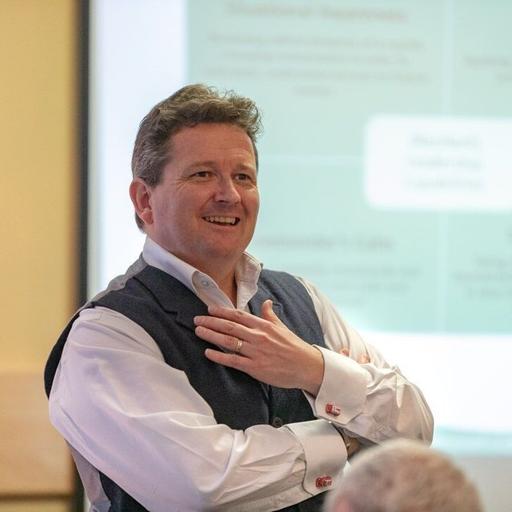
The Resilience Coach | Resilient Leadership Expert
100,000+ People positively affected6,000+ Executive coaching hours£12M+ ROI delivered by RWE npower leadership programme20+ years Learning, leadership and organisational development
Russell Harvey is The Resilience Coach - a resilient leadership expert, executive coach, facilitator and keynote speaker who helps leaders and organisations perform at their best when the world refuses to stand still.
With more than 20 years in Learning, Leadership and Organisational Development, 6,000+ hours of executive coaching and over 70 published podcast appearances, Russell is an experienced and engaging voice on resilience, leadership and navigating persistent change. He has worked with leaders across organisations including Novartis, the NHS, AB World Foods, Kerry Group and The Co-operative Group.
Russell’s work goes beyond helping people simply cope with pressure. He believes true resilience isn’t about “bouncing back”, being tougher or pretending everything is fine - it’s about springing forward with learning and becoming better equipped to lead because of the challenges you’ve faced.
His approach connects the human side of leadership directly to what matters to organisations: engaged people, stronger cultures, better decisions and improved performance. His work has delivered measurable results, including a leadership programme that returned £12 million to the business and a Resilient Leader Programme that achieved more than 1,100% ROI.
In August 2025, Russell achieved his long-held purpose of positively affecting 100,000 people.
More from Russell Harvey
All episodes → Living the Dream with CurveballSpringing Forward: Russell Harvey's Insights on Building Resilience and Embracing ChangeNov 2026Play episode →
 Transformation Station Leadership PodcastTSLP Season 5 Ep. 26- Thriving Is A VerbNov 2026Play episode →
 An Evolving Man PodcastReal Resilience: Why Pushing Through Isn’t Enough | Russell Harvey | AEM #172Oct 2026Play episode →
 Leadership From The Heart | Transformational Leadership InsightsResilience Without the Rebound | Leadership Mindset ShiftAug 2026Play episode →
 Burnout Proof Leadership: Identify Shift and Leadership Skills for Midlife Women EntrepreneursEssential Leadership Skills You Must Have If You Want to Build Resilience & Avoid Burnout When Your Business Gets Hard - with Russell HarveyJul 2026Play episode →
 Your Career JourneyHow to Build Resilience at Work: Leadership, Change & Thriving in Uncertain TimesJul 2026Play episode →
 The ThriveWell Journey | Entrepreneurship, Leadership & Life After DisruptionHow to Build Real Resilience Under Pressure | Russell HarveyJul 2026Play episode →
 Future Fit LeadershipThe 2030 Leader: Why Resilience is Your Most Vital Skill with Russell HarveyJun 2026Play episode →
 Different thinking for Different Time - Mindset Change and Thought LeadershipDifferent Thinking for Different Times - 7 Keys to Building Resilience with Russell Harvey How to Nurture a Resilient Mindset in Business and LifeMay 2026Play episode →