
March 27, 2026
Flow State, Burnout, Purpose and the Future of Leadership | AEM #155 Deri Llewellyn-Davies
Sound bites
We are fighting against biology. And biology will always win.
I think the biggest, my biggest lessons from curating flow states, sorry, ultra states was the state of connection.
In this episode
Deri Llewellyn-Davies and the host explore flow state, burnout, recovery, and how leadership changes under sustained pressure.
- Early curiosity, adoption, and instinct shaped his path from West Wales to boardroom strategy.
- Strategy matters, but rigid control breaks down; failures taught him to leave room for uncertainty and timing.
- Recovery tools include phone-free time, breath work, fasting, grounding, and other personalized resets.
- Biological measures like cortisol, heart rate variability, and resting heart rate can show whether a reset is working.
- Connection is a core state, and campfires, nature, and deliberate preparation can help people show up for family and leadership.
Transcript
ShowHide
Automatic captions of the conversation. They can contain errors and do not name who is speaking.
Okay, welcome to episode 155 of An Evolving Man Podcast. Today, I'm excited to be speaking to Deri Llewellyn-Davies. Deri is a boardroom strategist and creator of the UltraState Framework, which examines how humans perform under sustained pressure. With experience advising hundreds of boards and participating in extreme endurance events, he explores performance, stress, recovery, and decision-making through a physiological and systems-based lens. His work looks at how prolonged pressure affects cognition, relationships, leadership, and family life.
That's a mouthful right there, Piers. Well done. Yeah. I sometimes mess up and that reminds me of class being at school and going, oh, everyone's watching, so. I've been listening to quite a lot of your podcasts, and you've had a really fascinating journey. So I'd love for us to begin there of what's got you into the work you're now doing, Deri. Oh, jeepers, that's a big question to start off with, Piers. I think it was an accident, let's just be honest. When I was sitting, I was brought up in a tiny little village in West Wales.
So when I grew up, I'm going to be a boardroom strategist to hundreds of companies. I wasn't even on my agenda. I wanted to be a fighter pilot. I watched Top Gun and the only thing I knew in West Wales was the RAF base. So life throws its curve balls. But I think the systematic theme through my life's been curiosity. So I've always been curious. I love life, I love business. I wanted to be the best person I could be and that was an evolution. I think that was part of it through my adoption and I was constantly seeking who I was.
And that's served me, I think, for decades and got into the business world. And I think this is, you used the word as we were talking earlier, synchronicity. And I think synchronicities take you on this journey. I could not, if you look at how I got to where I got today, you couldn't have made it up ever. It's not ever going to be strategic. But one path led to the other and I think the key thing is for me is, and it took me into my early thirties to work this one out, but it was following instinct a lot more. I am strategy all day long.
I've known as the strategy man now for 25 years. But with strategies, this other thing on the side called instinct. And I think we can if we can guide both of those simultaneously, I think that's where the magic begins. And I'm very blessed and I feel very, very blessed to be here talking to you today and everyone that's listening. And I'm very, very blessed with the journey I've had and on. I'm still beginning. I still got a shitload left left ahead of me. So I still think I'm a learner. I've still got my outplates on, right, and just coming out of the guns.
Me too. I've got a long way to go as well. So thank you. Yeah. Fascinating. And I love that strategy, but instinct. And I often see that in leadership that we can focus on strategy, but then forget the emotional intelligence, the intuition, the intuitive side. So I love what you're sharing there. And I think that's... I recognize it because I did it myself. So I was strategy, strategy, strategy. I thought I could force things through. I thought I could control things. And don't get me wrong, I laid down some pretty good strategy and we did execute some great stuff over the years of many companies.
However, I became quite dogmatic with it and it was all like, we can control this. And then you have to have a couple of massive failures to go, shit, you can't control things as much as we think we can. And the failures, my greatest failures taught me the greatest lessons, I think. And what I found is the absolute magic that's come, the stuff you can never make up in a million years. I could never have strategically planned it. So the gifts that I'm getting now, we just partnered with Strife, which is an amazing company.
Richard Branson's behind it was Sam Branson and Noah Devereaux, just an incredible bunch of people. If we'd have said we were going to partner with them, it wouldn't have happened. It happened by accident because of who we knew and who we connected at the right place, at the right time. Now, that's just magic, right? So I think we've got to allow a little bit more magic into the world and a little bit more magic into our lives and allow that to flow. Don't get me wrong, we still need a bit of strategy. We're still running businesses.
So you've got to have some clarity, but allowing that flax around it is, I certainly for me, it's where the magic occurs. How do we do that? I mean, because a lot of the people who are listening or the clients I work with have been to something like boarding school, have had a difficult childhood, quite rigid and kind of, we don't flow that easy. I certainly have struggled with that myself. We're quite controlling. Because of the environment we grew up in, what do you suggest to people who struggle to flow? Now, we're going to talk flow later, I'm sure flow state, right?
So we're going to, flow state is an actual different thing. We'll come on to that. But let's just, how do we allow that flex and weave, right? That's a slightly different question. So just to, because I think we want to keep that flow bit in for a moment. So it's the, and you're right, and it's not just people from boarding school, right? I think this is a male thing as well. I think females are a lot better. That's why I believe females make better leaders generally, I think on many aspects, right? So, because men, we are more controlling, we are more dogmatic, you know, and we feel like as a man, we need to control things, right?
It's like alpha male is like, I just need control. This is why there's so many narcissists in board level, right? So, it's like, does that work? It works whilst you can control things, and then it's an absolute catastrophe when suddenly you realize you can't control the world and 2008 happens, and that's why people are stepping off buildings. You know, I was there, I went bankrupt in 2008, and I nearly stepped off a mountain. So, because I had all of my identity, it was wrapped up in wealth. You know, this is a big thing for men, you know, what is our identity?
Who are we? Well, if we've attached that to something, an attachment being a key word here, if we've attached that to wealth and success and control, and suddenly you don't have it, what do you have? And that's why there's such high suicide rates, I think, within men. And I don't know what it is from a boarding school perspective, but I'm guessing it's not pretty, Piers, right? So- Pretty high, yeah. Yeah. So you go, well, why is it that we have to control so much? And I think this is, they say it's lonely at the top, right?
It is. But that's a choice. And we've chosen to be lonely at the top. This is why I'm building tribes around the world of deeply connected humans, because we need each other. And this is the point is, we sit there in isolation, we try and control everything around us. That's insane. That's just going to drive you mental in time. And it is not religious context here, right? But arguably, Buddhism isn't a religion. But the great Buddha said, all suffering comes from attachment. There's a bloody good, you just take that one and unpack that for the next decade and there's your work right there, right?
Which is, what if we attach to what are we trying to control? So for men, is this easy to let go? No, it's not easy to let go. I'm not saying it's easy, but you got to do the work. And actually you say, okay, we need an element of control within a business, especially if we got shareholders behind us and everything else. So we got to go, there's the plan. And we want certainty. I think that's an important word. If you take out some of the darker words and you replace them with certainty, we'd like more certainty, please.
Yeah, we do as human beings in a very uncertain world, right? So now, okay, if we have enough certainty, there's the plan. We think that's going to work. Strategy is balls anyway. We're making shit up. We don't know what's going to happen. We're recording this at a time in the world where Iran was just attacked. Did anyone see that one coming? I certainly didn't, right? Oil prices are geared again. So what control do we really have? Really? Let's just let that one go. So we have a plan. We have as much certainty as we can.
Now allow. This is where meditation, mindfulness, all of the other beautiful traits we can build around it, that's not fluffy woo-woo, that's very hard science now. And it's like this is where we need to create space. We need to create allowing to allow that little edge and weave around. But if we are controlled and we are jacked up on high cortisol at stress levels and high beta, which we'll talk about from a states level in a bit, I'm sure, Piers, then you've got nowhere to go. And that's, it's the work. I really believe this.
You've just gone straight in at the work, right? This is the work that men particularly need to be doing. It's that, because that control, that's going to be a slippery slope to a very bad day sometime. Thank you. I really see that as you're speaking, that that's almost been the old leadership model, the command of control. It's like control everything. But what's developing is certainly I'm seeing this coming from America from Jim Collins and Simon Sinek, these other leadership experts. It's more about emotional intelligence.
It's more about flow. Mihaly Csikszentmihalyi's work. I see that that's where leadership is going. It doesn't seem to have really touched on Britain that much yet. But I see it has to change because everyone else is- It has touched on Britain. Yeah, it has. It's starting and it started quite well, but it's quite hidden still, right? Because if you still look at the big corporates, that is still command and control if you like it or not. Welcome to the corporate world, right? Obviously, government, you see it there as well.
It's not pretty generally. I stay well away from that noise. But now, if you come back into the mid space, this is purpose-led business, which is what I've been preaching for 25 years. I was quite pioneering the space. Purpose first. Now, why is that? It's already happening and it's going to happen. Why? The next generation won't put up with the shit that the previous generation did. This is the problem. We've got a bunch of people in boarding school or not in boarding school, don't particularly care, that are sitting on leadership levels are typically late 50s, early 60s.
They were brought up with the generation above them, which were absolutely command and control. Very difficult for them to let go. Very difficult for them to have what we're talking about, because they've been stoic for so long, that they don't actually know any other way. They say it's hard to teach an old dog new tricks. Yeah, I think you still can, by the way. But the next generation coming through, it's changing that you can't put that 20-year-old in a cubicle and expect them to just get shit done. It's just not going to work.
Good luck if you think so, by the way. And if you think command and control is going to drive the next generation, and it's already happened, by the way, because it's not will it, it's happened. 87% of people are disengaged in the workforce right now globally. The problem there, and people will just leave. This is not job for life. They will walk, and they do. And I mean, the average engagement for employees now is so fast because they just won't put up with shit and they'll leave. So that did not happen. This was job for life back when we were growing up, right?
I put us in the same generation here, Piers. It was like job for life pension. That's balls. We all knew that that was out of the window. By the end of the 90s, we figured that that was a flaw. And the world is so different now. Why do we need purpose? Because people want to be part of purposeful businesses. We want to, the next generation, Parvam does actually want to do good in the world. Good. We should be doing good in the world, right? We should be making a difference. We should be actually enjoying what we do.
We should be having more flow in our lives. That's just humanity. Why do we destroy it to you? A couple hundred years ago, we fucked it all up, right? So it's like, I think there's an opportunity to rebalance. Call me an optimist, but I really do believe. And I think the landing command strategy died decades ago. They still see it, by the way. It's gonna change. You're just gonna lose your workforce. That's just the way it's gonna be. And people are trying to pay the way out of it at the moment. That's only got a certain legs to it, but purpose-led businesses, I think, will win in the long play, as it should, because that's humanity.
Yeah, I think it reminds me of the commitment culture, this idea that we've got different types of culture. You've got bureaucratic, autocratic, you've got the star culture, but the only one which consistently works is that commitment culture, where people are engaged with the purpose. There's that psychological safety there. People are, I can't remember what it is, the retention, but it's like 60% plus more retention in these companies than these other, whether it's command and control or the autocratic. So yeah, this is what I'm hearing as well.
I think it's, I too am very optimistic that if companies don't change, they won't survive. They won't, you'll see it. And you look at the studies over the last, I love business, right? Fascinated by business. I quite like the maths around it, because the maths just don't lie. And you just look at the Fortune 500 over the decades. Blockbusters isn't here anymore. Kodak's not here anymore. It's the rise and fall of empires just happening faster, and you can see the car crash coming even more. And it's the ones that, and I've just come off a big global keynote and was taught to a very large corporate, multi-billion dollar corporate, saying exactly this thing, you don't want to be a Kodak.
That's what I'm saying right now, because when stress levels rise, right, and they do, and cortisol rises in business, and you're there and it's command and control, you are now hijacked. You've hijacked the entire company brain. You've hijacked all the staff will entrain to that. You now have an inability for creation and innovation, and you will backtrack. So it's like the science behind it, it's obvious. Like if you are there and you're stressed and you're trapped and you're in control, you're trying to control something uncontrollable.
What you really need at a time like that is flex and to be able to see and be creative and join up the new dots to be able to move in the right direction. That's how the companies survive. This is why Apple and Amazon and the likes have come and continue to become because they've got amazing innovation built within their cultures. So whereas if you're command and control, that's it, I'm going to control markets, that's just got a lifetime on it. If you think that the world is not going to change and you're just going to be able to deploy what you got.
That's why a lot of companies just end up buying companies because they can't innovate themselves. That's the reality out there. It's a problem, but I'm not worried about the corporates, they can look after themselves. It's the mid space is where the mid space companies, the scale up space, that's where innovation can happen. This is where I think we can change the world. This is where founders are purpose led and are a lot more. I think that is rising. America is definitely leading the charge and has done for a while, but we've got a really strong community of founders, innovative founders here in the UK.
It's just a little bit more hidden and we should be shouting about them more. Yeah. Well, please do put them in touch. I love to get their voices out there more and more. I've certainly heard a lot of the B Corps and those people who are doing that work. I'd love for us to just segue a little bit into flow, just to talk a little bit about that. What is it and what's the importance in business, leadership, work? Let's just talk state because it's called flow state. When I wrote the book Ultra States, my intent was to major on flow.
That was intent. Actually, what spun out was the other five states, which I think are equally important, which we'll touch on some of them later on. A state is literally you're in a state at any moment in time. We're in a state right now. Actually, I'd argue me and you are in ultra connect right now, which is we are a little bit of flow, but we're connecting and we're having a riff on a conversation. This is not planned, people. We're rolling with it. We're at a certain level, we're connecting, and as a result of that, our brainwaves are at a certain place, our neurochemistry is at a certain place.
This is a really important point. We have brainwaves, and that is very scientific now. That is not woo-woo. If you go and you go in the hospital, all those things on the screen, and that's brainwaves. We know the brainwaves. When I say this to large, very clever people running very big companies, and they go, Shit, yeah, I know I've got brainwaves, and are you controlling them? No clue. The reality is, high beta is what we're in most of the time, high beta is chronic stress. Most people are hijacked in high beta. If you don't have the ability to access a little bit more alpha and coming into theta, you can't create, right?
You've just hijacked yourself at a brainwave level. The other piece of importance is neurochemicals. Again, high science now, we know exactly what neurochemicals are in the system. This human body is an incredible machine we've been gifted with by something I don't know way beyond us, our ability, where we have all of the inbuilt ability for such an expression of incredible states from awe and wonder through to flow, which we'll come into next, and focus and everything in between. And this neurochemical mix, you don't need any drugs.
This is why we have a multi-trillion dollar drug problem and multi-trillion dollar drug industry, because we are taking what we've already, and all they're doing is hijacking what we've already got. So we have this ability, right? So if that's a state, a state is a different neurochemical signature, it's a different brainwave pattern, there's also a few other things, it's a different physiology, it's a slightly different psychology as well. So there's a few things going on, and that's what we call the ultra-state foundations.
You've got to just, if you understand what makes a state, and you can control those foundations, now we can create any state we want, right? That's the first piece. Now, flow state is just particularly special, because flow state is actually, it's apart from peak, which is where you can get into gamma, and that is like full ore, and it's easy, but you can only be there for very small moments. It's not a place you can stay. Flow is the state, right? So flow state, this was coined by Csikszentmihalyi, you've already mentioned him, and well done, we can both say it.
I had to learn to say that. Me too. You have to look that one up and get the dictionary to tell you how to say it. So Csikszentmihalyi coined this 50 years ago, and Csikszentmihalyi studied the greatest people on the planet, and was just trying to figure out what the greats did. Great musicians, great artists, great neurosurgeons, he looked at everything and just went, what is it that the great are doing? What's the thread? What he said, and he called it the secret to happiness, was the thread that pulled this together was this thing called flow state.
That's where it began. So when we're talking about flow state, I'm very specifically talking about Csikszentmihalyi's work and how he's coined it, because he did a great job. Don't mess with it. So flow, let's just get practical now. What is flow? Everybody here listening to this has experienced flow. It might have been a long time ago when you were a child, it depends just how derailed you've been. But flow is when you lose track of self, lose track of time, you're just fully immersed in the moment, and you're there.
You're still concentrating. It's not meditation. You're still concentrating, but you're concentrating on a task at hand. You're typically learning and growing in that period because it's something you're wrestling with. It's something intriguing, some puzzle almost that you could be in with. And you could be in there for 30 minutes, two hours, you just don't know. And that's the magic of flow. Flow has got the most potent chemical signature to it. The neurochemicals that are firing are amazing. That's why you feel amazing in flow.
It's got a very specific brainwave pattern associated to it. You have to be able to drop into slightly different brainwave frequency. It's not beta. It's a bit of beta and checking into alpha. There's a couple of other things going on there. It's very specific. When you're there, it's like magic. Now, it's not just woo-woo, so people think, okay, Deri, it's just more magic in my life. No. It was McKinsey's quotes on this, 500 percent productivity gains, 300 percent creativity gains, 200 percent uplift in purpose. If anyone doesn't want that, then can't help you, right?
So it's like this is the state. Plus, it just feels fucking great, right? It's just like, why wouldn't we want more of that in our lives? Thanks very much. So that's flow. Now, most people have experienced it in sport or art or music, right? Or something like that. You can experience it anywhere. It could be chess. So let me ask you, Piers, where have you experienced it? Because I know you understand this work a bit deeper. Yeah. So flow states for me, meditation, feeling that, but also running. I like to barefoot run.
So you've got to pay attention because I have broken my toes before. So you've got to really pay attention. So it's that. Where are the surfing? Yeah. When I surf, being in nature. I'd love to river walk. So going from rock to rock. And yeah. What about you? You just cracked it right there. Because so a lot of the main studies came out of running. What we call it differently, runners high. Right. You'll see flow has been called lots of things. So Chick-Sack Me High didn't own flow. He just coined it in a different way.
It's in the pocket, getting in the pocket in sport. This is, you know, this is the runner's high. So, you know, people who are running, who love running. And you have to, this is the key. To get into flow, there's a number of triggers needed. One of them is intrinsic motivation. You have to love what you're doing. Yes. So that's a really important one right there, right? So if a lot of people go, Oh, I run, I don't fucking love running. So I go and get into flow. Well, you're not going to get into flow if you don't love running.
So it's just, that's not your bag. Go find something else that you do love. So for me, I tasted this through ultra endurance. So when I was doing ultra endurance and running, that was when I was starting to tap big levels of flow, because I ran six marathons across the Sahara with Marathon du Sable, one of my early crazy things. I was tapping states I couldn't explain. In points in that desert race, I was done. Six marathons across the Sahara, carrying everything you need to survive on your back, is the toughest foot race on earth and it's brutal.
I was done in day three, and yet how did I cross the finish line? Because it was beyond me, it was beyond physiology, it's beyond mental capacity. Actually, what I was doing, I was tapping deep flow and the neurochemicals were getting me through. I didn't know that then, by the way. Then in the mountains, now I get my flow from mountains all day long. I love mountains. Surfing, by the way, I did when I was a kid. I'm going back now to get a bit more because a lot of the flow research collectives come from surfing. Surfing is one of the biggest flow states.
Again, a lot of science done behind that. So you see, you can start to feel it. So everyone listening to this, what was it? It might have been when you were younger and you were playing cricket or you were playing whatever. You look at all of the sports, rugby, massive flow. Now that's getting special because if you get a, I was very blessed. I played for some great teams. That's group flow. You get everyone individually on the bus and everyone's doing their piece and you join that together in unison. That is group flow.
Group flow is what we can get back into business. Imagine the business is operating in group flow. That's exactly the work of Csikszentmihalyi. It was like, shit, if we can get every individual in flow, and that's coherence now, you literally, and in trainment, oh, that's how that works. The greatest sports teams in the world, you watch them, that's flow. That's exactly it. And what I then realized was I was getting so much flow outside of work, so much in the running and so much in the house. It was coming into my work and I didn't realize it because I was speaking on the stages.
I'm in flow speaking. I'm in flow right now with you. It's a bit of flow and connect. We're mixing up two states right now, right? And I was, and I couldn't work it out. I was like, wow, and I was burning. And this is the interesting, I was burning out. But it's like, but I was loving what I was doing. I'm like, I shouldn't be feeling burnt right now. And it's because when you're firing flow so much, you are burning neurochemicals so hard, you need to recover. Yes. And I think this is the big, even if you can get into flow, a lot of people on the call aren't getting flow, they're in high cortisol and beta.
Okay, let's get you into flow, you'll feel great. But actually then you need to learn to recover properly because you'll literally be an ultra human at this point. You'll be able to fire so much better. The hardest skill for most leaders is to learn how to recover better. Yeah. There's a great, I can't remember if it's Brad Stolberg's book about peak performance. They talk about this equation of stress plus rest equals growth. And what I see with a lot of my clients is it's just stress plus stress plus stress equals burnout.
It was great. And especially if we've been to something like boarding school or challenging upbringing, we can't stop. We just, it's like Nick Duffel calls this timetabling. I have this analogy of the train. You go to something like boarding school, you get on the train, but you never get off. You can't switch your phone off. You can't stop and therefore you do end up burning out. And you will. But if you think about this now, if we understand this, you are literally burning out of neurochemicals. So if you understand a state is a neurochemical signature, and you've just smashed it all day long, and you've just smashed high cortisol, you're literally burned.
And I mean, you've literally burned the neurochemicals. Now, how do we replace it? Well, proper rest and recovery, proper recovery. And I can tell you now, Netflix is not recovery, more dopamine. This is these things, and by the way, people are listening, not watching right now, I'm holding up my mobile phone, a dead one, by the way. So those things have ruined us, because at least we had breaks in decades ago. You used to have a break in between meetings, you used to walk between meetings. What now? You come out of a meeting, what you do?
You check your phone. More dopamine. So we are literally burning from every angle. I said to, I spoke to about a thousand leaders in the last three weeks globally, hands up and listen to everyone on this call, listen to me. Everyone listening, hands up, if you've checked your phone before you even got out of bed in the morning. And the hands are all up. And I go, let's just carry that on. How many then are taking your phone with you from bed, which you've hijacked your system and you're not even out of bed? You've hijacked cortisol and high beta before you're even out of bed.
And how many then take that into the toilet with them and continue the journey? So before you've even pissed in the morning, you've just completely derailed your day because you've just rewired the brain to dopamine and high cortisol. Ooh. Now, what happened years ago when we were grown up? Did we get up and check our phones? We didn't have a phone. No, no, no. Just a cup of coffee or... You get out of bed, you go to the toilet, you probably go downstairs, you've got that moment of reset, you have a cup of coffee, whatever.
So this is... we have really hijacked ourselves, like really hijacked the human race. Good news is we can fix this. And it'll feel amazing when you do, by the way. The case studies we've had on this are bonkers because what we're talking about is hard science. Everything I'm saying is very verified, right? So we can fix this, but you've got to know, you've got to understand people go, oh shit, I get it. I get it now. Yeah, I've completely ruined it. I'm not. Yes, you have. Right? Not your fault. The whole world's conspired to that to you.
But let's fix it, shall we? And I think this is the key opportunity. If we recognize what state we're in, or not as the case may be, we recognize we can choose something different, but we're going to have to adjust our habits and we're going to have to go to work to rewire a pretty bad system at the moment. It doesn't take long. In fact, we call the sixth ultra status reboot. Three days, full reset. You can actually get back in the game pretty quickly, despite how stressed or how burnt out you can be. But you do need a full, most people will need a full reset.
And I mean, that is dopamine reset, like get off your phone for three days to reset the dopamine system. It's usually fasting protocols, water fasting protocols. You might need to reset the body. We just need to reset. If we've been burning it for so long, you just got to stop it at some point and just, and that's actually going right down into allowing the body to access proper deep delta from a brainwave pattern. That's where recovery and healing really happens. If we don't all have the body to go there, if you get a shit sleep at nights consistently, that's a slippery slope to a very bad day coming.
Thank you. It's interesting. Yeah, it's something my wife and I used to do once a year. Kind of came out of Mantak Chia's work from the Universal Healing Tao, and it was a darkness retreat. So we used to put kind of black, it kind of blinds everywhere and masks and often would fast from Friday night through till Sunday morning, till Monday morning. So it'd be two and a half days of darkness. And I just used to find it so rejuvenating. Didn't do it this year, actually. Didn't want to do it on my own, but there we go.
See that that's become a big thing. It's called dark rooms now, right? So what you've, you've hit the reset switch. That's what you've been doing. You've been doing ultra reset for years, right? And guess what? It's worked, right? Now, look back on humanity. Humanity's been doing it for millennia. Look at all the religions. There's fasting protocols in all the main religions. Look, every year there's a reset switch built. Since, right? So we lose religion. We've just lost the reset switch, which we can replace with something else if we choose.
But, you know, your dark room experience is deep. That's deep work, right? And most people would freak out if they're not in here. So it's like, don't panic. Just three days, go into a nice spa somewhere, just get in hot and cold, just get the therapies going, chachi-piti, it'll help you really well, right? But just get off, most people just need to get off the damn phones. It's a dopamine detox. Get off the screens, reconnect with nature, get your feet on the grass, just chill out and do nothing. And a lot of people, that will be the hardest three days they've done for a very long time.
The output of it, like we had a Freedom Founders event on Monday, and Noah Devereaux was there. So Noah is the guy from Strive and Virgin. He had some issues around all this. He did a three-day just dopamine detox fast with a mobile phone. It elevated all of his biology, like measured. I mean, and we are doing a lot of measurement right now. I'm part of a big study and a biological twin study with AI, so we're measuring. So everything I'm saying, this is not woo-woo. We can measure your heart rate variability. We can watch exactly, you can literally watch your body change from a numerical perspective by doing this stuff.
So it's not like, oh, this is woo-woo. No, and most people, if they come and do the measures right now, your cortisol is going to be shot. Your heart rate variability will be shit show. Your resting heart rate will be stress. So we can take the base and it'll usually be bad. And but very quick protocols, you can literally watch your whole biology change. Because what we are fighting with at the moment, Piers, is we are fighting against biology. And biology will always win. Yeah, it's interesting. Thank you. It's like, I think it was 100, 200 years ago, the average time in sleep was 10 hours.
Then I think it was the electric light bulb. Then it went down to nine possibly or eight. And now the average is about seven, I think, with mobile phones. And so what I'm hearing is one of the things to rest is turning your phone off, barefoot on the earth, fasting, you know, having a dopamine detox, you know. And those types of things really help us to reset. Yeah, and everyone's different. This is why, so I created UltraStates and we got an AI companion with it to say, right, just feed the machine, you, because everyone's different, right?
So it's like saying, like grounding, just getting your feet on the grass. You'll do in barefoot, you know exactly what I'm talking about, right? So if you're sitting in Alaska and it's freezing outside, that's not so easy. And there's a lot of people in Miami going, we should do this and you want to get vitamin D. And it's like, we don't have vitamin D in the UK in the winter. So this has to be personalized, we're all different, but there's always protocols and we've got to find the protocol that fits you. And this is where, understand what state you're trying to enter, understand where your current baseline is and where the breaks are.
And a lot of people just need a reset. Okay, I need a reset. Okay, where are you at? So if you are totally hijacked, been hijacked for years, you've not had any proper rest or recoup. Your idea of a holiday, I got four kids, right? Holidays are not holidays. So if you think that is rest and recoup, and I don't drink, I chose to give up alcohol a long time ago. So if you go on holiday and you got kids and you booze in and you eat an all-inclusive whatever, that is not any form of reset, right? And then you come back to work.
I don't know what you call that, but I think we need a new name for holiday when you got children, I think, right? And booze involved. So if that's the holiday, where's the reset, right? Where are we getting that opportunity? And there were people just aren't. And we need to, you need to block that time because it'll make you a better human, it'll make you a better father, it'll make you a better everything, all right? And a leader. So we've got to just know where we are, take a breath and then begin because your advanced peers, the stuff that you're talking about is advanced work.
People, we just need to meet people where they are, which is, do you know what? Just put your phone down for a day. Yes. Right? Just let's do a little bit of breath work, shall we? Let's just do box breathing for two minutes. That will reset, it starts to reset. Meditation freaks a lot of people out, right? So it's like, okay, let's just do a bit of breath work. They'll start. You've got some great technology coming through. I'm playing with some technology at the moment. I'm just verifying it, but keeping touch to me and watch my sites because I think we're going to, this technology is going to help brainwave patterns go into the right phase.
For those who struggle with meditation, right? So we are at a very, very exciting point in history. There's something for everyone. You're just going to know where you are. We're going to be honest with where you are, and we just got to take the next steps. But take the next steps because just carrying on doing what you're doing. And if you think chronic stress and chronic beta is going to get you anywhere out of anything, it's just not. And I think we have a chance to, I really think we've got a chance of resetting right now.
And I think there's enough of a movement. And the science is now finally caught up with what the greats have known for thousands of years. So you talked about a number of great teachers there, the meditation teachers and everything else. They've known this for thousands of years. And we've all gone, yeah, whatever. That's the Eastern bunch. They don't know. What do they know? Right? We're in the Western world. We smash it. It's like, yeah, that doesn't actually work. Or it doesn't work for longevity. No. Yeah. In my 20s, so after I was in London, we were basically, I think we're similar ages.
I'm 50. I graduated, went to university. I took a gap year. So I went 94. And then I went to business school. I worked in London from 98 through till 2000. But I had a breakdown. I ended up in a Buddhist monastery for a number of years. And for me, that was a huge reset. You know, it was very ascetic tradition, Thai forest tradition, meaning celibacy, no eating after midday. So all of the protocols. And yeah, for me, that was just like a reset right there, right? Yeah, I was interviewed by a clinical psychologist a few months ago, and he says, God, you've had an extreme life.
I'm like, have I? I'm like, OK, you make me. And so I found that that kind of the reset just to be so powerful. And even if I just go back for a week, once a year, I was back visiting a friend who's an abattoir, one of the monasteries in Europe. Just a week, just for me, it's just a reset or even a weekend or even a day. Yeah. And this is what we're calling. So in the six ultra states, the sixth state is ultra reset, ultra reboot. So this reset reboot, you might need a few more in the first year. If you haven't reset for a long time, you might need to ease in a weekend or a day, and then another weekend, and then a three-day weekend.
So it might take time. This is where retreats, we partner with Strive and a number of other players on deep retreats. You just need to take yourself out, go in a deep retreat, they sort it all out, so the food's right, you got the yoga on tap, you got the best breath work, it's like you just want to go somewhere, phones away, and almost be held in that space for three days. This is why I think retreats are a massive win for those that need it. Then you get that a bit bigger. Now, my resets have been accidental. Me doing, I've gone very big adventures every year.
So climb the highest mountains in the world, run across deserts and stuff. What is that? And it's not gonna reset quite in the way we're talking about, but it is, because I've immersed myself in nature for like week, two weeks, three weeks on end on the high mountains with no technology, fully immersed with the mountain. Brutal physiology, because we're pushing ourselves to that. But boy, does that clear the mind out. You can't think, because you're surviving. And then you come back off that and I've come back reborn every single time, right?
So I was accidentally putting in these deep reboots. Don't worry everybody, you don't have to do what crazy shit I do. But you go and take yourself away for a long weekend, get off the booze, sit there, eat clean, connect. And I can tell you do that. And then you want to plug it in every quarter and every year. That's when it becomes... You do that. This is longevity. This is health optimization. This is whatever you want to call it. I want to live as long as possible, as healthy as possible and as vibrant as possible.
I don't want to be in the nursing home like my grandparents were on a slippery slope for the last 10 years of their life. Measles shot me early, right? So that's not how I want to go out. But if you think you're going to get to there and you don't need to deal with a few things now, you're deluded. We got to lean in. And I'm 51, so I'm a year older than you, so we're on a very similar path, right? And I'm here, like, oh, I can I be at 106, let's go, right? But I'm very consciously choosing my vitality. I'm very consciously going, I want to be the best version of myself.
I want to feel great. And this stuff, I mean, you feel it. It's not like a nice to have or a book, blah, blah, blah. It's like, I was asked on a stage, it was just pre-Christmas, because I'm doing a big health optimization thing, and there's a biological twin project where it's just launching on me. I'm one of the poster boys for one of these biological twin things, right? So my biological age, now this is measured by telomeres, right? So telomere analysis is part of the biological age. My last biological age, 27. So I'm 51, and my biological age was 27.
My VO2 max age was 33. My strength age was 35. So I'm like, I'm on it, but am I working for that? I am. The person in the audience said, Deri, but do you really feel like you do when you're in your 20s? You're 51 now, do you feel as good as you did in your 20s? I had to pause, I had to think that once. I'm like, no, I don't. I feel better. Because in my 20s, I was pissed half the time playing rugby. I used to only drink once a week, it was play hard at the weekend, smash it that night as a rugby player. Everyone who knows rugby knows what that means.
Never used to drink any other time, by the way. But then that hangover probably dragged through for the next five days of the week. How have we did that? I still don't know. So it's through my 20s and I was smashing work. I was really on it with work. I was working long hours. My sleep was a shithouse. So my 20s was a baller. I did a lot apparently. If you look at my CV, I was very successful allegedly. But feeling-wise, cognitively, I'm amazed at what I got away with in my 20s. Now, I am clear. I'm on it. I feel great.
So I'm like, this is not we age and it's just a slippery slope. That is balls. We really don't need to do that. I feel my best and I'm 50 and I'm just getting better. I intend to crack on with that. Why would that be a slippery slope? One of the key leaders to that, Piers, is purpose. Yeah. So a blood for us to segue there, because this was another synchronicity, the conversation with your father. My father died when I was 24 and on his deathbed, basically, he had been an ex-border. He'd been very brutal, harsh with me, an alcoholic.
I challenged him on his deathbed, basically saying, I felt like you hated me my whole life. He started to cry and he said, I'm so sorry, I do love you. But he said, my whole life's been a lie, Piers. It's just been an act. It really resonated with what I heard you share about your father, slightly different. But I was wondering how many of our fathers and mothers have had that similar experience. For me, I went off to Africa after he died. I left the corporate world, I left business. But I'd love you to share your story, please, about your father and how that brought you into purpose.
Yeah, it's got such synchronicities between us, right? So I was a little bit older. I was just coming in to my late 20s, and my dad diagnosed with cancer, like so many have and happens, right? And then I was sitting there holding his hand on it. I didn't know that was his deathbed. He died two days later after this conversation. But and he suddenly held my hand. He looked into my eyes, which is weird. My dad was not emotional, right? So that generation just wasn't. And I don't blame them for it. Right. So and he said, Son, I regret so much.
And I just never expected those words to come out of his mouth. And that's a legacy that he's left me. Right. And he went on to tell me what he regretted. He had an opportunity to start business twice, but didn't. He wanted to travel the world with my mother, but didn't. And a lot of it was fear based. This is why I did my original TED on fear. It's like, why didn't you dad? He was scared. That's the reality. And a lot of the men out there, listen to this. You're scared. We're scared little boys. And then we just put a mask on and we control the world.
But behind that control and dictatorship and narcissism is scared little boys. This is the reality. And thankfully, my dad left me with that gift. And that's when I just went, excuse my French on the podcast, but I was like, fuck that. I'm not going out like that. So my dad died with regret. You can never pull that one back. And at that point in my life, I was smashing in the corporate world. I was on the success ladder. I was pushing all the boundaries, but I was like, hang on a minute. And this was just before my daughter, my first child was born.
So I was still like, I still had opportunity in the world of what's coming. And that's where I began the adventures. Because that happened, I got an injury in a large rugby tournament. So I was ending my rugby career. And everything kind of back to what you're attached to. I was very attached to rugby, right? And suddenly, if you don't have it, what's your identity now? So I chose the Global Adventures Grand Slam. And part of that was purpose. I needed a purpose. My purpose was rugby for so long, and then suddenly I didn't have it.
I didn't want to be a spectator. So I chose this Global Adventures Grand Slam, climbed the highest mountains in the world, run across the desert, run across the jungle, both poles and an Iron Man. And all that was, was I want to see the most amazing things the world has to offer, and I want to discover who I am in the process. And that's purpose. And I've been following it ever since. Do you know what's kept me busy for 20 years now? I said 20 years, it's not far off. 15. So it's kept me busy and will continue to keep me busy.
Now, that's one element of purpose. I have purpose in business. I have purpose with my family. So I've got, and this is where I think I talk about this on the stages. There's multiple elements of purpose. I think a lot of people think purpose is one thing and it's like this blending light. Well, that's back to all suffering comes from attachments, is if you attach to one thing, that's not the smartest move, is it? So blended purpose and just knowingness and just an awareness. And that, by the way, that's where this flow state is anchored to.
One of the first parts of ultra states in foundations is purpose. No purpose, no flow is what my quote is. Because if you don't have a wider purpose, we're not aiming for something, we're not excited by something, and that's life. And there's a lot of people smash it, do their career, the career is over, they retire, they die. Right? What's that all about? And for me, my purpose is never ending. That's why I want as much time as possible, because there's no end to it. At the moment, retirement was the stupidest idea for flow, by the way.
The only people that can get away with it is if they actually created a life outside of work, that they have genuine hobbies and genuine intrigue and genuine cognitive ability outside of that. Those are the ones that kind of do well, but most people have smashed it so hard and fast in work, which was their purpose. They exit their businesses, they sell, they retire. And then suddenly, all of that neurochemicals just disappeared. And we wonder why they've plummeted into depression very quickly. Scientific, you can read it.
They just destroyed all of their neurochemical cascade and not replaced it with anything else. So my father, God bless him, his message has gone around the world to a lot of people now. And this is live a life of no regrets, right? Which is choosing now our life before it's too late, choosing no regrets. And that is not an easy life, by the way. It means you have to step up and make difficult decisions. It means you need to lean in on fear. You need to do shit that you know you need to do, but you're not choosing not to do it.
And fear will be one of the biggest blockers for that, I think. Thank you. So if someone is listening to this and they're like, Hmm, yeah, I've not really connected to purpose. What would you suggest to them? What is a way like a gateway into finding purpose, connecting or even exploring it? Please, Deri. There's a lot of things out there. This is Simon Sinek started with Why. So, you know, his, he became very popularized in this space. But it's like you can find purpose in life, in family, in a hobby, in work. There's a lot to go for, right?
I think the big questions for those who are struggling is, what am I genuinely curious about? That's a good start. You know, if you've got passion, what do I genuinely love to do? That's a good one. But a lot of people just don't know what they love to do anymore. They say, if you're so flatlined, saying what am I passionate about or what do I love to do? You know, if you get into an entrepreneur or younger generation, they still got that spark. The purpose can be found. Whereas if you're just flatlined for a very long time on quarters, or you're just blindsided, I just don't, I'm flat.
There is nothing I love anymore, right? So then you've got to kind of jump out of that and go, what is, what am I curious about? What problem would I like to solve in the world? What's wrong with the world and where can I help it? This is about service at the end of the day. This is about genuinely leaning in to go and solve that. A really good friend of mine, he's an amazing guy up in Sweden. He sold out his company. He built a company in the gambling industry and got slammed for it because it was gambling, and he made a lot of money, right?
But everyone's like, oh, but you made all your money on gambling. Well, he did. So what do you want to do with that? But he had all this money. He was like, well, what do I do now? What's my purpose? He just chose, he loved oceans. He loved water. He said, my purpose is going to be oceans. That's it because he loves it. He was genuinely concerned about it because he's been a free diver and stuff, and he's seen all this shit in the ocean bed. He just leaned in because he loved the oceans, he loved his free diving, and he saw a problem.
He said, I'm going to help with that, and he invests in all ocean projects now and clean up. So how much good is he done? He's done massive good already and he's only just beginning. But that's a beautiful example of someone who's, and yes, he had money to invest, it doesn't matter. If you're passionate about the oceans, another good friend of mine in West Wales, well, I was brought up in Pembrokeshire, David Kennard. It's beautiful Pembrokeshire. So, beautiful coastline, getting ruined with pollution if we're not careful.
So David Kennard, a dear man, he's a plumber, he just, we played rugby together from an early age down there, I love him. Do you know what he does? He just cleans up the oceans. And that's what he does. Him and the guys and girls down there in Pembrokeshire, they're just out on their boats, they get in their diving suits and they're just clearing up the oceans. So you've got one guy, you know, very wealthy guy investing in massive cleanups. Other people, Joe, just get your wetsuit on and let's just clean it up, shall we?
Both on purpose, massively. So you go find something you care about, find curiosity, find something you genuinely want to change in the world. And let's all stop being mopey and pissy about everything and just get out and do something about it, right? That's where purpose begins. In businesses, we go in and go big part of what I do at board level. What do we love to do as a business? What's the passion? And what service and value are we bringing to the world? If we can answer those pretty genuinely, then we got a business to be proud of and you'll attract the right talent to it.
So there's depths on all sides. But I think and one of the big triggers of flow state, by the way, is curiosity. So you can start to see how things start to stack in your favor if you just start to lean in in the right way. So it's almost like, as you're sharing that thing of service, it's kind of moving from scared little boy into an adult going, oh, I'm here to serve what's needed. It reminds me of the, I don't know if it comes from Okinawa, but this idea of the Ikigai. Yes. What you love, what you're good at, what the world needs and what you can be paid for.
Anybody wants to do a bit of work on purpose, go and read that book, right? Because there's a couple of things. That whole theory is brilliant, I think. I hadn't heard of it and somebody who read my books, we talk about the five elements of purpose on strategy on a page, which is my original book. People kept on saying, did you get that from Japan? I was like, what are you talking about? Then I saw what they did in Japan. I was like, that's brilliant. That's exactly right. We come in from a slightly different angle because we're very much business, but that's for a human, for people individually looking at their wider purpose.
That's a bloody good place to start. That methodology is well, well versed for thousands of years. Thank you very much, Japan, and one of the blue zones. That's one of the key things where it drives longevity. It's funny that. Is that a coincidence? I think not, but yeah, that's a beautiful piece of work. I've got it actually on my coffee table right now. That little book I just tap into and I have one in the toilet at all points for visitors. Interesting. I haven't read the book. I can't remember where I first came across it.
It might have been through one of my coaches talking about Icky Guy. But I think I did mine about 10 years ago. I've got two sheets of paper and I did it in pen. It took me ages to do, but sure enough, it's like the work I'm doing now is my Icky Guy. Nice. I came at it from a slightly different angle many years ago, which was again, a piece of paper just to cross down the middle of it and go, what am I good at and what are other people say I'm good at? That's an interesting start, but that's the trap. I think this is the big trap in boarding school, people from a lot of your audience listening to this.
So you're in school, you're good at maths, and your teachers say you're good at maths, and then you end up going to university to do maths, and they say you're good at maths, and you end up being an accountant, and you end up being miserable and have a midlife crisis. Because if you're good at something and other people are saying you're good at it, you're getting the reinforcement loops, which is psychologically very powerful. Now, the second two questions are, what do I love to do? What do I feel I should be doing?
Now, you put those two in the mix and you suddenly see, you join those four up, I'm good at it, other people say I'm good at it, I love it, and I feel I should be doing it. Okay, now we've got a loop. So many people, and I think certainly in the world you're talking to, we've been reinforced. You're good at that, just be good, get your exams, be good at that. Yes, you're good at that. Well done. Pat on the back, son. Okay, I've got dopamine hit now. So you've just been reinforced with dopamine and doing what you're good to.
It doesn't mean you love it. It doesn't mean you should be doing it by any stretch of imagination. That's why they all end up being lawyers and accountants and all the rest of it. Well, that was what happened to me. I was a very creative, kind of love writing stories, very physical, quite quiet, but like connecting one to one with people. Then I went to boarding school and it was like the creative arts were seen as less than. So I got into maths, languages, ended up going to business school, and then we ended up working in the city for banks and sales companies.
And I hated it. I was like, what am I doing? That's the trap. You're good at it. Other people say you're good at it, right? You actually end up miserable and empty. That's the reality. Where were we told in our generation, do what you love to do? I wasn't told that. In fact, I'm similar to you. I loved art and I was very good at art at up to GCSE level. And then when I was doing all the A level choices, it's like, no, no, you don't do that. That's not a real subject. That was the advice I was given. I ended up doing maths, physics and chemistry because that's the grown up choice and well done, son, suck it up.
Because that will set you up for life and now go and do a real degree. You know, that's what that's the advice we were given. No point did someone sit me down and go, what you actually love to do son? Where's your passion? You know, where's your passion? Well, that was not even part of the vocab back then, right? And like, what am I telling my kids now? What is it you love to do? Where's your passion? What do you want to do? Because the next generations, we've got hope. You know, we bolted up for ourselves. The generation before us blessed them.
They had their own problems coming out of World War II and all the rest of it. So, you know, I don't blame that generation, but we are way removed from that now. And if you can get, if we can get the next generation actually doing what they love to do, we can actually recreate flow states again. We can actually, you know, we can have a happy society again. There's a novelty right there. So right now we're going in the wrong direction. Yeah, emotional intelligence. There's a Richard Layard from LSE, showed people when they got to age 35, that the most successful people there basically had the highest emotional intelligence.
If they went back to their childhood, they found that the lowest predictor of their success was their academic grades. So I'd love for you to talk about in boardrooms the importance of emotional intelligence. Obviously, the command and control wasn't important at all. But now what you're seeing in the changes of these mid-level businesses, what is the importance of emotional intelligence, compassion? Because that's a company I've set up called Compassionate Leaders Global, which teaches that to leaders. How important is this now?
It's going to be one of the only things we have left. AIs, what we're learning in school, it's irrelevant the moment you've left, because AI can do it better than you can in a fraction of a second. So the AI is taking intelligence to a whole new level, which means all of that, what are we learning in school? The school system is just not remotely caught up with where the world's at. So what's the relevance of education moving forward? I don't know. We are supporting Big Change, which is Richard Branson's Big Charitable, which is trying to influence that, by the way.
And that's why I support them, 100%, because they're doing some amazing work in this. So if AI is more intelligent than a normal human being, so can AI do an A-level in two seconds, right? So can AI, is it degree-led and PhD? So where's intelligence, where's getting the good grades? How's that even relevant? It's going to be the human interactivity, I believe. It's going to be this human connection that matters. Good, it's about time. It's about the emotional intelligence that comes with that. It's about the ability to connect.
It's also gonna be about the creativity and the innovation of the human working with AI in parallel. That's what we're doing next. So I would argue, Piers, you're right at the forefront, because never before in human history have we been in a place where I believe the human element, the human connection is the power, right? So it's what's coming through at the moment. I don't give a shit what education you've got right now. It's irrelevant. And what I'm seeing is the founders that are winning. Look at the startups and the founders, most of them.
You look at all the greats that just dropped out of uni, didn't they? Zuckerberg was like, fuck this, I'm off to start Facebook. The stories tell us the greatest entrepreneurs are the ones who will take the risk, is gonna lean in, that they've got a human touch. Some of them don't, admittedly, but they are creative, they're innovative, they're gonna be in with it, and that means emotional intelligence, 100%. And good, thank goodness. The only risk to this is that we're so trapped behind these things, picking up mobile phone here again, is that that is removing emotional intelligence, because we've forgotten how to communicate with other human beings, because we're communicating in a very text message-y way, like seeing my teenage daughters and how they interact.
It's a bit scary, and I'm very biased towards my daughters, because I think they're amazing human beings, and they have a very great ability to communicate. But I force them, we're out when we're in a restaurant or in a shop, I'm like, you ask, dad, will you just order for me? No. There's another human being, it's a stranger. Talk to them, right? Because they've got to learn, and they've got to learn to interact. And I think that will be one of the superpowers of the next generation for those who choose to choose it.
And so I think you bang on the money, Piers. Interesting, yeah. Zach Cass, who's one of the, was not a founder, but one of the senior managers at OpenAI, Jack GPT, and he was asked on this conference a few months ago, what do you recommend when someone comes up to you and says, what should I be studying? I was thinking it was probably prompts or something like that. And he says, no, it's soft skills. It's emotional intelligence. It's empathy. It's resilience. 100%. And it's psychology. How does the human mind work?
Right. So my middle child is really into that. And I'm like, yeah, great. You get all over that. Get into neuroscience. Understand exactly how the brain's firing. Right. So it's like, isn't that interesting? Because we can learn prompts like that. And by the way, it's changing so much at the moment. So what are we left with is humanity at its best, actually, I think, which is exciting, or and at its worst. I choose best. Yeah. So as we start wrapping this up, is there anything you'd like to share with my audience that you've maybe not shared in other podcasts, something which you're like, actually, yes, this is a really important thing to share?
I think we've talked states today. And obviously flow state is always the big topic, right? Because it's got such powerful, it's very, very underpinned. When I was creating ultra states, the state that was the biggest argument for me was ultra connect. And I think that's the one, if I look back, which is talks to exactly to the point you just talked about. So a state of connection is you have to, you can't connect with another human being if you're hijacked in stress. Think about you're in a board meeting, you're in a meeting room, and the person who's leading the meeting comes in and they're stressed, and you feel it, right?
And they're like, now does that entrain the entire room quickly? Yes, it does. Everyone's hijacked immediately, everyone's into high beta, and everyone's in cortisol. So if we know that and you felt that, you also know that if somebody walks into the room, and they're calm, and actually I do breath work at the beginning of every meeting, let's just all take a breath, we just get in the right place, now let's go. Now, can that change an entire meeting, and can that change the entire destiny? Yes, it can. So we have to choose as human beings to be able to connect.
And I think that's the most underused and under understood state, which is because this is taking quarters on and turning, it's serotonin, it's oxytocin, it's the connection state. But we can choose that. And I think the biggest message I can give, I think here is lean in and understand, connect more. The more we can connect with other human beings, the more I think we can change this world. If we truly care and we can connect deeply, we've got a chance. And also then if we can connect with yourself, you can connect to other humans.
For anyone that's got children out there, it's what we call the transition state. And if you are in a focused state or a flow state, any state to be frank, you've got to know how to get out of that state and be able to transition to the next state. So, and this is where I need to be able to transition, like from here, Piers, I'll be leaving the studio, I'll be heading home, I'm going to do a bit of breath work on the way home to reconnect, because I got to reset to sit down for dinner with my children. I know I need to be in connect state.
So I need to prepare myself to be in connect state. So I'm not just, I still, you know, I could come off this in flow and like woohoo, jacked off the podcast and be fired up over dinner and not actually hear what my 13 year old had to say. So I think the biggest, my biggest lessons from curating flow states, sorry, ultra states was the state of connection. And I think that's what we're losing is humanity. And I think that's the one we can bring back. And if we can do it, it's the most beautiful state. This is why we sat around the campfire for thousands of years.
And I think we need to bring it back. So and more campfires is what I'd say. Definitely, definitely. Well, you're welcome. If you're up in Yorkshire at some point, come and sit around a campfire in my garden. I've got a fire pit. I'm in. Looking over the moors. The science behind this, by the way, is insane. You put humans around a campfire and in a conversation, literally the connection and the gaze to the flames and everything else, literally entrains a different state. It's humanity. We've been almost trained for thousands of years to sit around that fire and connect.
Yet we've removed the fire. This is why a lot of the retreats and the big stuff, I include this resets. You want to be out for three day, go out into nature. Do you know what people say? It's like, I love sitting around a log fire. Yeah. There's a clue there because you do, and it's not just because it's keeping your toes warm. There is literally, it's built into humanity. So get out there, get reset. And for those out there who wants to take it a little bit deeper, really connect. And it's just, if you understand, you can train that.
It's a beautiful state to be. Thank you. I really enjoyed the conversation today. How do people find out more about your work, Deri? Well, LinkedIn is a strong one for me, Deri Llewellyn-Davies. You can't miss me because there's only one very long name like that out there. So check me out on LinkedIn, but ultrastates.com. We'll get a link to you, Piers, so you've got a link to the UltraStates work. The book is there. It's free. I'm giving it to the world, and we're going to keep it that way. I think some people are wanting physical copies, so we're just working on a publishing run, but this is my gift to the world.
There is a UltraStates scorecards in place, which is also a gift. You can go in and do the tests, and you can see exactly where your foundations are off and exactly what states you can access. The book is fully there and it's fully available. That's my gift to everybody. We'll make sure you've got the right links. Right. It will be in the description. Please do click. Bless you for your work. It's been a real pleasure speaking to you today, Deri. Great. And to you, Piers. Okay. Take care. Bye for now.
About Deri Llewellyn-Davies
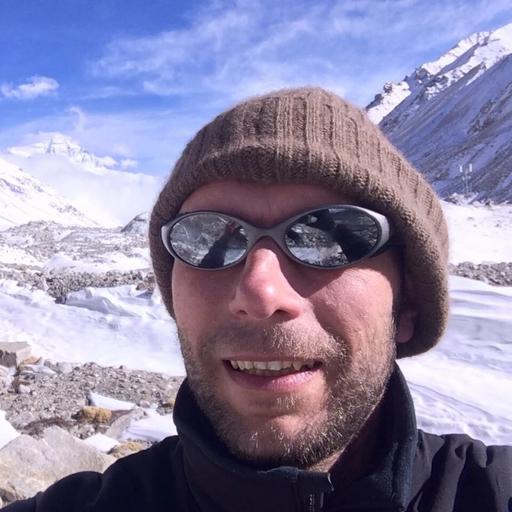
Boardroom Strategist and Creator of Ultra States Examining How Humans Actually Perform Under Pressure
30+ years Boardroom advisory experience330+ Boards advised or served on6 World’s highest mountains climbedTEDx Spoke at TEDxUniversityofEdinburgh
Deri Llewellyn-Davies grew up in a small rural village in Wales, where community wasn’t a concept, it was how life worked. That early sense of shared responsibility shaped how he later approached leadership, decision-making, and pressure, long before he entered boardrooms and high-stakes environments. Over three decades, Deri has advised and sat on more than 330 boards, becoming known for spotting the real constraint beneath the noise and helping organisations think clearly when the stakes are high. His signature Strategy on a Page methodology is a no 1 best seller and has inspired thousands of founders to scale with purpose.
Outside business, Deri has spent years testing human limits in extreme environments — climbing six of the world’s highest mountains, completing the Marathon des Sables, and racing the infamous Ironman. Those experiences became a lab for understanding how people actually perform under pressure, and why so many high-achievers quietly collapse when the adrenaline wears off.
That intersection of boardroom pattern recognition and extreme performance thinking led to the creation of Ultra States, a framework that reframes performance as state selection rather than motivation. Instead of treating focus, flow, connection, recovery, and peak intensity as accidents or personality traits, Ultra States examines them as distinct neurological and physiological conditions, each with trade-offs when misused or overextended.
More from Deri Llewellyn-Davies
All episodes → The Sticky From The Inside PodcastUltra States: Earthquakes, Hijacked Minds and the BoardroomOct 2026Play episode →
 Mindset BoosterHow to Enter a Flow State and Improve Sales Performance with DeriOct 2026Play episode →
 Barriers and Boundaries Resilience LeadershipUnlocking Human Resilience with Flow, Connection, and Leadership, feat. Deri Llewellyn-DaviesSep 2026Play episode →
 Rewiring Health®Why High Achievers Burn Out: You’re Stuck in the Wrong StateAug 2026Play episode →
 Mastering the Art of Success Hosted by Debbi DiMaggioDeri Llewellyn-Davies: Leadership, Ultra States, and Performing Under PressureAug 2026Play episode →
 The Caring CEO. For leaders who want to grow teams who are more caring, fun filled and productive. For leaders who care.No Regrets Leadership , Deri Llewellyn-Davies, Boardroom Strategies & creator of Ultra StatesJul 2026Play episode →
 Speak Up: Develop Your Executive Presence & Leadership Communication StyleHow Elite Athletes and Great Leaders Build Unshakable Executive Presence Through State ManagementJun 2026Play episode →
 Sales POP! Podcasts: Insights from Top Experts in Sales, Marketing, Leadership & More.500% Productivity in Flow State — Deri Llewellyn-Davies ExplainsJun 2026Play episode →
 Engineer Your SuccessHow to Access Flow State and Accelerate Your SuccessMar 2026Play episode →