
June 17, 2026
How Elite Athletes and Great Leaders Build Unshakable Executive Presence Through State Management
Listen
Sound bites
If you understand that neurochemistry, I'm an ultra endurance athlete, I've climbed some of the highest mountains in the world, run across deserts and all this crazy stuff.
If you walk into a boardroom as an executive, and you are highly jacked on cortisol and you're stressed, and you are the leader, you will reset that entire room to cortisol and stress.
In this episode
Deri Llewellyn-Davies joins the show to explore executive presence through state management, from energy and focus to recovery, connection, and flow.
- Mobile phone distraction and constant high beta states can hijack executive performance and presence.
- State is shaped by purpose, brainwaves, neurochemicals, physiology, psychology, and a sense of something greater.
- Flow, focus, recovery, reboot, and connection are practical states leaders can learn to access on demand.
- Poor state management can burn through neurochemicals and contribute to stress, burnout, and reduced influence in the room.
- A leader’s emotional state can set the tone for everyone else in a meeting, for better or worse.
Transcript
ShowHide
Automatic captions of the conversation. They can contain errors and do not name who is speaking.
Do you ever walk into this super important meeting fully prepared only to freeze, ramble, or just fail to show up as your best self right when it matters most? Welcome back to Speak Up, the number one ranked business communication podcast where we help high performing introvert leaders, including you social introverts, turn your ideas into influence and improve business outcomes. Because being brilliant does not automatically make you influential. I am your host, Laura Camacho, your career accelerator, executive presence strategist, and godmother.
And by the end of today's episode, you'll discover why your phone and daily habits can be sabotaging your executive presence and leadership performance. How to intentionally access flow, focus, connection, recovery, and peak states to perform at your highest level. Practical techniques for staying calm, confident, and influential, even when everybody else in the room is losing it, when they're stressed or emotional. We have someone that has a completely different take on our favorite topic of executive presence. Mr.
Deri Llewellyn-Davis, welcome to the show. It's good to have you here. It's a real pleasure. Looking forward to it. So what is it that we're getting wrong? Like you have this completely different approach to executive presence and you have something called an ultra states framework. I really like that name. Ultra states. I'd like to be in an ultra state. Deri, how can I do that? Let's just rewind for a moment because it's important that I'd come through the corporate world. So I was in the corporate world in the early part of my career.
I've sat on 320 boards since then. This isn't a kind of woo-woo approach to what we're talking about. These things have caused big impact, right? But a lot of it actually from a dopamine perspective and the else, we've lost the ability to access a lot of the states that were common to us as humanity because of the distractions of the mobile phones. But that's huge. If you're listening, he just picked up his phone and I just want to recap that. That's a really profound statement that we've lost our ability to access states, and the mental and physical, we probably should define what we mean by state, but it used to be that it was more normal to access those states.
Let's just work out what a state is, right? A state, this isn't kind of, it sounds like, well, we are all in a state every moment of every day, we are in a state. But if we actually rewind it, what I did with Ultra States is I kind of took the moments, I know what it feels like to feel great. I also want to say, so we go, we are constantly in this moment, we're feeling a different state. I call that a state, and part of that came from inspiration from flow state, because that's one of the ability to get into flow. And I recognize, you're only in flow 10% of the time if you're lucky, by the way, 20% if you're an actual genius.
So what about all of the other moments in life? What state are we in? That's the way I define states is six foundations to state. Before we can get into any state, the foundations need to be stacked. And this is, first of all, purpose, you know, we need to be on purpose. There's the electrical. Now this is super important, which is a state is a brainwave pattern. So alpha, beta, gamma, we are in different brainwave patterns. What defines different state is a fully different brainwave and different coupling of brainwaves.
So you can read this on an ECG. We all know it's there. We're just not looking at it, right? We don't think about it as that. Third one is neurochemicals. We all have a new different neurochemicals to our brains, right? All of this is everything I'm talking about. The books out there, it's fully accessible and free, by the way, because I want to get this in the hands of as many people as you need. We'll link it in the show notes, of course. We'll go through all of these in detail, to show you the neurochemicals that are firing and why they won't, right?
Then we've got the physiology, guess what? If this is cool and you move and everything else, you have the ability. If you're sitting around on Zoom, crunched over all day long, you've just blocked a lot of state of payment. You've just got a physicality perspective. You've got psychology. If you're sitting around being mopey, psychology is going to affect it in the final bit. I call it the spiritual. It's not really linked back to religion. It's more of something greater than you or got a tap to it. There's something, I think there's something magic going on and we can tap that magic.
So if you look at that, state is quite a complex thing. I think there's actually more, but there's more advanced states. But the six core states, all of them underpin the foundations in a slightly different way. The big one is electrical. Because execs are hijacked in two things, it's the electrical and the chemical. So they are hijacked in high beta all of the time, and especially zoom to zoom, no breaks in the middle, stacked on dopamine because of the phones again that we were talking about just now, and they're driving cortisol.
So if you understand that, oh, okay, the state I'm predominantly in is a high beta cortisol based state, you'll just by the very fact of that, block the ability for most of the other states. Yeah. And it's exhausting. And it is. And then guess what? One of the states that we have to be able to access is recovery state. We need to be able to recover. I think the hardest state for execs, founders, people who are busy, busy people, which is the people on your school, is we're so busy and we're so jacked on high bates or high cortisol.
And it's just destructive. It's exhausting. And you've got to be able to, first of all, reboot, which is one of the core states. You've got to just take some time out. If we think it's going away, it's not. If you've fried it for too long, you've burnt the neurochemical path base for too long, we have to do a proper reboot, which has been built into humanity for centuries, by the way. Do a fasting protocol, dopamine detox, chill out. In the last 20, 30 years, we have jacked the next generation with stuff that's never been there before.
When I was growing up, we used to play. I love the tools. I'm very grateful for the technology tools we have, and I think used properly and effectively, they're empowering us in amazing ways. Used en masse without any control and hijacking the very states we have to feel amazing. That's out of control. I've got children coming through. I know you've got nine grandchildren coming through. Yes, I do. With that ability, we're like, we've got to help them, because otherwise the next generation won't be able to access those states.
Oh, it's so true. And those kids, even though all the adults in the family are trying to pretend that we're not addicted to our phones, but this four-year-old granddaughter that was visiting me last week, I had an extra phone case. I'd bought a new phone and had two phone cases, so I gave it to her. That was her favorite thing. The whole time she was pretending like the case was a cell phone and talking and texting and taking pictures and showing me the pictures, which was cute and everything, but I'm like, also like, wow, she has picked up that somehow at four years old, that the phone is the thing.
Yeah. The phone and technology is the thing to help us to communicate to the world and do these amazing things we can do. There's also a time where we need to put it away. Yes. The studies around not just to get into flow states, no, two of the main states, flow states, focus states. Okay. They're different. They're different. Flow is different. Those two, if you are distracted in those states, you won't have a chance. The mobile phones, you don't need to just put them down. That's science now. They need to be in another room.
Yes. I've started sleeping with my phone in another room. If you want to be in it, and this is what I'm proposing is, choose the state you wish to be in on a daily basis and multiple, because you literally want to be able to transition between states. If every moment we choose the state we wish to be in, then you've got to choose your environment to ensure you can enable that state. If you want to be in flow and you want to be in focus, you cannot be on your phone. It will literally block it because you're distracted, the pings are going off.
I am literally allergic to the pings on my phone because nothing works on my phone, and I have turned off all notifications. Yeah, same, same, same. If I know I'm going to want to drop into flow state or I want to drop into focus state, I'm in a room, there's no technology in that room, or if I'm working on a laptop to do things, I've got what I've got up and now you can drop into some incredible zones. But it's that we have to get back to the basics. I was on a major keynote stage on Monday and I was like hands up, 550 senior leaders from America.
I was in Canada speaking and I said hands up. The first thing you do when you wake up before you get out of bed is check your phone. I don't know what hands in the audience didn't go up. I've said and the next one is okay and now having a bit of fun, clearly right now, let's just carry that on. How many then take that phone and when you have go to the toilet for the first time in the morning, your phone is with you whilst you go into the toilet, right? Okay. So we get on our phone so early. Like how long would that last?
Let's say that I did that in the morning. How long would that last? The whole day for most people, isn't it? Because the moment you're on it, you're on it, you're not coming off it. You go and do some work. What we're proposing is if I'm working in like a flow state and I want to get into a focus state, the five minutes in between, you have ability to transition. You can do that through breath work, through movement and everything else. I go through very good protocols. The first thing you've done is, Jackie, you've already driven cortisol.
You've already driven dopamine. So you've already hijacked your neurochemical system. You now have probably got something stupid or just derived from an email or whatever. You have the cortisol. Stress is probably already in the system and we haven't even got out of bed. Oh my gosh. So you go, how long has it last? Well, how is it going to stop? Now, if you don't and you come off a Zoom call and guess what we're doing in the middle? Check your phone. You've now just driven dopamine again. So whatever attention you had to change states has just been hijacked again.
Exactly. The moment you have a free moment, you check your instructions straight away and there's nothing wrong with it, as long as we've chosen it. Okay. So that is an issue. So what you're saying is that you're not accessing the brain it takes to come across as an executive leader if your brain has been hijacked by your phone. Well, let's just talk about three important states for an executive leader. Okay. So I've talked about the foundations, the six foundations. Those are just the foundations. Those are just the foundations.
Okay. Each state, those six foundations are different. So if you're just driving high beta and cortisol and stress, and that's not a state as far as I'm concerned, that is business as usual and that's stress. Let's not go there. Now, what do we want to be as an execs? Well, there's three main big states that are the productive state, which is where the executive. By the way, you can make recovery states and reboot state to be able to access the states anyway, but one of the big ones is flow. Flow, very well, whereas from Csikszentmihalyi 50 years ago, this is not new, incredibly powerful.
The research is showing if you can access flow states, that is 500 percent productivity gains, 300 percent creativity gains and 200 percent uplift in bubbles. That comes from McKinsey. So the ability to access flow, that's coming out of a very established survey. Right. Even if you don't get anywhere close to that and it's not 500 percent, it's 100 percent. A mere 100 percent. Okay. Yes. Access that state, it's a super power. Yes. Now, the focus state's similar gauge, right? If you can focus without distraction, what's the power of that?
You know, massive uplifts, it's around 200 to 300 percent uplifts. And it's pretty obvious. If you want to go deep work, surely matters, strategic work that really moves the needle. You need to be there in the pocket doing the work. If you're getting pinged and you get distracted, 23 minutes to get back into the focus zone again, right? When I say this stuff, everyone kind of nods, yet we kind of know this, right? We intrinsically think and yet we've been hijacked for too long, and our habits and our patterns have been hijacked by technology.
So, from an exec, if you can access this flow state, that's the creativity, innovation, with AI and everything else, what is the edge we've got right now? But what if I'm using AI to brainstorm with me ideas? Amazing, right? I use it all the time as a co-partner to me. My mind has been so long, I named mine, I think he's so cool. That is actually, you can be in a flow state with AI. Okay, okay, that's what I was wondering. Like, if you sit there like a bum, and you just go, hey, I like, you do all my thinking for me.
Yeah, yeah. Now you're hijacked on quarters on stress. Let me repeat, the recovery, reboot stage, the flow stage, and the focus, are those the three? So there's six states in all, the main one is, so for reboots, Yeah. and recovery, that is where, if you go back, neurochemicals, you're burning neurochemicals very fast, by the way. It's super productive, it's amazing. You must rest after that. Okay, okay. If you don't, it's going to burn, and this is where you burn out, this is where you, you know, there's a lot of, which happens.
But if you understand that neurochemistry, I'm an ultra endurance athlete, I've climbed some of the highest mountains in the world, run across deserts and all this crazy stuff, right? You know that if I've run six mountains, I need to rest. Yeah. That's pretty obvious. Well, it's the same thing we're doing, execs are running hard every day. A mental cognitive load is being stressed every day. If you understand that's a mental load, a cognitive load, neurochemical load, you must rest those neurochemicals for them to be able to regenerate.
It's the same principle. So, got to recover and re-birth is just, sometimes you got to have a bigger recovery period. The re-birth state goes a lot deeper, a lot of day, that's for one day, one week, depends on the time, all right? The third state that's in the recovery genre, so re-birth deep, recovery every day. And the third one is connection. Connect. This is quite a key one for execs. I call it all to connect. That's actually what me and you were doing. Actually, we're a little bit connected, a little bit flow.
We're kind of going to be, we're riffing a bit from each other. We're kind of in a flow state because we both love what we do. We're both used to this weird flows, but we're also connecting and that's oxytocin, serotonin and a few other neurochemicals come into play. Now, if you walk into a boardroom as an executive, and you are highly jacked on cortisol and you're stressed, and you are the leader, you will reset that entire room to cortisol and stress. Entrainment is very well documented. Yes, it is. Also, we feel it.
I don't have to show you the science to know you're in a room, the whole team's there, everyone's happy, the boss comes in and he's pissed. He's now, and he's, he's, he comes in. I'm nervous. Yes. The whole room is set instantly. Yes. Now, if we come into a boardroom, which is what I'm encouraging, encouraging, and the leader's very aware of what we just said, I still, lots of boards I still do. First thing I want to do in a board meeting is write everyone, stand, let's just take a few breaths together, train the room with breath work before you even begin.
Sixty seconds. All you need. We set the room, we set the intent, and now we can actually, now you have the ability, with cortisol, you have no ability to bring in osteosarotone. You're not going to connect. Okay. We go into this meeting, we are going into a meeting where we aren't the top dog, we're not the CEO, we are a vice president or just somebody, maybe even called in to give a report on this terrible thing or this thing that we're worried about and you walk into the room and it looks like everybody's angry. How do you fix that?
First of all, you have a choice whether you go with the rest of the room if you're aware. The reason that the whole room goes in entrainment is because it's the natural response if you're not consciously aware of your own state. Yeah, yeah, yeah. You can consciously choose. What I say, so it's for the next levels down who don't have full control of the room, you can still control your state. Okay. And if you're going to present in that, you can't control the room, you can't control your own. And so when you're about to do a meeting and the whole room's pissed, right, and everyone's, you know, whatever's going on is your turn.
Yeah, you got a choice. You have a big choice. If you are just jacked with everyone else and now you got to present, you'll probably shut down. You lose the ability of people to stumble because they've literally lost the neurochemical ability to present. Oh yeah. Oh yeah. I mean, I totally identify with that. What you need to do, even if you can't control the room, you can control yourself. So breath work is one of the key things for entrainment. So it's like you're sitting there, whilst everyone else is having a panic attack around you, you're just sitting there and you're breathing.
No one knows you're doing it, by the way. It's a box protocol. You can be sitting there, I'm doing it all of the time, on Zoom calls and meetings, I'm sitting there, and people, most people don't know that I'm doing breath work most of the time, and I'm just stop listening. Because it's just keeping my, it's stilling my mind, it's telling my whole nervous system, I'm safe, this is okay. And then when it comes to your turn, if you are in the right state and the rest of the room isn't, it's your turn now, it's your turn to present, it's your turn to do your thing, and you stand up with poise and presence and calm because you've trained yourself, you've entered to the state that you choose to be in, then enshrinement will work the other way, you can take the whole room with you.
What I'm taking away here, what I'm thinking of my audience and how we want to step up and we want to be confident in a room when we're not the boss, but we're aiming, we want to show that we're at the level. So it really starts with not even your content, but your state. So your content won't work unless your state is the right one. If you've got the greatest content and your greatest pad, which most people are, and they're not stupid, these incredible talented people, guess what? They just can't perform when they need to perform.
That's the sixth state, peak state. Peak is when you got to be... Now flow, we can access creativity, innovation. When you want to just be there, you got to just do the work. It's usually creative, it's writing, it's like I'm speaking, this is flow state for me right now being with you, where it's got a creative, innovative edge to it, right? Focus is, yeah, it should be done. It's kind of a bit of both of those, but peak is you got to be on and you got to be on now. Yes, that, okay, how can we do that? That is the most complex, that's they need to actually con access it for long because it's really quite open state.
High energy, right? Because you've got to be on it, and you've got to be on it then, and this is where state will win. So if you kind of get best content, and you know well, and most people are listening to this. The people you serve here, they are, it's frustrating, I get it. The clever people, you deserve this. You've done the work, and yet you just can't turn it on. Why? Because over time, you just got more and more nervous, the stress is there, the court is on edge on it. Then when it's time to perform, guess what?
You can't access the state you're in because you have to train the state. What is presence? What is this communication? It's the person who's the calmest person in the room, the present person, they're fully present and be able to access the creative channel demand. So talk to us and tell us the reason our brains shut down when we need them the most is because of past experience that we enforce. And we're going to stop that by breathing before a key moment or a key, I guess deciding to go for the peak state, right?
That would be like this first thing, walk us through it. First of all, so understand your foundations, right? So the foundations are key. And Ola will give you access to the book. There's two scorecards and you go to answer the question, then it'll show you if you literally the neuroscience and the results of exactly what foundations you're weak on and strong on, and what states you can access and you can't. So then you'll see exactly where you need to go to work. Oh, fantastic. Yes. So if you go, okay, very good. But do you know what?
Your issue is, is, is Nura Campbell. You are just stressed. You're really good. You're really busy. You're really good all the time. You have an inability to access the states because you are jacked on court today. If we know that, just trying to access states, trying to bash on the state is not going to work. We have to fix the foundation before you start to try and access. So you've got to just, and a lot of that, most people, the first five stages, just do some recovery. If you're stressed, more stress is just not going to solve the problem.
And most people need a reboot. And that could be a weekend, but it is not a consistent issue, right? When we say recovery, I mean, deep recovery, it's scientifically based recovery, which is don't think it's what we do in the weekends, we're on our phones again. Yeah, exactly. And then you're watching TV and you're on Netflix, a 9-11 movie, but it's not recovery. Take yourself away, go to the sun, sit in the ocean, sit in the rainforest, connect to nature, turn your phone off, possibly do a fasting protocol, do whatever you need to do to just calm the nervous system.
If the nervous system is just overstressed and over-regulated, it's just nothing's going to change. Now, the good news is we can fix it really fast. Okay. It doesn't take a massive amount. And for most people, they haven't gone that far yet. They're not fully fit. So, let's just get a reset in. Now, we come back to work and we go, right, what states do I want to be in? You've got to choose. Right now, we're not choosing. We're going through our days in high beta. Yeah. Zoom to zoom to zoom to zoom, teams to teams, whatever your weapon is, right?
And no breaks in the middle. And guess what? We have now hijacked all day long. We're in a high court as all. And then you come to the dinner table with a flat. Right. If you can get your foundations re-established, we have now got the access and the ability to choose the state we want to be in. I need to do a creative project. It's like super important. It's innovative. I've got to be on it. That's a four-state. Choose it. Choose it wisely. And you decide where you want that to be. Most people, it's mornings. And this is why I'm saying, if you don't get on your phone and you wake up and you hydrate and you do some very basic protocols and you leave that phone alone for a while, you have an amazing ability first thing in the morning, so the first hour or two hours in the morning to access flow state.
I love that. Yes. I definitely can attest to that for sure. So you can win the day before the day. Yes. Exactly. Exactly. Wow, everybody. So I hope your mind is like mine, completely blown. I am encouraged that the protocols that I put into place, like I have my phone now in another room charging. There you go. Is there anything else? And we're going to link the book for free in the show notes. The Children of the World, this stuff just needs to be known. Yeah, it does. I'm in a point in my life where this is legacy for me now.
This is all my lessons for the last 30 years. It's there. It's just there. And now, for those who are sciency, there's 220-odd white papers linked to this. So this is very scientific. Oh, yeah. And there's two scorecards there as well. All of that is fully accessible. We make sure that everyone has access to everything. And I just encourage people to go, I'm giving you the science because I think we know what we should do, but we don't do it. Like giving you the science and giving you the verification of exactly what's happening in your mind.
So you go, you can understand why it's been hijacked, right? What's done is done, right? But now you have a choice. And the choice is now I understand my mind, my body, and my brain and how it works. I can choose something else. If we can give that empowerment back so people can choose the states they're in, and these states are magnificent states. Absolutely, absolutely. I want to bring back the states that I was very blessed to access as a child and in my teens. I just want the next generation to feel like I did.
Yes. And I'm sure everybody, I mean, there's a lot of, I would say most of the people listening are parents. And so, yeah, it's nothing to think about with your kids too. So, well, thank you so much for coming on and sharing your wisdom. This has been amazing. I appreciate this and thank you. Last year has been a pleasure. The state management concept was blowing my mind, preparing for these high-stakes situations by making sure you get enough sleep. Although it is hard to sleep the night before, but maybe the night before then, making sure that you have good breakfast, that you are breathing well, that you're keeping your state on the day-to-day in good shape by managing your life.
As well as you can. Like we're athletes, we're elite leaders and we have to make sure our bodies are prepared to support us. Then another big takeaway, this was just so cool that your emotional state can be the emotional state of the room. It's generally flows down from the highest ranked person in the room, their emotional state. But you can, if you're strong and confident in your state, you can actually calm down people that have more rank than you do in the room. They're highly contagious. In any case, remember that in a few weeks, July 6th, Speak Up Summer Camp starts.
It's a private podcast series with daily leadership reps to help you build the executive presence habits that senior leaders actually notice. Speak Up Summer Camp is a highly accessible alternative to the more in-depth, deep work we do in the coaching program. There's a link in the show notes you can access. In any case, have a fantastic day and I will catch you on the next episode.
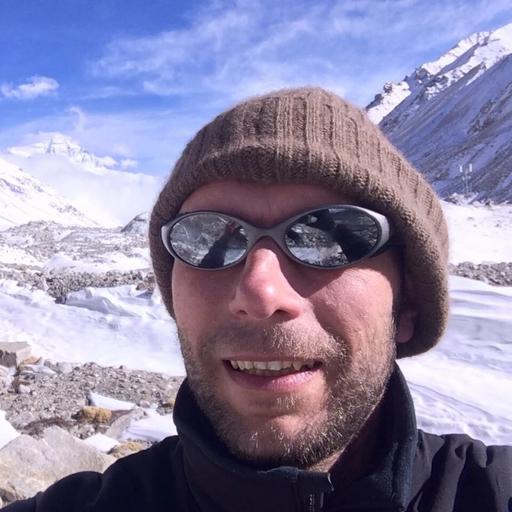
About Deri Llewellyn-Davies
Boardroom Strategist and Creator of Ultra States Examining How Humans Actually Perform Under Pressure
30+ years Boardroom advisory experience330+ Boards advised or served on6 World’s highest mountains climbedTEDx Spoke at TEDxUniversityofEdinburgh
Deri Llewellyn-Davies grew up in a small rural village in Wales, where community wasn’t a concept, it was how life worked. That early sense of shared responsibility shaped how he later approached leadership, decision-making, and pressure, long before he entered boardrooms and high-stakes environments. Over three decades, Deri has advised and sat on more than 330 boards, becoming known for spotting the real constraint beneath the noise and helping organisations think clearly when the stakes are high. His signature Strategy on a Page methodology is a no 1 best seller and has inspired thousands of founders to scale with purpose.
Outside business, Deri has spent years testing human limits in extreme environments — climbing six of the world’s highest mountains, completing the Marathon des Sables, and racing the infamous Ironman. Those experiences became a lab for understanding how people actually perform under pressure, and why so many high-achievers quietly collapse when the adrenaline wears off.
That intersection of boardroom pattern recognition and extreme performance thinking led to the creation of Ultra States, a framework that reframes performance as state selection rather than motivation. Instead of treating focus, flow, connection, recovery, and peak intensity as accidents or personality traits, Ultra States examines them as distinct neurological and physiological conditions, each with trade-offs when misused or overextended.
More from Deri Llewellyn-Davies
All episodes → The Sticky From The Inside PodcastUltra States: Earthquakes, Hijacked Minds and the BoardroomOct 2026Play episode →
 Mindset BoosterHow to Enter a Flow State and Improve Sales Performance with DeriOct 2026Play episode →
 Barriers and Boundaries Resilience LeadershipUnlocking Human Resilience with Flow, Connection, and Leadership, feat. Deri Llewellyn-DaviesSep 2026Play episode →
 Rewiring Health®Why High Achievers Burn Out: You’re Stuck in the Wrong StateAug 2026Play episode →
 Mastering the Art of Success Hosted by Debbi DiMaggioDeri Llewellyn-Davies: Leadership, Ultra States, and Performing Under PressureAug 2026Play episode →
 The Caring CEO. For leaders who want to grow teams who are more caring, fun filled and productive. For leaders who care.No Regrets Leadership , Deri Llewellyn-Davies, Boardroom Strategies & creator of Ultra StatesJul 2026Play episode →
 Sales POP! Podcasts: Insights from Top Experts in Sales, Marketing, Leadership & More.500% Productivity in Flow State — Deri Llewellyn-Davies ExplainsJun 2026Play episode →
 Engineer Your SuccessHow to Access Flow State and Accelerate Your SuccessMar 2026Play episode →
 An Evolving Man PodcastFlow State, Burnout, Purpose and the Future of Leadership | AEM #155 Deri Llewellyn-DaviesMar 2026Play episode →