
July 23, 2026
No Regrets Leadership , Deri Llewellyn-Davies, Boardroom Strategies & creator of Ultra States
In this episode
Deri Llewellyn-Davies talks about caring leadership, performance, and the human states that shape culture, purpose, and longevity.
- Caring at work means giving a shit about both the company and the employees.
- Leadership care links to higher productivity, profit, customer service, and retention.
- No regrets shaped a life of marathons, mountain climbs, and pushing through fear.
- Vitality, intimacy, and prosperity form the VIP framework for daily self care and recovery.
- Purpose and relationships are central to health, longevity, and effective performance.
Transcript
Automatic captions of the conversation. They can contain errors and do not name who is speaking.
Today's guest is Deri Llewellyn-Davies, who's had an extraordinary life. Over the last 25 years, he's advised lots of boards and senior executive teams, but he came from a very humble life in a small village in Wales. In the last couple of days of his father's life, he told him that he'd had lots of regrets in life. This had a huge impact on Deri, and he decided to live a life with no regrets. That included running six marathons in the Sahara Desert, climbing some of the highest mountains around the world, and pushing himself on lots and lots of fronts.
He's had two TED Talks, one which is The Habit of Flow, and the second one is about how to push through fear and achieve great things. As you hear, Deri has lots of passion for his work, and his advice to his younger self would be to discover his purpose earlier. That's how important he considers that to be, to a good life, to an Ultra State life. There's a lot to learn from Deri. Enjoy. It's a real pleasure to welcome Deri Llewellyn-Davies, the caring CEO. Welcome Deri. It's great to be here, Graeme. Looking forward to this conversation.
Deri, what does care in the workplace mean to you? Do you know what? I was really, when I got the invite to come on your show, that's what jumped out at me was the word care that you've used. And I was like, that's a really interesting word to be using, isn't it? In the workplace. This is where I love your work, because it's not one that we talk about. You saying that question, I don't think I've ever been asked that question before, in 30 years. That's insightful, I think. But I'll cut straight to it, because I'm a pretty direct person, which is, for me, you actually need to give a shit.
That's the key, right? It's like cutting through all the noise and no fluff. It's you actually have to give a shit. And I mean, that's giving a shit about the company, and also giving a shit about the employees, right? And I mean, really, and this is the word caring, right? And I think we have to, if I used that word caring, some boards would resist against that. But then it's like, we've got to unpack what that word means, which I'm sure we're going to do a little bit today, right? But it's, and I think a lot of leaders, I think the world's rife with narcissism, right, with bullying, and they don't give a shit.
And that is the truth. I won't work with those companies, by the way, because it's culturally toxic and it doesn't work, right? I think you just got to care, right? You got to give a shit. That's my view of it. But I want to know more about your view on that in a minute, Greg. Well, there's some very robust research that confirms how good it is. Gallup organization have been researching engagement discretionary effort for 40-odd years, and now we're down to just 12 statements. And one of those statements is, my supervisor or someone at work seems to care about me as a person.
And it's been asked over a million times, 100 different countries. The more people would strongly agree with that, the higher the productivity, profit, customer service levels, and longer people stay in the organization. So, and, you know, part of my work, the caring CEO, was just not to say this is theory. You are my 91st person to interview on this show, and there's lots and lots of examples of very senior leaders that are doing amazing stuff that really strive for both those things, a culture of care and a culture of high performance.
Well, I come from the high performance side of things, so this is what we'll be deling into. But I really want to get that Gallup study, because I haven't seen that piece of detail of it, which I think is fascinating, because I've been looking at various Gallup polls for decades, and the one that jumps out the most is engagement, right? You know, I can't remember what the study is. I've been watching that number. It's been moving from 70% to 80% plus for years of disengagement in the workplace. Exactly. It's only 14% actively engaged now, one-fourth.
That's just like, that's... I've been quoting this for 25 years, this state, and it's got worse. And it's the actively disengaged is the worrying statistic, right? Because for those listening to, there's actively disengaged means you have a terrorist in the building and they are purposely taking you down. And that statistic's going up, right? And it has been. So it's like that engagement. But then the next question behind that, because I love engagement indices and everything else, right? What constitutes engagement?
And it always comes back to the leadership, and it comes back to the leadership caring, right? Also about development, there's a few other things going around that. So this actually, the leader actually feeling like you give a shit, it's critical. It sounds so obvious, doesn't it? Right? When you say it. But I'm so glad you got the science behind it, because now I'll be singing from the rooftop for you now, right? I'm so surprised. Right. You grew up in a small Welsh village. How was that, Deri? Small and Welsh. So I always say that, because I think it's important.
I think our heritage informs us. And we as humanity, when we look at Ultra States, you know, I'll be talking about performance and states at some point today, right? States is, I think, our God-given gift, you know, the ability to get an access flow state, etc. Right? But a lot of this comes back to ancient origins. And I'm always looking back to us. And we were, we came from villages. That's the point. We had tribes. That's where we originated. And the tribes had rules. And there was certain things around that of which our biology and our brain hasn't fully evolved out of.
So I mentioned the village thing because it's relevant. So, you know, and also when I look at it from a corporation perspective, a business perspective, this is culture. And culture was formed in the village. When you're in a little village, and when I'm on the stage, I'll say hands up becomes a village, and hands are very few these days. It's bloody, we're run by city dwellers now. But when you're in a village, the dark sides and positive sides to the village. So it's not like roses and tinted glasses all the time in villages, right?
Because you have a little bit of a crabs in the bucket syndrome and a few other things going on there. But the village is tight. Everyone in the village kind of knows each other and you support each other. And if you say you're going to do something in the village, and our ancient origins we're very clear on we want to be part of the tribe. To be ostracized from the tribe is psychologically damaging for us. And also that could lead to death. So this village piece is important because if I make a promise, I took what values in business a lot, right?
Values in culture. What does that mean? But there's a whole heap of depth there. But let's just start with truth and honesty and let's start with actually giving a shit. Let's put Kerrig in the middle of the scientists. But if you make a promise in the village, you keep your promise. And that's a really quite important thing because if, I always say like, if one of the guys down the road, one of my friends, if Bob went and promised Auntie Mabel that he'd be coming to do his plumbing at five o'clock and he didn't show up, the whole village would know by the following morning when the post office opened.
And then his mom would be giving him a barlarkin for not turning up to Auntie Mabel's. That was the, you kept promise, right? I think that's what we're losing is this cultural thing. And what is a business? I see a business as a village. I see corporations, industries as villages, and therefore there should be a culture. And every industry brings a culture with it. Every company brings a culture with it. Whether that's good or bad, it can be directed by the leaders. Whether they give a shit within that culture and the care is also part of that culture too.
In my research, I saw that you said something about men in villages in Wales are emotionally challenged. Was that, is that something you said? What did you mean by that? Actually, the word I used originally was emotionally retarded. And then I had to change it. When I did my TEDx, the TED removed, couldn't wouldn't let me use the word retarded. I had to use challenged. I was actually referring directly to my dad. I'm 51 now, right? So the generation that I was brought up, my father's generation was 70s, 80s. He'd be 80 now if he was alive.
When he died, because I talk about my father's death, which is a big changing point for me, he died with regret, right? That story comes from a point sitting on his deathbed, and I was holding his hand and just talking to him. And he said, son, I regret so much in life. And this is a man that I loved. I looked up to my father. He was a good man. And I never thought those words would come out of his mouth. And so in his last dying, and that was two days later, he passed. So that was the only emotional conversation I'd had with him in his entire life.
So that's why I would refer to emotionally challenged. And that generation was buttoning up, don't cry son, this is what I was brought up. I was brought up a rugby player. I was tough. And it was like, I remember my cousin, we had a lot of deaths in the family. I don't know why, what happened to us, but my cousin died and my brother died in my place. I had these deaths, but I remember the first death. It was my cousin and I was like eight years old. And I just remember Coober's tears. I was crying. And he said, look, don't cry.
Men don't cry. I was like, okay. And then that's programmed, men don't cry. So then next few funerals, I sat there pretty stoically. So bless them. And I don't blame them. I have nothing but love for my father and his generation. They did not know any better. Like, we're sitting here, you've got your great book on care, and there's all this coaching and leadership. We've got access to all this information. They didn't have anything. They were in the village, they knew the village. And the only thing they knew was the parents before them, which were even worse than they were.
So it's like they didn't know better, but there was no emotionality in that. And that masked a lot. In fact, I would argue that drove earlier death, and I don't say that lightly, I think men suppress the emotions so deeply for so long. Why is it that women will live a lot longer than men? But I'll leave that question out there. But in that generation, emotions are suppressed so deeply, that drives all forms of illness, I would argue. So sorry, that's a longer answer to your question, but that's where that quote comes from, was the non-emotionality of my father and that generation.
And now I stand for emotionality. You know, I will, if I'm talking about something deeply emotional on the stage, I'll cry. And I'm okay with that as a man. And I think as men, we need to, as leaders, we need to be more in touch with emotions because there's humans in front of us. We truly care, then we truly care, which means that's in a huge emotional range needed there. And if you have got a very narrow bandwidth as a man, as an emotion. I see men all the time on the boards, Graham. I'm like, oh my god, so a woman, one of the women in the staff, she was just crying on me and they're freaking because it's like during the week, she's crying and they're like, and I'm like, just be there, just be present.
That's all you need to do. But she's crying, Deri. It's in the workplace. Yes. Would you, would you want her to leave that outside the door? That doesn't work like that. And by the way, the fact that she's doing that, another major driver of culture, and it comes out of the Gallup studies and a lot of other studies out there, is you want to keep your employees, make them feel safe. Yeah, 100%. Safety, safety is so important. So if you can't got an employee that sits in front of you and is okay crying, that's a bloody good thing.
Now, if you sit there and freak because you haven't got an emotional range to deal with it, you've got to work on your leadership. So safety and ability is key, I think. And I think one of the key things you should talk about, men being able to toughen up and handle everything. Well, sadly, I don't know the exact figures in Wales, but in Australia, 75% of suicides are men, three out of four. So how's that bottle of GAP going for you? It's not exactly a great legacy. And it's 25% of men in Australia who have no one outside their family they can be vulnerable with or confide to.
No one, zero. So let alone just having one or two. So I went through my own challenges, had a very bad breakdown, I was out of work for five years. But after that, I sort of consciously built relationships and had rituals in my life, which develop those connections and vulnerability with men. And doing great stuff. I know you had some time in the northern beaches of Sydney. Well, every Sunday, I meet two mates at Kerr Kirl and we walk out of Manly, walk back and have breakfast. And it's such a great way to start the day.
It's, of course, just with kidding and taking a piss and giving each other a hard time. But we've also had some really serious talks about relationships, or kids, or finances, or whatever. And I now am absolutely convinced, and the research shows this as well, that the quality of our relationships determines the quality of our life. Now, I would push that even further now, because I think you're 100% right, Graham. So me and my partners, we created Freedom Founders, which is global tribes of entrepreneurs. And we did it because of the statistics on the boards.
I've sat on boards, over 330-odd boards now over 25 years. And what I've found is it's got worse. So post-pandemic, the boards come to me. I'm very blessed. I don't call myself it, because it would be a wanky expression, but I'm the trusted advisor to them. So they come to me when the shit shoot. And most of the time, when they come in to me, because there's a big problem, issues inside and outside of work, they come in to me. They got no one else to go to. Which is exactly what you're saying. So I went, okay, that's great.
And I'm very blessed and I'm honored that they come to me and that I don't take that role. And then a lot of the time, I'm palming them off to coaches, etc. Because I'm not a coach, I'm a board advisor. They come to me first and I go, right, I hear you, you need to speak to this person, right? Go deep, be prepared. Because a lot of men won't go to coaches either, right? Because there's a lot of crap coaches out there, we know that, but you get to the good one and it'll change your life, right? So we saw that, hence why we built the tribes, and the tribes are deeply back to village, right?
The tribe is about deep vulnerability, it has trust, our entire currency is trust. And now you've got 30 people in a tribe, in a city, all scaling, you've got different problems when you're scaling a business, all scaling, being able to talk about the challenges openly, being able to, and literally cry, be vulnerable, do what you need to do. And we facilitate vulnerability. It needs to be facilitated. And the number of our founders that are there, and they say, Deri, it's beautiful, right? They say, I can't have these conversations anywhere else.
Right, there's no where else they can have these conversations. And that is, that's the reality of where we're at. Now, take that a little bit further in the world of AI. I'm digging deep into AI with all the businesses I'm working with and helping right now. The superpower of the future with AI, and knowledge isn't going to win, right? It used to be, if you used to be really clever a couple of decades ago, you'd rise to the ranks. Well, knowledge ain't going to cut it. And all of the evidence is pointing to, one, we have to upgrade our biology, because our biology hasn't caught up with the technology right now.
And this has been able to access our deepest forms of ourselves. And flow state in particular is going to be one of the superpowers, I believe, now of the next decade. And then secondly, what are we as humans? Connectivity will be your superpower and your ability to connect to tribes and you'll connect to your community and the depth of that community. So that is what you're talking about is running really deep right now. And yet, humanity is going the other direction. We're going into distraction and even further, like the shit that's on social media, it's so shallow.
We need to go the other way, we need to go deep. And I've got my boys from Wales that I grew up with. We just talk shit, right? And I can't have deep conversations with those. And I just can't. They tell me that there'll be all sorts of swearing going on if I start to go deep. But it's a shame, so I wish they could. But then my male friends and people around me now, we'll go deep. And I want to address the first part of your thing, which is super important. The suicide rates are equally bad. It is male dominated. And there's a huge thing in the business world because there's a huge pressure on it.
It comes to the pressure. And once you take that pressure and you feel a failure or whatever, because with bankruptcies, it's all real in business. And the statistics are against you. And we talked about this a lot in the podcast I've been on, the stages I've been on. We've sat and we talked suicide a lot. And the number of people I've had on my stage, and we're sitting about suicide attempts, is insane. These are super successful people. And they've never talked about this before. So these are poster child people.
They're like, look at me, we're all successful. And yet three years ago, I was standing on a bridge and looking at a suburb, not never told that story was because they didn't, we don't talk about that out there, do we? That's too dangerous. Well, we need to. And I've said, and I'll say, if anyone out there is having a bad day, and they think it's time, you need to call someone, you need to call me, you need to call Graham, you need to call someone. I think as men, we need to have each other's backs more, and we need to be able to be open to have the deep conversations.
And I think part of that, I think there's a training needed, Graham, because men just, we haven't got the role figures back to my father. We didn't grow up learning it, did we? No. So we didn't have role models. So now our generation's job is to role model it for the next generation and also learn it ourselves. And I'm work in progress, I'll continue to be, but I've done a lot of work on myself and I continue to do so, but it didn't come easily. It's not like, yeah, okay, we'll be vulnerable now. Yeah. In 2009, I helped to start a movement in Australia called R U OK?
And it was really about being able to identify someone who's struggling to have the R U A conversation and encourage help seeking. Sounds simple, but it's grown in rich and impact all around Australia and often around the world as well, particularly New Zealand and some other places as well. But the tagline is a conversation could change a life. And that's just brilliant because it's so inclusive. We've always, all of us have been on the end of one of those conversations or we've been high up in the conversation with someone else that we're concerned about.
And you know, it really has helped to reduce stigma somewhat. There's still a lot of stigma in the workplace. But you know, there have been some very, very good progress made there. Well done, Graham. So let me just go there, because this is in the workplace. This is a really interesting point, right? Because as leaders and CEOs, there's a really interesting, and I'd like your view on this as well. So for me, there's a divide. It's got to be careful because, you know, are you a coach to the employees? Are you, now what's a concern, you know, are you a leader?
Are you a coach? Are you a counselor? And you go, counseling, definitely not. If there's something going on and there's a bereavement and anything else, this is where I really big fan of making sure you got coaching accessibility and support available. So they can come to you, but then you've got to, the moment I think as a CEO, you're sitting there and you're sitting there and then they're crying to you, but then you're trying to diagnose and solve and sit on the couch with you, you've just, that's the wrong role.
And I think this is where there's a misunderstanding. People start to take it too far. You know, I trained in coaching and NLP and everything else two decades ago, right? And I started to apply it with clients and then I backed up. I was like, do you know what? I don't like doing that. And also I am qualified. I choose not to because there's better people than I am. So now what I'm able to do is diagnose and go, you need to talk to this person. And I think in organizations, you have to understand that what is your role as a leader?
When is the, you know, you're not their coach, right? Now you can be as management, you know, part of a management role can be coaching, part of a leadership role is it's a different thing. Are you mentoring? What's the difference between mentoring and coaching? So this, in the workplace environment, ensuring put the right safe systems in place. When someone's got something outstanding outside of work, the personal stuff, I really believe we have to have internal support mechanisms to deal with that. And as a leader, you've got to be careful where you kind of stepped too far over the line.
Does that make sense? A hundred percent. And with RUOK, we don't expect people to be counselors. We just really encourage them to listen with empathy and encourage help seeking. And that could be seeing a GP or a psychologist, calling a helpline, doing an anonymous self-test, but just encourage action and then to follow up later to see if they have taken that action. And that makes a big difference. I'd like to jump back now to something that we talked about just very briefly. And you said that, you know, on your deathbed, your father said of what regrets.
Did he elaborate on that? He did. And I've elaborated on a lot more for the 20 odd years since. So he said, no, so my father, and this is what's driven me, my father's death created me. So it was a horrible time, but it was actually, for me, it defined who I was, right? So I was in corporate at the time. I'd risen to the ranks of European board. I was technically successful, but there was an emptiness. There was definitely an emptiness in me, right? But successful, right? And I had all of the external trappings of success.
Thank you very much. You know, the house, the wife, the car. And then he said, son, I regret so much in life. And he went on and he just, he'd wanted to take my mom to Egypt, right? And he wanted to travel the world. And he had the money, right? Yeah. His generation saved, right? So they saved and they never actually used the savings. So he could have gone to Egypt. He wanted to sit on a lawnmower, right? It was right, the regrets were ridiculous. In his last few days, I had a lawnmower on his drive within 24 hours.
So he managed to sit on the lawnmower and he wanted spotlights for the car. It was stupid shit, right? So it was like, there's things like, if you do, I like to live today, live today like you're going to die tomorrow, right? That's a powerful presence forming a statement. But then the big ones was he actually is an entrepreneur. He was a failed entrepreneur, my dad. He ran the village shop. And in the 1980s, supermarkets rose and the village shop went out of business. It didn't though. He got scared, Tesco was in the local town and he just sold up for pittance because he was like, oh, doom and gloom, nothing's going to happen.
And he was fed a lie, got sucked into the myth and sold, and he was the heart of the village. The village shop was the heart of the village. My dad was the heart of the village. Then he wasn't. And then somebody bought that shop, and the guy in the other village had the shop, and my dad watched for the next 20 years whilst both of those people made great successes. Right? Right? Now. How do you practice self-care? How do you keep fuel in your own tank, Deri? That's a very deep question, and I changed the language for where I come at it, which is recovery.
So what I talk about within Ultra States, and being able to access states, is one of the deep states I've discussed, is recovery, right? So recovery is a state. So self-care, I would say, comes at different angles to me. One, do what you love to do. For me, self-care is following your passions. So me climbing mountains and being in the hills and being out with my dog and being in the garden, it's activity, actually, but it's self-care. Because if I am giving myself permission, one of my dear friends wrote the book, Give Yourself Permission, which I was featured in.
It's like if you give yourself permission to do what you love to do, I think that's a form of self-care. Even though if you're on it and you're in business and you're talking to leaders, you talk about great leaders' care. So to be a leader, it's a tough job. It's very cerebral challenging. You've got cognitive load issues there, so you're on it. So to self-care, you have to truly recover. Now, recovery is not Netflix and chill. That's not recovery, right? That's just rest, and it's not even that because you're smashing yourself with dopamine from a neuro-chemical perspective again, right?
So when I'm talking self-care, it's the ability to truly know what my mind and my body needs and giving the time for that actively and proactively to ensure that I can do my best. Now, that involves deep meditations, that involves red light therapy and saunas and hot and cold protocols, and actually time down and just time out, no screen time. I can go on as a big list. So for me, self-care is a whole chapter in my book, which is recovery and giving ourselves, and I think it's the biggest missing state out there, especially for exec leaders, not your hardest skill that you need to really focus and stick in your diary.
You put all these damn Zoom meetings in your diary, and where's the meeting that says recovery? It's not there. You've got to put it in your diary every day, every week, and build those recovery protocols. If you do that, it's a superpower, because what we're really doing within that period, if you understand states and the ability to access states, is we've got to recharge the neurochemicals. If you don't actively recover, you think you're smashing. This is why you're flat and you need the coffee. You're trying to hijack the biology using fake neurochemicals like coffee, et cetera, thinking you're going to override the system.
It doesn't work like that. You're trying to fight biology. So for me, I don't use the word self-care in my things. It kind of branches two things for me. And so I'm doubling down on recovery, which I feel is the same word. So how do you class, then, self-care? Because I'm coming in from that angle. Yeah, well, it's just doing things that are good for us that help to boost our mood. You know, I talk about a moodometer, green zone, red zone, and doing things which go for the green zone. So for me, I talk about three elements there.
One is vitality, which is our physical health. So, you know, move well, rest well, eat well. The next one is the intimacy. And that's where, you know, you build very strong relationships and where, you know, you enjoy being with people. You see them regularly. You can be vulnerable with them. And you're probably aware of the Harvard Adult Development Study, the longest well-being study ever done on men, like it was 750 men for 85 years. And there's one underlying message there. Those that have a strong, supportive, caring relationships live longer, have less stress, have more affluence, have a longer sex life.
So developing those relationships are good for so many parts of us. So that's the end of me side. And that works with both our work relationships and our personal relationships. And the third part is what I call prosperity, which is our career or contribution energy. That's where you do have a sense of purpose. You use your top strengths because that's where you get the most effective. And you also practice gratitude because that helps to recharge us. We have a negative bias as humans and notice more things that go wrong, the things that go right.
And so one of the things that I put in place is regularly just writing down, first thing is, what are the three great things that happened yesterday? And just try to consciously think about that. But so those three things, vitality, intimacy, prosperity is VIP. And I say to people, you have to act like a VIP each day. Not like a wanker, but top up each of those three areas in some way. But, you know, I have noticed how there's lots of overlap in your recovery and my self-care, like I've already heard quite a bit there.
It's the same, what we're doing is slightly different words, slightly different languages, deploying exactly the same things. And you're right, the science around all this is very... So when I wrote Ultra States, I wanted to ensure that everything I was saying, because we could... Here's the challenge, right? We could be... You say the word self-care to me. Most boards will go, oh, fuck, here we go. That's self-care. That's in the woo-woo camp. And that's the problem. We've got the stigma associated to some words, and self-care is still in the woo-woo camp, right?
So it shouldn't be there. All I've done is package things up, and I've put science behind it. So Ultra States, it's backed by 200 white papers scientifically. Everything I say is scientifically verified, and everything you just said is scientifically verified, right? This is not like an idea or a concept right now. You look at longevity studies, so I'm really big into the health optimization side, the longevity side. It's a big part of what we've been through while I tried. I want to be the great, I climbed the highest mountains in the world and stuff, right?
So I need to be dialed in, but actually being in the boardroom and being every single day, that you're climbing the highest mountains in the world every single day, it's the same principles, right? So you need to be at your peak. What does longevity look like? So I know that my grandparents lived into their nineties, but I wouldn't want the last 10 years of their life in the love and all money because they were in a nursing home and they didn't even know who they were for the last three, four years of their life, right?
So it's like, I saw that and I think we look ahead and go, oh, I don't want that, thank you very much. I want to live as long as possible, as healthy as possible, cognitively available as possible to be here for my children, my grandchildren, my great grandchildren, alive, fully living. Now, what does that mean? And a lot of us think it's the, you gotta be on purpose is a huge part to everything before full stop. Without purpose, none of it matters. But actually, when you look at it, and you look at the Blue Zones and everything else, it's not rocket science.
It's not as, you know, people are obsessing over so many things, but one of the main things was connections and relationships. That's come at tops every single time. The Blue Zones, that was at tops. And everyone in this, listen to this, everyone listening to this, just go, listen properly. The depth and quality of your relationships. Now, we're in a social media world where, oh, I've got X number of X. Well, how many of those do you know deeply? I don't give a shit about likes and comments and blah, blah, blah. I want to know the human that's sitting opposite me deeply.
That's what we're missing. I think we've, and the next generation worries me. I think my children, thankfully, I think they've got really amazing communication skills, but I've been helping, you know, I've seen them do that since an early age. But that next generation, like, they're so busy on the damn phones doing this in a superficial basis. It's like humanity's skill and humanity's evolution right now is depth. That's where we need to go. The technology is bringing it the other way. So, I got a question. Yeah. Well, there's, as you say, there's just so much evidence behind this.
There's Professor Robin Dunbar from Oxford, and he came up with what was known as the Dunbar number. And it basically showed that the average person can maintain about 150 relationships, be that through phone or meeting people in person, et cetera, et cetera. But can only do that. But then he asked them, who could you count on if you need to get $10,000 at night, or you need to, someone to pick you up at 3 a.m.? And it came down to three people, just three people. And what he then found was that they were people that they caught up with in person.
So it matters so much more as well to catch up in person. Sure, you can keep relationships going virtually like this, but really deep relationships, it does take that face-to-face activity. 100%. This is where, when we built Freedom Founders as a tribe, it was an experiment a year ago, because we were like, how do you facilitate deep connection? Now, there's a question, right? And it had to be regularity. So, no, we meet deeply for a day where we facilitate deep transformation, and we facilitate deep connection every two months.
Between that, we have private dinners, up to just maximum eight people, to facilitate even deeper connection in between. And we believed that it would take about two years for the entire tribe to fully jowl and go deep. Now, we're a year in, and we found that half the tribe is already there. But actually, one is that we're there at the beginning, and others, the different parts of the tribe. I think people need to learn to connect in different ways. Depends on, you might be some part of the spectrum in a different way, where you need a little bit more help and a little bit more time.
But there's no question it's about proximity. And it's also neurochemical, right? This is back to one of my favorite Ultra States is Ultra Connect. The ability to connect deeply with a human being. Now, this isn't just have a conversation, be vulnerable. This is brainwave patterns and neurochemistry, right? So in order for me to constitute a state in the book, it had to have completely different brainwave pattern, different neurochemistry, different physiology and different physicality, right? So when we are truly connected with another person, you are not in high beta.
So if you walk in and you're stressed and you're in high cortisol, you're stuffed. You'll be able to have a conversation with the person, but you're not connected. And they'll feel it, by the way. Whereas, you're truly there. And this is where transitions are the most important thing. If I know I'm going home to the family, I may need to go and connect deeply with another person. You know, take those moments, breathe, reset. Let's just take a moment. And I have to reset. What I'm doing is I'm doing a bit of breath work, resetting my neural pattern, get help, letting the neurochemistry flush out a little bit.
Now let me connect. Now I need to connect with purpose. I connect with genuine curiosity. I have to genuinely love the person in front of me, and now I'm able to be present. Now oxytocin, serotonin will kick in, and you'll feel deeply connected. So this isn't connection is, this is why I was looking at the science behind connection, because we can sit across another, have you sat across from another person, another conversation, come away and gone, it was okay, it was a conversation, or have you sat and lost track of time because you've been so deeply immersed and felt connected, and then you come away and you just feel amazing because it's called entrainment, it's very science, you will rise to each other's neurochemistry.
So one person can entrain a room. So this is super interesting because now we know it. I think we've been accidentally doing this for thousands of years because it's just built in within us. We've hijacked that biology in the last 20, 30 years with technology. We've got to regain our power again, but the science helps us understand it, which means the actual solutions, by the way, are beautifully simple. It is breathwork, it is meditation, it's like all of the woo-woo stuff which is sat in the woo-woo camp all these years, right?
Let's just bring that front and center, wrap it with science, so you go, now let's do it. So we're an exciting point in human history and a terrifying point in human history at the same time. We have some helpful resources that you can find at wecare365.com.au. The first is our Mental Ill Health Calculator, which is a quick and simple way to work out what poor mental health costs your urbanization in loss productivity and employee turnover. You'll also find our Building a Mentally Healthy Culture Checklist, which shows how to launch a great initiative and keep that momentum going.
These resources can be found at wecare365.com.au. You talk a lot about Ultra States. You've also done a TED Talk on flow. How do you help people find Ultra States and flow? What are the steps you take people through? This has been, because my work's been in Boardrooms for 25 years, and it's been a side project, which I've done on myself, and it's only now Ultra States. Ultra States, the book is written, and people on this podcast, you can go get them, giving full access, until I'm doing a publishing deal at the moment for transparency.
So once a publishing deal is locked, I'm going to have to pull full access. The book will be available. Scorecards are available. This is my gift. This is part of my legacy, right? Because I recognized over the years sitting on so many boards and advising so many people from the stage that we've got a real estate problem in the world right now. We've got an inability to access the God-given states that we have. Flow, you talked about flow there, right? Flow is one of the most magical states. It's where we feel truly alive.
If you're in flow, you can't be depressed, you can't be stressed, you can't be anxious, right? So flow state and the ability to access these states is just, you know, when I talk into the big CEOs and the big founders, it's like, do you want to feel great more of the time? That's it. And of course, no one's going to say no to that. Well, now you've got to learn how to access it. So I actually came in from the flow angle, and I went really deep in the last 10 years. I've gone very deep on the neuroscience of flow. So, and actually, Chiksekmihai, who's the grandfather of flow, coined this 50 years ago.
This is not new. Yeah, I have to be guilty as charged. I wrote to Chiksekmihai, I read the Chiksekmihai book in early 2000s, 25 years ago. He was just an academic, and I struggled to read his books. So the only reason I don't think it's come to the fore quicker is because his writing style was high. His later books were actually much better. I can't get through the first one, which was hard. Stephen Cotler, I think, and the Flow Research Collective has done a great job of bringing Flow to the world in a much more accessible format.
And I studied with Stephen, I think Stephen is great in this space. So Flow, what is a state? A state is a neurochemical pattern, it's a brainwave pattern, it's a certain physiology and psychology that we can activate. Now, if we understand that, you go, oh, this isn't, people have felt Flow. You lose track of self, you lose track of time, you fully must, yes, did you drop into accidentally? Yes. So this is what people are tasting the states, then they want more, and then they try and push to get more, and it doesn't work like that.
So what I'm trying to do with Ultra States is unpack it all and just give it to the world so they can self-serve to an extent. There's three key to the states, and I've coined six states. There's a couple of more states, but they're more advanced. I'm not going there yet, and it wasn't right for this kind of book. But flow state, so Ultra Flow, focus, we need to focus, properly focus, so Ultra Focus. Then you've got Ultra Peak. Now peak is when you really turn it on, which is you're on the stage, you're doing a pitch, you're standing in the boardroom, whatever.
And there's an interesting spin there, because you have a little bit of gamma from a brainwave pattern. It's very fleeting, but it's very powerful if you can access it. So those are the kind of core main states. But then you've got also the country states, Ultra Connect, the ability to connect with another person deeply. Ultra Recovery, you need to recover. If you're doing all the other states, you need to recover more than ever. And the final one, which was a challenge, which was Reboot, people have pushed it so far, for so long, you're not going to be able to access the state.
You need a full reset. And that could be a week, it could be a long weekend, it could be a dopamine detox, it could be a fasting protocol, it could be lots of things, depends on where you're at in life. What I'm teaching is then the ability to access those states on demand, and more importantly, the skill set to be on the transition between them. And I think most people do not know how to access the states. They certainly don't do it consciously. And the biggest gap away, if we can access the states, that is a superpower, right?
And 500% productivity gains, 300% creativity gains, and this is McKinsey studies, this is insanely good if you can access, that's flow state, right? So the transition is the key, because you're a different neurochemical set. And I'd say for most people, I did this as a father to four. I knew that when I came home after a really big cognitive day, and I've been in the boardroom, the number of times I sat at the dinner table, and I was still in command and control. That goes for my ex-wife, there's an ex-wife there. My ex-wife was like, you're not in the boardroom anymore.
And I was like, yeah. I almost needed a slap to be able to get myself out of it. So I then learned how to, before I got anywhere near the family and the children, reset. So it's just a breathing protocol. We used to have this. So you go back to the 1980s, you went to work, and then you used to go home, and you had a little drive on the way home, you didn't have your mobile phones. The car journeys nowadays, you used to have a break for almost three steps. A segway. You used to walk home, you used to do something. There was a segway before you came to the dinner table.
And when you got to the dinner table, you didn't have your bloody computer right in front of you. Sorry, I thought I was not listening. I'm holding up my mobile phone right now. That has hijacked us fully. So we need to build proper transition in to ensure that if you want to truly connect with your children, you have to transition your brainwave pattern and your neurochemistry to be able to access that state. That's the work we've done within Ultra States, fully available now, fully accessible. And the key to it before you access any state, you have to have the foundational ability to access those states.
So you need to understand neurochemistry and what are we firing. You need to understand the brainwave pattern you're trying to access and how to access them. You need to understand physiology. We've already talked about that. This is about movement. This is about sleep. This is about eating. If you think you're just going to sit on the sofa, eat pies and access flow state, it's not going to happen, right? And in psychology, huge part of this, the bias protocols you've already talked about, this gratitude, bias, cognitive load.
So we have to, if we understand that little package, get the foundations right. Now off the foundations, we can literally drop into any state we want from that point, right? So, but we can't, a lot of people just, I just want flow. Well, hang on a minute. We've got to build the basics first. Then you can access anything. So that's the work I've been doing in flow. It's taken me 30 years and all of the science protocols behind it. I just saw how powerful the basic stuff was, because I've been in the personal development and transformational movement for 20 years.
I've seen the power of breath work. I've seen the power of grounding on the floor. I've seen all the stuff which most people would kick out of the boardroom and call woo woo. And I was like, how do I get this in to leaders and businesses in a scientifically verified way? And that's been my work and we're there now. And I think the science over the last five years has been insanely good. The studies are verifying everything that anybody, all the work you've done all these decades, it's like the science is now backing what you knew to be true.
Yeah, that's exactly right. That's the power of where we live right now. It was just super exciting, I think. And one of the big things that has occurred, and you talked about it earlier on, is having safety in relationships, safety in teams. I always felt intuitively that if you had a mentally healthy team, you're going to do better, much better. But it wasn't until Amy Edmondson's work came out, which actually showed that Google and Harvard and others, the most innovative and successful teams, with those that were psychologically safe, where they could be their authentic self, where they could make suggestions and not be shot down in flames or challenge ideas that they don't agree with.
How do you see the best leaders creating that safety when you observe in boardrooms and leadership teams? So, Auriwa, my ex-wife is an amazing human being. I love her dearly. She's just incredible, right? So we're very, very close. She is very senior in Google. So I say that because I saw the interview process that she went through, right? And it was really deep and incredible. It was a joy to watch that being done that well. And I've seen what she now does in Google. And Google, I love or hate Google, that's entirely up to you.
But what they do for their talent and what they do to the staff is incredible because I'm witnessed it, right? And that safety, she's a senior leader there. But the safety they put in place and the radical transparency they put in place is key. So when I'm in boardroom and I have 25 years, we've been talking about values, right? And for me, values are a sacrable offense. This is something we stand for truly and therefore to fire against. This is where a lot of fluffy words sit on the wall, which means nothing. That's horseshit, that's not values.
Value needs to be an expression of who we are. Now, one of those values, and I've been doing this a long time to thousands of companies, and I've seen there's a thread, there's only about 20 top values really at core, right? One of those is the transparency, right? I like the guy, what was his name? Ray Dalio. Ray Dalio is amazing. He talks about radical transparency. Yeah, yeah. Now that, if you can get that in your organization, so I've seen a number of times we've gone radical transparency, to be able to be radically transparent, your authentic self and communicate openly and safely, right?
That's radical transparency. The number of times we've gone into Boardroom, and we're like, yeah, absolutely, okay. Are you doing it right now? No. Are you able to do it right now? Tumbleweed, because it's like, you have to train this skill, and this is the important thing. A lot of people aspire to it and then go, shit, I don't know what to do with that. And we actually have to bring training in. You have to actually train people in communication skills, and at a deeper level, to be able to be safe. And also, this is in relationships.
I think this should be before marriage starts. I think we should be given couple's dialogue, because couple's dialogue is really powerful. The ability to sit in front of another human being and say, I feel like this with no judgment, no stressing out. That is super powerful, which is the skill set we need to train within organizations. And I mean, it has to be trained. Now, some people do this naturally. They're very rare, by the way. Some leaders, I think the greatest empathetic leaders, usually females, I think, are way better at this than males naturally, although that's completely disagreeing.
So then you go, the natural ones are a super talent. Most of us, me, are mortals, me included, had to learn this and really understand it. And so it's one learning the skill to communicate and to be able to be safe. But the whole organization has to create that culture of safety. Everyone needs to know, if you walk into the room, I call it a values conversation, which is you say to someone, I need to have a meeting, we need to talk values. Then you've created a space that, okay, this is going deep. You prepare yourselves, you're ready for it, and then you've got to set the framework to be able to be open and vulnerable with your feelings, knowing that that's going to be received and expressed.
That has to be trained in an organization. And I think this is the thing that we're washing over. Just want a great culture. Are we training for it? No, we just want a great culture. Are we measuring it? No. Exactly. And they're like, so how is that going to work exactly? Now the biggest companies in the world, clue here. Biggest companies, Google, biggest company in the world, one of them, right? And you go, do they invest and are they rigorous in their recruitment, their culture, their ongoing thing? 110%. That's why they're the biggest company in the world, by the way.
Let's take a clue from that. Now they're not perfect. No company is. But I can tell you, most corporates have gone completely the other way. There's a toxicity that's gone to shit. So it doesn't mean you're a corporate, you're big. Well, we also seen the biggest corporates die because of lack of creativity, et cetera, which I'll talk about again, I'm sure. But this is key. So you, and this is what I'm encouraging. I don't do that training, by the way. It's not what I do, but I work with people around the world and I encourage the depth of leadership and management training.
This is key. And I think it's what's missing out there, the depth of communicate. We just take you for granted. Can you communicate? Yes. I'm good. Thanks. No, you can't. And the next generation, the next generation needs that training even more, by the way. So I think this is critical. You've been on some incredible adventures, Deri. You know, six marathons in the Sahara, climbing some of the highest peaks around the world. How were those adventures or achievements, how important were they to you as an individual, as who you were, as a, I guess, a sense of self-esteem?
Did they contribute to that as well? Yeah, it became, it was born out of, it was born on my father's deathbed, because I was like, he went out with a load of regret. I'm like, I'm not going out like that. So what does that mean? I sat back and I went, I want to just see the greatest things this world has to offer. I want to push myself and see what my body is capable of. I want to just do amazing things and find out who I am. That was the beginning of the journey. It was quite egoic in the early days. That started like over 20 years ago now, right?
And my first outing was six marathons across the Sahara Desert, the Marathon to Start Up, right? I was a stupid place to start up. So that humbled me, took me to my knees. And then from there, it's been incredibly spiritual for me. So I've gone into the most remotest parts of it. What I hadn't realized I was doing, I was actually, for 20 years, I've been forming Ultra States because I was throwing myself in deserts. Now, we had mobiles back then. We weren't quite as addicted to them as we are now. But I was going into the desert.
Of course, I didn't have my mobile phone or anything with me. I was doing dopamine fasts and dopamine detoxes. So I was going away, connecting deeply to nature with full panoramic views, pushing it for psychology, physiology of what's possible, and then coming back a reborn person. And I was doing this all of the time. So I didn't know that's what I was doing at the time, by the way. It's only another science. I've gone, oh, shit, that's why that worked. It also drove incredible flow states. So this is where I really was in.
Runner's High is very well documented, but the flow states I'm driving there now. If you understand flow, it's neurochemical. The more flow you drive outside of work, the more flow you can drive inside of work, because the neurochemicals are with you. Then I was coming back and being my best self, because I was my best self outside of work. I was then my best self inside. That's why on the stages, I was better. On the boardroom, I was better. I was just a better human being. And as that evolved over the years, it's defined me.
And I'm still back on Everest now. We'll be back in... I'm guiding a guy who's paralyzed from the waist down with bionic legs up the north face of Everest. I'm still in the game fully, but very purpose-led. So yes, we're back on Everest on the north face, but by guiding a guy of what's possible to show the world what's possible from a purpose level, I'm driven even more deeply, right? So, yeah, my adventure is to find me. And I say this to everyone, right? It's like, I just happen to be adventure. I don't know how to be white.
That's my biology, right? But every single person I say, find your thing, whether that's art or music or adventure or walking or sport, flowers, gardening. Doesn't matter what it is. Lean into it. That's flow and that's humanity. That's what we're losing. And when founders come to us and freedom founders, one of the first things we ask them, these are founders of scaling businesses around the world, first question is, what's your hobby? What do you love to do outside of work? And if you can't answer this question, what did you used to love to do as a child that you'd love to bring back?
Such a great question. Touchy great question. And I tell you that I've had grown men cry over that question because they've realized we've thrown everything at work, everything at the family, and especially as you've got family and you have kids and everything else, we throw everything at work, everything at the family, there's nothing left back to your self care. There's nothing left, right? And then, by the way, if there's nothing left, you actually haven't given to your family what you should be giving to your family because you're not fully present, you can't be, you're not fully engaged because you can't be.
We have to find that thing, that spark, that flow ability outside of work because that's what brings joy, that brought brings wonder, that's what brings awe. 100%. And it's not like mine just happens to be a bit grand and it's like stupid shit all over the world, amazing thing. That doesn't matter. And that's just me. And sometimes I wish it was easy because I also love gardening. You'll find me in the garden, you'll find me planting, you'll find me there. So it's not just about the big adventures. You just got to find your thing.
It's not about size or effort or whatever. It's your thing and it has to be yours. Find that, that's where wonder and awe, I think, begin. Sensational. I always finish, our time's gone so quickly, Deri, but I always finish with the same question is, what do you know now that you wish you could tell to that 20-year-old self in that Walsh village? What advice would you give them based on all your ups and downs through life? I would bring my Ultra States curriculum back and teach me, and I'd start with purpose, because I didn't find or fully appreciate purpose until a bit later.
So I don't regret anything in my life because everything led to the next journey. But if I had to go back to the 20, I'd sit him down and go, right, you're striving for the wrong things because I was chasing success, I was chasing money, I was proving people, proving myself and doing a lot of other things psychologically damaging. Drove success, by the way, but I would go back and have a word with him, show him the ability to access these states. I didn't know that flow was a thing back then. And yeah, I was a kind of semi-professional rugby player back in the day.
I was accessing flow states all the time, group flow, which is one of the most powerful flow. Didn't know it. If I could teach him what he was actually doing and understand that he could have brought that into the workplace and brought purpose alongside it, then, and this is, I think, for the next generation, my children. I'm looking at everyone. I was talking to a lady yesterday who's got an 18 year old, and we were having this conversation. The biggest gift we can give our children, the next generation, is the ability to find their purpose.
Yeah, I love that. And I've got a good friend, Richard Buller, who's the Chief Purpose Officer of KPMG in Australia. And he's been taking, I think it's now about 300 or 400 people through discovering your purpose, but then aligning it to team purpose and then aligning it to organisational purpose. And he's got some great data that shows that those that have been through that process have more energy because they're engaging to something that's really important to their core, their being. And yeah, certainly my life has changed as well since identifying a purpose and striving to live it each day.
Not always successfully, but just being on that path makes a big difference. Thanks for being a great guest of the Caring CEO. Deri, we really appreciate your time. Would you mind just getting a quick overview of your books so that people know where to find them and what they're about? Yeah, so just the best place to find me is on LinkedIn, Deri Llewellyn-Davies. There's only one there, so it's quite an easy one to find in on that one. In there, you'll find anything that's current at the moment, and you'll see Ultra States is now launching.
Strategy on a page is my original books, Life's Great Adventures. They're all available there within my profiles. Ultra States is the stuff we've been talking about today. Those links are in there. We'll make sure you've got the link as well, Graham. Right now, you can just fully access the book until the publishing deal is done. And also, there's two scorecards, so you can access those for free as well. Those scorecards assess you on, essentially, you get an entire report showing how you can access the foundations and whether you're fundamentally flawed in foundations and where, and also a different scorecard showing you what states you are currently able to access.
All of that's available, and I'm hoping that will serve you all, and I just wish you success and wish everyone the ability to access the state they wanted to when they want to access it. Thanks very much, Deri. Pleasure. Great to be here, Graham. Thank you. Thanks for joining us today. We hope you're inspired to strive for a culture of care that also leads to great results. If you've enjoyed this interview today, please rate us on your favourite podcast platform. And don't forget to subscribe so that you don't miss an episode.
We also welcome any comments. If you're interested in seeing details about our scalable We Care 365 mental health training programs, please visit us at www.wecare365.com.au. Our goal is to make these programs accessible, practical and ongoing. You can also find me, Graham Cowan, on LinkedIn, and I'd love to hear from you. And finally, if you've come across a senior leader who has impressed you, and you think they'd be a great guest, please email us at support at www.wecare365.com.au. Thanks once again for listening today.
About Deri Llewellyn-Davies
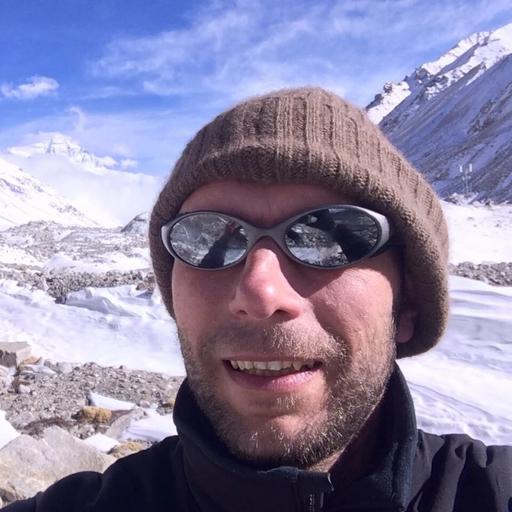
Boardroom Strategist and Creator of Ultra States Examining How Humans Actually Perform Under Pressure
30+ years Boardroom advisory experience330+ Boards advised or served on6 World’s highest mountains climbedTEDx Spoke at TEDxUniversityofEdinburgh
Deri Llewellyn-Davies grew up in a small rural village in Wales, where community wasn’t a concept, it was how life worked. That early sense of shared responsibility shaped how he later approached leadership, decision-making, and pressure, long before he entered boardrooms and high-stakes environments. Over three decades, Deri has advised and sat on more than 330 boards, becoming known for spotting the real constraint beneath the noise and helping organisations think clearly when the stakes are high. His signature Strategy on a Page methodology is a no 1 best seller and has inspired thousands of founders to scale with purpose.
Outside business, Deri has spent years testing human limits in extreme environments — climbing six of the world’s highest mountains, completing the Marathon des Sables, and racing the infamous Ironman. Those experiences became a lab for understanding how people actually perform under pressure, and why so many high-achievers quietly collapse when the adrenaline wears off.
That intersection of boardroom pattern recognition and extreme performance thinking led to the creation of Ultra States, a framework that reframes performance as state selection rather than motivation. Instead of treating focus, flow, connection, recovery, and peak intensity as accidents or personality traits, Ultra States examines them as distinct neurological and physiological conditions, each with trade-offs when misused or overextended.
More from Deri Llewellyn-Davies
All episodes → Different thinking for Different Time - Mindset Change and Thought LeadershipDifferent Thinking for Different Times with my guest Deri Llewellyn-DaviesNov 2026Play episode →
 High Performance LongevityWhy the Best Performers Recover on Command: Flow, Focus & the 6 | Deri Llewellyn-Davies @Ultra StatesNov 2026Play episode →
 The Sticky From The Inside PodcastUltra States: Earthquakes, Hijacked Minds and the BoardroomOct 2026Play episode →
 Mindset BoosterHow to Enter a Flow State and Improve Sales Performance with DeriOct 2026Play episode →
 Barriers and Boundaries Resilience LeadershipUnlocking Human Resilience with Flow, Connection, and Leadership, feat. Deri Llewellyn-DaviesSep 2026Play episode →
 Rewiring Health®Why High Achievers Burn Out: You’re Stuck in the Wrong StateAug 2026Play episode →
 Mastering the Art of Success Hosted by Debbi DiMaggioDeri Llewellyn-Davies: Leadership, Ultra States, and Performing Under PressureAug 2026Play episode →
 Speak Up: Develop Your Executive Presence & Leadership Communication StyleHow Elite Athletes and Great Leaders Build Unshakable Executive Presence Through State ManagementJun 2026Play episode →
 Sales POP! Podcasts: Insights from Top Experts in Sales, Marketing, Leadership & More.500% Productivity in Flow State — Deri Llewellyn-Davies ExplainsJun 2026Play episode →