
June 11, 2026
500% Productivity in Flow State — Deri Llewellyn-Davies Explains
Sound bites
If you can control your state, you have the ability to bring the entire organization with you.
The ability to connect to another human being, the ability to access flow states, the ability to recover properly, the ability to access the peak and all. That’s what humans have been gifted with forever.
In this episode
Deri Llewellyn-Davies talks about peak performance, flow state, and how changing your state can improve leadership, connection, and sales.
- Peak performance framed as a state problem, not a motivation problem.
- Flow, focused, peak, recovery, and connect states each have different brainwave, neurochemical, physiological, and psychological patterns.
- Breath work before meetings can reset the system and help people connect more calmly.
- A leader’s state can spread through a room and shift the whole organization.
- Purpose can start small, even with curiosity or a simple reason to care for your family.
Transcript
ShowHide
Automatic captions of the conversation. They can contain errors and do not name who is speaking.
All right, hello and welcome to another Expert Inside Interview. My name is John Golden from Sales POP! Online Sales Magazine, and co-owner, formerly Pipeliner CRM, joining you as usual from a sunny San Diego. And today, I'm delighted to be joined from what they like to say here, across the pond. Deri Llewellyn-Davies, who is in lovely Wales. How are you doing? I'm good, my friend. We've got an Irishman and a Welshman, and all we now do is Englishman, and we've got a joke on this. Exactly. Exactly. Exactly. And Wales, of course, is in the UK.
You have Scotland, England, Wales. And, you know, I'm originally from Ireland, which is just across the water from where Deri is. In fact, it's the quickest way to get from where I grew up, from Dundier to Holyhead, like three and a half hours on the ferry. Late at night. Yeah. And, Deri, you're a strategist, advisor who's guided over 330 boards and leadership teams through complexity, helping them think clearly and act decisively under intense pressure. As we said, raised in a small Welsh village, deep-rooted sense of community continues to shape your approach to leadership today.
You are the creator of Strategy on a Page, the number one best-selling methodology helps thousands of founders scale their businesses with clarity and purpose. And we're going to talk today a little bit about, you know, peak performance is a state problem, not a motivation problem. So just explain to me what you mean by that. What's the difference between state and having a motivation issue? So let's just go to ground-roots level because that's quite plain, right? And note the history. This is really important. The reason I say I've been on all these boards and everything else is to show that this comes from experience.
It's not like somewhere we picked off the shelves somewhere. So anyone that's run a business out there, a lot of people in sales functions, whatever, who's listening to this, right? We're in a state all of the time and most of us is accidental. So when I say state, I mean literally physically state. Now the state that's been coined the most around this is flow state. That's very well documented. That's exactly how I documented that 50 years ago. So a state constitutes, I mean, literally different, you've got different brainwave patterns.
Let's understand first of all, the brain's got different brainwaves. That's not where you literally see it in the hospital and the one you don't want to lose the flat line or one. That's the one we're avoiding. So we know that there's Beta and Alpha and Gamma and Delta. We know there's different rates and we know we do different things when we're in. We also know there's a bunch of neurochemicals. We know different neurochemicals are firing. We've got different physiology and we've got different psychology. Now, a lot of us were thinking like positive thinking, and that's psychology, which is interesting.
But if you don't control biology, which is the brain patterns and the neurochemicals, you're flat. So in this era where we've got high stress, high depression rates, all of this stuff, we'll have a minute, that's the state that we've chosen. So I leaned in really heavily on flow state because that's what I love and that's I think the most exciting state of all. It's the one you feel great. We may touch on that one later. But I think when I really looked hard at it, I was like, hang on a minute, flow is getting a lot of attention and it should because it's a superpower.
Yeah. However, only in flow about 10, 15, 20 percent of the time max, what about the rest of life? So it's like focused state, super important for us to be hyper focused and be able to turn that on when you need it for that distraction. We've got peak state. That is like bouldering pitches, sales pitch. That's peak. There's a different thing going on there, a slight bit of gamma, which most people aren't aware of. And then you've got recovery state. That's the one most people aren't like you have to recover. If you're firing neurochemicals every day, you have to be able to recover from that.
And I think the hardest skill set of all is to recover well these days. And the final one is connect, and which is, I think, super relevant for sales, right? Which is truly connect. I think we're losing the ability to truly connect with a human being. And I mean, there is different neurochemicals firing about. So when I say state, I really mean it's a completely different. So every single state that we've defined within ultra states, it's a completely different neurochemical pattern, wave, brainwave pattern, psychology, physiology, all linked to purpose, by the way, purpose leads to the show.
So it's very scientifically underpinned. And I've been fascinated by this space for like the last 10 years now. And it's just, finally, we've got all the sciences caught up with us. So we actually jigsack. Mihaly coined this 50 years ago in flow, and now they've actually proved right. Yeah, no, it's really interesting because I think most people just think that they're on during their work day, right? They're on and and and if things aren't going according to plan, what do you do? You work harder. You folk, you know, you try to focus more everything.
But what you're saying here is, is I mean, you're in very different states at very different times. And if you don't realize that, then obviously, you know, how you're communicating or what you're doing is out of sync. Yeah, 100%. And actually, I've been around long enough, right? So I'm 51 now, so I've got five decades of experience. We never used to have such an issue because we didn't have technology. So actually, if you go back to the 1980s and 90s, where I was growing up, great times to grow up, by the way. Great times.
Now, we've suddenly got these things. For those who are listening, I'm holding up my mobile phone. We've got those things which have hijacked us before we got out of bed. I spoke to a thousand leaders recently in a forum, and senior leaders, and I said, hands up in the room who has opened their phone and is scrolling before they even got out of bed. Our whole audience is out. Then I said, okay, now let's just continue that path. So you're in the phone before you got out of bed, now you've gone to the toilet. How many have now checked their phones at the toilet, and have now probably sent an email or two, or sent a few text messages before you've even pissed in the morning, right?
A bit of fun, but not really because the whole room is that. That means neurochemically, we've hijacked ourselves before we pissed in the morning. That's the reality, which means you've driven high quarters, or you're in high beta, and there's your day. Yeah. So no chance of getting into flow state. You're not going to connect deeply with another person in the office. You just set your pattern, right? Now, the good news is you can un-set that pattern if you know how, right? But most people have no idea. They just bundle through and then they go, I can eat another coffee.
You know, shit, I need to, now it's Netflix and chill, which isn't recovered, by the way. So that is what's happened out there, John. It's what's happened in the last 20 years, the technology distraction and the social distraction has hijacked our neurochemistry, which we know. But most of the people go, shit, I'd like to choose to stay, I mean, please, I'd like to choose to be present with my family in the evening. With my children in the evening. How many people are in there, any parents listening to this, it's like how many people drag their work home, drag their cortisol and the stress in the neurochemistry home, and then try to interact on them, but then snap or snap at the kids.
I've been there, that's why I created UltraState. I know I've been better than that. I'd say that, and how many of you look up from your phone to tell your kids to get off their phones? Yeah. There was a study, there's about, so when I wrote UltraState, by the way, the book currently, any listeners, we're going to give you a link, you can fully access the book for free. So this is not a sellable thing. We'll do a publishing deal which we're signing off, but until that point, it's available to the world. In the book, it's verified by about 200 white papers.
One of those white papers is horrible, actually. As a parent, it made me want to cry. It was, the study was that children, when surveyed, think their parents love their phones more than they love them. Oh, wow. Yes. I could see that. You're with your child and all the child is seeing is you doing this all the time. Now, we never grew up like that. When I was with my dad, it was not often because he was working and stuff, but when I was with him, he was present. Yeah. Now, I go out and you sit over at the restaurant table and you're seeing dad out, and I'm a single dad, so I'm out with my kids half the time, I've got 50% custody of my children.
So I'm there with my kids, I'm with my kids, and I see other kids and they're on the phone. So what does that tell the child? The child tells the child, that phone, that thing in front of the mailbox is more important than they are. Now what happens does the child put on the phone? And now the child is like, oh, I must use this phone thing, because it's more important than he hears me. Yeah, no, absolutely. And what you mentioned earlier as well is like waking up and going straight onto your phone and whatever, scrolling on the news.
And I would say to people, the news isn't there to inform you anymore. It doesn't matter where you are on the spectrum of politics, it's there to provoke a reaction. Same thing, maybe you're on social media and you're seeing things and you're getting into comparison culture. But to your point, I mean, before you've even probably even said hello to the person who may be lying beside you, you're already in a completely different state of mind. And that's the one interesting thing about one of the most interesting things about what you're saying about is operating in the wrong neurological state.
So throughout the day, we're operating in the wrong neurological state because we're not being conscious or intentional about what's going on. And historically, we never have this problem. Yes. And AI is just actually, and I love AI as a tool. However, you've got to harness that tool because it's now just amplified the problem even further, right? And now we've outsourced our brain if we're not careful. So now you're not running into the wrong state. That's a problem coming, right? So if you look at this, it's that the other choices is to choose.
And a big part of what I preach within an ultrastate environment is that morning, for most people are morning people, right? Your best cognition is in the morning. There's some night owls out there, just slip the day. But it's like for most people, get out of them. I get out in the morning, I want to get into flow state. That first couple of hours, if you can get into flow state in that first couple of hours, because you're primed, if you touch your phone, you've just blown it because you've just bought potential again.
You've got to get up, you've prepped that I bought. And if you can understand how you can access flow states, you can stack the protocols as well. You can enter that zone. And when you're there in flow, you lose track of self, lose track of time, fully immersed in the moment. You're there, you're fully present and you're firing. In fact, the new book from, I'm very blessed to be in The Mastermind of Steven Kotler and The Mastermind of Steven Kotler's work on flow and the flow research collective. Him and Diamandos just launched the book, We Are As Gods.
They talk about this. They say the superpower for the now is you need flow state because that's what AI does have. Yes. So if you can access flow state first and then one for two hours, science shows 500% productivity gains, 300% creativity. You can get up, do two hours of work, you've won the day. That means you've done a day's worth of work before everyone else is hijacked on their second coffee. That's the reality of the superpower if you choose the state early. Then, okay, now what state do I want to be next? I want to be focused.
I think for sales in particular, we need to be able to choose connect. Yeah. You'll be opposite the other person and people experience this. You don't want to be sold to, nobody wants to be sold to. You want to be heard, you want to be listened to, and more important than ever is the human connection. You cannot connect if you are stressed out at your face, driving high beta and high cortisol. It's neurochemically impossible. What you want is cortisol, I'm sorry, you want to have a bit of oxytocin, serotonin, to connect.
You know when you're in front of somebody and they're connecting with you, you're just feeling, right? It's a feeling. Most people, if you hijack your day from the moment you started up and you've been on high cortisol, then you're there and you're talking but you don't feel that they're there, right? Superpower coming through, I believe. The ability to choose the state you're in and for us as human beings to connect more deeply and be able to access the states we've always had access to, what we've been hijacked. And in order to do that, Deri, in order to have that connection, is you have to be genuinely interested in the other person.
You have to be genuinely curious about business, curious about their circumstances. You have to just be naturally curious. And as you said, I mean, if you're letting your phone, if you're letting all these other things hijack your day, well, then that natural curiosity is getting pushed away, getting pushed down by the stress, getting pushed down by the distraction. And yeah, by the time you come to connect or to talk to the other person, if I'm talking to you, but I've all this stuff rattling around in my head, you can feel that.
You and the other, so you can receive that. You can see that I'm not really connecting with you. I'm not really present. Yeah, 100%. And the important thing is you feel it. That's exactly what you just said, is you feel it. And you can't connect even if you want to. And by the way, you nailed it, because one of the main triggers for flow states and connecting states is curiosity. You have to have a genuine curiosity. However, you can have genuine curiosity, but it can stress that in your face, you're just driving high beta and cortisol.
Even the most curious in the world, you ain't accessing connection. So the trick is before these meetings, and there's different protocols, we're stacked a lot of different protocols for people to understand. It's like you literally just need to, it's just 90 seconds of breath work, sit down, jump on the... It's literally resetting the system, because you're resetting the neurochemicals. If you understand these brainwaves and neurochemicals, and they ain't going to move by accident, you've got to move them. And the 90 second breath work, so Freedom Founders, the tribes I run, help around the world, right?
Every day we start, and we just do two minutes of box breath in the morning, and it literally entrains the room. It's just, and you can physically, we've watched all this, I've measured all this, you literally see the brainwave pattern drop. The resting heart rate drops. It's like it's physical, it's neurochemical, it's there, we know, and you feel it. So if you know you need to connect, you need to send to yourself, and it takes two minutes, five minutes, max. Is that important? Now you walk into the boardroom, now how many times have you been in a boardroom, someone comes in, usually the boss, right?
And he's stressed, they start it, and he's through it. The moment he walks into that room, the entire room is set at high level of stress. Everyone's on the line, everyone's like, ah. Have you ever been in a room when someone has walked in and is just calm and take a breath together, and they're like, it's called entrainment. So what we are talking about is if you can control your state, you have the ability to bring the entire organization with you. And the entrainment, it's contagious. It's your point, John, you feel it.
And I think that's what we need as human beings right now in this crazy world called AI. We need to feel it. No, I love what you just said there about the fact that you have the power within you to have your state translate or transmit to those around you in the room or whatever. And again, like it goes back to being very intentional and as you said, choosing your state and being conscious about these things. And the thing is, Deri, what you're outlying here, I mean, it's very scientific and all of that. But it's also very simple too.
But as I used to say with spin selling, as we were talking about earlier, as back in the day, it's like, just because it's simple doesn't mean it's easy. And look, this, if you look at what I'm talking about, the ability to connect to another human being, the ability to access flow states, the ability to recover properly, the ability to access to the peak and all. That's what humans have been gifted with forever. Now, you think about human biology. I don't know what God's about, or anyone else can make a choice on that one, but there's something amazing that's created us.
There's waves of life, right? And we have been gifted this incredible set of neurochemicals and brainwave patterns. I go, wow, why? That's incredible, right? But we have, and we've had it forever. And you know what? Rewind 1,000 years, rewind 200 years. We used to be able to get into flow naturally. There was none of this distraction stuff. We were connecting over the campfire beautifully and elegantly with other humans, and this is humans. So it was simple, because that's what we did. And then industrial revolution, information revolution, and now technical revolution, and now we're hijacked, oops.
Yet we're still running the same brains that we had hundreds of thousands. So we've got all this incredible simplability. We just balled it up, right? And the good news is we can get it back. But you need to, and there's a reason I've come in to science is because some of the stuff feels a bit woo-woo. It's not the science. I've acted so, because I'm talking to leaders, and leaders don't want any bullshit, right? So it's like, let's get into it, you're the science. And once you understand, oh yeah, I've got these brainwaves, I hadn't even really thought about that.
I hadn't even really thought about the fact that I'm jacked in high beta all of the time and I'm driving quarters off. But when you say it, it's damn obvious, isn't it? Yeah, no, because Deri, one of the things that I do find fascinating is, as you said, I mean, is there's so much evidence that this is going on, and even like physiologically, physically, I mean, in your body. And we tend to ignore that or, or, you know, as I grew up professionally, really in corporate America, I mean, throughout the 20, whatever, seven years I've been here, we've always celebrated stress, we've always celebrated pressure, we've always celebrated the person first, you know, first in, last out, you know, blah, blah, blah.
And we've promoted all of these things that kind of run contrary to what you're saying there. If you're in that state all the time, you can't be in the state you're talking about. Yeah, there's an interesting, I came through corporate as well in the late 90s, early 2000s. We weren't hijacked by these things at that point. Now they were big things that stuck in our pocket and we had these big things in the car and stuff, right? But we weren't hijacked 24-7, social media wasn't around at that point. You know, for the kids listening to the call, we used to make phone calls out of these things, that's what we used to do, right?
And that was amazing. But we didn't, so we were brought up in that world, which actually gave us a lot more connectivity, a lot more space, a lot more states were still very accessible. Now, were we stressed and were we pushing boundaries? We were, but we were not massively hijacked on dopamine like we are now. There's a big difference within that. Now, the good news is, it's not about, is it about getting in early and leaving early? Yeah, actually, if you love what you do, and you're on purpose, and you understand states, you want stress.
Stress is good. Being a lazy person is not. It's boredom is a very big problem and a slippery slope to do with depression. So you want an inflow state, by the way, which is exactly how I coined this a long time ago. It's called the challenge skills ratio. If you're not consistently challenging yourself, and you're not increasingly improving your skill, you'll drop out of flow into boredom. Stress and growth and all the stuff, we were taught that. It was constantly growing and learning and developing. That's good. It's healthy.
Healthy stress is healthy. When the stress has gone too high and you jacked it right up, and then AIs overwhelmed you in the world, that's when we're in chronic problems, right? Which is where I think the world's swung two ways at the moment. You're either in boredom or you're in chronic stress, and then there's nothing in the middle. What we want to seek is the Goldilocks strategy, which is in the middle. And I don't feel like I worked hard in corporate world back in the day when we were growing, but I enjoyed it.
I loved it. And I wasn't massively, my brain was not hijacked. It was stalled, but it was only kind of late 2000s, 2010 when social was the beginning of it. Yeah. And now we have, you know, burnout is real now. And it's funny, it's like burnout used to be, you know, people have been around a long time, you know, whatever, see. But we're seeing burnout now on people in jobs, like their first job, and like they've already been in it six months, already burnt out. But this burnout just seems to be, and as you're right, because we've been hijacked, there's a lot of chaos, there's a lot of, you know, different expectations, different configurations of work now.
So it can be quite a confusing time. I'm going to challenge burnout, because I think this is a big one, right? And so burnout, is it real? Absolutely. But let's go to the science, and let's understand what burnout truly is. And anybody that is concerned that they're burnt out, or they're found to be burnt out, go and research Maslach. So it's Maslach's burnout inventory. So that's the word. They actually coined the term burnout 30 years ago. So that's the original science. Now people today are like, I'm burnt out. Hang on a minute.
Right? Because people think work too hard, that's burnout. That's balls. Because if you love what you do, I'm guessing you love what you do, John, right? I'm suggesting you, knowing what you guys are doing, it's exciting. So you work really hard and guess what? You're probably not burnt out. You love what you do, you're passionate about what you do and you drive it. So now, can you push it too far? You can, but actually stress is good as long as it's contained. So work alone is not burnout. You don't see Elon Musk burning out.
Right? And he's a machine. I think it's too far, to be honest with you, but that's a nice story. I don't agree with that hustle vibe, but I do think working is good if you love what you do. So then the Mauslaut's inventory says burnout is not just work ethic. It's also about values misalignment, feeling reward and recognition. There's a whole stack of what burnout truly is, and people have just ignored the bottom five and just gone, no, it's workload. Not true. It's not the evidence. So what we're finding is the reason there's a lot of burnout, massive values misalignment in the organization, misculture fits.
And everyone's claiming it's bullying this. And there's a whole lot of that in the world, which we've got to eradicate in the business world. But it comes back to there's a much bigger stack to burnout. So if you're in the company, you love what you do, you're on purpose, you feel respected, you feel like you're treated well, you're learning and growing, you know, you're not burnt out. Beyond that, I'm burnt out. Oh, it's because I'm working too hard. There's something way deeper going on there. And if we understand that, we can fix it by the way.
6% of corporate America are disengaged in their work. That statistic's been around for 30 years and just keeps getting bigger, by the way, from Gallup. And that means burnout. If you're disengaged, you're not interested, you're not my values are aligned. That's got burnout written all over it, no matter how hard or not hard you work. So it's important people go back to the original science of burnout and understand what it actually is, because there's a power in there. Because if you think you're going to take a holiday, come back.
Yeah. It's not. If you haven't fixed values, you haven't fixed rewards, you don't feel respected in the meritocracy, you don't feel safe, no lower workload's going to help you. Yeah, no, absolutely. Coming back from your vacation and feeling just that, you know, within two days, being back in the same place again, you know, he's telling you that, yeah, it's not, it's not just overload. Exactly right. So, sorry, you used the B word, because the work I'm doing on the stage is burnout is coming out all of the time. Yeah.
The good news is if we understand it for the first time, because I don't think people understand it. Like, we understand. Look at Maslas. Look at it and go, oh, yes, because I don't feel valued, I don't feel safe, I don't feel... It's like, oh, don't fix those things. Nothing's going to help you. So I think we can do a massive dent in curing that epidemic of burnout if we understand the originality of where it came from. Yeah, no, I think that was fantastic. That's a fantastic point for people because, yeah, it is one of those words that's now become a great buzzword, burnout.
We had authenticity for a few years. Now we're moving on from that one where we just keep switching these out. And again, another thing that people don't understand fully. And just finally, what would be the one thing you would say to somebody today? Say to maybe a salesperson out there, maybe it's midway through the year, they're feeling disconnected, stressed out. What's the one thing you would say to them? If you're feeling, anybody out there, a salesperson, a human, if you're feeling disconnected, if you're just feeling disconnected, go to purpose.
It's when we underpin everything. So do we need to understand the brainwork patterns, neurochemistry, psychology, physiology? Absolutely. But purpose rules the show. Without purpose, nothing matters. We are alignment beings. As humanity, we've always sought purpose. We've always sought the light. We've always kind of gone towards the horizon. That's how we are pre-programmed. And most people, purpose is what's missing in their lives. So the question is, why? So if you miss a job, why? You'll find another one. If you're not happy with the thing, you can't sell.
Are you selling the right things? You believe in the product. So it's back to purpose always. Now, there's lots of work around that. We do work on purpose. Google me. I'm constantly putting purpose series out there. What are the five elements of purpose for business? Because if we can get the purpose right, everything else will fire. But if you get everything else lined up and you don't have purpose, you're still going to remain flat. It's that emptiness. And as salespeople, if you're sitting and you're smashing your tongue, you just feel nothing.
That's a true sign of purpose misalignment. So I'm glad you asked that question, because it's what I usually begin with, which is purpose is always the beginning point of everything. And don't think it's a blinding light that's going to come down and you're going to get in trouble. And a lot of people like, they want one thing in life. No, purpose can be really quite beautiful and elegant and simple. To your point earlier, John, they're over complicated, but it needs to be a big why. I met a guy that was selling this thing that I didn't agree with.
Right? So I'm very aligned, very values aligned, and I'm not going to work with couples and boards that aren't. And it's not like I want to work with guns and drugs and stuff like that. But this one, I was like, just don't get it. It's not really so, it's all right, but it's not solving the world, so I'm not leaning in. And I've gone to all the right questions to see if I was going to engage in the board and stuff. I said, no, I don't think this is right. And he said, I just can't see the purpose behind this in a deep enough way to excite me.
And he said, he turned around and he said, you never asked me what my personal purpose was. I was asking his business purpose. He was the fact that you won't help me. He said, I have my son who's a highly disabled and he needs full care for the rest of his life and I want to provide money for him to make sure my boy is looked after. And I was like, I'm in, whatever you just said, I'm now in again. Yeah. Right. And it's like changed the full pattern. Because yes, he was running a business and yes, he was making money.
And I wasn't mad at him, but I knew what drove him now. His disabled son drove him. Now he's got my heart. Yeah, that was the, that's the thing. Everyone just find that something, whatever it may be. And it might be a little acorn to start with. And then let's see that. Yeah. And I think that's fantastic. Because I think what you outlined there is the fact, as you said, is when a lot of people here, like to find your purpose, they start going, ooh, better come up with something grandiose. But you may have it right there.
It may be just like you said, it may be you just want to take good care. You want to give your family the best life that they can have. You want to set your kids up. You want to feel confident about their future and stuff. I mean, that's fantastic purpose. It's not, and that's something, as you said, quite simple to access and understand. Start simple. It may get grandiose over time as you get used to, and it's like a muscle purpose. It needs to be worked a little bit, right? So just find something you believe in. Start with, and a lot of people, where do we begin with purpose?
Start with what you said earlier, John, start with curiosity. Something you're curious about, something you're intrigued by, something in the world that you think you can help solve. Start there, work it from there, and purpose evolves. It evolves quite magnificently if you keep focused on it. Fantastic. Well, listen, thank you so much, Deri. All of Deri's information will be below this video. But before we go, please do remind people a little bit about what you do. So I sit on the boards around companies around the world, which I'll always do.
I run a global tribe called Freedom Founders. So that's for the one to 20 million scale companies. We're coming all over the world right now. We're in Los Angeles and San Francisco, Austin, Texas, New York, London, Dubai, Singapore. So we create the trusted tribes of founders are built around this state thing. You want trust as a state, and it's a deep one. So we've built those tribes. Ultra States is what I've created around that to give accessibility to everything I've learned in the last 30 years. So on the Ultra States website, right now you can get full access to the book.
When you listen to this, I don't know, it might not be there, but the book will be there somewhere. But right now, it's fully accessible. There's scorecards on that as well to actually see what states can you access. You can actually test it. We've got a full masterclass that will explain the whole methodology. So this is my kind of, after 30 years of my work, it's time to leave the legacy back. The science is now there to back it, which is quite, we're living in an incredible time, and a slightly overwhelming time as well.
Yeah, absolutely. Well, listen, fantastic. Thanks again, Deri. Thank you for watching and listening and I'll see you all again very soon. Thank you.
About Deri Llewellyn-Davies
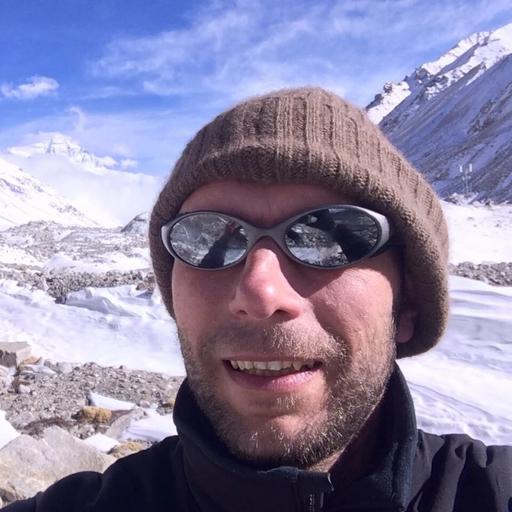
Boardroom Strategist and Creator of Ultra States Examining How Humans Actually Perform Under Pressure
30+ years Boardroom advisory experience330+ Boards advised or served on6 World’s highest mountains climbedTEDx Spoke at TEDxUniversityofEdinburgh
Deri Llewellyn-Davies grew up in a small rural village in Wales, where community wasn’t a concept, it was how life worked. That early sense of shared responsibility shaped how he later approached leadership, decision-making, and pressure, long before he entered boardrooms and high-stakes environments. Over three decades, Deri has advised and sat on more than 330 boards, becoming known for spotting the real constraint beneath the noise and helping organisations think clearly when the stakes are high. His signature Strategy on a Page methodology is a no 1 best seller and has inspired thousands of founders to scale with purpose.
Outside business, Deri has spent years testing human limits in extreme environments — climbing six of the world’s highest mountains, completing the Marathon des Sables, and racing the infamous Ironman. Those experiences became a lab for understanding how people actually perform under pressure, and why so many high-achievers quietly collapse when the adrenaline wears off.
That intersection of boardroom pattern recognition and extreme performance thinking led to the creation of Ultra States, a framework that reframes performance as state selection rather than motivation. Instead of treating focus, flow, connection, recovery, and peak intensity as accidents or personality traits, Ultra States examines them as distinct neurological and physiological conditions, each with trade-offs when misused or overextended.
More from Deri Llewellyn-Davies
All episodes → The Sticky From The Inside PodcastUltra States: Earthquakes, Hijacked Minds and the BoardroomOct 2026Play episode →
 Mindset BoosterHow to Enter a Flow State and Improve Sales Performance with DeriOct 2026Play episode →
 Barriers and Boundaries Resilience LeadershipUnlocking Human Resilience with Flow, Connection, and Leadership, feat. Deri Llewellyn-DaviesSep 2026Play episode →
 Rewiring Health®Why High Achievers Burn Out: You’re Stuck in the Wrong StateAug 2026Play episode →
 Mastering the Art of Success Hosted by Debbi DiMaggioDeri Llewellyn-Davies: Leadership, Ultra States, and Performing Under PressureAug 2026Play episode →
 The Caring CEO. For leaders who want to grow teams who are more caring, fun filled and productive. For leaders who care.No Regrets Leadership , Deri Llewellyn-Davies, Boardroom Strategies & creator of Ultra StatesJul 2026Play episode →
 Speak Up: Develop Your Executive Presence & Leadership Communication StyleHow Elite Athletes and Great Leaders Build Unshakable Executive Presence Through State ManagementJun 2026Play episode →
 Engineer Your SuccessHow to Access Flow State and Accelerate Your SuccessMar 2026Play episode →
 An Evolving Man PodcastFlow State, Burnout, Purpose and the Future of Leadership | AEM #155 Deri Llewellyn-DaviesMar 2026Play episode →