
March 31, 2026
How to Access Flow State and Accelerate Your Success
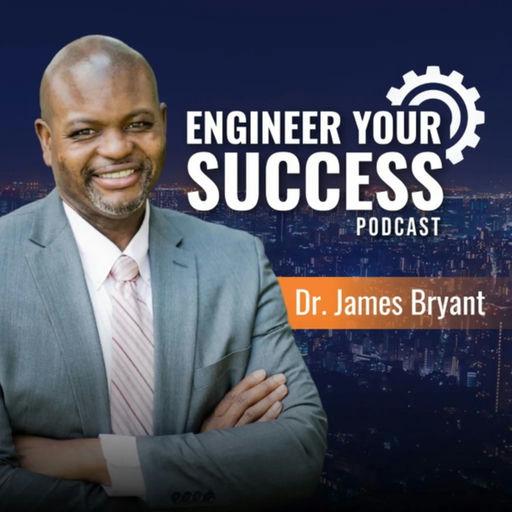
Sound bites
The moment you're distracted, the moment that pings, you're out of flow.
Presence isn't accidental, it is a decision that you make moment by moment by moment.
In this episode
Deri Llewellyn-Davies joins Engineer Your Success to talk about his engineering-to-leadership path, mentorship, and the science of flow state and other performance states.
- Engineering training became a foundation for moving quickly into commercial and leadership roles.
- Mentorship played a major part in career growth, including being told to ask senior leaders for guidance directly.
- Flow state depends on foundations such as brainwave patterns, neurochemicals, and removing distraction.
- Morning phone checks can hijack state before the day starts, pushing people into dopamine and cortisol before work begins.
- Ultra States includes flow, ultra focus, and peak, each with different brain patterns and energy costs.
Transcript
ShowHide
Automatic captions of the conversation. They can contain errors and do not name who is speaking.
Have you ever reached a point in your career where you're successful on paper, but something just feels off? You're productive, you're respected, and you're doing important work, but you're just tired. You're distracted, and when you get home at night, it's hard to be fully present with the people that matter. For many engineering leaders, the problem isn't capability, it's energy and it's focus. It's the ability to shift between different states required to lead well at work and to live well at home. Today's guest started as a chemical engineer before rising through the ranks of corporate leadership.
He has spent decades studying high performers and helping leaders understand how to manage their state, not just their schedule. So today we're going to explore why engineers often struggle when success stops feeling fulfilling, how the concept of flow state actually works from a scientific perspective, and how leaders can design their days to be more focused, creative and present. Success isn't just about what you achieve. It's about living a life that reflects your values and priorities. Welcome to Engineer Your Success, the podcast that helps you lead with intention and live fulfilled.
My name is Dr. James Bryant. Welcome to the Engineer Your Success Podcast, and today we have a very special guest, Deri. Welcome to the show. Great to be here. So, Deri, one of the things that stood out to me when we first talked is that you actually started your career as an engineer. Tell us a little bit about your journey from chemical engineering into leadership and strategy. So look, I was a bad engineer, so I'm not gonna claim to be a good one, right? And I certainly don't have a doctor title. I don't deserve that title, James.
But I was brought up in West Wales in a tiny little village, and the only thing we knew around there was chemical oil refineries. So it became, we make these career choices when we're so young, we don't know what we're doing. And I did the engineering degree. Now, I think everyone listens to this. I respect you all. You all know how hard those engineering degrees are. So I didn't love my degree, I have to say. I like the mathematics part to it. But I used my degree because I went into corporate land with it. It's such a good degree.
An engineering degree is such a good foundation. It's so well-respected. I used it to leverage into commercial, and then I literally went up the leadership ranks from there. It was my engineering that triggered me up the ranks faster. I started off with British Oxygen in the UK, and then moved through the ranks up into Corning, etc. But there's a respect that comes with the engineering degree. And this is why it's great to be here with you today. It's almost like 30 years later, I'm back. I'm like, I'm talking to engineers again, yay.
So I salute you all listening to this call. No, that's great. So Deri, can you talk a little bit about your career progression? So you came out as a chemical engineer, you started out, and then you have this real, I would almost say exponentially going up trajectory, but let's talk about that for a little bit. Goes up and goes down and goes up and goes down, right? That's how the real world happens. So I rose through the corporate ranks pretty quickly. I moved from company to company, and I leveraged the engineering degree in the first, certainly in my first three, four, five years.
The respect of that degree held tight, and it allowed me to jump up the ranks faster. So then I was at European board level within ten years, and that was just going, but I had great mentors. I had mentorship by accident from the girl I was dating at university. Her father educated me and mentored me. I didn't know that at the time, but I said, I know I have three daughters. I know what he was doing. If my daughters bring a Welshman, a Welsh rugby player home, I'm going to be mentoring them too, I could tell you. So I had this gift that it was the CEO of CyberGuyGuy back in the day and he mentored me.
And he also told me to go to the top of the organization, ask for mentorship. And so a big part of my rise in my corporate world was getting great mentors. I didn't know. And if I hadn't had that, I would never have asked for that. I wouldn't have known. So mentorship has been a big key to my career success. Then I came management consulting side. And so for the last 25 years, I've been on the management consulting side, advised a lot of scale ups and I've sat on like 330 boards now. One thing that stood out in your development, she were encouraged to ask for mentors.
Yeah. This is the insight I got from my girlfriend's father, who was the CEO of CyberGuyGuy at the time. And he said, son, when you start in the corporate, you're going to go straight into the managing director's office, the CEO's office, and you're going to go into his desk, and you're going to ask him to mentor you. Now, I didn't know that's what you're not supposed to do. Now, the reason was, he said, because he was CEO, he said, I am CEO, obviously, of CyberGuyGuy, and he's like, no one does that to me. He said, I would happily mentor the Young Guns coming through.
No one asks me. It's the gift that keeps giving, right? I saw the power of it for me, and now I encourage it. If you just get the right person at the right time giving you that, just that snippet of advice, it's life changing. But we've got to seek it out, and that's the key. You've got to ask. We've talked about mentorship, but at some point in your journey, you also started seeing a pattern among high performing leaders. And so what were your observations of high performing leaders? Well, there was two things happened.
One, I went into ultra endurance side, and that's an important piece. I started climbing the highest mountains in the world, running across deserts and everything. And by doing that, I started to experience states, and I started to see, when you're pushing your body and your mind and everything else to extremes in that environment, you start to see things and see patterns that a normal person doesn't see. Simultaneously, I was rising to the ranks of board and moving into consultancy. So I didn't join the DOTS for about six, eight years.
Suddenly, I was seeing patterns on both sides. And it's the same stuff. If you're high-performing, so in sport, it's really obvious, right? You watch sports people, you'll see, great sports teams are in flow. That is flow state. They train hard, right? They recover harder, right? So you've got all of the... The clues are all in the sport, the clues. So if I'm going to do an Iron Man, so when I did the Iron Man, that's an intense day for any human being, right? Guess what? Should I recover after that? That's not even a question.
It's of course you're going to recover after that. Okay, let's come back over to business. You just smash boardroom work for a day. Should you recover after that? No. And so did you start seeing patterns where that type of recovery cycle wasn't happening in the organizations that you were working with? So I've seen the pattern now for 20 years, and in the last 10 years, I'm convinced. Post-COVID, it's got worse. And I think that's an important observation in the recent years. So we have got this. We're incredibly productive.
We've got the devices. I'm holding up a mobile phone for those who are listening, right? We've got these incredibly productive, destructive devices. And we are now doing Zoom calls. Great, we can work from home and just smash Zoom call to Zoom call to Zoom call to Zoom call with no breaks in the middle. So we've actually created a universe where we have just broken our ability to access states. Now seeing this rise for many years, you could see the lack of productivity, the lack of focus, the lack of ability to access flow states, right?
Because flow is, and we'll come on to flow I'm sure at some point, but it's a creative state. If you want to really create and innovate, what do we need in today's world to be successful as leaders? You need to be able to create and innovate and just join up dots that other people can't see. If you're hijacked and your mind's hijacked on high cortisol and your brainwaves stuck in one pattern, you're not going to be able to access the states. And what's happened is the perpetuation of the technology, the phones, the jacking of Zoom calls, the way we've architected our days, we've actually blocked the ability.
Now, I'm going to put myself in the same generation as you, James. Brothers separated at birth, I reckon. You look, remember when we were growing up? And we didn't have these things. We didn't have these phones. And do you remember how good it felt? Right? I say this and people in my mind were like, we were free. We were able, we tasted flow because we weren't distracted all the time. We didn't have, we weren't on our phones every minute of every day. We went, we were out and played, right? We got outside. We were on our bikes.
In fact, my mom and dad didn't know where I was half the time because we were off roaming in a gallivanting, right? Right? We were actually blocking the ability for the next generation and ourselves to access these magnificent states that we were gifted with as human beings. Okay. Let's talk about what is flow state. Flow state was coined by Chiksekmihi 50 years ago. Very well documented, huge drafts of science around this. Chiksekmihi's work was great. I read Chiksekmihi's work 30 years ago. It was just too difficult.
He's hard read. He's great, but he's quite academic. And I read the book and I didn't get it, which is really upsetting because I lost about 15 years of flow as a result of that, right? But the clues, I think, were dropped at that point. Now, then I started experiencing. So, flow state is the, and I just think everyone listening to this, you all experienced flow. It might have been a long time ago, but it's a point when you lose track of yourself, you lose track of time, you're fully immersed in the moment, fully present, and you're legit, but you're still concentrating, you're on it.
You're like, you're there. It's like, people call this in the pocket, in the zone. So, you are still on, this is not meditation or anything like this. This is super focused in a way, but you still got creativity flying. It feels magnificent. And Chiksekmihai studied the greatest players in the world, like, what made the great great? He's looking at chess players and musicians. He went really wide with it all. And his conclusion was, this is the art of happiness, right? And it was like, these great people, they all possessed the same thing.
They were still doing the same things to anchor into these amazing states that they got on, to be geniuses, to access this genius thing, which he coined flow state. So now, for us, these mere mortals, right? What does that look like? Well, running is a really obvious one. Run is high for those who run sports. Most people experience it. If you like music, that's jamming. If it's art, it's drawing. So we've all experienced these moments of complete loss of self into a beautiful moment, which you love to do. Now, the trick is you must love.
You must intrinsically love what you do. It's the art of doing what you love to do for the mere art of doing it. James, where do you think you've tasted flow states? When I'm helping someone solve a problem, when I'm bringing a level of awareness to an issue and can provide that aha moment to bring awareness to my clients, or even anyone that I'm talking to. It could be at a coffee shop. It could be anywhere because, I guess one of my core values is to look to provide value in every discussion and interaction that I have, to be useful to that other person.
Not just to say that I'm doing something, but to really be able to provide something useful to the people I'm interacting with. And see, we're in flow right now. I don't know what question James is going to ask next. He's riffing as well. We both love what we're doing here, so we've got a level of mastery. And James, because you are, when you are solving problems and kind of trying to wrestle, do you notice the mind's active, but you're still fully present? You've lost track of self, you've lost track of time, but you're immersed in the moment in front of you.
You have to know, if you can access the state, this is where the ability to join dots up that other people can't see happens. That happens in flow state. And there's a reason because the neurochemicals that are firing in that. If you're stressed and hijacked on cortisol, you're not going to be able to solve the problems in the same way. You certainly won't be able to solve them creatively, right? So, that's a perfect example of flow state. So, it's obvious in runners high and sport, because we are people who are doing music and everything else.
But actually then, what I started to see to fully answer your question before was, well, what did you see the patterns there? I was seeing the patterns I was experiencing in sport, and I was starting to feel those experiences in the boardroom. I was starting to feel those experiences on the speaking stages. And I was like, and the more I studied flow, the more I realized what was happening. But I was accidentally falling into flow. And that's the thing. You can fall into flow, but accidentally. Then I started to realize, I can curate flow.
If you understand what flow is and how to actually, how you can set yourself up for flow, you can create flow state. You can literally gear yourself for flow state. So Deri, I don't want this to feel like the infomercial that keeps talking about what you can do and doesn't necessarily tell people how to do it. You can do this, you can do that. Can you please tell me and our listeners how we can take control of this and consciously, intentionally enter into flow? So flow is just one state, right? There's five others, but let's deal with flow, because otherwise we're going to be teasing too long, right?
So flow state, there's a few things you need to have in place. The first thing is you must have purpose, right? This is really important. In order to access flow, you're actually on a journey to mastery. It's something, if you look at it, it was studied from the greatest masters. So how do you get mastery? You actually got to do a lot of work. So this is it, you can't hack flow. Everyone's trying to hack everything these days. Flow is not hackable, right? That's really important. So you go, so it's on the journey for engineers.
When you began in the early days of your journey of engineer, you wanted to be an engineer, right? For whatever reasons, but there was a bigger purpose to that. You know, you don't just pull that one off the shelf to be an engineer. There's something deeper going on there. You might have been convinced by your parents or whatever. I don't know, but it's like, there's a bigger purpose. And now you've got to go on a journey to mastery, right? And that's super important, because that's called the flow channel. Jig Sack Mihai coined the phrase and created a whole graph around this.
We must be learning and growing all of the time. The moment we stop learning and growing, we could drop out of flow state because it's called boredom, right? And then the final part to the beginning of the journey is you must be intrinsically motivated. So you cannot access flow if you don't actually love what you're doing. There's the triggers right there. Now some engineers, now this is the problem for some engineers. Some engineers out there, I'm going to just judge some of them on an honest mass scale, right? Is you did love it, maybe you don't love it anymore.
So if the love is gone or the passion is gone, then that's a problem for entry in flow state. You got to bring them. Now that's not hard. This is for me, I love engineering because its curiosity is what triggers intrinsic motivation. You just got to be curious. You just got to lean in and be excited or be cool. And I used to geek out the stuff and it's so interesting. Look at the great engineering works. It's so interesting. If you can't get in the flow, you shouldn't be an engineer. Get out. You should. If you're a banker, good luck with that.
So it's like engineers shouldn't have the problem of doing that. Now, the next question is, are you still learning and growing? Because a lot of people get to a point in engineering where they're done. I know everything. I'm Dr. James Bryant. I am a genius. I know everything that I'm doing here. So for the moment you stop learning and growing, which you haven't, by the way, as you know well, damn well, then we've got a problem. Now, if we've got that stacked, we can access a state. Now, we've got to then prepare ourselves for that state, and we're going to give everyone access to my book for free.
Everyone's got that. Well, I go into this detail in the chapters, full accessibility, so I'm not going to leave anyone hanging on this call, don't worry. You will literally show you the triggers that you can get into flow state. There's certain things you need to be genuinely curious. You want to stack flow. You got to do a little bit of struggle before you enter to flow. It's like running. When you run, the first 6, 7, 8 minutes is a bit hard. It just is. It always will be, by the way, because the body is just getting used to it.
And then if you stack it just right and you start moving and you're fit enough, because if you're not fit, it's going to be miserable for a while, then as soon as you get fit enough, that's when you have the ability to access the state. It's the same if you're there having a conversation, James, and you're deeply immersed trying to help that person in front of you solve a problem. The first 5, 10, 15, 20 minutes, you're wrestling with stuff, right? It's like you're not quite sure. And then suddenly, poof, the blocks will come together and then flow state emerges.
So if it's not actually that hard to access flow, if you stack the environment properly, you stack yourself properly, and you have the right protocols in place, you must eliminate distraction. That's key. These mobile phones of yours, get them in another room. Don't be distracted. The moment you're distracted, the moment that pings, you're out of flow, right? So there's a number of protocols you need to put in place, very accessible. I would also say for most people, first thing in the morning, unless you're a night owl, because right in the morning, and I tease people on this one, but anyone on this call, I was actually in America speaking this week, and I said hands up, 550 senior execs in the audience, right?
A large multi-billion dollar company. Hands up, who have checked their phone before they've left bed in the morning, right? And it was horrendous, the amount of hands, and everyone's nervous chuckling in the room, right? And I'm going, okay, hands, keep your hands up, all of those, who then track that phone into the toilet with them. So you're not only engaged with your phone before you've even got out of bed, but you're now actually engaged with your phone before you've even finished your wee in the morning, right?
And everyone is like, you have hijacked your ability for state, before you've left bed and before you've got off the toilet. So because now you're hijacked, you're on dopamine, the cortisol has already risen. So if you want to really access flow state, stop that new morning protocols, get in, get your coffee getting going, get your feet on the ground, straight into flow state. And that is one of the best times of the day you can do it. And this is serious stuff, right? Studies from McKinsey show that if you can access flow state, 500% productivity gains, 100%, 300% creativity gains, and 200% uplifts in purpose.
Okay. So you've talked, I think we've delivered on the definition and how listeners, how we can all access flow state, but you've mentioned something about Ultra States. So let's talk about what those are. So I've been mastering on the flow state side for like 20 years, and I went really deep on all of that. And I was quite happy with flow. I was like, I love accessing flow, and I can access flow like a boss now. But flow is only about 10 percent of 20. If you're an absolute master and you can drop in properly, 20 percent flow, and I'm pretty good at it, because you can't sustain flow state.
It's very neurochemically expensive. It's a very high state, 500 percent productivity, you've got to recover after it. So then the curiosity came next of, well, hang on a minute, what other states are we in? So if I choose when I'm in flow, then what's going on with the rest of my life? What am I choosing? And what constitutes the state? And this is important. And there's six things, we've got the foundations of states, so Ultra States, there's six Ultra States and there's six foundations. And you have to have your foundation solid to be able to access and enter the states.
And the two foundations, I think most people in this call need to be super aware of, and what constitutes a state. It's not like just a woo woo state, it's like your brainwave pattern is different, your neurochemicals are different. Like you can measure that stuff. Two things you need to be aware of, and I think the super important ones, brainwave pattern, neurochemicals, just grab those. Then if you can get that set up right, now we've got the ability to access the super cool states. Flow, we've talked about, Ultra Flow, right?
The next one is Ultra Focus. We need to focus, that is like, proof. Deep work in it, no distractions, good work. Like this is when you want to... Now some people for a spreadsheet actually flow, engineers who are geeking out on really good mathematically, that might be a flow state for them. For a lot of us other mere mortals, that isn't, that's focus state, right? It's no distractions, super deep work. And it's a different brainwave pattern, it's a different neurochemical expenditure. So then the third state in the productive state cycle is peak.
Now peak is when you got to turn it on. We've all, when you're in the boardroom, you got to do that presentation. You got to pitch that thing. And I mean, you're spiking gamma. There's a few other things going on there. But you can't hold that state for long because it'll burn you. But you do, you want to be able to turn this in. This is why some exacts engineers, they're great. They're good at what they do. And then when it comes to what matters and they got to do that presentation or they got to do that, they got to step up, they got to ask for something, they got to get the budget.
They fail in that moment when they need to be able to switch it on. Because they crumble, they can't speak properly, they fumble the words, they haven't got the presence they require. That's peak state and you need to be able to access it. And then the other three are more on the recovery side of things. So there's recovery state. That is literally if you're really smashing it and you're super productive, you need to recover more. You just do. And it's active recovery. This is sauna protocols, this is breath work, this is meditation, this is all good stuff.
Everyone says, all the woo-woo we're supposed to do. No, it's very scientific now. You can measure it. And we put a reboot state to that because most people need a reboot at least once a year, if not more, proper reboot, like going away three days, five days, seven days, phones off, this fasting protocols. We've been fasting as humans for thousands of years, but we forget to fast. So we just feed our faces with stuff all year long, smash ourselves the quarters on, we don't rest and recover. And then the final state, this was the one I wrestled with the most, but I think it's the most beautiful of the states, is Ultra Connect.
It's the ability to connect with other human beings deeply and profoundly. And what's very interesting about that is it's a completely different brainwave pattern. And it's also a different neurochemical cocktail, oxytocin serotonin. We know this now. And also, you know when you're connected with someone properly because you feel it. Now, most of us, we want to connect with people, we really do. And we want to be at home and connect with our families in the evening. We really do. And we want to do that deeply. But we are so jacked on the cortisol all day long, we have the inability to access the neurochemicals that we require.
And if we can access that, it's entrainment. You literally, you will know this. People are listening to this. You can be in a boardroom, you can be in a big meeting room, and they're all in there, and the boss walks in, or someone walks in, and they're stressed out of their face, and they literally set the entire room on edge immediately. You will entrain. Equally, if a leader walks into the room, and they're present, and they're energetic, and they're calm, they'll take the room with them. It's very scientific now.
So the ability, if you can access the stage, you have the power to bring the entire room with you. And that, I believe, in this world we're in now, we don't need more stress and more cortisol, we need more connection. That's what we need the most. Wow. Okay. That's a lot to unpack. I want to process, right? I get it. It is. It's a lot to process, and it's a lot to unpack. And I can, I definitely have experienced the leader comes in the room, or the chairperson's in the room, they're there, they set the temperature, or kind of what's going on, and people tend to flow or rift off of their state or where they're at.
But the whole idea of the Ultra Connected State, where we want to be connected with people, I think is really important, particularly in this world of AI, particularly in this world of technology, is that we don't want the people to get left behind. And if you don't want the people to get left behind, then not only do you are connecting to AI and connecting to technology, you have to make sure that you don't forget to connect with people. We are. People behind their screens all the time these days. And I'm like, and you're not going to get the neurochemicals behind the screens.
You just aren't. You're going to get dopamine hits. That's dangerous, actually, because we are now, we used to be able to get our dopamine in. Dopamine was there for pursuit. It was linked to purpose. So as long as we were on the pursuit, we got our dopamine. This is how humans were built. We guard the universe, whoever built us. We're incredible machines, if you think. We have this inability. We've got this ability to create chemical cocktails in our body to make ourselves feel great and to connect. All of this neurochemistry happens to us, just happens to us, right?
And we just managed to ruin it in the last 20 years. And see, when I say I would disagree, I challenge this, I challenge this. It's not that it just happens to us. We were designed that way. And in my, kind of my worldview, God designed us to be that way. Therefore, when we're reacting, it happens. Yes, it is amazing. The fact that we've got this ability to, that if we can get into flow state, which we were gifted to, right? That we've been given this gift to access flow states, and our body will just turn it on, create exactly the right neurochemicals for you to feel amazing.
Whatever God is, like, that is just mind blowing. And what have we done? We're gonna screw it up in 20 years and hijack the variability that is our God given right. And that is what I'm trying with Ultra States. It's like we've been given this God given gift inbuilt with us and we've managed to override it and hijack it in two decades. And that's for me, let's just bring back the gift that we were given, right? That's what I'm trying to do. Let's get us connected again. Let's uncover the gift that we've buried with technology, with distraction.
The question that I have and listeners may have too, is that you've talked about what you've noticed in different leaders in different organizations. How did this play out in your own life and in your own story? I've burned out multiple times in my career, and I've burned out twice. So I think burnout is the opposite of flow state. If you want to pick an opposite, let's go to burnout, shall we? And I did it multiple times in my career. I didn't understand this in the days. Because guess what? I love what I do. And this is the danger.
When you love what you do and you're passionate about it with you, and you just smash it and smash it and smash it and smash it, because you're invincible. And certainly in your 20s and your 30s, you think you're invincible. I did too. And I just burned. And I didn't know, you know, you don't feel burning coming, especially for the, if you're burnt out, because you're just being bashed by a narcissistic boss, and it's horrible, like that's, that's a different burnout, right? But a lot of it is successful burnout, which is just pushing it too far.
So after burning out, it took me twice to kind of wake up to understand what was going on, right? This is where the, my exploration into flow and everything started to emerge. And, and it was along that journey, I wanted more flow, but actually too much flow is dangerous. Right, but I want to go back to that because you're glossing over this, you burned out twice. What happened? What are parts of that story? I don't, I don't, you know, we don't need to get all into all of the detail. What's part of that story? So burnout is, let's just be clear what burnout is by the way.
And if you go back to the Maslach inventory of burnout, burnout isn't just working hard. And this is really important. So burnout is Google Maslach's burnout inventory, good science behind this, because burnout is a mixture of, yes, you're working lots of hours, but values misalignment, not feeling rewarded accordingly, not being appreciated. There's a lot of triggers in the burnout. And what was happening, my first burn was in corporate and in management consulting. I was doing what I love to do. I'd risen the ladder to the ultimate pinnacle of what I wanted to do, which was management consulting.
And if anyone's been in management consulting, that's burnout territory, because you're just in with the clients that you're just smashing and you're doing 90-hour weeks and you think it's good, because guess what? You're loving it. You're firing. And you enjoy your work. But actually, when you're working with a client, what the trigger was for me, I was working with a client who was an asshole. Now, there you go. Now, there's a trigger because it was a values misalignment. Didn't know that at the time. But if I'm working with something, here's the thing, if you work with something you love to do, the values are aligned, the people are aligned, you can work 90-hour weeks and not be burned out.
But you get an asshole client, suddenly, and you work in 90-hours for them, and you don't feel rewarded for that. It was horrible. And I didn't understand it. It took me about eight years post-ap to truly understand that experience. And I left the management consultant as a result of it. And that's how I spun out, and that's when I created my own management consulting on the site. I'm not doing that, I'm not playing. I want to be able to choose my clients because in management consulting, you can't choose your clients.
Choosing your clients is a huge plus. The following question, you know, through that burnout journey, I'm understanding how it impacted you at work. How did it impact you in life and at home? That first burnout was thankfully before family. So it's before the kids came along. That was an early burnout. But I subsequently, when my eldest, who's now 18, was two, I kind of bounced back, built a massive portfolio in Korea. And this was 2008, you see the sign. My second burnout was, it was bankruptcy. And I mean bankruptcy.
I was heavily exposed, multi-million pound property portfolio, happy days, risen to the top, still managed to be consulting at high levels. And of course, 2008 hit, banks collapsed. Yeah. And my mentor saw it coming, by the way, and I didn't listen to him, duh. And that was a different burnout. That was a burnout of not feeling, when you've done all of the work, you've done the hard work, and suddenly the rug is pulled and it was nothing to do with you in that it's great to strategies in the world. And that COVID, a lot of businesses in COVID, that's a horrible burnout when it is not within your control.
It's literally, poof, it's, and a young child, you know, recently married, it was tough. And this is the thing, the burnout in work, does it affect the family? Yes, of course it affects the family. It ripples through everything. So when I'm helping businesses and I sit on boards, I'm very, very conscious that I am dealing, if we get it right there, we get it right to it. We are helping, we're literally helping little children. Because if mommy and daddy come home and they're happy and they're present and they can connect, you're actually helping families doing that right.
If you go the other way, you're destroying families by destroying within the workplace. What were some of the steps that you took to help you get out of that second burnout where it wasn't your fault? And, you know, what were some of the inner work that you did to help you to get to where you are today? How long have you got, mate? We've got plenty. There's plenty of inner work going on and continues to go on, right? But the key to me, and I come back to everything, I start Ultra States with purpose. I start strategy on a page in my book with purpose.
I start low-scroll. It's everything, all my box, all my work, purpose first. Because the truth on the second burnout was I was chasing the money. And it was wealth and I had my whole identity attached around wealth. A great mentor of mine had said years before that, he said, Deri, wealth is what you have when all of your money is taken away. And I didn't understand him, I was like, yeah, whatever. And then it was, and then I realized what he meant. So I was attached to that. Now this is like Stephen Covey's talked about this, which is if you're myopic on one thing, it's a very dangerous thing.
If your whole identity is, I saw this with my mother, my mother's whole identity was the family. And then she lost her mother and her father, had been lost to my brother. So when your whole identity is one thing and you lose that one thing, you've just lost your whole identity, which is super dangerous. So my biggest lesson was first of all, like what's my purpose? So no matter what I do, if I ever fail again, which I have multiple times, it's not because I was, but I was doing something that I cared about. I was impacting the world.
I was making a difference. If I fail doing that, I'm good with that. And so I reset my purpose back then in a big way, never chased money again. And I don't to this day, money doesn't motivate me, it's impact motivates me. So then if I fail, I'm failing trying to make an impact. That's a very, very different play. Now, equally, I ensure that I'm not walked on one thing. I'm very balanced. This is my adventures are important to me. My family is important to me. My businesses are important to me. I've got a very clear balance across multiple spectrums.
And I've got flow tasting in all of them, right? So this ability to hire purpose always, this is why I put spirits in their God. I think it's about believing something more than you. I believe in something more than me. Yes. This is a super important, I think, part to it all. Because the moment we're sitting here and we're isolated, we don't believe in anything, I think that's a very dangerous place for us to be as humans. And if you start to tie those things together and just, if you know every day, you're just there on purpose, taking that next little step towards whatever you're meant to be on this earth to do.
And that's the deep work and that's the ongoing work, James, isn't it? Right? That work never ends. And I'm constantly improving and lots of personal development work on myself. I've been very blessed. I've been part of the personal development movement for 20 years. And I'm always learning, you know, it's just every day, every week, it's like every meeting, it's like I'm learning something new. And the moment we stopped doing that, by the way, you were back out of flow again. That's the... No, I think, and that's a great full circle moment.
And I really appreciate you taking the time to take that angle during this discussion. I think it's important for people to be able to connect with Deri as the person and some of the things that you've gone through, because that may help them understand better that these are not just things that you have observed from afar. These are things that you've observed and that you've lived and that you've come through. 100%. Okay. Now, if people want to follow up with you, they want to connect with you, what's the best way for them to do that?
So, first of all, so Ultra States, are giving the book away to the world. This is too important for me. It's not like selling the book and then can't be bothered. It's literally, we're giving it away. It's fully available and it's a gift to all. So, that's important. And it's Ultra States, Ultra hyphen States. So, just go there. If anyone wants to reach out to me, LinkedIn is my best. I don't really mess about on much of the other channels to be honest with you, although we're about to, apparently. My team keeps telling me.
So, LinkedIn is the best place to grab me. I'm there. There's only one big, long Deri Llewellyn-Davies on LinkedIn, so it's easy to find me. I hope you can spell it. But those are the two best places to get me and happy to serve anyone that I can. Okay, and we'll put links to the book and to your LinkedIn profile in the show notes for this podcast episode. So, as we move towards closing this interview, I like to do a Mike Flip moment where you become the interviewer and I become the interviewee. So, what is one question that you have for me?
So, if you're going to do one thing to access more flow in your life, what are you going to do? One thing, to access more flow in my life. I would, to some degree, it's almost two things that I think about that come to me, but there are two opposites. One is to continue to push hard from a physical fitness perspective and push hard into recovery. Nice. To be able to balance those two. Yeah, and that's a brilliant answer. Deri, thank you so much for your time. It's been a real pleasure, James. Hi, this is James, the Coach In Your Corner.
Here's something that I want to focus on this week. There used to be a time where there was a natural barrier between when we left work and arrived home. That commute, time for us to mentally decompress. But now, that doesn't really exist anymore, at least not like it used to. Now that we carry work everywhere in our pockets, all the time, you know, the phone that never really turns off, that line between work and home has disappeared for most of us. You're at work thinking about home, and you're at home mentally still in that last meeting with your direct report.
You're physically in the room, but your presence is someplace else. And the people around you, they feel that whether you realize it or not. If the environment won't create the transition for you, you have to create the transition yourself. Here's how. First, create a shutdown ritual at the end of your work day. Write down your open items, close your laptop, and physically step away. Signal to your brain that work is done. Second, before you walk into your home or leave your designated work area in your home, pause even if it's just for 60 seconds.
Put the phone away, take a deep breath and decide to be present the moment that you walk into that door. Because presence isn't accidental, it is a decision that you make moment by moment by moment. And that presence is key to designing and living a life where you went at work and at home. I'm Dr. James Bryant, the coach in your corner, and I want you to be great this week. Thanks.
About Deri Llewellyn-Davies
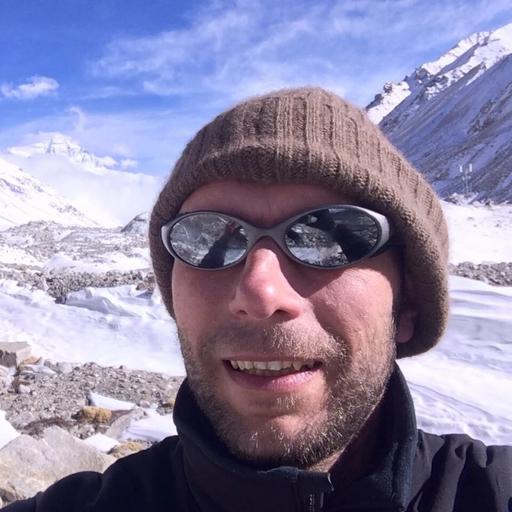
Boardroom Strategist and Creator of Ultra States Examining How Humans Actually Perform Under Pressure
30+ years Boardroom advisory experience330+ Boards advised or served on6 World’s highest mountains climbedTEDx Spoke at TEDxUniversityofEdinburgh
Deri Llewellyn-Davies grew up in a small rural village in Wales, where community wasn’t a concept, it was how life worked. That early sense of shared responsibility shaped how he later approached leadership, decision-making, and pressure, long before he entered boardrooms and high-stakes environments. Over three decades, Deri has advised and sat on more than 330 boards, becoming known for spotting the real constraint beneath the noise and helping organisations think clearly when the stakes are high. His signature Strategy on a Page methodology is a no 1 best seller and has inspired thousands of founders to scale with purpose.
Outside business, Deri has spent years testing human limits in extreme environments — climbing six of the world’s highest mountains, completing the Marathon des Sables, and racing the infamous Ironman. Those experiences became a lab for understanding how people actually perform under pressure, and why so many high-achievers quietly collapse when the adrenaline wears off.
That intersection of boardroom pattern recognition and extreme performance thinking led to the creation of Ultra States, a framework that reframes performance as state selection rather than motivation. Instead of treating focus, flow, connection, recovery, and peak intensity as accidents or personality traits, Ultra States examines them as distinct neurological and physiological conditions, each with trade-offs when misused or overextended.
More from Deri Llewellyn-Davies
All episodes → The Sticky From The Inside PodcastUltra States: Earthquakes, Hijacked Minds and the BoardroomOct 2026Play episode →
 Mindset BoosterHow to Enter a Flow State and Improve Sales Performance with DeriOct 2026Play episode →
 Barriers and Boundaries Resilience LeadershipUnlocking Human Resilience with Flow, Connection, and Leadership, feat. Deri Llewellyn-DaviesSep 2026Play episode →
 Rewiring Health®Why High Achievers Burn Out: You’re Stuck in the Wrong StateAug 2026Play episode →
 Mastering the Art of Success Hosted by Debbi DiMaggioDeri Llewellyn-Davies: Leadership, Ultra States, and Performing Under PressureAug 2026Play episode →
 The Caring CEO. For leaders who want to grow teams who are more caring, fun filled and productive. For leaders who care.No Regrets Leadership , Deri Llewellyn-Davies, Boardroom Strategies & creator of Ultra StatesJul 2026Play episode →
 Speak Up: Develop Your Executive Presence & Leadership Communication StyleHow Elite Athletes and Great Leaders Build Unshakable Executive Presence Through State ManagementJun 2026Play episode →
 Sales POP! Podcasts: Insights from Top Experts in Sales, Marketing, Leadership & More.500% Productivity in Flow State — Deri Llewellyn-Davies ExplainsJun 2026Play episode →
 An Evolving Man PodcastFlow State, Burnout, Purpose and the Future of Leadership | AEM #155 Deri Llewellyn-DaviesMar 2026Play episode →