
March 19, 2026
How to move from midlife crisis and burnout to ultra states? Interview Deri Llewellyn-Davies
Sound bites
I think purpose is evolved. The key to purpose is the seeking.
It's like you need to have momentum. If you think you're just going to sit there and just like, oh yeah, I'm going to change my life. No, you need a kick in the ass.
In this episode
Deri Llewellyn-Davies and Peter talk about burnout, purpose, and how state and energy shape how people work and decide.
- Early burnout followed a bankruptcy, a loss of purpose, and an identity built around wealth and success.
- Purpose emerged as something developed through seeking, not a single flash of inspiration.
- Changing state starts with small choices, movement, and finding something to like in the current situation.
- Regret can be used as a decision tool when people feel trapped in work or life.
- Luck, serendipity, and aligned energy are presented as connected to how a person shows up.
Transcript
Automatic captions of the conversation. They can contain errors and do not name who is speaking.
Welcome to the Ask Faleskini Podcast with the guest. I'm proud to introduce Deri. Deri, please tell us more about yourself. What is your story? So great to be here, Peter. I understand the work that you're doing around midlife crisis and burnout is so important and I think escalating. And I've burned out a couple of times along the way. This is why I resonate with you. I'd argue that mine was before midlife crisis. And I think this is what I think we're seeing a lot more in the world. It's not midlife anymore and where is mid, right?
Where does that midpoint come? Because for me, it kicked in in my early thirties. And I, you know, you go back to that point in my life, it was a bankruptcy. It was a loss of purpose. It was a loss of many things. I wouldn't have called it burnout by that back then, by the way, it was just stressful. And I think this was, you're going back 20 years now. So you go, I don't think burnout was a term that we used back then. But it was definitely there. I look back in hindsight. So, you know, what caused it? I was smashing business.
I'd attached myself to wealth. I'd attached myself to the drive and the success of the Western world. I think we all, we know what it's about. And then suddenly 2008 hit. I was massively exposed in property, which I loved, which is my wealth connection. And suddenly, suddenly it wasn't there. Now, what really happened there was I'd attached myself to something. I was very much driven by reward. I was very much driven by wealth. I put my whole identity around it. And I think this is it. It's when you're suddenly your identity is fully removed, everything crashes around you.
The bankruptcy hit. I'd attached myself to wealth. I was actually on a mountain at the time. I was in Denali when I was taking legal calls at 5,000 meters whilst trying to climb on the most dangerous mountains in the world. There was an irony to the timing of all of that. But I came back from that mountain reborn and I said, I will never attach myself to wealth again. I'm gonna just redefine my purpose and mean something in this life. And I saw, I think a big part of me without recognizing it back then, it was an identity issue and it was actually a lecture of purpose, which is what I've been preaching ever since.
So from that point, I'm very blessed. I get to advise thousands of businesses across the world in what I've done in my strategy work, sat on 330 boards. And now, I've seen a lot of burnout, Peter. It's just a pandemic in the founder world and in the executive world. I choose purpose first, and I think purpose is one of the antidotes to burnout. Now, also purpose can drive burnout as well in a different way, which you've got to be careful of. But for me, that moment in time, totally redefining myself, realizing what was matters was a pivot point.
And this is why, when I saw you and your work, I was like, I'm in. Let's help the world, shall we? And what I'm doing with ultra states, which I think one of the conversations we're going to have today, it's like, it's not this purpose thing. They're all quite ethereal. They're big things. For me, it's about state. It's about every day, what state are we choosing and how we're showing up in a moment. Because I think we're so lost in this world and we've been so distracted in this world, that it's a superpower to be able to be fully aware of yourself and choose the state that you're operating in.
Amazing story and really close to my story. So I know. That's why when I read your story, I went, okay, there's definitely a lot of synergy here, right? Yeah. So I have. So my problem was finding a purpose. The biggest obstacle to finding my purpose was I could not distinguish between what is mine and what is, or what are societal expectations of me. And I would identify with societal expectations more than with myself, because I had no clue who am I. Because how did you overcome this obstacle? What you said, you went to a mountain and when you visit, you'll see I also live on a mountain.
It's not so dangerous than the one you climb. But I had to go out of the city and find my peace, relocate, do some farm jobs and stuff like that in order to find myself. What was your recipe? How did you start noticing or identify what is your purpose? I think this is such a deep question and an important question. It's fluffed over quite a lot. People like ban this word around purpose. I think people are expecting like a flash of inspiration or lightning to strike them or something. It's just like your purpose will be revealed in one grand thing.
I don't believe that. I think purpose is evolved. The key to purpose is the seeking. We're actually hardwired. When we talk about ultra states, I'm talking about the neurochemistry and the scientific validation and the brainwave patterns around this. We are hardwired for seeking. As human beings, that dopamine piece, which has been wrecked by our current technology addiction to dopamine, it's part of our system. We've got this beautiful neurochemical called dopamine, which has been built in the human system for thousands of years, which has served us really well, which we've just hijacked in the last 20.
But it's part of the dopamine is the seeking of meaning. That is part of it. So we as humans have been seeking meaning forever. And suddenly, if it's all on a plate and we're sitting there, it's like if you're not seeking meaning, I think we've lost the very essence of humanity. So what are we seeking? And we're all different. And that's the beauty. It's not handed. The moment we kind of go out. And this is where I think there's a lot of the gurus and the don't get me started on a lot of that bunch. It's like, you know, just be like me, the followers on Instagram.
It's just like everyone wants to be somebody else. You can't be you, right? Be you deeply. And that means you've got to really go inside and have a word. Stop trying to be something else. That's an honest conversation. Now, and also, it might not be mind blowing. It's not change the world. It's not it's it might be. So my mom, God bless her, who brought me up, I was adopted. So, you know, my mother, the brought me up in West Wales. She's a beautiful soul. Her purpose was to parents and to care for her family. And she was super.
You know, she's a beautiful, happy soul. And that was her purpose. And that was enough. So you got to go, what is for me? And I had to do a lot of work. And by the way, journey continues. And I think that's the moment you think you got your purpose, and you're on it, I would say you might want to look again because it evolves. So for me, a big part of that is who am I? What do I love to do? It's like, I need to be genuinely curious. It's part of flow states, right? You have to have genuine curiosity, intrinsic motivation.
It's just the spark that only you like, right? So therefore, if you're trying to force things against you that you don't like because you just want to be someone else, you're literally going to block all form of some of the most magical states available to us, which is peak state and flow state, right? Without curiosity, just genuine love of what you're doing, nothing's going to matter, and that's where purpose begins. For me, the quest to the mountains began out of curiosity. I went on a small mountain. It's actually not a mountain.
We have a mountain in Wales where I was brought up. It's called the Preseli Mountains, and they are literally tiny little hills. I thought that was a mountain, but I loved it. I love being in nature, and I think nature is a really important trigger. You talked about this, Peter, but I have spent time in, I go on adventures because they are actually reset points for me. To me to switch off, by the way, I'm showing a mobile phone for those who are just listening right now, but to look at the mobile phone and go, you've got to get away from that now and again to have a dopamine detox so you can reset.
Get into nature, immerse yourself, just take moment to calm the brainwave patterns, to take that moment to connect to something much more beautiful than ourselves. In those moments is where you are allowing the space and the time to actually figure out what that purpose is. So most of my biggest purpose amplifications, my biggest elements of when I've actually evolved has come from my depth in nature, which is why I'm in it all the bloody time. I just, the more I can spend on my greatest tools. Because it's like us, the universe, God, whatever you want to call it.
It's just, it's there, go and look at a flower, go and look at the blossoms, look at it, you know, people are so like freaking out, just look around you. The world's a beautiful place. I just find what you love about it. And it doesn't need to be groundbreaking yet. And some, and sometimes that will evolve to become so. So that's, that's my, and when I'm working with clients or businesses, like what is it we love to do? We've got to start with that. And sometimes people struggle, it's like, what did you love to do when you were a child?
And I think this is the difference. You ask someone, what do you love to do? They don't know sometimes as an adult, we've become so lost. But then you ask them a different question, what did you love to do as a child? And then they are, oh, well, I was a child, I used to love this. And it's like, well, why did you lose that? When did, when did we grow up? Right? And what happened on that journey where we suddenly, to your point and you're 100% right, it's that, at what point do we then adjust to society? What one point do we lose ourselves?
Because the children haven't lost themselves. You know, I look at my children a little bit, you know, they haven't lost themselves yet. My teenagers are starting to, right? But at what point do we, we've so fully merged into this myth of society, of who we're supposed to be, right? I don't know, I want to bring it back. Bring back the joy, right? Bring back the youth. I'm just, I'm, I like to be a child most of the time. I think it's the best way to play. I'll give you what my clients mostly tell me. I'm 100% in agreement with what you're telling me.
But how can people that work nine to five and then take care of their children in the afternoon, how can they find the joy? How can they find time to go off line to, to, as you said, dopamine detox? How can, how can they do it? Because for so many people, life is just overwhelmed. Most of them, some have serious problems and then they have an initiative like you and me, we had the bankruptcy. So you have all the time on your hands because you don't need to go after the company's banker. The next day you don't need to go to work.
So you have time. But people that don't go in such an extremes, how can they find time to detox? How can they find an inspiration? What is their trigger? How can they start resolving, I call it midlife crisis? We were talking also about burnout. Burnout is one of a telltale sign of a midlife crisis. What's your advice to people? Where should they start? If they are in this, either we call it red race, or how to get off this wheel and just start looking what they really want? Because they usually stuck in a job, but they have a mortgage to pay or a car that is leased and stuff like that.
They cannot just stop. So where should they start? Well, let's just deal with it. There's a big topic and there's a few things going on there. The first thing is most people, if we like it or not, will make a change only when a crisis has hit. They have the cancer, they have the bankruptcy, someone's died in the family and suddenly they have a wake-up call. Then it's a big enough power to overcome the inertia. The next question is how can people like me and you and people listening to this podcast, how can you get out of that without the shit show?
It's like you need to have momentum. If you think you're just going to sit there and just like, oh yeah, I'm going to change my life. No, you need a kick in the ass. You need something to motivate you. That might be you, Peter, because you come along and just go with all of the tools you've got and psychological tools. You're able to hit people out of that. Now, I use a lot of the time the word regret. I talked about it in my original book, Where Lives Grow Adventure. I've been keynoting on it, and we studied what are the six top regrets of the dying.
I took studies from all over the world on this, and this is fascinating because I live my life by, if I'm going to do something, and a lot of people are going, oh, I'm in my 95 job, I'm 99, I'm not doing this, I haven't got time, great. Are you going to regret that? So it's like, regrets gives a different power to the decision. So it's like, so that's your life. You're in a 95 job and you're miserable and you've got your kids, you've got responsibility and you're grinding it out. Choice. Do you want to carry on like that?
Because if you don't make a change, you're just going to die miserable. And you might regret that on your deathbed because the statistics suggest you will, right? So let's just lay that one out and go, or do you want to make a choice right now, a small choice by the way, but a choice to change now and change something? Non-radical, this isn't, I think there's bad advice out there, which is just quit your job and do it. No, when you've got children and you've got family, you've got a responsibility. And I get it for parents.
I'm a parent, I'm a parent of four. And I had business collapses when I had kids, so I'm like, and I had responsibility to the family, and I know how brutal that is, okay? But in those moments, it's like, okay, you're in a job. First of all, start liking something about it. I don't give a shit what it is, but if you sit there pissy and mopey and just get miserable, it ain't changing. So just find something you like, because I think that's a psychological driver. We talk about the five foundations of states. In order to access the states that I'm talking about, which is the opposite of the states you just talked about, I'm talking about accessing flow state and focus state and peak state, like the neurochemical activation of feeling of life, right?
You just described the antithesis of that, which is miserable, trapped in this miserable world of whatever you've created. So in order to shift that, you have to shift the foundations. And the foundations for me, the six foundations to ultra-states to enable that shift. First one is purpose. We've already talked about that. You gotta find that purpose. You gotta look for it. I don't know if you've got it yet. Be looking. And it could be, it's interesting, one of my friends, she just likes Lego, right? She just plays, she comes home, she's stressed out, every day she got a big job, but she just builds Lego for 40 minutes and it makes her feel better.
And actually that's flow state, by the way, what she's triggered there is a flow state. And who knows where it'll go from that. Next up, we've got to look at the neurochemicals. We've got to look at the brainwave patterns. Physiology, move. If you are sitting around in this and you're sitting behind Zoom and you're sitting at a desk, if you are not moving, you are trapped, the whole energy in your body, we've got to get physicality and movement. And I don't give a shit what that is. Walk, get out there, do something.
The movement actually starts moving, the energy. And then the psychology is that, oh my God, I'm miserable in my job. So if you get those foundations, you got to go, if you choose to continue, you are continuing exactly the same brainwave pattern, it's not going to change. You're using exactly the same neurochemicals, it's not going to change. If it's exactly the same physiology, you're not going to change. And if you know you pissy and miserable, so you continue that, there's only one way that's going to go. And you play that out into the future, and that's a shit show and you're going to die with regret.
If that doesn't wake anyone up on this call, then I don't know what will, right? So what you need to do, move a bit at a time. It's not groundbreaking. Just get out and move. I like, just get out in the mornings. Get your feet on the ground. Spend time with your kids, right? Just look in their eyes. Just spend, like, there is magic in children's eyes. I love my children. I spend as much time as you can, but I'm with them. I'm with them. In fact, there's, I heard a statistic yesterday, Peter, it made me cry. They've done this study on the effect of adults, parents, being on their phones whilst with their children.
And the psychological effects to the child are horrendous because the children growing up today are feeling that their parents, that their phone is more important than they are. As a father, that hurts hard. And thankfully, I do not mess about on my phone and we do not have that with my children, but I see it everywhere. I'm seeing parents and they're trapped and they're miserable and they're home at the dinner, but they're on their phone. Just put your damn phone down and just connect with your child. There's joy right there, by the way.
So anyway, you started, mate. You asked a question and you got me on my soap box now. I have another question that is really important to me or dear to me, let's call it that. Can we find our purpose alone or we should do it with the coach or let's call it accountability partner? How should we go on this journey of discovering our purpose? Should we do it alone? Should we go to the workshop or weekend? How should we start? Should we read a book? What's the best way to do it? Everything you just said. So I mean, I don't think, should we do, let me just rephrase, should we do anything alone?
I don't think so. I think we're, as human beings, this is our biggest problem in society right now, is the lack of community and the lack of connection. Now, do you need to do some work alone on your purpose? Absolutely, because only you can do that work because you need to look inside. But if you've been trapped for so long, you might need a trigger like a coach, like you Peter, like other people out there. You might need the inspiration of the spark because it just needs to be brought alive again. And should you read, but I would say, if you just lean into the journey, do the inner work.
If you meditate, meditate. If you want to just sit on the mat, sit on the mat. If you want to then engage with the coach, get in with the community, read the books, do it all because you don't know where the spark is going to come from. That's evolution. That's exploring a life that's leaning in. So I'm a huge, I'm not a coach by the way, but I'm a huge fan of coaching. And if you get the right person at the right time, like the work you do, and this is why I really honor you Peter and the work you do, you hit the right person at the right time.
You just give them the right moment. You can change their lives. So does external influence work? Yeah, absolutely. But sometimes, someone can sit there, something will happen, and they'll have that internal knowledge, that awareness of opening. And sometimes then they just need an encouragement from an outside source to do so. So I don't think there's one, I really encourage the blend. I think we should be learning and exploring ourselves with others, with coaches, in trainings and books. That's a tiny library behind me.
I got a massive library in the next room. I am reading all the time. I'm consuming all the time. I'm immersed in incredible communities. I'm surrounding myself with amazing people, constantly learning and constantly growing. And I think that's the... I think everyone has a slightly different nuance on how they like to learn. Introverts would probably go a little bit more in themselves. Extroverts will probably get more to community. But I think we need... I think in order to really, really lean into purpose, we should take that wide.
Thank you. Then there's another thing I would like you to ask. You already mentioned that the most important thing is to get in the flow. But a lot of people... Now, I didn't say that. Flow is one of the great states, right? So, it's one, but I personally love flow, so I'm a bit biased. But I don't think it's one of the most important. Love, I'd say, is the most important, but we'll cover that again, right? Okay. So, my question is, when we got into this midlife and midlife crisis and burnout and all this stuff happening to us, one of what I see across the board with all people I talk to and work with is we have, we are developing or we are collecting grudges.
So we have so many things that are unforgiven, that were done to us and we are not able to forgive. How should we go about forgiving things and letting go and move on? What's your advice on that? You know, that's a really hard one. I have to say, I did a lot of work in my early days with neuro-linguistic programming and understanding the psychology. That's why I love the work. You've really pulled psychology in from Jung and Freud. You've really played with this game. For me, it's been less of a problem and that's just an honesty.
If you look at timelines, I am more of a future-oriented person than a past-orientated person. So therefore, I don't carry grudges. Now, I had to do a little bit of work on that because a couple of people did piss me off along the way, right? But I really don't and that's partly, that's not like, oh, Deri's got it all sorted out. No, it's actually I'm wired that way that I'm more future-orientated than past-orientated. But a lot of my clients, oh, they literally carry me in the baggage with them all the way. So what you're talking about is incredibly real.
I'm not the right person to answer that question other than I'm a massive fan of the Surrender Experiment with Michael Singer, and it's that let go. And I think this one, to answer your previous question again, if you've got grudges and you're pulling it forward, I think forgiveness and gratitude are some of the most powerful things for every human being, by the way. But that probably needs a little bit of work. You know, you're saying, would you do that on your own, or would you do that with others? If you're really carrying grudges, you probably need a little bit of external support to get over that one.
I haven't, because it's not my wheelhouse, but whenever I see clients with that, because I sit on a lot of boards, and I have a lot of founders, when I see stuff like that, I've got a number of great coaches I work with. And I go, right, go and talk to him, go and sort that out, because you're going to just be dragging that baggage through, and by the way, what you're talking about, if you are sitting there and you're carrying the stuff with you, you're just blocking the ability for the ultra-states. You just are. So should you clean that out?
And it just feels crap, right? Why would you want to be carrying that around with you all the time? So we've got to release the past and allow it, and let it go, and just be in the moment to be able to fully experience the future. So yeah, I would be seeking help on that one, if that's what your bag is, I'd say. Okay. I have another question. You didn't mention it. You explained everything, let's say, very so hands-on approach, but you have a scientific backing for everything. How important is the fate in this whole journey?
Fate. Ooh, good one. That's an interesting word, fate. Something we talk about in the foundational states, and this is a bit controversial, this is a really interesting angle, is six states, the sixth foundation to be in state, is what we call the spirit. Now, and that's not like a woo-woo spirit, or it's, you know, God's spirit, it's like our essence, our spirit. Now, I believe there's something, if we're aligned, if we're in the right place, in the right time, this is quantum physics, right? If we go back to quantum physics, are we all energy?
Yeah, pretty much. Is the universe energy? So if you just get back to fundamental principles of quantum physics, that we are energy, we are vibrating energy and the universe is energy. If you then bring a shitty energy to the table, you're probably going to create a shitty experience, right? Let's just keep it basic. So if you are showing up, vibrating high, with gratitude, you've let go of all your shit and your baggage and all the stuff we're talking about just now, and you're there, now, may we attract something much more beautiful?
It might be a time delay with all of that, by the way, but might we attract it? I would suggest yes. So how much is fate, and how much is owning our own destiny from an energetic perspective? I would say I am really lucky. I'm one of the luckiest people alive, I think. I nearly died on multiple places, and I didn't, because on the north face of Everest, I should have died on the day I was there. So I am really lucky. But I also know that I'm really quite energetic. I'm bringing the right energy to the table in the right way, which kind of creates luck, doesn't it?
So do I believe fate happens? I believe I'm blessed. I believe I'm lucky. I believe that I've been in the right place at the right times. The serendipity, the synchronicity of events, my blown my mind, which is beyond what I'm now. Is that fate or have I engineered that internally because of the vibration that I'm transmitting? There's an open question. I believe that I think the universe is an incredible place. I think this human body is an incredible vessel. I think we are getting to know, we know more about it than we've ever known before, which is quite mind blowing.
It's actually verifying everything that the great thing, the great thinkers have been thinking for thousands of years, science has just finally backed up the Buddhists and everything else, right? So we're in this beautiful part of human history, and yet we're losing ourselves more than ever before. That's mental. But if we can, as humans, just, if we can just be good, if we can just vibrate, if we can just tap into ourselves, can we then, do you just change destiny? I choose to, if I'm going to lean in, I'd rather lean in positively enjoying the world and loving life.
And then if a shit show happens, a shit show happens, then be miserable and mopey and everything else, and then hoping that wonderful things are going to happen. I don't see how that works. So it's a, I never really used the word fate before. That's an interesting one. But I do believe in serendipity, synchronicity, but I also believe if we are aligned, I think we help architect that. Thank you. These are great insights. So Deri, where can our listeners and viewers find you? So you used the word Deri because my surname is Llewellyn-Davies.
So good luck without anyone outside of Wales, right? So Deri Llewellyn-Davies, you can find me on LinkedIn. It's a good place to find me. But all of the work we're doing around the UltraStage stuff, ultrastage.com will give you the links. And also the book, I'm giving the full book away. So all of the UltraStage stuff is a gift to the world. We'll make sure you get the link, Peter. Everyone's got full access to that. So everything, the science backing, everything we're just talking about there, is all there on the journey for you.
Deri, thank you very much for all the insights. You have an amazing story, and I'm really grateful for you being my guest tonight. It's been a pleasure being here, Peter.
About Deri Llewellyn-Davies
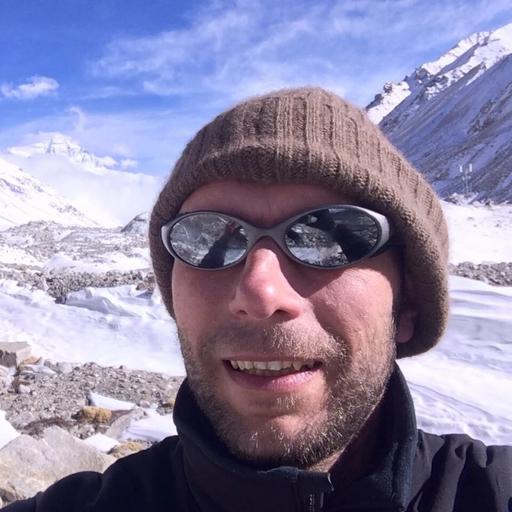
Boardroom Strategist and Creator of Ultra States Examining How Humans Actually Perform Under Pressure
30+ years Boardroom advisory experience330+ Boards advised or served on6 World’s highest mountains climbedTEDx Spoke at TEDxUniversityofEdinburgh
Deri Llewellyn-Davies grew up in a small rural village in Wales, where community wasn’t a concept, it was how life worked. That early sense of shared responsibility shaped how he later approached leadership, decision-making, and pressure, long before he entered boardrooms and high-stakes environments. Over three decades, Deri has advised and sat on more than 330 boards, becoming known for spotting the real constraint beneath the noise and helping organisations think clearly when the stakes are high. His signature Strategy on a Page methodology is a no 1 best seller and has inspired thousands of founders to scale with purpose.
Outside business, Deri has spent years testing human limits in extreme environments — climbing six of the world’s highest mountains, completing the Marathon des Sables, and racing the infamous Ironman. Those experiences became a lab for understanding how people actually perform under pressure, and why so many high-achievers quietly collapse when the adrenaline wears off.
That intersection of boardroom pattern recognition and extreme performance thinking led to the creation of Ultra States, a framework that reframes performance as state selection rather than motivation. Instead of treating focus, flow, connection, recovery, and peak intensity as accidents or personality traits, Ultra States examines them as distinct neurological and physiological conditions, each with trade-offs when misused or overextended.
More from Deri Llewellyn-Davies
All episodes → Different thinking for Different Time - Mindset Change and Thought LeadershipDifferent Thinking for Different Times with my guest Deri Llewellyn-DaviesNov 2026Play episode →
 The Sticky From The Inside PodcastUltra States: Earthquakes, Hijacked Minds and the BoardroomOct 2026Play episode →
 Mindset BoosterHow to Enter a Flow State and Improve Sales Performance with DeriOct 2026Play episode →
 Barriers and Boundaries Resilience LeadershipUnlocking Human Resilience with Flow, Connection, and Leadership, feat. Deri Llewellyn-DaviesSep 2026Play episode →
 Rewiring Health®Why High Achievers Burn Out: You’re Stuck in the Wrong StateAug 2026Play episode →
 Mastering the Art of Success Hosted by Debbi DiMaggioDeri Llewellyn-Davies: Leadership, Ultra States, and Performing Under PressureAug 2026Play episode →
 The Caring CEO. For leaders who want to grow teams who are more caring, fun filled and productive. For leaders who care.No Regrets Leadership , Deri Llewellyn-Davies, Boardroom Strategies & creator of Ultra StatesJul 2026Play episode →
 Speak Up: Develop Your Executive Presence & Leadership Communication StyleHow Elite Athletes and Great Leaders Build Unshakable Executive Presence Through State ManagementJun 2026Play episode →
 Sales POP! Podcasts: Insights from Top Experts in Sales, Marketing, Leadership & More.500% Productivity in Flow State — Deri Llewellyn-Davies ExplainsJun 2026Play episode →