
February 17, 2022
Data Storytelling with Digital Transformation Guru Graham Brown
Storytelling isn't this fuzzy skill that you need to have. It's probably one of the most important skills that we have.
Sound bites
We buy on emotion and justify with logic. We need both of those.
In this episode
Graham Brown talks about data storytelling, why brands need human-centered stories, and how podcasts help leaders and companies connect with audiences.
- Storytelling as a way to package data so people care about it and act on it.
- Large brands can build stronger podcasts by focusing on the people inside the brand, not the logo.
- Leaders and corporate storytellers can use podcast guest spots to reach curated communities without conference travel.
- Data needs story to create emotional connection, while story needs data to feel credible and useful.
- Good storytellers learn story structure first before they start breaking the rules.
Chapters
Written from the transcript. Pick a chapter to play the episode from that point.
Transcript
Automatic captions of the conversation. They can contain errors and do not name who is speaking.
Welcome to Rule the World, the ultimate power of storytelling. Storytelling is what connects us as humans, and for brands, it is no different. A well-told story can effectively position your brand in the minds and hearts of your audience, and can convert thoughts and feelings into results and revenue. On this show, we dive into the unique and recurring principles of world-class storytellers from every walk of life to help you level up your storytelling skills and knowledge to drive real, measurable results for you and your organization.
Here's your host, Paul Furlong. Hello and welcome to Rule the World, the art and power of storytelling. I'm your host, Paul Furlong. Just a quick reminder that my book, Rule the World, Master the Power of Storytelling to Inspire, Influence and Succeed, is now available. You can get hold of your copy in all good bookshops, including Amazon and Kindle, Waterstones and WH Smith in the UK, Barnes & Noble in the US, and all good bookshops throughout the rest of the world. Anyway, without further ado, I'm delighted to introduce today's guest, Graham Brown.
Graham is founder of Picall & Co, an award-winning podcast agency, an AI-powered, data-driven B2B podcast agency in Singapore. He's a published author on the subject of the digital transformation of communication, works including the Human Communication Playbook, The Mobile Youth, Voices of the Connected Generation, documenting the rise of mobile culture in the early 2000s in Japan, China, Africa and India, and Brand Love, How to Build a Brand Worth Talking About. Graham, welcome to the show. Thank you, Paul. Wonderful to be here.
Looking forward to this. And by the way, I told my wife that I was going to talk to Paul from Liverpool, and she's a big Beatles fan. So she got really excited. So I want to just keep that mystery going a little bit longer. Amazing. I've given you a little bit of an introduction there. Why don't you tell us a little bit more about who you are, what you do, how you spend your time, a little bit more into the world of Graham. Yeah, thanks, Paul. Well, I'm a storyteller. That's my gig. That's my way of getting paid. And I think a lot of us, and I guess your audience, will resonate with this as well, is that we've grown up with this idea of storytelling being once upon a time.
And there is that element of storytelling. But increasingly in business, people are realizing that storytelling isn't this fuzzy skill that you need to have. It's probably one of the most important skills that we have. whether you are, for example, raising money for your startup or you're, you know, raising money for a film that you're aiming to produce, or you're getting hired. It's all storytelling. It's really about how do you package data and how do you make people care about that data? So that could be, for example, an actor or a character in your movie.
You know, how do you get somebody to empathize with a violent gangster like Coppola did with Godfather, right so how do you do that that's that's getting data and making people care about it or do how do you get millions hundreds of millions maybe billions of people to care about public health and a chart like flattening the curve that was a story they're flattening the cut flattening the curve was a story that billions potentially of people understood you know like most stories it has heroes and villains it has a past the present and the future and it has an expectation of what we need to do in terms of fixing the problem so that's all storytelling and the way that that manifests is in the business world is really two ways one is i help brands particularly large corporates tell us better stories and that is through creating their podcasts a lot of it is really just making the focus on the individuals the people of the the brands you know because people follow people not brands today you want to give a voice to the people of the brand not this sort of brand nobody nobody connects with that so it's creating podcasts for the brands and then the second part is helping leaders or corporate storytellers get onto and find podcasts because for them it's a great way you know you're speaking at a conference but you know you look at the conference industry now, it's difficult.
You've got to travel, but you've got all these fantastic communities that hosts like you have curated. You may only have hundreds or a few thousand listeners, but somebody's done that with love. They've curated a community and what a great way for anybody in business to connect with that community. So that's storytelling in a nutshell for me. And the way businesses are really resonating with it now, it really seems to be a shift from where we were. Even three or four years ago, pre-pandemic, there's a real shift towards the more human element of business and how you can tell stories around that.
Amazing. And yeah, as we know, and as anyone who listens to this podcast knows, storytelling is the key. And storytelling is what we talk about the whole time on this podcast in various different guises. Now, AI is something that you look at and focus on and data, whether, as you say, it's the data behind Flattening the Curve or data in The Godfather to try and sell that movie, to pitch that movie. Tell me a little bit more about what data storytelling is and the importance of data storytelling, particularly from that AI perspective.
hmm yeah well my background was in ai i graduated with an ai degree in 1995 which is a very long time ago gives away my age a little bit like they didn't know at the time what ai was or nobody could conceive what it was so i was you know there a time when it good to be ahead of the curve but sometimes the curve doesn even exist yet And when I graduated they told me that I didn have many job opportunities I could either go back and teach AI or teach English in Japan. That was the only, you know, the only qualification you needed was to speak English.
So I took that opportunity in 95 and that really got me on my start with my journey into communications, because obviously I was in the business of communication. I saw the growth of the communications industry in Japan in the late 90s, you know, Japanese high school girls taking phones, text messaging long before anyone else in the world. And then seeing like that now percolate into teenagers in different countries in the world, you know, started with the Scandinavian countries and then into Europe and so on. and when i came back to london in the 2000s late 90s actually um i saw an opportunity to sell data to telcos so i got into the business of data like many people in research packaging consumer research and then selling it to corporates and what i found paul was that they bought it readily but around Something interesting happened around about 2006.
We just commissioned this global study and collected data from thousands of teenagers around the world. What mobile phones are you buying now? Because we saw them as the harbinger of what came next. They were the first text messaging, the first to share content and so on. And bear in mind, if you go way back 2006, it was all Nokia, right? You remember the Nokia 3 Series, the 7110, the flip out phone. This is before the iPhone, before even Facebook 2006. And so we did this research and presented it to the corporates at Nokia.
And I remember at the beginning of the research, they had this 13-year-old American kid. And we asked him, what do you think of Nokia? and he just went, oh, it sucks. And then he just went off about how all his friends use BlackBerrys and so on. And we presented this to Nokia and I thought, this is going to really drop a bomb inside Nokia. They're going to change. They're going to realize they've lost it. They've lost that core market. And after the presentation, it was all very quiet and nothing changed. They didn't do anything.
And one of the reasons was later that year, Forbes ran an article, actually a front page of Forbes magazine, I remember it had a picture of the CEO of Nokia, and it said, if I remember rightly, a billion customers, can anyone catch the cell phone king? And that's all you need to know, because we're a Nokia now. They completely lost it. And I realized at that point that it wasn't about data. It was about the power of the story, because they had internally a bigger story to believe in. And I was just trying to pitch the data to them.
And so at that point, there was a pivot and a realization in my career that you need to package this data in a story if people are going to do anything with it and create change. And that was the beginning of data storytelling for me, how I went from AI into communications into data storytelling. And even now, I see people, we see people. doing the presentations. Out it comes, the PowerPoints. Can you imagine? I always think Martin Luther King, if he stood up before the Lincoln Monument in front of the crowds and said, I have a PowerPoint presentation.
Can you dim the lights, please? That is what people do today when they try and get data across, when they try and get a message across. And I feel that we can do so much better. We can learn a lot from your world, the world of movies and film, for example. There are storytellers everywhere in business, you know, writers, we can learn from them and say, look, how do they take data and package it in a way that people care? And that is fundamentally data storytelling. Amazing. I love the Martin Luther King analogy. The whole history would be completely different, wouldn't it?
An awful lot of people. And probably not in a very good way when you start digging down into that a little bit. So that really does make a difference, isn't it? The storytelling. So how do we kind of turn that data into a story then? What are the steps that we need to take to take it from pure data and package it into that story? hmm yeah if you consider if you think about one of the most effective ways of visualizing data is a map if you think about it like i think the first step paul is to realize that we don't see the world as it is we see the world as we are and i know you've had psychologists on here and And many of them will point to the data itself, the research that shows that the world is very much interpreted by us.
And the map is a great example of that. If you think of the map that you and I would have been used to at school, the Mercator projection, you've got the US on the left and Europe on the right. And then if you're New Zealand, you're right on the footnote at the bottom right. But the interesting thing about that representation is that, you know, if you've got Africa and then you've got Greenland at the top is huge, but actually Africa is 15 times bigger than Greenland. But on this Makeda projection, it's all warped, but we accept that as reality.
And the interesting thing is, Paul, if you were to say to somebody, why is it like this? And they say well you know the North on the top and the South on the bottom It not like in space there is no up and down right It doesn exist And they say well you know the compass points north it doesn point north the compass points north and south it just that some people at some point in time painted the n with a red bit interestingly in china it points south the red pointed you know there you go just shows different worldviews but the point is is that really if you think about data storytelling it's about the map you choose for people to interpret the world so you have to choose a map and that is a framework for people to understand once you get past that point then you can go into the the technical how-tos of you know how do you take data and package it you know how do you take a story and break it down and this is where we get into your territory i guess is how do you create a narrative around the story you know as a movie director you know you never start at the beginning do you like graham was born in 1972 nobody cares it's sort of you start in the middle don't you with like there's a dead body on the floor and a woman's dropped a gun and then she's running away in the distance and it's like how did we ever get here that's the engaging part for the audience isn't it and it's always sort of told in that performer often present to past to future.
So there are narrative structures to telling stories, which I don't know how true it is, but there's like six or seven in movies with a few variations, right? But that's the point, isn't it? That we don't need anything new. We just need new actors, new content. So to answer your question, Paul, a very long answer, but the short answer is there are structures out there that exist in movies and books and popular culture that help us tell stories that work because they've been around for thousands of years. And all you have to do is take one of those structures and populate it with your data.
And there you have it. There's the answer. It sounds like you're plagiarizing work, but look at every song, every story, it's built on something else that came before it, right? I mean, look at every single movie. I'm sure the movies you've been involved in, they have archetypes which are very familiar. Yeah, 100%. There's nothing new under the sun. Good artists steal. And you're right, traditionally there's seven stories. Is it seven? Seven, yeah. Seven stories, which is great. And I love that math analogy as well.
I was on a call with one of our American clients yesterday, and he was stood in front of a map of the world. Whereas I'm quite used to being based in the UK, seeing kind of Europe and Africa in the center of the map, and then kind of Asia Pacific, as I look at it to the right in the US and South America on the left of the map, his map had the US and South America in the center of the map, with everything else spread out to the sides, because he's based in the US. So that to them, quite rightly, is kind of the center of the earth and everything else spreads out from there.
So yeah, we all see things differently, don't we? It looks weird though, doesn't it, when you see that? It looks very different. And I noticed it. England looks very small. Oh, yeah. Yeah. And well, it is, isn't it? Comparative. Not on the original maps where it's all painted red. Yeah. Yeah. When England was quite happy to go around and just plant a flag wherever it fancied. Well, that was the story, wasn't it? That was reinforced by the map, if you think. So that was the key. It reinforces behavior, doesn't it? And views of the world.
Yeah. And it's the same when we think about ourselves as well, isn't it? The stories that we tell ourselves reinforce our behavior and what we believe about ourselves. Absolutely. Yeah. There's so much we can learn. So another phrase that I've heard you use as well, and I don't know how this ties in. I don't know if it's the same thing. I don't know if it's slightly different or the complete opposite. Can you tell me a little bit about what user storytelling is? Oh, right. Yeah, this is where you would tell a story about a user.
Let's call them a person. Now, let's stop calling them users, consumers. You know, the people that consume our stuff, buy our stuff. How do you create empathy with that person? How do you connect with them and understand their problems? Because one of the problems being is that we tend to sort of isolate ourselves in the ivory tower of work. And yet if you were to go out there and see how people are using your product or consuming whatever it is, then you would see that change. You know, a great example is like going out onto the street and seeing people use technology or use a brand or whatever it might be.
or the way that they behave. And that's user storytelling. It's taking that information back in and sharing it with the team. Probably a really good example of that is Lego. Now, Lego is a great brand. If you think about it, it's just plastic bricks, easily replicable by a Chinese manufacturer, but they haven't. Grandparents don't buy their grandkids Chinese Lego. They buy Lego, right, because of the brand. and interestingly about around about 2000 lego almost went bankrupt you know it's a family-owned business and you know it grew from 2000 to like 2020 to one of the most profitable private companies in the world selling plastic bricks and around about 2000 2001 when they had a change the incoming ceo the first thing he did was say to his engineers like get out like start messing around he said that you know there were engineers in lego who were spending days if not weeks arguing over whether the the lego chef you know this is a very stereotypical french chef should have a sort of a you know one of those twirly mustaches or not and he said let's just get out get out the office i don want to see you back in the office what i want you to do is get out there and i want you to go and see people using lego and at first they thought oh we gonna have to hand out with kids like you know i don want to do that but then they found actually there was all these adult lego fans and they spent time with them and they realized there's this huge community of adult lego users and they were you know obviously they were not not just making these kind of like kids stuff they were making like amazing reconstructions like hogwarts you know half scale or something crazy you're spending hours years building these things and then they they would spend time with them and really empathize with them and bring that information back into lego and tell the story of these users and they were blown away they never knew these people existed and because of that they launched those lego technica sets so I don't know if you've seen them.
There's like these sort of thousand pound, thousand dollar millennium falcons or replica, you know, some car with actually probably, if it was just a little bit bigger, you could probably drive it. It was that technical. These sort of extremely expensive sets aimed at exactly they knew who the market was. These were grownups, probably parents who had money. And that was the market they were targeting. That's user storytelling. And you can think about how that takes place in everything that we do is that so much of the time we lose contact we we have this sort of compassion fade we see them as users we see them as numbers and yet if we really kind of empathize with them and what their drivers are we can not only provide a better service but we can create some great products for them i suppose that takes client data to a new level as well doesn't it because in the past we'd maybe send out a client survey and get an NPS score and ask them score out of five how did we perform but by actually going out and getting that kind of user storytelling that takes it to a whole new level the whole like level of insight isn't there that you got this kind of confidence I had a um I got a friend who worked in radio BBC radio for many years and he told me that he worked with this sort of aged wizened dj who was sort of you know a sunset dj himself who'd been there since probably the 1920s when it was a post office thing and he said um one of the things he learned from this dj was he got this photograph from a listener and he cut this photograph out and he stuck it on this microphone and he thought it was really cute and weird why he did it but when he asked him he said well every time i go on air i speak to her you know i'm looking at her and i'm talking to her and i know exactly who she is and what her problems are and that's who i'm trying to reach not you guys not the listeners not the audience he knows exactly who his audience is and if you think like with radio radio has been around for 100 years and it's always been on its way out but it's still going strong and the core to that is those djs know exactly who their users if you'd like are and they speak to them as with that powerful word you and that's the point about the data part is that you can have all the data but unless you can humanize that data as an individual you really can't connect with them at that human level So what's the right balance then between data and storytelling?
I imagine a world without data probably isn't super helpful, but are we heading to a world where obviously too much data and not enough storytelling is not great? So where does that balance come in? What are we aiming for? What's the ideal? You want a number. Is that what you're asking for? I'm not asking for a number because I don't want data. I'm a storyteller. What we're aiming for? Is it about getting really good data, lots of data, in order to better tell the stories? Or is data not the aim? Yeah, right. You need the data to inform the story.
In the same way, if you're a director, you would need good actors to act out the story, right? but without the story it's awful you know the actors can't carry a movie with a rubbish plot or the screenwriter was terrible or the director is an amateur you you you wouldn't make it work so i think you look at it in that way you need good actors but you have to also have all this other stuff as well to carry it i suppose you could carry a good movie with rubbish actors i don't know probably not it would be hard work you could correct me on that but i imagine you need both in the same way if you think about it like climate change for example uh you know as a concept as an idea it's not new like this we've known about climate change for 120 years that we've had data on it but it's only recently when bretta tumbook stood up and told a better story with that data that we started listening you know when she stood up in front of the un and said you know you stole my dreams i'm shame on you that was a powerful story and so you had to have both she couldn't have stood up there and just done it off the bat with no data you need she had to have that but the data was the missing part sorry the story was the missing part of that delivery that we didn't have before you know i think even on google there's like 1.1 billion search results for climate change.
There's no hiding. We've got enough data on climate change. But the point is, is that you've got to have this combination of both. So to answer your question, I guess 50-50 would work. You'd need both. That keeps everybody happy, maybe. It's that story that creates that emotional connection, isn't it? That causes that kind of action to take place based around the data, whereas the data kind of just does the intellectual elements, but doesn't move people to action. Do you remember those old ads on TV where they would say, our soap powder washes whiter than whites?
And they would bring out a guy with a clipboard and a, you know, like a lab coat on a white lab coat. And it does sort of sums up really, you need the story part, which is the whiter than white washing powder. But then you need the guy with the lab coat and the clipboard to make people believe that the story is valid. And it's very much how human beings absorb information, isn't it? We buy on emotion and justify with logic. We need both of those. We like to think of ourselves as logical and rational, but the reality is that we're very much driven by emotion and story.
But we need both. Because if you just gave somebody a story, it would sound vapid. It would sound like it had no substance. So tell me, what do you think about the feedback loop then that can be created by the story that comes from the original data, then looping back into the data? Do you think that that will allow for challenging some of the data or honing in on some more of the data so that we're not then kind of drowning in just tons and tons of data. How does that feedback loop work? Is there a feedback loop or does it tend to just be kind of a lateral process from data to story?
Yeah, I mean, that could lead into some interesting areas, couldn't it? I think there's an old story about the Texas sharpshooter who was a guy who took a gun and he shot at the wall and then painted a target around it. He said he was the best shooter in town. We've got to be wary of that, that the data is skewed to fit the story. And we see that everywhere, don't we? With fake news or people only listening to the narratives that they want to hear. To your point, if you're asking how do we better focus on or maybe hone in on data to get the data to match our story?
Is that sort of what you're asking? I'm not suggesting we write the story before the data's there, but in a world where we can get data on everything and kind of drown in data, is there a way that we can more focus on the correct data based on, obviously we'd need some data to begin with, but once we've got the story, Does that not help kind of honing on the correct data that we need? Yeah, we have to look at it all as a discovery process, don't we? We're testing a hypothesis. If we're doing it scientifically, we're doing it with the scientific method, which is we're testing an idea or a hypothesis, which is a story, if you like.
And in theory, if we do it the right way, we're disproving or proving it exists. so in in theory not in practice we should be agile enough to be able to change our approach to look at things a different way but i think that's why i mean there's a lot of focus today on diversity and you know inclusion in the workplace because those bring in different worldviews and narratives to challenge data to look at things in a different way if you just have one homogenous group looking at data then you know they'll just accept whatever you're given but if you have people say well actually i'm not sure if that is actually correct or i'm going to challenge your assumption about that then you have a healthy debate i think a short answer to your question is that we need healthy debate and it needs to be open and this is a problem we have today in media is that it's too polarized to have these open scientific conversations about okay maybe i'm wrong maybe you and me are both right you know we can have two opposing views and both be correct it's very hard you know it's very hard to have these kind of open conversations today yeah it's interesting isn't it the fact that you can the story might be able to create that feedback loop back into the into the data and vice versa you've got this kind of constant loop of data to story to data to story the problem with it is obviously reinforcement bias isn't it that um you develop a pattern we see this in ai with bias obviously there's a lot of focus now on bias in ai and um a lot of focus as well for example about accents you know i'm sure you've picked up Siri or one of those voice activated bots and try to speak to it and it didn't get your accent.
And you maybe even tried to be a little bit more American so it could understand you. It's embarrassing talking to these things, but that's bias at a very sort of innocuous level, more sinister level. It affects everything because the data that we're working from informs our experience or expectations. So of course, maybe I can't understand an accent, but that could also affect hiring decisions, for example. And it's not just your accent, it's like where you're from. And you know this and I know this. You look at advertising in the UK, for example, if you have a Liverpudlian or a Scouse accent, you'll be typecast in a certain type of advert, you might sell financial services, or that might be a Scottish accent or Yorkshire accent.
But this is a bias that in a very innocent way shapes our experience, but there is this much wider bias at play which shapes society and how we interact with each other so at that level data is shaping um sorry bias our expectations of data is shaping our realities if you like and that's the challenge that we have with ai because once it's in the machine we kind of lose control over the thing as well so you know you and i know that it might be funny if somebody has an accent and that's typecast, but now put that into a machine and make decisions about whether or not you get a loan or whether or not you get the job.
That's a different ballgame entirely. Obviously, that's quite scary. And that does give us some elements where we're going to have to potentially interact with the AI learning. But on a slightly lighter note, I've noticed recently with Netflix did it with a fed loads and loads of stand up comedy into AI and got the AI to create a stand up show, which was appalling. And someone else has done it with surprise rising and someone else did did it with with all the superhero movies that have ever been created. And that was absolutely terrible as well.
It didn't put you out of it, Joel. No, actually. How long, if at all, do you think it will be until AI learns the abilities of storytelling so that they can take the data and create the stories themselves? This is a really interesting question because it raises the question and the issue of what it means to be human. and going slightly esoteric here that i love the story of the stand-up comedy because i can just imagine that how that would sound and i'd actually really like to see some of that content and it's in many ways if you think about like music which is a very human uh human pastime content if you And so much of music is quite personal to us as well.
We all have our favorite music. We have that song. You may have a song that makes you cry, but to me, I'm like, meh. And vice versa. We just don't get it because it's so personal to us. And the interesting thing about music is that AI can easily write music. It's done. We're well beyond that. It can write classical music, can write techno. You program it and it can knock out as good as anything that's in the charts today. But the interesting thing, and like going back to the standup, is that it's not about the content, it's about the context of that.
And what I mean is that you think about, like take art, for example. There are lots of examples. You see the videos of like a monkey painting, like a Jackson Pollock, or they give a paintbrush to an elephant and it just knocks out something. It looks like a Rothko or something. But the difference is that it's not about the technical aspect of the music or the art or the comedy. It's about who's telling it. And the difference between a monkey and Rothko and Jackson Pollock and the difference between AI and name your musician is that with AI, it can't tell a story.
It can't sing a song from a position of pain. you know a machine learning algorithm has never been 14 15 16 years old and being rejected by a woman a girl you know and the ground opened up and swallowed him whole right it's never had that it's never experienced pain or loss like we as human beings it's never had that experience to shape it so it's never able to share that story with authenticity and we know this because when we listen to music or even when we see a painting the first thing we want to know is who is it and when we know who it is and their story it changes our expectation and how we interact with that music because you've heard music and you can hear it in the shot when you're walking around And then you get into the musician and everything changes.
Now you start listening to all their stuff and, oh yeah, this is the song I kept hearing a while back, but now I'm really into it because I'm into that band or that singer. And that's the difference because we will never have that connection with AI. So to answer your point, you asked, how long would it be before AI can tell stories? it can create stories but it can never tell them in an authentic way you can feed it content and text and prose and grammar rules and it can spit them out and it can do all that with you know the physics of music or even it can probably create a movie but what is missing is the heart of that which is it's not something spiritual i don't believe it's a soul i believe that it's simply the fact that we've all had experiences and journeys which we you and i and all the listeners share you know so when the beatles sing she loves you or love me do or whatever it's not about love so much as about loss isn't it it's about oh i love this girl i've done something really stupid and she's leaving me and i want her back and we connect with that we say oh actually that was me you get me i get you and you'll never do that with ai unless of course it's faking it but we would never know so in the past the um the turing test was all about a machine's ability to exhibit intelligent behavior and i don't know if i've not really kept up with it, but I'm sure there's AI that can beat the Turing test now.
So in the future, do you think the Turing test would evolve into an AI telling a story and being able to tell the difference between uh the AI by the ability to recognize that it it soulless in its storytelling Yeah. We, um, there's a, an interesting, uh, series on, I think it's on Tik Tok or YouTube called, uh, deep Tom. I think it's something, it's a Tom Cruise fakes. It's actually very convincing. It's an actor and they've, they've, uh, you know, they've obviously transplanted, AI algorithm onto his face. So it's deep fake and he acts like Tom Cruise and they changed the voice.
And so you wouldn't know. So that's already out there at play. But then what's going to happen is human beings will simply move the goalposts. We will say, okay, well, that's fakeable. I'll accept that, you know, all these people on Instagram probably don't look like that in real life. you know maybe the eyes aren't that big and their chin that pointy when i meet them i might be disappointed so what's going to happen is we'll just adapt we'll move the goalposts and we'll say well okay fine but i'm now going to place a premium on what's not fakeable so what cannot be faked this cannot be faked now graham and paul talking cannot be faked because you know we're two human beings and we know we're talking to each other and it's it's extremely hard for this conversation to be faked so it's been validated if you like there's a bit of social proof because you know we've had a chat offline etc etc so more emphasis will go on to the mediums which are unfakeable like podcasts for example and shift away from those that can be faked and i think that's the natural evolution of you know effectively what is our you know mark of authenticity our measure of authenticity it will just evolve with that right it's our emotional handshake if you like between people and interestingly actually paul there's something called the reverse turing test which is that that in rather than a computer trying to pretend that it's a human being it's a human being that can't be distinguished from a computer so that's more of a problem long term is that actually we won't be able to distinguish between the two we won't know i don't know like this guy sitting here and you don't know if i'm real so we will simply seek out better ways of finding out who's authentic and who's not so it's going to put a lot of value isn't it on authentic companies companies that have the ability to tell stories separate the data from the story and be able to put that into an emotionally engaging way and be able to communicate well with prospects, their clients, and maintain that authenticity and that storytelling throughout their kind of client's life cycle.
It's happening now. Yeah. This is, I think one of the key drivers of podcasting now is AI. They're not happening as a coincidence or in parallel. They're happening because of each other. Because there's so much push into machine learning and AI and so much can be done now by machine and faked. People are looking for the connectivity, the connection, sorry, not connectivity, that human connection, the trust that we don't get in other places. So it's starting this, you know, this parallel growth in AI and podcasting.
And we'll see that in other ways as well. You know, I feel that in time, the value of a face-to-face meeting would be extremely high. because it won't be done so ad hoc or randomly like it used to be you would meet people really because it was important like when people say to me now can we meet for a coffee my default response is why let's get on zoom but so the people you do meet it's going to be special isn't it so i i feel that it's already happening and that will affect companies as well for sure you know a lot of people working remotely now so that's going to change it's going to change our dynamics amazing um i love everything that you've talked about here i've certainly learned a lot um and um thank you very much for sharing everything that you've talked about your wisdom and and your knowledge i've got three quick fire questions that i like to ask all of our guests if you don't mind yeah let's do it so who do you think of when you hear the word story and why do you think of that person?
So many good ones. I like Steve Jobs, obviously, in the world of business because he was a master storyteller. And then he leads into a second person. So I'm going to give you not one answer, but I'm a storyteller. So what do you expect? It's like an Arabian Nights answer, isn't it? Sort of like stories within stories within stories. So you've got Steve Jobs, and he borrowed a lot from Joseph Campbell, who wrote The Hero of a Thousand Faces, which I recommend. I'm sure as anybody in film would know, it's those seven genres, the seven structures, if you like.
I think one of the best storytellers of the last century was John F. Kennedy. And he took mankind to the moon effectively with his words. You know, it was, we'll land a man on the moon and bring him home safely by the end of the decade. In a world, everybody, of black and white TV. How about that? before the internet and the fascinating thing for was that nasa the apollo 11 program had a mainframe computer of four megabytes which i think is just beautiful they got think about it guys they got to the moon not because of data but because of stories how about that it's phenomenal achievement if you think about it and so that really to me is just testament to the power of story and what it can do for people so those three people i think are good starting points if people want to learn about how to tell better stories.
Yeah. Couldn't agree more. And can you recommend any good books or websites or blogs or podcasts in particular about storytelling The Hero of a Thousand Faces The Hero Journey obviously by Joseph Campbell is a great one which really is about effectively how you know throughout time, for thousands of years, we've been telling the same stories. And a great example is Marvel's Endgame, which was, I think, I'm not sure until Spider-Man's just come out, but it's like the biggest grossing movie of all time, $3 billion in sales.
But, you know, is it the best story of all time? No. It's the same story as Lord of the Rings, Harry Potter, Star Wars, the Bible. It's all the same. It's got the same plot line. They just borrowed from each other, even right back to Gilgamesh, you know, the Babylonian times. And what Joseph Campbell does, and it's a great read, is really just break that down and say, these stories contain these similar elements and once you start seeing them it's actually quite revelationary you'll sit in a movie and you see wow that's the departure scene you know that's when the hero crosses the river and has to go on the rocky road you know i've seen that before or this is the atonement scene when the hero has to make peace with his father figure who may be an evil dark lord or whatever it may be but they have these sort of similarities and when you look at it you wonder well why is that why is it that that we have been telling these same stories for thousands of years it's because actually they are frameworks we understand and to everybody out there telling stories the point is you don't need a fantastic story to get great results you need a story we already know and that's where people get it wrong and so if you want to know more about that read joseph campbell's book yeah couldn't agree more i um i was talking about a hero with a thousand faces with um with my business partner andy and um i've ruined every movie for him ever you know in the cinema watch the movie and he goes i know i I know the character's going to die.
He has the knowledge. Yeah, he has the knowledge. And he constantly, sarcastically thanks me for ruining movies for him. My mum did that, Paul. She read a lot. And I think that's where she got it from. I thought as a kid, she had this magical ability to, I thought she had privy to all these scripts in these movies. How do you know what's going to happen next? But, you know, the point was, and I'm sure it's the same for your friend, is that it doesn't change our enjoyment of the movie at all. Like she still enjoyed the movie, even though it's like a song, isn't it?
You don't listen to a song and say, wait a minute, I've heard this type of song before, boy meets girl. No, I'm not going to listen to it. That's the point. It's all about the familiarity. Use what's already there. Yeah. And I love it then when you get a writer, a director, someone like the Coen brothers, who take you on that journey and then suddenly completely mess with you. something like Country for Old Men. And I won't give any spoilers away for those who've not seen it, even though it's been out for 15-odd years.
But they just completely go off book. But they know the structure so well that they can do that. But you shouldn't do that until you know the structure that well. But, yeah, and it's great. Learn the rules before you break them, folks. 100%, 100%. Didn't they do that one, that Western one, that was really bizarre. That was them, wasn't it? Yeah. Yeah, they've done a few like that. It just went completely out of there. There's a good example. It just completely went, it started off as a normal movie and just went off 90 degrees.
Yeah, completely. And then they did the Inside Llewyn Davis, which is cyclical. The story is just cyclical. And it just keeps repeating itself. So they know stories so well that they know how to change it. But yeah, know your story structure first before you start doing stuff like that. Yeah. That's why I love the Khan Brothers. Anyway, last question for you. Let's do it. Where can we find out more about you? Where can we find you online? Where can we listen to your podcasts, et cetera, et cetera? Well, thanks for the invite first.
And thank you for allowing me to share my passion for storytellers with the audience, Paul. If people want to find out more about me, go to my website, which is Graham D. Brown. And if you don't put the D in it, you'll get the wallpaper company. So it's Graham D. Brown, everybody. um dot com and you'll find my writings about storytellings what i do on the podcast side as well as my podcast as well that's a great place to start and then if you're interested in podcasting as well if you're interested in getting on podcast i've got a course there which is free you can go on there which is a 12-step guide to how you can tell better stories for podcasts that's brilliant well graham really appreciate you uh you're spending time with us today and and sharing your knowledge.
Thanks for coming along. This was great fun, Paul. Let's do a part two, a chapter two in the story. Love the idea. Brilliant. Well, thanks again and enjoy the rest of your day. Thank you. Just a quick reminder that my book, Rule the World, Master the Power of Storytelling to Inspire, Influence and Succeed is now available. You can get hold of your copy in all good bookshops including Amazon and Kindle, Waterstones and WH Smith in the UK, Barnes and Noble in the US, and all good bookshops throughout the rest of the world.
Thank you for joining us for this episode of Rule the World. Be sure to rate, review, and subscribe to the show and visit weareopusmedia.com for more resources based on today's topic, as well as access to more episodes that will help you develop your storytelling abilities. That's weareopusmedia.com. Thank you, and see you next time. you
About Graham Brown
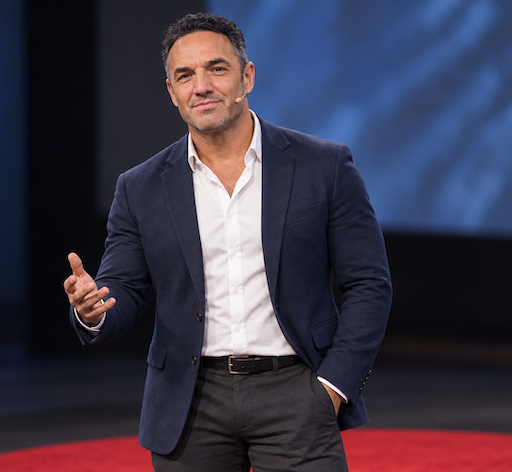
Author and Podcast Guesting Specialist for Corporate Leaders
2001 Founded mobileYouth16 books Published author250+ clients Served across 60 countriesUniversity of Sussex AI & Cognitive Psychology graduate
Graham Brown is an author and founder of Podcast Guesting Pro who helps corporate leaders, founders, and storytellers get booked on aligned podcasts and build thought leadership.
He began his career studying youth mobile behaviour and founded mobileYouth in 2001 to understand youth marketing and mobile culture; that early work serving clients such as Nokia, Vodafone, MTV, and Disney shaped his focus on audience insight.
Over time he moved from youth research into audio after seeing business leaders struggle to communicate authentically at scale, which led him to found a full-service corporate podcast agency and develop programs to train hosts and producers.
His route into podcasting combines formal study in Artificial Intelligence and Cognitive Psychology at the University of Sussex and Entrepreneurship training at Harvard Business School Online with decades of client-facing agency work.
He helps corporate leaders, startup founders, and storytellers find their voice. He leads Pikkal & Co, an award-winning corporate podcast agency, and runs Podcast Guesting Pro.
He previously hosted Asia Tech Podcast and previously grew mobileYouth to over 250 clients in 60 countries; his agencies operate from Singapore with partner studios across Australia, Austria, Canada, Croatia, Ireland, Sweden, the UAE, the UK, and the USA.
More from Graham Brown
All episodes → Office Hours with David MeltzerJosh Chodniewicz, Gary Coxe, Graham Brown | Office Hours #621Jun 2024Play episode →
 The High-Performance CEO ShowEpisode #76: The Future of Leadership: AI Innovation, Storytelling Mastery, and Human Connection with Graham BrownMar 2024Play episode →
 The Leadership Communication Show with Michael PipernoThought Leadership with Graham BrownJun 2023Play episode →The Leadership Communication Show with Michael PipernoThought Leadership with Graham BrownJun 2023Play episode →
 Rise | Evolve Leadershipevolve | eps 50 | Graham Brown, CEO | Pikkal & Co.Feb 2023Play episode →
 Limit Break StoriesGraham Brown | The Power of Storytelling for Building a Strong BrandJan 2023Play episode →
 Coffee With CoachesGraham Brown - How the Science of Stand-up Helps Jumpstart Your Story | Conversations with Coaches | Boxer MediaJan 2023Play episode →
 Speak With PowerTransform into a Magnetic Storyteller with Graham BrownDec 2022Play episode →
 Coaching CallGraham Brown - The Digital Transformation of Communication & building your brandDec 2022Play episode →