
June 28, 2023
Thought Leadership with Graham Brown
Attention is the new currency of leadership. If you have attention, you can create influence and lead people. If you don't have attention, you're invisible.
Sound bites
Each and every one of us has an interesting story to tell. We just really haven't been given the platform and the stage.
In this episode
Graham Brown joins Michael Piperno to talk about thought leadership, podcasting, and how communication and storytelling help leaders build influence.
- Attention is the new currency of leadership, and without it people become invisible.
- Thought leadership is not about title, experience, or qualifications; it is about the ability to reach and move people.
- Imposter syndrome and waiting to be picked can keep leaders from sharing their stories publicly.
- Podcasts give people a stage to share a story, face rejection, and connect with a specific audience.
- Communication and storytelling remain timeless, even as technology changes how leaders use them.
Chapters
Written from the transcript. Pick a chapter to play the episode from that point.
Transcript
Automatic captions of the conversation. They can contain errors and do not name who is speaking.
Let's just take a snapshot of that because that is the reality of thought leadership now. It's not about title. It's not about experience. It's not about your qualifications. It's about attention. And attention is the new currency of leadership. If you have attention, you can create influence and lead people. If you don't have attention, you're invisible. This is the Leadership Communication Show, a podcast to help people like you be the inspiring and influential leaders their people need. I'm Michael Piperno, and I'm a communication expert, teacher, and coach.
My personal mission is to help good leaders be great leaders through the power of communication. I promise you'll learn something from each guest on this show that will help you along your personal leadership journey. Okay, on with the show. Today's conversation is with Graham Brown, founder of the award-winning podcast agency, Pickle & Co. Graham's a published author on the subject of the digital transformation of communication. His work has been featured in the Financial Times and the Wall Street Journal, and he's helped shape the communication strategies of some of the world's leading organizations.
He's a passionate storyteller who specializes in helping global corporations and government agencies find their voice with podcasts. And as you likely know, podcasting is one of the best ways to demonstrate thought leadership, which is something Graham knows inside and out. That's why I asked him to join me today. Welcome to the show, Graham. Michael, a real pleasure. I'm looking forward to this conversation. Well, thanks for joining me today. I really appreciate it and my listeners appreciate it too. Let's start by helping my audience get to know you a little bit better.
Tell us a little bit about your background. What's your story? How'd you get to where you are today? yeah thanks well funnily enough i graduated with an ai degree in 1995 which is a bit of a loaded statement because 1995 as you know was a long time ago to be doing ai but that was yeah what it was back then it was sort of a very different world to what ai is today i mean you know chat gpt is right at the top of people's talking points now especially in our industry you know how it affects creatives content pr communications everything healthcare as well but back then i was just very much fascinated about modeling human intelligence we're talking about modeling human intelligence in a on four megabyte computers right we're not talking about what we've got now like the chat gpt is 170 billion parameters on it apparently amazing so a very different world i graduated with AI degree I remember walking into the careers library as they were called back then in my university and saying that I had graduated with an AI degree expecting to be thrown into these amazing jobs but 95 the lady said to me um you know what is AI and I sort of struggled to explain it and then I remember she just presented this list to me on this sort of vinyl photocopied sheet and she pointed at and said there that's the job for you and it said teach English in Japan so that's kind of how I got my start and it's funny Michael because actually I found out the only qualification I needed to teach English was that I could speak English but for me it was a ticket it was a passport and really that's how I got into you know my future calling if you like which is communication and storytelling I mean I've always been a storyteller but I didn't realize later on in life you could actually get paid for telling stories but that's i kind of fell into that through the world obviously starting out teaching you know communicating then getting into the world of mobile telecommunications in the late 90s which was an amazing journey a ride and then later in my career you know moving into a different kind of communications which is podcasting so you know not in a straight line i'm sure your listeners can appreciate that what makes a story interesting is it never is a straight line.
So there's lots of twists and turns in it, but it's always been about communication and how we as human beings interact with one another. It's never a straight line. That's something I talk to my clients about a lot, especially clients who are thinking about a career change or a pivot or something. You know, there's this, it's not the way, I mean, personally for me, it never was linear, but it's definitely not linear for folks these days. It's funny to hear that you started in teaching because I started as a teacher graduating in 1995 as well.
and those were the days, everybody, where you used to have to get jobs through looking in the newspaper. What's a newspaper, Michael? I know, definitely more analog than it is today, but I digress on that. But yeah, the teaching is such a good boot camp for learning to manage people, learning to tell stories, learning to communicate with people in different ways, in different styles, because I always tell people five times a day, I had to perform and teach and educate and keep 28 people in each of those classes engaged.
And that's not easy stuff. So I have high regard for teachers. But yeah, my career was then teaching, marketing, brand agency, designing, then back to teaching on the university level, coaching. So it's just like, you look at my LinkedIn profile and it's like, whoa, how does this guy- But there's a through story there, right? You know, it's all about communication, isn't it? And performing. That performing part of teaching, I think people underestimate. Because teaching, you know, we've all experienced it as consumers of teaching, right?
But you actually, when you stand up on stage, you are on stage in front of people. You are vulnerable, especially with kids as well. You know, it's kind of, it's tough out there. Brutal. You know, if you're teaching teenagers. Yeah. You know, there's no love lost on teachers now. I know. But also that whole, the emotional energy of teaching is quite draining, right? You know, being on stage and like not being able to hide. You can't sort of teach and then just go and hide in the corner. You've always there in everybody looking at you, everybody wanting a piece of you.
So even like taking that into, like you did, taking it into the world of marketing and branding, there's so many similarities. If you can communicate, it's all about communicating, isn't it? And that skill that you learn through teaching. That's my thread, is that I've always been, from day one, a teacher of communication. Whether it's been to the high school students that I taught, or to the salespeople that I supported in financial services marketing, all the way through to all the clients that I helped build their brands.
It was all about communicating and engaging your audience. And pivot right over to that's what leadership is about. And just like being up there in front of the classroom, as a leader, you can't hide. You're always on. Uh, so tell me about how you, how the podcasting, uh, thing started for you. How did you actually get into that? Well, Michael, like yourself, a very messy journey, but with a purpose, which we only, only discover later on. It's kind of like, you know, they say, I think it was the philosopher, Sean Kierkegaard, the Danish philosopher that said, we have to leave life forward, but understand it backwards.
And when you sort of get to a certain age, you have this vantage point where you can see and you know reflect a little bit on your journey for me there was never was that you know i never left university and it's like i'm going to do this for the rest of my life i wasn't like the guy that studied aeronautics and then went and designed planes and then you know started my own sort of like aeroplane company you know out of the gates it was all very messy my sort of introduction to podcasting was in 2012 i so if you go back a little bit in 1998 i had a telecommunications business i sold research to telcos about how young people were using mobile phones now 1998 young people mobile phones was not a thing i guarantee because i knocked on the doors at every single mobile phone company cell companies handset manufacturers telcos and said you know i've seen the future and it's teenagers and mobile smartphones right and they all said to me we don't do kids and it was funny utter dejection in 98 i said no wait wait i've seen i've lived in japan i've seen japanese high school girls texting sharing taking photos all of that and i thought that's the future and they all basically said no but unfortunately it came around it was like a tiny tim sort of you know episode like right before christmas we're about to give up the business and then we got a call from one somebody we didn't know and they said we've seen your report we love it we're not a mobile phone company but it's all about our you know our customers and said great i need the money just just buy it and it was mtv it was 1998 mtv they became our best customer and like that just was the surge of interest in mobile phones mtv then all the ad agencies followed as you can imagine they all kind of like they're out there looking for their clients then all the mobile phone companies anyway fast forward to 2012 we sold that business i had enough it run its life cycle and so in the industry and then with my wife and my son who was six at the time we decided we didn't want to start another business like a lot of people do so we thought we'd sell everything and put everything in three suitcases and travel the world wow so we we traveled the world for six years or five years actually five and a bit and you know lived all over the place living out suitcases and it got to a point michael like you know yes living on a tropical island is great for instagram but actually if you an entrepreneur or if you like this it gets kind of lonely so in 2007 no would have been 2014 i started my first podcast you know long before the days of spotify and all the tools that we have now and it really was because i was lonely and i was living on a on a subtropical island off the west coast of africa and uh you know the internet connection was about three meg per second and it was uh you know you weren't surrounded by this kind of community you have of you know podcasters or entrepreneurs but i started this podcast to reach out to people and say you know tell me about your life you know you're traveling the world you're a digital nomad and so on so i started that podcast and that became my odyssey i found it not as a way to create content but to connect with people and fast forward a little bit more, that became a business.
That's awesome. So you kind of, I love that you, the reason for starting it was for yourself, for, for loneliness and, and, and to, to, to forge connections with other folks. And tell us about how you see thought leaders using podcasts and even other mediums. I mean, I know podcast is your business, but a lot of times, well, first of all, let's talk about what a thought leader, how do you define thought leadership? So I'll throw that over to you because it's one of those buzzwords that's all over the place and there's a lot of different ways to do it, but tell me how you see it.
Yeah. This is a really interesting discussion, Michael, about what is thought leadership. And I think it's most relevant if you are at a stage in your career, let's say you've got 15, 20 years of experience. For you, you're probably leading teams, departments even whole organizations and you need to bring people together you need to influence people you need to create change transformation culture all of these challenges which you never really had before and so you need thought leadership to do that and to make change and the interesting thing michael is that for that generation so really we're talking everybody on the wrong side of 40 who are sort of at the peak they're peaking in their career especially in corporates um they didn't grow up with tiktok but the challenge now for them is that it's not about them getting onto tiktok and doing a dance to become a thought leader it's about them understanding the economics of tiktok and attention and that's affecting them right is that they don't need to get on tiktok but they need to understand the attention economics that make tiktok possible and how it's affecting everything you look at the data now they they i mean you know it's often said that the attention span of a goldfish is nine seconds well the latest data shows the attention span of human beings is 8.5 i saw that yeah it's just like it makes you wonder it's like what's happening to us i think if you look you know the average person unlocks their phones at 110 times a day you know you're talking to somebody in there so yeah yeah yeah they're sort of looking at their phone.
So attention and thought leadership are very intertwined. And I think you only have to look at, for example, like go back a few years, Greta Thunberg, the Swedish teenager who really garnered attention around climate change. And it took a teenager to stand up and talk about it. And there was a spat between her and Donald Trump on Twitter. And actually, credit to Greta, she's actually pretty good. handling that but it was just interesting for a moment a teenager was taking on the most powerful person in the world and winning you know that thought leadership battle and i just thought let's just take a snapshot of that because that is the reality of thought leadership now it's not about title it's not about experience not about you know your qualifications it's about attention and you know attention is the new currency of leadership if you have attention you can create influence and lead people if you don't have attention you're invisible and so to answer your question a short version of that answer would be thought leadership is attention you don't need any kind of letters on your resume to qualify yourself as a thought leader if you have people's attention you are a leader by default now how are you going to use it so that's what we have to get into our heads is that now we're in that game of attention.
And obviously we don't want to do the dad dance on TikTok. What are the alternatives? How do you build thought leadership now? Because without it, you won't be able to create any kind of change. So how does then someone who is in that sweet spot of, you know, have the experience or basically has something to say that they think deserves attention and, or that they have something to offer. I'm even thinking about, you know, what the work I do to promote myself. And I publish blogs, I have a newsletter, I post things on LinkedIn regularly.
And sometimes I sit there and think to myself, obviously I'm good at what I do. I have clients and I have a business that's doing well. But then sometimes I sit there, it's like, do I really have something to say about all this? And who's going to listen to me? And I think a lot of people in leadership positions are good at what they do and who they do it for, but then don't necessarily always look at themselves as a thought leader or someone who is deserving of that attention. So if someone's out there feeling like that, or maybe they've been trying to get attention and you just very clearly showed that the value of attention is skyrocketing right now.
So it's harder and harder to do. What would you say to someone who thinks they deserve that attention or want to be a thought leader and are having trouble actually breaking through? Yeah. You're touching on a very interesting part of thought leadership, which is about the imposter syndrome, which is that it's interesting, isn't it that the the people who probably have the most to offer those with the most experience the connections and importantly a really good understanding of the problem you know if you if you've been in corporate for 10 and 15 20 years you know what's broken so when you drop out and do your thing or you're creating change you understand the problem in the language like nobody else the problem is you've got the most to lose because of your reputation because of your position whereas that 18 year old has nothing to lose on tiktok right so the imposter syndrome is probably the biggest challenge and that is like who am i who's going to listen to my story who little old me telling my story i'm not an elon musk what have i got to offer here right but here's the interesting thing michael is that you know um you know if somebody says oh you know michael Michael who?
Leadership communication show. Oh yeah, yeah. I listened to that or I see it on my feed, right? He's that guy doing that thing, right? If you think about that, that guy doing that thing becomes a very valuable piece of real estate in the mind and the consciousness of your audience, right? That thing. What are you that thing for? How do I know, remember you, right? so you may not think for example that you have a lot to offer or you have an amazing story but if people see you as a thing or in that box even a small box that makes you a thought leader now the challenge is getting through the imposter syndrome that stops people getting there and this is really the result of our cultural instinct to wait to be picked you know that you know i've been in the classroom it's like you know you put your hand up and you wait for the teacher to pick you that that kind of cultural instinct never goes away you know publishing or become you know in the music industry for example you all got to be wait to pick somebody to have value in that story but the thing is now i think that each and every one of us has an interesting story to tell we just really haven't been given the platform and the stage i mean this is the great thing about podcasts right that i mean you've done how many 30 episodes now around about then i think i think it's about 30 yeah yeah so around about 30 i mean these are all everybody's different they've all got fascinating stories to tell and i feel that only by getting on stage and sharing it and committing it to an audience and facing rejection Do you understand what you mean?
What is the avatar that you project? What is the way that you touch people? You know, people reach out to you and say, yeah, Michael, I heard that story. That really touched me. Then you understand what thought leadership really is. And you don't have to, you know, be a billionaire going to the moon. You just have to have done something that moves somebody. Or, you know, you may be a few steps down the road to some guy looking out of the office window, right? But I think there's a real sense of imposter syndrome that holds us back and it particularly affects, I'm sure you find this in your clients, an age group, which is probably the more senior execs in business.
That's so true. And I think the imposter syndrome is a big piece of it. And also that you mentioned the word rejection and putting yourself out there is a very public thing to do. And I know for a lot of the leaders I talk to, they don't want to be on that kind of stage. They don't want to be subject to that kind of scrutiny, because especially with social media, I mean putting yourself out there gets you a lot of input and feedback some of which is not kind and that you may not want But what I was hearing you say is advice I give all the time And I think it's really important to underscore this point is that that box can be very small about how you help and what parts of your story or experience connects with a certain group of people.
In fact, from looking back to my branding and marketing days, that's even better if you're speaking to a smaller audience because you can be really, really clear about what your thought leadership means and what your space is and who you are really there to help. because I think that's a lot of what people in marketing did. I think what a lot of people who are trying to position themselves as thought leaders or leaders in a specific space, they often cast to what we say here too wide of a net. They try to be the coach or leader or thought leader or whatever for everybody.
And that's never going to happen. You're never going to be right. I'm not the right coach or trainer for everybody. And that's okay. I actually want to work with the ones who think I'm the right fit for them. I don't want to spend time trying to convince somebody that I'm the right fit. And I think that that's part of putting yourself out there. And that's a big learning, let's say, for me, I know, and for other people I've talked to, is that you want connection. This is what it's all about. And if you can figure out the way to connect with the people who want to hear from you, you've already won half the battle, i think oh absolutely i would also say what you're identifying is probably appreciated more by people who grew up you know in the 70s 80s and and probably right up until the first decade of this millennium right is that what you're talking about is for you and i michael like we grew up in an era that for us shelf space was a reality in marketing you know for example if you put it in if you were in the music business and you were like record stores remember those i went to the record store and they had a display right like that display was physically limited shelf spell shelf space so there could only be like one like album occupying number one position and then you know like this had the window display had to make sure that that was a really good artist that we were going to shift volume right so it basically meant that if you grew up in that era all of marketing was geared around shelf space limited and therefore you had to go mass because if you didn't like deliver a mass audience then people wouldn't touch you there wasn't you know if you if you were the guy that had like 50 you know fans of your album no record store would ever carry you'd be like in that you know that sort of discount rack at the back yeah you remember those ones you can get stuff for a dollar you'll be in there with all the students yeah that's as good as you could hope for right so it's that for us is our training but the reality is now we live in a world without shelf space we're actually we've got to break out of that mindset which basically means that you know when we in thought leadership and and as personal brands are not politicians you We don't win with 51% of the market, right?
And the politician has to be everything to everybody, right? That's how they win their game. They say everything that pleases everybody but nothing. Right. Exactly. Yeah, well, what's your opinion about this? Well, you know, they don't actually say, right? Just answer the question. That's the world of politics and traditional marketing. It's about saying nothing and being everything. and yet today the economics favor the guy who is like a rock star you know just be meaningful being something to somebody rather than everything to everybody so it means like going after that five percent and ten percent and not being liked but being loved you know like doubling down on you know i don't just want to focus on for example executives i want to focus on for example i heard today talking to somebody that they don't just want to sell to c-suite as their target audience they specifically want to send sell to cfo's who are ex-alcoholics you know you think about that as a niche market niche market if you were like giving that message to somebody it's like yeah i'm a cfo an ex-alcoholic i'm listening to this guy for sure right and that's the the challenge we have even if you look at for example like at your phone like the average person has seven podcasts on their phone so like that's that's now the real shelf space it's like if you want to get on there you have to be really meaningful to that listener because if you're not i'm listening to the next one so you're absolutely right the point is you've got to focus on being meaningful and not editing and moderating yourself down because you just disappear you'll get lost in the noise And we'll be right back.
is for you. Learn more and get access to a free preview at www.wearecomvia.com slash next chapter. That's www.wearecomvia.com slash next chapter. And now back to the show. It's easy, like you said at the top of the show, it's easy to be invisible if you're not being really clear about your message and your story and your connection and that meaningfulness. So that's so important for people to remember. What mistakes do you see, Graham, that people who are trying to establish themselves as thought leaders make? Do you see anything specific we can warn our folks about if they're looking to start or continue on the thought leadership journey?
Yeah, so many. I think the biggest one, Michael, and we've probably fall and foul of this is you know there's a very big um cultural narrative about your why and um yes especially in the corporate area you talk about purpose and i can understand all of that we need to need to have that and in many ways that attracts people to you and attracts people to businesses but the problem is is that people see that as the beginning of the journey and yet The reality is that, I mean, if you look at famous entrepreneurs like Steve Jobs or, you know, you pick anybody, they didn't start with a why.
Right. They just started and they discovered their why later on. You know, it's like, okay, I actually kind of like this thing. And then it joins the dots. You know, the journey kind of makes sense. And then later on with that perspective, that vantage again, you understand the why. So, I would say the biggest mistake is trying to find your why before you start. I would say find your start is probably more powerful because it's a very agile journey. I talk about agile storytelling with my clients in podcasting, and it's a bit like stand-up comedy.
You know, no comedian was born funny, right? That they practice that. You can be sure that at school, you remember as a teacher, I'm sure it's like, there was that kid, you know, he was the, you know, maybe he kind of hadn't figured it out. it was still refining his art and his delivering his craft but you can be sure he's figured out that if he is funny he gets good positive feedback and now he's on that journey right and but you know maybe doesn't go anywhere but he may become a stand-up right later on in life but the point is is that you have to start and you have to start rough and get on stage face rejection and too many people wait for the perfect timing to have all of that together you know like we live messy lives right these are the best stories and you don't have a through story that makes complete sense from day one and that's okay but you have to start to make sense of it and not kind of feel somehow inadequate that you know not right you look at ted's talks right and everybody's kind of got this like wonderful 18 minute like i was doing this thing and you know boom you know the stars are in alignment.
It's not like that in reality, right? That's like a lot of hindsight. So don't let that stop you. And I think a lot of people get stopped or they get hung up on that beginning. They do. And that's such good advice because I mean, even when I think about my journey, it's, I feel very purpose-driven. I feel like I understand my why, but I couldn't define it. I mean, I'm almost 50. It took me till I was 42 to figure that out. And yeah, it's so true, but I wasn't afraid and this is, and I love that you use the word messy because you've got to start somewhere.
You've got to allow the rough drafts to happen. You have to allow things to be messy. You have to be willing to work through failure and failure. Sometimes you learn from it. Sometimes it's just stinks and you don't, but you have to be able to work through it and move on. And that's all part of what makes your story. So, so yeah, such a, such good advice to everybody out there, if you know you want to do something, whether it's get on your thought leadership journey, start your podcast, start that blog, or launch a business or whatever, make a career transition or whatever it is start somewhere Start talking about it Start journaling about it And reflect See the yeah just start And the thing that I always that I work with clients with a lot and I do for myself is take the time to stop, disconnect and reflect.
Because that's where you learn where you're, what your why is becoming. Yeah, absolutely. It put, put it together right it's like this i think this is reflection in a way it is yeah it is and that's why i love these conversations and this is my why i have a podcast is to to talk to other people about their experiences and learn from them and how they made it along the way because everybody's story everybody has a story and to me people's stories are so fascinating but a lot of times they're afraid to share them yeah yeah well look at you i mean like you like you said like it took until you're 42 to figure it out i love those stories and to be honest let's let's be fair like you and i still figuring it out really oh yeah you know that's the reality like we kind of got it mostly figured out but it's still like i'm not 100 like figured out still got work to do and then people look at you and they think oh he's got it figured out like he's all got it worked out you know he's always been doing you know teaching branding marketing podcast coaching thought leadership leadership etc etc it all kind of make sense but no that's a lot of hindsight and like you say reflection and that's a big part of it and creating that space and i i'll say to your audience as well like podcasts are a great way to reflect because yes it's part therapy but having like these conversations with you michael is like you know i get to reflect on my journey through you you know it's it's kind of like okay i see it how you see it and i see you as well and there's those kind of insights you would never get by being in it and that's really important especially to join the dots and find your why right because that's really what it is what's the through story how did how on earth does this all kind of come together as a cohesive narrative well only through reflection and when it comes together it doesn't mean that that's it because like you said still work in progress and it can morph and it can change and you will build upon it and you'll leave things behind that were important to you before that are no longer and it's okay.
That's one of the things that I love the fact that people talk more openly about purpose and why and I think it's terrific, but I think also it makes it seem like you've got to find it, stick to it, and that's it and that's not the case for me at least. I don't feel that that's the case. I feel that we need to give ourselves permission to grow and change as we move through our stories even. So how does someone get started with podcasting? Because I know for me, it was daunting when I started and a little bit scary.
Number one, imposter syndrome, putting myself out where, but then all the tech that comes with it and getting on the networks and all of that. So if I've got, I know I have listeners out there who are thinking about doing it uh what would you suggest would be a good first step or maybe some things to consideration things to think about for getting started yeah this is this is a good conversation because it's changed a lot obviously in the years it's a lot easier now to start a podcast which actually makes it a lot harder to promote a podcast right just basic supply and demand right so you know the challenge now is not just starting but also knowing who you talk to it like let's think about it firstly there are two options really for getting into podcasting one is start a podcast the second is be on other people's podcasts that's a great way of experiencing it and you know like i'm doing now i'm on your podcast so you know you have to do all the heavy lifting now and i'm afraid i just get to sit here and talk to you but you know i've been on the other side plenty of times right i've done i think over 2 000 podcast episodes so I just love being on both sides of it but the point is you've now got options and the other part is you know imagine if you were running a radio show if you talk to anybody in radio and have a lot of friends who come from both public radio and commercial radio and they would always say that the one thing that we can learn from radio as podcasters is that one thing that radio hosts never do which podcasters do and certainly youtubers do right is say you guys which is really interesting because i've never thought about that and i have a friend who worked in radio and he said like when he interned in the equivalent of npr in the uk in britain he said um when he started out he worked with this sort of grizzled old radio dj he'd been around since probably the birth of radio but he was just loved by his audience he knew who his audience was and um he he told him like when he he joined the radio station he gave him this tip and he said like when you start this is what i want you to do and he took this photo he had this cut out photo that some listener had sent him and it's this woman and he says pin it he taped it to the the microphone and he said there that's what i want you to do and he said well what's that he said that's your listener every time i go on air i talk to her i talk to you it's never you guys it's you i know her i know her name i know what she doesn't like what she's frustrated with and why she listens to me so bringing that back to what you should do because it's so much easier to start a podcast now the challenge now is that you start a podcast about what you want to talk about but you don't have an audience and you give up because you don't get that feedback the challenge now is really identifying who that you is who is that photo that you're going to put on your microphone because the more you understand that the more you can talk to her or him and know what their pain points are the more you're going to build a successful podcast around you in that conversation and that really has to be probably the most important thing to do now a lot of people start podcasts and they don't consider who they're talking to so therefore they just become the you guys and they can again once again get lost in the noise but the ones that really work are very specific they're like the cfo alcoholics podcast right that's really niche but you've got to go in at that level as well and know exactly who you're talking to have a thought you know what's her age what's her name what's her job title and speak to her wonderful i mean that's the first rule of communication is know your audience and it's amazing how we fall down and don't do that well and so much of our communications, everything from emails and texts down to the audience for a podcast.
We have to remember to make it for them, not for us. It's just, it's so. 101, Michael. We forget, right? I mean, it hasn't changed, right? Since advertising days, right? It has not, but it's so critical. Ogilvy, I'm sure, would be turning it over in his grave. Well, you know what? That's why they need communication pros like us to help with those reminders every day. Exactly. The problems don't change, do they? I mean, it's really, if you think about it, the problems are timeless as much as the solutions are timeless, like connection and storytelling.
These are timeless. Right. But in the age of acceleration and technology, the way you apply these things just continues to change, which actually for me is fun. Coaching people through how to communicate with hybrid teams during COVID and redoing all my workshops that were in-person to virtual was actually great fun for me, you know, because it was a challenge. It was a way to apply these principles that are tried and true, like you said, in different ways. Well, Graham, thank you so much for coming on the show and sharing some of your brilliance with my listeners.
Let's take a moment for you to tell everybody how they can learn more about you and your work and your company. Yeah, well, what can I say? I really enjoyed this chat, Michael. and the fact that you out there were listening is even better. I felt like, you know, we're sitting around the table together and having a good chat about stuff that we care about. So hopefully you are inspired to reach out to Michael as well and, you know, listen to some of his other episodes as well. I have to say I was listening through some of the previous episodes and I enjoyed the conversations as well.
So thank you for all of that. If you want to know more about me, you can find out about me at my website. I go to my personal website, which is grahamdbrown.com. And I put the D in there because Graham Brown is a wallpaper company. And it's a very different experience. And they registered the domain very early on in the dot-com era. So unfortunately, you have to put my middle name in, Graham D. Brown. So if you want to know about storytelling, podcasting, podcasting, and also importantly about storytelling in the era of the machine being more human.
Those are my sort of conversations that matter and I care about. And hopefully, if you care about them as well, you want to check them out, then feel free to reach out to me. Awesome, Graham. Listen, I really enjoyed our conversation as well. And thank you so much for doing this today. I appreciate it. That's it for this episode of the Leadership Communication Show. Thank you so much for listening. If you like the show, please subscribe wherever you get your podcasts. And if you think this show can help other people you know, please tell them about it too.
To learn more about me and my work, head over to my websites at michaelpiperno.com and wearecomvia.com. While you're there, be sure to check out all of the leadership communication tips and tricks I share on my blogs. See you next time. Thank you.
About Graham Brown
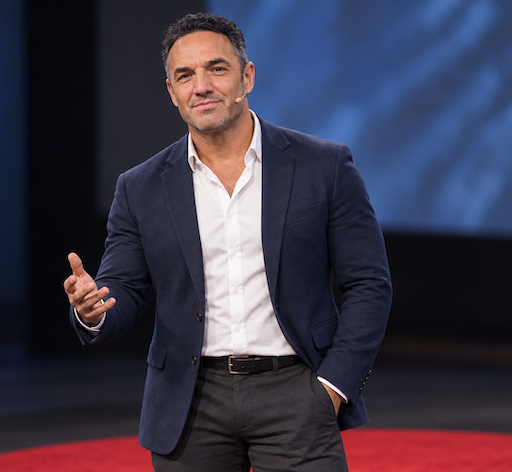
Author and Podcast Guesting Specialist for Corporate Leaders
2001 Founded mobileYouth16 books Published author250+ clients Served across 60 countriesUniversity of Sussex AI & Cognitive Psychology graduate
Graham Brown is an author and founder of Podcast Guesting Pro who helps corporate leaders, founders, and storytellers get booked on aligned podcasts and build thought leadership.
He began his career studying youth mobile behaviour and founded mobileYouth in 2001 to understand youth marketing and mobile culture; that early work serving clients such as Nokia, Vodafone, MTV, and Disney shaped his focus on audience insight.
Over time he moved from youth research into audio after seeing business leaders struggle to communicate authentically at scale, which led him to found a full-service corporate podcast agency and develop programs to train hosts and producers.
His route into podcasting combines formal study in Artificial Intelligence and Cognitive Psychology at the University of Sussex and Entrepreneurship training at Harvard Business School Online with decades of client-facing agency work.
He helps corporate leaders, startup founders, and storytellers find their voice. He leads Pikkal & Co, an award-winning corporate podcast agency, and runs Podcast Guesting Pro.
He previously hosted Asia Tech Podcast and previously grew mobileYouth to over 250 clients in 60 countries; his agencies operate from Singapore with partner studios across Australia, Austria, Canada, Croatia, Ireland, Sweden, the UAE, the UK, and the USA.
More from Graham Brown
All episodes → Office Hours with David MeltzerJosh Chodniewicz, Gary Coxe, Graham Brown | Office Hours #621Jun 2024Play episode →
 The High-Performance CEO ShowEpisode #76: The Future of Leadership: AI Innovation, Storytelling Mastery, and Human Connection with Graham BrownMar 2024Play episode →
 The Leadership Communication Show with Michael PipernoThought Leadership with Graham BrownJun 2023Play episode →
 Rise | Evolve Leadershipevolve | eps 50 | Graham Brown, CEO | Pikkal & Co.Feb 2023Play episode →
 Limit Break StoriesGraham Brown | The Power of Storytelling for Building a Strong BrandJan 2023Play episode →
 Coffee With CoachesGraham Brown - How the Science of Stand-up Helps Jumpstart Your Story | Conversations with Coaches | Boxer MediaJan 2023Play episode →
 Speak With PowerTransform into a Magnetic Storyteller with Graham BrownDec 2022Play episode →
 Coaching CallGraham Brown - The Digital Transformation of Communication & building your brandDec 2022Play episode →
 BRAVE Southeast Asia Tech: Singapore, Indonesia, Vietnam, Philippines, Thailand & Malaysia Startups, Founders & Venture CapitGraham Brown: Five Million Podcasts, Finding Your Rockstar Voice & One Way Tickets In LifeDec 2022Play episode →