
December 24, 2025
TEDM – Nick Jonsson – Men, Leadership and Mental Health: A Candid Conversation with Nick Jonsson (Episode 234)
Sound bites
I've been at my rock bottom. I know what it is to crawl back and out of the ashes and rebuild a life.
How as overachievers, we have a tendency to look at the gap, not the gain.
In this episode
Nick Jonsson joins The Everyday Millionaire to talk about executive loneliness, holistic leadership, and how men can rebuild their lives and performance.
- Holistic leadership as a full life audit, not just a business review
- Relationships, health, purpose, goals, and discipline as part of sustainable performance
- Recovery and rock bottom shaped his approach to coaching men through isolation and burnout
- Giving back through 12 step recovery and sharing what has been learned
- Gratitude and focusing on wins instead of gaps as a daily practice
Transcript
ShowHide
Automatic captions of the conversation. They can contain errors and do not name who is speaking.
Hi there and welcome to The Everyday Millionaire Podcast. My name is Patrick Francie and I'm your host, and I want to begin by saying thank you for listening. On this show, I am having conversations with seemingly ordinary individuals who have achieved some amazing and extraordinary results in both their life and business. My intention is to inspire and help you learn and grow by having my guests share their journey of how they face and overcome their challenges, but also how they celebrate their many wins. And now, let's get on with this show and have a conversation with today's guest.
My guest today, Nick Jonsson, is someone who's making a meaningful impact at the top levels of leadership. Nick is a global keynote speaker, international bestselling author, and recognized as the world's number one thought leader on executive loneliness. For the past decade, he's been breaking the silence on issues leaders rarely admit to, isolation, burnout, and addiction. What I appreciate about Nick is he doesn't just point to the problem, he's built a framework for the solution. His model of holistic leadership integrates the physical, the mental, emotional, psychological, and social sides of life with the realities of professional responsibility.
He calls it the five-step to holistic leadership, surrender, connection, purpose, goals, and discipline. It's a practical roadmap leaders can use to get sustainable performance without sacrificing who they are. Nick's credibility isn't academic only. It's lived. A certified master coach, Belbin-credited sober coach. He's more than seven years into his own recovery journey. He's been there, done that. He also trained in Belbin teen coaching, psychological safety, and is finishing post-graduate studies in psychotherapy and counselling.
He's committed to learning and to helping leaders thrive. His book, Executive Loneliness, became a international bestseller, and his TEDx talk has inspired audiences worldwide. Along the way, he's earned recognition like the Sabre Provoke Award for Southeast Asia and finalist for International Mental Health Campaigner of the Year in London. Today, he speaks on global stages, leads transformational retreats, and works with organizations around the world to build cultures of connection and resilience. In this conversation, we dive deep into what it really takes to lead in today's world and how Nick's approach can help us all create balance, connection, and results that last.
With all of that, let's get this show started. Listen in, enjoy. Nick Jonsson, welcome to The Everyday Millionaire Podcast. Thanks so much for joining me. Thank you so much for the invite, Patrick. Excellent to be here. So, Nick, you know, your bio is so impressive and it covers a lot of ground. Holy cow, it covered a lot of ground. But I still like to enter the conversation with my guests from the perspective of if somebody bumps into Nick somewhere and says, Nick, what do you do? How do you answer that question when you got the bio as extensive as yours?
Yeah, that's a very, very tough question. And I think it depends on when you get me. If you get me today, I'm in Phuket, Thailand. I'm a triathlete, but I also gonna get into my office. And I have a lot of calls today to do some coaching, therapy, working mainly with men, helping them with everything for preparing for the boardroom to sorting their lives outsides. But I wouldn't have loved to say that I'm someone who's giving back today. I hit 50 and at that end of life, I would love to say that I'm useful. Well, 50, what a great age.
I felt like I just was getting started at 50. So I'm well beyond that. And 50 is an awesome milestone. So good for you. A lot of your focus is on leaders, male, men primarily. Not to say that's the only thing, but you've mentioned men and leadership, which is really about the journey from my perspective of leaders, of both self discovery in order to really pick up their game. They have to understand themselves, recognize maybe some blind spots, recognize maybe some things are operating on top of old belief systems, etc.
But I don't want to put words in your mouth. When you think about leadership, how do you approach it with somebody? So I'm a CEO of multiple businesses. I approach you. Why am I approaching you? Yeah, so I'm looking at the holistic life. I love to look at all the bits and pieces. And I typically start with anyone I'm speaking with, with a life assessment and self-assessment, which almost is like an audit. And if you have a business, you would do an audit sometimes, you would do a stock count or whatever it is. But how often do we look at ourselves honestly in the mirror and looking at all our parts of the life, not only the business and the career, but also how is my romance relationships?
What about my relationships with my family and friends? What about my health, physical, mental, social and so on? To really have a look at that. And that's a starting point where I would love to ask anyone, and to listeners as well, ask yourself honestly, where are you on a scale of 1 to 10? If 1 is the lowest and 10 is at the highest, where are you on each level there? Lay that out and look at it. It doesn't take too many minutes to do that, but that's an honest look of where you are right now. And then you can add on to look at where is it that I want to go?
What's my desired score in each area here? And look at the gaps. Then you have a quick audit right there. So, when you're, again, if I'm approaching Nick and are your clients coming to you because they're looking to say, how can I be better? Or are they coming to you because they're going, I'm bumping up against some things that I don't know how to identify, how to unpack those issues that I'm seeing. My team tells me I've got blind spots, like what is it that I'm coming to you just because I want to be a better leader or because I'm solving issues or problems that I don't know how to kind of rectify or identify.
And I'm there looking for support along that way. The most of the men are coming to me when something has happened in their life. Everything from that they lost a job, or maybe the wife has kicked them out from the house, or maybe they have been caught by the police because they've been rowdy out when they had a few too many drinks, they'd said something to the police and they got arrested and they spent the night in the jail because they had too many drinks. Something like that has happened in their life and they then realized, shit, I have to sort my life out in order.
That's typically when I get the call. And for many of them, they're high achievers, been really successful in the business, but perhaps they put all the focus on the business for 20, 30, 40 years, growing that and then ignoring other areas of their life, and then something is happening. And that's normally when I get the call. It's interesting, isn't it, Nick? You know, I just had this conversation recently with a friend who was talking about success. And within the Everyday Millionaire podcast, you know, I interview many guests who are in hundreds of millions of dollars.
I mean, they've been very, very successful in that world. And so when we talk about the measuring of success, financially, they can be hitting it out of the park. And they can have done a lot of really great things. They're, you know, I mean, when you start getting into that hundred million, two, three, four hundred million dollars of business, I mean, you've been doing a lot of things right. But interesting is that I think every one of them at some point share some part of their story where things went off the rails.
And they realized that it wasn't just about the dollars and cents that didn't define their success, actually, although they seem to think so to begin with. And then they realized it's just the way to keep score on one of those achievements. You're a triathlete, so you're racing against a clock, you're racing against some other people, but basically you're trying to beat a time. So in other words, your success is measured that way. When you talk to leaders, when you look at the business mindset, if you will, do you have a definition of success or is there something, a context that you provide for your clients around success?
Because I keep having this conversation. I quit asking my guests how they define success because it's all over the map. And I put it back to my clients here. And again, if we come back to that self-assessment, I do business and career is also there. And then I ask them to rank themselves on that scale of one to ten in the business. Typically, the business will be an eight or a nine over ten. It will be the highest score they have. And many of my clients also are in the hundreds of millions and even working with one billionaire in Singapore.
Very successful. And business and career stood out. It was the highest. And then you're asking them to lay that out. Why is it successful? And they paint this beautiful story. You can see them shining up and they are sharing what they've done. And they're so passionate about it. And then you're asking, where do you want to go? Well, I'm happy with the business, but it is the other areas of their life which is falling apart. And that is the major challenges. And I believe everyone has to define their own way of success in business.
For me, it is in the world of passing it on and giving it back. I'll just give you one example here. As a professional speaker, I'm part of the Asia Pacific Speaking Association in Singapore, where this year, mentoring nine upcoming speakers, nine upcoming speakers who are at the early stage. I have a monthly call together with them as a group, and I'm supporting them one on one on that basis. At the same time, I have speakers, some of the best in Asia Pacific, on top of me, the ones who are 10, 15 years ahead, who are billing the 50 and 100,000 dollars a day for talks and workshops.
And I'm learning from them with everything from contracts and so on. And that is how I believe it. We always need to be surrounded by people who are ahead of us, who can inspire us and help us to lift us. At the same time, whatever we learn, we pass on to the next generation. For me, that means that I'm successful in whatever field I'm choosing. Yeah, so you've got a definition for it. You know, there was a... I'll share it with you. A guest I had was probably the best definition that I'd heard. And it was a random...
It was... Again, I'd taken that question out of my interview process. But for some reason, I felt compelled to ask him the question. And I said, how do you define success? And he says, for me, when I wake up in the morning, before I kind of open my eyes and start my day, I ask myself, am I living the vision I have for my life? And if the answer is yes, that's success. And so he doesn't measure it by dollars and cents. He measures it by the vision he has for his life. Back to your approach, which is very holistic. I look at my family, my finances, my business, my relationships in general, and my physical health and my mental health, my spiritual health.
So he looked at it and said, if I'm living that vision, that's how I define success. And in the conversation I was speaking of that I had the other day with a friend, it was really about kind of that, is somebody who's making two, three million dollars, their business is generating two, three, five million, ten million dollars a year. They're paying themselves well, they've got a great team. That can be just really happy. They come, they go, they have a great family, they have a great lifestyle, and that's just fine.
That's how they define it. So it is an interesting journey with leaders, is do they have a vision for their life that is outside of, I want to make a hundred million, or I want to drive a billion dollar company? I don't know if you want to, if you have a comment in that thought process at all, Nick. I do have that indeed. And yes, it comes back to that balance, right? And the term work life balance sort of says that, okay, work is 50% and then life, the rest is 50%. So all these parts we discussed, then the finances, the health, the family and friends, the romances, the personal growth, the spirituality, fun and recreation, the physical environment is then 50% of work is 50.
And that's about how my client have lived their life. And no wonder then that work and business is great, but the rest is low. I talk about life balance, and if you think about that wheel again, if you see it in front of you as a wheel of life, where you have eight parts, that means that each part is 12.5%. So your business and career should be 12.5%. Then it would be balanced. Yeah. There's an interesting thing when people say, I want work-life balance. I go, there is no work-life balance. There's just life. And at some level, your work plays a part in it.
So, there is no such thing as work-life balance. There's just life. And how are you orchestrating your life, and how are you leaning into it, and what are you doing with it? So, there's a part of it that you said, and we talked a little bit before we got on air about peer-to-peer. And as you were discussing, you have clients, in this case, you're speaking clients that you're working with. You're bringing a group together, then you do one-on-one. Within that group, I'm assuming that's peer-to-peer within that context called speaking and supporting each other and being world-class speakers.
Yeah, so that is, you can call it the peer-to-peer or mastermind or whatever it is we call it. And that support is something that I learned also from the peer networks. My wife and I have been running also another business here called EGN, Executive Global Network, which is not for CEOs, but it's for the executives. So it's the one or two level below, helping them to have a safe space where they can discuss the work related challenges. And that's where I got the idea also that I realized that we need this personally as well.
Again, this was 100% focused on the business challenges they have. And that's wonderful. We need a safe space to discuss our business challenges, but we also need that for all our professions, but also for our personal life. And these days, I set up a men's group, and we are 22 men in this group as of now. It's a place where we check in each day on what's up, we're sharing our daily gratitude list, we're sharing the challenges we have, if we're going through something, we are being vulnerable. If someone lose a mom, which has happened twice sadly in the last month, they mentioned that, and we've been able to be there for them, support them, have this safe space where they can speak up and share their emotions and whatever they're going through.
Because otherwise, at least as us men, we tend to bottle up these emotions and feeling and keep it to ourselves. And therefore, it's about having these safe spaces for business, but also in our private life. You know, I love the concept of working with men specifically. I've had men's groups myself. I would, I've run a couple of different men's groups. And always as they break away from the particular program that I was offering, it's always great to hear and to see and occasionally be invited to join them because they've continued on their journey as together as friends and leaders and within the group of men.
And I'm all, I always love that. I feel like for me, that's such a win for them to be able to create those relationships where they can actually show up, maybe drop their guard a little bit, be authentic, be vulnerable, share what they've got going on in their life and know that it's landing well for those other men because they've all been there, done that. It's created a really powerful context. And I think, you know, for those men who might be listening to this podcast, find a men's group. I mean, it's the answer for men.
I think that's the case for women too, but we're talking about men here. And men just do not traditionally or, yeah, they don't seek that necessarily. Many don't. They do it alone. And I think that's a detriment. So I love the fact that you bring that in and fold that in. So tell me a little bit about your journey, Nick. I mean, again, you've accomplished a lot. You're still a young man, probably with still with big visions, big dreams. But how did you get to where you are today? What was part of your journey that you kind of got through what you got through or went whatever journey of life took you on this path?
Can you give me a little bit of background on that? Yeah, let's give a short summary here. Basically, I was born in Sweden and until the age of 22, I was basically a construction worker working as a construction painter in Sweden. I grew up in a blue collar family. I was born on May 1, which is Labor Day. My parents were proud. Here's the hard work. My dad was in construction, so it was natural I was a painter. So that was my life. Until age 22, I rode my motorbike one day, got hit by a car, got a neck injury, back injury.
The doctor said, you can't continue with that. And that's when I hit the depression for the first time in my life. I lost my income, I lost my work, and I didn't know what to do. I also felt isolated away from my colleagues and friends. But with that, eventually, I had to basically reskill myself. I did that, and at age 23, I moved to Australia, studied there and started to work. And since after that, I worked 21 years in Asia, mainly. Ten years climbing the corporate ladder. I say climbing because that's what I did.
I elbowed my way to the top in two industries, fashion industry and then medical services industry, being a GM and MD for hospitals and clinics in remote areas, managing up to 1,400 staff in my biggest role. With that, then I crashed and hit my rock bottom and spent a few years doing that to a stage where I planned my own funeral and then crawled back out of the ashes. And here I am today a few years later. So that's a short, very short summary, Patrick, on Cole's journey. Cole's notes. When you go back, I want to go back a little bit, your motorcycle accident.
And after that, you kind of went into this phase of depression. What was behind the depression? Was it because you were injured, because you were in pain? What was the kind of the depression part of that? The major part of it was because the world as I knew it had disappeared from me. I was a good painter. I had my contacts there, my colleagues in the day job, but I also had started to have clients. I was working evenings, weekends, and I could see myself set up my own business where I could run a good, healthy business for myself.
I loved the entrepreneurial side of that job. So that was disappeared from me. And I guess, you know, as a human being, we live by hope, right? And I didn't know anything else. So I was not a very good student. You know, I hardly finished high school. In fact, I had to go back to adult high school to redo some of my grades in order to be able to enter the university. So it was really that hopelessness that sent me in my first depression. You know, you went on to Australia. What was the pull to Australia? What took you on that journey?
Well, being born in Sweden, my first language was Swedish and then it was German. English was third, and I really struggled with English, and I couldn't catch it in Sweden. So I start to look at Australia, UK, US, Canada, as to study at university abroad, and it was just Australia that attracted me. Coming from dark, cold Sweden, I wanted to go a hot and sunny place. So cold coast in Australia, I looked attractive on the pictures, and that's where I ended up. As I hear this story and what you've shared, you're 23 years old, and you're coming out of basically a trade, a blue collar to your point, blue collar job.
You have a moment in life, probably a fork in the road moment called an accident that took you on a path, mentally, emotionally, of course, and then you pull up stakes and go. I always look at that, and you had a family in Sweden, you were grounded in Sweden, yet at 23 years old, you look at life and go, no, what do you think you're saying to yourself back then? Do you remember? I'm capable of more, I want more, Sweden sucks. I'm trying to tap into and wonder, do you have the awareness of what you were thinking back at 23 years old that would pull you away from your family and friends out of the culture that you were raised in?
I just find it interesting that you made that decision at 23 years old. I look at that and go, that's a very unique character trait from my perspective when somebody does something like that. But what was it for you, Nick? Yeah, I wanted away as well. I had a quite demanding father in one sense, a critical father, and we had our ups and downs in our relationship. But just to jump back a little bit as well, I moved away from home when I was 17. I became quite independent. And maybe living in the same city, I had a dream of moving away, moving overseas for many years.
I remember even as a painter starting to apply for jobs in Dubai, to be a paint instructor in the pipeline industry, for example, oil and gas jobs there. But I always fell short due to my English skills. So that's how the idea of going overseas to study at the degree came aboard. And then I thought if I can do that, then I can get these jobs. I can use my painting skills as an instructor, as a manager, and build my career in that. So that was how it started, the whole point of getting overseas and learning English.
So away from my family, exploring the world and growing myself. So you have the sense of adventure. And then when did the entrepreneurial part of you kick in? I mean, you went to university, which is not really an entrepreneurial, necessarily an entrepreneurial thing to do. It's like most entrepreneurs are anti-university, anti-college. They want to just do it on their own and do their thing. But when did your entrepreneurial thought process kick into gear? Yeah, and I would say it did that all the way at university.
Number one, I studied at the private university with very small classes, very practical, hands-on. I studied marketing, advertising. It was all very hands-on and I absolutely loved it. And then I can say on the side of that, I played golf, lived on the golf course. I was the president of the golf club, the captain of the school, Pennants team. So I traveled to Australia to play golf representing the university. I also had to take out the team who were playing and I loved that leadership role. Plus, we organized big golf tournaments.
We had 400 golfers at the university and it was weekly tournaments, huge yearly tournaments which I strived for, where we donated a lot of money to charity. We had celebrities playing, Grant Hackett, Olympic swimmer, medalist was there. And even the, I remember the dean of the school was proud. This was the biggest event of the year. I was awarded for that. So all the way through university, this entrepreneurial Nick, who used to use his skills to get clients for painting came alive. And that's where I started to flourish.
So you're, you're, you compete in triathlete as a triathlete today, triathlons, you were, you always kind of that athletic background. It sounds like you were, you were, you were, when golf is still, you know, maybe not as intense, but it's certainly, you know, athleticism. Was that kind of always wired into you? Was being an athlete at some level always part of what you like to do? It certainly was, but I think I really start to enjoy the fun of it in Australia as well. And I was not the best golfer, but I was perhaps the one who, you know, held it all together.
And increasingly, though, on the golf course in Australia, you know, it's hot, it's sunny. I used to go out and enjoy myself having a couple of beers, continuing having beers in the clubhouse, playing pool, socialize. And my life started to center around that. And yes, it was business development because I connected people. I was that person who would make it happen. But increasingly here also, there was a dark side to it that I enjoyed the drink too much. And that's something that I brought with me then in the corporate career in Asia, you know, starting in sales, business development, client entertainment, being very good at it.
But again, at the cost of my health, too many late nights and too much drinking. Now, did you quit drinking or did you not? Have you quit? I don't remember in your story. I want to say that you have quit drinking, but I'm not sure about that. Yes, I have, almost eight years ago, due to reasons of hitting rock bottom as well. So the drinking part of it became a problem and it affected your life. So that's why you quit drinking, and eight years later, you're still not drinking. Absolutely right, Patrick. So being in those corporate jobs, doing a lot of entertainment, taking clients from all around the world, coming into Asia out, and I enjoyed it.
And again, I said I was good at it, but I did it at the compromise of my own health, not being able to put healthy boundaries around myself, pushing on working hard, and then mixing that with too many late nights, lacking sleep and just driving on adrenaline. Eventually, I started to have hypertension, and I didn't have time for so much sport also. I started to gain weight. In fact, I gained about 60 lbs in 2017, 2018, which made me stop basically with most of my sports, and I lost all of that. You can say that I traded my gym membership for a bar stool, and my healthy diet for fast food and pizza, and that just put me on this downward spiral, which I just couldn't get out of.
When you look at, and I'm sure that you see it even with your clients, but when you consider Sweden to Australia, fork in the road moment, hitting whatever you call rock bottom, fork in the road moment, were you, those fork in the road moments, let's just talk about, you look at what you wanted to achieve when you moved to Australia, you look at what you wanted to do when you quit drinking. Was there something that was a, you know, you woke up one day and had the realization, what was that fork in the road moment for you, and that, for example, you talk about hitting rock bottom.
What does that mean? Does it mean that your relationship went south, you weren't performing the way you were, you did a self-reflection, went, this is, fuck, this isn't taking me anywhere, I got to snap out of it? Like, what was that, that flipped the switch that said, okay, I got to clean things up? Yeah, so if we go back to 2015, I was in my best-paid job, my biggest job, so I'm in Indonesia as a GM for hospitals and clinics there. Performing well on the outside and hitting the targets and everything else, but on the inside, I'm falling apart.
Been driving too hard not to clean after myself. And with that, then, I started to feel that I wasn't delivering as well as I should. And there was insecurities there, there was some conflict starting at work, and I didn't know really how to deal with it. I lost the confidence in myself. I became anxious, started to have panic attacks, and I was eventually certain that I would be terminated. Out of the blue, I had this crazy idea. And once I got in to my head, I couldn't get rid of it. And eventually, I thought, it's better I take charge of this situation.
And I started to dream about new entrepreneurial jobs, other jobs rather than being this big job. And with that, I crafted my resignation letter, which basically was with me for almost up to a year. And then I handed it in. I resigned without having any conversation to my company, including my boss, who was quite close to me. We used to have barbecues on Sundays together. I didn't share anything with her until the resignation came. And at that time, they said, Nick, what's going on here? You're a top performer. Don't you like the Jakarta traffic?
We can move you to the US. We have roles in Dubai. But I was completely out of it. I just it was in a different world. So when they challenged me to this, I just walked out of there and I did a very bad handover. I was just gone at home. Then my ex-wife after 13 years marriage, she started to question me as well. What's happening here? What's going on, Nick? This is the role that I see you be working so hard for. This is where you wanted to be. It's your dream. What's happening here? And as she challenged me, I also couldn't have that conversation without talking to her.
I just filed for a divorce instead. And with that, then, I was without a job, without a wife, just isolating my and cementing myself on that bar stool, more or less. I mean, such a fascinating story. When you think about and reflect on it now, where you are working with leaders, working with men, you've achieved amazing results within your businesses and what you take on and what you're doing. When you reflect, do you look at it and go, I am so glad I went through all that because as I sit in front of and with clients, I relate to so much that goes on in people's life in general.
That's how I see it. I look at myself at this point in my life, and I got a lot of years behind me. And as I'm working with men or clients in general, it is really interesting where my brain goes that I can connect the dots and go, been there, done that, understand, relate, have the empathy, have a compassion. Is it the same for you? It is absolutely the same there, Patrick. And it's also that for many of my clients. And indeed, most of my clients are men. I'm also working with some women. And I've seen it in many, and many are coming to me at that juncture.
There's something has happened in their life, and they just about to resign. They're about to give up and walk out of that job, which they are in. And I just, I don't give any advice. I'm there to coach and help them. I'm just asking them if they can just put that aside for now and just go and take that paycheck for a moment, as we're starting to work on the journey. And I have to say that most of them today, one, two and three years later, they are in that job, maybe being promoted or moved up or moved on in their career.
But rather than doing what I did, which was to just leave the situation, be in a better place and make a better decision when you have at least really the right decisions at your time, at your end. And some have left the jobs, but it has been coming out of place and we really worked through it and looked at two, three different options. And having a conversation with a wife, what should we do here? Not just file for a divorce and walk away from it. Do you sometimes draw, you know, in your work, do you sometimes or often whatever the however you want to quantify it, work with couples, do you sometimes see where, you know, a breakdown in communication in a relationship, if you're talking to one person, you start to realize that you need to bring the other person into the conversation as well.
Is that part of what the work that you do as well, Nick? It is. And I will say that I typically represent one party and I work with partners who then do couples therapy, for example, quite commonly. And if it is something that has happened between the partner, and typically I work with a man, and then the woman might have their own coach or counselor to support them, and then they come together as a couple. And that is how I believe we need to hit it head on. It's interesting too that, you know, when we often, and I'm sure you're familiar with the term and what goes on, but ultimately, it's a case of if you ask somebody, if you're interviewing somebody who's very successful, they go, you know, one of the reasons I'm successful is because I have an amazing partner.
You know, there is that whatever the quote is along the lines of, behind every good man is an amazing woman. And that seems to ring true more often than not. Is that how you see it as well? Yeah, absolutely. And I'm a happy remarried man now. Basically, my sobriety date is almost eight years ago, and I got married that very same month as well. And I wouldn't be where I am today if I didn't have her. And it's a different Nick in this relationship as well, because she was there when I came out of rock bottom. She was there when I had become open, become vulnerable, when I had shared what I was going through.
And in fact, it was her I decided to open up to in early 2018 when I couldn't handle it anymore. We were dating at the time, and it was thanks to me opening up and being honest with her that we actually also got married. And we had this beautiful relationship these days where we were there to support each other for the good times and bad times. That level of relationship is not something I had in my first relationship for 13 years. And that's why it sadly went down the toilet when I went through a difficult time, because I didn't see her as part of my safe space.
I didn't open up to her. We didn't have these conversations normally. So naturally, I couldn't express myself to her about what was happening in my life. So, yeah, having that level of relationship is so important. And, you know, I'm blessed. My wife and I have been together over 30 years and been aligned in our businesses. We have worked in parallel with businesses. We each have had our own businesses. And then, you know, over the years have come together to work more together. But we still have our own businesses, which keeps us quite connected, but apart.
You know, it's a great relationship to have. And it really opens up to great stories and conversations. I joke that I live my life vicariously through my wife Stephanie. She's a mental and Olympic class, a world and Olympic class mental performance coach working with athletes. She's going to her fourth Olympics in 2026. And, you know, it is that relationship that I mean, it's so fulfilling in regards to having a partner that supports. And we go through all the shit we go through like couples do. And but having the wherewithal, if you will, or the skills to get through it, understanding because we've had that level of conversation.
Nick, do you do you have if somebody says to you, you know, we hear these terms of what is purpose, what is passion, what is mission? If somebody says to you, why are you on this planet? Do you have a kind of a higher purpose that you can link to or anchor to? Yes. And it's a very, very interesting question, because I believe we all need to go through this journey as well and asking, you know, our why looking for our purpose. And I believe we can have many purposes in our life. And I certainly have looked for mine.
That's a journey that I'm constantly am evolving on. And I've done some job with John Mottone, who was the coach of Steve Jobs in his last year, and being alive when Steve Jobs realized that, you know, I focus too much on my business. I built great businesses, but I've done it at the cost of my health and my relationships. So a little bit similar like me. And he wanted to do this deep search on himself and looking for his purpose. So I went through the same program. And that's what I do also with my clients. And I have questions, starting from the first question would be, what did you love to do as a child to start exploring yourself?
What was it before your bosses and society put all these rules and regulation on you? What were you naturally loving to do so that you can find a bit more closer to yourself? And then with that, I have some formulas and questionnaires and so on that we are working with our clients. And for myself, it is about that really holistic success as you identified early on. That is sort of my purpose to help others and pass it on. I love the saying in the world of recovery is that the saying, you have to pass on the gift to keep it.
And that's really what it's about. If we find a way in life, it's about how do we actually pass this on and be useful. There's a certain aspect where I think just human nature is we have to be a contribution. I mean, I think that is ultimately people go, I don't know why, why are we here? What is life all about? Without kind of minimizing, but distilling it for me for the majority of what we would look at as individuals as leaders is to be able to be a contribution. We as individuals, and I know I'm speaking in general terms, but I think that most people at whatever level, that's what it's about, being a contribution.
You know, somebody will say, well, I'm just a stay-at-home mom, or I'm just a truck driver, or whatever it is. But at some level, if you come back to why it is that you do what it is, it's about contribution. It's about being a contribution to others, having significance by being that contribution. What's your thoughts on that? How do you view that thought process? Yeah, it's about contributing again, coming back to the world of recovery. When I had my rock bottom, one of the issues I had to be honest with and tackle was my alcohol problem.
And I came into that beautiful world of recovery, the 12-step programs. And with that then, I realized that as soon as you come in there, on your second meeting, you have to start giving back to the newcomer, because that means that you came in the door yesterday, you're now sober. Well, there's someone coming in today who needs help. You need to be there for that person already. And for those who don't know about the 12-step programs, actually, the 12-step is that you have to give it back to keep it. And that's how it goes in a circle.
And if we can live like that, everything we do, we pass on. And that's what I do. It doesn't matter what it is. For example, when I did my TEDx, I captured the whole progress of how to achieve to get the TEDx, how to prepare for it, how to deliver it, how to maximize on it afterwards. As soon as I had that, I reached out to all the speakers I know, all the people who are curious and wanted to do a TEDx, and I share that learning with them. So again, I adopt this in everything I do in my life these days, all the successes I have, but also all the failures.
We can actually take it as our learnings and share that and pass it on. You're doing a lot of work, and I'm interested because you've taken what you're doing in terms of coaching, speaking, training speakers, working with men, and that's a very crowded space. There's a lot of talking heads, there's a lot of people that play in that space. What sets you apart? Is it just strictly your marketing? Is it your relationship building? What sets you apart in that space, given how crowded it is? Yeah, so most of the men I work with, who go on and seen professionals, may it be that they seen a psychotherapist, a counselor, or a psychologist, or someone in that space because they went through a difficult time.
They come back and they say, that person had not gone through it themselves, and they don't feel that connection. The rapport is not there. There's perhaps someone who has worked as a counselor, a therapist all their life. I've walked there. I've been planning for my own funeral. I've been at my rock bottom. I know what it is to crawl back and out of the ashes and rebuild a life. And it's through that journey now of eight years, I doubled down on the coaching and now even studying at the postgraduate diploma in psychotherapy and counseling.
So I'm investing a lot of my time and money in being able to get the skills I need. So I have the foundation by having lived a life like most have. And what I can help men with especially, and also women is then to not have to go that low. If someone is going through a crisis, it's about instead capturing that moment and looking at what other paths I can take here. And I think that is the uniqueness where I can come in and help people. You know, I often use the term and I like your comment on it, how you see it. But I often use the term or use the phrase that your life is a reflection of who you're being.
And if you don't like your life, go look in a mirror and start to question how you're showing up, who you're being, because it is in fact a reflection of that. What's your thoughts on that comment? Yeah, absolutely. We are where we are today because of our actions, right? So it's a very good reflection. And again, it links back to that self-assessment I have, which is the self-assessment is that Nero. I just give them the tools and the formula and the simple way to fill it in. And people sometimes are stunned because they haven't done that.
And imagine if you're any other listener of 50 or 60 years and haven't done a self-audit on themselves. How do you know where you are? And it only becomes clear when we see those numbers in 1 to 10. It's going to be absolutely crystal clear. And I started to work with a man in March this year after he has done some wrong steps. He had been laid off from a company that he loved, and he did some things that made his wife upset. And she kicked him out of the house. And so with my first calls with him, he was living in a hotel away from his family.
And as he filled in that self-assessment, he realized there was a lot of gaps there. There was a lot of things that he needed to work on. And we worked through that now over 30 calls. He's back in the house, he's even back in the bedroom. But that's taken six months of honest work, deep work, hard work for him, thrown up to it. And part of this means making amends and setting things right. And my question is, why wait with this process until we are at the deathbed? Because that's what happens to most people. And we realize we have a year to live.
That's when we panic and we want to make things right. And I'm encouraging everyone to take action now. You know, there's a phrase that, you know, we hear different things. We hear, you know, personal growth, personal development. I like the term self-mastery. Is there a term that you like? To me, self-mastery is really the game we're playing as leaders. Is when we take 100 percent responsibility for what goes on in our life, which was, I want to say it was a big, it was a refinement for me. I was always very responsible.
I always held myself responsible. I was not blame and complain guy per se. But I realized, I read a book called Extreme Ownership by Jocko Willnick. I don't know if you've had the opportunity to read the book, but it's a really great book. It is, Jocko Willnick is American. He's a two or three time Navy SEAL standout, you know, has trained Navy SEALs. Like he's a pretty intense guy. And he wrote the book along with his partner. I don't remember who it is, but one of his business partners. And it's called Extreme Ownership.
And he talked about what it was like in Iran, Iraq, running teams, being Navy SEALs, doing the things that they did. I think he even went on to the Delta Force, which is certainly a big step above Navy SEAL. The point was 100%. So extreme ownership was 100% responsibility for whatever happened in your life. It was looking at circumstances where you went, oh, this, I'm a victim to this. If this wouldn't have happened, that wouldn't have happened. And he breaks it down and goes, no, where were you responsible for that result?
And it's really fascinating work. And that took me to the next level of being accountable. And when you're working with the leaders, when you look at the term self-mastery for me, which is, I think, really the ultimate thing that leaders want to do, where does accountability play in for you? Do you find that the most effective leaders, don't blame, don't complain, don't make excuses, aren't victims to what's happening to them in life, whereas people entering your program are complaining, complaining, making excuses and being victims?
I don't know, what is it for you? How do you see that world? Because I think it's so important in leadership, from my perspective, own it. Whatever you got going on, man, your marriage is breaking down? Well, no, she's a bitch and she's a this and that. Okay, well, stop. What's your role in it? And where do you take responsibility and hold yourself accountable for the relationship? Back in, some people say in relationship, relationship, marriage is 50-50. My wife and I have been coaching for many years now. Marriage is 100 and 100.
You each bring 100% of yourselves to the relationship. There's no such thing as 50-50. So I just went on that little rant a little bit, just to get your feedback, your thought processes trigger any wisdom that you might have. Yeah, I love that. And it's about indeed that kind of self-leadership, the self-mastery, the extreme ownership. I'll definitely look up that book. So thanks for mentioning that. And I mean, the work that I do with the men, mainly the men, is indeed to clean up their side of the street. What is happening on the other side is not something we can work on.
It's about taking ownership for your life and really setting things right. And I think the people who come in and have played a victim card, it's about trying to turn that conversation around. And I like how you said, no matter what's going on, it's about, okay, well, I heard you then. We can reflect back to the client and paraphrase to them so they understand that at least we have some empathy. We understand where they are. And then for back the question, so what's your part in this? And then get to turn the question around to that.
Out of all the men I've worked with over the last two, three years, the most of them have come to me because they want to grow and they want to do something. I don't work necessarily with clients who've been, you know, accounted to me from a courtroom, someone who might be forced to work with me. So I'm blessed in that sense. I don't have to work with those people. But there's still a few of my clients who come to me. They've hit rock bottom and they still cannot get over that. They blaming a boss for terminating them or they blaming the ex-wife because she was unfaithful.
The relationship fell apart and they may be two, three, four years into this and they still blaming this. And these are sadly the people who just going down, down, down. And there's not much we can do there than pointing out the conversation we're having here. And as they say in the world of recovery, in the 12 step program, they will just simply say, well, they're not ready yet. It just means that they need to hurt a little bit more before they're ready to do the work. And which is a bit brutal to say, but we can try in conversations at least to try to get them across to having a mindset of taking, working on what they can.
You know, for years, a long time, years ago, a coach that I worked with, got my name of Anderog Gupta, a really cool cat, a little crazy, but he was very, very good. And he, for me, coined the phrase, high performance is a result of low tolerances and low tolerances within our teams, low tolerances within ourselves. So low tolerances, high performance is a result of low tolerances. So what are we tolerating with ourselves as well as our teams? And how do we create a high performance culture? And that, of course, starts with the pointy end of the spear being the leader of that particular team.
So when we look at high performance, low tolerances, and the question I want to get to in all of that is, as I've interviewed many very, very financially successful leaders, both men and women, by the way, I mean, hundreds of millions of dollars in their businesses, very, very accomplished. Do you see, I could identify it for myself what my observation is. But what do you see is the difference between somebody who builds a small two, three, five million dollar business versus a hundred million dollar business? What do you see is the difference between those individuals?
Is there something you can identify? I think it is for me, I'll share with you, but I want to hear your perspective. Yeah, and I love the question. And I think it takes the same effort to think small and take the same effort to think big. So I think it's about the people you're surrounded with who can help you and lift you, and who can help you to think bigger. And again, if I bring back that example of me being a mentor to nine speakers and lifting them up, and me having speakers above me is lifting me up, having those people around you who can help you to take that step that perhaps you wouldn't know how, but most importantly, you'd be too afraid to do it, to have some people to believe in you.
And I just give you two very quick examples here. So as I mentioned, I'm almost done with my degree in psychotherapy and counseling, and I had all these limiting beliefs that I'm too old for that, so that's going to be too challenging. I won't have the time for it. But it was one of my mentors when I spoke about this, and one of our colleagues said, you got to do that. That's the authority you need to have that. And with that, then, as I'm now almost done with my degree, I'm already now flying to Singapore to speak at a psychotherapy and counseling conference for the professionals, the biggest conference in Asia in that space, as one of the keynote speakers said this week.
So it's already happening. And again, it's from thanks to him believing in me. And also, I will be over in the US next year to speak in April. Again, something that I wanted to do, love to do, but I didn't have the courage to approach that big market yet. But again, thanks to a mentor who helped me, gave me some tips and links and believed in me, and gave me that sort of push for me to move on and move up. I'm going to give you my observation. So I agree with all that you said, but I think there's a fundamental that I've observed that there's two qualities of high achievers.
I mean, really high achievers in the world of business and doing the kind of revenue and all the rest of it. I mean, there's three qualities. The first one, you have to be very courageous. I believe that there's a lot of courage involved in doing the things that you have to do to achieve that level of results. Secondly, that I think that I've observed is the level of intensity of an individual and the give-or-should factor, which is, I don't give a shit what people think about me. Those three qualities I see as absolutely essential if you're going to achieve some amazing results.
So, my observation of you, only in that your story, to do what you've done, to go through and just in what you've shared here. You're an intense dude. And I don't know if somebody says that to you. I mean, you come across as a nice guy, and I'm sure you are a very nice man. Your wife would attest to that, but you're intense. And there has to be that quality. And intensity shows up differently for different people. But we were talking off camera a little bit before we got started. You get up at year 345, you're on the road, you're on your bike, you're biking, you're training because you want to win.
You want to be that high performing athlete in the world of triathlete. Being a triathlete, you run your businesses, you're stepping up, and you can't really give a shit what anybody else thinks about you. And you've got courage to do what you're doing. You know, you're having the mental gymnastics to go through the holy shit, what am I doing conversation with yourself? Am I nuts? All of the things. So, I share that with you, and I say, that's my observation, this many years in, of the difference between a successful business owner and a uber, like hit that 50, 100 million dollar mark.
And even with my friends that I have that are of that level, of that ilk, they're pretty intense guys. They really are. And they're fun, and they're friendly, but they're intense. What's your comment on all of that, Nick? I fully align with you indeed. And the question then is, where do you draw the line? Is it ADHD or is it intensity? What is it? And that's something that many of my successful clients are struggling with. And many of them are doing ADHD tests and all these kind of things, because they are intense.
It's absolutely true. And it's about using that energy in a positive way. So when I was going down, I was using that energy in the wrong way. I was using it to go out and entertain clients and drinking too much. And I used the energy to cut my sleep on three, four hours and running on on high energy and high adrenaline. And it nearly killed me. So we got to make sure that we are also surrounded by the right people who can guide us in the right direction, and who can help us when we are off the track. But there's a part of it too, that at some level, those individuals, as I'm just reflecting on this whole conversation, and the conversations I've had, and the friends that I've had and have.
And there is a part too, where sometimes that intensity, that level is your blind spot, where you're not seeing it and people are trying to tell you to chill out or to reshift or do something. You see it as a criticism and you push back. You go, no, no, no, this is the way it's gotta be. So there is a part where that intensity is valuable. And in your case, you kind of hit the wall, you hit a kind of fork in the road moment, and you woke up to, holy shit, I gotta change the way I'm doing stuff. But that's what opened you up to saying, oh, I gotta get some feedback.
I've got to have others give me feedback, support me, kind of give me some guidance, recognize my blind spots. I don't know where it's going with that, but that's just kind of my observation of it. And I think that a lot of individuals and EVA clients that I've been coaching is they don't have that intensity, and they'll do very well. You know, they'll build a 10 or 15 million dollar business, a 5 million dollar business, and they'll live a great life. But in their mind, they're thinking, oh, I'd like it to be 100 million.
I'd like it to be a billion. And it's like, no, it's not going to happen. And it's not even... And many think it's because I need a better idea. And that's not the case. What's your thoughts on that? Is that how you see it? And I'm because I'm right now, I'm going, OK, I'll just tap into your experience and see what your thoughts are on. Yeah, I certainly believe so. It is that intensity that is needed. It is that constant drive forward, you know, and that also means that we can be quite fragile. And I give you a recent example here, because, as you say, my life is running on pretty thin margins.
I'm up early, I'm cycling and whatever. And then I when others might sit around in the coffee shop for one hour after, I would be polite enough to stop for a double espresso and a shake, but I will be leaving after 10 minutes because I need to be back, have a shower and be on a call in 20 minutes later. So it's running it on quite thin margins. That doesn't mean that I'm these days neglecting sleep. That is also scheduled to happen, but life happens and delays can happen. And this very week, I migrated over from an old email platform to new stuff.
And when that happens and you have allocated one day for all those migrations, but when it's not done in 24 hours because you need 48 hours, that means that day that when things are running on a thin margin and it's supposed to be working, when that's up in the air, then the wheels are coming off. So it's a bit risky. So that is the downside of this. You mentioned it just briefly in some of the mental gymnastics that you go through, whatever those are. I call them the not enoughs. I'm not smart enough. I'm not worthy.
I'm alone. There's a lot of not enoughness in those conversations. There's a lot of hidden beliefs that we grow up with. And if we don't identify them, we operate on top of them, actually drive our life. When you do your own self-assessment and self-mastery, are you identifying those hidden beliefs? Have you identified them for you? Have you kind of worked through them? Do you work through them with your clients? Absolutely. And we have to do the work ourselves before we can work with clients. And in all my coaching work, it doesn't matter which of the courses I studied around the world, it will be the first session, so always to do the job on ourselves, right?
To get rid of that unconscious bias or the pause on our limited beliefs to our clients. Also in the counseling and psychotherapy, you cannot be a psychotherapist and sitting there having some bias with you. You have to work on yourself first and set things straight and be neutral in these conversations. So indeed, it's about doing the hard work on ourselves first before we can help others. And that's the work I'm doing. And again, I have mentors in every space. I mentioned the professional speakers. I also have mentors in coaching.
I'm also mentoring coaches who are more junior than me. And I have some of the best coaches in the world who are mentoring me above me. And therefore, I'm vulnerable with them. I'm open with them. And they will push me also. Nick, what are your challenges? What are you working on? OK, what are your plans for this year? Anything I can help you with? In the past, I would try to impress these mentors and showing how good I am and how things great are. These days, when I know I have my quarterly catch up with one of my mentors, I will list down what are the top three challenges in this space that this person can help me with.
So it's about practicing that vulnerability muscle for ourselves and then helping others feel safe with us to also open up to us. Do you find that it... This is my own read on things. You know, over the years, I've worked with many small business owners, entrepreneurs, real estate investors, and in the education space and the how-to's. So running a business, the how-to's of running a business, although there's certainly nuances to any businesses, but there's the how-to's, there's marketing and there's operations and there's accounting and sales and all of the things that go into operating a business.
So you can support somebody in the how-to run a business. You examine it, you break it down, you kind of get into it, that part of it. Then there's the other aspect of it, which is the mental performance. And I don't even like to use the term mindset anymore because it's so overused, but it really is that mental gain more than it is the how-to's. We can bump up against the, I don't know what to do, sales are flat, and somebody can come in and go, okay, what's your lead gen? What's your marketing message? What's the narrative?
Those things are all been done before. Business is not a new thing, and at the most basic, it doesn't really, I don't want to say it doesn't matter. Business is business. The how-to's of business. Do you see it the same way I do is that even the how-to's, if you give somebody the guidance, if they don't have the mental fortitude, the emotional strength, spiritual alignment, that whole mental aspect of what they got going on in their business, they're still not going to pull it off. When you're coaching, even with your business guys, do you spend more time on the mental aspects of the game or do you spend as much time or more time on the operational how-to's part of the game?
So we will spend most of the time and effort on the mental gain because even if you give the same playbook to 10 people, it probably means that if you will succeed, if you will fail with it, even if they have the exact same details. And it is that mental game, the resilience to look at a setback as a learning and not a failure and identifying when they don't have the answers and reaching out and getting that support because that's what takes you outside that manual. And it is that creativity and drive that makes it work.
That's how you're going to stand out. That's how you're going to be unique. And those things cannot be done in a manual. And that's why I believe that, you know, in a world of AI now, the people who rely too much on that will not be able to win. But the ones who rely on combining their creativity with ideas and getting the external help of people by using the AI tools, those are the ones who strive. I have to say that I've had huge success with using AI, because I combine it with being vulnerable myself, both with AI and with human beings.
So as we start to wind down the conversation, and before we do and wind down the interview, you've been very generous with your time and your insights, Nick. If there's a message that you wanted to get to leaders, or if there was some kind of guidance or a moment of wisdom, a quote, is there something that you would want to share with the listeners today? Yeah, I would love to share that if any one of the listeners have that kind of feeling inside them, that they believe they could do more, they should have more, they could be more successful, or any one of those who perhaps settle down and just accept that this is the way it is, I would just challenge all of them to look at themself and look themself in the mirror at all the areas of their life and just see, do they have any blind spot?
Is it something that is holding them back? Then have the courage to reach out. It doesn't matter what that blind spot is. I've been vulnerable today and shared I had alcohol, which was one of my blind spots, that really let me down. When I was honest with that, when I took ownership and I asked for help and got help by support groups, psychologists, therapists, I got a lot of support. But once I removed that from my life, I start to live the life which I have today. And I would say it's a life which is beyond my wildest dreams.
And for me, it was alcohol. But the question for the listeners was, what are you holding back? And it could be anything from, doesn't have to be alcohol, can be social media, gambling, gaming, TV, binge watching Netflix. No matter what it is, take some ownership for your life and remove that. I end by saying the last time I watched TV news was in March 2020. I removed that because that's when the pandemic had all those negatives shows. And I just had that feeling in me, this is not for me. I need to remove this if I want to have a happy and successful life.
And that was the second thing besides alcohol that really can transform my life around. So you got out of the rhetoric of what was going on in the world and the doom and gloom and the bad news and the conspiracies and all the things that were going on. Did you kind of disconnect, unplug from that world? Completely. And I haven't plugged in yet and I never will. I feel those moments with a bike ride or volunteering for charity. I understand from memes and jokes what is happening in the world. But I'm not a politician.
I don't need to follow that. I know who is the president of the leading countries in the world, but I don't know much more. I don't need to know all those details. I think it comes back to Marcus Aurelius, right? Control, don't worry about what those things you can't control. That's ultimately it. And you can't control what's going on in Russia and Ukraine. And all you can do is hear the doom and gloom news around it as an example. So I think that's really great guidance. I'm the get the nature of my work is a lot of economic research.
So I get drawn into it. It doesn't matter what I do. And, you know, so I'm always paying attention. But to your to your point, I sometimes have to step away from it because it is such heavy doom and gloom. And it's constantly feeling like shit is hitting the fan or going to hit the fan. And so I really get that. And I find myself even getting really bummed out about what's going on in the world. And it doesn't leave a lot of room for optimism when you're constantly being berated or no, not berated, but where you're constantly being fed all of the things that are wrong with the world, whether it be Trump or our prime minister or what's going on in Australia for that matter, you know, and the UK.
Oh, my gosh, you know, digital ID. So all of these things are happening. It's hard not to get drawn down those rabbit holes. But something you said, I think is really, you know, in terms of your guidance for a listener, that if you've got that narrative or that conversation that you're having with yourself, you're capable of more, you could achieve more, you're drawn into something being more. And it's a constant self-taught conversation. It really is important to state it out loud, to put it in front of somebody that you can trust to your point, maybe somebody a little older, a little wiser, somebody who's been there before, share your thought process with them so that they can get into a conversation with you about it to see if there is a possibility that you can make a move to fulfill on a dream.
I have a sign right there. It says, own your need. And that came from people think shit really loud, but they don't ask for help or they don't ask for clarity. And when they need both, or either or. So that phrase, own your need, came from a friend of mine. And then I used it a lot. And they finally put it on a little plaque for me because I use this, own your need, because it was pissing me off. You know, people have these stories around, well, he didn't do this or she didn't do that. And I'm going, well, what happened when you talked about it?
Well, I didn't really talk about it. And I'm going, well, OK, so quit talking, you know, own your need, go have a conversation. So that was kind of that's where that came from. So in that context of what you just shared, if somebody is having that internal dialogue, you know, and it keeps showing up for them, there's probably a pull there that you got a thread, you got to pull on, you may help, need help doing that. So own your need in doing that. So as we wind down a couple of quick, we'll have a little bit of fun with some rapid fire questions that aren't always so rapid, but I asked them anyways because they're fun, a little bit light, nice way to end the conversation.
You ready? Yeah, let's try. Okay, Apple or Android? Android. Favorite music genre, favorite song, favorite band? Are you a music guy? Yeah, ACDC, Thunderstrike. ACDC, there you go. So I didn't, I was never triathlon, but I did bike a lot, but part of my own training was I did a lot of spin, spin bike, and I really loved to spin. Like my cardio workout, I just loved it. And it was easier on my body. Earlier when I was younger, when I was 50, I'd done my final half marathon, and but I've just beat my body up. I'm 6'1, 200 pounds, even when I'm my leanest, and I'm a Clydesdale, so it just beat up my body too much, so I quit running.
But spin. But my point of that whole dialogue is that nothing's more important than a good playlist when you're on a spin bike. When you're on a road bike, probably not a good idea to have a playlist going on. You need to hear what's going on around you. But anyways, I digress so quickly. Favorite movie? Oh wow, The Godfather. The Godfather, there you go. Is there a book that was instrumental in your life or one that you share, or one that was like that book, I remember it? Yeah, The 5 a.m. Club. And I can recommend anyone to do it as an audio book.
It's perhaps the best production of an audio book I ever listened to. I read The 5 a.m. Club, and I'm a 5 a.m. guy. I have been for many, many... I just grew up that way. I came out of the shoot that way. Just sleeping in for me is... Six and a half, seven hours of sleep just is perfect for me, always has been. And so I don't try and force the river in that regard. But that book, 5 a.m. Club, I actually didn't like the way it was written. I like the message, and it's not that I don't like Robin Sharma. I just didn't like the book.
I didn't like the way he presented it. So that's my criticism of the book. That's my stuff. The message was good. But it's like, dude, you could have cut that book in half. Like you didn't have to write the whole book. That's how I read that book. I didn't listen to the audio of it. Maybe it's better on the audio side of it. But I love the message, by the way. I totally agree with Robin's thought process around it. I didn't like how the book was written. So I'm a book critic now. There you go. And I think that was probably made to be an audiobook.
I don't, I only remember start reading it, and I thought this is not right. And when you listen to it, it all comes together in beautiful settings. You can almost feel that you are in my riches. And as it happened, after I listened to it, I got a client who took me to my riches. There you go. Damn it. I didn't have any of that show up for me. Do you have a favorite quote that you kind of go to, live by, kind of always shows up for you? Yeah, I would say you got to give it back to keep it. Good one. Was that one, is there somebody that you quoted on that, or was that one you kind of came up yourself, or it was the world of recovery, the 12 step programs who are saying that they keep saying that, you know, because what happens is someone come in, you sober up, you're three, four weeks over, then you think you can get on with your life, but that's when you go back to your old routines and before you know it, you relapse.
So that's why the saying is you got to keep giving it back to keep it. You got to now, you're sober for a month, but there's new fellows coming in needing you every day. You got to come back here every day and give it back. And I have to say, since I started Sober Up, I've been supporting over 1000 recovery meetings as a volunteer to give it back, over 1000. Wow, good for you. That's cool. I love that story. A friend of mine, did you ever read the book As Bill Seizes It? It's part of the AA book series. As Bill Seizes It.
Absolutely. Yeah. So a friend of mine who was going through the 12-step program, he read it and he gave it to me to read, and just because he thought it was a really cool book. And I don't remember the whole book by any stretch of the imagination, but I thought the concept for the book of walking in and looking out the window, San Francisco Bay, and how people see it. Because within my own coaching and within my own world, my favorite quote, one of my favorite quotes is, when you change the way you look at things, the things you look at change, which is a Wayne Dyer quote, quite a famous quote.
But it boiled down to perspective, and you start to realize that perspective is perception. And I don't know if it links well back to that book, but as the book, as Bill sees it, looking through that window out across San Francisco Bay, everybody has a different perspective of what they're looking at, but they're looking at the same thing. And it's just kind of, I don't know, it just lands for me as a really cool kind of way of looking at life and looking at what we see as challenges in front of us or success, whatever that might be, you know?
So that's where I go on with that. Don't know where else I'm going with it. Favorite swear word? Oh, that's a tough one. We have in Swedish, fan. That means god damn it, basically in Swedish, F-A-M, fan. If there is a god, what do you want to hear god say when you get to the gates? Oh, that's a big question. I never thought of that. Welcome, perhaps. Welcome. Good job. I don't know. Yeah, it's always. And final question before I let you go, Nick, what are you grateful for? I'm grateful for my daily gratitude list, which I have written every day since January 1, 2024.
And it's the first thing I will do after this call and share that gratitude list with my men's group. I love that. Did you ever read the book Gap and Gain? Gap and Gain by Dan Sullivan and Dan Hardy? I have not read it now. I'll encourage you to read it. It's a cool read. It's not a big read. So Dan Sullivan, as you may or may not know, world-class, one of the greatest business coaches globally in the world. And Dan Hardy, or Ben Hardy-ish, say not Dan Hardy, Ben Hardy co-authored that. And it really is, back to gratitude, how as overachievers, we have a tendency to look at the gap, not the gain.
So in other words, we have a goal of 10, we hit 8, we don't tend to focus on the 8, we focus on the 2 that we missed. And it really is an interesting thought process, back to your gratitude journal, and writing your gratitude, and making notes of it, is really identifying the gain. That's where the, where gratitude also lives, as opposed to the gap. And it's a really cool concept. And, and we, even when we have friends over, we'll often, before we break bed and we're sitting around the table, before we will go, we'll go, okay, let's go around the table.
What was your win for the day? You know, and rather than what didn't you achieve? What was the struggle that you faced today? So, it doesn't turn into, you know, some kind of, like, and it's, it really does shift the energy when you have people go, well, what was your win today? And some people get it right away, like, they go, yeah, I got this, this happened, that happened. But it's often interesting to watch the mental gymnastics that we sometimes have to go through, go, gosh, that's a tough day, you know, like, I don't know if I had a win today.
And so, it gets, well, you know, something, I got out of bed on time, I was wide awake, ready to go, you know, that was my win. And it could be just that basic, goes back a little bit to what you say with gratitude. But speaking of gratitude, what are you grateful for today? I'm very grateful to be in my beautiful back office here in Phuket, Thailand. I'm looking out the window here ahead of me, the green mountains, the rainforest, just within a few hundred meters. It's a dream, but on my wildest dreams, I did it thanks to the deep work, the hard work I did with my coaches and mentors.
And I was shy when I started to tell people that I want to live here, but the dream became true. Fantastic. And I am always, my first place of gratitude is with the guests. I've had the opportunity to meet, the opportunity to have this conversation with you today. Always grateful. And I'm always very, very grateful for my wife, with my family, my two Bernese Mountain Dogs that make me laugh every day and drive me crazy at the same time. And I want to say thank you so much for joining me on the podcast today, Nick. It was very, very enlightening and I appreciate your time and the insights that you shared today.
Thank you so much, Patrick. It's been great being on your show. Ladies and gentlemen, thank you for listening. If you found value in the podcast, please take the time to rate and review and share with others, share with your friends. As it is my goal to always improve and to provide the highest value for you, the listener. If you have any comments, suggestions, or questions you'd like answered, please email me at CEO at raincanada.com. That's CEO at reincanada.com. I look forward to hearing from you. And until next time, Patrick out.
About Nick Jonsson
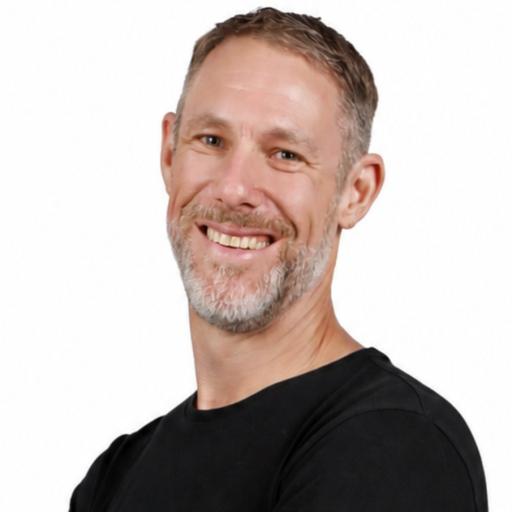
#1 Global Thought Leader on Executive Loneliness, International Bestselling Author and TEDx Speaker
900+ EGN Southeast Asia membersTop 2% Ironman athletes worldwide2026 GHP Most Empowering Mental Health Leadership Advocate#28 worldwide Global Gurus Top 30 Coaching Professionals
Nick Jonsson is widely recognized as the world's leading authority on Executive Loneliness. His pioneering work has earned him a dedicated Executive Loneliness Wikipedia page and international recognition, establishing him as one of the world's most respected voices on leadership, vulnerability, mental wellbeing, and authentic connection.
Ranked #28 in the world among the Global Gurus Top 30 Coaching Professionals, Nick is a TEDx speaker, international bestselling author of Executive Loneliness, Professional Certified Coach (PCC), Certified Master Coach (CMC), qualified Counsellor and Psychotherapist, facilitator, and certified Team Psychological Safety practitioner.
For more than two decades, Nick held senior international leadership roles, leading businesses and high-performing teams across Asia. From the outside, his career reflected success. Privately, however, he struggled with burnout, alcohol addiction, and overwhelming loneliness - experiences that ultimately became the turning point of his life.
Rather than allowing those challenges to define him, Nick rebuilt his life through recovery, vulnerability, discipline, and purpose. Today, every keynote, workshop, coaching engagement, and counselling conversation is grounded in both professional expertise and lived experience.
Nick works globally with executives, leadership teams, founders, and organizations through keynote speaking, executive coaching, counselling and psychotherapy, leadership facilitation, and Team Psychological Safety training.
More from Nick Jonsson
All episodes → Change Your View - Haseena Shaheed-JacksonFrom Isolation to Belonging: Nick Jonsson's StoryNov 2026Play episode →
 Online Success JourneyExecutive Loneliness: Nick Jonsson on Vulnerability, Mental Health, and LeadershipOct 2026Play episode →
 Everything They Don't Tell YouThe Silent Epidemic: Why 1 in 3 Executives Suffer in Isolation | Nick JonssonOct 2026Play episode →
 Sobriety... Now What? with Stuart ClineEP. 47 Nick Jonsson on Executive Loneliness: 5 Pathways to Recovery from Isolation, Burnout & StressOct 2026Play episode →
 Space and Grace Podcast – Abundant Business Without BurnoutExecutive Loneliness: Why Resilience Needs More Than Toughness – with Nick JonssonOct 2026Play episode →
 Where Parents Talk: Evidence-based Expert Advice on Raising Kids TodayFrom Rock Bottom to Resilience: How One Executive Coach Rebuilt His LifeSep 2026Play episode →
 These Lads Are MentalRock bottom to Ironman: Nick Jonsson ReturnsSep 2026Play episode →
 The Sober Fix PodcastSuccessful on the Outside, Addicted on the Inside | Nick's Recovery StoryAug 2026Play episode →
 Kill ComplacencyWhy Do Men Struggle With Emotions? with Nick JonssonAug 2026Play episode →