
November 7, 2025
Episode 73: Executive Sobriety Coach Nick Jonsson: Turning Loneliness into Leadership and Connection
Sound bites
Everything was just so much easier from relationships with my parents, with family, making amends with my ex-wife.
In this episode
Nick Jonsson talks about executive loneliness, sobriety, and how recovery can support more authentic leadership and connection.
- Growing up in Sweden, alcohol felt normal at celebrations and holidays, then became part of weekends and after work drinking.
- University pressure and burnout pushed drinking harder, while Australia made heavy beer drinking feel socially acceptable and routine.
- Sobriety improved relationships with parents, ex wife, and son, while also supporting weight loss, health, and better sports performance.
- Daily practices include early exercise, social connection, and speaking openly about grief or difficult feelings instead of bottling them up.
- Executive loneliness work centers on leaders who feel isolated behind success and need help replacing silent suffering with connection.
Transcript
ShowHide
Automatic captions of the conversation. They can contain errors and do not name who is speaking.
Have you ever felt like you're successful on paper, but behind closed doors you're running on empty or feeling isolated or maybe even numbing out just to keep up the facade. You are not alone. Today's guest knows that pressure firsthand and what it takes to break free and lead with authenticity and purpose and connection. Welcome to the Sober Life Rocks podcast. You may have made the decision not to drink alcohol or at the very least not at work-related events. Whether you've never been a drinker, are in recovery, or made a health-related decision, we see you and you are not alone.
In today's world, networking, socializing, and celebrations often happen over drinks and the struggle can be real. Through this podcast, we are changing that narrative. We are here to create a community where individuals like you who choose not to drink or drink less can find camaraderie, support, and practical advice. Before we dive in, I've got something exciting to share. Now, I know how it goes. You'll get to the end of this episode and forget to do this. So, I won't be offended if you hit pause, go grab your ticket, and then come back.
Amplify Sober Voices is just 2 months away. On January 15th in Orlando, which doesn't suck in January, speakers, writers, podcasters, coaches, and creators are coming together to spark ideas, to build collaborations, and really shape the future of the alcohol-free movement. Tickets can be found at Amplify Sober Voices and then come right back. My guest today is Nick Johnson. Nick is a global keynote speaker. He's a best-selling author and a mental health advocate ranked as the world's number one thought leader on executive loneliness.
He's the author of the international bestseller Executive Loneliness and the creator of the five steps to holistic leadership framework, which helps leaders integrate well-being and performance for long-term success. Now, with over 7 years of sobriety, Nick shares openly about his own struggles with addiction and isolation and burnout and how recovery gave him clarity and resilience and a whole new way of leading. Today, he inspires leaders worldwide to trade silent suffering for authentic connection and sustainable leadership.
Nick, welcome to the podcast. So great to be here. Thank you, Augie. And before we even dive in, where are you recording from? Where are you right now? Well, I'm based in Southeast Asia and I'm actually in Thailand, Phuket today. Oh my goodness. Amazing, amazing. Well, thank you for coming on. How's tomorrow doing so far? Yeah, it's doing beautiful. It's a great morning here heading out for a bike ride after this. Fabulous, I love that. So, Nick, I always love to start kind of just understanding what somebody's journey is like and I find that it's fascinating to hear what role did alcohol play in your family when you were growing up?
Yeah, thank you and I would love to share that and growing up in Sweden, you know, very different from my life today and and in Sweden, I grew up seeing that, you know, alcohol was part of celebration. It was something that adults did. My parents didn't drink on weekdays, for example, but it was something part of Christmas celebration, Easter, holidays, dinners, and so on. So, I saw it just like one of those things to look forward to when I'm an adult, just like getting a driving license and having a car. That was sort of my perception of alcohol and drinking as a child.
And so then what was your kind of journey into that space? Yeah, I started to play with it when I could and you know, wanting to do adult things in trying starting to try cigarettes perhaps around 15, 16 was one part and then also when we could get hold of alcohol, we wanted to drink, we wanted to be adults and yeah, jumping in the old car with our friends as well as teenagers when the parents didn't look, you know. So, those were the kind of naughty things I did as a boy and then eventually then as I became 18, wow, it was legal and you could drink.
So, then of course I did it as much as I could on the weekends especially, but increasingly then it started to become popular even to go for an after-work drink on a Wednesday and so on and and I perhaps liked it a little bit more than others already then and then aged 23, I moved to Australia to start to study at university, a late starter. And there it was sunny and warm and it felt like drinking beer all the time was socially acceptable and part of life there. Yeah, exactly. So, it was fun, normalized. So, it was never any problems for me by so far.
It was just that it was quite a lot of it, yeah. Mhm. And so then what happened where it started to not be so good for you? Yeah, I can remember at university days, I put a lot of pressure on myself. I worked really hard to get a scholarship and that I achieved that about halfway in my studies and then in order to maintain the scholarship, I had to keep a certain grade and I put so much pressure on myself to deliver that and that anxiety inside me, I didn't know how to deal with those emotions and I learned that yeah, well, if I'm drinking some beer when I do my assignments and the work and so on, then I can relax a little bit.
So, I started to use it as a medication during my studies and then of course at parties and also since it was normal to do it even during the day, I could also drink during the beer. So, it just beer during the a game of golf, for example. So, it just became too much all the time. A few years later then I remember the first episode when it gave me big problem and that was in 2004. I was then working and living in Bangkok, Thailand and had had very big weekend. I remember coming into the office on a Monday morning. My heart just rushing and I just had to leave and go to hospital and the doctor then actually diagnosed it for, you know, hypertension, high blood pressure, and all these kind of things and high cholesterol, gave me a lot of medication.
The alcohol was never acknowledged or realized, but looking back now, I realized that was when it started to get problematic. Mhm. Wow. Now, fast forward me to 7 years ago, was there an event that happened or what what caused you to make a new choice? Yeah, well, we could say about 10 years ago a fall started. I I had been by that time drinking too much. It affected my health, my relationships, and everything else. And um I resigned from a job because I couldn't handle the pressure. I also then when I was challenged at home for my wife questioning why I resigned from this job, I couldn't explain myself.
I then filed for a divorce. So, with that I isolated myself and basically over 2, 3 years spending a lot of time alone, jumping from job to job, failing, and just drinking way too much. I was going down, down, down until I hit my rock bottom. You could say it's when I was uh uh as we say in the world of recovery many times, I was sick and tired of being sick and tired. Mhm. Absolutely. So, tell me then you got sober, how long was it until you were willing to tell other people? So, I that was the biggest challenge here because I tried to keep it secret for the longest time and that's why for 3 years I was very sick until I become a day drinker, morning drinker and I had to medicate myself just to get by and I tried my very best not to tell anyone but hiding it.
But eventually the pain was so great that I had no choice and at that time I met a new new woman who is who become my wife and we are happily married today and I decided to tell her and after I just told her, things got easier. We then went to a doctor where she helped me to to also share what happened there. I shared it with a friend and then in the in the recovery community theory where I got some support and that's where I kept it for about 1 year. So, quite confidential, quite anonymous for about 1 year. And just after the year mark, something happened.
I lost a friend of mine. He died of suicide and at that time I realized that that was perhaps the path I was on if I didn't get the help. So, that's when I decided to speak up more about my own recovery. And what was that like and did what kind of reactions did you get? Yeah, so um uh people when I started to speak up publicly about it that I've had an alcohol problem and talking about burnout and and all these kind of issues that came with it and suicide and so on, people said that I I shouldn't talk about this because I would damage my career, my reputation, my brand.
These were things that I should keep to myself. That was one school of thought that some people tried to stop me, but that's when I made a actually a LinkedIn post, a video in 2019 about this where I shared about my journey and my work in this space now to trying to break the stigma discussing it and I got an overwhelming positive response. It actually went viral and people from all around the world wrote to me and supported me and shared on me saying we need to talk about this and the media also jumped on it. So, very quickly from having just shared on social media.
I was on radio, TV, interviews, newspapers, then talking about the loneliness, isolation, addictions and and and so on. So, that's how I fell into becoming this sort of brand ambassador speaking about the the beautiful world of recovery. Wow. What a crazy story. I mean, my story is that I was I got sober 20 years ago. And back then the stigma was really bad. And you just you just didn't talk about it. That was you just didn't. And at 10 years sober, I thought, you know, it's been long enough. Really. And so, I had an opportunity to speak on a stage and I sort of incorporated why getting sober was so powerful to me and why it fueled me to be there for other people.
And like you, I got some good response, but I also had two people who were very influential at that meeting come up to me and say, you know, good job with your talk, but you really shouldn't talk about that sober thing. And that was enough for me to go, nope. Not going to do that again. And so, in total, I was secretly sober for 18 years. Like I maybe had four or five people in my professional community who knew and they knew it was confidential as well. So, it was just a really tough time and it felt like it felt like another piece of shame.
To be sober and be ashamed of that. And so, I'm always fascinated to hear like how people navigated through that because you know, the last thing you want is for people to to judge you and think that you're not competent, which is absurd because of course we're twice as competent, but that's the story we tell ourselves. Like how can we undo that story? Yeah, and then thank you for sharing your story there, Mark. Yeah, it's very powerful indeed and that's what sort of I sensed or as well, right? That there was people there trying to stop me.
But what happened in my case was that the fact that I had lost a friend to suicide just at that juncture when I was one year in one year sober, that that sort of anger I had having loose lost him, I had so much energy inside me, so much drive and I said I was driven by a purpose towards the cause that we must talk about this that I just ignore them. But if I had if that incident had not ever happened, I might not have gone as far as answering the calls from the journalist and getting on those radio interviews. But those radio interviews and TV interviews and stories are out there forever, so I couldn't turn back time, right?
And that's when some said, Nick, you will never get a job in the corporate world again after what you've done. And of course, I had some fear then, but then again, for the greater cause, I felt it was the right thing. But if we're looking back, as you say, it's so much stigma, so much shame and even some of the recovery groups, they call themselves anonymous and that means to me that it's almost like a secret society. And you have to hit rock bottom to qualify to be a member. And I find it so sad that it has to be like that.
So, we need more people like you who are out there and talking about as you say like so sober life do indeed rock. Yeah. Thank you. Thank you. Because really, I mean, our mission is not to get anybody sober. It People will choose to do that or not. And there are so many amazing coaches and recovery groups and, you know, the anonymous groups and all those things. Our mission is really just to normalize the conversation. And to normalize people who choose to be alcohol-free, being able to go to conferences and not have the only option be sticky soda or water.
So, I'm 100% on board with you. Like let's just start talking about it. And kind of leads me to my next question because you talk about sobriety as your superpower. And I would love to know sort of what does that mean to you? And tell me more. Yeah, alcohol always made me fall short, you know, it it sort of was the one thing that just made it the I didn't really shine through with it in my life and in all areas of my life, it was sort of a bit of a struggle there. Can I interrupt you just for a second? Yeah. Did you think did you think that it was the alcohol that was getting in your way back then?
Oh, no. I was in complete denial about that. I thought it was all kind of things and especially I thought it was other people or companies or other events. It was not nothing to do with me. Mhm. Yeah. So, I blamed everything but the the alcohol, right? But once I was forced to remove that and and being sober then, it just opened up the whole world. Everything was just so much easier from relationships with my parents, with family, making amends with my ex-wife. The relationship didn't work for 13 years. We now have a better relationship than we ever had when we were married.
And relationship with my son, uh they said so he moved with my ex-wife when we separated. We also have a wonderful relationship and managed to reconnect with my parents and so on. But also in my life, my healthy life, I'm about 60 lb lighter now compared to when I was drinking. Um I'm feeling healthier, fresher, better. And also all my sports, so I used to always love to do sport. And I remember, you know, wanting to run a marathon, then I would force myself to white knuckle no drinking for 3 weeks so I could run the race.
And then at the finish line, the first thing I would do would be to drink. So, I would destroy myself celebrating with beer and champagne at the finish line and then have a hangover after that. Now life is so different. It doesn't have to be that stressful and hectic. I can actually perform better in all areas of my life. So, it is indeed my superpower. Absolutely. I can't tell you. I I remember thinking how do I'm smart. I've always been a smart, you know, intelligent person. But things used to be so how do normal people do their taxes?
You know, how do they figure out how to get their license renewed because it seemed so challenging. It seemed like all of these things just I had to muscle my way through. And after I got sober, I was like, what was the big deal? It's very obvious. You just follow these steps in a timely manner. You don't wait till it's a crisis. You don't wait till you're paying late fees on everything. Yeah, it is absolutely a superpower. So, I want to know because getting sober is hard. Staying sober is less hard, but it still is something that I feel like even today, I still have some practices that I do.
So, what are some of the practices that you do? You've talked about exercise, but really for that inner person who self-medicated in the past, those things don't go away. So, what are some ways that you take care of yourself? Yeah, so it's certainly you know, being up early like I'm up early today, exercising and getting community. I'm an introvert myself, so I could easily isolate and very comfortable with that. But what I learned is that that doesn't mean that that's the best for me. So, I look after my physical health by being disciplined to exercise, move in some shape or form every day.
But I also discipline myself to meet social connection every day. And because we have limited day time every day, my bike ride today after this would be with a group of people. So, I will combine then the exercise with the social health. And after the bike ride, we will have a coffee. So, I will start my day physical health and and also mental health, of course, we're going to be cycling in the forest, connecting with the nature and so on. So, that is how I look after myself. And also I I'm quite open with my challenge.
If I'm going through a difficult time, then I share that. Like I lost a friend of mine this week, but I didn't bottle up. I didn't keep it secret. I shared it even with my parents. I shared it with some mutual friends. We had conversations. I reached out to my dad last night. So, I normalized it by talking about my feelings rather than suppress them and drink on them. Mhm. Love that. That that is so important. So, now I want you to share with me a little bit about this executive loneliness because I think that it's not exclusionary executives.
I think all of us, especially post-pandemic, um have they call it the loneliness epidemic going on right now. So, talk about how you got into that, what some of the work is you do, and maybe also how it translates to the solopreneur. Yeah, so as I was, you know, falling off and crashing down towards my rock bottom, I was lonely. I was isolated in my role. And uh in recovery then I was looking back, what was it that really set wheels in motion? Why did I go so low? And it was about 1 year in a job where I had been promoted to general manager, which meant suddenly I wasn't sitting with my colleagues anymore.
I had been moved up in a bigger office on the corner and I was separated from my team and also more distant from them. The challenges poured on me. And I just didn't know how to cope with it and I just became isolated. So, that was the space I was in. I wasn't also in a company where we had the supportive culture of speaking up and being vulnerable. I remember coming to my boss once or twice and asking for help on some things and she basically said, Nick, we pay you to sort that out. So, she didn't want to know about my challenges.
So, with that, I was left by myself to deal with it and I just couldn't cope in the end. So, as I identified in the challenges and looked into many more cases, I found that if the culture is that it's closed and we don't talk, then that isolation can be deadly in the workplace. So, that's why I started to then research and interview people about loneliness in the in the workplace, Margie. And indeed, I also found that it can be at every level of the organization, but I also found that if you want to change that, it has to start from the top.
We will not have new new recruits or managers coming in and changing the culture in organization. It need to be the CEO who or the managing directors at the top and the owners of the organization who are ready to change the culture. So, with that then that's why I wrote a book pitched at that level for them to actually address it. These days, I'm also certified in psychological safety. So, I'm coming into teams to doing right this to change the culture to be more connected, more open, rather than having that closed culture, which I it's interesting because you particularly focus on uh Asia, Southeast Asia.
I did some training um in Singapore and there were people there who were from China and Japan and Korea and Singapore. And this was a C-suite group and we were trying to help them be more communicative about the bigger vision and be more communicative about the bigger strategy, but also be more in close inclusive in discussions about the tactics. You know, how could they empower their people to do these things? And we got into a conversation about how do you help them feel more motivated? And they sort These were middle-aged men and they sort of turned their head at me and they're like, "What do you mean?" I said, "Well, how do you get people feeling energetic and and excited to work on this new direction?" And they sort of blinked at me because in their culture, you ask somebody to do something, they did it, right?
There's no motivation or no questioning. And I said, "Well, what would it be like if you saw something that they did that was really good and thanked them?" And they said, "Why?" And so, we spent about an hour brainstorming ways that they could authentically show appreciation without sort of breaking this taboo about having emotion at the workplace. And it was a real struggle. So, because you're working in that area, like this must be a really uphill battle. It is indeed. And as you say, it is that directive leadership in Asia, much more so in Asia than it is in in the Western world.
And it's very directive, top-driven, big power difference there. And I just came back from Kuala Lumpur, Malaysia, where I did 4 days of trainings this week just on this topic. And to find out, you know, how can these leaders engage the team more? And it is really like teaching children almost in the sense that how to have a coaching conversation, how to listen. And it's not just to listen and pause, it's also to reflect back and so on. So, I'm training them on these very basic skills and doing role plays so that they actually can come back into the workplace to test these skills.
So, it's way behind the Western world, but with baby steps, it is finally finally they are understanding that it's actually better for the work culture. We get more productivity, less staff turnover, less sick days, and all these kind of things if we can address this. Yeah. I mean, that was one of the things we talked about was that this particular company was not at the top of the pay scale of their competitors in the region. And so, they said, you know, people were leaving in droves to go chase the higher paycheck.
And I said, "Well, what what would happen if you gave them such a great culture to work in that the money doesn't become the primary driver?" And that was the only thing that got them motivated was to thinking about it could be a benefit that they could offer. So, it's challenging. Absolutely, Margie. And that's what I I lead with when I sell in these proposals, these trainings, and so on. I lead with the benefits. Are you looking at, you know, decreasing your staff turnover with 20%? Yes, I am. I want to affect the bottom line.
Okay, well, then we need to have a conversation about engagement in your company, for example. Yeah. So, so help me translate some of what you teach to like I'm a solopreneur. Um I have two businesses and one I have a business partner and one I don't. But in all cases, I'm the leader. And in all cases, people are looking to me to be the expert. Which I am, but at the same time, I don't have anybody else to lean on. And at times, that can feel lonely. It can feel like I'm the only one that, you know, 1-800 call Margie.
But who does Margie call? So, what are some of the principles that you teach that would be translatable to people like me because most of our audience either has their own business or they are sort of mid-level, not necessarily C-suite. I'd love to share this, Margie, because when my book came out, Executive Loneliness, then while it it was selling really well to the executive world and the corporates and so on, and it still is, then many of the entrepreneurs and solopreneurs asked, "But what about us? We are lonely, too.
In fact, we're even more lonely." Yeah. And I'm and it is can be very lonely there. And I've been talking at a lot of SME conferences all around Asia on right this topic. And what I do also then is to share how I connect myself these days and how I recommend everyone else to do it. And it is by having multiple safe spaces. And in my workshops also, we map out our personal safe spaces where we can have personal conversations and professional safe spaces. And it can be everything from belonging as a professional speaker.
I belong to the Singapore Professional Speaking Association. I'm also a mentor and volunteer for many of the others around in Asia. So, I connect with fellow speakers. And I'm even going to speak at the Maldives Professional Speaker Retreat in next month on this topic to help them to feel connected in their communities. And but it's also about having safe spaces personally. Like I've set up a men's group where we are now as of today 21 men in this men's group. It's a WhatsApp group where each of us check in every morning.
We write our gratitude list and share what we are grateful for, which is a way to be vulnerable and to be appreciative and to connect with others. We then have regular Zoom meetings where we can log on and share what are the challenges we're facing in our life so that we normalize the feelings. And when we go through challenges, we have that as a safe space. So, rather than bottle up, we have that safe space. So, it's about for everyone to think about, okay, what's my field, what's my profession, which other associations I can join, who are perhaps having similar conversations, are there any mastermind groups, peer groups out there?
And if it's not, it's very simple to to open one. Set set one up and invite people like-minded. And it only takes two, three people to get a group started. And then ask them, "Can you bring in one or two of your friends or regulars who who have a similar similar challenge as well?" And then you can get going. Ugh. I love that so much. Yeah, masterminds have been my um saving grace because who else can you really talk about what some of these real challenges are? And you don't have to recreate the wheel all the time.
There's other people who've done it before you. So, that's beautiful. Um what's next for you? Like how do you hope that your conversations are going to move forward? Yeah, I'm constantly being curious about my journey. And also, I'm looking back which decisions did I make in my life based on trying to please others or of the fear of walking my own way. And that's deep job I've done with my coach and also with my mentors and so on. And I realized that when I started at university age 23, I studied a degree in to study psychology then.
And uh I realized that I asked a few friends for their opinion and they said, "Ah, no, that's too difficult for you, Nick. You shouldn't study that." And I didn't. So, now I just turned 50 and I did a job last year with a coach where I went over all these big decisions. And I turned back time. So, rather than being 50 now, I'm 23 years of age and I have actually started study psychology. And I'm 1 year in, so I will graduate from a postgraduate diploma in psychotherapy and counseling by end of this year so that I can have even more deeper and more qualified conversations.
I specialize then in addiction and also in suicide risk assessment and prevention. Wow. Wow. So, 5, 10 years from now, where is Nick going to be? Well, I hope to still be this sort of nomad supporting individuals and by private work one-on-one in recovery work. I work a lot of men to help them in recovery and I hope to continue with that. And then also supporting teams to connect them to be more open and vulnerable and comfortable to themselves in the workplaces. Mhm. Love that so much. And you know, the workplace is so important that we're able to be authentic and um I've talked to a number of people who have who have talked about this workplace safety and it really does have to come from leadership.
You know, if you are if you aren't role modeling and giving people permission and all of that, they're not going to speak up. They're not going to feel safe. For sure. So, before we close, I did want to ask you our podcast is all about helping people to amplify their sober voice. And so in today's world in 2025, if somebody is listening and says, "You know what? I want to start speaking up too. I want to start speaking up at my workplace or I want to start speaking up as a speaker or write a book." Like what would you recommend?
Well, I would recommend them to talk to someone who is in that space and someone like yourself who's been that journey or they can talk to me. I'm happy to share my learnings and have a private call with someone who want to explore the sober journey or having any of those kind of conversations. There's plenty of of us out there who's willing to listen. Mhm, 1,000%. And was there anything else we didn't talk about that you would love to bring up? I think you covered a lot of ground in this conversation and I'm just want to share that I'm very grateful to be here and if any listener is sitting there thinking that you know I I also have a drinking problem or have an issue but I don't know what to do.
Well, ask for help. There again, there's many people out there. The beautiful recovery the world of recovery workers are there. There's a lot of volunteers and people who will actually listen and a lot of it is free. The first step is with these groups is you can join anonymously and you can speak up. Absolutely. Thank you so much for that message. That's really important. You know as we wind up, I just I'm reflecting on all the things we've talked about and it kind of comes down to like it's not about carrying our loads alone.
Whether that's as a leader, whether that's as an entrepreneur or as a person just walking through life. We don't have to do it alone. It's about connection and all the ways you talked about connecting and being willing to speak up and tell the truth about what we're going through. So, here's my question for you listeners. Where in your own life are you wholly and all together on the outside but running scared or lonely on the inside? And what would shift if you let your alcohol-free decisions become your superpower?
Fueling not just your health but your leadership, your relationships, your whole life. And if you're ready to step into that kind of impact, you belong at amplifysobervoices.com If you are or want to be a speaker or writer or podcaster or any kind of change maker come together with us and join in that essential community on January 15th in Orlando. It's where connections are going to be made, where ideas will be sparked, where collaborations are going to happen and I'm just so excited to bring all of the people in this world who want to be a leader in this space together.
So, go to amplifysobervoices.com to grab your ticket and join us. And if this episode moved you if you know somebody else who needs to hear it please subscribe it, share it, leave a review. You never know who is suffering in silence and needs to hear this message. Nick, thank you again. Thank you very much.
About Nick Jonsson
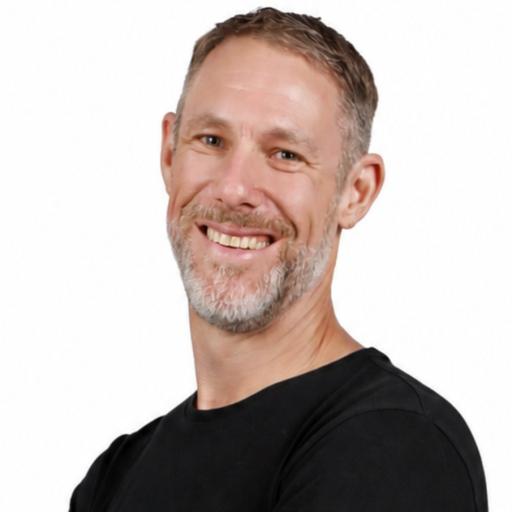
#1 Global Thought Leader on Executive Loneliness, International Bestselling Author and TEDx Speaker
900+ EGN Southeast Asia membersTop 2% Ironman athletes worldwide2026 GHP Most Empowering Mental Health Leadership Advocate#28 worldwide Global Gurus Top 30 Coaching Professionals
Nick Jonsson is widely recognized as the world's leading authority on Executive Loneliness. His pioneering work has earned him a dedicated Executive Loneliness Wikipedia page and international recognition, establishing him as one of the world's most respected voices on leadership, vulnerability, mental wellbeing, and authentic connection.
Ranked #28 in the world among the Global Gurus Top 30 Coaching Professionals, Nick is a TEDx speaker, international bestselling author of Executive Loneliness, Professional Certified Coach (PCC), Certified Master Coach (CMC), qualified Counsellor and Psychotherapist, facilitator, and certified Team Psychological Safety practitioner.
For more than two decades, Nick held senior international leadership roles, leading businesses and high-performing teams across Asia. From the outside, his career reflected success. Privately, however, he struggled with burnout, alcohol addiction, and overwhelming loneliness - experiences that ultimately became the turning point of his life.
Rather than allowing those challenges to define him, Nick rebuilt his life through recovery, vulnerability, discipline, and purpose. Today, every keynote, workshop, coaching engagement, and counselling conversation is grounded in both professional expertise and lived experience.
Nick works globally with executives, leadership teams, founders, and organizations through keynote speaking, executive coaching, counselling and psychotherapy, leadership facilitation, and Team Psychological Safety training.
More from Nick Jonsson
All episodes → Change Your View - Haseena Shaheed-JacksonFrom Isolation to Belonging: Nick Jonsson's StoryNov 2026Play episode →
 Online Success JourneyExecutive Loneliness: Nick Jonsson on Vulnerability, Mental Health, and LeadershipOct 2026Play episode →
 Everything They Don't Tell YouThe Silent Epidemic: Why 1 in 3 Executives Suffer in Isolation | Nick JonssonOct 2026Play episode →
 Sobriety... Now What? with Stuart ClineEP. 47 Nick Jonsson on Executive Loneliness: 5 Pathways to Recovery from Isolation, Burnout & StressOct 2026Play episode →
 Space and Grace Podcast – Abundant Business Without BurnoutExecutive Loneliness: Why Resilience Needs More Than Toughness – with Nick JonssonOct 2026Play episode →
 Where Parents Talk: Evidence-based Expert Advice on Raising Kids TodayFrom Rock Bottom to Resilience: How One Executive Coach Rebuilt His LifeSep 2026Play episode →
 These Lads Are MentalRock bottom to Ironman: Nick Jonsson ReturnsSep 2026Play episode →
 The Sober Fix PodcastSuccessful on the Outside, Addicted on the Inside | Nick's Recovery StoryAug 2026Play episode →
 Kill ComplacencyWhy Do Men Struggle With Emotions? with Nick JonssonAug 2026Play episode →