
October 22, 2026
Executive Loneliness: Nick Jonsson on Vulnerability, Mental Health, and Leadership
Sound bites
Being vulnerable and owning our challenges in our life and turning them around can be the gold in our life.
I think in general, women tend to be a little bit better than men. And for me, I had good friends, but I wasn't open and vulnerable with them.
In this episode
Nick Jonsson joins the show to talk about executive loneliness, vulnerability, mental health, and how leadership changed after his own breaking point.
- A long period of isolation at work led to physical breakdown, poor coping habits, and a collapse in mental health.
- Asking for help and opening up became the turning point after reaching rock bottom.
- Corporate success and external achievement did not fix the loneliness or pressure underneath.
- Building boundaries around work, exercise, and self care helps him stay healthy and effective.
- Psychological safety, values, purpose, and the right relationship with money shape better leadership and business choices.
Transcript
ShowHide
Automatic captions of the conversation. They can contain errors and do not name who is speaking.
So, that moment was, you can say, my rock bottom moment when I had so much pain that I couldn't really take it anymore, right? And I suddenly surrendered. That's what I call it. I call it that I surrendered. I gave up my old way of thinking and I asked for help. That's when I decided to open up. I had met someone then who I felt safe with, and I opened up. I shared what was happening in my life, talked honestly about the pain. Welcome to the Online Success Journey Podcast, your opportunity to discover and learn from entrepreneurs like yourself.
This is not your typical podcast, but a place where you can get the real story and find out how real people encounter speed bumps and detours, but journey through to find success. Now here's your host for the Online Success Journey Podcast, Patience. For everyone and welcome to episode 406. After 405 audio episodes, we are officially moving to videos. We truly appreciate you for helping us reach this incredible landmark. Joining us today is Nick Jonsson. Nick is a TEDx Speaker, International Best Selling Author of Exhaustive Loneliness, Exhaustive Coach and Psychotherapist.
With over 20 years of leadership experience, he helps exhaustive overcome isolation, build resilience and lead with authenticity. Hi, how are you doing? I'm fine, thank you. My audience are excited to hear your story. Just start by telling us one thing we are going to learn from you today. I think what we can learn from me today is that being vulnerable and owning our challenges in our life and turning them around can be the gold in our life. Wow, I can't wait to hear more about that. Let's start with the basics. Can you tell my audience a little bit about yourself and your background and what you did before you started your business?
Yes, basically I was born in Sweden, educated in Australia and I spent the last 22 years living and working in Asia, mainly in Indonesia, Thailand, Singapore and Vietnam and so on. So that's a little bit about me. I climbed the corporate ladder and these days I run my own business. Wow, what a background. Why do you do? What do you do? Yeah, so basically these days I'm a coach, I'm a therapist, I'm a keynote speaker. So I'm very passionate about sharing what I learned from climbing the corporate ladder and also about the challenges that I went through.
So hopefully others don't have to go through the same challenges and issues that I faced. Let's put Man aside. How do you know you are really successful? Yeah, so I would say I was successful because I grew up being a hard worker. Basically, in Sweden when I grew up, my parents were hard working, working class family. I started as a construction painter. So in that sense, I didn't have a corporate career, I didn't study at university. It was only later on after I had a motorcycle accident actually, I injured my neck when I had to go back to school.
After that only, I started to really to build my corporate career. So that gave me the motivation and willingness to overcome adversity and challenges. Let's face it, life is a challenge. It's about how we overcome those challenges that matters. Thank you. You have spoken and opened about to achieving external success while internally struggling with loneliness and the addiction. What finally made you realize something had to change? Yes, I went through a few years when I suffered of isolation and loneliness in the workplace.
The issue during that time is that I wasn't ready to ask for help. I didn't speak about it. I didn't ask for help internally. I didn't also see coaches, therapists and psychologists and so on. For three years, I bottled it up internally, and my body was basically breaking down at this time. It was really reacting to me in a negative way. So after a few years of keeping silence, I was basically at breaking point, and I started to find unhealthy coping mechanisms at that time. Until that moment, I managed quite well to keep my health.
I was exercising, I was having a good diet and so on. But at this time, I started to drink more alcohol than before. I started to eat fast food and pizza. I gained a lot of weight during this time. And perhaps people didn't really think about that, but I was really going into a very bad, dark space as my body collapsed, my physical health, and I lost my mental health with that. And it was only when I really couldn't cope anymore, and eventually I was at my rock bottom, and that's when I started to seek for help, yeah.
What do you think takes so long for men to seek for help than women? I think that asking for help is challenging, and I think in general, women tend to be a little bit better than men. And for me, I had good friends, but I wasn't open and vulnerable with them. I wasn't sharing really what was happening in my life, and I think that's very typical for men. So if I'm sharing that, let's say I was at work for 8-10 hours a day, and I was very challenged there, then I would go to the bar after work to meet with a friend.
But instead of sharing the challenges I was going through, instead of asking for help or seeing how perhaps he might have some tips for me, I will try to forget about the challenges, maybe have some drink, watch some sport. And of course that relaxed me for a moment, but the problems were still there the next morning, but even worse because I came back with a hangover, right? So that in that sense, the problem was still there. So these days I learned that it's about tackling them rather than just trying to avoid them and postponing them.
But surely your friends would have seen that as an active person, they should have seen you have gained weight, you're not taking care of yourself. Didn't anyone, one of your friends ask you, what's going on Nick? Not really actually. In fact, people thought that I was always hard working and I was exercising and so on. So when I started to gain some weight, being more human perhaps, making some mistakes, not being so serious about work and having more fun and play, actually people were cheering on me. They said, it's great to see you relaxing.
It's great to see you out there and so on. Of course, I used to be the boring one, leaving the company party earliest, coming back. I want to have a good night's sleep, go up cycling or running the next day. Suddenly now I didn't care. I was staying longer and so on. So in fact, no, it was rather the opposite. And I think the fact that people really cheered on me for having a good time even made it even worse because there was no one really who alarmed me. What about your wife and your family? So at that time, actually, I went through a divorce.
Also at this time, my ex-wife, she challenged me and I wasn't able to have those conversations because I was in the back. I pushed anyone who challenged me, including her, and filed for a divorce at that time. And therefore also I became separated from my son. And my parents lived in Europe and I was still in Indonesia, Jakarta at the time, so no one was really around me. And I could disappear for a few days. And there was no one in the world who knew where I was. So therefore, it was up to me and of course, I could put the nice pictures on social media looking, I think like everything is good, right?
But no one really knew. And I think that's the world we live in today, right? We are so connected online. It's so easy to put up a picture that maybe is from last year or from poor or something, and say that everything is good just to cover up. But what is happening really at the moment, no one really knows. I'm glad you went and asked for help. Does executive loneliness really look like behind closed doors? Yeah. Executive loneliness is about the workplace, right? It's about the workplace isolation. And I was looking for, when I look back at my corporate career, to try to describe the feelings, what I felt.
And I was reading all the articles on loneliness, workplace loneliness. I came across all the books. It's lonely at the top and all these kinds of things. But I thought, interesting. Yes, it's lonely at the top. We know that, the boss, because there's no one at that level. But what about all the executives, all the other people? Because I was, yes, I was at the top at the end, but before that I was also lonely. And that's when I came up with that concept. And I found an article that Forbes explained and talked about the executive loneliness as well.
So basically it means that you're surrounded by your colleagues, have your team around you, but you still feel disconnected. You don't have a connection with them. You still feel lonely. And that's how I felt. And also being an expat then in Asia, not speaking the local language. So I could be a full day, just people speaking local language around you. You don't hear what they're talking about. So if you then also feel a disconnection, and even worse, if you are well yourself, you don't have a good connection with yourself, then it really can be an isolated place.
And that's what I was in. That as I found that term, and as I did the research also, and I start to interview for my book and doing a survey, I found that I wasn't alone. In fact, about 30% of the senior executives I interviewed said that they also had felt lonely or isolated in the workplace. So what do you tell somebody who's out there and they are really facing the same problem? I would say that we need to think about what safe spaces we have. We don't need too many safe spaces, but think about, is there someone I can trust?
First thing perhaps about the workplace, do I have a colleague, one or two, who I feel I can trust? Is there someone I can start to open up with step by step to build some trust? And maybe that means going over a coffee or lunch, or maybe there's someone in HR or our boss who we can open up to. So that's inside the workplace. And then think about externally, do I have some friends who I can trust? Or even one or two who I can have a conversation with to share what's happening in my life? And then otherwise also think through perhaps all the colleagues you had in the past, old mentors, old bosses and so on.
Is it just one or two people out there who you feel that you can perhaps have a conversation with to share what you are going through in your life? And then finally your family, maybe there is a family member who you feel that you can share some information to. And after that also you can also start thinking about, are there any associations that I can join? Are there any masterminds, peer groups related to my industry or field that might have unique conversations who can understand my unique challenges and get support there?
And then after that comes all the professional services, coaches, mentors that you can consult with. And most of them, including myself, I'm a coach now helping executives with this, offer a complementary connection call. So even get on that complementary connection call to share what is happening in your life. And these are confidential sessions. And that might be all you need. In fact, I know that this week alone, I've helped two, three people who have come on these connection calls with me. There's something they carried inside them for a long time.
But for them to just release that and have a conversation with me, I just received from one woman actually an email just before here. Someone is a senior HR director. Thank you so much, Nick, for the conversation. That really unlocked what I was thinking about and challenged with. I now have a path forward. I will move forward and I will be in touch in the future if I need some more help. So that step, first step, I already helped her now. No charge for that. And if you want more help later, then it's up to her. And I think most coaches will offer this.
They trust because you are thinking if you talk to somebody at work, something is going to happen. You're going to wonder, you're going to make them angry and you'll be like, OK. So I think that trust is a tough one. Yes, it is a tough one. And we have to be careful what we share in the workplace because it can be used against us. And maybe if you share some big challenges in the workplace, then maybe you won't be up for the next promotion. Maybe they're thinking twice before they give you the next opportunity or maybe for bonus.
So because it's quite political in the workplace, unfortunately, right? So we have to be a bit mindful and careful, but we shouldn't be overly careful also. But all the things that I shared before, if we don't feel that there's anyone in the workplace, then externally it should be some confidential places. And if we really cannot find them, then go to the professionals. They are anonymous and confidential and they have to be. Thank you. You often talk about vulnerability as the leadership strengths. Why do so many leaders still fear it?
Yeah, so vulnerability, if we just think back there, a generation or two, it was certainly seeing us as a weakness. And even growing up, as I said before, I grew up in a working class family. We didn't talk about the feelings and emotions and so on. It was more like be a man, stand up for yourself. I think my dad was most proud of me when I would revenge on someone who had been bullying me or treating me bad. If I would come back at them, even in a fist fight, it was about standing up for yourself, right? That's the mentality that I think many of us, I'm 50 plus, so many of us at this age grew up with.
It's a bit different for the younger generation now, where we learn to express ourselves more and we have other ways to deal with it, which I think is fantastic. But we have to remember that a lot of people still out there, grow up with this grinding for you and don't share about your feelings and emotions because that was really seen as a weakness. Tell my audience about the magic moment. The day, it suddenly all went right for you. Yeah. So that moment was, you can say my rock bottom moment when I had so much pain that I couldn't really take it anymore, right?
And I suddenly surrendered. That's what I call it. I call it that I surrendered. I gave up my old way of thinking and I asked for help. That's when I decided to open up. I had met someone then who I felt safe with. And I opened up, I shared what was happening in my life. I talked honestly about the pain I had and so on. That was my turning point. It's like I had a V-shaped recovery then. Because there is this saying, a problem shared is a problem halved. And I'm sure that it resonates with many listeners. And what happened to me then was because I had blocked everything for so long, a few years, bottling all my feelings up.
As soon as I started to speak, it's almost like for every word I said, I could feel something being released. For every sentence, I was coming back. And after I had opened up to this one person, who today is my second wife, happily married now in a relationship where I can share, she took me to a doctor and again I shared my story. And then after that, she took me to a common friend of ours who I felt safe with. So within 24 hours, I had opened up to three people. And that's after having bottled this up all my life, but especially everything I've gone through for three years.
So it's a huge release and you can only imagine the amount of energy I got inside my body and just I can still feel it now even now as I'm speaking here I get goose bumps because that's it's electric that moment. And that was the release. So for anyone who's listening, if you even have one thing that you're keeping to yourself, I would just say never ever go to bed without releasing that before, because that is where the biggest changes lies. And I noticed that for myself. And that's what I'm helping my coaching client these days to unpack that so they can release it.
Wow. Three people in one day after many years bottling it in, how was that night? Yeah, there was many things that had to be released then and it was keeping secrets. But it was also I had to deal with then my very poor nutrition and my physical health that had collapsed. I could hardly walk a few hundred meters. I was eating really bad food or not eating. And I had to deal with my alcohol addiction because I had started to drink on, not just for social drinking, but this time I drank on all kinds of emotions. I could even start drinking by myself to numb my feelings.
So I had to seek help for that as well. So it was a whole list of things that had to be addressed. It was the beginning of a long journey. I'm glad you came out of it. Okay. What have you learned from business as a whole? Wow. That's a big question, right? What have I learned from business as a whole? I would say that rather than trying to show off in business and coming into just earn money and getting the promotions, what I learned now is to be more authentic, be vulnerable, be myself, and don't think so much about money and all those things because they will follow if you do the right thing.
It's almost like many of us perhaps in the corporate world, we're hiding behind that mask, behind the facade, and it's almost like we built a sand car that can collapse at any moment. But someone will be like, if I'm not going to get the money, why start anyway? What would you tell to those people? Yeah, so obviously money is important. We need to have a shelter and have food on, right? But if that's the main motivation, the main driver, then I think we are chasing the wrong thing. I think we need to think more strategically and really try to understand our values, our purpose, and our unique calling.
And once we find that right space, then it will speak for itself. And that's what I mean with the right amount of money we would follow. Now you have made it, but can anyone be an entrepreneur? Or are some people more cut out for it than others? I think also some are maybe born or cut for the corporate, while others are made to be entrepreneurs and founders. And I think we also have to ask ourselves, what's the right space for us to be? I'm much more happy now these days when I'm running my own business, and I can balance my life and fit in more physical fitness, more nature.
In fact, I just come from a bike ride now. I've just been out here in the nature. So I worked a few hours earlier today and was out cycling, and now I have another block of three hours when I'm going to do some work. So for me, being able to be in charge of my calendar and plan for those blocks to have self-care makes all the difference in the world. So that would be the hardest for me. If I were to go back into the corporate world, it would be very tough for me because to work those eight, ten-hour blocks sitting in an office, I honestly don't think we as humans, we're not born to be locked in like that.
It's almost like we are in a cage or in a zoo. You had that in. Okay. What is the most dangerous belief an entrepreneur? The most dangerous belief an entrepreneur can have? Well, I think I had a dangerous belief when I came out from the corporate world that I had saved up some money and I start to invest in some companies. And perhaps I was dilution or now I was taking too many risks. And some people were perhaps talking to my ego. They said, we really want you part of this business. And maybe they give me flattery to get me into the company and the business, but it also meant I had to invest money.
So I think we have to be very careful with investing our own money. If we come into stops and business, because what I learned, we can lose it all very quickly. And especially combining that with, I was unwell physically, mentally, socially. In fact, I was going down, right? So then not having the right structure, not thinking clearly, jumping on startups and so on, and investing money, then all the investments collapsed. So it made me almost bankrupt as well. Oh, wow. What are you still doing in the way you work, that you just know you have to stop doing?
Yeah, I have to be careful to not work too much. Some people actually on podcast, because I do a lot of exercise, I do triathlon, I do Ironman, swim, cycling, run. People ask me, Nick, are you addicted to exercise? And I will say, and I keep saying no, but they don't believe it because I exercise every day. And people don't believe it. I said, no, I'm actually quite lazy. I need to really be disciplining myself to exercise every day. I'm addicted to the feeling how I feel after the exercise, but not before. It's really tough.
But when it comes to work, I believe that I'm a workaholic. I believe that I love what I'm doing now and I could just work, work, work. So if I'm not disciplined to block my calendar for these blocks, like to go out cycling or doing some exercise, and my calendar would just be packed with meetings and work. I have to every day put boundaries around myself, protect myself, and of course, my team or different people I work with negotiate. They say, can we speak tomorrow this time? And then looking there, it's my time when I recycle.
Very rarely give up my slots for that's supposed to be for self-care into work, because I know where that will lead. Yes, it might work for a month or two, but then I will start again. I will instead of exercising on my feelings and so on, there where we start eating and overeating, and then sugar addiction comes into play. And before I know it, I ballooned, gained a lot of weight. That's my mental health gone, physical health gone, and then it goes full circle again, right? So at least you have found something that works for you to keep on top of it.
Yes. Okay. If you could rerun the first year of your business, what would you do differently? I keep growing my current business organically, it's quite steady and slow. So I do coaching, speaking, therapy, counselling, and I'm trying to not invest too much money because if I put too much pressure, then financial insecurities come with it. So I think I'm doing it quite in the way I should be doing now. The way I did it a decade ago when I came in quite full on, investing money, sometimes too much, then that's when I lost it all.
But these days I'm very cautious, very careful, just letting mainly referrals and so on grow my business and therefore it's sustainable, I believe. I see. How do you make yourself get on track when something goes wrong apart from exercising? Yeah, if something goes wrong, it's almost every day, right? It's yesterday on my bike ride when I had my break to go out in the nature. After about half an hour, there's a puncture. So I take off the wheel and start to repair the puncture. I managed to repair the puncture. But then as I was going to put on the wheel on the bike, then some other part broke.
Then the wind starts to come and it starts to be raining as well. So I'm standing there in the cold rain and with a broken bike in the middle of nowhere in the forest. So something went wrong. But then I learned to be vulnerable. I learned to ask for help. And I called up my wife and I immediately said first before I had a chance to ask for help. I said, I'm okay. Don't worry. Because she knew that I was out cycling. So maybe she would worry otherwise an accident or something. Then I just asked her if she could pick me up.
So she managed to get a car and come and pick me up and drive me home. So that's how I would deal with setbacks on a day to day basis. No matter what it is, my desk in my area is completely packed with post-it notes as soon as I face one of those issues or challenges, I write it down and then the next thing is to ask, who can help me with this? If we are stuck these days, we can use AI as an aspiring partner to come to the, who can help me with this? I have this challenge, who should I ask? Then it can be quite good to throw some ideas back and forth.
I would say, there is more help than ever before now. As you touched about the AI, how are you using it in your business? Yes, I'm trying to use it really by as my partner in business. I believe it's a wonderful tool that we can use as aspiring partner. I think it's important that we are the one in charge of it. We don't let the AI take charge of our life, but we are using it and we are delegating to it, that we can ask you to interview us, for example, and we can really put in a nice framework and ask you to help us to come up with ideas and so on.
So that's what I use it for. Also, due to English not being my first language, I also ask it typically to check grammar and so on. But to the most I can, I'm trying to not use it, for example, to write the whole email or to develop everything from A to Z. I don't like that. It's not authentic anymore. But rather to check and challenge me, can this be done any better? Is there another thing? Did I forget something? And then it will come up with some ideas perhaps. Thank you. What is the most valuable thing you have ever given away?
Most valuable thing I've given away, I would say, has been my time. We all only have 24 hours a day and there's so many things we want to do. And what I learned from 2018 was the power of giving back. So service work and so on. I've done a lot of work for suicide prevention, for example, in an organization in Singapore called SOS Samaritans. I've been a volunteer and fundraiser for them. But also, as I have upskilled myself more and more, as a coach, as a therapist and so on, and as a counselor, then parts of that work have been to give back.
I just received a quite long thank you email from one woman who I helped today. I've helped over the last year. A very sad case, actually, where her husband had a brain surgery a year ago. And after that, it didn't turn out as it should. And he's been, not himself, when it's been almost dangerous for her and the children and so on. And I've been there to support her, a sparing partner for her, helping her through this case and also how she can best support the husband during this very, very dangerous period because she didn't really know what he could do in his sleep and so on.
So I've been supporting a lot of these people and to be that person has been, I think, the best. That's my calling and first I helped myself and now it's about helping others. Wow, thank you. What is one thing that has contributed to your success? I think my honesty and my humility and the fact that I do self-disclosure, even like I shared here, I share that I hit my rock bottom and I had food addiction, sugar addiction, alcohol addiction, laziness addiction. Maybe I didn't exercise for two, three years at all, so complete lazy.
So those were the things I went through and many people today don't share that openly, especially not on a podcast. They will try to maybe show off or say how good they are. But I'm sharing also this is what I went through. So I'm hoping that everyone will feel safe and that we can create a world where there's less stigma and shame around talking about addictions. So I'm going to drive to say okay, in my life it was sugar, food addiction, alcohol addiction, and so on, many things there. Then I'm asking, we're all humans, so then I'm asking the listener, ask yourself, what is your addiction?
Own it and ask for help for it and speak up. We are humans, we will all have something. But if I speak about it, I'm going to be judged. Yeah, so find a safe space. When I spoke up about my alcohol addiction, I went to the 12-step programs, Alcoholics Anonymous, there's closed circles for addictions. That was my safe space, alcohol. But you also have 12-step programs for drug addiction. You have them also for food addiction, sugar addiction, cocaine addiction. You have it for gambling, gaming. You have for sex addiction, you have for pornography addictions, you have it for all these things.
These days even, you have 12-step programs for dependency. You have 12-step programs for bankruptcy. You have for personal bankruptcy, you have for company bankruptcy. So there would be tribes which are anonymous, where people who have gone through the same thing that you are going through, who are there to help you. And what I say here is that anyone who's listening, ask yourself, do you think that you are the first human being in the whole universe, this problem? Then I think, are you that special? Or can ask yourself, could it be that one other human being, or maybe five or ten people, have also faced this bad habit or bad addiction?
Then why try to keep it secret? Why try to reinvent the wheel and solve it yourself? Why not go and find this tribe? And these are all online, right? You can find them on Google, you can find them in ChatGPT and Ask, and they exist all around the world and online as well. So the help is there. Thank you for sharing. What grounds you? Yeah, so nature, I think, is a natural source for grounding. So I try to get out in nature at least one or two hours every day. The days I don't do that, then I feel like that, I explain like that, animal locked in a cage, which I don't think we're supposed to be as human beings.
I think we shouldn't try to fight against our nature, that it will get out in the nature instead. Thank you. What is one thing no one knows about you? The one thing no one knows about me? I can share that I was born on May 1, and actually in Sweden that is like the workiest day, the social day. When I was born then, my parents were quite proud and happy that I was born on this workiest day because they thought I was going to be a hard worker. Because it's also a public holiday in Sweden and there's always a parade and there's fireworks and things like that on that day.
When I was little, I actually thought it was everyone celebrating my birthday, so I felt quite special. Oh, that's very nice. Yes, you are special and you are a hard working person. What is the most important question to ask someone who brought from you? Yeah, so what I've helped my coaching clients with has been finding their life purpose, their values, their strengths and so on. And also to map out what are the fatal flaws. We talk about fatal flaws in the workplace and also look at where are the gaps in their life.
And I look at this in a holistic lens of life coaching. I look at the eight parts of our life. Many people talk about work-life balance. But I like to divide the life up in eight parts instead. And the eight parts that I look at then is, number one, business and career. Number two is finances. Number three is our health. Four is family and friends. Five is romance or our relationship marriage, if we have one. Then six is personal growth, spirituality and contribution. And seven then is fun and recreation. And eight is physical environment.
So the country we live in, the city and so on. And then I look at realistically in all these areas. And what my clients are happy with is that we set short-term, medium and long-term goals in all those eight areas. So if you imagine there's eight areas and you have a short-term, medium and long-term goal in each area, that means that you already have three times eight goals. You have already over 20 goals and then many. So I have about 70 goals myself now that I've written down. And that's what I help my clients with and to have that clarity.
And this becomes like a roadmap for their life, something they can have on a document so they know where they're going. Because if you think about it, that's what a business would have. A business will have everything mapped out, a mission, a purpose statement, values, they will have goals, KPIs, and everything will be there. Going on any company website and click about us, it's all there. And I say we have to also have that for ourselves. And that's what I'm helping my clients with. But someone will think 70, isn't it too much?
Because these days, everything is just like on the go. It's too much going on. How can I do 70? How are you breaking them down? Yeah, that's set up over a period of three months, basically, or one week per area of your life, and having some coaching calls and workbook and to establish it. And this becomes like a blueprint for your life. And you don't have to look at those goals every day, but you can refresh yourself once a month or once a quarter to look at that. Like if you run a business, you don't go back to your business plan every day, but you develop once and then you know it.
And most people wouldn't develop a business plan by themselves. They would have a board and so on. So that as a coach, I'm the sparing partner in creating the infrastructure to create this for people. And the thing what I do also is I make everything measurable. We measure at the start how satisfied they are in each of those eight areas I mentioned, and then we measure after one month, how satisfied are you now in each area, and then after two and three months, and therefore you can see it. And typically I will see after three months, people are around 20 to 40 percent higher score across their life than before.
So if you imagine if you overall satisfaction of your life lift 20 to 40 percent in three months, you will feel that. You can see it on that person. The energy will be different, how they talk, how they sit, how they behave, how their colleagues see them, how the partners see them in the relationship, but also how the boss, if they give them a promotion and so on. And that confidence comes across once you lay this out and have the clarity. So that's what keeps me excited. Thank you. Let's talk about your business. Tell us more about your limitless exhaustive solutions.
Yeah. So that's the company that I have established in Singapore, where I do my coaching, my therapy and then the speaking and workshops and so on. So it's really everything I've spoken about today, including those eight parts of the life is everything that goes in there. And I'm sharing then the infrastructure and so on. It can be anything from team building where you go through those steps together as a team. I also do team psychological safety. I'm certified in that to go out to create a work culture where people feel safe, speak up.
So that's a little bit of what we do at Limitless. And it's not only me, I also work with other trainers, coaches, and therapists and so on. Where can we find this service? I'm quite active on LinkedIn. I also have a website. It's nickjonsson.com and it's spelled N-I-C-K-J-O-N-S-S-O-N. There will be more from Nick in a moment. If you are encouraged by Nick's journey, please go to my website at onet.com where you will find more amazing free content. Now, Nick, I will have you to share more with my audience if you are up for it.
Sure. Okay. Thank you. Do you watch movies or read books? I read books. Tell us what is your favorite book that has some relevance to being an entrepreneur? I think Viktor Frankl, A Man's Search for Meaning is fantastic. It's about someone who survived the Holocaust. He went through the concentration camp in Germany, and he talks about his mindset of how he go through challenging times. Surely, as an entrepreneur, they will become dark moments, challenging moments. So this is a book I can recommend to anyone. Thank you.
If your business was down to its last, how would you invest it? Oh dear. I hope I never come that tight again in my business. How would I invest it? That's a tough one, right? I really believe in keeping things very lean these days, and it will be probably to be saved as a backup in the future. And I would say I would pay my staff before paying myself at that level, because without my team, I couldn't go forward. Would they take a hundred dollars? Because I don't think you only have five people working with you. Yeah.
I can't convince. That's the pay for today. Tomorrow we have more. Oh, okay. What is the best business book you have ever read? So I believe Amy Edmondson have written a book about Team Psychological Safety, and it's called The Fearless Organization, and I think it's a fantastic book. Thank you. What reassurance or encouragement have you got for my audience who are not quite there yet? Take it a day at a time, one step at a time. At the same time, try to go through and think through where you want to be in three to five years and then break it down and take it a day at a time.
If you had a little note in your pocket or on your cell phone nowadays, what would that be? Yeah. I'm a big believer actually in keeping my side of the street clean. Okay. What would that mean to you? It would mean that I don't go into any fights. I don't need to argue. I don't have to win something. Just keep doing what I do and do it well. Don't attack people and leave people alone. Not in a good space and be just focused on what I'm doing. What would you be doing in five years? I'm really hoping that Limitless have been scaled up, that I have more people working with me, and we can contribute more and help more people.
Wow. Do you feel like you succeeded or like you are only on the way? I certainly believe that we are on the way, and I'm very happy about the impact we are making to people. Would you ever stop? I don't think I will retire. That's not my planning, and I'm thinking about how can I continue? I already think ahead 10, 20 years, how I can have other people to do my job, my models. Perhaps, I don't want to travel all the time around the world. What question could I ask you now as we come to the end of our time together, that would help you to share more or additional wisdom to our list?
I think I'd be happy to share. I have a self-assessment on my website and I'm happy to share it with everyone. It's a complimentary self-assessment where the eight parts of their life that I spoke about today, that they can fill in five minutes and they get an email sent to themselves where they can see how they're doing in this area. So I would love that as a gift for everyone. Thank you. Mind us how we can connect with you? Best is on my website, nickjonsson.com. Nick, it's been great to have you here to share your Online Success Journey with us.
My pleasure. Thank you so much. You are welcome. Thank you. Remember, success is a journey. Don't wait. Let's start the journey. Patience and Nick. This is not the end of the journey. We hope you've enjoyed Patience and her guest, and want you to know that there are hundreds of episodes available at onlinesuccessjourney.com. Patience would like to thank you, so make sure you're subscribed. If you're enjoying the podcast, we appreciate your help in telling others. If you're feeling a bit lost or overwhelmed on your own journey, Patience can help.
On behalf of Patience, and until next time, thanks once more.
About Nick Jonsson
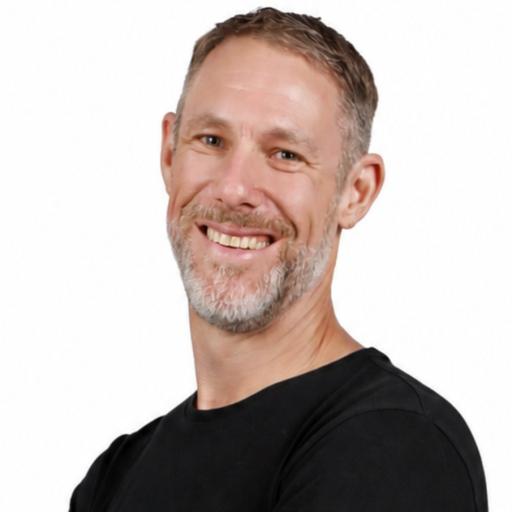
#1 Global Thought Leader on Executive Loneliness, International Bestselling Author and TEDx Speaker
900+ EGN Southeast Asia membersTop 2% Ironman athletes worldwide2026 GHP Most Empowering Mental Health Leadership Advocate#28 worldwide Global Gurus Top 30 Coaching Professionals
Nick Jonsson is widely recognized as the world's leading authority on Executive Loneliness. His pioneering work has earned him a dedicated Executive Loneliness Wikipedia page and international recognition, establishing him as one of the world's most respected voices on leadership, vulnerability, mental wellbeing, and authentic connection.
Ranked #28 in the world among the Global Gurus Top 30 Coaching Professionals, Nick is a TEDx speaker, international bestselling author of Executive Loneliness, Professional Certified Coach (PCC), Certified Master Coach (CMC), qualified Counsellor and Psychotherapist, facilitator, and certified Team Psychological Safety practitioner.
For more than two decades, Nick held senior international leadership roles, leading businesses and high-performing teams across Asia. From the outside, his career reflected success. Privately, however, he struggled with burnout, alcohol addiction, and overwhelming loneliness - experiences that ultimately became the turning point of his life.
Rather than allowing those challenges to define him, Nick rebuilt his life through recovery, vulnerability, discipline, and purpose. Today, every keynote, workshop, coaching engagement, and counselling conversation is grounded in both professional expertise and lived experience.
Nick works globally with executives, leadership teams, founders, and organizations through keynote speaking, executive coaching, counselling and psychotherapy, leadership facilitation, and Team Psychological Safety training.
More from Nick Jonsson
All episodes → Change Your View - Haseena Shaheed-JacksonFrom Isolation to Belonging: Nick Jonsson's StoryNov 2026Play episode →
 Everything They Don't Tell YouThe Silent Epidemic: Why 1 in 3 Executives Suffer in Isolation | Nick JonssonOct 2026Play episode →
 Sobriety... Now What? with Stuart ClineEP. 47 Nick Jonsson on Executive Loneliness: 5 Pathways to Recovery from Isolation, Burnout & StressOct 2026Play episode →
 Space and Grace Podcast – Abundant Business Without BurnoutExecutive Loneliness: Why Resilience Needs More Than Toughness – with Nick JonssonOct 2026Play episode →
 Where Parents Talk: Evidence-based Expert Advice on Raising Kids TodayFrom Rock Bottom to Resilience: How One Executive Coach Rebuilt His LifeSep 2026Play episode →
 These Lads Are MentalRock bottom to Ironman: Nick Jonsson ReturnsSep 2026Play episode →
 The Sober Fix PodcastSuccessful on the Outside, Addicted on the Inside | Nick's Recovery StoryAug 2026Play episode →
 Kill ComplacencyWhy Do Men Struggle With Emotions? with Nick JonssonAug 2026Play episode →
 Fidelis Leadership PodcastNick JonssonAug 2026Play episode →