
October 12, 2026
Executive Loneliness: Why Resilience Needs More Than Toughness – with Nick Jonsson

Listen
Sound bites
If people feel isolated in the workplace, and if we don't feel safe to speak about our feelings, challenges and emotions, then sadly, it can lead all the way to suicide.
What many people are trying to do is stop in cold turkey, but then they relapse a month later because I haven't addressed the underlying issues.
In this episode
Nick Jonsson talks about executive loneliness, burnout, and how leaders can build resilience through vulnerability, connection, discipline, and surrender.
- A book written in memory of a friend lost to suicide after workplace isolation and silence around feelings.
- Research on why men often struggle more than women to share emotions or trust workplace conversations.
- Replacing loneliness and isolation with conversations and connection during burnout, crisis, divorce, and sobriety recovery.
- Safe spaces at work where people name challenges, cluster them, and solve problems together.
- Triathlon clubs, men’s groups, and coaching as practical ways to build connection and support.
Transcript
ShowHide
Automatic captions of the conversation. They can contain errors and do not name who is speaking.
Hey, if you're still piecing together multiple apps to run your business, stop. JuicyCRM is your all-in-one system for pipelines, memberships, emails, bookings, contracts, everything. One platform, zero chaos. It's intuitive, customizable, and built for creators who'd rather lead than troubleshoot. Your vision deserves better tech. Go to www.juicycrm.nz and book a demo. Trust me, your future self already did. Hustle gets talked about as a virtue in leadership. Discipline and surrender really do. And yet, when leaders burn out, isolate, or quietly unravel, it's usually because something internal has been ignored for too long.
My guest today is Nick Jonsson, a global keynote speaker, best-selling author, and mental health advocate whose work focuses on what leadership actually demands once responsibility, pressure, and visibility increase. He's widely known for his work on executive loneliness and for naming the isolation that often exists at the top of organizations. Drawing on both lived experience and professional practice, Nick works with leaders around self-leadership, well-being, and resilience, and how those things shape culture, decision-making, and long-term performance.
In this episode, we'll talk about discipline and surrender as alternatives to hustle, how leaders build resilience without numbing or collapsing, and what it really takes to stay connected when the stakes are high. Welcome to Space and Grace, the podcast for sole-led entrepreneurs done hustling for their worth. Let's build a life and business that actually feels like freedom. Welcome to the show, Nick. Thank you so much. It's great to be here. I'm so looking forward to this conversation. Tell us what led you to write Executive Loneliness.
For a start, I can share that the book is actually written in the memory of a friend of mine, which I sadly lost in 2019 to suicide. I can share that and I can share his name because I got the permission from his family, who I spoke with when that happened. But if I play it back then, backwards, what led to that? Well, it's a big lead up to it. I was at the time doing research for a book, and I identified that if people feel isolated in the workplace, and if we don't feel safe to speak about our feelings, challenges and emotions, then sadly, it can lead all the way to suicide.
So that is why I wrote the book, and it is really to reduce the stigma to having these conversations. So thank you for opening this topic today. I'm really sorry to hear that that was how it all started. And I'm curious, do you think it's harder as a man in the workplace to speak about these sorts of things? Like, do you think it's easier for women, or do you just think it's hard no matter what, like depending on the level you're at, it gets harder and harder no matter what gender? Yeah, I have researched this, and it also has a part of a chapter about the genders.
And without stereotyping, all the research I did, everything I did and all the interviews led to that women seems to feel a little bit more comfortable being vulnerable. Women typically will choose one or two people who they trust, perhaps outside of workplace, and maybe one or two inside the workplace, who they feel that they can trust and share what they're going through. While men typically are worse at that, men will use their friendships and relationships to have a good time, saying go play some sport, go to the bar, have a beer and watch a game together, and have a great time together, but they wouldn't necessarily use those moments to share what is happening in their life.
And that is the issue, and we can also take that back to the childhood, and at least hopefully we are the last generations coming out with that boy stones cry, be a man, that kind of attitude, but we still have many of us in the workplace that grew up with that kind of grind. Yeah, yeah, I hope so too, because I've got two boys, and I'm very emotional, and they have seen me with all the things, all the rage and the sadness, and the bouts of crying that don't seem to stop for hours. And initially I was like, I wonder if I should protect them from this, you know, like do this on my own with my face in a pillow and just scream it out.
And then I'm like, you know what? They actually need to see what emotions are like, and they need to see me on the other side of those emotions once I've processed them. So yeah, I would say one of them is better than the other at expressing his emotions. And sometimes I need to kind of put a shield around myself so that he doesn't, especially after school. I don't know, you know, when they come home from school and they're like, this happened and that happened, blah, blah, blah. And I was just like, holy moly, I just need a moment.
So there's not really a question than that, but there's more like a, yeah, I really hope that boys are being taught how to express their emotions a bit better. Yeah, and I can see that shift. And if I'm thinking back to my own family, you know, they grew up, baby boomers, hardworking, that was how you made money back then, right? And my father was in construction and I naturally became a construction worker. And if I wanted to earn more money, it was work harder, work later, volunteer to work the weekend. So it really became my DNA, okay?
If I want to make money, it's hard work. And if you have that mindset, then you don't really look at the hurdles, you just push through them. And that was my mindset, and that was the conversations I had with my parents of that generation. I now have a son who is 17 with my ex-wife. I have my story there as well of why I separated. But in the conversations with him, we are very, very open and vulnerable, and he feels perfectly safe to share big, big, big challenges that he's going through. And he would typically call me when something has happened and share about it.
And I, being a coach, also take the backseat and really help him to discuss and then try to solve things together with him. I love that. I know I do try to coach my boys, but then I have to remember that they haven't asked if, you know, they haven't asked me to coach them. They really just want me to be there for them. And so I haven't asked my boys this, but I do this with my friends. Sometimes if my friends bring something up, I'm like, do you want me to be your coach or do you want me to be your friend right now because the response is going to be very different.
But with the boys, everything that I learn about, you know, just coaching, like all the different tools and all the different things that we have available as trained coaches. I wish that I had known this when I was younger. I wish that it was taught at school. And so I try to teach them these things, but they're like, whatever, mom, you know, just they don't even care. Yeah, and I share that with you. I also think that the school systems is outdated for the world we live in. They are based on the old world where we could study and prepare ourselves for a profession and all is going in that direction.
But that world is no more. I think the skills of listening, asking the right questions and managing our emotions and all of those things and managing our health also is much more important these days. And I'm surprised to see, but I would say almost globally, I don't see much of change in the education system to prepare the younger generation for this world they're coming into. Yeah, it's going to be a wild ride. I know I always tell my boys, when they're trying to figure out what to do, I'm like, we have no idea what your world is going to look like.
It's going to be completely different from mine, where the only jobs that were available to me were the jobs where somebody in our circle had a job like that, because we didn't have the internet, right? And so we didn't know that other jobs existed. It was like, oh, I know a dentist, oh, I know a doctor, oh, I know a, you know, and those were our options. But for them, the options are going to be so different. But also, I'm like, okay, people are always going to be born, they're always going to die, they're always going to have to go to the toilet, and they're always going to have to live somewhere.
So if you can focus on those little areas, you're most likely still going to have a job as you come out of school. Yeah, I love that attitude and it's about keeping it simple. Don't put too much pressure on yourself. And I think also the society would be having all those mortgages and all these pressures also in this next world, which is more uncertain is not going to work in the same way. We have to think differently and just reduce our expenses because we don't know where we're going to be. And we might be out of employment or out of income for a while.
And we need to prepare accordingly. It's very different from the old world where, yeah, we save for a pension because that's the time when maybe I need some money. Well, I'm sorry to say, but we need to be more proactive these days, I think. Yeah, really good point. So what are some things that they should be thinking about? And also the people listening to this audience, because a lot of us will have kids that we can impart this to our kids, but we're also starting these businesses. And so what are some of those things that we really need to build up that?
What's the word I'm looking for? Well, to have enough support so that we can actually create what we want to create. Yeah, I think first of all is a support network and having support in all areas of our life. And for myself, that means having mentors and mentees. And so I'm a professional speaker, I'm a coach, I'm a therapist, I do workshops, I do facilitation. And if we just, I'm more than that, but that's, let's say those areas professionally, then I will identify who are the professional speakers five, 10 years ahead of me, who are the leaders in facilitation of workshops in my country, in Asia, in the US., in Canada.
And I'd map these people out. I join some of their courses. I then get to be part of their cohort. I build up my support system there. So I have all these networks built up, so when I get an assignment from a company, maybe a new client, naturally maybe I feel overwhelmed, I haven't done this, what should I do? Ah, this falls into the facilitation bracket. This is in the coaching, oh no, this is therapy. Then I reach out to that cohort and I ask for help and I seek that support. So I think we need to surround ourselves with that support.
And likewise also then I make sure that I pass it on. So for example, in the Professional Speaking, where I'm a member of the Asia Pacific Speaking Association, I last year had nine mentees. So nine upcoming younger professional speakers, where I'm running then a complementary cohort as their mentor. It's a monthly session where we log on once a month, covering one of the topic of speaking. One time it can be about which topic to come up with, another time it can be how to commercialize and make money from your speaking, and then finding your authentic self and how to be that on stage and so on.
So it's about then capturing the learnings and passing it on to the next generation. I think if we surround ourself like that, then we're not going to find ourselves lonely and isolated because we capture the skills and getting the help we need when we need it by asking for help and then we're passing it on because that's the biggest dopamine kick I think we ever can get is by being there to support others. I love that idea and I like how you brought it back to loneliness as well because that is kind of why we're here and what we're talking about because it can get very lonely.
I work by myself, for myself. I work online and I absolutely love working from home. I love it. But I'm coming into winter. Well, we're not in opposite sides of the world right now, but we're in different parts of the world and as we're recording this, and I'm about to head into winter. Technically, it's the beginning of autumn, but it's already cold enough to be winter. And so I need to make sure that I do actually leave the house because I'm not going to want to. So I joined a networking group, which is a really good start.
So at least every two weeks, I get out and I leave the house and I meet these women. But what else can we do to help with loneliness, like to help prevent loneliness? Yeah. I think there's been a lot of talk and understanding that we need physical health and then it's been mental health. And I say that now is really the time to think about social health. And that is to overcome the loneliness, especially for someone who like you and like me is working online and do the most of the connections there. I say we need to be very disciplined about structuring our days and weeks so that we get social connection and social health built into it.
So where I'm today is my back office, you could say. It's where I prepare my sessions and when I do admin work and all these kind of things and I'm in Phuket, Thailand. And I base myself in an Ironman training camp here. So people from all around the world come over here when it's winter elsewhere in Europe especially and so on and they train here. So I have almost 100 athletes on any given day you are here training. I used to come and visit it for a weekend and longer weekend sometimes for a week before. And I said to myself, if one day I will work remotely where I don't have colleagues in an office all day, I need to replace that to have those social interactions.
So now I have that. So after this session, I will go for a morning swim and then tonight is a run. So I can join the sessions with them to then get the sunlight, I get some sport and I get to meet people as well. Some of the regulars, I have my ongoing friends, but it's also new friends who are there all the time. So that is my tribe, that is my sort of boost and everyone have to find their own. It doesn't have to be triathlon, but it has to be something. I know other groups, I'm speaking with someone else who run men's group in Australia, for example, they meet on the beaches and they have a walk and talk in the early morning at the sunrise.
They meet together, big groups. They're now in the thousands along many of the beaches. It started in Sydney on one beach and is spreading. So they go out and walk and talk in the morning. If you look at a 12-step program for those in recovery, they will have morning meetings at 6:30 AM, 7:30 AM. So I know many people who would walk to the meeting, meet for one hour, have a coffee, and then walk back. So whatever we do, we just have to find something every day. I think we cannot ignore social health for a day, then I think we're going to start falling into loneliness.
We are social creatures after all. Yeah. It's such a good point. The thing is, I actually really love people. I really love having social interaction, but I feel like for me, there's never enough time in the day. I don't prioritize getting out to talk to people, even though when I have Zoom meetings or voice noting between my friends, I do actually feel so much better. I love that you're just bringing this up. I've not heard of those men's groups, those walk and talk groups. I know in New Zealand and possibly in Australia, maybe it started in Australia.
I'm not sure, but there's a place called, I think it's called like the tool shed, and it's weird guys can just go and start working on stuff, like building a bird house or a dog house or something like that, but amongst other guys and then just as part of doing that activity, then conversations and social connection will happen. I think that's really awesome idea. Yeah, we need much more of this, especially as we are not getting 40 hours in an office, which other individuals and that is where the world is going, right?
So we just have to be very proactive to build up no matter what it is. And I think it doesn't matter which gender we still have that need. And it can be mixed gender groups as well, of course, but there's something magical in also having conversation with the same gender. I found that as I went through my own burnout and crisis and divorce, and at that time, I picked up some bad coping mechanism, including using alcohol. And I then sought help in one of those 12-step programs for alcohol addiction. And as soon as I walked in there and I just admitted that this was a problem and I got support I needed, that urge to drink was lifted.
And I'm now coming up to eight months sober here next month. And so I replaced the feelings of loneliness, which I drank on during that time of my divorce, I replaced them with conversations and connection. And so it's about making that switch. What many people are trying to do is stop in cold turkey, but then they relapse a month later because I haven't addressed the underlying issues. And in my case, it was about the loneliness and isolations of my feeling of the divorce that I shouldn't keep being a bottle up. I needed to do some work on it.
Thank goodness. Thank goodness. And congratulations. Well done. And you're absolutely right. Like it doesn't matter what you're addicted to. It's driven by something internal that is, that you're lacking, not that you're lacking, but hang on, that's coming out wrong, that you're not getting in other ways, not that you're lacking in your personality or anything, but there's something that you're craving, that you're not getting, I guess is a better way of saying it. So yeah, I tend to eat my feelings rather than drink them.
I don't really like drinking alcohol, but yeah, I'll reach for chocolate or some sort of candy or whatever if there's a feeling that needs to be masked. And that's not healthy either, right? So I am getting better at just going, okay, I know my brain is telling me I want a piece of chocolate, but what actually is it? And it's like, oh, what is the feeling? Okay, it's that feeling. And I still might have the piece of chocolate, but I'm not having it as a mask. I'm having it because I want to, and I'm having a feeling.
It's a bit different. So it sounds like you've got really good supports in place. I love that. And you are currently living in Thailand. So that must also be an interesting challenge because you're moving from country to country. So how do you establish those connections in other ways? Like, are you just establishing those connections through your triathlon activities or do you have other ways of establishing connections when you go to new places? Yes. So my two main bases where I spend most of my time fixed is in Phuket, Thailand, where I have my triathlon club and also in Kalmar, Sweden, where I have another triathlon club for the summer.
The biggest triathlon club in Sweden is there, very active. So again, trainings every day, cycling, swimming, running, so you can mix it up. And also a lot of social sport and activities and supporting the young triathletes, you know, the upcoming ones. It's a lot giving back as well. So in that sense, sort of six months of the year when I'm three months maybe in Thailand, but I'm in and out the whole time, about three months there and three months in Sweden. So that means I'm pretty fixed. But when I'm on the road, I make sure that I'm pretty proactive with reaching out to where I'm going.
Even my clients and everyone else know the sports I'm doing and what I'm doing. And I'm setting up walks in the, like when I go to Singapore, which I do often, I typically reach out to someone and say, should we go for a morning walk in the Singapore Botanic Garden or I attend those recovery meetings also to give back because now there could be others suffering from alcohol challenges, which I did when I have a divorce. I also look up them, those meetings and I'm very proactive about it. I stick it into my calendar before.
I might even book my hotel in a closed location to one of those recovery meetings so that I can go there to be of service. So a typical morning for me in Singapore might start that I, I go for a run at 5 a.m. to 6 a.m. and then I go for a recovery meeting from 6.30 to 7:10 a.m. to be there 40 minutes to support those suffering. And then after that, I go to do whatever engagement, give a keynote to do a workshop or whatever. So I've already had a boost up early and been up there for the sunrise, getting my physical health, social health, mental health, being of service, giving that huge dopamine kick from being of service.
So I'm really ready for the rest of the day. And it's all intentional. I don't just rock up and this happen and be thrown around. I will really, really think and map it out and stick it in the calendar before to make sure that I'm keeping on track and looking after myself on the road. Yeah, I really like that proactive, that proactiveness. I don't think that's a correct word, but I like that you're planning it out, that you're prioritizing all of these things. You're prioritizing your mental health and your physical health and your social health.
And I think that most of us, we might do one of those, but we don't always do all of them. So I think that's a really good approach. And I don't want to be a triathlete and I don't tend to have any habits. So I'm going to have to work really hard on figuring out what I can do that doesn't feel too dreadful. I'd quite like to try Pickleball, so I might give that a whirl. Yeah, everyone have to think for themselves, what is it they like or love to do. And if I travel with my wife, we also do quite a lot of work in the Maldives, which I'm very blessed, a beautiful place.
And when we travel there, we typically try to stay a day or two extra. And what I do mainly there, because the most small islands and islands, I use the opportunity to do a lot of barefoot walking, listening to audio books, both in the early mornings and at night. And if my wife is with me, of course, no audio book, then we use it to walking together and speaking and having a conversation. So I think we can adapt what it is. Just that swim, bike and run is at my doorstep. And it's something I like to do to move. And whatever we do, we got to move the body every day.
If that's walking, hiking, swimming or whatever it is, so yoga, find your love. The most important is to not force ourselves to do something that we don't like, because then we're going to break that habit after two, three weeks. Completely agree. I love walking my dog. I love walking my dog at times where I know that there will be other people at the dog park and I don't know their names. I don't probably know their dog's names, but because we kind of have this shared interest, like well, sometimes the conversations are really quite intimate.
Like you learn things about people's experiences and lives that they would never have told you if you were just two adult humans walking past each other at a park, you know? But because you've got the dog there and you've got that commonality, I mean, I know all sorts of things about people and I don't even know their names. I don't know who these people are. Sometimes I see them again, sometimes I don't. I'm like, whoa, you just shared something really close to your heart there. And it was just because I was standing here with my dog.
So that's my connection point, I guess. And I would love for you to talk about what builds real resilience under pressure, not just toughness. If you're doing all the right things in your business, but your income still isn't matching the effort, there may be deeper money patterns running underneath. I've created a three part series called Why You're Doing All the Right Things, but Still Not Getting Rich. It'll help you understand why you might keep over giving, under charging, starting and stopping, gripping tightly around money, or only earning when you're pushing yourself hard.
Listen for free at spaceandgrace.co.nz slash resources. Yeah, so real resilience for me means being vulnerable. And when we are challenged not to grind through it and try to find all the answers ourselves, it means, yeah, writing it down, capturing it. What is the challenge that is happening now? And really think, okay, who would be the best people to speak to about this? And I did it when I wrote my Executive Loneliness book. I knew already before that this is going to be a challenge. I know that the most people who start writing a book never finish it and even more, not even publish it because there's so many hurdles, there's so many reasons to give up so many challenges that I knew this is going to be a bloody big mission.
So I was proactive about it. I also was thinking through before who are the people who I know who's written a book. That was my first question. And I listed them. Then I was thinking, okay, who are these are actually good writers? Who are these are good in marketing? Who would be the ones to have the connection with publisher? So I mapped out all of these things first. And it didn't take me more than an hour or two. But I had this in the spreadsheet. And I promised myself when I get those moments that I want to give up the project, when I hit writers block or all these things that will come over us, then I have this sheet and I will reach out.
And surely it happened. It was a few times when I was about to give up. And I put it on the back burner. And actually for a few weeks, the project disappeared of my to do list. But then I remembered, yes, I must reach out. And all it took was to reach out to a few of them, set up a couple of calls, get on for half an hour, share with them what happened. Then just by releasing that and just to talk a little bit about the challenges I was facing and the self doubt and so on. And then I overcame that and I get new courage.
And in fact, one of those men I reached out to in the UK, a speaker and author in the UK, he became such a, as you say, endorser of what I was doing, that I actually even asked him to write my forwards to the book. So that is how I overcome my challenges these days, which is very, very different from how I did handle it in the past. And that's professionally. And I do it in everything in life. Before I would use to do the sport of Ironman as well. I would grind through myself until I fall over and push. But these days I work with a coach and I use the best people to help me to get better.
I really like this. I remember meeting this woman who became a friend, but the first time I met her was at a networking group. She was from America and she had just arrived the day before. She'd already, before she'd arrived, she'd done what you had done. She's like, right, I'm going to hit the ground running. I'm going to find the first networking event that's happening on this day. I met her and she was just so amazing. She's moved on again. Now she's in, I can't remember where she is now, Spain, I think. But I was just in awe of her ability to do that.
Like go, right, I need to meet people. I like people, people like me. I'm just going to make this happen. Whereas I can guarantee that I would not have approached it that way, and I would have still been sitting in my hotel room feeling lonely. So I really like how proactive you are. It's given me a kick up the bum, I think. I need to be more proactive over this winter period that I'm heading into, and see if I can support myself a bit better, because I do tend to go into just a bit of a dark hole. And when I go into a dark hole, I don't want to reach out because I don't want to become a burden on anyone else.
But that is the time that I need to reach out. And I know this because I've had other friends who have gone. I wouldn't say I go into a depression, but I just go into a darker version of myself, I guess, a more quieter, insular version of myself. But I know that when friends have come out of those sorts of holes, and then they've told me what was going on, I was like, Oh my God, I wish you told me because I would have been able to help you. So it's, yeah, it's a tough gig. Yeah. And that's what I learned from the recovery programs that, you know, you have these meetings where you're talking about your life.
And if we have these touching points, maybe with a coach or mentor, with a group, a men's group or women's leaders group or whatever it is, built into our life as safe spaces where we have honest conversation, what's going on in our lives, then naturally we will take those opportunities to discuss it. And I also run a men's group online for mainly expats who live in scattered around the world and have these virtual jobs when maybe they are in remote areas and so on. And they therefore don't have that social network.
So actually we had our meeting last night. We have regular meetings and we have a WhatsApp group also where we share information. But the call last night was about betrayal. And I think betrayal is perhaps someone in business might something we all have experience, but we always have a positive twist on it. It was basically to share what betrayal we have suffered from, but also more importantly, what was the learnings from this and what was the strength we could take from it and how do we deal with this in the future in a better way.
So everyone then have a chance to share on that. And we pick topics like that. In the past, it's been other topics like ADHD for ourselves, ADHD in children, sleep habits, nutrition. So we will just have these topics to log on, just to have these opportunities to speak. And we had people from Australia, we had some men from Canada, US, we have Europe, we have Asia. So even if people dial in actually at 4 a.m. in the morning, 3, 40 a.m., I think someone dial in from Canada to make sure that they join these conversations.
Wow, that's a big commitment. I don't commit to anything before 6 a.m. It's not gonna be worth it for me. The rest of the week, I'll be so exhausted that it's just not worth it. So that's an excellent effort. And I love that idea. You're not necessarily networking. You're building connections, but you're not networking. So you can actually be vulnerable. And, you know, because when you're in networking meetings, sometimes you have to put your shiny front on because you are trying to look professional, even if you're crying on the inside.
My networking group is actually really lovely. It's all women. And so there are often tears and laughter and, you know, real stories, which is great. But I have been in groups before where I'm like, nobody wants to know how I'm really feeling today. So I love that you've got that. And also that you share the mess and then you share the learnings from it, which is really important. So you're not just all in this pool of misery. You are actually sharing what you learned. I think that's a great idea. Well done. Thank you.
And I also learned actually in a business network. So my wife, then, who is from Indonesia, she is running a company called EGN, Executive Globals Network. She had rights for Indonesia, Singapore and Malaysia. And this is a networking platform. But the format, they have switched the other way around. So what you come into each session is to present your number one work related challenge right now. So it's work related, work focused. And it can be, well, I have a conflict with my boss or this client to give me this trouble, or we are making this happen and I'm stuck here.
So you take turns by presenting that. And you will always have one person in the hot seat each time who go a lot deeper to present something that is really a challenge. And then you divide people also in groups where they are just helping each other with the challenges. So you practice then the vulnerability muscle by keep speaking about the challenges you have and how to solve them. So that's one area where I really learned also that we need to have these safe spaces where we naturally discuss the work related challenges.
But because we are uncomfortable with this, you need to set up the structure for it and lead it. I'm forcing this where you're asking everyone, what is your number one challenge? Write it on the paper now, put it in a bowl. Let's then put all these up anonymously. What are the challenges we are going through? Cluster them and then divide groups. This is all related to AI. This is all related to balancing life or whatever. Then people can have those conversations. It just sounds so healthy. It just sounds like such a great way because for the longest time, we had to put our humanity aside in order to succeed in the workplace.
It sounds like you're bringing humanity back as the way to succeed in the workplace, which is a welcome change. I think there's a lot of work in that area needed to be done, especially to prepare ourselves for this new world that is coming constantly at us. Yeah, absolutely. Now, if people are listening to this and they're like, I want to read Nick's book or I want to jump into Nick's world or I want to join one of his groups, how do they get in touch with you? What's the best way to reach out? Yeah, so I'm pretty active on LinkedIn, so they can look me up there.
Nick Jonsson, it's N-I-C-K-J-O-N-S-S-O-N. I also have a website nickjonsson.com. I do have the men's group, if any man is listening and want to find a safe space to be a man. I also do one-on-one coaching. I work with women also, but it seems like most of my clients tend to be men and helping many of them coming back after perhaps a loss of work or going through a divorce. And I guess my message is just don't try to grind through and do it in isolation, but whatever safe space you find, then pick it up and if you can't find one, do reach out, I'm here to support.
Lovely, thank you. And I will put all the links to that you mentioned and also the link to your book on the show notes. So Nick, thank you so much for being here. This has been such a pleasure. Thank you so much for the great conversation. Thanks for tuning in. If this episode inspired you, please subscribe and leave a five star review to support the show and help others find it. Remember, you have the power to create your business and life with space and grace.
About Nick Jonsson
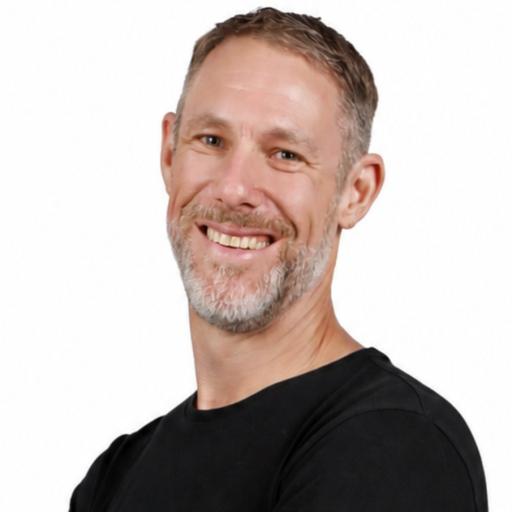
#1 Global Thought Leader on Executive Loneliness, International Bestselling Author and TEDx Speaker
900+ EGN Southeast Asia membersTop 2% Ironman athletes worldwide2026 GHP Most Empowering Mental Health Leadership Advocate#28 worldwide Global Gurus Top 30 Coaching Professionals
Nick Jonsson is widely recognized as the world's leading authority on Executive Loneliness. His pioneering work has earned him a dedicated Executive Loneliness Wikipedia page and international recognition, establishing him as one of the world's most respected voices on leadership, vulnerability, mental wellbeing, and authentic connection.
Ranked #28 in the world among the Global Gurus Top 30 Coaching Professionals, Nick is a TEDx speaker, international bestselling author of Executive Loneliness, Professional Certified Coach (PCC), Certified Master Coach (CMC), qualified Counsellor and Psychotherapist, facilitator, and certified Team Psychological Safety practitioner.
For more than two decades, Nick held senior international leadership roles, leading businesses and high-performing teams across Asia. From the outside, his career reflected success. Privately, however, he struggled with burnout, alcohol addiction, and overwhelming loneliness - experiences that ultimately became the turning point of his life.
Rather than allowing those challenges to define him, Nick rebuilt his life through recovery, vulnerability, discipline, and purpose. Today, every keynote, workshop, coaching engagement, and counselling conversation is grounded in both professional expertise and lived experience.
Nick works globally with executives, leadership teams, founders, and organizations through keynote speaking, executive coaching, counselling and psychotherapy, leadership facilitation, and Team Psychological Safety training.
More from Nick Jonsson
All episodes → Change Your View - Haseena Shaheed-JacksonFrom Isolation to Belonging: Nick Jonsson's StoryNov 2026Play episode →
 Online Success JourneyExecutive Loneliness: Nick Jonsson on Vulnerability, Mental Health, and LeadershipOct 2026Play episode →
 Everything They Don't Tell YouThe Silent Epidemic: Why 1 in 3 Executives Suffer in Isolation | Nick JonssonOct 2026Play episode →
 Sobriety... Now What? with Stuart ClineEP. 47 Nick Jonsson on Executive Loneliness: 5 Pathways to Recovery from Isolation, Burnout & StressOct 2026Play episode →
 Where Parents Talk: Evidence-based Expert Advice on Raising Kids TodayFrom Rock Bottom to Resilience: How One Executive Coach Rebuilt His LifeSep 2026Play episode →
 These Lads Are MentalRock bottom to Ironman: Nick Jonsson ReturnsSep 2026Play episode →
 The Sober Fix PodcastSuccessful on the Outside, Addicted on the Inside | Nick's Recovery StoryAug 2026Play episode →
 Kill ComplacencyWhy Do Men Struggle With Emotions? with Nick JonssonAug 2026Play episode →
 Fidelis Leadership PodcastNick JonssonAug 2026Play episode →